


I have walked through plenty of backyards where the plants and paths never quite line up with how people actually move through the space.
Over time it becomes clear that a good layout needs zones that feel separate yet connected without forcing extra steps.
Some setups just sit there looking neat on paper but fail when you try to use them daily.
I usually start by testing one small change like adding edging around a seating area before committing to bigger shifts.
The ideas that hold up best are the ones that account for how the ground settles and how plants grow into the plan rather than against it.
Create a Fire Pit Zone for Outdoor Gatherings
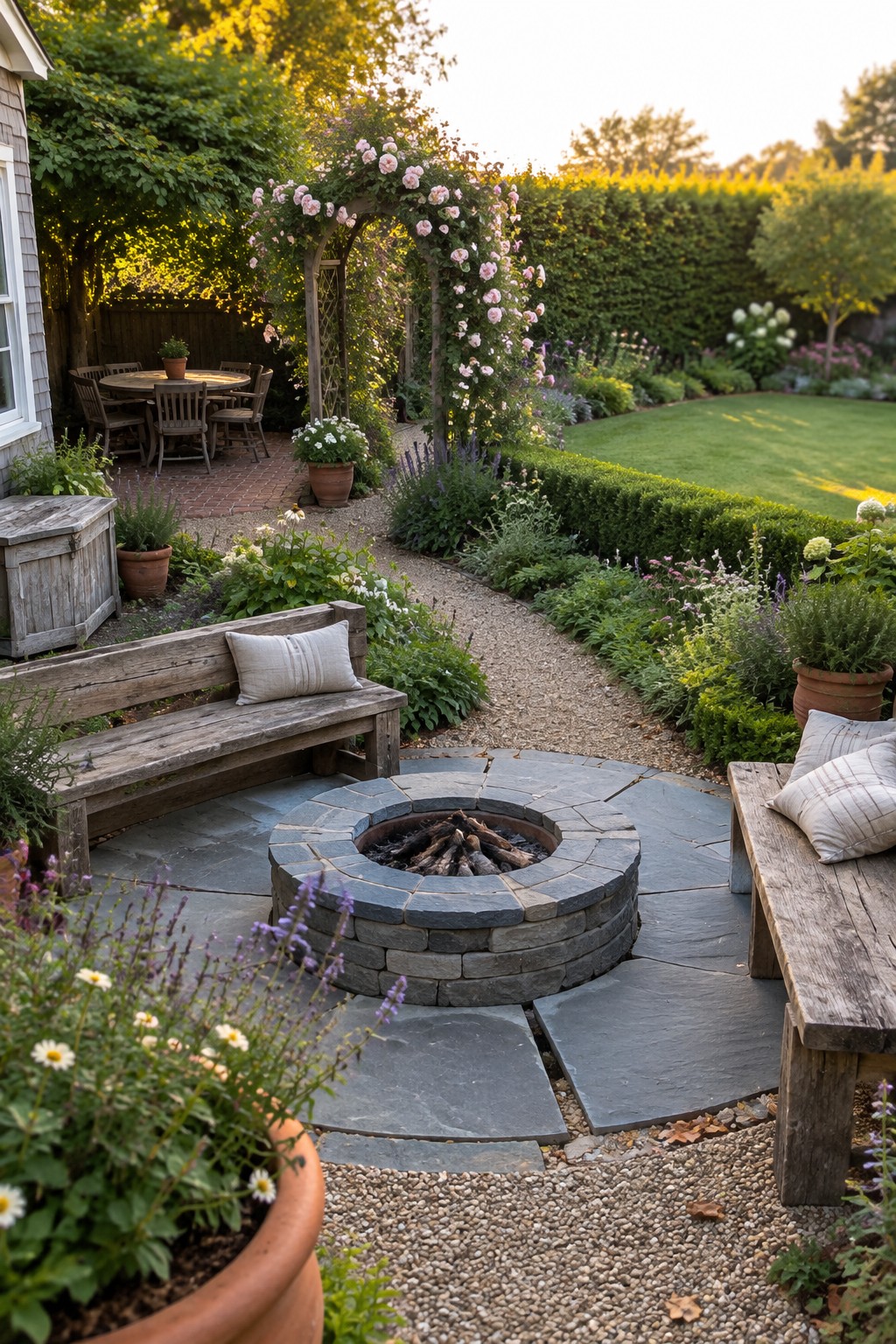
A simple fire pit can turn an open backyard into a place people actually use after dark. The stone circle here sits low and central so the seating stays close without crowding the flames, and the surrounding gravel paths keep the area easy to reach from the rest of the yard.
This setup works best on a flat patch of lawn or garden where you can add a few benches and still leave room for planting. Keep the pit at least six feet from shrubs or structures, and use gravel or pavers underfoot to cut down on mud when the weather turns.
Use Terracing to Separate Cooking and Dining Zones
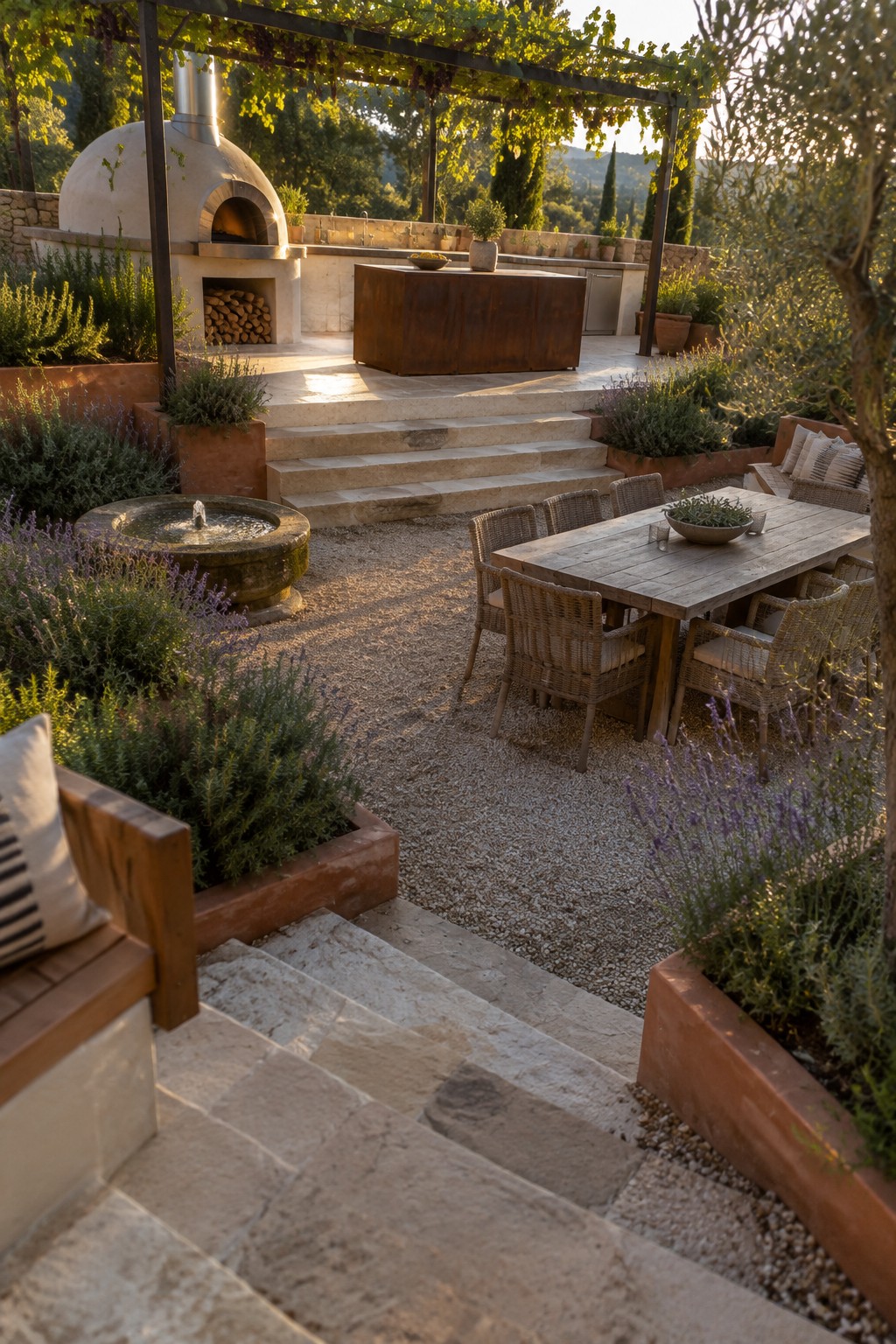
One simple way to make an outdoor space feel more useful is to split it into clear zones with small changes in level. Steps and raised platforms let you keep the cooking area a bit higher and separate while the dining spot sits lower on gravel. This keeps the pizza oven and counters from crowding the table and chairs, and the shift in height makes each part feel intentional instead of all jumbled together.
This approach works especially well on a gentle slope or when you want the kitchen zone to feel a little more permanent. Raised beds and pots along the edges help soften the hard lines without blocking the view between the two areas. Just watch the step height so it stays comfortable to move between the zones with plates or drinks in hand.
Break Up Large Patios With Grass Strips

A big concrete patio can start to feel flat and empty once the furniture is in place. Narrow strips of grass set between the pavers split the surface into smaller sections that read as separate zones while keeping the whole area easy to walk across.
This approach works best on newer homes with simple rectangular layouts. Keep the grass strips only a few inches wide so they stay simple to mow and do not interrupt the flow between a dining table, lounge seating, and a fire pit.
Zone a Poolside Patio for Both Eating and Relaxing
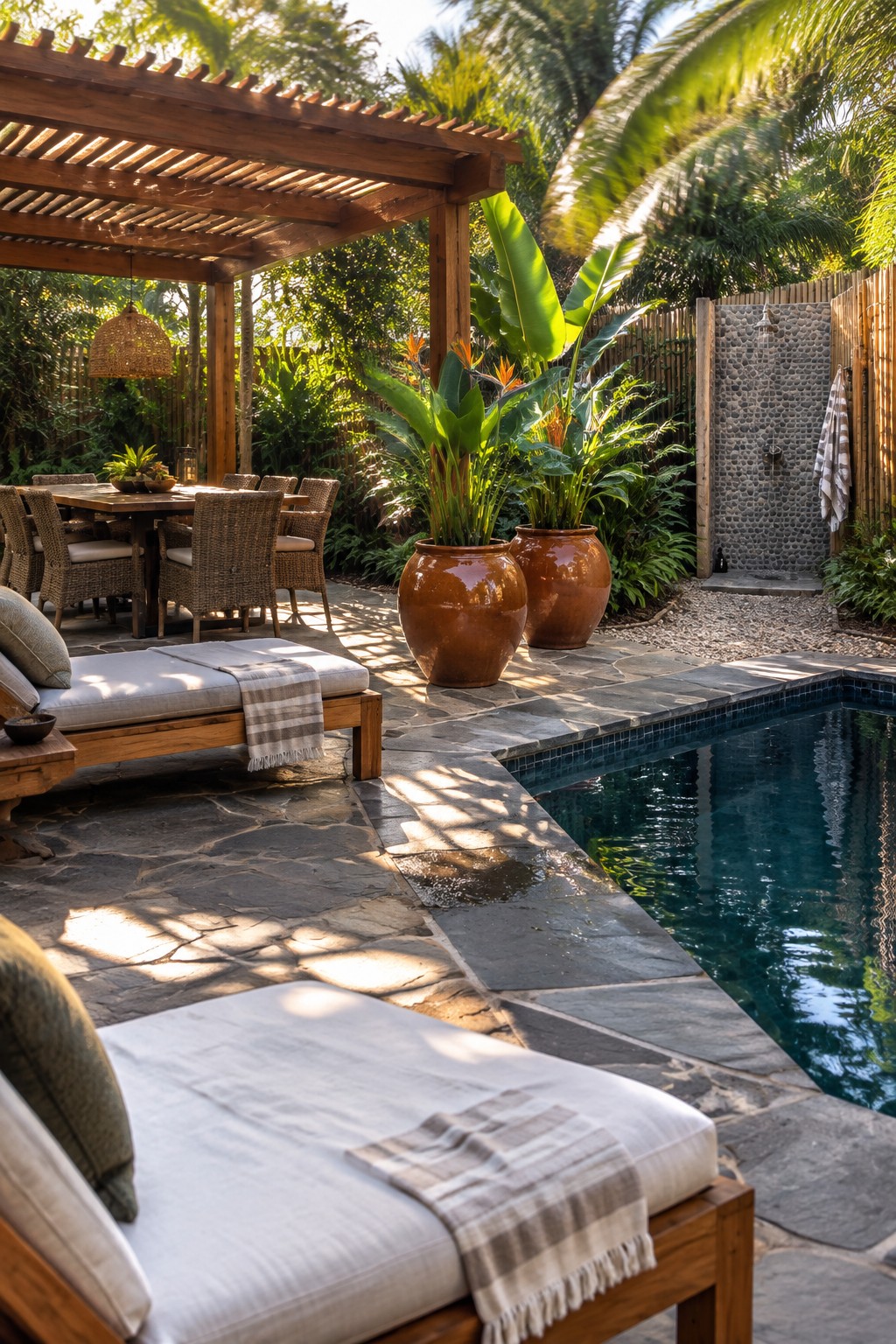
A single stone patio can handle more than one job if you lay it out with clear spots for different activities. The dining table stays under the pergola for shade while the lounge chairs sit closer to the pool edge. This keeps the whole area feeling open instead of chopped up.
The approach works best on lots that already have a pool and some flat ground around it. Keep the paving consistent so the zones read as one surface rather than separate rooms. Add a couple of large planters or a simple overhead structure to mark where one use ends and the next begins without building walls.
Add Built-In Storage To Outdoor Seating
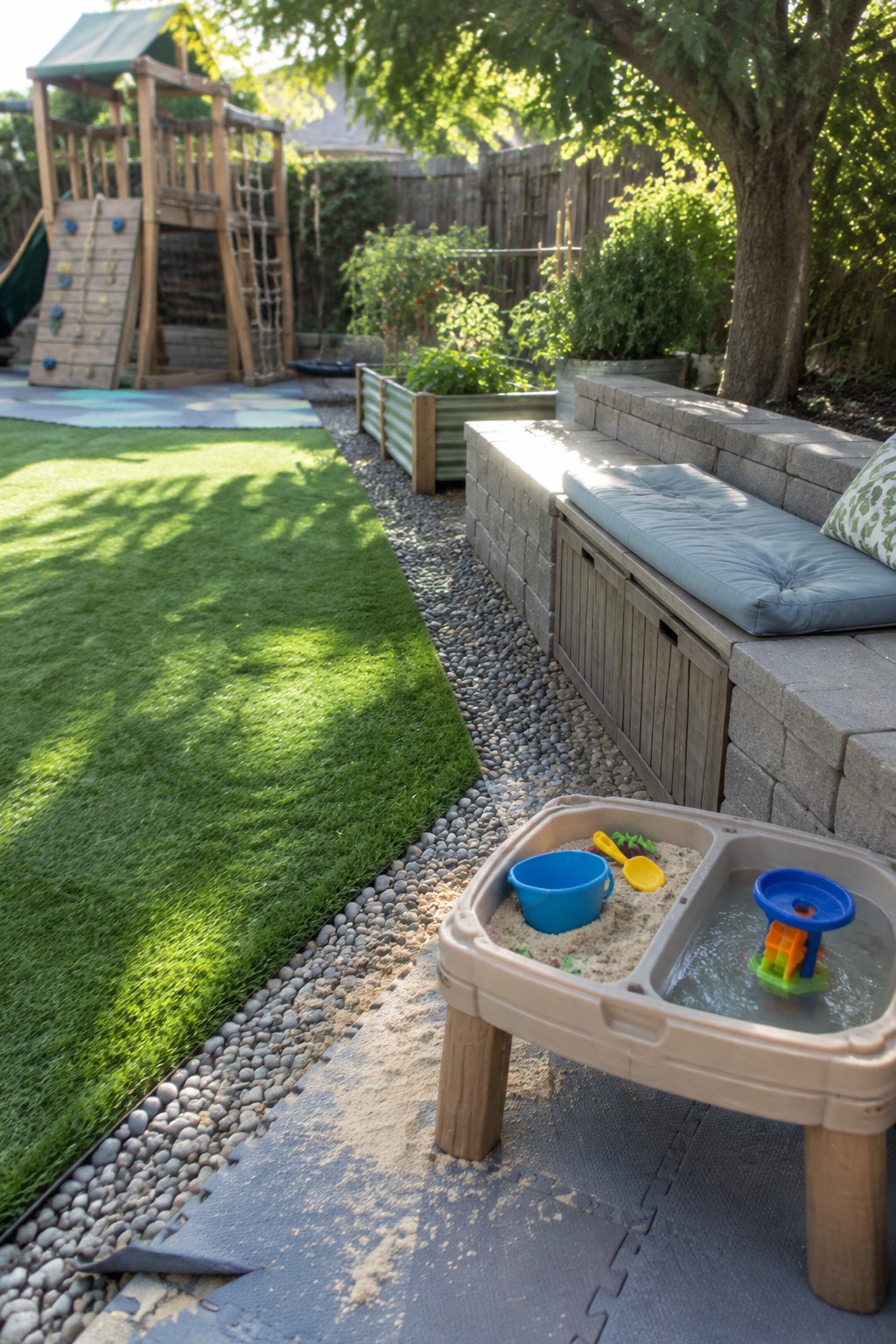
Many backyards end up cluttered with toys and cushions because there is nowhere good to put them. Building storage right into a bench or retaining wall solves that without taking up extra room or adding more furniture.
This approach works especially well along the edge of a lawn or play zone where things get used often. It suits smaller yards since the seating and storage share the same footprint and help keep the space organized.
Fire Pit Areas With Log Seating
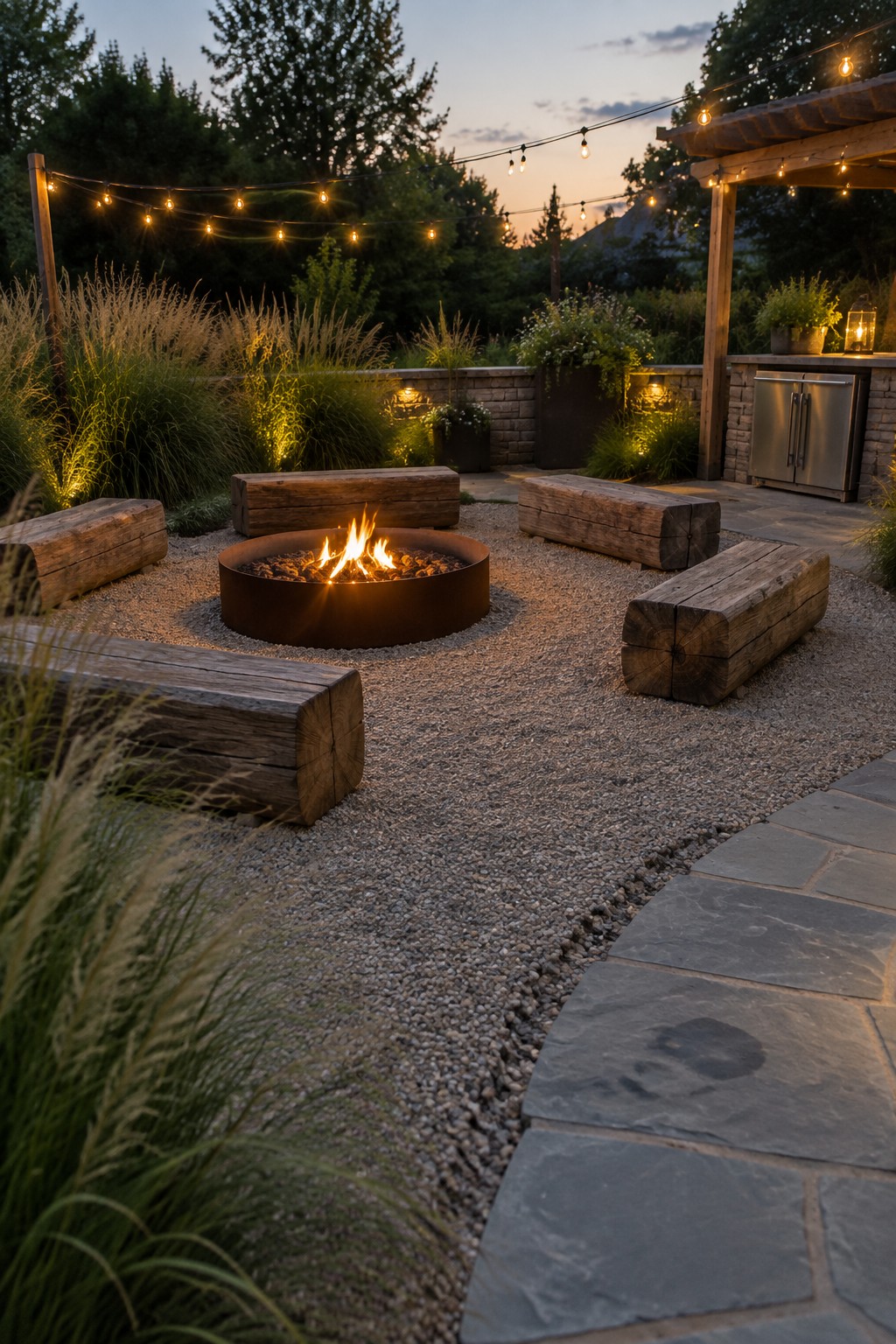
A fire pit set right in the gravel makes a simple spot for people to gather without needing a big patio or fancy setup. The round metal pit and rough log benches keep things casual and low cost while still giving the space a clear purpose.
This layout works best in backyards that have room for a loose zone away from the house. Use it where you want seating that can handle weather and does not require much upkeep beyond raking the gravel now and then.
Raised Beds With Mulched Paths
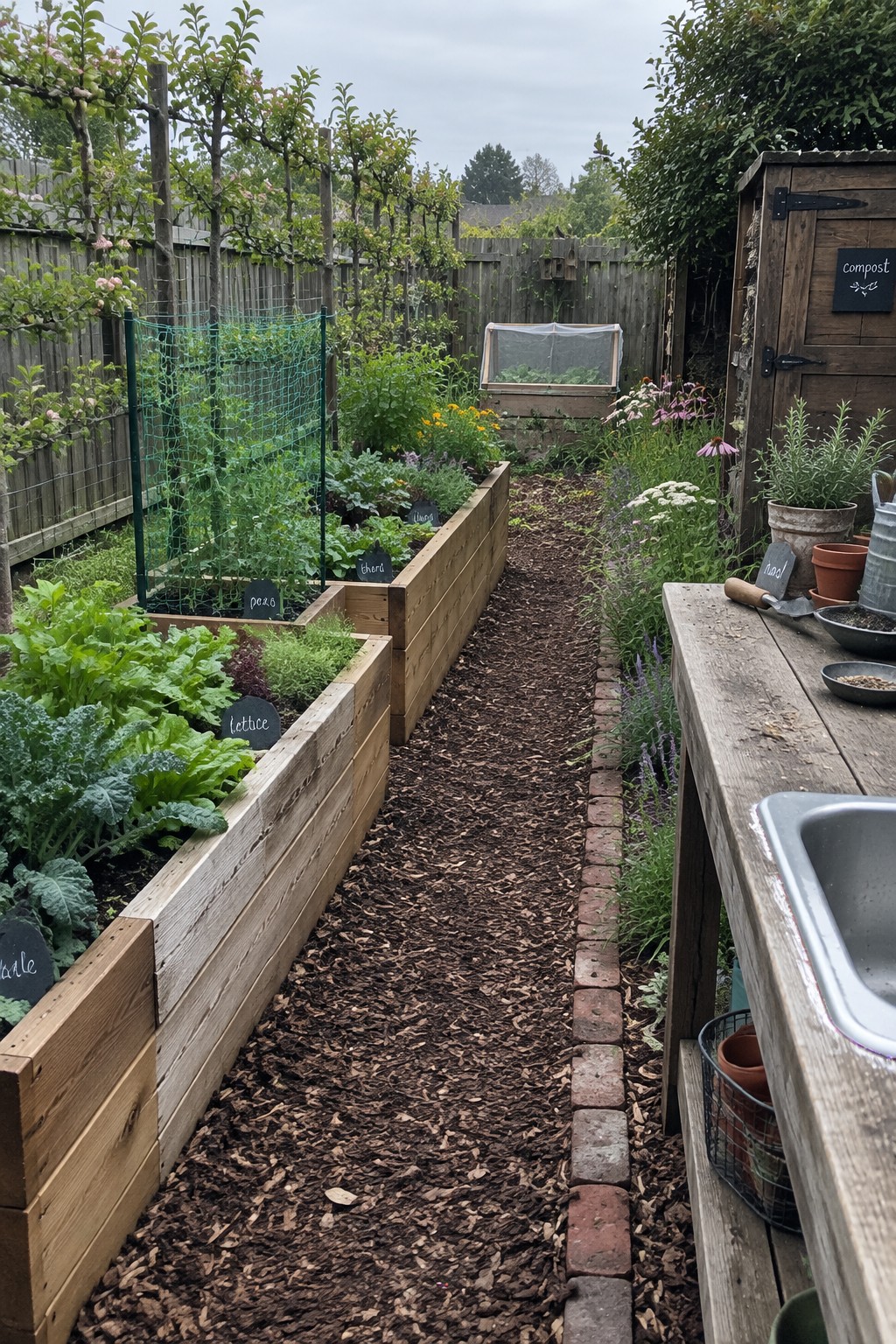
Raised beds make it easier to keep a garden organized and productive. The mulched walkway between them gives you a clear route for walking and working without stepping on the soil, which helps the beds stay neat and the plants healthier over time.
This setup works well in smaller backyards where space is limited. The wood chip mulch keeps weeds down and makes the path look tidy, while the brick edging holds everything in place. It suits anyone growing vegetables or herbs who wants easy access for watering and harvesting.
Stepping Stones Across A Pond

Stepping stones across a pond give a backyard a simple way to move through the space while keeping the water as the main feature. The path feels more interesting than a regular walkway and pulls people into the garden instead of just looking at it from the edge.
This layout works well in yards that already have some open ground near the house. Make sure the stones sit level and are wide enough to walk on comfortably, and keep surrounding plants low so they do not block the path over time.
Raised Planters to Define Deck Zones

A long raised planter along one side of a deck gives the whole area a clear edge without needing a fence or wall. It keeps the planting off the deck boards and adds height so the space feels more finished and contained.
This setup works best in backyards where you want to separate a main seating area from a gravel path or dining spot. Pick drought tolerant plants if the bed gets full sun, and keep the planter width narrow enough that it does not crowd the walking space.
Add an Outdoor Bar by the Pool
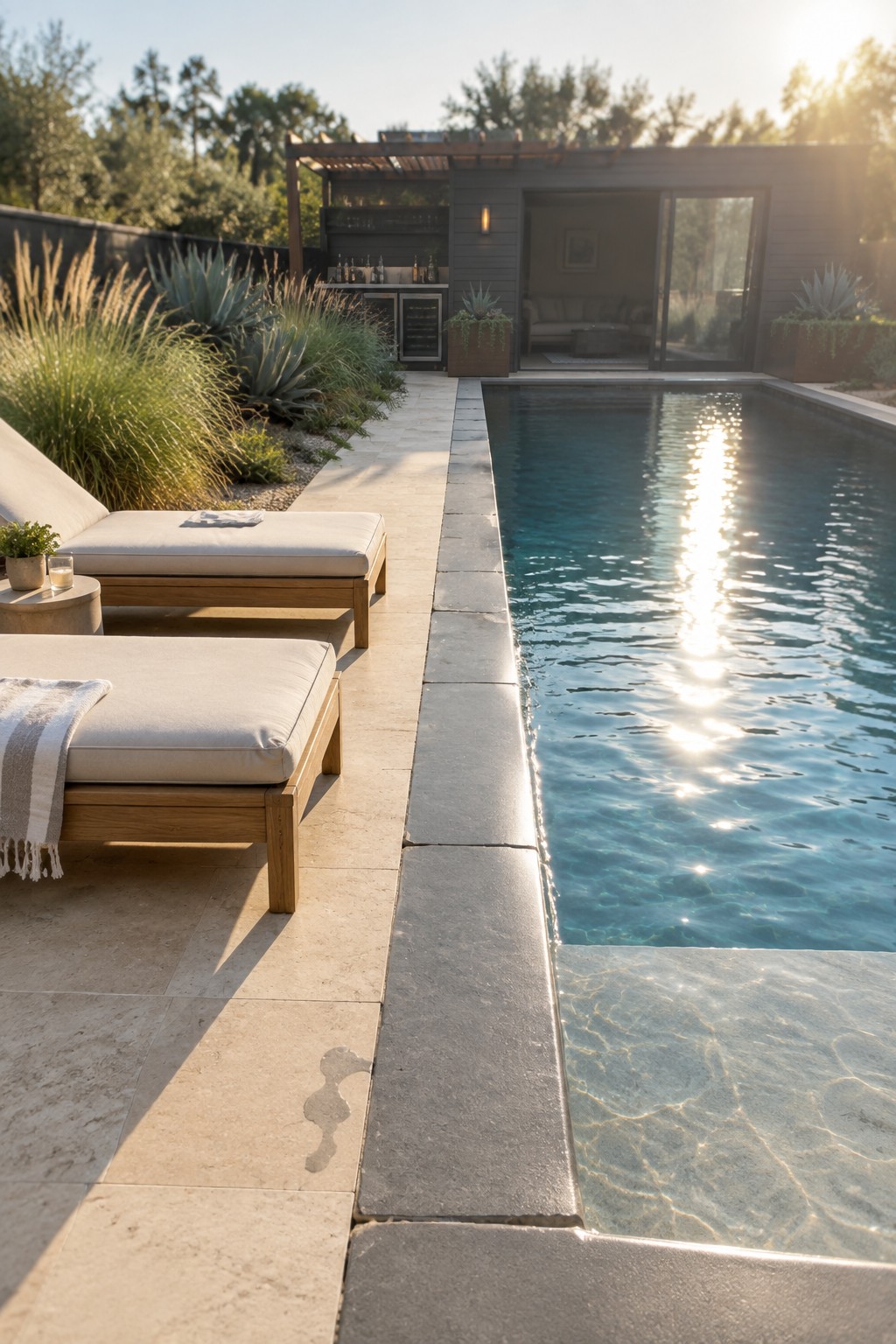
An outdoor bar makes the pool area more usable for gatherings. It gives people a place to grab drinks without heading inside, and it turns the space into a spot where guests can linger longer instead of just swimming and leaving.
This setup works best on larger lots where you can keep the bar a few feet back from the water so traffic flows easily. Use the same paving material under the bar and lounge chairs so the whole zone feels connected, and add simple storage for glasses and bottles to keep it practical year round.
Metal Edging Keeps Planting Beds Tidy
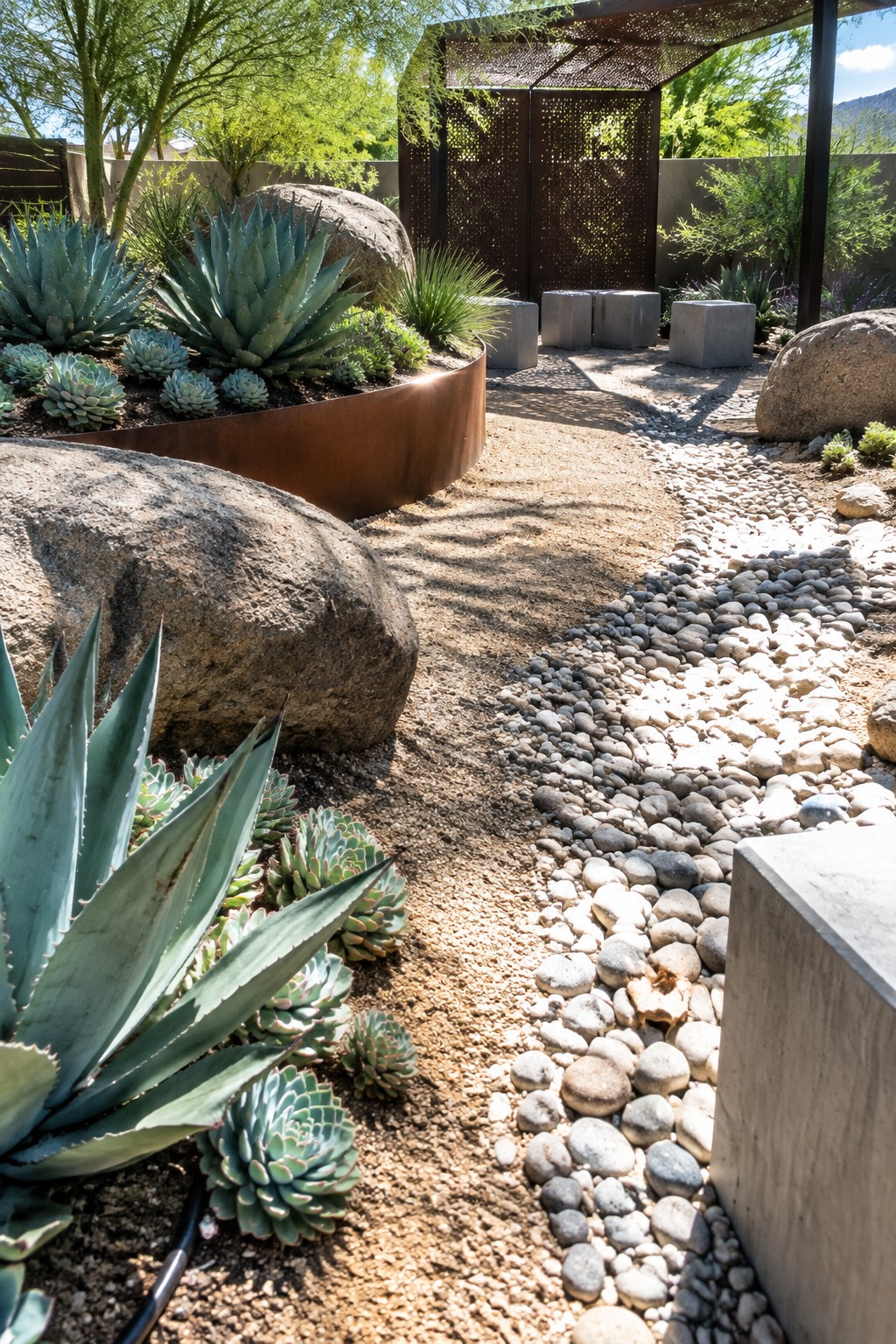
Metal edging gives a garden a finished look while holding everything in place. It works well in gravel settings because it stops the stones from spilling into the beds and makes weeding simpler over time.
This style suits dry climates and homes that want low upkeep without giving up structure. Gentle curves help the beds blend into the rest of the yard instead of looking too rigid.
Stepping Stone Paths Through Gravel

Stepping stones set into gravel make a simple path that feels natural in a backyard. The stones give firm footing while the gravel fills the spaces between them and helps control weeds without much extra work.
This approach works best in smaller gardens or along the side of a house where you want something low maintenance. Flat stones keep the walk steady, and the gravel can be raked lightly from time to time to refresh the look.
Zone Your Patio With a Brick Outdoor Kitchen

A brick base under the cooking area gives the whole zone a solid feel and holds up well to daily use. It also creates a clear separation between where you cook and where you sit down to eat.
This works best in backyards that already have some hardscaping in place. Keep the oven close to the grill so everything stays in one spot, and leave enough room around the table for chairs to move without crowding the plants.
Light a Garden Path to Connect Outdoor Zones

A gravel path with low lights along the edges makes it easy to move between different parts of the backyard after dark. It turns separate seating spots into one usable space instead of leaving them feeling cut off from each other.
This setup works best in yards that already have a patio or deck near the house and another spot further out, like a dining table. Keep the lights soft and warm so the path feels inviting rather than like a walkway.
Vertical Garden Walls for Small Yards

A vertical garden wall packs a lot of plants into a narrow strip of space. Instead of spreading beds across the ground, rows of planters mounted on the fence or wall create layers of greenery that feel full without crowding the area.
This approach suits compact backyards or side yards where floor space is tight. Use sturdy troughs that can handle soil weight, water them regularly, and mix herbs with flowers so the wall stays practical as well as green.
Mown Paths Through Flower Beds
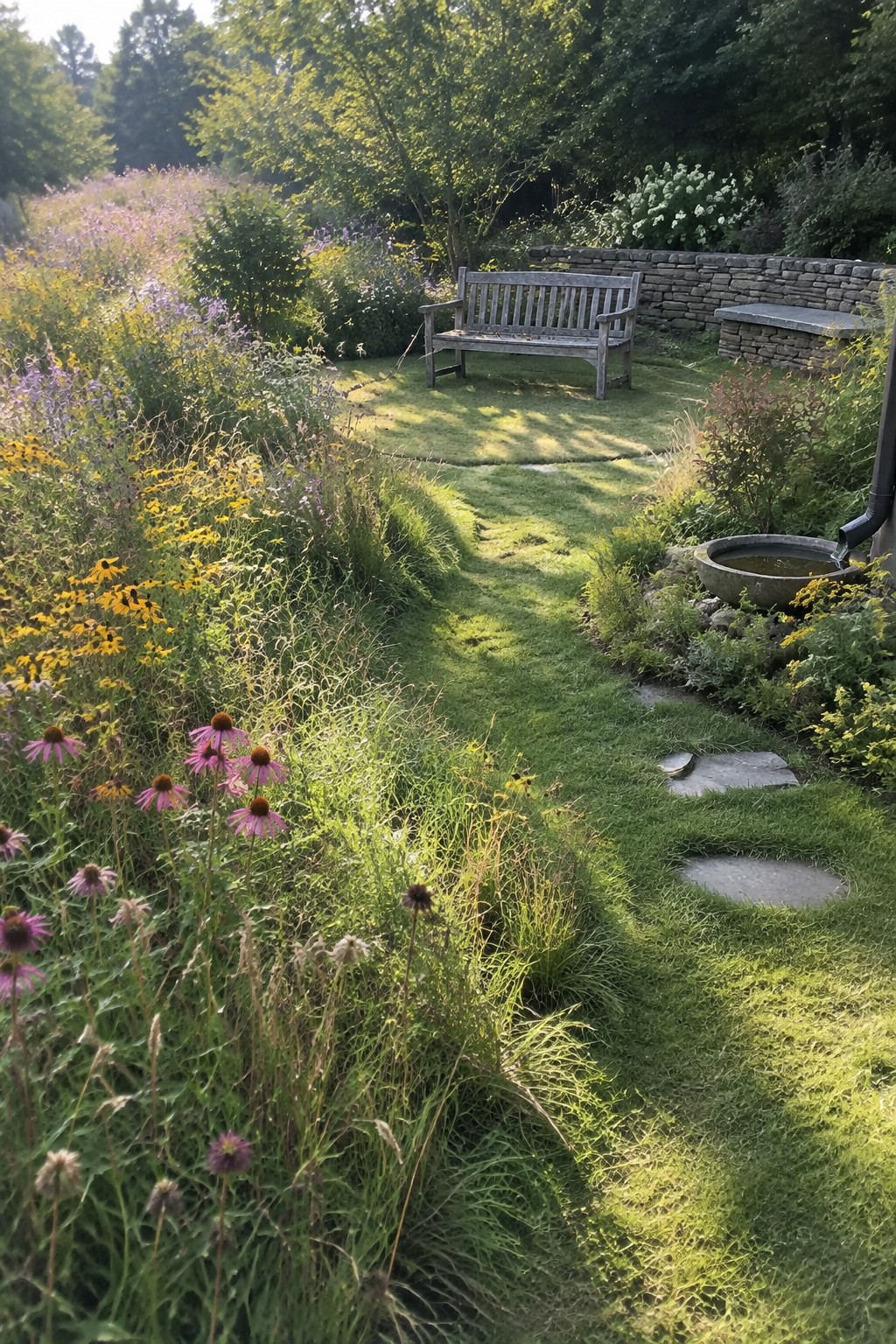
A mown grass path gives the garden an easy way to move through dense plantings without breaking up the flow. It keeps the space feeling natural while still making it practical to reach different areas like the bench or the water feature.
This works best in yards with room for wider beds on either side. Let the edges stay a little soft so the grass blends into the flowers instead of creating sharp lines.
Terracing A Sloped Yard With Retaining Walls
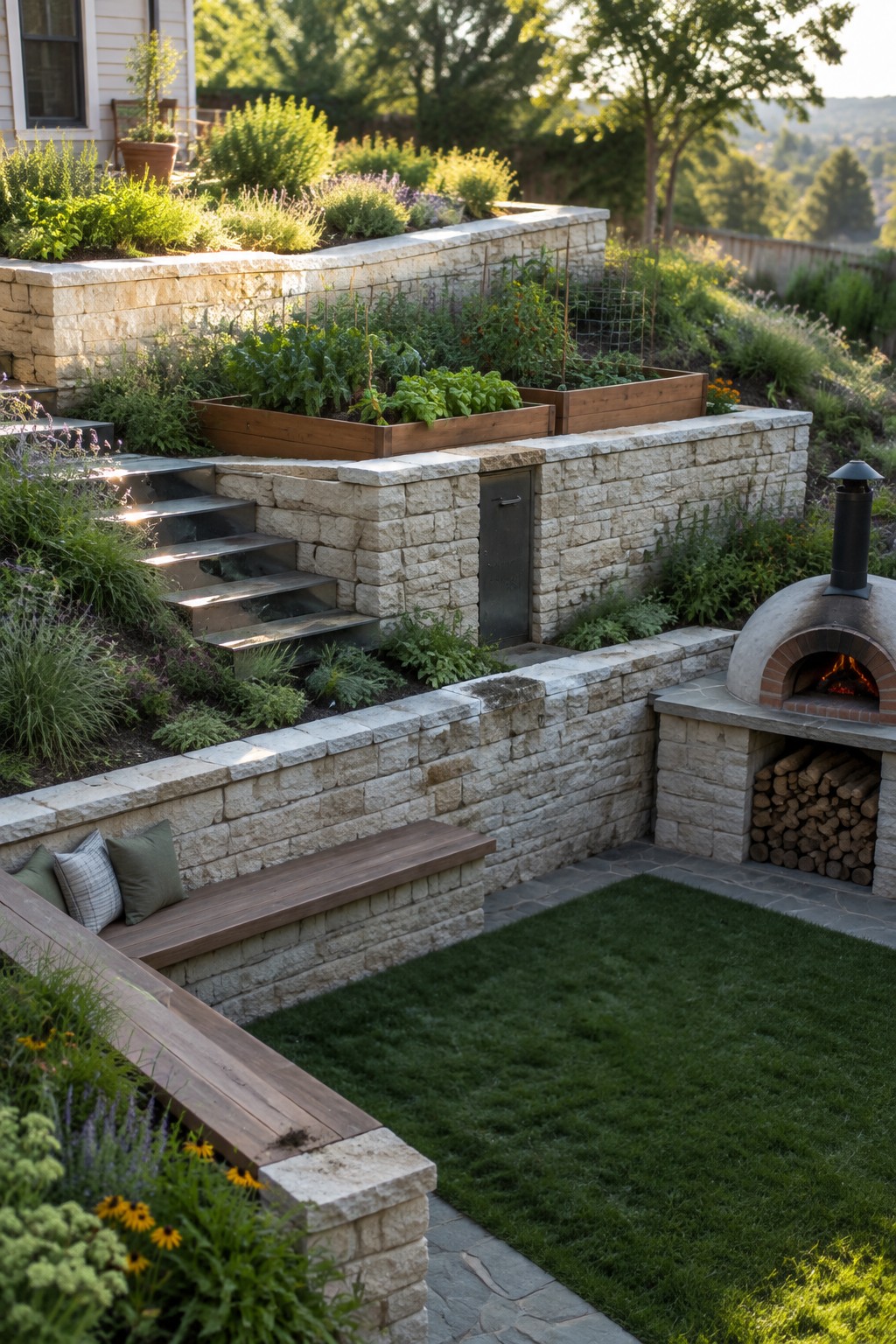
Many sloped backyards stay underused because the ground just does not feel practical. Stone retaining walls solve that by carving out flat zones that hold both garden beds and seating without fighting the hill.
This works especially well on lots that drop several feet, where you can stack the walls to create separate areas for vegetables, herbs, and a small lawn. It also lets you tuck in built-in benches or even an outdoor oven while keeping the whole space easy to walk through.
Multi-Level Decks That Create Functional Zones
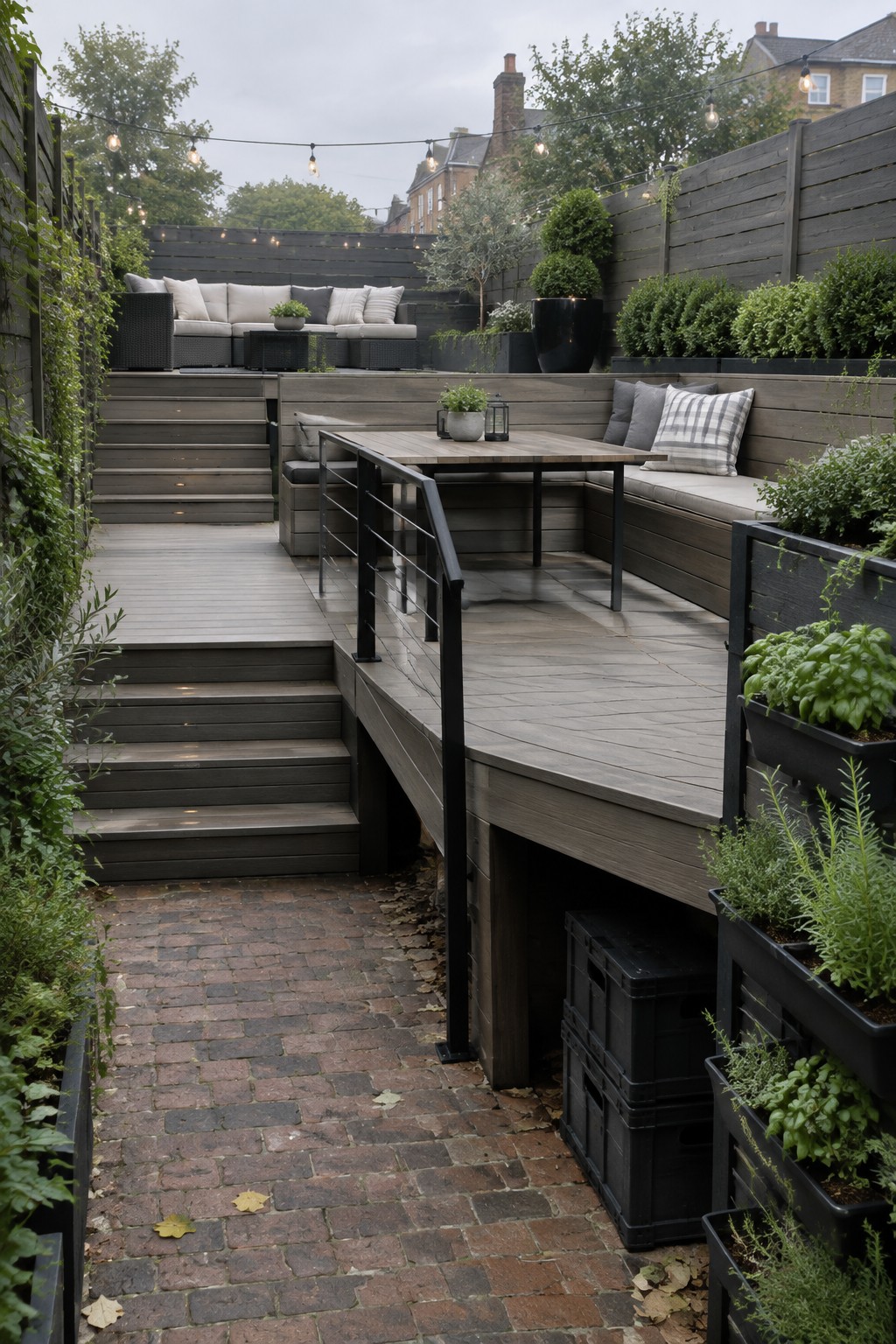
A raised deck with steps down to a lower path can split a backyard into clear areas for sitting and moving around. The different heights make each spot feel separate without needing walls or extra dividers, and it works especially well when space is tight.
This setup suits homes with modest yards where you want room for both dining and casual use. Keep the upper level for a table and benches, then use the lower area for walking or extra plants. Watch the railings so they do not block the flow between levels.
Formal Hedges for a Structured Garden Layout
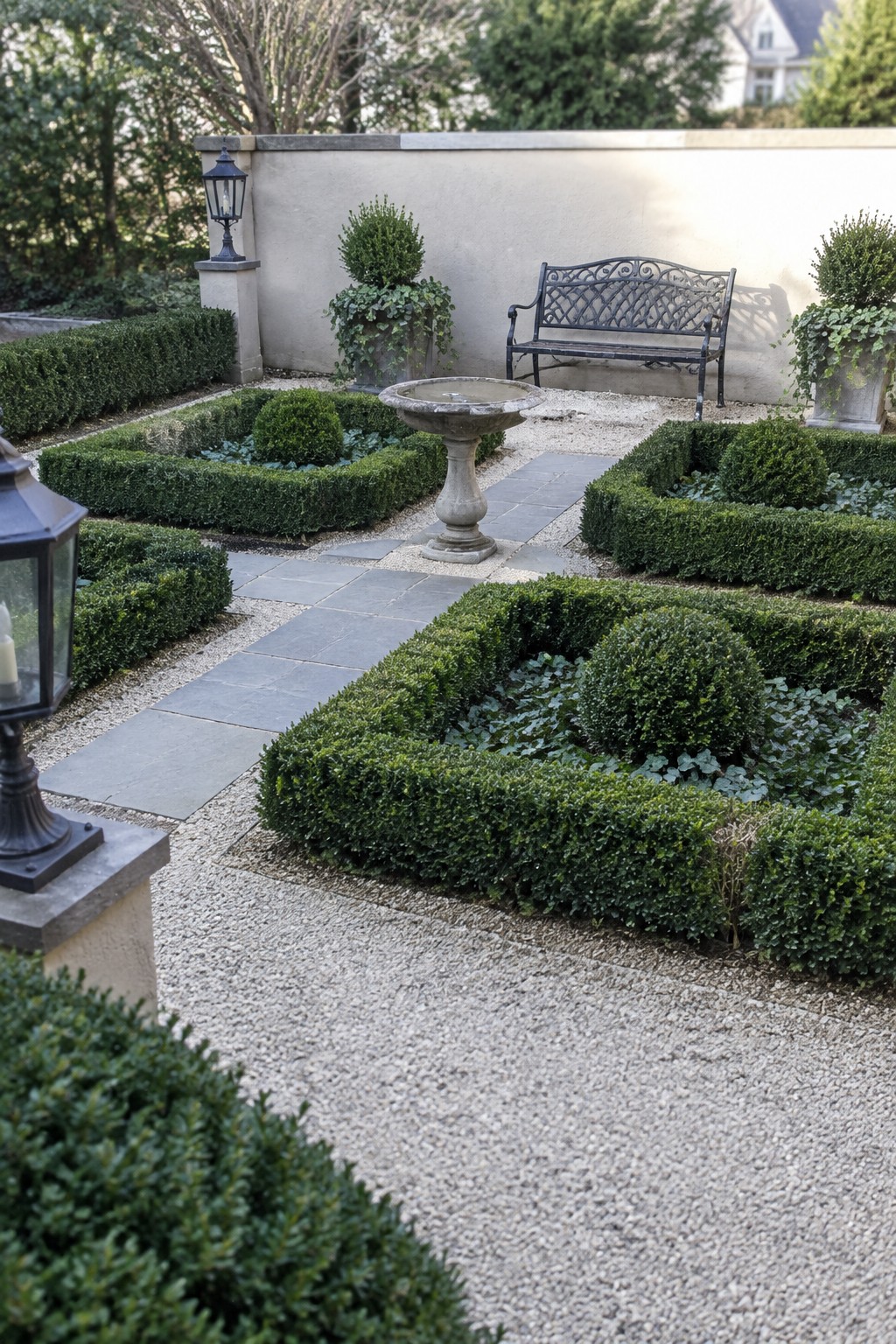
Boxwood hedges clipped into clean shapes can turn an open backyard into something that feels more deliberate and easy to use. The low walls they create help mark paths and separate planting areas without adding fences or walls that might feel too heavy.
This works best on fairly flat ground where you can keep the lines straight. Gravel underfoot keeps things simple to maintain and lets water drain well. Just plan for regular trimming so the shapes stay sharp through the seasons.
Define Outdoor Zones With Layered Textiles

Many backyard patios end up feeling unfinished because the seating sits directly on the hard surface. Adding a large rug, floor cushions, and a few poufs pulls the space together and makes it read as a separate lounge area instead of just furniture on a deck.
This approach works best on wood or concrete surfaces where you want a softer spot for sitting without building permanent structures. Use outdoor-rated fabrics and keep the pieces low so the textiles themselves mark the boundary of the zone.
Raised Beds Make Vegetable Gardening More Manageable
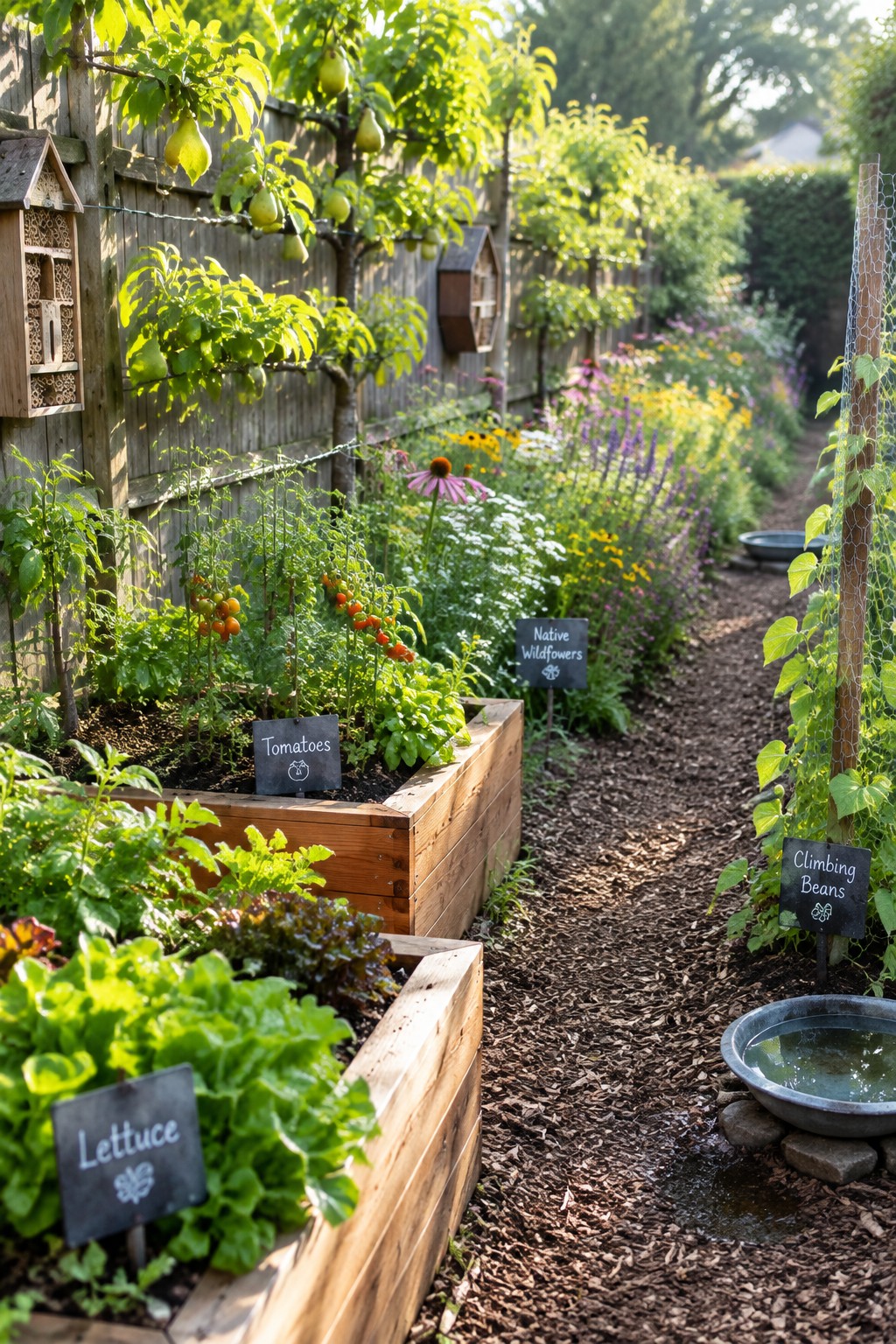
Raised beds give you a clean way to grow vegetables even when the native soil is not great. They also help keep plants separated and easy to reach, which cuts down on bending and weeding over the season.
Place them along a path so you can walk right up to each crop. This works well in smaller yards or any spot where you want vegetables mixed with flowers without the whole area looking messy.
Add a Rock-Lined Channel for Natural Drainage

A shallow water channel edged with smooth stones keeps runoff moving through the garden without creating muddy patches. The rocks slow the flow just enough while still letting water drain away, and the plants along the sides help hold the soil in place.
This setup works best in yards that slope or collect water after rain. Keep the channel narrow so it does not take over the space, and use larger flat stones where you need to step across. It pairs especially well with simple gravel paths and low-growing grasses.
Add a Wooden Platform for Outdoor Movie Nights

A raised wooden platform gives the backyard a clear spot for seating without spreading everything across the grass. It keeps cushions and blankets off the ground and makes the area feel more intentional, especially when paired with simple string lights overhead.
This setup works well in medium to large yards where you want one zone for evening gatherings. Keep the platform size modest so it does not dominate the space, and choose weather-resistant wood that can handle regular use.
Add a Wood Stove to Your Patio
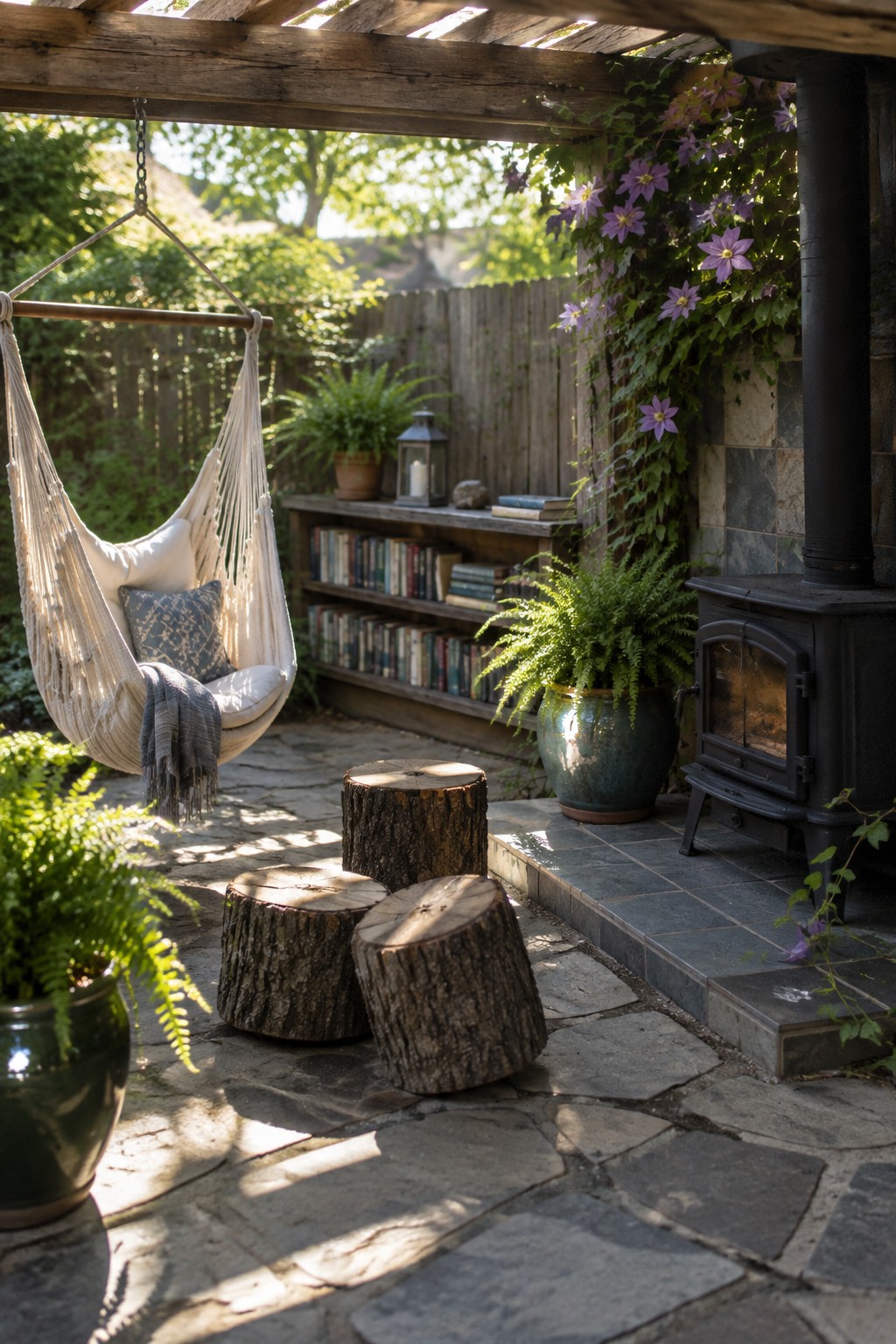
A wood stove can turn a basic patio into a space that stays usable even when the weather cools off. It gives off steady heat and creates a natural spot for people to gather without needing to head back inside right away. The stove also adds a bit of structure to the layout since it sits on its own tiled base.
This works best on a covered patio or one that gets some shelter from wind. It suits homes with a decent sized backyard where you already have seating and want to stretch the season a little longer. Just make sure there is proper clearance around the stove and check local codes before installing one.
Built-In Curved Seating for Outdoor Zones

A curved stone bench built right into the edge of the patio gives you seating that feels like part of the garden instead of something added later. It follows the shape of the space, creates a natural boundary, and still leaves room for a dining table nearby. Many people like this setup because it handles a crowd without needing a row of separate chairs.
This works best on patios that border flower beds or a water feature. Keep the bench height comfortable for sitting and use simple cushions so it stays practical through the seasons. It suits smaller backyards that need seating without crowding the open area.
Frequently Asked Questions
Q: How do I decide where to start if the list feels overwhelming? A: Pick one zone that gets the most use right now. Add a simple seating spot or a small garden bed there first. Build from that spot once it feels right.
Q: My soil stays pretty wet most of the year. Which ideas still work? A: Focus on raised beds or decking ideas from the list. They lift plants and furniture above the damp ground. You can still create functional spots without fighting the moisture.
Q: What about adding these features if I have pets running around? A: Choose durable materials like gravel or composite decking. They hold up better to digging and heavy traffic.
