

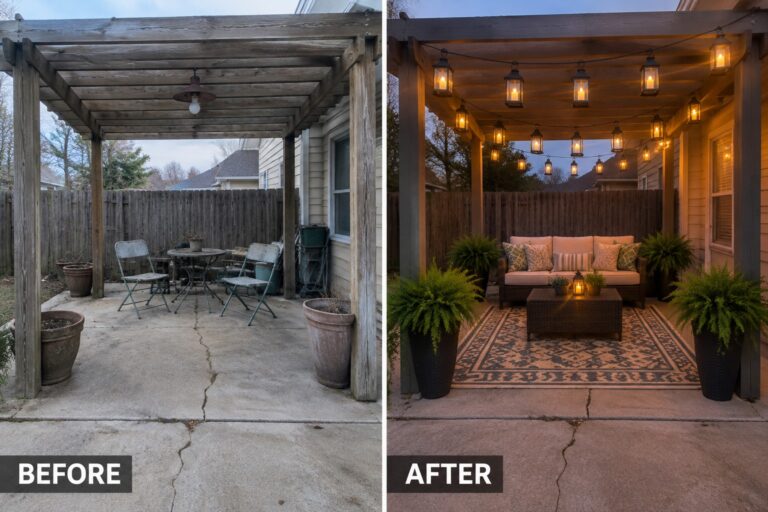
I often notice that a patio can feel overlooked when the evenings arrive and there is no real way to spend time out there comfortably.
Adding lanterns around the seating area gives a soft light that makes the whole space feel more settled without needing a big overhaul.
In my own yard I would start with a few hanging options to see how the light falls before committing to anything permanent.
It turns out that choosing lanterns with a simple shape helps keep the focus on the furniture and plants already in place.
Small lighting tweaks really do encourage more evenings outside.
Add Lanterns To Turn A Bare Patio Into A Cozy Evening Spot
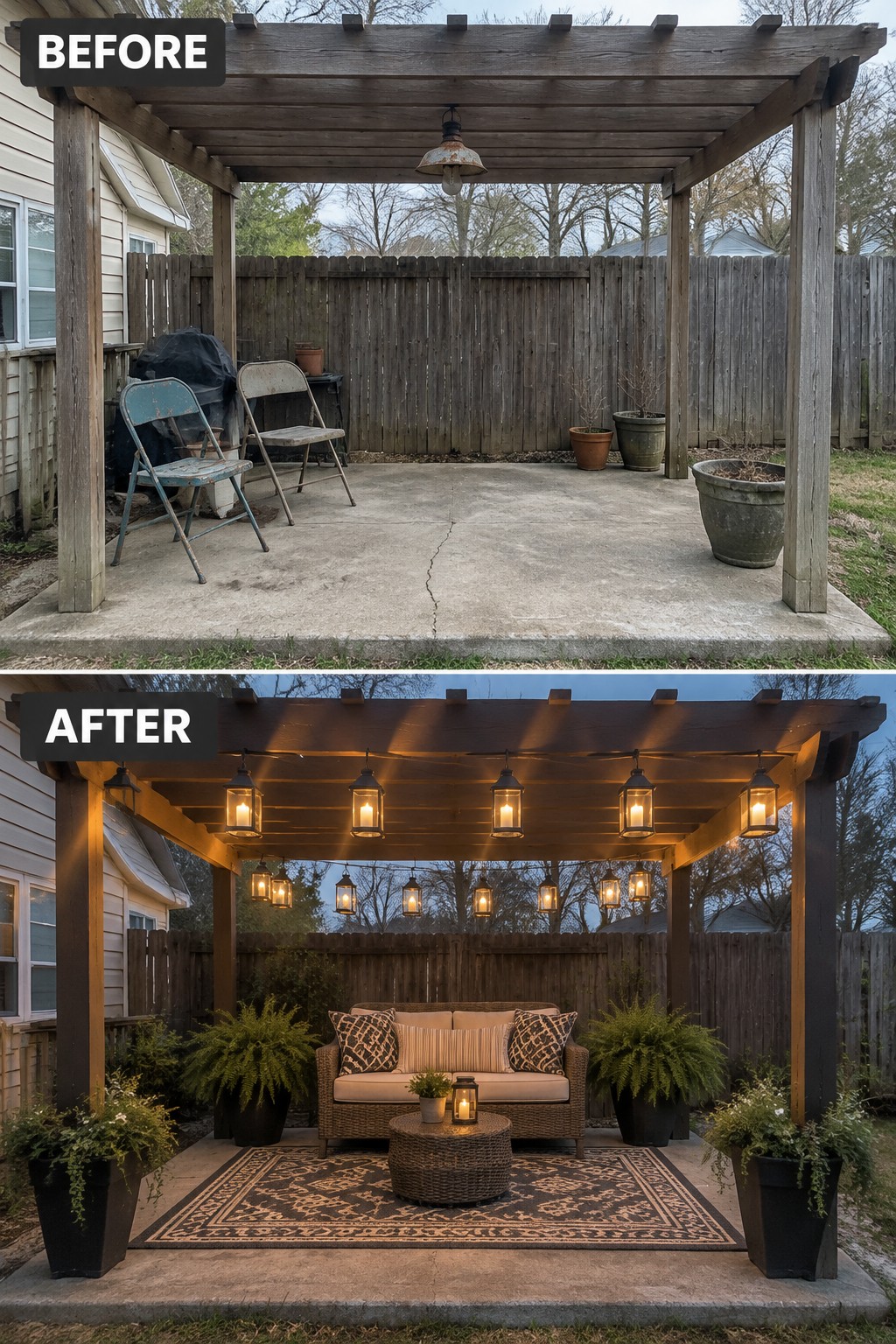
The main shift here comes from the lighting. The before photo shows an empty pergola over plain concrete with almost no reason to linger after dark. In the after, multiple lanterns and string lights create a warm, usable space that feels like an outdoor room once the sun goes down.
This approach works best on covered patios or decks that already have a solid structure but lack purpose at night. Hang lanterns at varying heights rather than in one straight line, and keep the seating simple so the lights remain the main feature. Focus on areas where people actually sit so the light is useful instead of just decorative.
Use Lanterns And String Lights To Make A Patio Feel Cozy
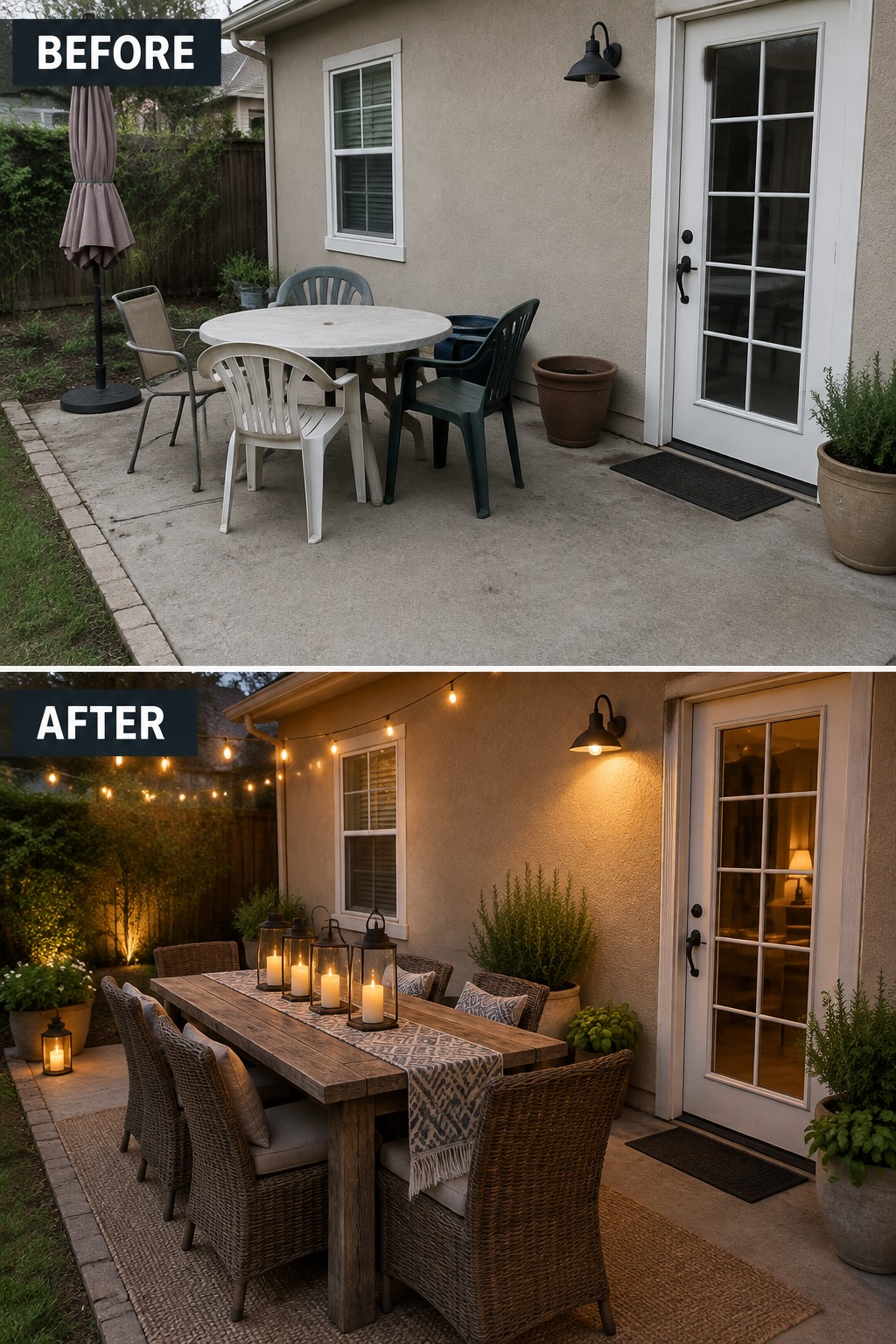
A bare patio with mismatched plastic chairs often sits unused once the sun goes down. Adding lanterns on the table and string lights overhead turns the same space into a spot that feels ready for evening meals or quiet time outside. The change comes mostly from the lighting layers, which soften the concrete and pull the seating area together without needing a full furniture overhaul.
This approach works on any patio or deck that already has a table and chairs but lacks warmth after dark. Place a few lanterns at different heights, then run string lights along the roofline or fence to create even coverage. It suits homes where people want to use the outdoor space more often without spending heavily on new pieces.
Line A Garden Path With Lanterns
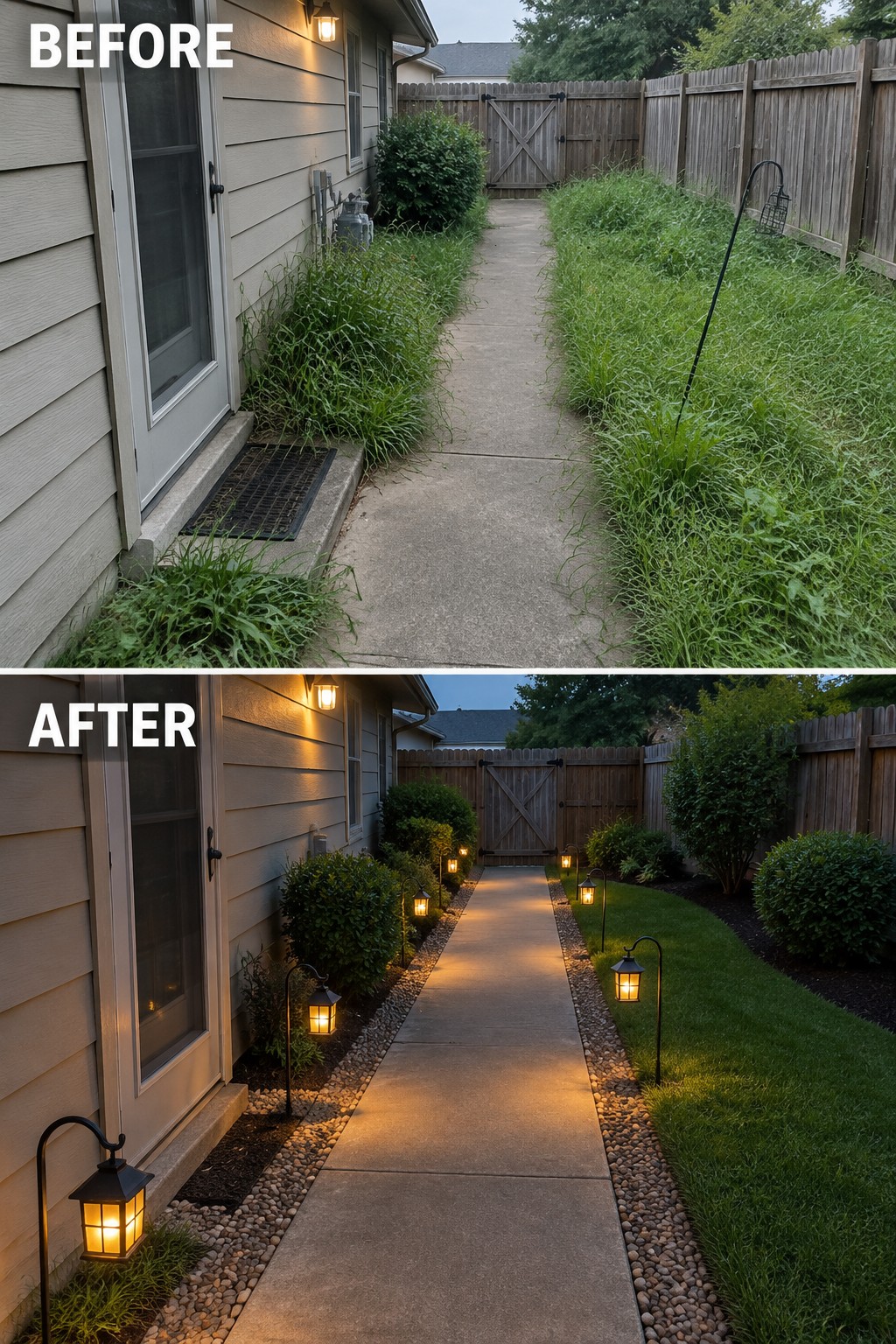
The before photo shows a plain concrete walkway with tall grass crowding both sides and almost no definition at night. In the after version, simple black lanterns placed at regular intervals turn the same path into a clear, usable route once the sun goes down. The gravel borders and low shrubs keep the edges tidy so the lights can do their job without looking lost in weeds.
This approach works well on any narrow side yard or walkway that gets used after dark. Start by cleaning up the edges and adding a gravel strip so the lanterns have a clean base, then space the lights evenly so they guide feet without creating glare. It suits older homes where the path already exists but feels forgotten once evening arrives.
Add Lanterns To Make A Deck Feel Cozy At Night
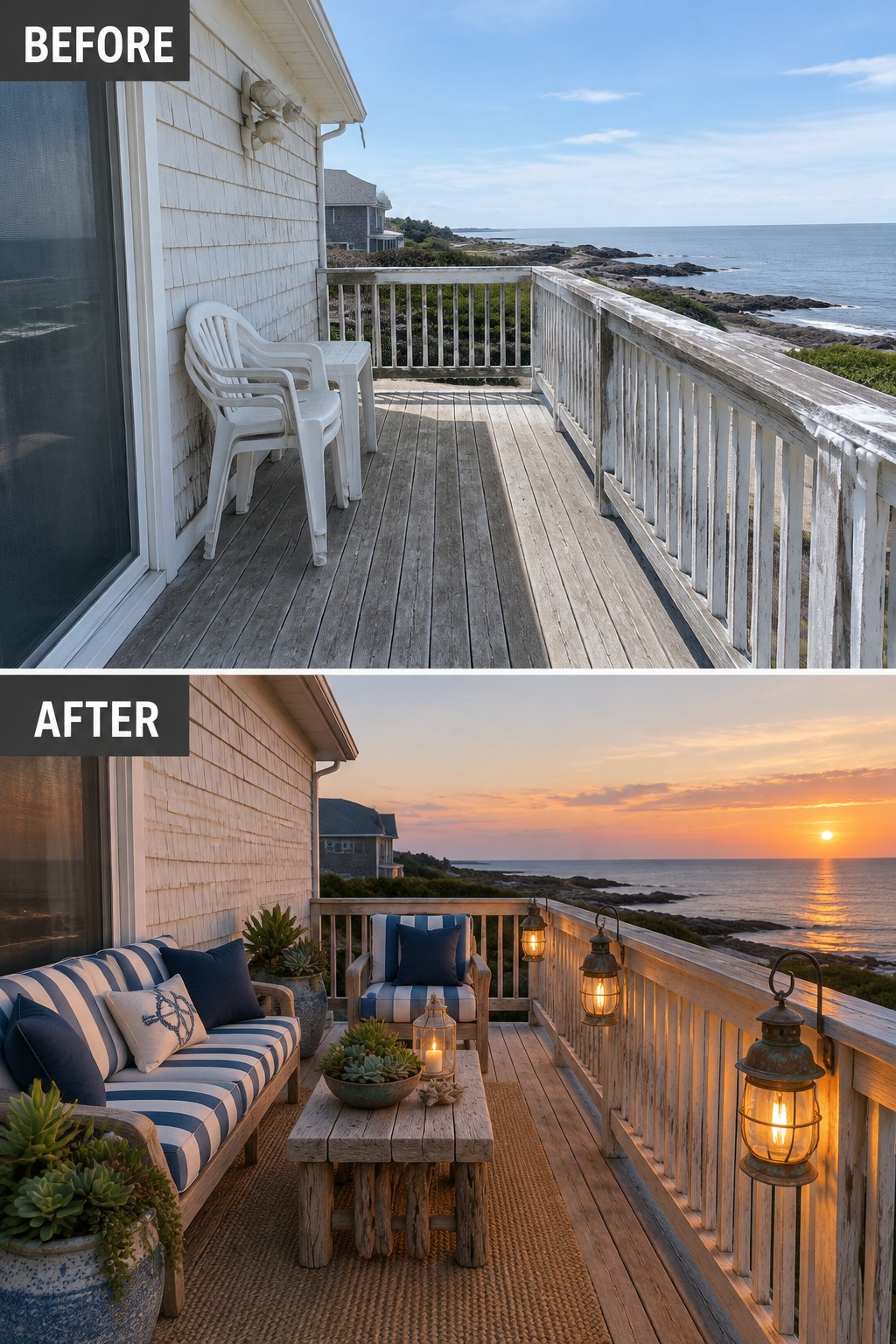
The deck started out as a simple wooden platform with only a couple of plastic chairs. Adding lanterns along the railing gave it a clear purpose once the sun set, turning an empty daytime space into one that actually invites people to sit outside after dark.
This idea works best on decks or patios that already have basic seating but feel unfinished at night. Use a few weatherproof lanterns hung at railing height, keep the light soft, and let the rest of the space stay simple so the lanterns become the main feature rather than competing with too much else.
Use Lanterns To Make A Patio Feel Cozy
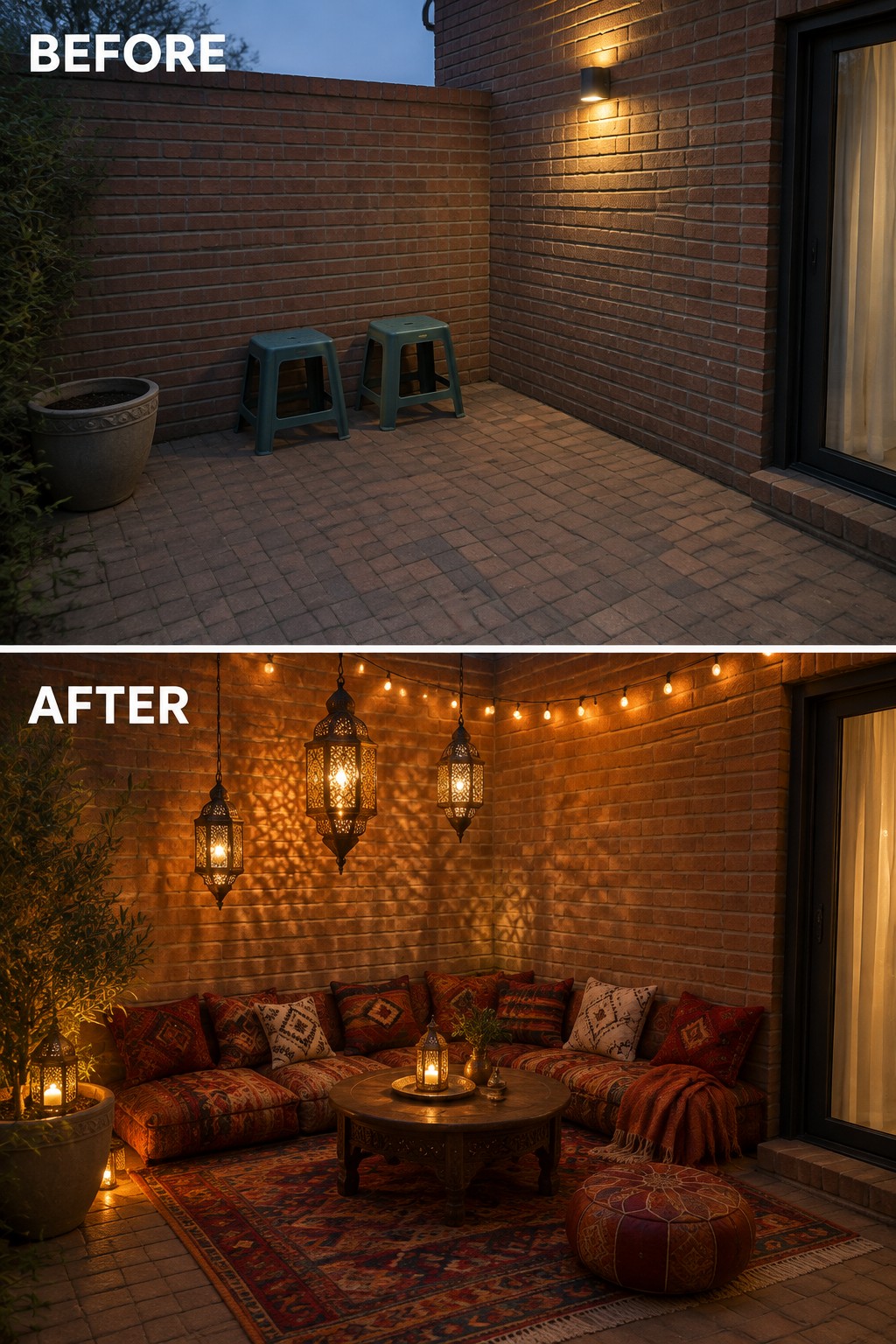
An empty patio with just two stools feels cold and unfinished once the sun goes down. Adding hanging lanterns and a line of string lights changes that completely. The lanterns throw warm light onto the brick walls and create soft shadows that make the space feel enclosed and calm.
This approach works best on small patios or courtyards where you want an evening seating spot without building anything new. Hang two or three lanterns at different heights near the seating area, then run string lights along the top of the wall. Keep the furniture simple so the lighting stays the main feature.
Use Lanterns To Turn A Bare Patio Into A Nighttime Seating Area
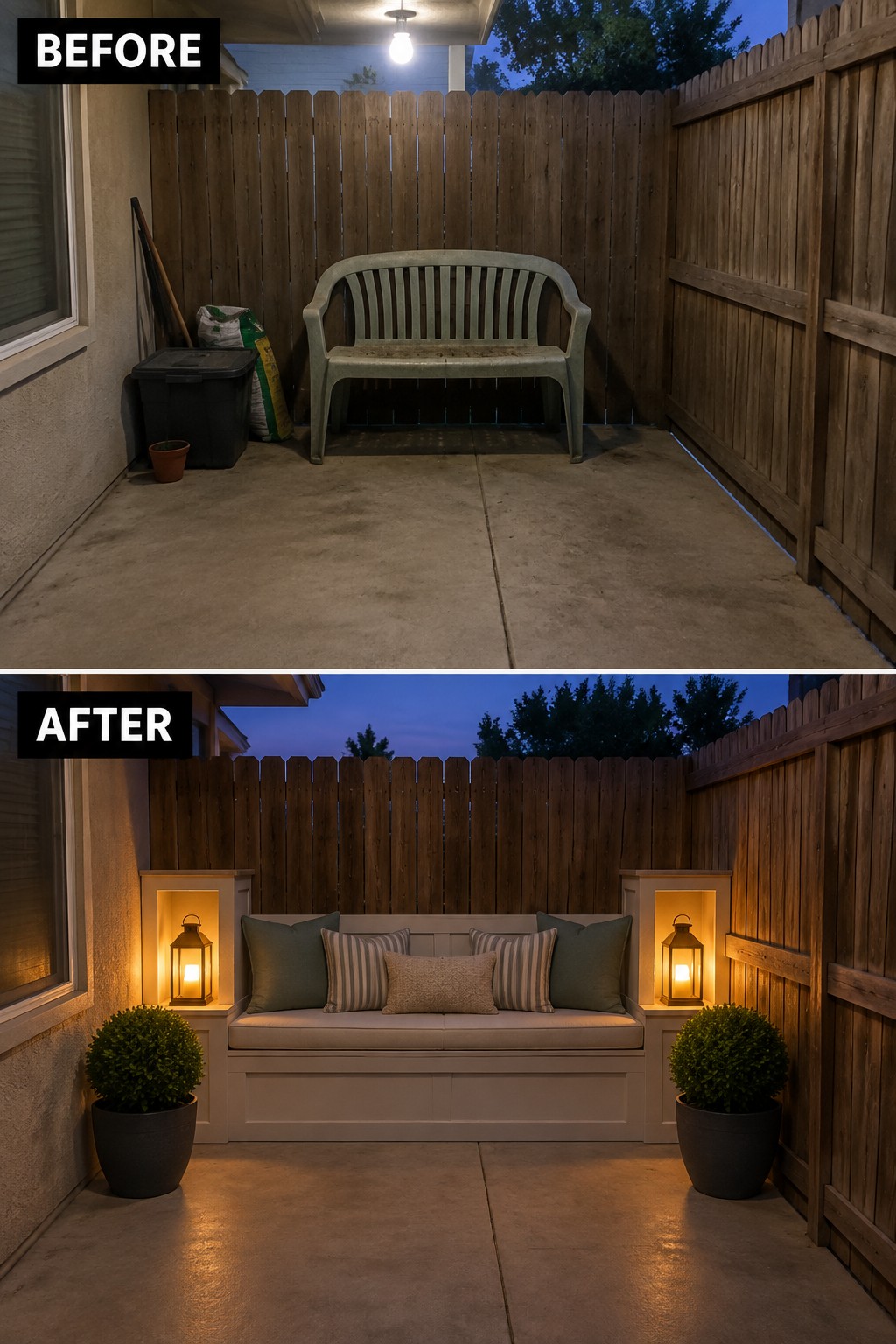
A concrete slab with one lonely bench tends to stay empty once the sun goes down. Placing a pair of lanterns at seating height on either side of the bench creates a simple pool of light that makes the whole area feel intentional and usable after dark.
This works best on small patios where you want to define a clear spot without adding walls or big structures. Keep the lanterns at a comfortable height near where people sit, choose weatherproof seating, and add just enough greenery to soften the edges.
Hang A Lantern Chandelier Over Your Outdoor Island
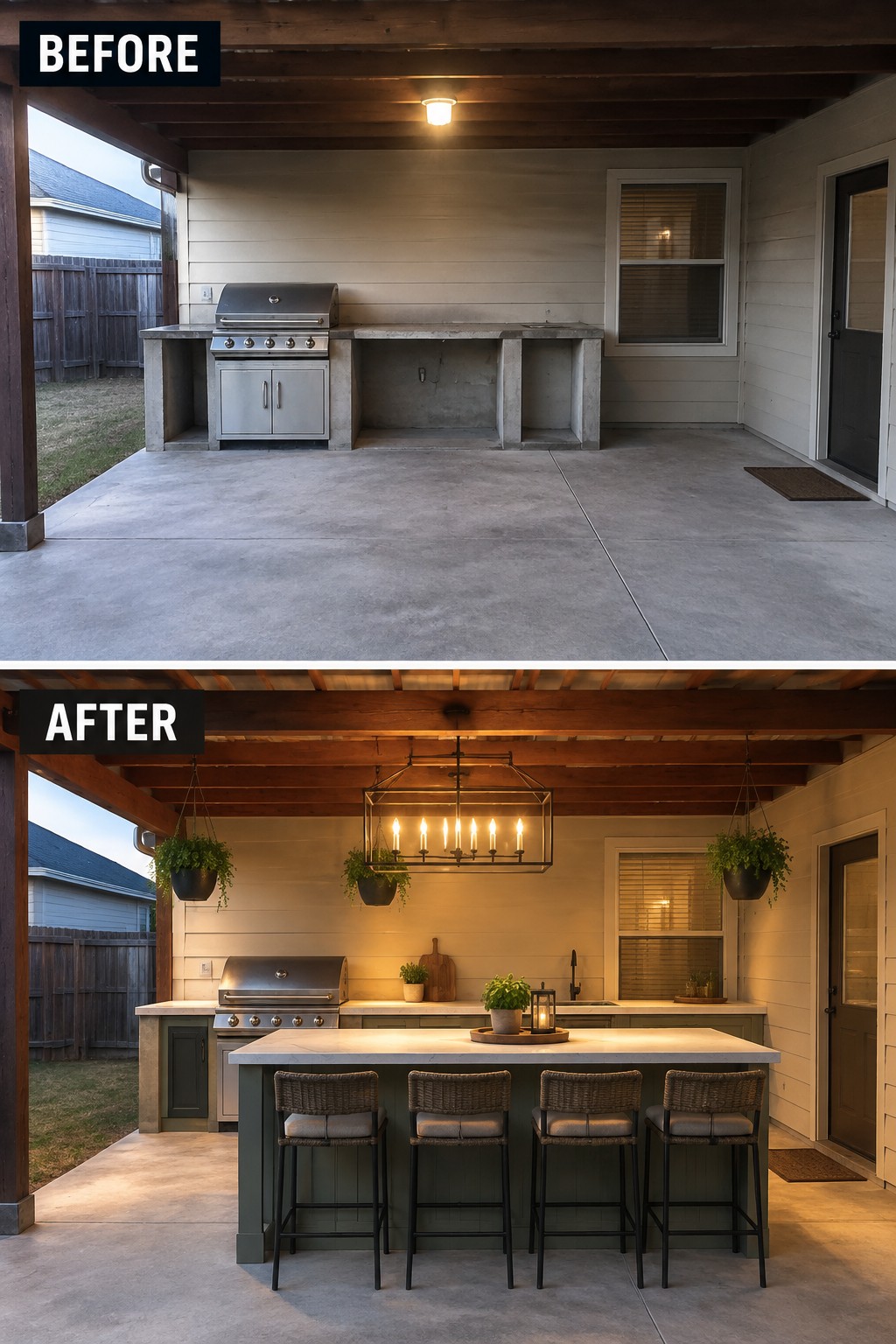
A big hanging lantern can turn a basic concrete patio with a grill into a space that actually feels like an outdoor room. The before photo shows just a single ceiling light over an empty counter area. The after adds a large rectangular lantern right above the new island, which defines the cooking and seating zone and makes the whole patio usable after dark.
This idea works best on covered patios that already have a built-in cooking station. Place the lantern at a height that lights the counter surface without blocking movement, and keep other lights minimal so the fixture stays the focus. It suits homes that want one main light rather than lots of small ones scattered around.
Use Lanterns On Posts To Make A Patio Feel Cozy

A plain fire pit area often feels unfinished once the sun goes down. Adding simple posts with hanging lanterns around the edge brings light right where people sit and makes the whole space feel like an outdoor room instead of just a circle of chairs.
This works best in backyards where you already have a fire pit or seating zone. Set the posts at a comfortable height so the glow reaches the chairs without shining in anyone’s eyes, and keep the number of lanterns modest so the area stays easy to move around. It is a practical step that turns occasional evening use into something more regular.
Add Lanterns Along Stairs For Evening Use
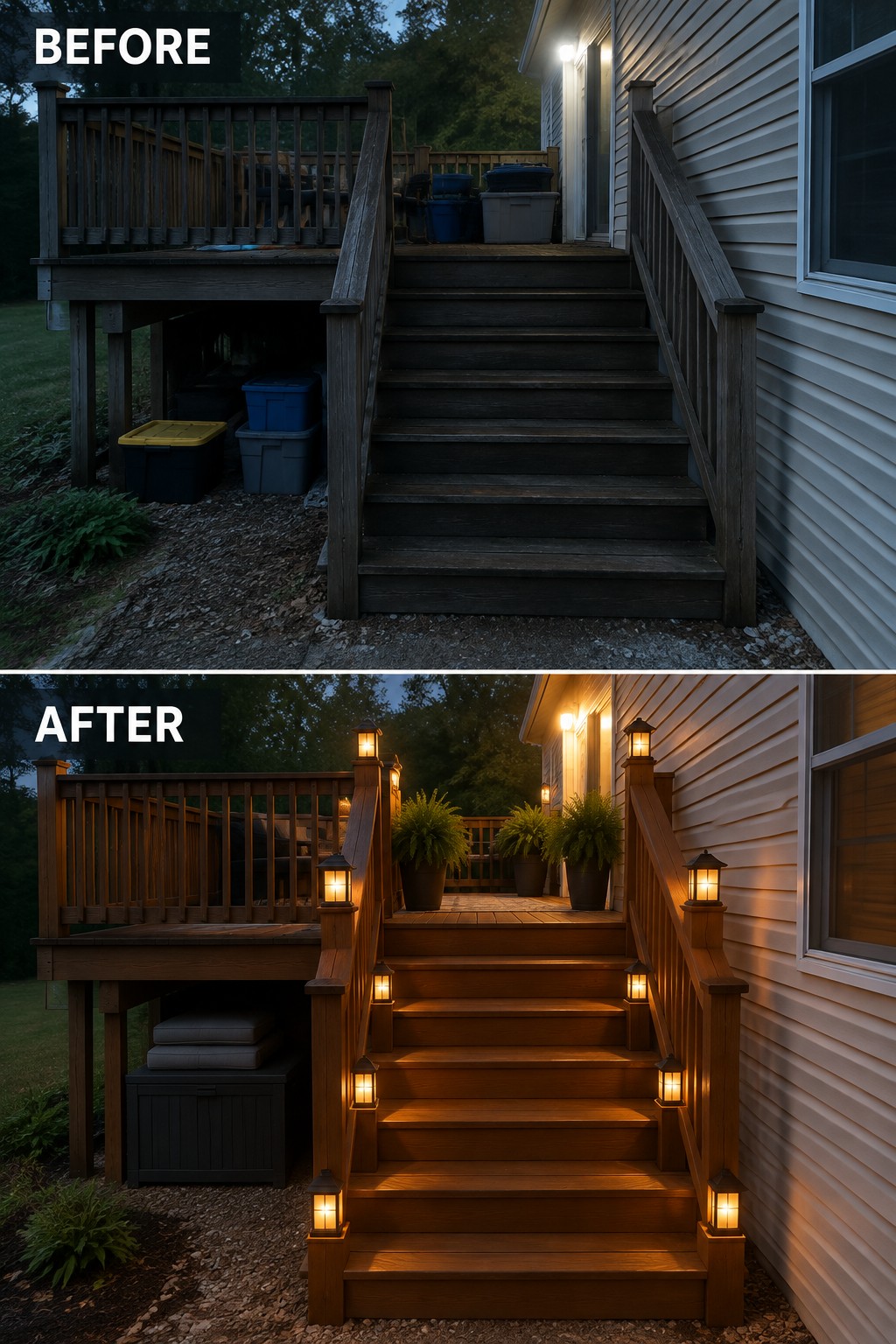
Adding a few lanterns along deck stairs turns a dark set of steps into something you can actually use after sunset. In the before photo the stairs sat mostly in shadow with storage bins piled underneath. The after version places small lanterns at regular intervals on the posts and railings, which lights the path and softens the whole side of the house without needing much else.
This works best on any set of outdoor stairs that leads to a deck, porch, or side entry. Start with one lantern at the top and bottom, then add more where people step. Keep the style simple and choose fixtures made for outdoor use so they hold up to weather. The goal is steady light for safety plus a bit of warmth, not a full lighting plan.
Use Lighting To Turn A Bare Balcony Into A Usable Spot
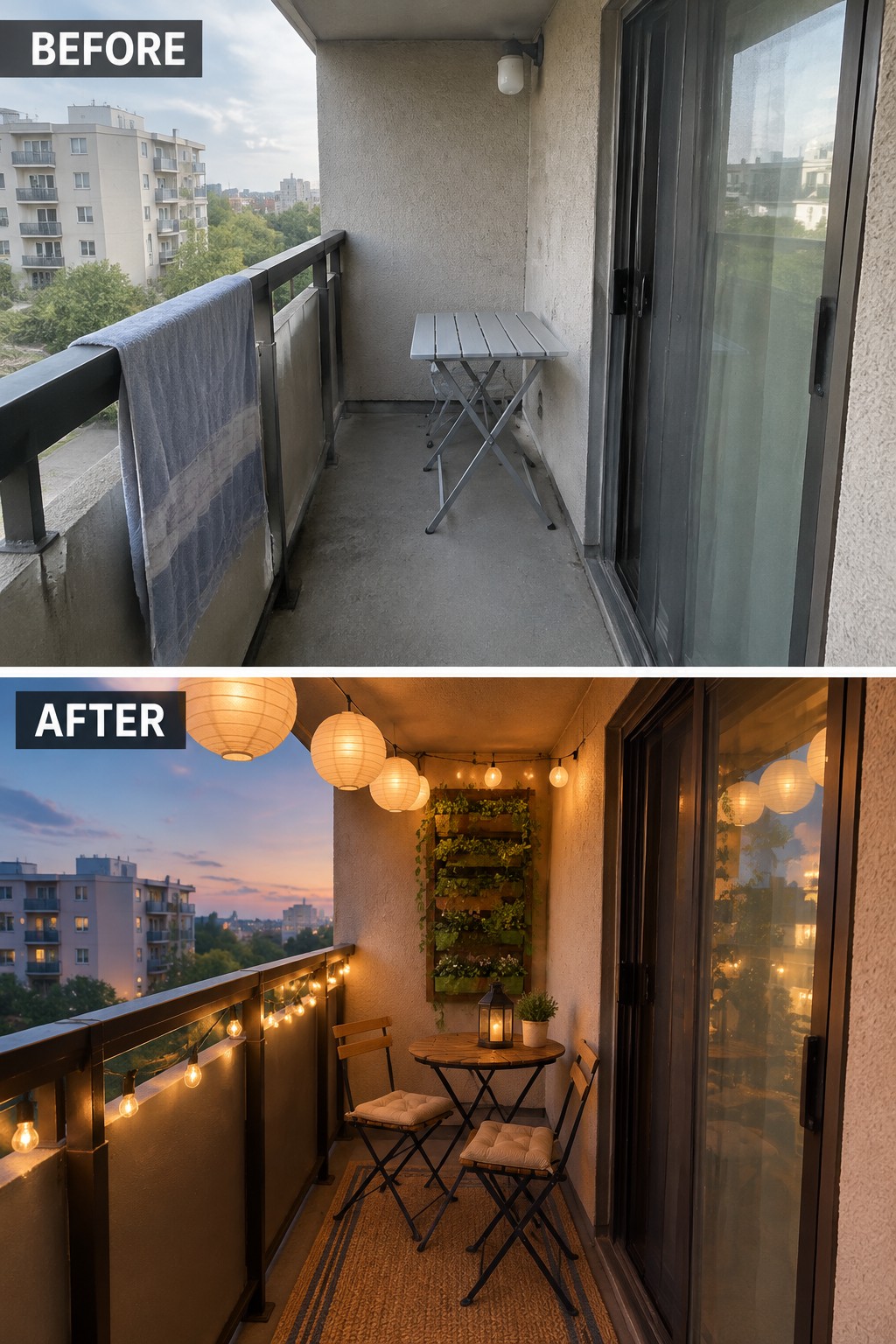
A small balcony often sits empty because it feels too plain to spend time on. Adding string lights along the railing and a few lanterns overhead makes the space feel finished and inviting once the sun goes down.
This approach works best on balconies that already have a table and chairs but lack any sense of warmth. Keep the lighting simple and focused around the seating area so the space stays practical rather than overcrowded.
Use Lanterns To Light Up Stone Steps
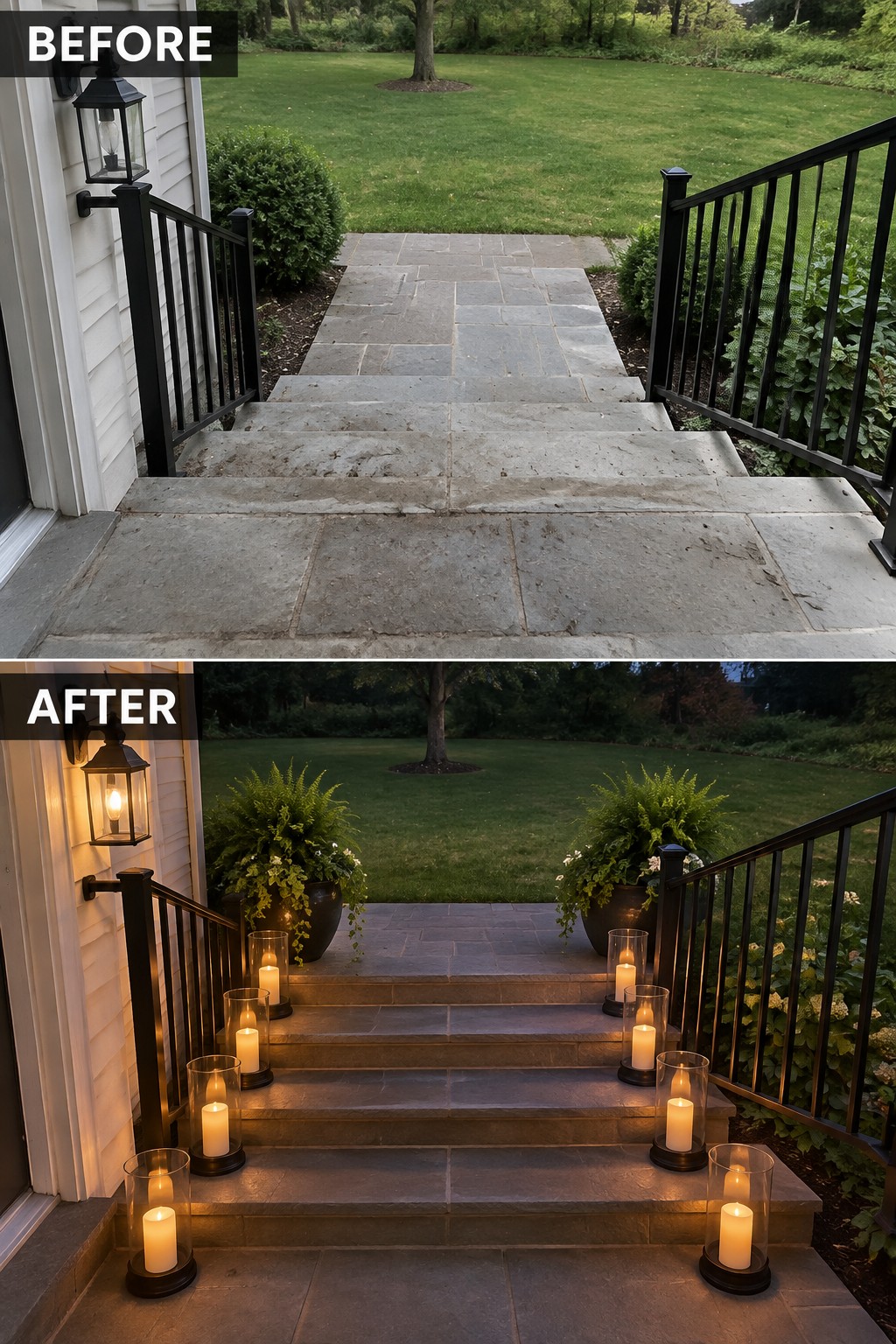
Stone steps often look flat and a bit dull once the sun goes down. Placing glass lanterns with candles along both sides of the steps adds soft, steady light that makes the whole entrance feel safer and more welcoming without needing any wiring.
This idea works best on straight runs of steps that lead to a porch or patio. Keep the number of lanterns simple so the path stays easy to walk, and choose holders that sit low enough not to block foot traffic. LED candles are a good option if you want the look without worrying about wind or open flames.
Use Lanterns To Make A Patio Feel Cozy

A plain patio with only a couple of chairs often stays empty after dark. Hanging a cluster of lanterns overhead adds the missing layer of light, turning the same space into a spot that feels ready for evening use.
This idea works best on covered patios where you can hang fixtures safely. Keep the lanterns in one main grouping above the seating, choose warm bulbs, and add just enough furniture and a rug underneath so the light actually reaches where people sit.
Use Lanterns To Light Up Planter Boxes Along A Patio
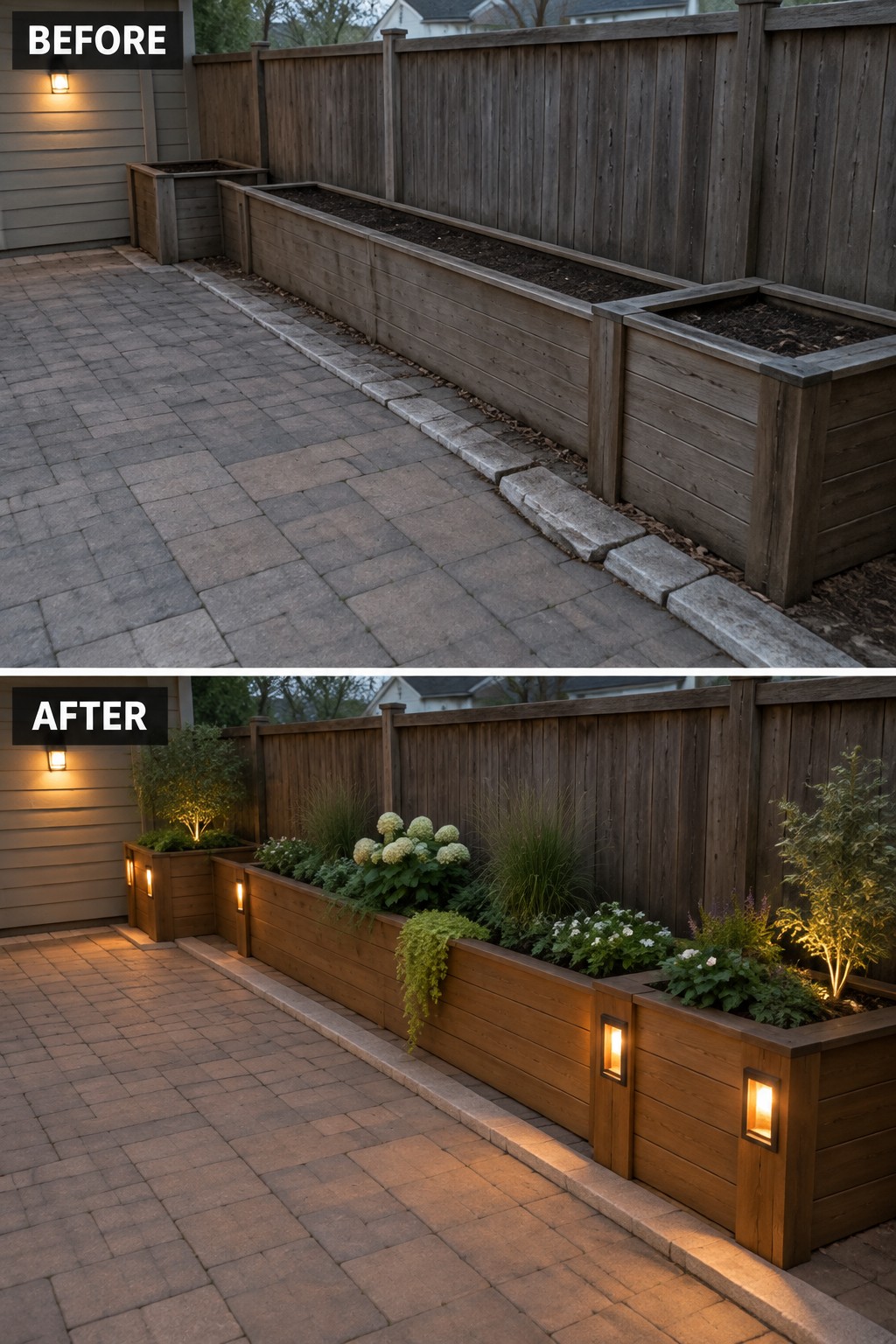
Empty planter boxes along a patio edge often sit unused because the space feels flat after dark. Adding small lanterns directly to the boxes changes that by creating a low line of warm light that follows the length of the seating area. The plants then get highlighted instead of disappearing at night, and the whole border starts to feel like part of the outdoor room rather than just storage for soil.
This approach works best on straight runs of raised beds where you want gentle light without tall fixtures blocking the view. Keep the lanterns simple and weatherproof, space them evenly, and choose bulbs that give off a soft glow instead of bright white light. It is an easy way to make an existing patio layout feel finished without adding furniture or changing the hardscape.
Add Lanterns To Brick Pillars For A Welcoming Entry
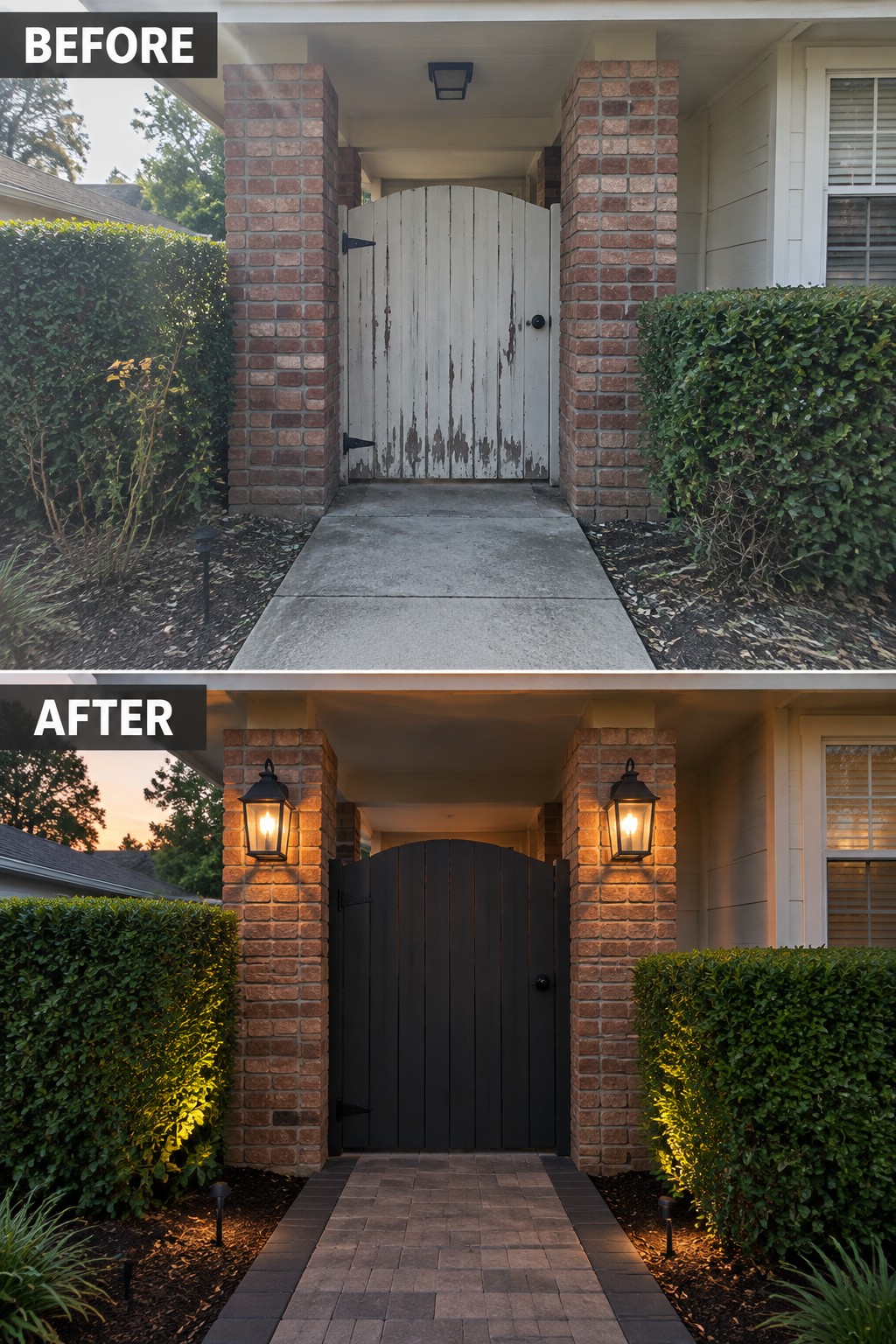
The before photo shows a basic entry with plain pillars and no lighting at all. Mounting a pair of lanterns on the brick columns adds light right at the gate, makes the path safer after dark, and gives the whole front a more finished look without any major construction.
This idea works on many homes that already have columns or pillars framing a gate or door. Keep the lanterns simple in style, match their size to the width of the brick, and use warm bulbs so the light feels soft on the surrounding plants and path.
Use Hanging Lanterns To Warm Up A Plain Outdoor Bar

The before photo shows a basic concrete bar with metal stools and empty shelves under one overhead bulb. In the after, several hanging lanterns and a few strands of lights turn the same space into an area that feels comfortable after dark.
This works best on covered patios that already have a counter or bar height surface. Hang lanterns at different heights above the stools rather than centering just one light. Keep the number of lanterns modest so the seating area stays open and the lights do not compete with each other.
Use Lanterns To Turn A Bare Patio Into A Cozy Spot
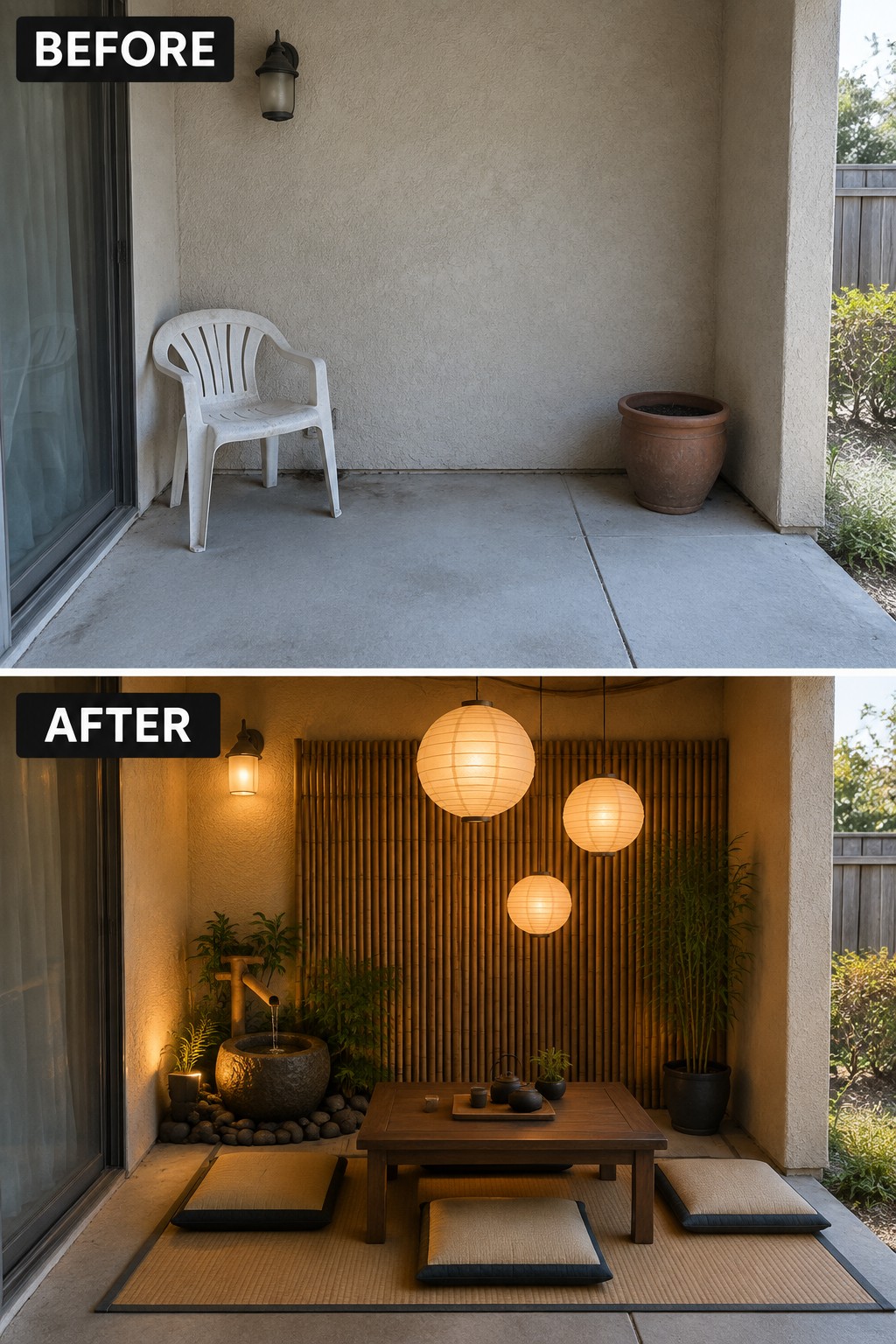
A bare concrete patio often stays empty because it feels unfinished and uninviting once the sun goes down. Adding a few hanging paper lanterns along with one wall light creates a soft glow that makes the space feel like an actual room instead of leftover outdoor floor.
This works best on small or covered patios where you want a simple evening seating area. Keep the furniture low, use one rug or mat to mark the zone, and let the lanterns become the main feature rather than adding too many extra pieces.
Use Lanterns To Make A Porch Feel Cozy At Night
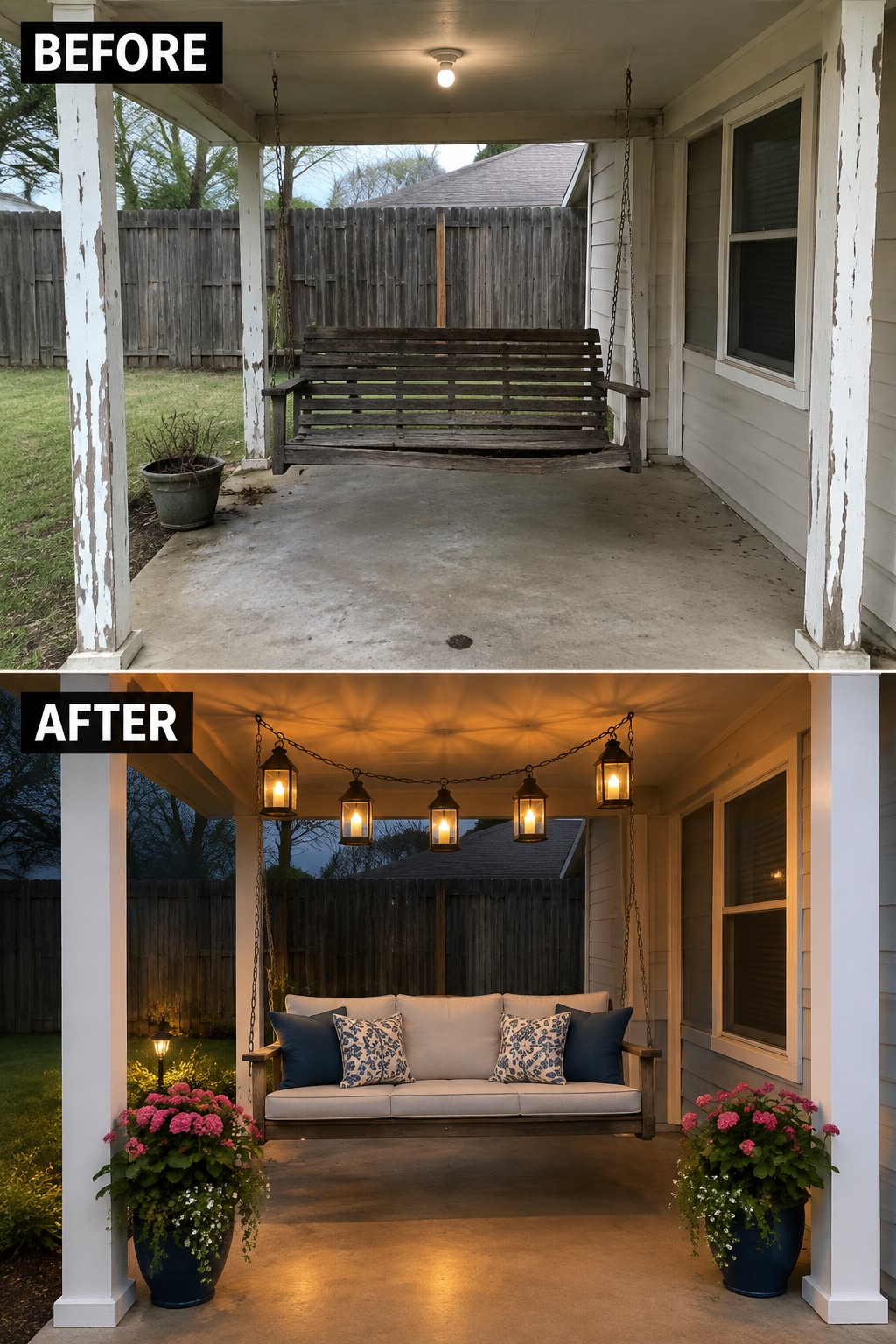
A basic porch with just a swing can feel empty once it gets dark. Running a chain of lanterns across the ceiling adds a layer of light that makes the space feel finished and much more comfortable to sit in after sunset.
This idea works best on covered porches or patios where you already have a place to hang lights. Use weather-safe lanterns on a simple chain, keep the seating to one main piece like the swing, and add a couple of potted plants if you want. The goal is to create usable evening light without filling the space with too many extras.
Add Lanterns To Frame A Front Entry
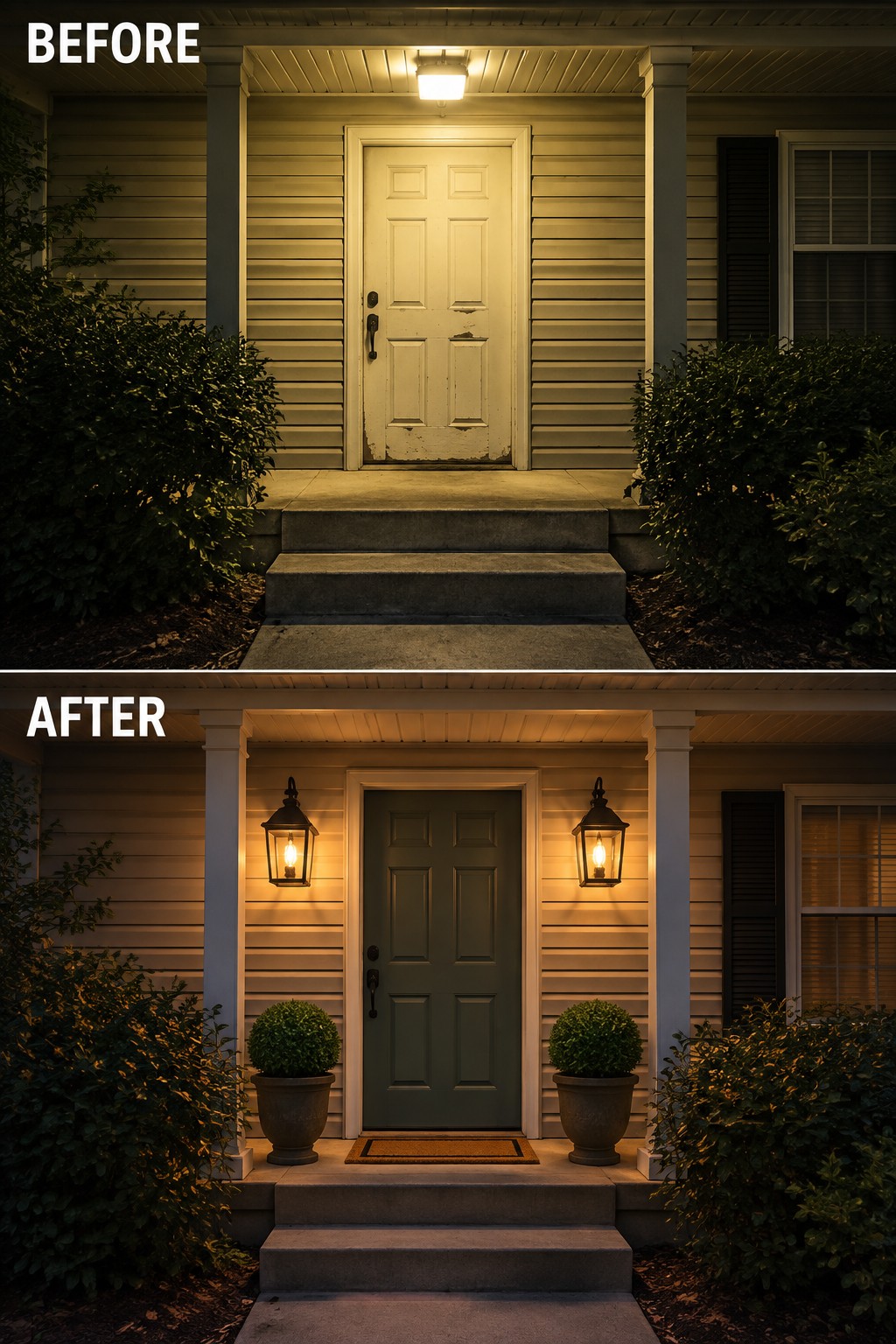
A plain front door often looks flat at night because the only light comes from a single overhead fixture. Adding a pair of lantern sconces on either side gives the entry balanced light, makes the door itself stand out, and creates a clearer path to the steps. In this case the door color also changed, but the lanterns did most of the work to make the space feel finished and easier to approach after dark.
This idea works on any house with a centered door and room for two fixtures. Keep the lanterns the same height and style so they read as a pair, and choose bulbs that give off a warm glow rather than bright white. If your entry is narrow, smaller lanterns or half-size versions still deliver the same effect without crowding the space.
Hang Lanterns From A Tree To Light Your Patio
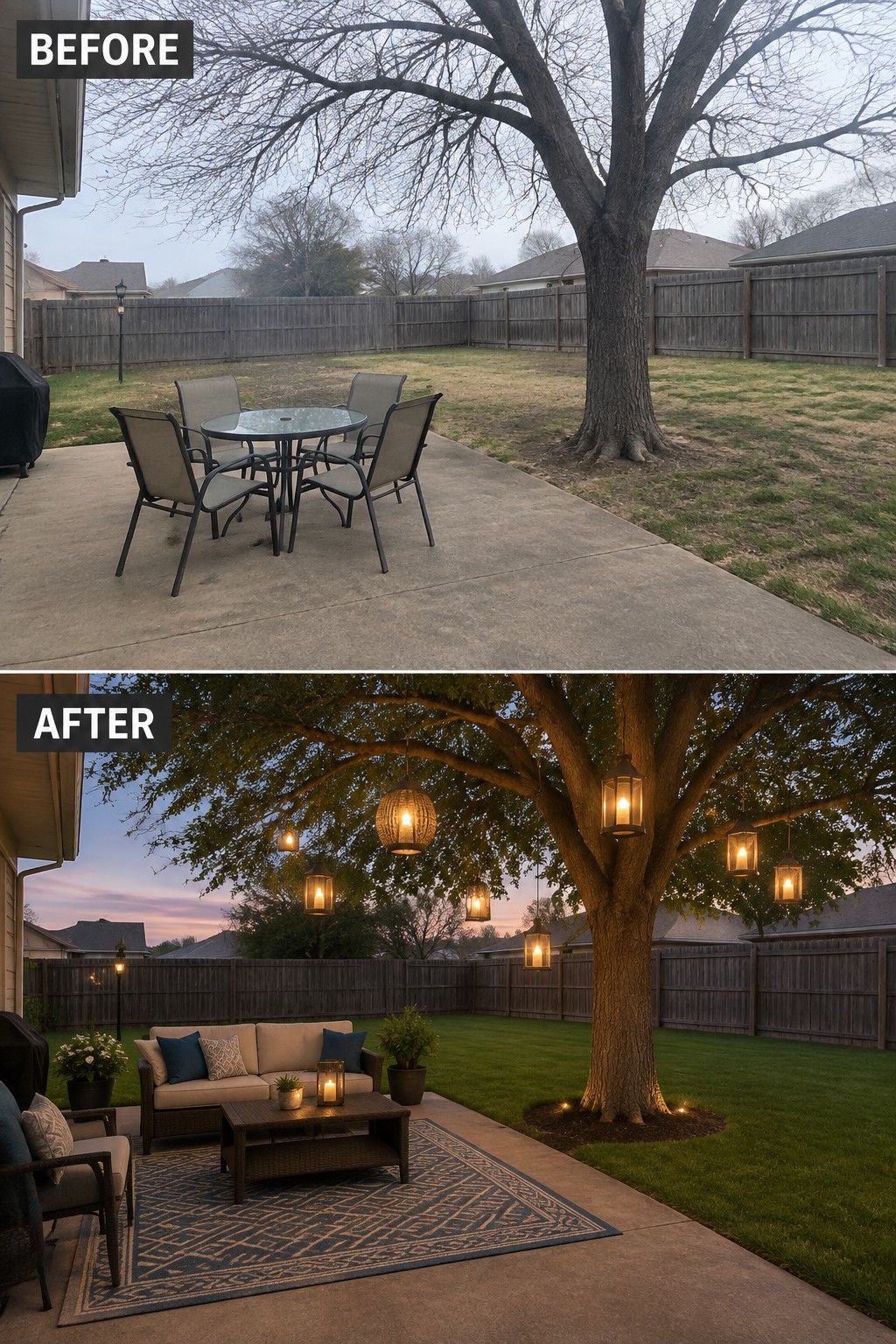
Hanging lanterns in a tree gives a patio a soft, usable glow once the sun goes down. The before photo shows a plain concrete slab with only a table and chairs, while the after version adds several lanterns suspended from the branches that make the same space feel ready for evening use.
This works best in yards that already have a tree near the seating area. Hang three to five lanterns at slightly different heights, keep the bulbs warm, and avoid filling every branch so the lights do not look crowded.
Use Lanterns To Make A Plain Patio Feel Usable
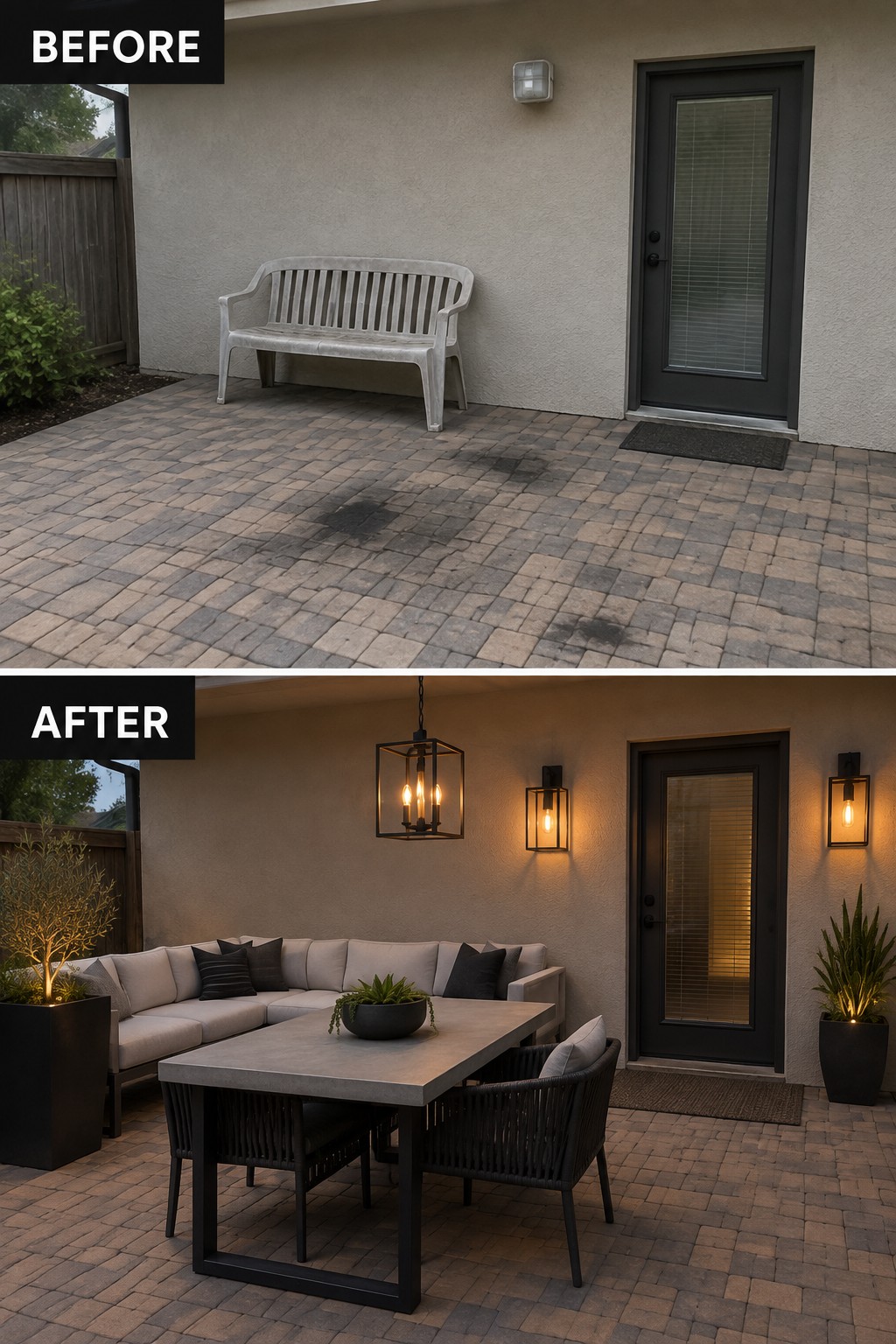
Adding a few well-placed lanterns can turn an empty concrete patio into a space people actually want to sit in after dark. The before photo shows a bare stretch of pavers with only a single bench and no lighting at all. Once the hanging lantern and wall sconces were added, the area gained a clear sense of warmth and purpose without needing a full remodel.
This approach works best on patios that already have some seating but feel flat once the sun sets. Keep the lanterns at different heights so the light spreads evenly, and choose warm bulbs that do not glare. Start with one larger hanging piece over the main table, then add a couple of wall lights near seating so people are not left in shadow.
Use Lanterns To Make A Patio Usable After Dark
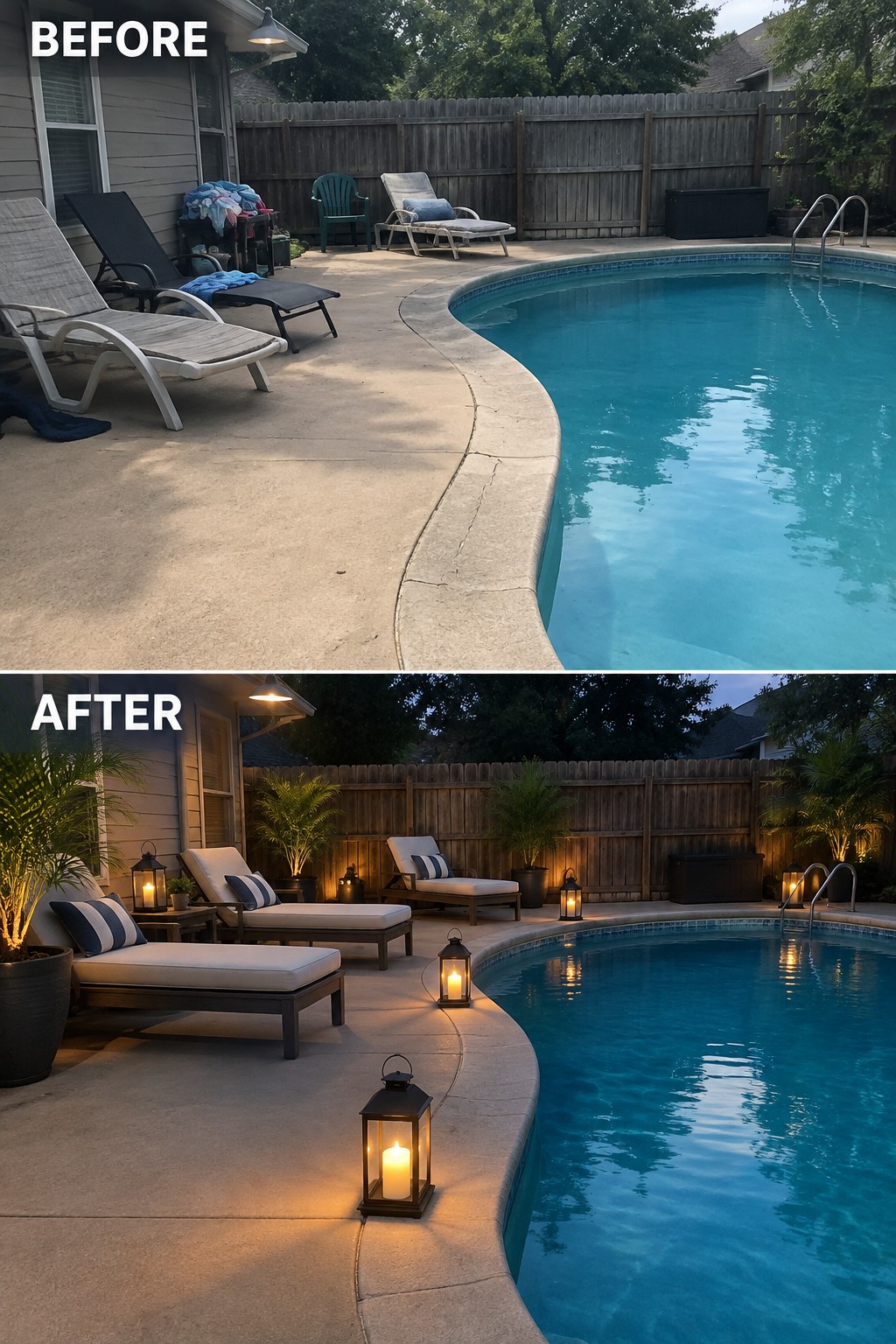
The before photo shows a basic concrete pool deck with mismatched chairs and no real reason to linger once the sun drops. In the after, a handful of black lanterns with candles create a soft glow that turns the same space into an evening spot without changing the layout or adding much furniture.
This approach works best on patios or pool decks that already have seating but feel empty at night. Keep the lanterns simple and place them near where people actually sit rather than spreading them evenly around the edges. It suits homes that want a low-cost way to extend outdoor time without new construction or complicated wiring.
Frequently Asked Questions
Q: How do I stop my lanterns from getting damaged outside?
A: Choose ones with a weather resistant coating. Place them under the eaves or on covered sections of the patio when storms hit.
Q: What bulbs work best inside the lanterns?
A: Go with LED candles or warm white bulbs that flicker a bit. They give off a soft glow and last longer than regular ones.
Q: How many lanterns do I need for a small patio?
A: Start with four or five and move them around until the light feels right. You can always add more later if spots still look dark.
