

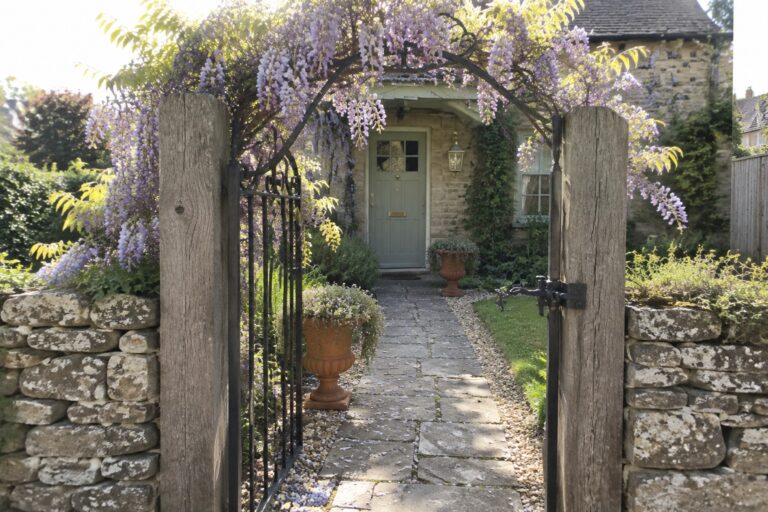
Wisteria can make an entrance feel settled into the garden, but it needs a structure that supports the vines without crowding the gate or path.
I find the best designs balance the flowers overhead with enough clear space for people to walk through comfortably.
The shape of the arch, the gate material, and the planting around the walkway all affect how the entrance looks from the street and as you approach it.
Some ideas suit a narrow side path, while others need room to spread and frame a wider entry.
I’d save the options that match your space and check how they might look through the seasons, not just when the wisteria is in bloom.
Let Wisteria Mark the Garden Entrance
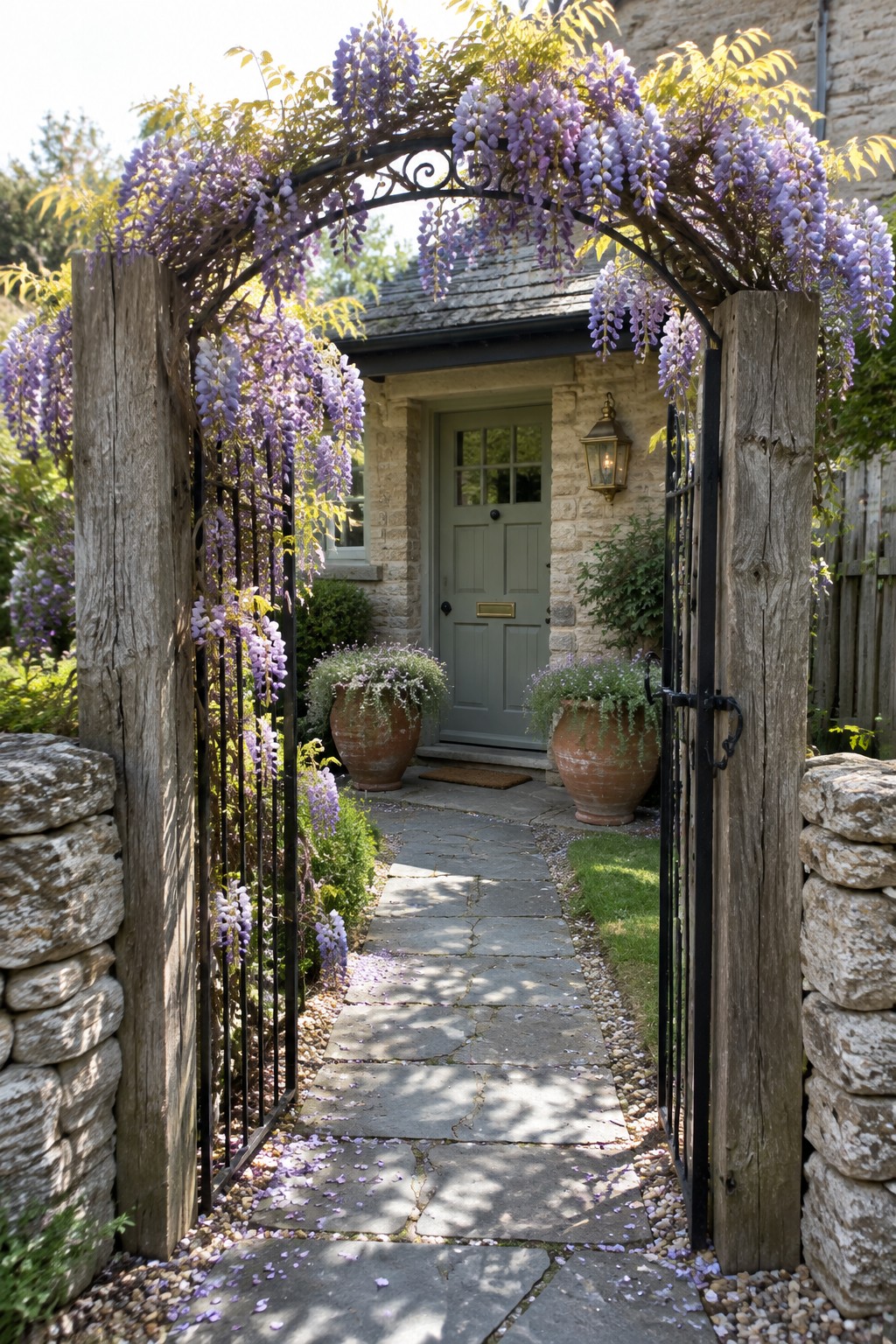
A wisteria-covered gate makes a simple path feel like a clear entrance to the garden. The flowers soften the dark ironwork and give the walkway a natural focal point.
Use a sturdy arch that can support a mature vine, and leave enough room for the stems to grow without blocking the gate. This idea suits a cottage-style garden, but it also works beside a stone house or a plain path.
Let Wisteria Mark the Garden Gate

A wisteria-covered arch can make a garden entrance feel like part of the landscape instead of a plain opening in a wall. The flowers add color overhead, while the gate keeps the entry practical and easy to define.
Use a sturdy arch or pergola where the vine has room to spread, and guide the growth so it does not block the path or strain the structure. This idea suits a cottage-style walkway or a courtyard entrance, especially when the gate is made from durable wood.
Create a Wisteria-Covered Garden Walkway
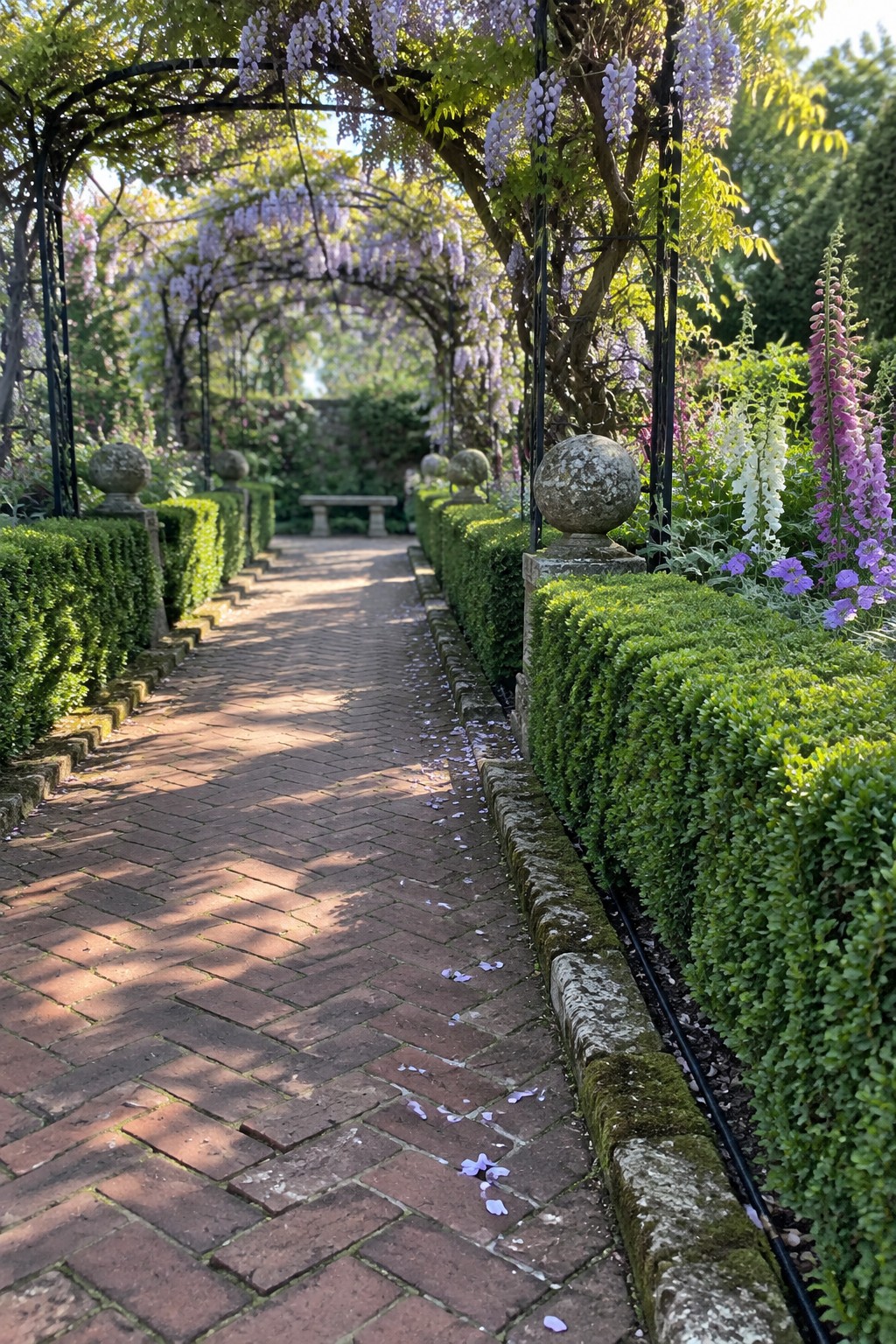
A brick path beneath a wisteria-covered arch makes a garden entrance feel like a destination. The overhead flowers add interest without taking up space along the walkway, while clipped hedges keep the path’s edges tidy.
Use a sturdy arbor or pergola where there’s room for wisteria to climb, and guide the stems so they don’t block the route. This works well on a garden path leading to a gate or seating area. Wisteria can grow vigorously, so plan for regular pruning and a strong support.
Let Wisteria Mark The Garden Entrance
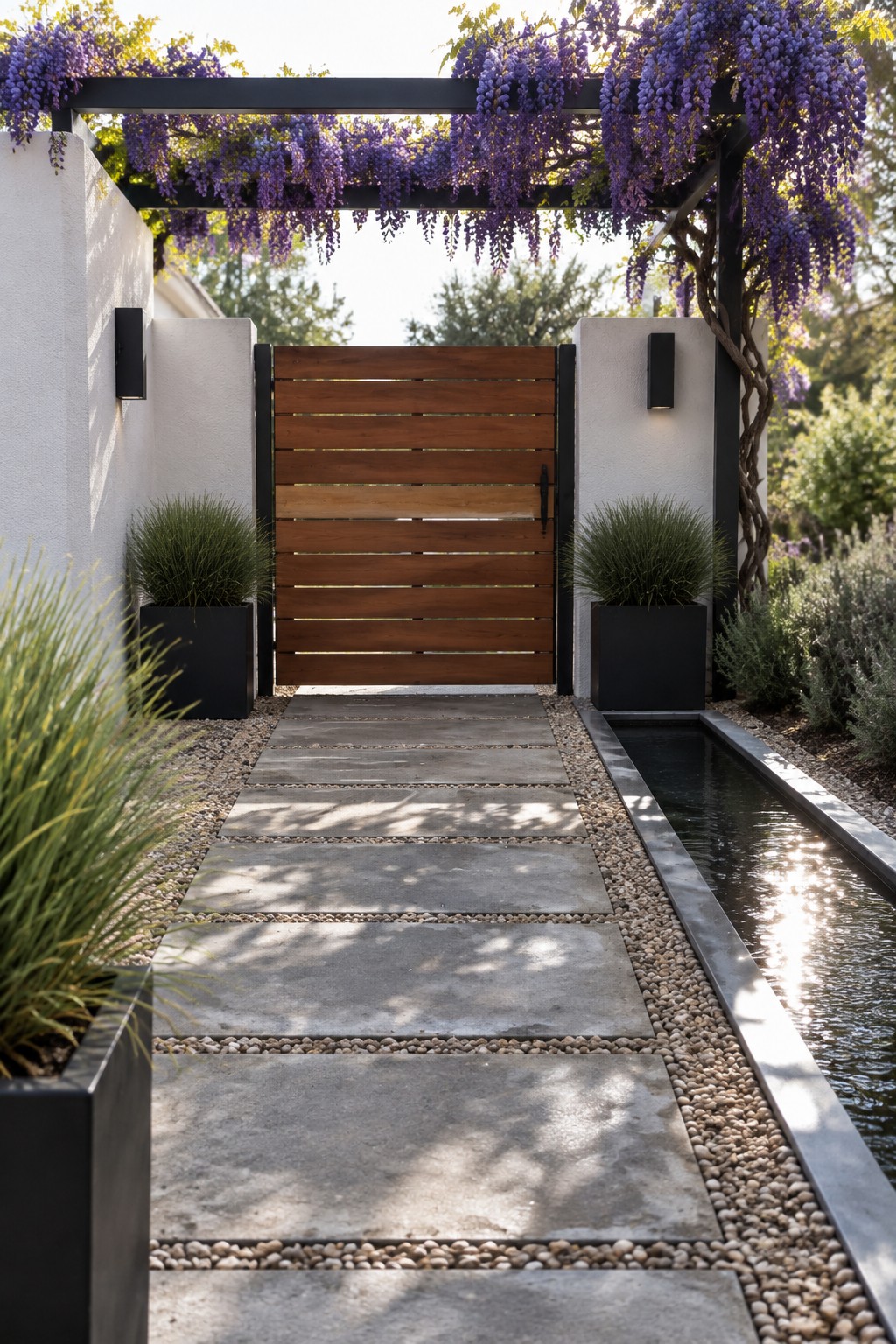
Wisteria can make a simple garden gate feel like part of the landscape. Growing it over a sturdy pergola gives the entrance a clear shape and brings seasonal flowers right above the path.
Use a strong support, since mature wisteria can become heavy, and prune it regularly to keep the walkway clear. This works especially well at a side gate or garden path where there is room for the vine to spread.
Use Wisteria to Highlight a Garden Gate
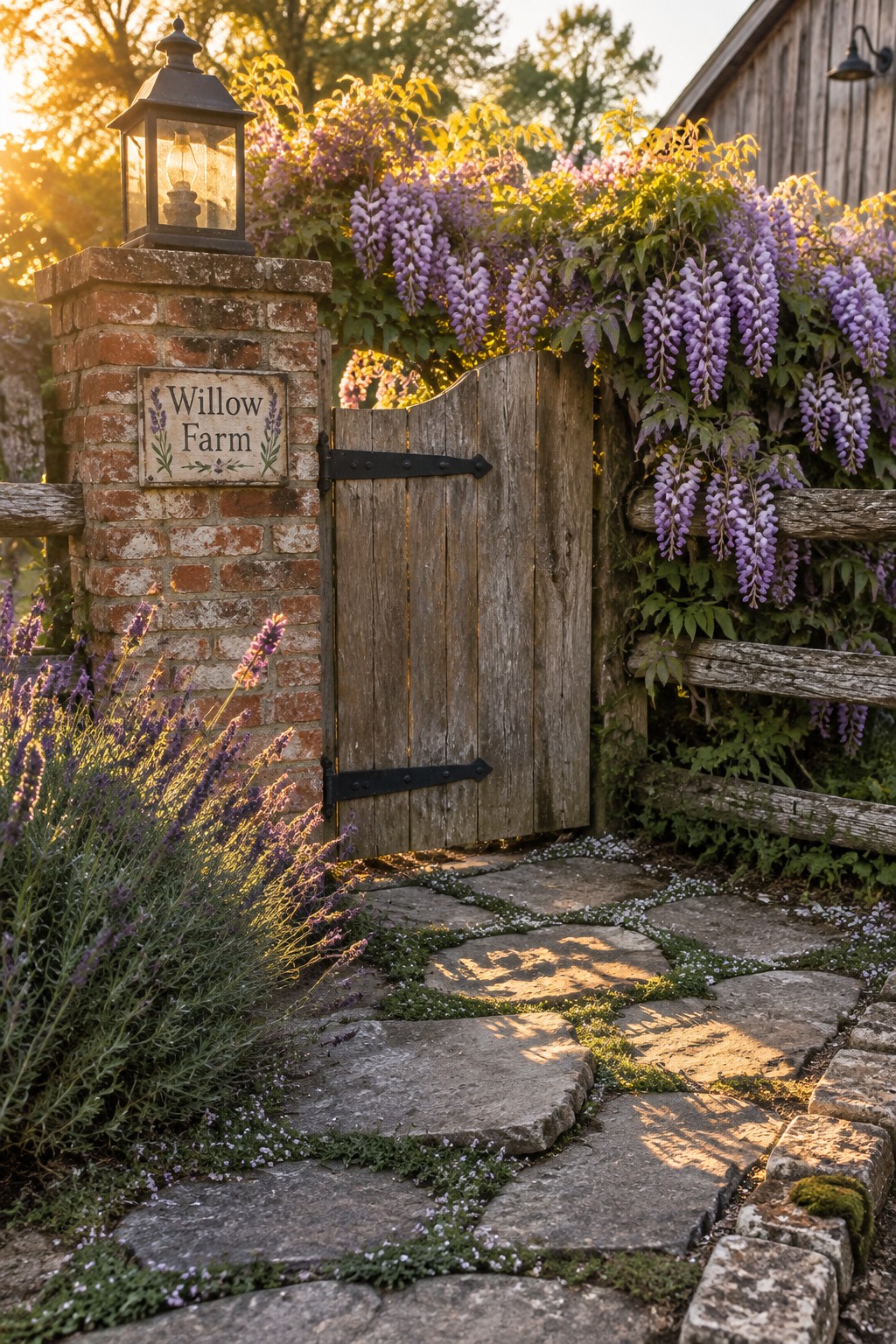
Wisteria can make a simple garden entrance feel like a natural part of the planting. Letting the vine grow around the gate gives the entry a clear focal point without needing an elaborate structure.
A sturdy wooden gate and fence are a good fit for this look, since mature wisteria can become heavy. Keep the growth trimmed so the gate still opens easily, and check that the supports are strong enough for the vine.
Use Wisteria to Lead the Way to a Small Courtyard
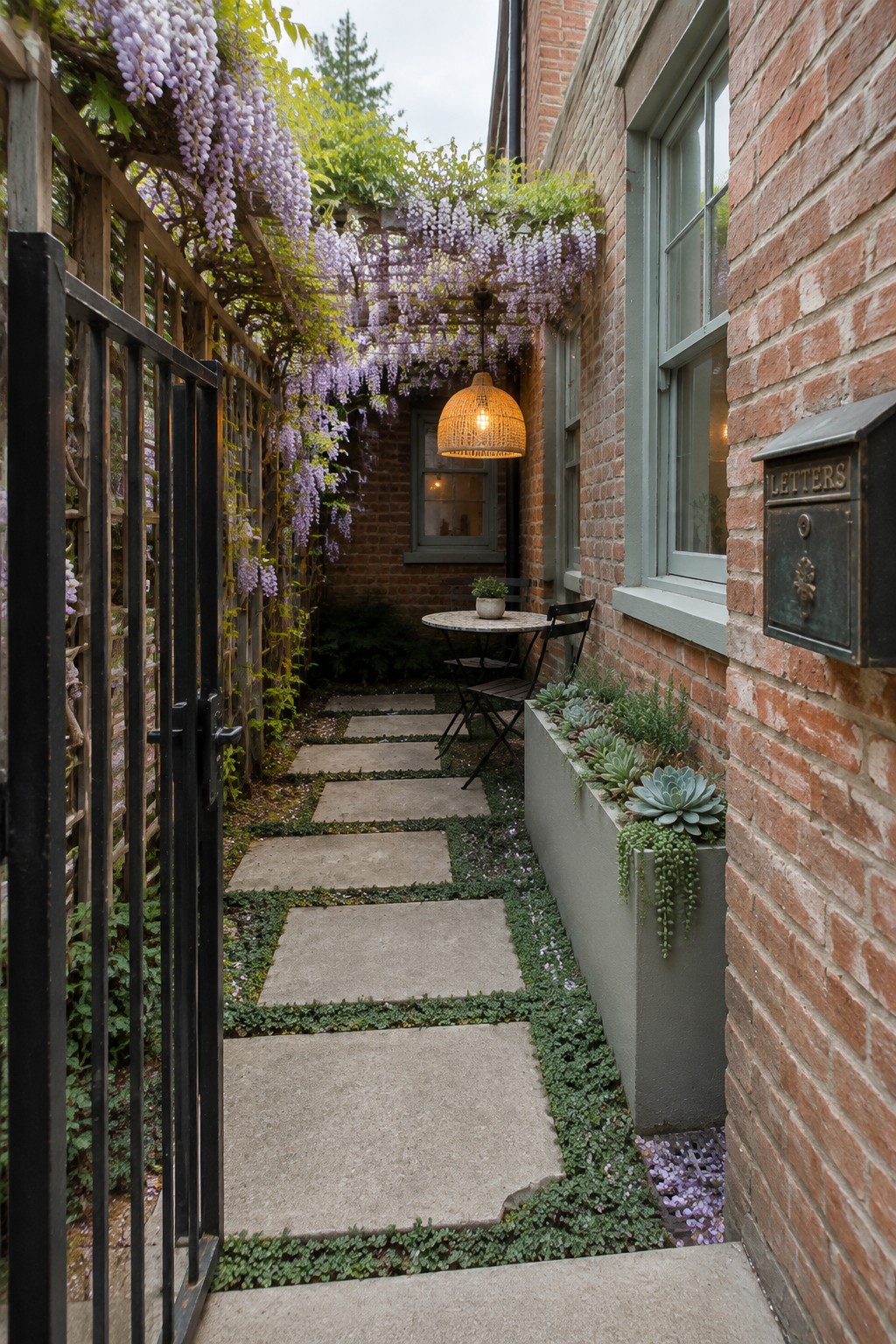
A wisteria-covered walkway can make a narrow entrance feel like a garden path rather than a passage between walls. The overhead flowers give the route a clear shape, while stepping stones keep it easy to walk through.
This approach works well in a compact courtyard or side entrance where there isn’t room for wide planting beds. Train wisteria along a sturdy pergola, and keep it pruned so the walkway stays clear and the weight of the mature vine is properly supported.
Use a Wisteria Pergola to Mark the Garden Entry
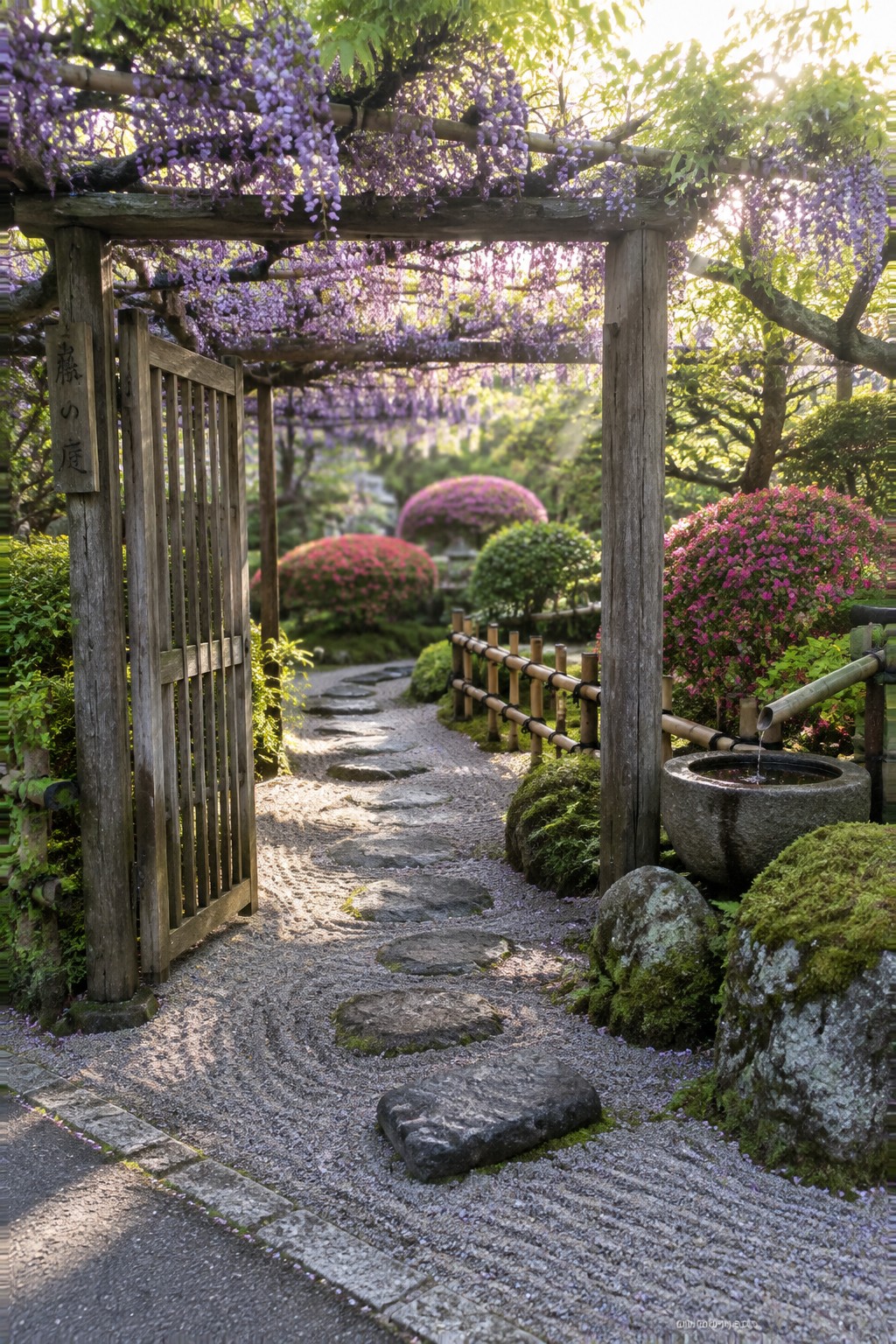
A pergola covered in wisteria gives a garden entrance a clear sense of arrival. The flowers form a natural canopy, while the wooden posts make the opening feel like part of the garden rather than just a place to walk through.
This works especially well at the start of a winding path. Train the vines along a sturdy overhead frame, and leave enough room for the branches to grow without blocking the way. Wisteria needs regular pruning, so plan for a little upkeep.
Use Wisteria to Dress Up a Garden Gate
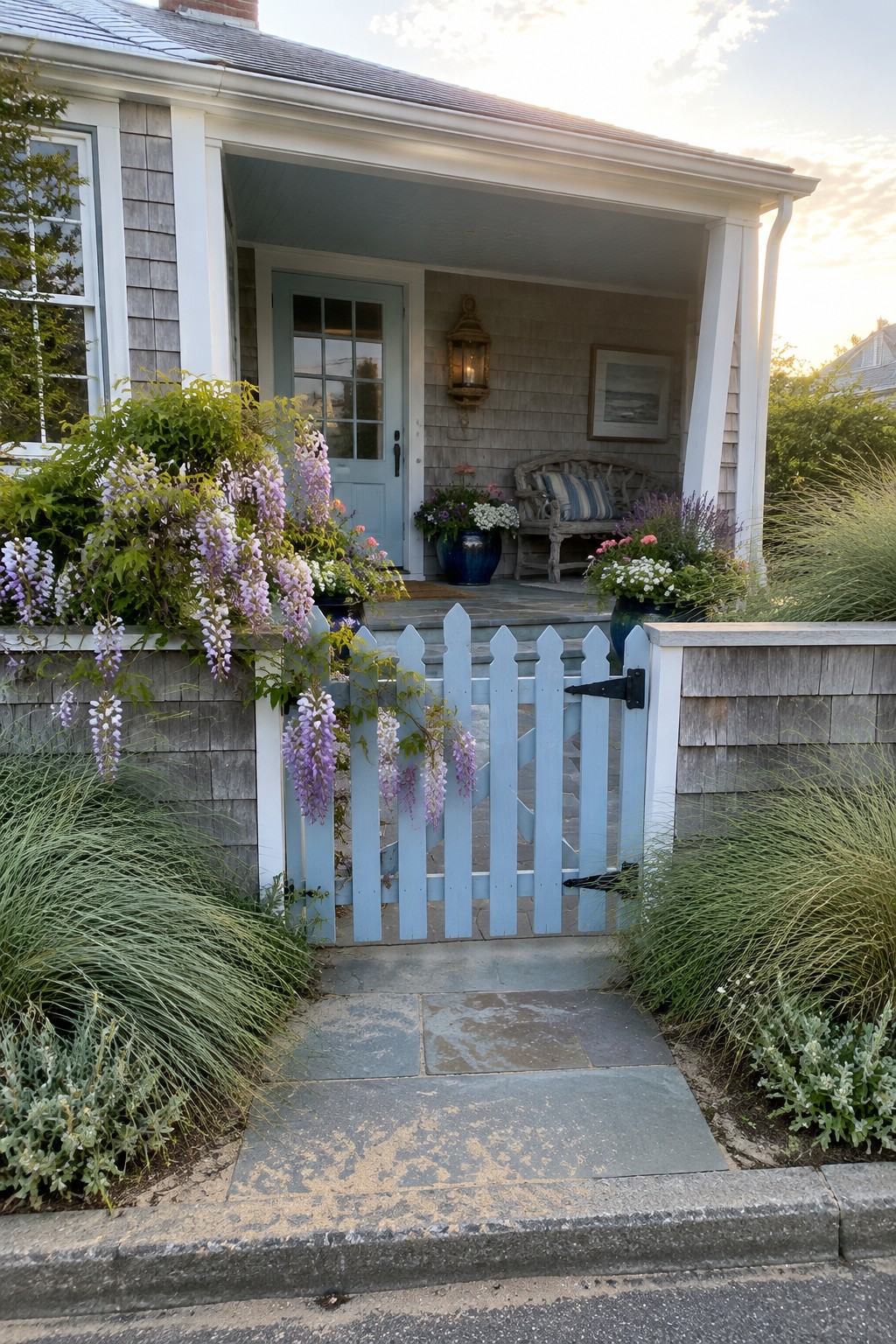
A simple gate can feel like a proper garden entrance when wisteria grows nearby. Its cascading flowers bring color to the entry without needing an elaborate structure, and the pale blue pickets make a useful example of a gate that still feels light.
Wisteria suits a sturdy fence or gate where the vine can be guided onto a strong support. Keep the latch and path clear, and prune regularly so the growth does not crowd the entrance.
Build a Wisteria Pergola Over Garden Steps

A pergola covered in wisteria can turn a garden staircase into a clear, welcoming route to the gate. The overhead structure gives the path a sense of direction, while the hanging flowers make the entrance feel connected to the garden.
This idea works well on sloped paths where steps already lead visitors toward an entry. Use sturdy supports, and leave enough room for the vines to grow without crowding the walkway. Wisteria needs regular pruning, so plan for easy access to the pergola.
Use Wisteria to Dress Up a Sidewalk Entrance
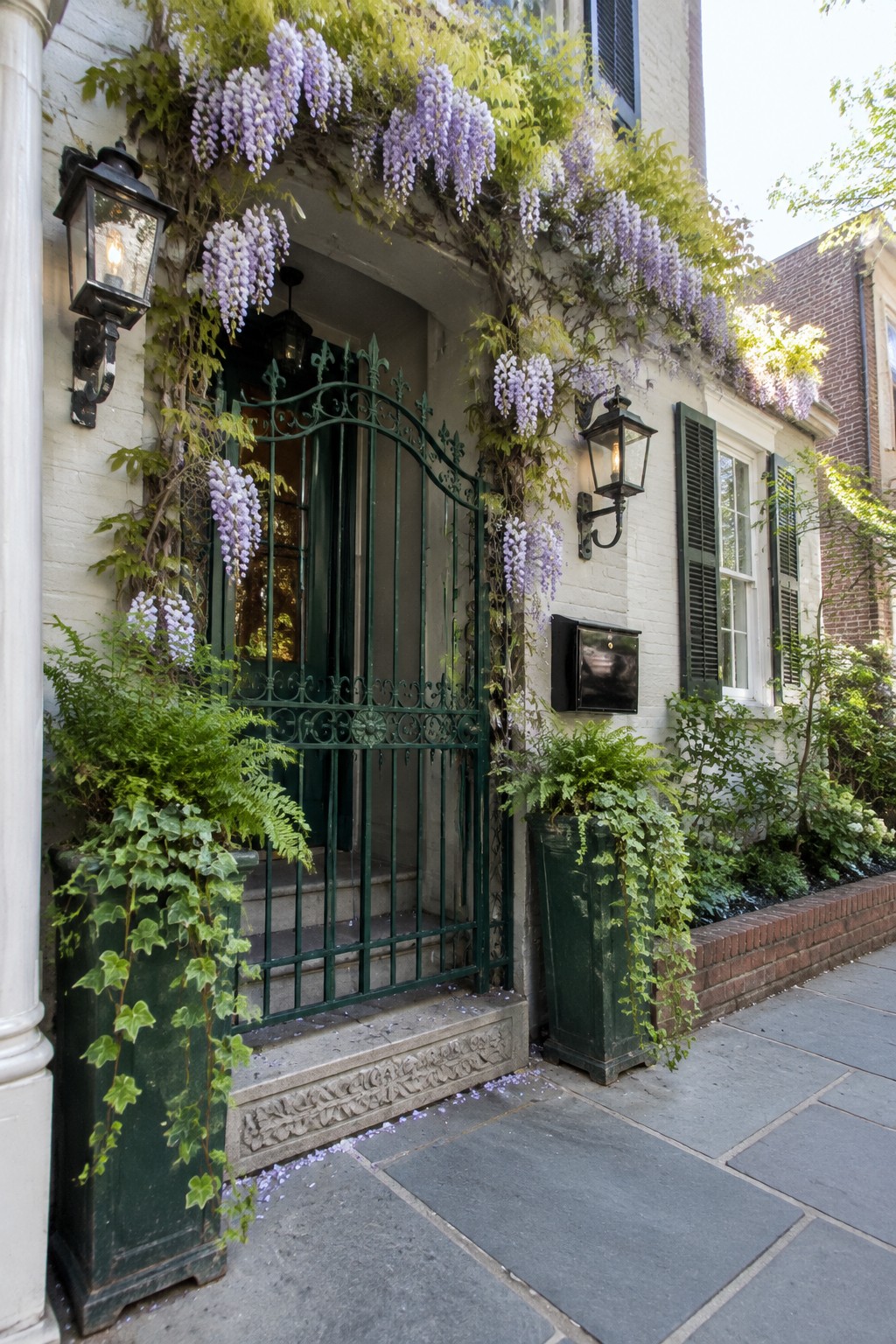
Wisteria can make a simple front entry feel more established and welcoming. Letting the vine grow around a gate gives it a soft, leafy border without changing the basic shape of the entrance.
This works especially well on older brick or stone homes with a sturdy gate or wall for support. Give the vine a strong trellis or other secure structure, and prune it regularly so it does not crowd the doorway or nearby windows.
Use a Gravel Path to Lead Through Wisteria

A gravel path gives a garden entrance a clear route to follow, while keeping the setting informal and easy to maintain. Here, broad stepping stones make the walk more comfortable and help the path feel settled into the planting.
This approach works well for a cottage garden or a narrow side yard. Keep the stones spaced evenly, and use compact gravel so the surface stays tidy underfoot.
Use Wisteria to Line a Narrow Garden Path

Wisteria can turn a simple walkway into a garden feature by letting the vines grow overhead along the route. The path feels more connected to the planting around it, while the flowers give visitors a clear sense of where to go.
This idea suits a narrow passage between walls or fences, especially where there is room to train vines on a sturdy overhead support. Keep the walkway clear and prune regularly so the growth does not crowd the path or block doors and gates.
Add a Stone Arch to a Wisteria Entrance
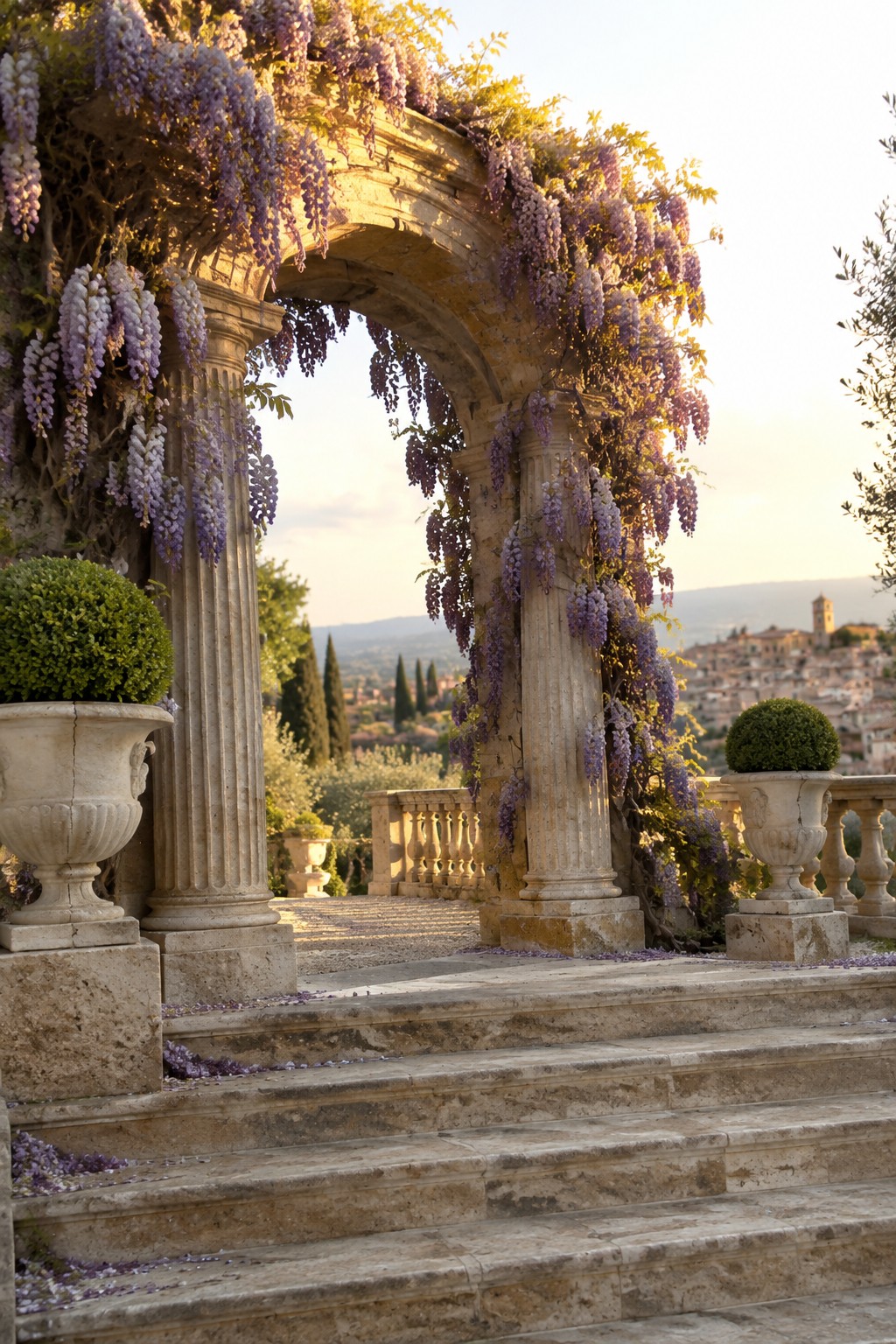
A stone arch gives a garden entrance a clear sense of arrival, and wisteria makes the structure feel less formal as it grows over it. The sturdy masonry also provides a lasting support for the heavy vines.
This idea suits a walkway or set of garden steps where you want a defined entry point. Choose an arch built to carry mature wisteria, and leave room to prune the vines so they do not block the path.
Use a Gravel Path to Lead Into the Garden
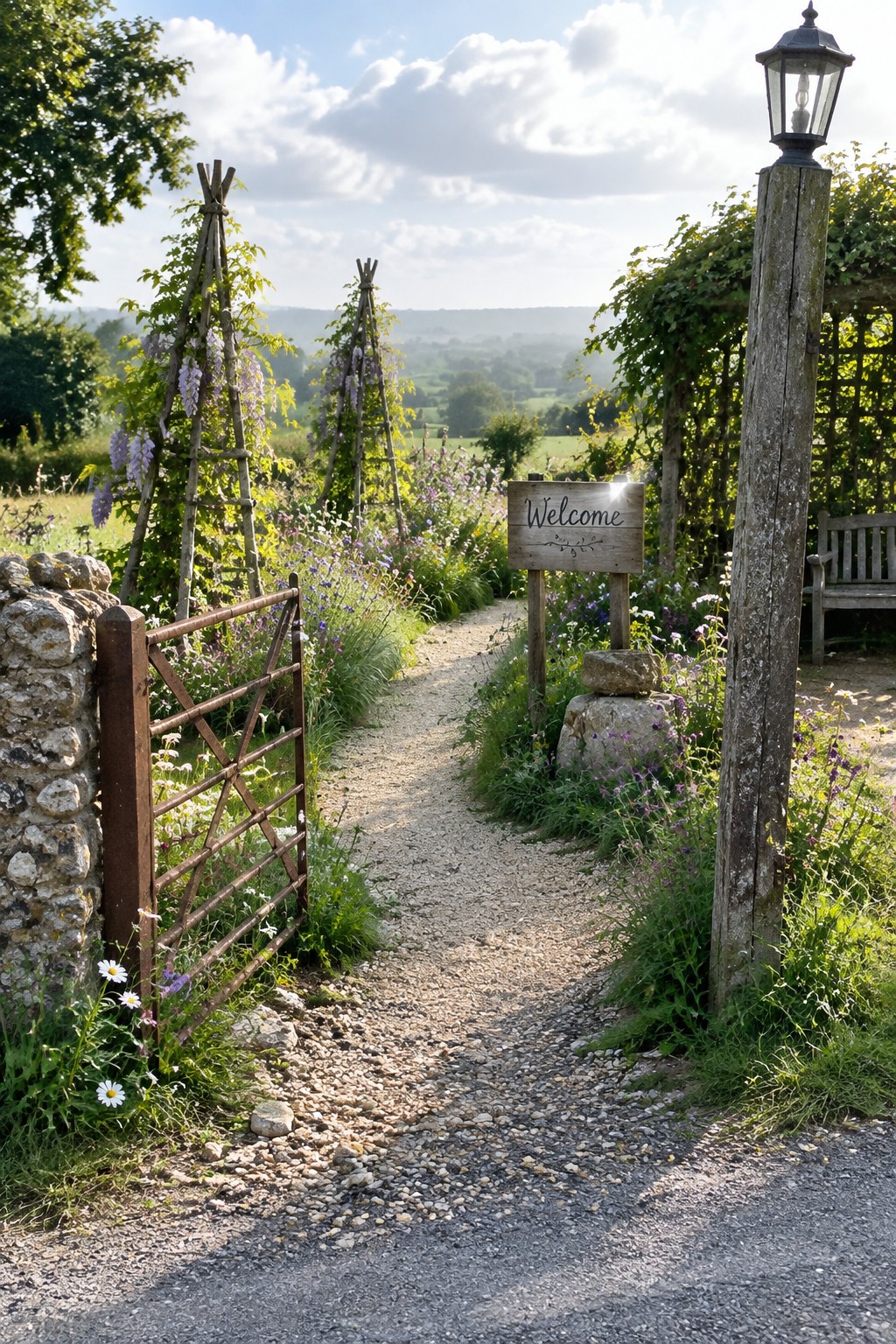
A simple gravel path gives a garden entrance a clear route without making it feel too formal. It works especially well when flowering plants grow along the edges, so the path feels part of the garden rather than a separate walkway.
Use this idea where you want to guide visitors through a planting area or toward a gate. Choose gravel that suits the surrounding stone and keep the path wide enough to walk comfortably. A firm, well-set base helps prevent loose stones from spreading into the beds.
Use Wisteria to Mark a Front Walk
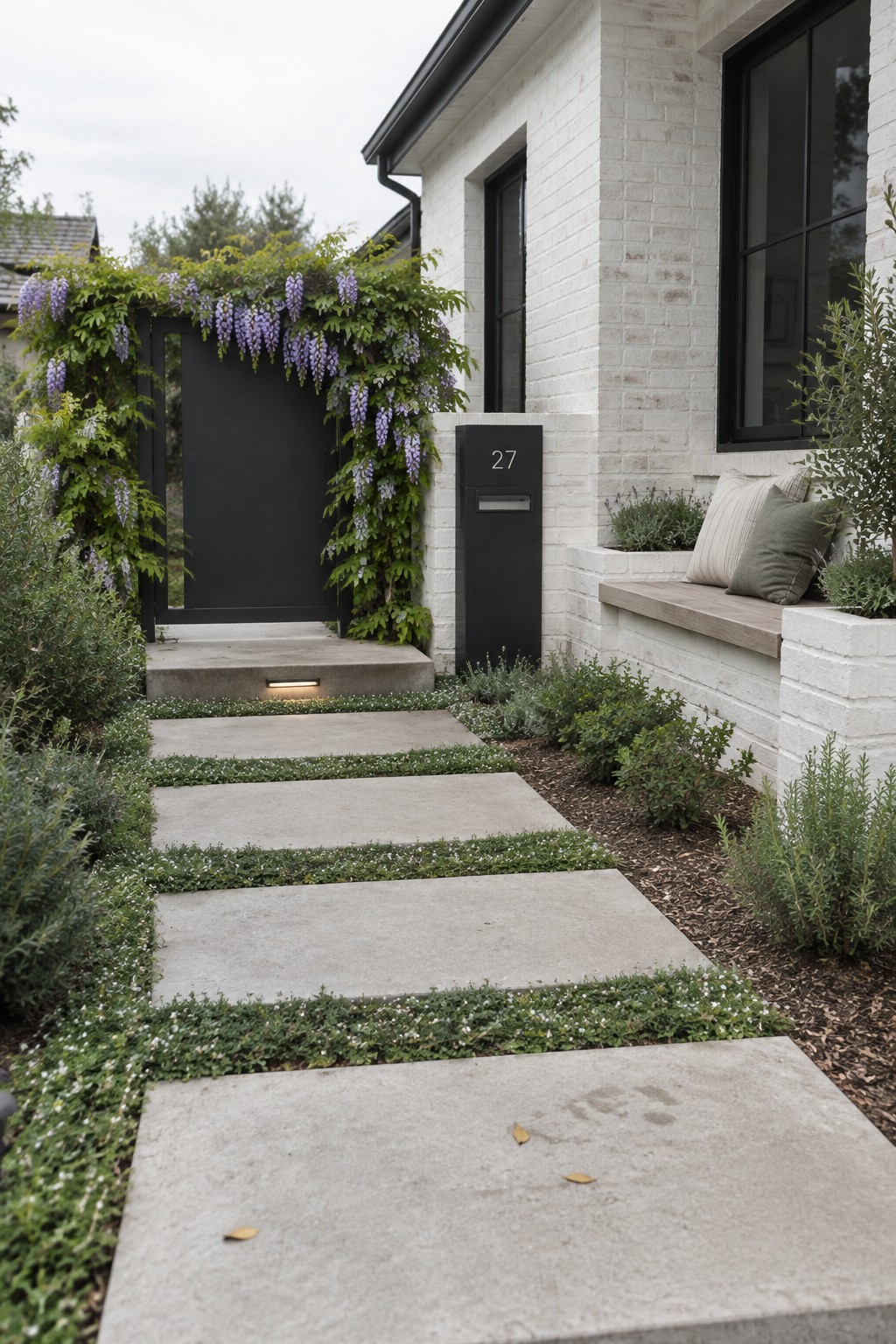
Wisteria can make a simple entrance feel like a garden path, especially when it climbs over a gate and spills along the sides. The flowers give the entry a clear focal point without needing an elaborate structure.
Train the vine on a sturdy support, and keep it trimmed so the gate and path stay easy to use. This idea suits a front walk with room for planting on either side; wisteria can grow vigorously, so plan for regular pruning.
Train Wisteria Along a Narrow Walkway
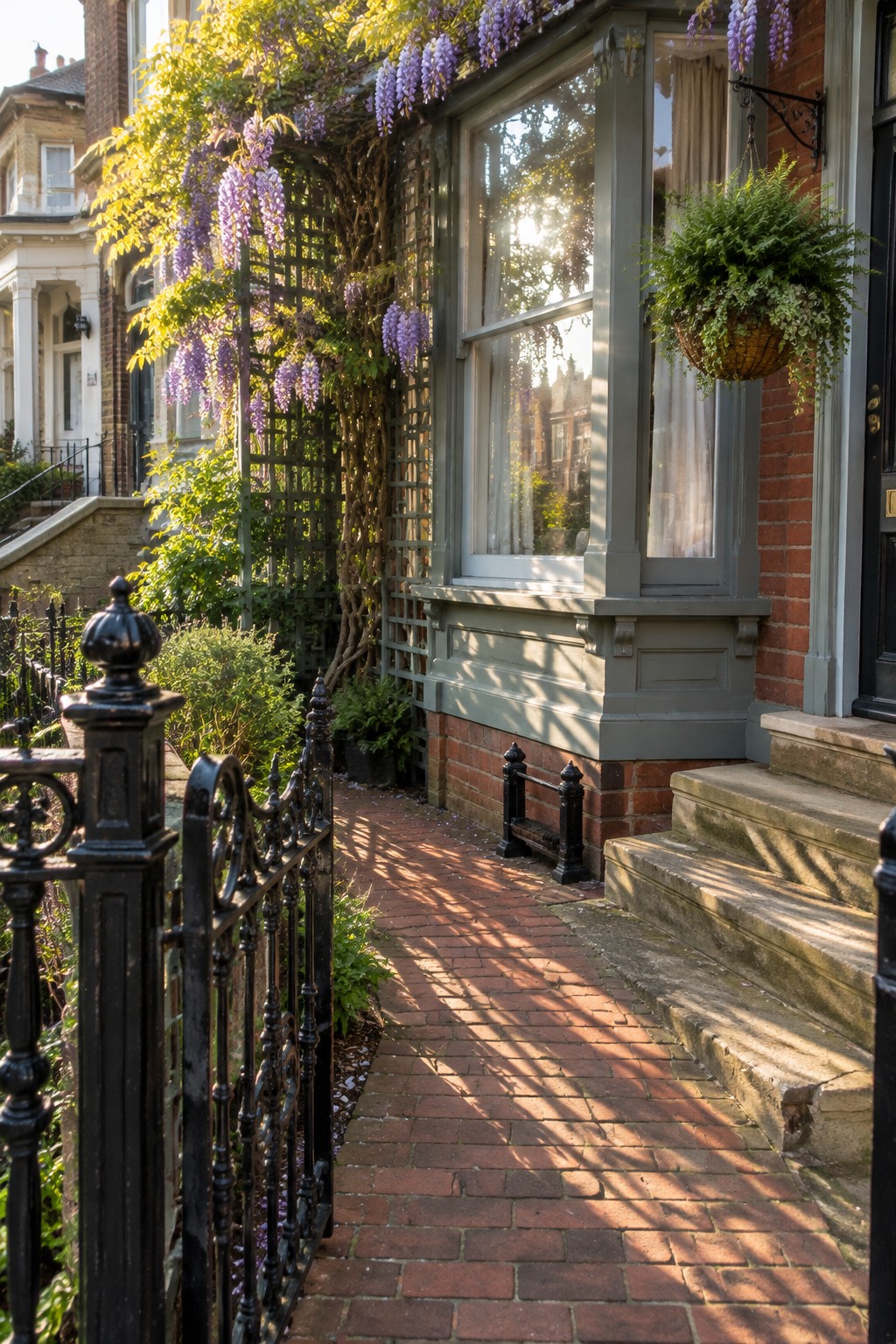
Wisteria can turn a simple side path into a more defined garden entrance. Trained along a sturdy overhead frame, its hanging flowers create a leafy passage without taking up much walking space.
This approach suits a narrow walkway beside a house, especially where a brick path already guides the way. Use a strong trellis or pergola and prune the vines regularly so they do not crowd the route or press against windows and gutters.
Use a Wisteria Arbor to Mark a Courtyard Entrance
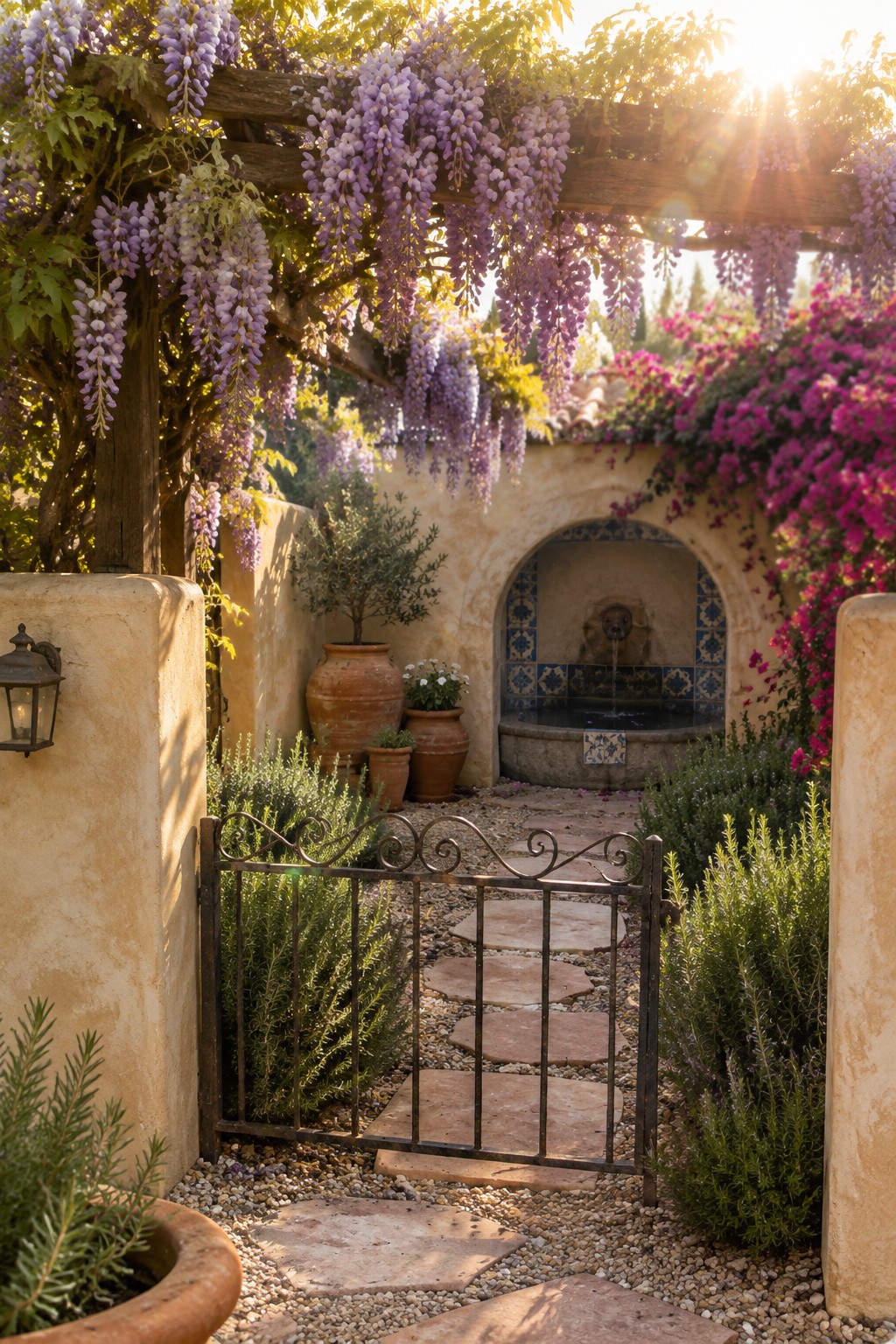
A wisteria-covered arbor makes a garden entrance feel like a clear transition from the path into a quieter courtyard. The overhead structure gives the flowers a place to grow and makes the gate feel like part of the garden, rather than just a boundary.
This idea suits a small enclosed garden or a narrow approach to a courtyard. Use a sturdy arbor that can support mature vines, and keep the path below easy to walk through. Wisteria needs regular pruning, so leave enough room to reach the beams and keep growth clear of the gate.
Use a Pergola to Guide the Garden Path
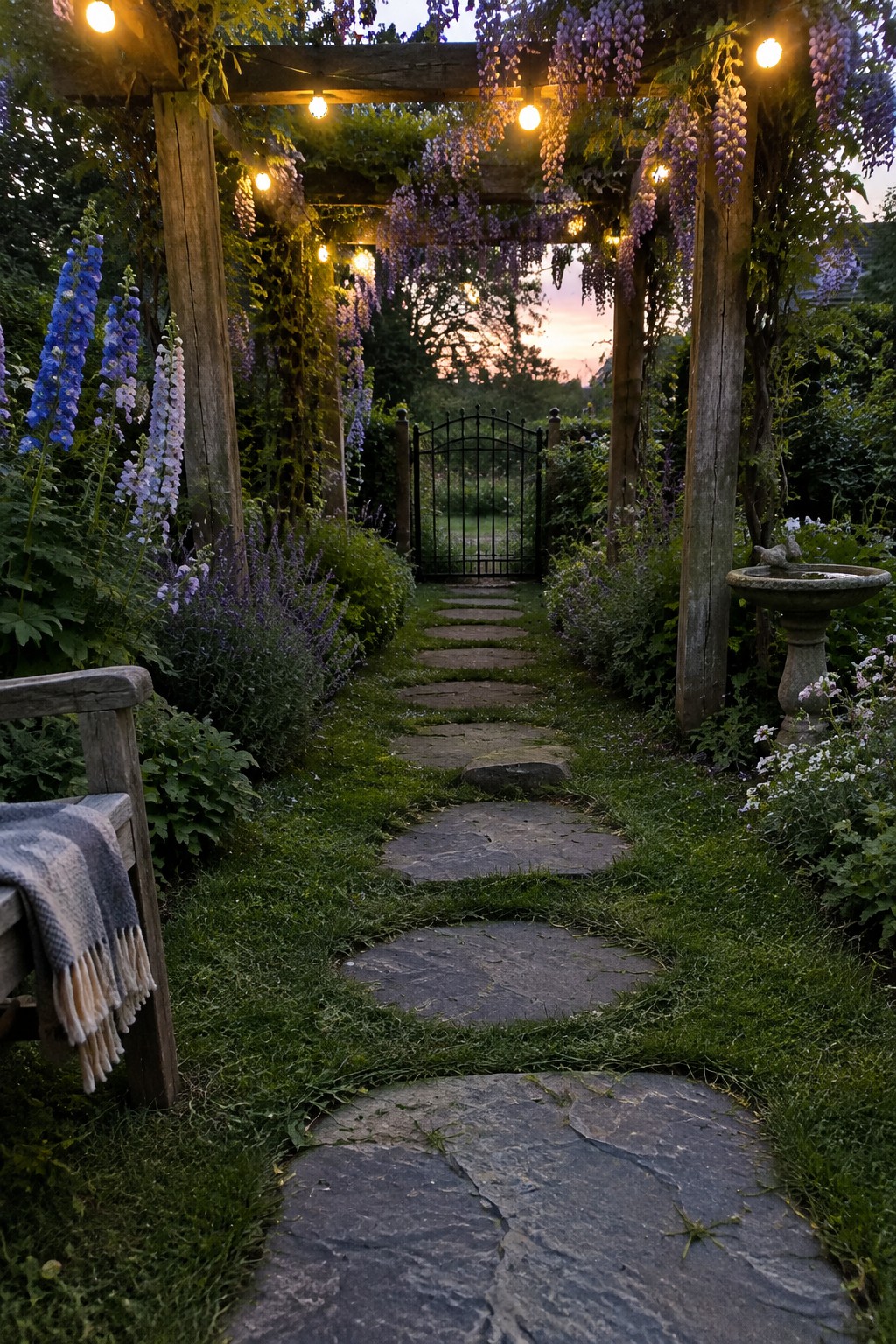
A pergola can turn a simple garden path into a clear route to the gate. Wisteria trained across the beams gives the entrance a leafy canopy, while the open sides keep the walkway from feeling closed in.
This works well along a straight path leading to a garden gate. Use sturdy supports, since mature wisteria is heavy, and leave enough room for people to walk comfortably beneath it.
Train Wisteria Over a Garden Entrance
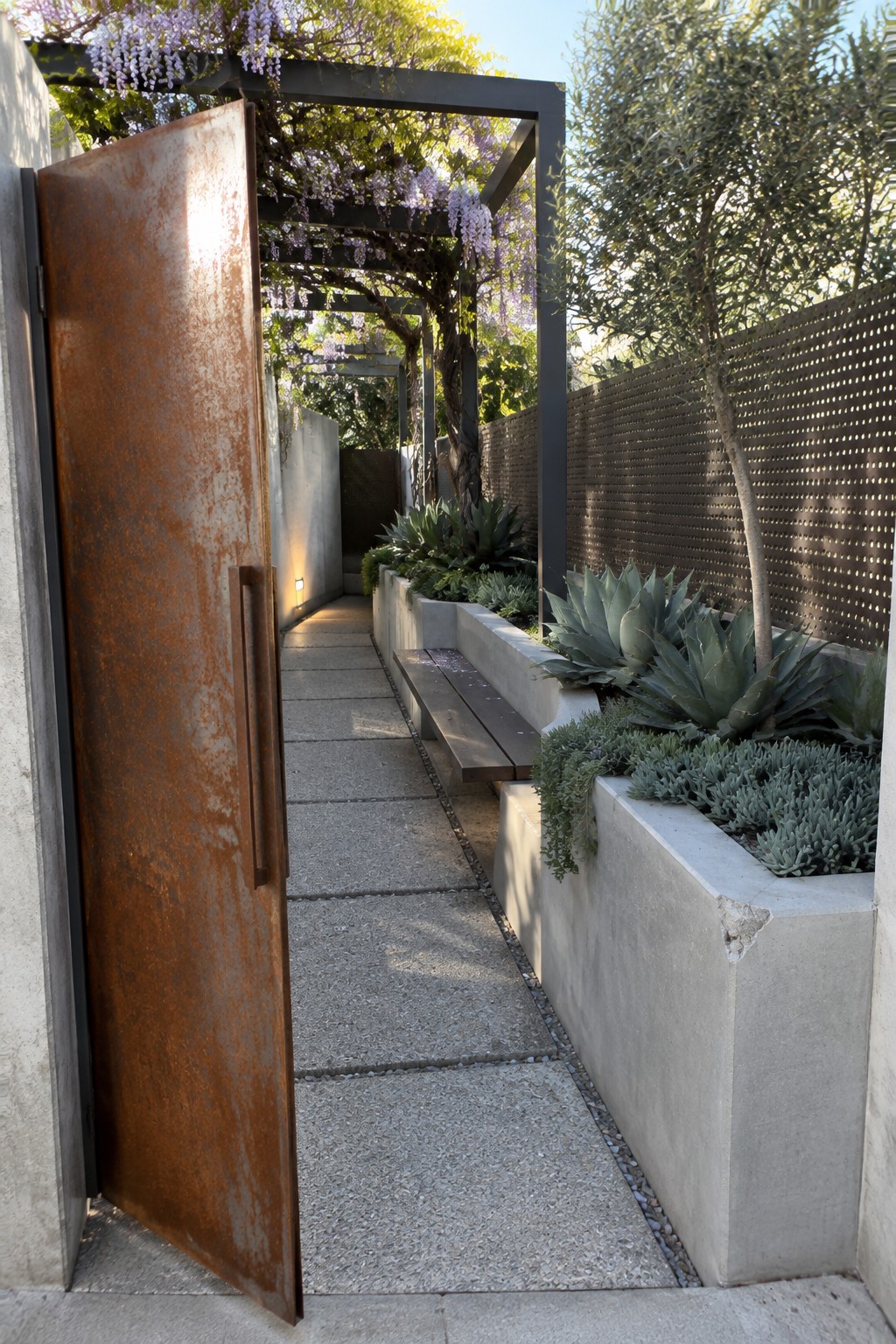
A sturdy pergola can turn a narrow entrance path into a garden feature. Wisteria climbing across the overhead beams gives the walkway a clear sense of direction, while the open sides keep it from feeling enclosed.
This idea works well for a side garden or a tucked-away courtyard entrance. Use a strong, well-supported frame, since mature wisteria gets heavy, and leave enough room for people to pass comfortably.
Frequently Asked Questions
Q: Will wisteria damage a wooden gate or pergola?
A: It can if the stems wrap tightly around the structure or the wood stays damp under heavy growth. Train the vine on sturdy supports, keep stems away from hinges, and prune it so you can inspect the wood.
Q: Can I grow wisteria over a walkway without making it hard to pass through?
A: Yes. Use a high, strong arch and guide the branches along the sides and top rather than letting them hang at head height. A few regular trims will keep the path clear.
Q: How long will it take for wisteria to cover an entrance?
A: Wisteria grows vigorously once established, but a young plant may take a few years to fill an arch. Choose a grafted plant if you want blooms sooner, and water it regularly while it settles in.
Q: Can wisteria grow in a pot beside a gate?
A: It can, though you’ll need a large, sturdy container and a support that won’t tip under the vine’s weight. Potted wisteria also needs more frequent watering and pruning than one planted in the ground.
