

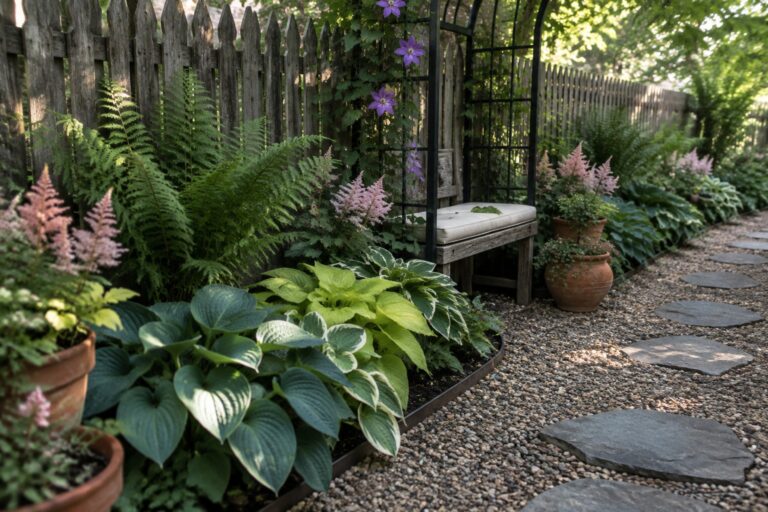
A fence can make a shady garden feel like a narrow strip, so I like using hostas to soften its edge and give the planting bed a clear shape.
Their broad leaves bring texture to dim corners, but spacing matters because crowded plants can hide the fence and make the border feel heavy.
I’d vary hosta sizes and leaf colors, then leave room for paths, edging, or a few companion plants to keep the layout easy to care for.
Some arrangements look appealing in a photo but need more room than a real yard allows, so I’d adapt the spacing to the bed and how you move through it.
The ideas ahead offer practical ways to build a lush, balanced fence line that can fill in naturally over time.
Let a Garden Path Follow the Fence
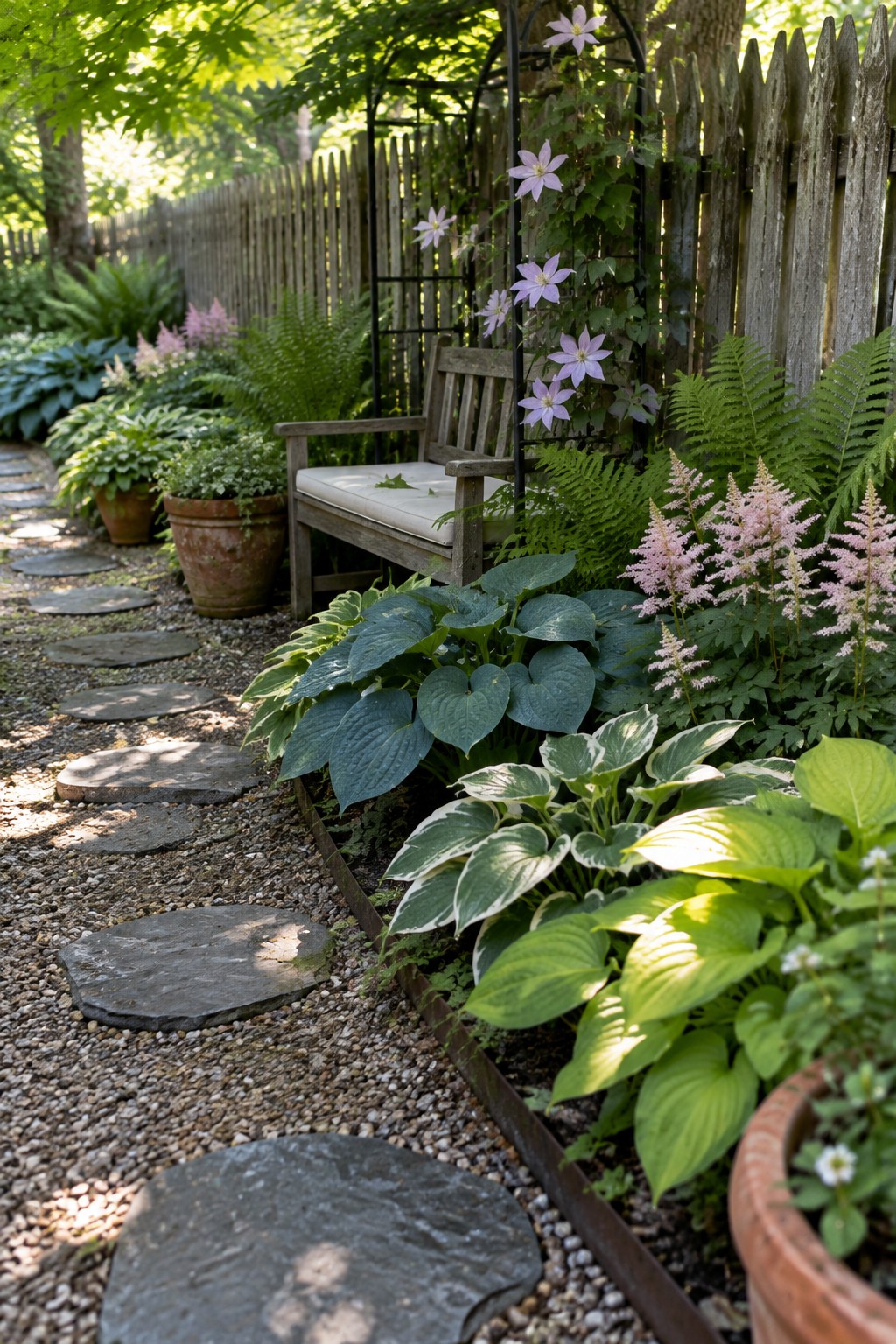
A simple stepping-stone path can make a narrow shade garden easier to use without taking space away from the plants. Here, the stones curve alongside a fence lined with hostas and other leafy plants, giving the garden a clear route through the planting.
For a similar look, leave enough room between the stones for comfortable steps, then plant hostas in loose groups along the edge. This works well in a side yard or other shaded strip, but keep foliage from creeping over the path.
Use Repeating Hosta Groups Along a Fence
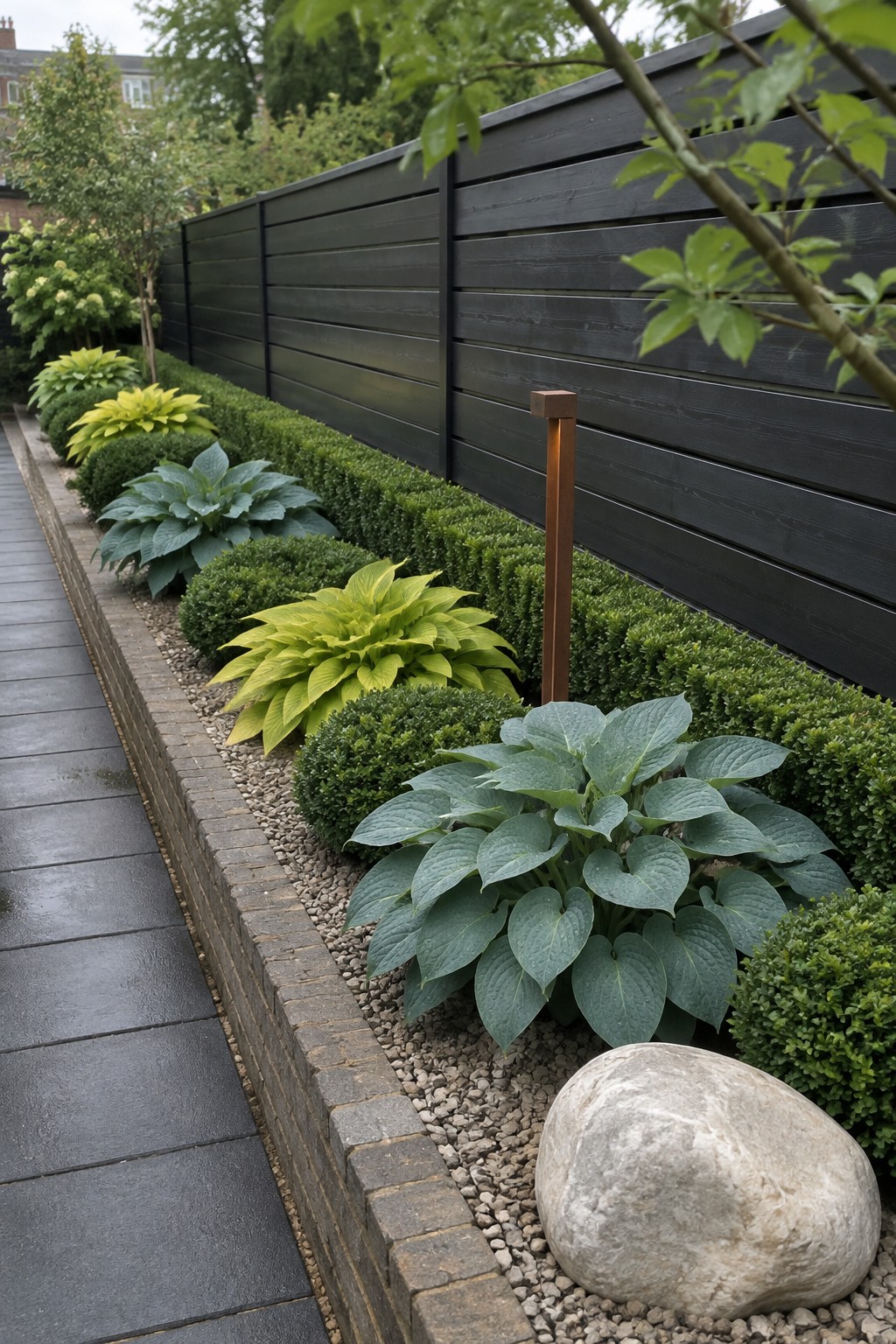
Repeating hostas along a fence gives a shady border a clear rhythm without making it feel too formal. The broad, leafy plants stand out against the dark boards, while low shrubs between them keep the planting bed looking full.
Use a few hosta varieties in a repeating pattern, choosing blue-green leaves for a quieter look or chartreuse for a brighter spot. Leave enough room for mature plants to spread, and keep the edging simple so it’s easy to maintain.
Layer Hostas Along a Garden Path
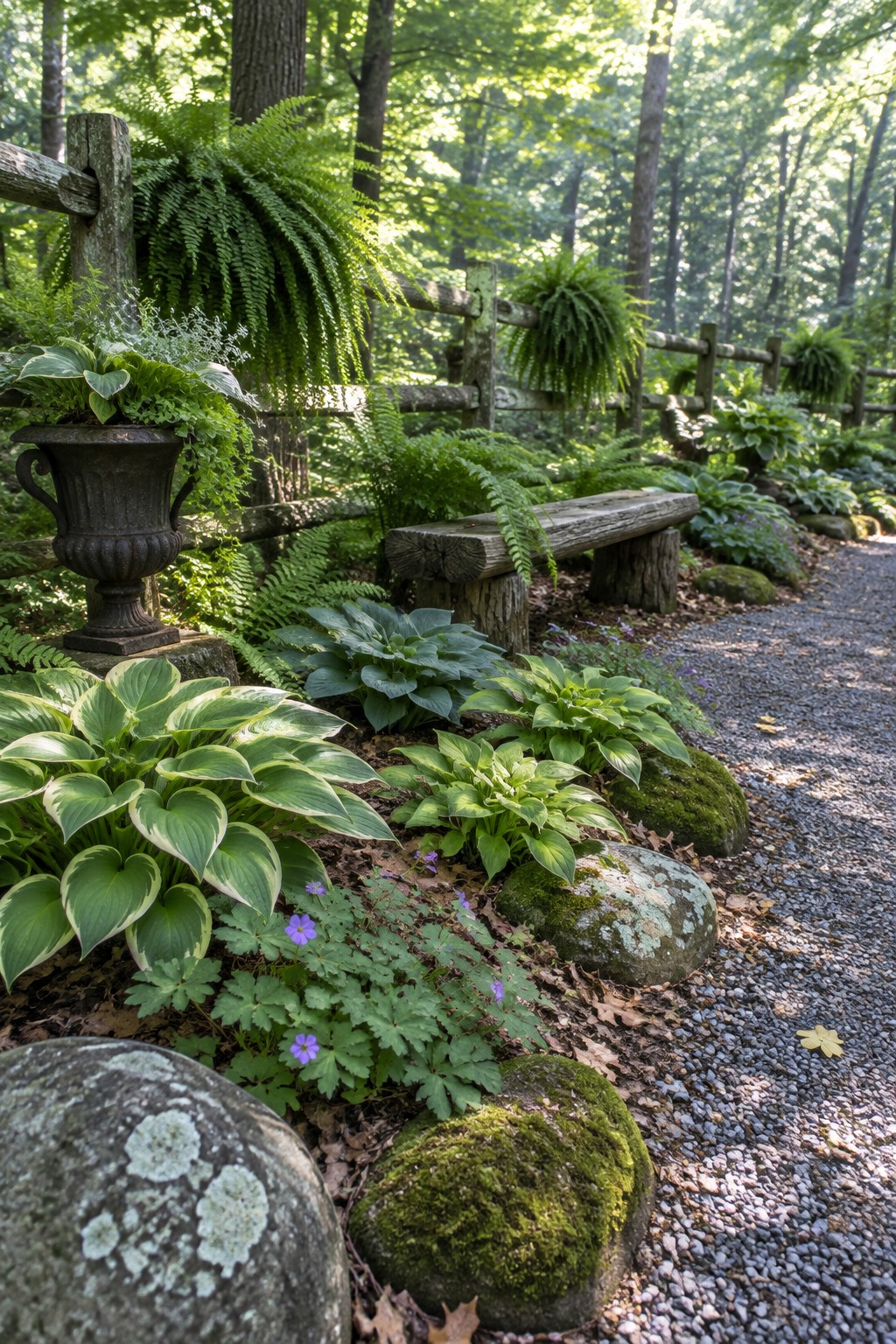
Layering hostas along a fence gives a shady path a fuller, more settled look. The mix of broad leaves and taller ferns adds variety without relying on a lot of flowers.
Use larger hostas near the front of the bed, then tuck smaller plants and ferns closer to the fence. Leave enough space for the hostas to spread, and keep the path edge clear so it stays easy to walk along.
Use a Stepping-Stone Path Through Shade Plantings
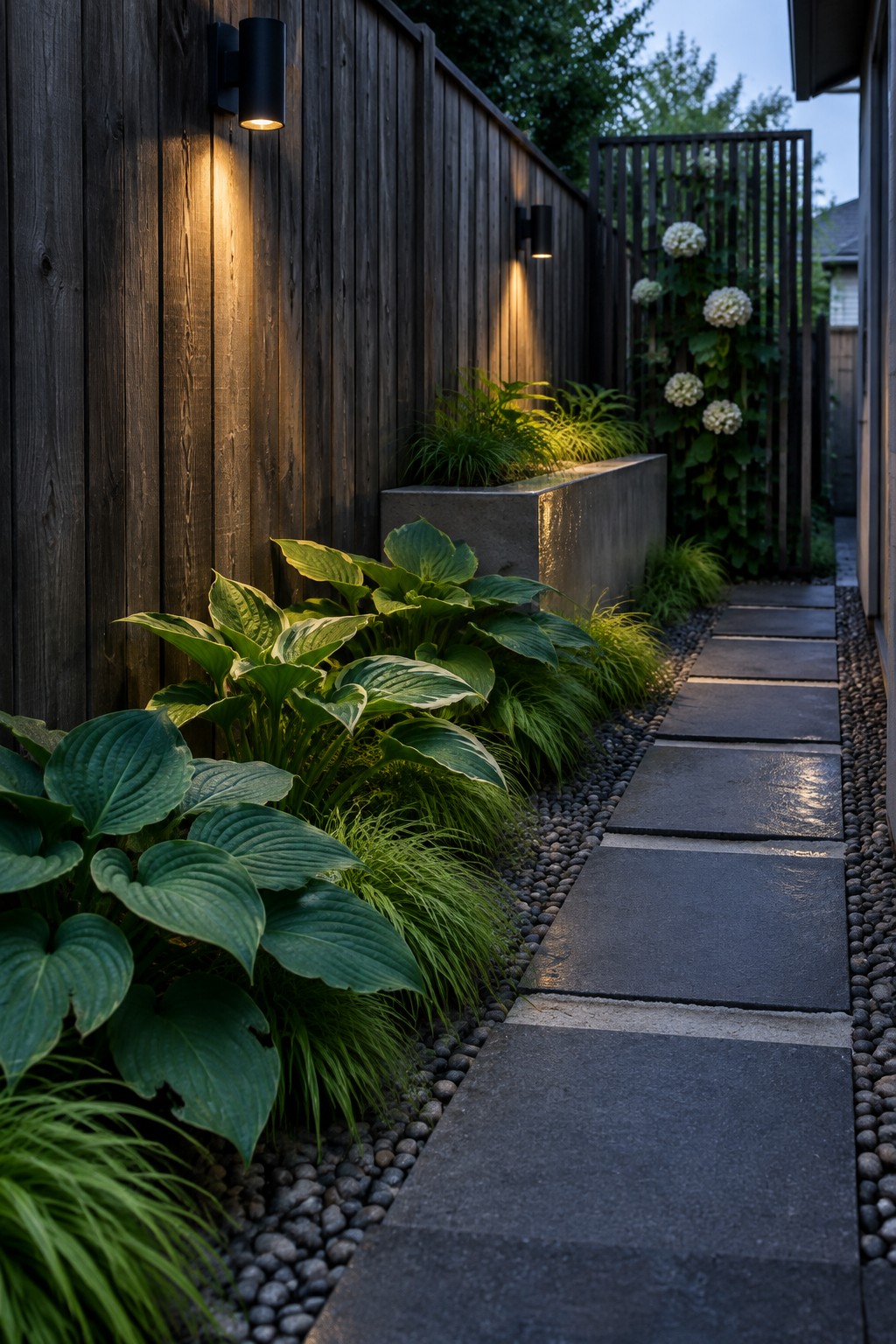
A simple path can make a narrow side yard feel easier to use without taking space away from the garden. Large concrete stepping stones set in small river rocks give the walkway a clear route, while hostas and ornamental grasses soften its edges.
This approach works well along a fence where shade-loving plants have room to spread. Leave enough space between the stones for comfortable steps, and keep the plants trimmed back from the walking surface.
Edge a Shady Border With Brick
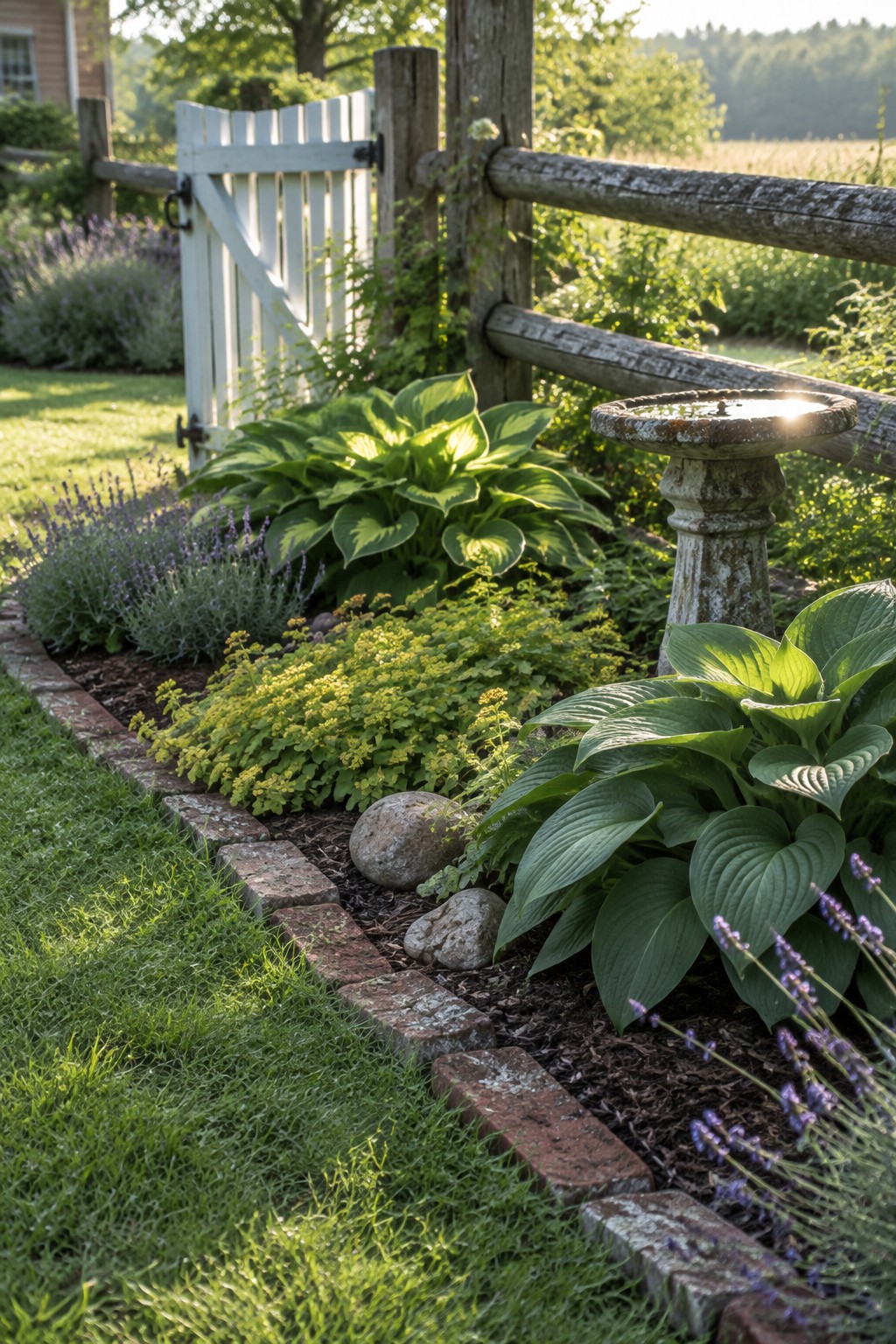
A low brick edge gives a fence-side planting bed a clear shape and keeps the lawn from creeping into the mulch. It also makes a loose mix of hostas and smaller shade plants look more organized without needing a formal layout.
Use bricks to follow the curve of a garden bed, keeping them level so mowing and trimming stay manageable. This works well beside a lawn, but leave enough room for hostas to spread without spilling over the edge.
Use Hostas To Edge a Narrow Garden Stream
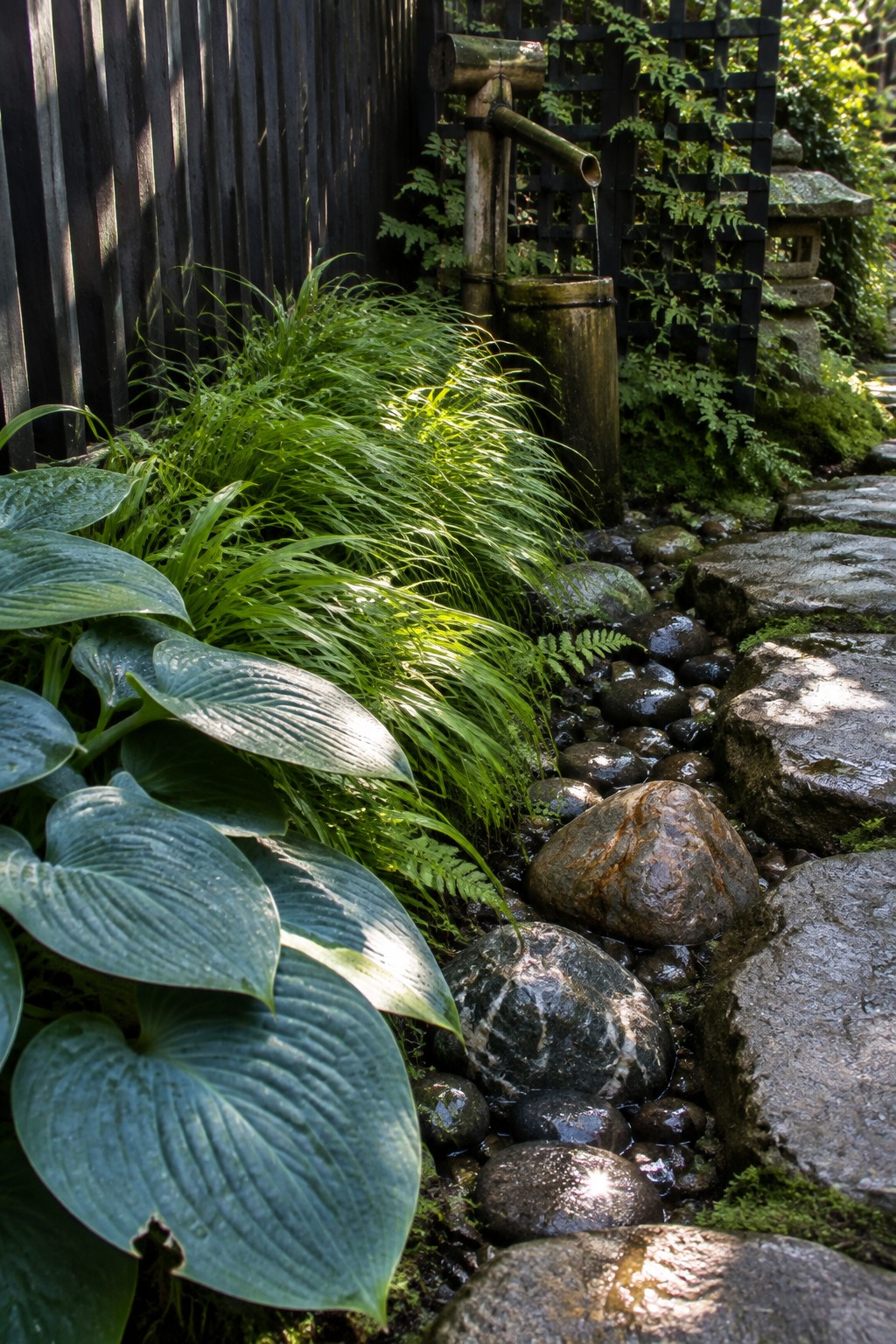
A narrow stream can make a shaded fence border feel like a garden feature instead of leftover space. Broad hosta leaves along the edge give the small waterway a clear boundary, while leaving the stones visible.
Plant hostas in loose groups where the soil stays moist, but keep them back from the stream so water can still move freely. This approach suits a shady side yard, especially where a fence already makes a long, narrow planting bed.
Use Rocks to Break Up Hosta Plantings
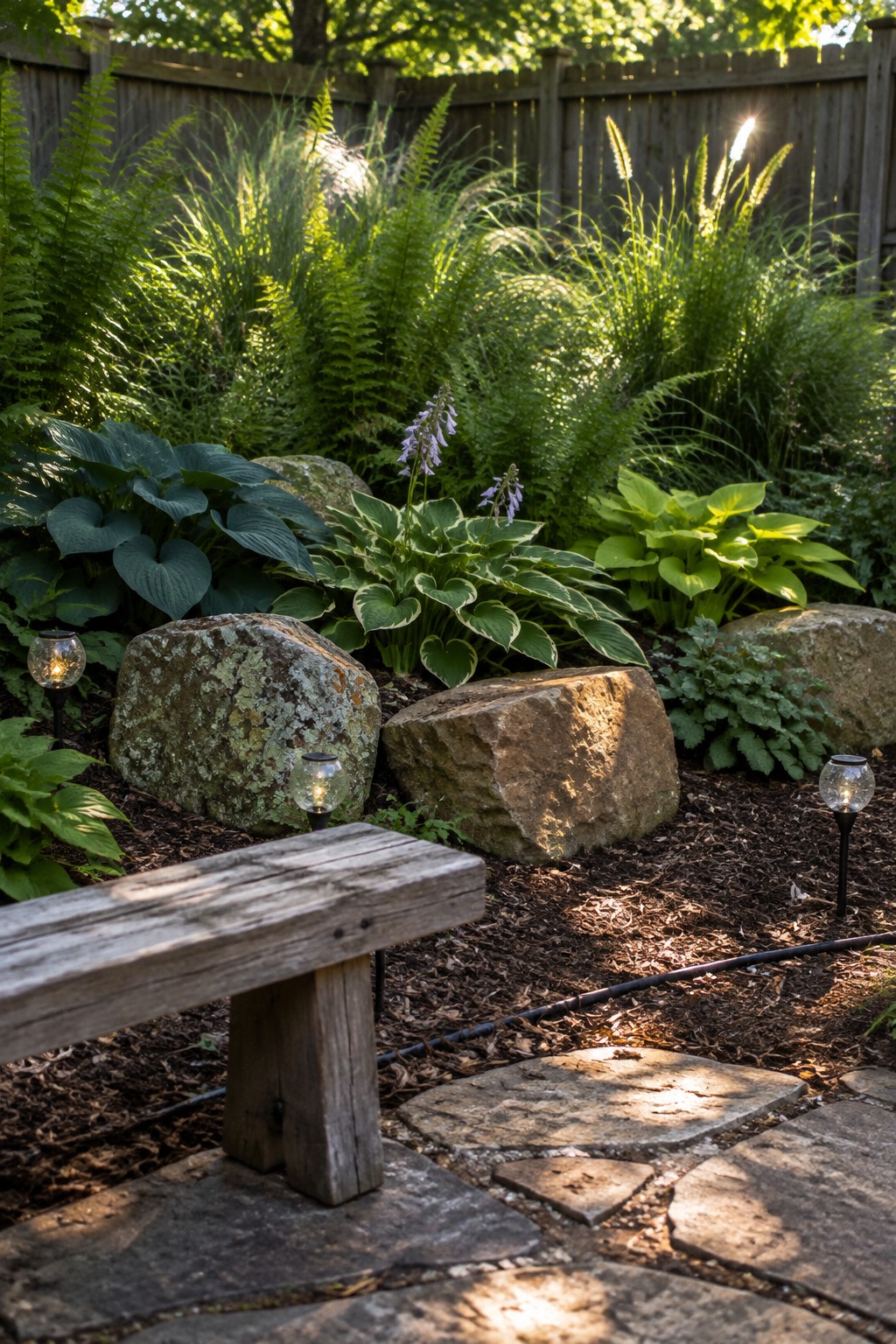
Large rocks give a shaded fence garden a bit of structure without taking attention away from the plants. Set among broad hosta leaves, they create natural-looking breaks in the planting and add interest close to the ground.
Try this in a deep border where hostas and ferns fill most of the space. Place a few sturdy stones between plant groups, leaving room for foliage to spread and making sure the rocks sit securely.
Plant Hostas in a Layered Fence Bed
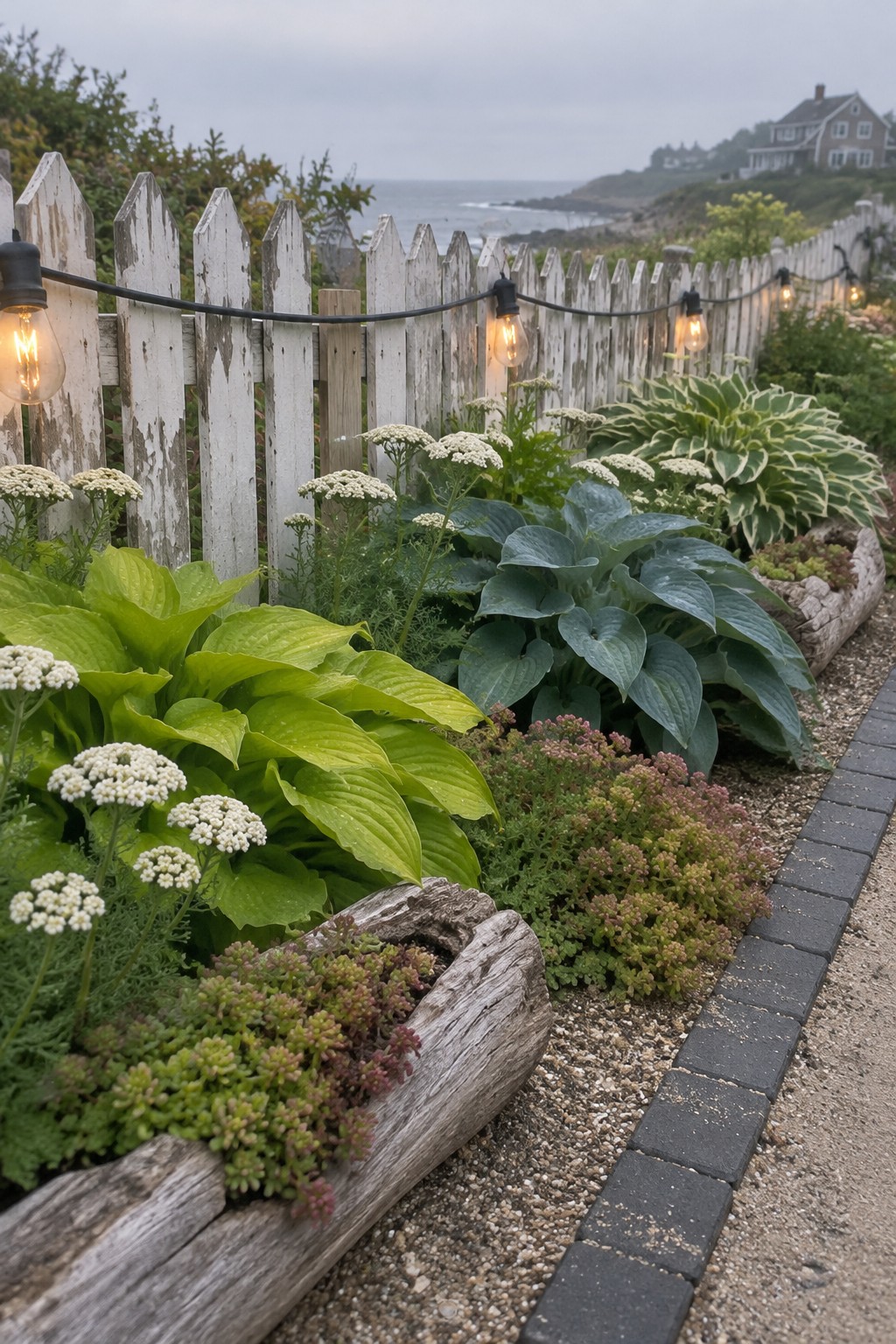
Hostas work well in a fence-side bed when they sit in a few loose layers instead of one continuous row. Large-leaved plants give the border a full look, while smaller flowering plants can fill the gaps without hiding the hostas.
Use this approach in a partly shaded bed, and leave enough room for hostas to spread as they mature. A mix of leaf sizes, like the broad blue-green leaves and bright chartreuse leaves shown here, keeps the planting varied without needing many different kinds of plants.
Use Stone Slabs to Define a Garden Walk
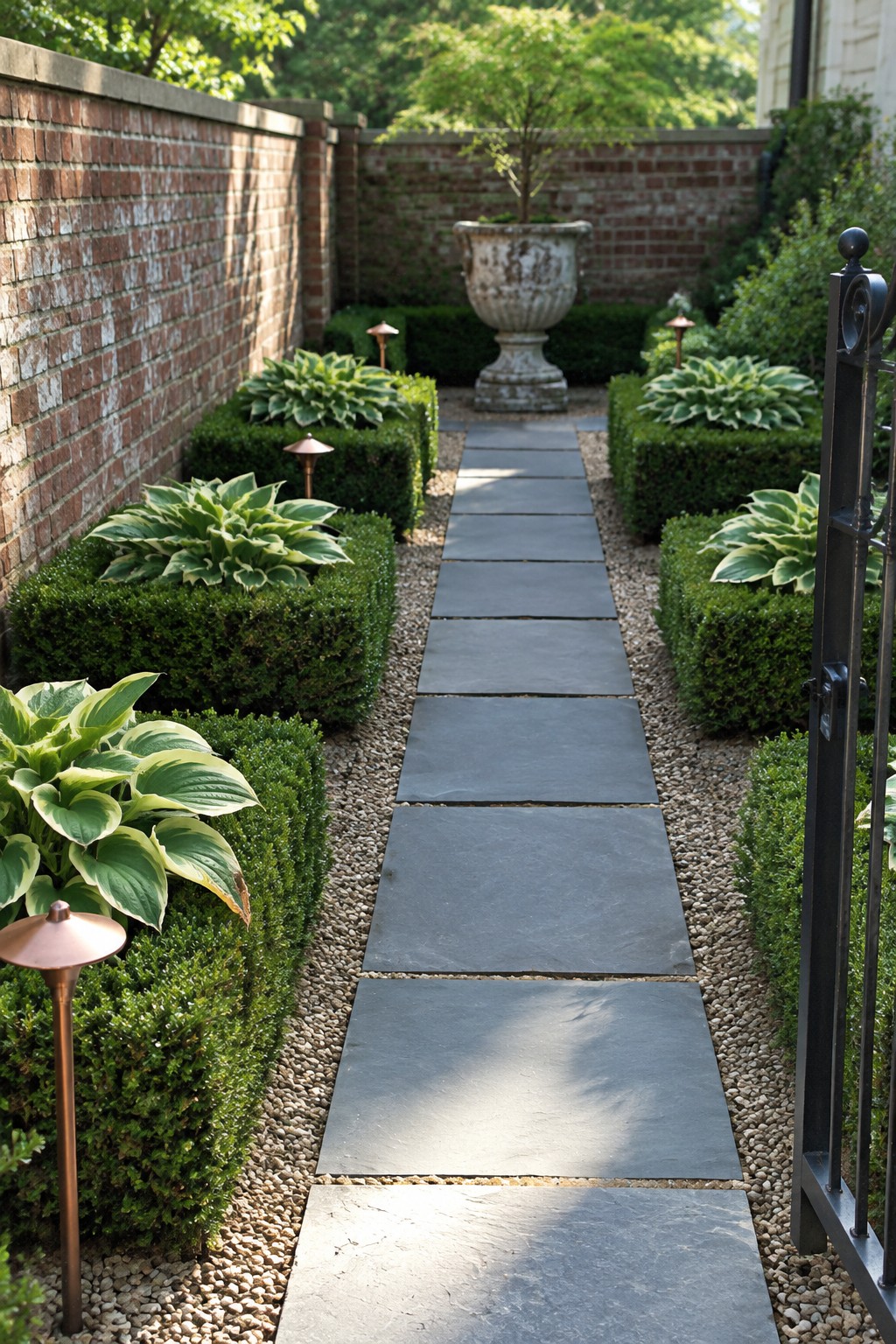
Large stepping stones make a clear route through a narrow garden while leaving room for planting on either side. Here, clipped shrubs and hostas keep the path edges tidy without making the walkway feel crowded.
This approach works well along a fence, especially where a straight route leads to a focal point at the far end. Set the stones on a firm, level base and leave enough space between them for a comfortable stride.
Add a Concrete Stepping-Stone Path Beside the Fence
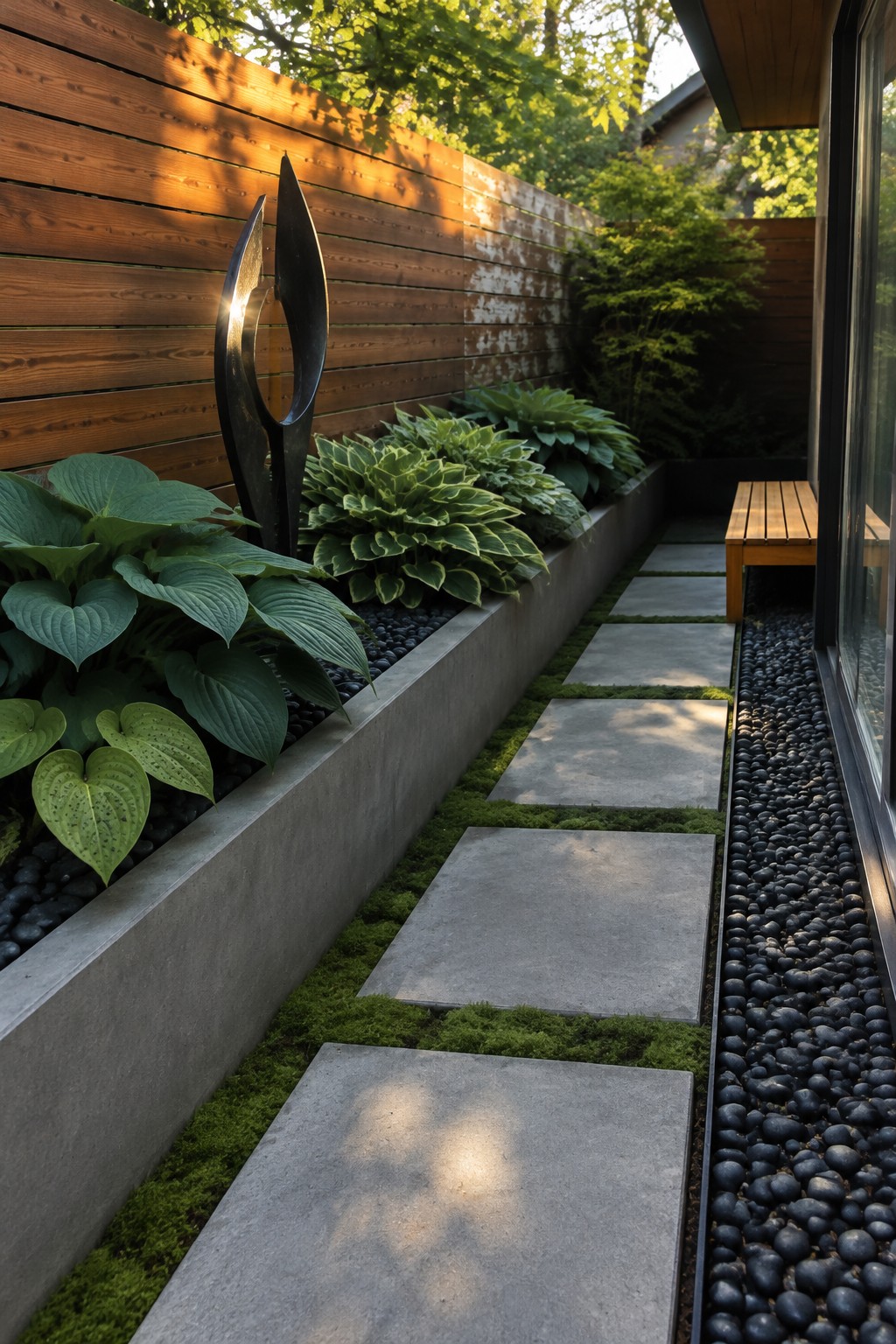
Large concrete slabs set into moss make a simple path through a narrow shady garden. The broad stones are easy to walk on, and the green gaps keep the hard surface from taking over.
Use this layout where space is tight, such as along a fence beside the house. Set the stones firmly and leave enough room between them for moss or other low-growing ground cover. Hostas can fill the raised bed alongside the path without crowding the walking surface.
Use Large Pots to Mark a Shady Garden Path
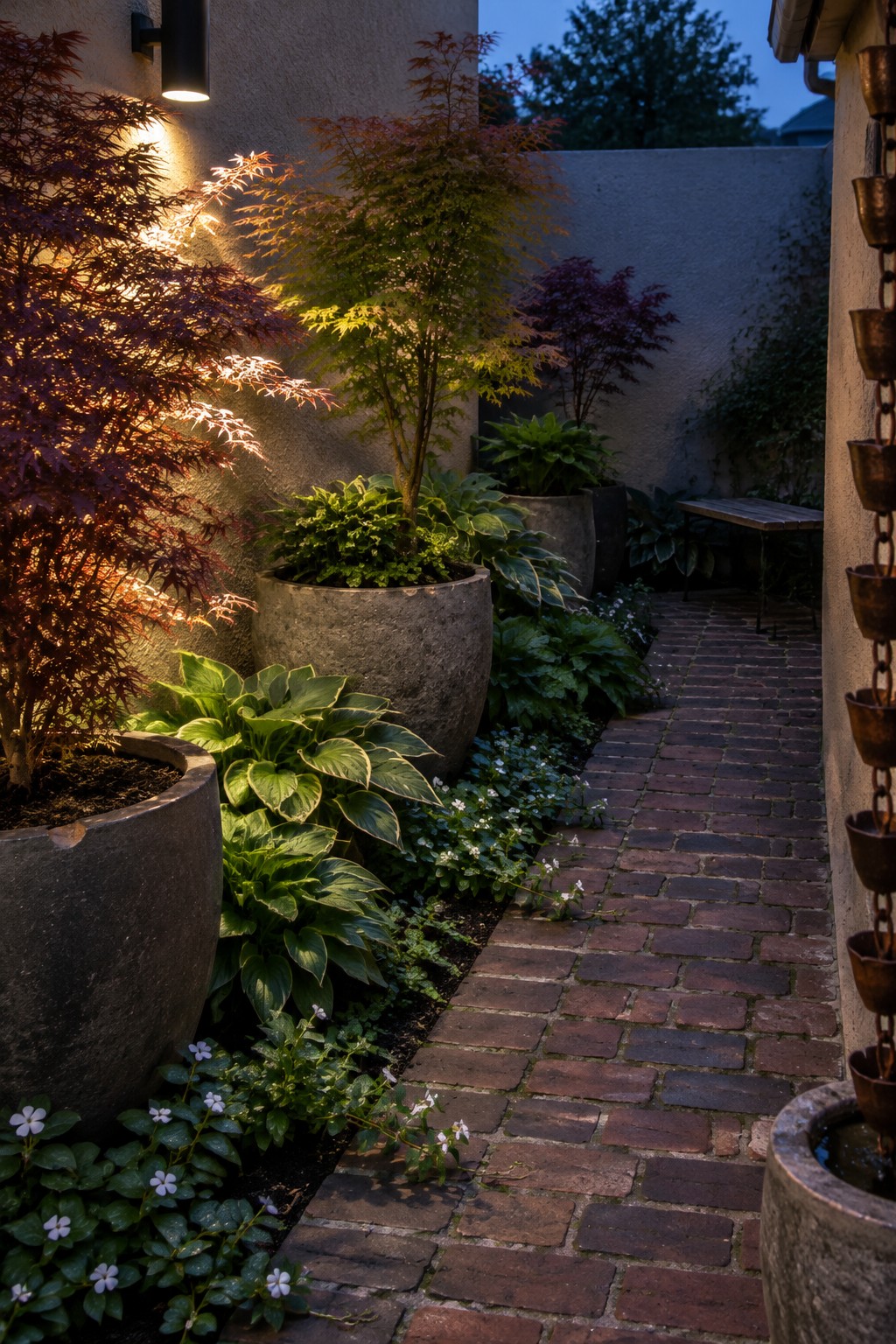
Large planters can give a narrow garden path a clear rhythm without taking up space in the planting bed. Here, rounded pots hold small trees and leafy plants beside a brick walkway, making the route feel established while leaving room for low ground cover.
This approach works well in a side yard where a fence or wall limits planting space. Choose sturdy pots with enough room for roots, and leave a comfortable width for walking between them.
Use Round Stepping Stones Through a Shady Border
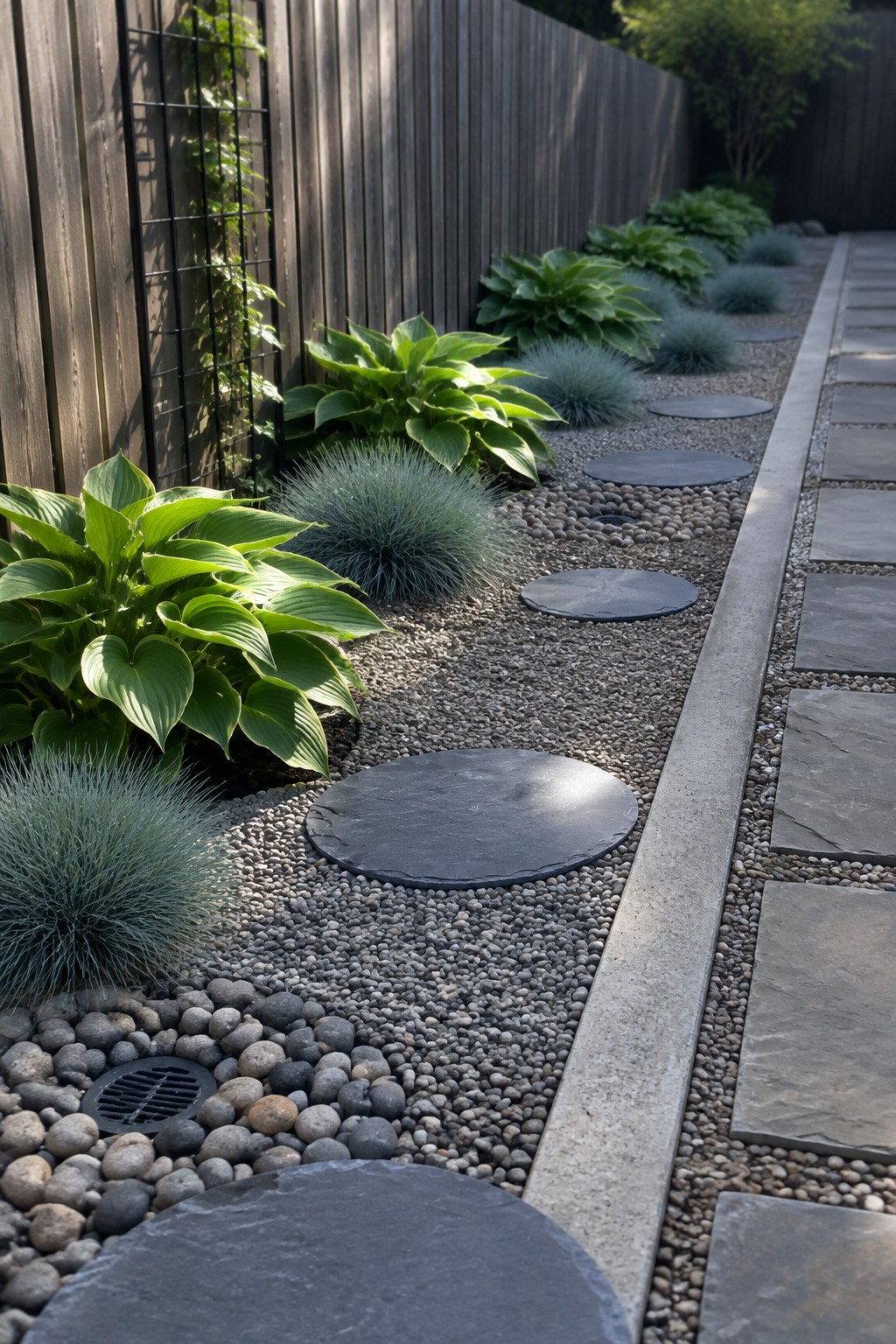
Round stepping stones make a gravel border easier to walk through without turning it into a solid paved path. Their repeated shape gives the garden a clear route, while the gaps leave room for hostas and other shade plants along the fence.
Set the stones firmly and keep their spacing comfortable for a normal stride. This works well in a narrow side yard, but choose a stable surface and keep gravel from spilling onto the main walkway.
Train Honeysuckle Along a Garden Fence
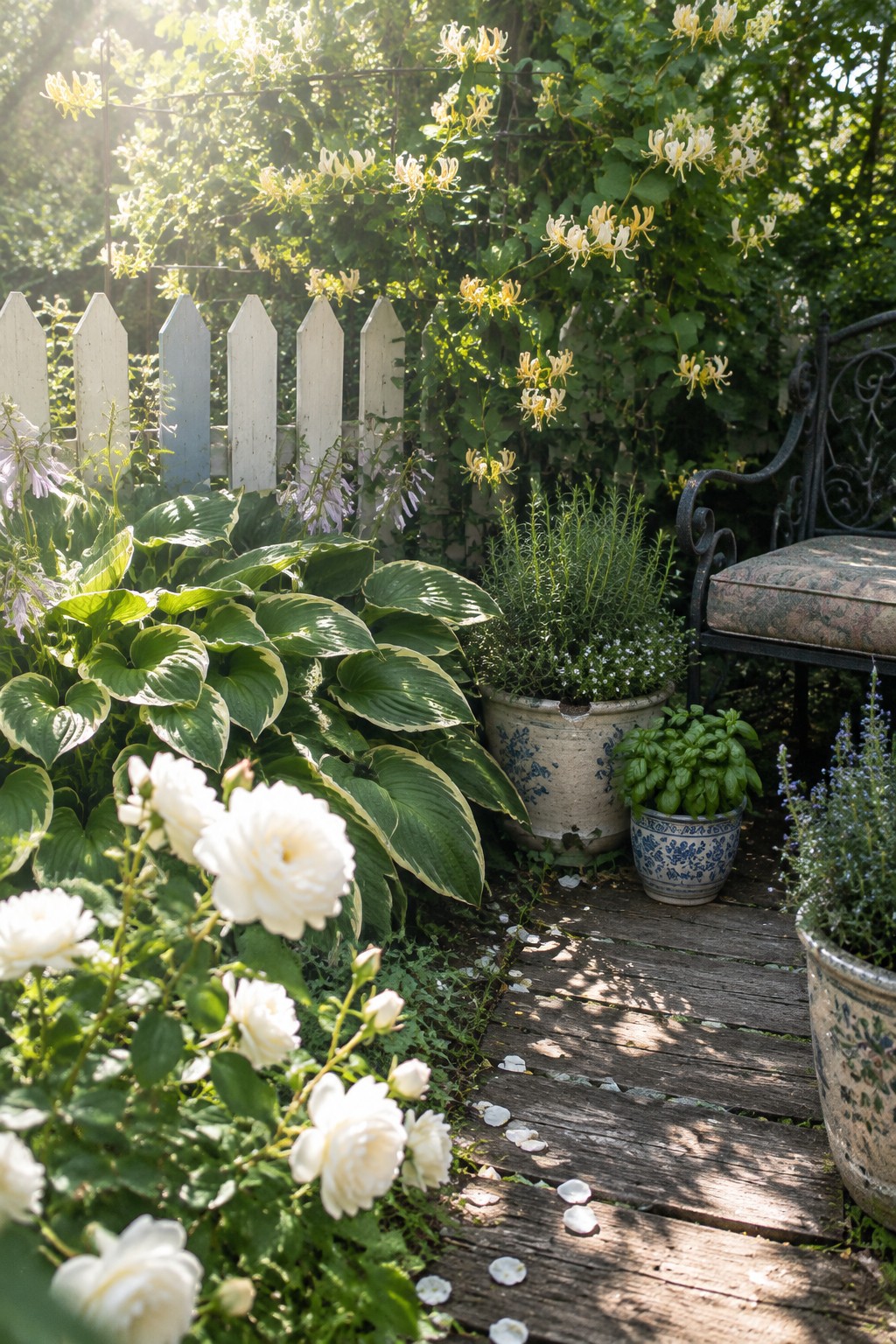
A fence can do more than mark the edge of a garden. Letting a climbing vine grow along it adds a leafy backdrop, while hostas planted in front fill the shaded ground with broad leaves.
Use a sturdy trellis or horizontal wires to guide the vine and make pruning easier. This works well where a fence gets some sun for flowering vines, but keep the hostas in the cooler shade below.
Build a Curved Brick Edge Along a Shady Border
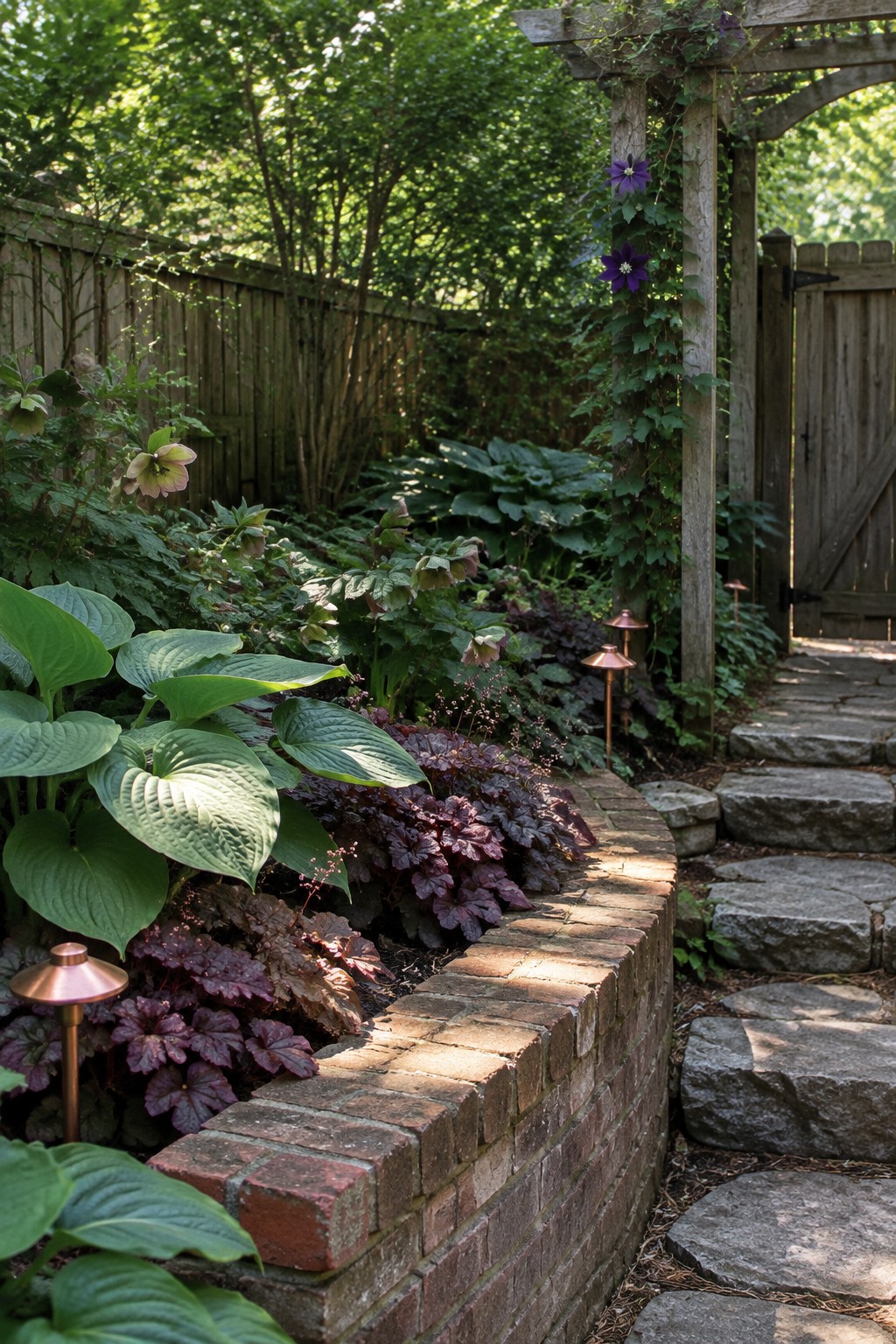
A low brick wall can give a shady garden bed a clear shape without making it feel too formal. Its gentle curve follows the planting and separates the leafy border from the stone path, making the garden easier to navigate.
This works well beside a fence where hostas and other shade plants might otherwise spill into the walkway. Keep the wall low, and leave enough room for plants to spread as they mature.
Use a Low Stone Wall to Shape a Hosta Border
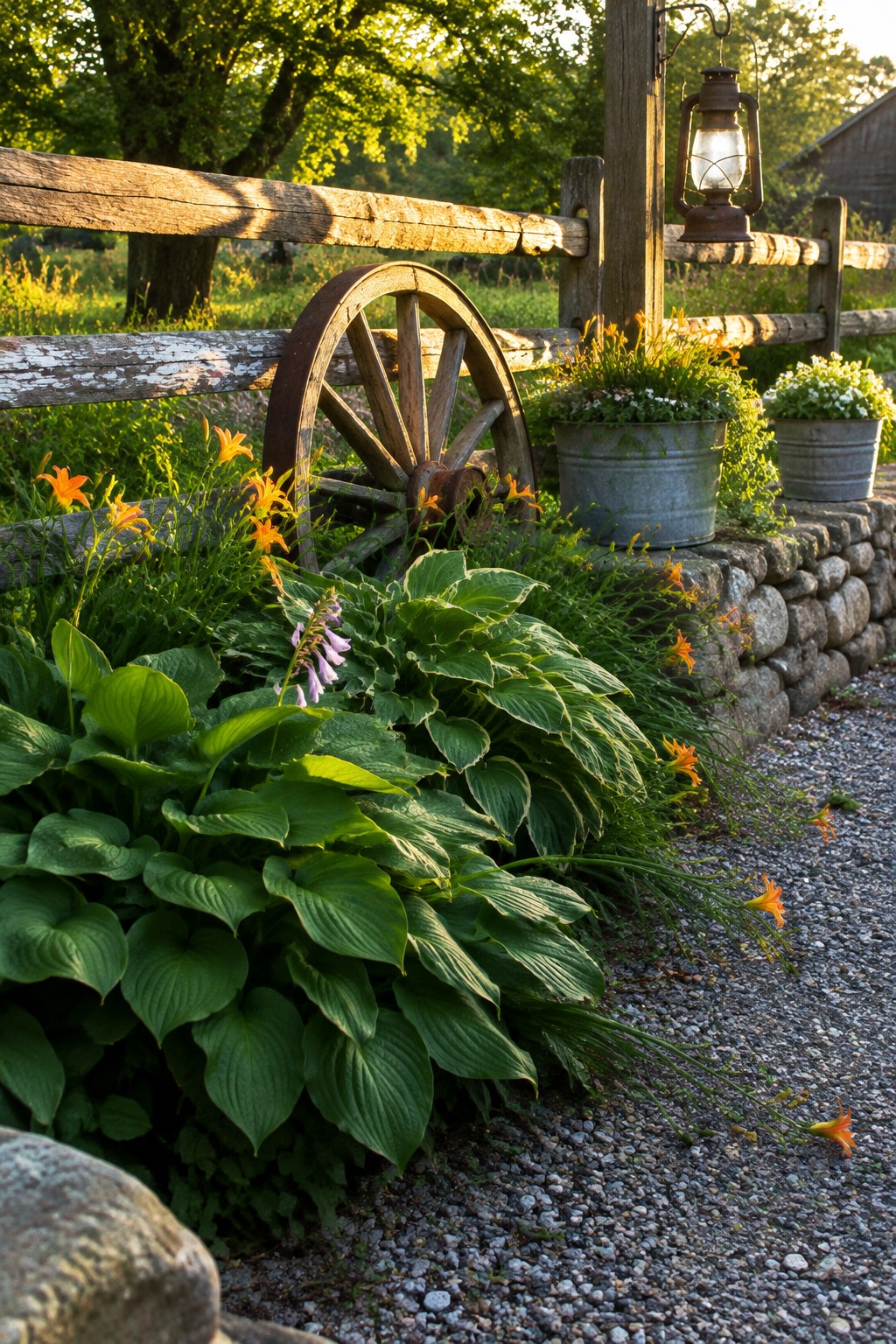
A low stone wall gives a shady fence bed a clear edge and helps keep the planting area separate from a gravel path. Hostas work well along this kind of border because their broad leaves fill the space without needing a tall, formal edge.
For a similar look, tuck hostas into a bed beside a dry-stacked wall and leave enough room for the leaves to spread. A few flowering plants can add color, but keep the path wide enough to walk comfortably.
Use Wall Planters to Layer a Shady Fence Bed
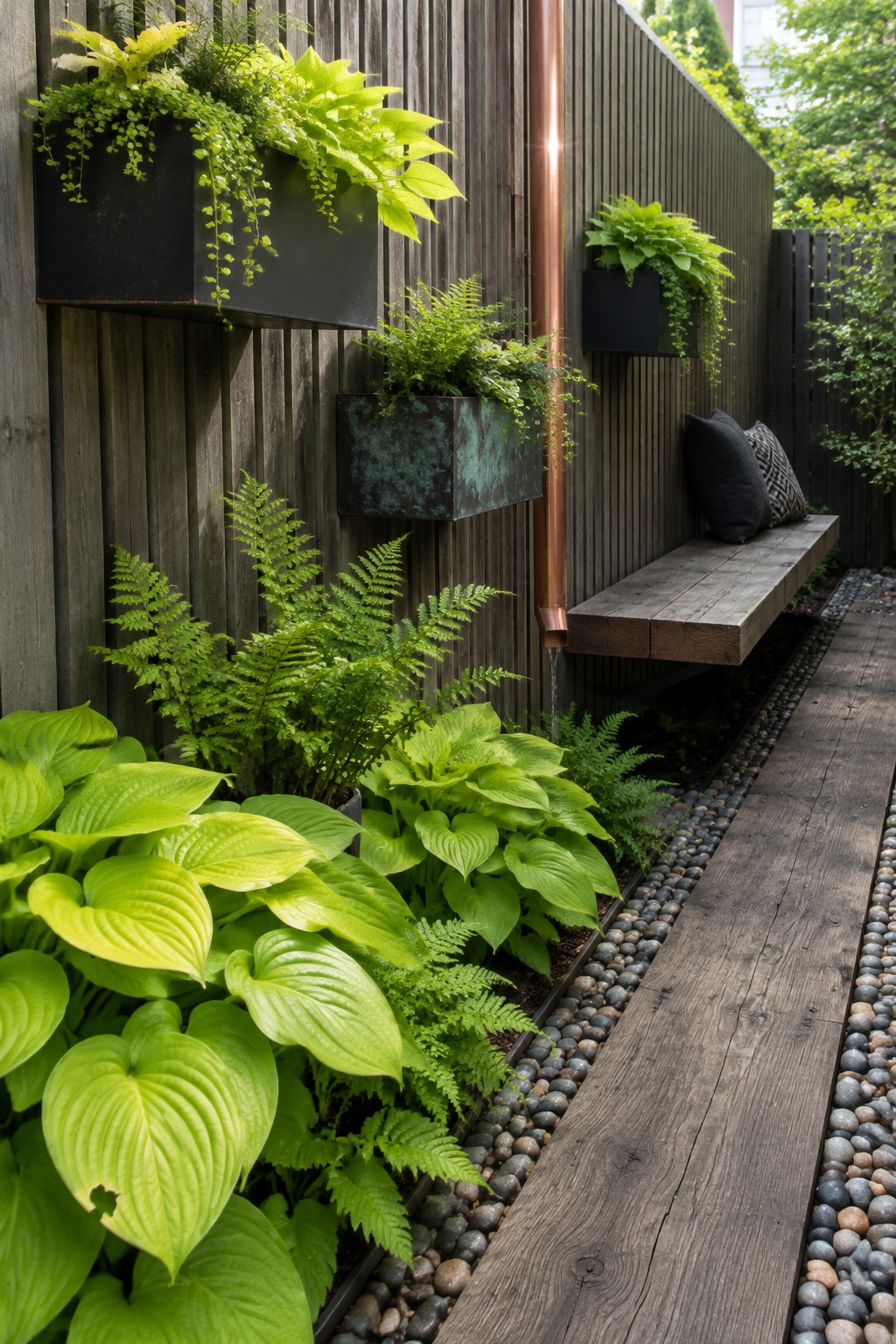
Wall-mounted planters let you grow hostas and ferns at different heights instead of keeping all the greenery at ground level. This works especially well along a narrow fence, where vertical planting adds interest without taking up much of the path or bed.
Choose sturdy planters that can handle the weight of damp soil, and leave enough room below for the plants to spread. Mix them with hostas planted at the base, as shown here, but avoid crowding the fence so each plant has space and airflow.
Add an Arched Gate to a Shady Garden
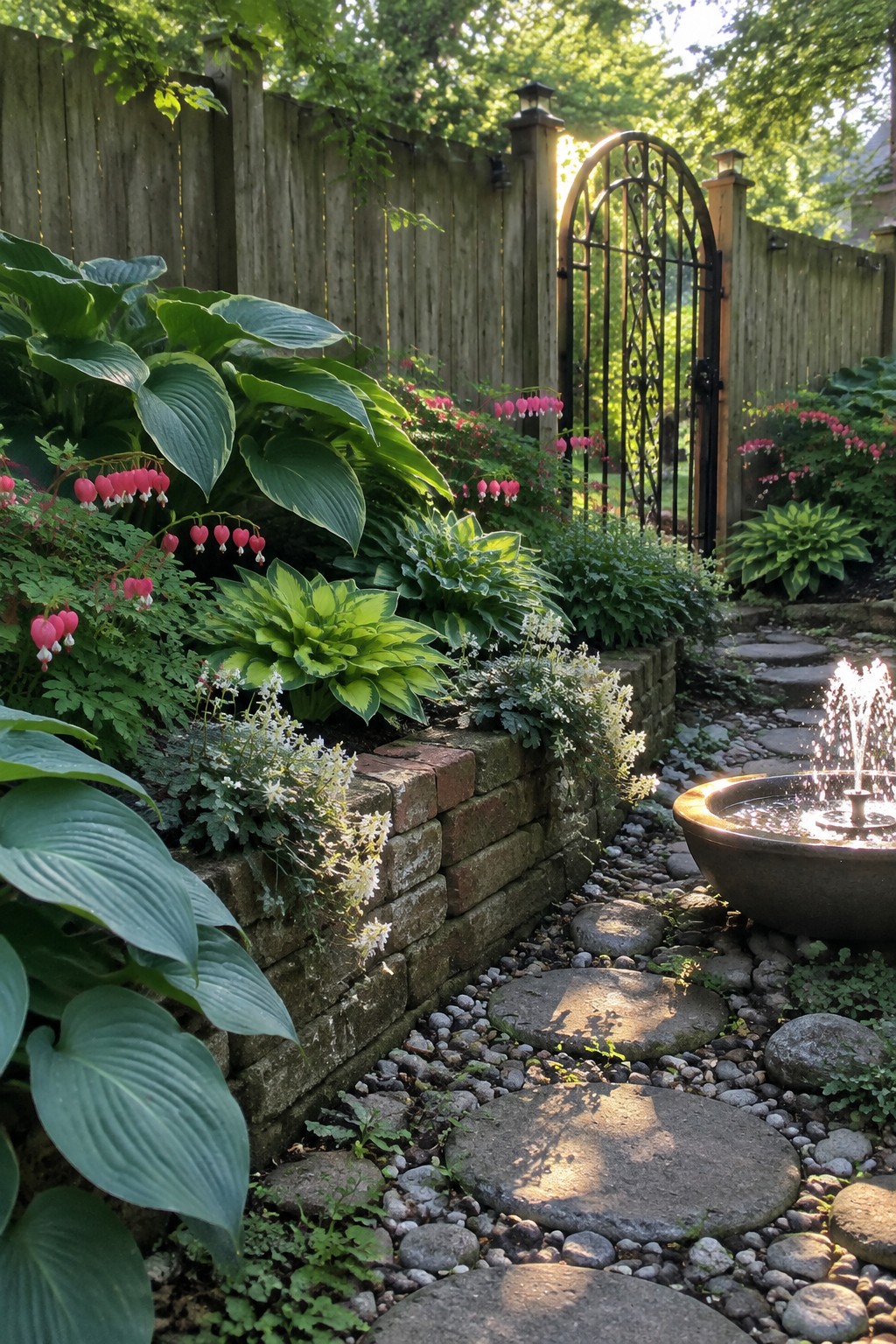
A metal garden gate can give a fence border a clear stopping point and make a simple path feel like a planned part of the garden. Here, the arched gate sits among hostas and flowering plants, so it feels connected to the planting rather than set apart from it.
Use this idea where a path meets a fence opening or garden entrance. Keep plants low enough around the gate that it stays easy to open, and let hostas fill the shady stretches along the fence.
Frequently Asked Questions
Q: Will hostas grow along a fence that gets a little afternoon sun?
A: Many hostas handle a few hours of sun, especially if they get shade during the hottest part of the day. Keep the soil evenly moist and watch for scorched leaf edges, which can signal that the spot is too sunny.
Q: How far apart should I plant hostas along a fence?
A: Check the mature width on the plant label, then space each hosta so its leaves can fill out without crowding its neighbors. Smaller varieties can sit closer together, while large hostas need plenty of room.
Q: What can I plant with hostas to keep the fence bed interesting in winter?
A: Add evergreen ferns or a few compact shrubs so the bed still has shape after hostas die back. Leave the hosta foliage until it yellows, then clear it away to tidy the bed.
Q: How do I stop slugs from chewing holes in hosta leaves?
A: Water in the morning and remove damp leaf litter where slugs can hide. Check the plants after dark and pick off any slugs you find.
