

Hostas can make the ground beneath trees feel like a considered part of the garden, rather than a difficult patch left in the shade.
I find the layout works best when the planting follows the tree’s natural shape and leaves enough room around the trunk.
Leaf size, spacing, and edges all affect how the bed reads, especially when a path or lawn meets the planting.
Some combinations can look too crowded as they mature, so I’d leave space for hostas to spread and adapt the arrangement over time.
The ideas ahead offer useful starting points to test in a real yard, whether you want a soft woodland edge or a more defined border.
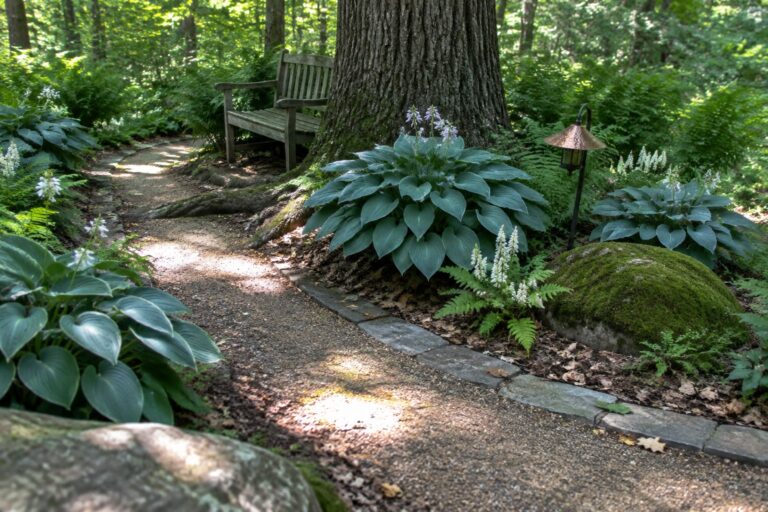
Use Hostas To Edge A Woodland Path
Hostas make a useful border along a winding garden path, especially where a tree leaves a shady patch that can be hard to fill. Their broad leaves form a steady edge and help separate the planting bed from the walking area.
Plant them in loose groups beside the path, leaving enough room for the leaves to spread without narrowing the route. A low stone edge can help keep soil and mulch in the bed, but avoid placing hostas where feet are likely to brush them.
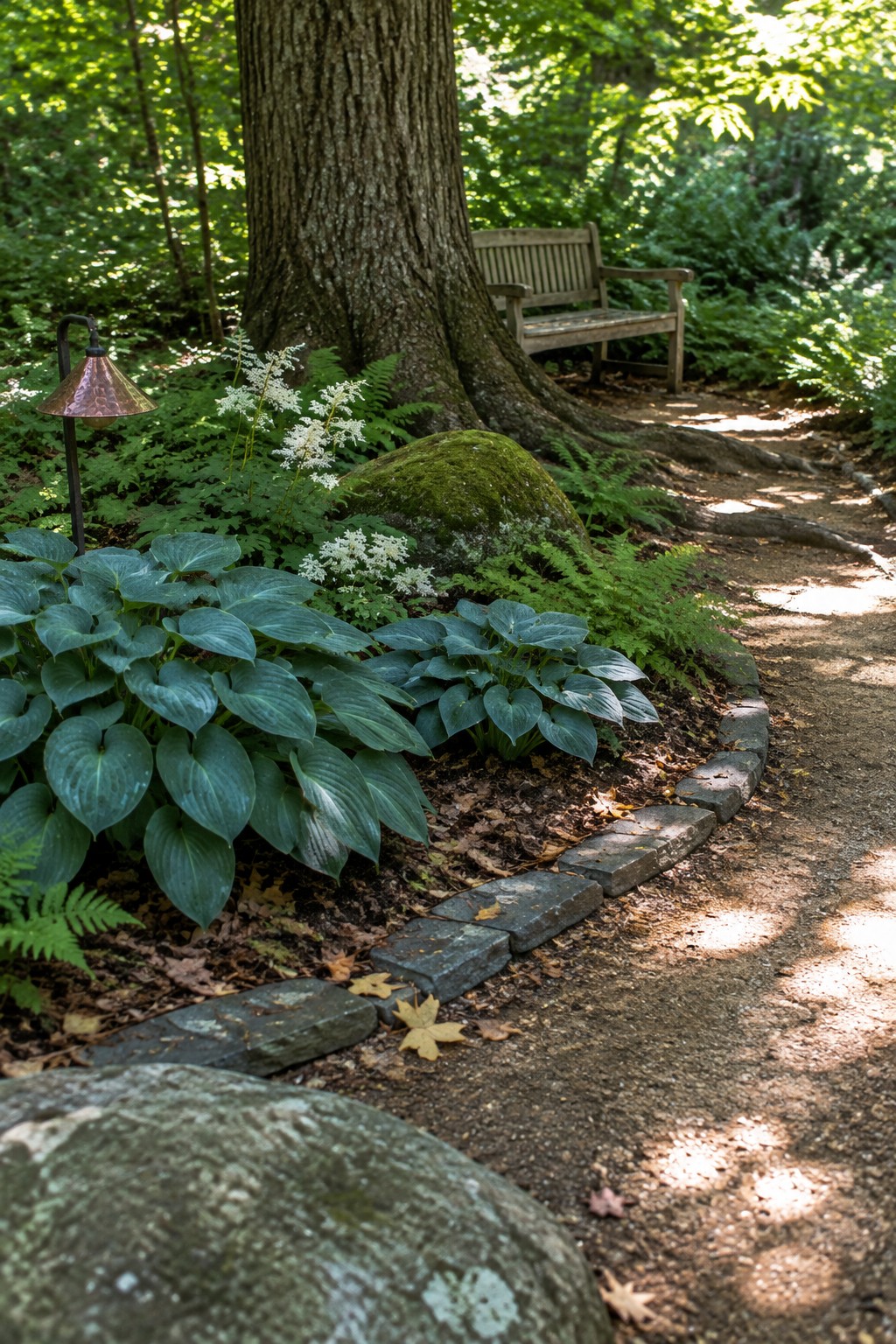
Use Hostas To Fill In Around Tree Trunks
Hostas make a useful ground layer around trees, where they cover bare soil and bring leafy color to a shady bed. Mixing green and cream-edged varieties, as shown here, gives the planting a little variation without making it feel busy.
Plant them in small groups beneath the tree, leaving room for each clump to spread. Choose varieties suited to the space and keep them clear of the trunk so the bark stays visible and the base does not remain crowded with damp foliage.
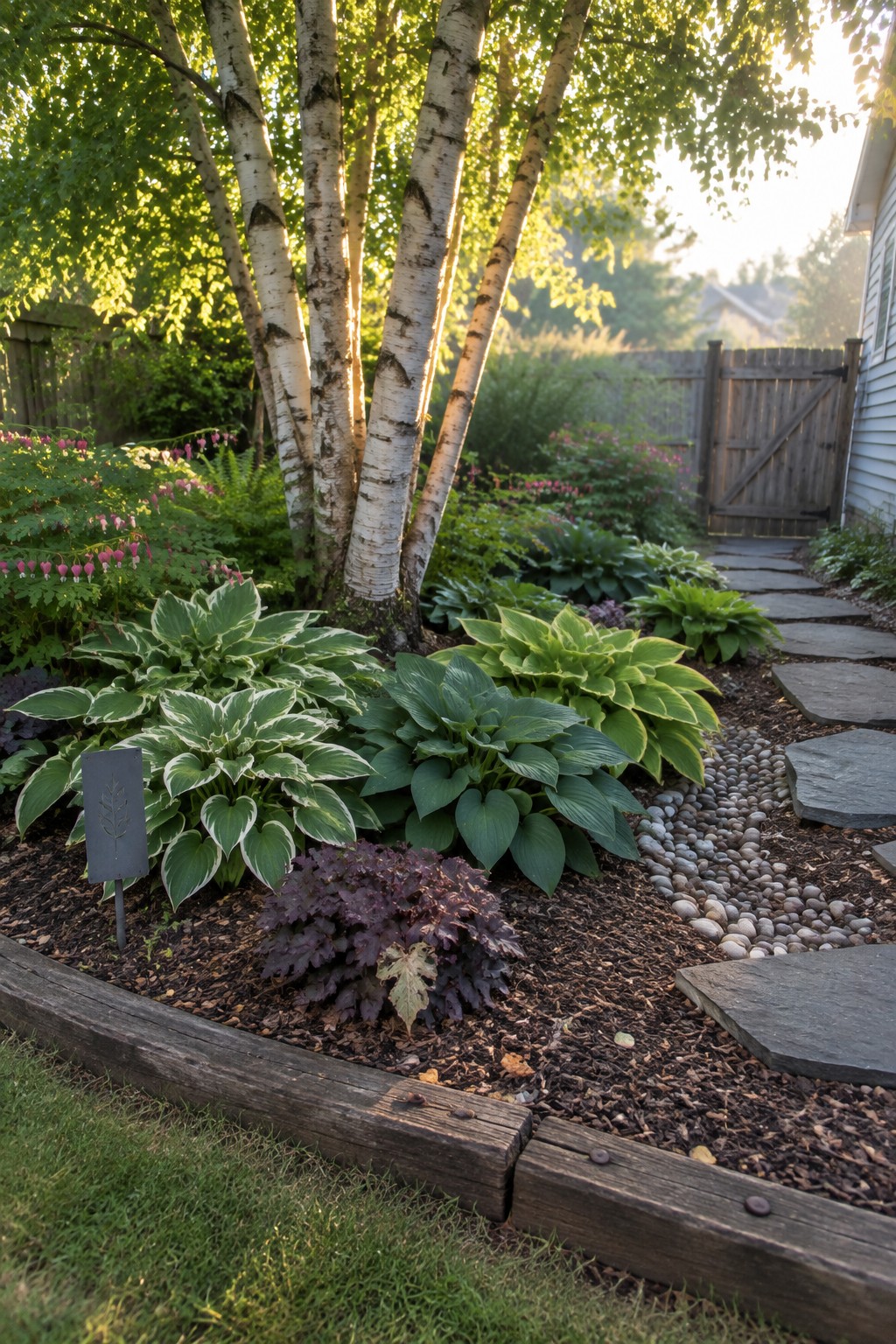
Create Woodland Layers Around Trees
Hostas make a useful foundation for a woodland garden because their broad leaves fill the ground beneath trees, where many flowering plants struggle. A low stone retaining wall can help define the bed and give the planting a tidy edge.
Plant hostas in loose groups, mixing leaf sizes and variegated varieties for a little contrast. Keep them far enough from the tree trunk to avoid piling soil against the bark, and leave room for the plants to spread.
Create a Winding Stone Path Through Hosta Beds
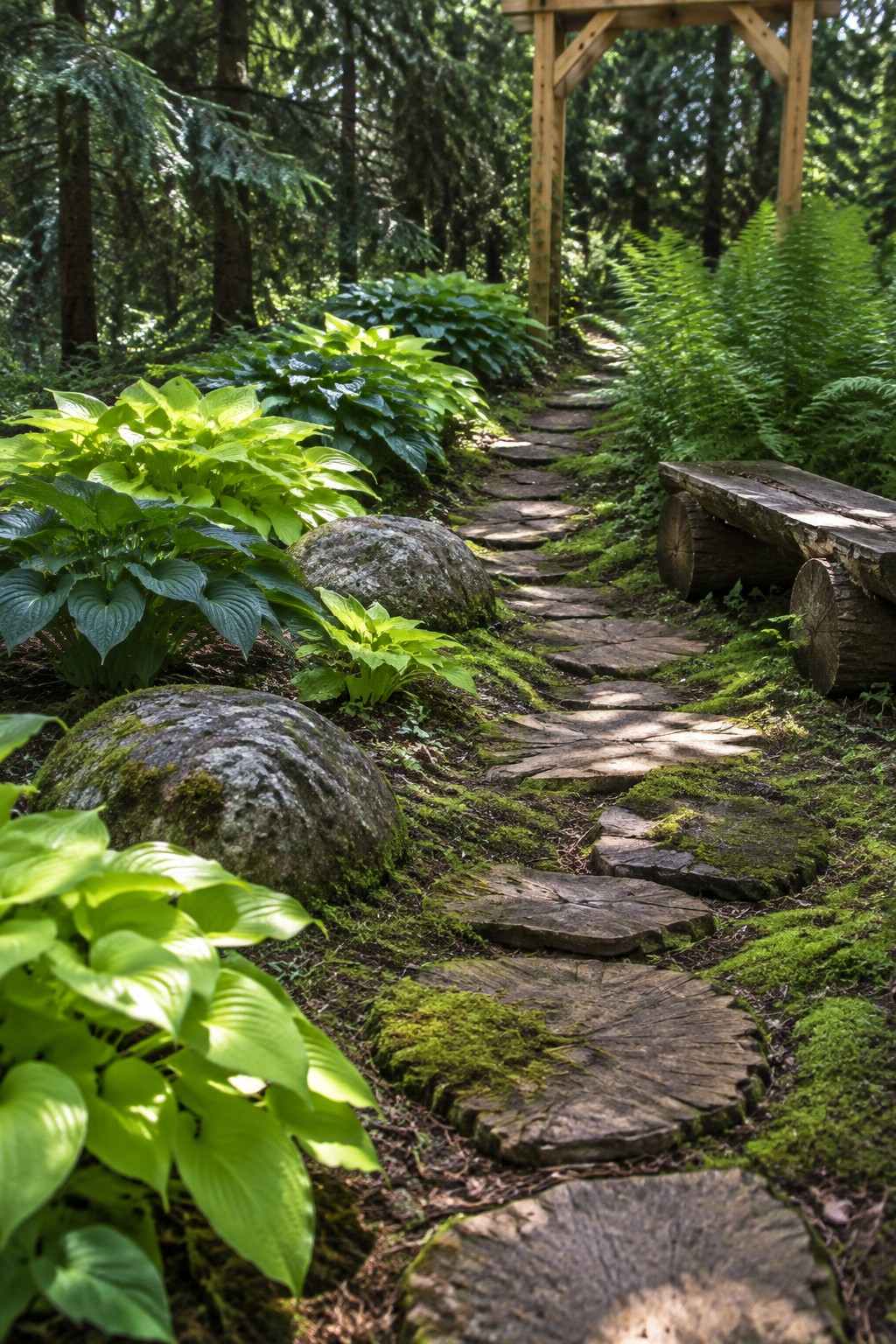
A winding stone path gives a woodland garden a clear route without making it feel too formal. Hostas planted along its edges make the walk feel tucked into the garden, while the stones provide a firm surface through mossy or damp areas.
Use irregular flagstones and let hostas fill the nearby beds, leaving enough space for leaves to spread without covering the path. This works especially well beneath trees, where a curved route can follow the natural shape of the planting.
Make A Shady Tree Bed The Center Of The Garden
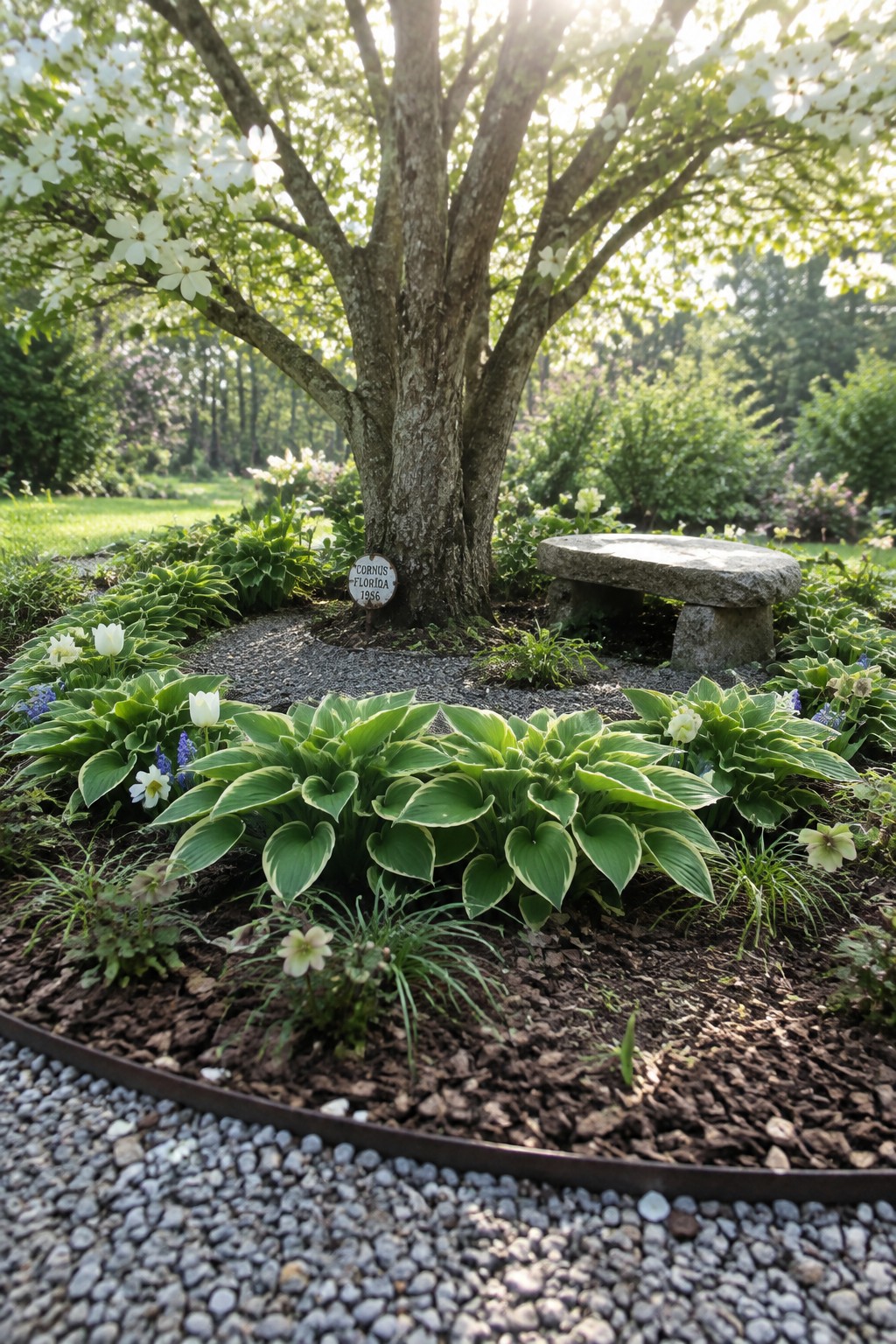
Hostas make a shady area around a tree feel like a planted garden bed rather than an empty patch of soil. Their broad leaves add a clear shape at ground level, while smaller flowers can fill in around the edges.
Leave some space around the trunk so plants do not crowd it, and use hostas in loose groups beneath trees with dappled shade. A simple gravel edge can keep the bed tidy without making it feel too formal.
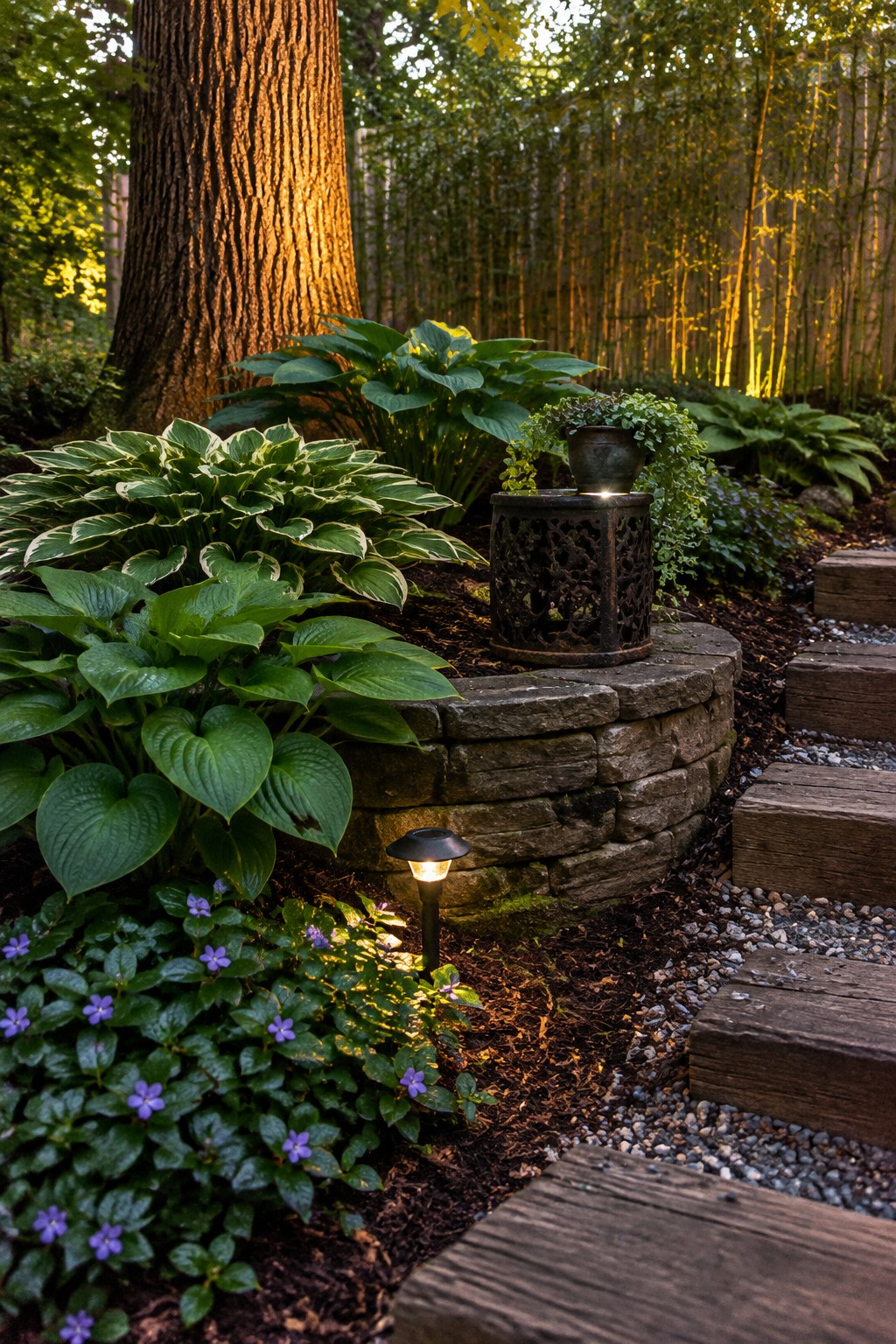
Build Steps Into a Woodland Garden
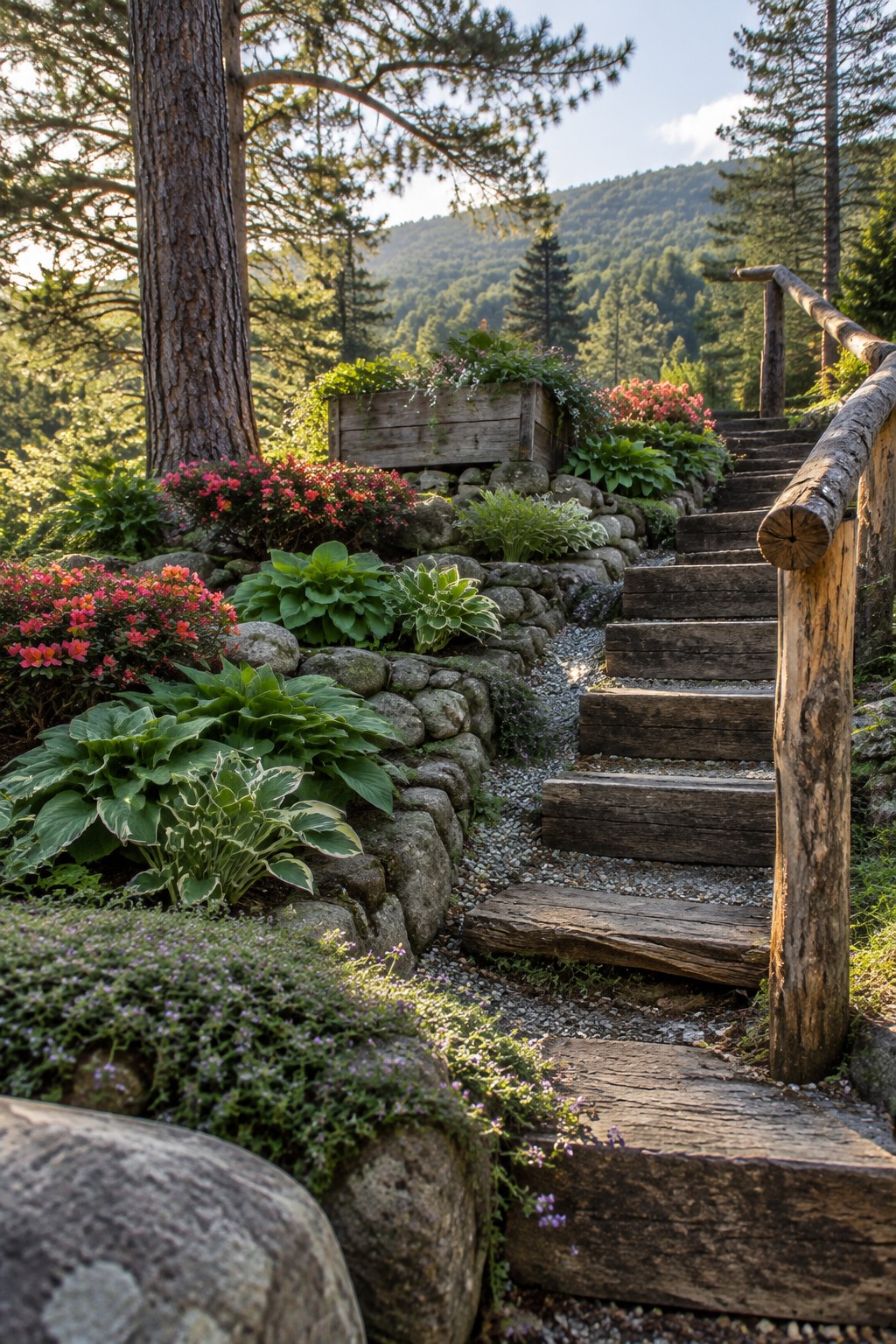
Steps made from sturdy wood can help a sloped garden feel easier to navigate without taking away its natural character. Set among stone borders and leafy hostas, they give the planting beds a clear shape and keep foot traffic from wearing down the soil.
Use this approach where a garden path climbs a hill or connects different levels. Keep the steps wide enough for comfortable footing, and plant hostas along the edges where they have room to spread without covering the walking surface.
Use a Curved Border To Shape A Hosta Bed
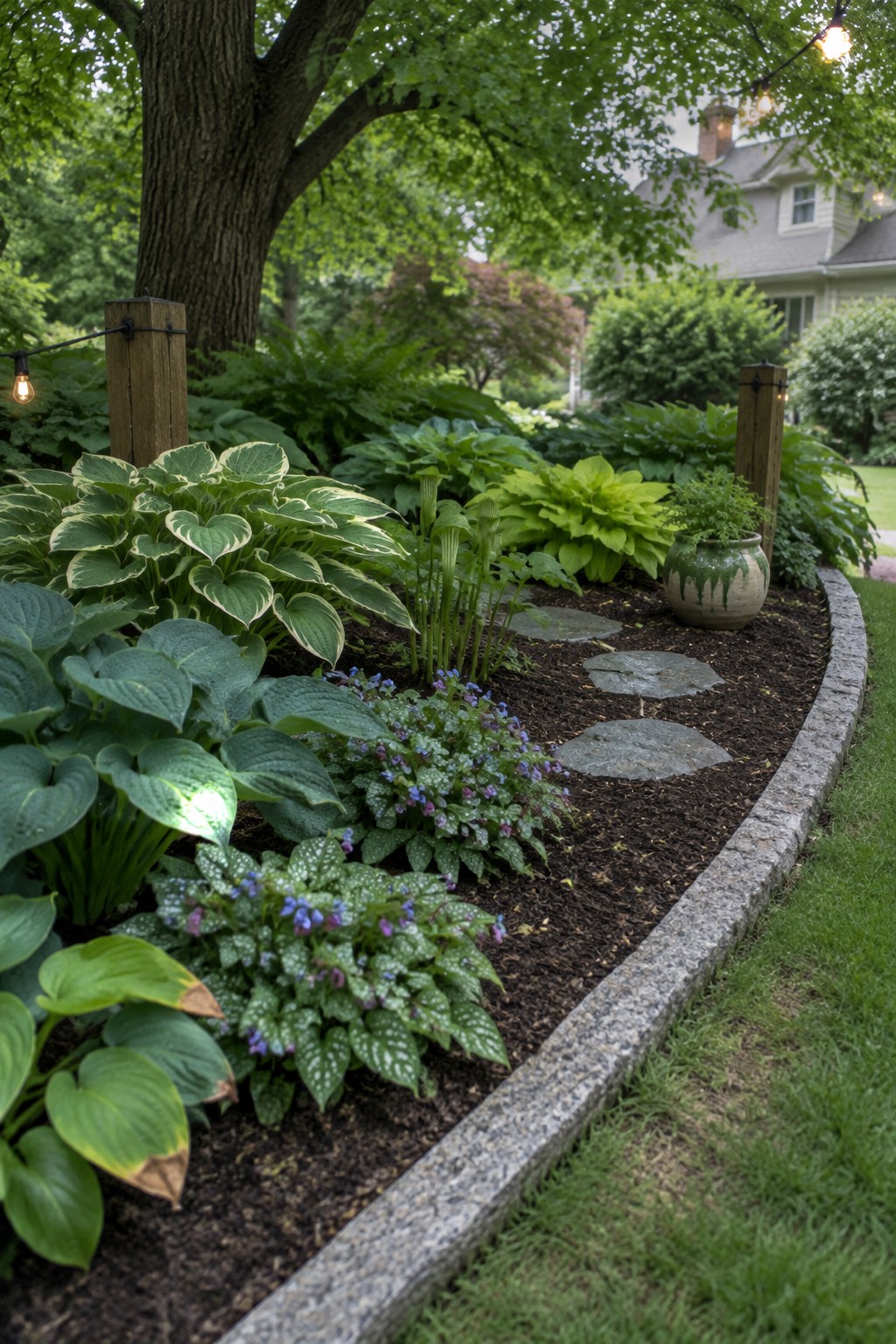
A curved stone edge gives a hosta bed a clear shape without making it feel too formal. It also keeps the mulch in place and makes the planting area easier to maintain.
Let the border follow the natural outline of the tree and garden rather than forcing a straight line. Variegated hostas work well near the front of the bed, where their leaves can spill toward the edge.
Make a Curved Hosta Bed Around A Tree
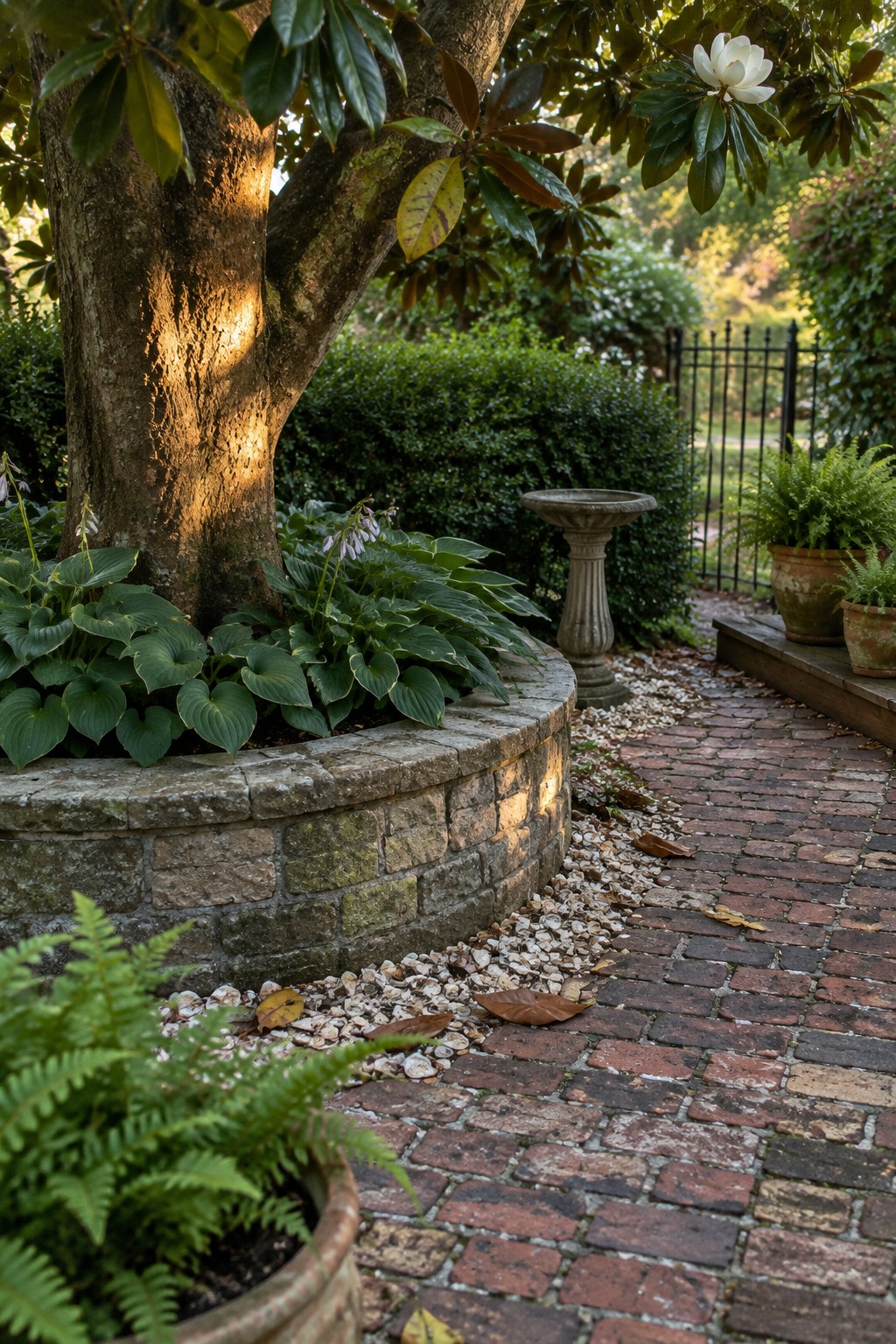
A low stone wall can give a tree bed a clear, rounded edge and keep the planting area distinct from a nearby path. Hostas suit this kind of spot because their broad leaves fill in around the trunk without hiding the shape of the bed.
Use a wall that follows the tree’s natural spread, leaving enough room for the trunk and roots. Plant hostas in groups inside the curve, and keep the path clear so the edging remains easy to walk beside.
Add a Bench Along a Woodland Garden Path
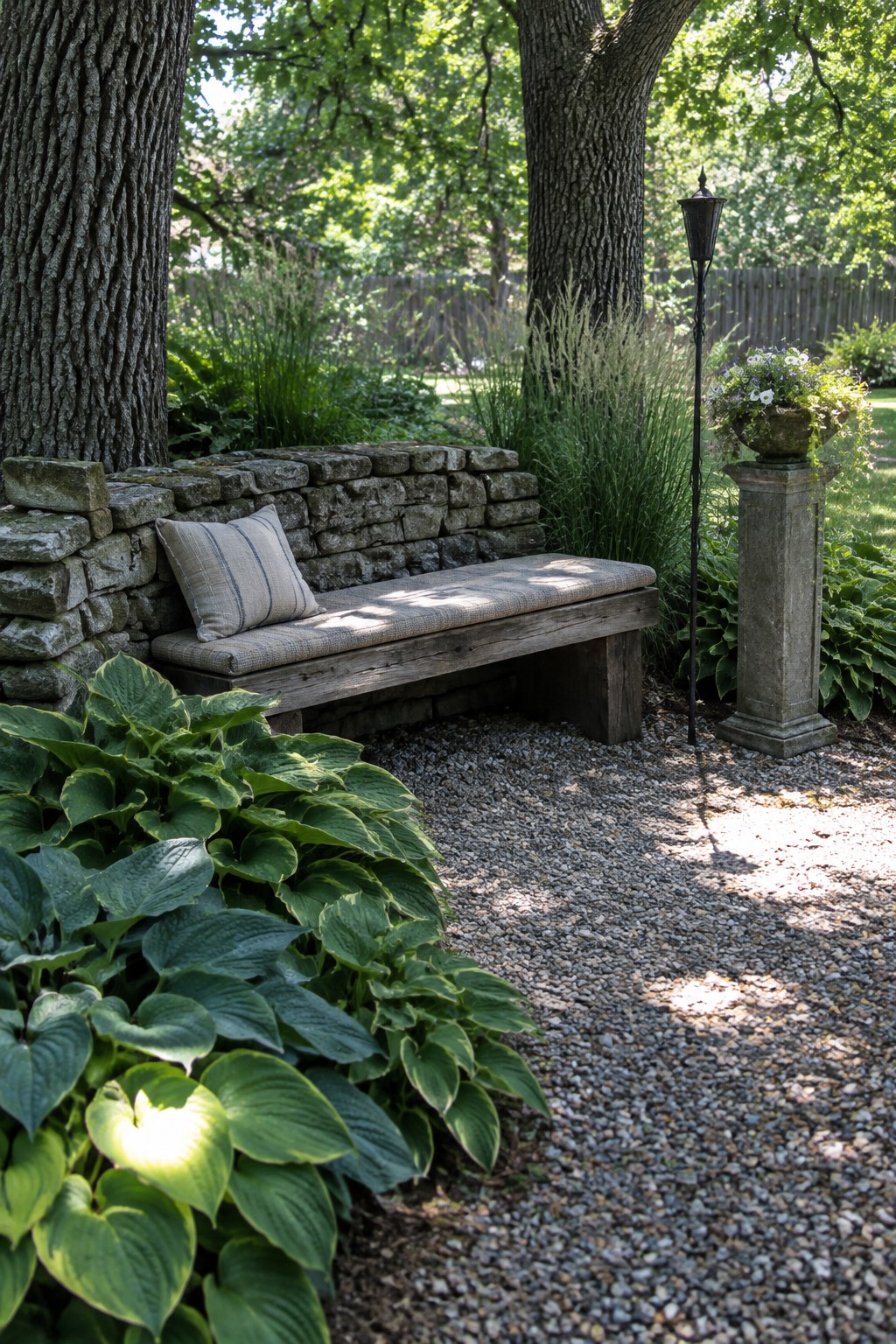
A simple bench tucked beside a shady path gives a woodland garden a useful place to pause. Set against a low stone wall, it feels like part of the garden rather than a separate patio area.
This idea works well near mature trees, where hostas and other shade-loving plants can soften the edge of a gravel or stone path. Leave enough room for the bench to be used comfortably, and keep nearby plants trimmed back from the seat.
Use Hosta Clumps To Shape A Woodland Border
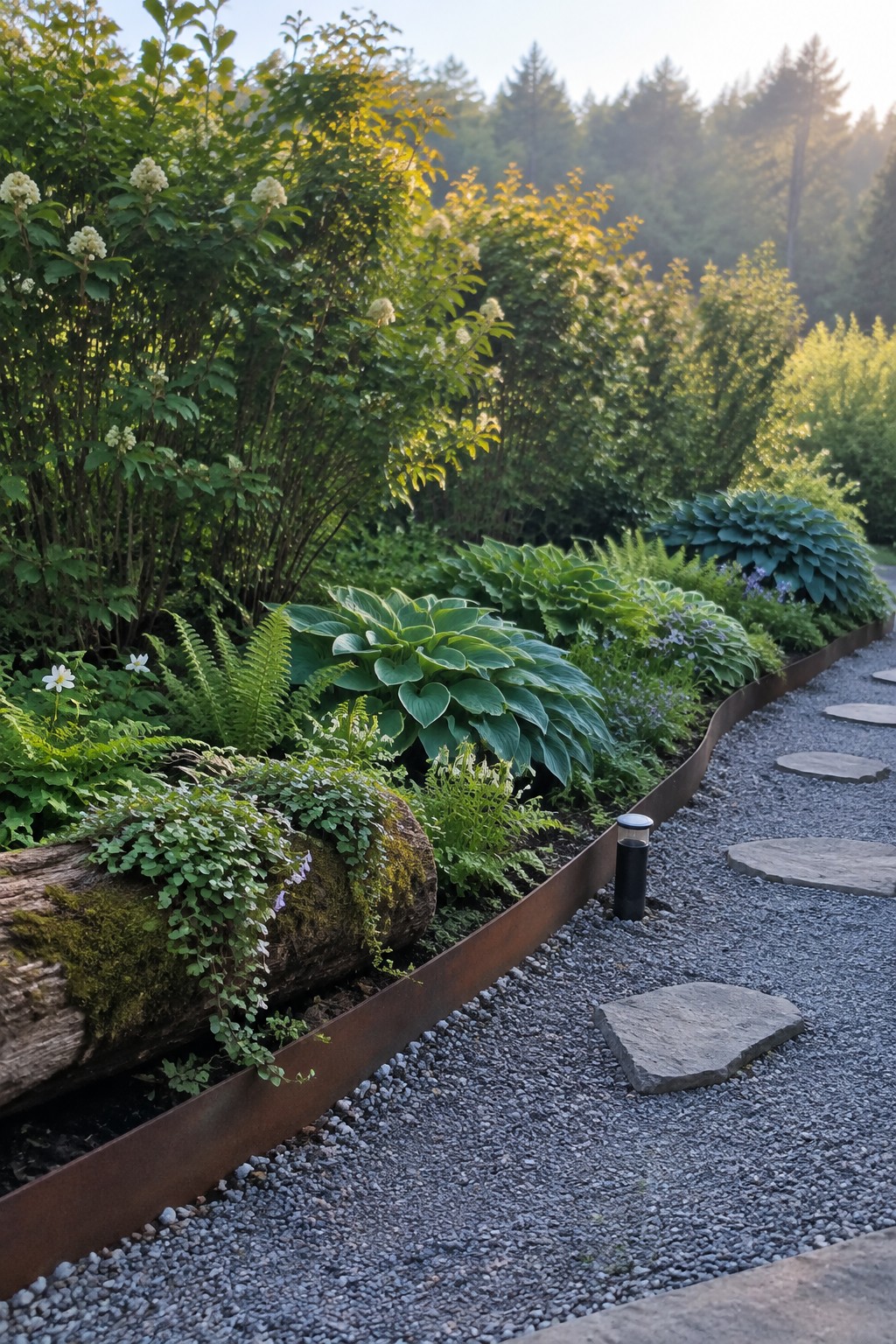
Hostas work well in a woodland garden when they’re planted in generous clumps along a defined bed edge. Their broad leaves make a clear transition between taller shrubs and a path, while still letting the planting feel informal.
Use a few larger hostas as the main groups, then leave room for ferns and smaller shade plants between them. A curved metal edge can keep the bed tidy beside gravel, but avoid packing every gap with plants so the hostas have space to spread.
Use Pebbles To Define a Woodland Garden Path
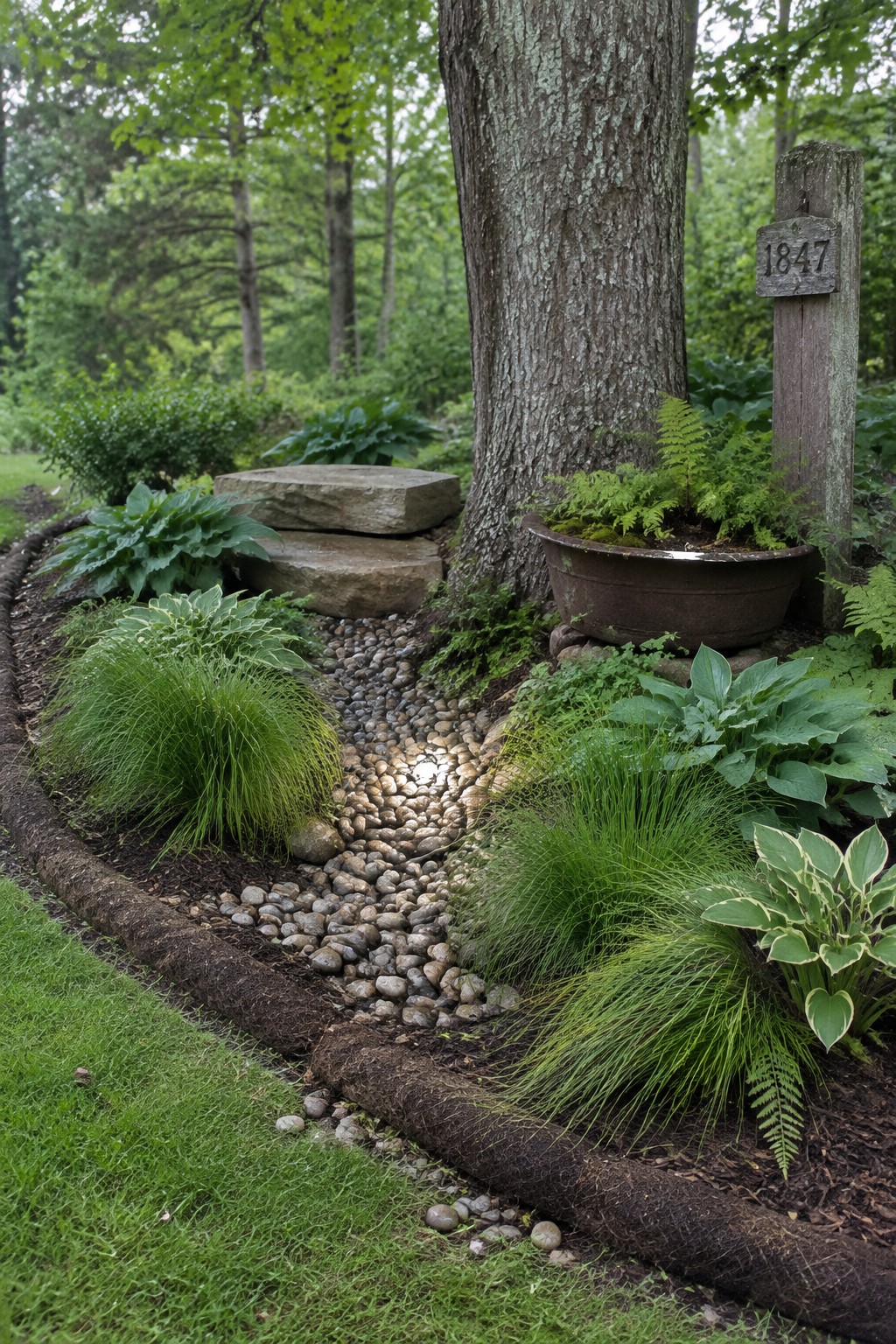
A narrow pebble path can bring order to a shady planting bed without making it feel too formal. Here, the winding route is edged with hostas and grasses, so the stones stay visible while the plants soften the border.
Use rounded stones where a path needs to curve around a tree or through a woodland garden. Keep the bed edges clear so pebbles do not spread into the lawn, and choose plants that can handle the shade.
Add a Small Seating Nook Along a Woodland Path
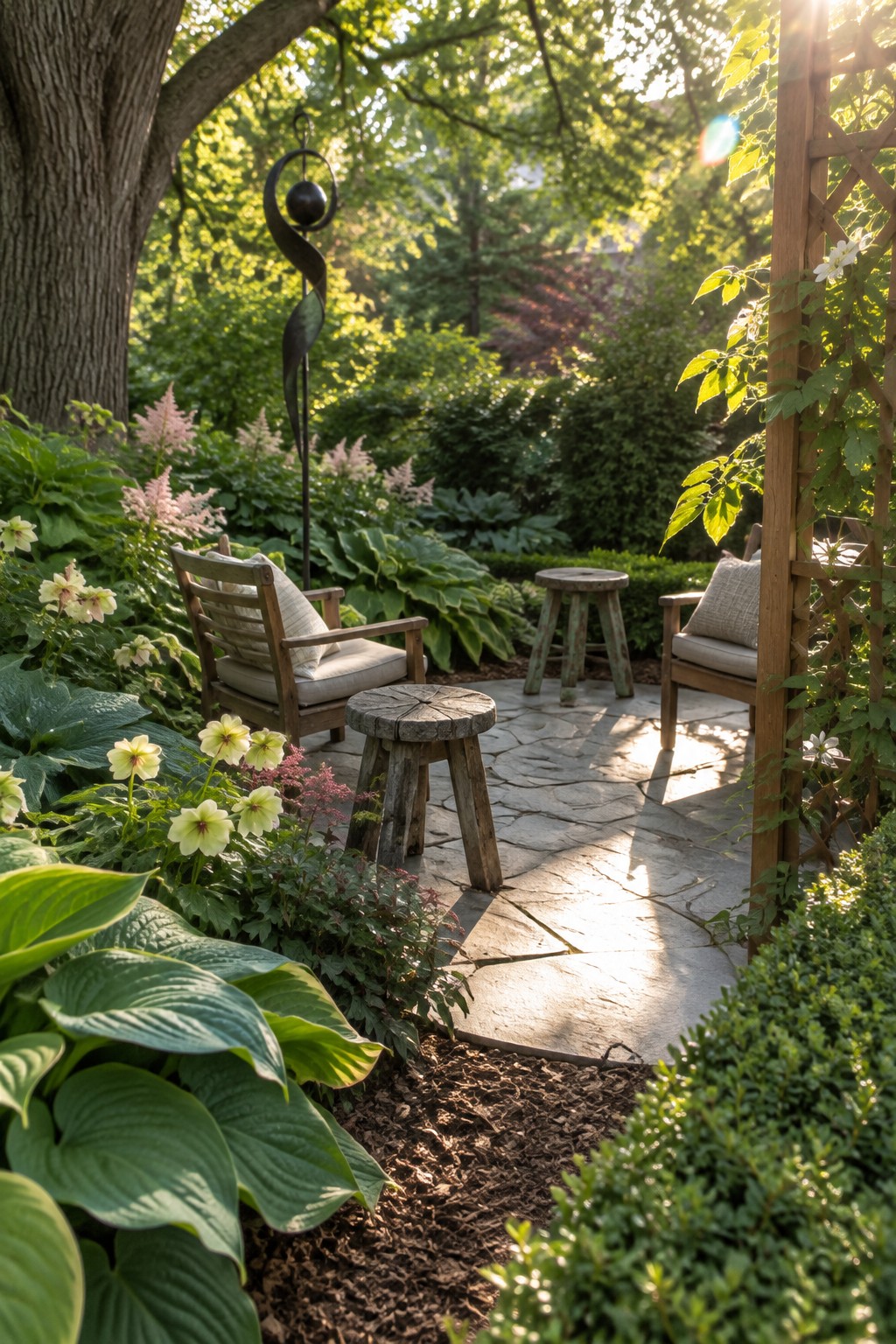
A simple stone path can make a shady garden easier to enjoy, especially when it leads to a small place to sit. Hostas planted along the path help it feel tucked into the garden rather than separate from it.
Use broad, irregular stepping stones and leave room for hostas to spread without covering the walking surface. A chair or two at the end of the path is enough to make a quiet corner; avoid crowding the route with too many plants or furnishings.
Add a Curved Bench Along a Woodland Path
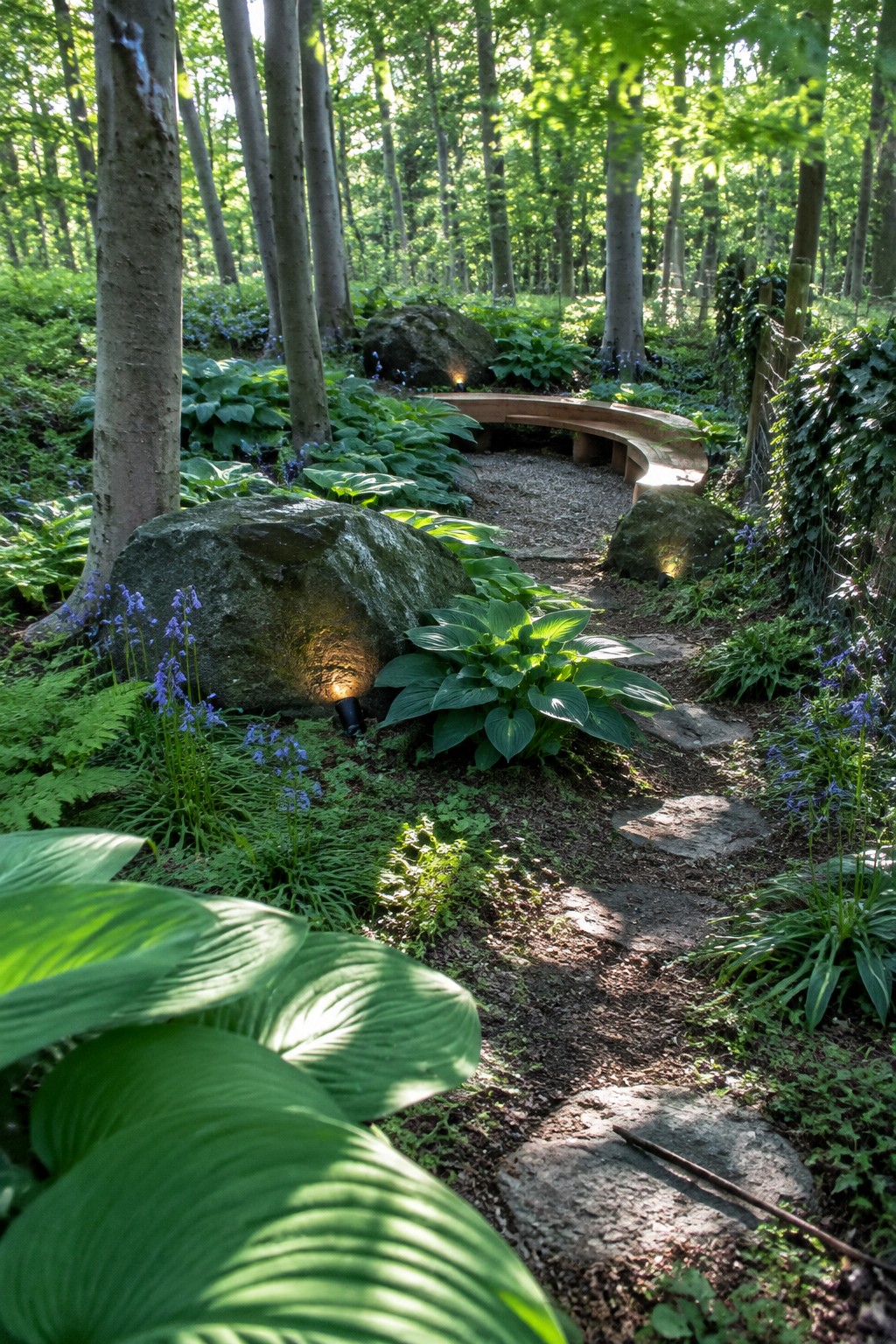
A curved bench can make a shady garden path feel like a place to pause, not just a route through the yard. Set into the planting, it follows the natural shape of the garden and leaves the path open.
This works well in a larger tree bed where there’s room for a small gravel sitting area. Hostas can soften the edges, but leave enough space around the bench for easy access and upkeep.
Use Stepping Stones To Guide A Woodland Garden Path
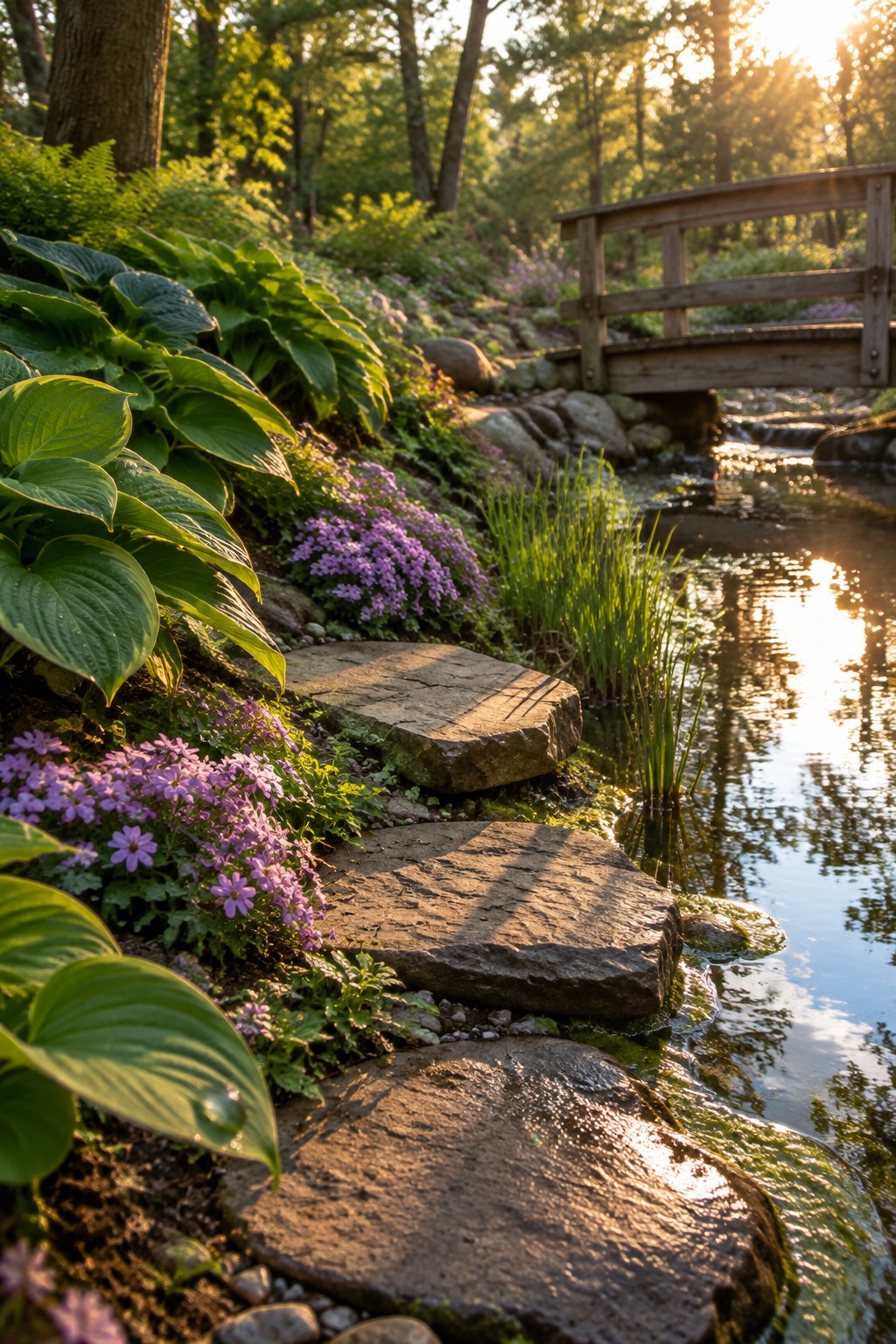
Large, flat stones make a practical path through a planted woodland garden. They give you a firm place to walk while letting the surrounding plants remain the main feature.
Set the stones in a gentle line through shady beds, leaving enough space for hostas to spread without covering the walking surface. This works well near a tree or garden stream, but keep the stones stable and level to avoid trips.
Layer Hostas Around a Shade Tree
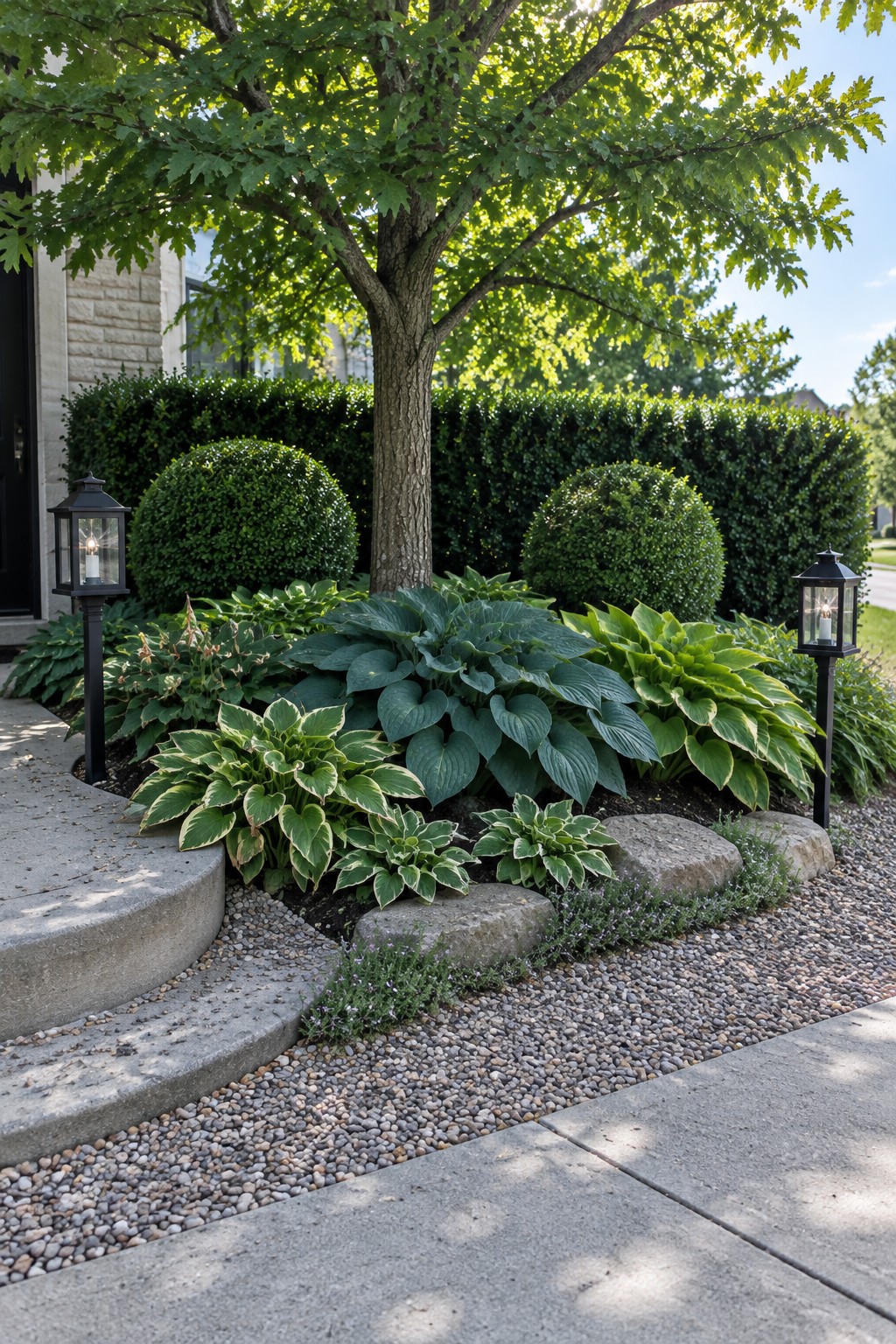
Hostas of different sizes make a shady tree bed feel full without crowding it with too many kinds of plants. Large blue-green leaves fill the middle, while smaller variegated hostas along the edge help the planting look tidy.
Use this layered approach beneath mature trees where the soil stays moist and the roots leave room for planting. Keep hostas a little way from the trunk, and avoid digging deeply around established roots.
Repeat Hostas Along A Garden Path
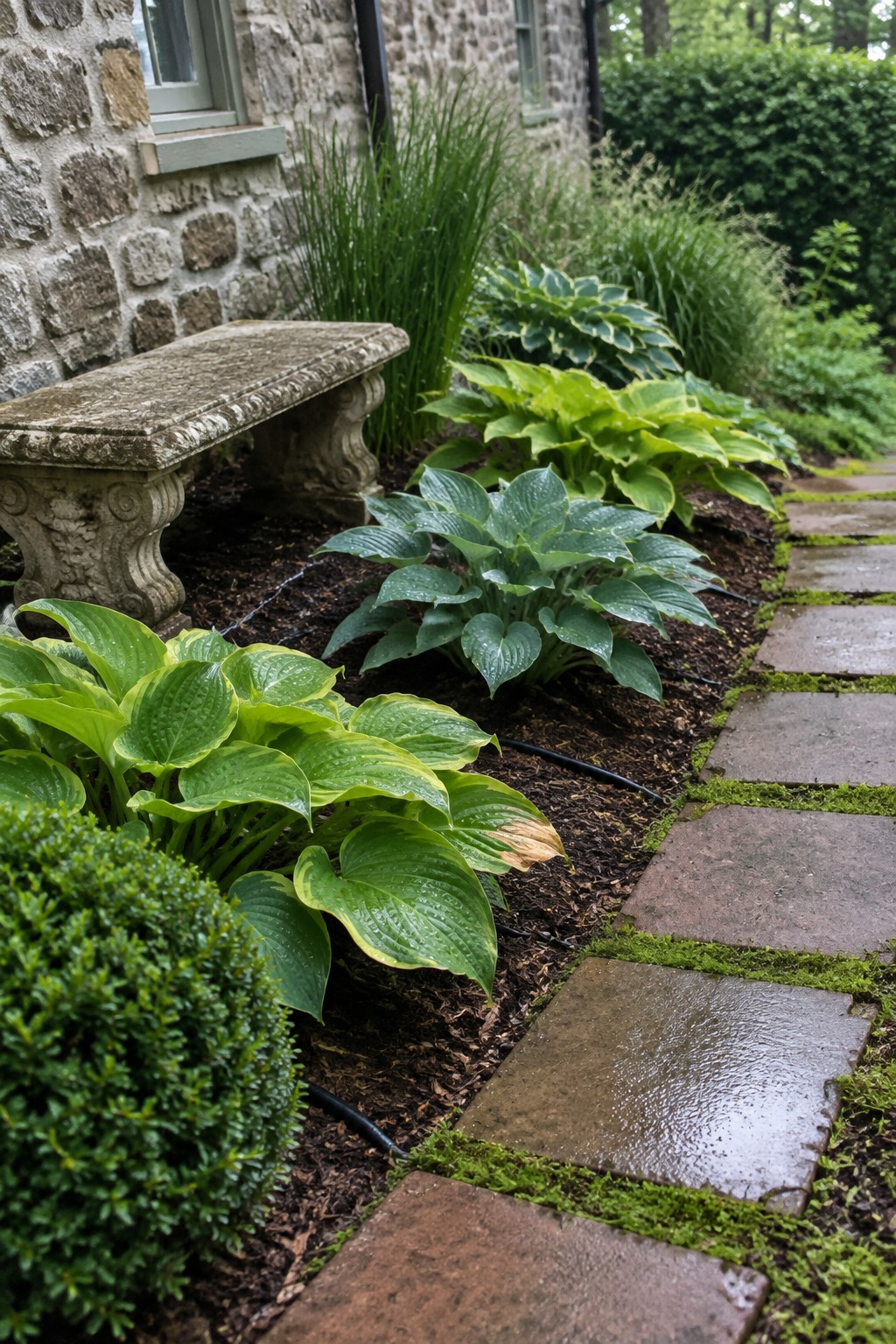
Hostas planted in a steady rhythm beside a path make a shady garden feel connected from one end to the other. Their broad leaves mark the edge without needing a formal border, and different leaf colors keep the planting from looking too uniform.
Leave enough room for each clump to spread, especially beside stepping stones. This approach works well in a woodland-style bed, but keep hosta leaves clear of the walking surface so the path stays easy to use.
Use a Stone Border To Shape a Hosta Bed
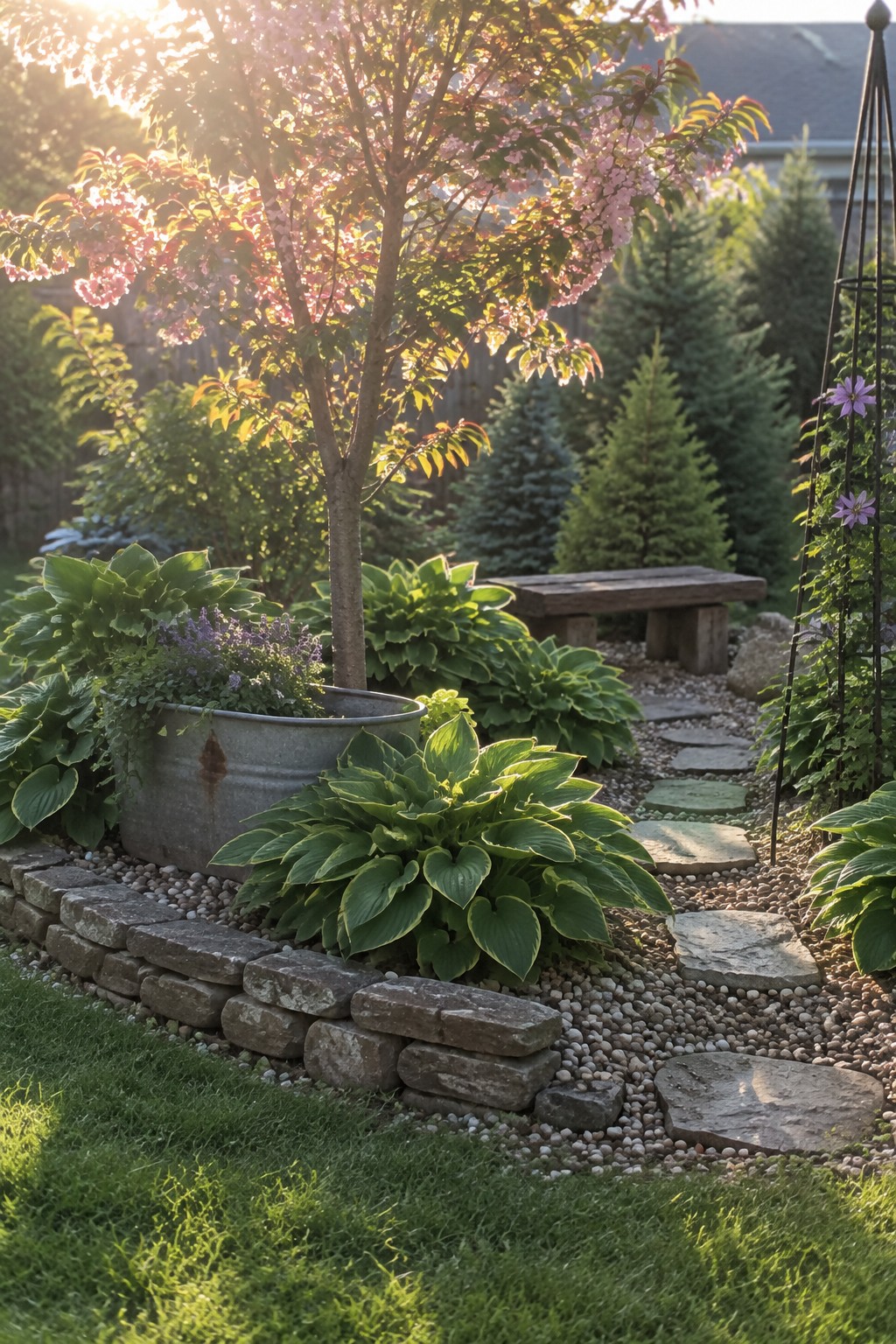
A low stone edge gives a shady tree bed a clear shape and keeps the planting area distinct from the lawn. Hostas fit naturally inside the border, where their broad leaves can fill in around the tree without hiding the stonework.
Use a gentle curve to follow the tree bed rather than forcing a straight line. This works especially well in a woodland-style garden, though the edge should be low enough to sit comfortably beside a path.
Add a Reflecting Pool Beside a Woodland Path
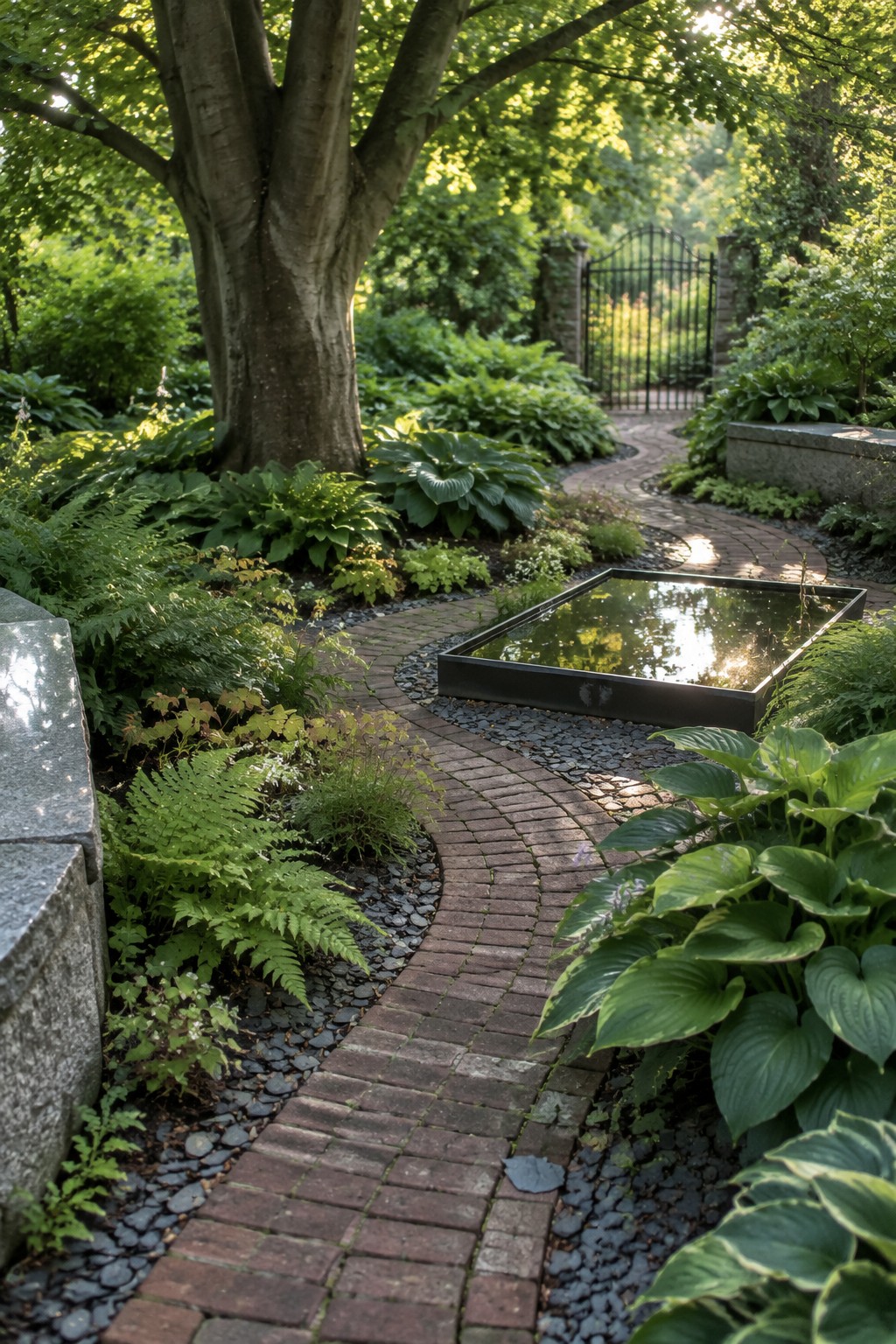
A small reflecting pool can give a shady garden path a quiet place to pause. Its simple shape provides a contrast to the softer planting, while the water picks up the surrounding leaves.
Place it beside a path where it can be seen without blocking the route. Hostas and other shade plants can edge the area, but leave enough room around the pool to keep leaves and soil out of the water.
Edge A Woodland Path With Hostas
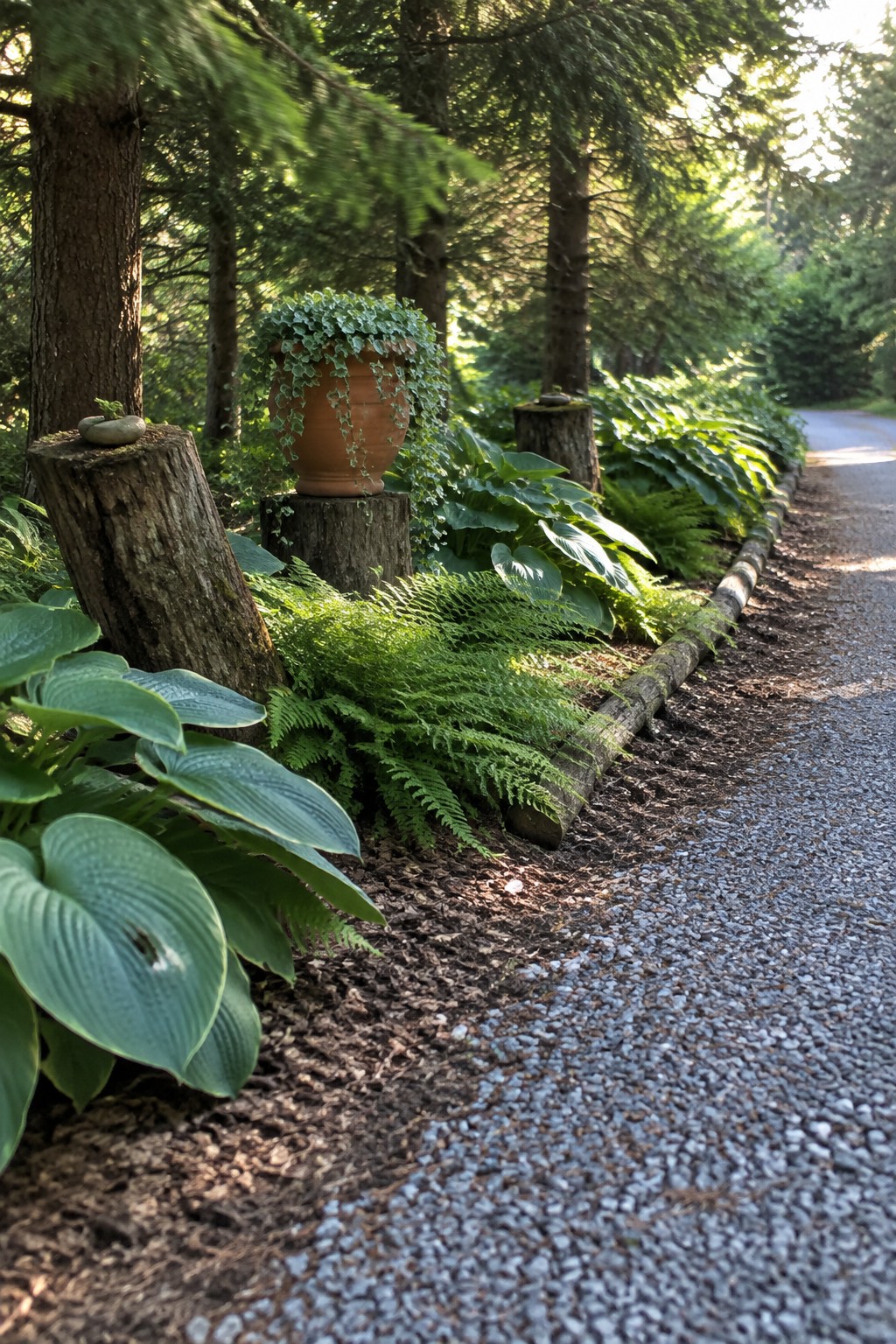
Hostas make a useful border along a woodland path, where their broad leaves mark the edge and fill in shady ground. Repeating them in generous clumps gives the path a clear line without making the planting feel formal.
Plant hostas just beyond the path’s edge, leaving enough room for the leaves to spread without spilling onto the walking surface. A simple gravel path works well beside the foliage, and ferns can fill gaps between clumps.
Use a Stone Patio Beside Woodland Hostas
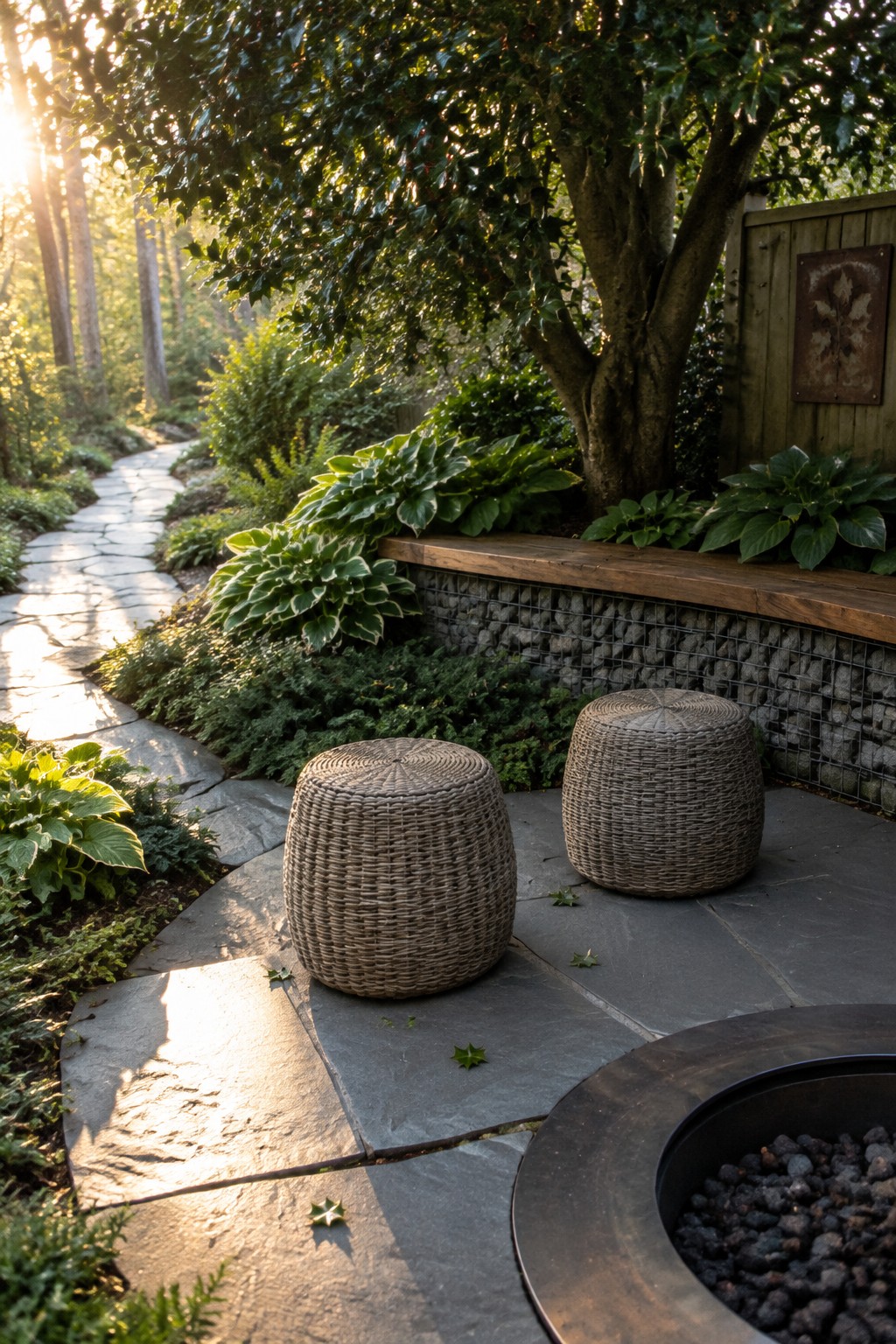
A small stone patio gives a shady garden a comfortable place to pause without taking over the planting. Hostas can grow around its edges and beneath nearby trees, so the sitting area feels connected to the woodland bed.
Use irregular stone for a relaxed look, and leave enough room for chairs or stools to sit without crowding the path. This works well in a tucked-away corner, but keep hostas clear of the walking surface so their leaves do not spill underfoot.
Frequently Asked Questions
Q: Will hostas grow well under a tree with lots of roots?
A: They can, especially if you choose a spot near the edge of the canopy where the soil is less crowded. Plant small hostas and water them regularly while they settle in, since tree roots compete for moisture.
Q: How much sun can hostas handle around trees?
A: Most hostas do best in shade or dappled light, though some tolerate a few hours of gentle morning sun. If the leaves look scorched or faded, try moving the plant to a shadier spot.
Q: Should I mulch around hostas under trees?
A: A thin layer of leaf mulch helps hold moisture and gives the planting a natural woodland feel. Keep mulch a few inches away from hosta crowns and tree trunks so they don’t stay damp.
Q: Can I plant hostas right against a tree trunk?
A: Give the trunk some breathing room and plant hostas around the outer root zone instead. That leaves space for the tree to grow and makes it easier to water the hostas.
