

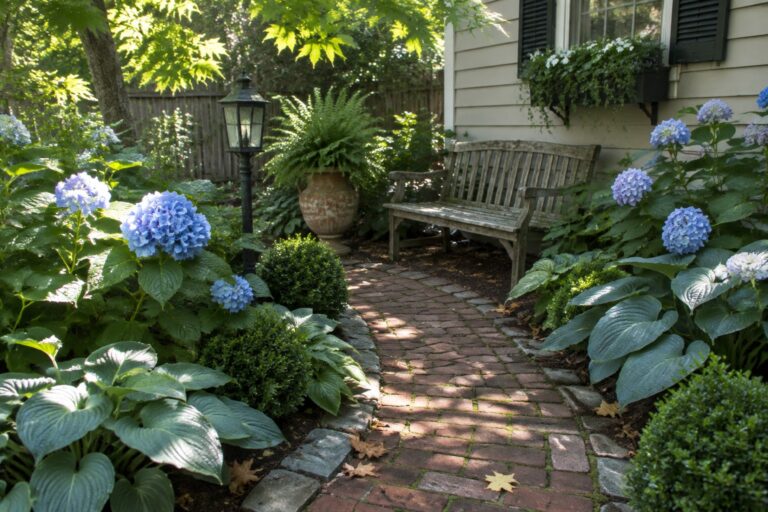
Shade gardens can feel lush without becoming crowded, but the planting layout makes all the difference.
I find that hydrangeas bring height and seasonal color, while hostas fill the lower spaces with broad, varied leaves.
When I plan a bed, I pay attention to how paths, edging, and mature plant sizes shape the view and leave room for growth.
Pairing these plants thoughtfully can help a shady corner feel layered and settled rather than like a collection of separate flowers.
I’d save the combinations that suit your soil and available space, then adapt them to the way your garden changes through the seasons.
Use a Curving Path to Shape the Garden
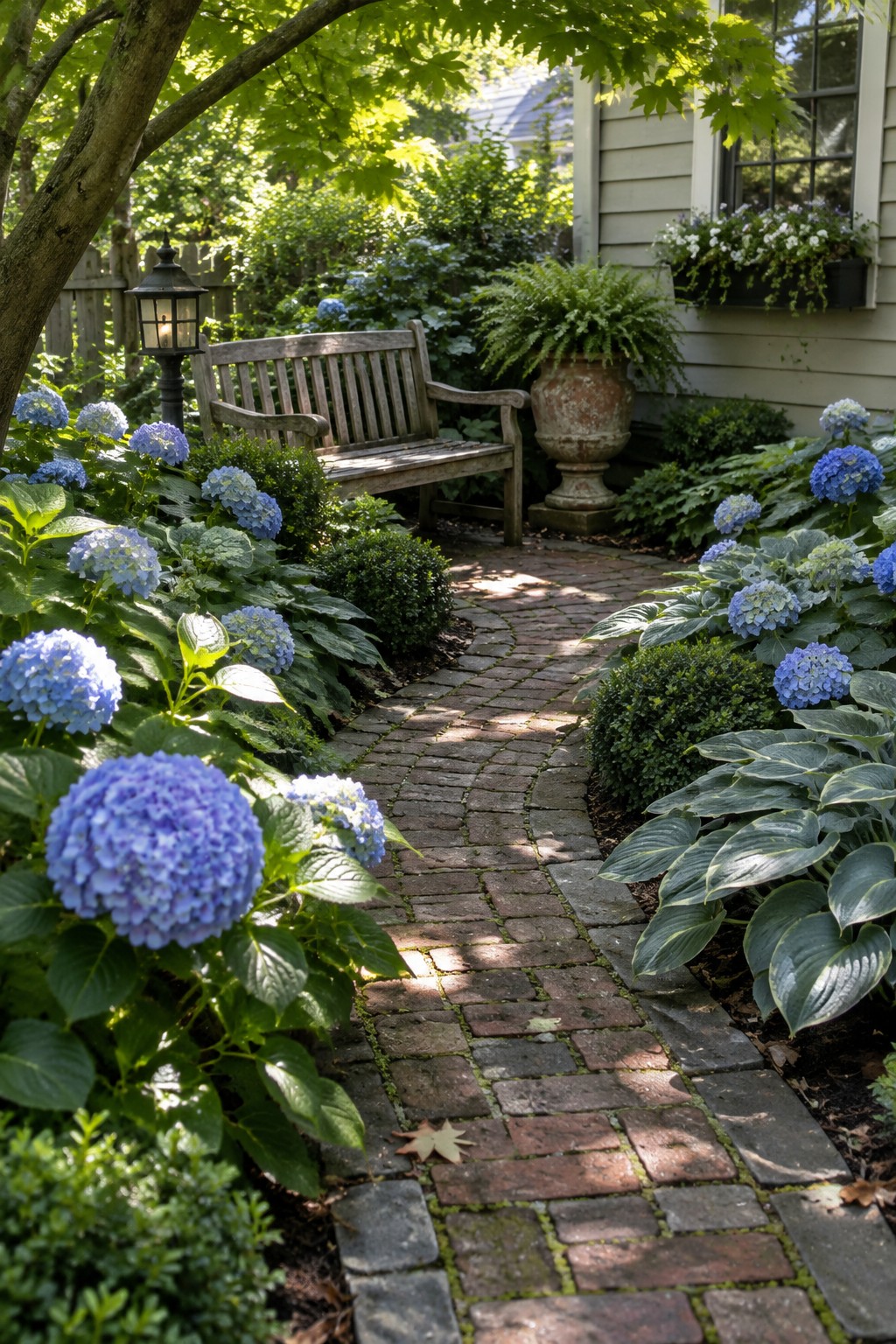
A gently curving brick path gives a shade garden a clear route without making it feel too formal. It also lets the planting beds follow a softer shape, so hydrangeas and hostas can sit close to the path without crowding it.
This approach works well in a small side yard or a tucked-away garden corner. Keep the path wide enough to walk comfortably, and use a firm, even surface so it stays practical when the bricks get damp or mossy.
Use Stepping Stones to Guide a Shade Garden Path
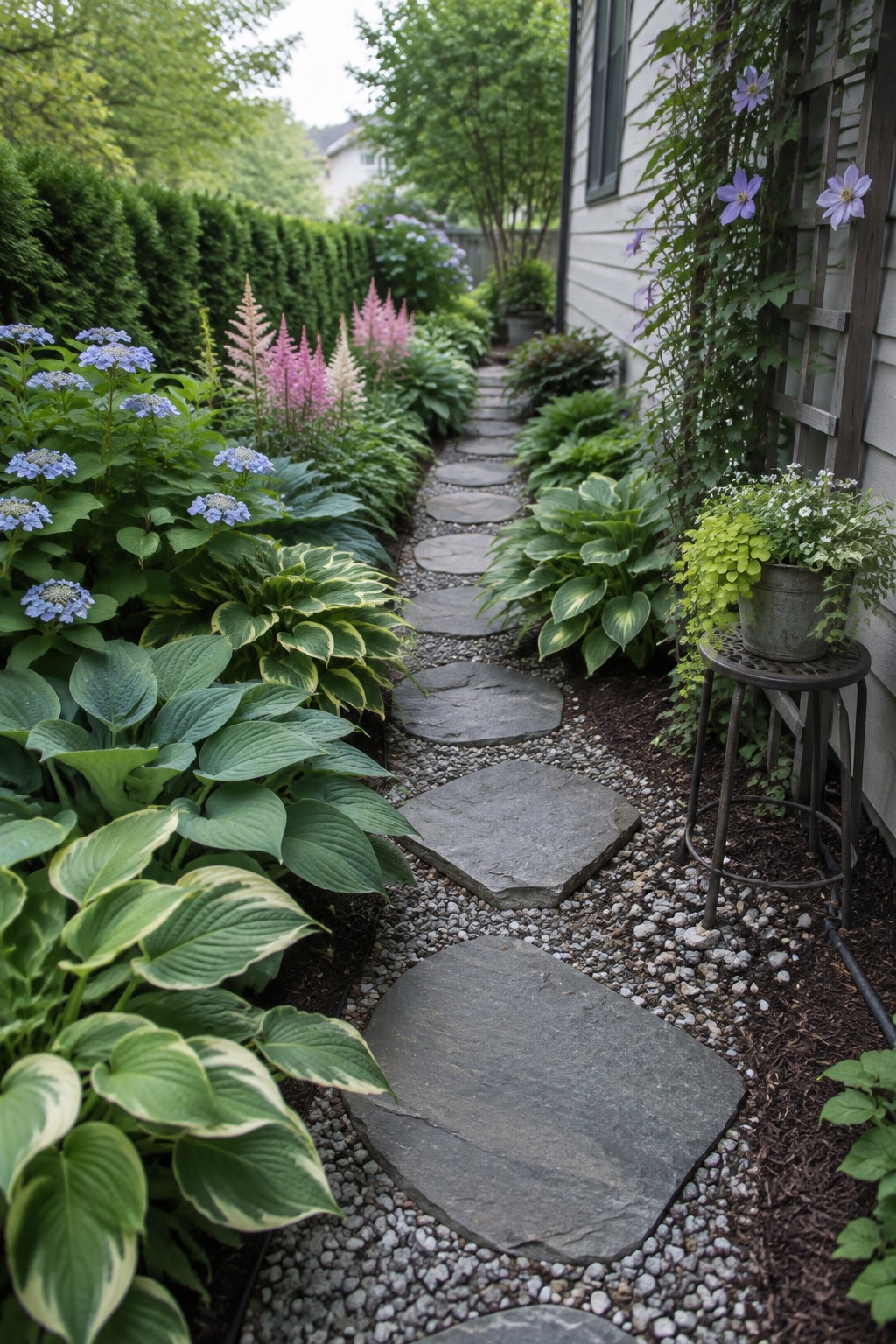
A stepping-stone path gives a shady garden a clear route without taking up much planting space. The irregular stones feel at home among leafy plants, while small gravel between them helps define the walkway.
This approach works well in a narrow side yard or along a house where a solid paved path might feel too wide. Set the stones at an easy walking distance apart, and leave enough room for plants to grow without spilling over the walking surface.
Use Hydrangeas and Hostas Along a Patio
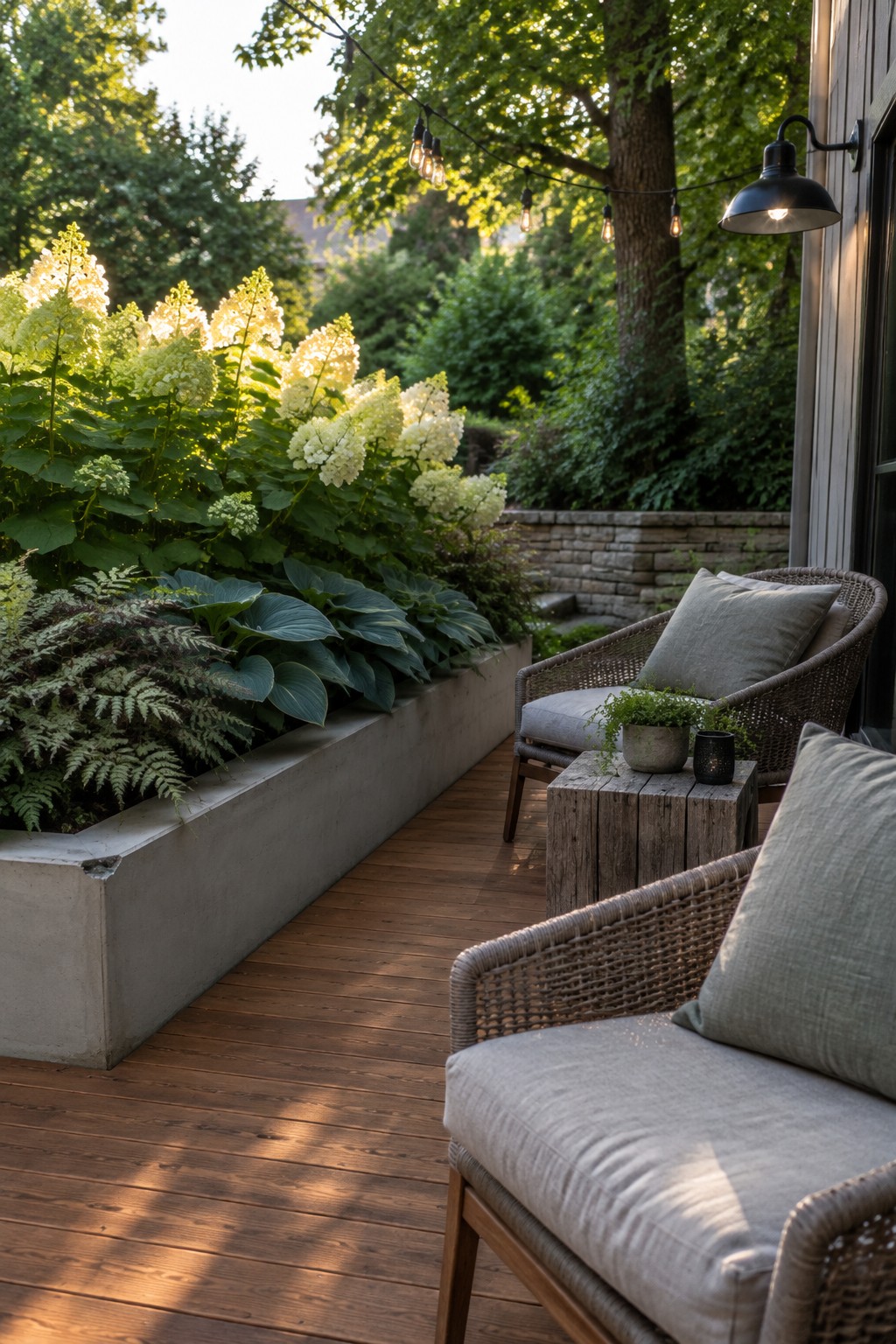
A raised planting bed can bring hydrangeas and hostas close to a seating area without taking up much patio space. The taller blooms add height, while the broad hosta leaves fill in the lower part of the bed.
This approach works well beside a deck or narrow patio, especially where mature trees provide shade. Leave enough room for the hydrangeas to grow and check that the bed drains well, since both plants need consistent moisture but do not like sitting in soggy soil.
Add a Winding Stone Path Through Shade
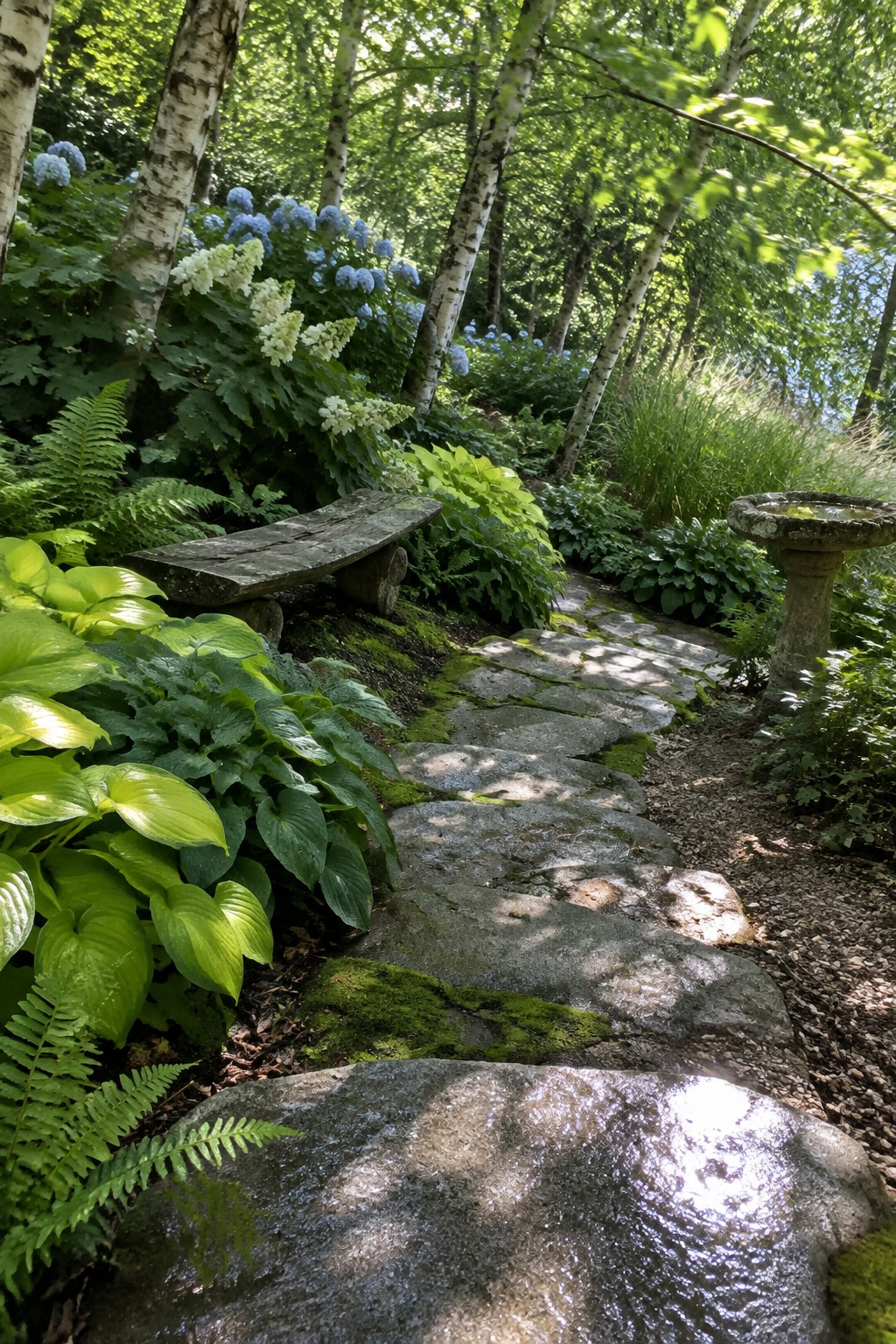
A gently curving stone path makes a shaded garden easier to explore without taking away from the planting. Its irregular shape feels at home among leafy groundcover and flowering hydrangeas.
Use broad, stable stones and leave enough room along the edges for plants to grow without crowding the walkway. This approach works well in a woodland-style garden, especially where a straight path would feel too formal.
Create a Straight Entry Path Through the Garden
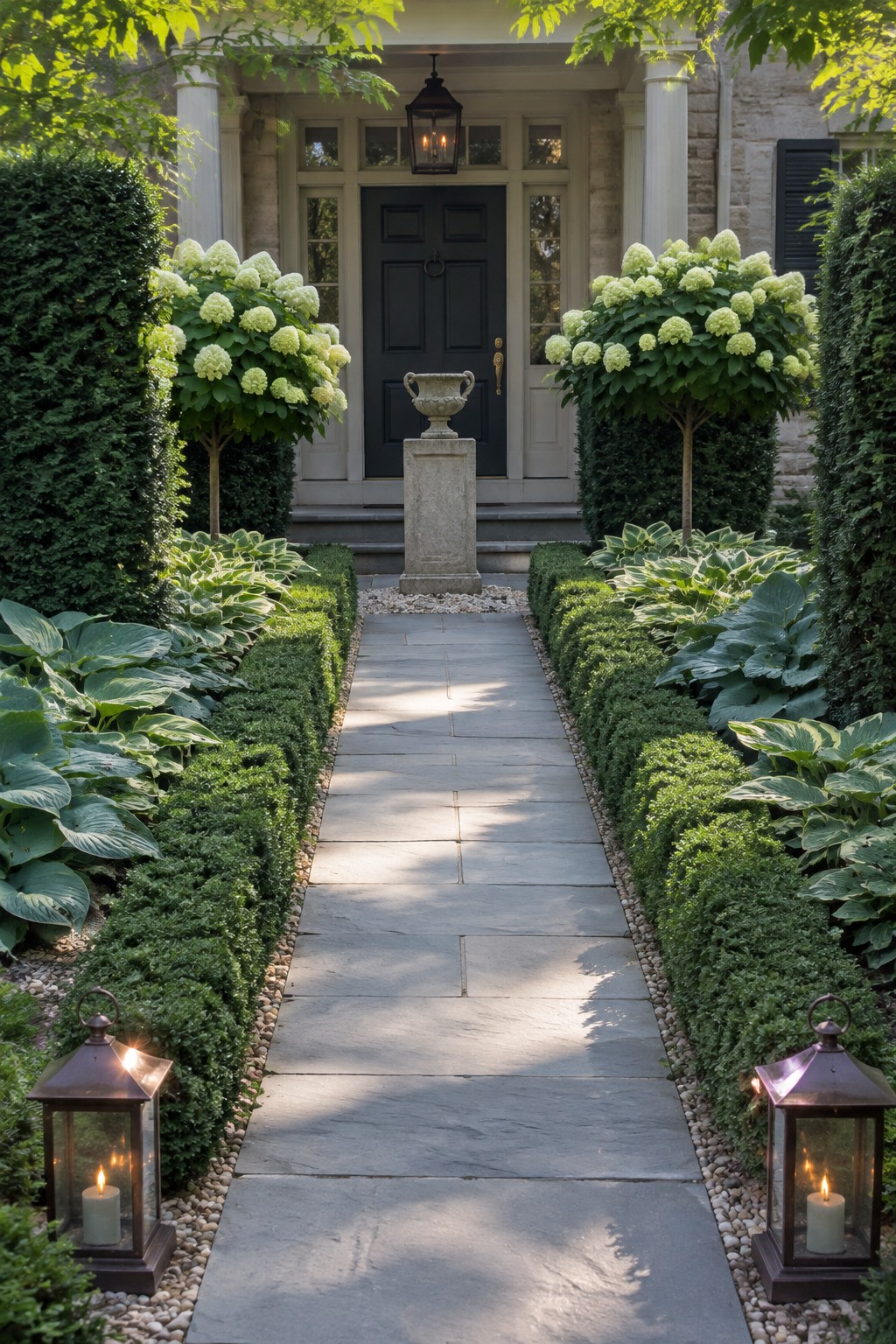
A straight stone path gives a formal entry garden a clear, orderly layout. Neatly clipped hedges keep its edges tidy, while hydrangeas and hostas bring softer planting alongside the route.
This approach works well when you want an easy-to-follow walk to the front door. Leave enough room for comfortable passage, and use shade-tolerant plants along the edges so the garden stays full without crowding the paving.
Create a Layered Hydrangea and Hosta Border
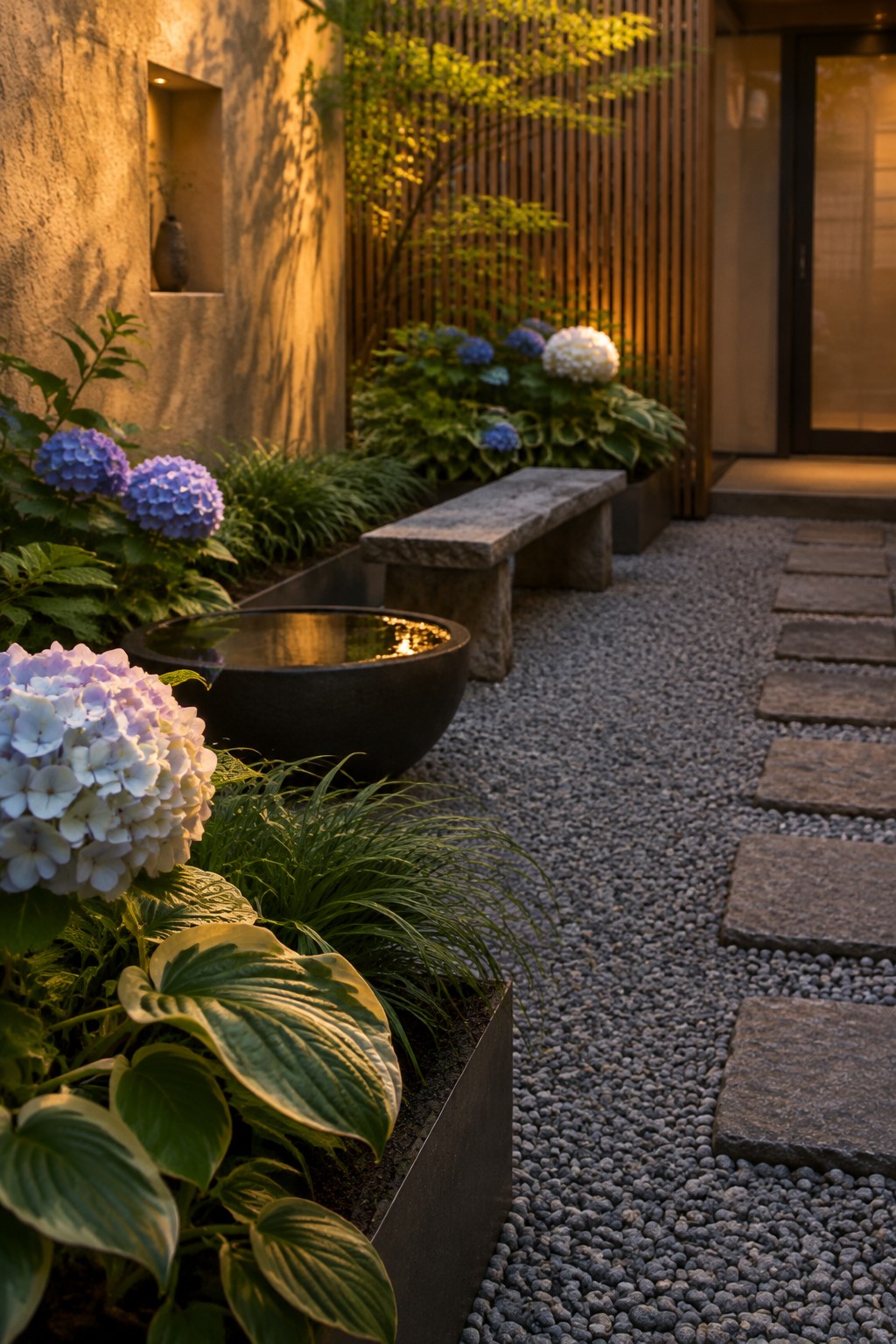
A layered border is a practical way to bring hydrangeas and hostas together in a shaded garden. Taller hydrangeas can sit toward the back, while hostas and low grasses fill the front edge. The mix gives the bed a clear shape without needing a lot of different plants.
Use this approach along a narrow path or beside a wall, where it can make a small garden feel more established. Leave enough room for hydrangeas to mature, and choose hostas with space between them so their leaves do not crowd the path.
Build a Shade Garden in Layers

Layering plants at different heights gives a sloped shade garden a fuller look and helps define its levels. Here, large hostas fill the foreground while hydrangeas rise behind them, making good use of the space beside the stone retaining walls.
Use broad-leaved plants along the lower edges and taller flowering shrubs farther back. Leave enough room for mature plants to spread, especially near paths and steps, so the garden stays easy to move through.
Layer Hydrangeas and Hostas Along a Garden Walk
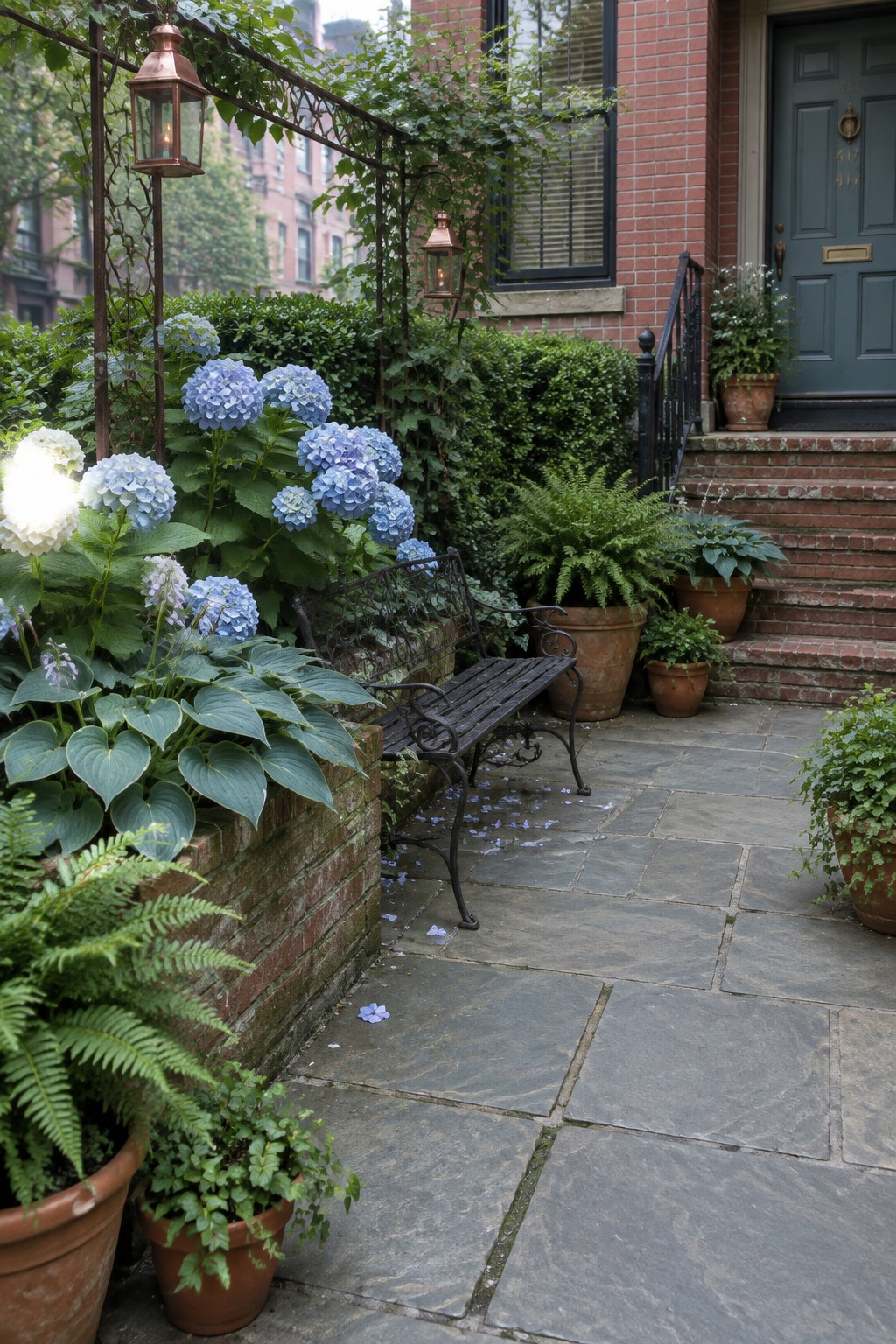
Layering hydrangeas and hostas beside a narrow stone walk makes a shaded garden feel full without leaving the path hard to find. The broad hosta leaves fill the lower edge, while the taller hydrangeas bring color just behind them.
This approach works well along a townhouse entry or any walkway with limited planting space. Keep plants from spilling too far onto the stones, and leave enough room for an easy pass.
Use Pebble Edging Along a Poolside Garden
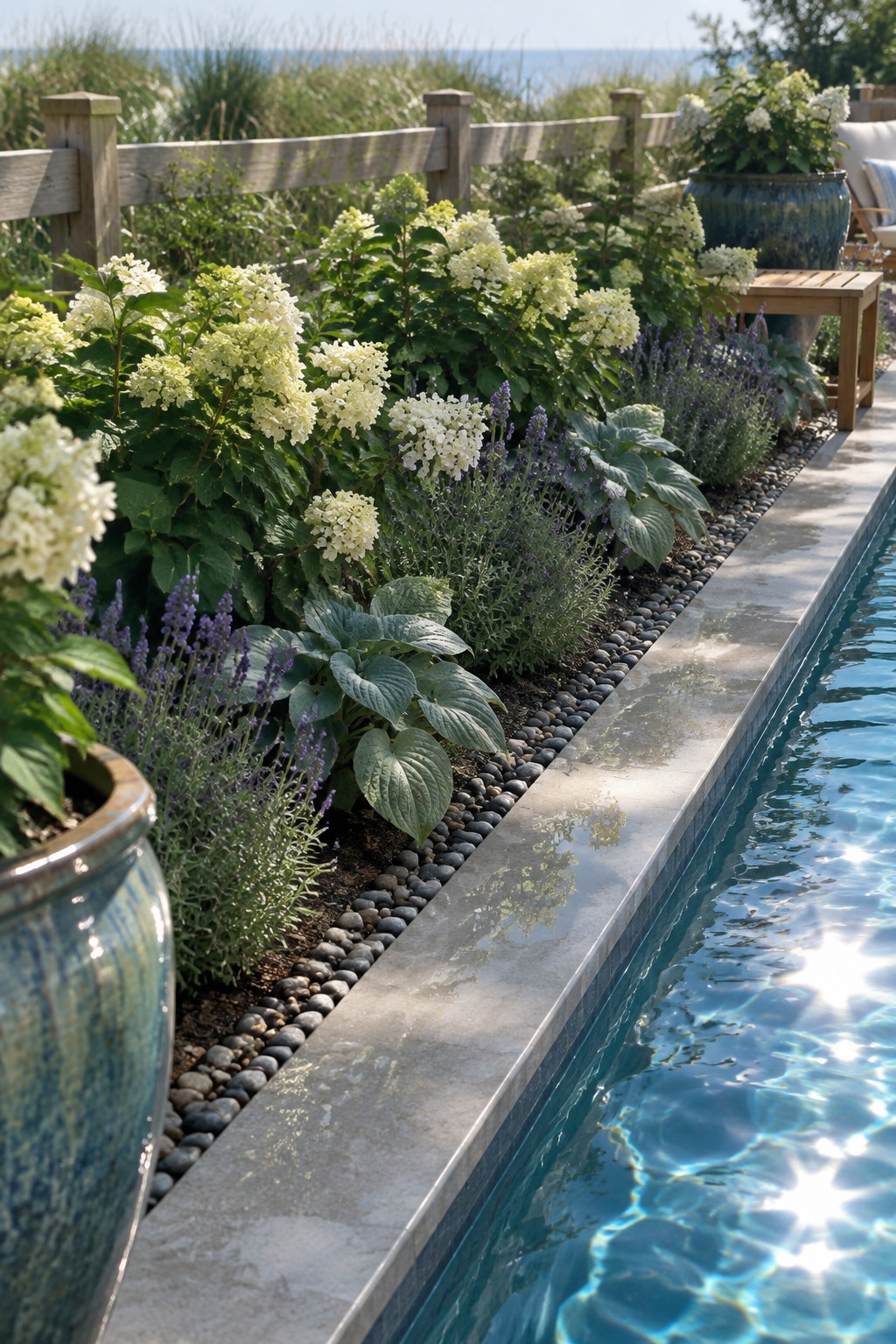
A narrow band of smooth pebbles makes a tidy edge between a planting bed and the pool coping. It gives the plants a clear boundary without adding a tall border that would interrupt the bed.
This approach works well beside pools and other paved areas where soil can spill onto the hard surface. Keep the pebble strip wide enough to stay in place, and choose plants that won’t quickly spread across it.
Set Up a Shaded Garden Dining Area

A simple dining space can make a shade garden more useful without taking attention away from the planting. Here, hydrangeas and hostas grow close to the seating area, so the garden feels connected to the place where people gather.
For a similar setup, leave enough room to pull chairs back and keep the plants from crowding the table. A light canopy can provide cover, but check that it does not block too much light from nearby shade-loving plants.
Use a Low Wall to Define a Shade Garden Bed

A low retaining wall gives a garden bed a clear edge and makes a small planting area feel intentional. Here, the brick wall separates the hydrangeas and hostas from the path without blocking the plants from view.
This approach works well beside a front entry or on a sloped lot where the bed needs a little support. Keep the wall low, and leave enough room behind it for plants to spread without crowding the walkway.
Add a Shady Garden Border Beside the Patio

A raised planter can bring hydrangeas and hostas close to an outdoor seating area without taking over the patio. The broad bed lets the taller flowering plants sit behind lower hostas, so both have room to show.
This approach suits a small patio where you want a garden edge but need to keep the seating clear. Leave enough space around the planter for easy access, and check that the plants get the amount of shade and moisture they prefer.
Use Garden Steps to Connect Shaded Planting Beds

Short garden steps can make a sloped shade garden easier to move through while keeping the planting beds at different levels. Here, timber edges and a stone retaining wall help hold the ground in place, so the steps feel like part of the garden rather than an afterthought.
For a similar layout, keep the steps broad enough to walk on comfortably and leave room for low plants along the edges. Hydrangeas and hostas suit the raised beds, but avoid letting foliage spill across the treads.
Use Planters to Layer a Narrow Shade Garden
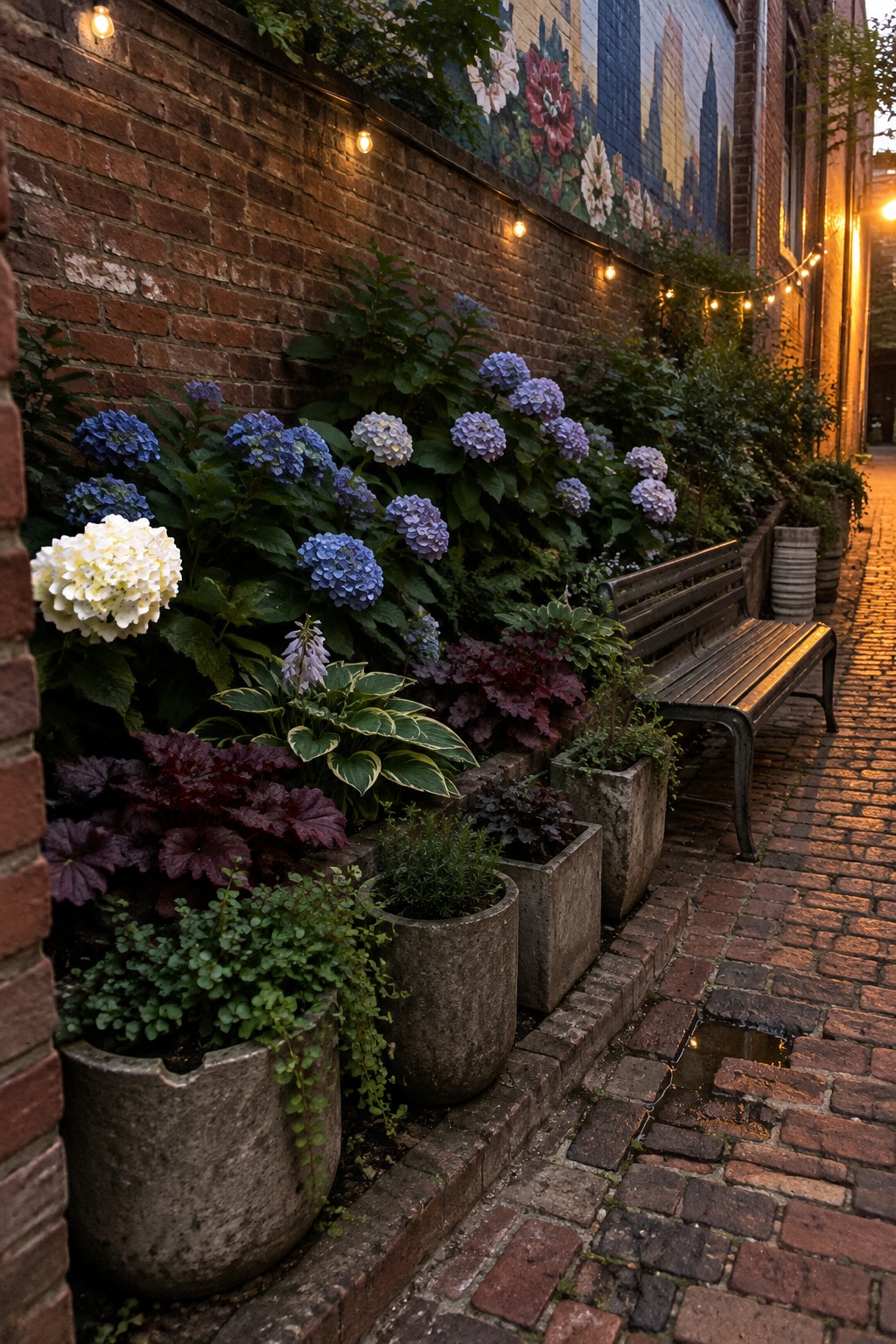
Large pots bring extra planting space to a narrow garden, while hydrangeas and leafy plants fill the bed behind them. This layered arrangement makes a small side passage feel greener without taking up much walking room.
Use a few sturdy planters along the edge of a brick path, leaving enough space to pass comfortably. Group plants by their light and water needs, and choose pots with drainage so they do not stay soggy in shade.
Use a Deck Border for Shade-Loving Plants
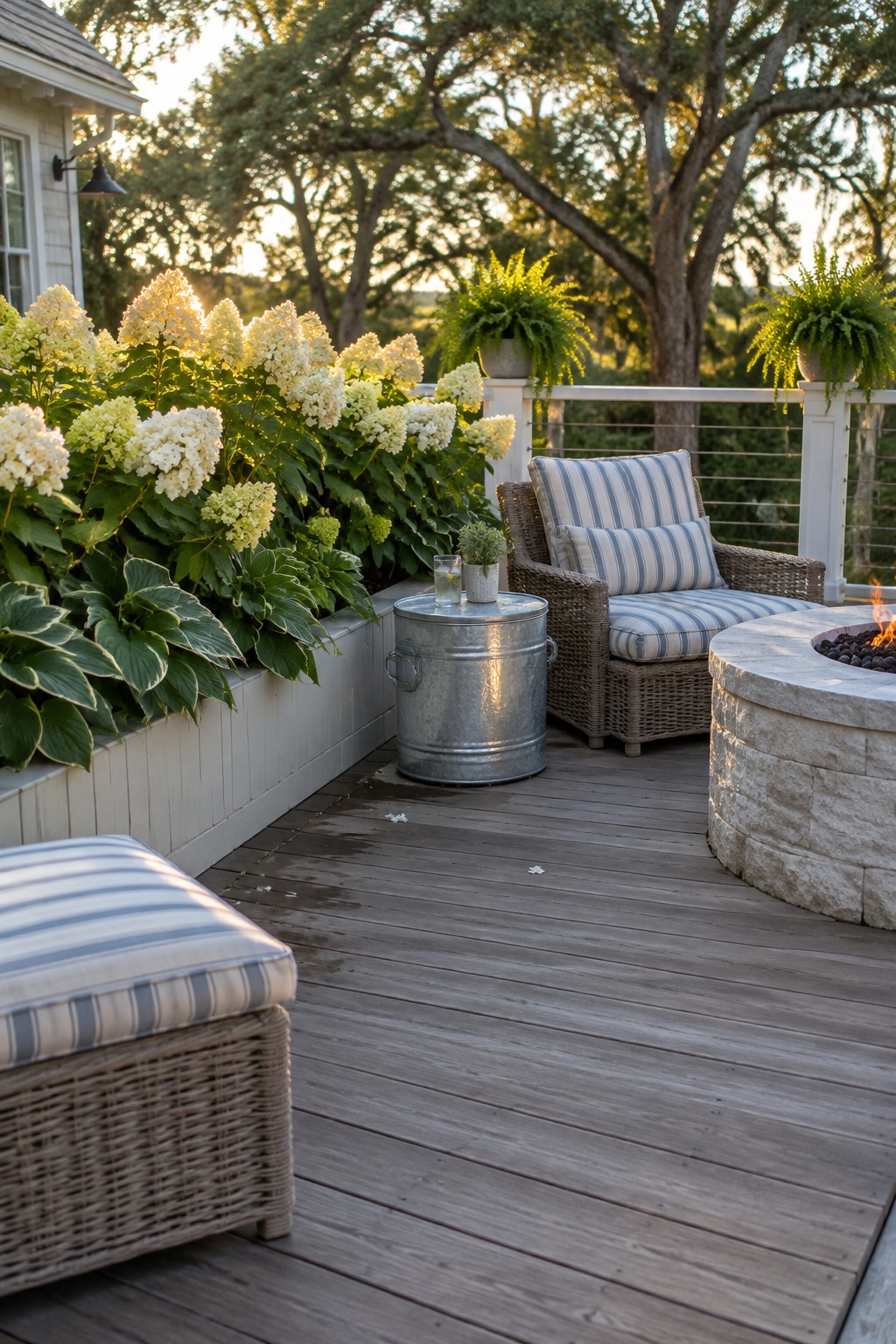
A raised planting bed along a deck can bring hydrangeas and hostas close to the seating area without taking up the walking space. The taller flowers add a soft screen, while hosta leaves fill in the lower edge.
Leave enough room for chairs and a clear path around the bed. This setup works well on decks beside mature trees, where shade-loving plants can thrive; choose hydrangea varieties suited to the amount of light your spot gets.
Create a Small Rain Garden in a Shade Border

A shallow rain garden gives a shady planting bed a practical purpose by catching runoff and letting it soak into the soil. A small pond or wet area can sit naturally among hydrangeas, hostas, and grasses, rather than feeling like a separate feature.
Place it where water already tends to collect, but check that it drains between storms and sits well away from the house foundation. Use moisture-tolerant plants around the edge, and keep a narrow stone channel or other clear route for excess water.
Use a Garden Arch to Mark a Shady Path
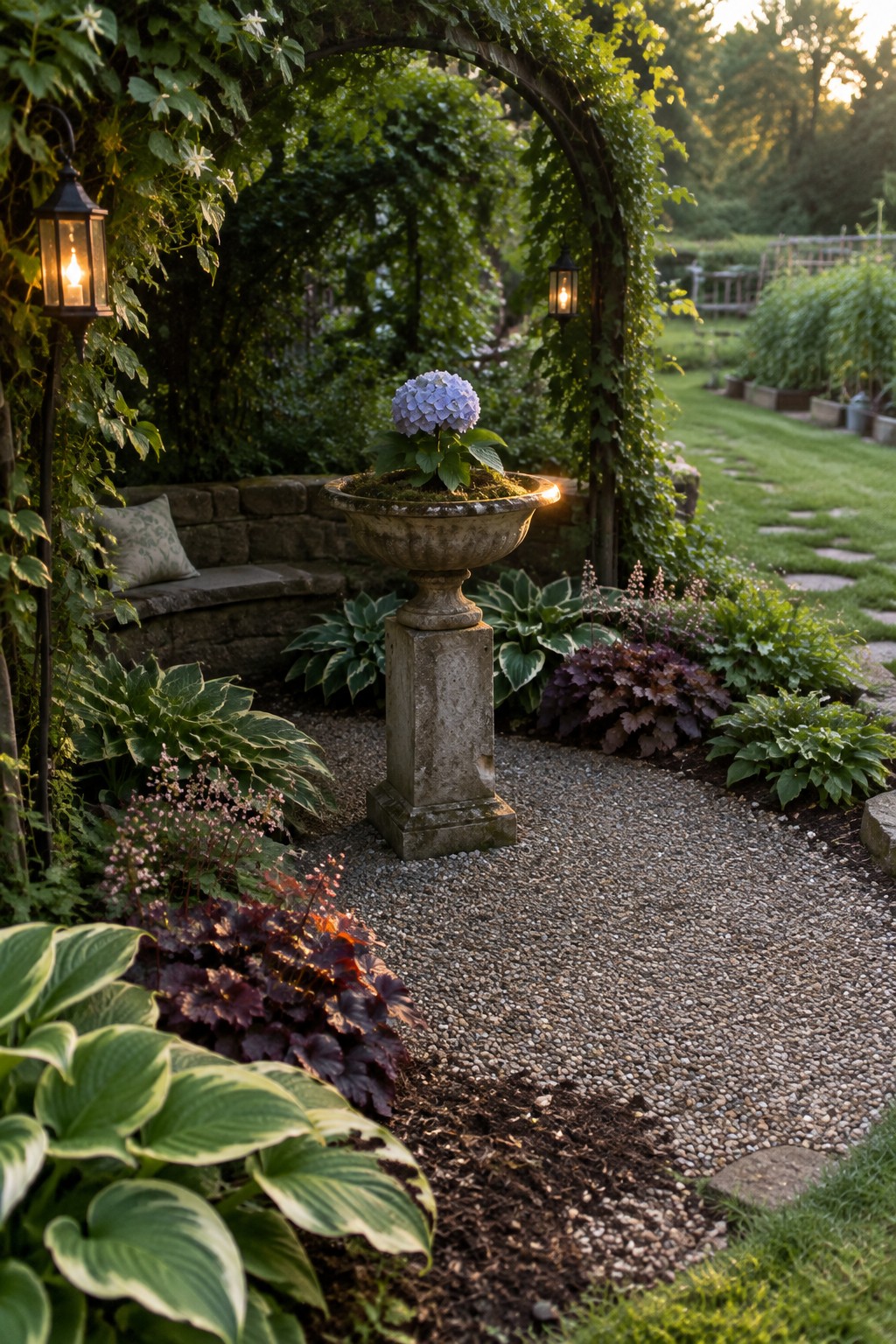
A vine-covered arch gives a shade garden a clear beginning and makes a path feel like its own little destination. It also gives climbing plants a place to grow vertically, leaving more room for low plants such as hostas along the edges.
Use an arch where a path changes direction or leads into a quieter part of the garden. Keep the planting around its base trimmed enough to leave the walkway open, and choose vines that suit the amount of shade.
Use a Reflecting Pool as a Garden Focal Point
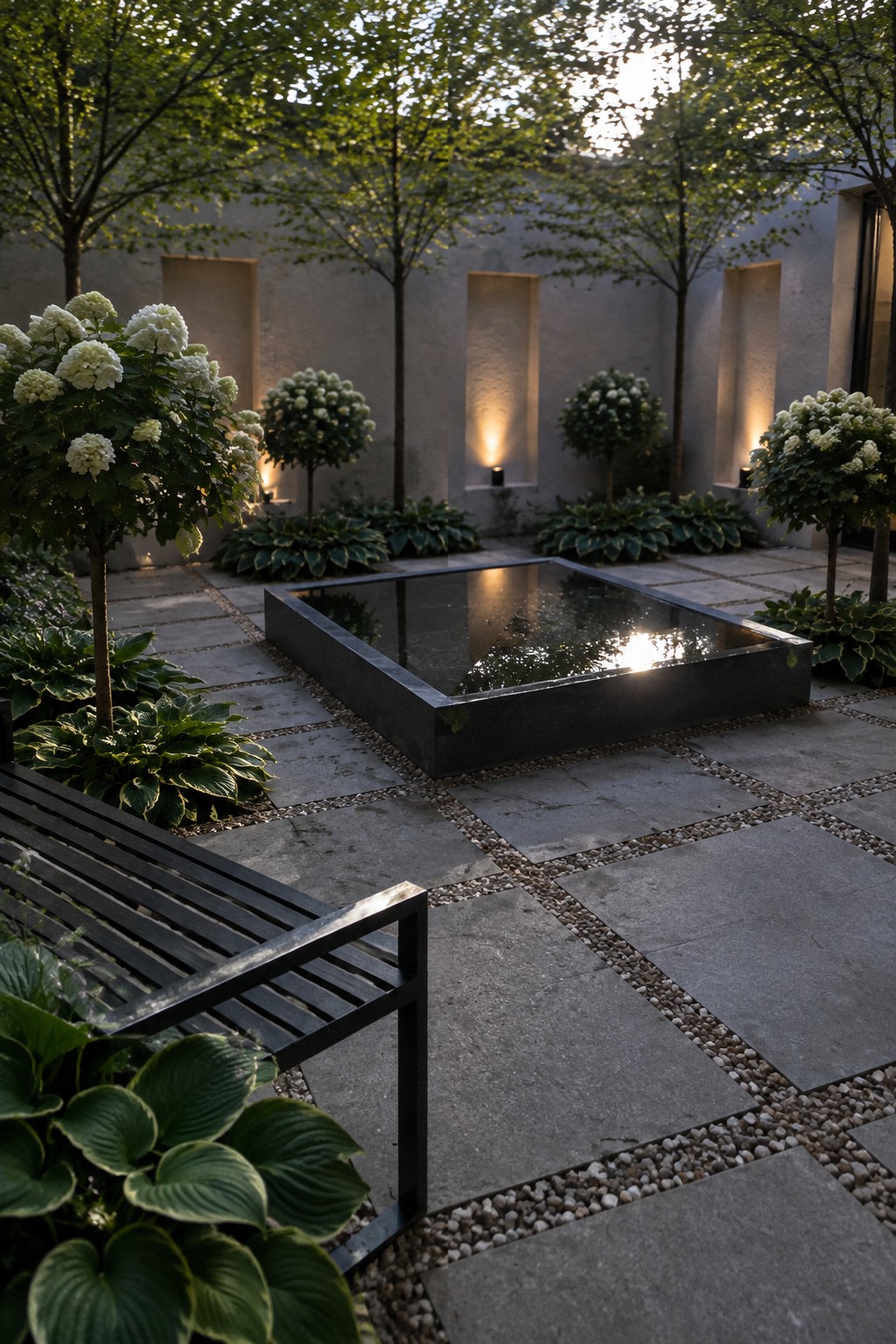
A simple reflecting pool can give a shade garden a clear center without taking attention away from the plants. Its dark surface picks up the trees overhead, while the surrounding hostas and hydrangeas make the hard edges feel at home in the garden.
This idea works best where there is room to walk around the water feature and keep it in view. Choose a clean-lined basin that suits the paving, and leave enough space around it for plants to grow without crowding the edge.
Use Planters to Add Greenery to a Covered Porch

Large planters make it easy to bring shade-loving plants close to the front door. Hydrangeas and hostas work well together here, with the broad hosta leaves filling in around the flowering shrubs.
Try this idea on a covered porch where garden beds are limited or the soil stays dry. Use roomy containers with drainage holes, and leave enough space around the door and chairs for people to pass comfortably.
Add Stepping Stumps to a Shaded Garden Path
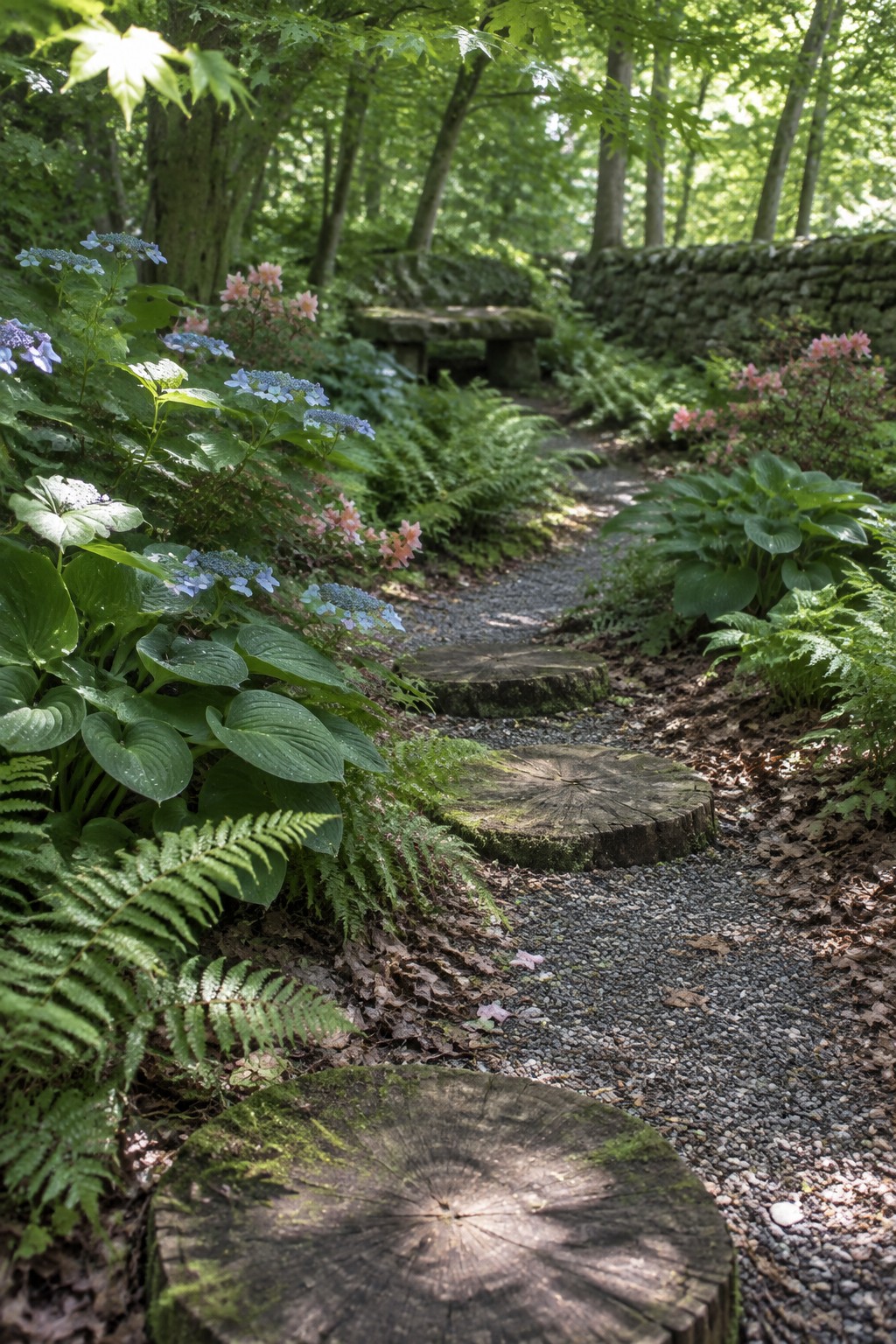
Cut tree stumps can turn a simple garden path into a more natural-looking route through shade. Their rough, varied edges suit an informal garden, and the gaps between them leave room for gravel to drain well.
Set the stumps firmly into the ground and keep their tops level enough to walk on safely. This works best on a gently sloping or mostly flat path, with shade-loving plants such as hostas and hydrangeas along the sides.
Grow a Container Garden on a Small Balcony

A balcony can hold a surprising number of shade-loving plants when you use containers at different heights. Hydrangeas and hostas work especially well in this setup, bringing leafy texture and seasonal color without needing a traditional garden bed.
Use sturdy troughs along the wall or railing, then add a few larger pots where there’s room. Check how much sun the balcony gets before choosing plants, and make sure containers have drainage so the roots don’t sit in water.
Frequently Asked Questions
Q: Can hydrangeas and hostas grow together in deep shade?
A: Hostas handle deep shade well, but most hydrangeas bloom better with a few hours of gentle morning light. In a very shady spot, choose a shade-tolerant hydrangea and expect fewer flowers.
Q: How often should I water a hydrangea and hosta bed?
A: Check the soil when the weather turns hot or dry, and water when the top inch feels dry. A layer of mulch helps the soil stay moist without constant watering.
Q: How much space should I leave between hydrangeas and hostas?
A: Give each plant room to reach its mature width so air can move between the leaves. Hostas can fill the front of the bed, while taller hydrangeas look good behind them.
Q: What can I plant with hydrangeas and hostas for extra color?
A: Ferns add soft texture, and astilbe brings bright blooms to shady spots. Choose plants with similar water needs so the bed is easier to care for.
