


I’ve noticed that shady garden spots often stay bare and uninviting until you build a solid flower bed structure around plants like hostas.
They create that lush, layered look with their varied leaf shapes and textures that evolve beautifully over the years.
In my own yard, edging the beds with low stones helped define the layout and kept everything from spilling onto the paths.
What draws the eye first is usually how the hostas mound up to soften transitions between lawn and woodland edges.
A few of these ideas feel worth sketching out for next season’s shady nooks.
Winding Brick Path in a Hosta Garden
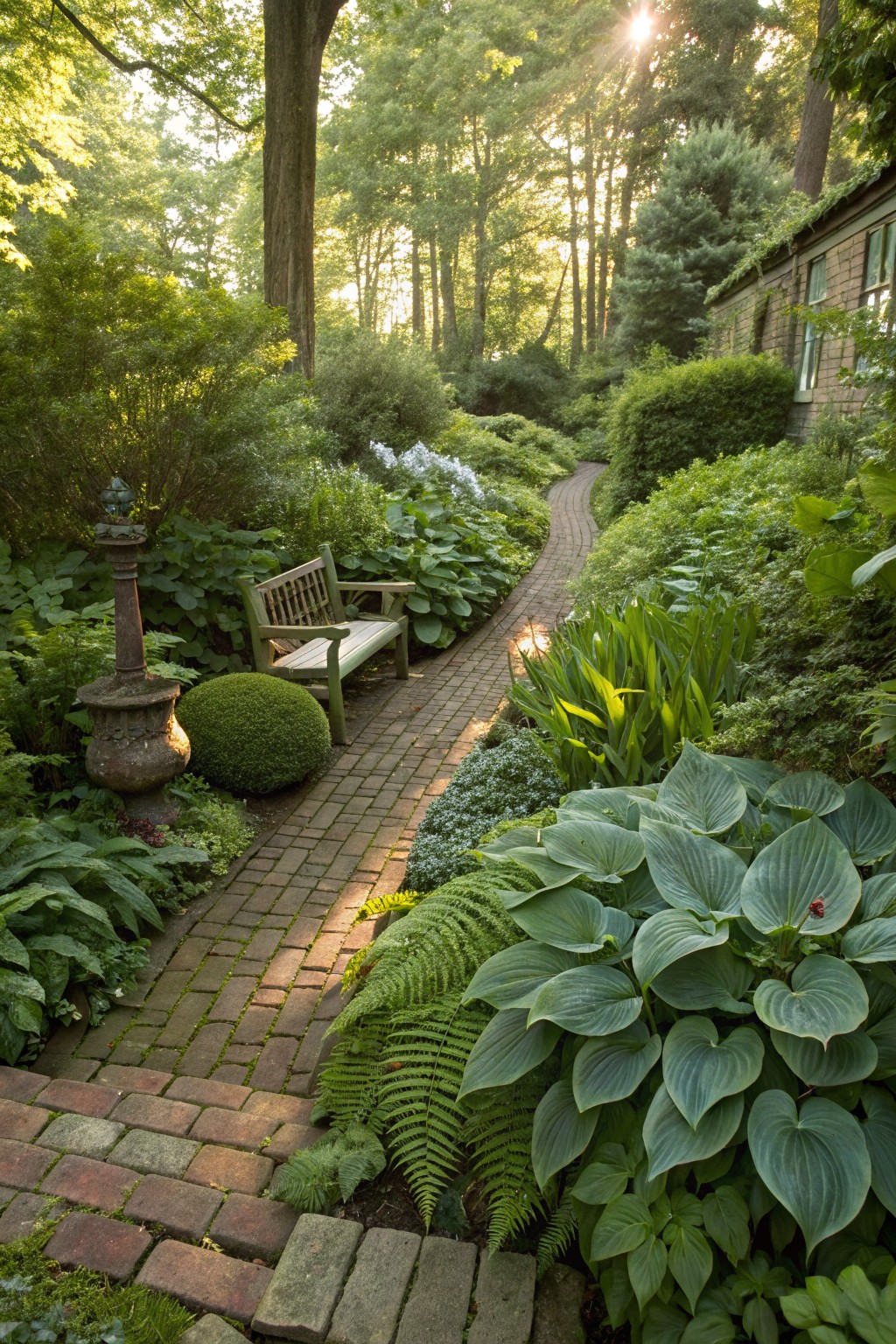
A gentle curve of old brick leads right through thick hosta plantings and ferns. It pulls you along without trying too hard. In shady yards under big trees, this setup feels natural and calm. The hostas fill out the edges nicely, mostly green with just a hint of flower here and there.
You can do this in any wooded backyard spot that gets little sun. Lay the bricks loose over dirt or gravel for easy changes later. Tuck hostas along both sides, maybe add a bench halfway for sitting. Keep it weeded once a month and it stays pretty with not much work.
Winding Stone Path Through Hosta Beds
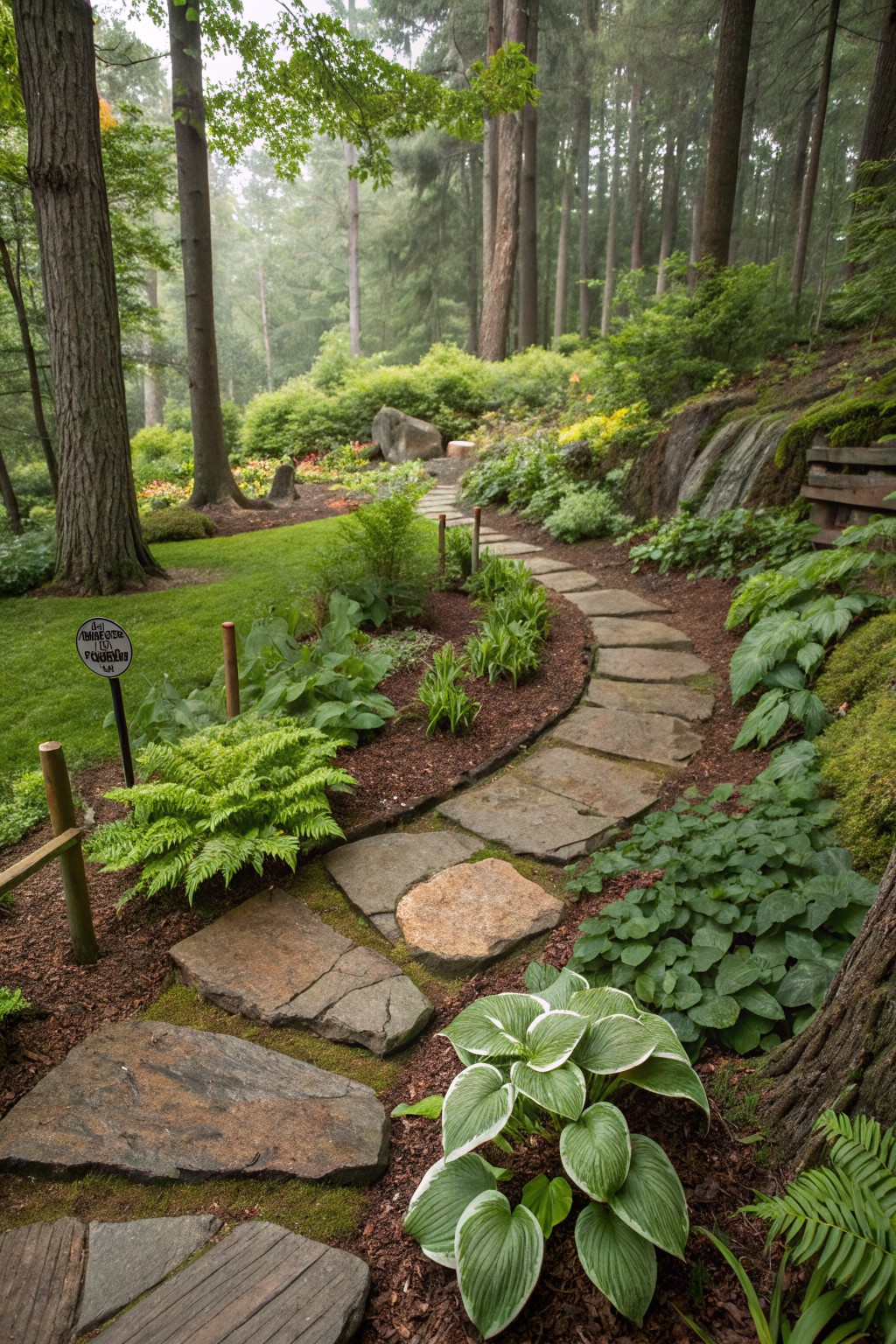
A simple winding path made from flat stone slabs works great in shaded gardens like this one. It leads you right through thick plantings of hostas and ferns, with mulch filling the gaps between stones. The curve keeps it natural, not too straight or formal, and fits right into a woodland spot where trees block most of the sun.
You can copy this in your own shady yard by laying irregular stones along a gentle curve, then edging them with hostas for that full, soft look. It suits sloped areas or spots near rocks, and hostas handle the low light without much fuss. Just watch the path doesn’t get too slick when wet.
Hostas Edging a Curved Stone Path
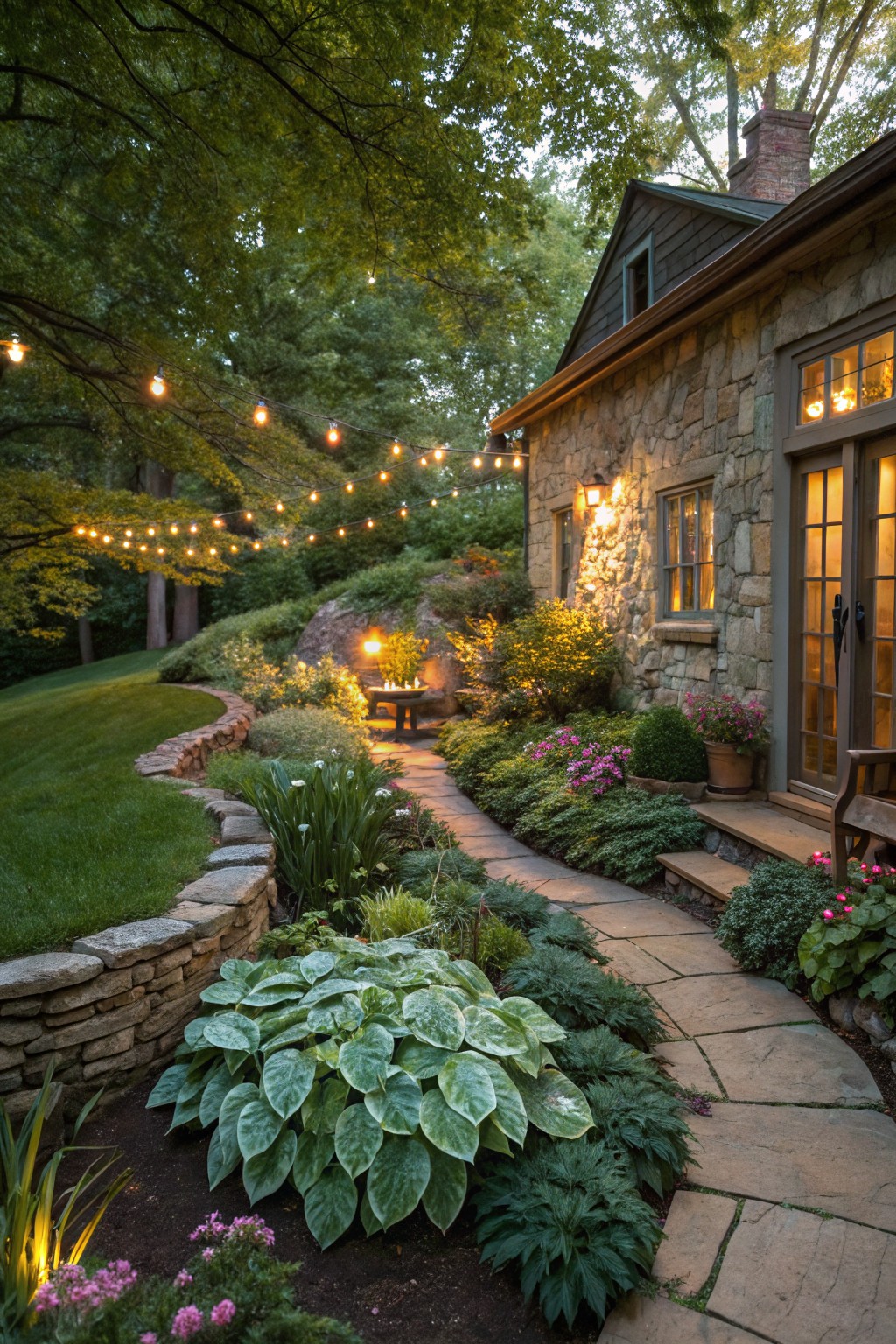
Big hostas like these make a natural border along a winding stone path. Their wide leaves fill out the bed edges and soften the hard lines of the pavers, leading your eye right up to the house. In a shady spot under trees, they thrive and add that full, green look without much fuss.
This works best in side yards or approaches to a back door where you want a quiet garden feel. Plant them thick along the path, maybe two or three deep, and keep the soil mulched. Stone retaining walls nearby help hold back the soil and give it a finished edge. Watch for slugs though, they like hostas too.
Terraced Stone Steps in Woodland Gardens
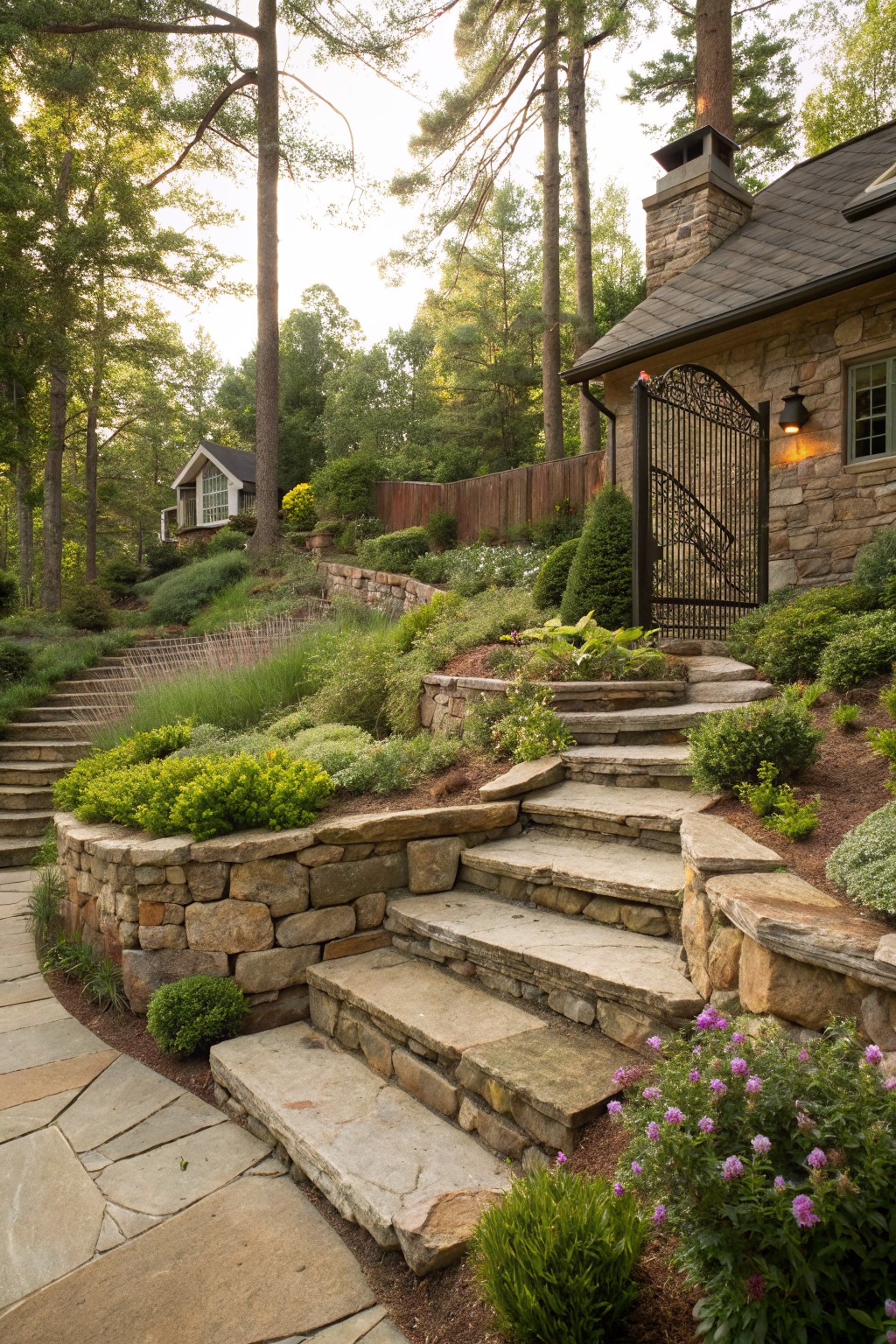
Steep slopes around a house can be tricky. But here stone steps built right into low retaining walls turn the climb into something easy and pretty. The walls hold back soil for planting beds packed with grasses, shrubs, and perennials that thrive in tree shade. It makes the path feel natural, like part of the woods.
This works best on wooded properties where you want low-maintenance beds. Fill them with hostas or similar shade lovers along the edges. Keep steps wide and even for safe walking. Watch drainage so water doesn’t pool on the treads.
Hostas Edging Garden Paths
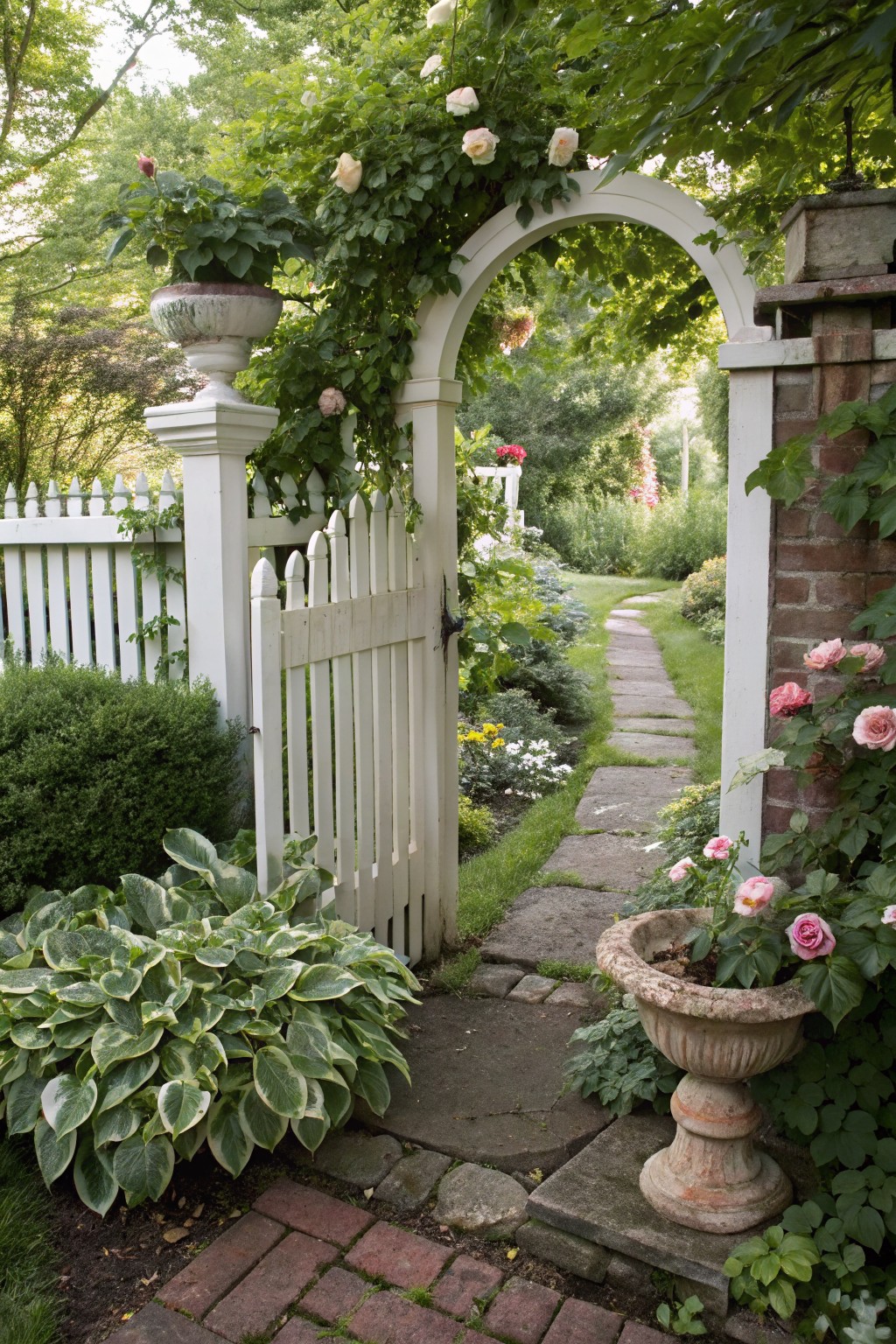
Big hostas like these make a soft edge right along a walkway. You see them here bunching up next to the gate, their leaves spilling out just enough to guide you in without crowding the stones. That variegated pattern on the edges catches light even in shade, which keeps the path feeling open and pretty.
Try this where you have a shady path to a gate or back area. Plant them in a low bed along one side, maybe two feet wide, and let them grow thick over a couple years. They hold up to foot traffic nearby and mix easy with roses climbing overhead or small flowers down the way. Just keep the bed mulched to hold moisture.
Meandering Stone Path in Hosta Beds
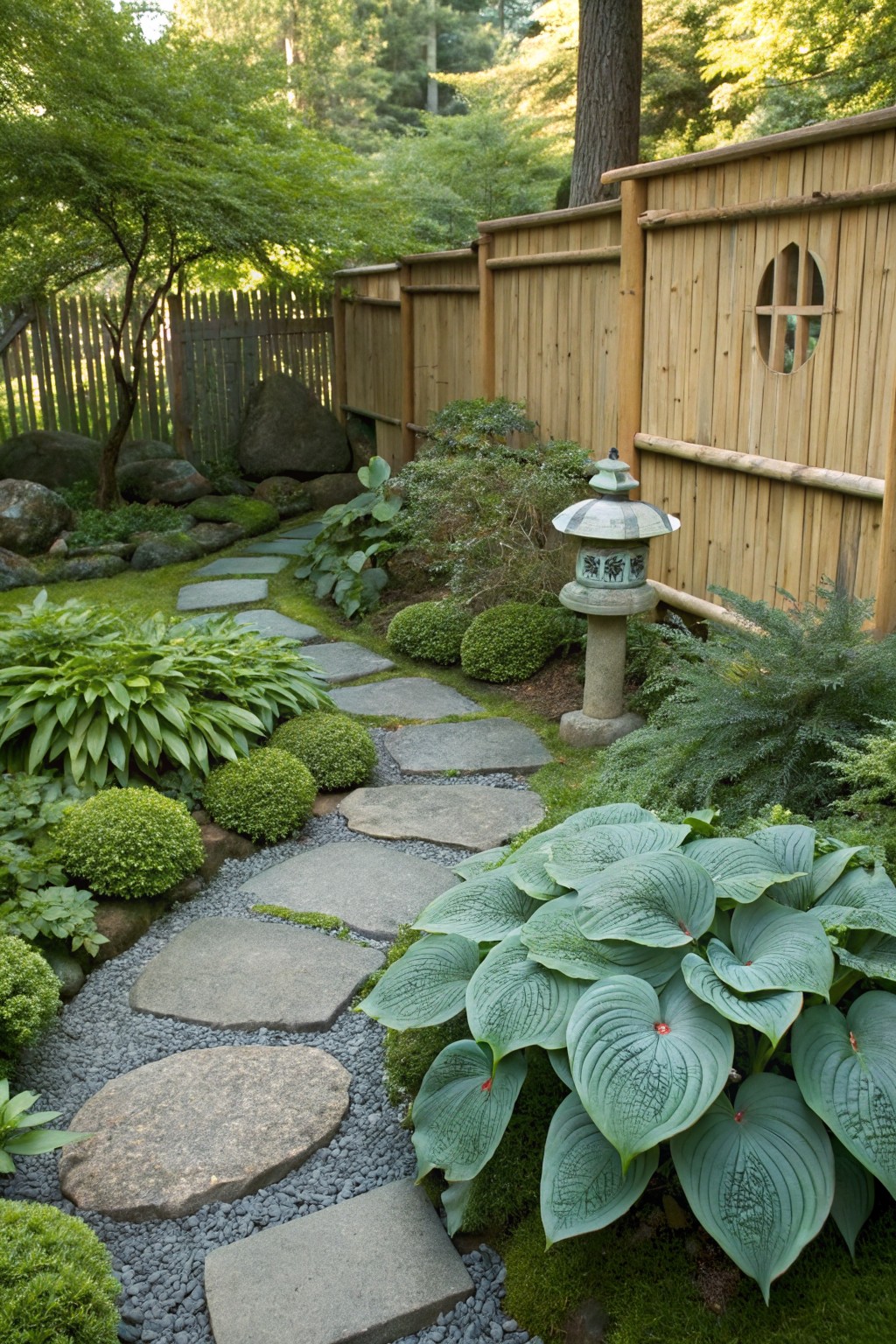
One straightforward idea for a shade garden is a casual path of flat stepping stones that winds right through thick hosta plantings. The broad leaves brush close to the stones and soften the edges, pulling you along without rushing. That lantern off to the side adds a bit of calm focus too.
This setup fits narrow backyards or spots along a fence where sun is scarce. Space the stones unevenly in gravel or moss so it looks grown-in, not laid out. Hostas handle the low light well and fill out fast, but trim them back in spring if they get too wild.
Raised Wooden Planters Line Shade Garden Paths
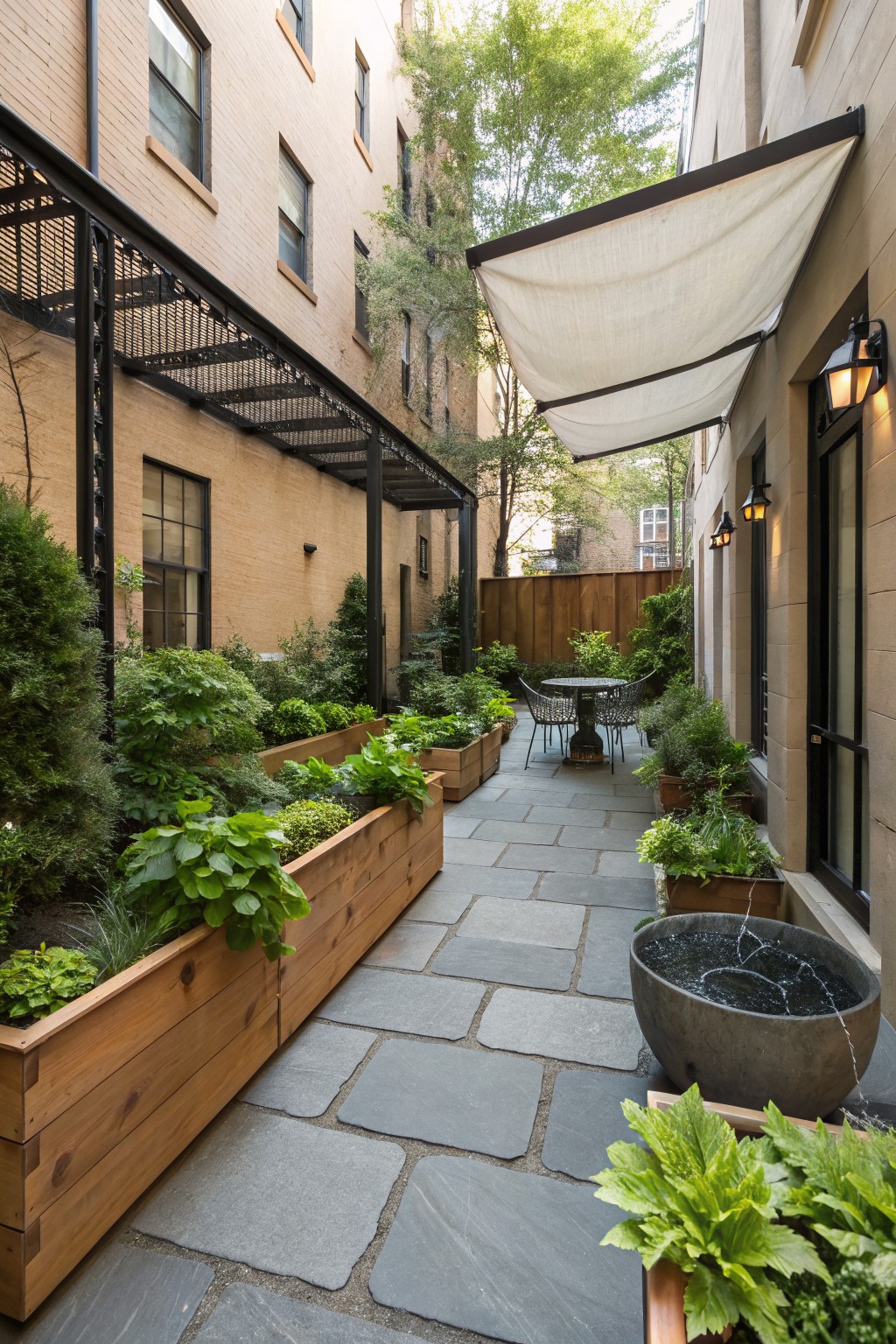
In narrow spots like this courtyard between buildings, raised wooden planters work great for building up flower beds right along the walkway. They keep soil contained and make it easy to plant shade lovers such as hostas, ferns, and greens that fill out without sprawling everywhere. The simple cedar boxes here add warmth to the cool stone path and help turn a tight alley into a proper garden.
You can set these up in any shady urban yard or side path where ground space is limited. Go for rot-resistant wood, fill with good soil, and mix hostas of different sizes for that layered look. Just keep the beds low enough not to block light, and add a spot for sitting nearby… makes the whole area more usable.
Simple Stone Paths for Hosta Shade Gardens
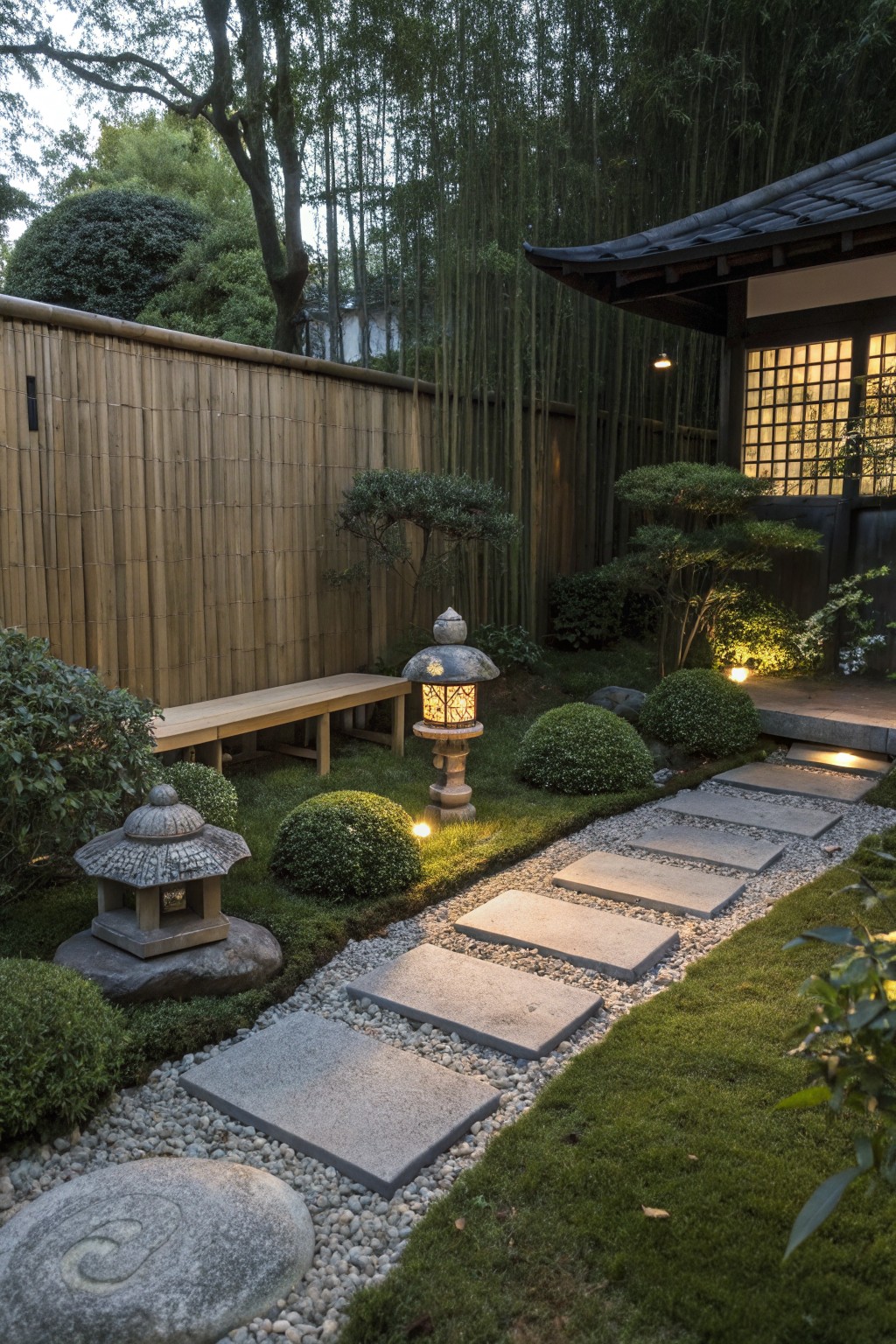
A straight path can feel too rigid in a shade garden. But these irregular stone slabs set into gravel and grass make walking through feel natural and easy. They wind gently past low shrubs and those classic stone lanterns, keeping the focus on the plants below. In a hosta bed setup, this layout lets the leaves stand out without crowding the way.
Use this in backyard shade spots under trees or near fences. Lay the stones wide enough for two people, about three feet apart, and plant hostas right along the edges for that layered look. It works best on flat ground. Skip it if your yard floods a lot, since gravel drains well but needs good base prep.
Hosta Beds Edging a Winding Path
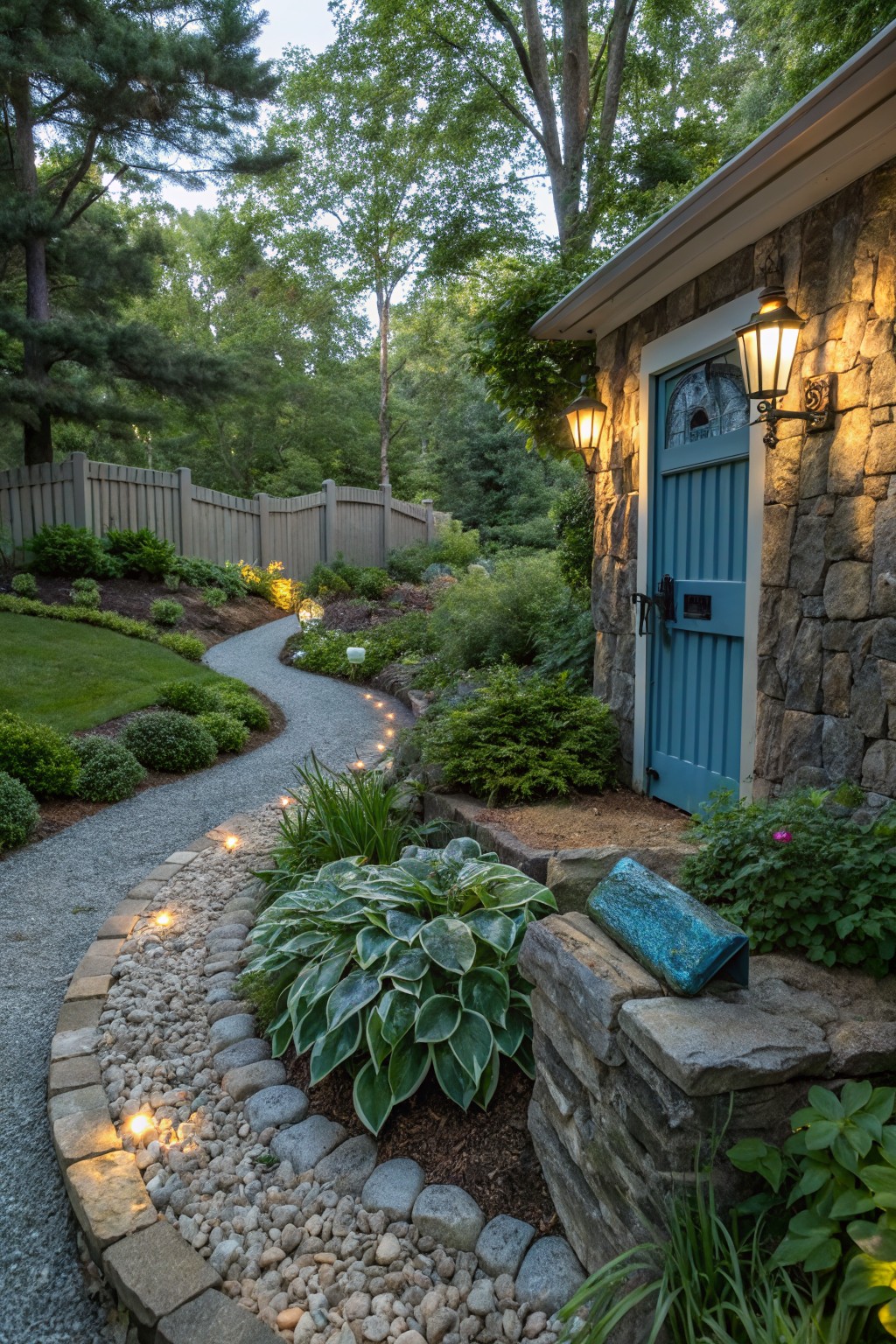
Large hosta leaves make up the bulk of these curved beds right along the gravel path. They tuck in close to the stone borders and spill a bit over the edge, which gives the walk a soft, full look without crowding the way. Those little path lights tucked into the gravel add just enough glow to see where you’re going after dark.
This works well in shadier backyard areas, especially leading up to a shed or outbuilding. Pick hosta varieties with bold leaves for quick coverage, and keep the path gravel or mulch for easy drainage. Stone edging holds up year round, and it ties the plants to the hardscape without much upkeep.
Stone-Edged Hosta Beds Along Walkways
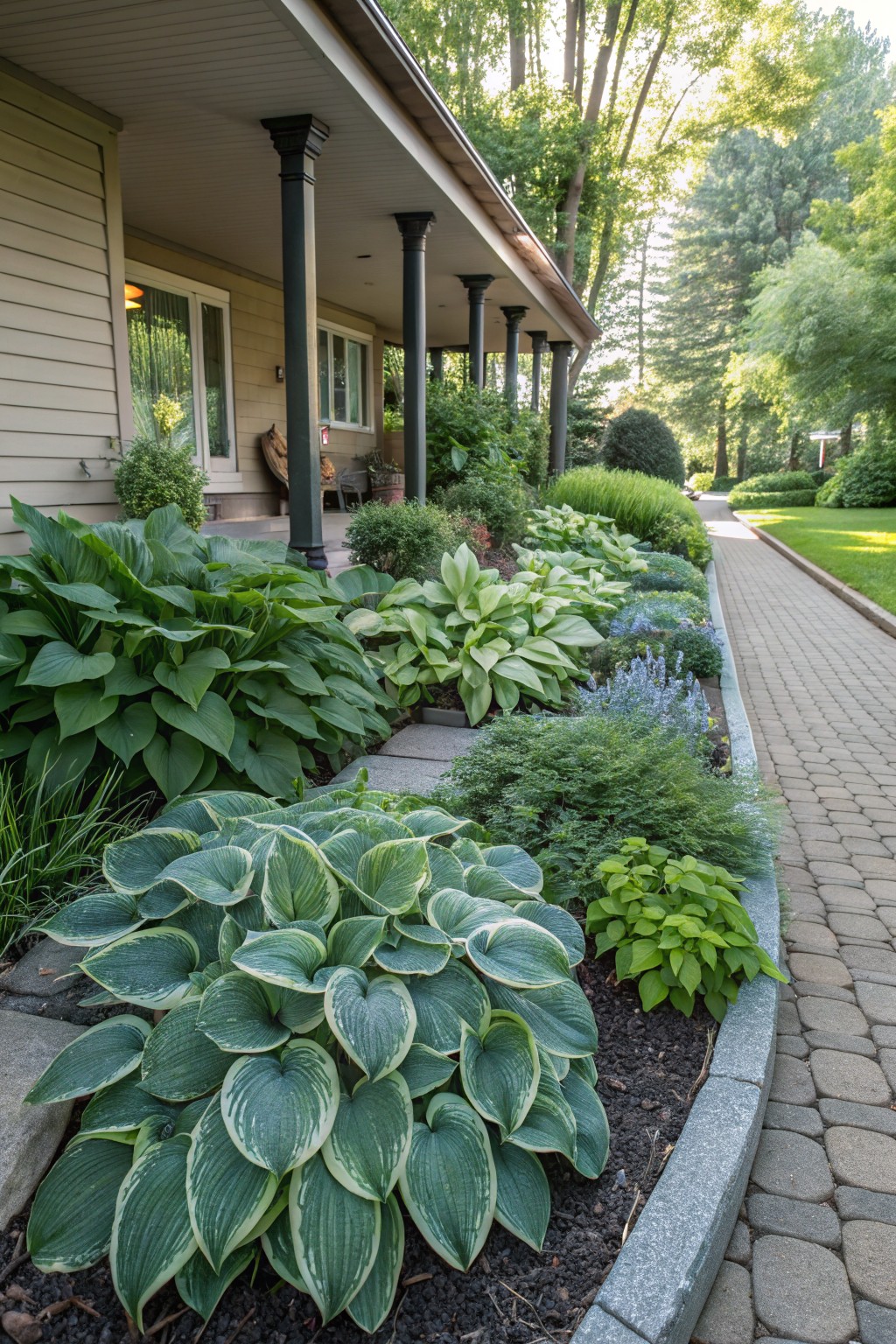
Hostas make a full, leafy border that’s perfect for shady spots next to the house. In this setup, different varieties with green and variegated leaves fill the bed right up to a granite curb. It keeps everything looking neat and ties the planting into the walkway without spilling over.
Use this idea where you have a path or foundation in partial to full shade. Layer smaller hostas in front and bigger ones behind for depth. The stone edging holds back mulch and plants… good for low-upkeep gardens on any home style.
Raised Beds Frame a Pool Area
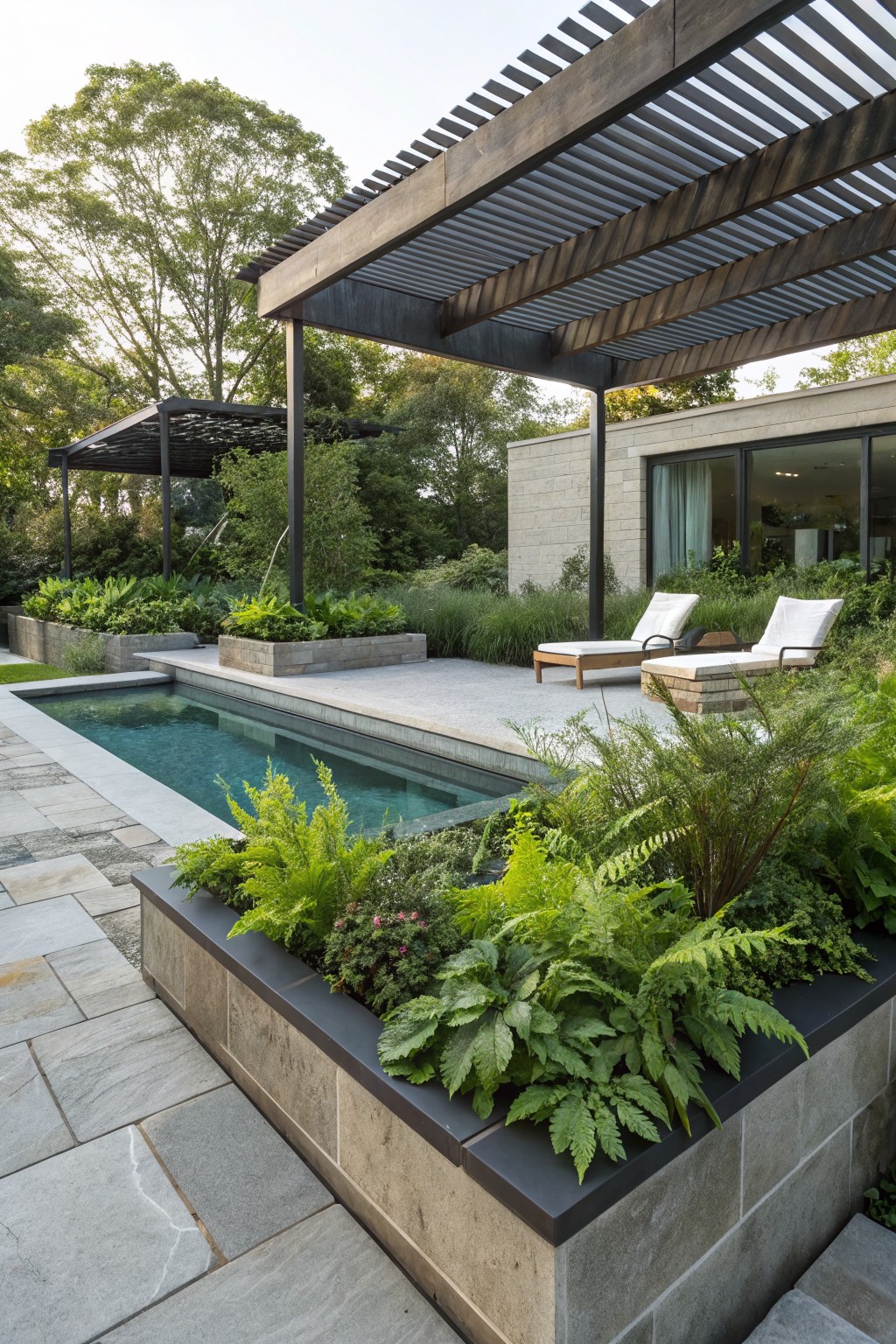
One smart way to add green right up to your pool is with these tall raised beds made from stone blocks. They’re packed full of ferns that spill over the edges, softening all that hard decking and water. It turns a simple lap pool into something that feels like a private shaded garden without taking up extra yard space.
You can pull this off in smaller backyards where shade from nearby trees helps the plants thrive. Go for hostas or ferns in beds about two feet high to match modern stone patios. Just make sure the beds drain well so roots don’t stay too wet near the pool.
Hosta Bed Circling a Courtyard Fountain
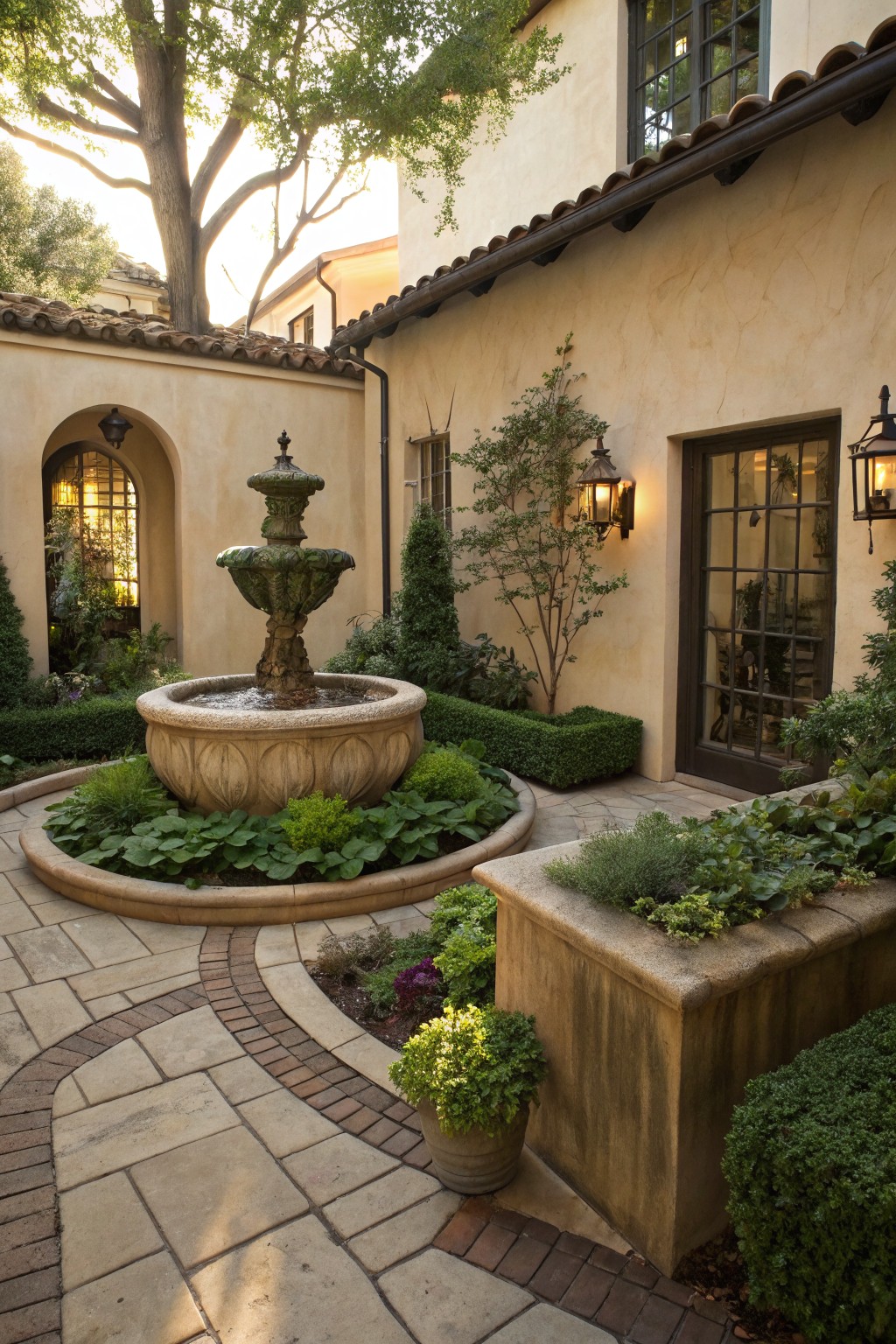
A simple round bed of hostas wraps right around the base of a stone fountain. This pulls the eye to the water feature while the broad leaves do most of the work filling shade spots. In a courtyard like this, it keeps things tidy and green year after year.
Try it in any small yard or patio corner that gets filtered light from trees or walls. Edge the bed with low stones or just let the pavers lead in. Hostas handle the low light fine, but trim back in wet spots to avoid slugs. Suits older homes with that walled-in feel.
Hostas Around Stone Garden Steps
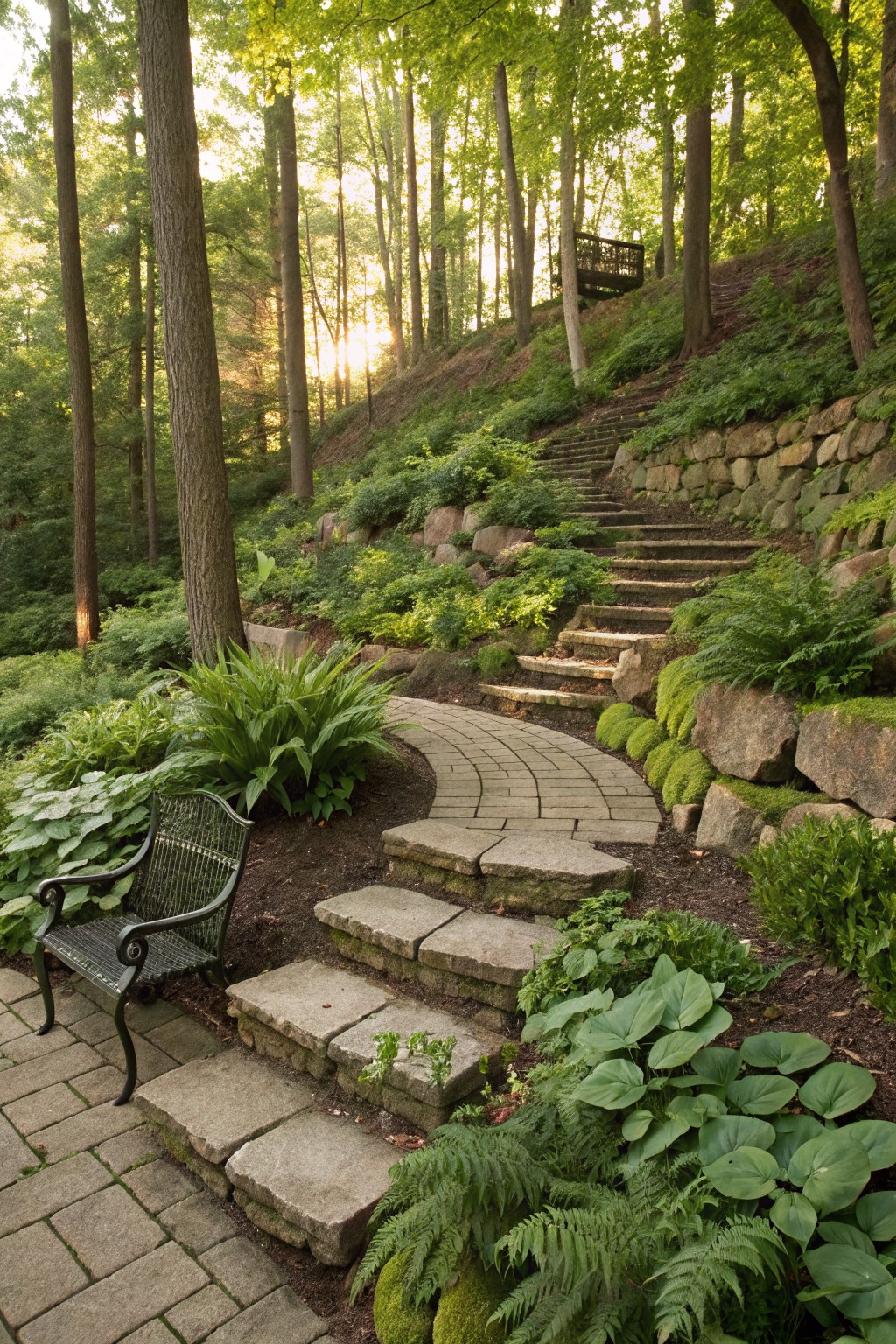
Big hosta leaves work so well tucked right up against stone steps like these. They soften those rough edges and fill out the beds without much fuss. In shady spots under trees, hostas thrive and give that lush, woodland feel. Notice the bench nearby… a nice spot to pause.
Put this idea to use on any sloped path in your yard, especially where sun barely hits. Pair hostas with ferns and mossy rocks for easy layering. It suits older homes with natural lots. Just keep the soil moist, and watch it green up year after year.
Winding Stone Steps in a Hosta Shade Garden
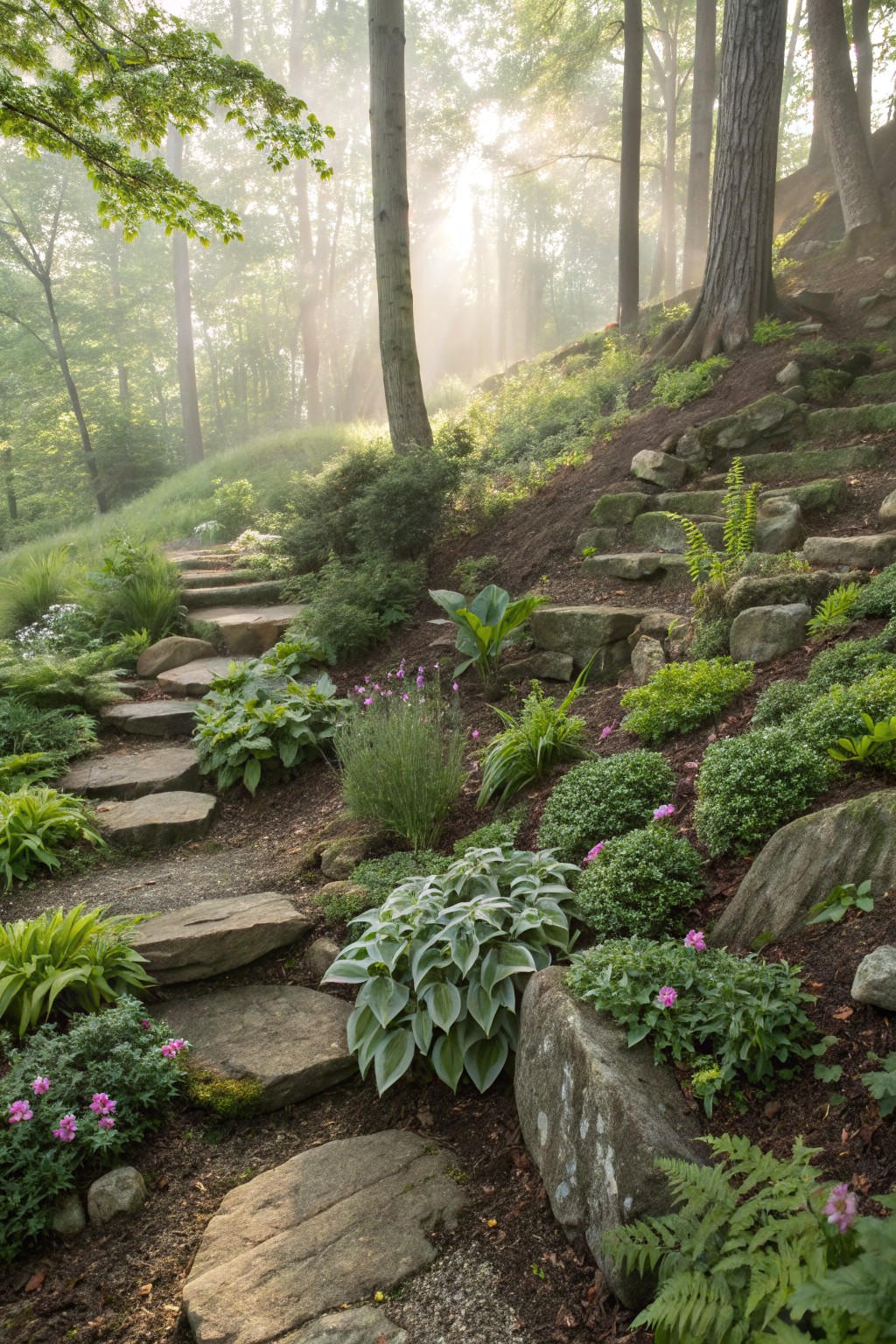
One simple way to handle a sloped shady spot is with irregular stone steps like these. They wind up through thick plantings of hostas and ferns, making the climb feel easy and natural. The hostas fill in around the edges with their broad leaves, softening the stones and turning the path into part of the garden.
This works best on wooded hillsides where sun barely reaches. Pick flat-ish local stones for the steps, then tuck hostas in the beds alongside ferns or sedges. It stays green all season with little care, and fits older homes with natural lots. Just keep the steps clear of debris.
Lush Variegated Hostas Edging Pavers
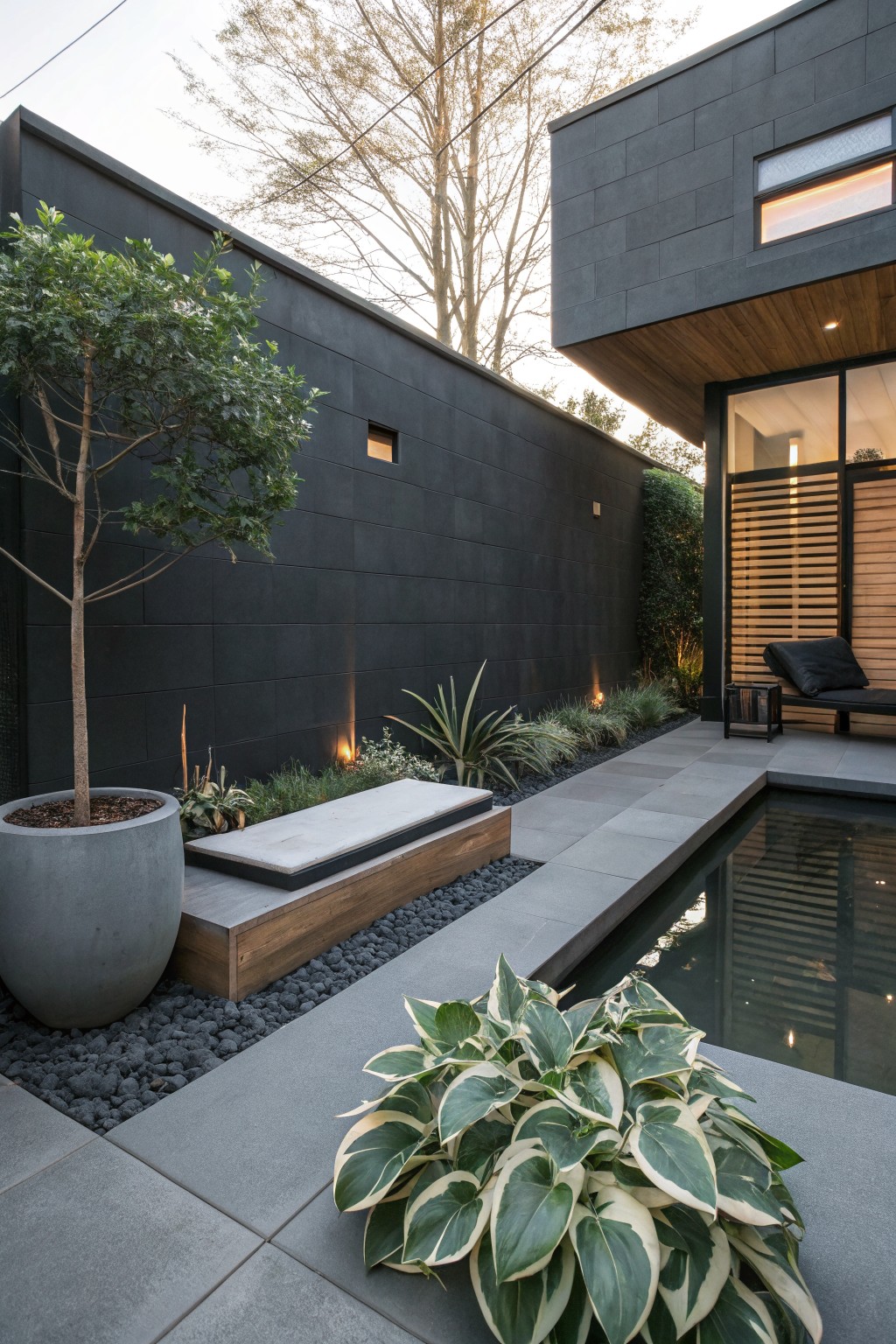
A big clump of variegated hostas sits right at the edge of these gray pavers, spilling over just a bit. The bright white and green leaves catch the eye against the dark gravel strip and black wall. It’s a simple way to bring some life to a shaded poolside without much effort.
This works great in modern yards with hardscapes like stone paths and gravel. Plant hostas where they get morning sun or dappled shade, near water features or patios. They handle low light well and pair nicely with sleek materials. Just keep the bed mulched to hold moisture.
Layered Hostas Beds Along the Entry Path
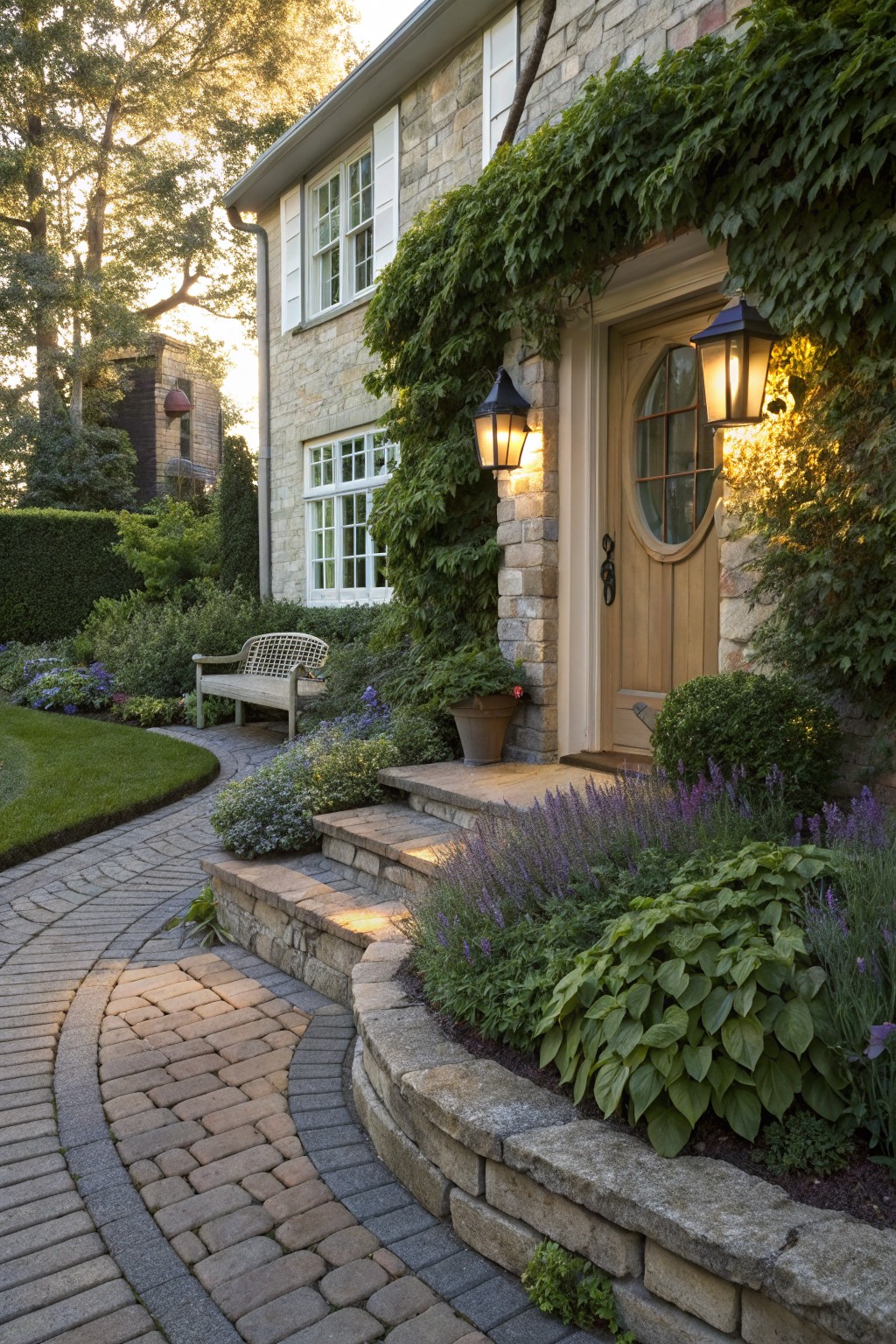
One simple way to draw folks right to your front door is a curving path edged with raised stone beds full of hostas. Here the big leafy hostas mix with lavender and low shrubs, spilling over low walls in that soft shade garden look. It keeps the walk clear but makes the whole entry feel alive and settled in.
This works best on the house side where trees cast shade. Stack hostas in layers against the wall, shorter plants up front. Skip it if your path gets full sun, since hostas like it cooler. Ties your landscaping neat to the door without much fuss.
Linear Steel Planters for Hosta Beds
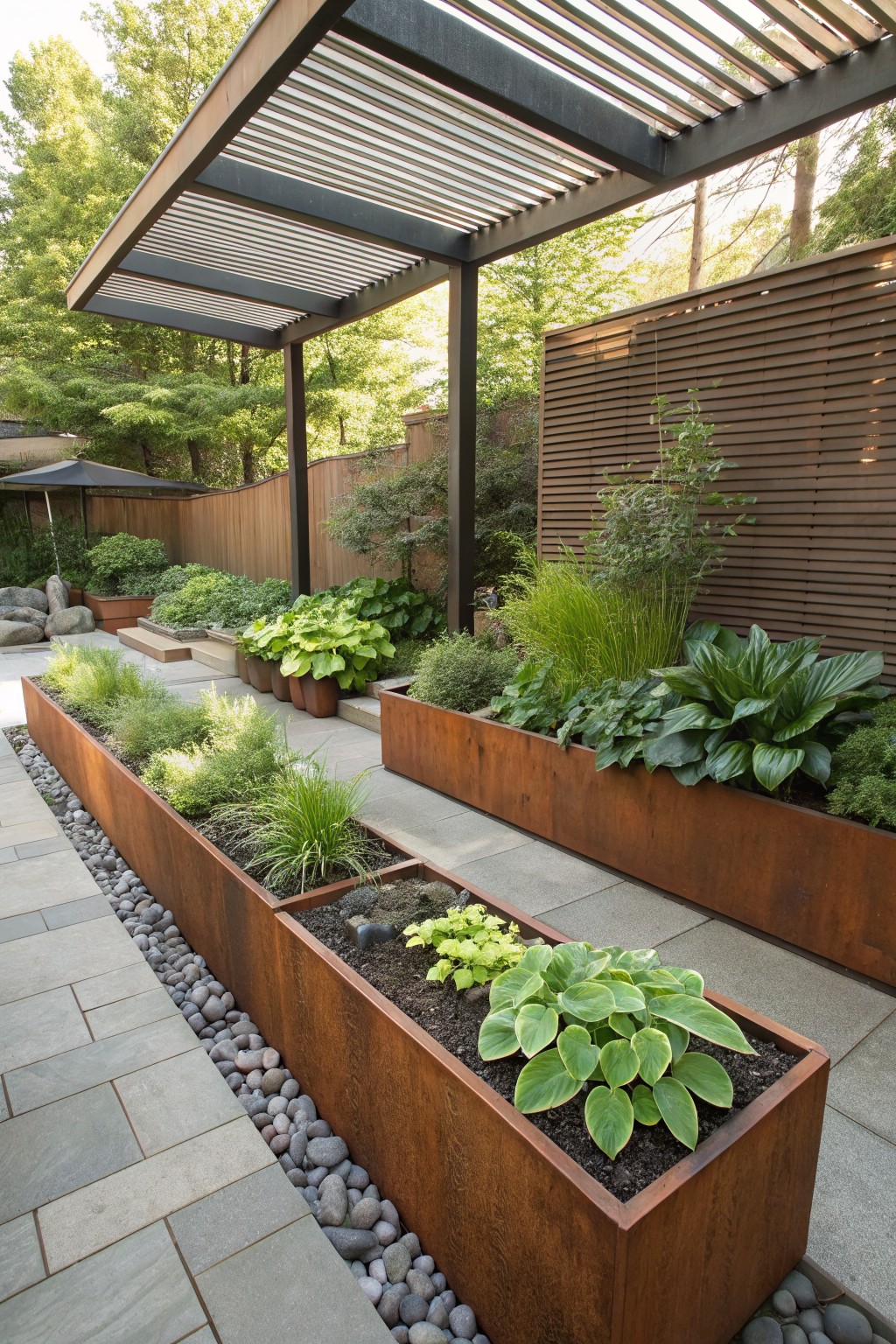
One straightforward way to organize a shade garden is with long, rectangular corten steel planters like these. They run right along the path, giving hostas and similar plants a clean edge without much fuss. The rusty metal patina fits right into a natural setting, and it holds soil well while letting roots spread. You see plenty of bold hosta leaves spilling out, mixed with grasses for some height.
These work best in narrow side yards or patios where space is tight. Set them on gravel for drainage, and pair with pavers for easy walking. They’re low upkeep too, since the steel won’t rot. Just watch for rust runoff at first, and plant hostas that tolerate partial shade. Good for modern or transitional homes wanting structure without stonework everywhere.
Hostas Framing a Fire Pit Patio
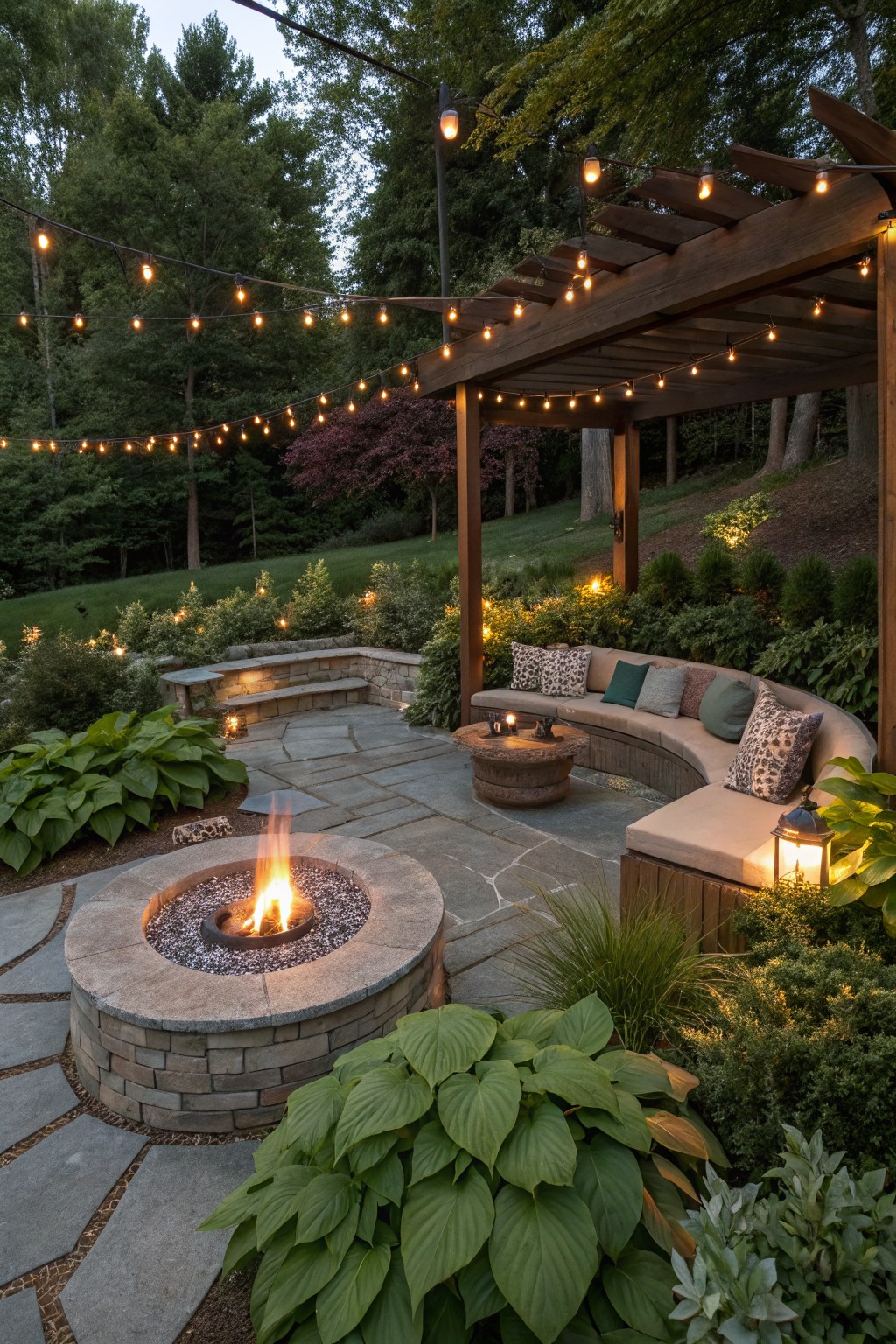
Big clumps of hostas planted tight against the stone edges of this fire pit patio really stand out. They give that soft, lush look next to all the hard stone and gravel, and since hostas love shade, they fit perfect under the pergola and trees. The broad leaves fill in the beds without much fuss, making the whole spot feel full and welcoming even in low light.
You can pull this off in any shady backyard corner with a patio or fire feature. Group three or five hosta varieties along the borders for texture, and keep the paths clear. It works great on slopes too, where the plants hold soil and add green without needing full sun. Just mulch well to keep weeds down.
Raised Beds Along a Garden Path
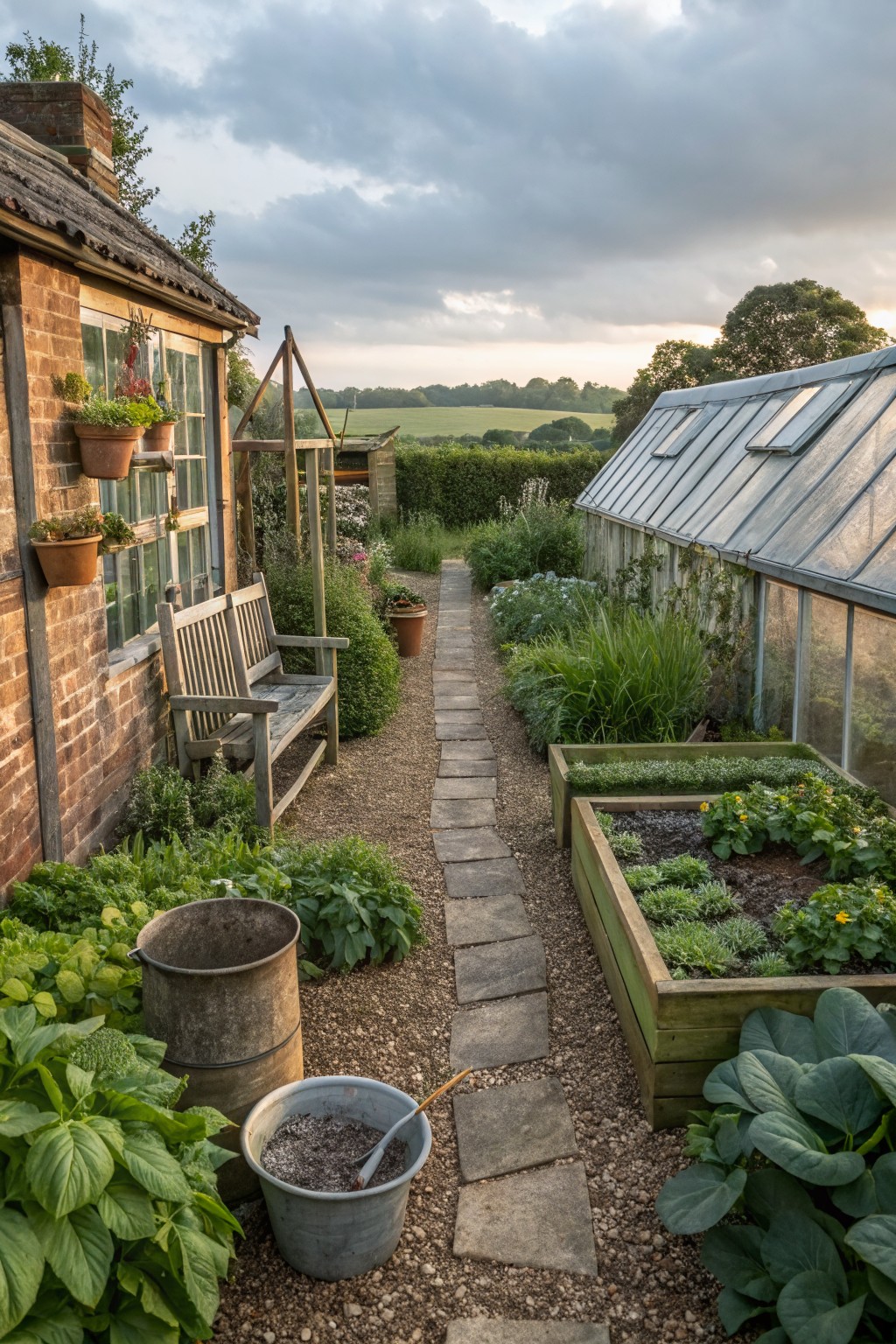
One straightforward way to organize a shade garden is lining a path with raised beds. These wooden boxes hold greens and veggies neatly, while perennials fill in the edges. It keeps things tidy and makes the walk feel purposeful, especially under tree cover where hostas do their best.
Try this near a back door or greenhouse for quick tending. The gravel path drains well and pairs with hostas’ love for moist shade. Skip it in full sun, though. Just add mulch to hold moisture, and you’ll have low-fuss beds that guide you through the garden.
Frequently Asked Questions
Q: How do I keep slugs from munching on my hostas?
A: Scatter crushed eggshells or diatomaceous earth around the base of your plants. Water in the morning so leaves dry out by evening. Slugs hate dry spots.
Q: What’s the best way to divide overgrown hostas?
A: Dig up the clump in early spring before leaves fully emerge. Shake off soil and slice through the roots with a sharp knife to make new sections with at least three buds each. Replant right away at the same depth.
Q: Do hostas pair well with ferns in shade beds?
A: Ferns fill gaps perfectly with their feathery texture next to hosta leaves. Choose ostrich or lady ferns for height contrast. They both thrive in the same moist shade.
Q: How often should I water new hosta plantings?
A: Keep soil evenly moist for the first season. Check an inch down with your finger; water deeply if dry. Established ones handle dry spells better.
