


A fence can make a garden feel neatly framed, but a bare stretch of it can also leave the yard looking a little unfinished.
I like how hydrangeas soften that hard edge while giving a border shape and color that change through the seasons.
The key is choosing a layout that suits the space, since a narrow path, a shady corner, and a long sunny property line all call for different planting choices.
I’d pay attention to mature plant size and spacing first, so the flowers have room to grow without crowding a walkway or spilling into a neighbor’s yard.
Some of these approaches are easy to adapt, whether you want a loose, natural border or a more structured planting along the fence.
Use a Winding Path Through the Hydrangea Border
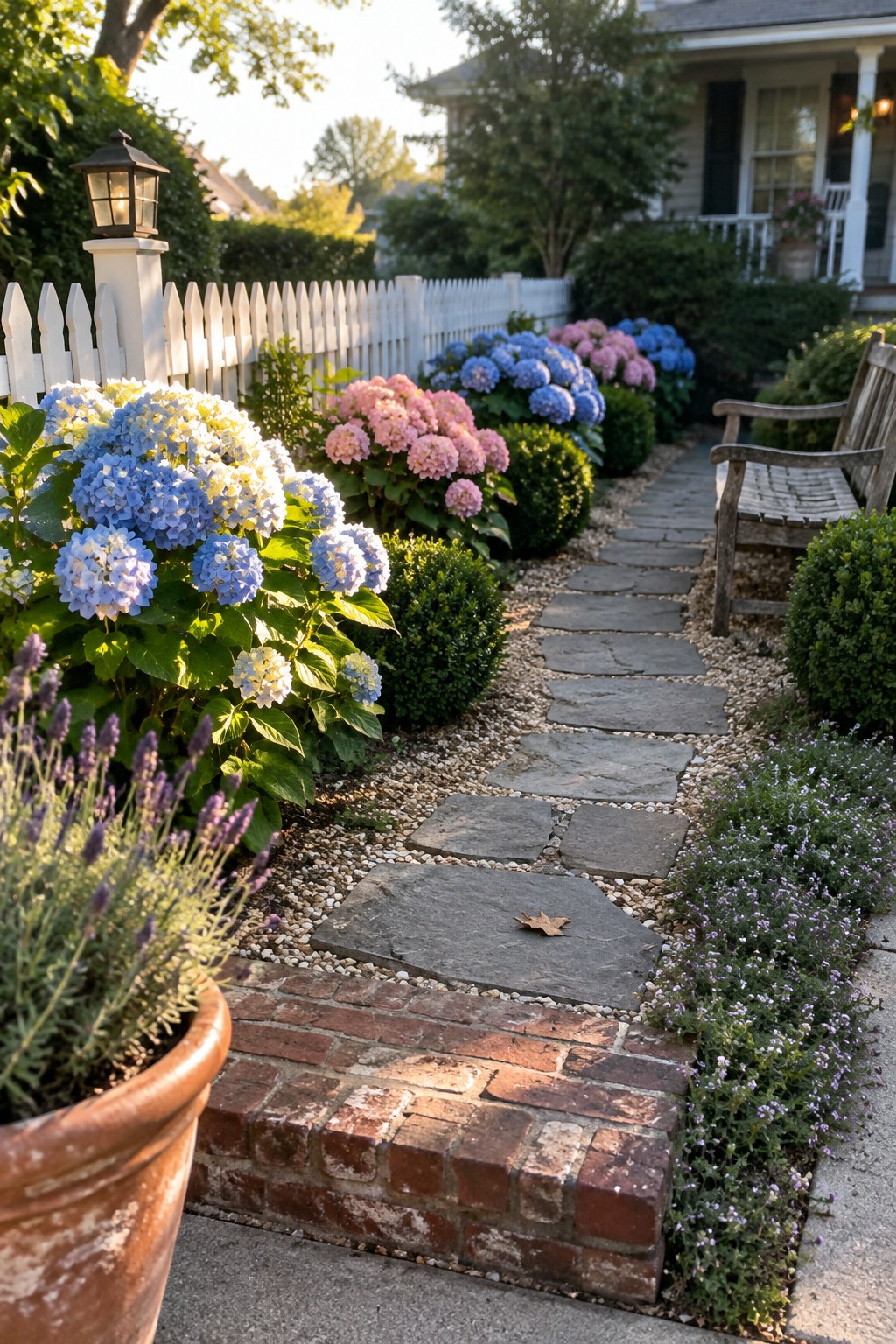
A gently curving stepping-stone path gives a hydrangea border a clear route without making the garden feel too formal. The repeated blooms along the edges make the walk feel connected, while the stones stay practical underfoot.
This approach works well beside a fence or along a property line where a straight bed might look a little stiff. Leave enough room for the hydrangeas to spread, and keep the path wide enough to walk comfortably as the plants fill in.
Hydrangea Borders Along Modern Fences
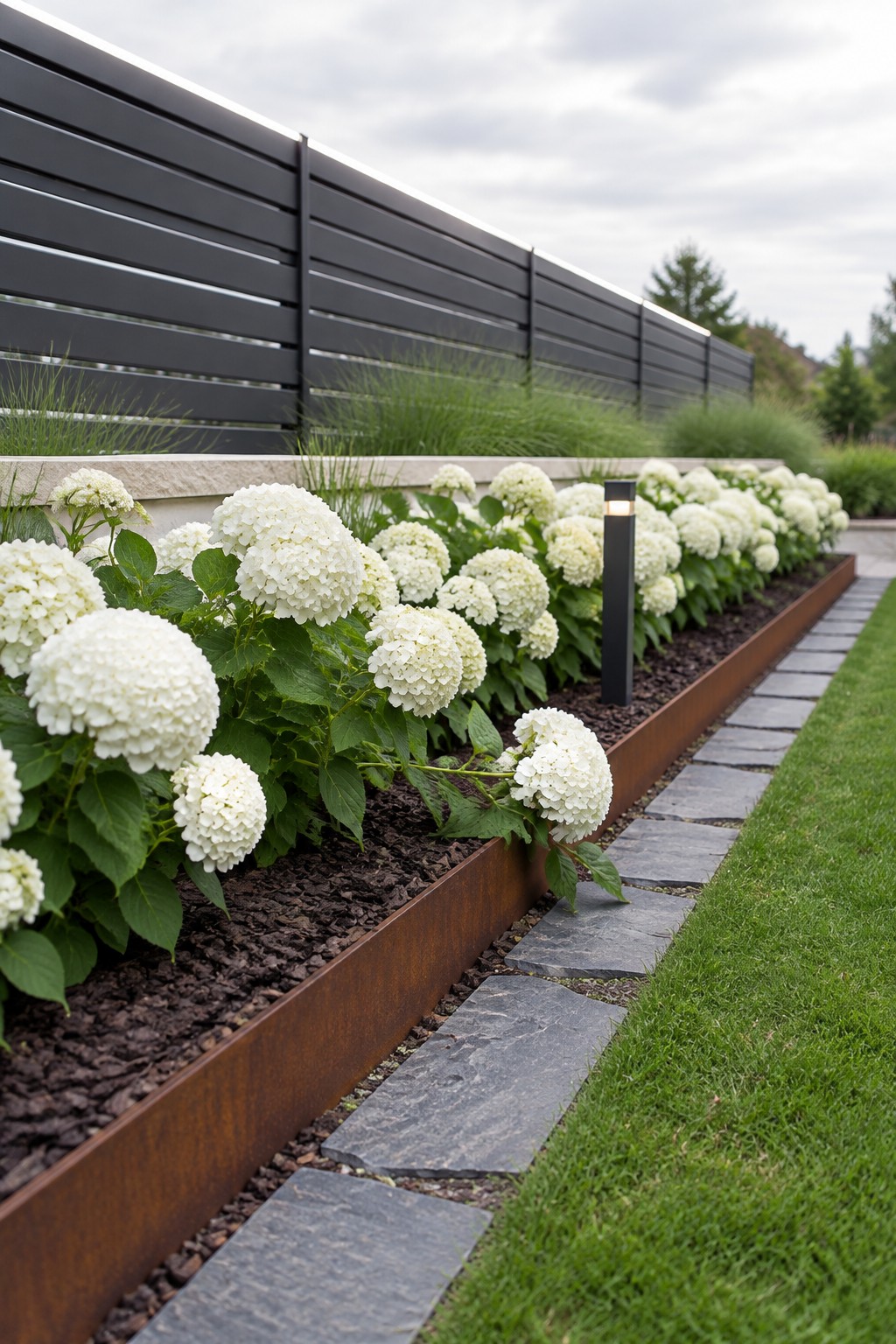
A row of hydrangeas can make a long fence line feel more like a garden and less like a boundary. The rounded white blooms repeat along the bed, while the dark fence gives them a clear backdrop.
For a similar border, plant hydrangeas in a continuous bed and leave enough room for mature shrubs to spread. A raised steel edge can keep mulch in place, but check that the bed has good drainage before planting.
Let Hydrangeas Follow the Fence Line
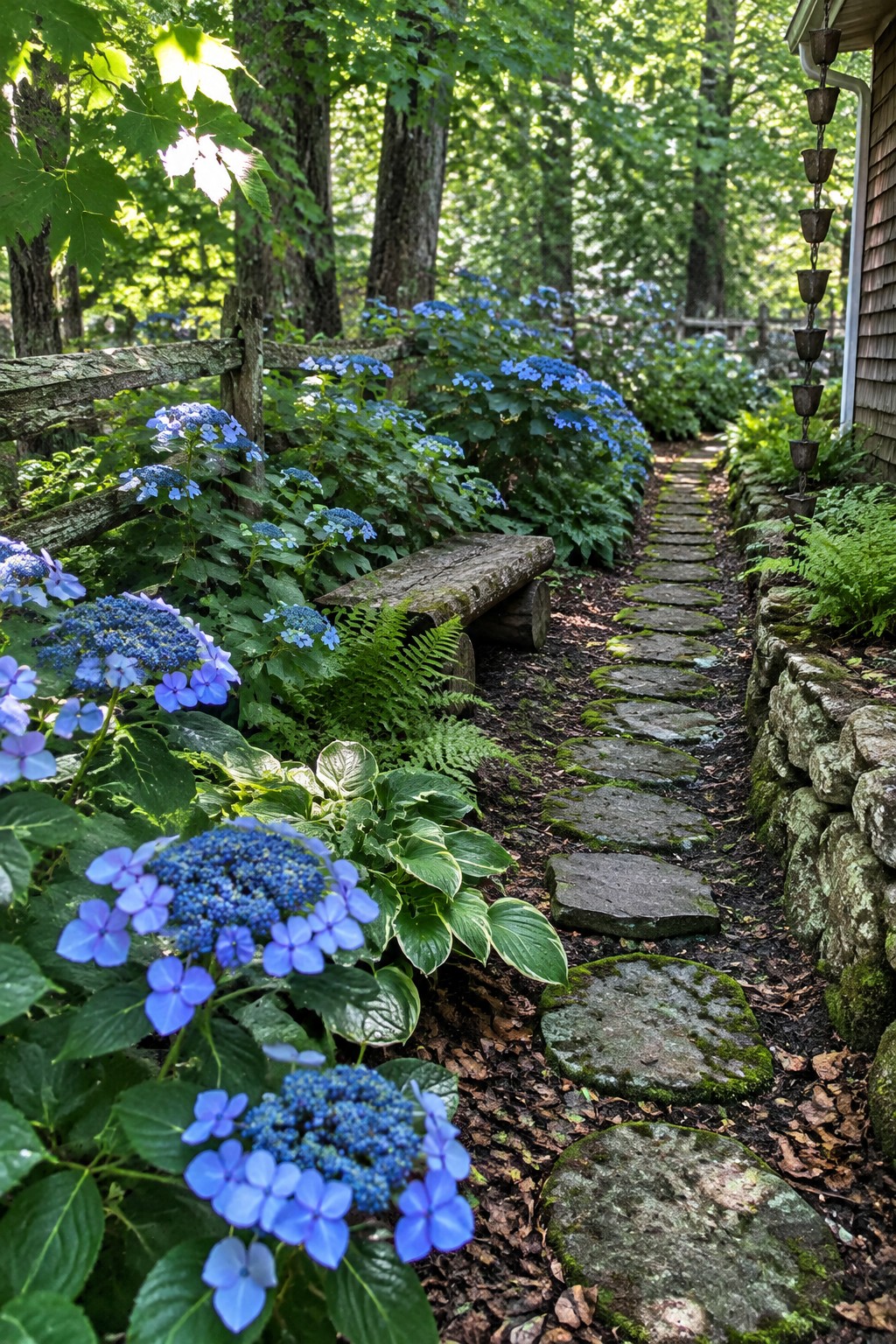
A stone path can make a hydrangea border feel like part of the garden rather than a row of flowers along an edge. Here, the stepping stones run beside clusters of blue hydrangeas, giving the planting a clear shape while leaving room to walk through.
Use a narrow path like this along a fence or property line where you want easy access for watering and pruning. Set the stones far enough apart for comfortable steps, and leave space between them for groundcover or mulch.
A Pebble Path Beside the Fence
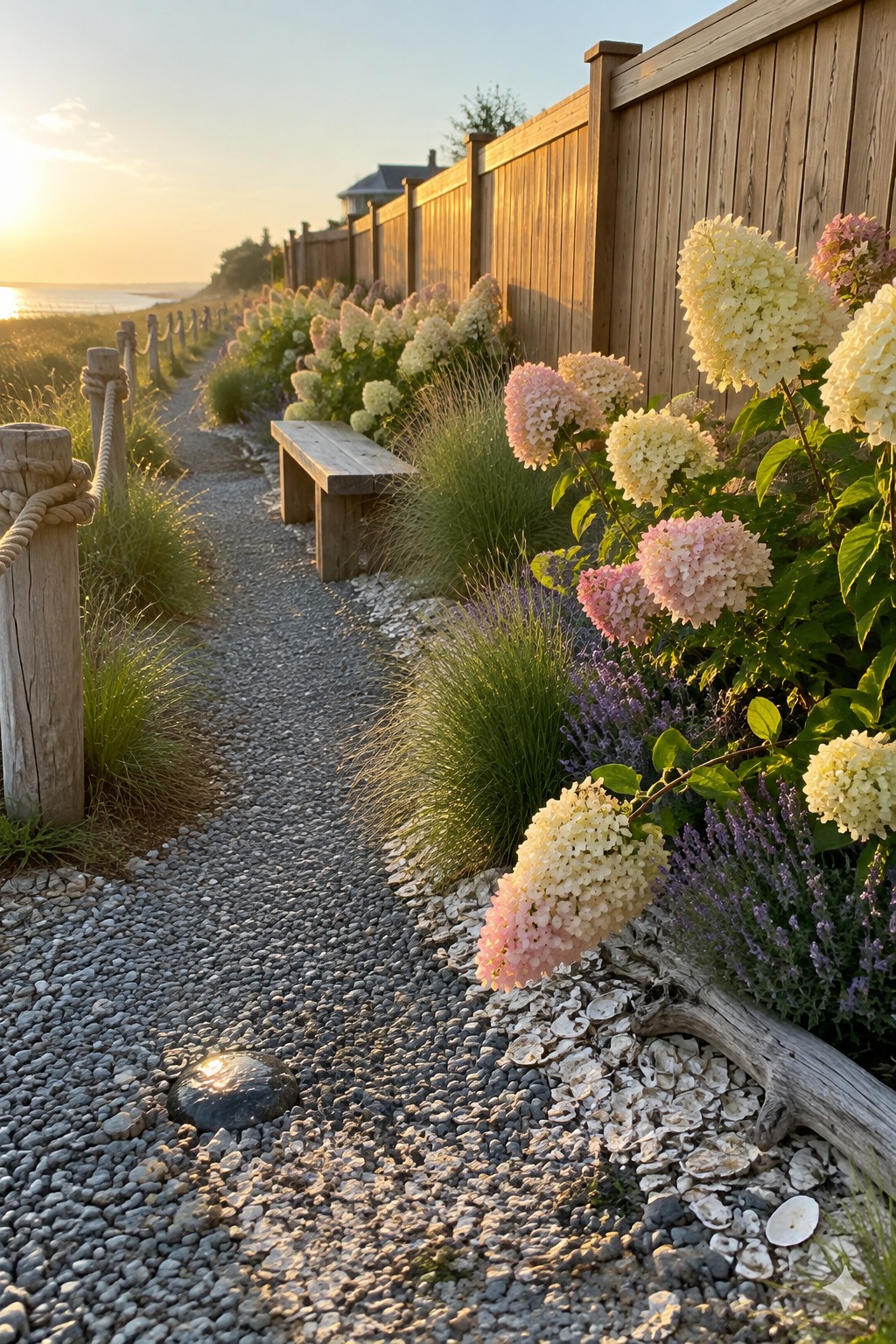
A narrow pebble path is a practical way to make a fence-side border easy to enjoy and maintain. Hydrangeas can line one edge, while the path leaves room to walk through the garden without stepping into the planting bed.
This layout works well along property lines where space is limited. Keep the path wide enough for comfortable passage, and leave room for hydrangeas to spread so their branches do not crowd the route.
Use Formal Planters to Break Up a Hydrangea Border
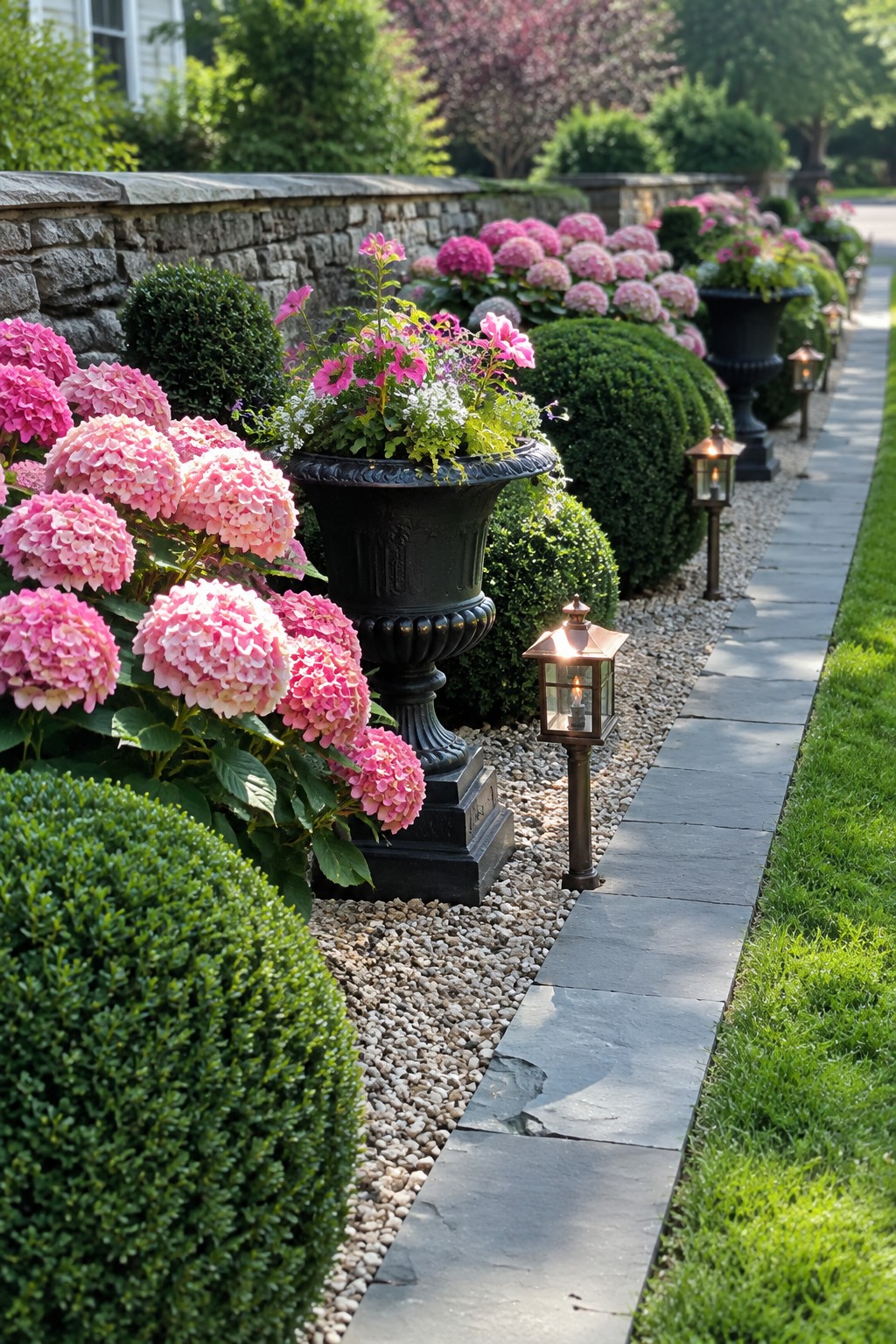
Large planters can add a little structure to a long flower border. Here, a dark urn interrupts the row of pink hydrangeas and gives the planting a clear focal point without changing the garden’s overall layout.
Try this in a wider border along a fence or property line, where there’s room to move around the planter. Choose a pot that suits the scale of the bed, and leave enough space for hydrangeas to grow without crowding it.
Plant Hydrangeas in Layers Along a Fence
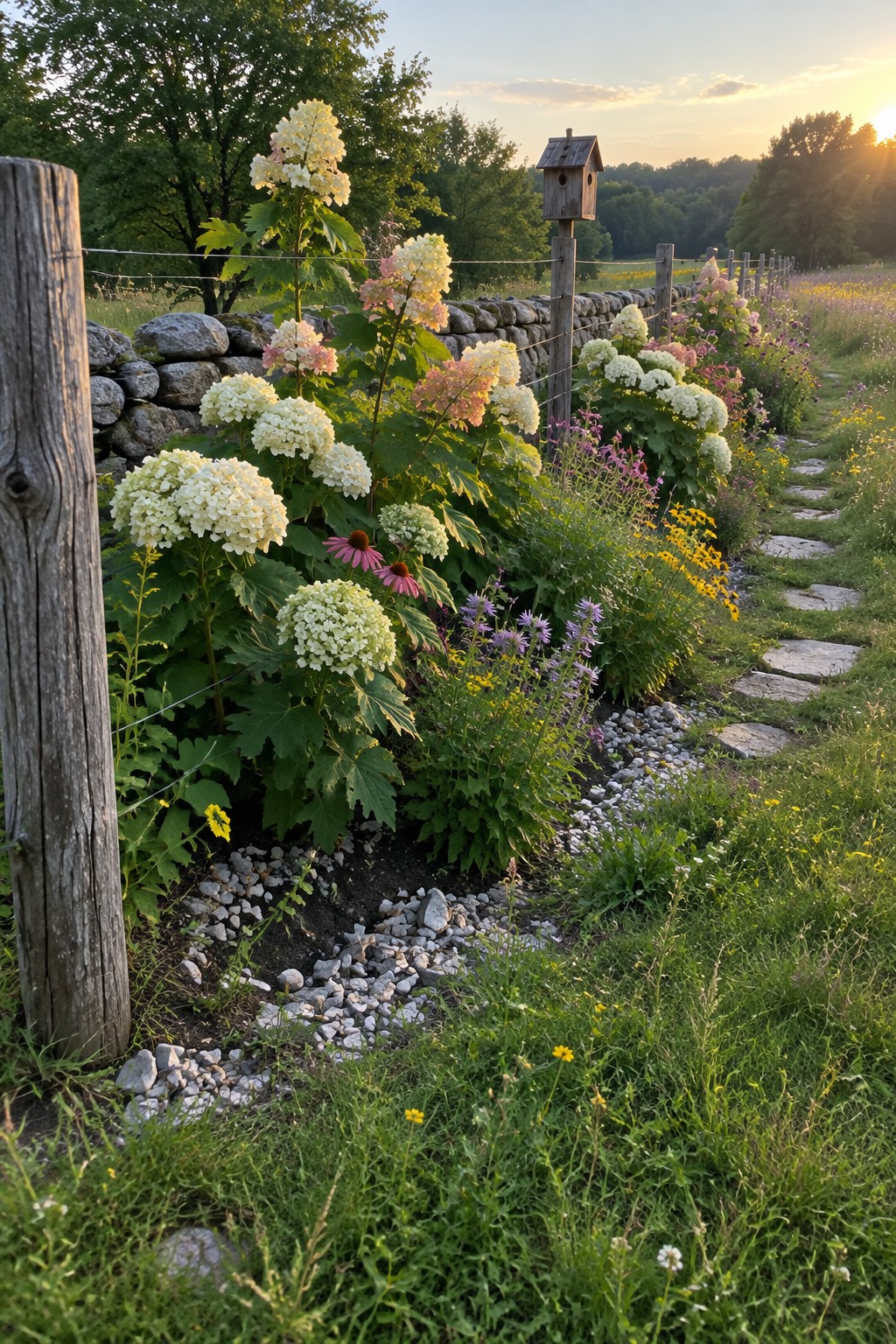
Layering hydrangeas with smaller flowers makes a fence border feel full without relying on one plant alone. The large white and pink blooms provide the main structure, while lower flowers fill the gaps near the path.
Use this approach along a fence or property line where there’s room for plants to spread. Leave enough space between the hydrangeas for airflow and access, and keep the path clear as the border grows.
Plant Hydrangeas in Raised Beds Along a Fence
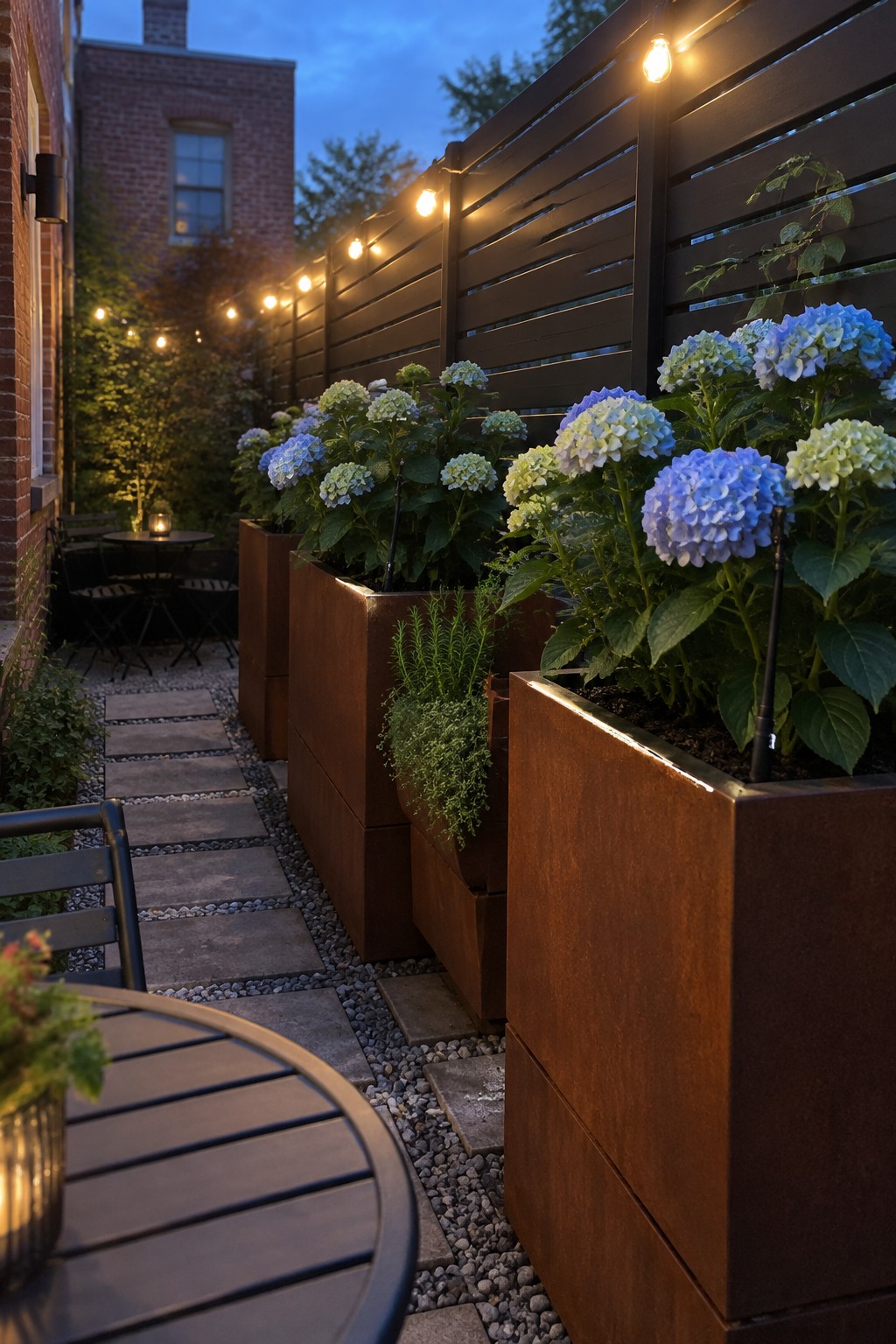
Raised planters make it easy to run a hydrangea border along a fence, especially where the ground is narrow or paved. The repeated beds give the flowers a clear place to grow and keep the planting neat.
Choose planters deep enough for hydrangea roots, and leave room for mature plants so they are not crowded against the fence. This setup suits small courtyards and side yards, but the beds will need regular watering because raised soil can dry out faster.
Build Hydrangea Borders in Tiers
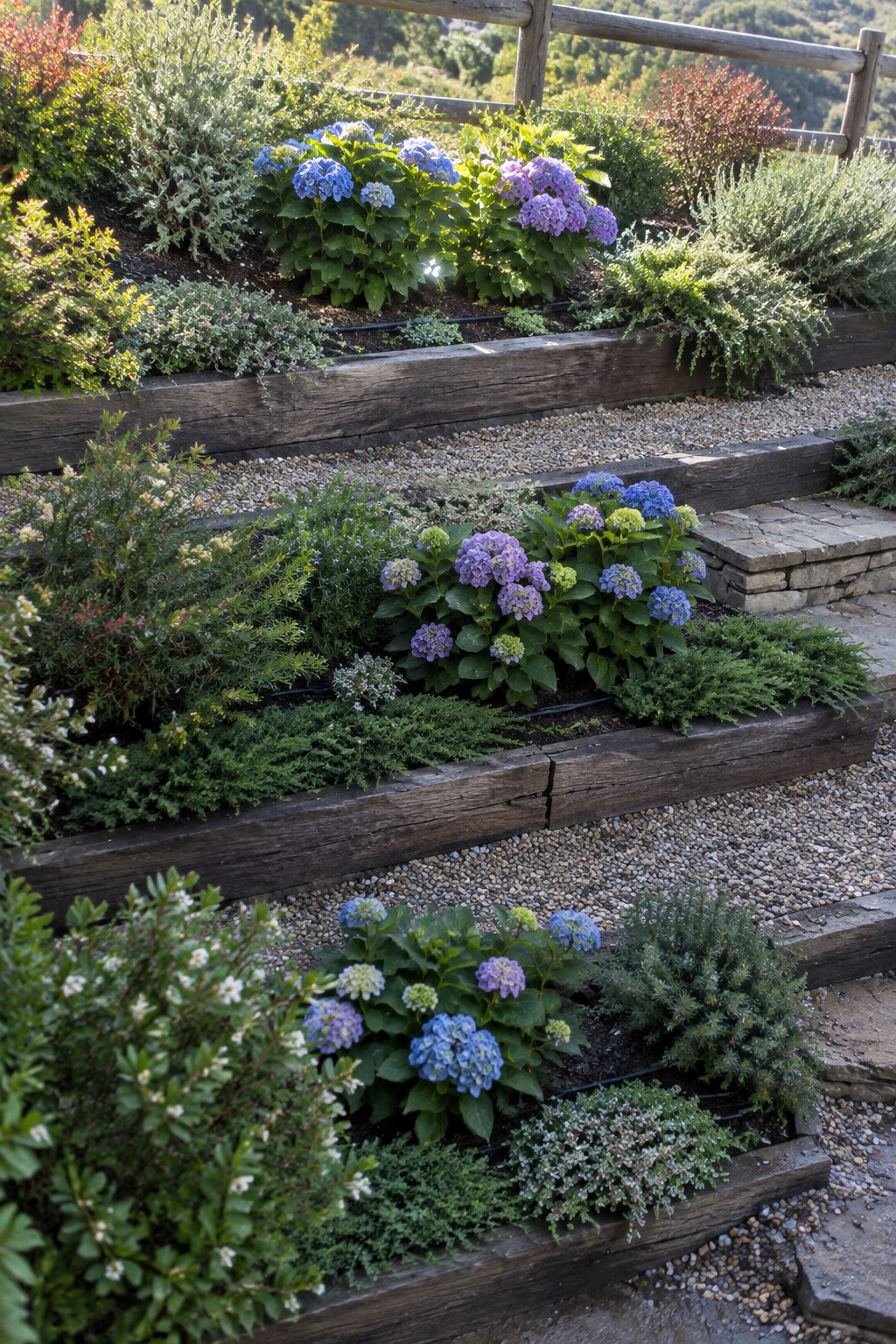
Tiered beds make a sloped fence line easier to plant and maintain. Hydrangeas stand out in the larger planting areas, while low shrubs spill toward the timber edges and help each level feel connected.
Use sturdy retaining boards to hold the soil, and leave enough room around each hydrangea for mature growth. This approach works well on a hillside, but the steps need to be stable and drainage should be planned before planting.
Use Stone Edging to Define a Hydrangea Border
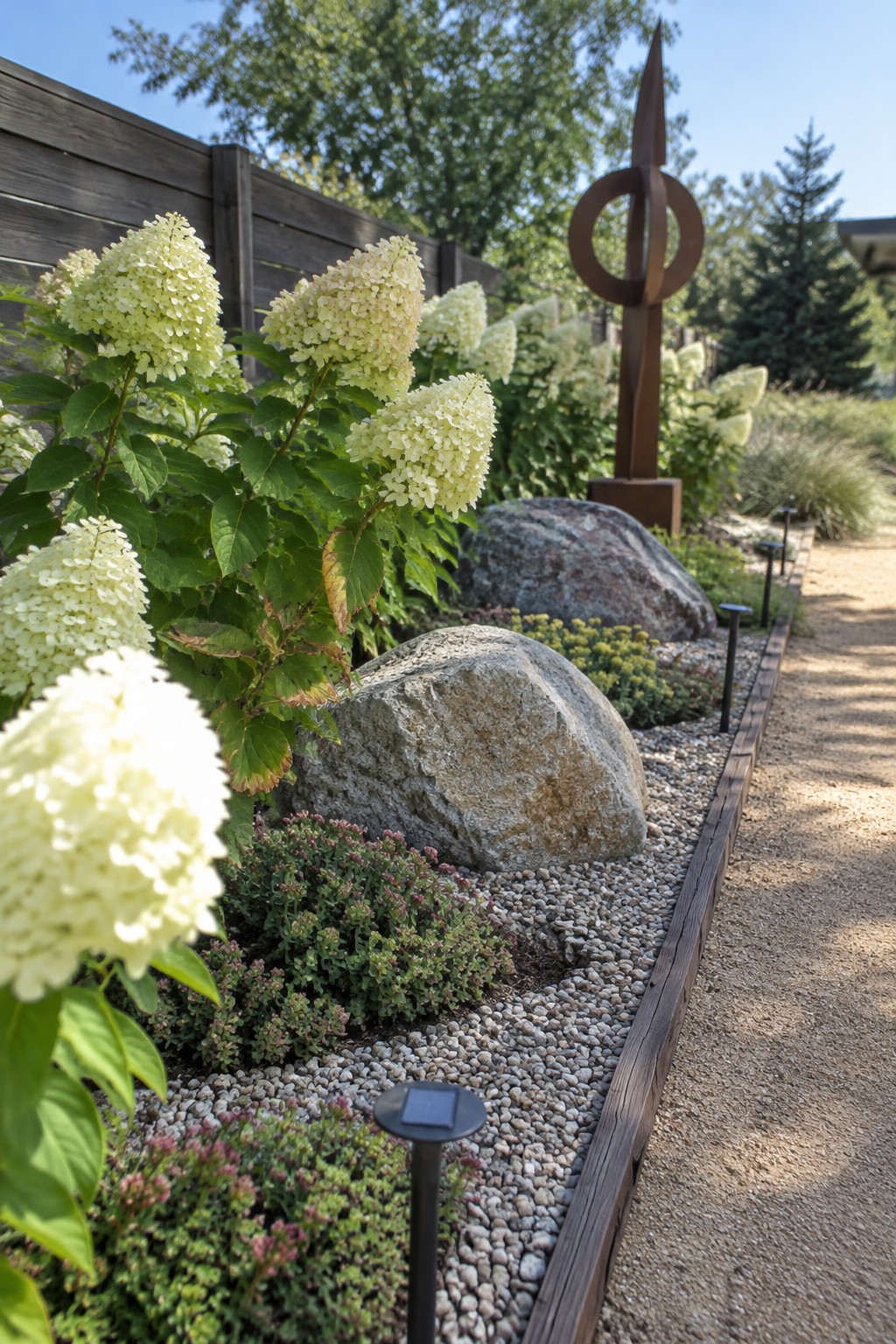
A narrow band of pale gravel gives a hydrangea border a clear edge and keeps the planting distinct from the path. The stones also let large shrubs feel part of a planned garden rather than a row of plants along a fence.
Use a simple edging strip where a path runs beside the border, and leave enough room for hydrangeas to spread without spilling across it. Gravel is practical in a sunny or well-drained spot, but it may need occasional topping up as stones shift.
Use a Brick Edge to Define the Hydrangea Border
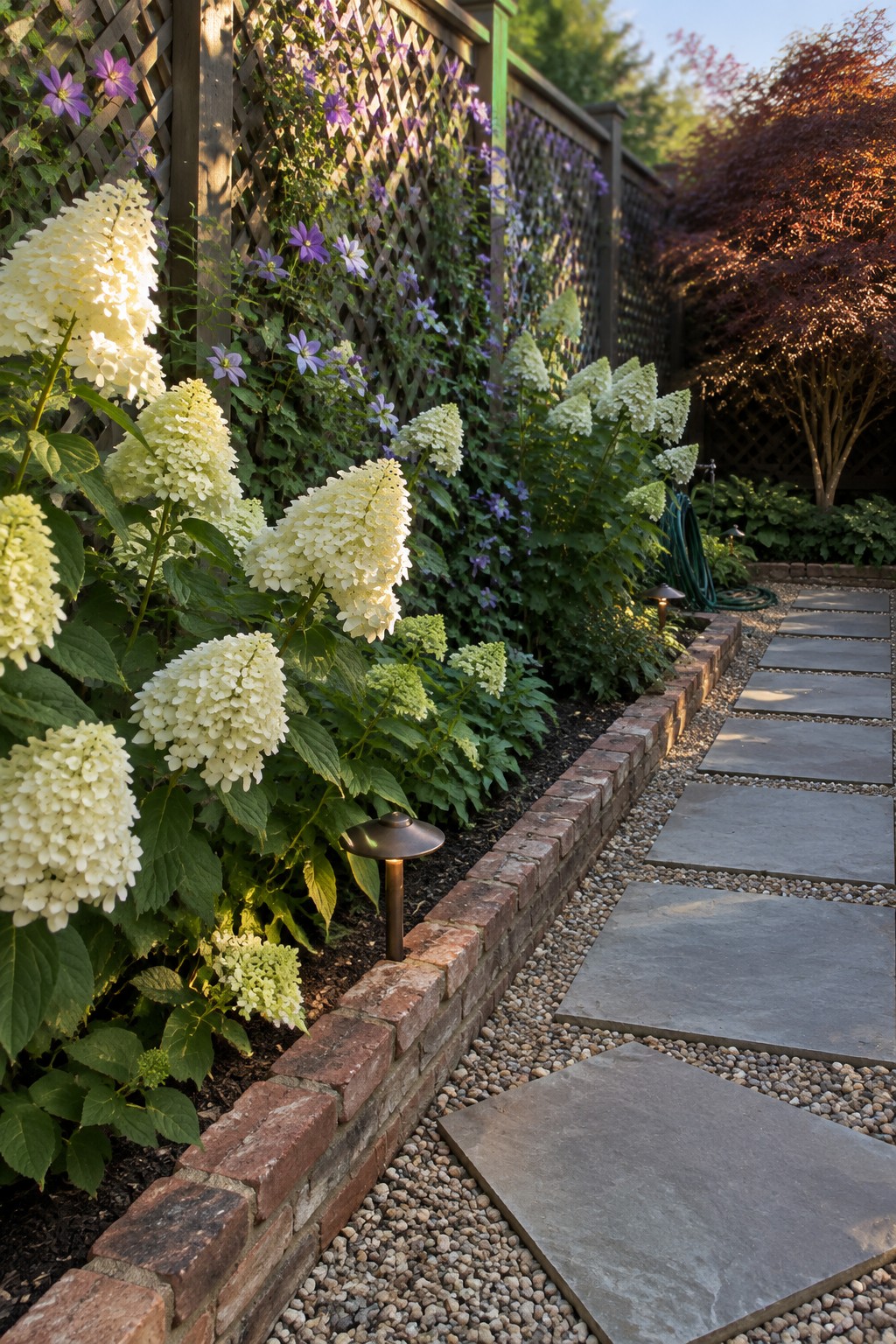
A low brick edge gives a hydrangea border a clear shape and keeps the planting bed separate from the path. It also works well beside a fence, where the flowers can fill the space without spreading into the walkway.
Use the edging to follow the line of the bed, and leave enough room for mature hydrangeas to grow. A gravel path with large stepping stones is a practical choice here, but keep the stones level and easy to walk on.
Use a Narrow Path Beside the Flower Border
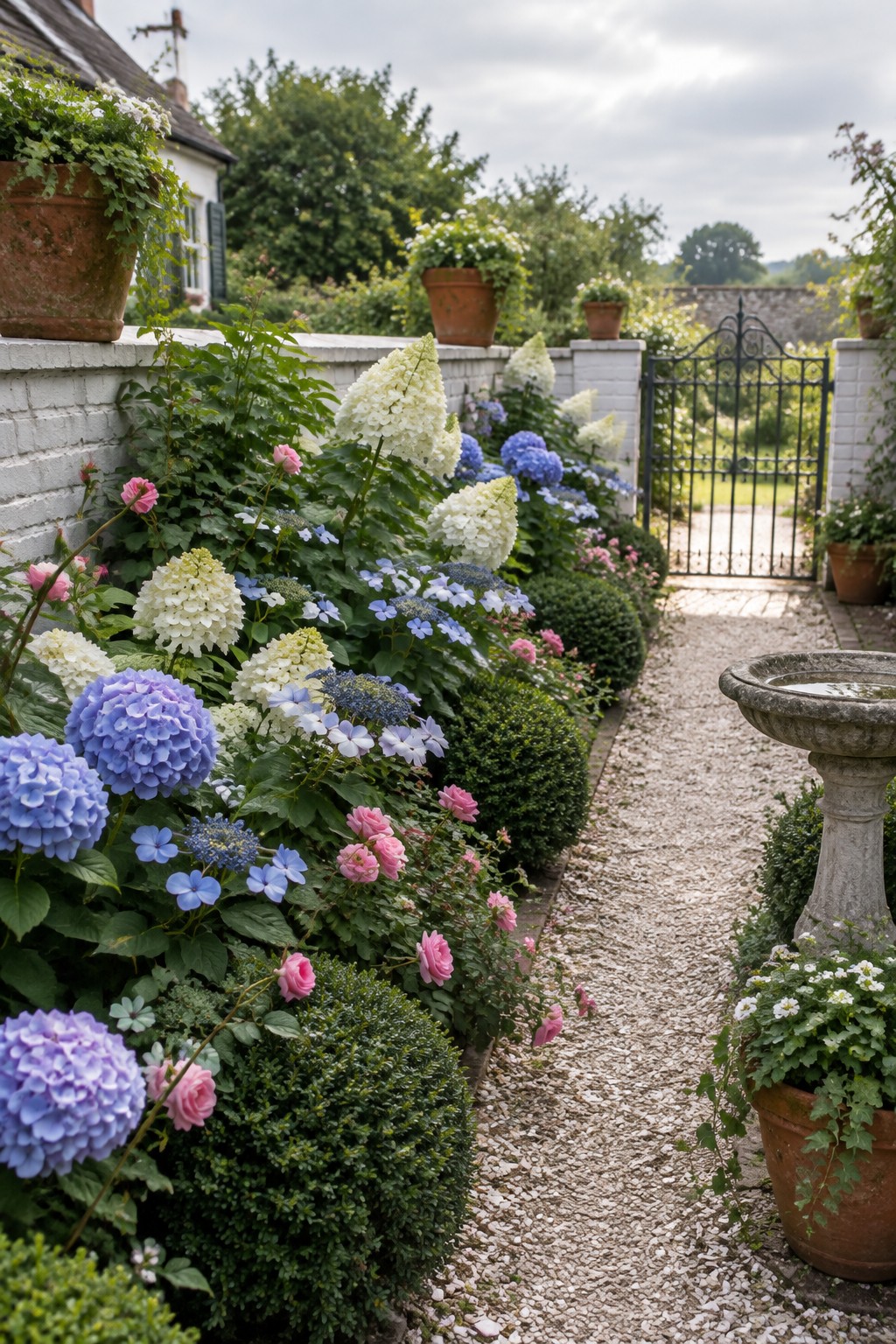
A narrow path running beside a full flower border makes it easier to enjoy the planting without cutting through it. Here, the pale gravel path sits close to hydrangeas and other flowers, giving the garden a clear route while leaving plenty of room for planting.
This approach works well along a fence or property line where space is limited. Keep the path wide enough for comfortable walking, and leave room for hydrangeas to spread so they do not spill across the route.
Add a Stone Path Beside the Hydrangea Border
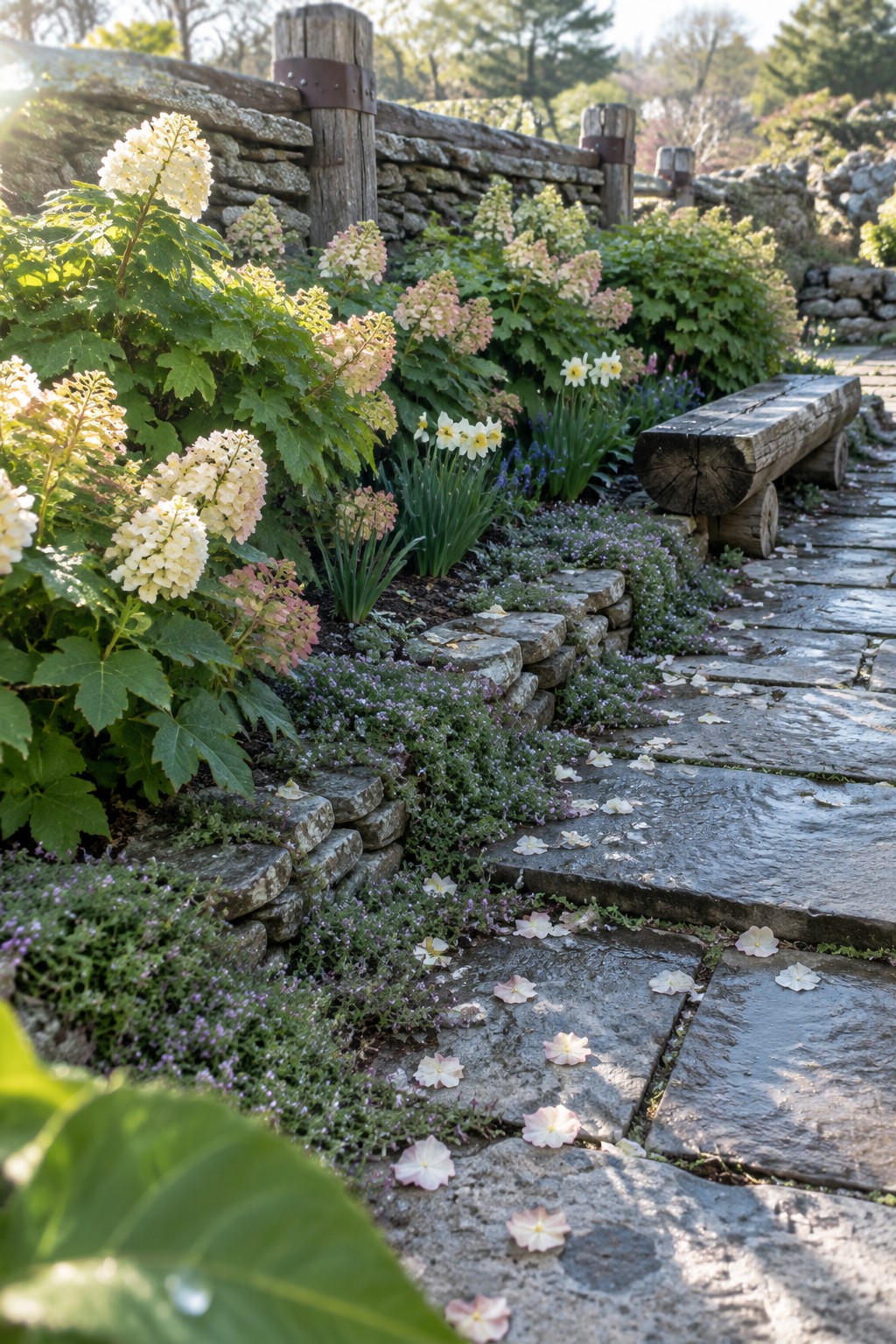
A stone path can make a fence-side hydrangea border easier to enjoy and care for. Here, the flowers grow close to a narrow flagstone walkway, while a low stone edge keeps the planting bed in place.
This approach works well where a fence runs alongside a garden path. Leave enough room for comfortable walking and occasional pruning, and let the plants fill the bed without spilling across the stones.
Add Lighting Along a Hydrangea Border
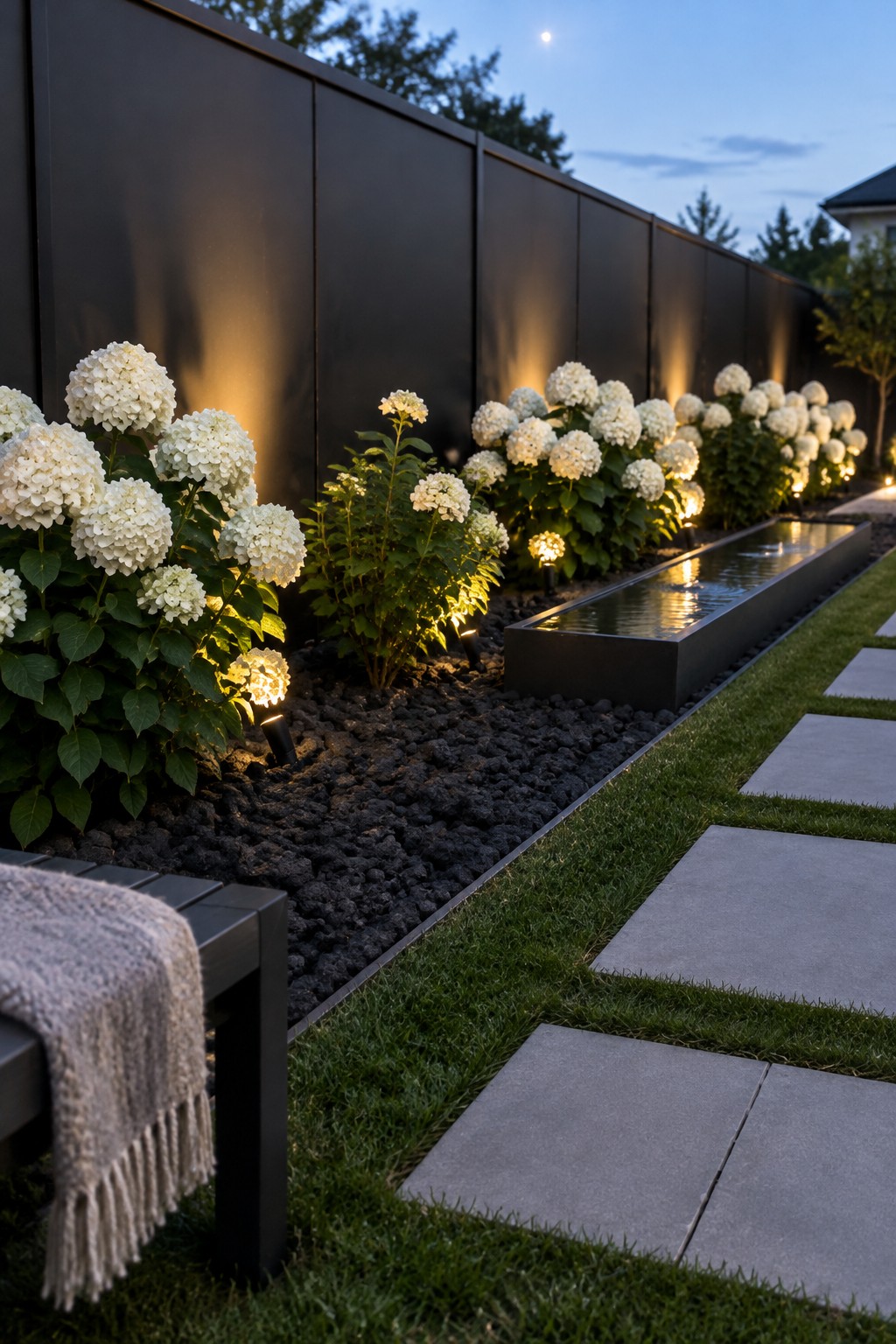
Low garden lights can make a fence-side hydrangea border easier to enjoy after dark while highlighting the shape of the planting. Placing fixtures at intervals along the bed gives the flowers a gentle glow without making the whole yard feel brightly lit.
Aim the lights toward the plants or fence, and keep them low so they do not shine into nearby windows. This approach works well with a dark fence and a long, narrow planting bed, like the one shown here.
Add Hydrangeas Along a Garden Wall
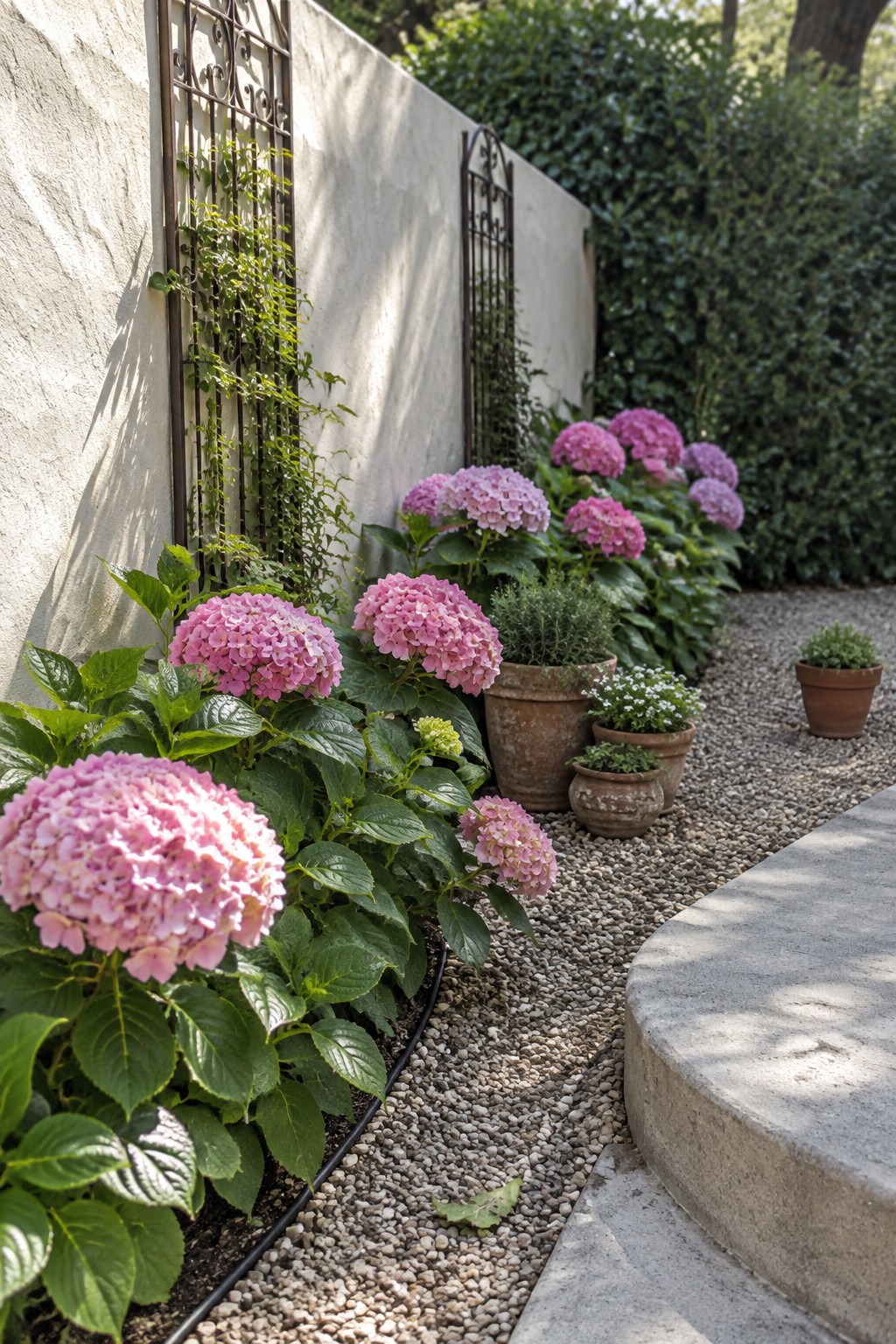
A narrow border can make a plain garden wall feel more settled without taking up much yard space. Hydrangeas planted in a loose row give the edge a steady rhythm, while their leafy growth helps connect the flowers to the wall.
This approach works well along a fence or property line where a wider bed would crowd a path. Leave enough room for each shrub to spread, and check how much sun the spot gets before choosing a hydrangea variety.
Add a Gate to Connect the Border and Path

A small gate can make a hydrangea border feel like part of the route through the garden, rather than a bed that simply runs beside it. Here, the iron gate sits between the flower-filled fence and the stone path, giving the border a clear opening.
This works well where a path meets a side yard or garden entrance. Leave enough room for the gate to swing freely, and keep nearby hydrangeas trimmed back so they do not crowd the walkway.
Add a Gabion Bench to the Hydrangea Border
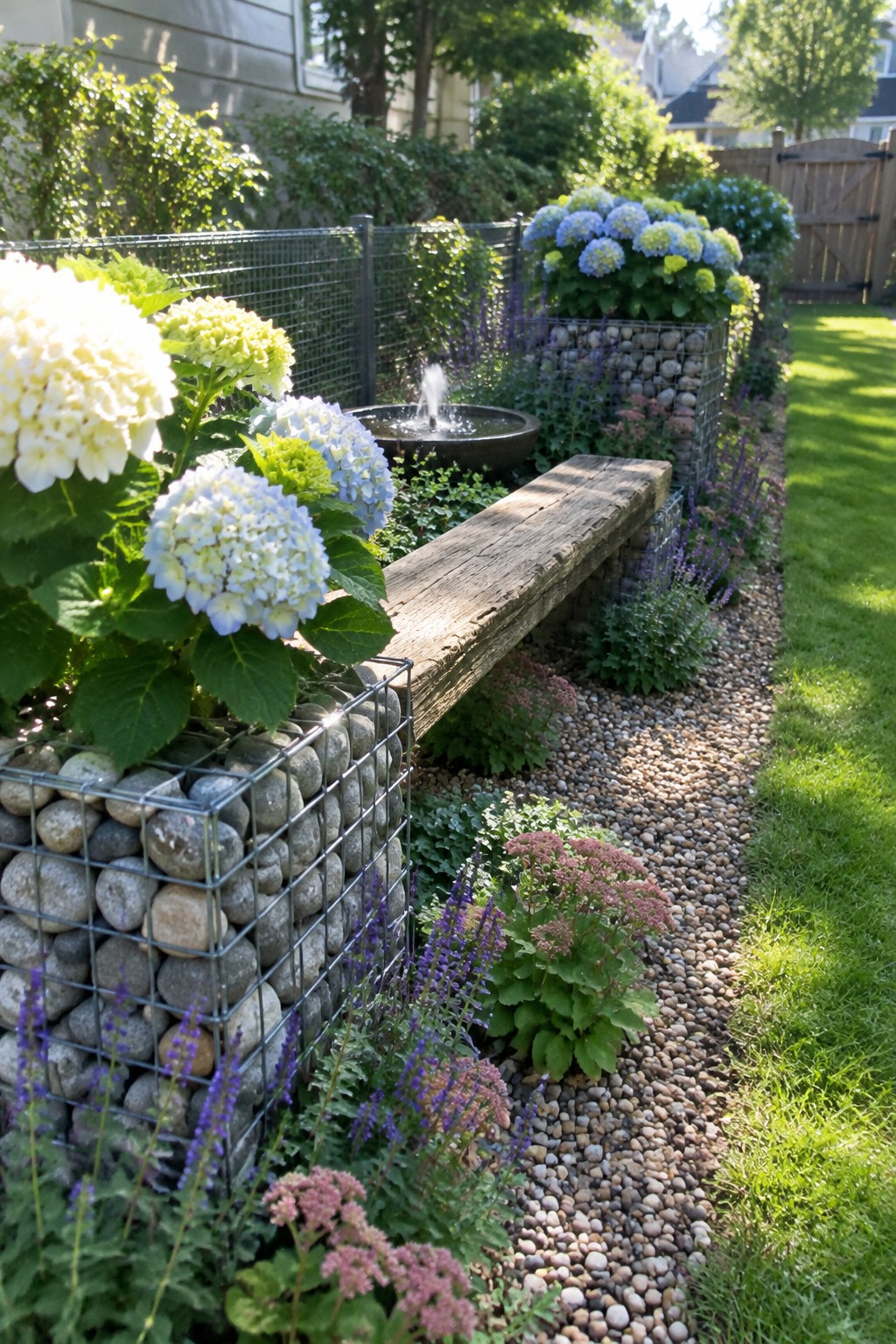
A simple bench built into a stone-filled wire bed gives a hydrangea border a useful place to pause. The long timber seat also makes a narrow garden feel more inviting without taking up much extra room.
This idea works well along a fence or property line, where the planting bed can double as a spot to sit. Leave enough space for the plants to grow, and choose sturdy, weather-resistant wood for the seat.
Let Hydrangeas Grow Along a Wooden Fence
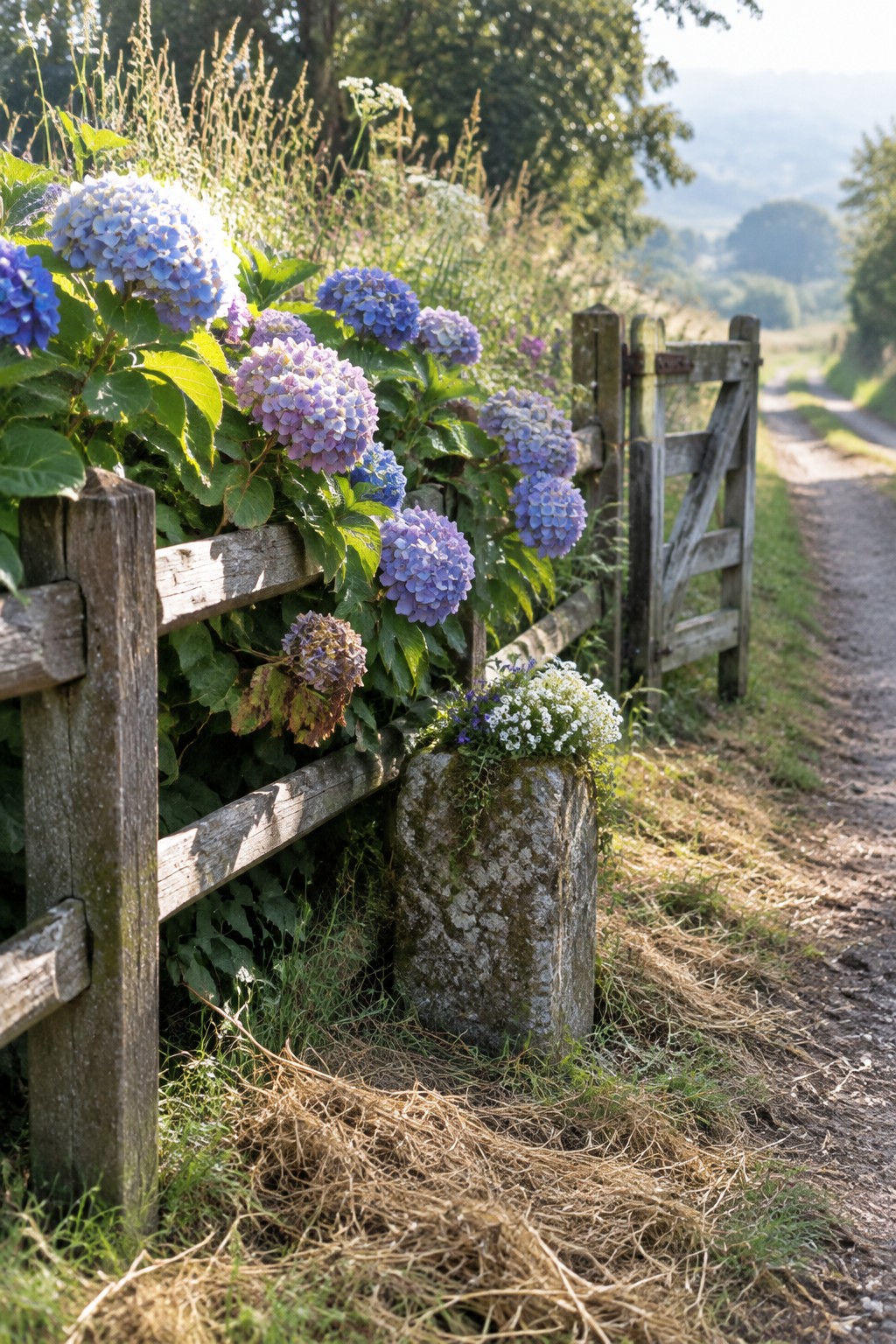
Hydrangeas planted right along a fence make a simple border feel full and established. Their rounded blooms spill forward from the fence line, while the fence gives the planting a clear edge.
This works well beside a garden gate or along a property boundary where you want color without building a separate bed. Leave enough room for the shrubs to mature, and keep the gate and path clear so the border is easy to pass.
Use a Retaining Wall to Raise the Hydrangea Border

A low stone retaining wall makes a narrow fence-side border easier to plant and gives hydrangeas room to fill out without crowding the path. The raised bed also brings the flowers closer to eye level, which is useful in a slim side yard.
This setup works well where the ground slopes or space is tight. Leave enough room for mature plants to spread, and keep the path clear for access and maintenance.
Add Stone Steps Through a Hydrangea Border
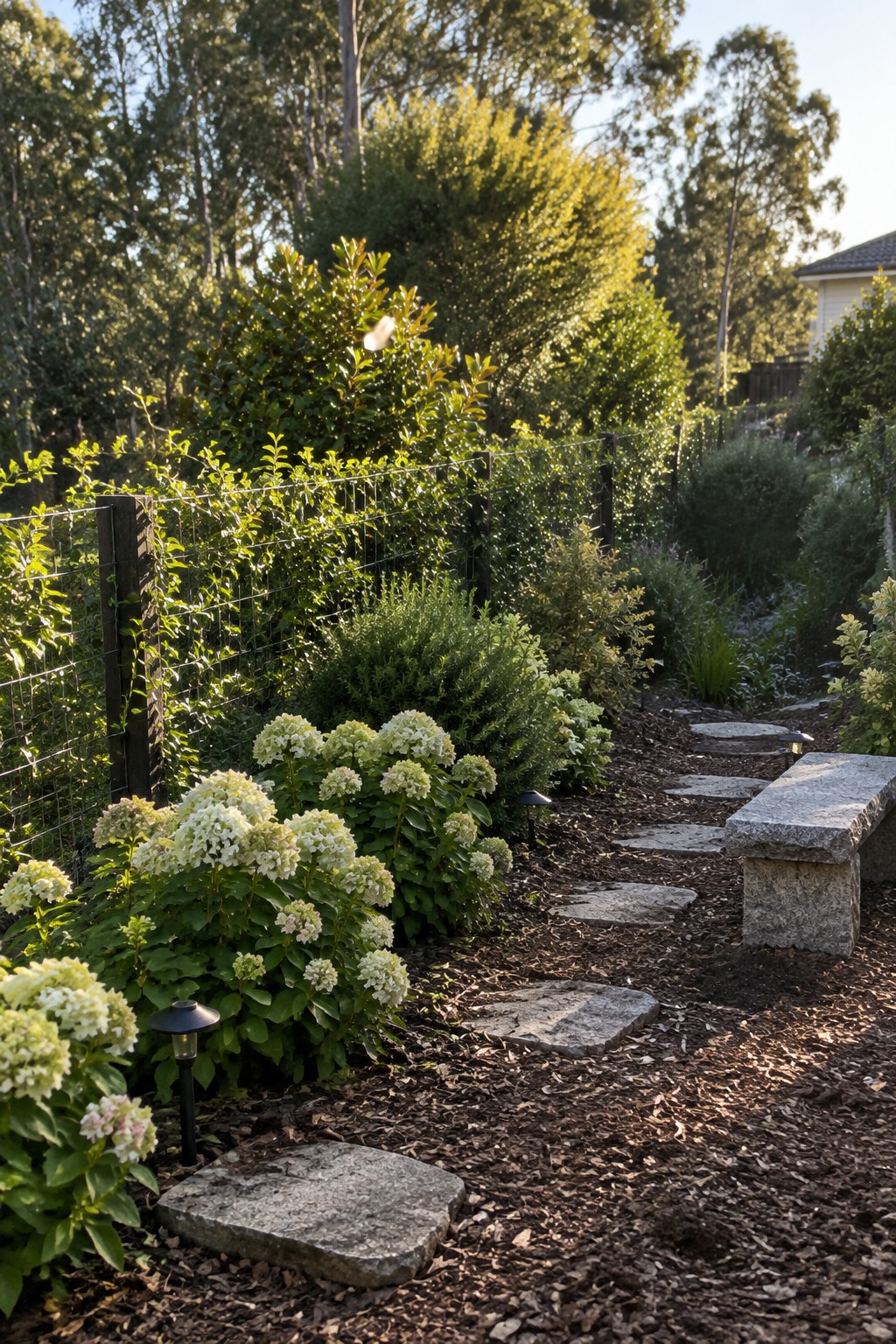
A few widely spaced stone steps make a planted border easier to walk through without turning it into a formal walkway. Here, the loose stepping-stone path leaves plenty of room for hydrangeas to grow along the fence.
This approach works well in a sloped or informal garden where a solid paved path might feel too rigid. Set the stones firmly and leave enough space between them for a comfortable stride.
Frequently Asked Questions
Q: How far from a fence should I plant hydrangeas?
A: Give the shrubs enough room for their mature width, and leave a little space between the foliage and the fence for airflow. Check the plant label before digging, since compact and full-size varieties need different spacing.
Q: Which hydrangeas are easiest to grow along a fence?
A: Panicle hydrangeas are a reliable choice if the border gets sun for part of the day and you want a sturdy, upright shrub. For a shadier fence, try a bigleaf or smooth hydrangea, and check that the variety suits your local climate.
Q: Can I plant hydrangeas right on a property line?
A: It’s better to keep them on your side with enough room to grow without spilling into a neighbor’s yard. Before planting, check local rules and talk with your neighbor if the border is shared.
Q: How do I keep fence-line hydrangeas from drying out?
A: Water deeply when the soil starts to dry, especially during the first growing season and in hot weather. A layer of mulch helps hold moisture, but keep it a few inches away from the stems.
