

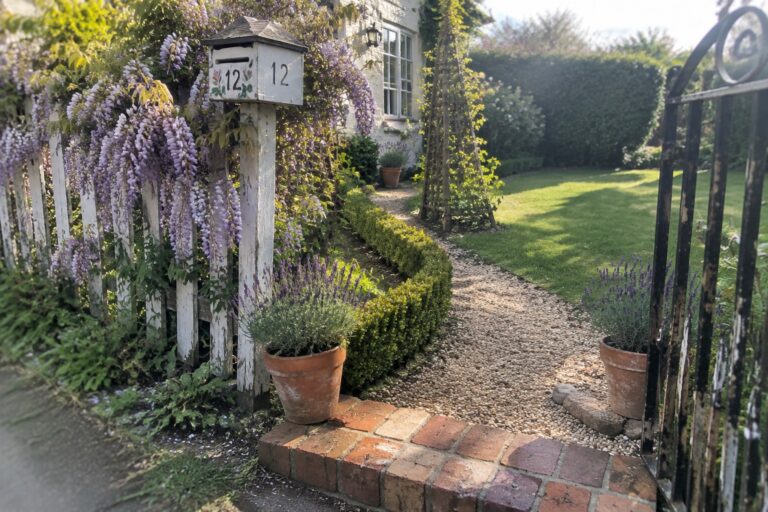
A wisteria-covered fence can soften a yard’s boundaries, but the effect depends on how the vine fits the layout and what sits around it.
I find that the best displays leave enough room for the long, hanging blooms without letting the growth crowd paths, gates, or nearby plants.
A sturdy fence gives wisteria the support it needs, while a clear planting plan helps keep its vigorous growth manageable over time.
The ideas here show different ways to pair cascading flowers with paths, borders, and other garden features.
I’d be most inclined to adapt the designs that make the fence feel like part of the garden rather than a wall covered in vines.
Let Wisteria Grow Along a Garden Fence
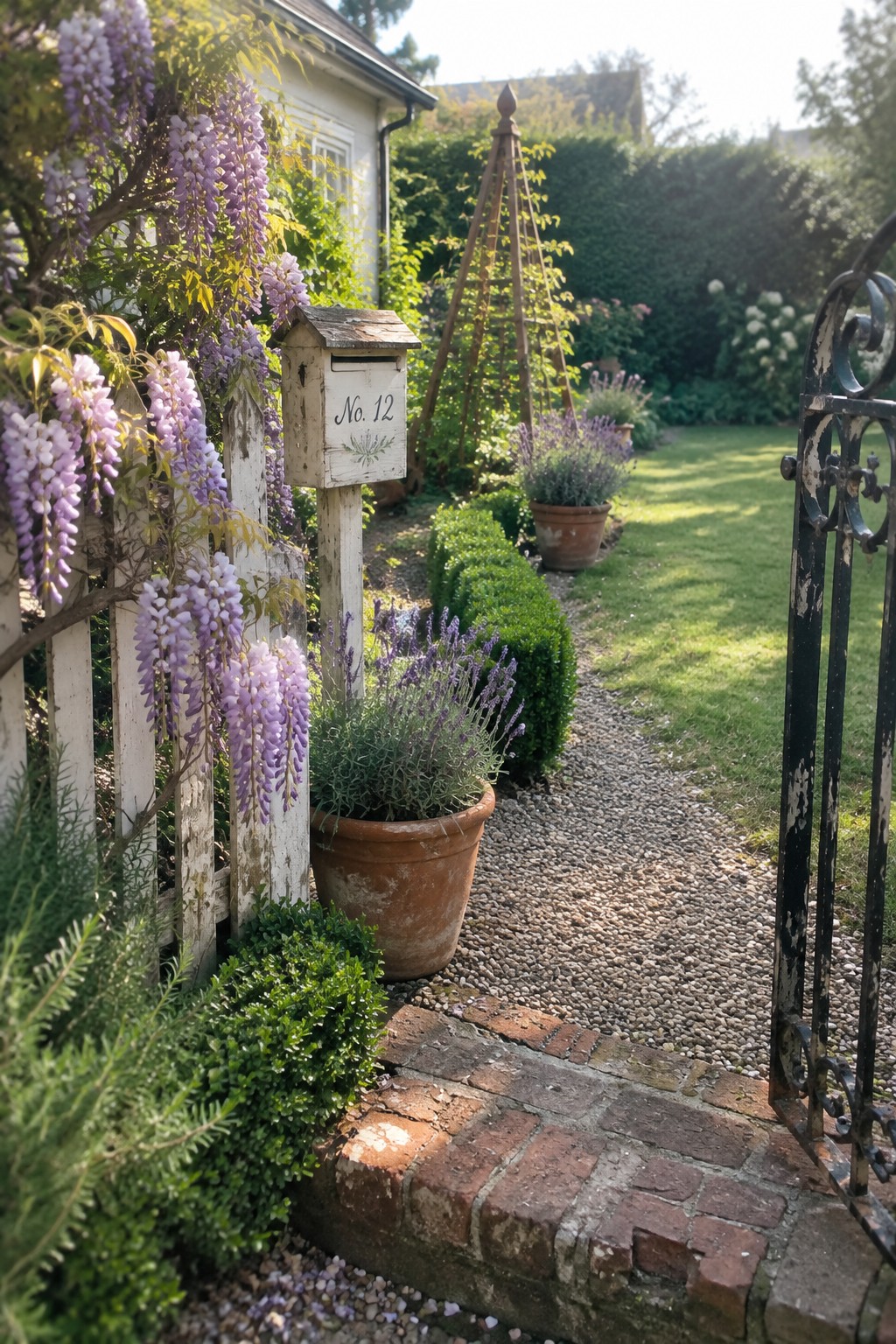
Wisteria can turn a plain fence into a colorful garden feature. Train the vines along sturdy supports, and their hanging flower clusters bring interest to the edge of a path without taking up much ground space.
This works well beside a cottage-style garden or a narrow walkway. Wisteria grows vigorously, so use a strong fence or trellis and prune it regularly to keep it from spreading into the path.
Let Wisteria Grow Along a Garden Path
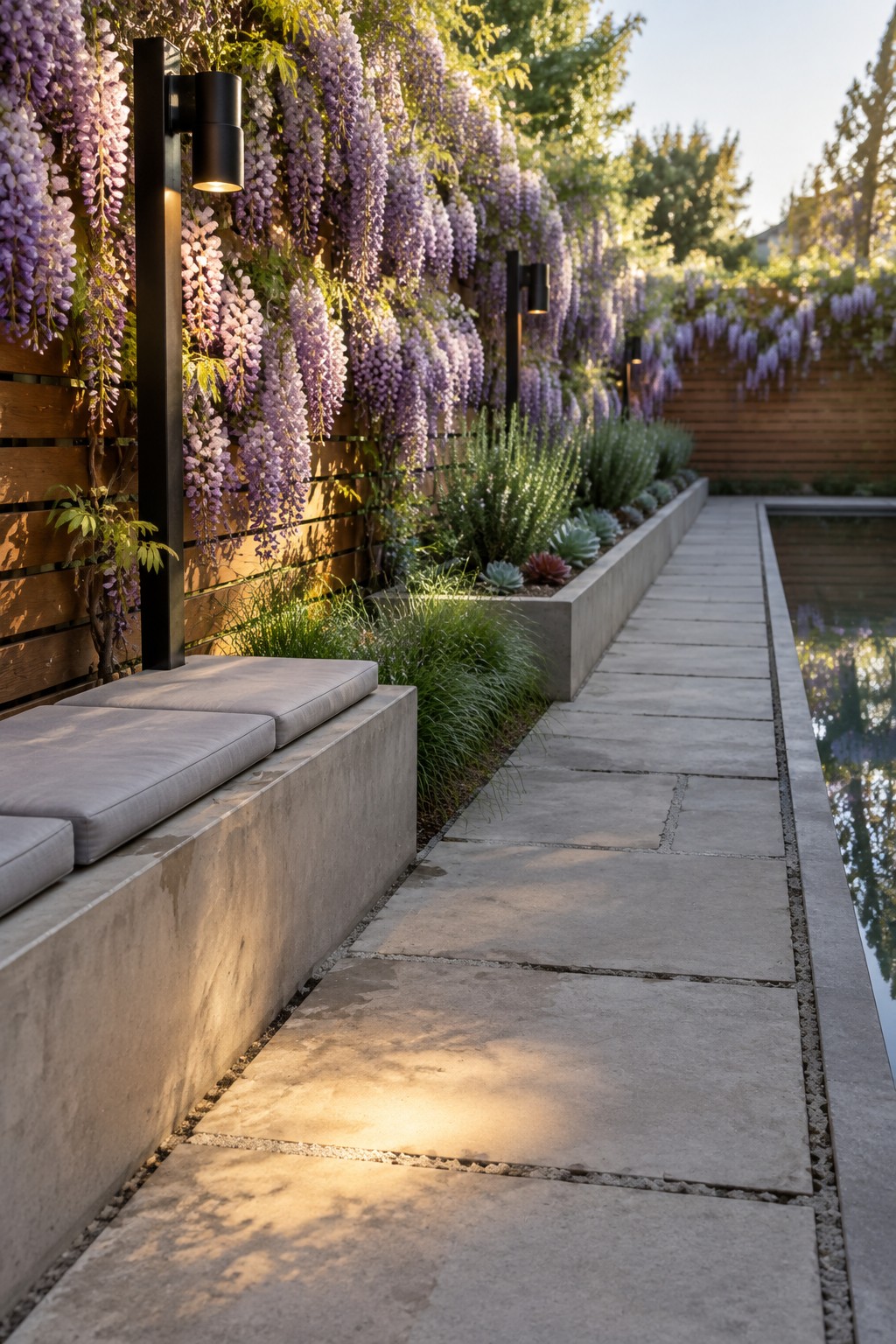
Wisteria can turn a fence into a flowering garden feature, especially when its long clusters hang beside a simple path. The flowers bring color overhead and along the boundary without taking up much room in the walkway.
Use a sturdy fence or trellis, since mature wisteria needs strong support and regular pruning. It works well along a side path or garden edge, but leave enough space for easy walking and keep the vine away from lights and gutters.
Let Wisteria Climb Along a Garden Wall
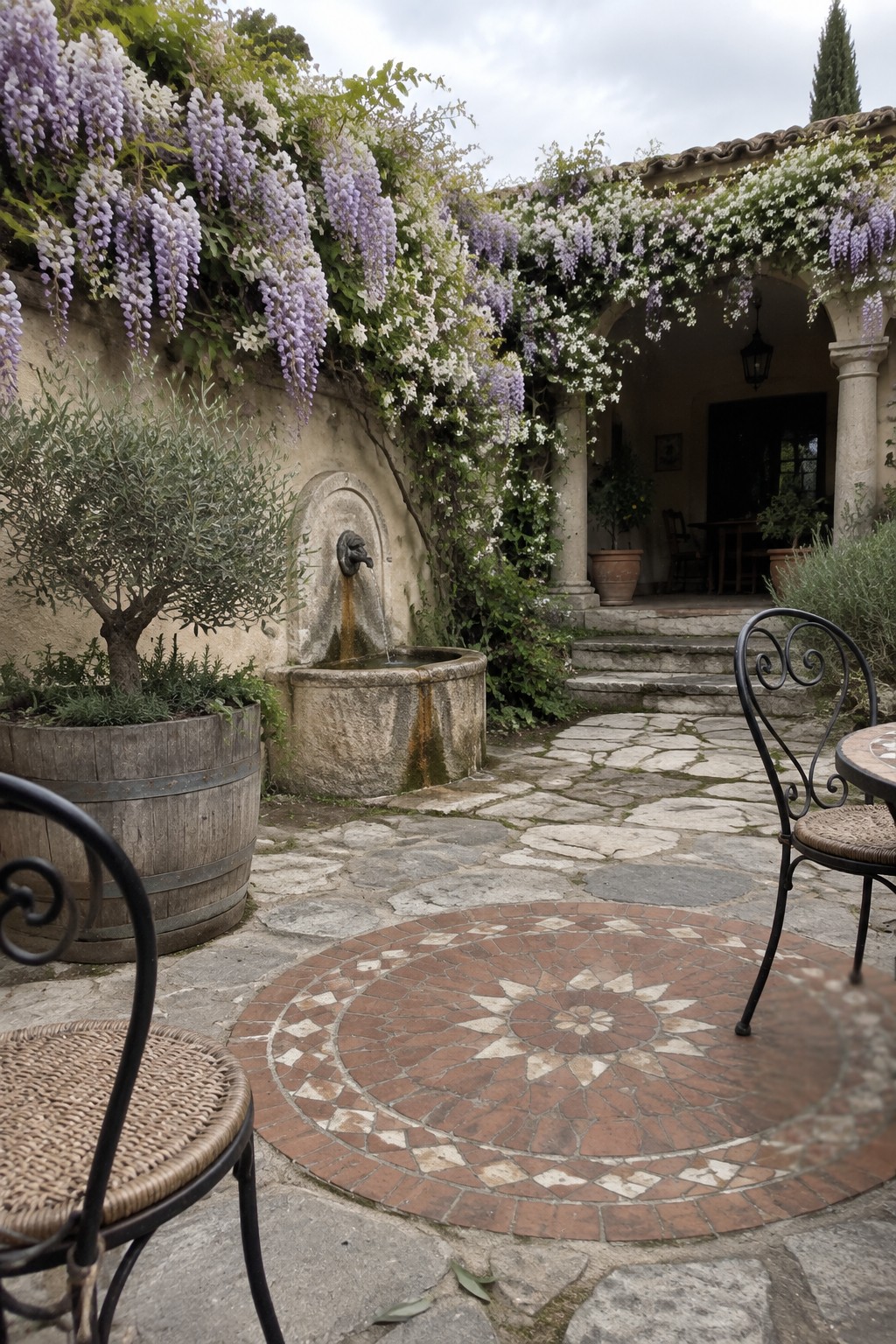
Wisteria can turn a plain garden wall into a soft, leafy backdrop. Letting the vine spread along the top and cascade down creates a generous band of color without taking up much ground space.
This approach works well beside a patio or along a courtyard wall. Give the vine a sturdy support and prune it regularly so it does not crowd paths, doors, or roof tiles.
Train Wisteria Along a Fence Beside a Narrow Walkway
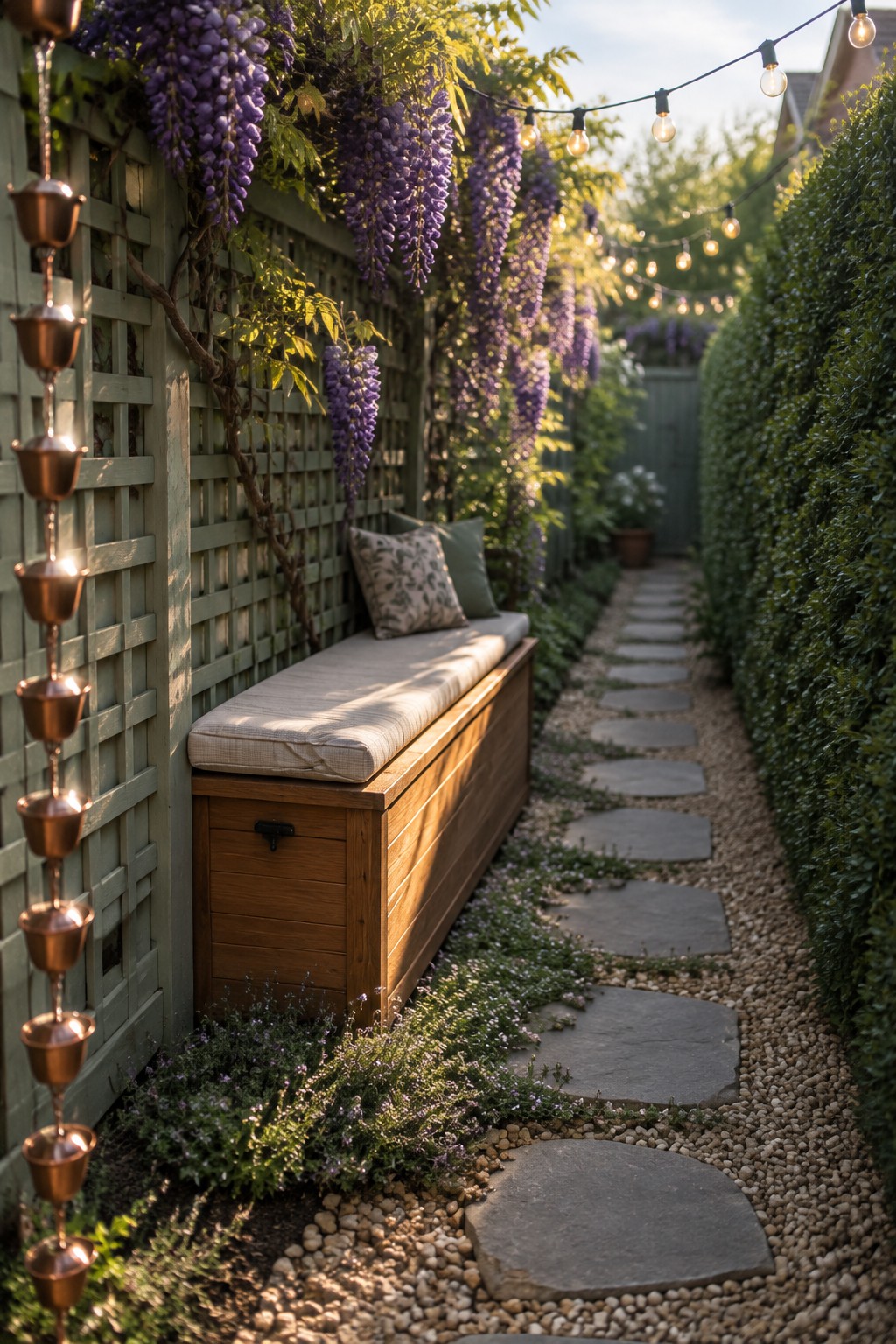
Wisteria trained along a fence can make a narrow path feel like part of the garden rather than a route through it. The hanging blooms bring color overhead while the fence gives the vine a clear place to grow.
This works well beside a side yard or other long, narrow space. Use sturdy supports, leave room to walk beneath the growth, and prune regularly so the vines do not crowd the path.
Use Wisteria to Add Color Along a Rustic Fence

Wisteria can turn a plain garden fence into a colorful planting feature. Its hanging blooms bring a softer look to weathered wood, while the fence gives the vine a clear place to grow.
This idea works well along a garden edge or beside an outdoor seating area. Use a sturdy fence, and keep up with pruning so the wisteria stays in its space and does not crowd nearby plants.
Grow Wisteria Along an Entry Fence
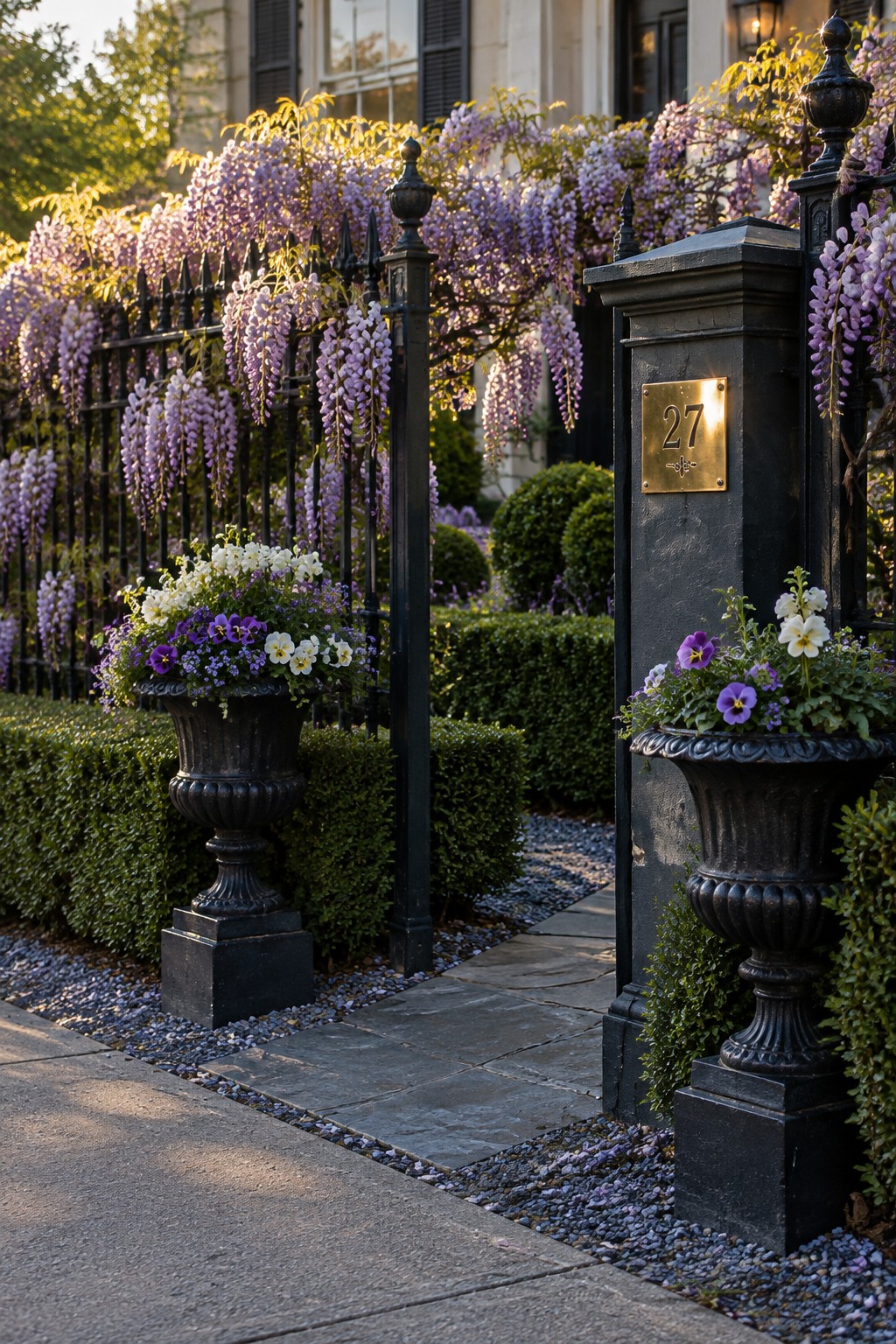
Let wisteria spill over a front garden fence to bring color right to the entrance. Its hanging blooms make a simple fence feel more established, especially when the planting is kept fairly tidy below.
This works well beside a walkway where the flowers can be enjoyed up close. Give the vine a sturdy support and keep it pruned away from gates and paths, since mature wisteria can become heavy and vigorous.
Use Wisteria to Add Privacy to a Patio
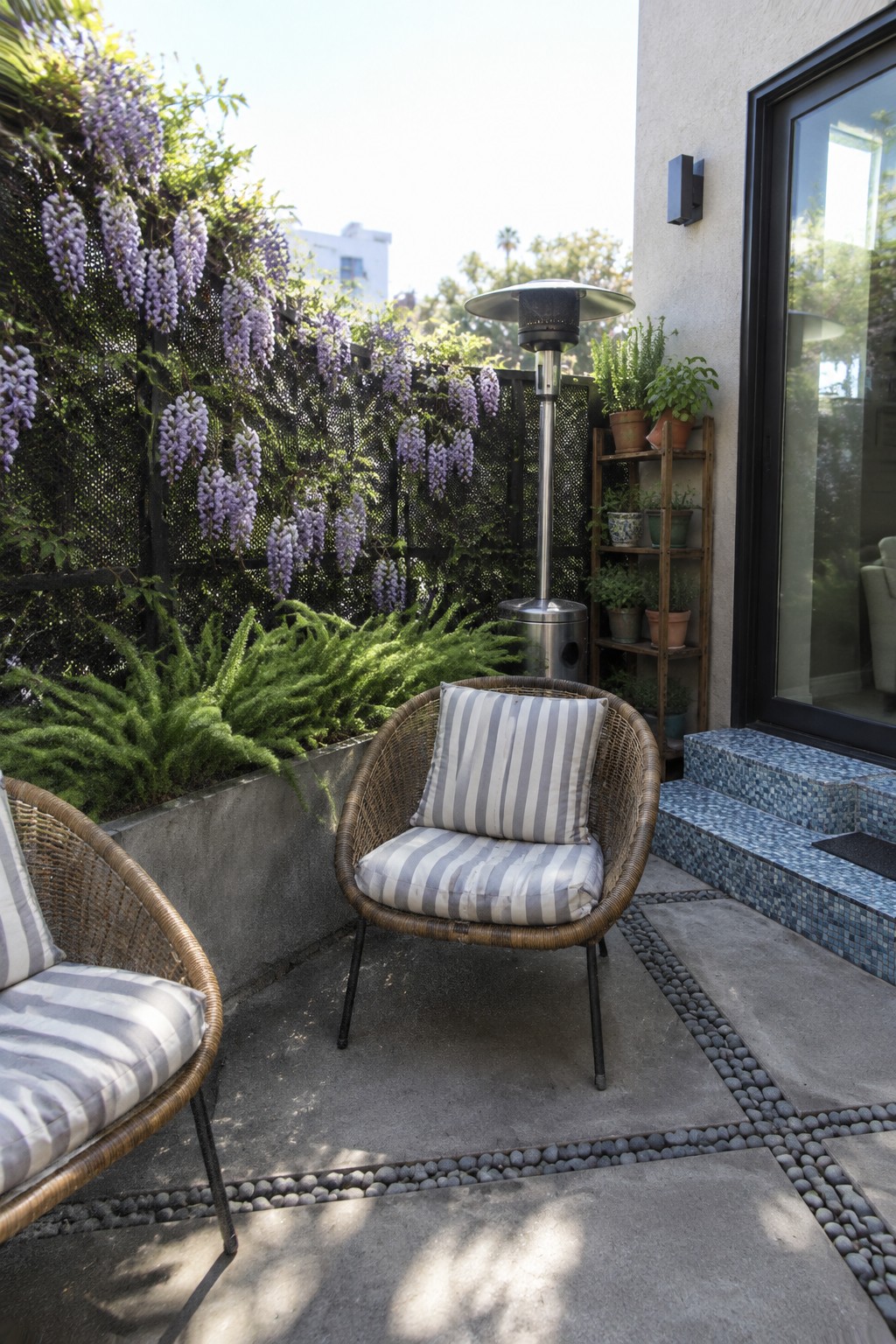
Wisteria growing along a fence can give a patio a leafy backdrop and a little more privacy. The hanging purple blooms bring color close to the seating area without taking up much floor space.
This works well in a small courtyard where a fence sits right beside the chairs. Choose a sturdy support, and keep the vine trimmed so it does not crowd the seating or block doors and walkways.
Train Wisteria Along a Bamboo Fence

Wisteria can turn a plain fence into a garden feature, especially when its flowers hang down in long clusters. A bamboo fence gives the vine a natural-looking backdrop and helps define the edge of a path.
Use sturdy supports to guide the main stems along the fence, and prune regularly to keep growth from becoming too heavy or tangled. This approach works well beside a garden path, where the flowering vine can be enjoyed without taking up much ground space.
Build a Garden Path Beside a Wisteria Fence
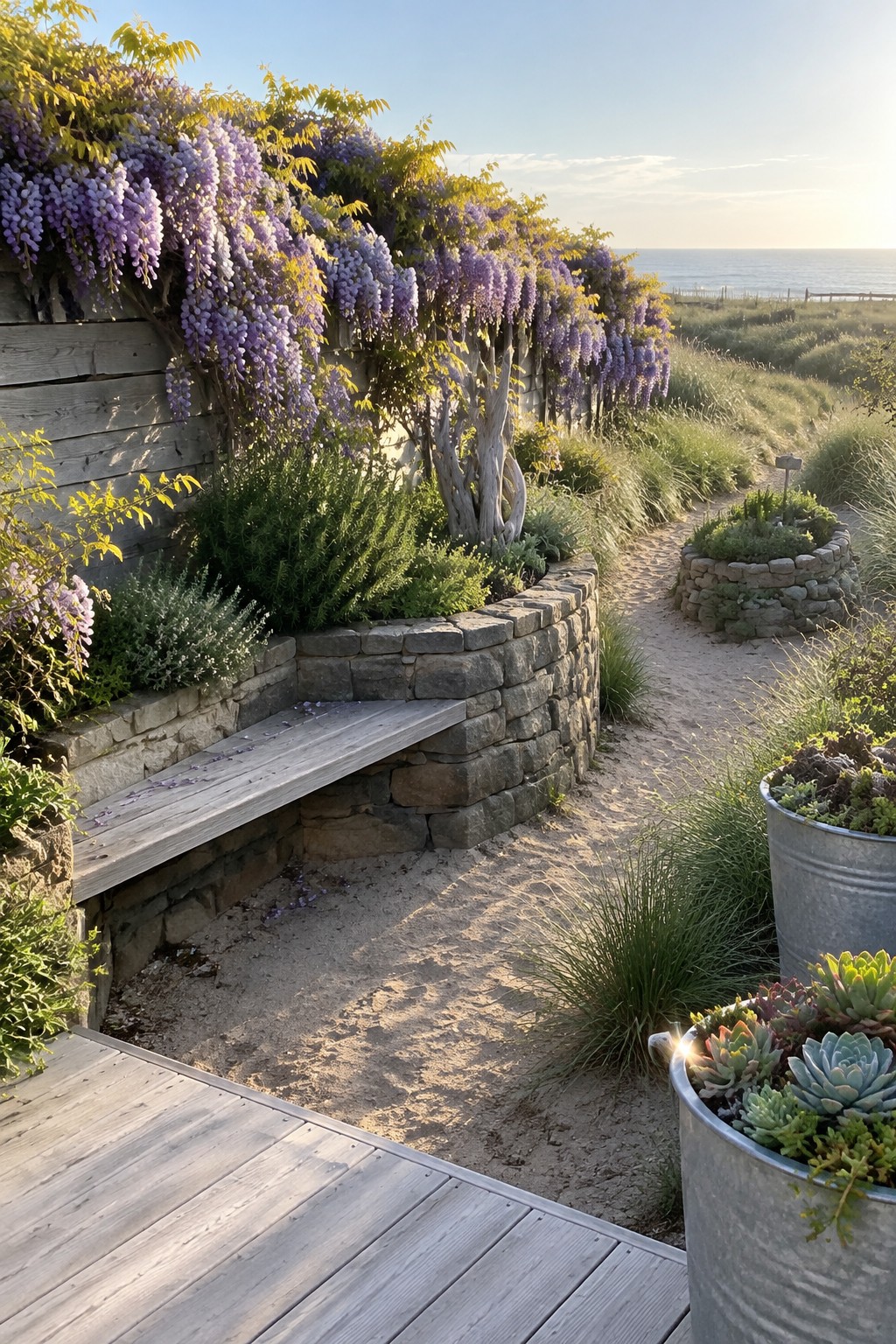
A sandy path running beside a wisteria-covered fence makes the garden feel connected to the coast while keeping the planting area easy to reach. The fence gives the purple flowers a place to cascade, and a low stone edge helps keep nearby plants in place.
This layout suits a narrow side garden or a path leading toward the beach. Keep the walking surface firm and wide enough to pass comfortably, and train wisteria on a sturdy fence since mature vines can become heavy.
Use A Wisteria Pergola To Shade An Outdoor Dining Area
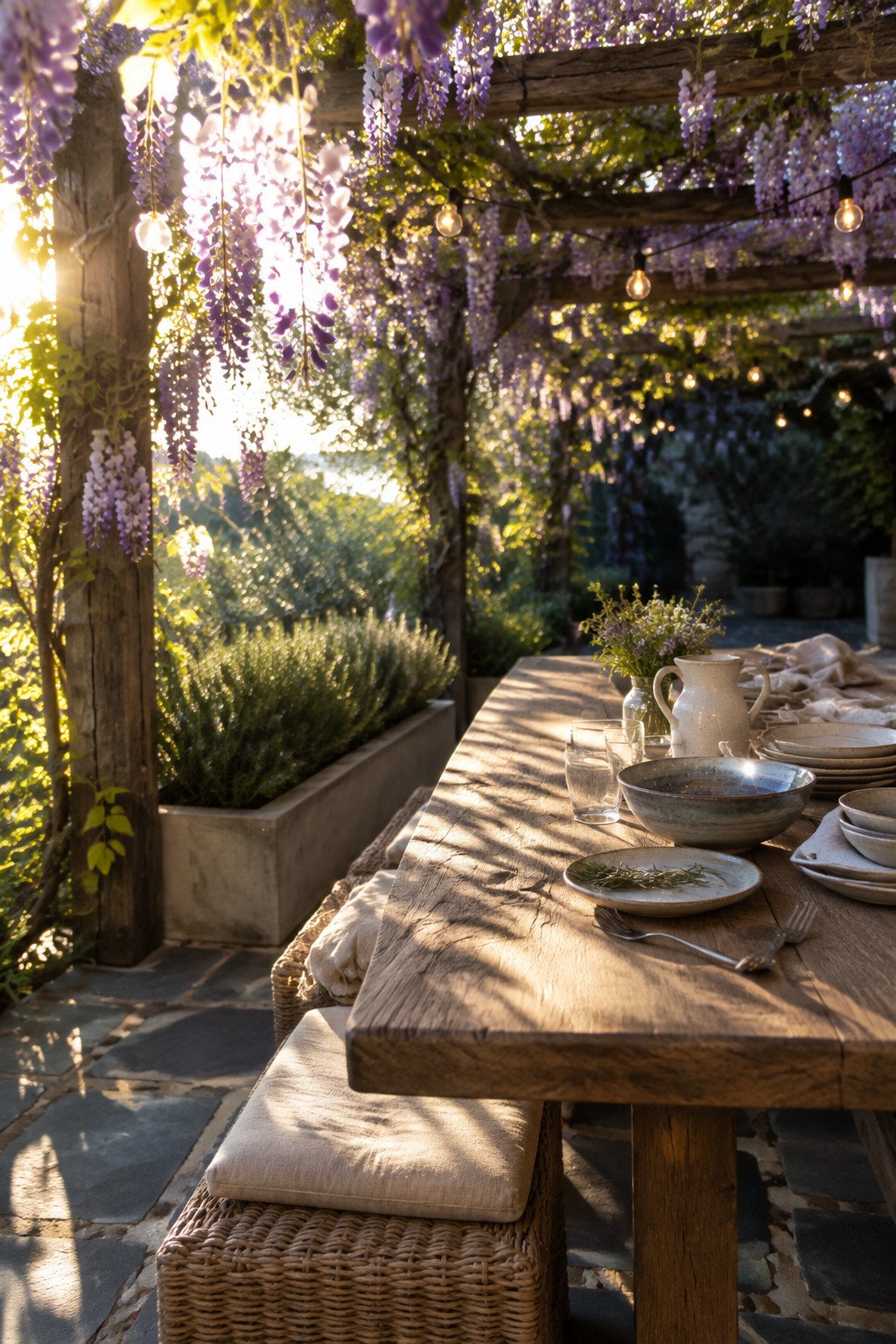
A wisteria-covered pergola can make an outdoor dining spot feel tucked away without enclosing it. The overhead vines bring color and shade, while leaving the sides open to the garden.
This works well over a patio table where you want a little shelter for meals. Use a sturdy structure and keep wisteria pruned so its vigorous growth does not crowd the seating or block the path.
Train Wisteria Along a Brick Boundary
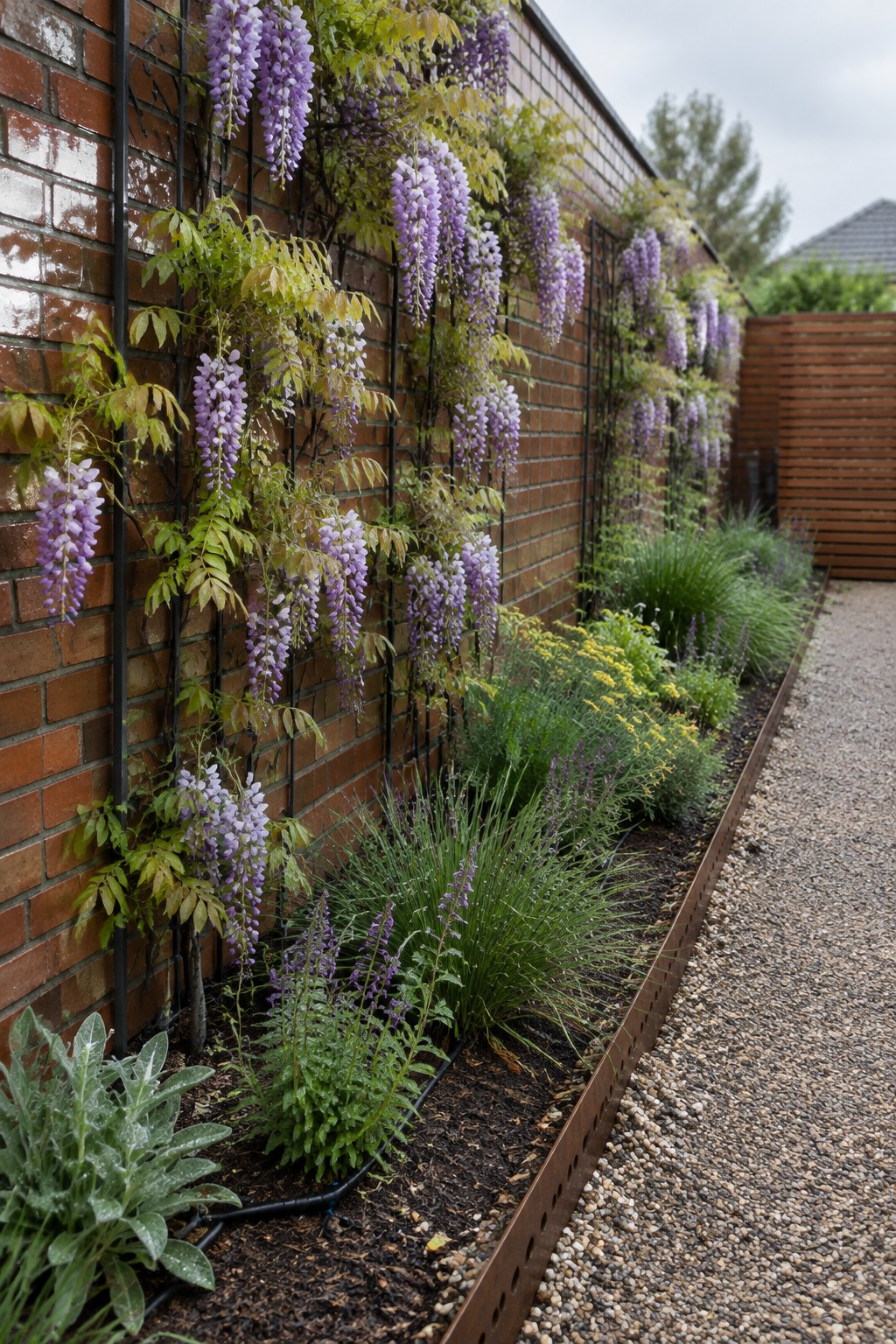
Wisteria can turn a plain boundary wall into a long stretch of color, especially when its stems have a sturdy support to follow. A wall-mounted trellis gives the vine a clear growing path and keeps it from attaching directly to the brick.
This approach suits a narrow garden bed beside a wall or fence. Leave enough room for the vine to spread, prune it regularly, and check that the trellis is firmly fixed as the plant gets heavier.
Combine Raised Beds and Wisteria Fencing Along a Garden Pat
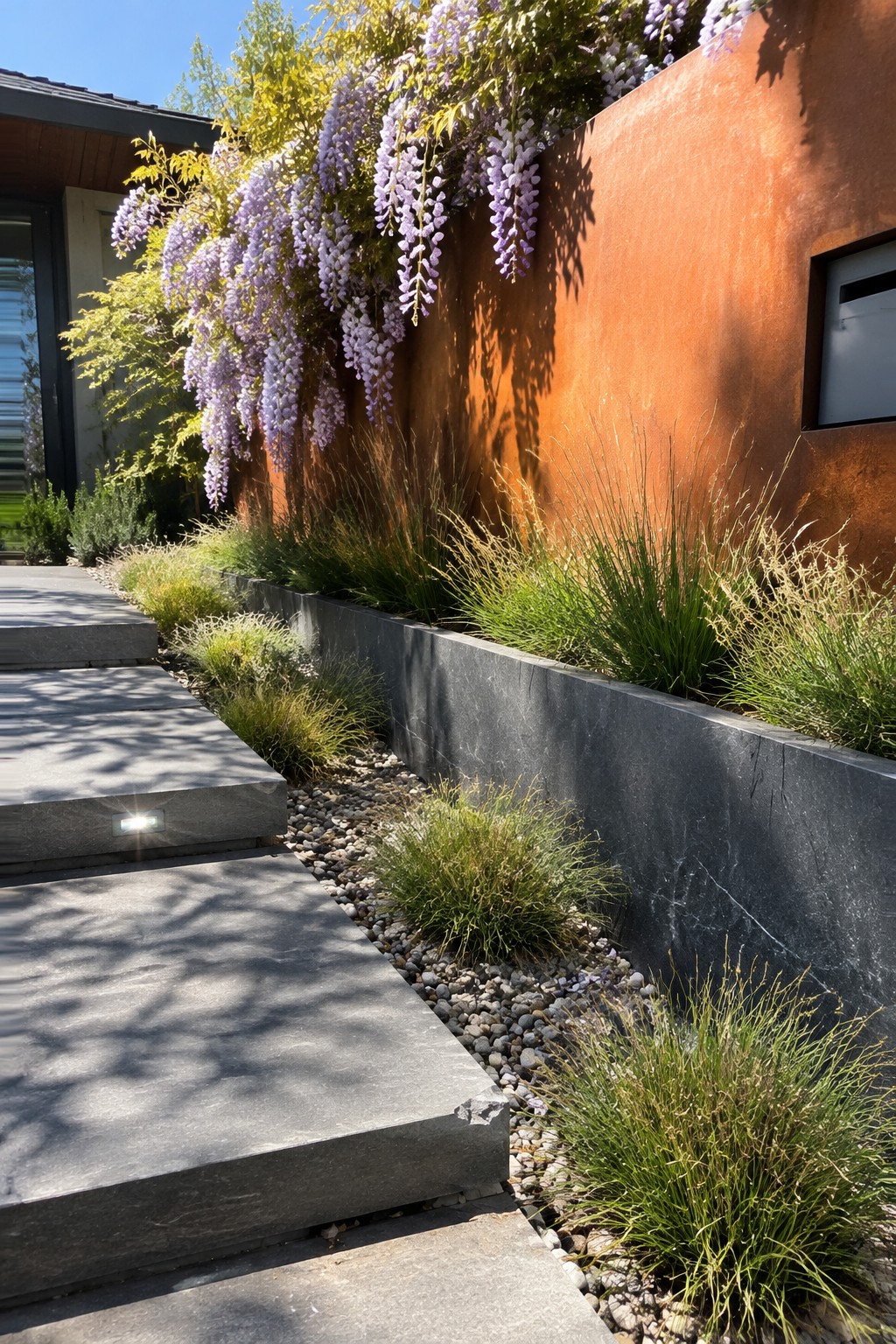
A long raised bed gives wisteria a clear place to grow while keeping the planting area neat beside a path. Here, the dark stone edge sets a tidy boundary, and the cascading purple blooms soften the wall above it.
This approach works well along a side yard or walkway where space is limited. Leave room for the wisteria’s mature growth, and provide a sturdy support rather than expecting the wall itself to hold the heavy vines.
Use a Garden Path to Connect Wisteria Fencing and Raised Beds
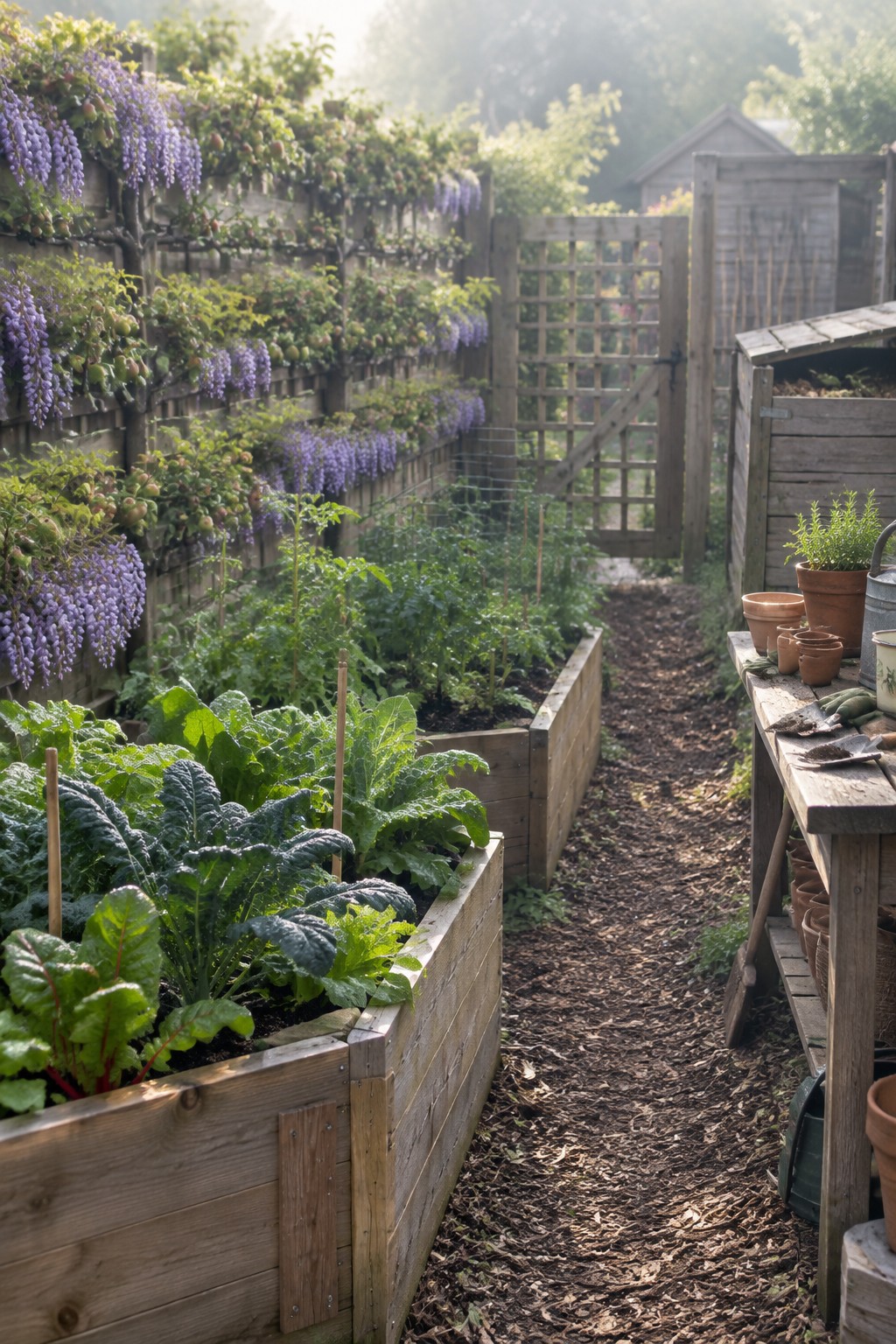
A narrow garden path can make a wisteria fence feel like part of the garden layout, rather than a backdrop. Here, the wood-chip walkway runs beside raised beds while wisteria grows along the fence, giving the planting a clear edge and leaving room to move through the garden.
This approach works well in a long, narrow yard. Keep the path wide enough for everyday access, and leave space for wisteria to spread so it does not crowd the walkway or nearby vegetables.
Use a Wisteria Fence to Add Privacy to a Rooftop Deck

Wisteria trained along a fence can bring color and a little separation to an exposed deck. Here, the vines cover a dark perforated screen, making the boundary feel more garden-like without taking up seating space.
Use a sturdy fence or trellis that can support mature vines, and leave room to prune them back. This approach suits a balcony or rooftop patio where a planted edge is useful, but wisteria needs regular trimming to keep it from crowding the space.
Use a Bench to Make a Wisteria Fence More Useful

A simple bench along a garden fence gives you a place to sit and enjoy the wisteria overhead. The built-in storage underneath is useful in a family garden, where outdoor toys and cushions need somewhere to go.
Keep the bench low enough that it does not interfere with the vine, and train wisteria along a sturdy fence or trellis rather than relying on the bench for support. Prune regularly so the flowers stay visible and the seating area remains comfortable.
Use Wisteria to Add Privacy Along a Pool
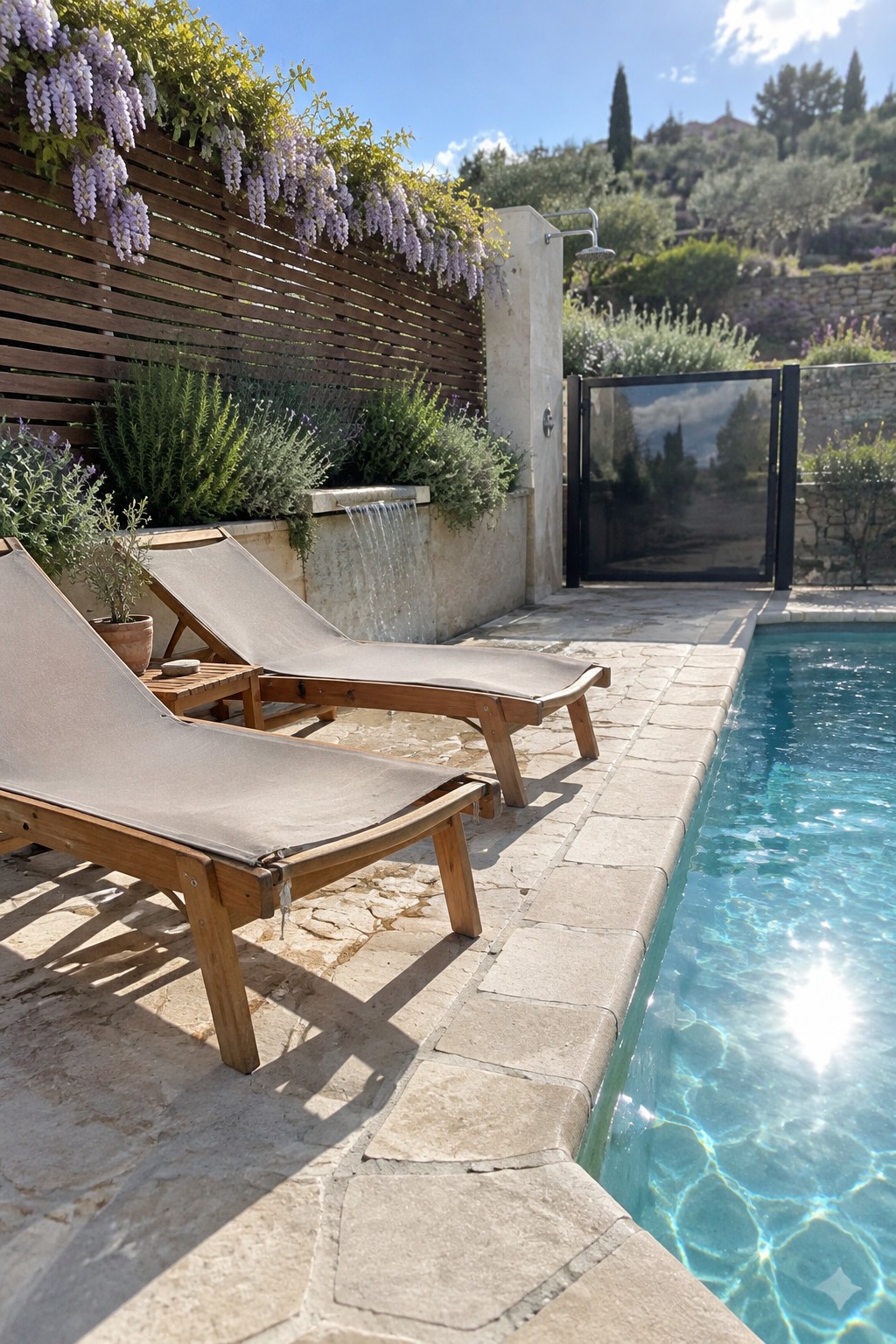
A wisteria-covered fence can make a pool area feel more private without relying on a solid, closed-in barrier. Here, the climbing vine spills over a slatted wooden fence, giving the seating area a softer edge.
This approach works well beside a patio or pool where you want some screening but still want air and light to pass through. Give wisteria a sturdy support and prune it regularly so its vigorous growth does not overwhelm the fence.
Train Wisteria Over a Garden Gate

Wisteria can make a simple garden entrance feel more established. Letting the vines trail over a wooden gate gives the entry a clear focal point, while the flowers bring color without needing a large planting bed.
Use a sturdy gate and support the vine on a strong frame or trellis, since mature wisteria can become heavy. This works especially well at a cottage-style garden entrance; keep the growth trimmed so it does not block the gate or crowd the path.
Add Garden Lighting Along a Wisteria Fence
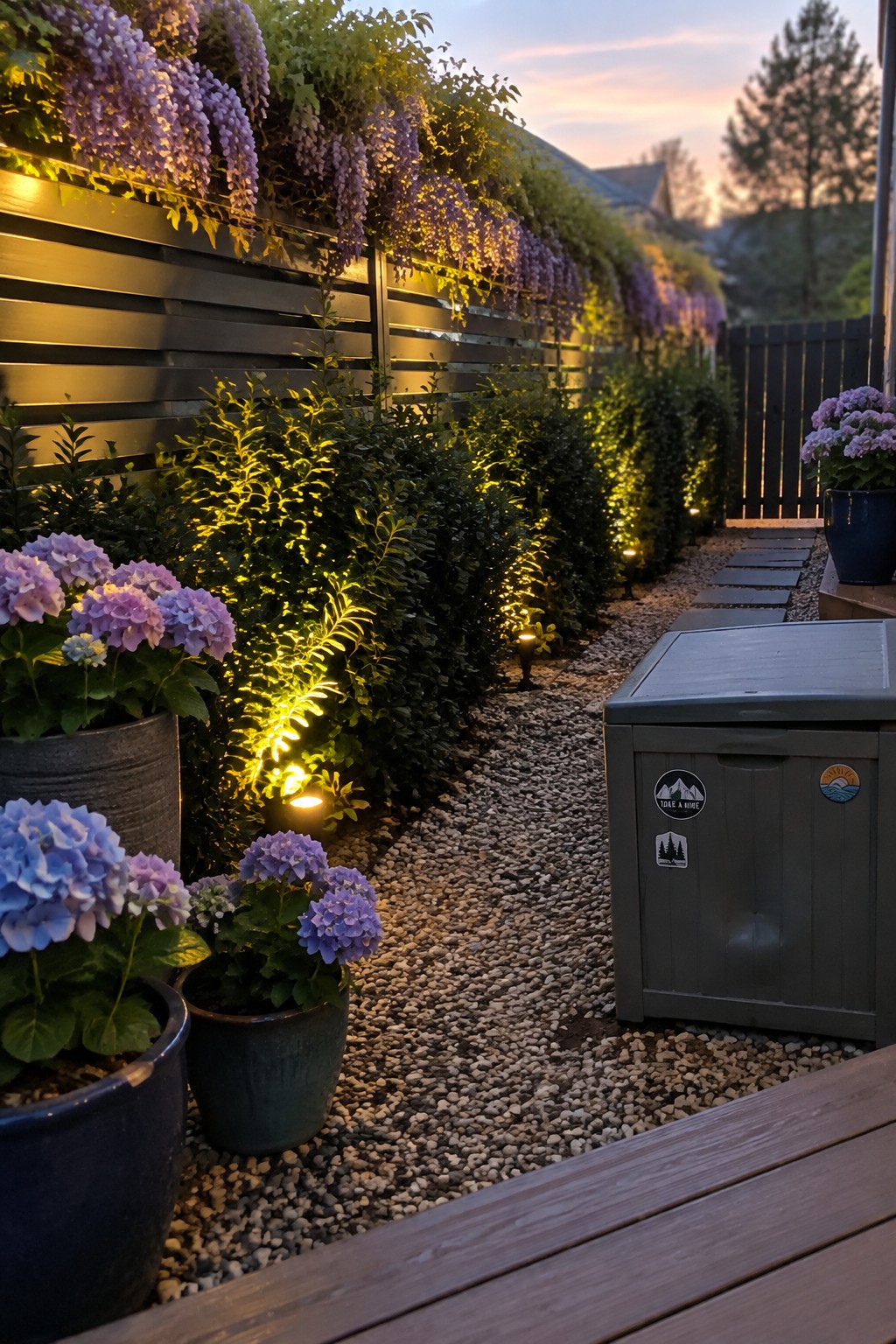
Small garden lights can make a fence planting useful after dark while keeping the flowers as the main feature. Here, warm lights tucked among the shrubs pick out the lower edge of the fence and help the garden path stay visible.
Use low-voltage fixtures along the planting bed, spacing them so the light falls on leaves and the path rather than shining into nearby windows. This approach works well in narrow side gardens, where there may not be room for larger outdoor fixtures.
Create a Garden Seating Nook Beneath Cascading Wisteria
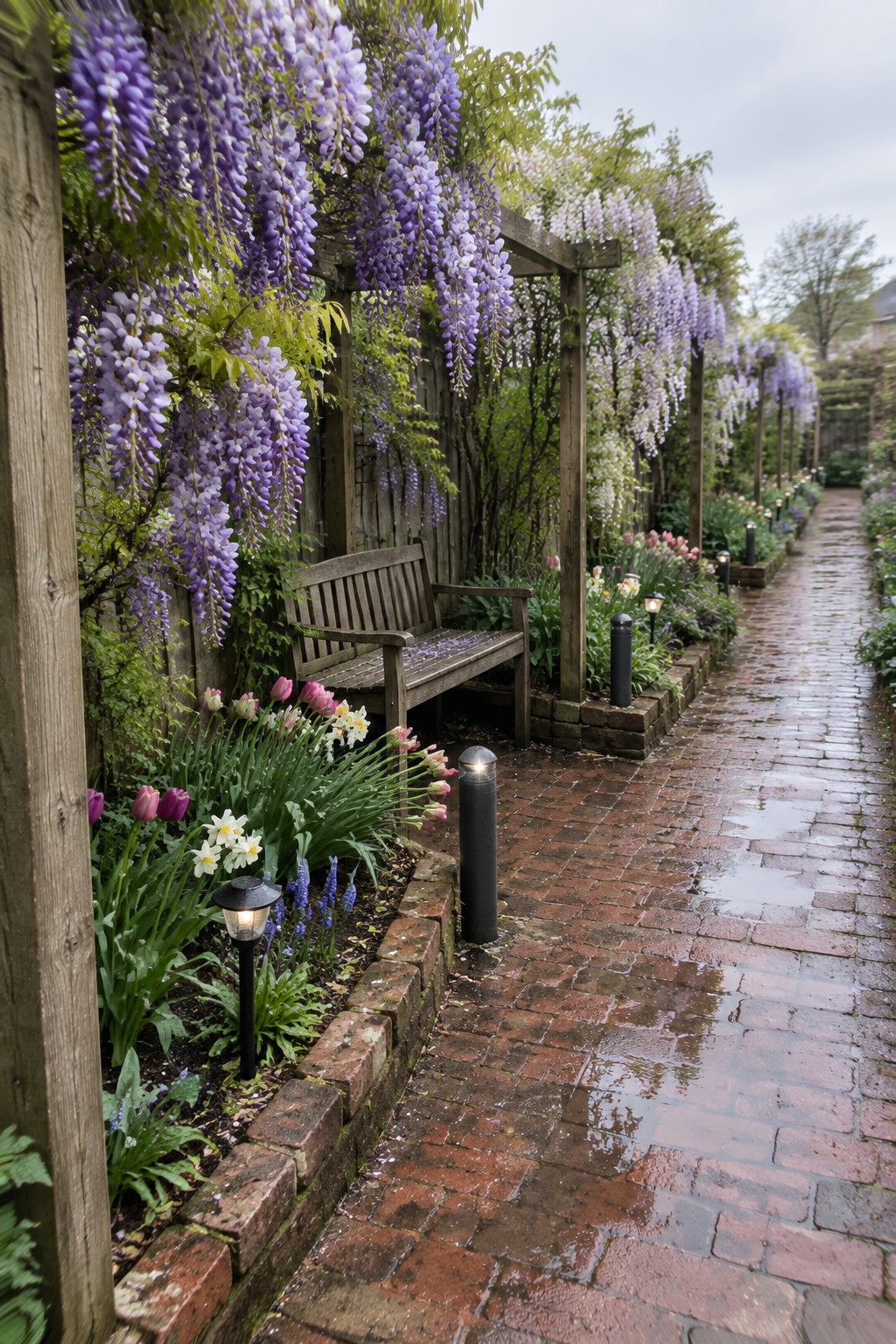
A simple bench makes a wisteria fence more than a garden boundary. The cascading flowers provide a leafy backdrop, while the seat gives you a place to pause and enjoy the garden.
Set the bench beside a path where it won’t narrow the walking space, and leave room for the vines to grow without covering the seat. This works especially well in a long, narrow garden where a small resting spot can make the path feel more useful.
Use a Wisteria Trellis to Define an Outdoor Dining Area

A sturdy overhead trellis can make an outdoor dining spot feel like its own part of the garden. Train wisteria along the beams and let the flowering vines spill down near the edges. The wooden structure in this space gives the dining area a clear boundary without closing it off.
This idea works well on a patio where you want some shade and a bit of separation from the rest of the yard. Use strong supports, since mature wisteria gets heavy, and prune it regularly so it does not crowd the seating area.
Layer Wisteria Along a Garden Path
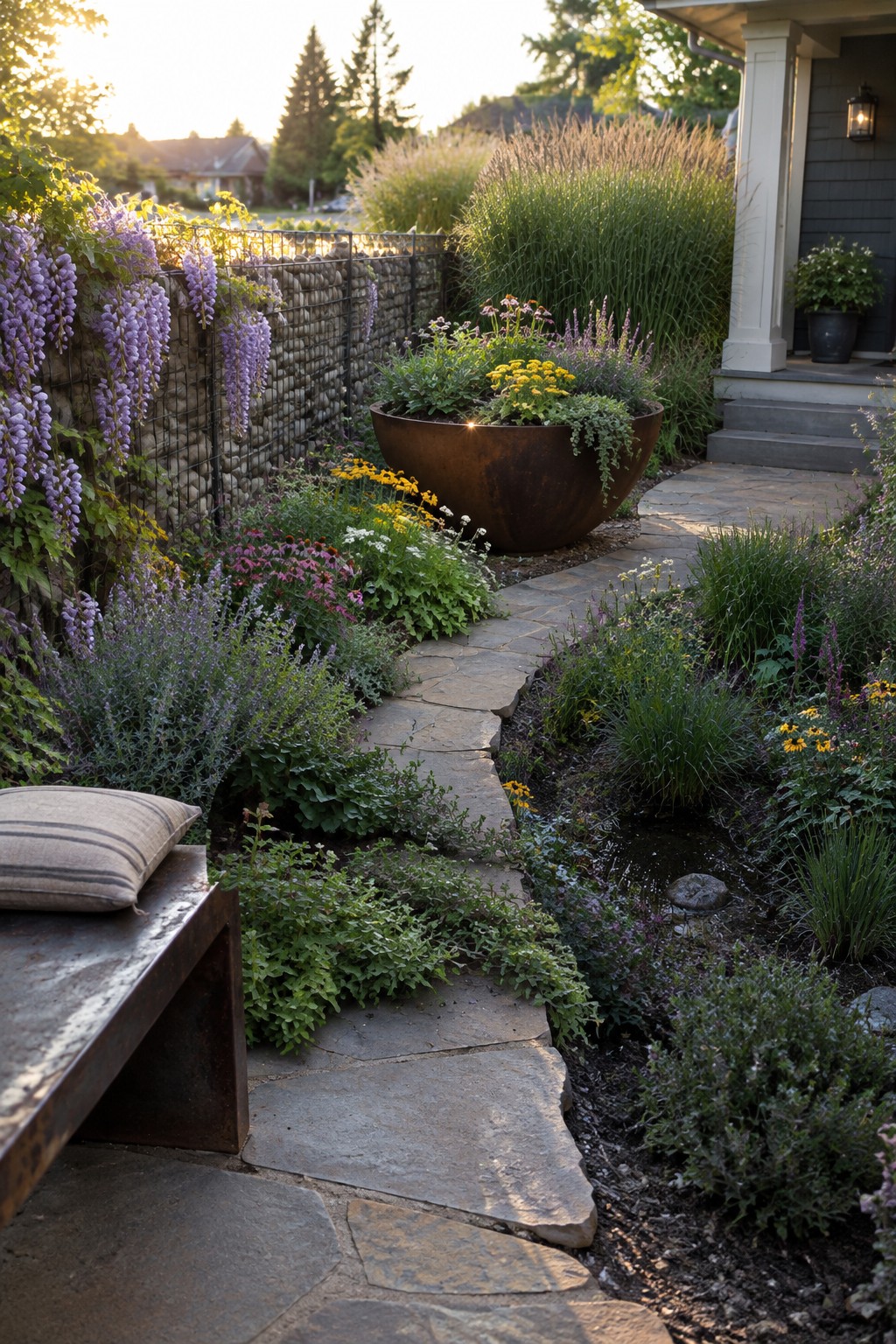
A fence covered in wisteria can make a garden path feel like part of the planting, rather than just a way through the yard. Letting the vine trail along one side adds color at eye level and gives the path a clear edge.
Use a sturdy fence and keep the wisteria trimmed back so it does not narrow the walkway. This works well beside a stone path, especially when the rest of the planting stays low enough to keep the route easy to use.
Frequently Asked Questions
Q: Can wisteria grow on any fence?
A: Wisteria gets heavy as it matures, so a flimsy fence may bend or break under its weight. Choose a sturdy structure and guide the vines along strong supports rather than letting them wrap around rails.
Q: How do I keep wisteria from taking over the fence?
A: Prune it regularly, especially when long shoots start reaching beyond the area you want covered. A couple of trims each year can keep the vine tidy and help more flowers stay in view.
Q: Will wisteria flower if it grows in shade?
A: It may grow leaves in a shady spot but produce fewer blooms. Plant it where it gets several hours of direct sun, and give it room to spread without crowding nearby plants.
Q: Can I plant other flowers beneath a wisteria fence?
A: Yes, as long as they can handle the light and occasional dry soil beneath the vine. Low-growing, drought-tolerant plants are often easier to maintain than thirsty flowers that compete with wisteria roots.
