

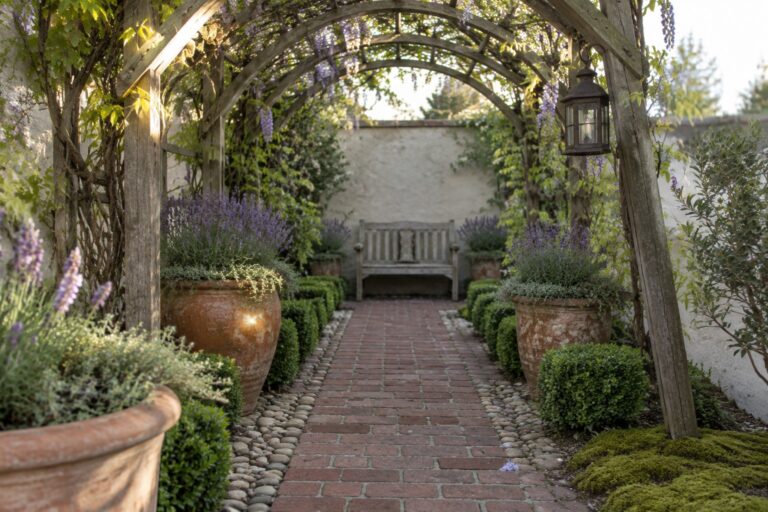
In a small garden, a wisteria can quickly take over if its support and position are not planned well.
I find that the best trellis designs give the vine room to climb while keeping paths, seating, and nearby plants easy to use.
A simple arch or wall-mounted frame can add height without making a compact space feel crowded, and the material matters as the structure settles into the garden.
Some layouts are worth adapting to your own yard.
I’d start with ideas that suit the shape of the space and leave enough access for pruning, since wisteria needs regular care to stay in bounds.
Let Wisteria Grow Over a Garden Path
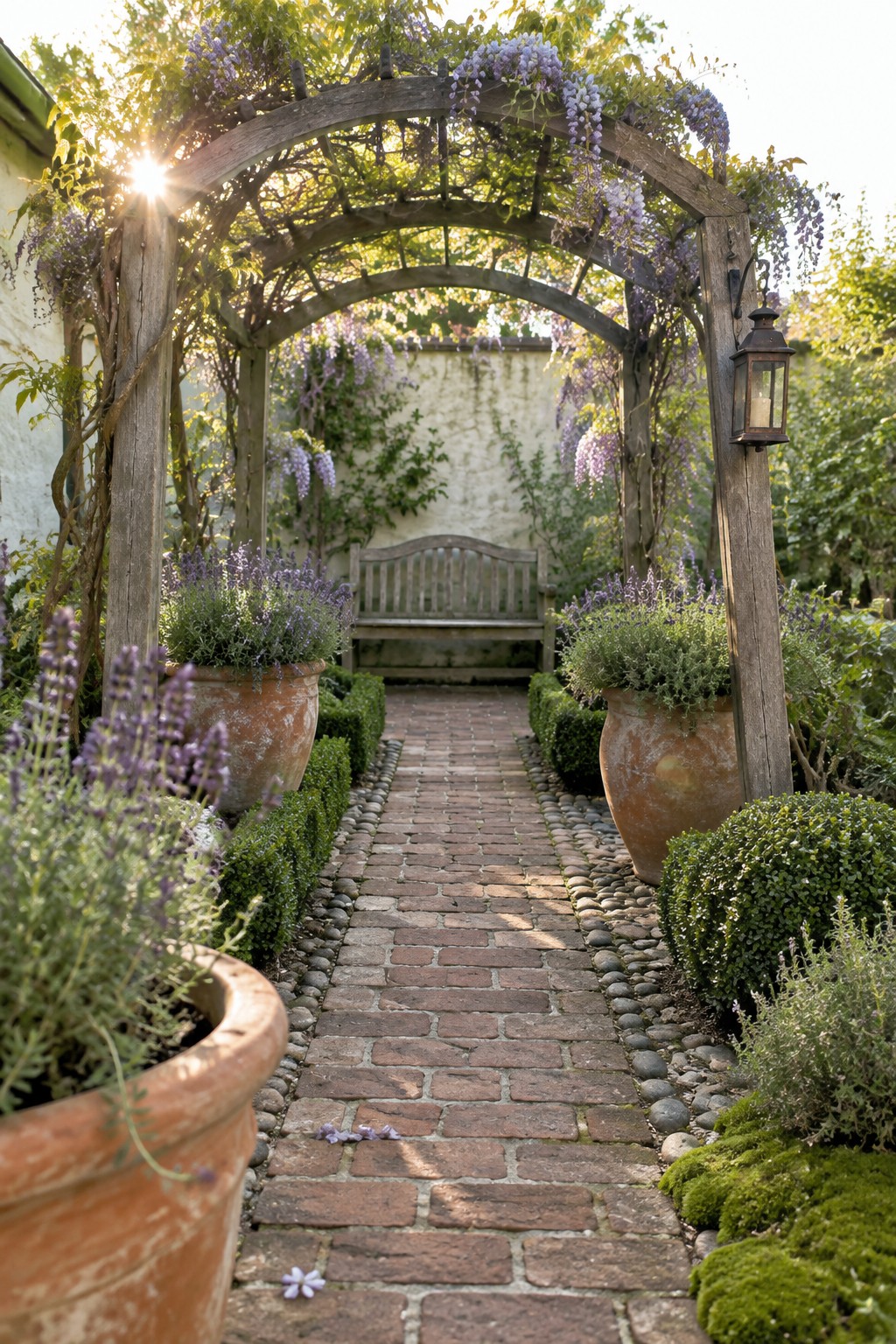
A wisteria-covered trellis can turn a narrow garden path into a feature, giving the space a clear route and a place for climbing flowers to grow. It works especially well in a small garden, where a vertical structure adds interest without taking up much ground.
Use a sturdy arch or series of trellis panels, and keep the path wide enough to walk along comfortably. Wisteria grows vigorously, so leave room for regular pruning and check that the support can handle mature vines.
Train Wisteria on a Wall Trellis
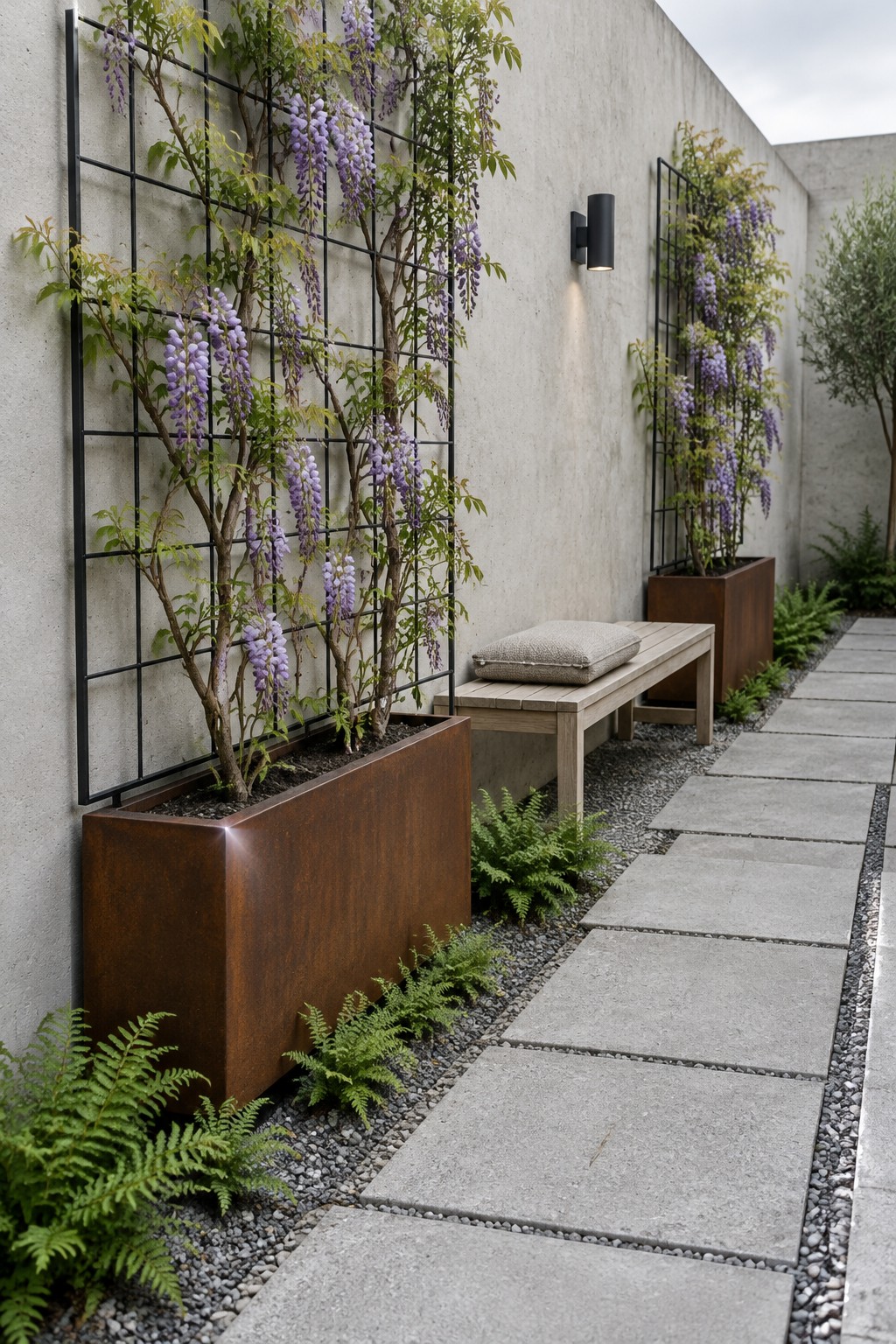
A wall trellis gives wisteria a clear place to climb without taking up much garden space. It also lets the plant grow vertically, which works especially well in a narrow side yard.
Secure a sturdy trellis to the wall and guide new stems along its grid as they grow. A raised planter can hold the roots, but leave enough room for the plant to mature and keep it pruned so it does not crowd the path.
Train Wisteria Overhead to Make a Narrow Path Feel Like a Garden
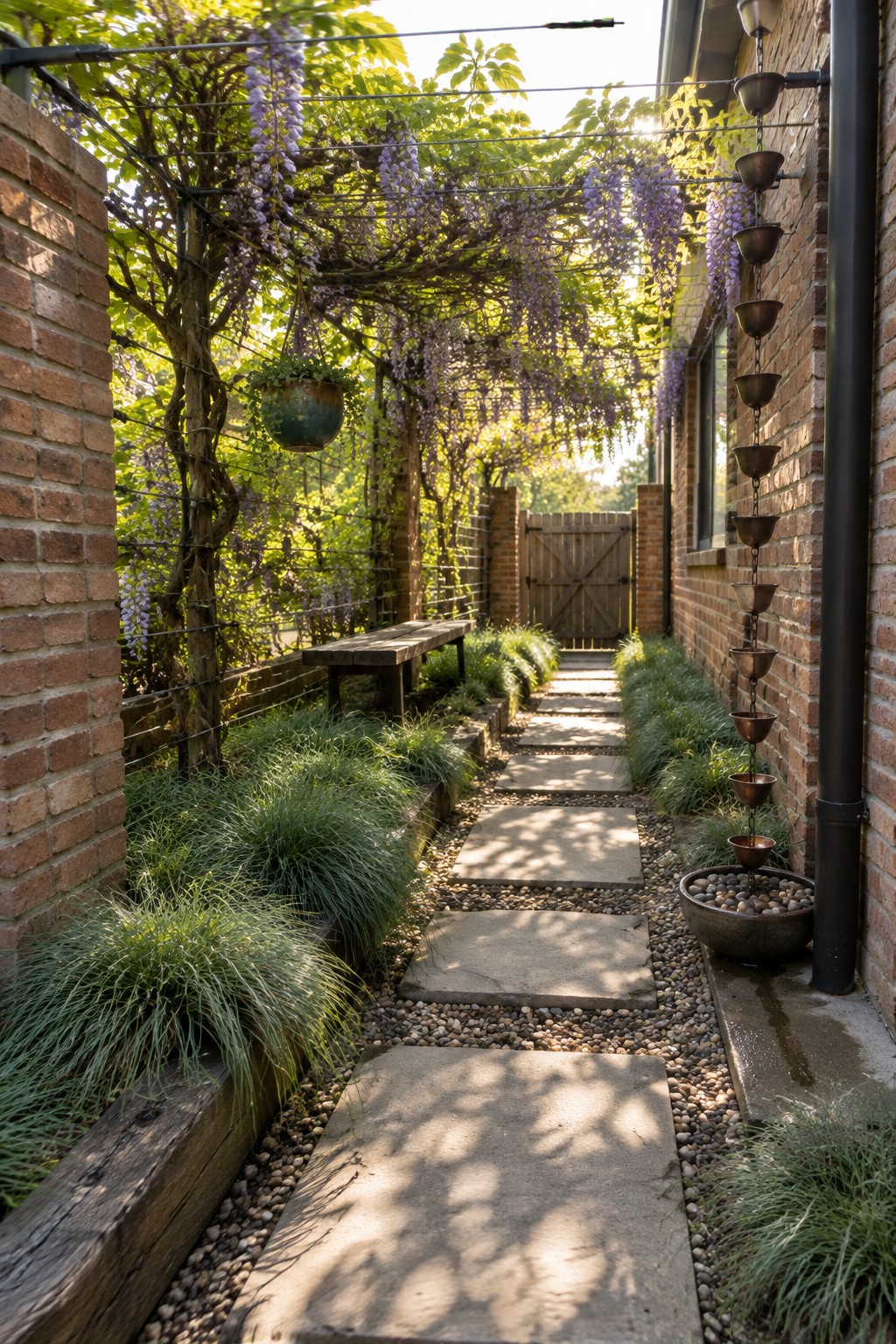
An overhead wisteria trellis can turn a slim side yard into a garden path without taking up much ground space. The leafy canopy gives the walkway a clear shape, while the open sides keep it from feeling closed in.
Run sturdy wires or a trellis between the house and a fence, then train the wisteria along them. Leave enough room for the walkway below, and keep up with pruning so the vines stay manageable near walls and windows.
Let Wisteria Shade a Small Patio
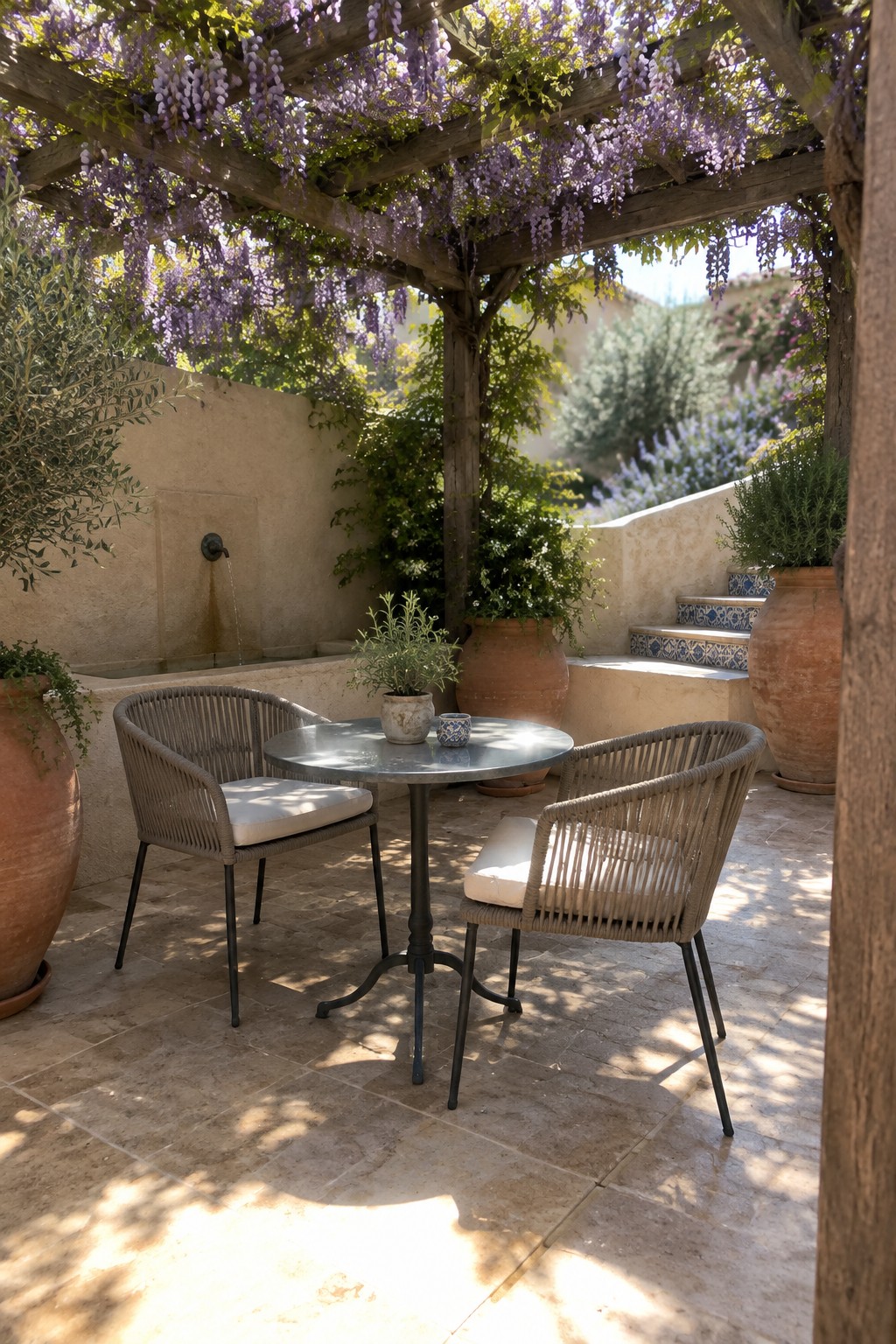
A wisteria trellis can make a small patio feel like a garden room without taking up floor space. Letting the vine grow overhead keeps the seating area open while giving it a little privacy and dappled shade.
A sturdy pergola works well above a compact table and chairs, especially beside a garden wall or steps. Train the wisteria along the top and prune it regularly so its growth does not crowd the seating or block the light.
Use a Trellis to Mark a Garden Entrance
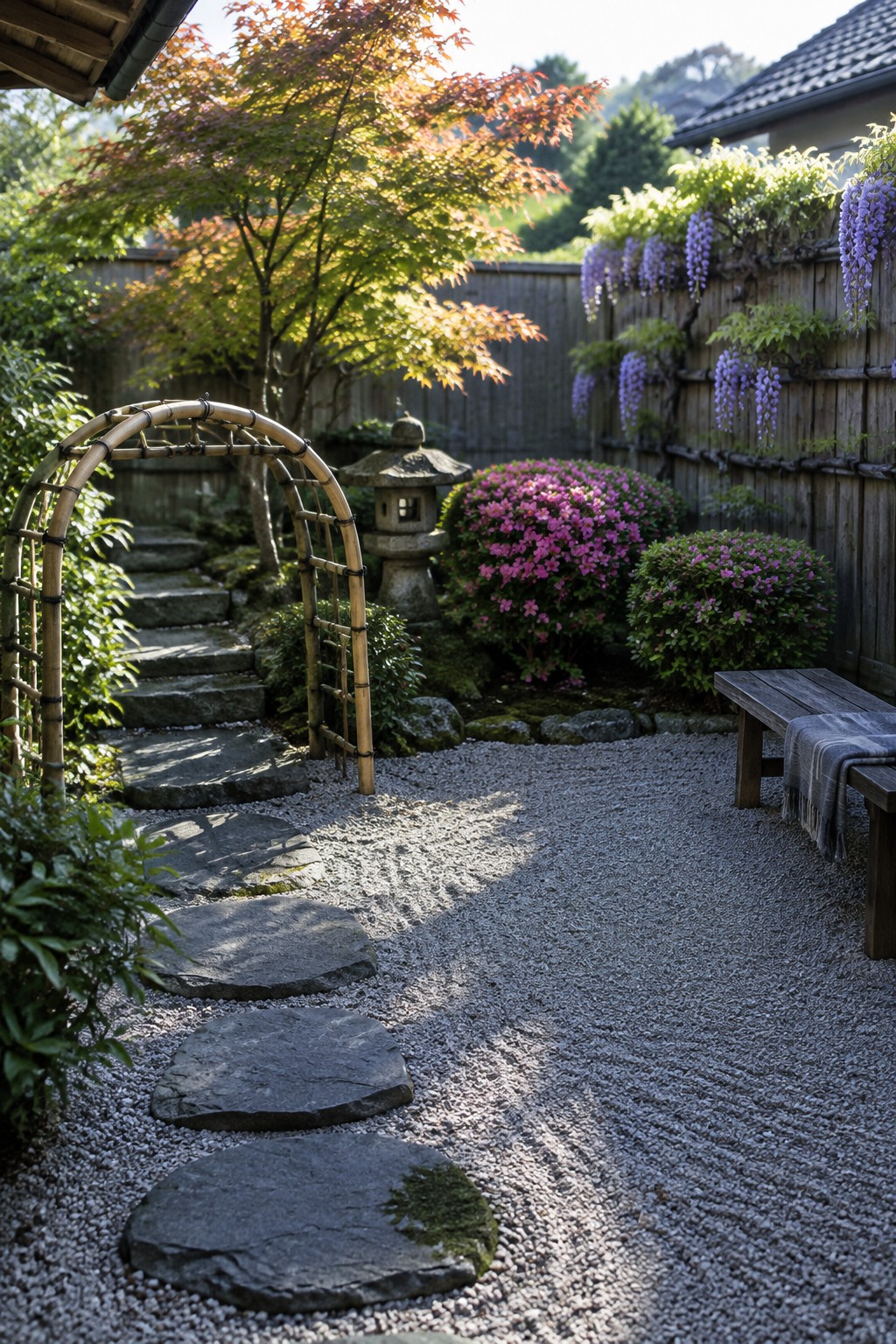
A simple arch trellis gives a small garden a clear entrance and makes a short path feel like its own space. Wisteria can grow over the arch, adding flowers above the stepping stones without taking up much ground.
Choose a sturdy trellis and guide the vine along it as it grows. Keep the arch narrow enough for the path, and prune wisteria regularly so it does not crowd the walkway.
Use a Wisteria Trellis to Define a Garden Dining Spot
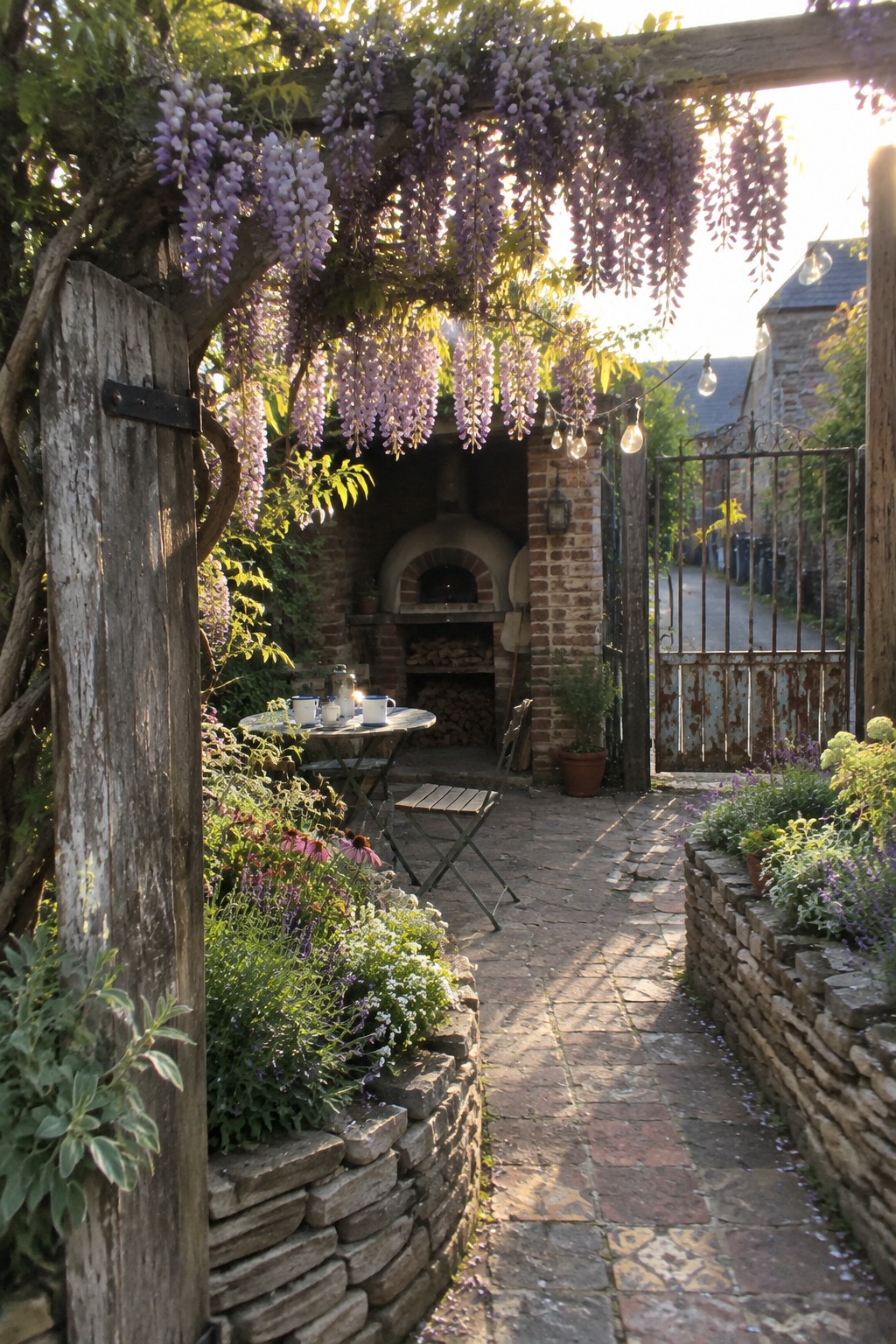
A trellis can give a small outdoor dining area a sense of its own place without needing a fence or much extra room. Wisteria trained across a simple overhead frame provides shade and makes the seating area feel tucked into the garden.
This works well over a compact patio or a table set along a garden path. Use a sturdy support, since mature wisteria can become heavy, and prune it regularly so it does not crowd the seating.
Use a Wisteria Trellis to Create a Private Seating Nook
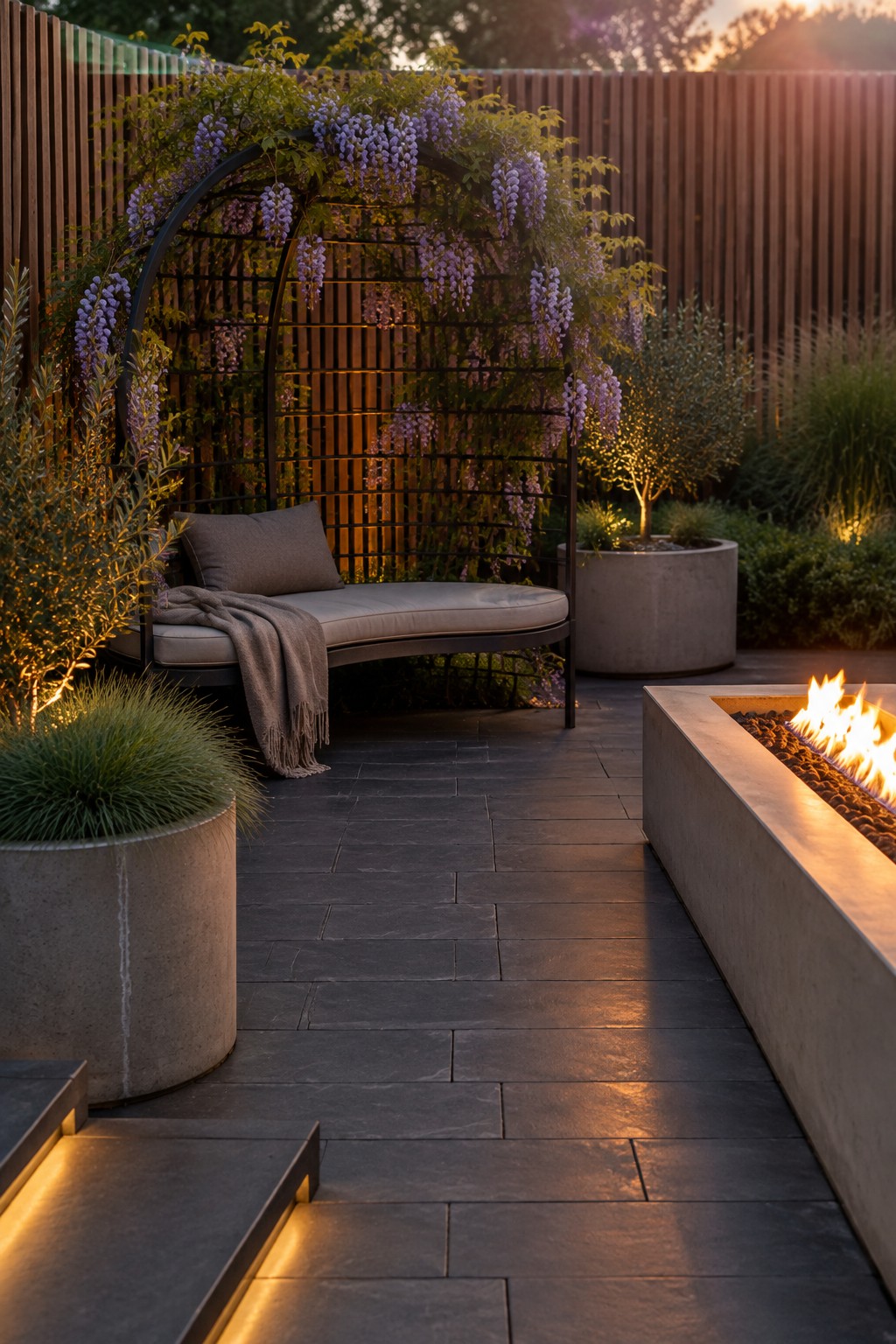
A trellis covered in wisteria can make a small patio feel like its own little garden room. The leafy screen gives outdoor seating a bit of privacy, while the hanging flowers bring color close to where you sit.
A curved trellis works well behind a bench or a pair of chairs, especially in a compact yard where a wider garden bed is not practical. Leave enough room to prune the vine and keep it from crowding the seating area.
Use Wisteria to Make a Balcony Feel Private
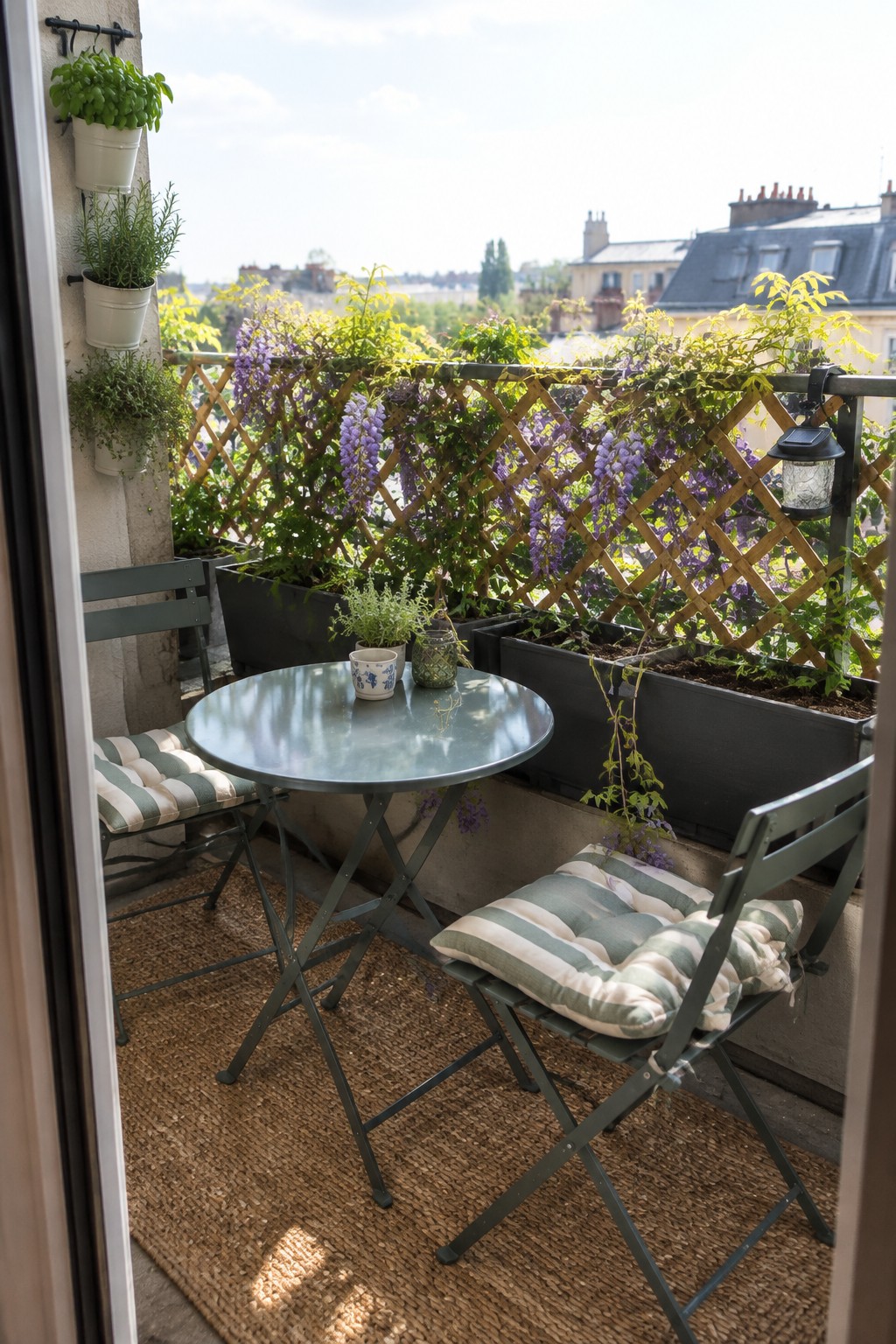
A trellis covered in wisteria can give a small balcony a leafy screen without taking up much floor space. Train the vines along the railing so they provide privacy while leaving room for a compact dining spot.
Long planters make it easier to guide the growth where you want it. Keep the trellis sturdy, and prune wisteria regularly so it does not crowd the seating area or put too much weight on the railing.
Add a Wisteria Trellis Above a Small Dining Patio
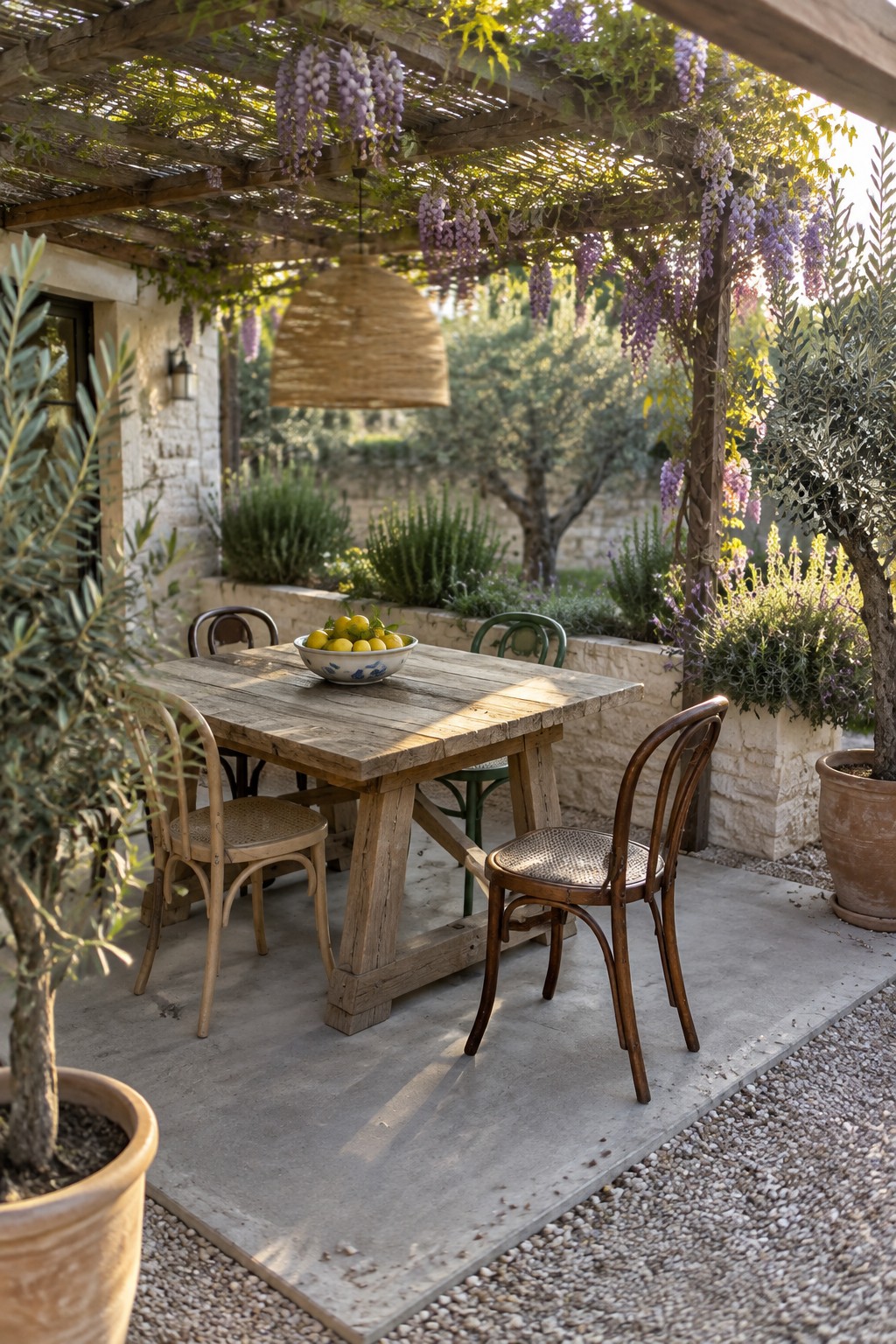
A trellis can make a small outdoor dining area feel like its own part of the garden. Wisteria growing overhead gives the table some shade and helps define the space without taking up much room on the ground.
Use a sturdy overhead structure and guide the vine across it as it grows. This works well over a patio beside the house, but leave enough clearance for chairs and keep the wisteria pruned so its branches do not crowd the seating.
Use Wisteria to Dress Up a Small Garden Entrance
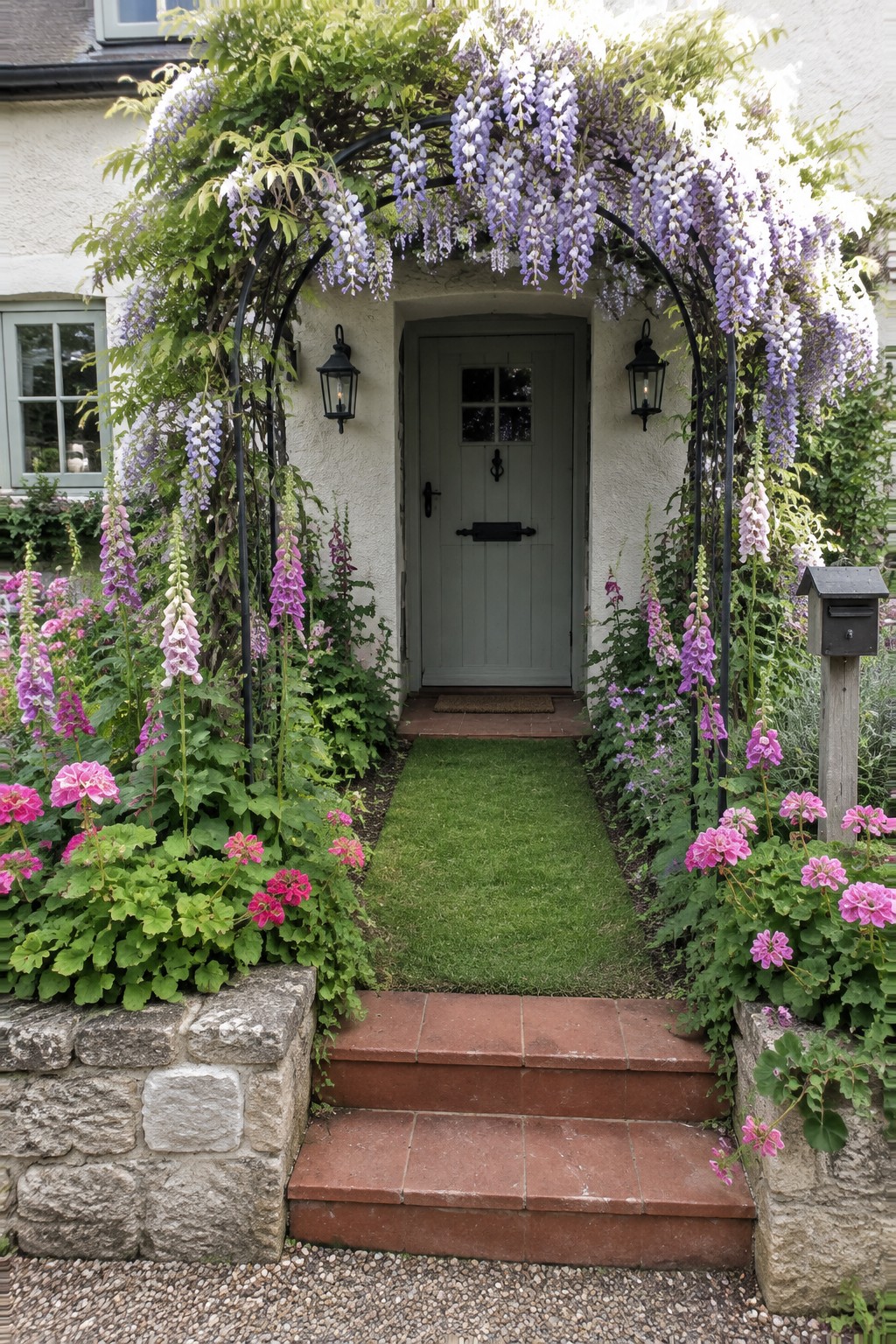
A wisteria-covered arch can make a simple entry feel like a natural part of the garden. It gives the path a clear destination, while the hanging flowers add interest overhead without taking up much ground space.
For a small garden, place the arch at the start of a short path or just before the front door. Use a sturdy structure, and keep the wisteria pruned so it does not block the walkway or crowd nearby plants.
Grow Wisteria Along a Garden Fence
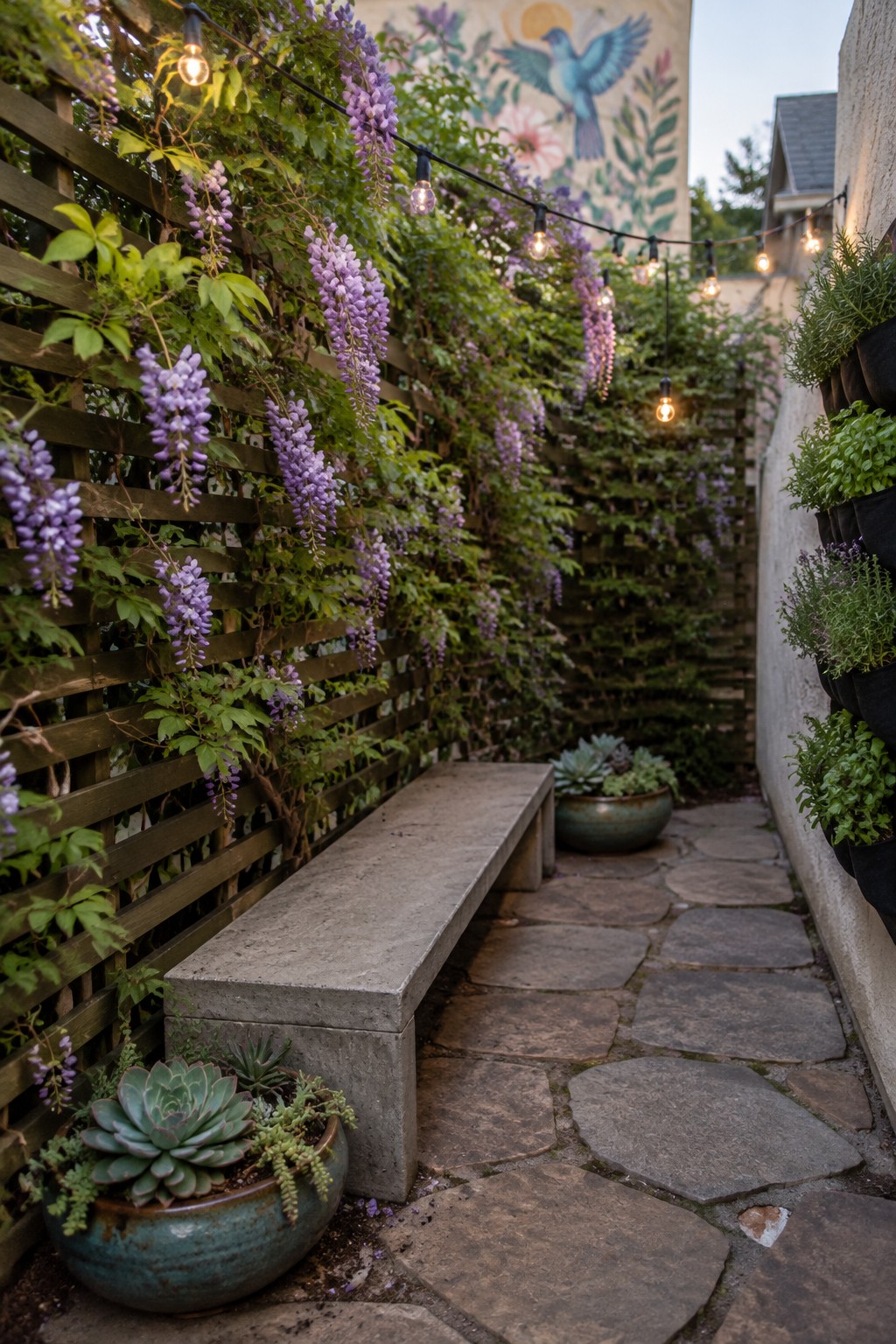
A trellis can turn a narrow side yard into a garden feature. Letting wisteria climb a wooden fence gives the planting a clear structure, while the hanging flowers bring color into a space that might otherwise feel plain.
This approach suits a slim path where there isn’t room for wide flower beds. Train the vine along sturdy supports and prune it regularly so it doesn’t crowd the walkway or overwhelm the fence.
Add a Bench Beneath a Wisteria Trellis
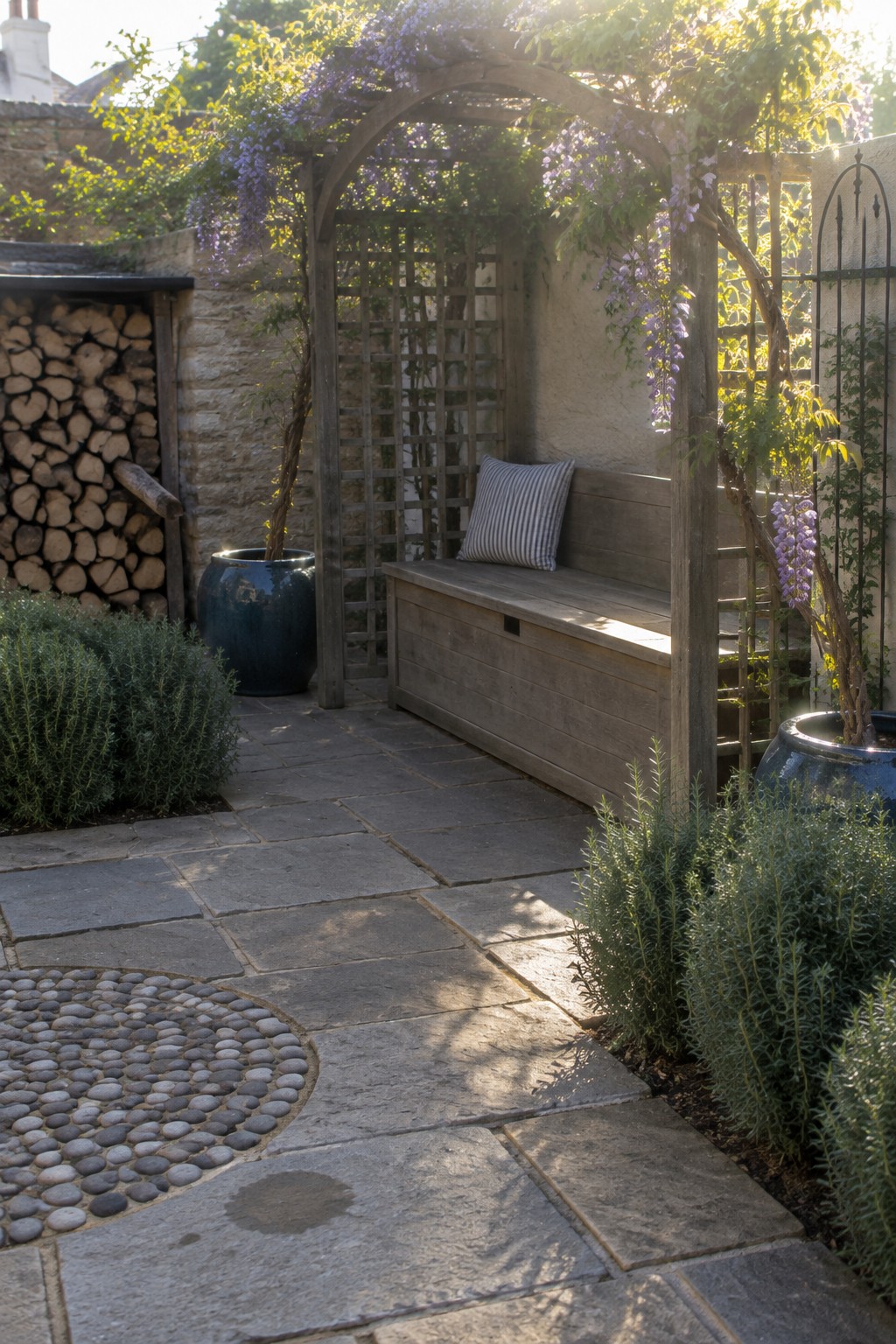
A trellis can do more than support wisteria. Set a simple bench beneath it, and a small garden gains a useful place to sit without needing a separate patio area. The overhead greenery gives the seating nook a little shelter and helps it feel tucked away.
This works well along a garden wall or at the end of a narrow path. A bench with built-in storage can be handy in a small space, but leave enough room for the wisteria to climb and prune it regularly so it does not crowd the seat.
Make a Wisteria Trellis Part of a Garden Seating Area
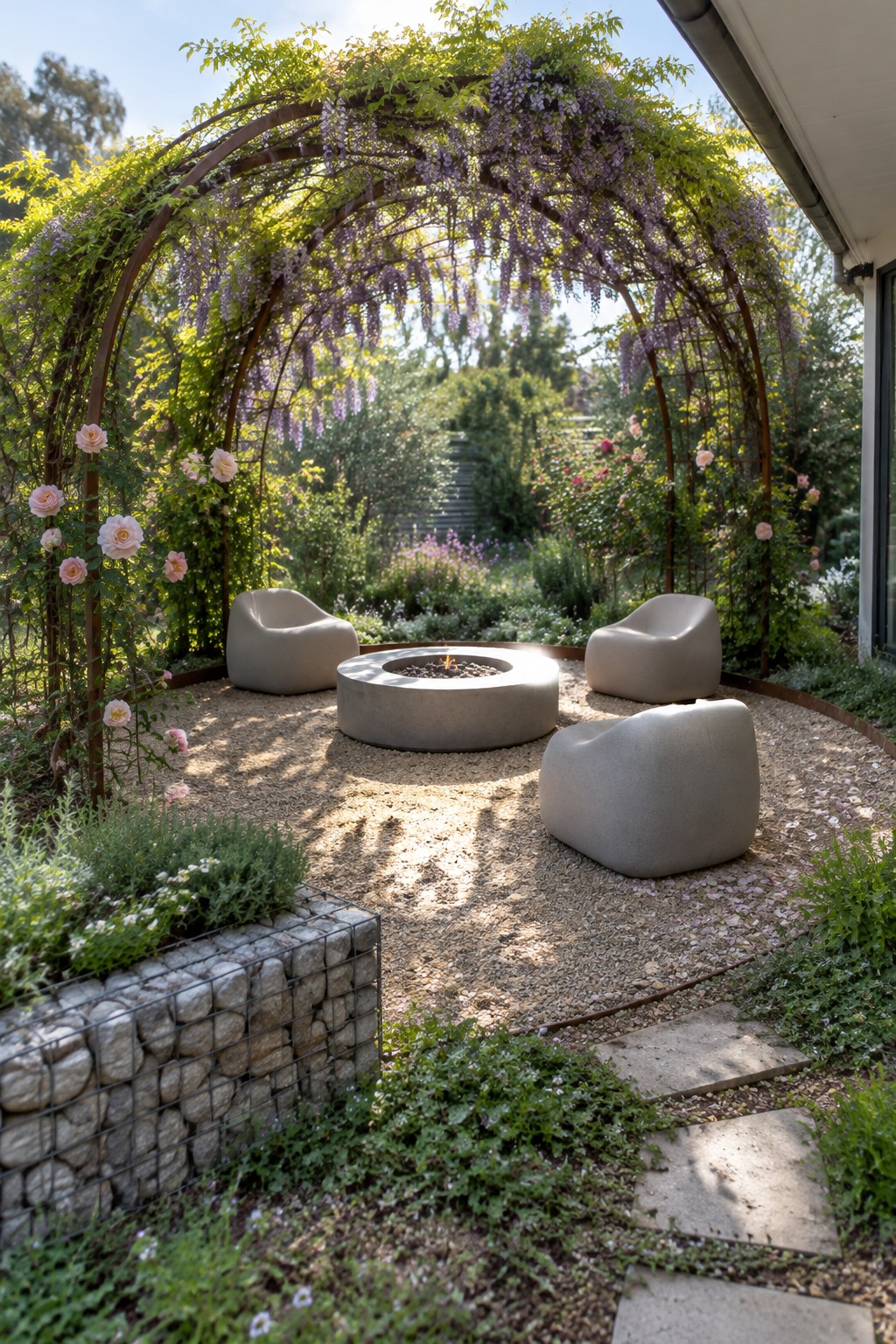
A curved trellis can give a small seating area its own little room in the garden. Wisteria overhead provides shade and a sense of enclosure, while still leaving the space open around the sides.
Use a sturdy arch to define a gravel seating nook, and keep the furniture simple so there’s room to move around it. Wisteria grows vigorously, so choose a strong support and prune it regularly to keep the structure clear.
Make a Trellis Part of a Shady Garden Seating Area
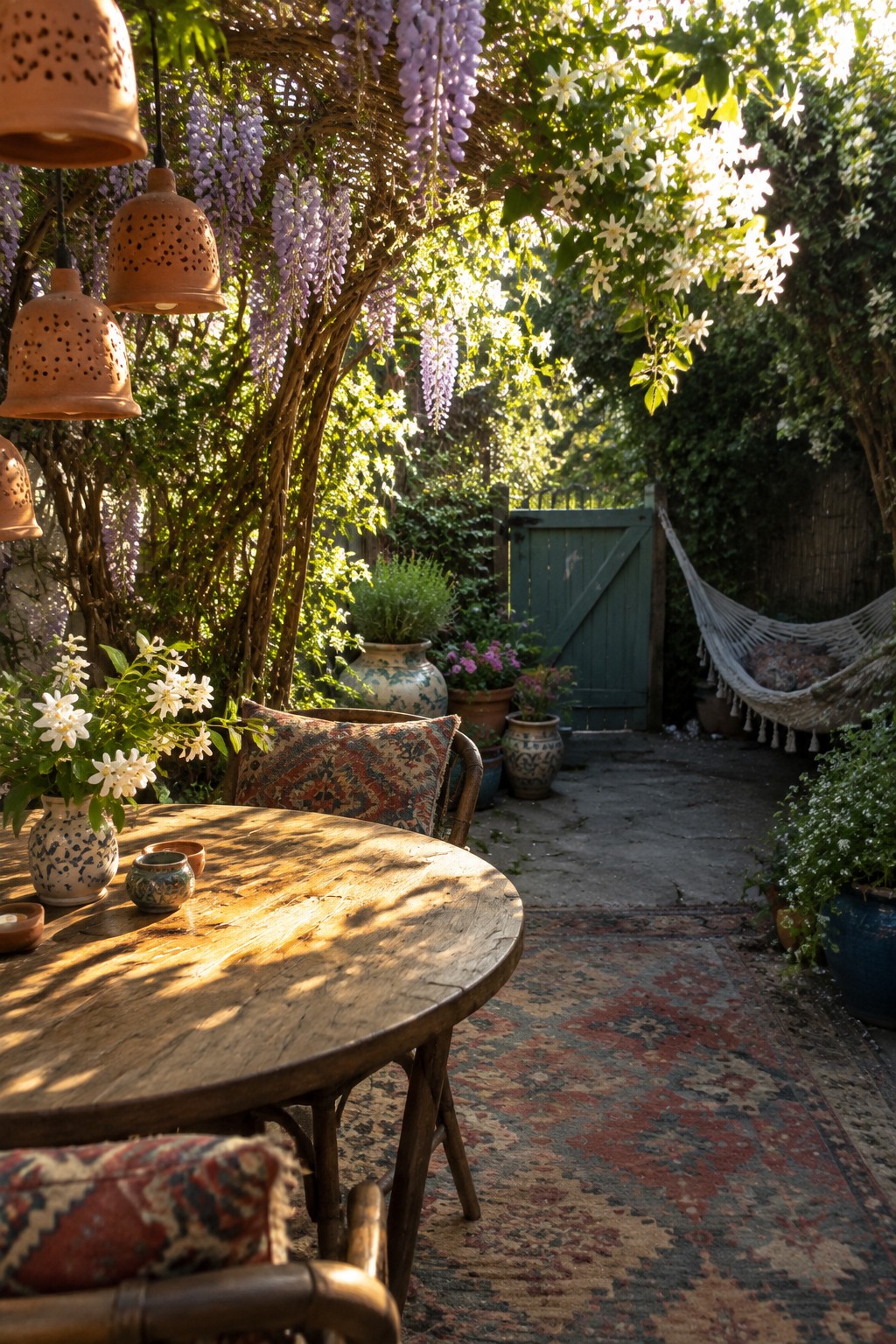
A wisteria trellis can help a small seating area feel tucked into the garden without taking up more floor space. Let the vine grow overhead or along a sturdy support near the seating, where its flowers can be enjoyed at close range.
A nook beside a garden table or hammock is a good place for this idea. Wisteria grows vigorously, so use a strong trellis and keep it trimmed away from nearby paths and furniture.
Add a Wisteria Trellis Along a Narrow Seating Area
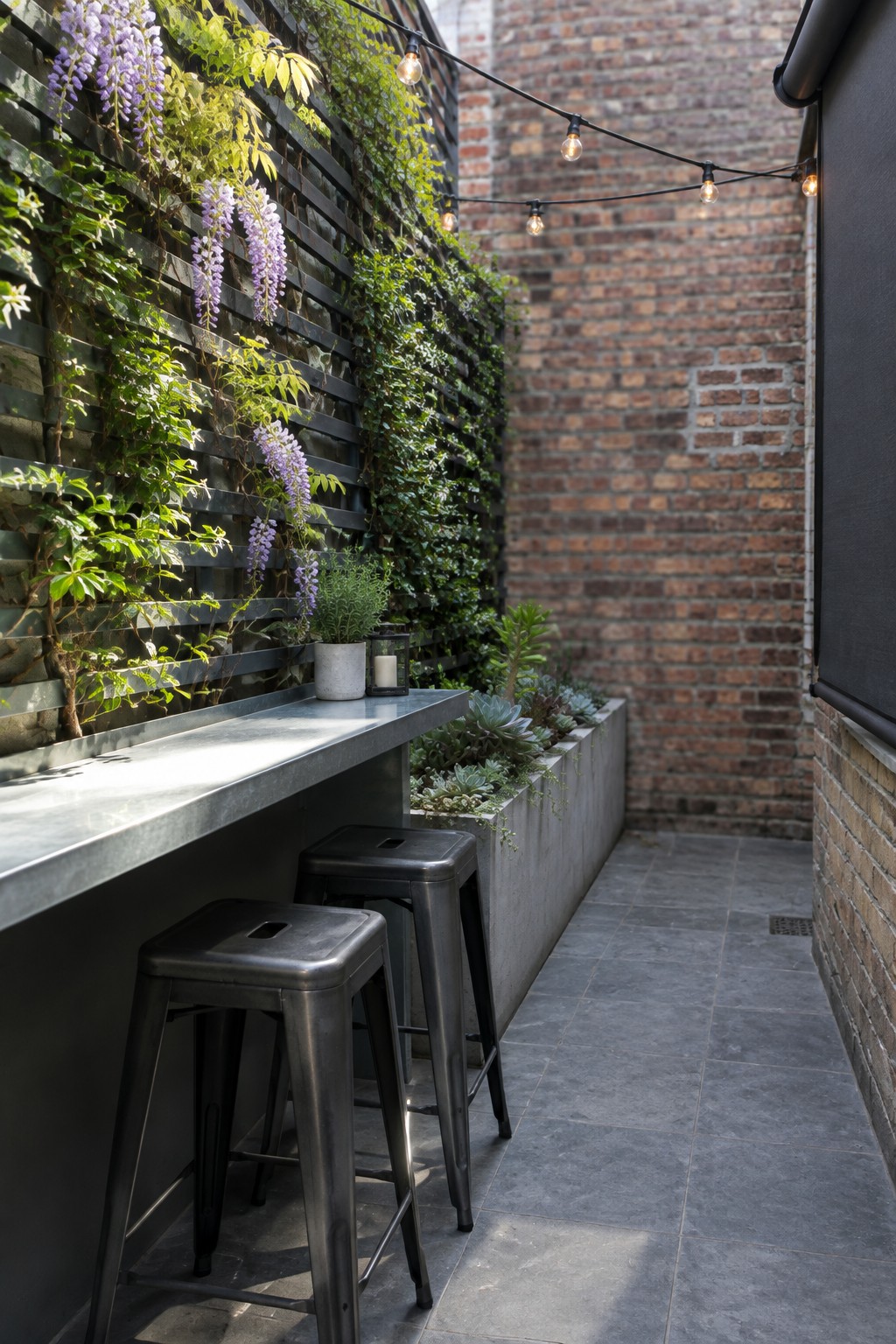
A wall trellis lets wisteria grow upward instead of taking up valuable floor space. It can bring greenery and flowers to a narrow outdoor seating area while leaving room for a slim counter or stools.
Use a sturdy trellis fixed securely to the wall, and prune the vine regularly to keep it within bounds. Wisteria is vigorous, so check that the structure can support its mature growth and keep stems clear of gutters and other fittings.
Train Wisteria Over a Built-In Garden Seat
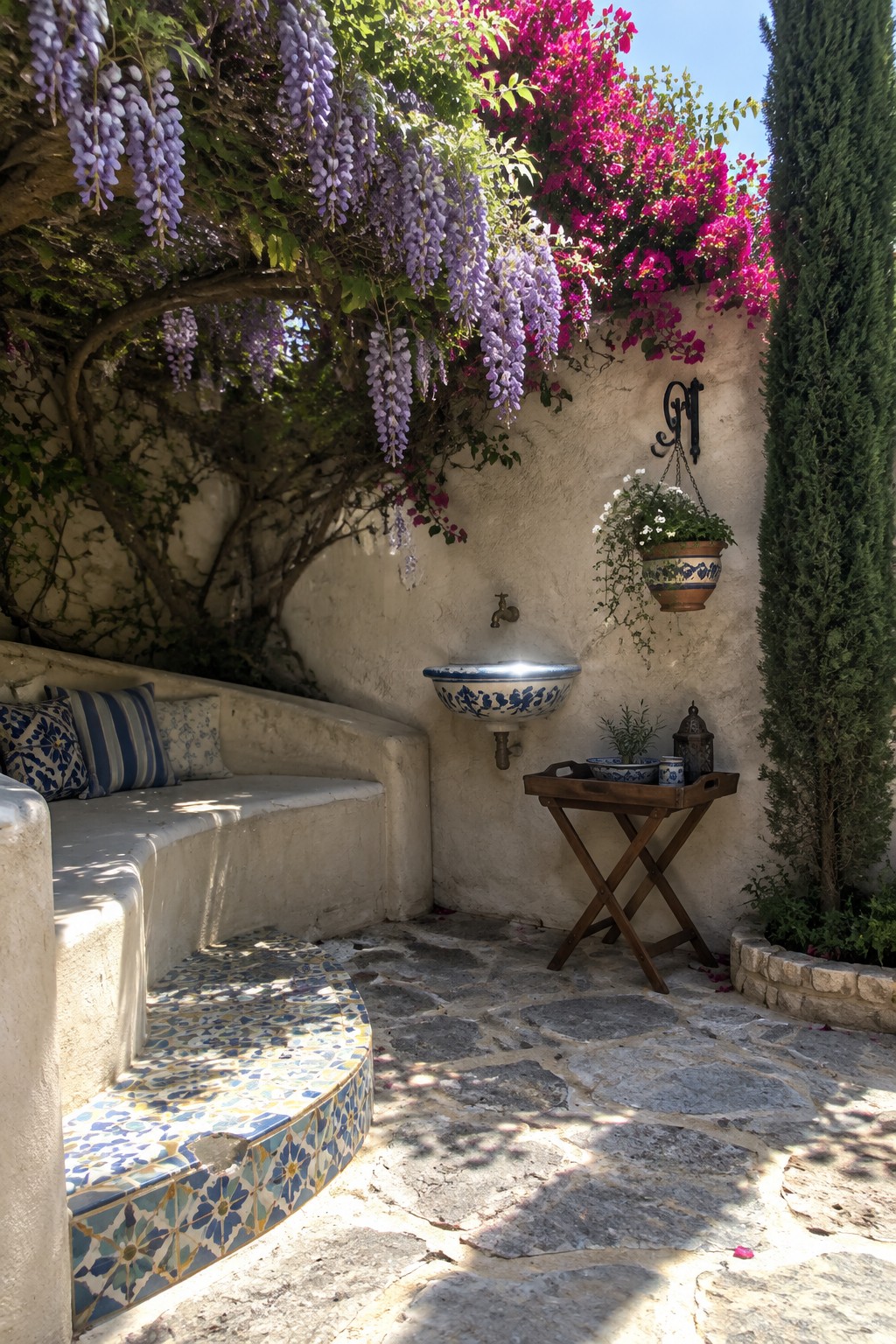
A wisteria trellis can turn a small built-in bench into a shady place to sit without taking up extra floor space. Let the vine grow overhead, and the seating area feels tucked into the garden rather than set apart from it.
This works especially well in a courtyard or narrow side garden where a wall-mounted seat already fits neatly along the edge. Give wisteria a sturdy support and prune it regularly so the branches stay clear of the seat and nearby walkways.
Use Wisteria to Mark a Small Garden Entrance
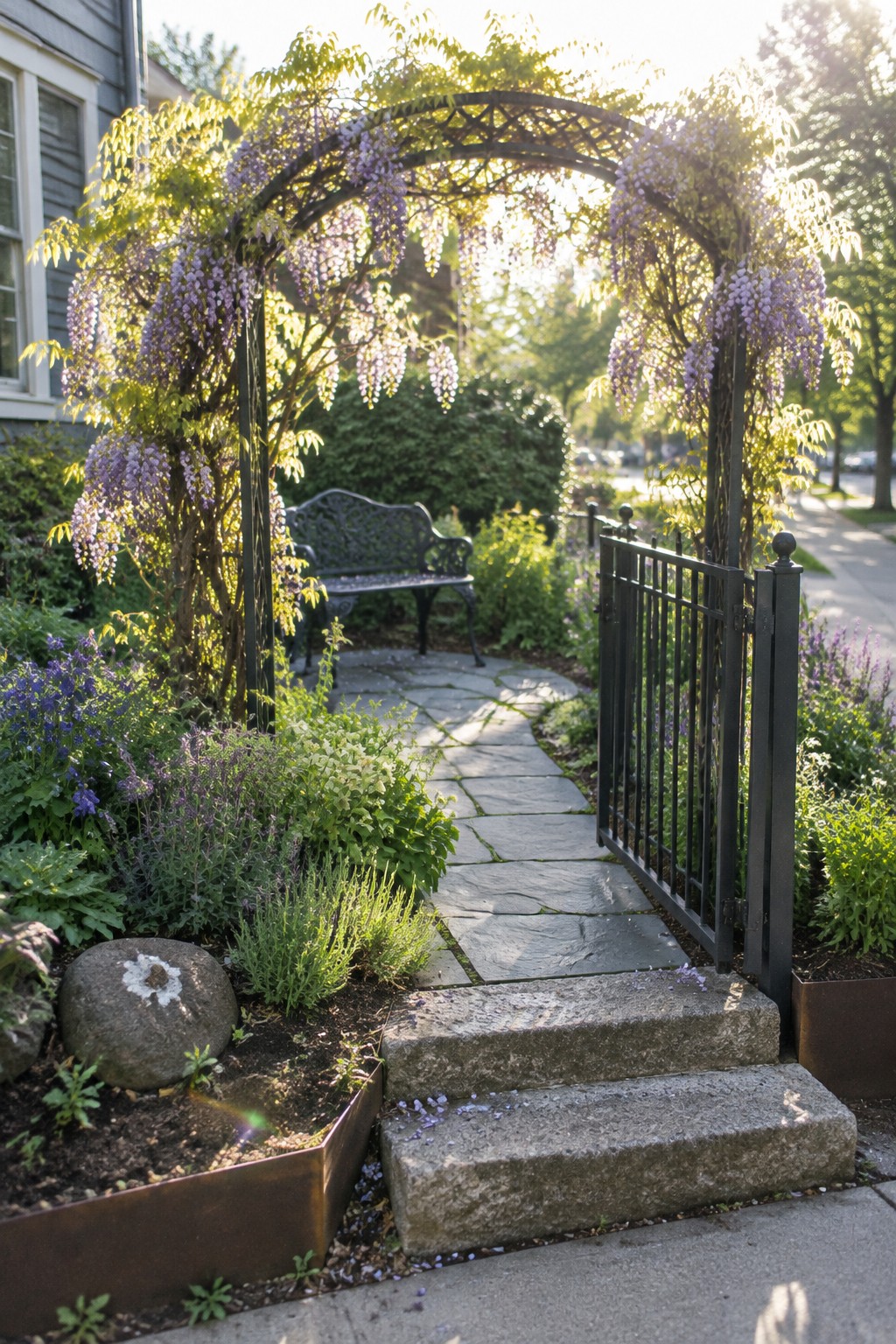
A trellis can make a small garden entrance feel like a clear transition from the path into the planting. Wisteria growing over a simple arch gives the entry shape without needing a large structure or much extra space.
Set the arch where a path meets the garden, and train the vines along its sides and top. Leave enough room for the gate to open freely, and prune regularly so the growth does not crowd the walkway.
Use a Wisteria Pergola to Shade a Rooftop Dining Area
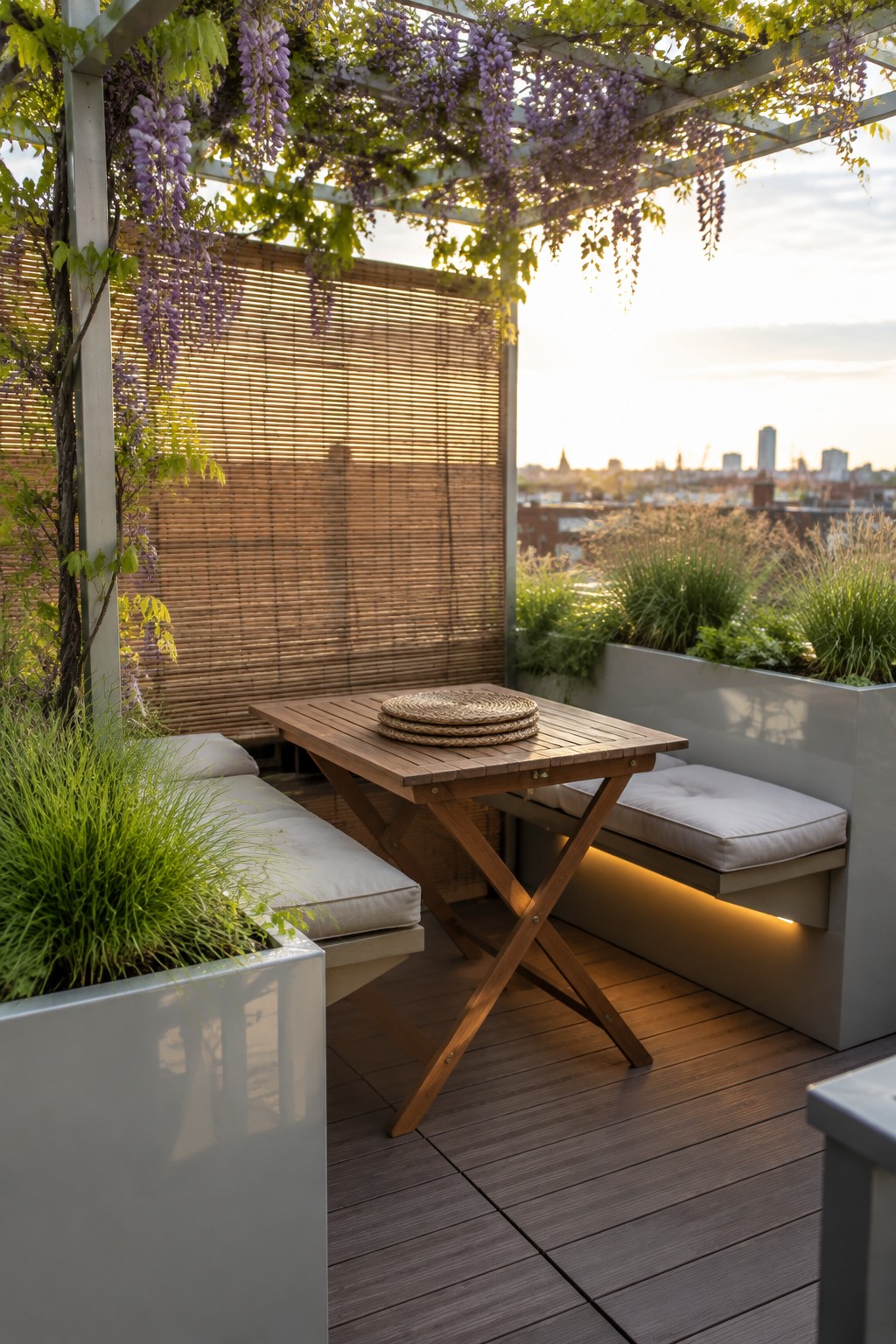
A pergola covered in wisteria can make a small rooftop dining spot feel sheltered without closing it off. The overhead greenery provides some shade, while the open sides keep the seating area connected to the rest of the terrace.
Use a sturdy pergola and give the vines room to grow, since mature wisteria can become heavy. A compact table with built-in bench seating makes good use of limited space, but leave enough room to pull out chairs and move around.
Use Wisteria to Cover a Garden Walkway
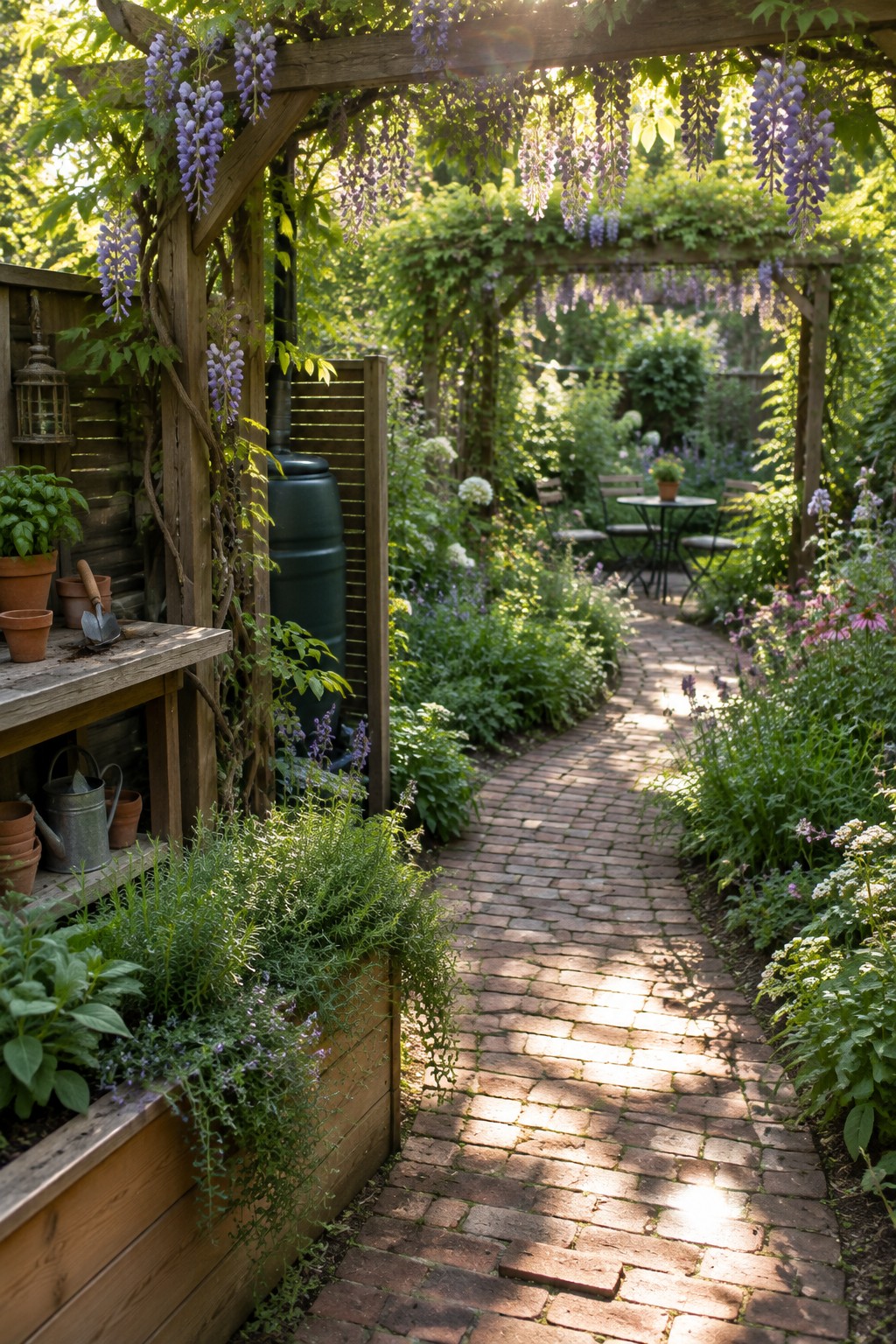
A trellis over a garden path gives wisteria room to climb without taking up much ground space. The overhead flowers make a narrow walkway feel more sheltered, while the path still leads the eye through the garden.
Use a sturdy pergola or arched supports, since mature wisteria can get heavy. A brick path beneath the trellis is a practical choice, and regular pruning will help keep the walkway clear.
Use a Wisteria Trellis as a Garden Centerpiece
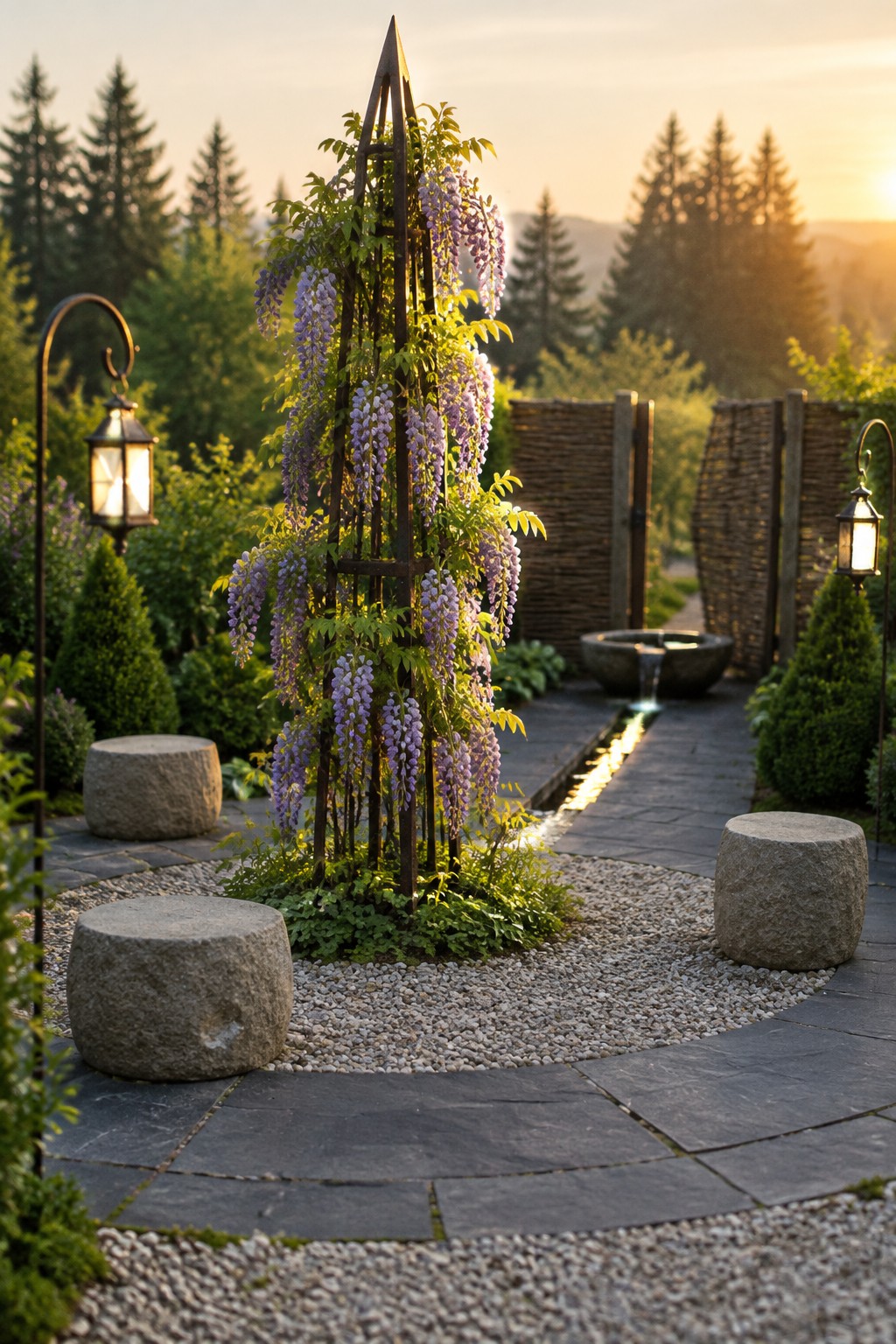
A freestanding trellis can give a small garden a clear focal point without taking up much ground space. Wisteria grows upward on the structure, so the planting adds height while leaving the surrounding area open.
Place the trellis in a small gravel bed or at a path junction, as shown here, and leave enough room to walk around it. Wisteria can become heavy as it matures, so use a sturdy support and keep up with pruning.
Frequently Asked Questions
Q: Can I grow wisteria on a small freestanding trellis?
A: Yes, as long as the trellis is sturdy and firmly anchored. Wisteria gets heavy as it matures, so skip flimsy garden screens and guide the main stem up one strong post.
Q: How do I keep wisteria from taking over a small garden?
A: Train it along a defined route, such as a wall trellis or overhead frame, and prune stray shoots regularly. A twice-yearly prune helps keep it compact and encourages flowering.
Q: Can wisteria grow in a pot beside a trellis?
A: It can, but choose a large, stable pot with good drainage and expect to water it more often than a plant in the ground. Pick a compact variety, since vigorous wisteria can quickly outgrow its space.
Q: Will wisteria damage a fence or wall?
A: It can strain weak fences and work its way into gaps, so attach a strong trellis slightly away from the wall rather than letting the stems cling directly to it. Check the ties and structure as the plant grows.
