

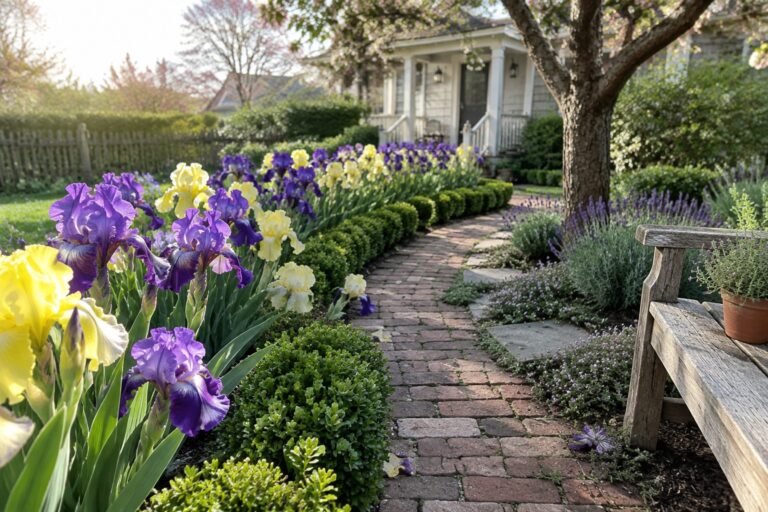
I like how irises can bring a clear band of color to a spring border without making the whole garden feel busy.
Their upright leaves and bright blooms also give a bed some shape before and after flowering, which matters when you’re planning what will fill the space through the season.
The placement makes a difference: taller varieties can anchor the back of a bed, while shorter ones work well near an edge or path.
I’d pay attention to how the colors sit beside nearby flowers and foliage, since that’s often what makes a planting feel settled rather than crowded.
Some of these ideas may be worth adapting to the light, soil, and layout you already have.
Create a Curving Path Through Iris Beds
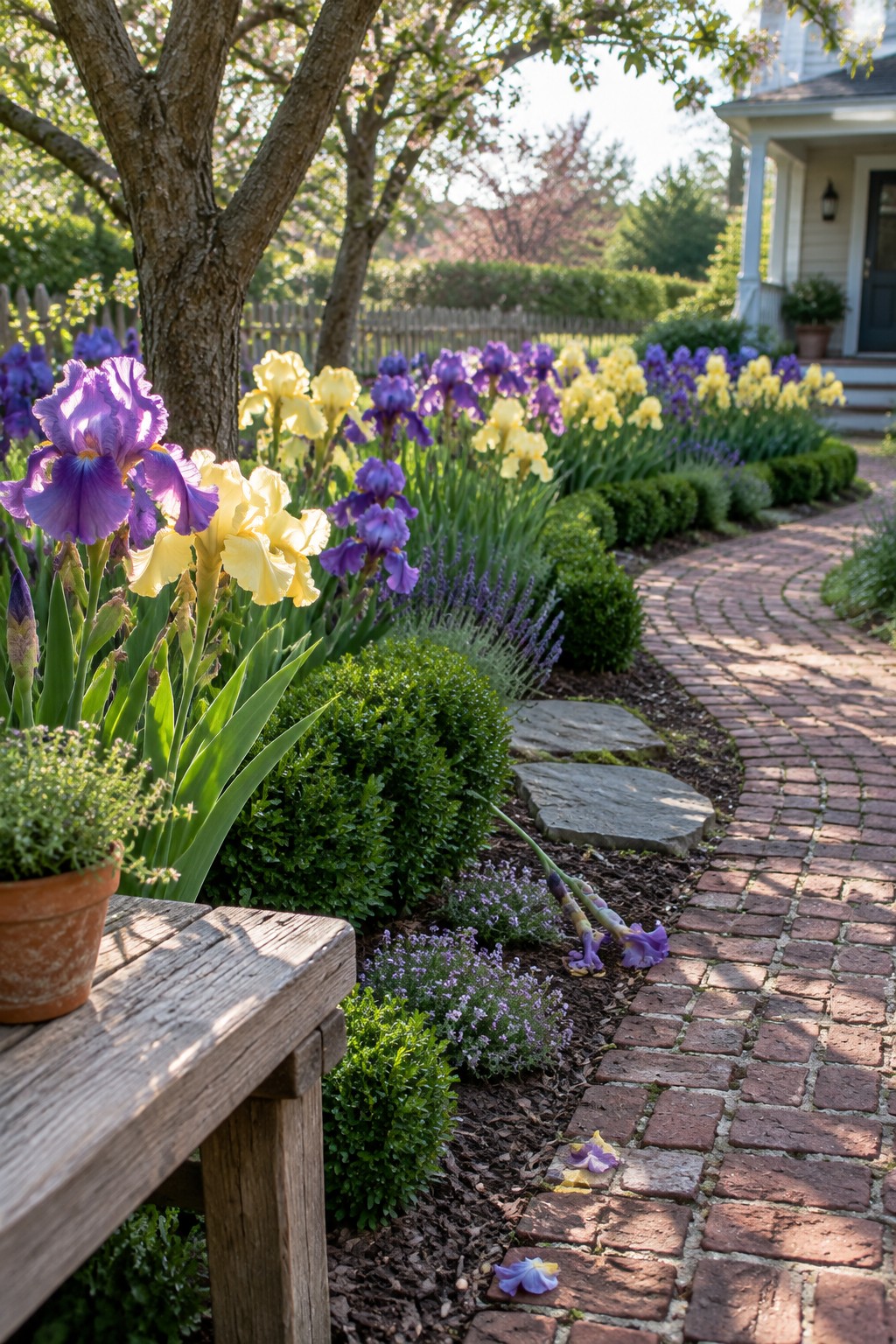
A gently curving path gives an iris bed a clear shape and makes it easier to enjoy from different angles. The brick route here winds through the planting rather than cutting straight across, letting colorful borders feel like part of the garden’s layout.
Use this idea where there is room for a gradual bend, such as along a front garden or beside a home’s entry. Keep the path wide enough to walk comfortably, and leave space for irises to spread without leaning into the bricks.
Use Irises to Add Color Along a Gravel Border
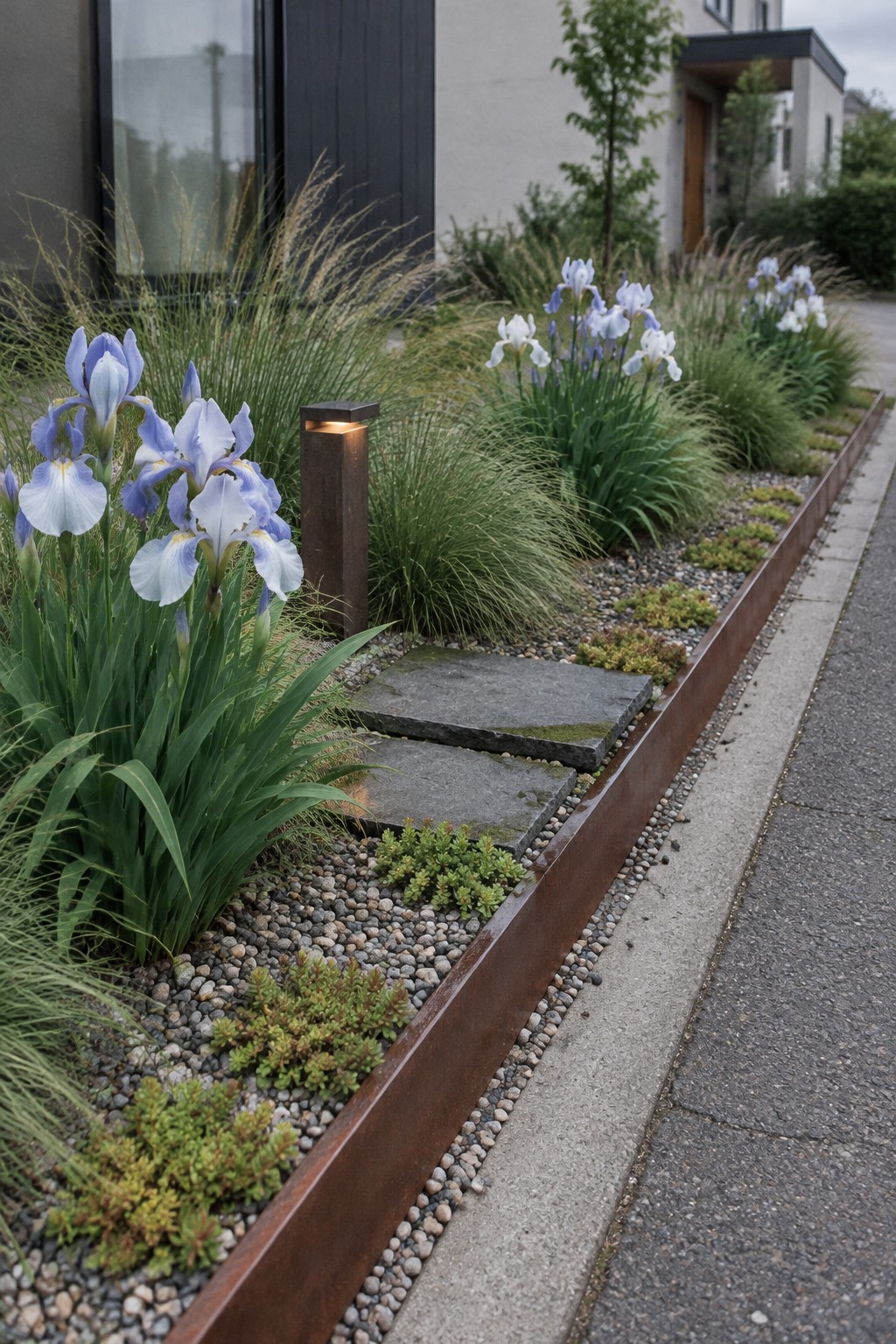
A narrow gravel bed can be a practical place for spring irises. Their upright leaves and purple-blue flowers bring color to a border without taking up space needed for a path or lawn. Grasses and low-growing plants can fill in around them while leaving the irises as the main seasonal feature.
Plant irises in small groups along the bed, with enough room for their leaves to spread. A simple metal edge helps keep gravel in place, but make sure the soil drains well, since irises do not like sitting in wet ground.
Use Stone Edging to Shape Iris Beds
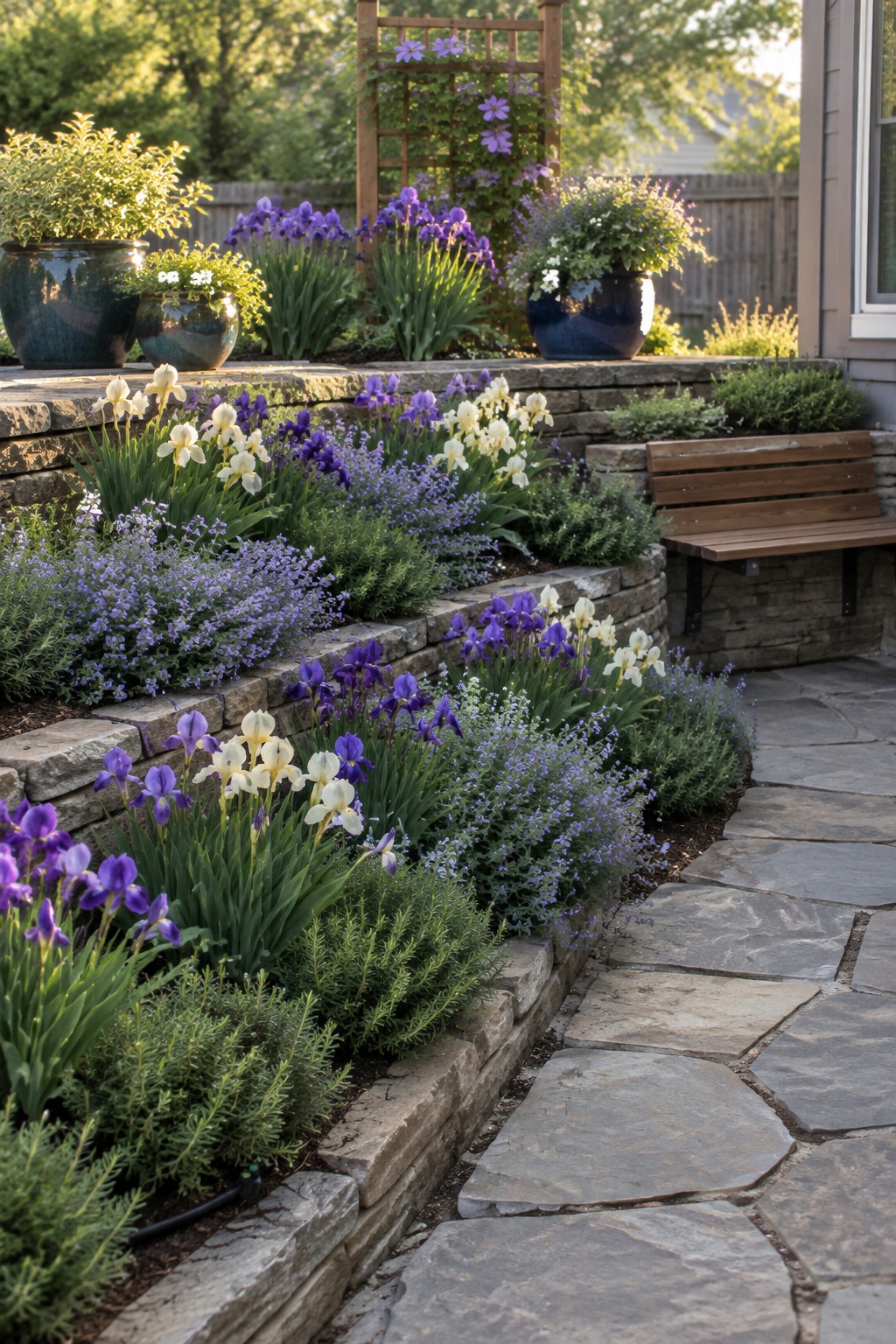
Stone retaining walls create clear levels for iris beds, giving the flowers room to stand out while keeping the planting areas neat. The different heights also make a sloped yard easier to plant and maintain.
Use this approach where a flat bed would be hard to manage, and repeat the same stone along nearby paths for a consistent look. Keep the edging low enough that it does not hide the irises.
Use Irises to Edge an Entry Path

Purple irises can make a front walk feel more connected to the garden. Planting them along the edges gives the path a clear outline and brings color close to the entrance without covering the walkway.
Leave enough room for the leaves to spread, and keep the bed’s edge tidy so the path stays easy to use. Irises work well beside stone steps or a garden path, especially when you repeat them in small groups rather than spacing them too far apart.
Add a Bench Beside the Iris Bed
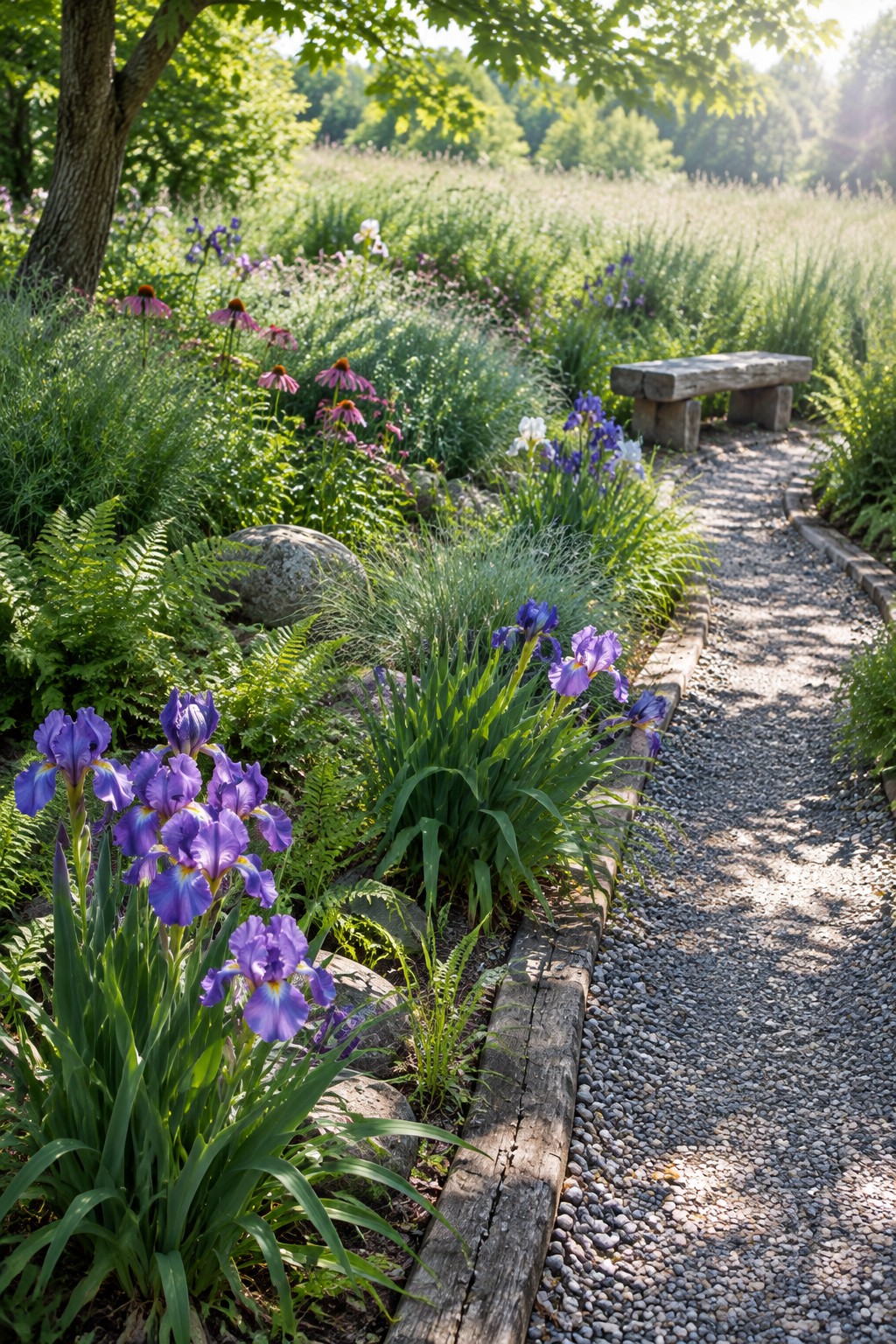
A small bench can make an iris border feel like a place to pause, not just a planting to pass by. Set slightly off the path, it gives the garden a useful resting spot without taking over the flower bed.
Choose a sturdy material that suits the garden, such as the weathered stone bench shown here. Leave enough room around it for the path to stay easy to use, and keep the surrounding plants low enough that the seat remains accessible.
Grow Irises in a Tiered Planter
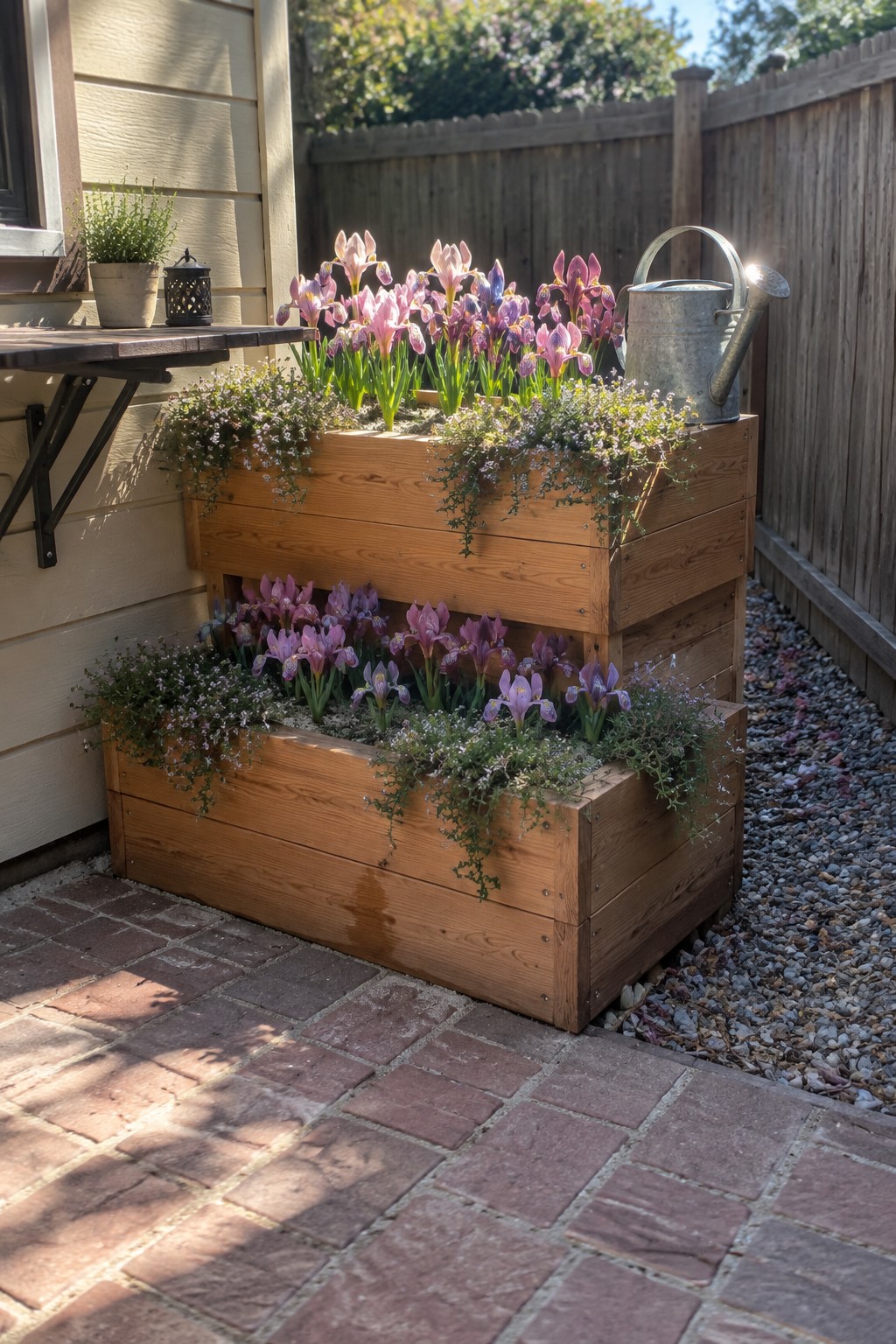
A tiered wooden planter gives irises room to grow at different heights, making it a useful choice for a small yard or a narrow space beside the house. The raised levels also make the flowers easier to see and tend.
Use a planter with enough depth for the iris roots, and leave space between clumps so they do not become crowded. A setup like this suits a patio or side yard where a traditional flower bed would be hard to fit.
Add Irises to a Coastal Garden Bed
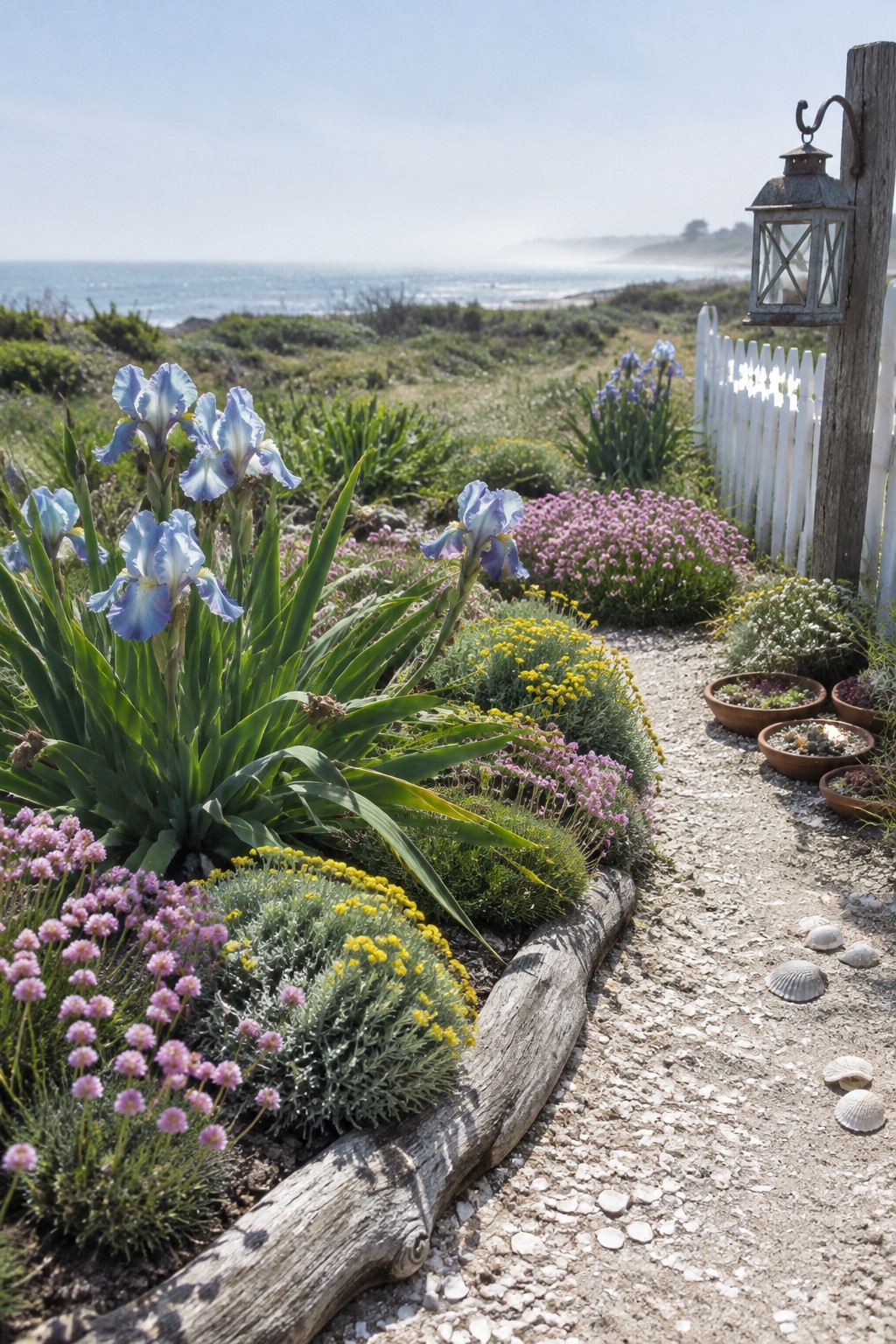
Iris beds can bring strong spring color to a garden without needing a formal layout. Here, blue irises stand among low flowering plants, so the bed feels varied while still keeping the irises easy to notice.
This approach suits a sunny border near a path, especially where gravel or other free-draining ground is already part of the garden. Leave room for the iris leaves to spread, and use lower plants around the edges rather than crowding the clumps.
Use a Raised Border to Define an Iris Bed
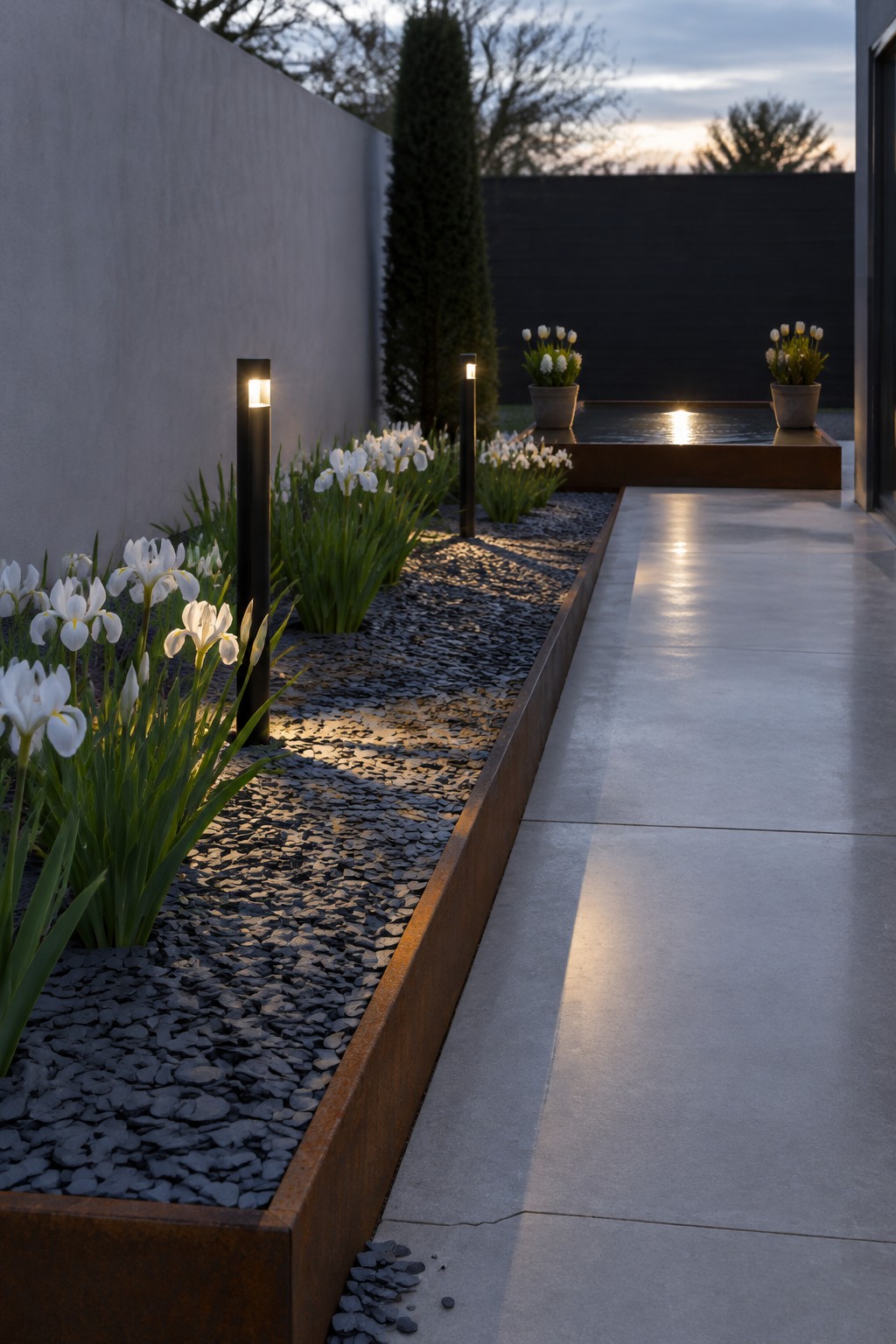
A raised metal edge gives an iris bed a clear boundary and keeps it separate from the walkway. The dark gravel also makes a simple, tidy surface around the flowers.
This approach works well along a narrow path, especially where you want the planting to stay contained. Choose a durable edging material and leave enough room for iris leaves to spread without leaning across the path.
Plant Irises Along a Stone Retaining Wall
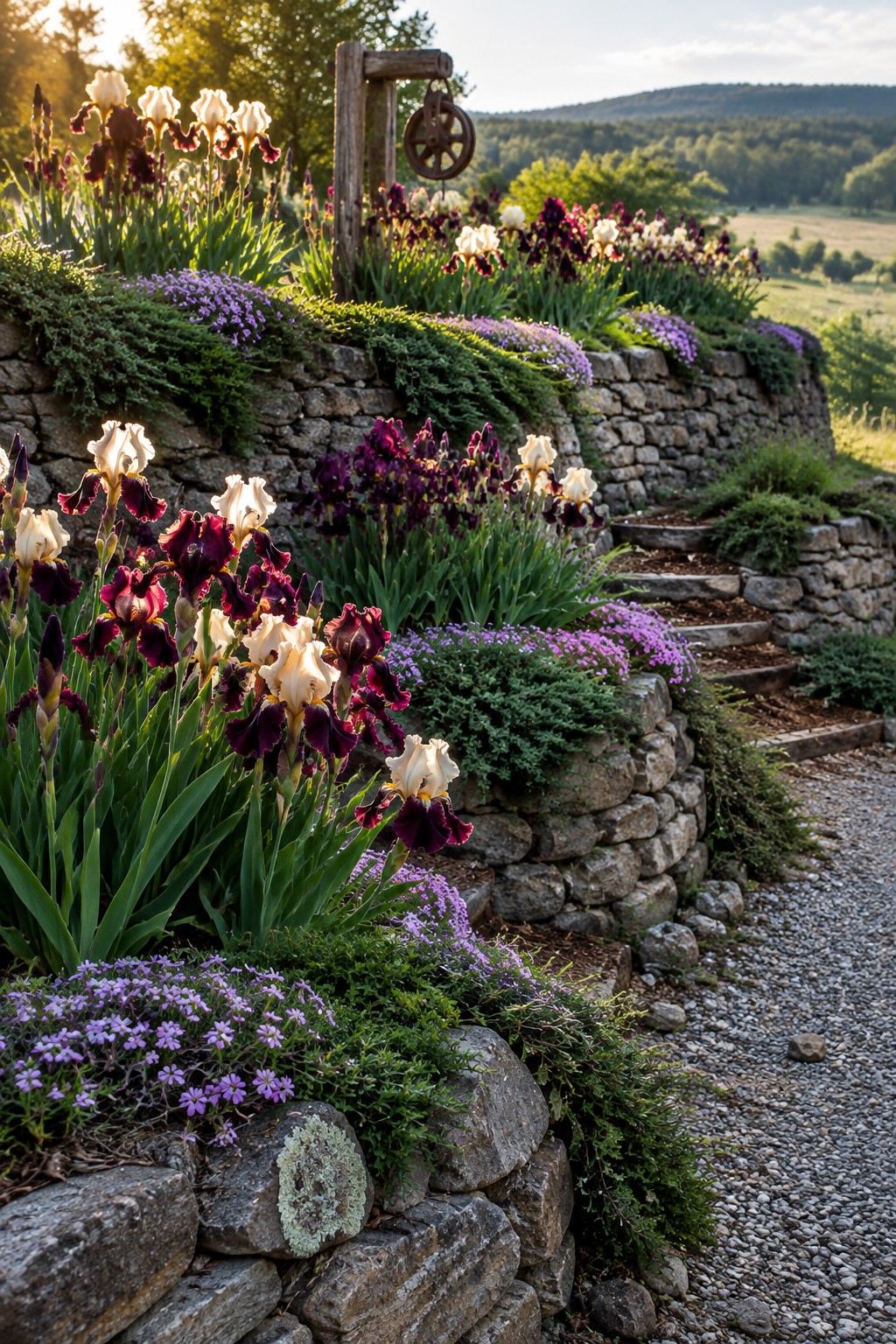
Planting irises along a stone retaining wall gives a sloped garden a clear, colorful edge. The upright leaves and blooms stand out against the rough stone, while low groundcover can fill the spaces along the wall.
This approach works well where a garden needs to follow a slope without hiding the stonework. Leave enough room for iris clumps to spread, and keep the wall’s drainage gaps clear.
Layer Irises Along a Garden Path
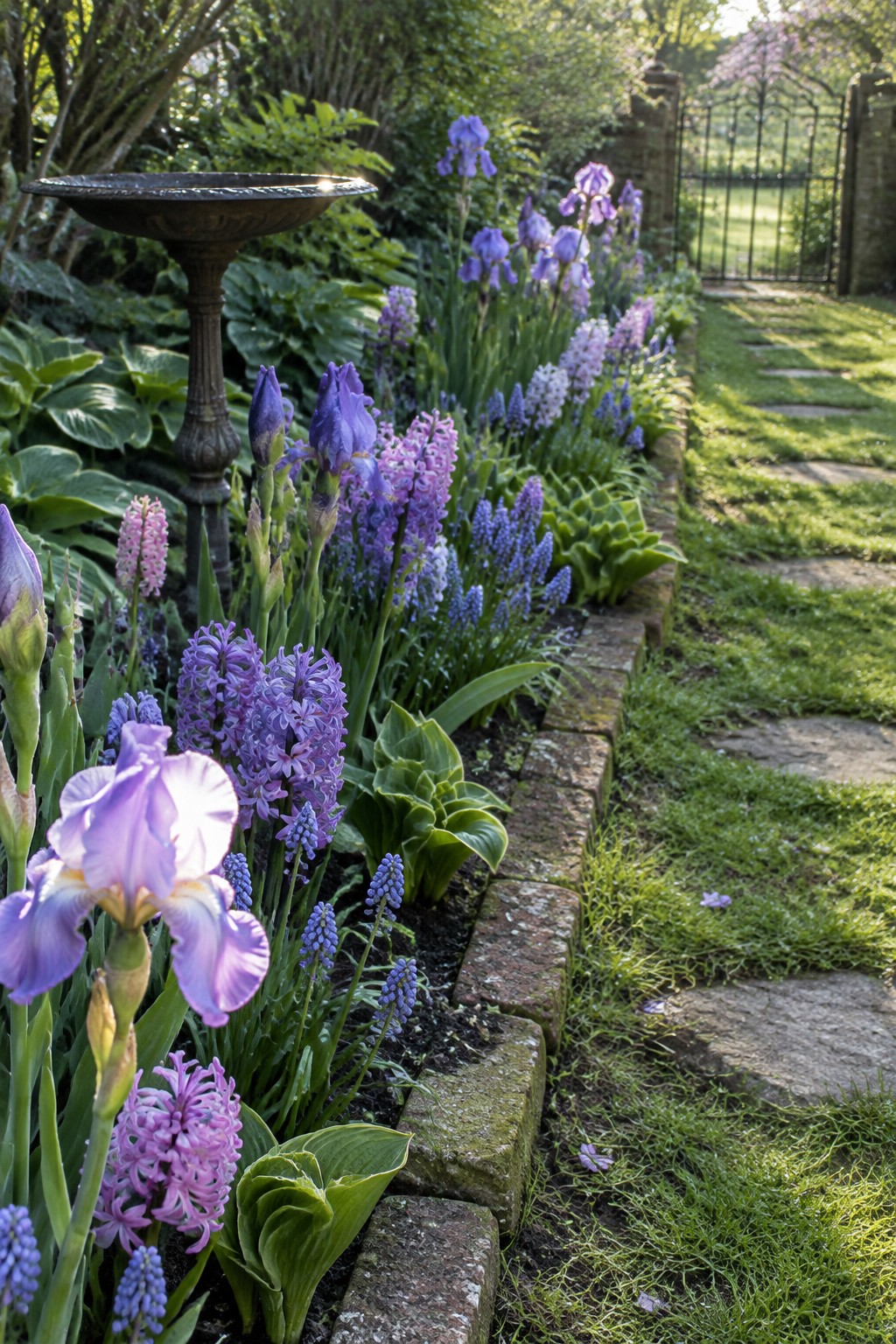
A narrow flower bed beside a path is a simple way to make irises part of the garden’s everyday route. Planting in layers gives the border a fuller look, with taller irises rising behind shorter spring flowers.
Use this approach along a stone or brick path where the bed has enough width for plants to spread. Keep the edge clear so leaves do not crowd the walkway, and repeat a few flower colors along the length for an easy, connected look.
Plant Irises in a Pebble Garden Bed
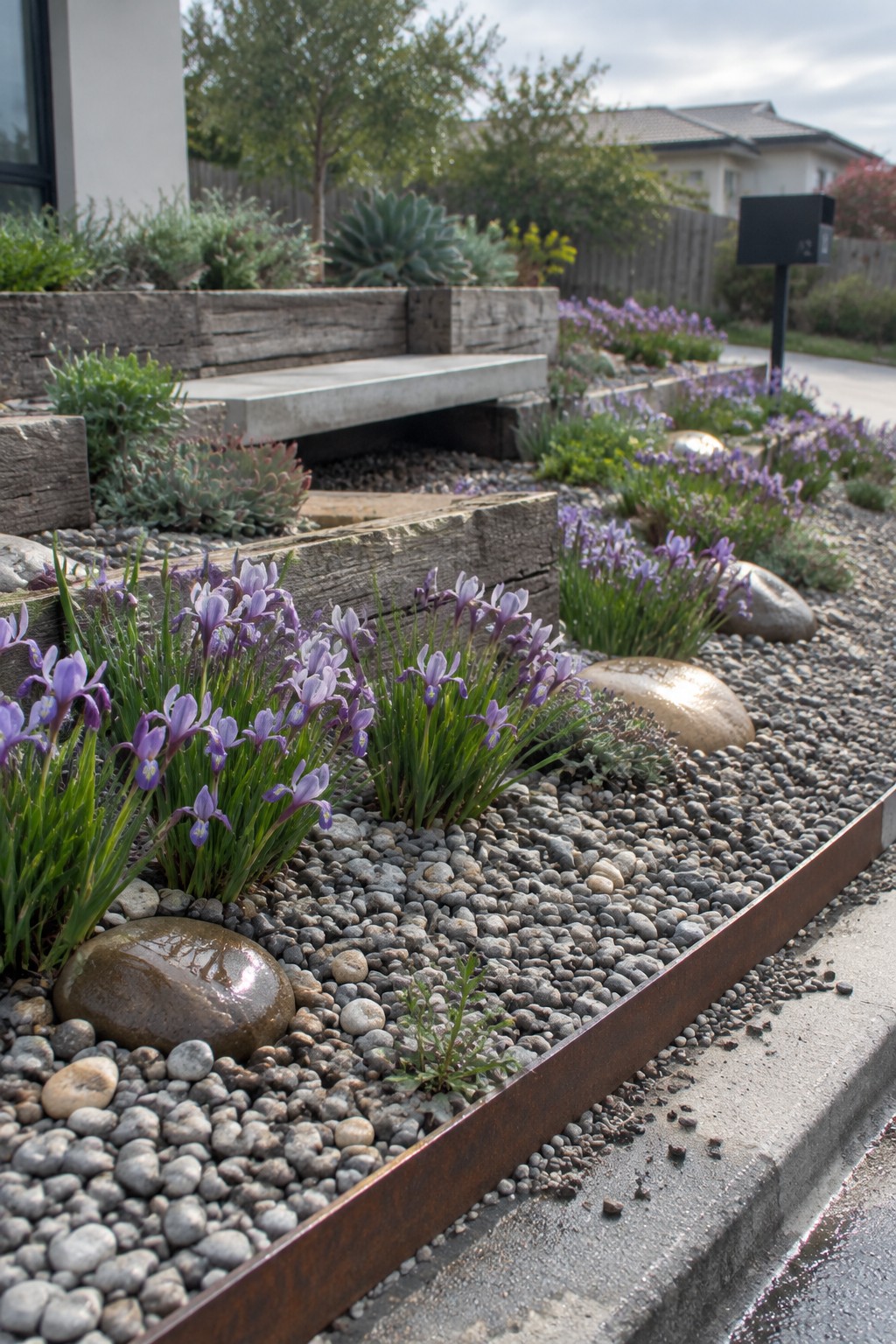
A gravel bed can give spring irises a tidy place to grow while keeping the garden easy to care for. The loose stones make the purple flowers stand out, and a simple metal edge helps keep gravel from spreading onto nearby paving.
This idea works well in a sunny front garden with good drainage. Leave enough room between iris clumps for air to circulate, and keep gravel from piling against the plant bases.
Plant Irises Along a Garden Stream
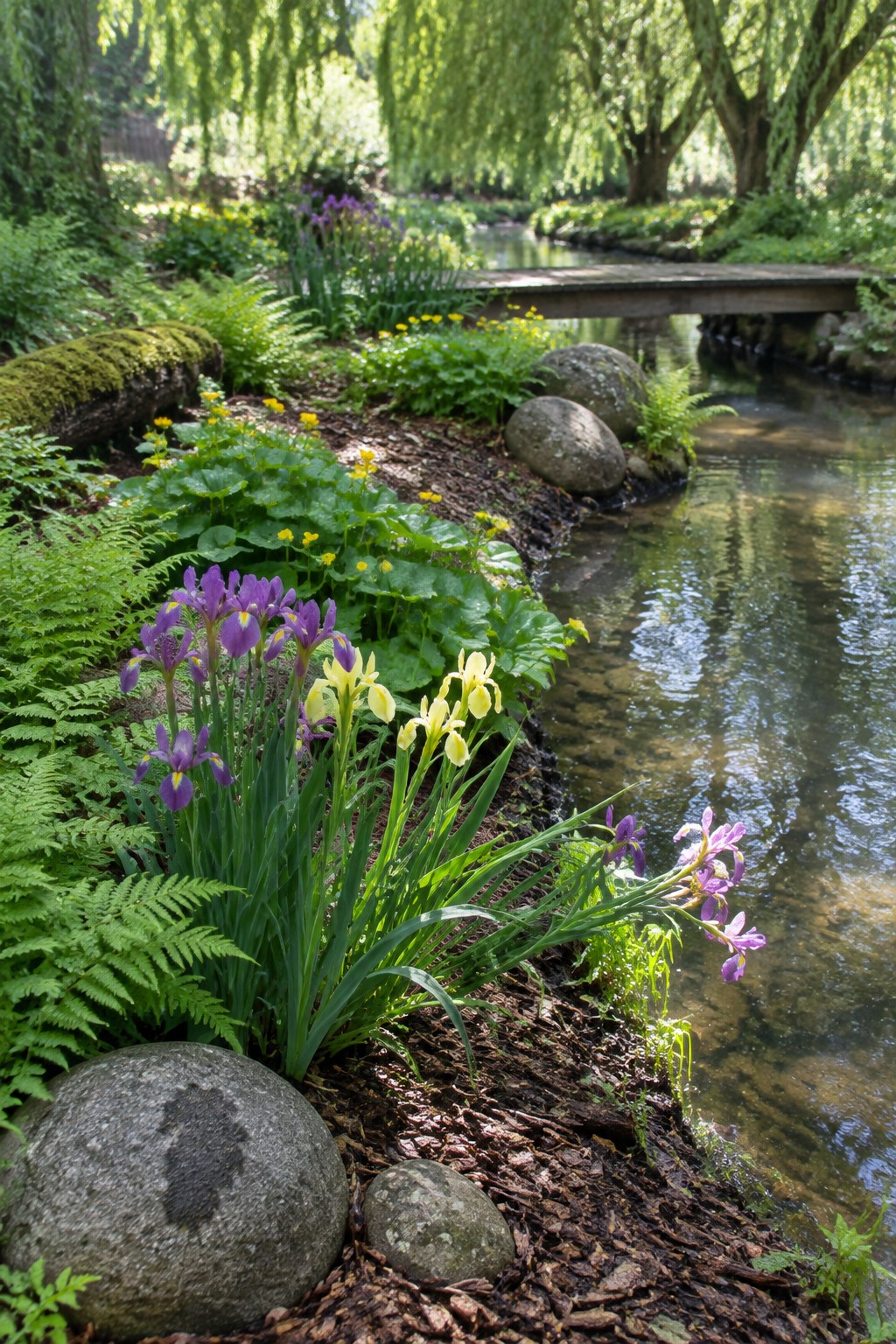
A streamside flower bed can make irises feel like part of the landscape rather than a separate patch of color. Their upright leaves and spring blooms stand out against low groundcover, while the water’s edge gives the planting a clear shape.
This idea suits a shady garden with naturally damp soil. Plant irises in small groups along the bank, leaving room for the stream to remain visible and choosing varieties suited to the moisture level.
Plant Irises Along a Narrow Drainage Swale
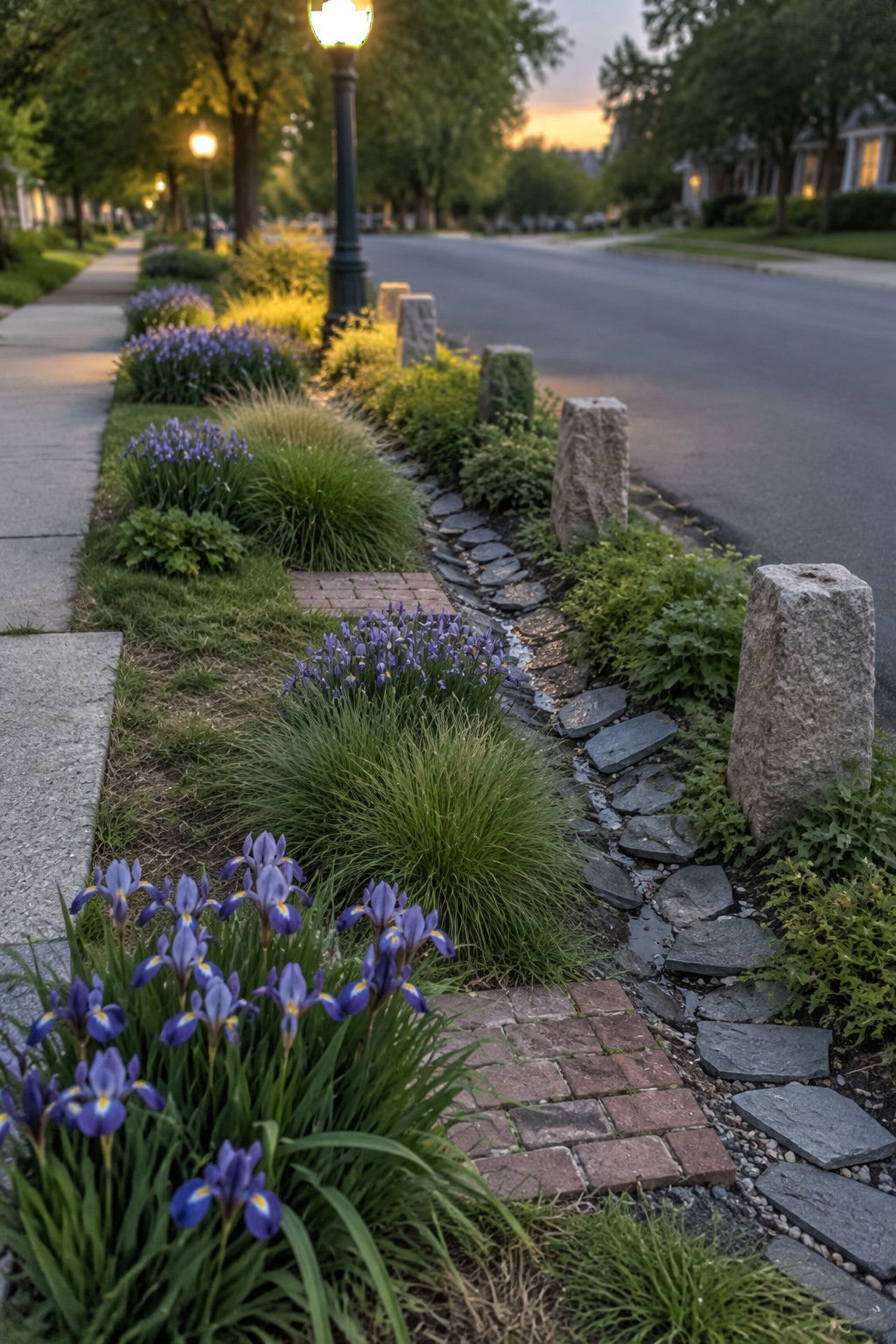
A shallow, stone-lined swale can give an iris border a clear shape while helping guide rainwater away from the sidewalk. The irises bring spring color to the planting, and the open channel leaves room for water to move through.
This approach suits a narrow strip beside a walk or street where a regular flower bed might feel crowded. Keep the stones low and secure, and choose irises that tolerate the moisture levels in your site.
Repeat Iris Plantings Along a Garden Wall

Repeating irises along a wall gives a narrow border a clear rhythm without making it feel overly formal. The purple blooms stand out against the pale wall, while matching plant supports help the border look connected.
Use this approach beside a walkway or along a long boundary where a row of flowers can be enjoyed up close. Leave enough room for iris leaves to spread, and keep taller plants from crowding the path.
Plant Irises Along a Narrow Garden Walk
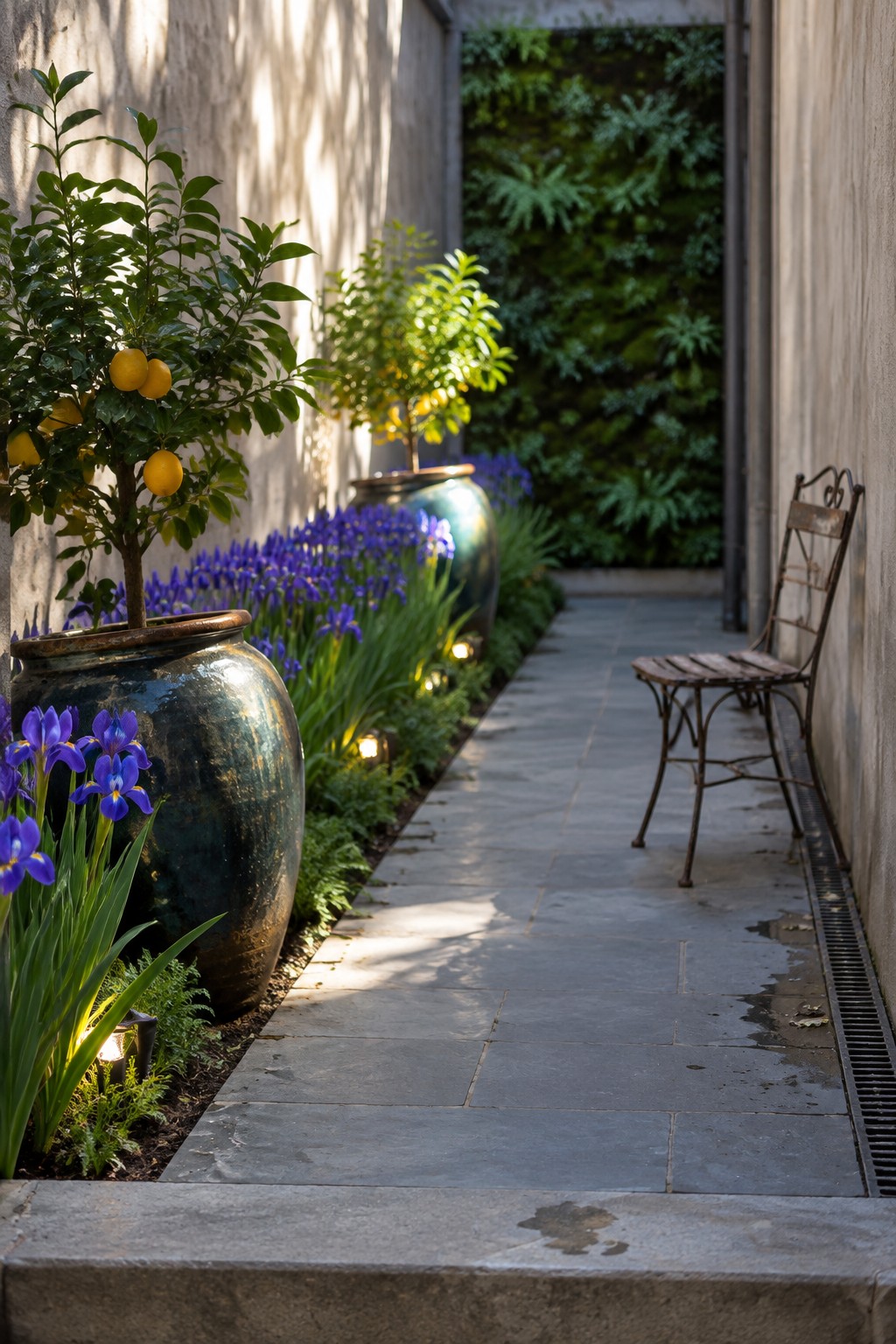
A narrow path can feel like part of the garden when a flower bed runs beside it. Irises are a good choice for this setup, bringing a band of spring color right to the walking route without taking up much room.
Keep the plants to one side of the path or in a slim border, and leave enough width for comfortable passage. This works especially well in a side yard, where a simple stone walkway and a row of irises can make a tight space feel cared for.
Build Up an Iris Bed With Raised Planters

Raised planters let you grow irises on a sloped site without losing a clear bed shape. The stepped levels give the flowers room to show, while the metal sides keep soil in place.
Use this approach on a hillside or beside an entry path where a flat bed would be difficult to manage. Choose sturdy materials that can handle damp soil, and leave enough space between levels to reach the plants for dividing and upkeep.
Grow Irises in Balcony Planters

A row of planters is a practical way to bring irises to a small balcony. Their upright leaves and spring flowers add color along the railing, while trailing blue flowers spill over the edges and help connect the separate pots.
Choose containers deep and wide enough for the iris roots, and make sure they have drainage holes. This approach suits balconies and terraces where there’s no garden bed, but planters can dry out quickly, so check the soil regularly.
Create a Shady Iris Border Along a Garden Path
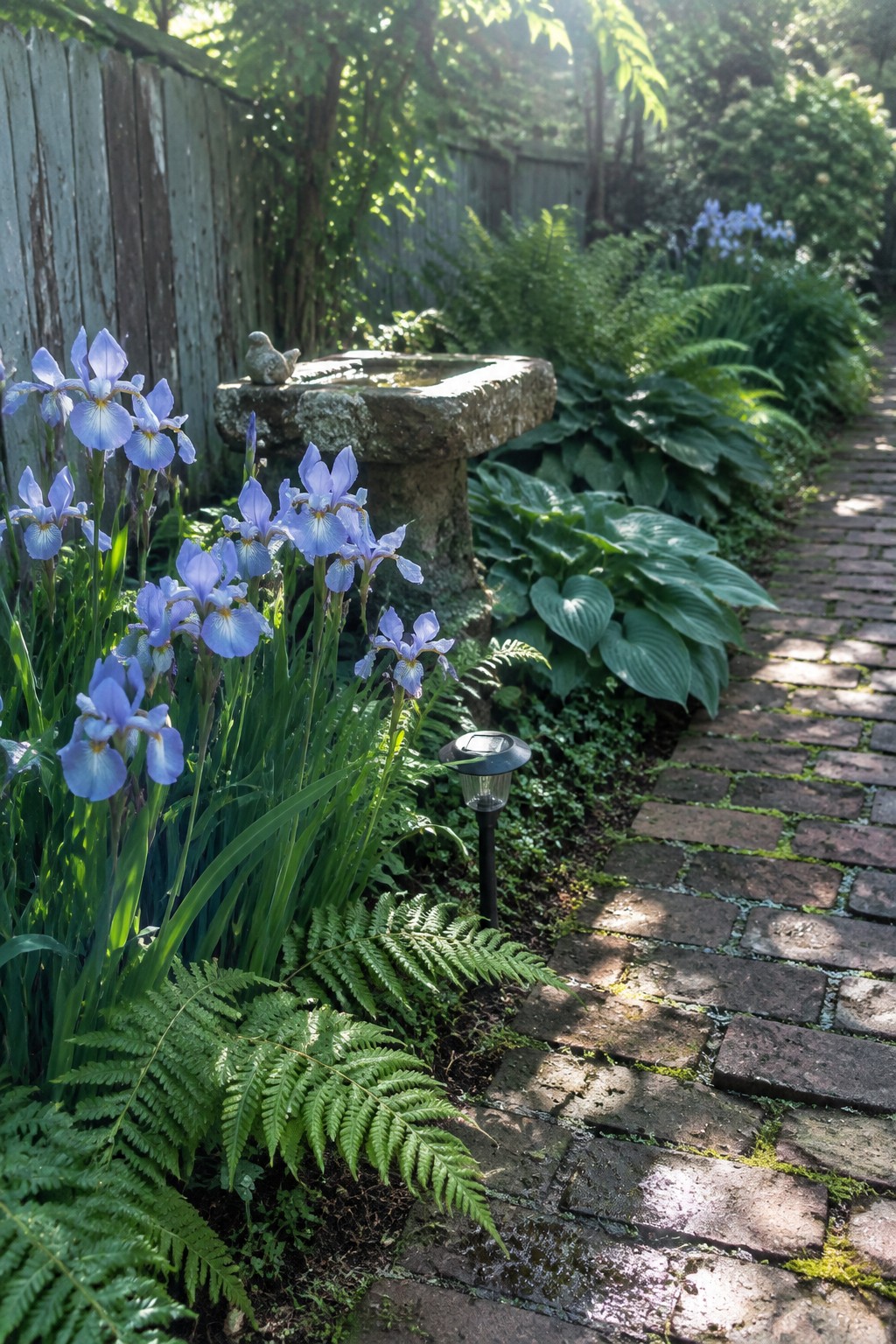
Irises can bring a clear band of spring color to a shaded garden path. Planting them along one side of a walk lets the flowers stand out while leafy ground cover fills the space around them.
Use this approach where the path has room for a planting bed, especially beside a fence or established shrubs. Check that the irises get enough light to flower well, and leave space between clumps so they do not crowd the walk.
Plant Irises Along a Courtyard Border
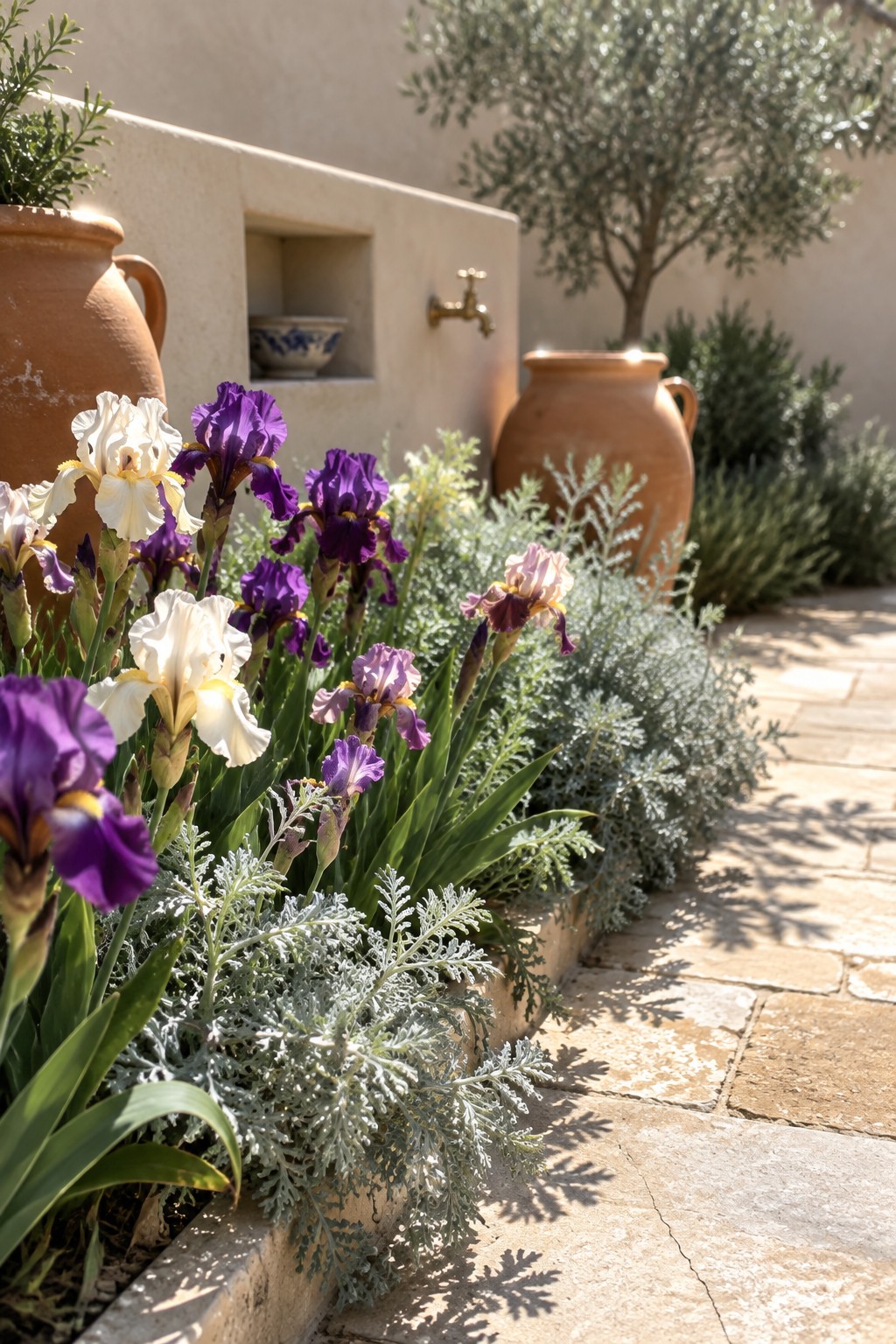
A narrow planting bed is a good way to bring spring color into a courtyard without taking over the walking space. Irises give the border height and strong color, while the silvery foliage between them keeps the planting from looking too crowded.
This approach works well beside a stone path or a small outdoor water feature. Leave enough room for the iris leaves to spread, and repeat a few colors along the bed for a simple, tidy look.
Plant Irises Along a Pool Border

A narrow flower bed beside a pool is a practical place to grow irises. Their upright leaves and spring flowers bring color to the edge without taking up much room, while low plants can fill the space closer to the ground.
Leave enough clearance for the pool coping and keep plants from leaning over the water. This approach works well in a sunny poolside bed, where irises can grow alongside compact perennials.
Use Iris Beds to Line a Garden Walk

A narrow stone path can feel like part of the garden when irises grow along its edge. The flowers bring a band of color close to the route, while a clipped low hedge gives the planting a tidy boundary.
This approach suits a side garden or a walkway leading to a gate. Leave enough room for the iris leaves to spread without narrowing the path, and keep the edge trimmed so the walkway stays easy to use.
Frequently Asked Questions
Q: How much sun do irises need to bloom well?
A: Most irises flower best with at least six hours of direct sun a day. In hotter climates, a little afternoon shade can help keep blooms looking fresh.
Q: What can I plant beside irises to keep the bed colorful after they bloom?
A: Pair them with flowers that take over as iris blooms fade, such as salvia, daylilies, or coneflowers. Low-growing ground covers can also soften the bare soil without hiding the iris foliage.
Q: How do I stop my iris bed from getting crowded?
A: Divide the clumps every few years, ideally after flowering. Replant the healthiest rhizomes with their tops just above the soil, and leave space around them for air and new growth.
Q: Can I grow irises in a pot?
A: Yes. Choose a wide pot with drainage holes, use a free-draining mix, and keep the rhizomes near the surface.
