

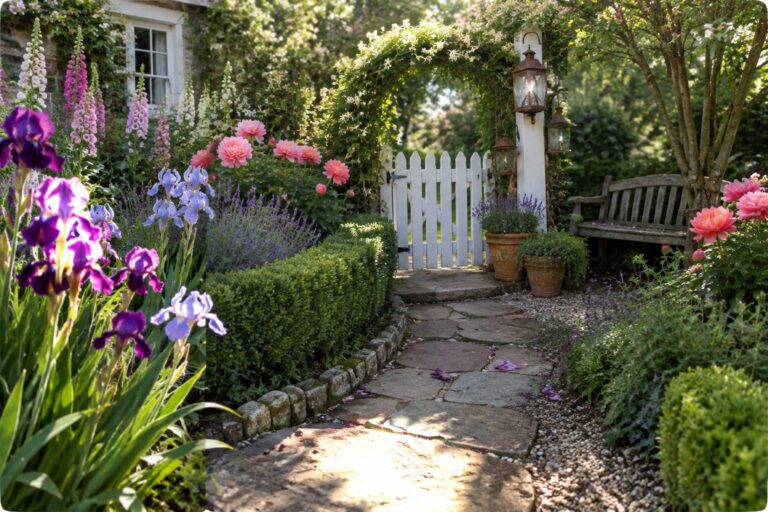
I find that a cottage garden feels most settled when its loose planting still has a clear shape, with paths and borders guiding the eye through the flowers.
Iris can bring height, strong color, and a welcome pause between softer plants, but they need room and a spot that suits their light and soil needs.
The first thing I notice in a garden like this is how the planting meets the path, since that edge can make a full border feel either thoughtful or crowded.
I’d look for ways to repeat iris in small groups, then balance them with foliage and blooms that keep the garden interesting as the seasons change.
Some of these ideas may be worth adapting to your own yard, especially if you want a garden that feels informal without losing its sense of layout.
Use a Stone Path To Shape the Garden

A stone path gives a cottage garden a clear route through the planting and makes the beds feel more organized. The irregular slabs suit a relaxed garden style, while the low stone edging helps keep plants and gravel in their own spaces.
This approach works well in a narrow side garden or a small yard where a winding route can guide visitors toward a gate or seating spot. Leave enough room between stones for comfortable steps, and keep taller flowers from leaning too far over the path.
Add A Seating Spot Along The Garden Path
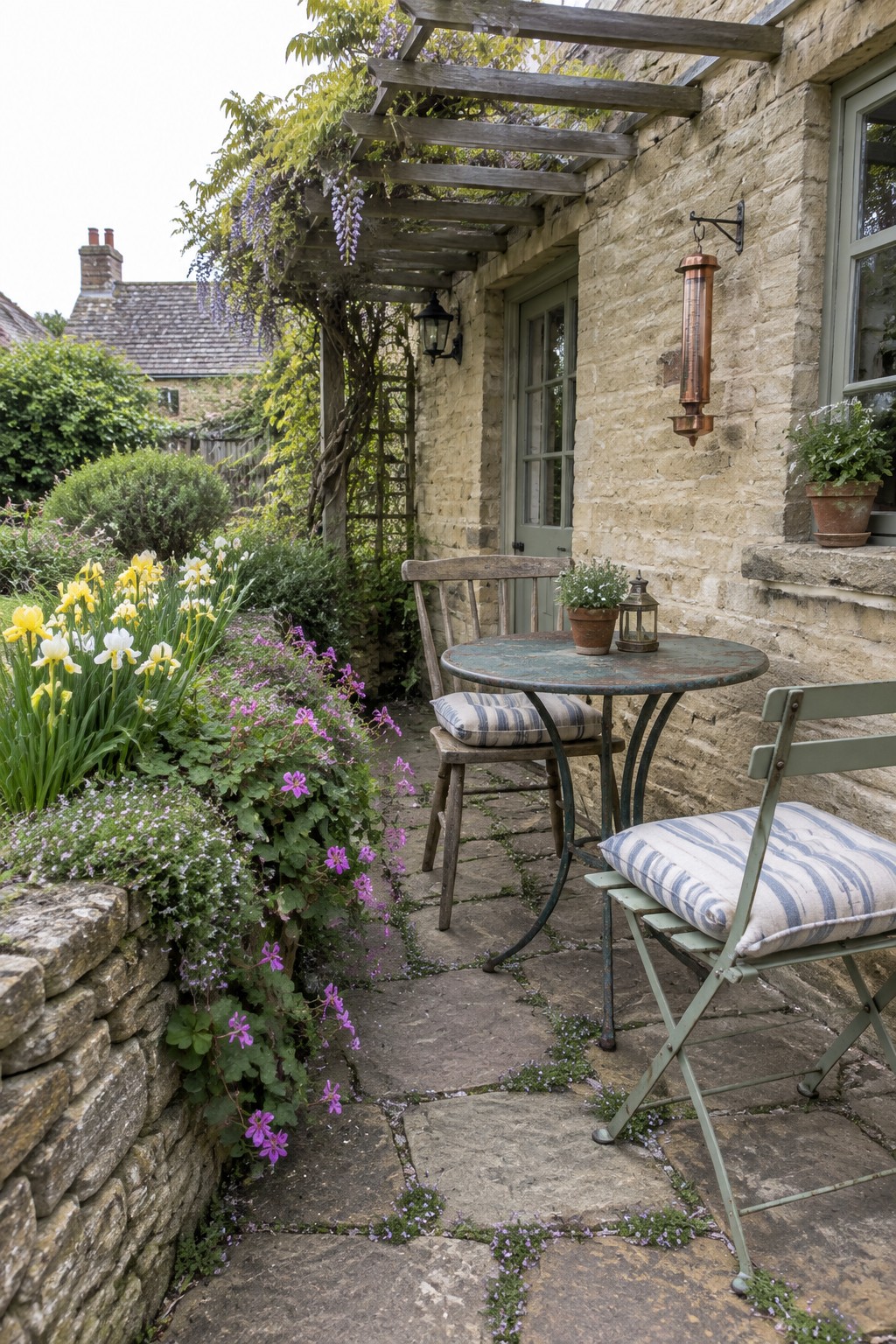
A small seating area can make a cottage garden more useful without taking much space from the planting. A simple table and chairs beside the path offer a place to pause and enjoy the flowers.
On a narrow patio, keep the furniture compact and leave a clear route through the space. Planting along the edge can soften the transition between paving and garden, while iris can add height and color nearby.
Use A Stepping-Stone Path Through The Flower Bed
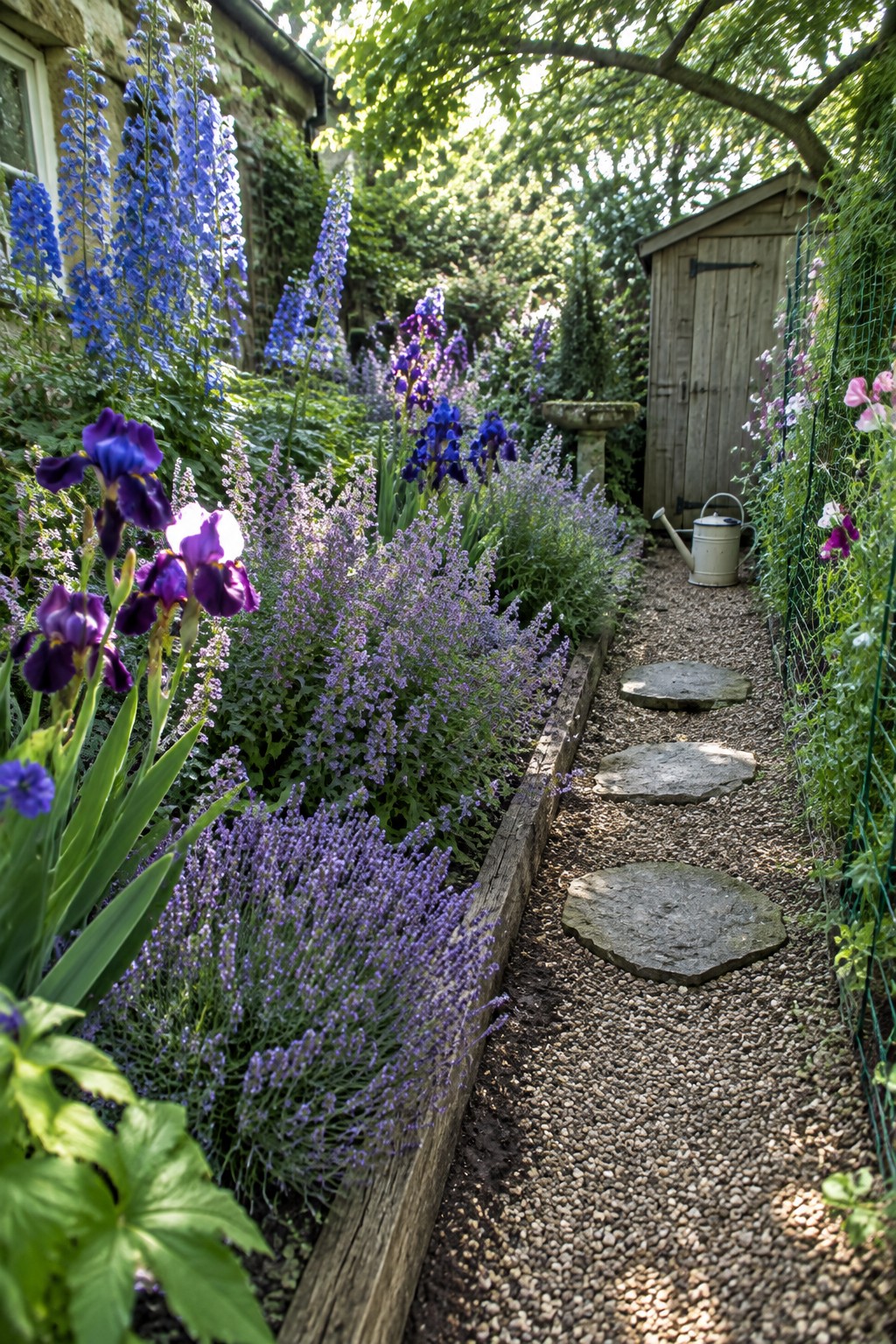
A simple stepping-stone path makes a cottage garden easier to walk through without taking space away from the flowers. The stones give the route a clear shape, while the surrounding planting keeps it feeling informal.
Set stones into gravel or compacted soil and leave enough room for a comfortable stride. This works well in a narrow side garden, too. Keep the path wide enough to use easily, and avoid letting plants spill over the walking surface.
Use a Brick Path to Shape the Garden
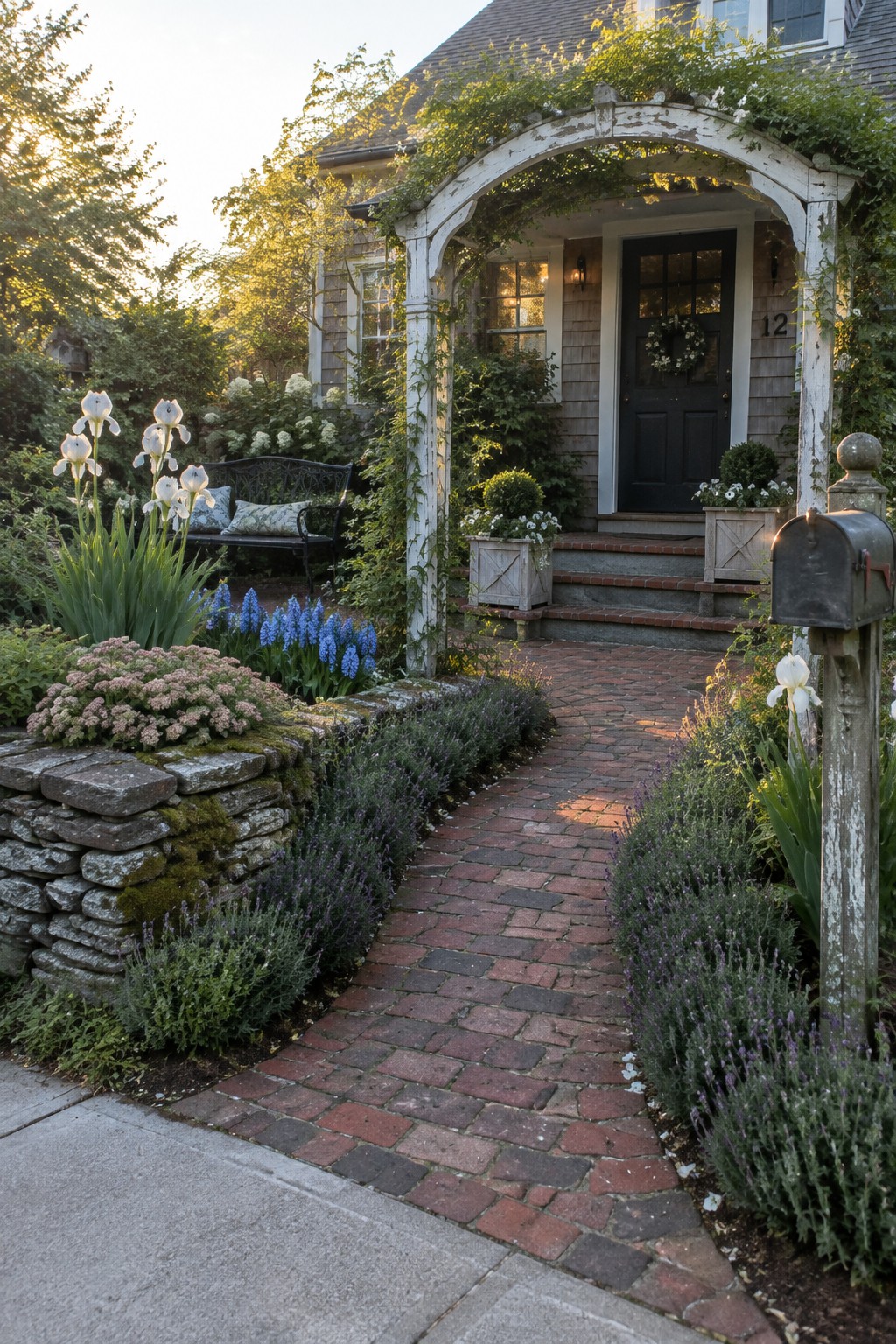
A brick path gives a cottage garden a clear route to the front door while letting flowers grow close along its edges. The varied tones of old brick suit informal planting, and the path feels more settled than a wide strip of plain paving.
Use a gentle curve to guide the walk and make room for flower beds on either side. Irises can mark the edges in spring, with lower plants filling in around them. Keep the path wide enough to walk comfortably and leave a little space between the bricks and plants for upkeep.
Plant Iris in a Defined Garden Bed

A clear flower bed gives iris room to stand out without making a small garden feel crowded. Here, a rounded bed of iris sits within a low border of lavender, so the taller flowers form the center of the planting.
This layout works well in a cottage garden with gravel paths or a compact courtyard. Leave enough space between the iris clumps for airflow, and use a low edging plant to mark the bed without hiding the flowers.
Use a Grass Path to Divide the Flower Beds
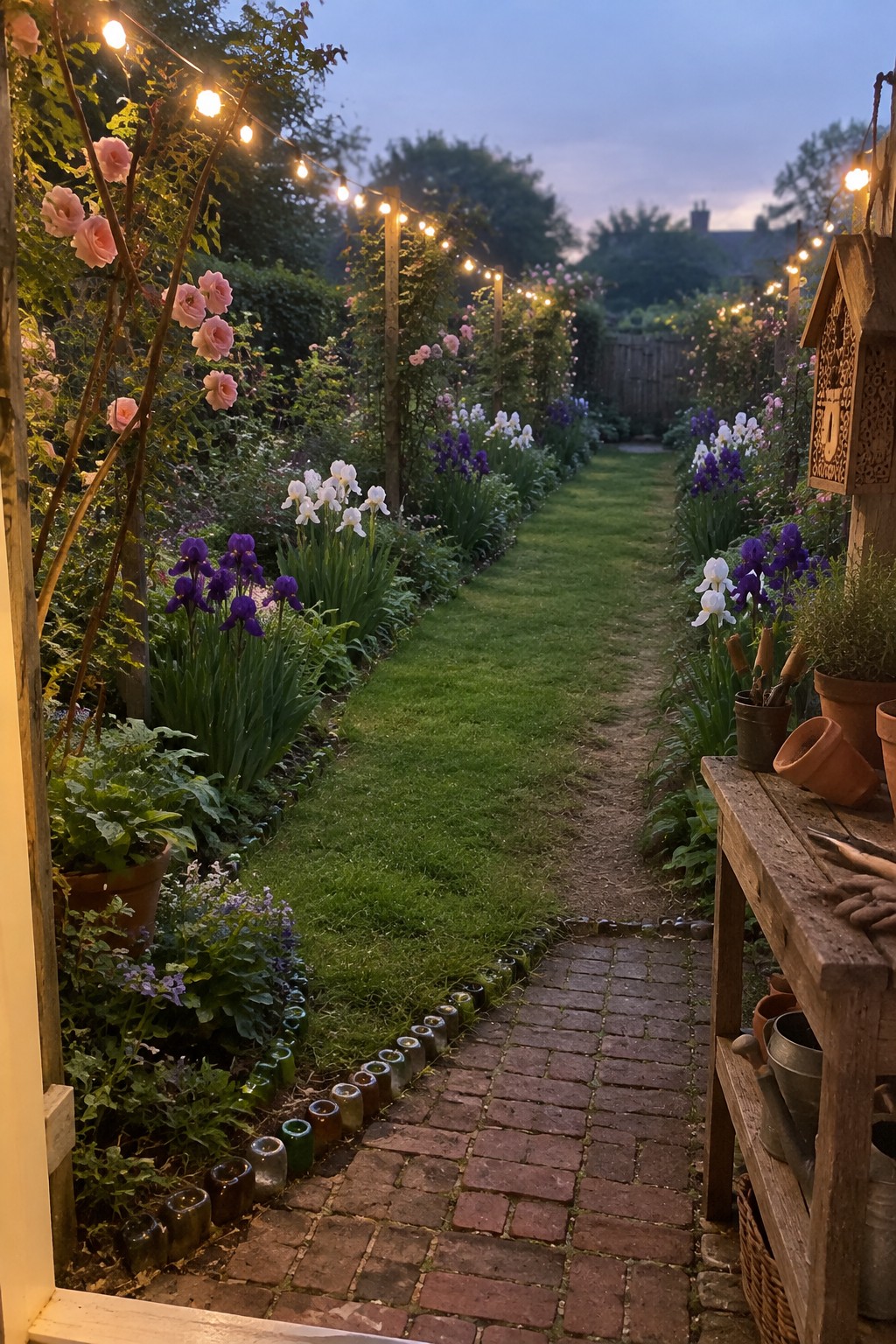
A narrow grass path gives a cottage garden a clear route through dense planting. It feels softer than a fully paved walkway and leaves the flowers as the main feature.
Keep the edges trimmed so the path stays easy to follow, and leave enough width to walk through comfortably. This works well in informal gardens, especially where tall flowers like iris grow along both sides.
Let The Path Lead Through The Iris Bed
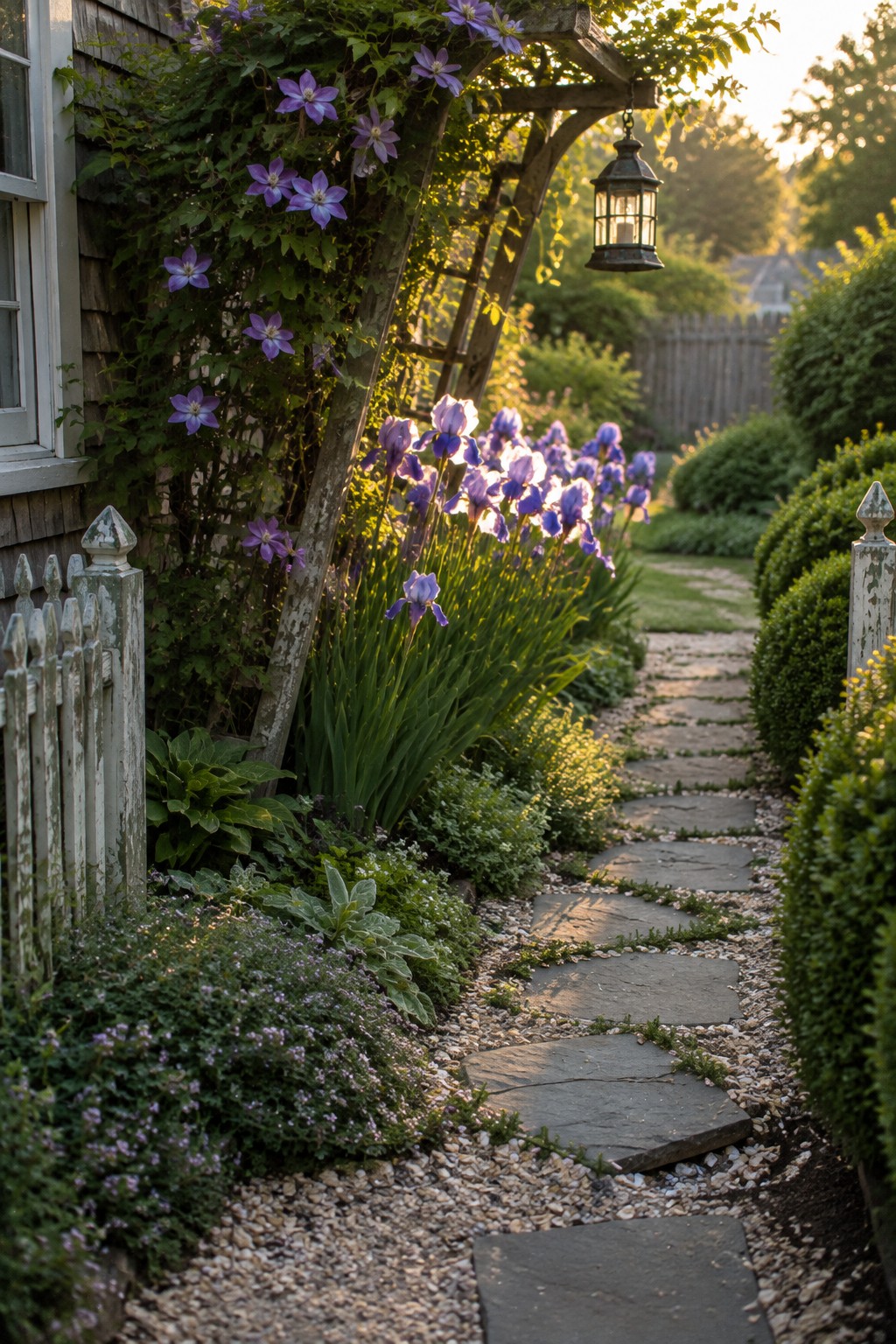
A winding stepping-stone path gives an iris garden a clear route through the planting instead of leaving it as a bed to view from the edge. The stones make it easier to reach flowers for trimming and care, while the curved layout feels at home in a cottage garden.
Leave enough room around each stone for comfortable footing, and keep the path wide enough to use without brushing against the plants. A gravel base helps with drainage, but make sure the stones sit level and stay firm.
Use Raised Beds To Organize an Iris Garden

Raised beds give a cottage garden a clear planting structure while keeping the path easy to follow. Purple irises along the timber edges mark the route without making the garden feel too formal.
Use this approach when you want to separate flowers and vegetables from a gravel walkway. Leave enough room between the beds for comfortable access, and choose sturdy boards that can handle regular contact with damp soil.
Use a Small Bridge To Connect Garden Areas

A wooden footbridge can make a cottage garden feel easier to explore, especially where a pond or drainage channel interrupts the path. It gives the garden a clear crossing without taking attention away from the surrounding flowers.
Place the bridge where it follows a natural route through the yard, and keep the approach firm and easy to walk on. Irises work well near the water’s edge, but leave enough room around them so their foliage does not crowd the crossing.
Use a Low Stone Wall to Define an Iris Bed
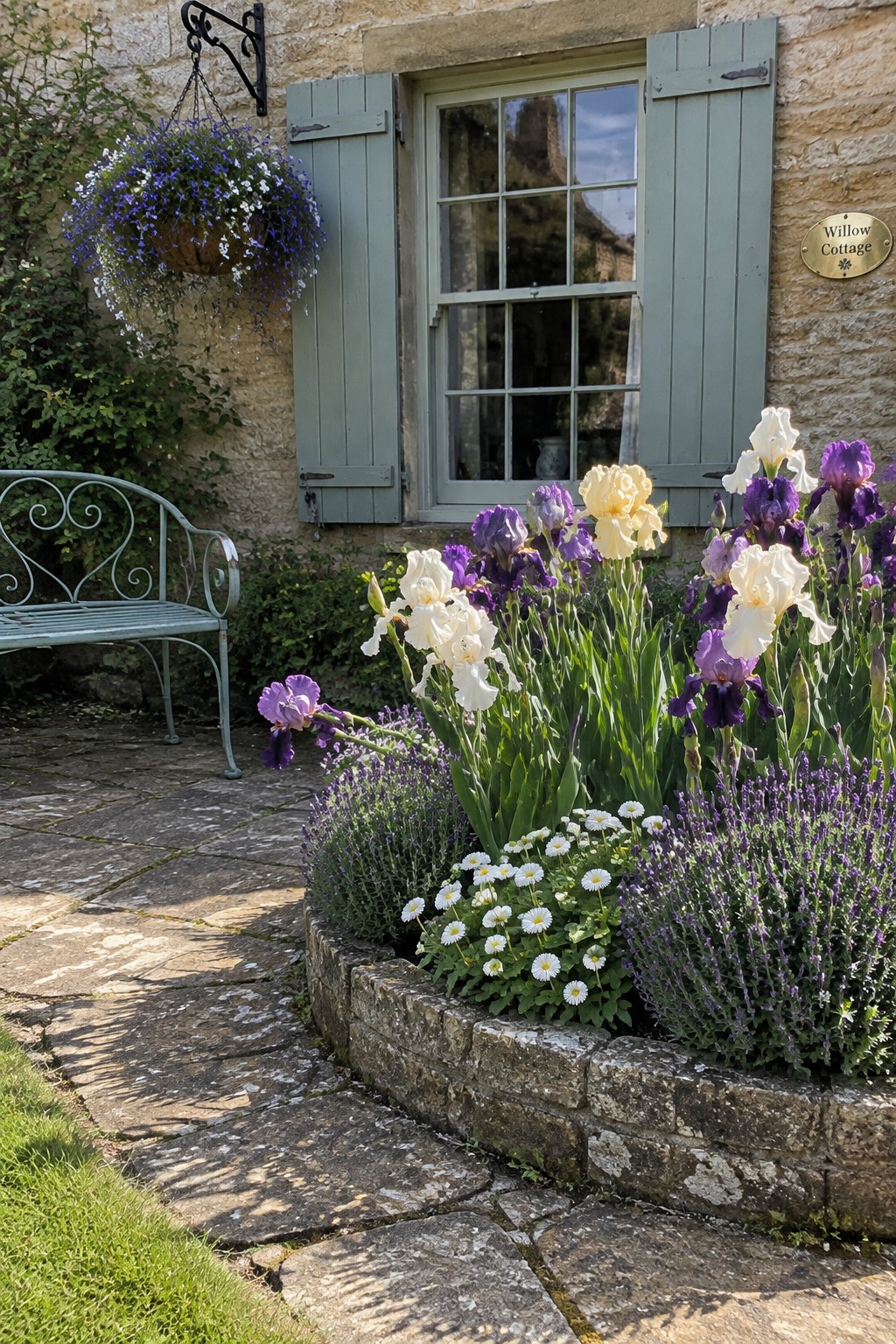
A low stone wall gives an iris bed a clear edge and helps separate flowers from the path. It suits cottage gardens especially well, where stone can look at home beside older masonry and informal planting.
Use the wall to follow the shape of a bed along a walkway or beside the house. Keep it low enough that the irises remain easy to see, and leave enough room behind the edge for their leaves to grow without spilling onto the path.
Make a Garden Seating Nook Beside the Iris
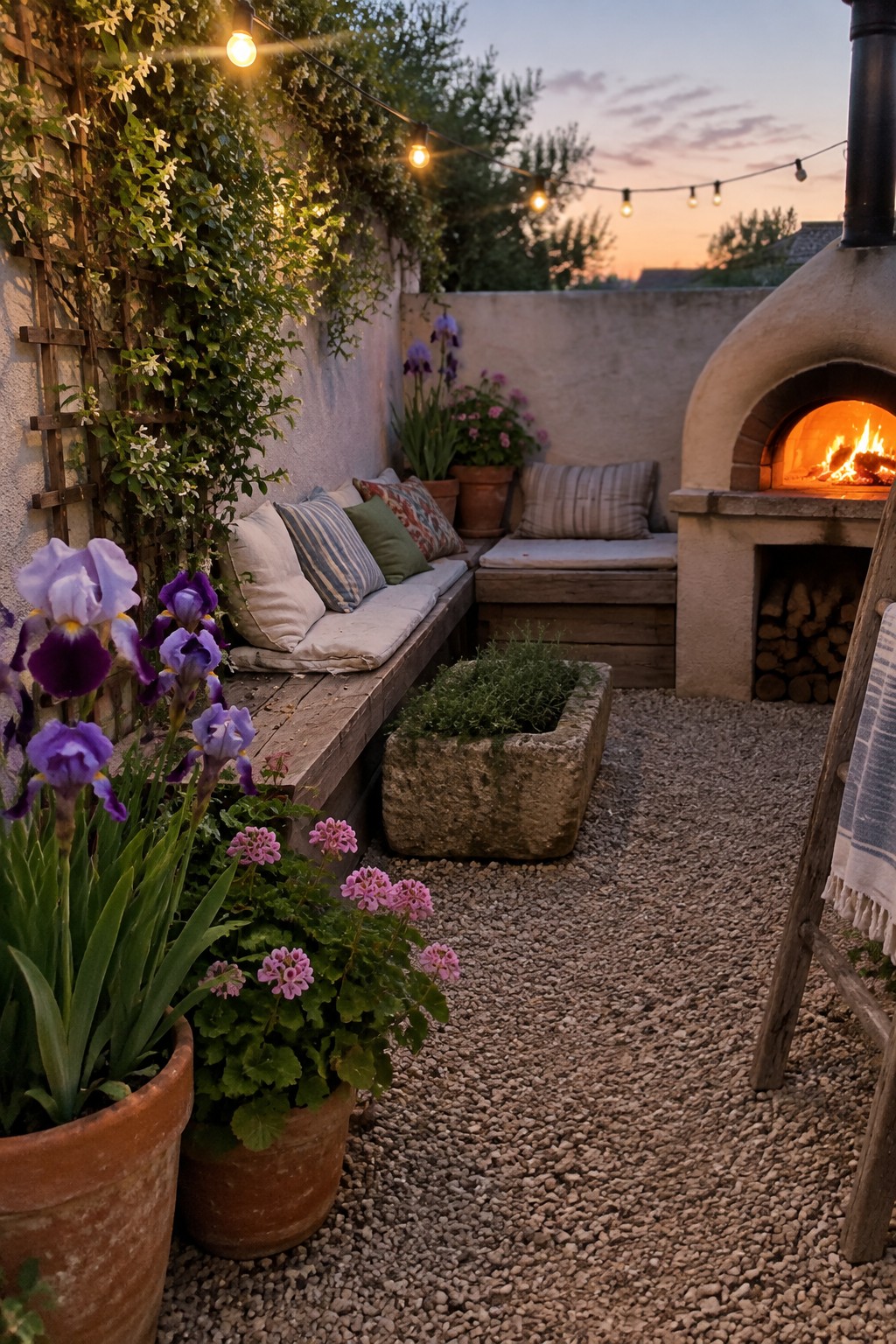
A small seating area can make an iris garden feel like a place to linger, not just a flower bed to walk past. A built-in bench tucked along a garden wall leaves the center open while keeping a spot to sit close to the planting.
Try this in a narrow courtyard or along the edge of a larger garden, and use weather-ready cushions for comfort. Plant iris near the bench where their blooms can be enjoyed, but leave enough room to reach the flowers for trimming and care.
Use a Brick Wall to Shape an Iris Bed
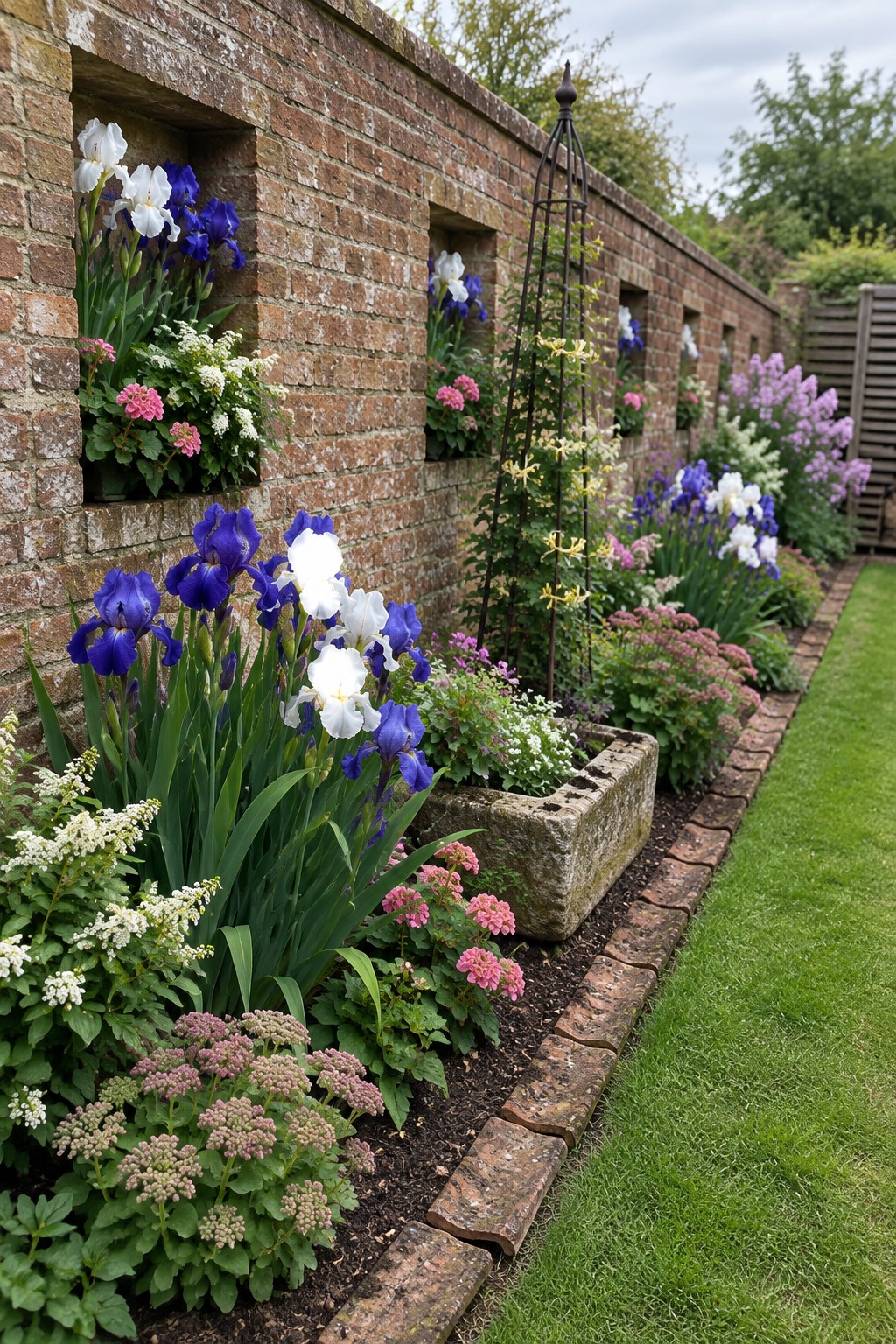
A brick wall can give an iris garden a clear structure without making it feel too formal. Recessed openings add planting spots along the wall, while a narrow brick edge keeps the flower bed distinct from the lawn.
This approach works well in a cottage garden where an existing wall can serve as a backdrop for irises and other flowers. Keep the bed wide enough for plants to fill out, and leave space for easy access to trim blooms and manage growth.
Use a Pebble Edging to Separate the Garden Path
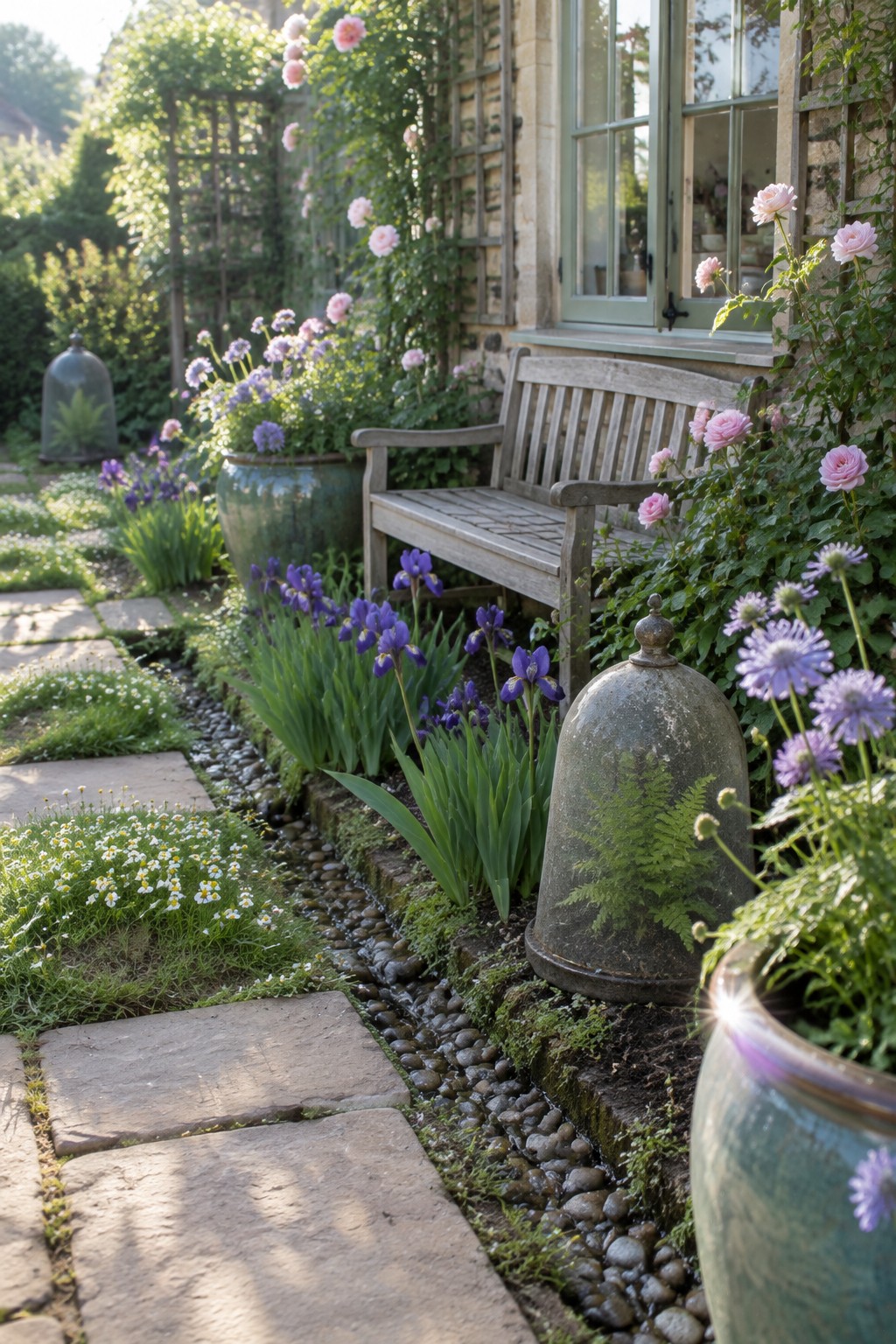
A narrow strip of rounded pebbles makes a clear edge between the stepping stones and the flower beds. It helps the path feel intentional while keeping loose soil and groundcover from spreading onto the walking surface.
Use this approach along a winding path through an iris garden, especially where planting beds sit close to the stones. Keep the pebble strip narrow so it defines the edge without taking up room for flowers.
Use Stone Edging to Define the Iris Bed
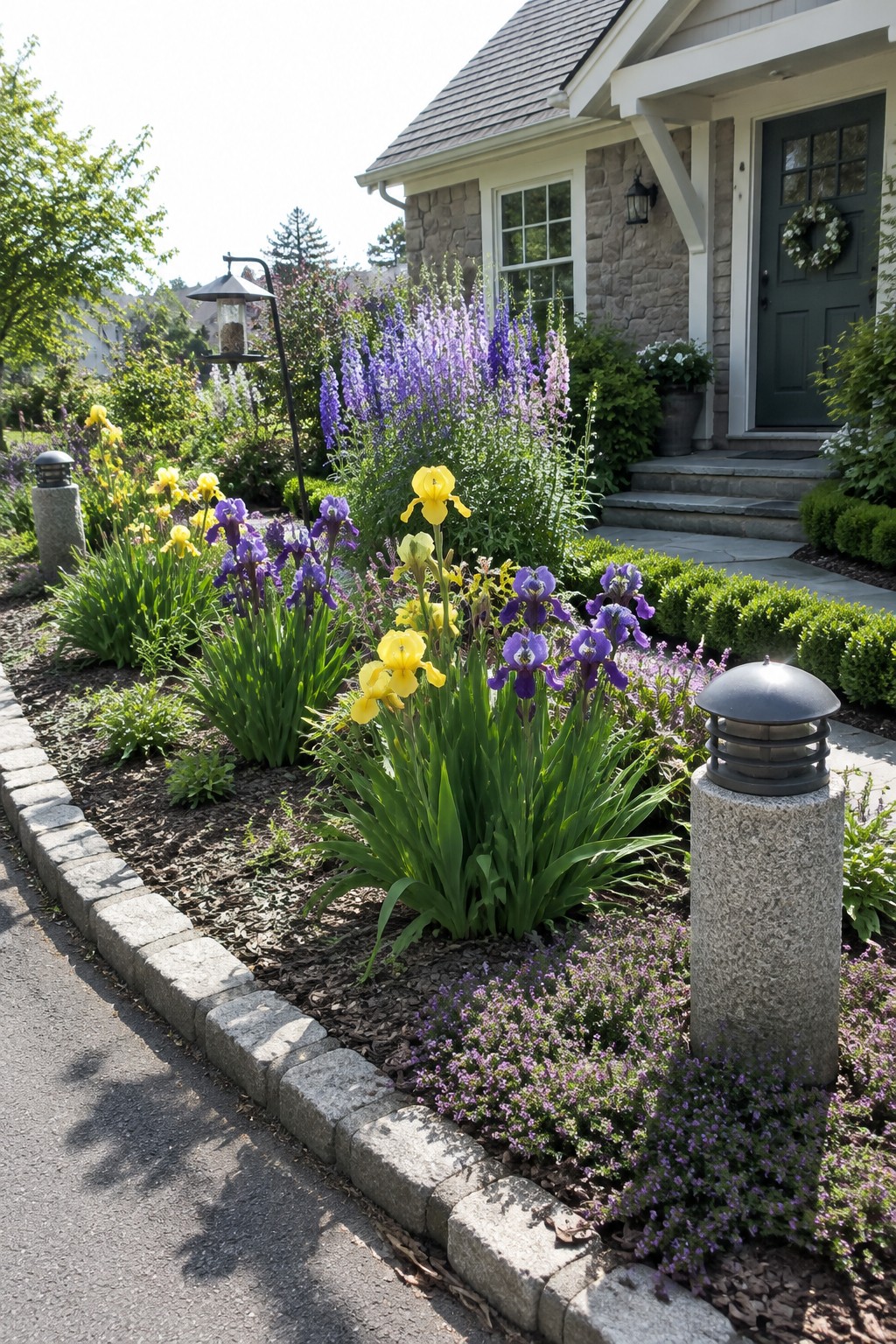
A low stone border gives an iris bed a clear shape and keeps the planting distinct from the path beside it. The edging also suits a cottage garden, where flowers can grow in a loose mix without the whole bed looking untidy.
Use sturdy stones that sit securely and follow the curve of the bed rather than forcing a straight line. Irises need room for their leafy clumps, so leave enough space inside the border for them to spread.
Use an Arched Garden Gate to Mark the Entry

A gate set into a stone arch gives a cottage garden a clear entrance and makes the path feel like it leads somewhere. Iris and other flowers can grow along the approach without blocking the way through.
Use this idea where a path enters a larger garden or turns into a more private area. A simple wooden gate suits an informal planting style, while sturdy stone posts help define the opening. Keep enough room around the entrance for plants to grow without crowding it.
Create a Small Patio Beside the Iris Garden

A compact patio gives you a place to sit and enjoy an iris bed without taking much space away from the planting. A round café table tucked beside the flowers makes the garden feel useful, not just something to look at.
This works well in a cottage garden where a path or paved corner can fit naturally among the beds. Keep the seating area modest, and leave enough room around it to tend the irises and walk through comfortably.
Use a Narrow Stone Walkway to Guide the Garden

A narrow stone walkway gives a cottage garden a clear route without taking space away from the flowers. The dark gravel between the slabs keeps the path easy to see and helps separate it from the planting bed.
This approach works well in a small side garden or courtyard where a wider path would crowd the beds. Leave enough room to walk comfortably, and choose stones with a steady surface so the route is practical in wet weather.
Frequently Asked Questions
Q: When should I plant irises in a cottage garden?
A: Plant them in fall or early spring, when the soil is workable and not waterlogged. Give each clump room to spread, since crowded irises tend to bloom less.
Q: How much sun do irises need to flower well?
A: Most bearded irises bloom best with at least six hours of direct sun. In a partly shaded garden, they may still grow, but you’ll likely see fewer flowers.
Q: What should I plant beside irises?
A: Try cottage favorites like salvia, catmint, or hardy geraniums, which add color without hiding the iris blooms. Keep low-growing companions near bearded irises so their rhizomes stay open to the sun.
Q: Why aren’t my irises blooming?
A: Too much shade, crowded clumps, or rhizomes planted too deep can all reduce flowering. If a clump has been in the same spot for several years, divide it after blooming and replant the rhizomes just at the soil surface.
