

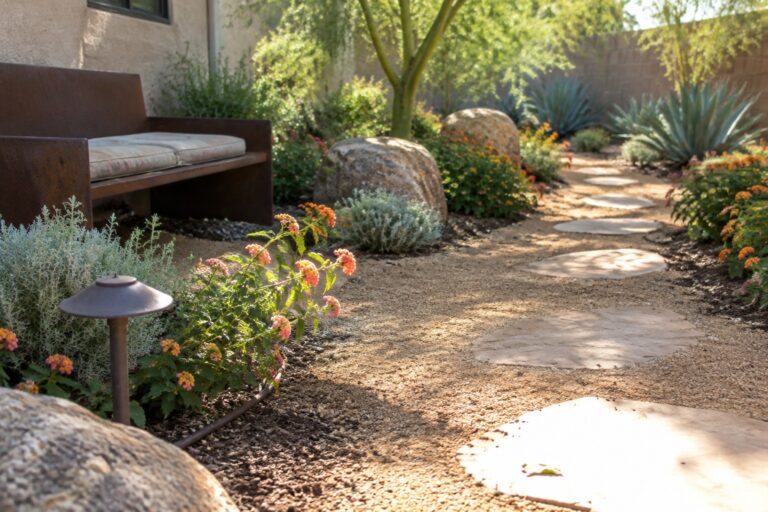
Lantana can handle strong sun and heat, but a garden still needs a clear layout to feel considered rather than crowded.
I find it helps to decide where taller plants will anchor a bed, then use lower lantana along edges or near a path where its color is easy to enjoy.
The first thing I notice in a sunny yard is whether the planting draws the eye naturally from one area to the next.
Grouping lantana thoughtfully can soften hard borders, brighten a slope, or add structure around a patio without making maintenance harder.
Some planting combinations are worth adapting to your own soil, space, and watering routine.
Use Stepping Stones To Guide A Garden Path
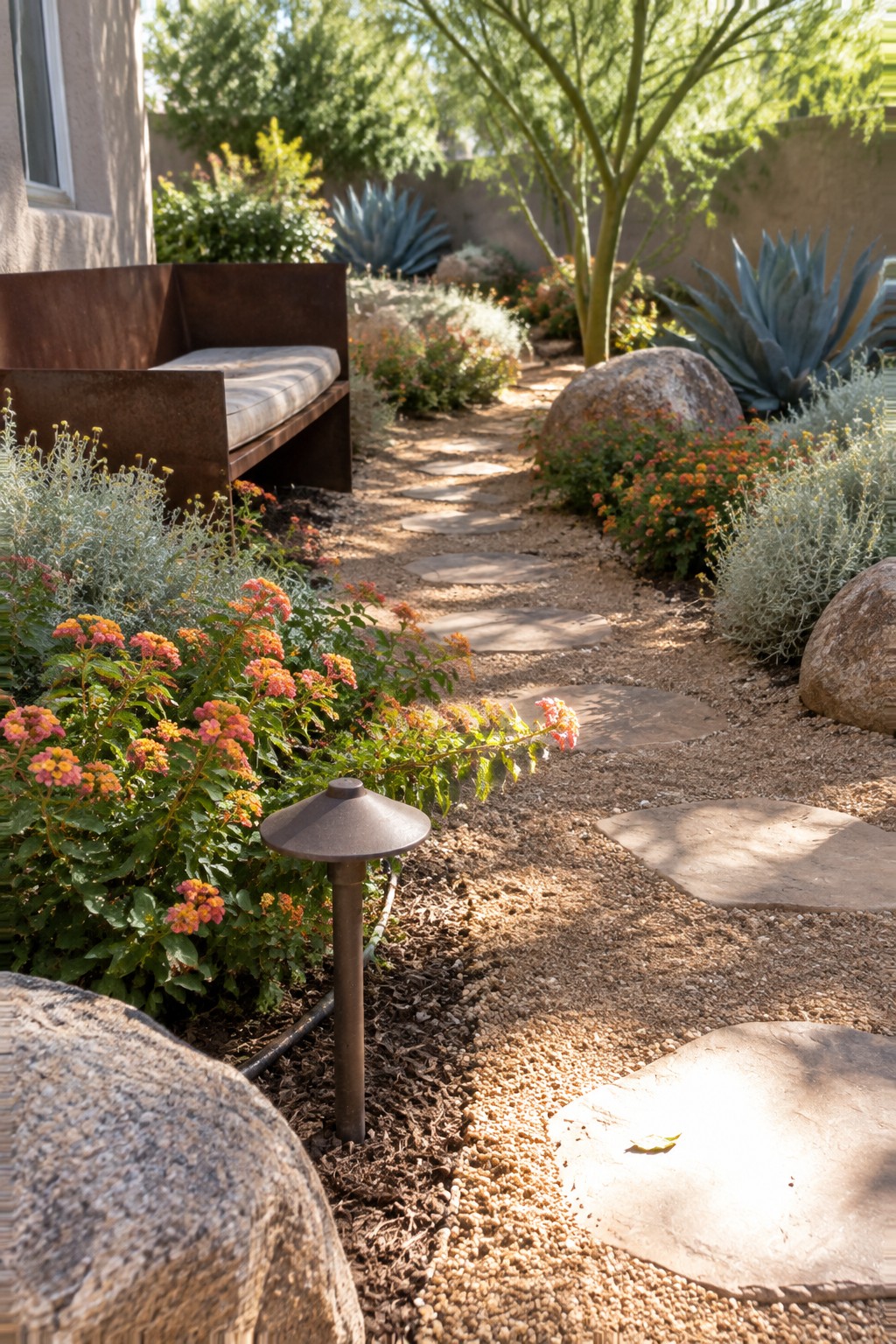
A stepping-stone path gives a planted yard a clear route without covering the whole ground in paving. The gaps can be filled with gravel, which lets the path feel informal and suits a sunny, drought-tolerant garden.
Set the stones far enough apart for a comfortable stride, and keep them level so they are easy to walk on. Lantana can grow along the edges, but leave room for it to spread without narrowing the path.
Use Lantana In Patio Containers
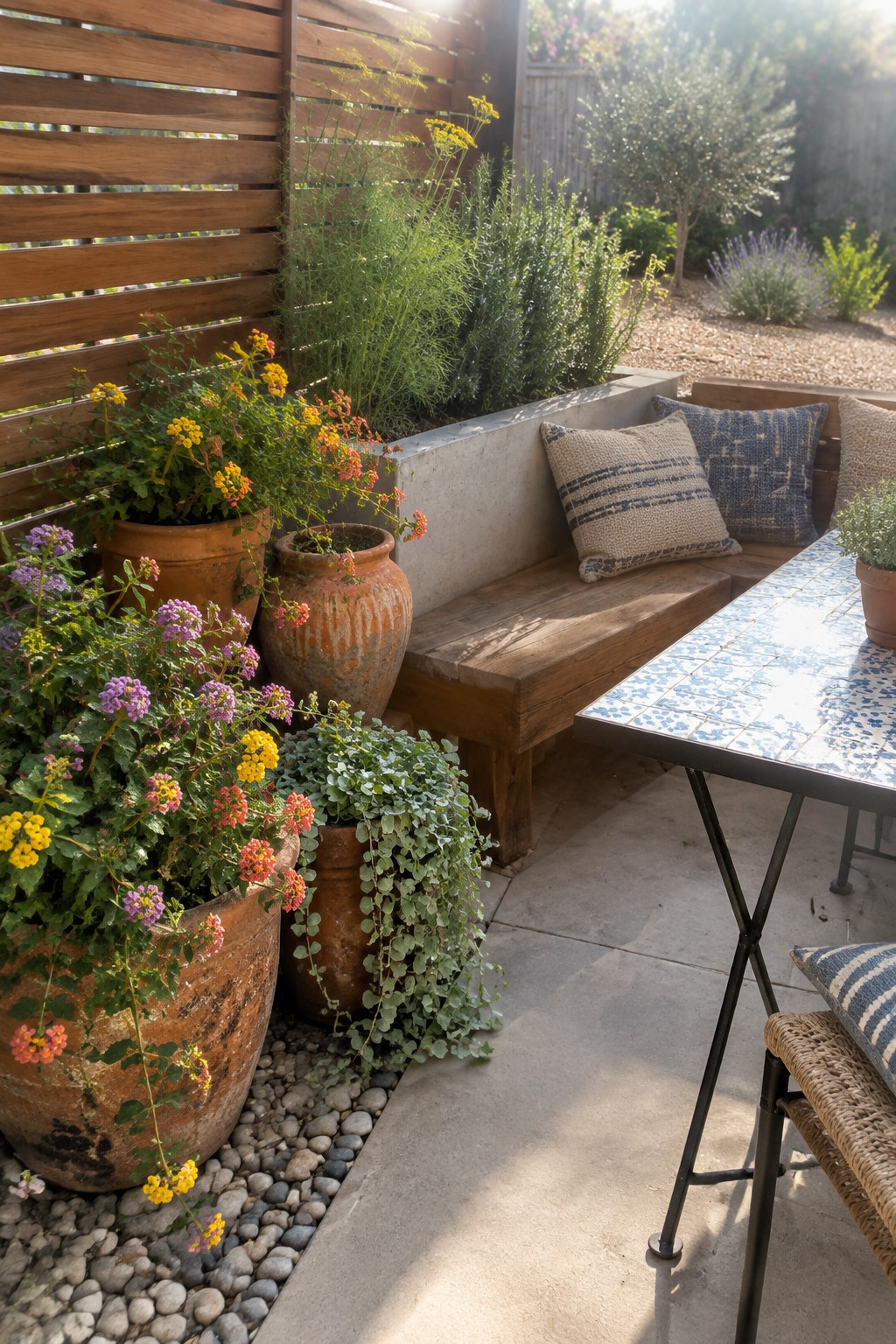
Lantana is a good choice for sunny patios because it flowers for a long stretch and handles heat well. Growing it in pots, as shown here, brings color close to the seating area without needing a large planting bed.
Choose sturdy containers with drainage holes and give each plant room to grow. A few pots can work along a patio edge or beside a bench, but avoid crowding them together so air can move between the plants.
Use Lantana to Fill a Sunny Garden Bed
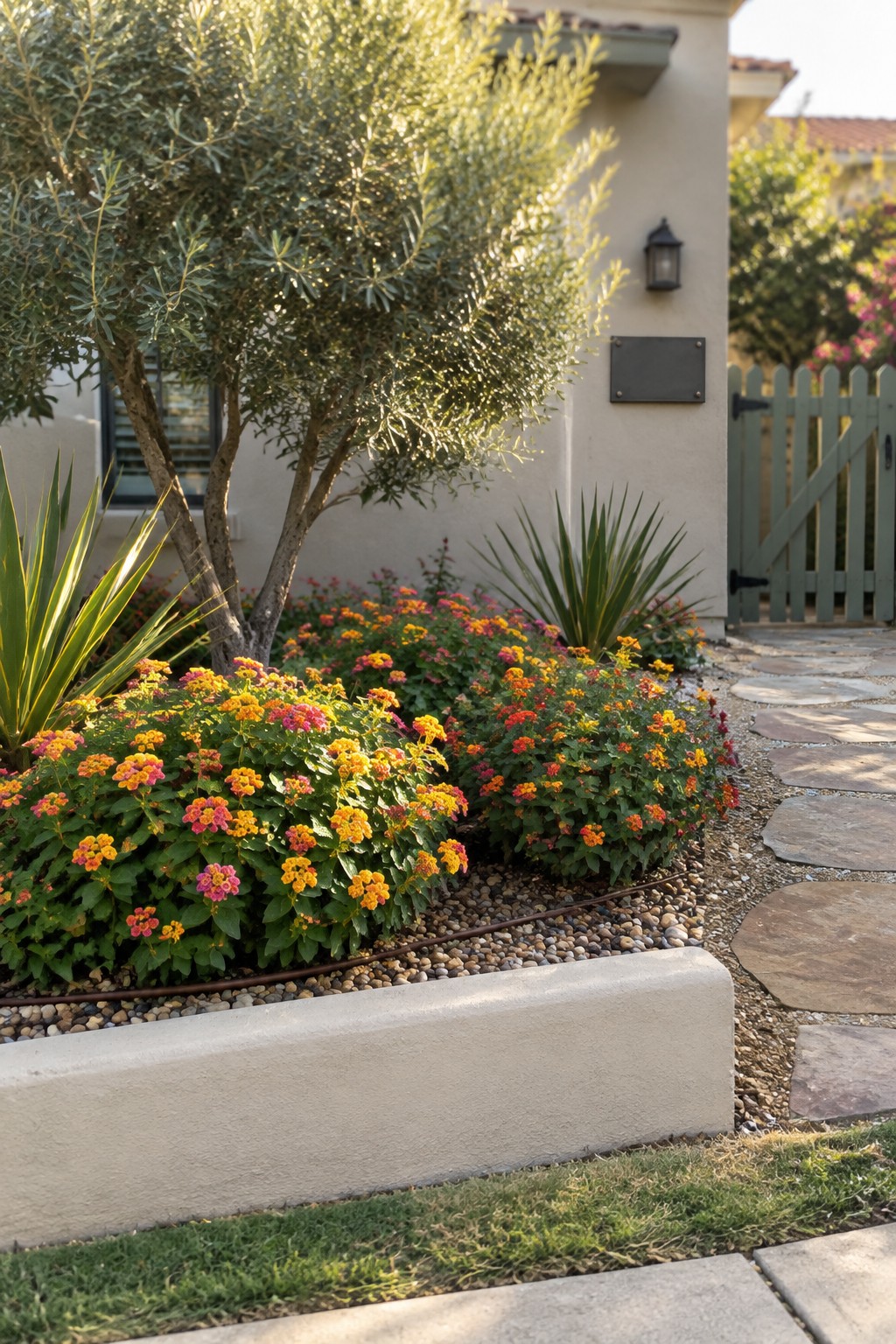
Lantana makes a useful choice for a sunny bed because it spreads into a generous patch of color and can handle hot conditions. Planting it in a defined bed, as shown here, keeps the flowers from spilling into the path and gives the garden a clear edge.
Use lantana along a walkway or in front of larger shrubs where it has room to spread. Leave enough space between plants for airflow, and check your variety’s mature size before planting so the bed does not become crowded.
Let Lantana Spill Over a Raised Bed
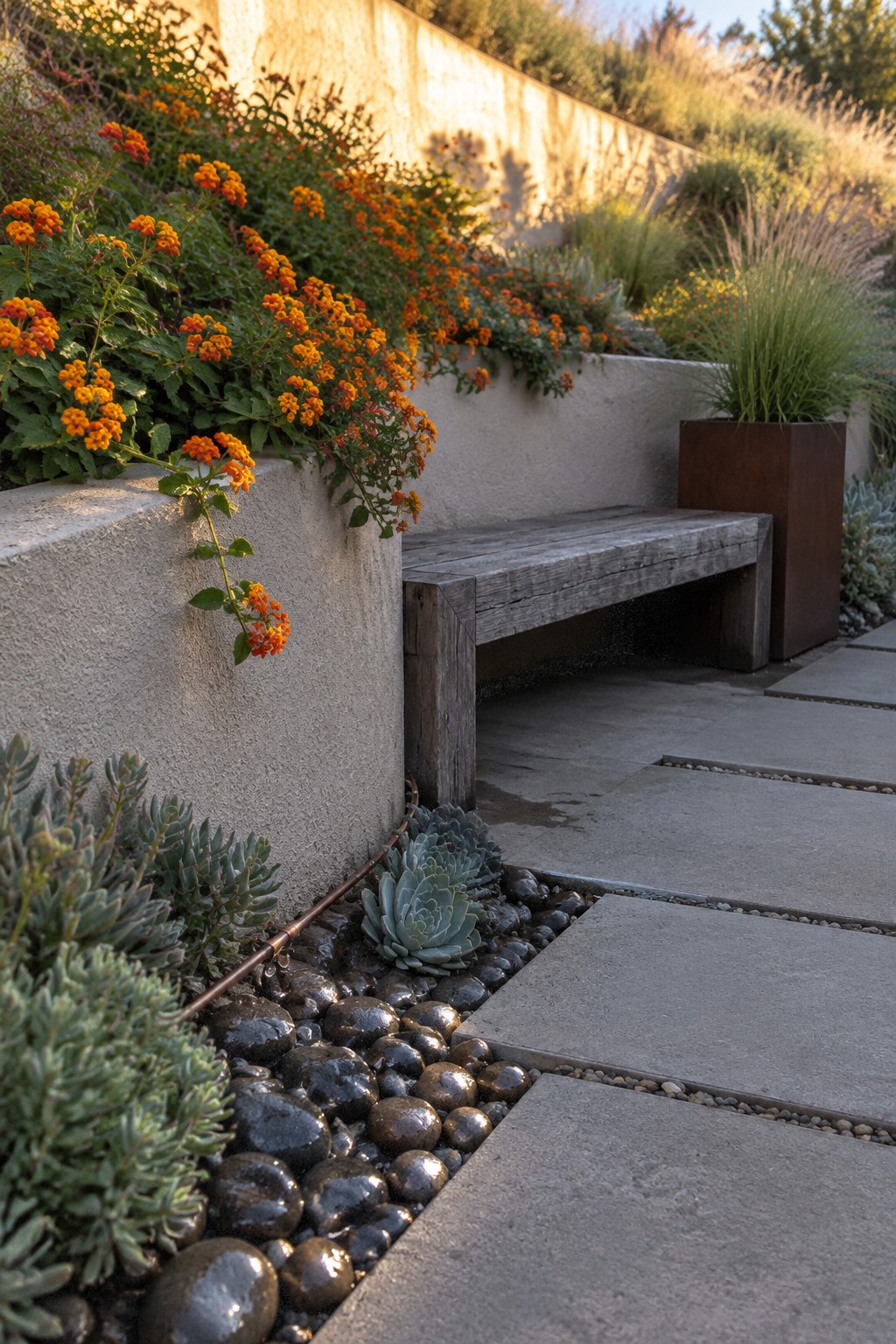
Lantana works well along a raised bed because its flowering stems can trail over the edge instead of staying in a tight mound. The planting feels fuller, and the bright blooms bring color close to the path.
Use this approach where a low wall borders a walkway or sitting area. Give lantana enough room to spread, and leave space between the bed and path so the stems do not become a tripping nuisance.
Edge Sunny Garden Beds With Low Borders
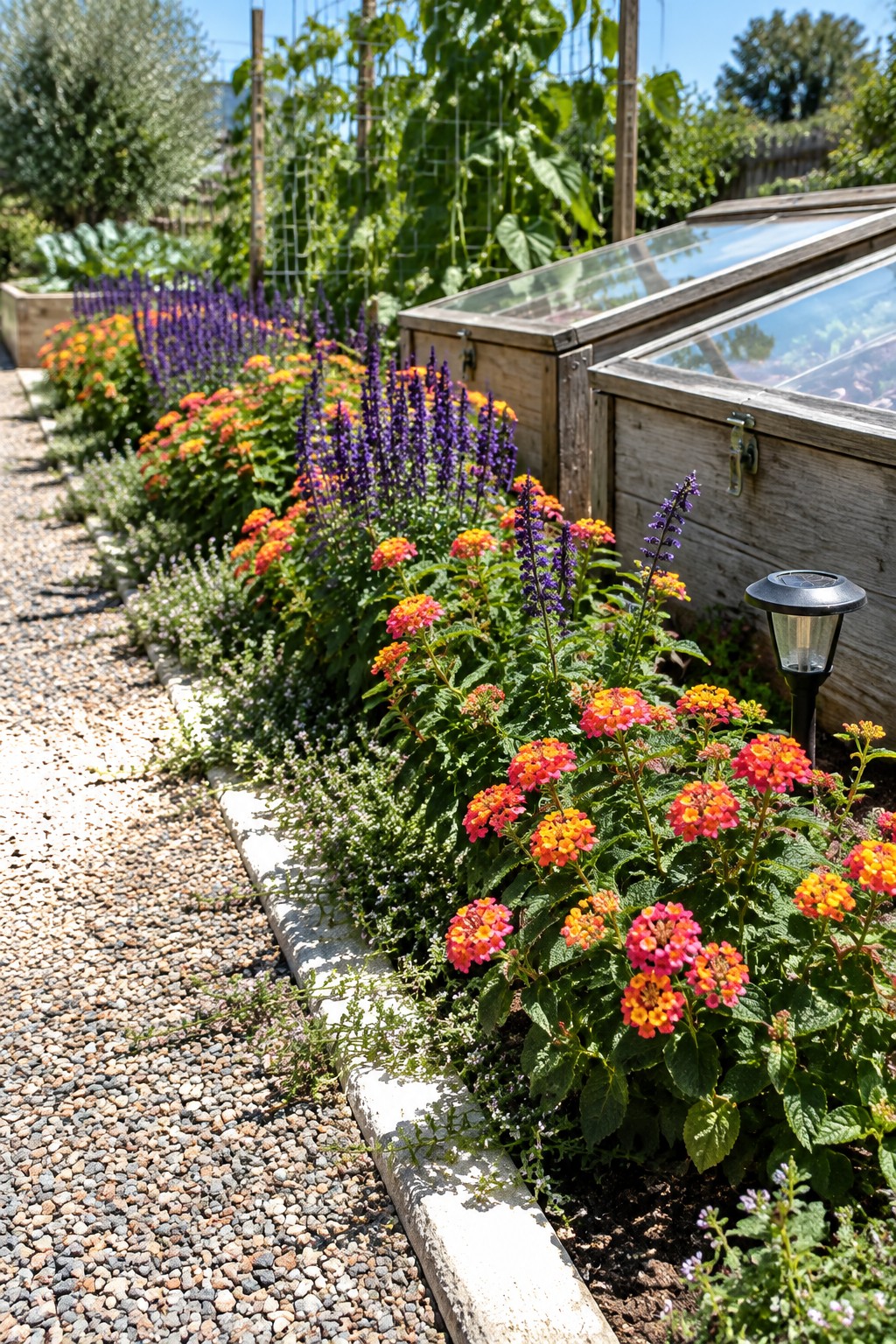
A low stone border gives a sunny flower bed a tidy edge while keeping it distinct from the path. Lantana works well along this kind of border, where its spreading growth can fill the bed without hiding the walkway.
Use the same approach beside a gravel path or along a raised growing area. Leave enough room for lantana to spread, and keep the edging low so it is easy to reach the plants for trimming.
Plant Lantana Along a Poolside Border
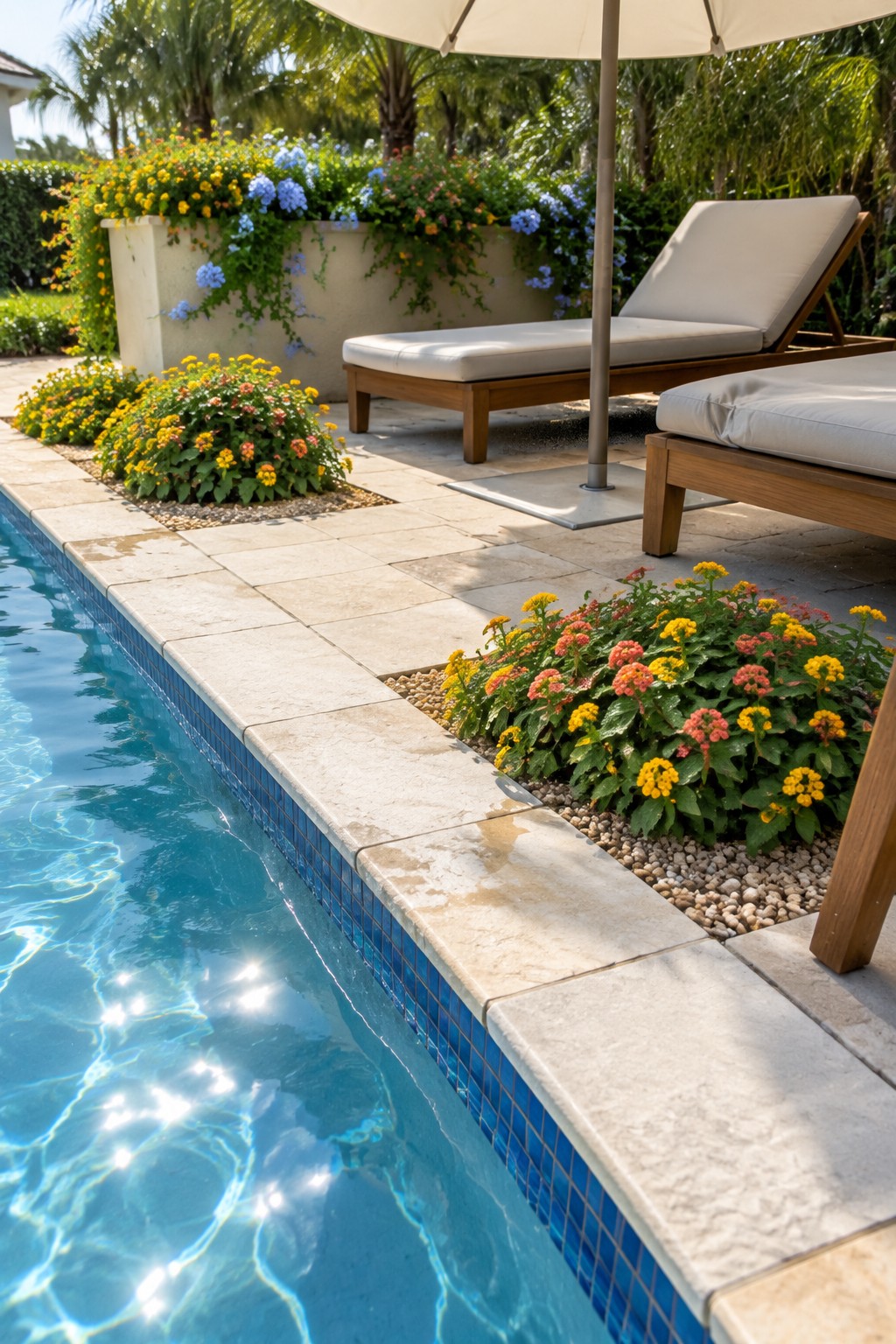
Lantana makes a useful border plant for sunny pool areas, where its bright blooms bring color close to the paving without taking over the whole space. Grouping it in low beds also keeps the planting tidy beside a pool.
Use a gravel-mulched strip along the edge of a patio or pool, leaving enough room for people to walk and lounge. Lantana suits hot, sunny yards, but check that its mature spread won’t crowd the path.
Use Gravel Paths Between Lantana Beds
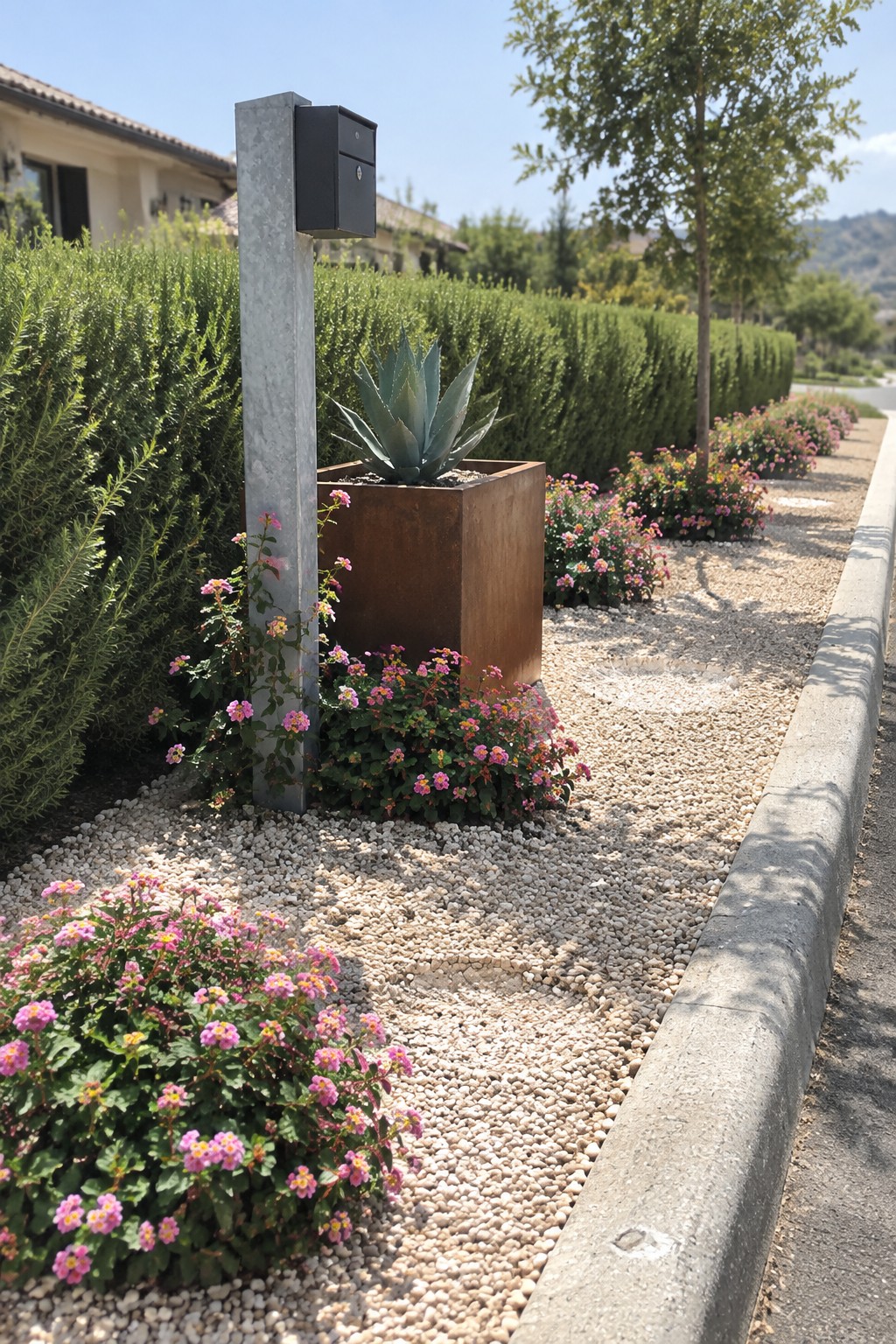
A gravel path is a practical way to guide movement through a sunny yard while keeping the planting beds easy to reach. Lantana along the edges can bring color to the route without taking up the walking space.
Use compacted gravel and a firm border to help keep stones from spreading into the plants. This works well beside a driveway or along a hedge, especially where a wide paved path would feel like too much.
Grow Lantana in Hanging Baskets Near a Porch
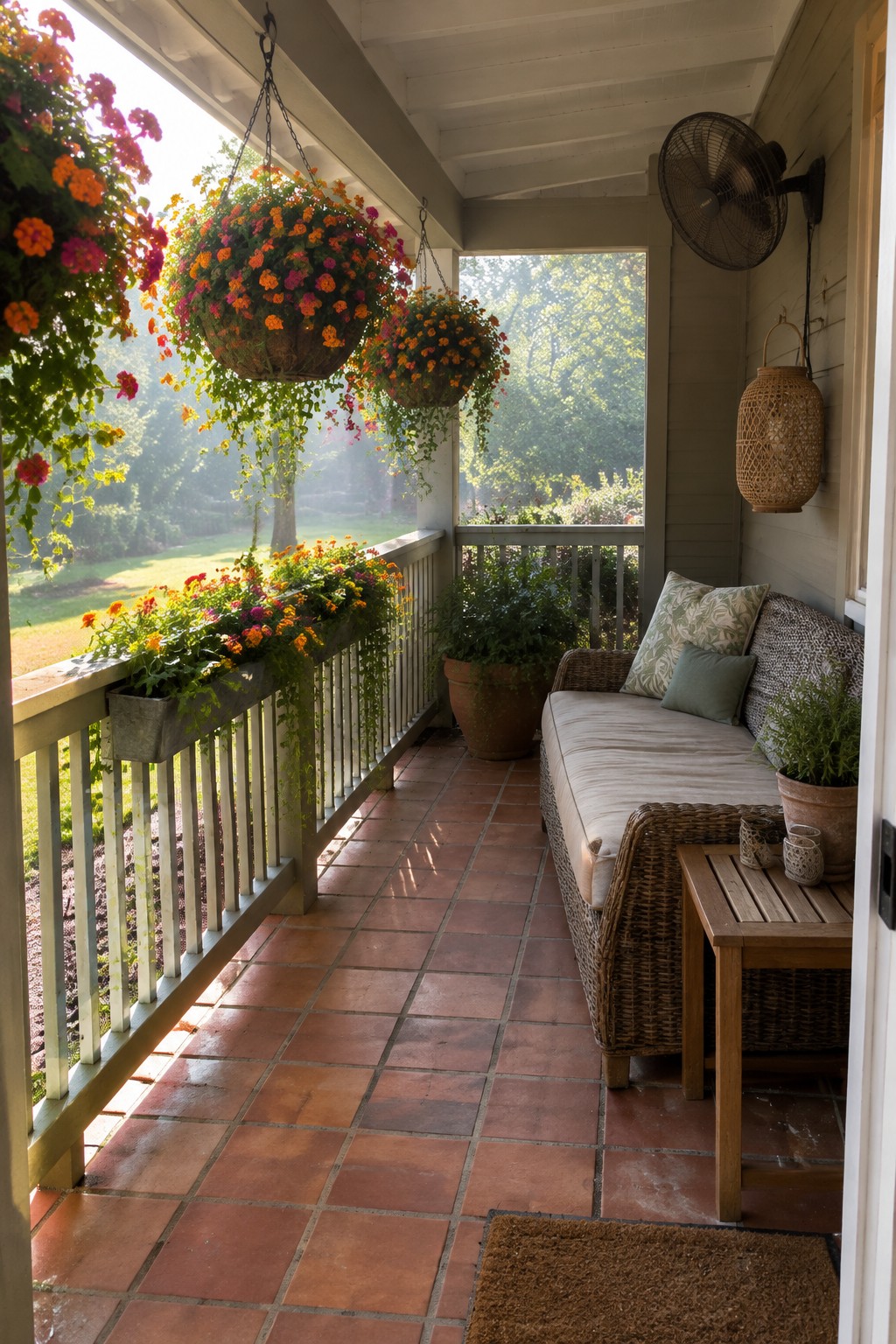
Hanging baskets are a handy way to bring lantana close to a porch seating area without using up floor space. The trailing growth spills over the edges, while the bright flowers add color at eye level.
Choose sturdy baskets with good drainage, and water them regularly since containers can dry out faster than garden beds. This works well on a sunny porch, but leave enough room for the baskets to hang clear of the walkway.
Add Stone Steps Through a Sloped Garden
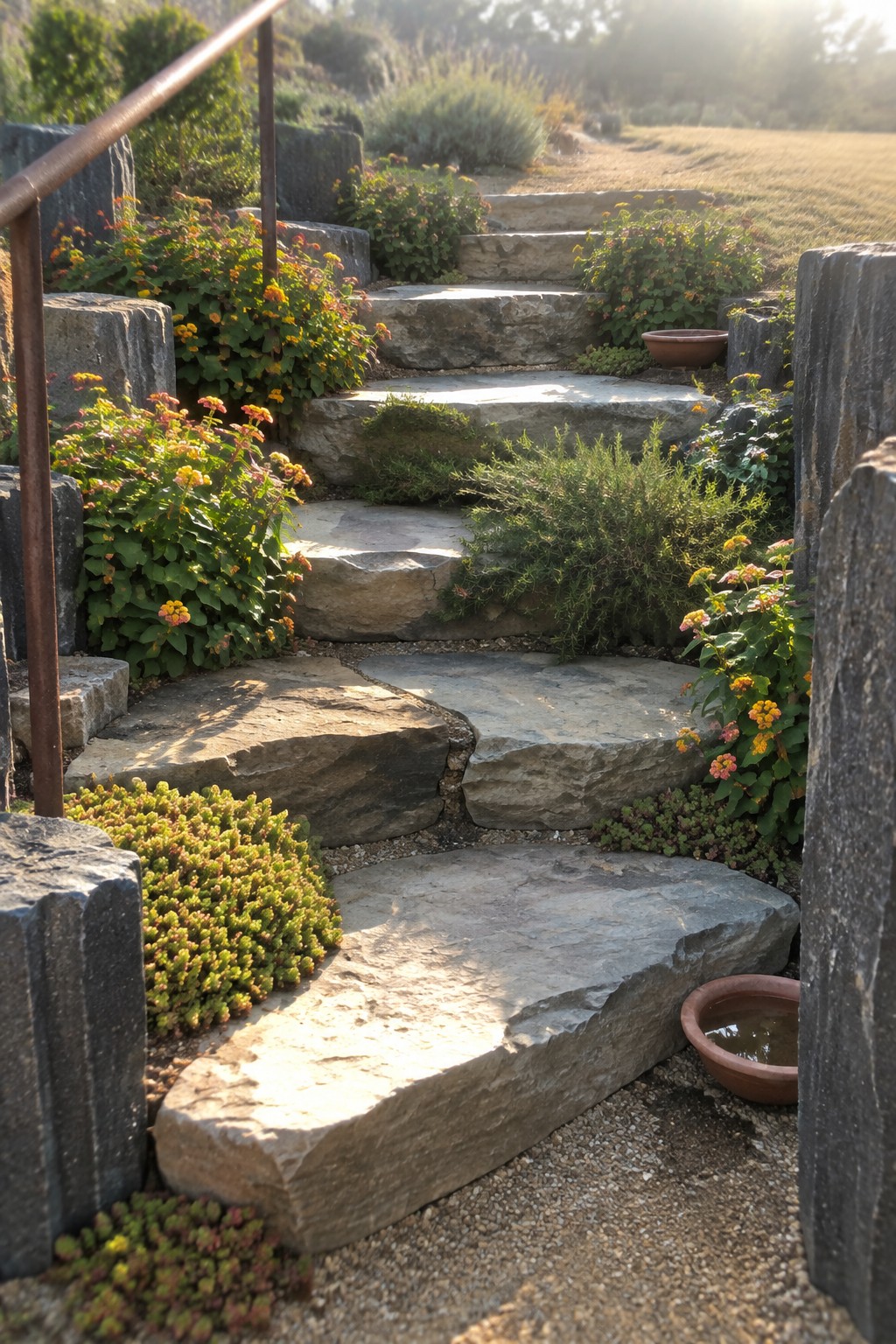
Stone steps make a sloped yard easier to walk through while giving the planting beds a clear shape. Lantana can grow along the edges, where its flowers soften the hard lines and bring color close to the path.
Use broad, stable stones and leave enough room for each step to feel comfortable underfoot. This works well on a sunny slope, but keep lantana trimmed back so it does not spill onto the walking surface.
Make a Fire Pit Part of the Garden
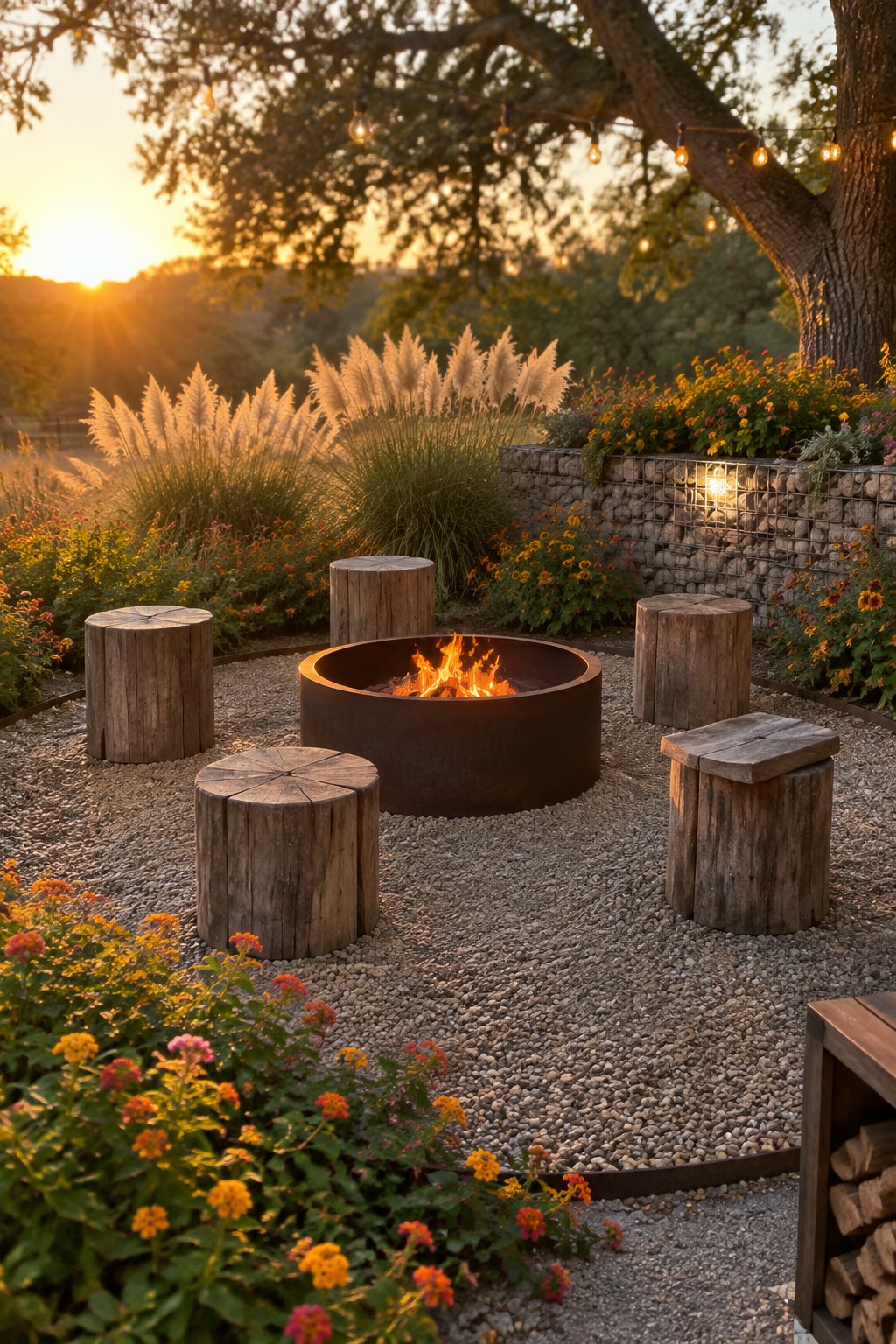
A fire pit can give a sunny garden a spot to gather without taking over the planting. Here, a simple gravel area keeps the seating practical, while lantana around the edges brings color close by.
Use a gravel or other permeable surface in a level, well-drained part of the yard, and leave plenty of clearance between the fire and plants. Lantana suits the sunny border around the seating area, but keep it far enough back that branches cannot reach the flames.
Build Raised Beds Along a Gravel Path
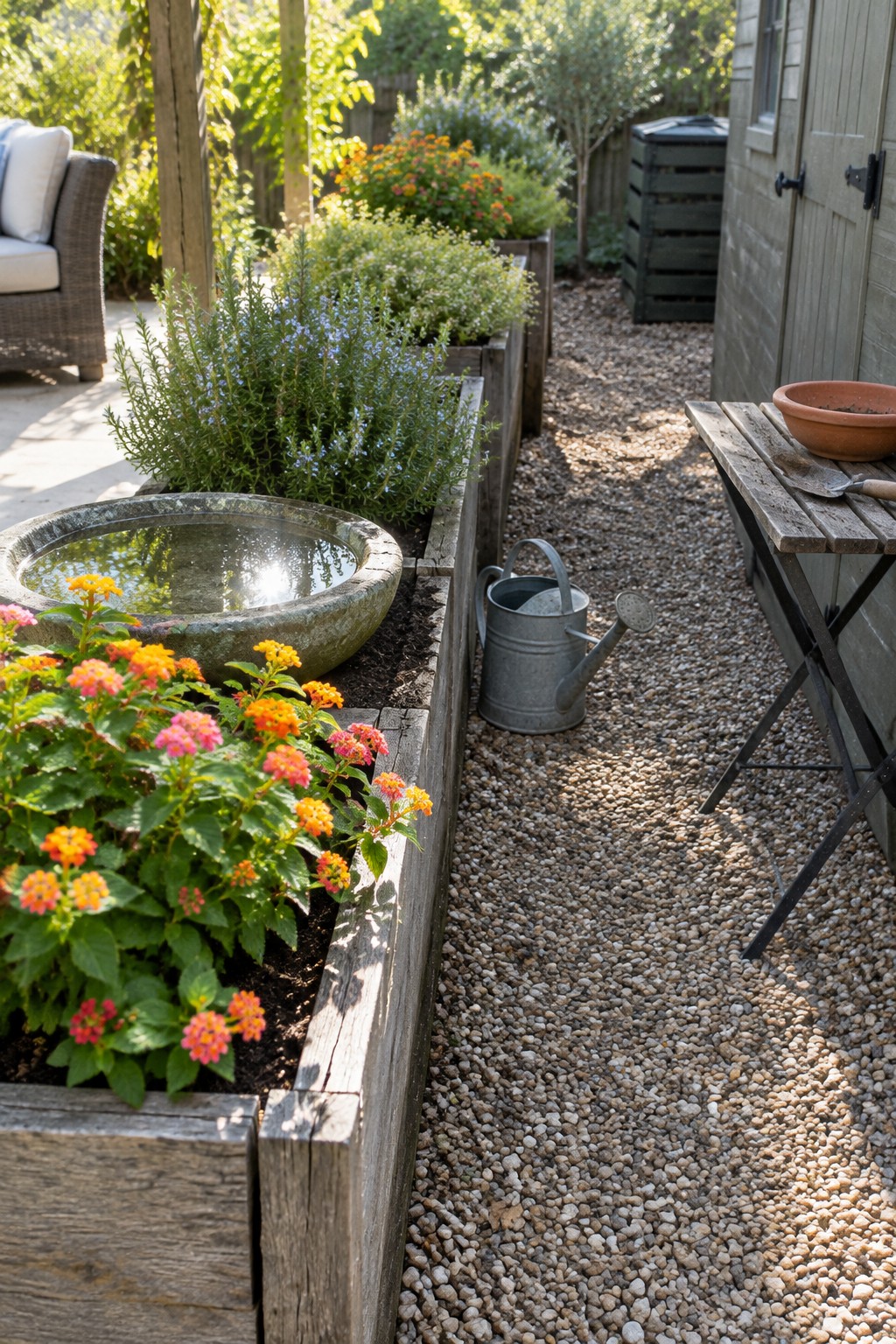
Raised beds make it easier to organize a sunny garden and keep flowering plants in clear groups. Lantana can fill the front edge, where its color is easy to enjoy and its spreading habit has room to go.
A narrow gravel path works well beside the beds, especially in a compact yard where you want easy access for watering and trimming. Leave enough space to walk comfortably, and choose gravel that drains well so the path stays practical after rain.
Use White Gravel To Edge a Curved Garden Bed
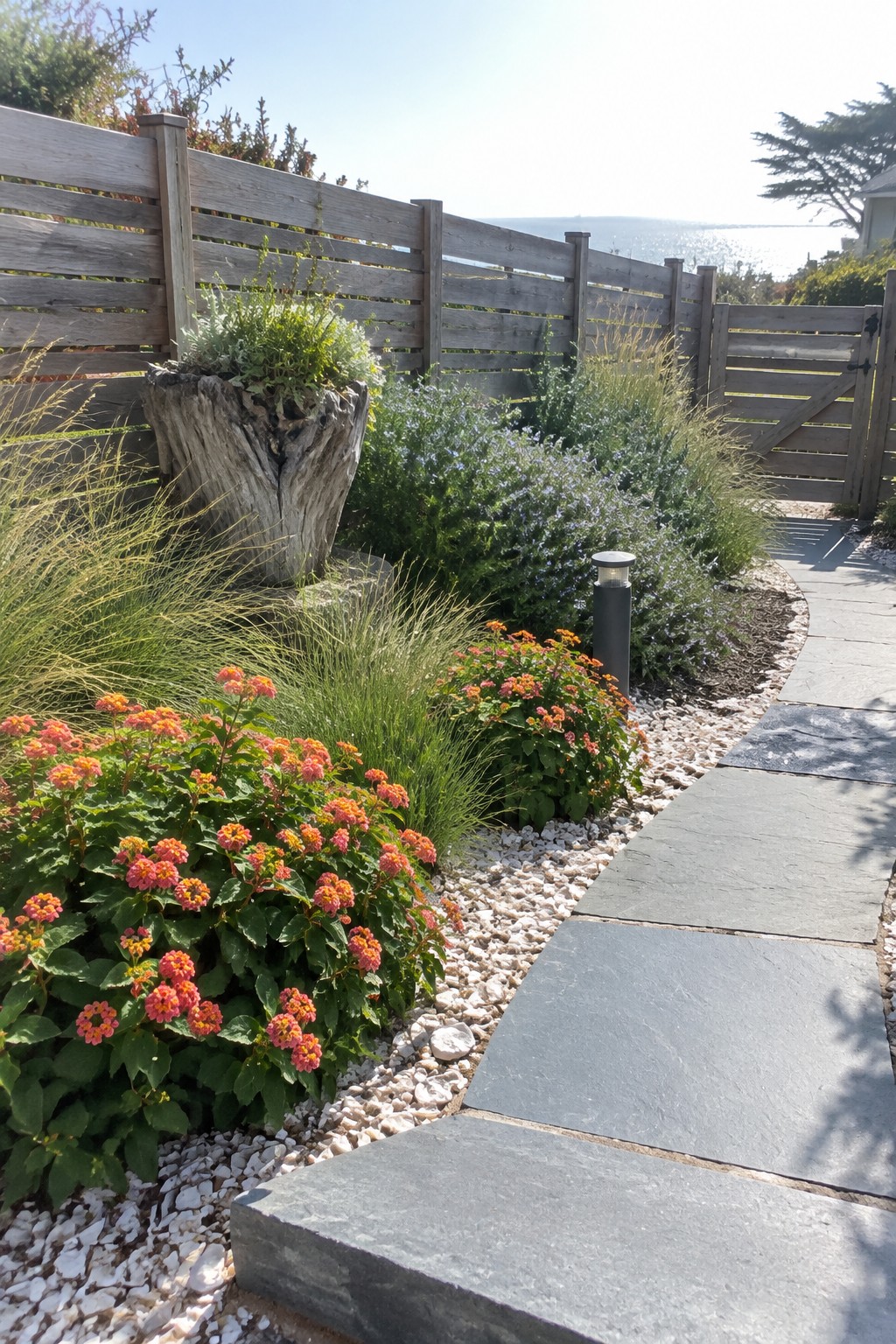
White gravel gives a garden bed a neat edge while letting the planting remain the main focus. Here, it follows the curve beside a stone path, making the bed’s shape easy to see.
This approach works well along paths where grass or soil might spill onto the paving. Use a defined border to keep the gravel in place, and choose plants that suit the amount of sun the bed receives.
Add a Shade Canopy Beside Sunny Garden Beds

A simple canopy can make a sunny yard easier to use without taking over the garden. It provides a shaded place to sit, while nearby lantana can still get the direct sun it needs to flower well.
Use this approach in a small courtyard or along the edge of a patio, keeping the planting bed open to the sun. A fabric canopy needs secure supports and may need to be taken down in strong winds.
Use a Brick Path to Shape a Flower Garden
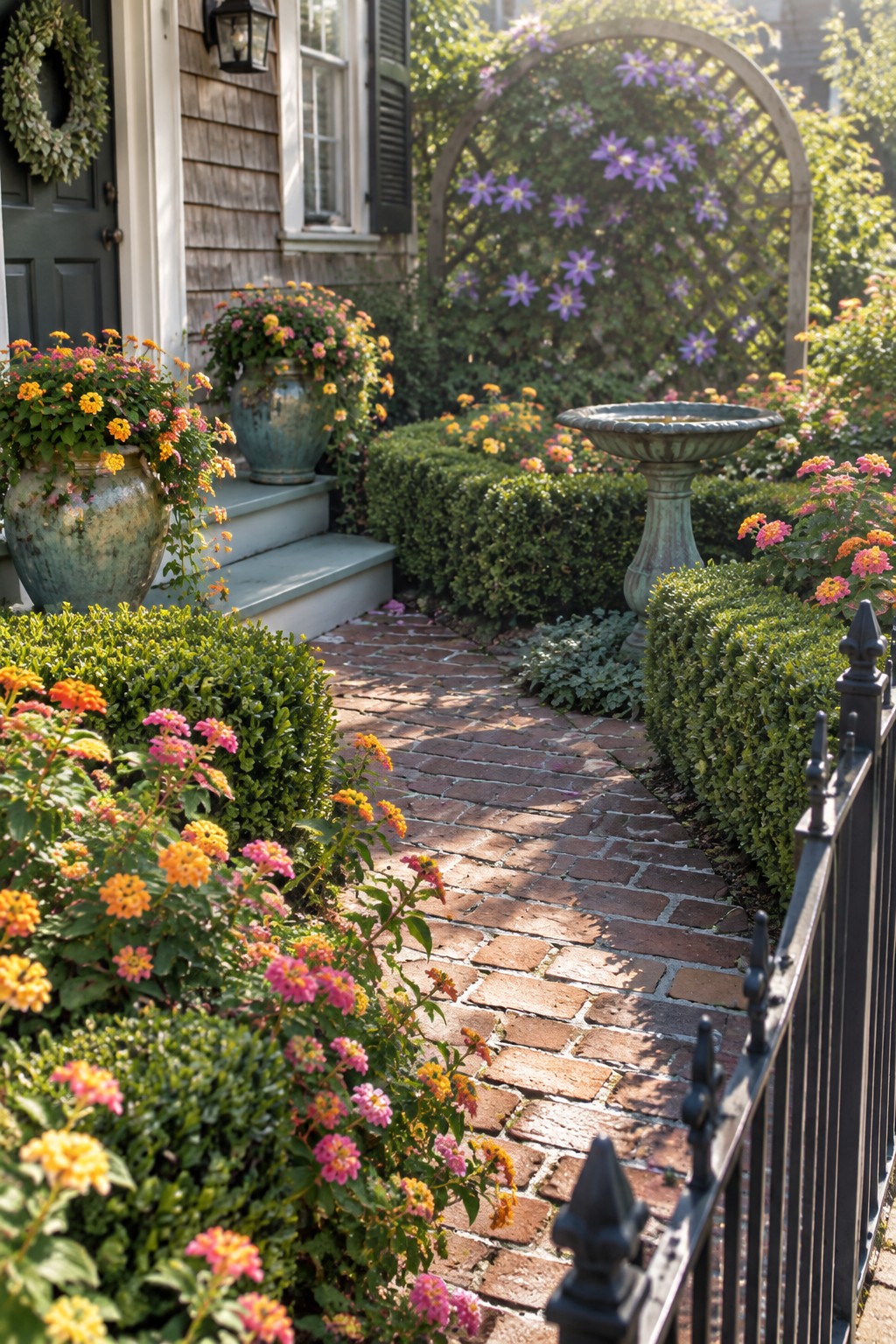
A brick path gives a sunny garden a clear route while leaving plenty of room for lantana to grow along the edges. The warm, uneven pavers suit a cottage-style yard and make the planting feel connected rather than scattered.
Use a gently curving path to lead toward a garden gate or entry. Leave enough space between the bricks for comfortable walking, and keep lantana trimmed back so it does not spill onto the path.
Set Up a Small Outdoor Dining Area
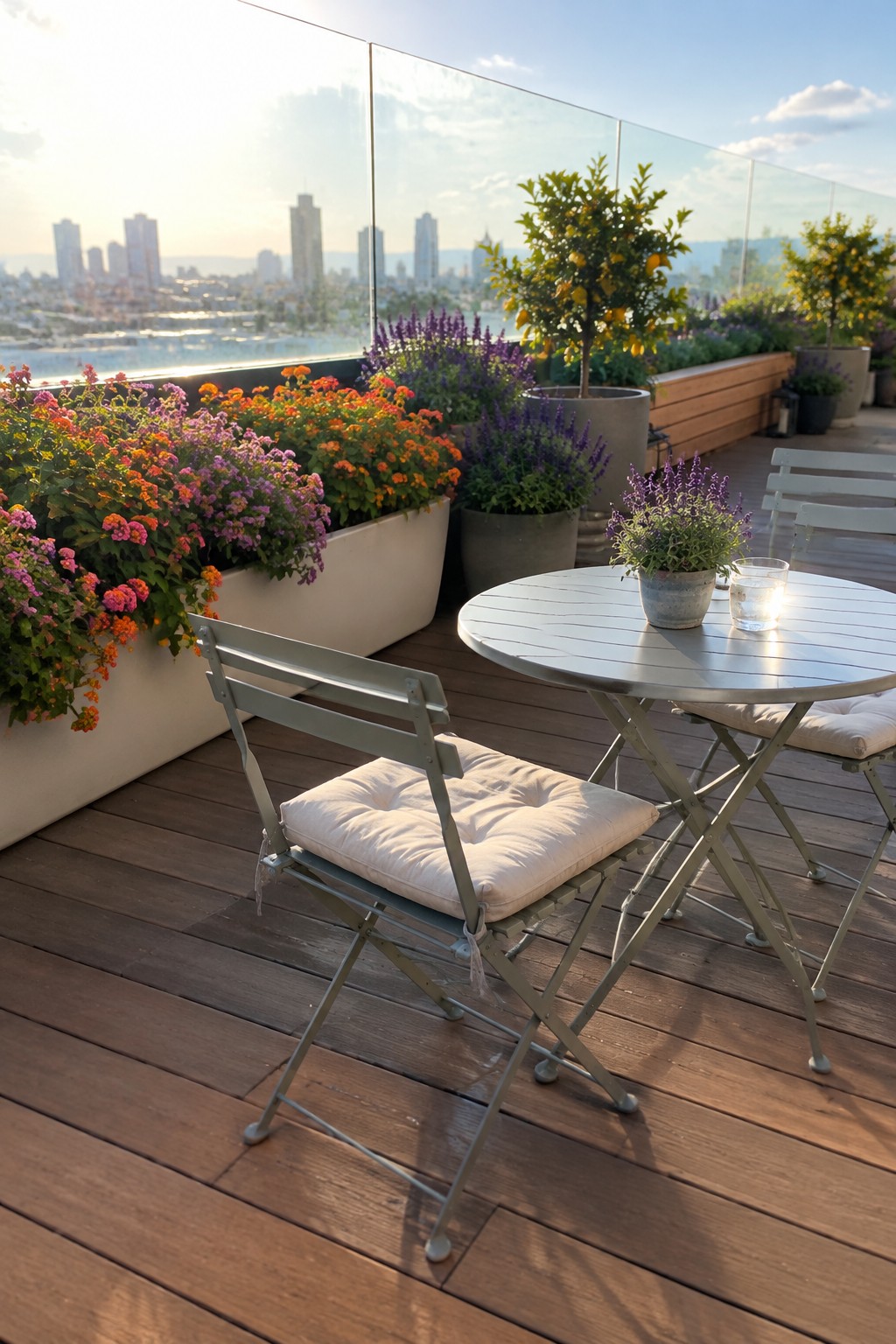
A compact table and folding chairs can make a balcony or terrace useful for everyday meals without taking up too much room. Keeping the furniture simple leaves more space for plants and makes the seating easy to move when needed.
Try this layout on a deck or rooftop terrace, and leave enough room to pull out the chairs comfortably. Planters around the edge can bring flowers close to the seating, but keep the dining surface clear for plates and drinks.
Use a Dry Creek Bed to Shape a Sunny Garden
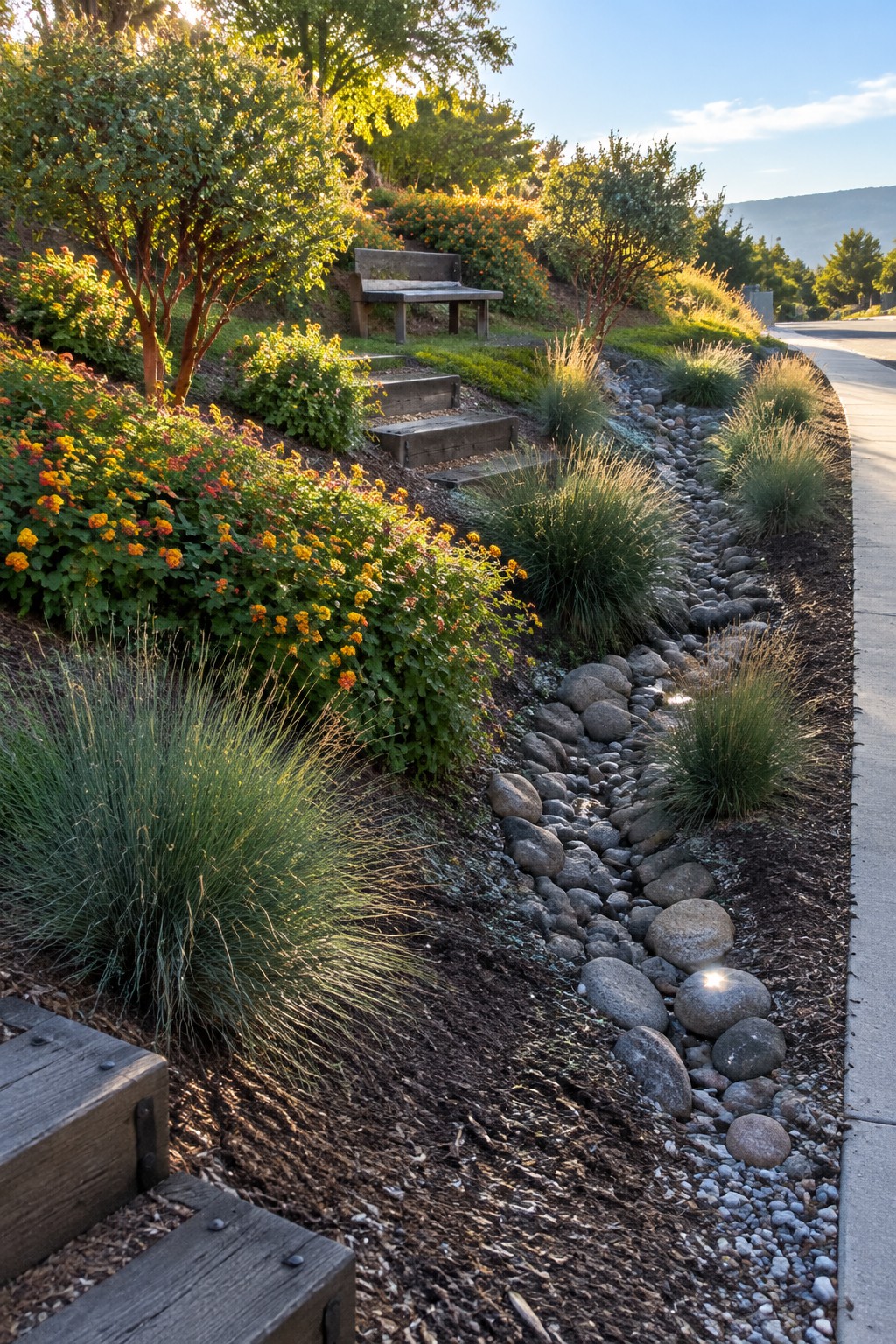
A rock-lined drainage bed can give a sunny garden a clear structure while helping guide runoff through the yard. Here, the stones form a defined channel beside the planting, and lantana can bring color to its edges without filling the whole space.
Use this approach on a slope or along a walkway where rainwater needs a route. Set the stones in a shallow channel, then plant lantana nearby where it gets plenty of sun. Keep the channel open so water can move through it.
Add a Lantana Border Beside an Outdoor Kitchen

Lantana can bring color to the edges of an outdoor cooking area without taking up space where people need to walk or work. Planting it in a raised bed keeps the flowers contained and gives the kitchen a clear boundary.
A border like this works well beside a patio or outdoor kitchen that gets plenty of sun. Leave enough room for doors, stools, and foot traffic, and choose a lantana variety suited to your climate.
Create A Lush Border Along a Narrow Path
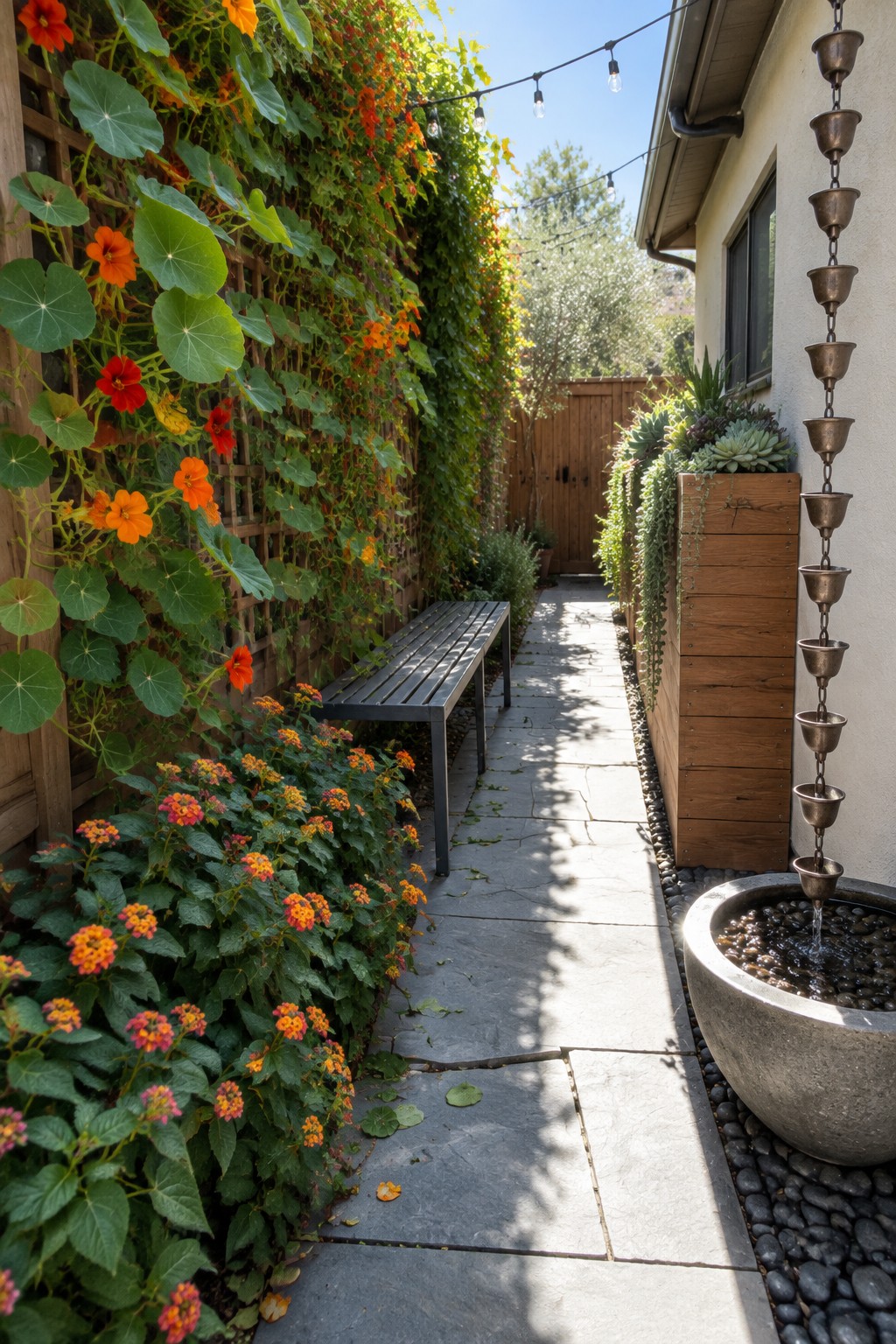
A dense planting border can make a narrow side yard feel like a garden instead of a passageway. Lantana is a useful choice for sunny spots, where its flowers can fill the edge of a path while taller plants or a trellis add structure behind it.
Leave enough room for the plants to spread without crowding the walkway. A stone path beside a flower bed is practical for everyday use, but check the mature width of your lantana and trim it back when it starts to spill onto the stones.
Arrange Lantana Along a Garden Path
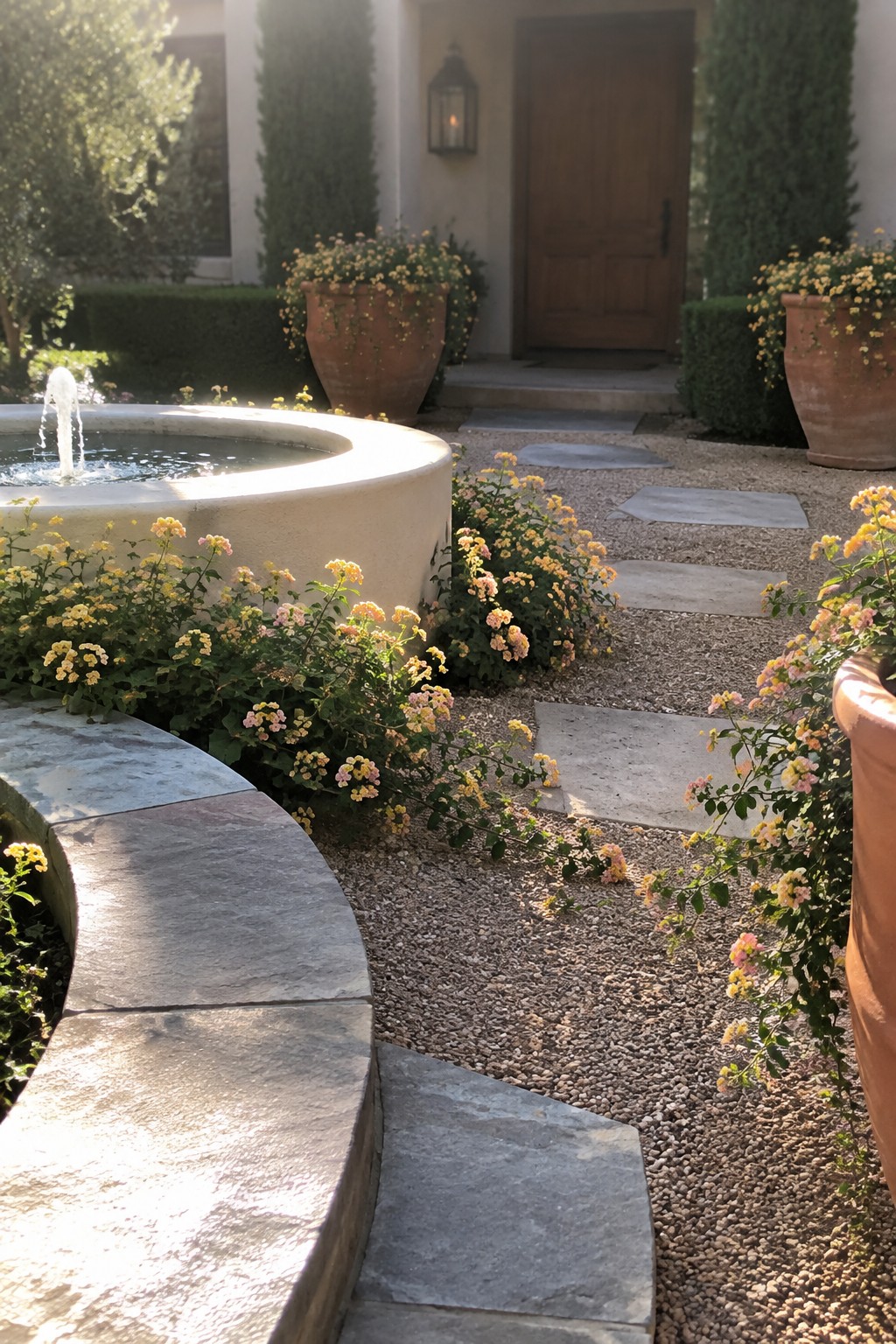
Lantana works well along a gravel path because its loose flowers soften the edges without hiding the route. A few broad stepping stones make the way easy to follow and give the planting room to spill slightly toward the path.
Use this approach where the ground gets plenty of sun and you want a clear route through a flower bed. Leave enough space for lantana to spread, and keep the stones level so the path stays comfortable to walk on.
Frequently Asked Questions
Q: How often should I water lantana in a sunny yard?
A: Water newly planted lantana when the top inch of soil feels dry, which may mean every few days in hot weather. Once it’s established, it usually handles dry spells well, so let the soil dry between waterings.
Q: Will lantana keep blooming if I don’t deadhead it?
A: Yes, many lantana varieties keep flowering without deadheading. Snipping off faded clusters can tidy the plant and encourage fresh growth, but it’s not a chore you need to keep up with.
Q: Can I grow lantana in a pot on a hot patio?
A: Absolutely. Choose a pot with drainage holes and use a well-draining mix. Containers dry out faster than garden beds, so check the soil more often during summer.
Q: Should I cut lantana back when it gets leggy?
A: A light trim can encourage fuller growth and keep the plant from sprawling. Avoid cutting it back hard during a heat wave, and check your local guidance before planting since lantana is invasive in some areas.
