

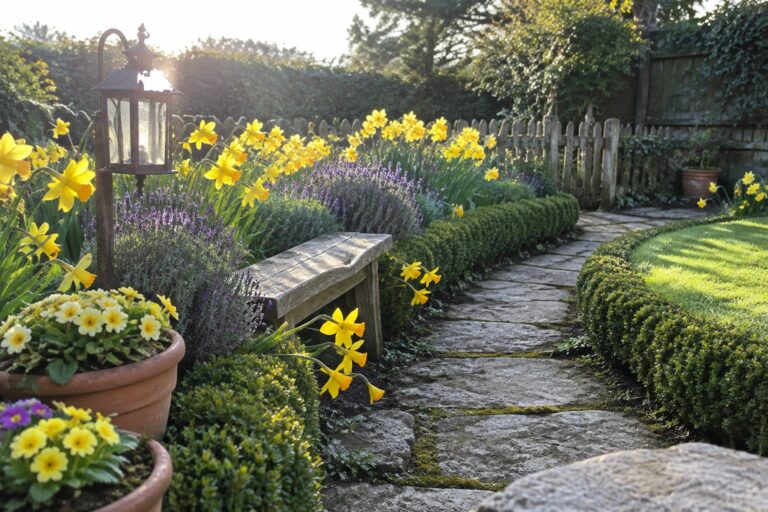
Daffodils can bring a welcome lift to spring borders, but they look best when their shape and color fit the rest of the garden.
I find that the planting layout matters as much as the flowers themselves, especially along paths, lawn edges, and the fronts of mixed beds.
A loose drift can feel natural, while a neat row gives a border a clearer outline and can make a small space feel more ordered.
It also helps to think about what will fill the bed after the blooms fade, so the garden keeps its structure into summer.
I’d save ideas that suit the way your yard is used, then adapt the spacing and edging to what you already have.
Use Daffodils Along a Curving Garden Path
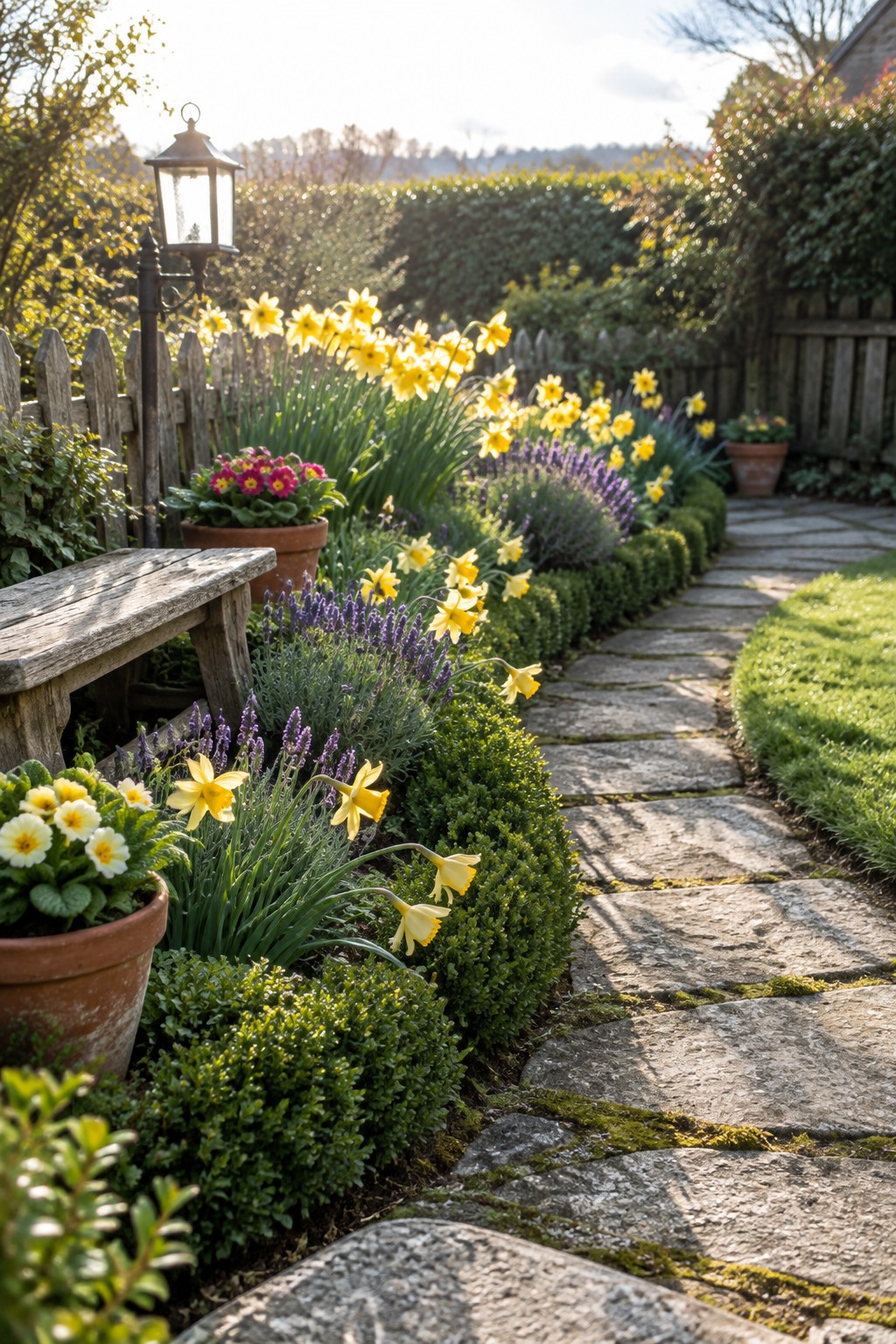
A curved stone path gives a daffodil border a natural shape to follow. Planting daffodils along its edge makes the route through the garden feel connected to the flower beds, rather than cutting across them.
For a similar look, repeat small groups of daffodils along the path and mix in a few lower plants near the stones. Leave enough room for the flowers to grow without spilling onto the walking surface.
Use Curved Beds to Line a Garden Path

A flower bed that follows the edge of a path makes the walk to the front door feel more considered. Rounded hedge shapes and clusters of daffodils give the border a steady rhythm without making it look too formal.
This approach works well beside a straight walkway, where a gently shaped bed can add interest along the route. Plant daffodils in generous groups, then leave room for their leaves to fade naturally after flowering.
Use Daffodils Along a Garden Path

Daffodils planted along a path make a garden border feel cheerful without needing a complicated layout. Their bright blooms are easy to enjoy as you walk by, and clusters look more natural than a straight, evenly spaced row.
Plant bulbs in loose groups along the edge, leaving enough room for the flowers to spread over time. This works especially well beside a mulch path or fence; keep the blooms clear of the walking surface so they don’t get trampled.
Use Stone Edging to Shape Daffodil Beds
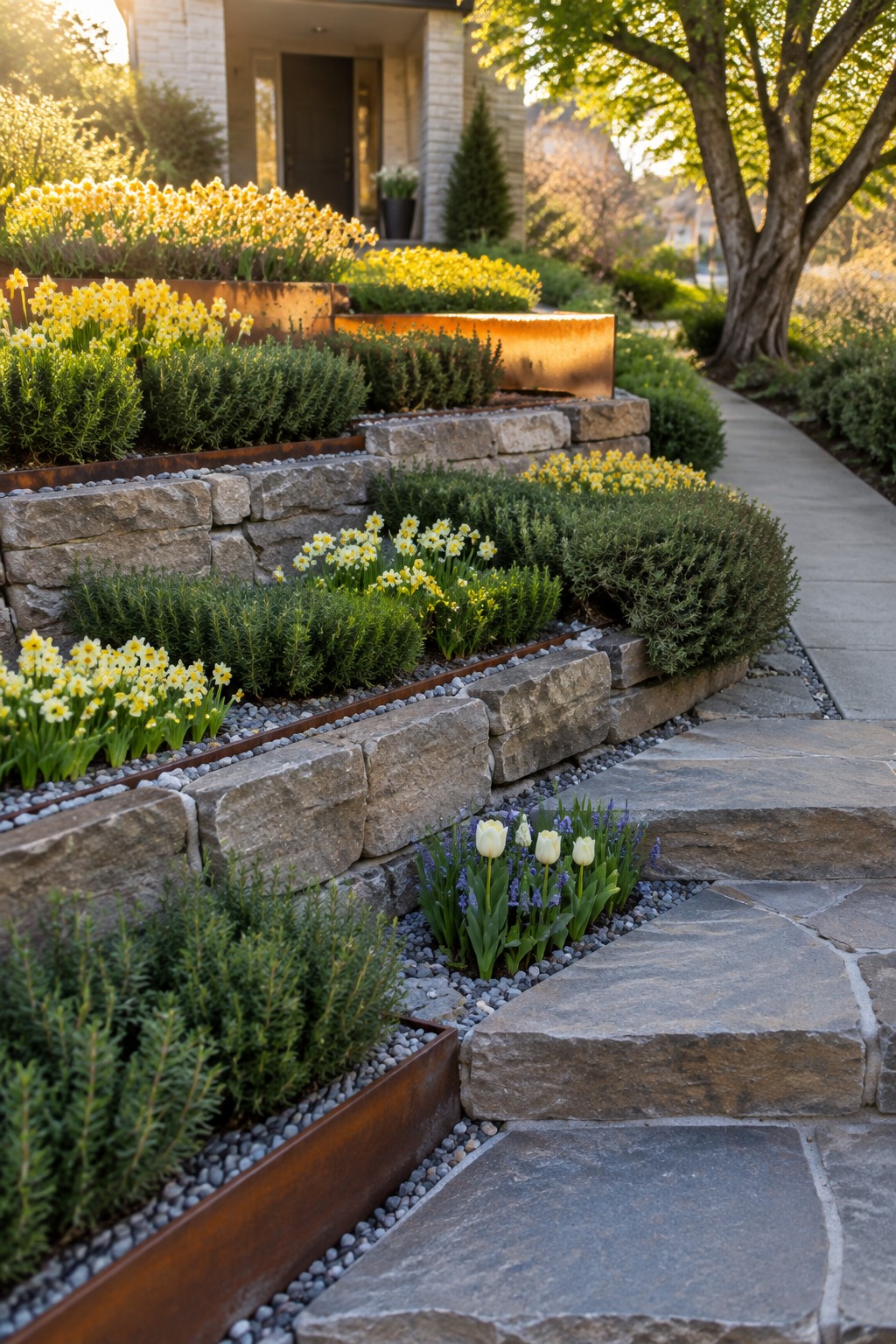
Stone retaining edges make sloped flower beds easier to define and give daffodils a clear place to grow. The sturdy borders also help the beds look tidy without taking attention away from the flowers.
This approach works well in a front garden with a slope or uneven ground. Keep the stones low enough that the daffodils remain visible, and leave space for bulbs to spread over time.
Plant Daffodils in Raised Garden Beds
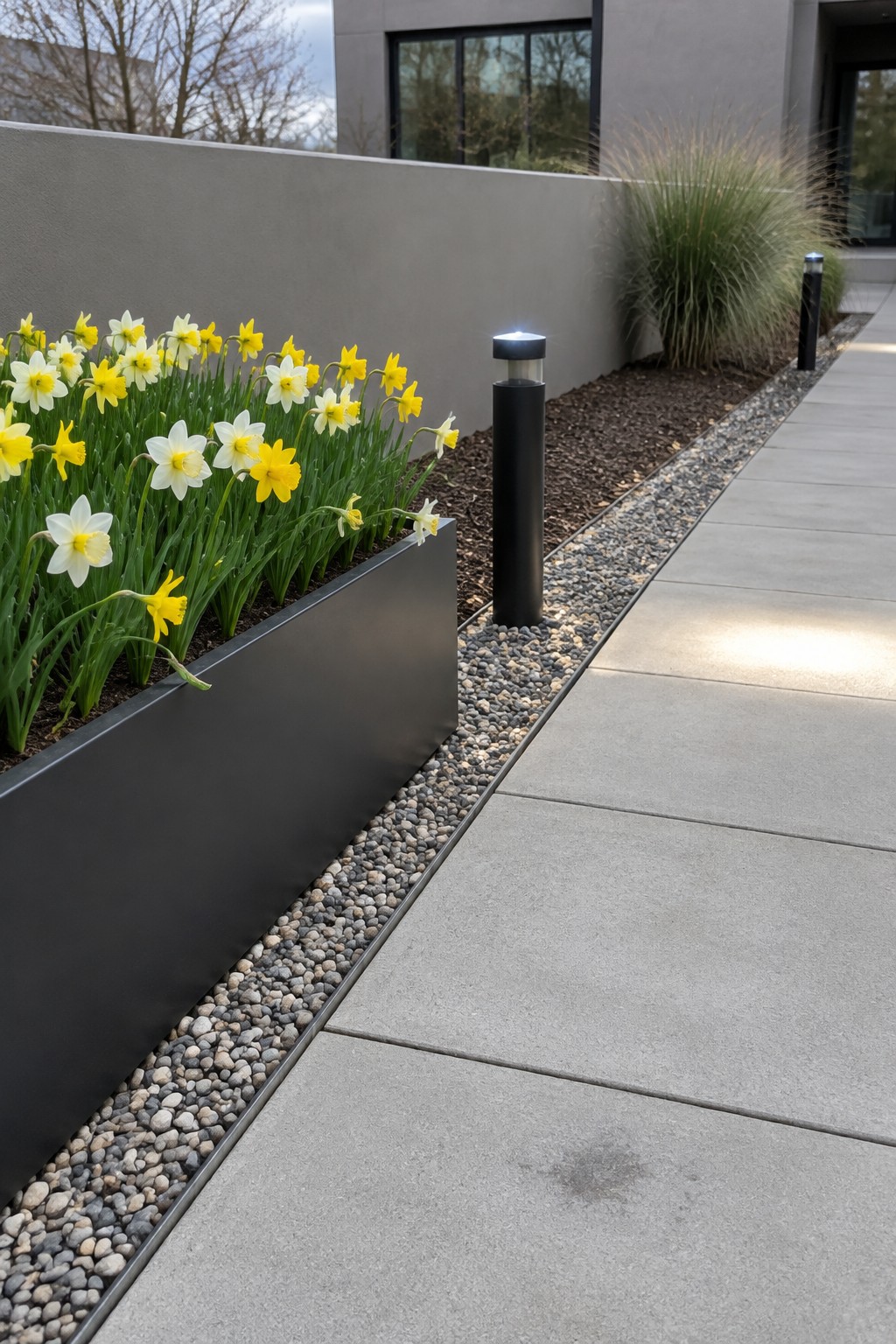
Raised beds give spring daffodils a clear place in the landscape and keep their cheerful color close to a walkway. A simple metal planter also makes the flower bed feel neat beside modern architecture.
Use a raised bed along an entry path or next to a patio where the flowers can be enjoyed up close. Leave enough room for the daffodil leaves to grow after flowering, since they need time to store energy for next spring.
Plant Daffodils Along an Entryway Bed
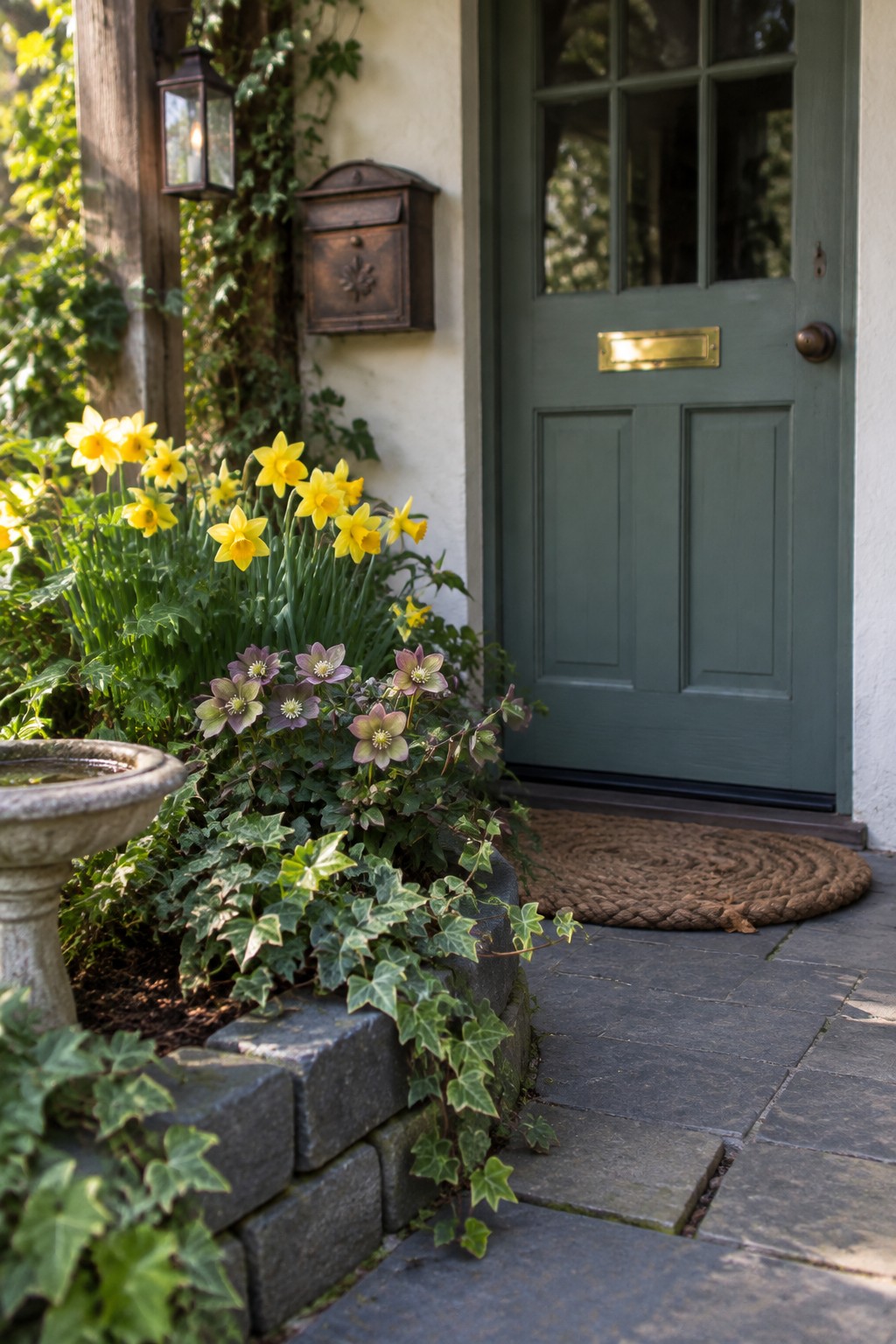
Daffodils can make a narrow entry garden feel cheerful without taking over the path. Planting them in a loose band beside the walkway gives the border a clear burst of spring color.
They work well near a front door, especially alongside lower plants that fill in after the blooms fade. Leave enough room for the daffodil leaves to die back naturally, and avoid cutting them while they are still green.
Plant Daffodils Along a Pebble Path
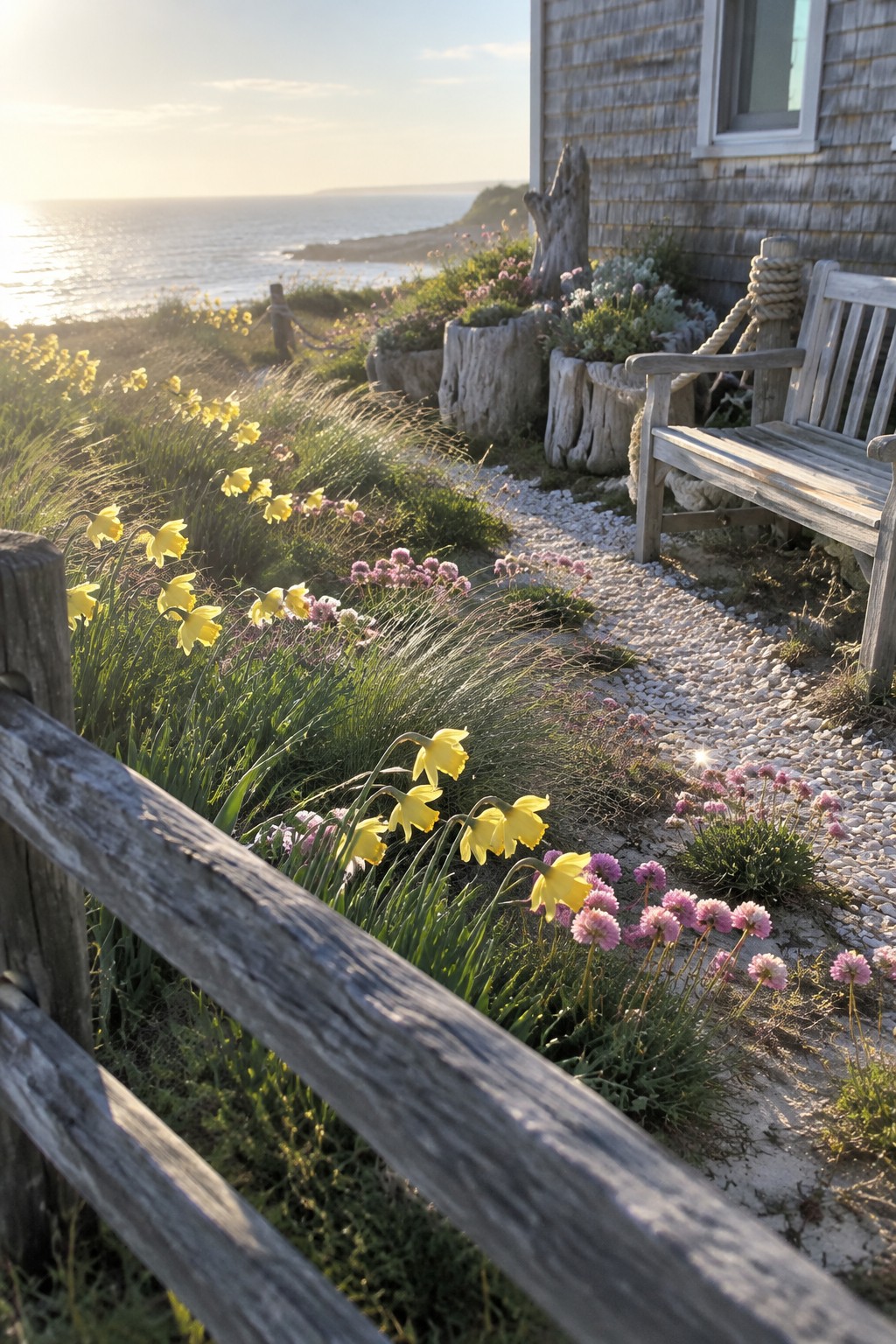
Daffodils planted beside a narrow garden path bring a cheerful edge to a simple walkway. Their yellow blooms stand out among lower plants, and the loose planting style suits a coastal garden without looking too formal.
Use the same idea along a gravel or stone path, leaving enough room for the flowers to grow without spilling into the walking space. A few drifts of daffodils among other low flowers can make the border feel full while keeping the path easy to use.
Plant Daffodils Along the Front Walk

Daffodils make a front garden bed feel cheerful without needing a complicated planting plan. Planting them in small groups along the edge gives the border a steady rhythm, while purple grape hyacinths add a simple color contrast.
This approach works well beside a front walk or near an entry where the flowers can be enjoyed up close. Leave enough space between clumps for the bulbs to spread, and keep the bed edge clear so the planting doesn’t spill onto the lawn.
Add Daffodils Along Garden Steps
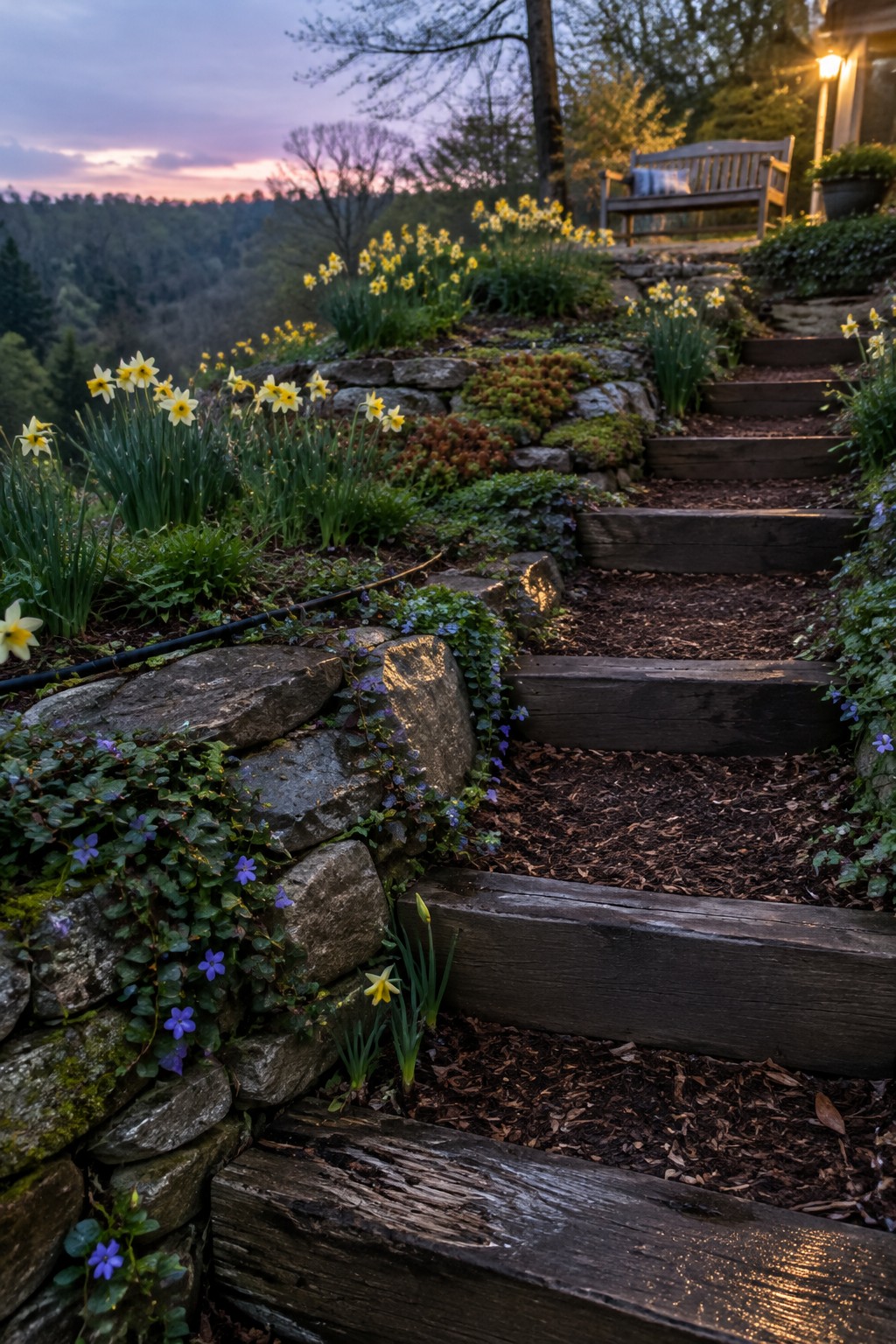
Daffodils can make a set of garden steps feel like part of the planting rather than a path cut through it. Planting them in loose groups beside the steps brings cheerful color to the route and helps the stonework feel settled into the garden.
Leave enough room for people to use the steps comfortably, and keep foliage from spilling across the walking surface. This approach works especially well on a sloped garden path with planting beds along the sides.
Plant Daffodils Along a Narrow Front Walk
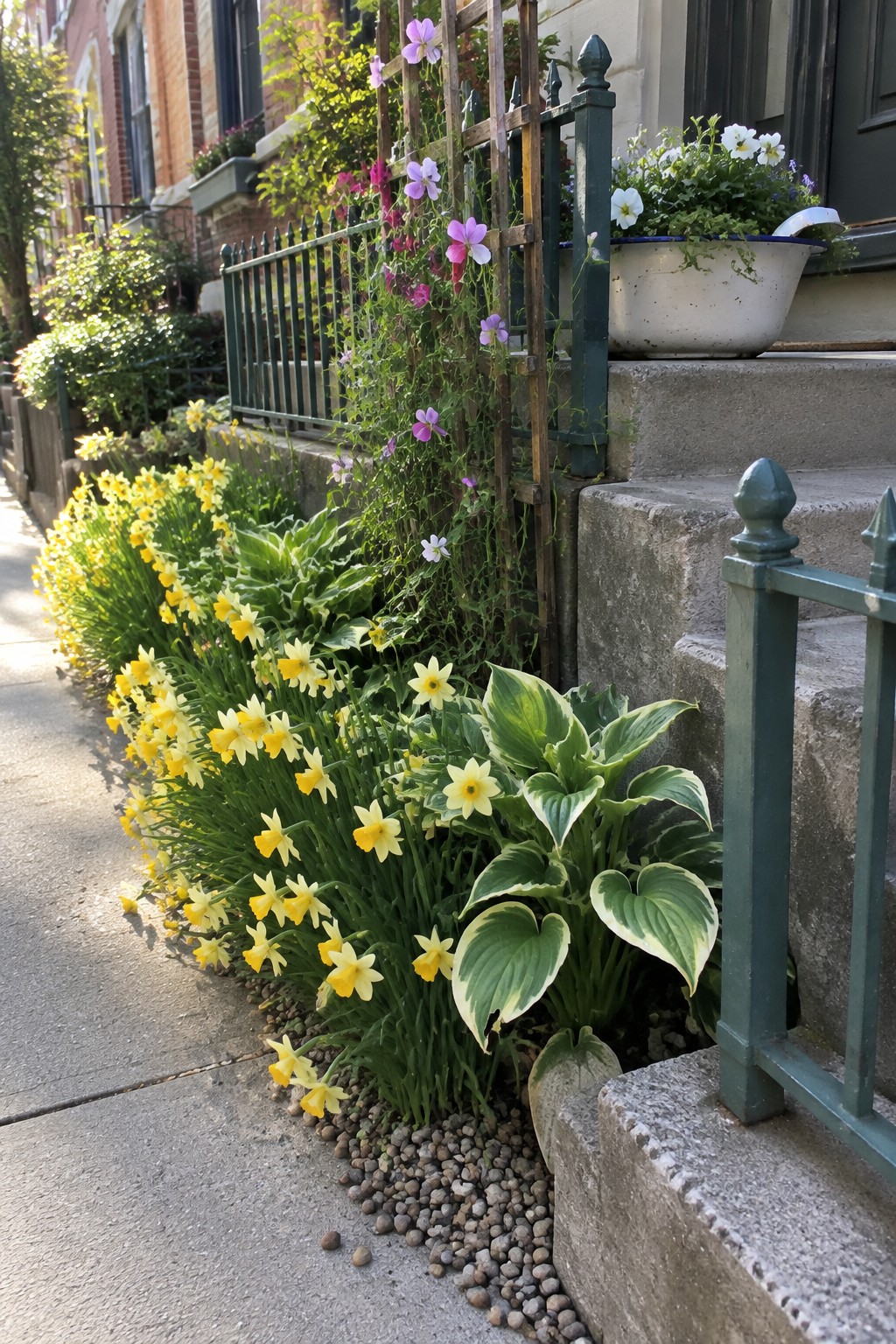
A narrow bed beside the front walk is a simple place to plant daffodils in a long, cheerful border. Repeating the flowers along the path gives the garden a clear shape without taking up much room.
Plant bulbs in groups for a fuller look, and leave space for their leaves to die back naturally after flowering. This approach suits small front yards, but keep the bed narrow enough that it doesn’t crowd the walking space.
Use Daffodils to Edge a Woodland Path

Daffodils planted along a woodland path bring a clear line of spring color to a natural garden. They stand out against leafy ground cover and make a simple dirt trail feel more considered without making it look formal.
Plant them in loose groups along one side of the path, leaving room for the flowers to spread over time. This approach works especially well beneath deciduous trees, where the bulbs can bloom before the canopy fills in. Keep the path wide enough for comfortable walking.
Plant Daffodils Along a Patio Border

A narrow flower bed beside a patio path is an easy way to bring spring color close to the house. Daffodils stand out along the edge, and their bright blooms make a simple paved walkway feel more cheerful.
Plant bulbs in loose groups rather than a straight line for a more natural look. This approach suits small courtyards and narrow side gardens, but leave enough room for the path to stay clear as the flowers grow.
Plant Daffodils in a Raised Concrete Bed

A raised bed gives daffodils a clear place in the garden and makes a small planting feel intentional. Here, the simple concrete edge holds the flowers together without competing with their bright yellow blooms.
This approach works well beside an entry or along a narrow path, especially where the surrounding ground is gravel or paving. Keep the bed deep enough for the bulbs and leave room for foliage to fade naturally after flowering.
Mix Daffodils With Purple Perennials

Daffodils look especially cheerful in a mixed border, where their bright blooms can share space with lower purple flowers. This kind of planting feels fuller than a row of bulbs on its own, and the different bloom shapes help the bed stay interesting.
Plant daffodil bulbs in loose groups among hardy perennials, leaving enough room for the surrounding plants to grow. The daffodil foliage needs to die back naturally after flowering, so choose companions that can later fill in around it.
Use Daffodils to Edge a Gravel Garden Path
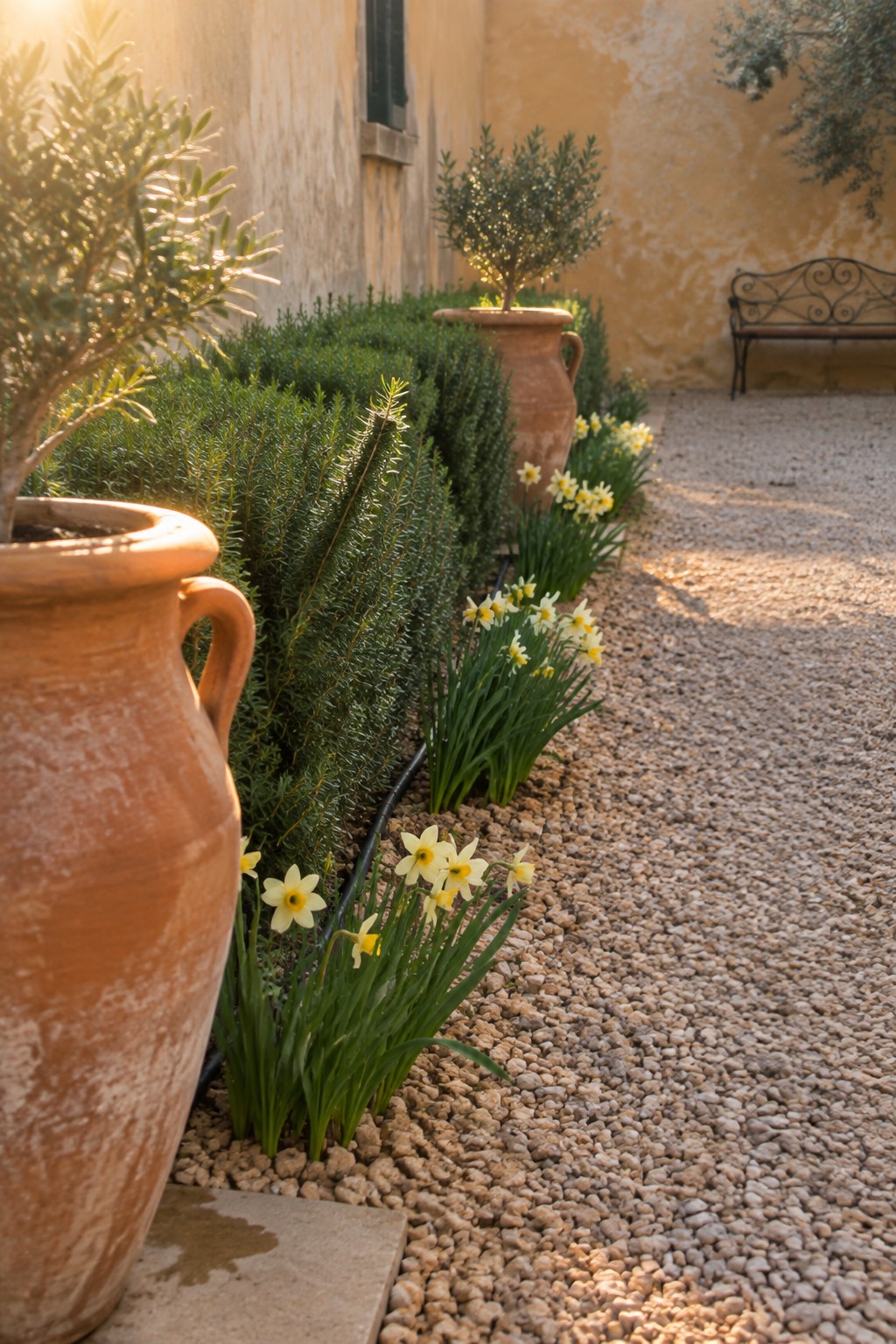
A narrow border of daffodils is a simple way to bring spring color to a gravel path. Planting them in a loose, repeating line gives the path a clear edge while keeping the planting informal.
This works well in sunny, Mediterranean-style gardens, especially alongside low evergreen shrubs. Leave enough room for the daffodil leaves to die back naturally after blooming, and keep the gravel clear of soil so the path stays easy to walk on.
Use Daffodils to Edge a Narrow Gravel Walk

A narrow gravel path can feel more finished when a simple flower bed runs along its edge. Daffodils bring a cheerful strip of color beside the walkway without taking up much space.
Plant them in a continuous band along one side, leaving enough room for the flowers to grow without spilling too far onto the path. They suit side yards and other slim garden spaces, where a clear walking route matters.
Layer Daffodils Through a Raised Flower Bed

A raised stone bed gives spring flowers a clear place along the front walk. Planting daffodils in loose groups through the bed makes their yellow blooms easy to enjoy without making the border feel too formal.
This approach works well beside an entry or walkway, especially where a low retaining wall can hold the soil in place. Mix daffodils with lower flowers, and leave room for their leaves to die back naturally after blooming.
Let Daffodils Mark a Gravel Garden Path

A gravel path feels more welcoming when flowers grow along its edge. Daffodils bring a cheerful spring border to the pale stones, while the clear path still makes it easy to walk through the garden.
Plant bulbs in small clusters beside the path rather than in a rigid row. This works especially well in a quiet courtyard or a narrow garden, where you want a distinct walking route without making the planting feel formal.
Frequently Asked Questions
Q: When should I plant daffodil bulbs for a spring flower bed?
A: Plant them in fall, before the ground freezes, so the bulbs can settle in before spring. Choose a spot with well-drained soil, since soggy ground can cause bulbs to rot.
Q: How deep should I plant daffodil bulbs?
A: A good rule is to plant each bulb about two to three times as deep as it is tall, with the pointed end facing up. If you’re planting a border, group bulbs in loose clusters for a more natural look.
Q: Can I plant other flowers with daffodils?
A: Yes. Pair them with spring flowers like tulips, grape hyacinths, or pansies, or use low-growing perennials to fill the gaps. Just leave enough room for each plant to grow.
Q: What should I do with daffodil leaves after the flowers fade?
A: Leave the leaves in place until they turn yellow and die back, since they’re feeding next year’s blooms. It may look a little untidy for a while, but you can hide them among later-growing perennials.
