

Sunflowers can bring a yard to life, but they look best when their height and bold color feel balanced with the rest of the planting.
I like to think about where the tallest stems will sit, how they’ll frame a path or fence, and what will still look good as the flowers fade.
A simple border, a cluster near the gate, or a patch mixed with lower-growing plants can each shape the yard in a different way.
The first thing people often notice is the sweep of color, but the spacing and edges are what make a planting feel settled rather than crowded.
These ideas offer practical ways to try sunflowers in your own layout, with room to adjust for the light, space, and plants you already have.
Use a Curving Path Through the Sunflower Bed
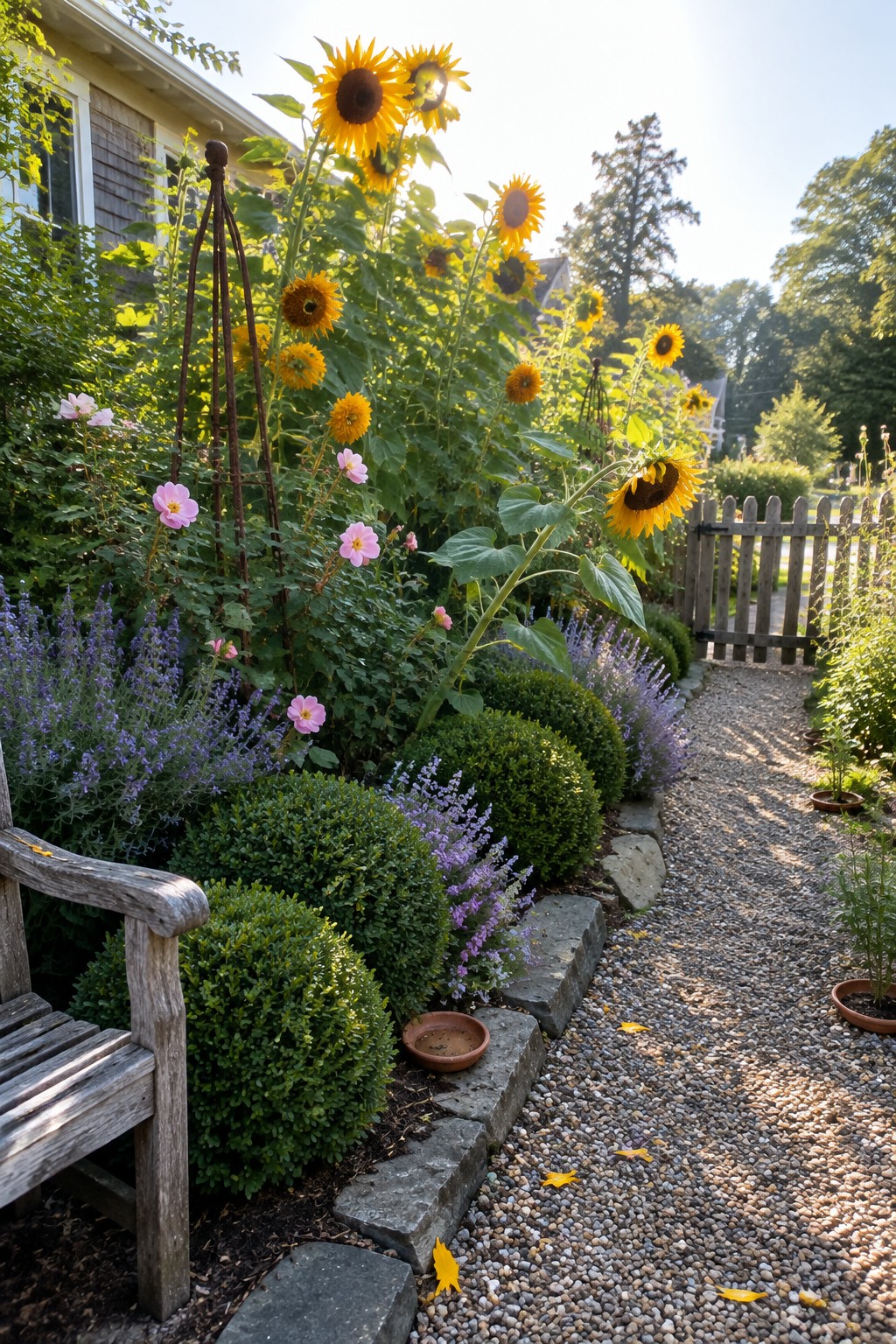
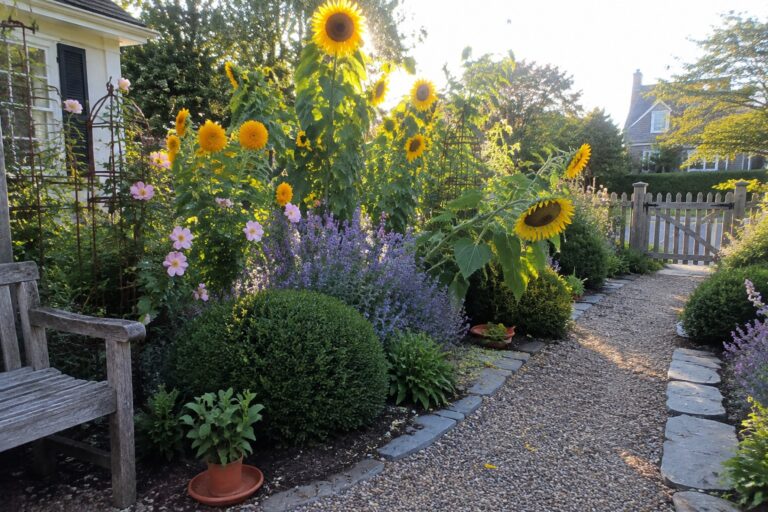
A gently curving garden path lets you enjoy a sunflower bed from more than one angle. The gravel route here winds past the flowers, making the planting feel like part of the walk rather than a border to pass by.
This works well in a cottage-style yard or anywhere you want to make a garden feel a little more inviting to explore. Keep the path wide enough for comfortable walking, and leave room for sunflowers to grow without leaning into the route.
Grow Sunflowers in Layered Garden Beds
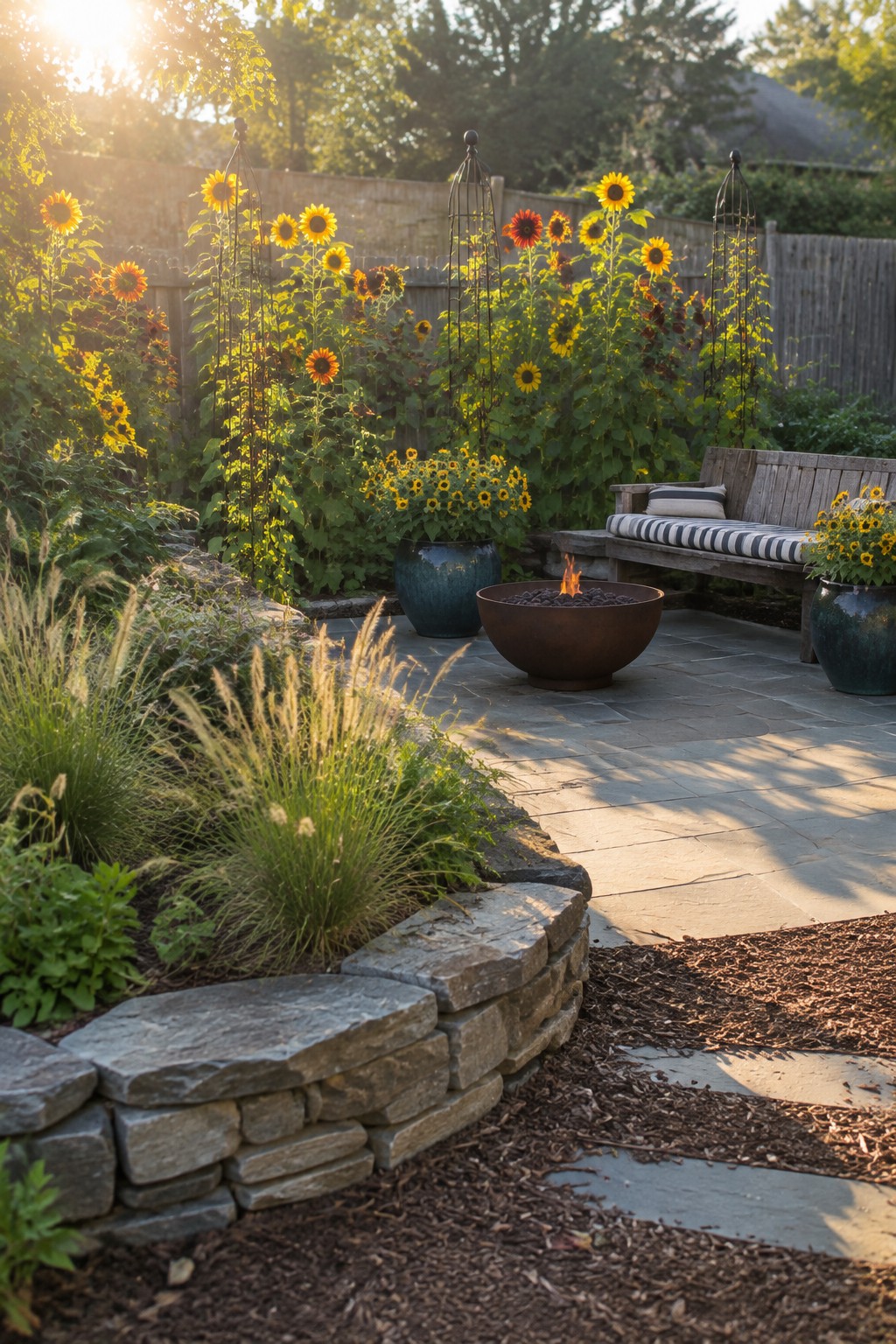
Layering sunflowers through a garden bed gives the planting a relaxed, full look. Taller flowers bring height, while shorter blooms and leafy plants fill in around them.
Use this approach along a fence or behind a low stone edge, placing the tallest sunflowers toward the back so they don’t shade smaller plants. Leave enough space between plants for airflow and an easy path to reach them.
Grow Sunflowers Behind Low Flower Beds

Tall sunflowers can give a garden bed a cheerful backdrop while leaving shorter flowers easy to see in front. This simple planting layout also helps make a small yard feel more layered without adding hardscape.
Plant sunflowers along the back or north side of a bed, where they are less likely to shade other flowers. Leave enough room between plants for airflow, and use stakes if the stems need support.
Use a Curved Path to Shape Sunflower Beds
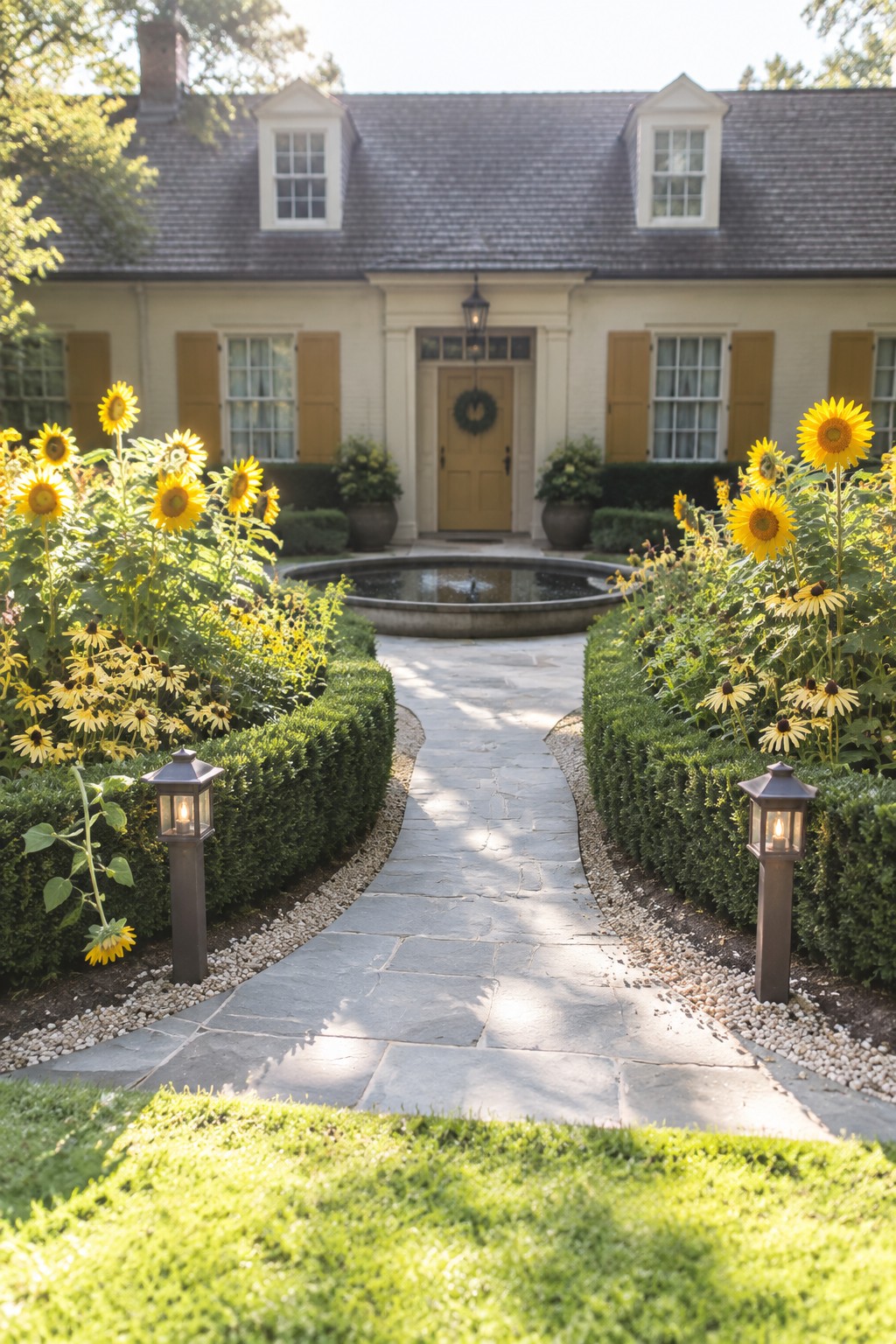
A gently curving path gives sunflower beds a clear shape and makes the garden feel easy to walk through. The stone paving also provides a sturdy route through taller flowers, so you can enjoy the planting without stepping into the beds.
For a similar layout, let the path bend toward a focal point, such as a small fountain, and plant sunflowers along the outer edges. Keep the main route wide enough to walk comfortably, and leave space around the flowers so they do not crowd the paving.
Add Stepping Stones to a Sunflower Garden Path

A stepping-stone path makes it easier to move through a flower garden without trampling the plants. Sunflowers can grow along the edges, while smaller flowers and grasses fill out the planting beds.
Set the stones far enough apart for comfortable steps, and leave room for plants to grow without spilling across the walking surface. This works well in a sunny side yard or any garden where a simple gravel path needs a clear route through it.
Line a Garden Path With Potted Sunflowers
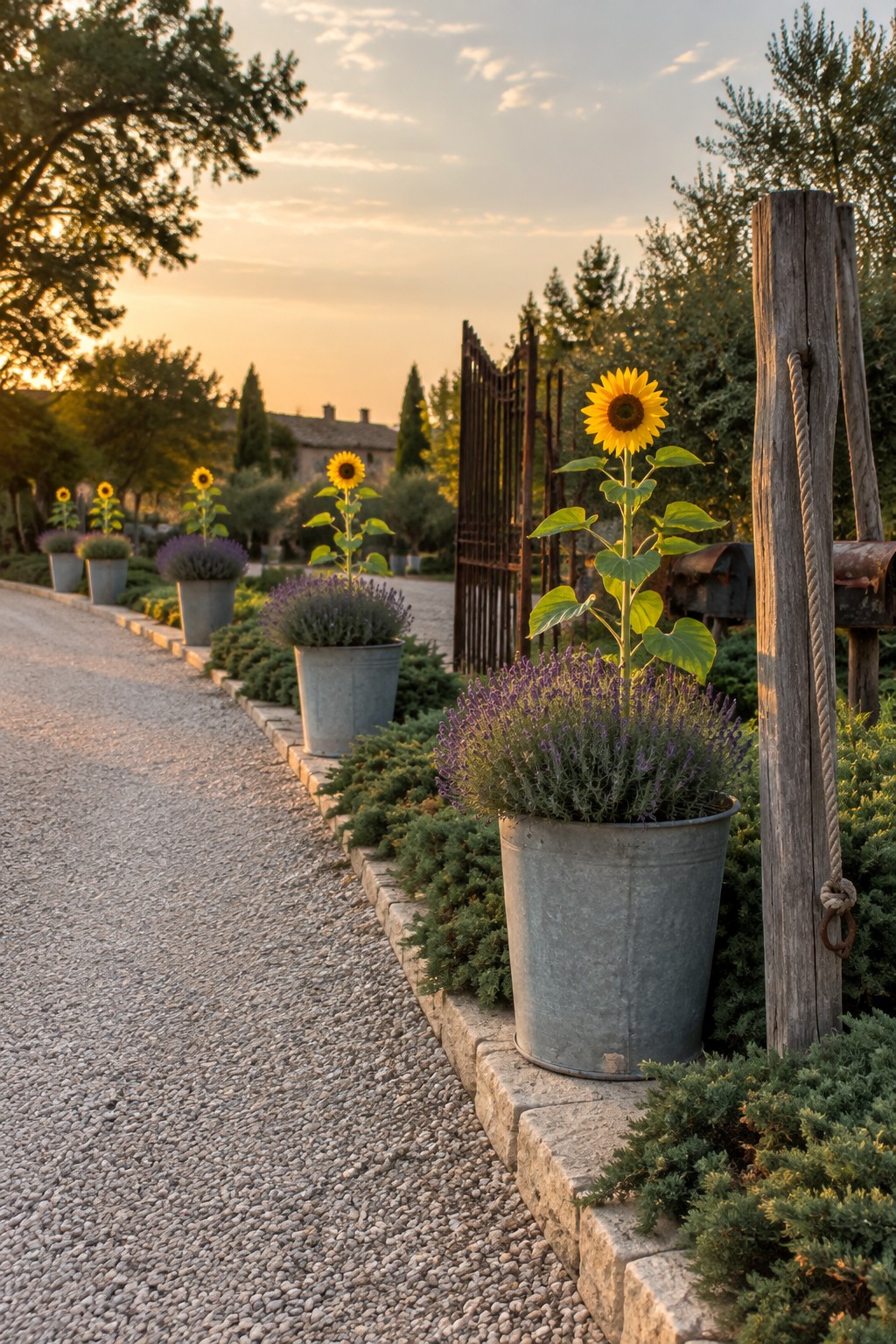
Potted sunflowers can bring a simple garden path to life without changing the planting beds. Repeating them at intervals gives the walkway a cheerful rhythm, while the pots make it easy to adjust the display as the plants grow.
Use sturdy containers that can support tall sunflowers, and place them where they won’t narrow the path. This approach suits gravel walks and garden entrances, especially when you want color in a spot that’s awkward to plant directly.
Add a Stepping-Stone Path Through Sunflowers
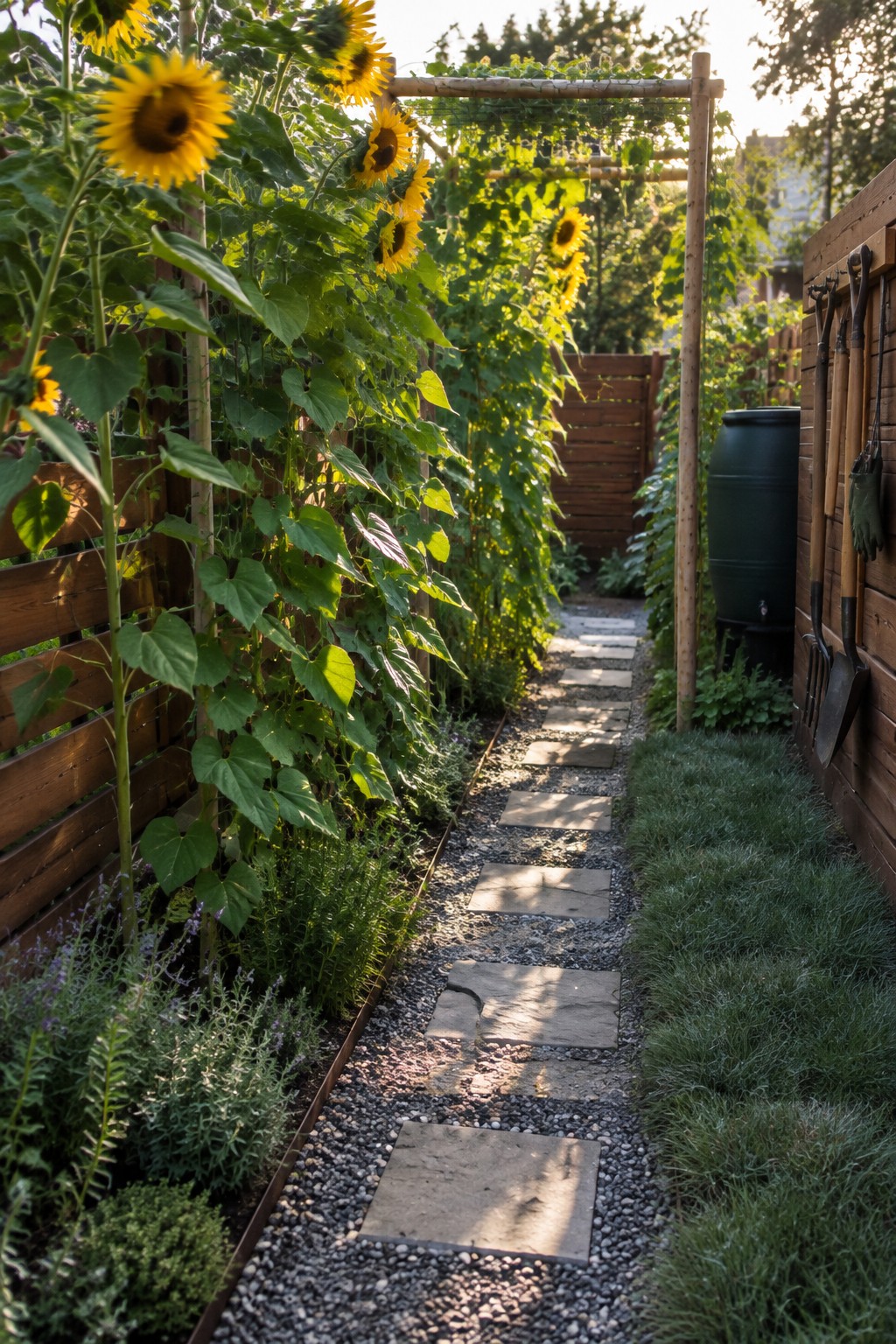
A stepping-stone path makes a tall sunflower bed easier to enjoy and tend. It gives the garden a clear route through the planting, rather than leaving the flowers as a wall along the fence.
Use flat stones set into gravel so the path stays practical after rain. This works well in a narrow side yard, but leave enough room for the sunflowers to grow without crowding the walkway.
Plant Sunflowers in a Rounded Garden Bed

A rounded bed gives sunflowers room to stand out while keeping the garden easy to walk around. The brick edging makes the bed shape clear and helps contain the soil and mulch.
Use this layout where a path can lead naturally up to the bed, such as in an open lawn. Leave enough space between the sunflowers and the edging for low flowers or herbs, and avoid making the bed so large that it becomes hard to reach for watering and weeding.
Use Sunflowers to Brighten a Poolside Garden
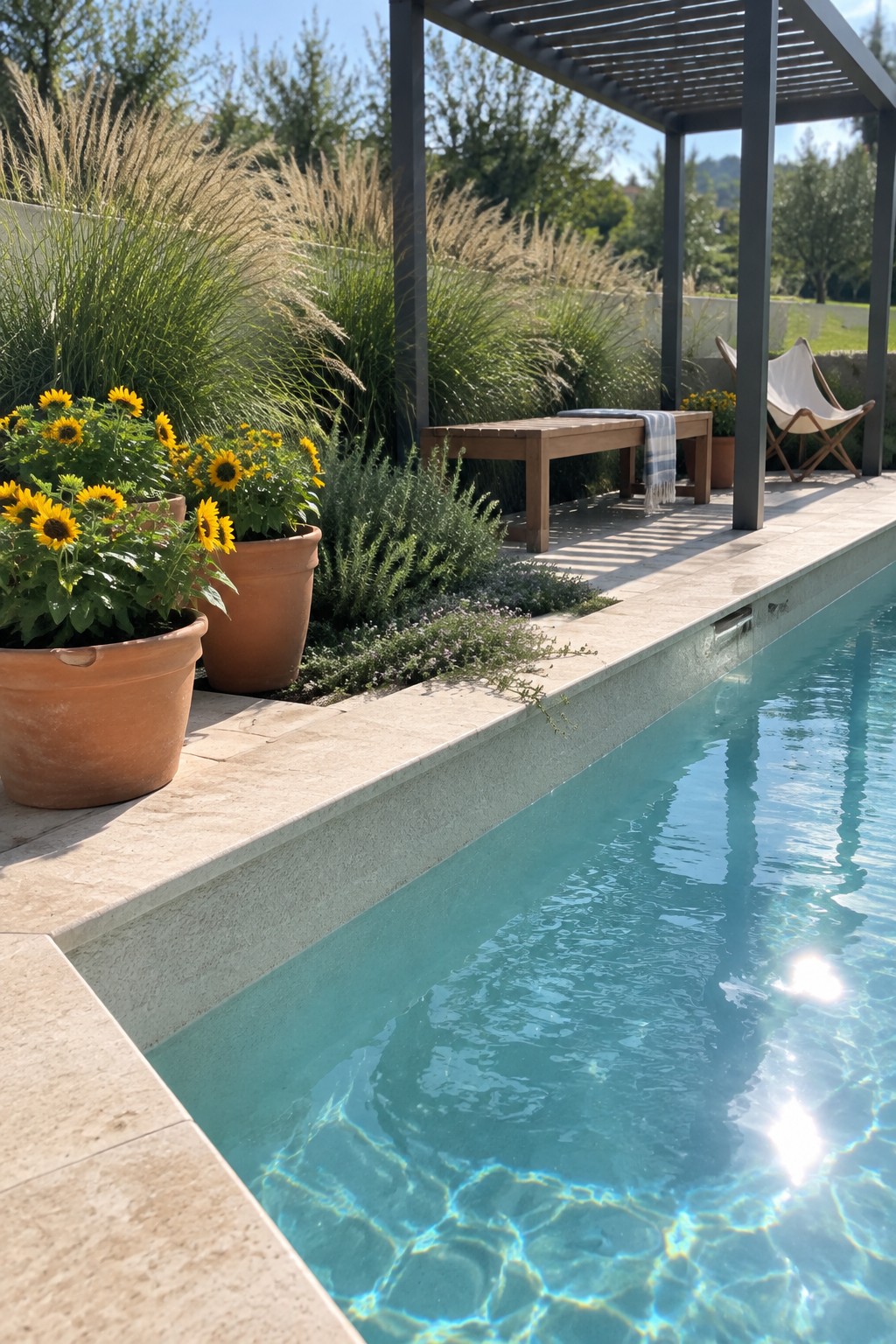
Sunflowers can bring a cheerful touch to a pool area without taking over the space. Planting them in terracotta pots keeps the flowers contained and makes it easier to move them as the garden changes.
Place the pots along the edge of a patio or pool deck, leaving enough room for people to walk safely. Sunflowers need plenty of sun, so choose a spot that gets good light and water them regularly, especially in containers.
Use Timber Steps to Build a Sloped Sunflower Garden
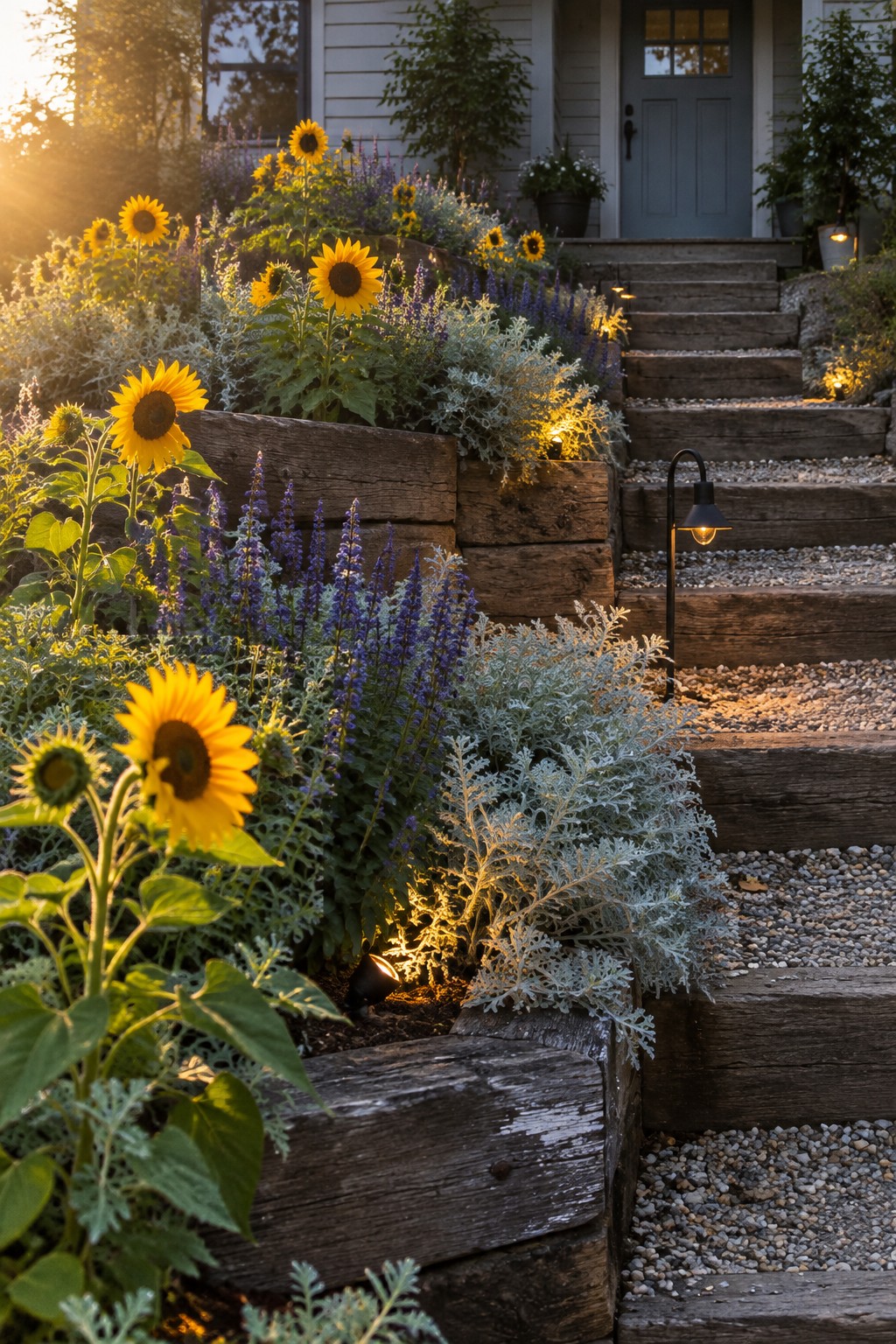
Timber retaining steps make a sloped garden easier to use while creating distinct planting beds for sunflowers. The level sections give taller flowers room to grow without letting the whole yard feel like one steep bank.
Use sturdy, well-secured timbers and leave enough space in each bed for sunflowers to spread. This approach suits a sloped front yard, but keep the steps wide and stable enough for everyday access.
Use Sunflowers to Mark a Compost Area
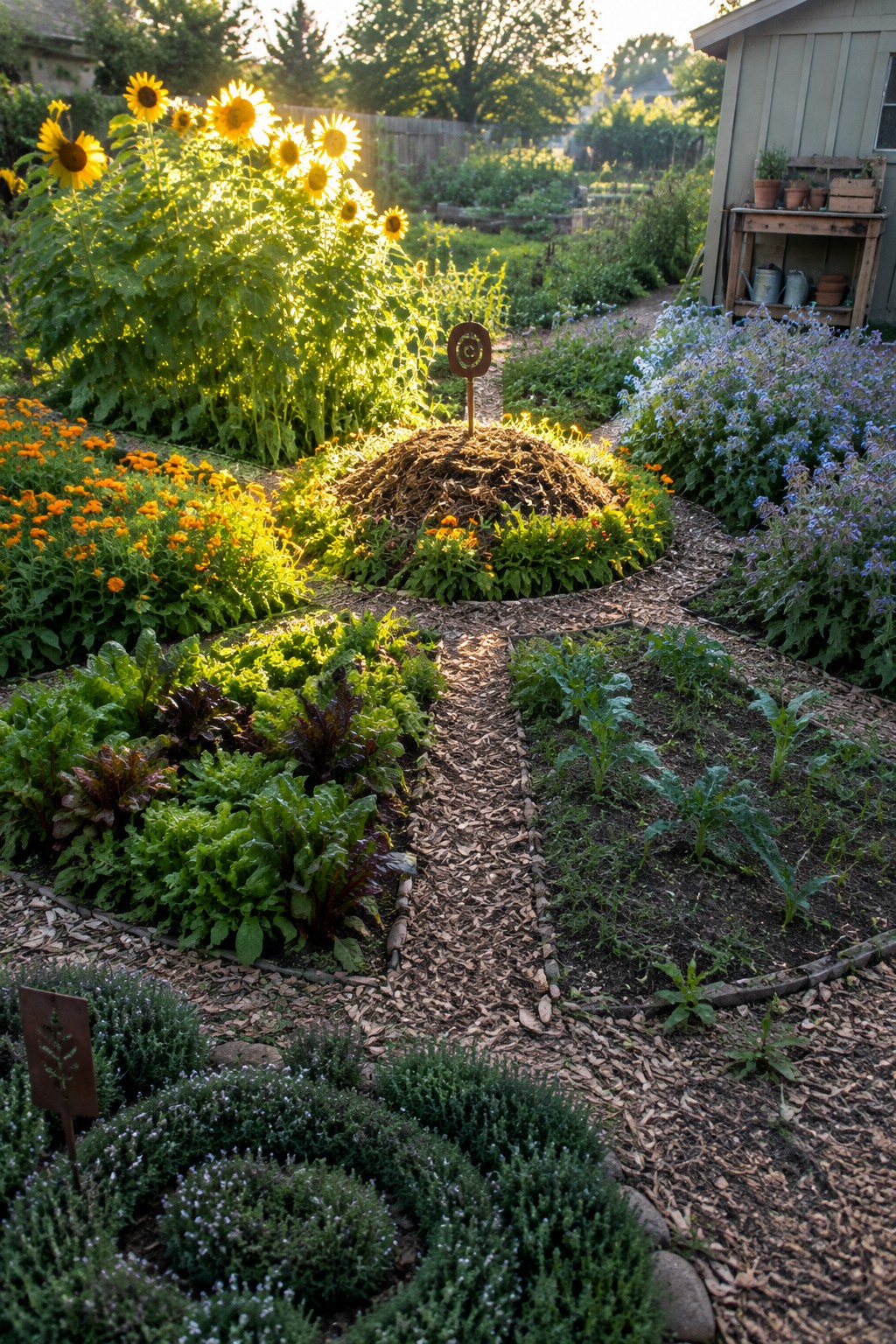
A compost pile can sit right in the garden rather than being tucked out of sight. Tall sunflowers make it feel like part of the planting, while a low ring of flowers helps define the area.
Leave enough room to reach and turn the compost, and keep a clear path leading to it. This works well in a productive backyard garden where the compost is useful and easy to access.
Use Sunflowers to Edge a Front Walk
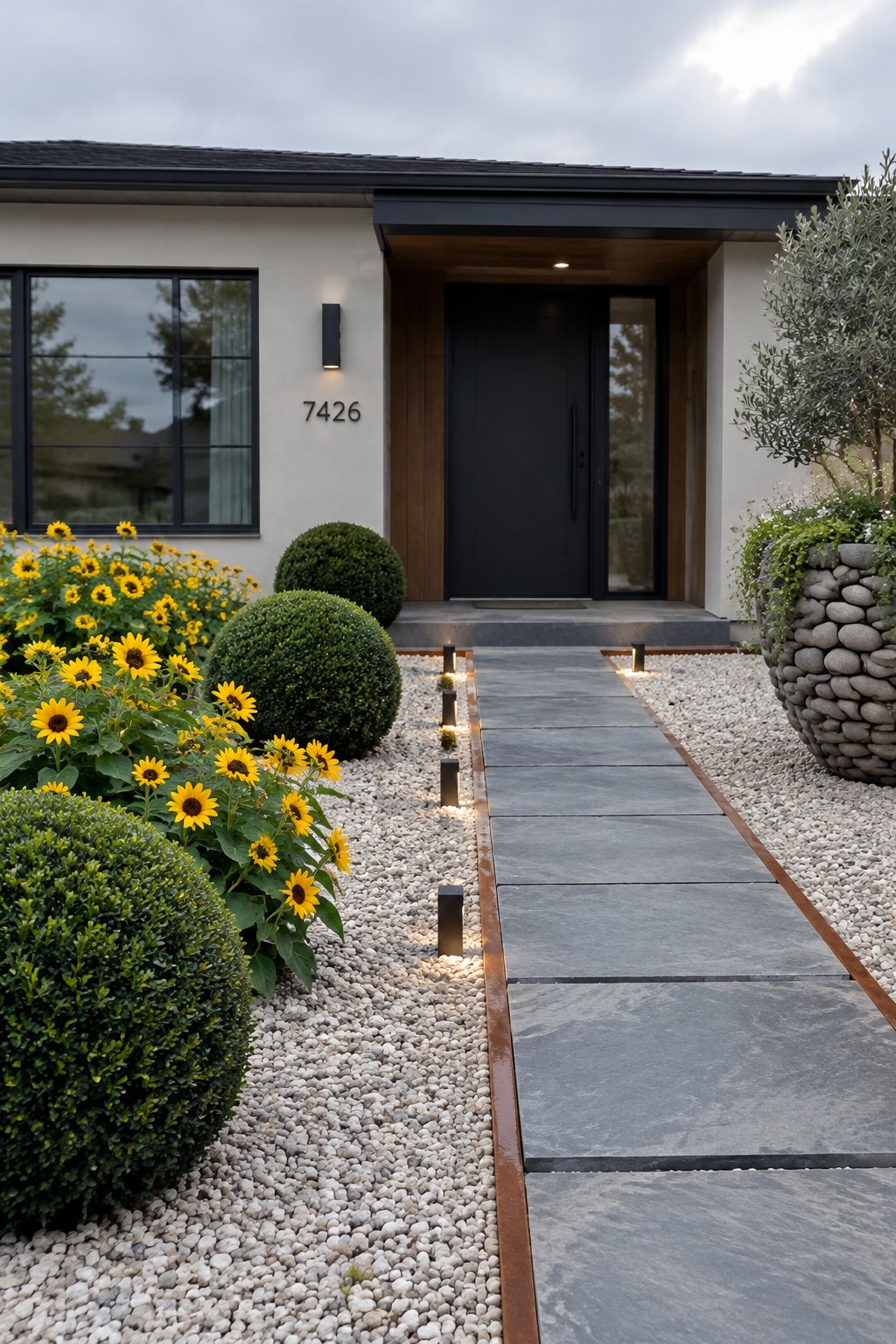
Sunflowers can make a front path feel cheerful without taking over the whole yard. Planting them along one side gives the flowers room to grow while keeping the route to the door clear.
This works well where a path borders a sunny garden bed. Leave enough space for mature plants, and keep low shrubs or other shorter plants near the edge so the walkway stays easy to use.
Grow Sunflowers Along a Vegetable Garden Path
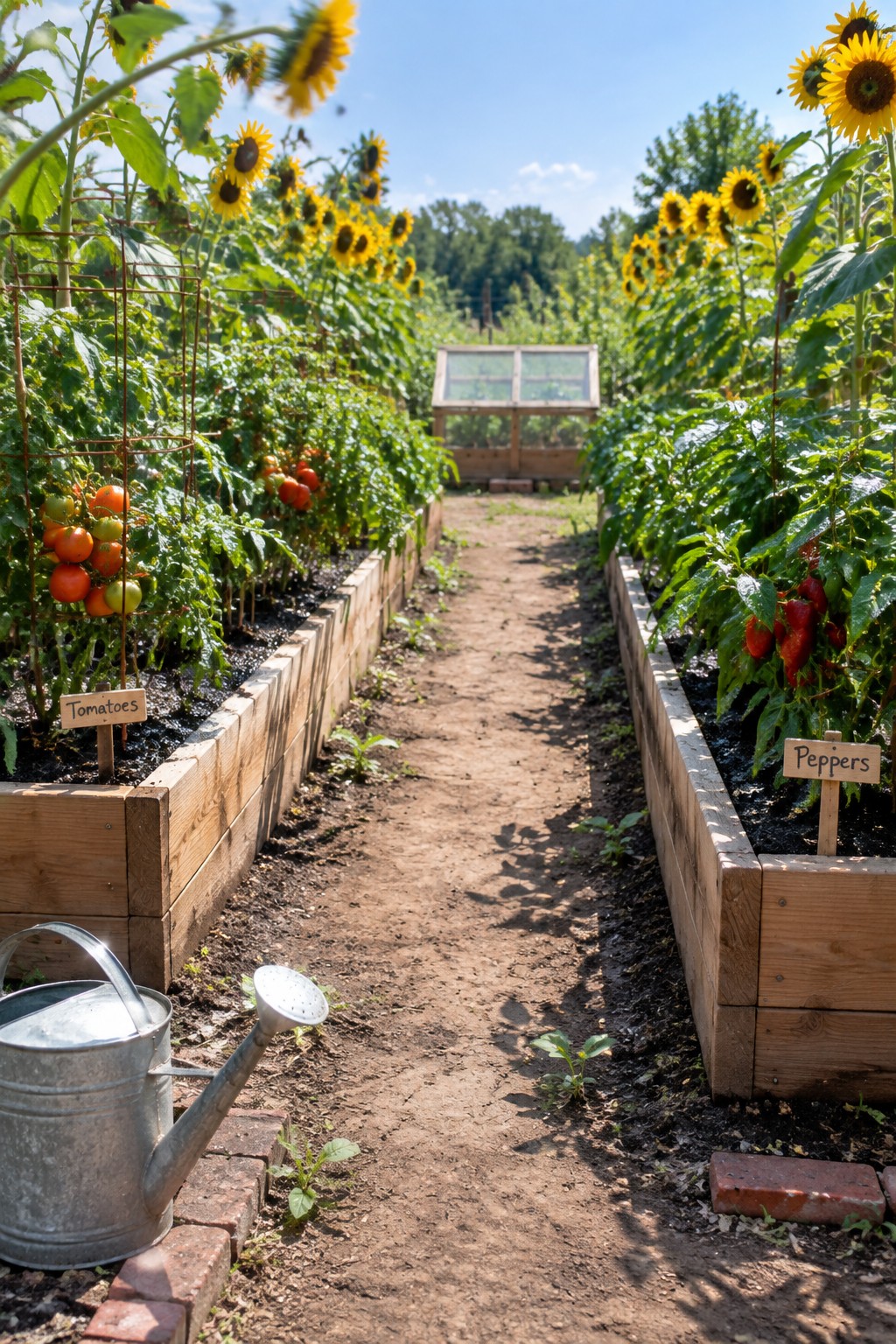
Sunflowers can give a vegetable garden a clear, cheerful structure. Planting them along the outside of raised beds lets them stand tall above the crops without taking over the growing space.
This works best where the path is wide enough to leave room for mature plants. Keep sunflowers toward the back or outer edges of the beds, and leave the walkway open for tending and harvesting.
Grow Sunflowers in Containers Along a Garden Path

Container planting lets sunflowers brighten a narrow garden without taking over the walking space. Place a few large pots beside the path, then mix in smaller flowering plants for a fuller look.
This approach works well in patios and small yards where planting beds are limited. Choose sturdy, deep containers for tall sunflowers, and leave enough room for the path to stay easy to use.
Make Sunflowers Part of an Outdoor Dining Area

Growing sunflowers beside an outdoor dining spot brings a cheerful burst of color right where people gather. Tall plants in large terracotta pots make a simple way to bring them close to the table without changing the patio’s permanent landscaping.
Use sturdy, roomy containers and place them where the sunflowers can get plenty of light without blocking the view or crowding chairs. This works well on patios with limited garden space, but tall stems may need support on windy days.
Make Sunflowers Part of an Outdoor Seating Area

Sunflowers can make a fire pit area feel more like a garden, not just a spot for chairs. Planting them behind a curved seat wall adds height and brings a cheerful touch to the edge of the gathering space.
Give the flowers enough room behind the seating so they don’t crowd people or block access. A few sturdy plants in a sunny bed are often easier to manage than a dense row.
Use Raised Planters for a Neat Sunflower Bed
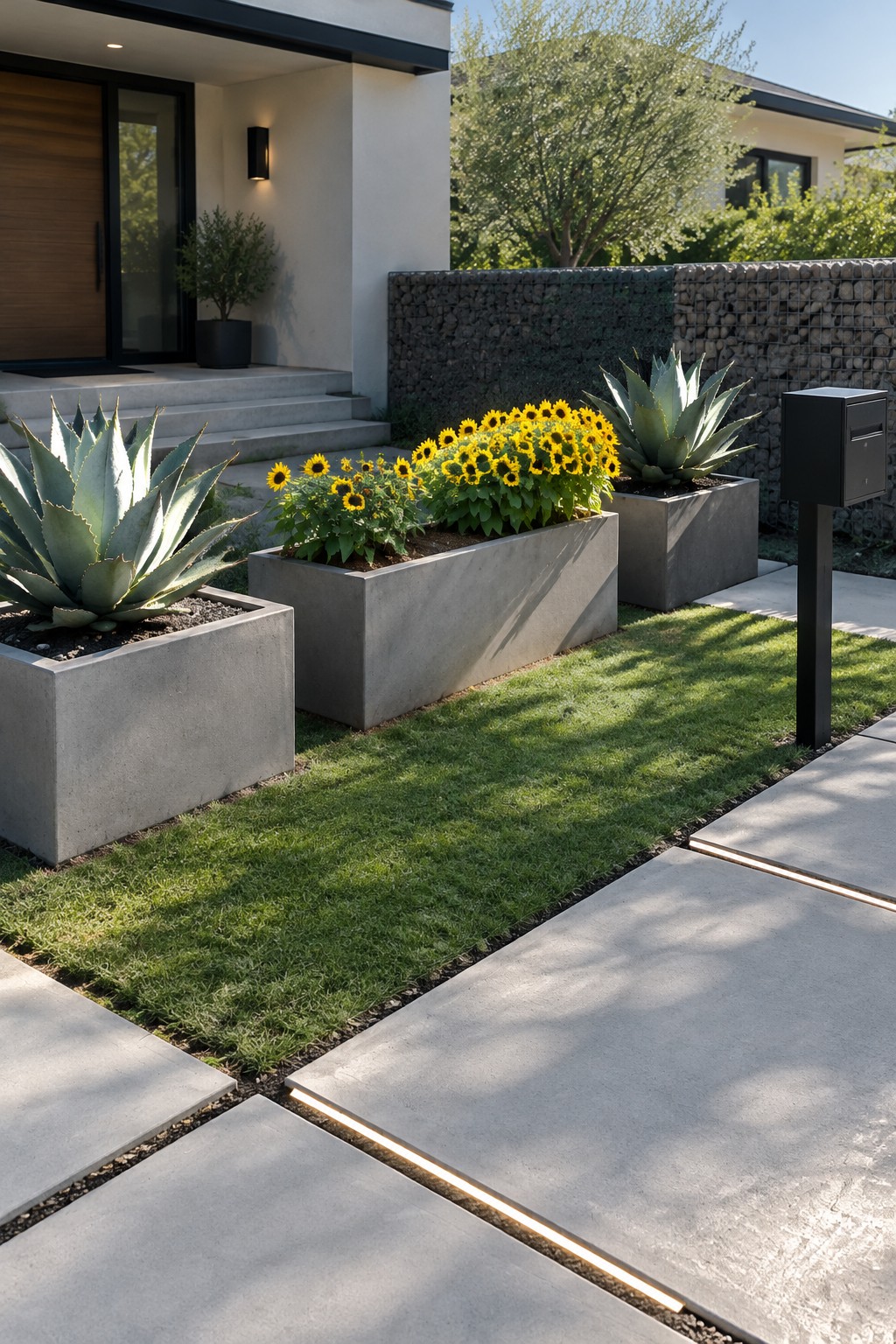
Raised planters give sunflowers a clear place in the yard without letting the bed sprawl across the lawn. A long rectangular planter also makes it easy to plant a cheerful row while keeping the rest of the landscaping tidy.
Use a similar setup beside a front walk or near the entry, where the flowers can be enjoyed up close. Give sunflowers enough soil depth and space for their mature size, and keep the bed somewhere that gets plenty of sun.
Make a Sunflower Garden Kid-Friendly
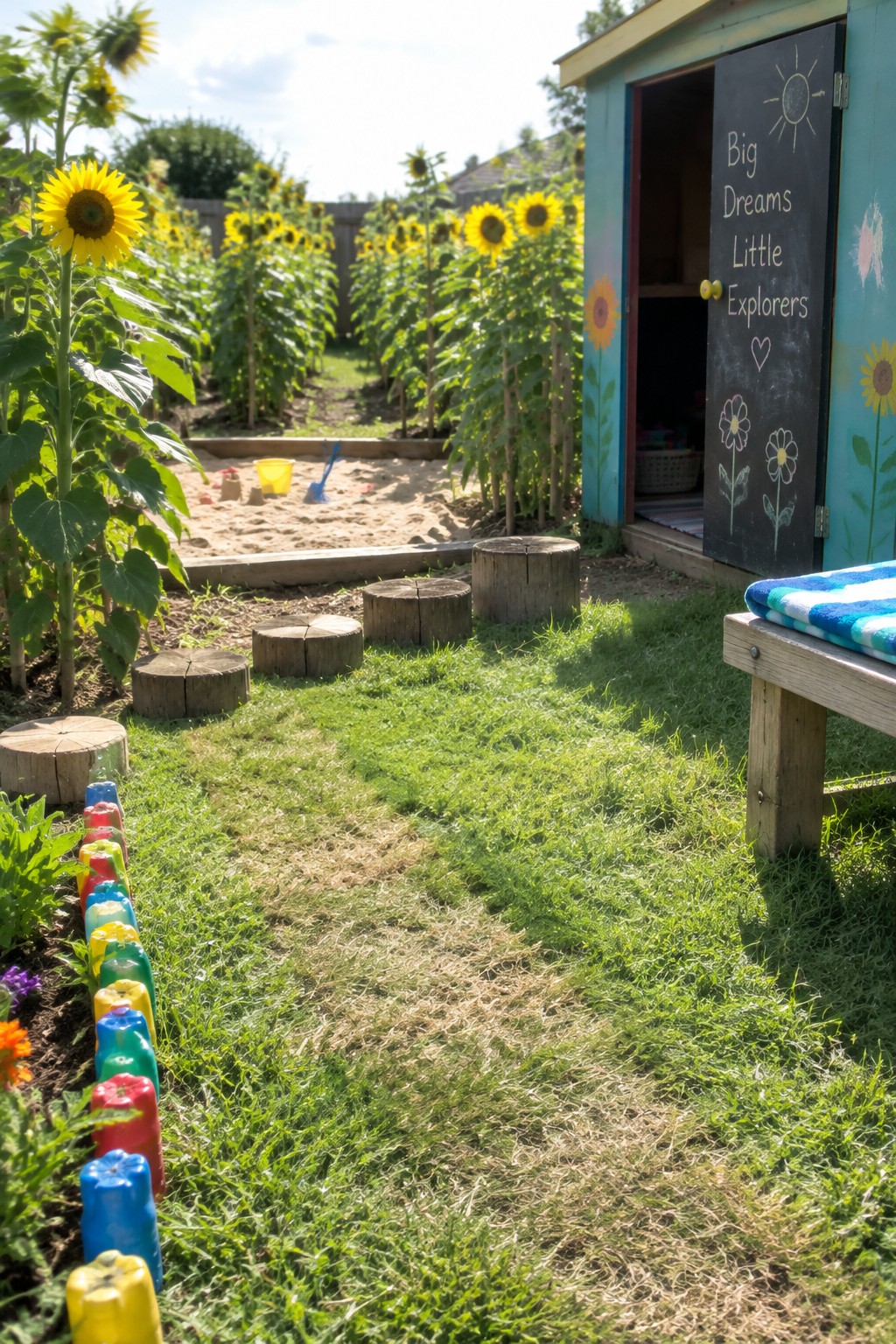
A sunflower garden can do more than brighten the yard. A simple path through the planting gives children a place to explore without trampling the flowers, and a small sandy play area can make the garden feel useful for everyday play too.
Keep the route clear and easy to follow, using grass or another soft surface rather than anything slippery. This idea suits family yards with room for both planting and play. Leave enough space between the path and the sunflower stems so little explorers can pass without brushing against them.
Frequently Asked Questions
Q: When should I plant sunflowers for summer blooms?
A: Sow seeds outdoors after the last frost, once the soil has warmed. For blooms that last through summer, plant another small batch every couple of weeks.
Q: Will sunflowers grow well in a small yard?
A: Yes. Choose compact or dwarf varieties and grow them in a large pot or a sunny border. Check the seed packet for the mature height so taller plants don’t shade nearby flowers.
Q: How do I keep tall sunflowers from falling over?
A: Plant them in a spot sheltered from strong winds, and use a stake for especially tall varieties. Tie the stem loosely so it has room to thicken as it grows.
Q: Can I grow sunflowers near vegetables?
A: You can, as long as they won’t block the vegetables’ sunlight. Give sunflowers plenty of space, and avoid planting them where their mature size will crowd smaller crops.
