

Part-shade gardens can be tricky to plan because the light shifts through the day, and plants that thrive in one corner may struggle a few steps away.
I find hydrangeas work best when their size and shape help define the space, whether they soften a path, frame a seating area, or anchor a border.
The first thing I notice in a well-planned garden is how the planting guides the eye without crowding the walkways or hiding the layers behind it.
Choosing varieties and companions for the conditions on your own site can make a garden feel settled rather than forced.
Some of these layouts are worth saving and adapting to the light, soil, and space you have.
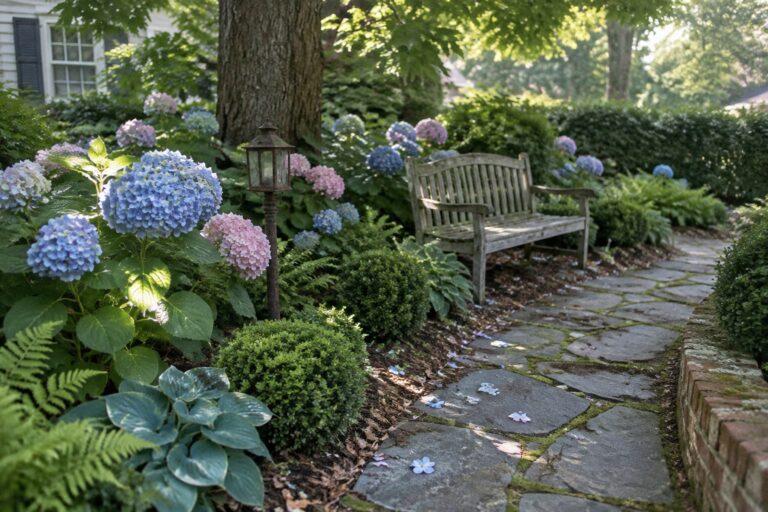
Let a Garden Path Lead Through the Hydrangeas

A gently curving stone path makes a hydrangea bed feel like part of the garden, rather than a row of flowers along the edge. It also gives you a reason to slow down and enjoy the planting from different angles.
Use wide, stable stepping stones and leave enough room to walk comfortably as plants fill out. Blue and pink hydrangeas suit a partly shaded path, but keep them from crowding the stones so the route stays easy to maintain.
Use Hydrangeas Along a Garden Path
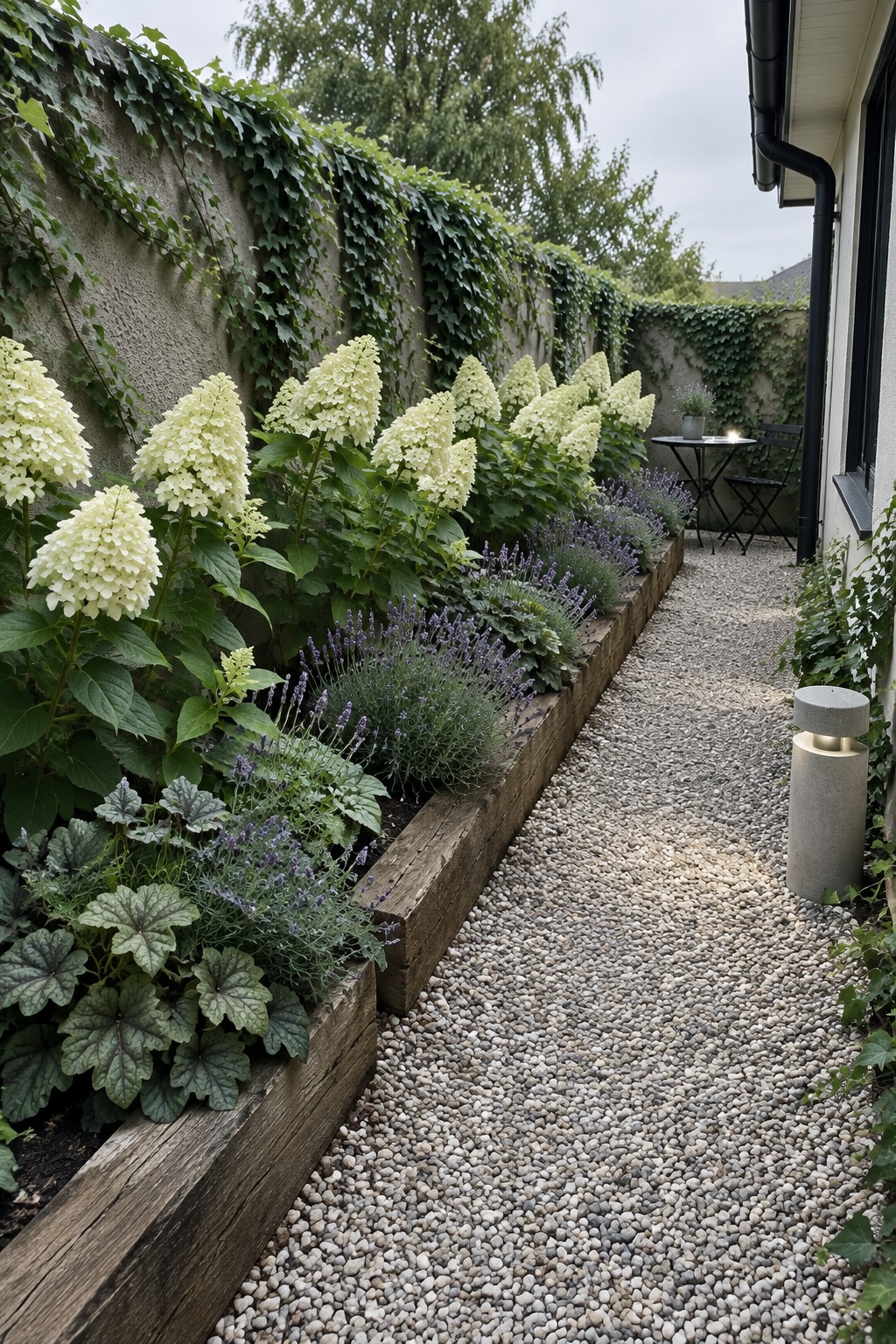
Hydrangeas make a path feel like part of the garden, rather than just a route through it. Their large flower heads give a border a clear shape, while smaller plants such as lavender can fill the lower edge.
For a part-shade garden, plant hydrangeas along one side of a gravel path and leave enough room for them to spread. Check the mature width before planting so the stems don’t crowd the walkway.
Plant Hydrangeas Along a Garden Path
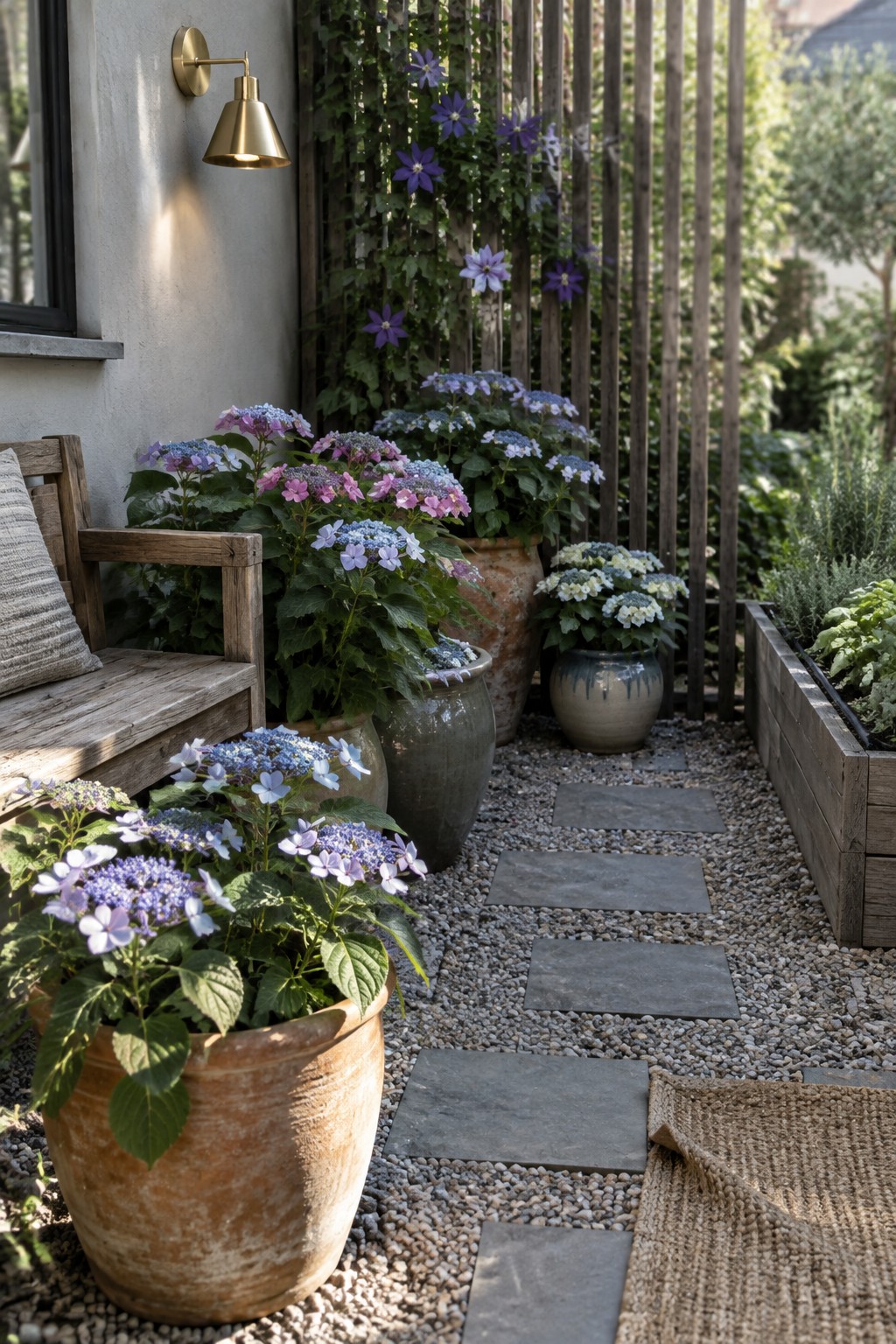
Hydrangeas in pots can bring color right beside a path, where you can enjoy their flowers without needing a large planting bed. Their rounded shape also makes a narrow garden feel lush while leaving the walkway open.
For a similar look, place sturdy pots along the edge of a gravel path and leave enough room to walk comfortably. Part shade suits many hydrangeas, but check the variety’s needs and keep container soil from drying out.
Add a Stone Path Through Part-Shade Plantings
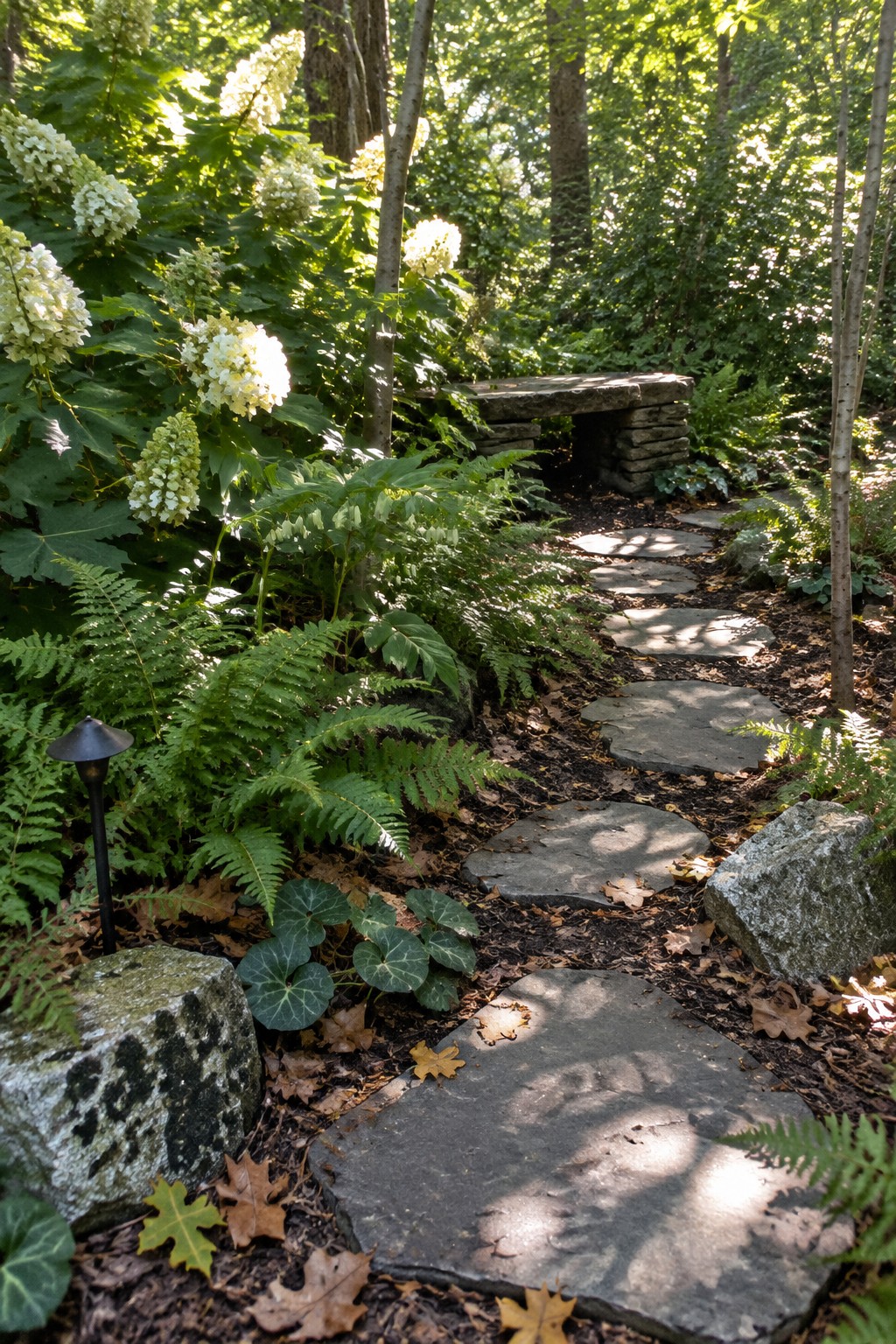
A stepping-stone path gives a leafy garden a clear route without taking up much space. Here, the broad stones wind through ferns and hydrangeas, making the planting feel informal but still easy to move through.
Use this approach where you want a path to feel part of the garden rather than separate from it. Set the stones firmly and leave enough room between them for a comfortable stride. A gently curving route works well in a wooded or shaded area.
Use Hydrangeas to Edge a Patio
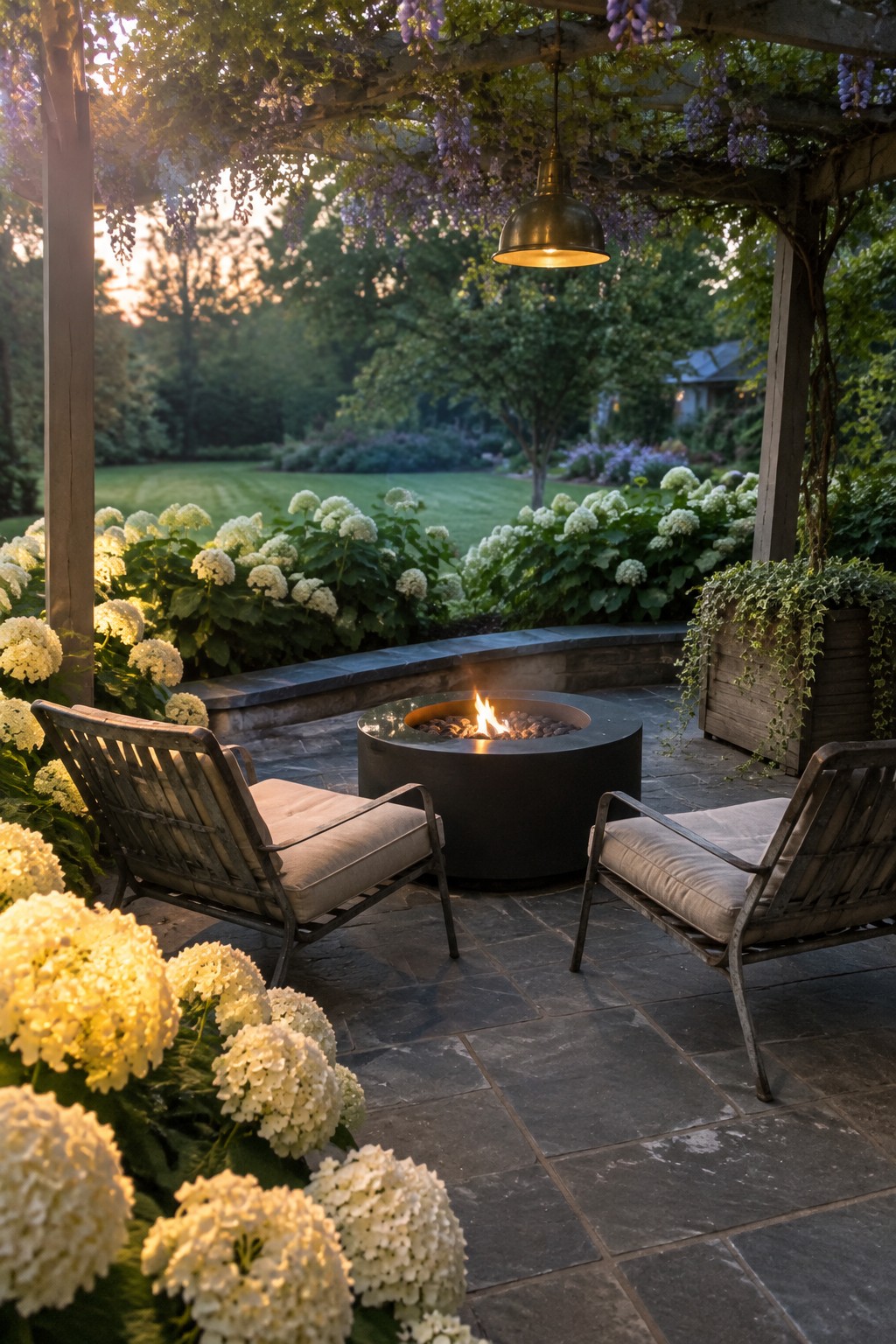
Hydrangeas can make a patio feel connected to the garden without taking up the seating area. Planting them along the edge gives the space a soft border, and the broad flower clusters are easy to enjoy from nearby chairs.
This works well around a stone patio that gets part shade. Leave enough room for the shrubs to spread, and keep them back from paths and seating so they don’t crowd the space.
Build a Garden Around Stone Steps
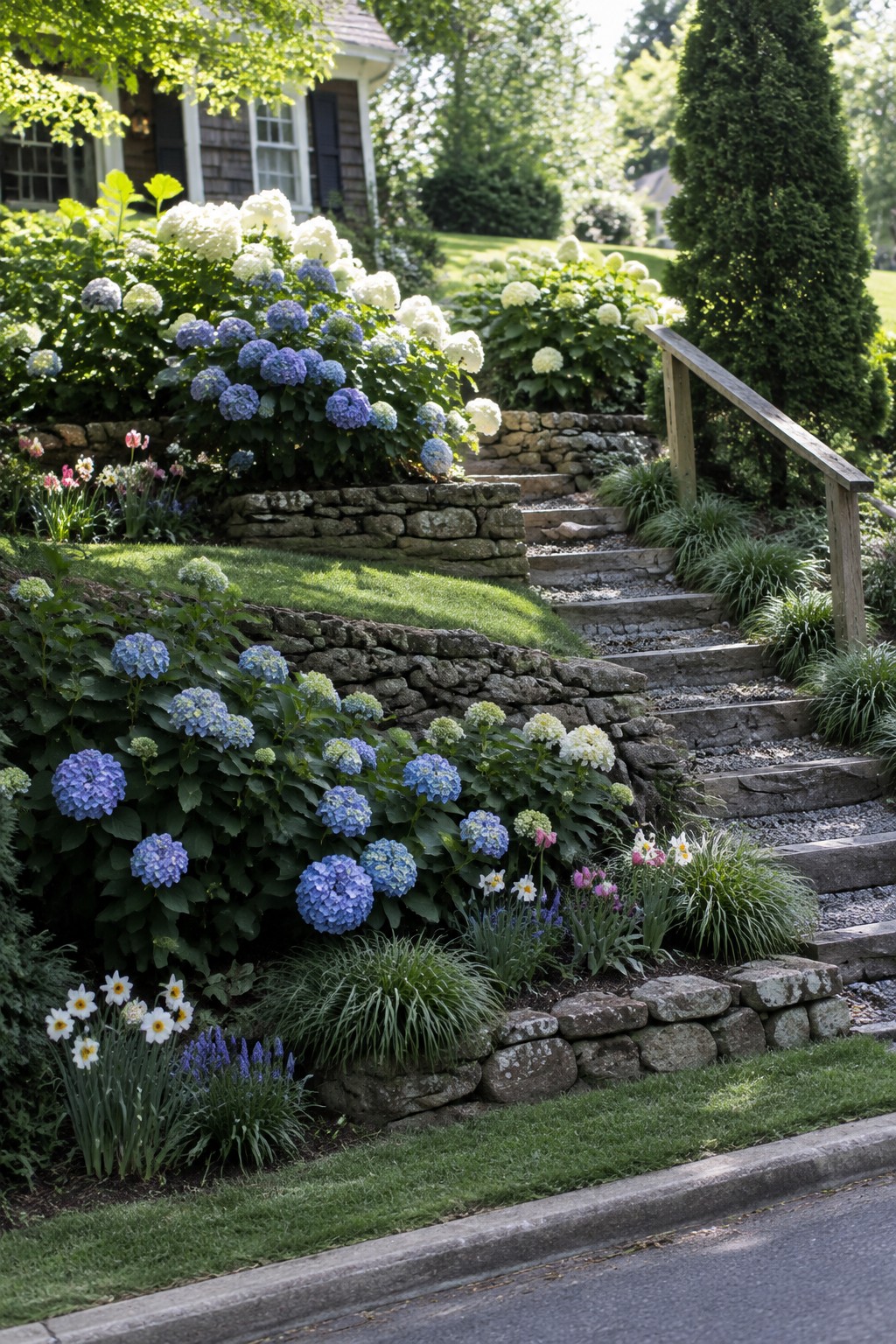
Stone steps can make a sloped garden easier to walk through while giving the planting beds a clear shape. Here, low stone walls hold the beds beside the steps, and hydrangeas fill the space with color.
This approach works well on a hillside or in a front yard with a noticeable change in level. Keep the steps wide enough for comfortable use, and leave enough room beside them for plants to grow without spilling into the walking route.
Use a Brick Path to Shape the Garden
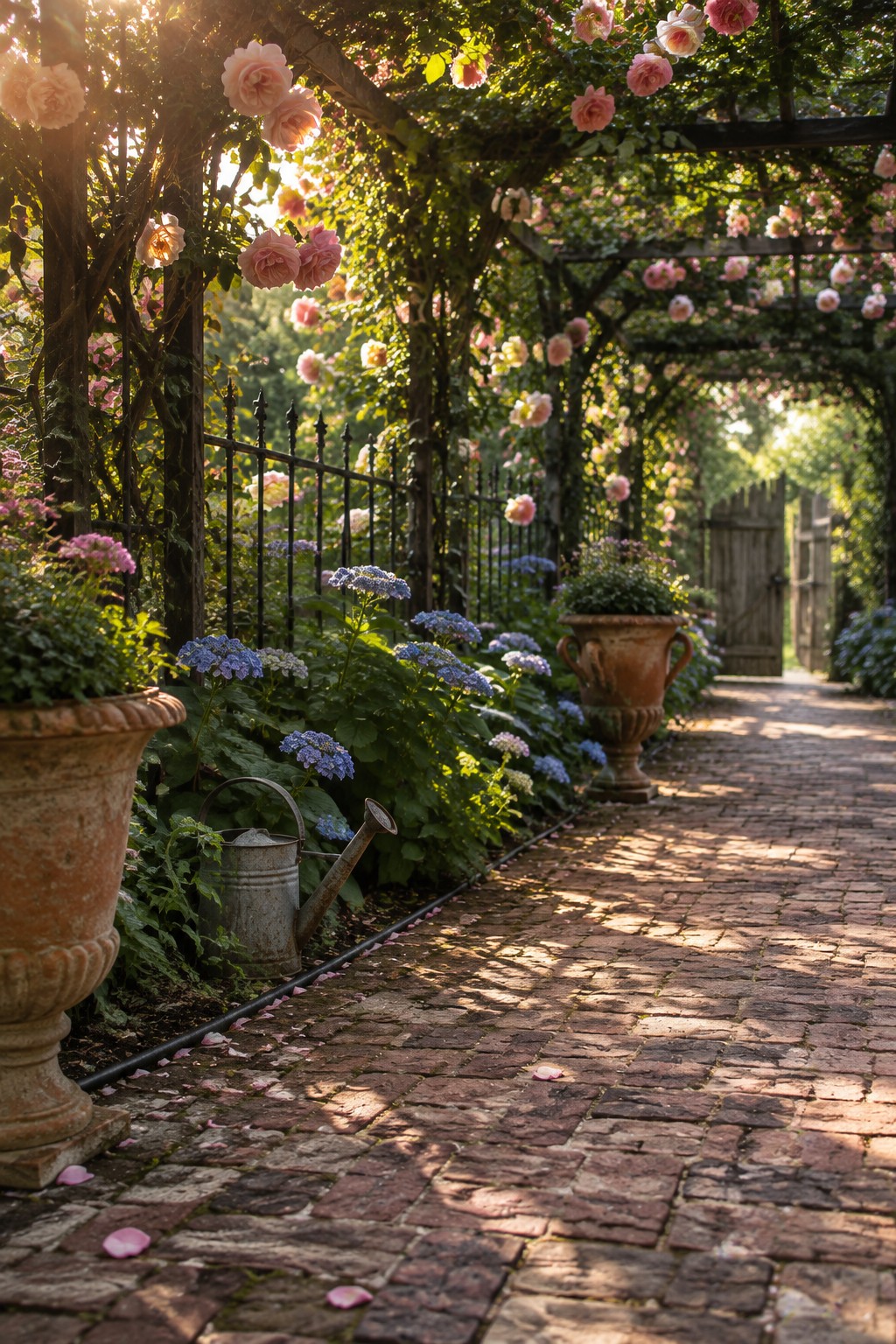
A brick path gives a part-shade garden a clear route through the planting, while hydrangeas can soften its edges. The brick also brings a practical, sturdy surface that feels at home in a traditional garden.
Set hydrangeas along one side or in loose groups beside the path, leaving enough room for them to grow without narrowing the walkway. A pergola can provide extra shade, but check that the plants still get enough light to flower well.
Grow Hydrangeas in Balcony Planters
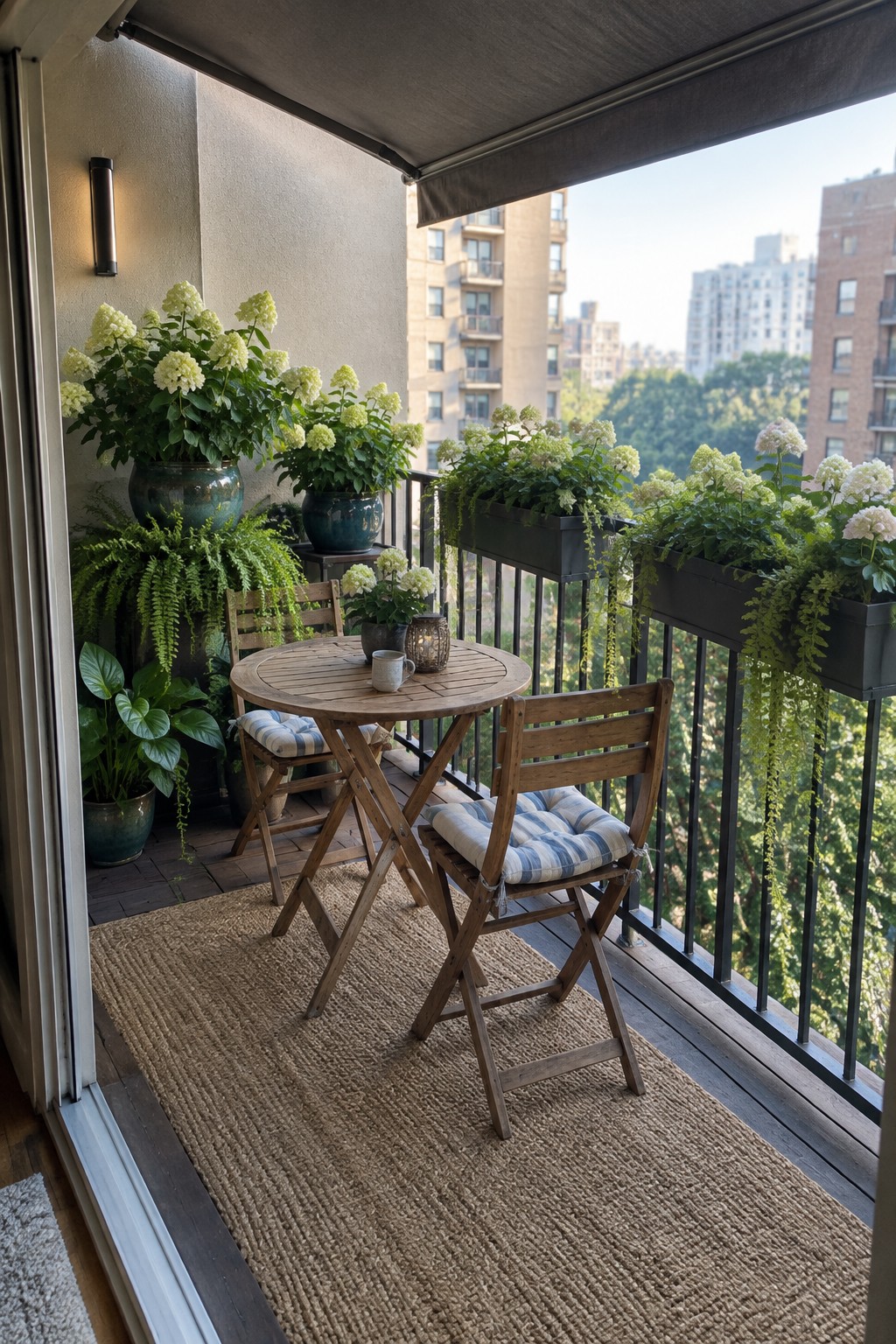
A balcony can make room for hydrangeas even when there is no garden bed. Grouping them in containers along the railing gives the plants a clear place to grow while leaving the center open for seating.
Choose sturdy, roomy pots with drainage holes, and use a potting mix that holds moisture without staying soggy. A part-shade balcony is a good fit, but check how much sun it gets before choosing a variety, since some hydrangeas need more light to flower well.
Use Stepping Stones to Guide a Part-Shade Garden

A stepping-stone path gives a part-shade garden a clear route without covering much of the ground. The broad stones sit naturally among gravel and moss, while nearby hydrangeas can bring color and leafy growth along the way.
Leave enough space between stones for easy, steady steps, and keep the path firm underfoot. This approach works well in a small garden or beside a pond, but avoid placing stones where water tends to collect.
Use Hydrangeas to Bring Greenery to a Poolside Patio
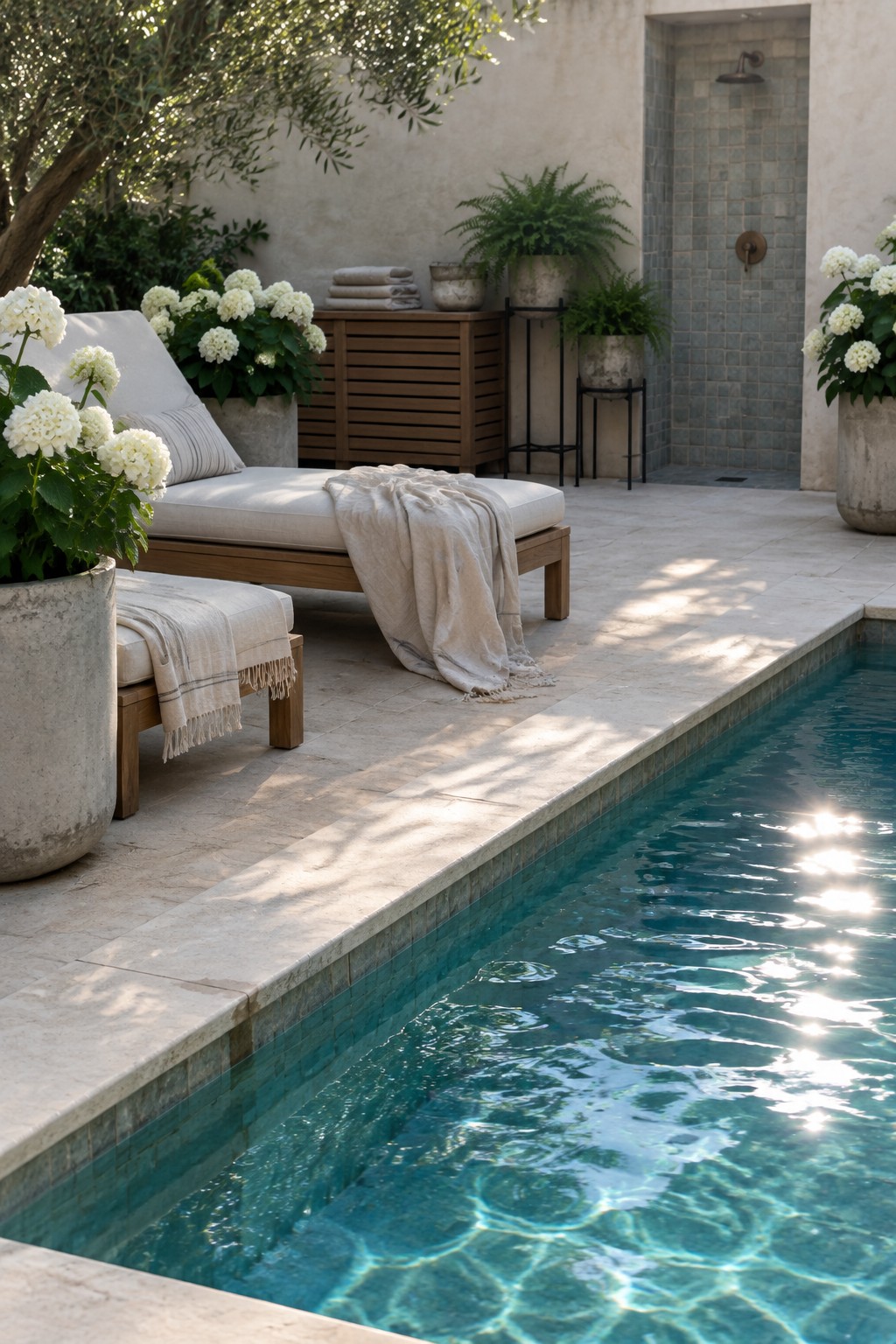
Hydrangeas are a good choice for a part-shade patio where you want flowers close to the seating area. Their rounded white blooms bring a soft, full look to the space without needing a large garden bed.
Try them in sturdy pots beside a lounge area or along the edge of a pool, where they can get some protection from strong afternoon sun. Water container plants regularly, since pots dry out faster than garden soil.
Use Hydrangeas to Define a Front Walk
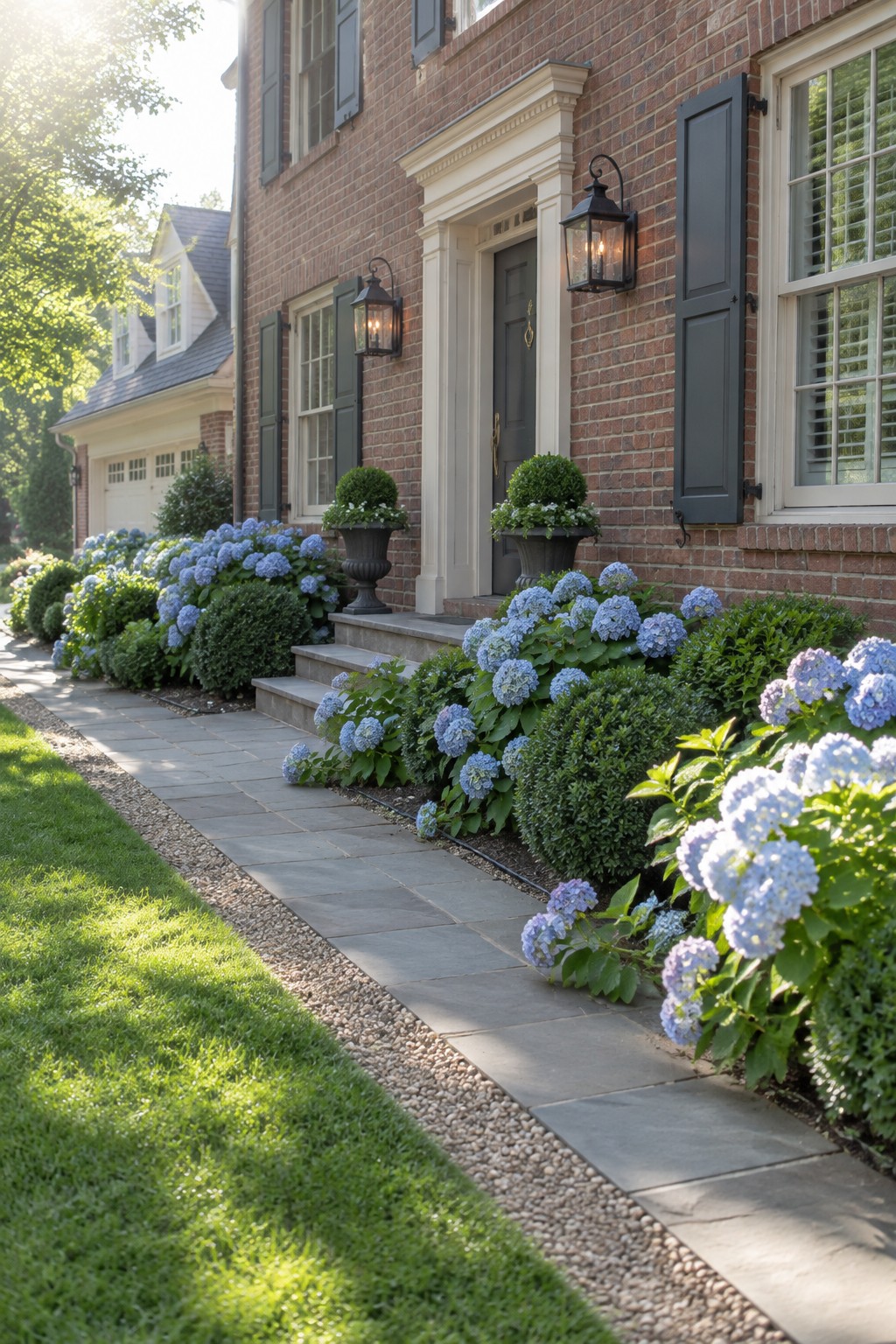
A neat row of hydrangeas can give a front walk a softer, more garden-like edge. The rounded flower heads make a clear border, while the repeated planting helps the path feel connected to the home.
Use this approach along a sunny-to-part-shade walkway, leaving enough room for mature plants so they do not crowd the paving. Blue hydrangeas look especially at home beside brick, but check the variety’s mature size before planting.
Use Hydrangeas to Edge an Outdoor Dining Deck
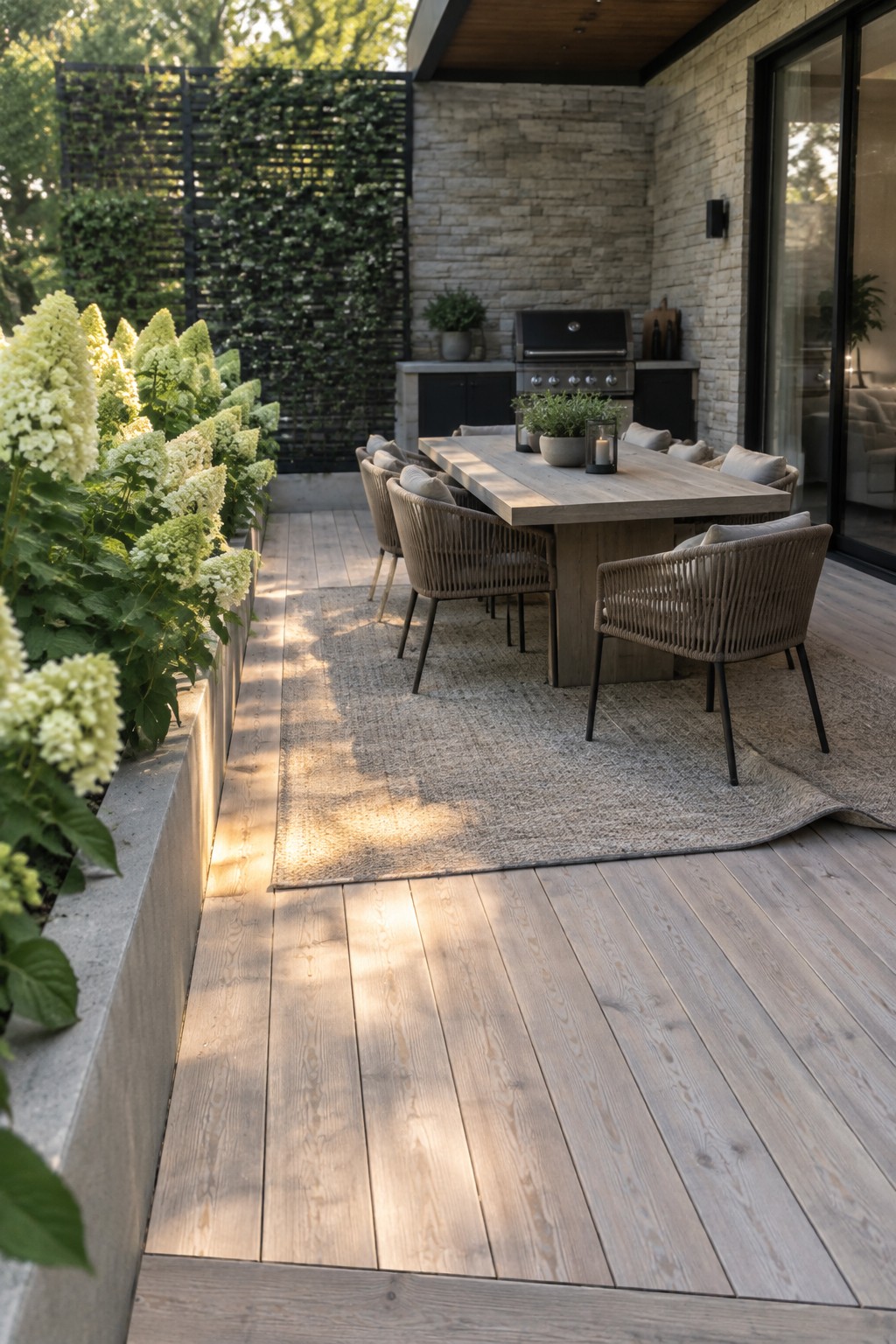
Hydrangeas can make a deck feel more connected to the garden when they grow in a raised bed along its edge. Their broad leaves and flower clusters soften the hard line of the decking, while keeping the planting close enough to enjoy from the table.
This works well beside a patio or deck that gets part shade, especially where you want a leafy border without taking up seating space. Leave room for the shrubs to spread, and choose a spot with enough light for the variety you plant.
Layer Hydrangeas With Other Shade-Loving Flowers

Hydrangeas can be the main planting in a part-shade bed without being the only flowers there. Mixing their rounded blooms with lighter, upright plants gives the garden more variety while keeping the hydrangeas as the focus.
Use foxgloves and astilbe between hydrangeas, leaving enough room for mature shrubs to spread and air to move through the bed. This approach suits a cottage-style garden, but avoid crowding the plants or they may compete for space.
Make Hydrangeas Part of a Small Patio
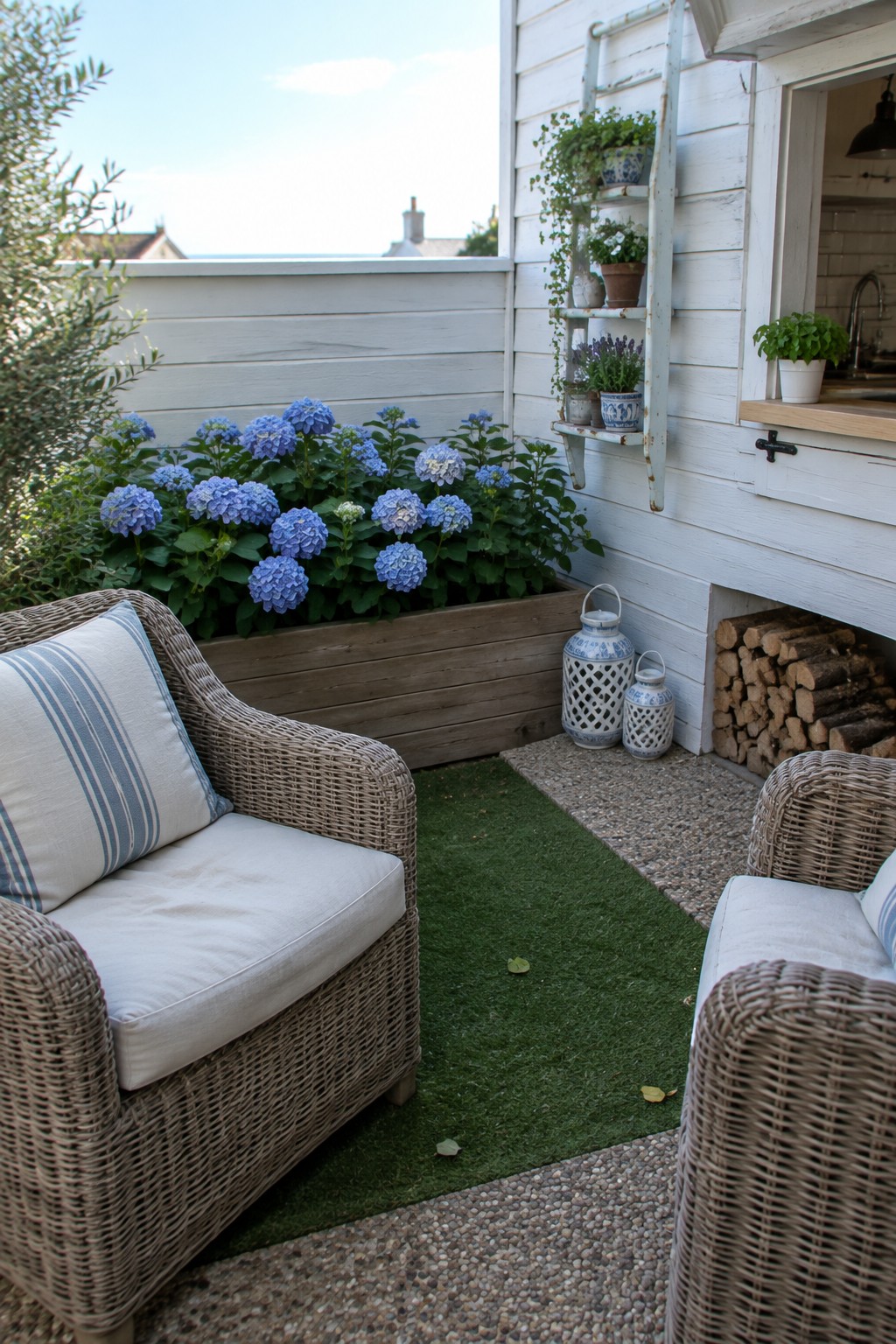
Hydrangeas can make a compact patio feel more like a garden without taking away the seating area. A raised planter along the edge gives the shrubs room to grow while keeping their blue blooms close to the chairs.
This works well in a partly shaded courtyard or beside a porch. Leave enough space for the mature plants, and keep the bed narrow enough that people can still move comfortably between the seats.
Let Hydrangeas Line a Pebble Garden Path
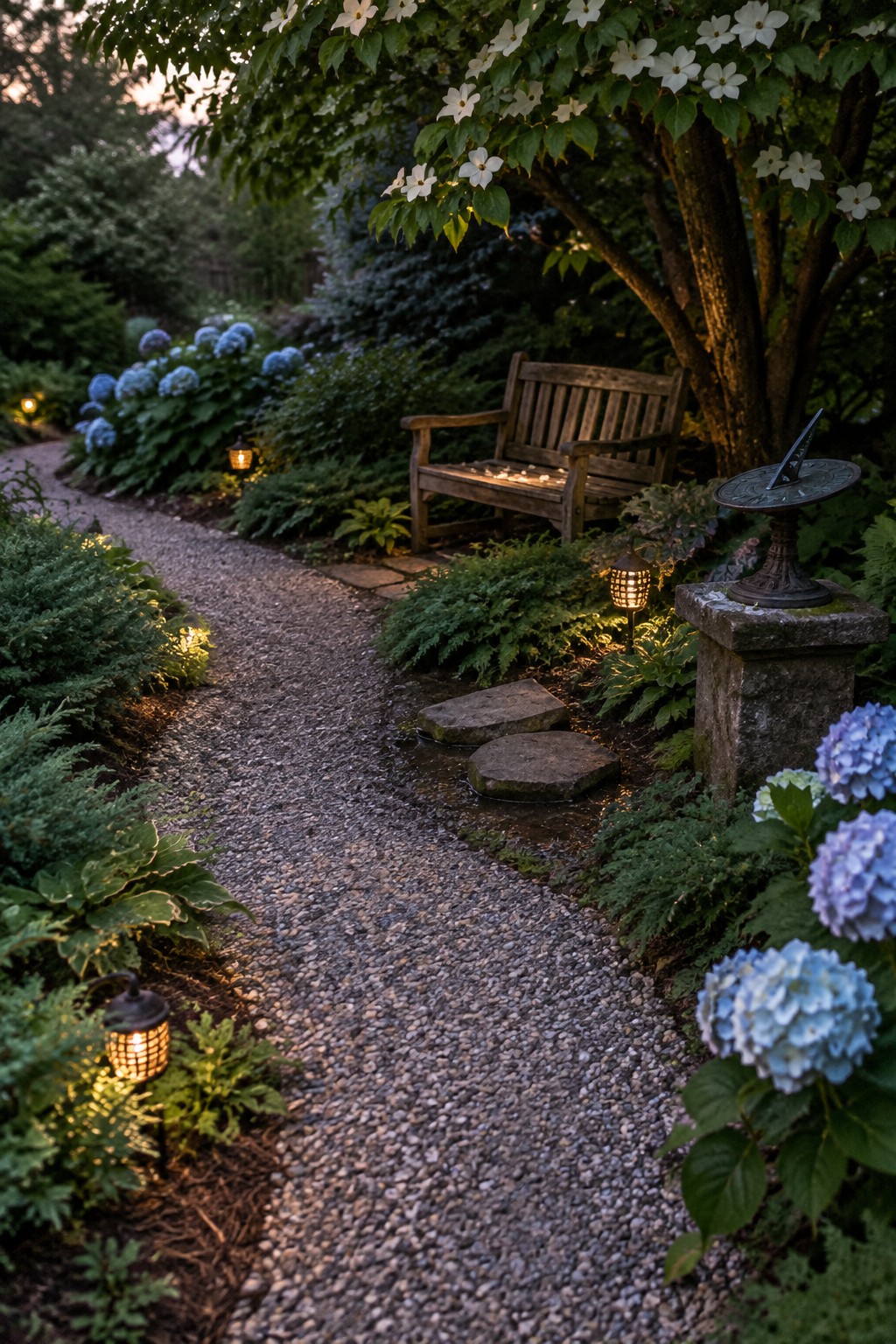
A winding path gives a part-shade garden a clear route through the planting, while hydrangeas along the edges make the walk feel lush without blocking it. Blue blooms stand out against the greenery and help mark the path’s curves.
Use this idea where there’s room for a gently curving walk, and keep the hydrangeas far enough back that they don’t spill onto the path. A few stepping stones can help where the route crosses a damp patch.
Use Hydrangeas to Welcome Guests at the Front Door
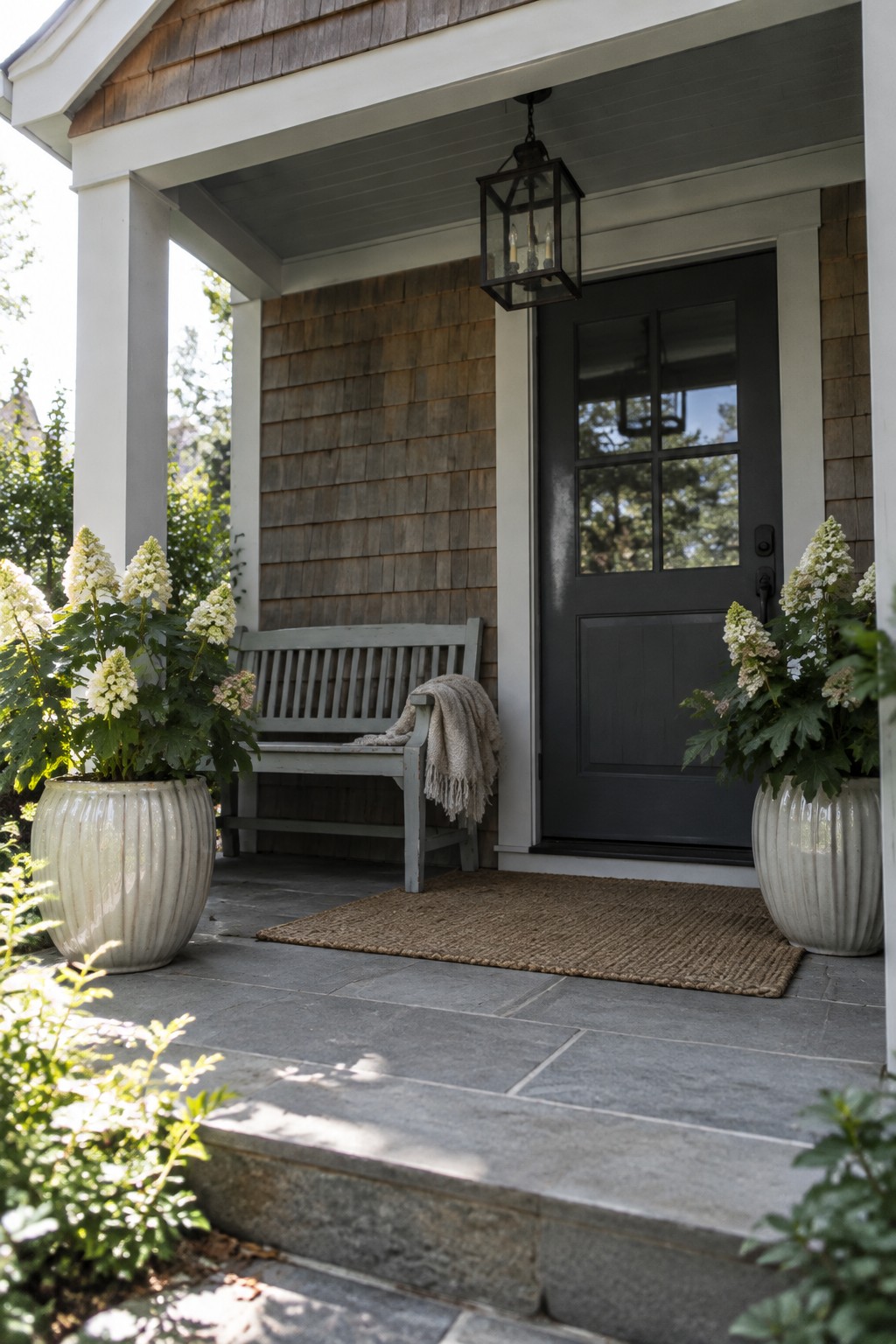
Large hydrangeas in porch planters make a simple entry feel cared for without changing the garden beds. Their tall flower clusters bring color close to the door, where they’re easy to enjoy.
Choose sturdy planters that suit the porch and leave a clear path to the entrance. In a part-shade spot, pick a hydrangea variety suited to the available light, and keep the soil evenly moist.
Mix Stone Steps Into a Part-Shade Garden
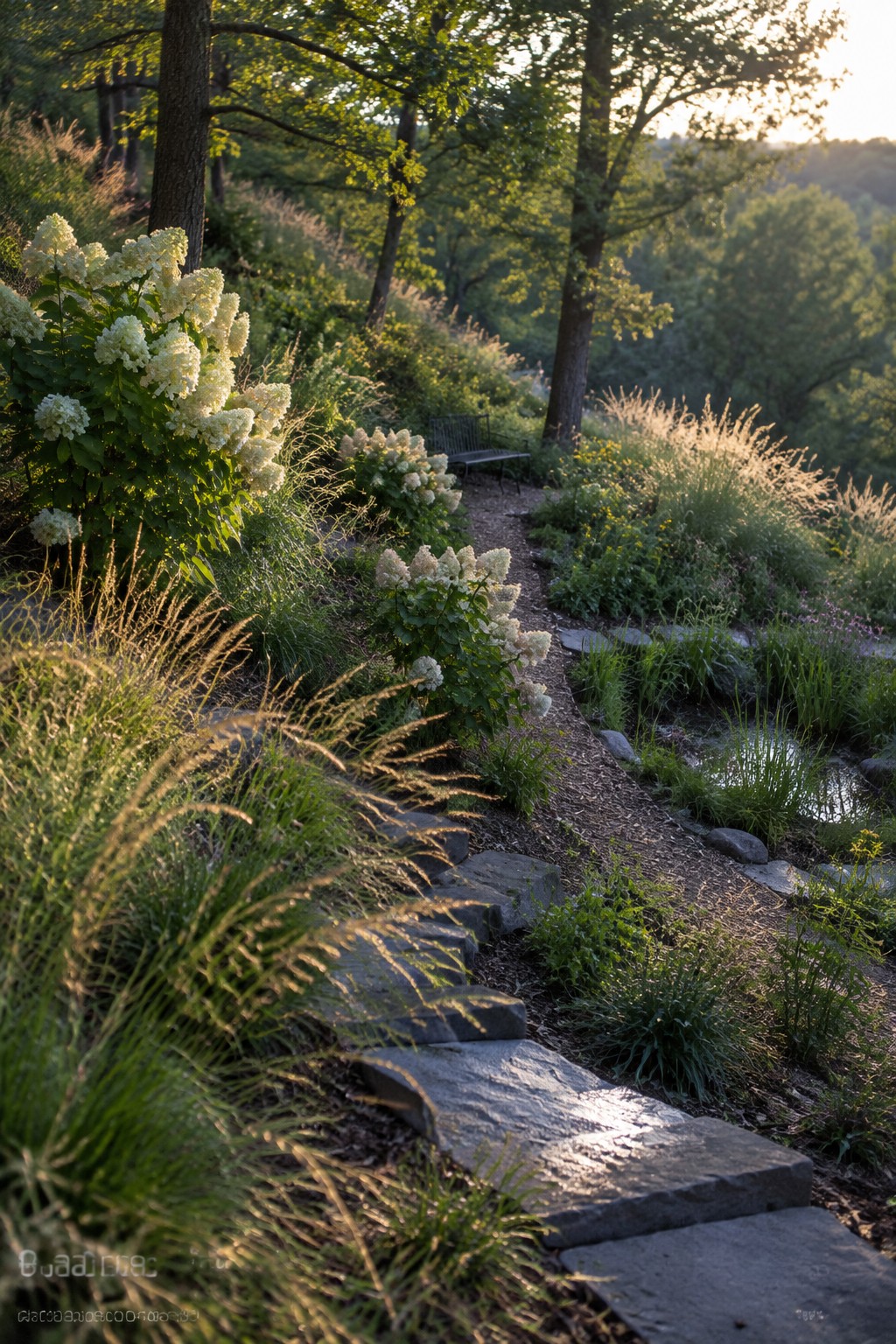
Stone steps can make a sloped garden easier to walk through while keeping the planting beds connected. Here, broad slabs follow the path through hydrangeas and grasses, giving the garden a clear route without making it feel too formal.
Use sturdy, slightly uneven stones for a natural look, and leave enough room beside the steps for plants to spread. Hydrangeas suit this approach in part-shade, but keep their mature size in mind so they do not crowd the walking surface.
Use Hydrangeas to Fill a Raised Garden Bed
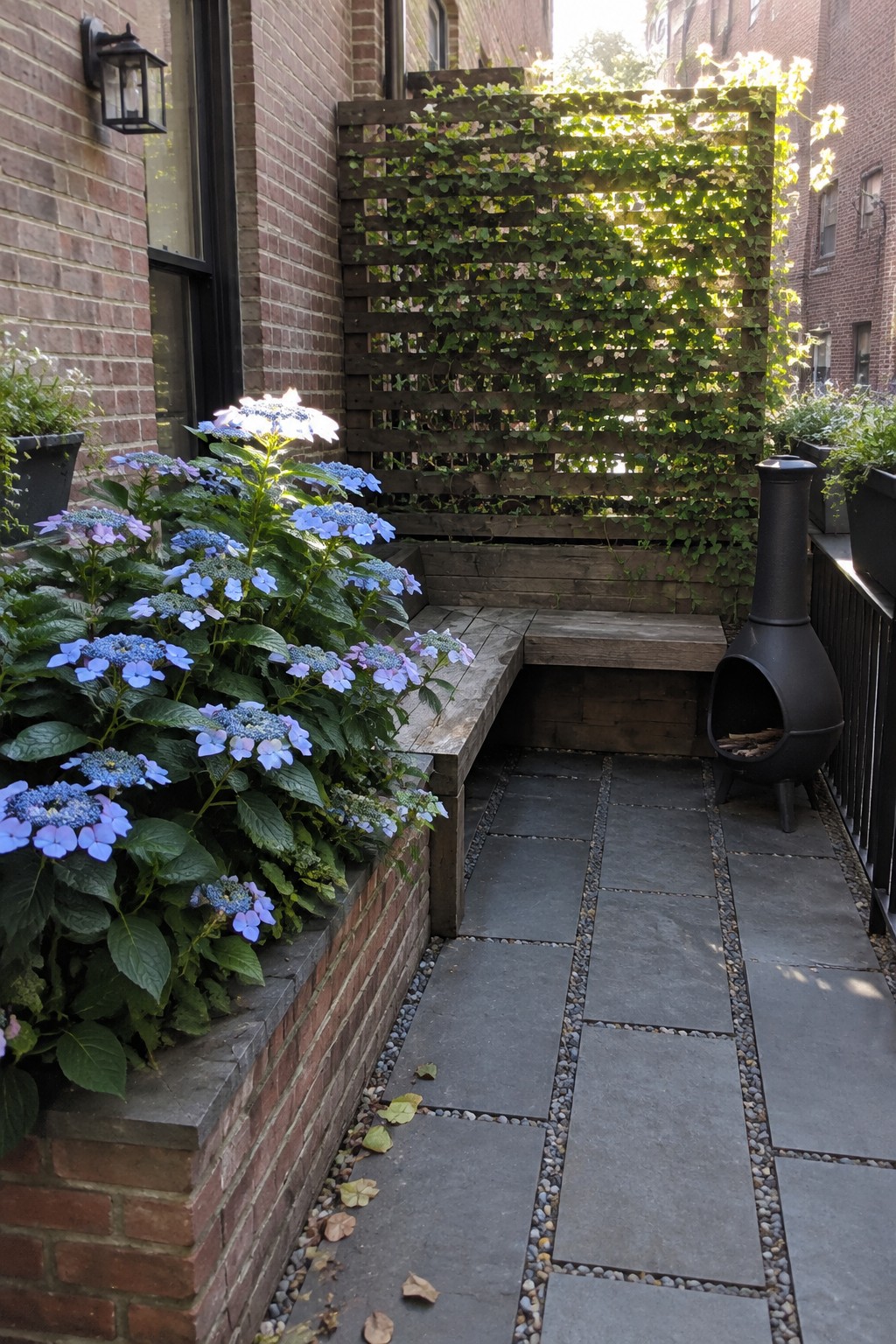
A raised bed is a useful way to grow hydrangeas in a narrow part-shade garden. It gives the planting a clear edge, and the blooms can fill the space without taking over the walkway.
Brick beds work especially well in small courtyards or along a house wall. Leave enough room for the plants to mature, and keep the path wide enough to pass comfortably.
Let Hydrangeas Edge a Poolside Patio
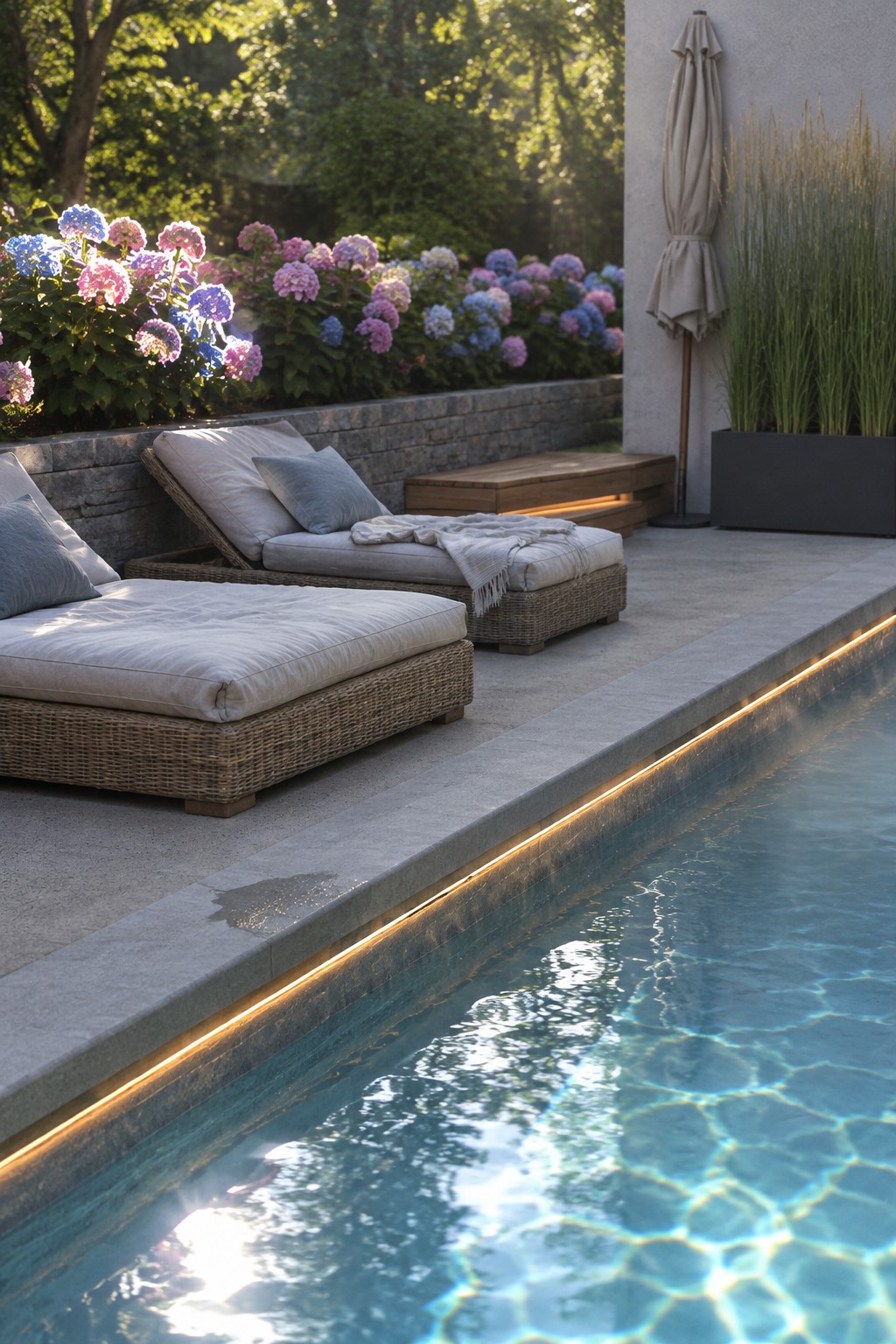
A low stone wall can separate a poolside seating area from a garden bed without making the two spaces feel cut off. Hydrangeas planted behind the wall bring color close to the patio, while the raised bed gives them a clear boundary.
This approach works well where the patio meets a part-shade garden. Leave enough room for the shrubs to spread, and choose varieties suited to the light and moisture conditions. Keep plants far enough from the pool edge that fallen petals and leaves are easy to manage.
Frequently Asked Questions
Q: How much sun do hydrangeas need in a part-shade garden?
A: Most hydrangeas bloom well with morning sun and afternoon shade. In deeper shade, they may grow leaves but produce fewer flowers.
Q: Can I plant hydrangeas beneath a tree?
A: Yes, as long as the spot gets some light and the tree roots don’t crowd the planting area. Water new plants regularly, since trees and hydrangeas compete for moisture.
Q: Why are my hydrangea leaves wilting in the afternoon?
A: A little drooping during hot afternoons can happen, even when the soil is damp. If the leaves stay limp into the evening, check the soil and water deeply when it feels dry.
Q: Can I grow hydrangeas in pots on a shaded patio?
A: Absolutely. Choose a roomy pot with drainage holes and use a good-quality potting mix. Check the soil often, since containers dry out faster than garden beds.
