

A dry front yard can feel unfinished when bare soil, scattered stones, or thirsty plants leave the space without much structure.
I find that a clear path, well-placed rocks, and a few plants suited to dry conditions can make the yard feel cared for without demanding constant watering.
The best designs use layers and edges to give the space shape, rather than relying on more plants to fill every gap.
Even a small change in the layout can make the home’s entrance feel more settled.
I’d save the ideas that fit your yard’s slope, sun, and maintenance needs, then adapt them one step at a time.
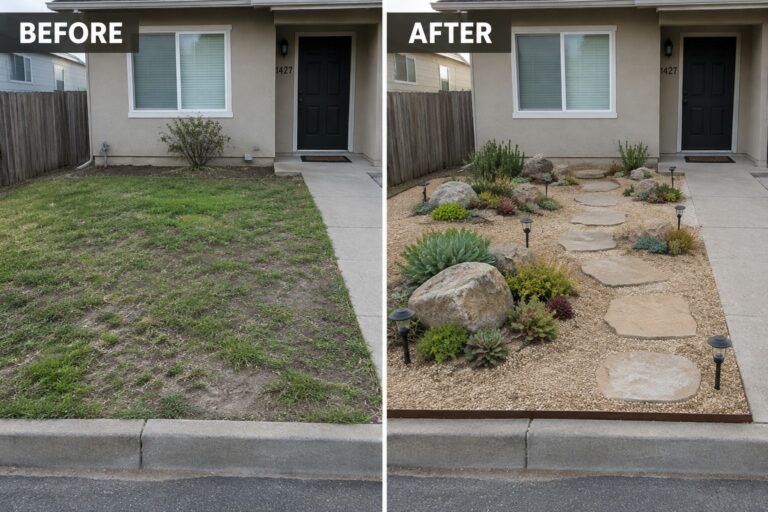
Replace A Patchy Lawn With A Gravel Garden

The bare, uneven lawn becomes a defined rock garden, giving the front yard a cleaner look without relying on grass. Gravel and a few stepping stones make a practical surface, while grouped plants add color and shape.
This idea suits a small, dry front yard where turf is hard to maintain. Clear the area first, then use edging to keep gravel in place and leave enough space between plants as they grow.
Replace Overgrown Planting With A Gravel Rock Garden
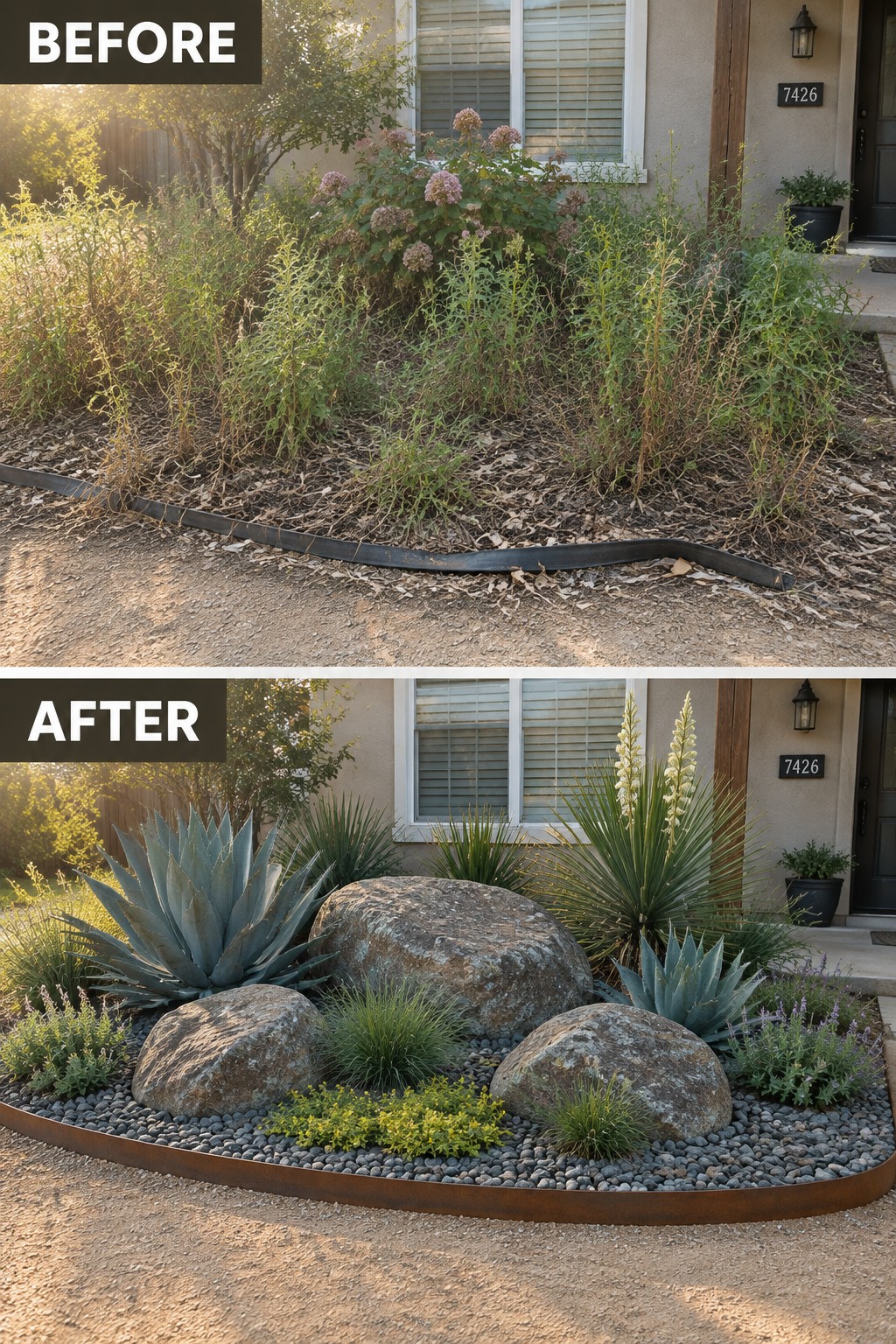
The tangled planting in this front bed has been replaced with gravel, boulders, and a few bold drought-tolerant plants. This simpler layout gives the yard a clear shape and is easier to maintain than a crowded bed.
For a dry front yard, remove unwanted growth first, then use a few larger rocks and well-spaced plants to create structure. Leave enough room for each plant to grow, and choose varieties suited to your climate so the garden stays manageable.
Replace A Broken Walkway With A Rock Garden
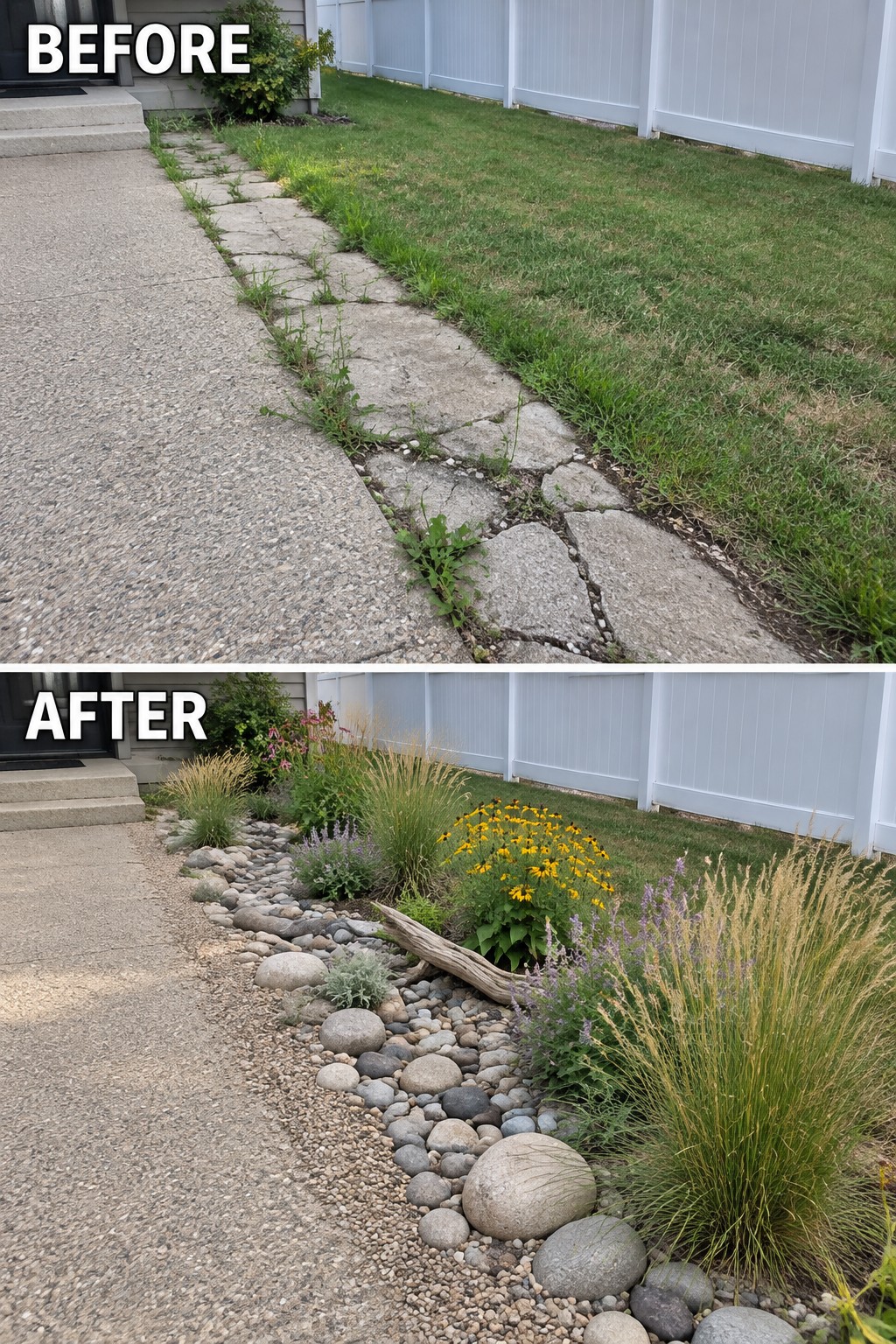
The cracked path and weeds have been replaced with a tidy strip of river rock and planting. This works well in a narrow side yard because it gives the space a clear edge without needing a new paved walkway.
Start by clearing the weeds and deciding where people need to walk, then use landscape fabric and stone to keep the area neat. Add a few hardy grasses or flowering plants, but leave enough open space that the path stays easy to use.
Add Structure To A Sloped Front Yard

A patchy lawn can be hard to maintain on a slope. Here, low stone garden beds replace much of the bare, uneven grass and give the front yard a clearer shape. Gravel and rocks also help make the planted areas look tidy without relying on a large stretch of lawn.
For a similar yard, work with the slope by building low, stable retaining edges and keeping a clear route to the front door. Choose plants suited to your climate, and leave enough space between beds for water to drain.
Replace Overgrown Shrubs With A Desert Garden
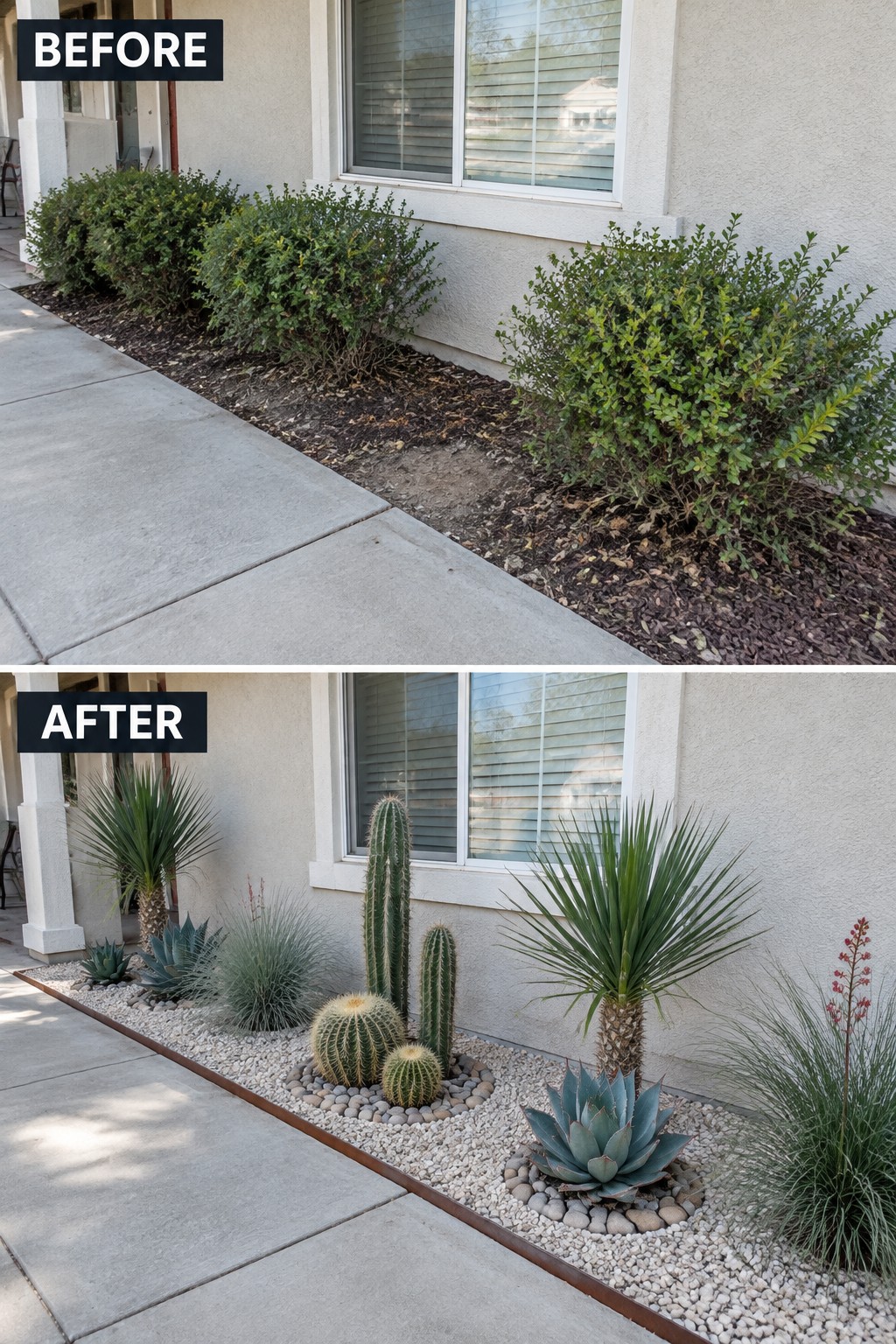
The crowded shrubs leave the planting bed looking untidy, while gravel and a few well-spaced desert plants give it a clearer shape. This approach also suits a dry front yard because it replaces dense planting with a simpler, lower-water layout.
Start by removing unwanted shrubs and shaping the bed before adding gravel. Choose plants suited to your climate, and leave enough space between them so they can grow without crowding the path.
Clear Overgrown Shrubs To Make Room For A Rock Garden
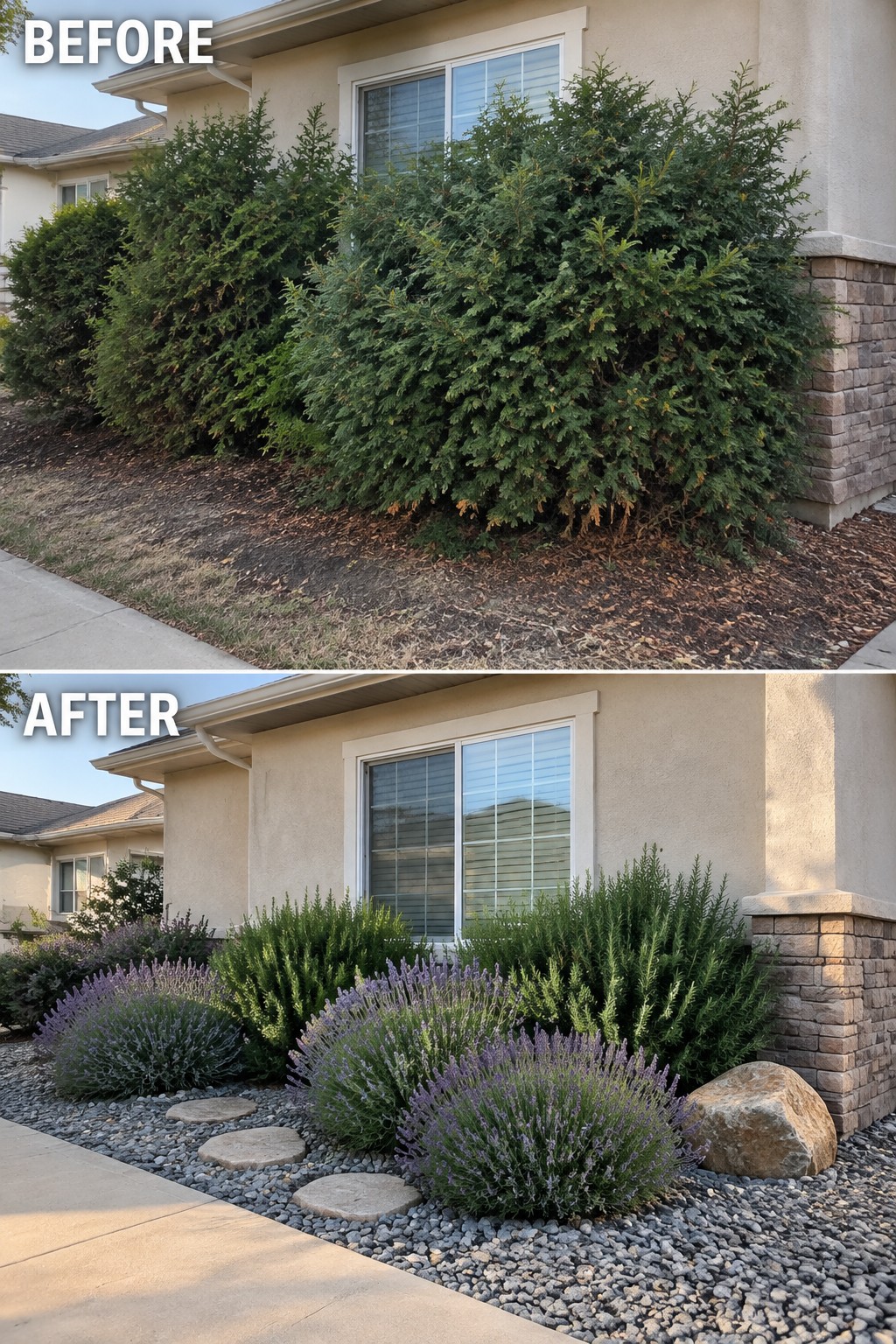
The crowded shrubs hid the front window and made the planting bed look untidy. Clearing them back and replacing them with a defined gravel garden gives the yard a cleaner, more planned look without needing a large lawn.
For a similar dry front yard, start by removing overgrowth, then arrange gravel and a few drought-tolerant plants in groups with room to grow. Keep the path clear, and avoid packing in too many shrubs or stones.
Create A Low-Maintenance Rock Garden By The Entry

Replacing bare soil and scattered pots with gravel, stones, and a few planted containers gives this small front yard a clearer shape. The gravel makes the area look tidier, while the succulents bring in color and form without needing a large flower bed.
This idea works well beside steps or a porch where space is limited. Lay landscape fabric beneath the gravel, keep a walking route clear, and choose drought-tolerant plants suited to your climate.
Replace A Patchy Lawn With A Defined Rock Garden
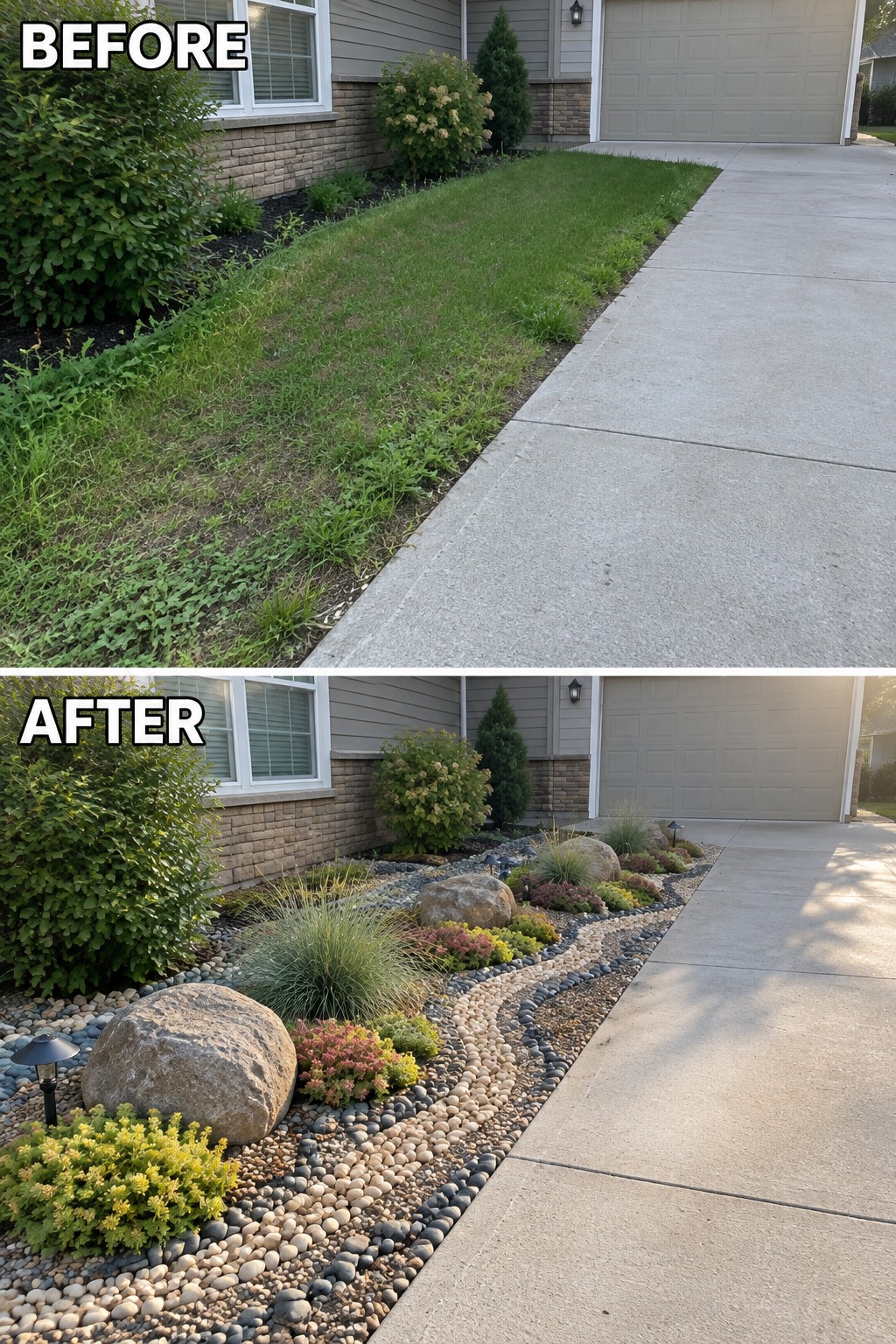
The thin, weedy strip beside the driveway is hard to keep looking tidy. Replacing it with gravel, river rocks, and a few grouped plants gives the front yard a clear shape and reduces the amount of lawn that needs care.
This idea works well in narrow, sunny areas where grass struggles. Clear the weeds first, then use edging to keep the stones in place and leave enough room for plants to grow.
Replace A Bare Front Lawn With A Curved Rock Garden
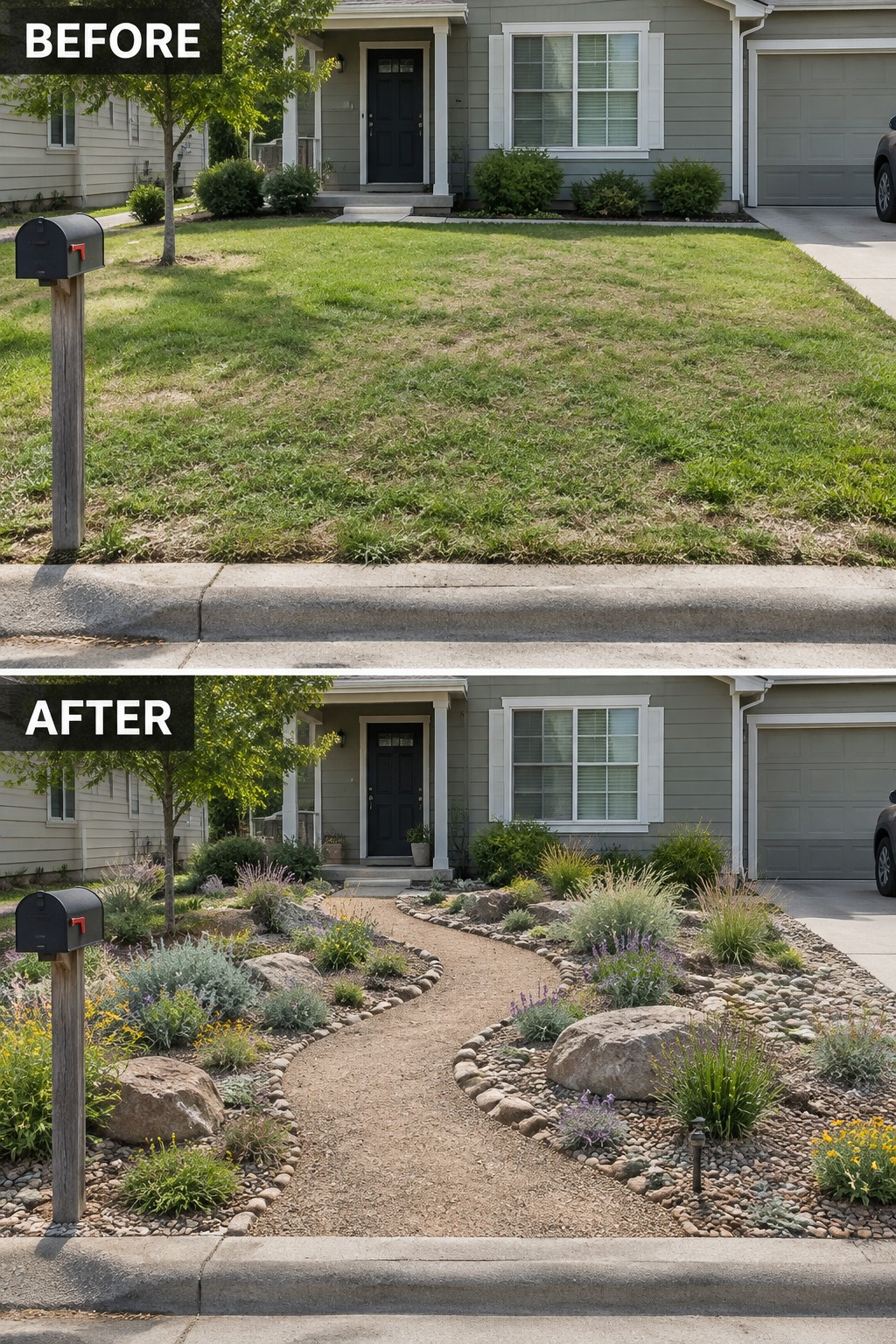
A patchy front lawn can be hard to keep looking neat, especially in a dry yard. Replacing much of the grass with gravel, scattered rocks, and drought-tolerant plants gives the space clearer shape, while a curved path leads naturally to the front door.
This idea works well where grass struggles or watering is limited. Keep the path wide enough to walk comfortably, and leave room between plants so they can grow without crowding the stone.
Create A Gravel Garden With Clear Planting Areas
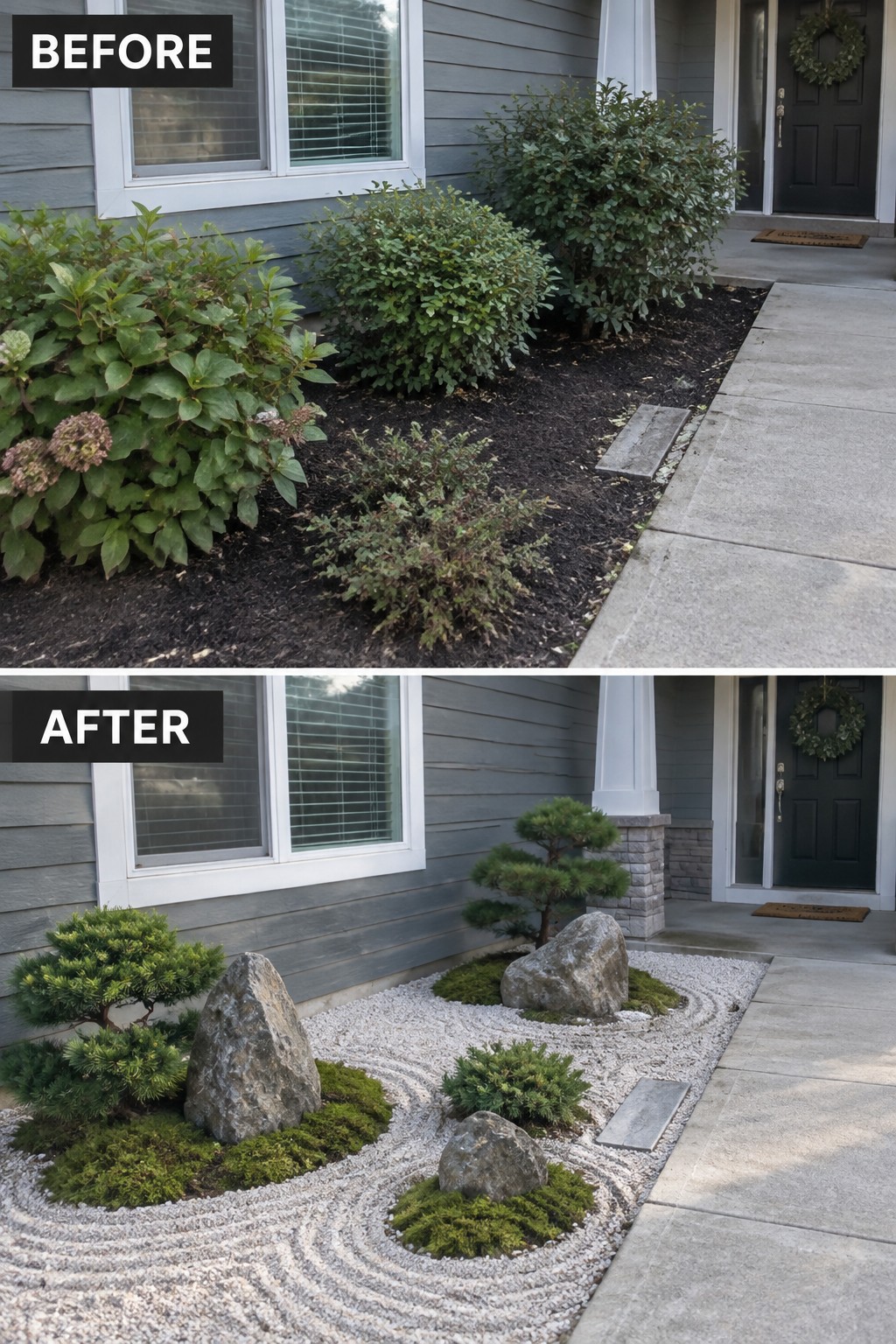
Replacing overgrown shrubs and bare mulch with white gravel, rocks, and compact evergreens gives this front bed a more orderly layout. The defined areas make the garden look planned while keeping most of the ground free of thirsty lawn or dense planting.
This approach works well in a small front yard where shrubs have outgrown their space. Clear the bed first, then place a few rocks and hardy plants before spreading gravel. Leave room for the plants to grow and keep the walkway edge neat.
Turn A Bare Front Bed Into A Planted Rock Garden
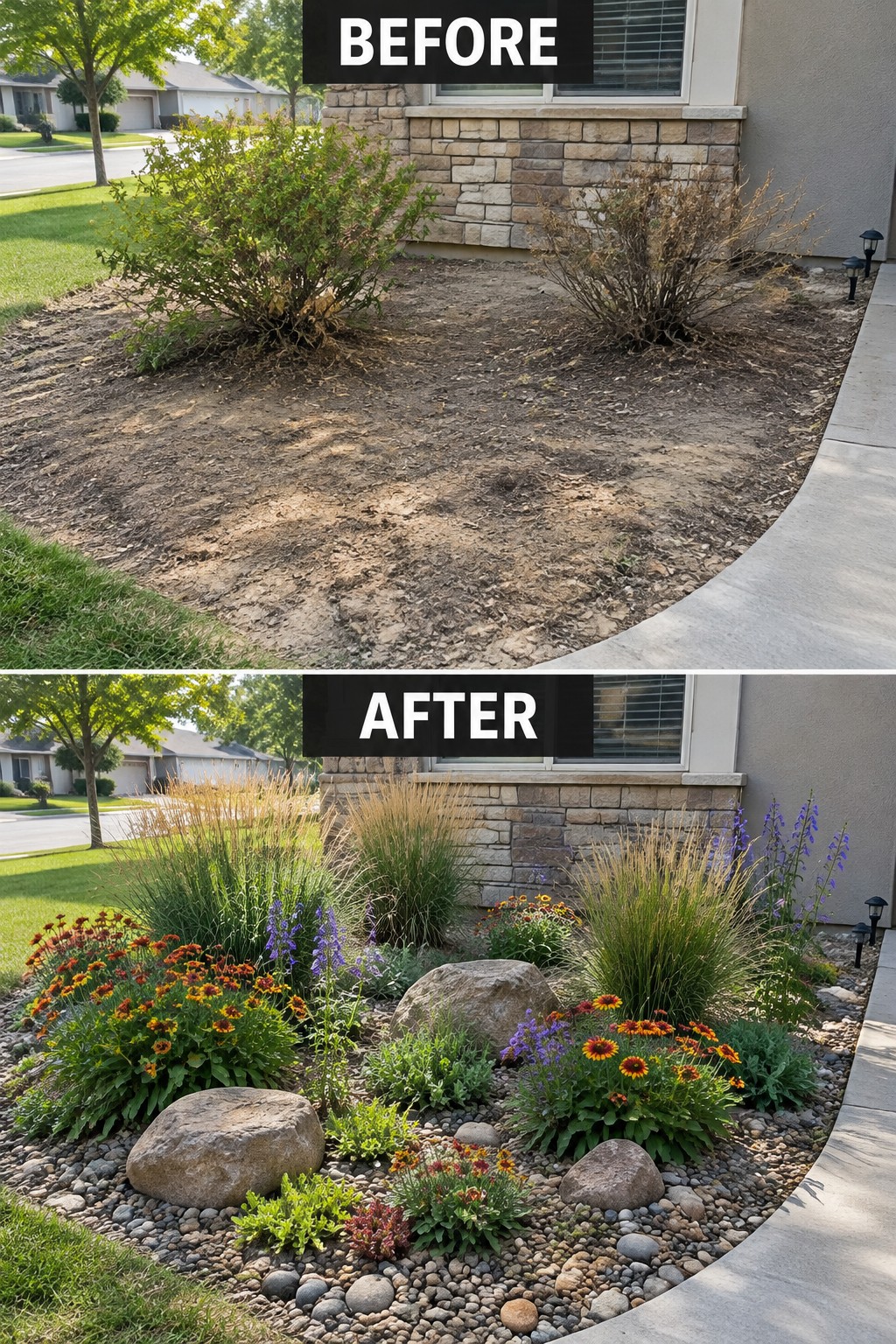
A bare, worn-out bed can look much more intentional when you add a few hardy plants and cover the soil with gravel and stones. Here, colorful flowers and ornamental grasses give the area shape while leaving less exposed dirt.
This approach works well beside a house where a thirsty lawn or fussy planting bed is hard to maintain. Start by clearing the bed, then group plants with similar water needs and leave enough space for them to grow. Use gravel as a tidy ground cover, not as a substitute for choosing plants suited to your climate.
Control Erosion With Terraced Stone Beds
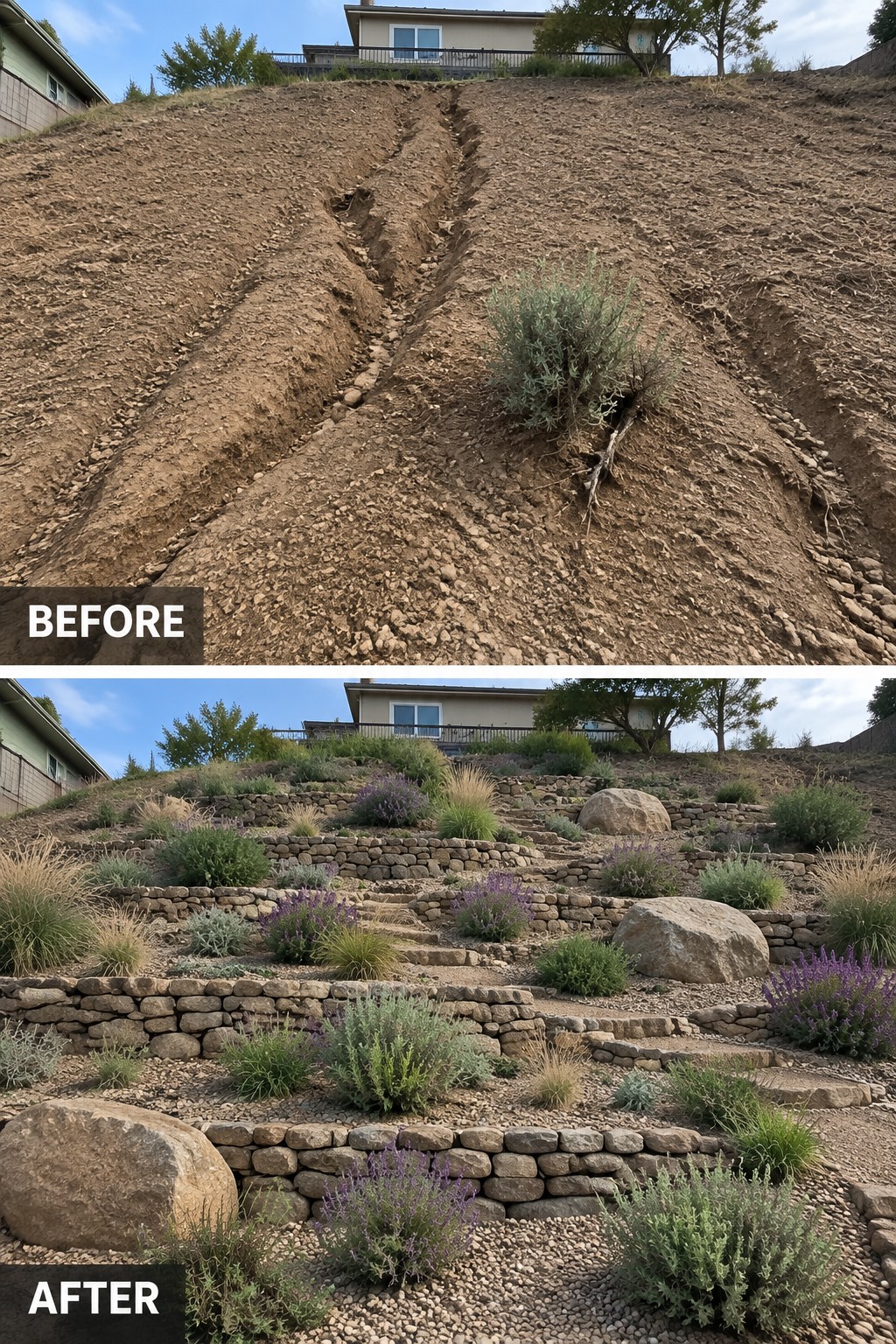
The bare slope has been reshaped into a series of low stone terraces, giving rainwater less room to rush downhill and carry soil with it. Gravel and drought-tolerant plants fill the spaces between the walls, making the hillside look more orderly without relying on a lawn.
This approach works well on a steep, dry front yard where grass is hard to maintain. Keep the terraces low and follow the slope, and have a professional assess the site if runoff is severe or the hillside is unstable.
Make A Weedy Walkway Easier To Maintain

The broken-up concrete path looks messy when weeds take over the joints and edges. Clearing the growth and filling the space around the stepping stones with gravel makes the route feel more planned, while low-growing flowers add color without covering the path.
This idea works well in a narrow side yard where a solid paved walkway might feel too heavy. Keep the stones level and leave enough room to walk comfortably, then choose plants that stay low and can handle the conditions there.
Give A Bare Front Bed A Clear Planting Plan

A sparse, weedy bed can look much tidier when you replace the bare soil with gravel and arrange a few plants in a clear pattern. Here, low-water shrubs and ornamental grasses are spaced among dark rock, giving the front yard a finished look without filling every inch.
This approach works well in a sunny front bed where you want less watering and upkeep. Remove weeds first, then choose drought-tolerant plants suited to your climate and leave enough room for them to grow.
Replace Loose Stone Edging With A Defined Garden Bed

The scattered rocks and bare soil make this bed look unfinished. A low retaining wall gives the planting area a clear edge, while gravel and drought-tolerant plants turn it into a more orderly rock garden.
This approach works well beside a sidewalk, where a defined border keeps soil and gravel from spilling onto the path. Choose plants suited to your local climate, and leave enough space between them so they can grow without crowding the walkway.
Clear Overgrown Shrubs To Open Up The Entry

The thick shrubs hide the front entry and crowd the walkway. Replacing them with gravel, a few well-spaced plants, and a large accent rock gives the yard a clearer layout without filling it back in with dense growth.
This approach works well around a small front path where plants can easily spill into the walking space. Clear the area first, then leave room between plants so they can grow without blocking the route to the door.
Replace A Flower Bed With A Low-Water Rock Garden

The crowded flower bed becomes a more orderly rock garden, with gravel and drought-tolerant plants taking the place of much of the bare soil. This gives the front of the house a clear planting plan and can cut down on watering and routine upkeep.
Use a few hardy plants in repeating groups, then fill around them with gravel and larger stones. Leave enough space for each plant to grow, and keep the bed edge tidy so the rock garden stays easy to maintain.
Add A Raised Rock Bed To Control Weeds
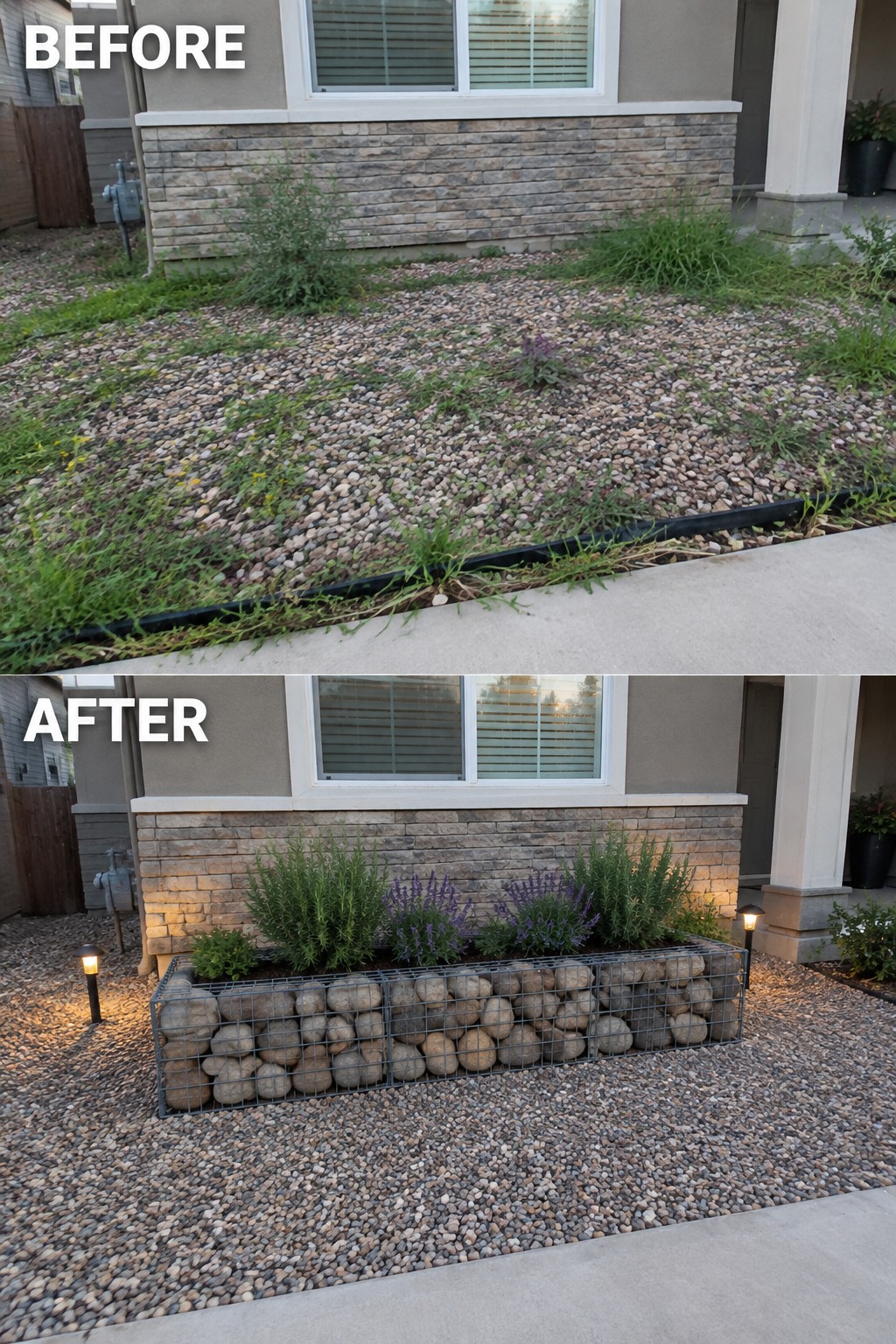
A low rock-filled bed gives a weedy gravel yard a clear planting area. In this makeover, a wire gabion filled with larger stones separates the plants from the surrounding gravel, making the space look more planned and easier to maintain.
This idea works well beside a house where weeds keep spreading through loose stone. Clear the area first, then choose a bed size that leaves room to move around it. A few hardy plants are usually enough.
Frequently Asked Questions
Q: Do I need to remove all the grass before making a rock garden?
A: You’ll get a cleaner, longer-lasting result if you clear the grass and weeds first. Covering them with cardboard can help, but leave gaps around plants you want to keep.
Q: What plants can handle a sunny, dry front yard?
A: Look for drought-tolerant plants such as sedum, creeping thyme, and ornamental grasses. Match each plant to your soil and sun, and water it regularly while it gets established.
Q: How do I stop the rocks from washing away on a slope?
A: Use larger stones along the edges and arrange them to slow the flow of water. For a steep slope, add low terraces or stone steps before filling in with smaller gravel.
Q: Can I mix different kinds of rocks?
A: Yes, but stick to a small palette so the garden feels calm rather than scattered. Try one main stone color with a contrasting gravel for paths or borders.
