


A rock garden can feel unfinished when the stones sit without a clear layout or the planting looks scattered.
I like how moss softens weathered stone and gives the whole space a more settled, natural look.
With a little cleanup and attention to spacing, even a small corner can gain texture and structure without needing much upkeep.
The change is often gradual, but it’s satisfying to see bare ground become a garden that feels considered.
I’d save ideas that suit the light, soil, and shape of your own yard, then adapt them a little at a time.
Turn A Bare Yard Into A Rock Garden

A shallow stone channel turns a patchy, sloped yard into a more intentional garden feature. Weathered rocks and small stones give the slope structure, while moss and low plants fill in around them.
This idea works well where rainwater already runs downhill, but make sure the channel can drain safely toward the street or another suitable outlet. Start by clearing weeds and shaping the route, then add stones and a few hardy plants rather than filling every open spot.
Turn A Bare Patio Into A Seating Area

A weathered concrete slab can feel like wasted space until it has a clear purpose. Here, irregular stone pavers and a simple bench turn the small patio into a place to sit, while moss between the stones suits the shady garden setting.
For a similar spot, arrange pavers to leave comfortable walking space, then add just enough seating for the area. This works well in a small backyard where a full deck would feel oversized.
Add Structure Along A Front Walkway
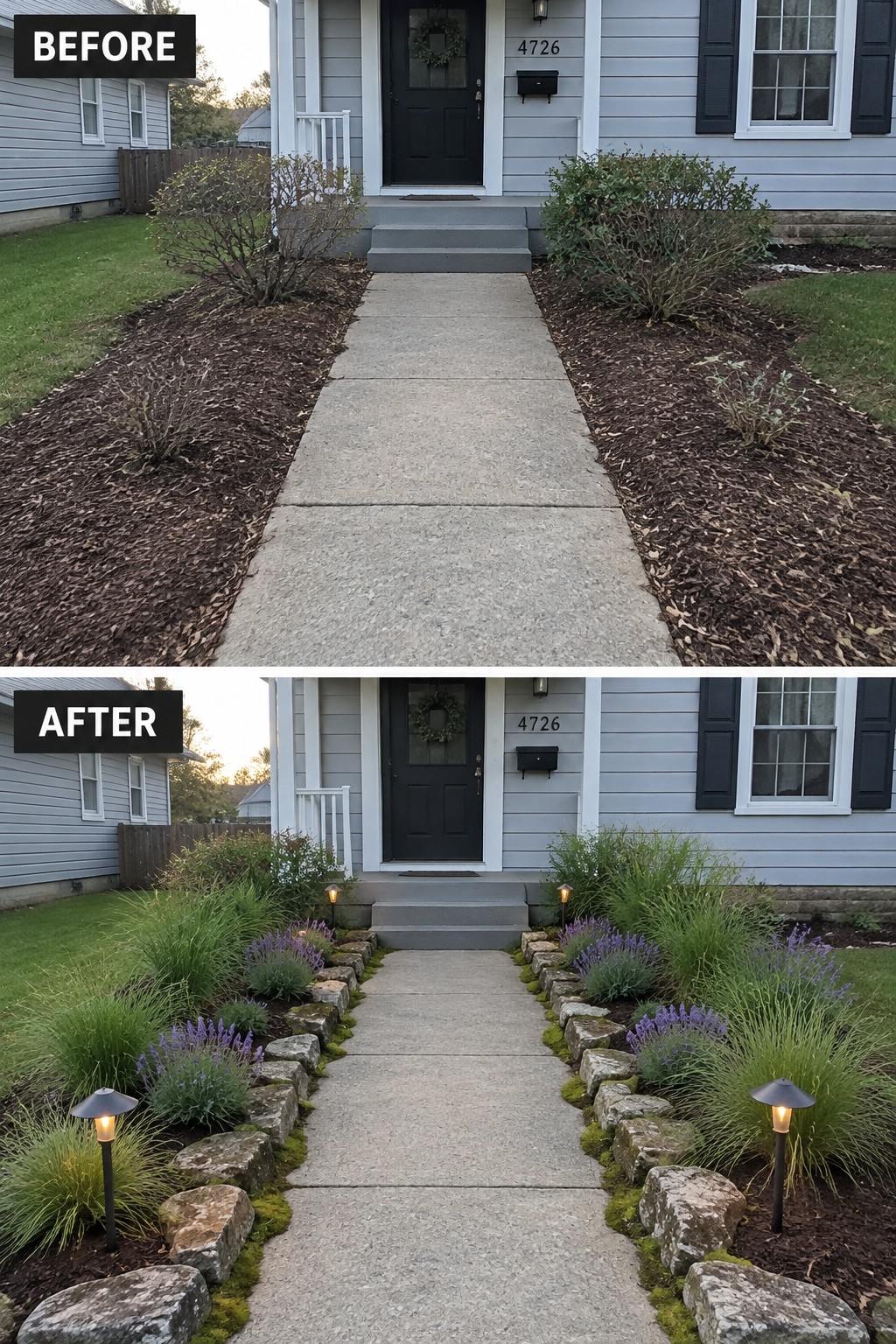
A plain walkway can feel disconnected from the rest of the yard. Here, weathered stones create a clear edge along the path, while low planting fills out the beds and makes the entry feel more planned.
This approach works well beside a front walk where you want a tidy look without adding a large garden. Set the stones firmly, leave enough room for plants to grow, and keep the path wide enough for easy access.
Build A Rock Garden Into A Sloped Yard

A bare slope can be hard to plant and prone to washing out. Here, weathered stone terraces give the hillside clear structure, while moss and small plants soften the edges.
This approach works well on a sloped side yard where a lawn would be difficult to maintain. Set the stones securely and leave room for steps or a clear path, then choose plants suited to the shade and drainage.
Turn A Neglected Courtyard Into A Gravel Garden

The cracked concrete made this small courtyard feel unfinished. Replacing it with raked gravel and a few weathered stones gives the space a clear garden design without needing much room.
This idea suits a narrow, enclosed yard where a lawn would be hard to maintain. Start by clearing and preparing the surface, then keep the stones and planting groups simple so there’s still plenty of open gravel.
Create A Stone Path Through The Garden
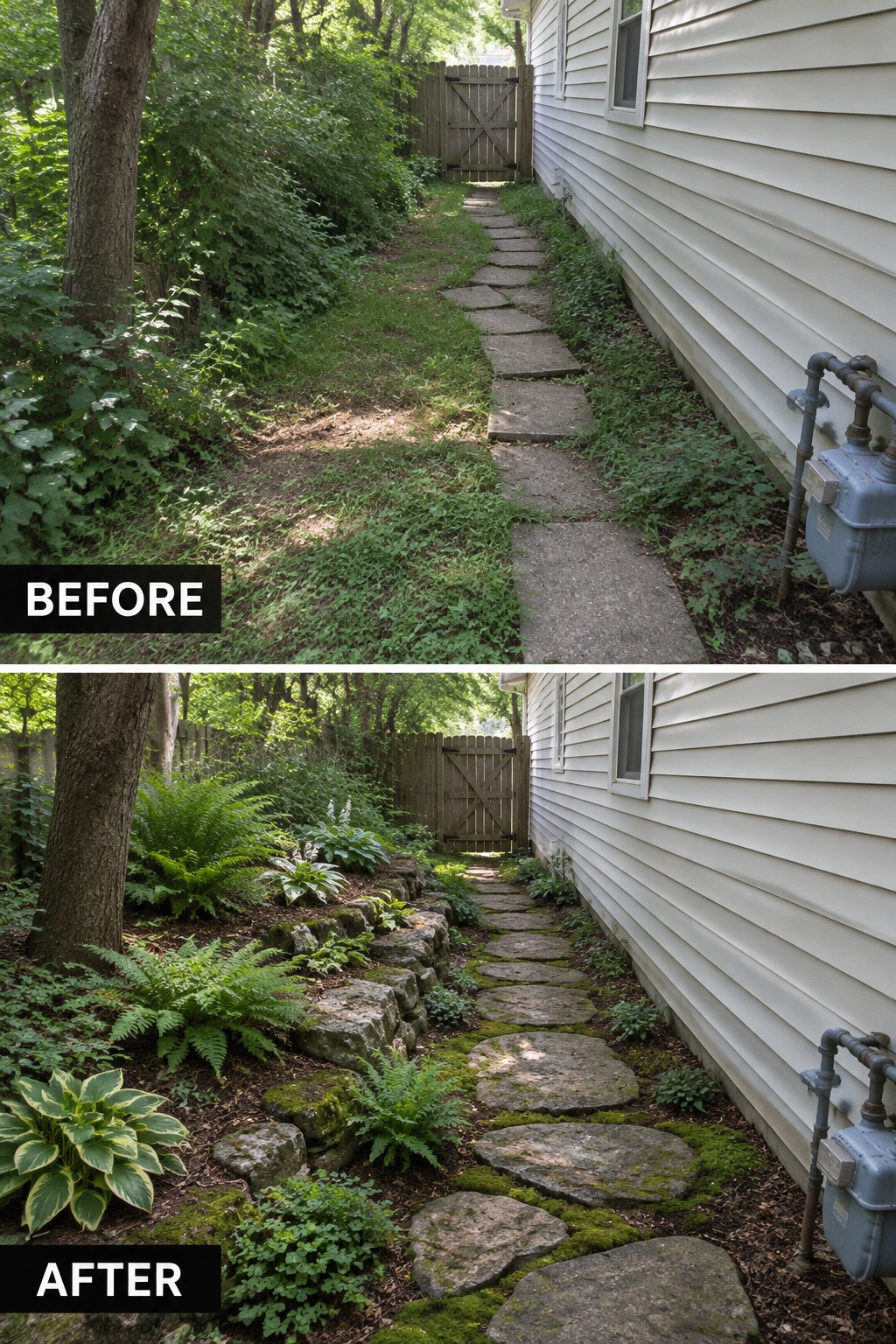
Replacing the uneven, overgrown strip with a clearer stone path makes this narrow side yard easier to walk through and gives the garden a more settled layout. Weathered stones and moss fit naturally into the shaded space, so the path feels connected to the planting rather than separate from it.
For a similar look, lay stepping stones where people already walk, then use low plants and a few larger rocks to define the edges. Leave enough room for the plants to grow without blocking the route or crowding the house.
Make A Simple Fire Pit Area Feel Finished
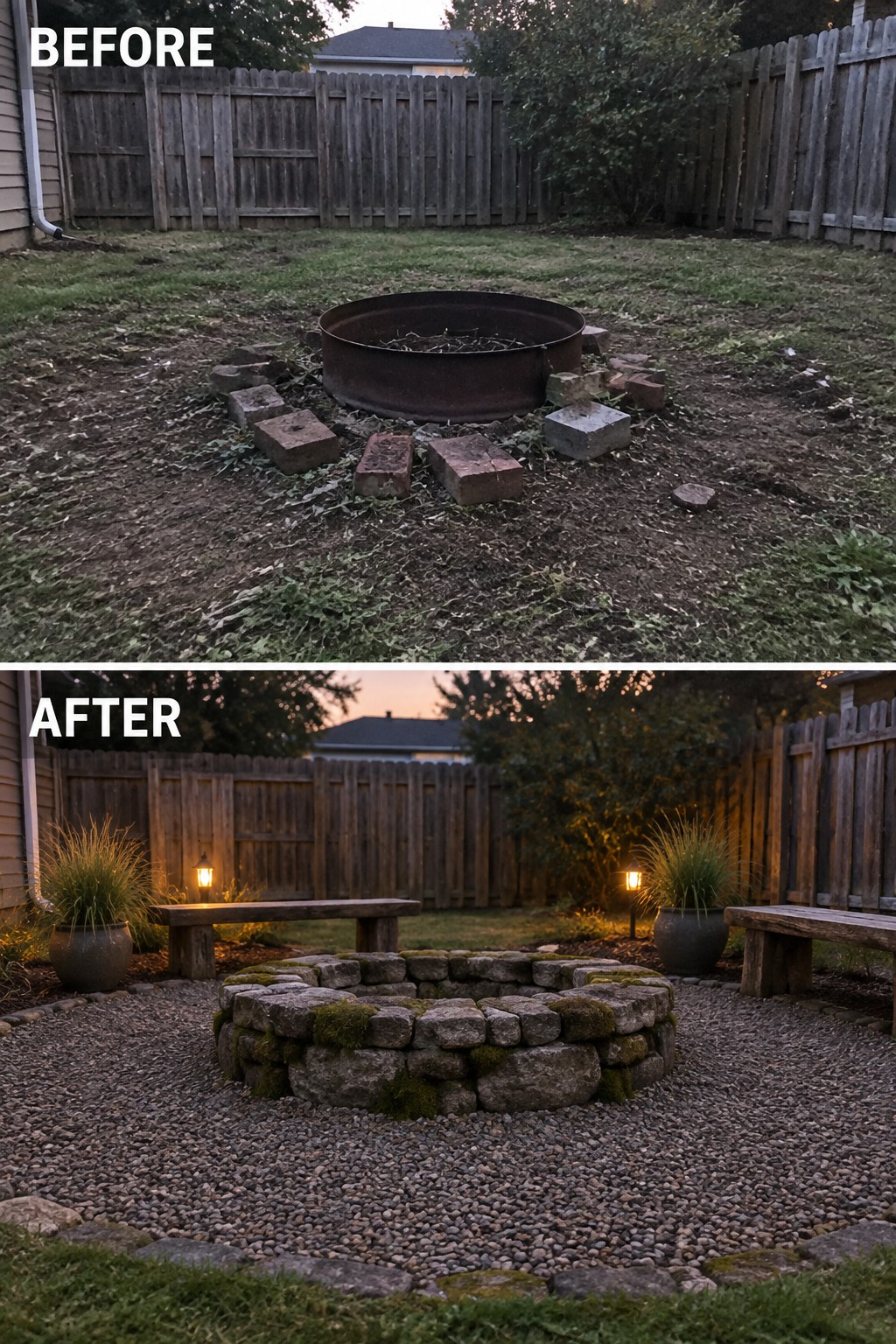
Replacing a loose metal fire ring and scattered bricks with a low stone circle gives the yard a clear focal point. A gravel surface makes the area look more intentional and helps define where people can gather.
For a small backyard, keep the stone ring modest and leave enough space around it for seating and safe movement. Weathered stones suit a relaxed garden setting, and a layer of gravel can help keep the ground tidier.
Turn A Sloped Yard Into A Waterfall Garden

A bare, muddy slope can become a rock garden with a small stream as its focal point. Here, stacked stones shape the slope into short cascades, while moss and ferns help the water feature fit into the planting.
This idea works well where a hillside already sends runoff downhill, but plan the water’s route and drainage before placing stones. Keep the stream scaled to the yard, and leave stable paths for maintenance.
Add A Simple Stone Path To A Small Garden
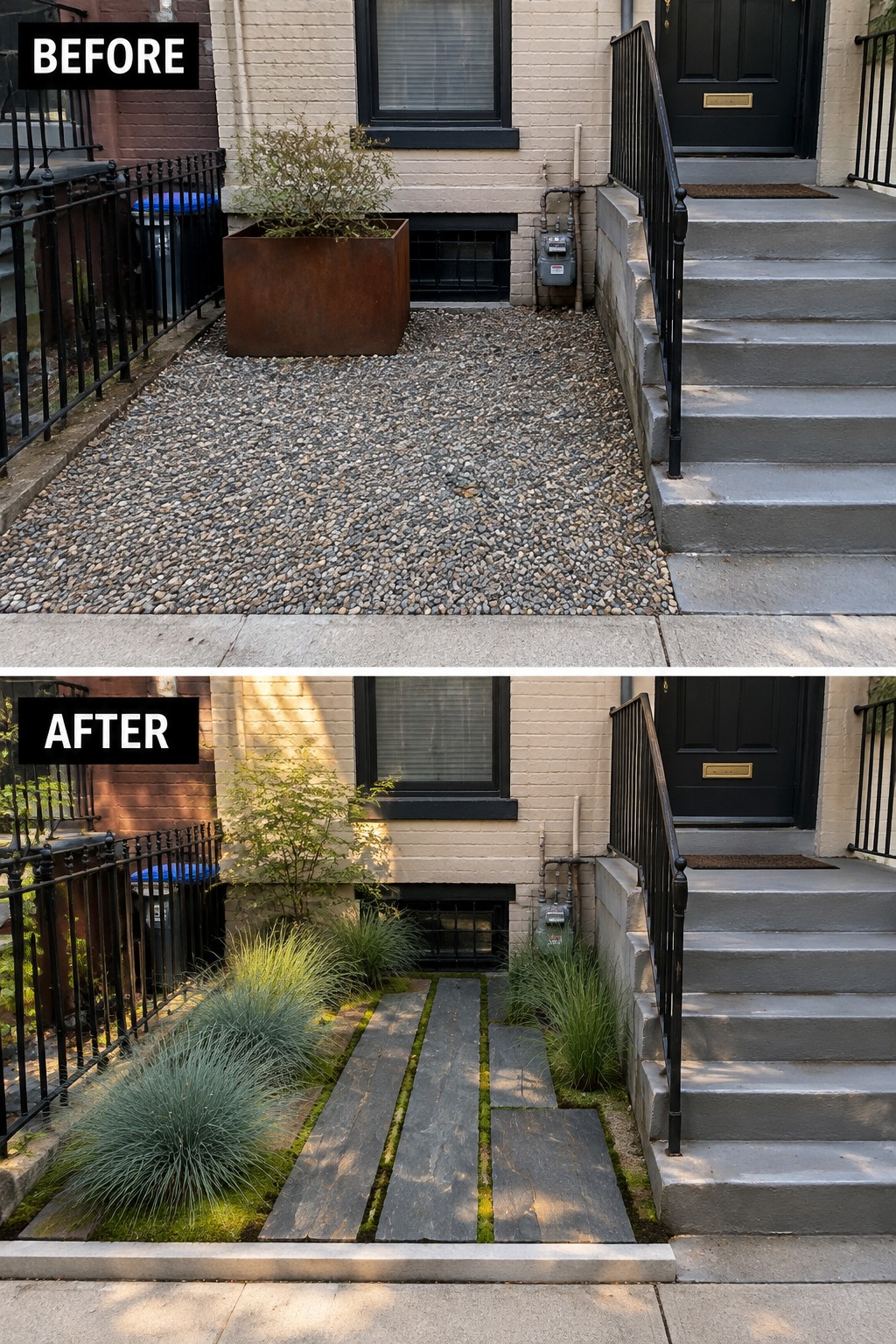
A narrow yard can feel more organized when a stone path gives it a clear route. Here, long pavers replace loose gravel as the main walking surface, while moss and grasses fill the spaces around them.
This works well in a small side yard or entry garden where a full lawn would be awkward. Keep the stones wide enough to walk on comfortably, and leave enough room between plantings so they do not crowd the path.
Build A Low Stone Border For Garden Structure

Replacing a bare mulch bed with a low rock border gives a small planting area a clearer shape. The stones hold the garden’s edge, while flowering plants and moss fill the space without making it feel crowded.
This idea works well beside a house or along a walkway where a full retaining wall would be too much. Choose weathered stones in varied sizes, keep the border low, and leave enough room for plants to spread.
Use Weathered Stones To Give A Garden Shape

An empty concrete circle can feel more like leftover space than a garden. Replacing the open surface with rings of weathered stone and moss gives the small courtyard a clear shape and makes the stones the main feature.
This idea works well in a compact, partly shaded yard where plants may spread slowly. Start with a stable stone layout, leave room for moss or low ground cover between the stones, and keep the outer edge clear enough to move around.
Replace A Failing Timber Wall With Stone
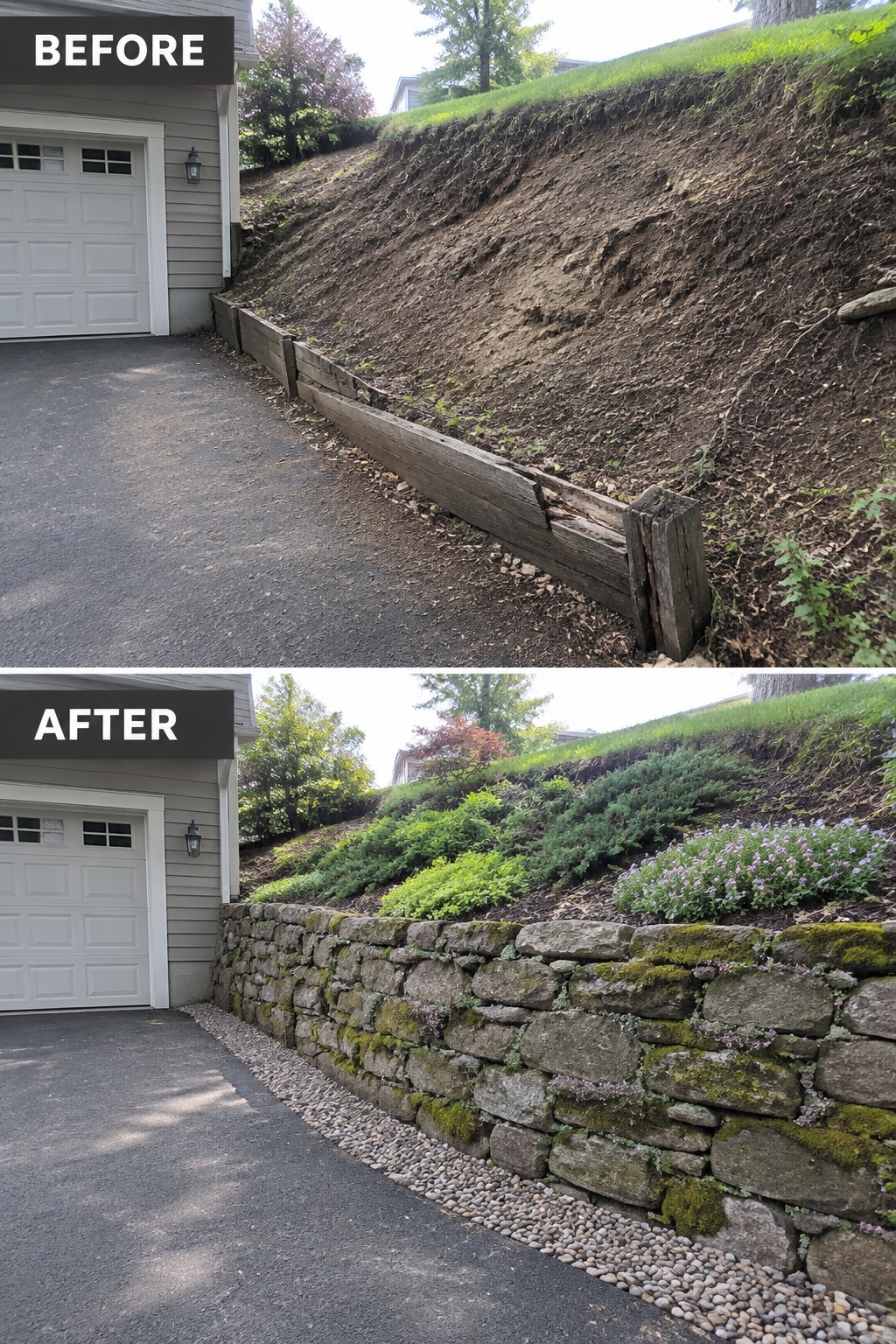
A steep, bare slope is easier to manage when the edge beside the driveway has a sturdy retaining wall. Here, the old timber boards were replaced with weathered stone, which gives the bank a clearer shape and leaves room for low-growing plants above it.
This idea suits sloped yards where soil keeps sliding toward a driveway or path. Clear loose growth first, then choose a wall suited to the slope and local drainage needs. Moss and small plants can settle into the stone over time, but the wall should be built to handle the soil behind it.
Make A Small Balcony Feel Like An Outdoor Room

A bare balcony can feel like little more than a place to store pots. Replacing separate planters with a low stone garden gives the space one clear feature and makes the planting feel more settled.
This idea works well on a narrow balcony where a full garden bed is not practical. Keep the stone edge low, choose plants suited to the amount of sun, and leave enough open floor for a chair or bench.
Define A Front Walk With Stone Edging
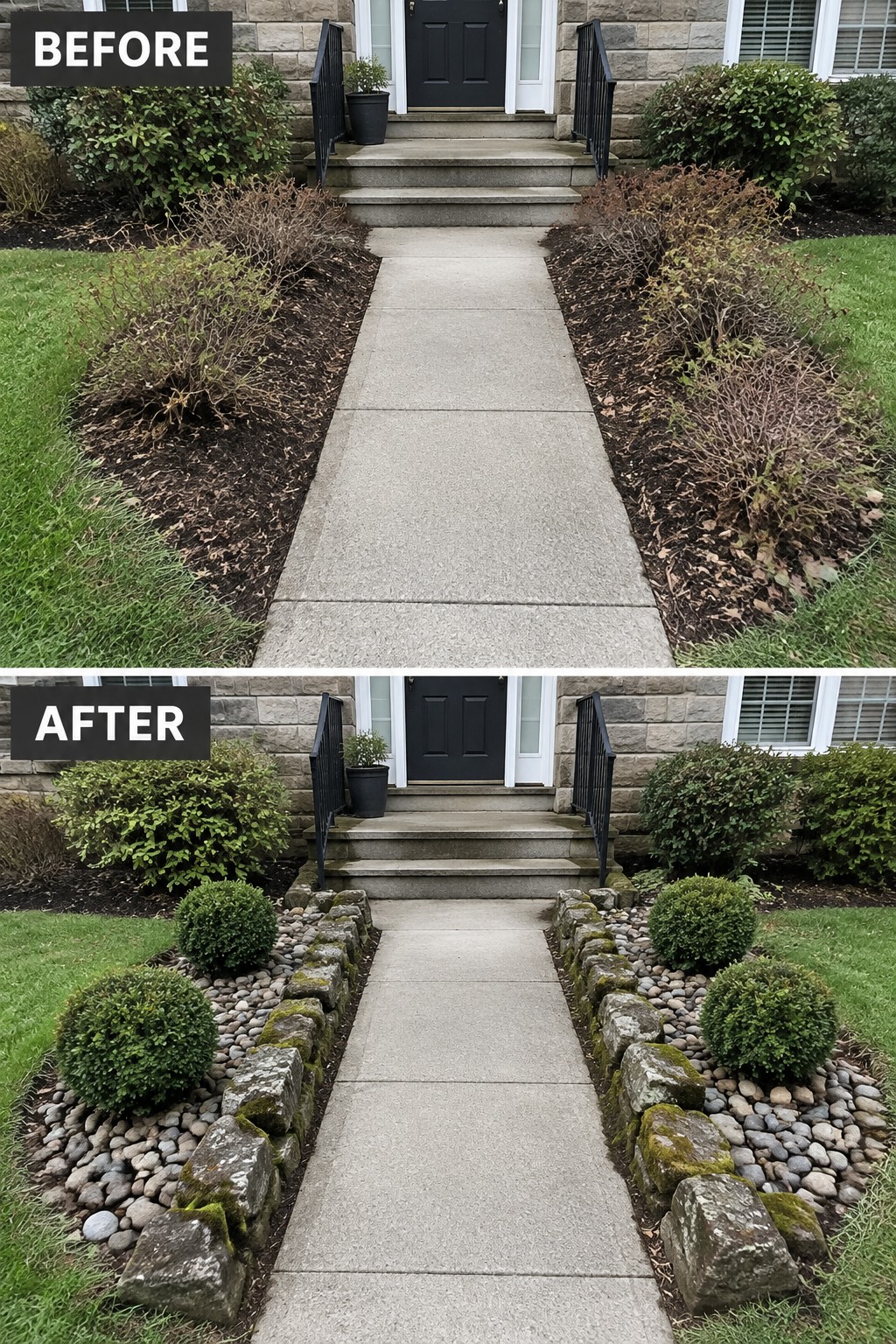
Replacing loose, overgrown planting beds with a neat line of weathered stones gives this front walk a clearer shape. The stones contain the garden areas and make the path feel planned without changing the walkway itself.
This approach works well beside an entry path where plants tend to spread onto the concrete. Set stones low and securely, then use gravel and a few compact shrubs so the borders stay tidy and leave plenty of room to walk.
Create A Mossy Stone Path Beneath The Deck
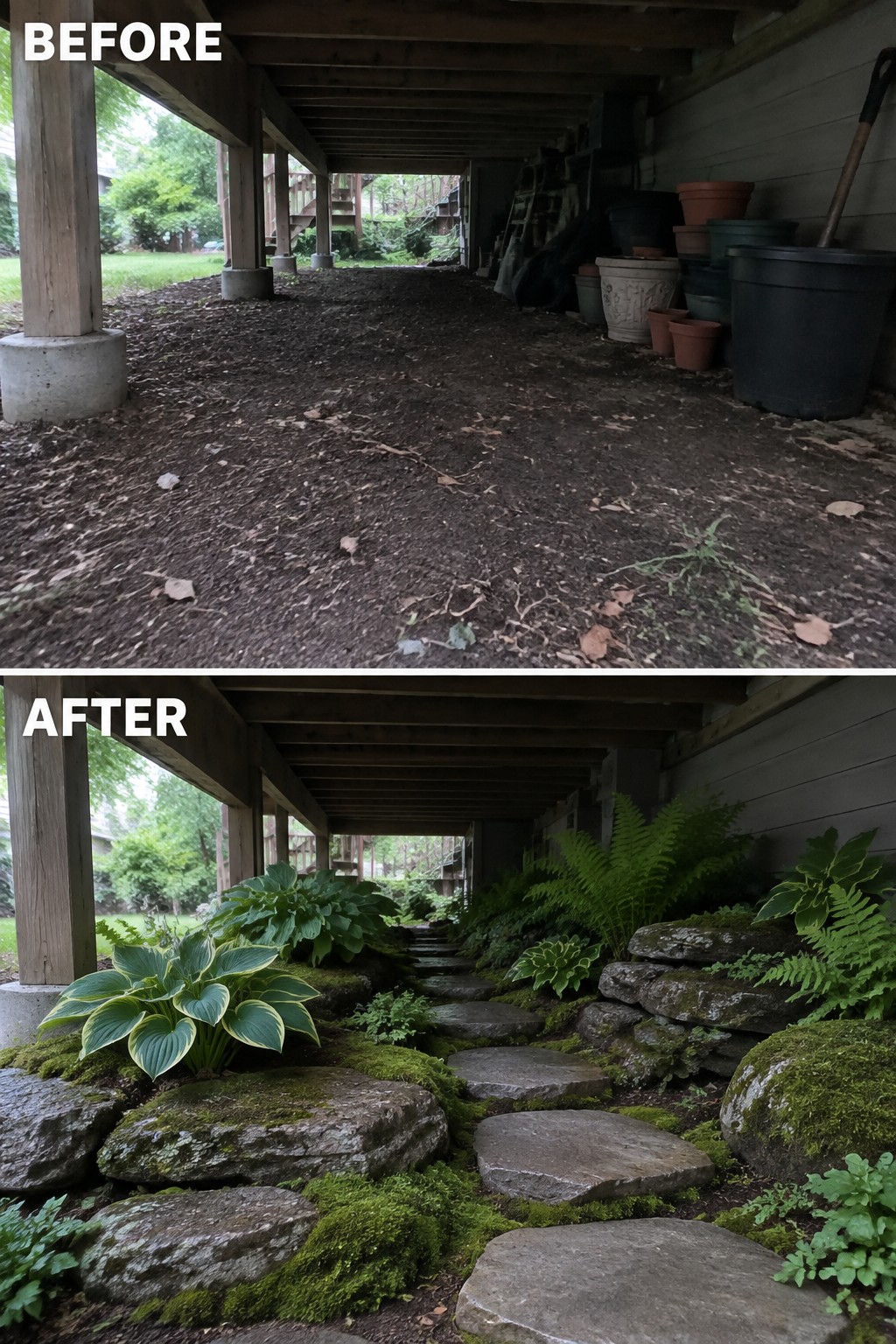
The bare ground beneath this deck becomes a garden path by using weathered stones as stepping places and mossy planting to fill the gaps. This gives an awkward, shaded strip a clear purpose and makes it feel like part of the garden rather than leftover space.
This idea suits the area under a raised deck or along a shady side yard, where grass may struggle. Set the stones firmly and leave room for plants to spread, while keeping the walking route easy to follow.
Create A Pebble Garden Around Weathered Stones
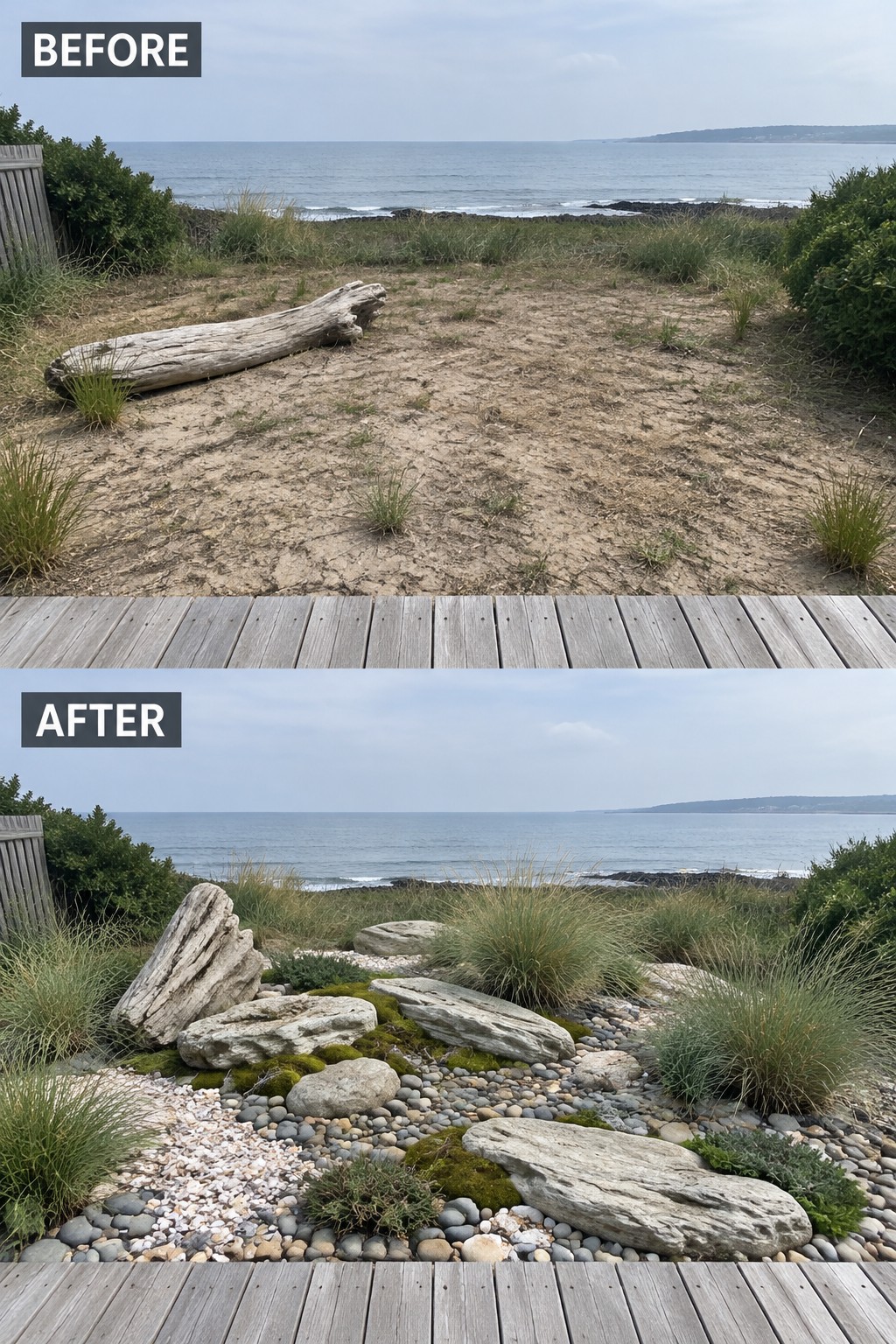
A bare sandy patch can feel unfinished, but a bed of rounded pebbles and a few weathered stones gives it a clear shape. The moss between the stones adds a little greenery without needing a large planting bed.
This idea suits a coastal yard or another dry spot where grass struggles. Start by clearing the area, then arrange a few large stones as focal points and fill around them with pebbles. Leave enough space for any plants to grow, and avoid adding so many stones that the garden feels crowded.
Make A Shaded Corner Into A Gravel Zen Garden

A neglected corner can feel more intentional when you clear away the tangled ground cover and give the space a simple layout. Here, pale gravel and weathered stones replace the messy ground, while moss keeps the garden from looking too bare.
This idea suits a small, shaded yard where grass may struggle. Rake the gravel into broad, simple lines and leave room around each stone; a few mossy patches are enough to keep the design natural.
Manage Downspout Runoff With A Rock Garden

The bare, muddy strip beside the house becomes a planted rock channel that gives rainwater from the downspout a clearer route through the yard. Stones and pebbles help keep the soil in place, while the planting makes the drainage area look like part of the garden.
This idea works well where runoff keeps washing out soil or leaving a soggy patch. Set the stones to guide water away from the foundation, and make sure the channel can handle heavy rain without sending water toward the house.
Replace A Raised Planter With A Stone Garden Bed
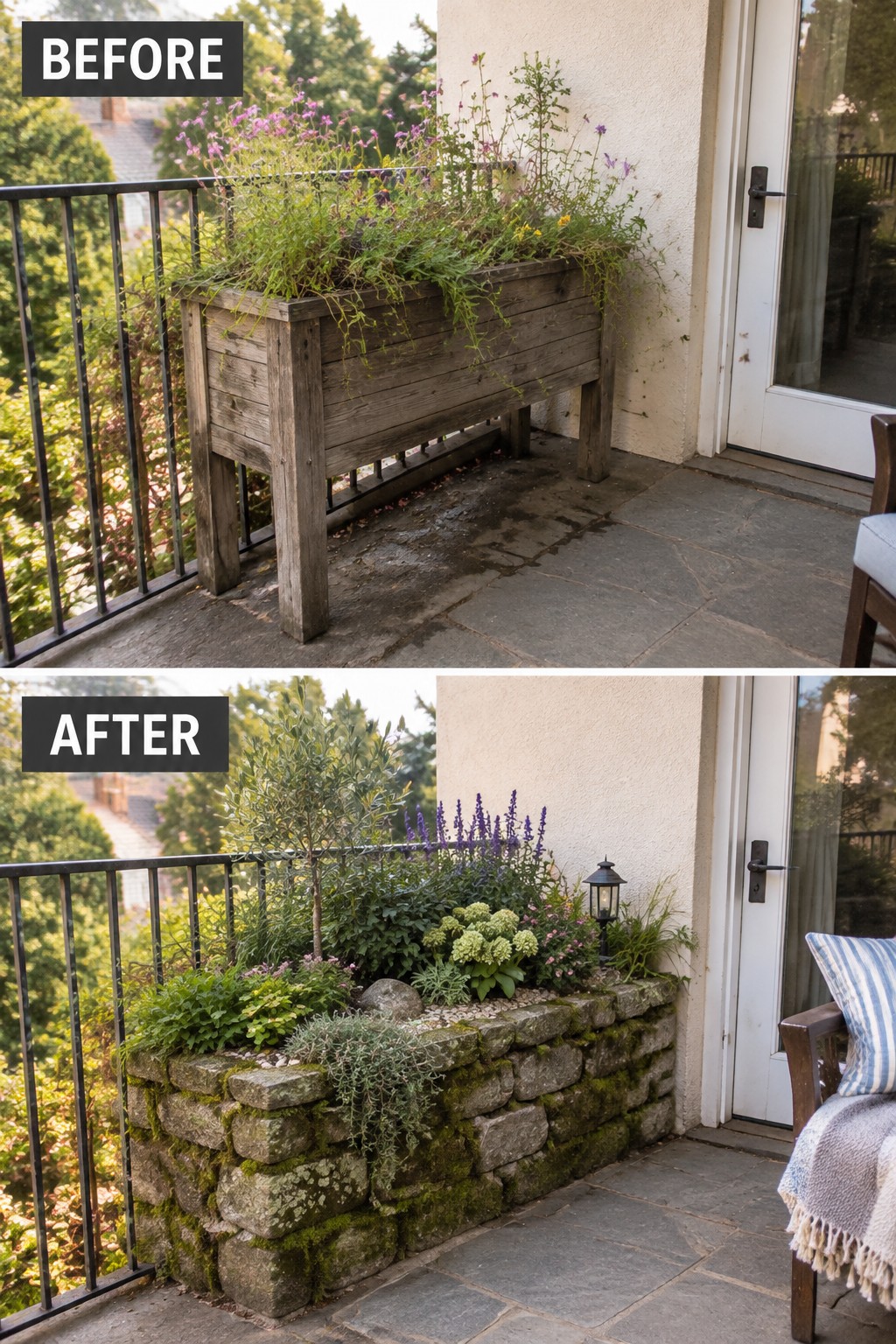
The tired wooden planter made this balcony garden feel crowded and worn. Replacing it with a low stone bed gives the planting a more lasting structure, and the weathered stones suit a garden where moss can settle naturally.
This idea works well along a balcony railing or beside a patio wall, especially when there is little room for a separate garden bed. Keep the stonework low enough to preserve the view, and leave space for plants to spread without blocking the walkway.
Add A Low Stone Wall To Define A Garden Bed
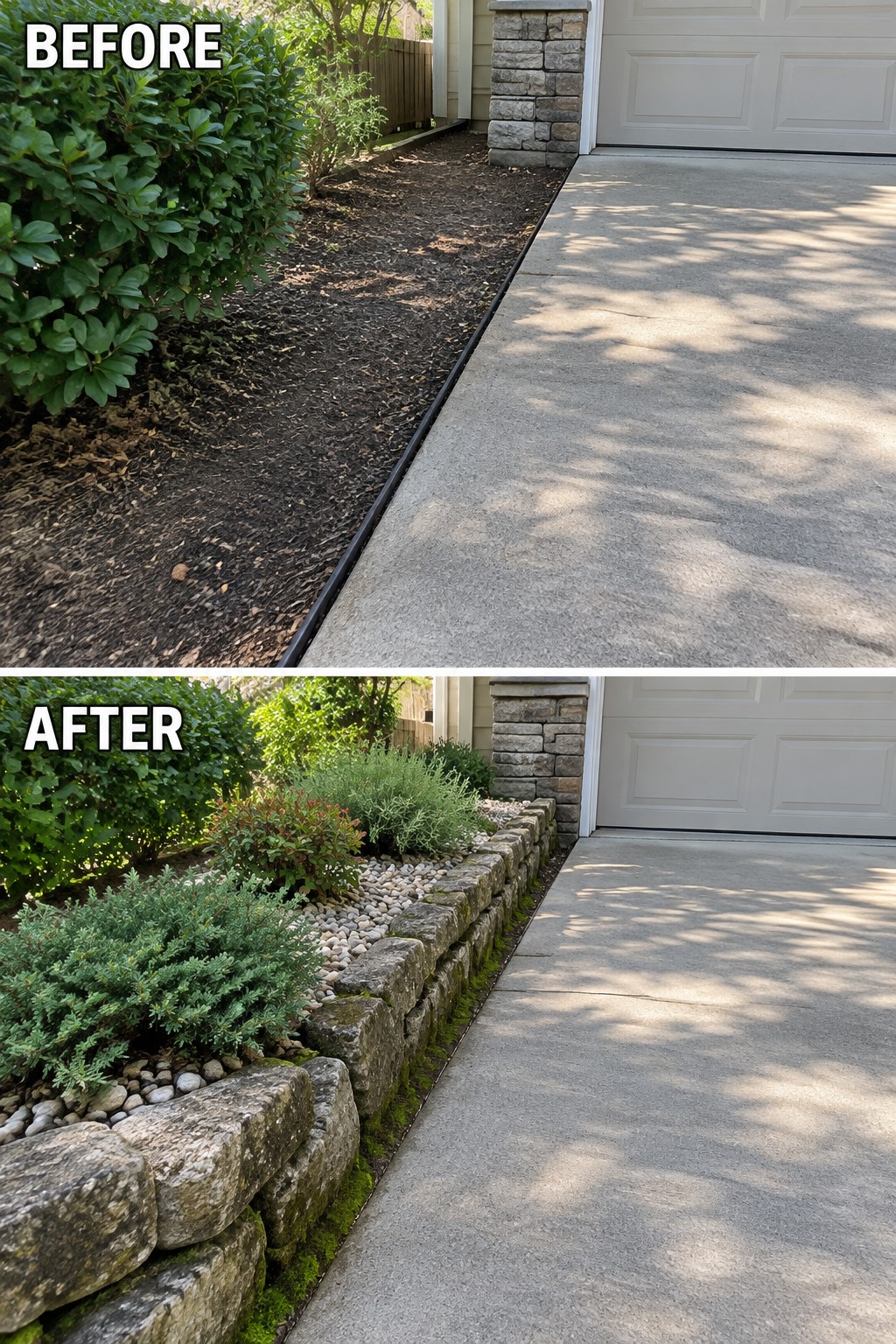
A bare strip beside the driveway can look unfinished, but a low stone wall gives the planting area a clear shape. Here, weathered stones hold back a bed filled with shrubs and pale gravel, making the edge feel tidy without needing a formal garden design.
This idea works well along driveways or narrow side yards where plants need a little structure. Keep the wall low enough that it doesn’t crowd the walkway, and leave space for plants to grow rather than packing the bed too tightly.
Make A Welcoming Entry With A Small Rock Garden

The bare concrete step looked worn and disconnected from the yard. A simple rock garden along its edge gives the entry a clearer shape, while moss and low plants help the weathered stones feel at home there.
This idea suits a small front entrance where there isn’t room for a large garden bed. Use a few sturdy stones to define the planting area, then tuck in plants that can handle the site’s light and moisture. Leave the step clear so people can walk safely.
Replace A Plain Lawn With A Stone Garden Path
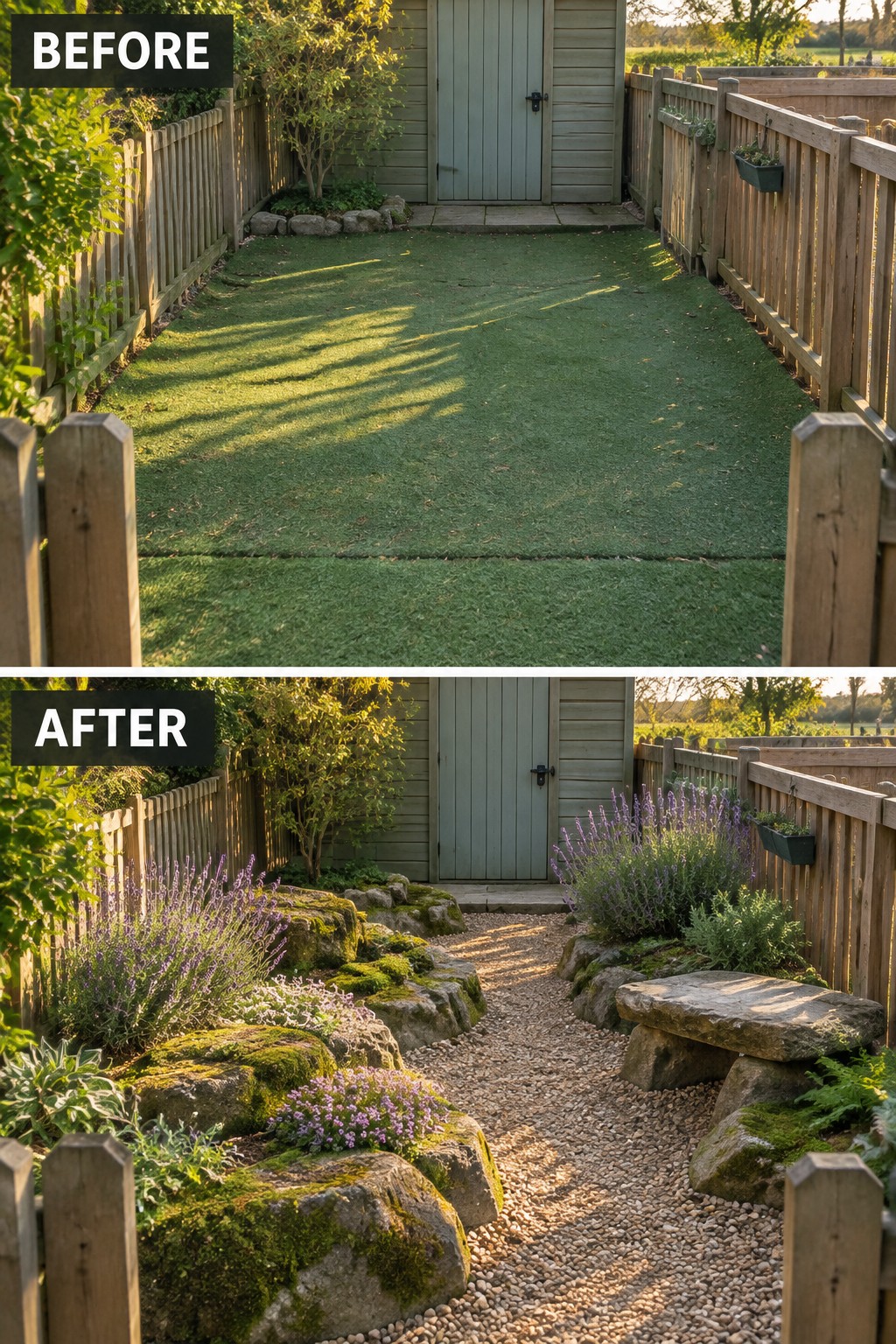
A gravel path can give a narrow, unused yard a clear purpose. Here, the plain lawn becomes a winding route through weathered stones and moss, making the garden feel planned without filling the whole space with planting.
For a similar yard, keep the path wide enough to walk comfortably and place larger stones along its edges to hold the shape. Moss and low plants suit shady spots, but leave room for them to spread without crowding the walkway.
Add Stone Terraces To A Sloped Yard

A bare slope can be hard to maintain and prone to soil washing downhill. Low stone terraces break up the incline and turn it into a planted rock garden, while steps make the slope easier to use.
This idea works well in a yard with a steep bank and mature trees. Use sturdy stones to hold each level, and keep the steps wide and stable enough for regular foot traffic.
Frequently Asked Questions
Q: Will moss grow in a sunny rock garden?
A: Most moss prefers shade and steady moisture, so it may struggle in hot, exposed spots. Try it in a cooler nook, or use low-growing, drought-tolerant plants between the stones instead.
Q: How do I help moss take hold between weathered stones?
A: Set the stones on a firm base, then tuck moss into damp, soil-filled gaps. Keep it lightly moist while it settles, and avoid walking on it.
Q: Should I remove leaves from a mossy rock garden?
A: Yes, clear away thick layers of leaves so they don’t smother the moss. A light scattering is fine, but wet piles can trap too much moisture.
Q: Can I use any kind of stone?
A: Most local stones work well, especially pieces with rough surfaces that hold moisture and give moss a place to settle. Rinse off muddy stones before arranging them.
