

Rock gardens can feel messy or flat when the stones lack structure and the planting has no clear shape.
I find that a natural stone retaining wall can define a slope, keep soil in place, and give plants a more considered setting without making the garden feel too formal.
Small choices in wall height, stone placement, and paths can make a yard easier to navigate and more pleasing to look at.
The change can be satisfying.
Some of these approaches are simple enough to adapt to a real garden, whether you need to tidy a steep corner or give a bare bank more purpose.
Add Structure To A Sloped Front Yard
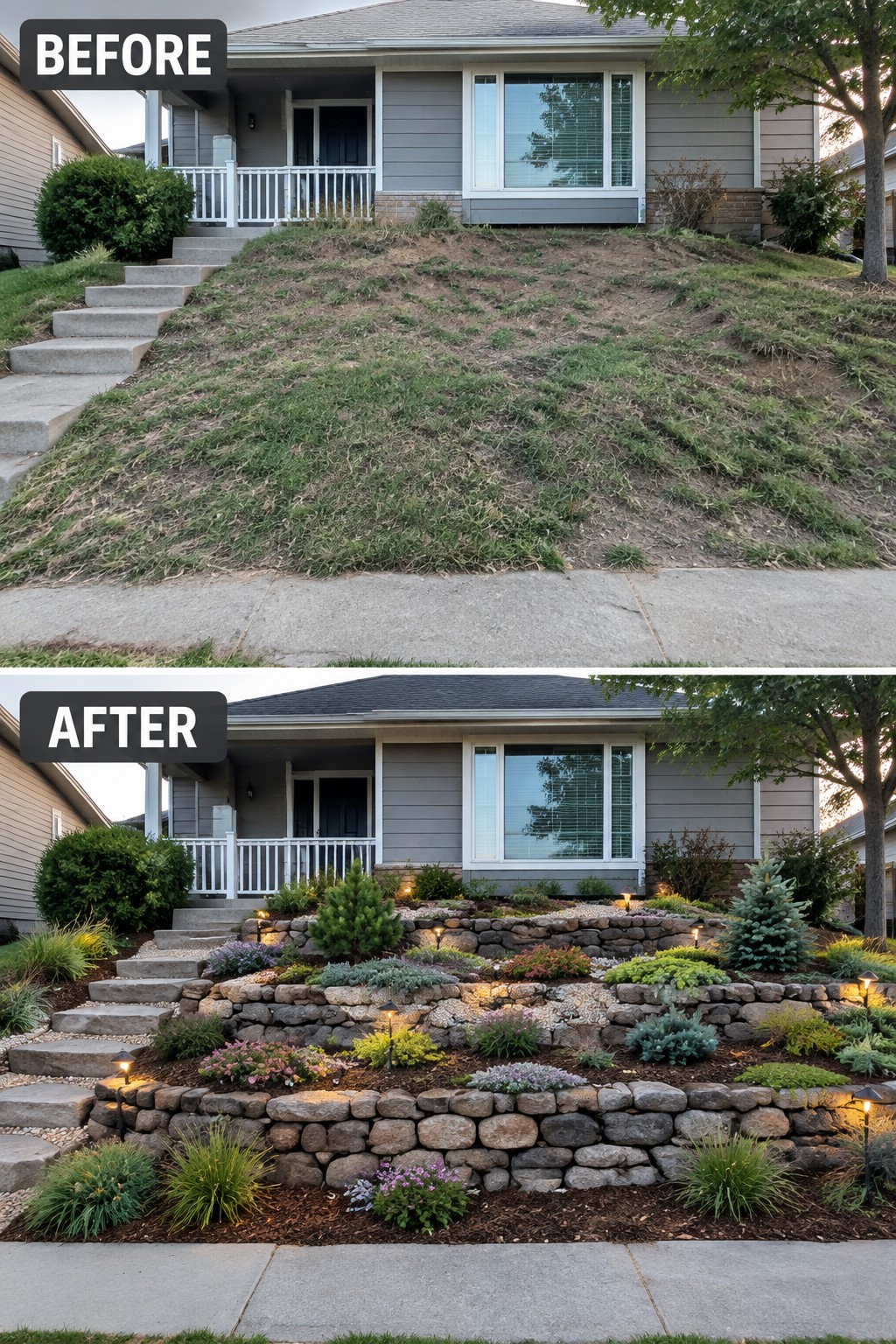
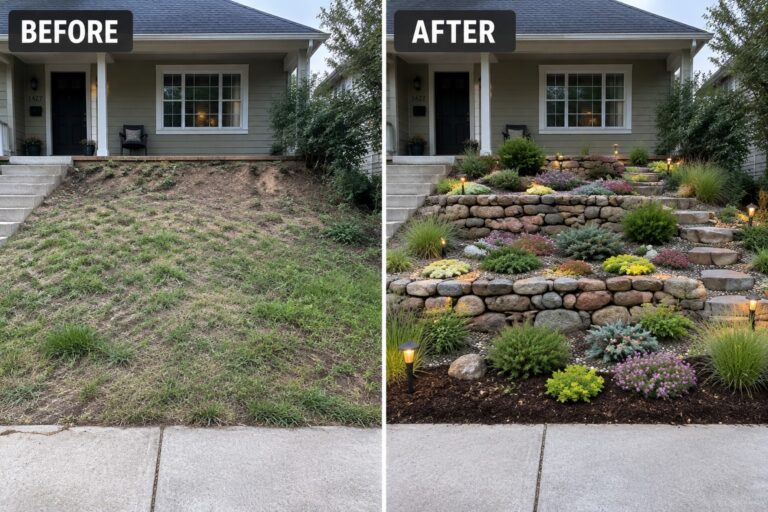
A sloped yard can look patchy and be difficult to maintain. Low stone retaining walls divide the slope into planting levels, turning bare ground into a more orderly rock garden.
For a similar yard, plan the wall placement around the slope and keep steps or paths clear. Choose plants suited to your climate and the amount of sun the garden gets, and make sure the walls are built to handle drainage and soil pressure.
Add Structure To An Overgrown Side Yard
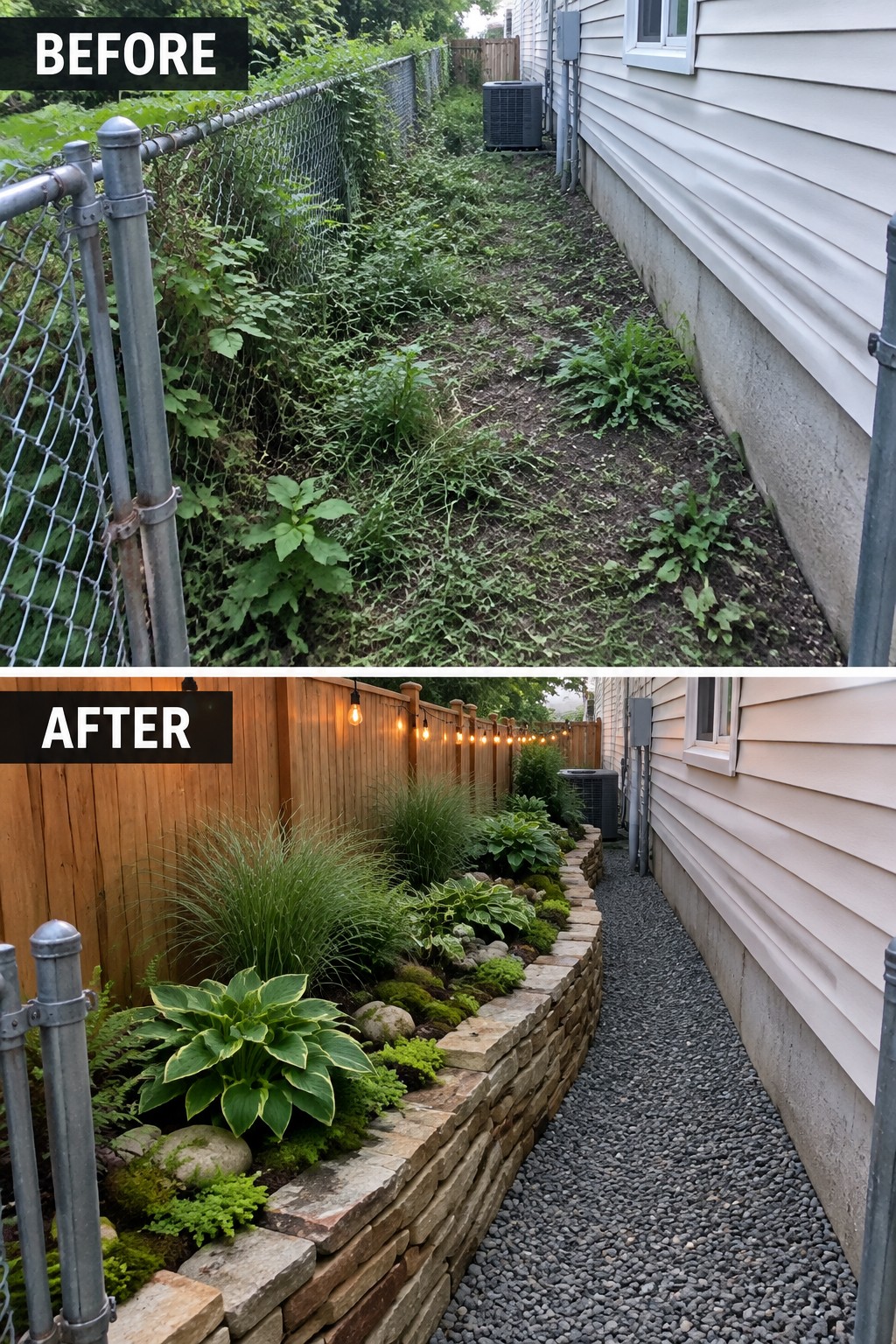
A narrow side yard can be hard to manage when weeds take over and there’s no clear path. Here, a raised stone garden bed gives the planting a defined edge, while a gravel walkway keeps the route beside the house tidy.
For a similar space, clear the overgrowth first, then use a low retaining wall to shape a bed that fits the yard without blocking the path. Choose plants suited to the amount of sun and leave enough room to walk and reach the house.
Turn A Sloped Yard Into Stone Garden Terraces
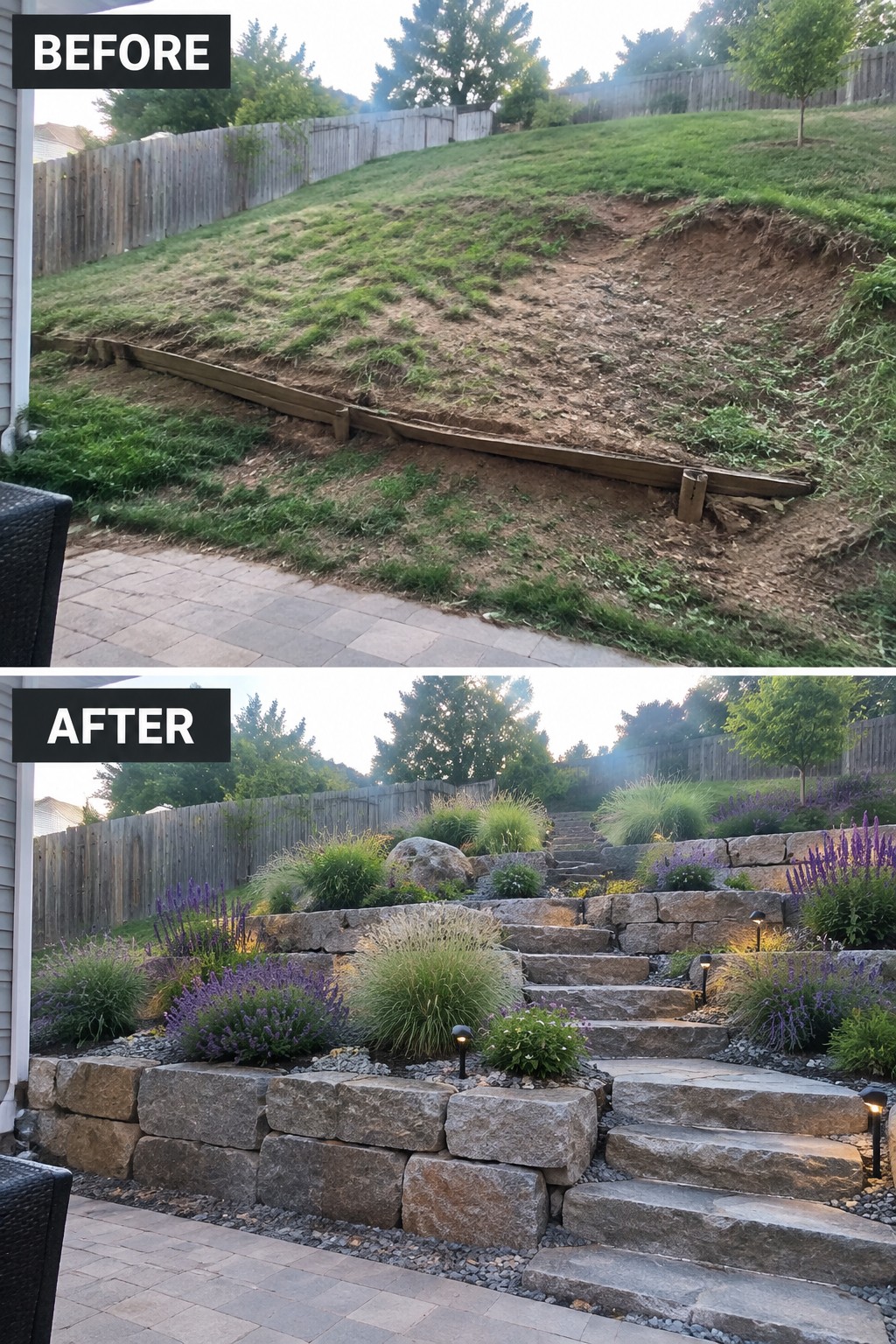
A steep, patchy slope can be hard to maintain and may leave the yard feeling unfinished. Stone retaining walls create level planting areas and steps, turning the hillside into a more organized garden.
This idea works well on sloped backyards where a simple lawn is difficult to keep. Plan the terraces around safe, comfortable steps, and choose plants suited to the sun and soil on your slope.
Create A Defined Front Garden Bed
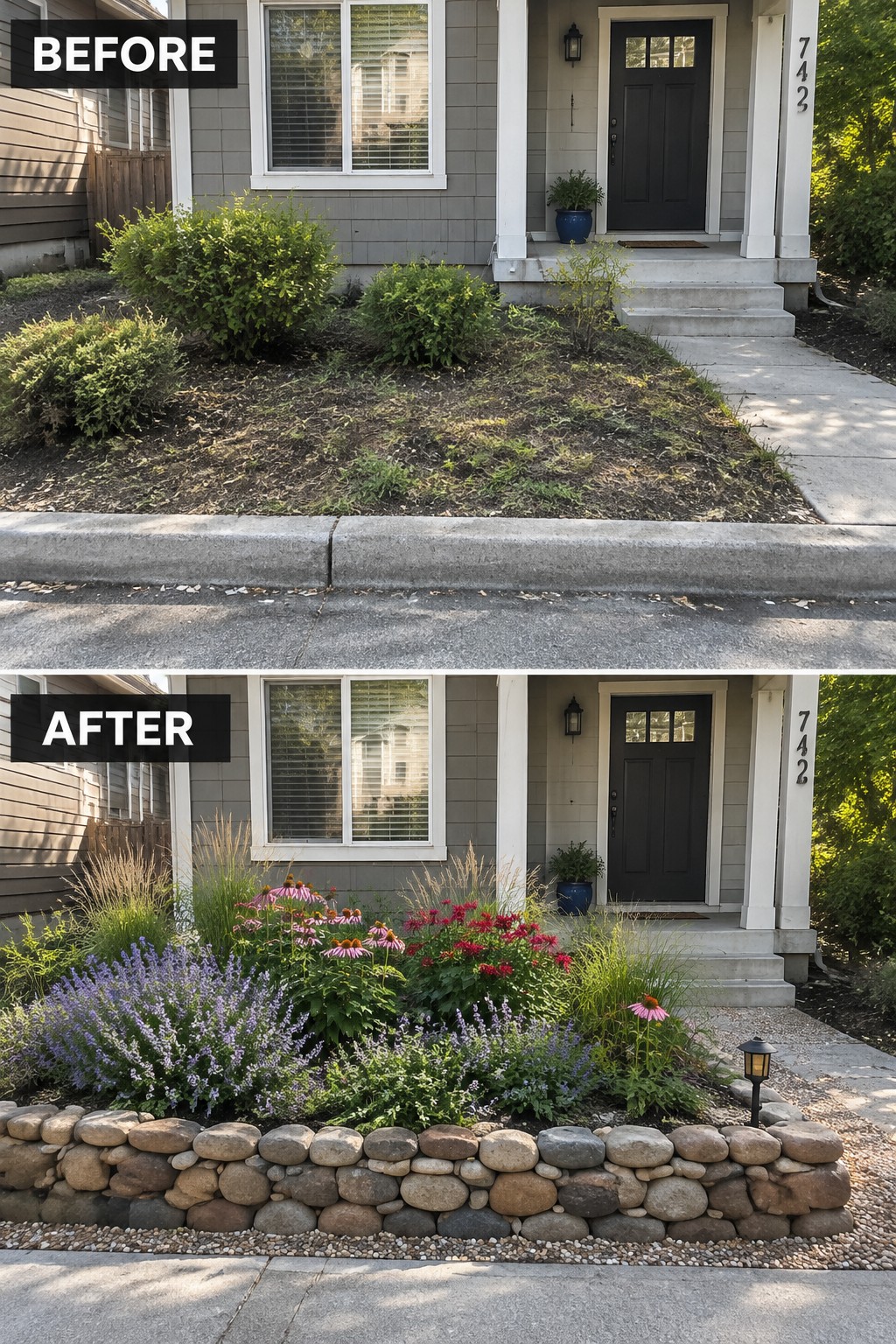
A clear garden edge can make a neglected front yard feel planned. Here, a low natural-stone retaining wall replaces the loose, bare edge and gives the flower bed a neat shape.
This works well in a small entry yard where you want planting to feel contained without blocking the path. Keep the wall low, and leave enough room for plants to fill in without spilling onto the walkway.
Create Stone Terraces On A Bare Slope
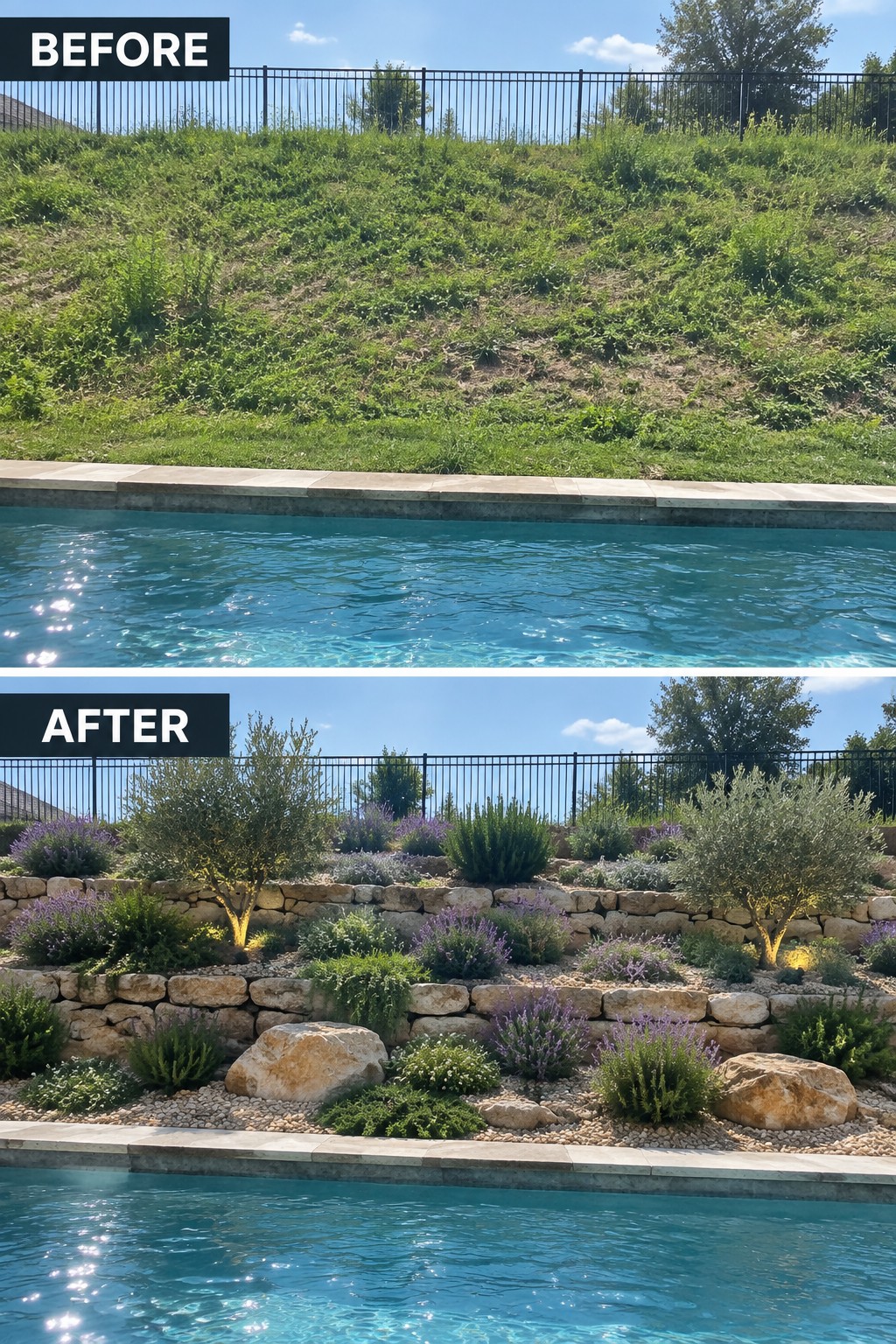
The bare hillside becomes a more organized garden once natural stone retaining walls divide it into planting levels. The terraces give the plants clear places to grow and help the sloped yard feel planned rather than patchy.
For a similar yard, keep the wall layout simple and choose plants suited to the amount of sun and the slope’s drainage. Leave enough room between levels for maintenance, and make sure the walls are built to handle the soil pressure.
Build Planting Beds Into A Sloped Yard

A bare slope can be hard to maintain, and rain may wash soil downhill. Low stone retaining walls divide the grade into planting beds, making the yard look more orderly while giving plants flatter areas to grow.
This approach works well on a hillside beside a sidewalk, where a steep bank might otherwise stay patchy and difficult to plant. Keep the wall height and terraces suited to the slope, and leave enough room for plants to spread without blocking the path.
Turn A Bare Slope Into A Garden Seating Area
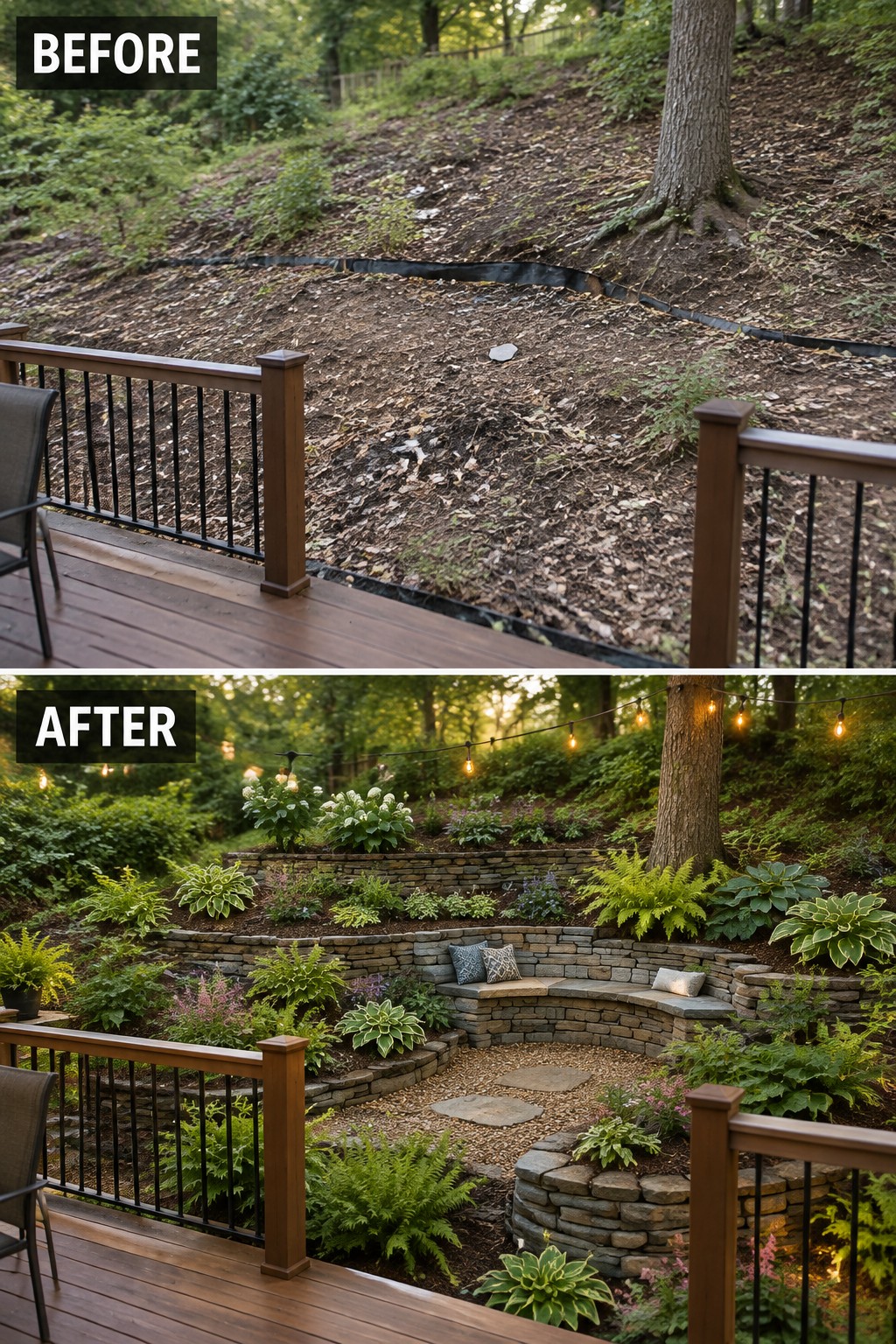
A bare slope can be hard to use and difficult to keep tidy. In this yard, stacked stone walls create level planting areas and a small seating nook, so the hillside has a clear purpose instead of being left as exposed soil.
For a similar yard, start by planning the retaining walls and drainage before adding plants or furniture. Keep the seating area modest, and choose plants suited to the slope’s light and soil conditions.
Replace Shrubs With A Layered Flower Bed
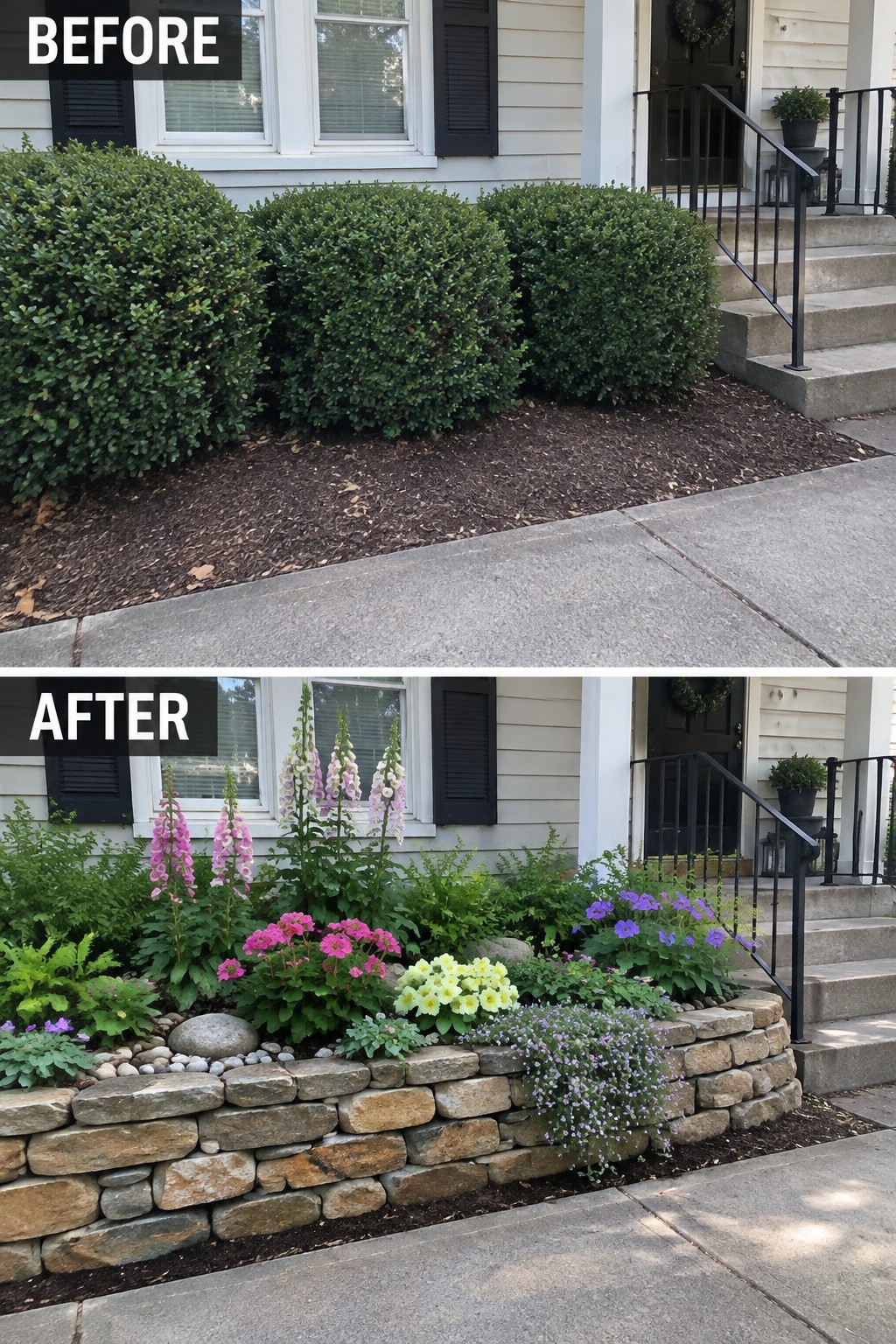
The solid row of clipped shrubs left the front garden looking plain. Replacing it with a low stone retaining wall and varied flowering plants gives the bed a clearer shape and lets the planting show from the sidewalk.
This idea works well along a house foundation where a long, flat bed needs more structure. Keep the wall low enough to suit the site, and leave enough room behind it for plants to grow without blocking windows or paths.
Turn A Bare Patio Into A Small Rock Garden

The cracked concrete patio becomes a more useful space when the hard surface is replaced with paving and a raised stone retaining wall. That wall gives the plants a clear place to grow, so the garden feels planned rather than crowded into the edges.
This idea suits a small enclosed yard where a full lawn would be difficult to maintain. Keep the planting simple and choose drought-tolerant plants that suit your climate, leaving enough paved area to walk or sit comfortably.
Create Terraced Garden Beds On A Slope
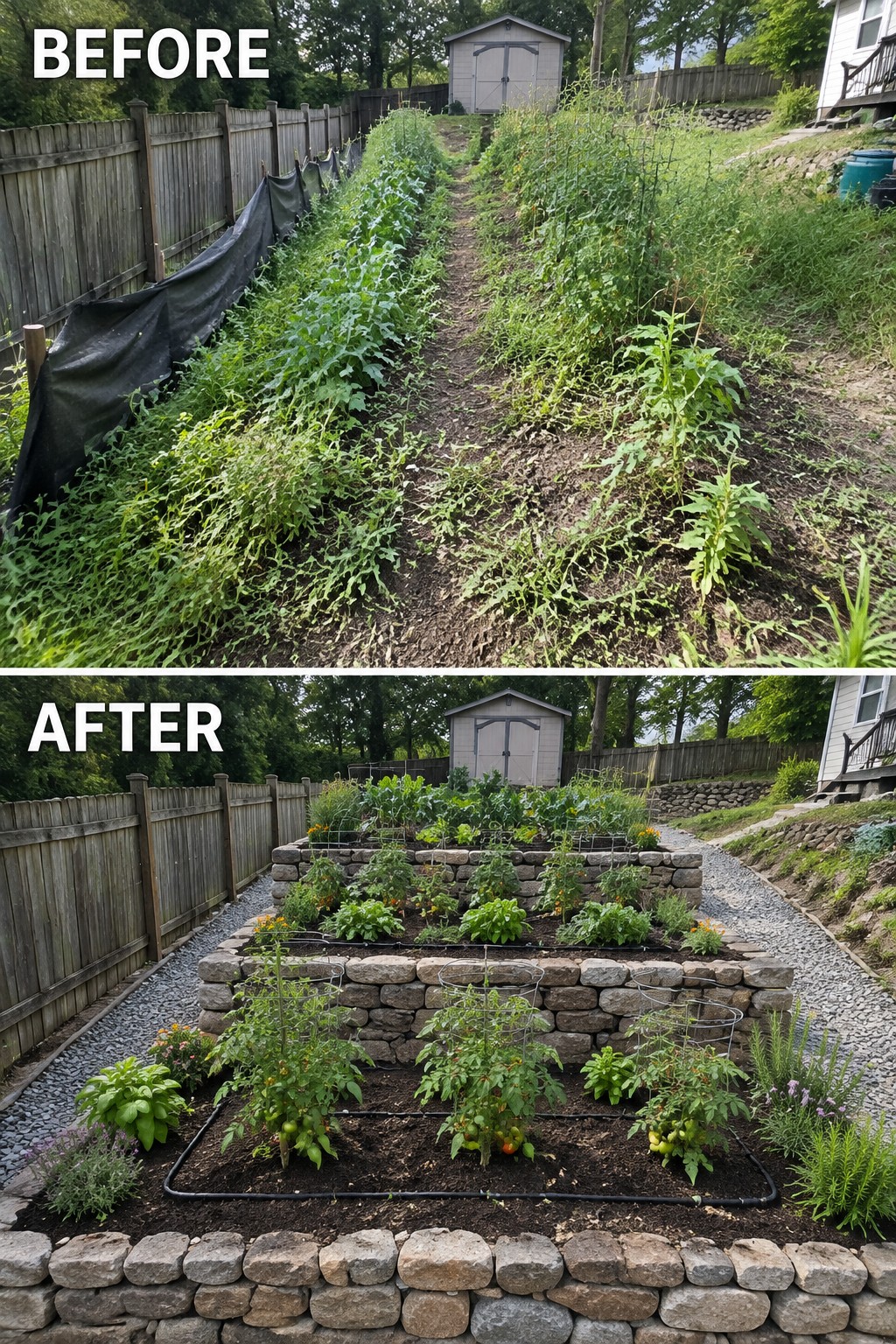
Stone retaining walls turn an overgrown slope into a series of defined planting beds. The levels make the garden easier to organize and give plants more room than they had in the narrow, untended rows.
For a similar yard, start by clearing weeds and deciding where water should drain before building the beds. Keep the walls low enough to suit the slope, and leave a clear gravel path for access and upkeep.
Define A Side Yard With A Stone Garden Bed
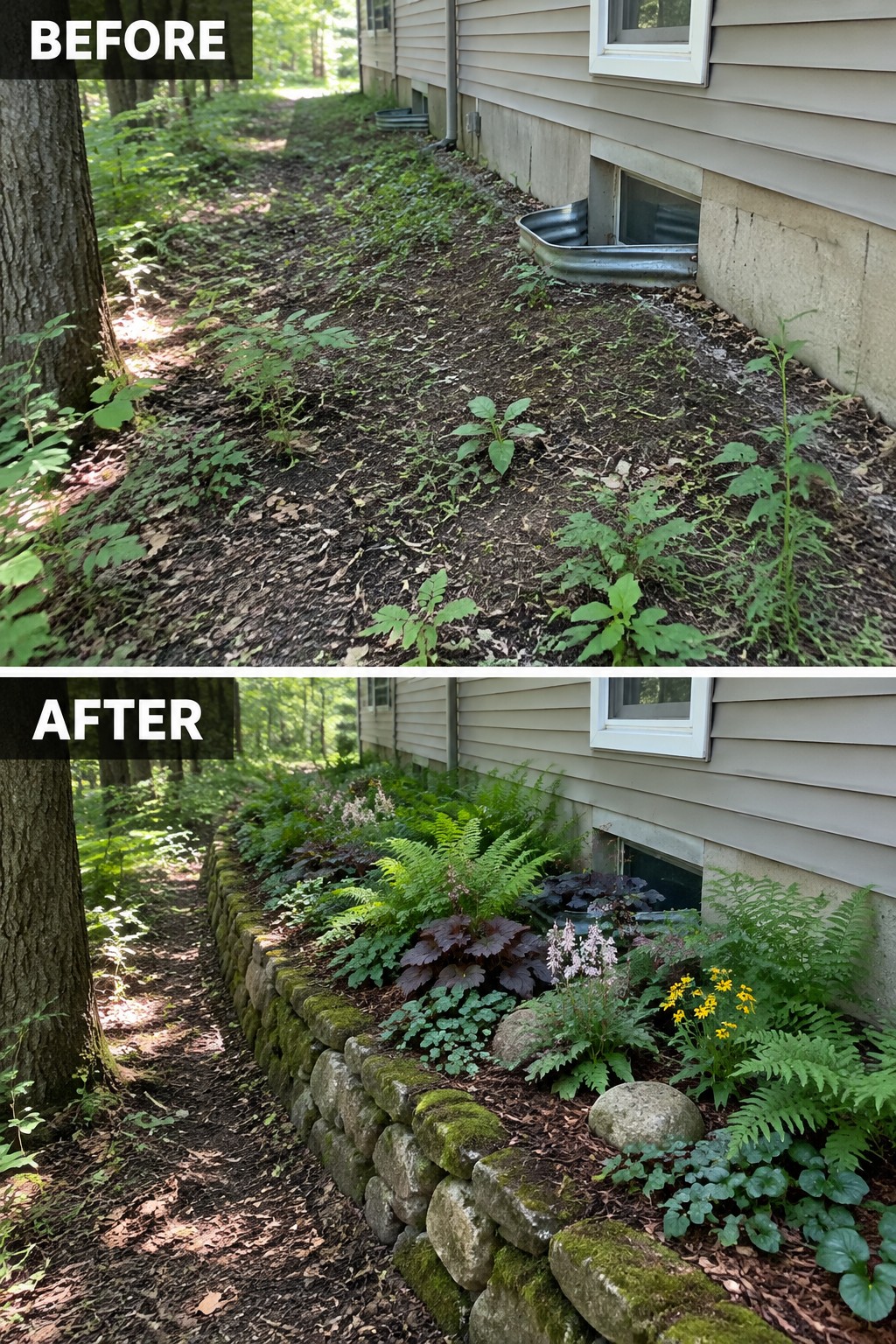
A low stone retaining wall turns this neglected side yard into a clear planting bed. Instead of letting groundcover and weeds spread across the slope, the wall gives the garden a definite edge and makes room for layered plants.
This approach works well beside a house where space is narrow or the ground slopes toward the foundation. Clear the area first, then keep the wall low enough to suit the grade and leave a simple path for access.
Hide Pool Equipment With A Planted Garden Bed
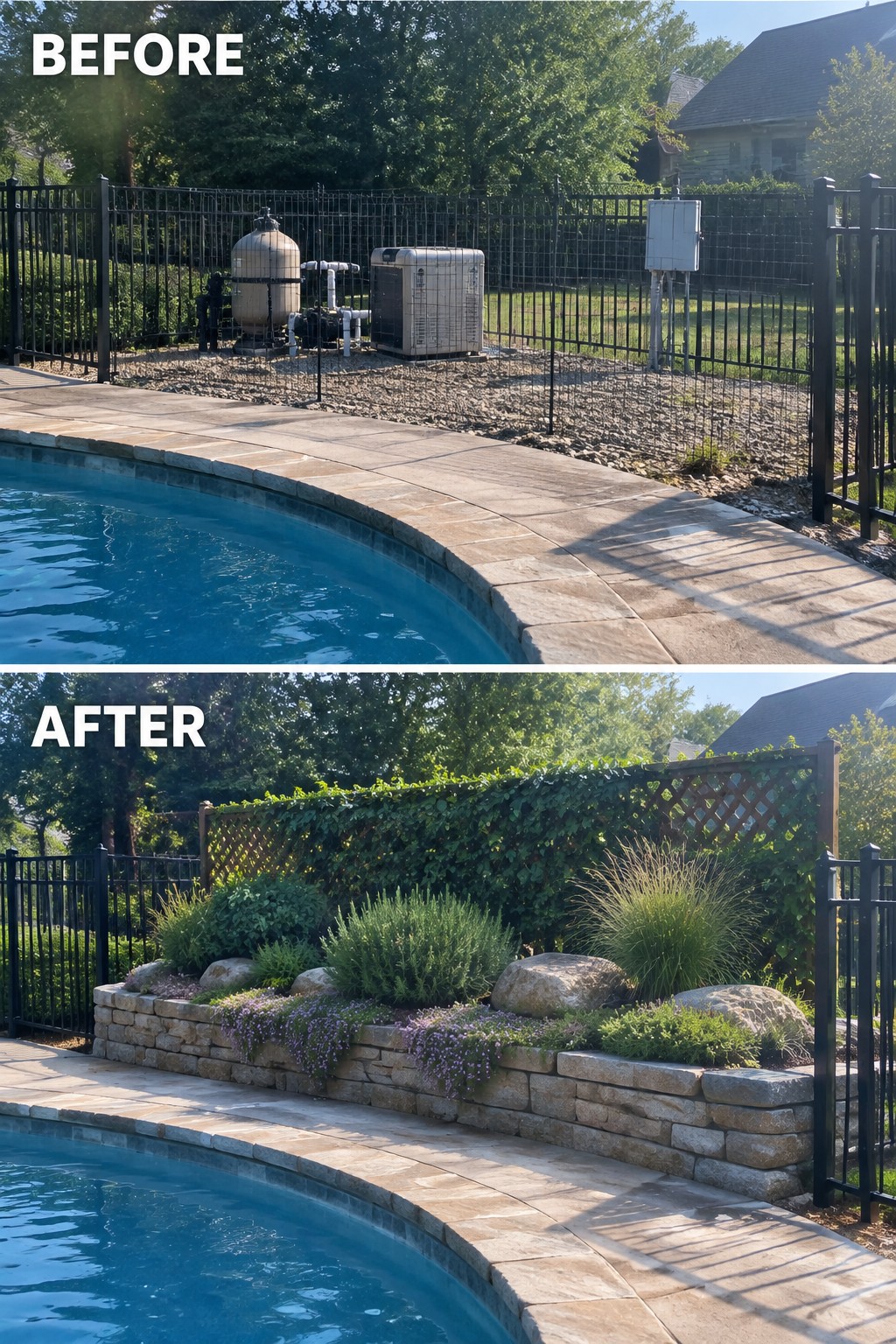
The pool equipment sat exposed beside the fence, making that part of the yard feel unfinished. A raised stone bed and leafy screen give it a more settled look, while the rocks and plants make the garden itself the main feature.
This idea works well anywhere utility equipment is visible from a pool or patio. Leave enough space to reach and service the equipment, and choose plants that suit the light and won’t spread into access areas.
Use A Stone Retaining Wall To Organize A Sloped Garden
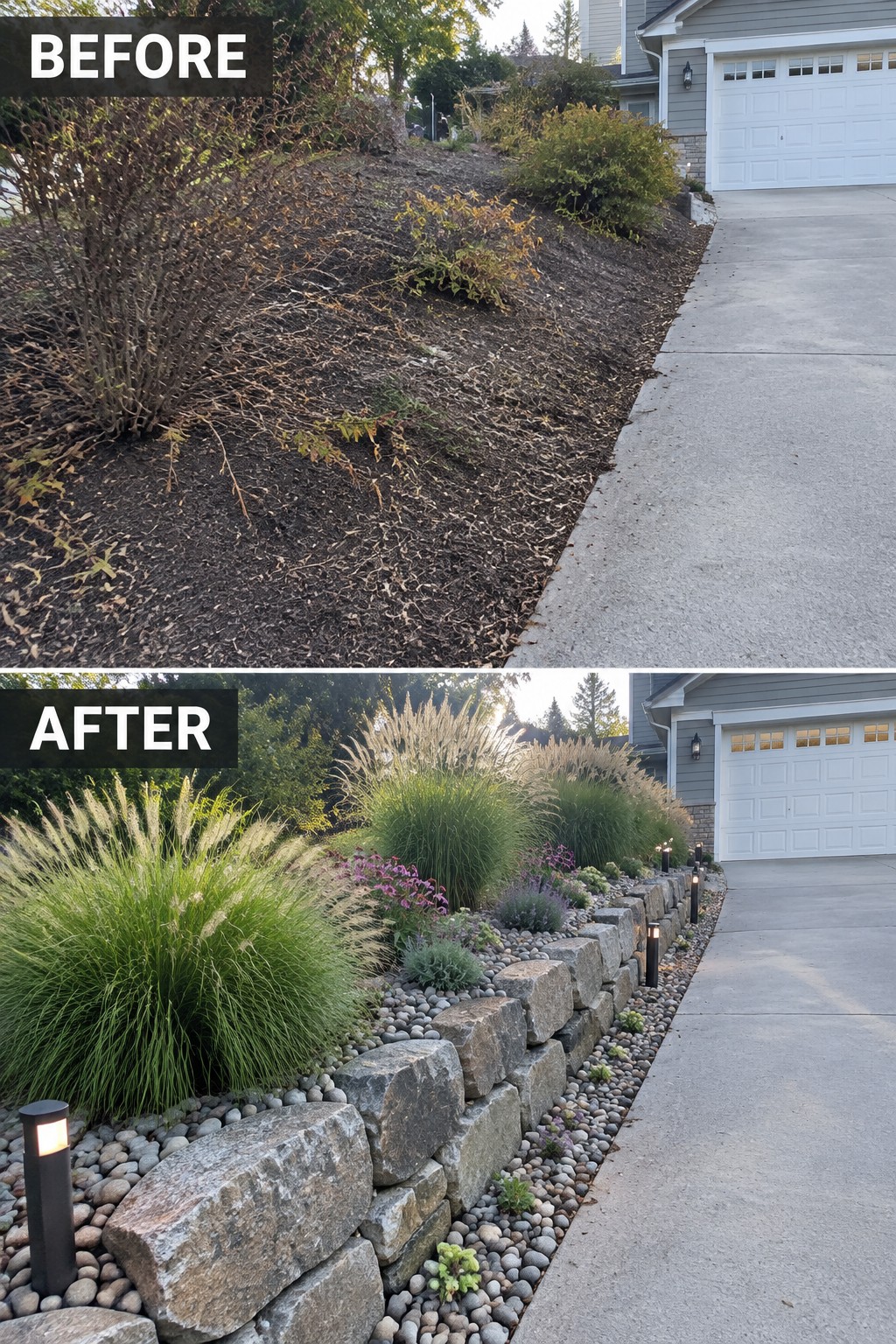
The bare slope beside the driveway was hard to maintain and didn’t have much planting structure. A low retaining wall made from natural stone gives the garden a clear edge and creates more level spots for plants.
This approach works well on sloped front or side yards where soil tends to spill toward a path or driveway. Keep the wall height suited to the slope, and leave enough room for plants and a stable gravel strip beside the driveway.
Replace A Patchy Front Lawn With A Stone Garden Bed
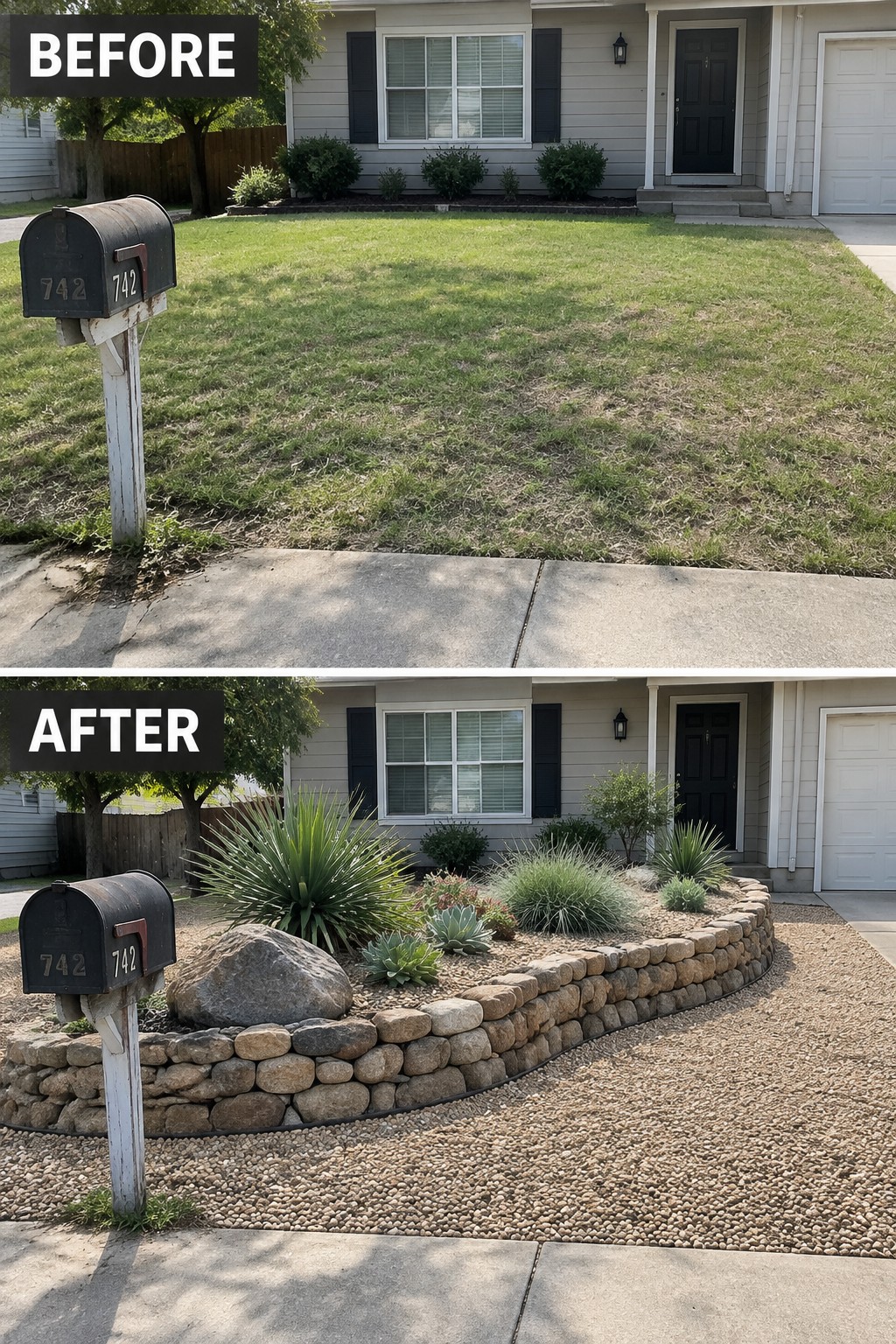
A patchy lawn can be hard to keep looking tidy. Here, a curved retaining wall turns part of the front yard into a defined rock garden, giving the planting area a clear shape and replacing much of the struggling grass with gravel.
This idea suits a small front yard where a full lawn is not essential. Keep the wall low enough to preserve the view from the house, and leave a clear route to the entry. Choose plants suited to your climate so the bed stays manageable.
Replace An Overgrown Slope With Stone Terraces
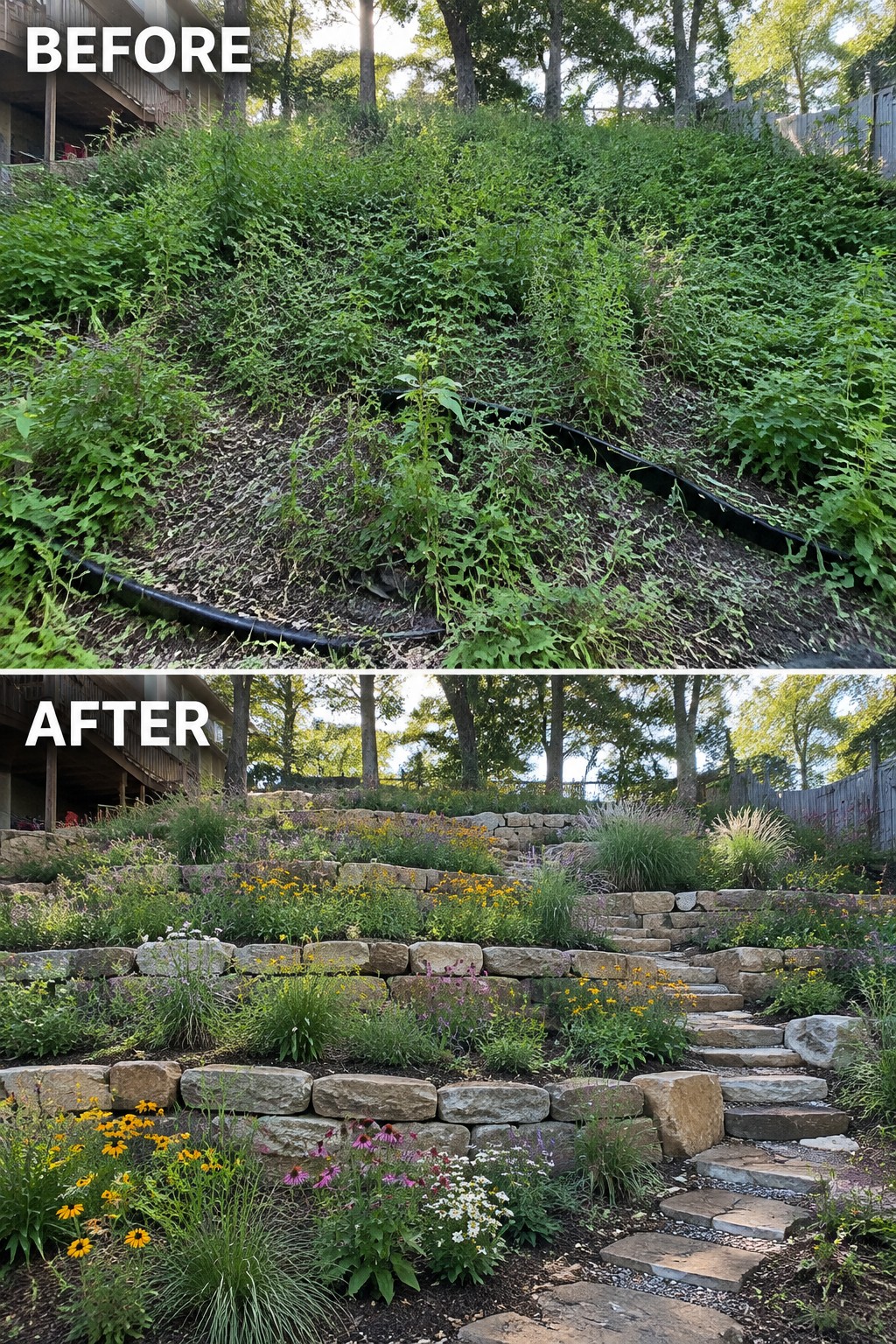
A steep, overgrown slope is hard to maintain and gives plants little definition. Stone retaining walls break the grade into clear levels, turning the neglected area into a garden that feels planned and is easier to care for.
Use the terraces to create flatter planting beds and a stair path where you need to move between levels. Choose sturdy, natural-looking stone, and make sure the walls are built to handle the slope and drain properly.
Turn A Bare Backyard Corner Into A Garden Seating Area

A small backyard corner can feel much more useful when a stone retaining wall shapes it into a place to sit. Here, the bare ground becomes a gravel seating area, and the curved wall provides a built-in bench.
This idea suits a compact yard where there isn’t room for a separate patio and garden. Keep the seating wall low and leave enough space in front for a small table and chairs. Choose gravel that drains well, and make sure the stone wall is properly built to hold the soil behind it.
Stabilize A Sandy Slope With Stone Retaining Walls

The bare, eroding slope becomes a series of stone-edged planting areas. The walls hold the soil in place and break up the incline, giving grasses and low ground cover room to grow instead of leaving the sand exposed.
This approach suits a sloped yard where runoff or erosion is a concern. Set the stones firmly and plan for drainage behind the walls; even a small garden terrace needs a stable base.
Turn A Narrow Patio Into A Small Rock Garden
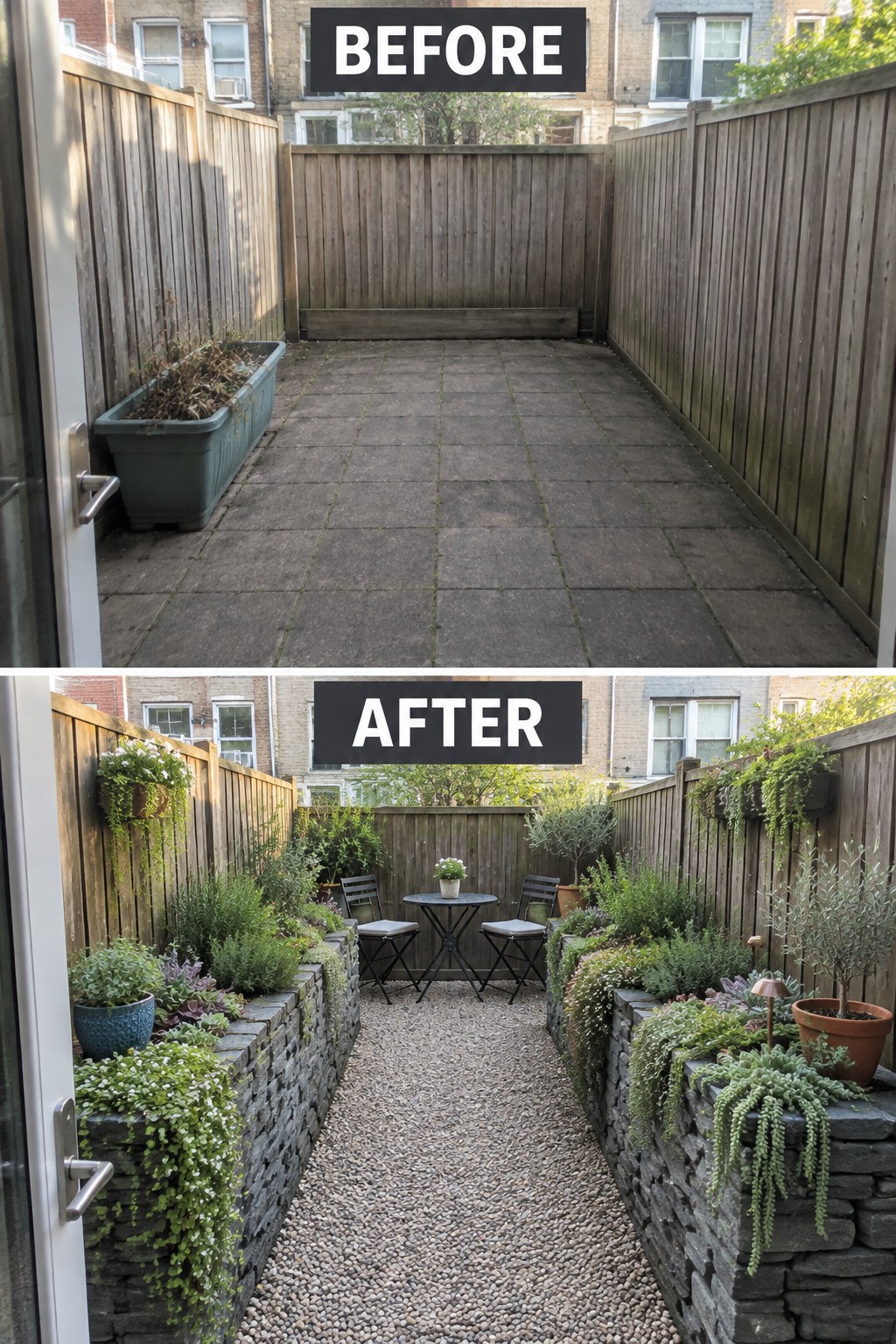
A narrow, unused patio can become a more useful garden by replacing the hard paving with a gravel path and raised stone planting beds. The stone gives the plants clear boundaries, while the path leaves an easy route through the space.
This idea suits a small fenced yard where there is little room for wide beds. Keep the path broad enough to walk comfortably, and avoid packing the planting beds too tightly so they remain easy to care for.
Build Stone Terraces Into A Sloped Yard

A steep, overgrown slope can be hard to maintain and may leave little room for planting. Low stone retaining walls turn it into a series of level garden beds, while broad stone steps make the slope easier to walk.
This approach works well beside a driveway or garage where a hillside needs both structure and access. Keep the walls sized for the slope, and plan for proper drainage behind them so water does not build up.
Build A Fire Pit Into A Garden Seating Area

A bare patch of lawn becomes a more usable outdoor living area when the fire pit has a clear place to sit. Here, curved stone retaining walls shape the space and provide a defined edge for the gravel seating area.
For a similar yard, keep the seating area large enough for chairs and a path around them, then use sturdy stone to hold the planting beds in place. Check local rules for fire pit placement and clearance before building.
Clear An Overgrown Slope With Stone Retaining Walls

The main change here is replacing a wall of overgrown greenery with stepped stone planting beds. The terraces give the slope a clear shape, so the garden feels planned instead of crowded, while still leaving room for plants.
This approach works well on a steep side yard where plants have spread across the ground and made upkeep difficult. Clear the growth first, then plan retaining walls and a path that allow easy access. Keep the beds broad enough for the plants you choose, but leave room to walk beside the house.
Replace An Overgrown Entry With Stone Garden Beds

The entrance feels more organized when the overgrown shrubs are replaced with low stone retaining walls and defined planting areas. Here, the stone borders give the front path a clear edge and make the garden feel planned rather than crowded.
This approach works well beside a front walk or on a gently sloped yard. Keep the walls low enough to see over, and leave enough room along the path for people to pass comfortably.
Make A Steep Garden Easier To Use
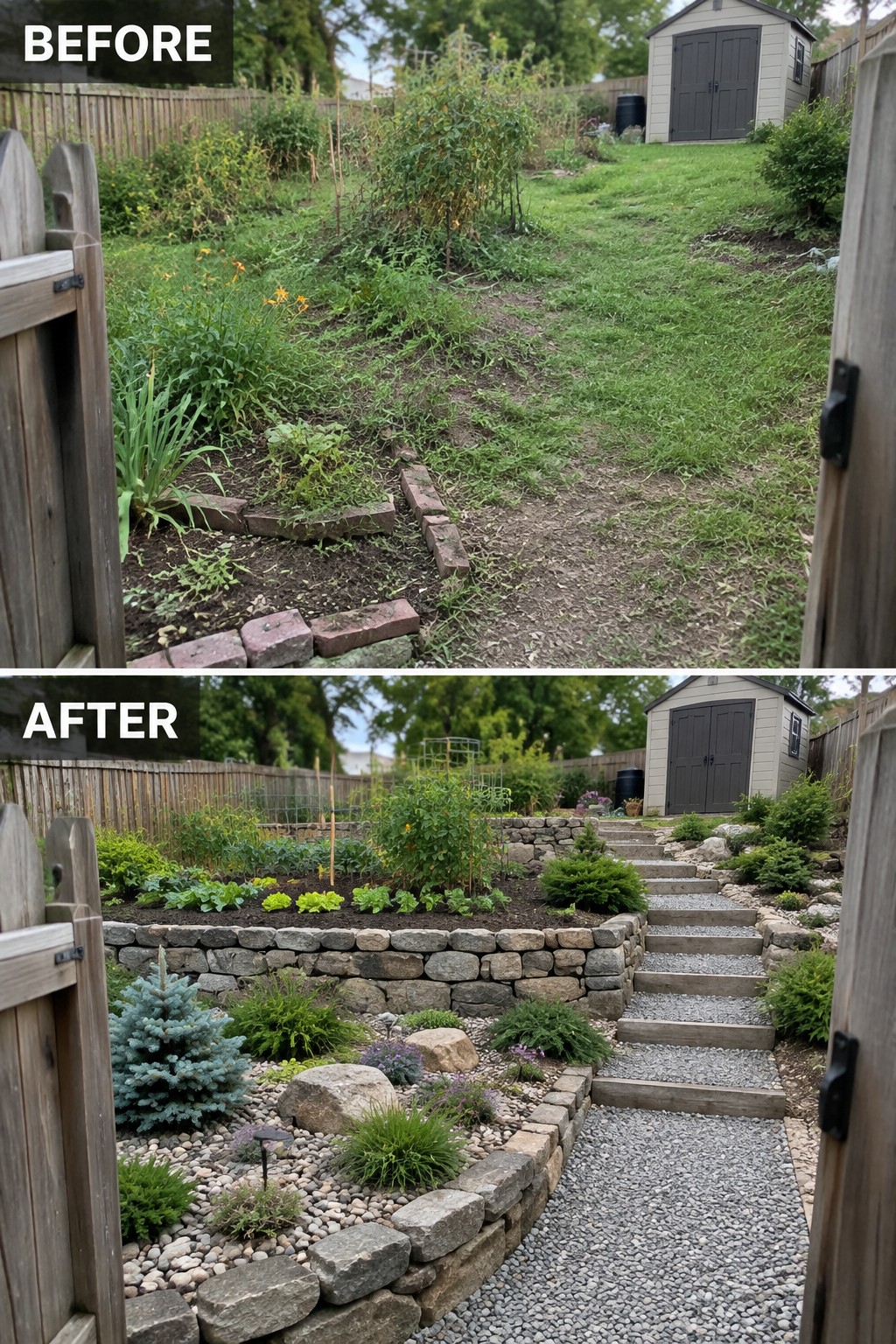
A sloped, weedy yard can be hard to maintain and awkward to walk through. Stone retaining walls turn that slope into level planting areas, while a gravel path with broad steps gives people a clear route through the garden.
This approach works well in a backyard with a noticeable change in height. Keep the steps wide enough to walk comfortably, and use the terraces for plants suited to the site. A little planning makes the space easier to care for, too.
Use Stone Walls To Shape A Sloped Garden
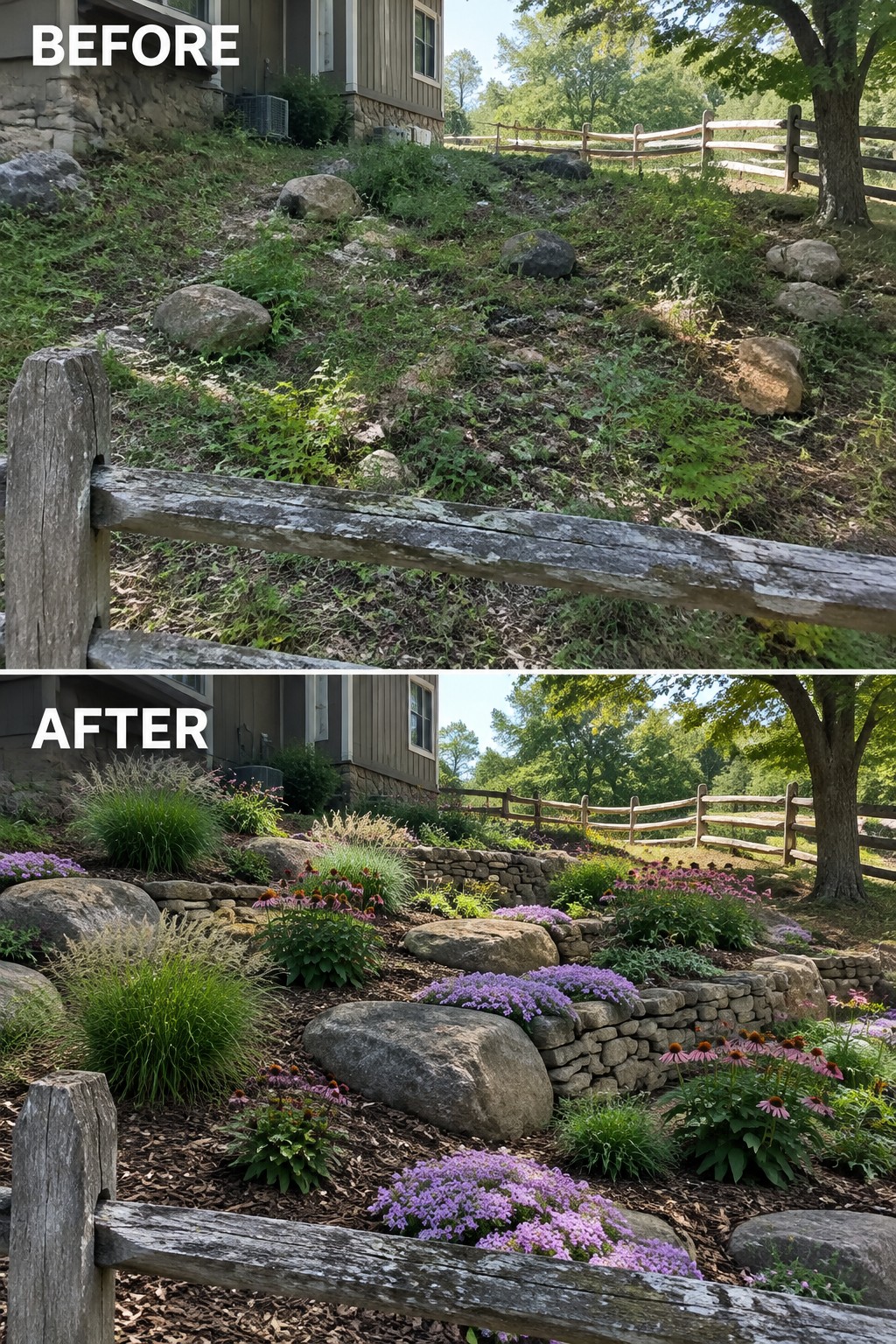
The uneven slope is easier to manage once it’s divided into planting areas. Low stone retaining walls hold the soil in place and give the garden a clear shape, while the scattered greenery in the bare yard has been replaced with mulch and grouped plants.
For a similar yard, work with the slope by creating a few low terraces rather than trying to level the whole area. Keep the walls in scale with the hill, and leave room for plants to spread without blocking a safe route through the garden.
Frequently Asked Questions
Q: How do I keep a stone retaining wall from shifting?
A: Start with a compacted gravel base and make sure the wall has good drainage behind it. Water trapped in the soil can push stones out of place, especially after heavy rain.
Q: Can I build a rock garden on a sloped yard?
A: Yes. A low retaining wall can break the slope into smaller, easier-to-plant sections. If the hill is steep or the wall needs to hold back a lot of soil, get advice before you start digging.
Q: What plants work well around natural stone?
A: Choose plants that suit your sunlight and soil, and tuck smaller, low-growing varieties into gaps near the stones. Leave room for plants to spread so they don’t hide the wall.
Q: Do I need mortar between the stones?
A: Not always. Many garden walls use dry-stacked stones, which let water drain through the gaps and have a relaxed, natural feel.
