

A rock garden can look sparse or scattered when the stones lack structure and the plants feel like an afterthought.
I like how desert cacti bring clear shapes and texture to a rocky yard while needing far less water than many traditional plantings.
With a thoughtful layout, varied stone sizes, and a few well-placed paths or borders, the space can feel tidy without losing its natural character.
Small adjustments to spacing and plant groupings often make the biggest difference.
I’d save the ideas that suit your yard’s light and soil, then adapt them to create a landscape that feels both practical and cared for.
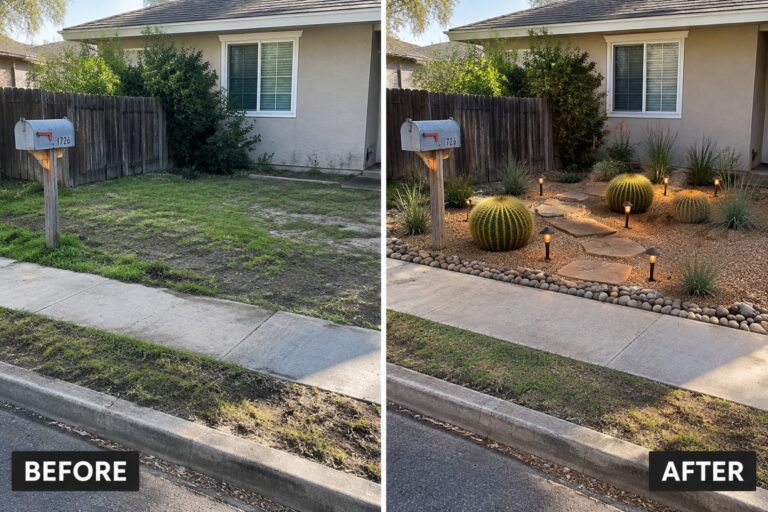
Create A Defined Desert Garden Bed
The patchy lawn has been replaced with a clear rock garden bed, giving the front yard a more intentional shape. Gravel and rounded stone edging help define the planting area, while the cacti suit a dry landscape and need less water than a thirsty lawn.
For a similar yard, remove struggling grass first, then use gravel and a simple border to keep the bed tidy. Leave enough space between plants as they grow, and keep a clear path to the mailbox and walkway.
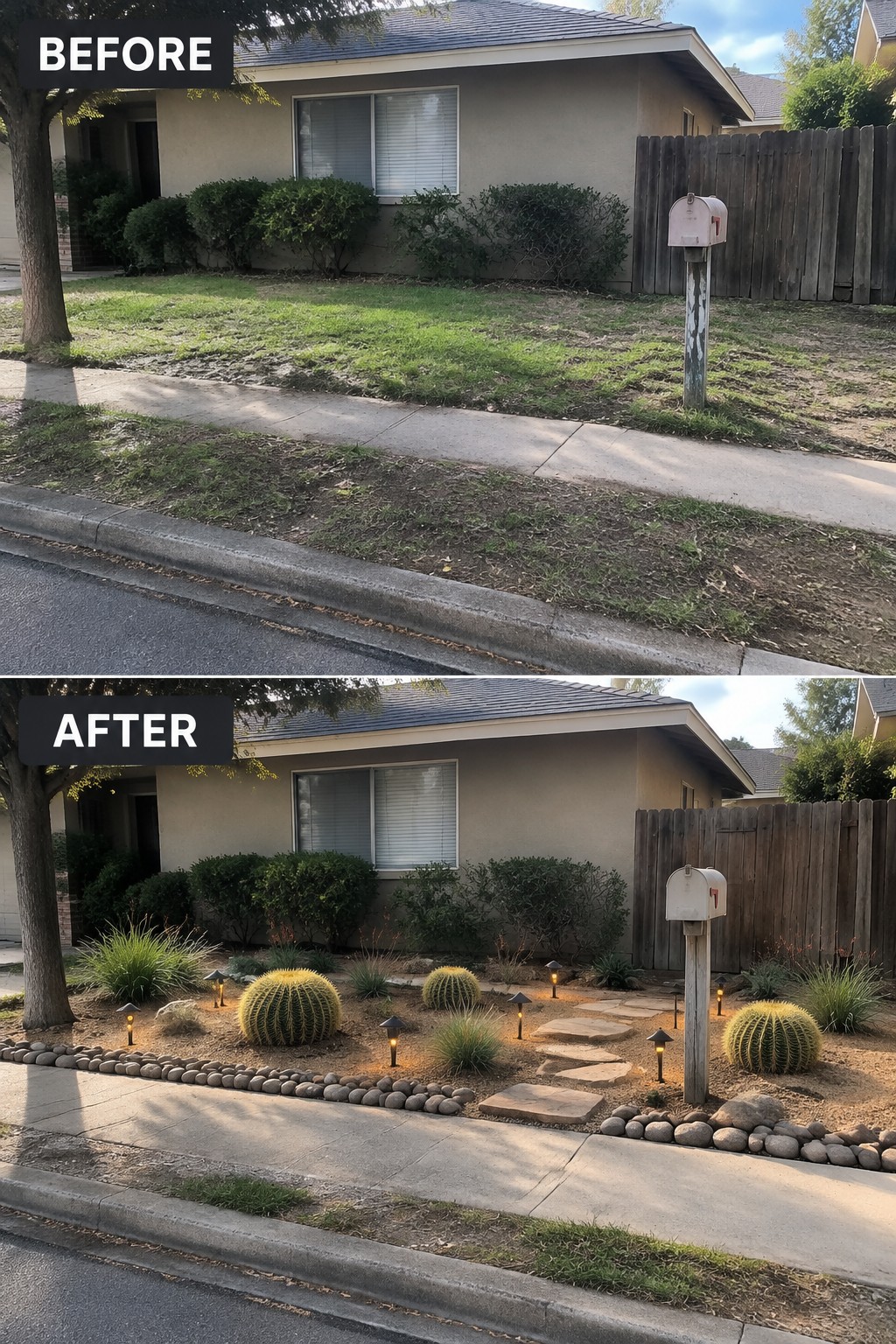
Turn A Patchy Yard Into A Desert Rock Garden

A sparse lawn can be hard to keep looking tidy, so replacing it with a gravel garden gives the yard a clearer shape. Here, a central cactus and a few large rocks make a simple focal point, while the gravel covers much of the bare ground.
This idea suits a sunny yard where grass struggles or needs too much upkeep. Start by clearing weeds, then arrange a few drought-tolerant plants and rocks before spreading gravel. Leave enough space around plants for growth, and avoid packing the bed so tightly that it is hard to maintain.
Add Structure To A Sloped Garden

A bare, patchy slope can be hard to maintain and may look unfinished. Low stone retaining walls divide the yard into planting levels, while a gravel path gives the hillside a clear route through it.
This approach works well on sloped front yards where grass struggles to grow. Use sturdy materials suited to the slope, and leave enough room for plants to fill in without blocking the path.
Create A Desert Garden Path With Gravel

Replacing bare, weedy ground with gravel and stepping stones gives a narrow side yard a clear path and a more planned look. The gravel helps cover the soil, while the round pavers make it easier to walk through without trampling the planting areas.
This idea works well in tight spaces where a lawn would be hard to maintain. Keep the path wide enough to use comfortably, then add drought-tolerant cacti along the edges without crowding the route.
Make A Patio Corner Into A Desert Garden
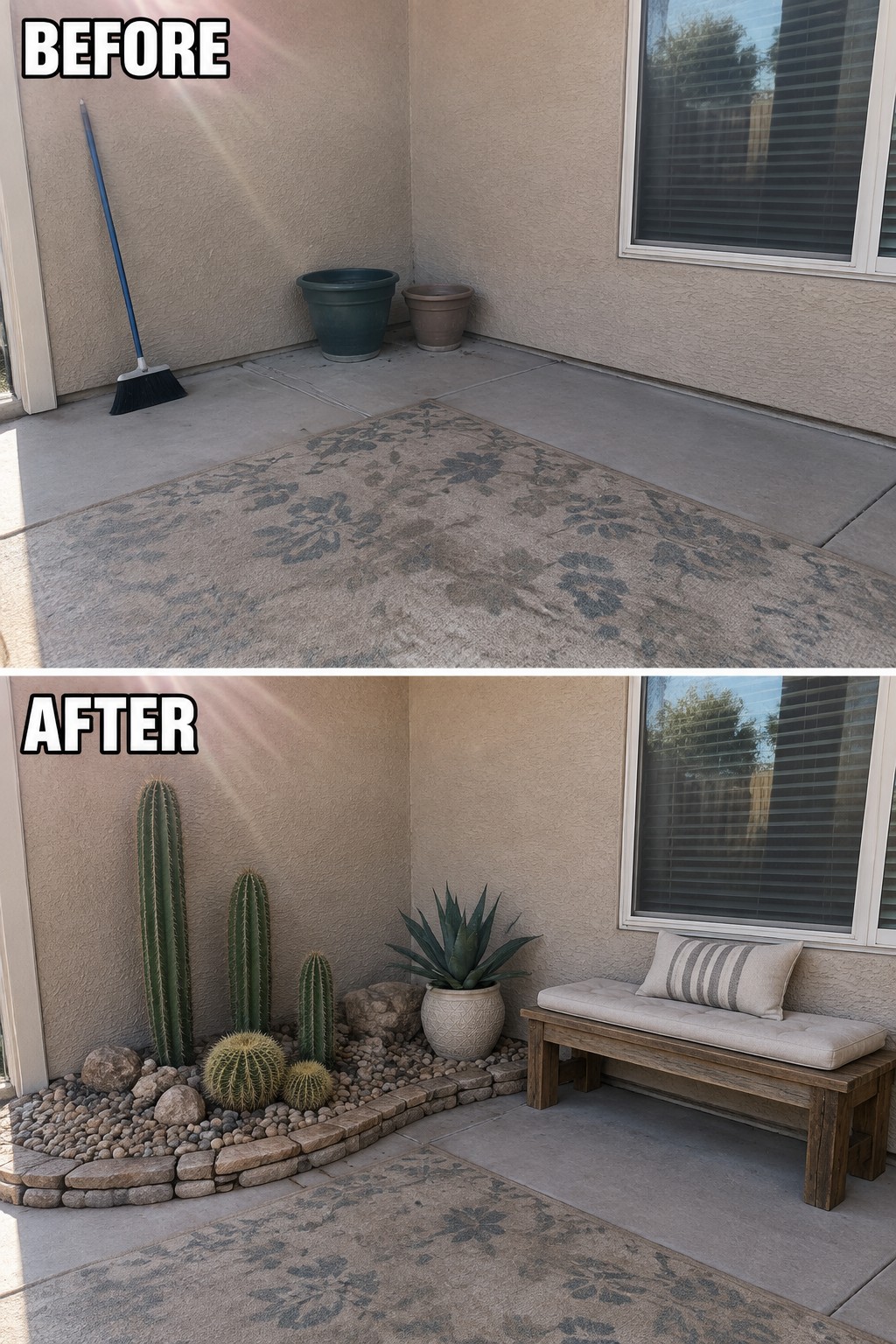
The empty corner becomes a small desert garden, giving the patio a clear focal area without taking up the whole space. A low stone border keeps the gravel and cacti together, while the nearby bench leaves the patio useful for sitting.
This idea works well in a sunny corner where a large lawn or garden bed would feel out of place. Use a few cacti of different heights, add gravel around them, and keep the plants spaced so they have room to grow.
Replace Overgrown Grass With A Rock Garden

The strip beside the driveway was mostly overgrown grass, which made the yard look untended. Replacing it with gravel and a few desert plants gives the area a clearer shape and suits a dry-climate garden.
This idea works well along driveways or narrow side yards where lawn is hard to maintain. Clear the grass, define the bed edge, and leave enough room for plants to grow without crowding the path.
Turn A Bare Terrace Into A Cactus Garden
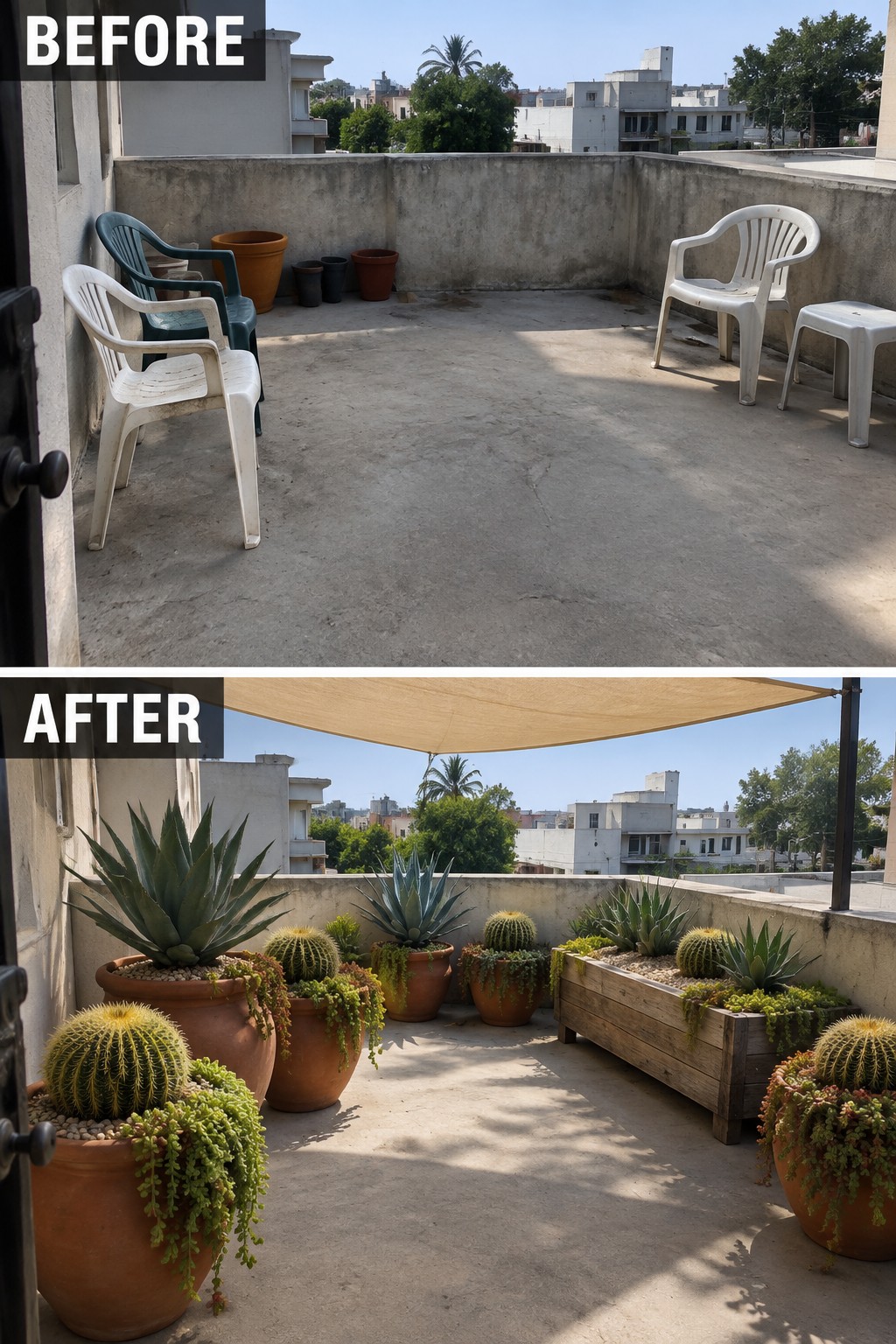
An empty concrete terrace can become a useful garden by grouping desert plants in large pots and raised planters. Here, the seating is replaced with cacti and succulents, giving the space a clear purpose without taking up the whole floor.
This idea works well on a rooftop or small patio where planting directly in the ground isn’t possible. Choose containers with good drainage, use a gritty mix suited to cacti, and leave enough open space to walk through comfortably.
Replace A Waterlogged Lawn With A Dry Garden
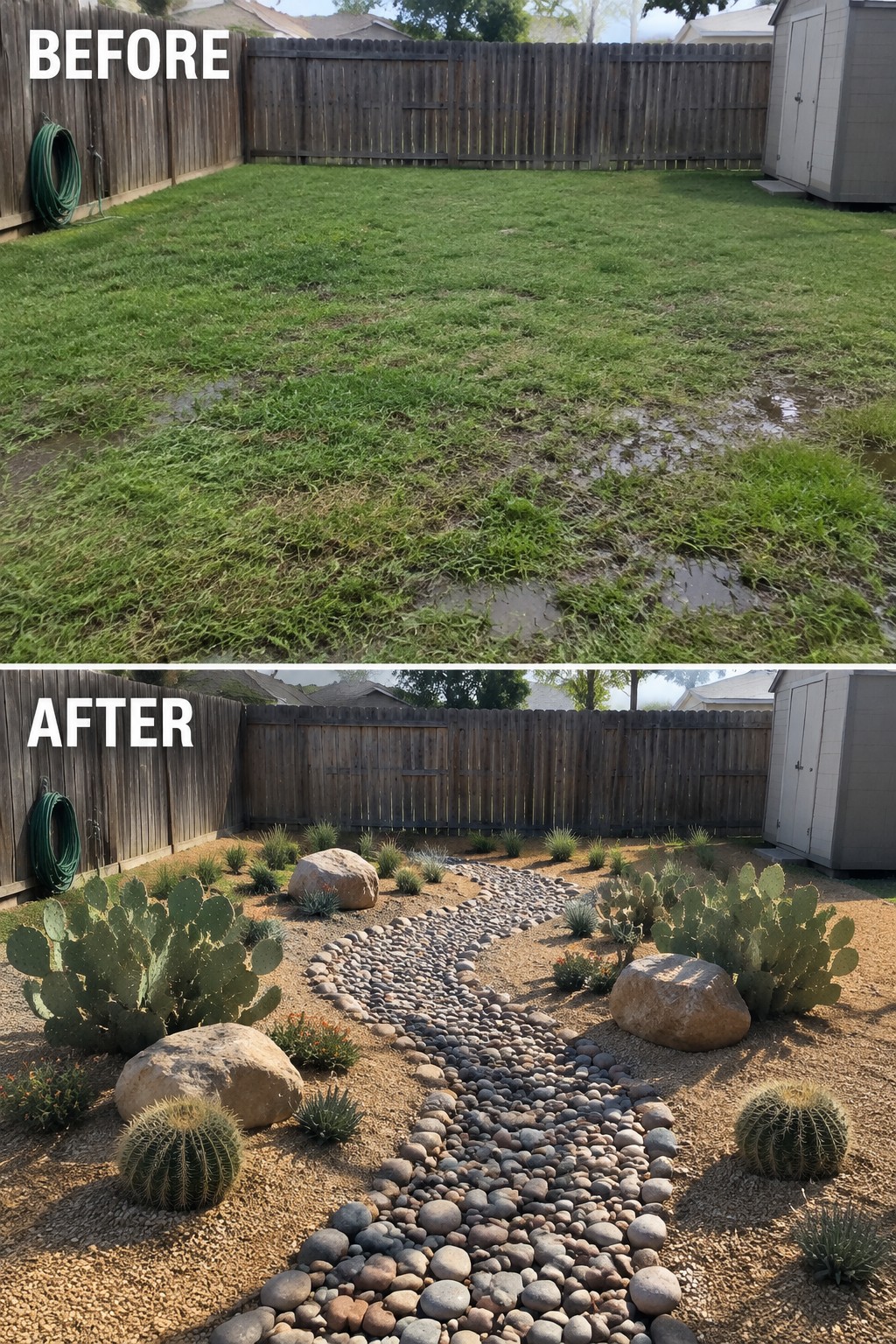
A patchy lawn with standing water can be hard to maintain. Replacing it with a gravel garden and a winding stone path gives the yard a clearer layout and suits a desert planting style. The path also makes it easier to move through the space without trampling the plants.
For a similar yard, deal with drainage and remove struggling grass before adding gravel or cacti. Keep the path wide enough to walk comfortably, and leave room between plants so they can grow.
Give A Bare Entry A More Welcoming Look

Replacing the drooping flowers with tall, upright cacti gives this porch a cleaner, more deliberate entry. Matching pots on either side of the door make the planting feel balanced without taking up much room.
This idea works well on a small porch where there is little space for a garden bed. Choose pots with drainage and cacti suited to your climate, then leave a clear path to the door.
Build Terraced Beds Into A Sloped Garden
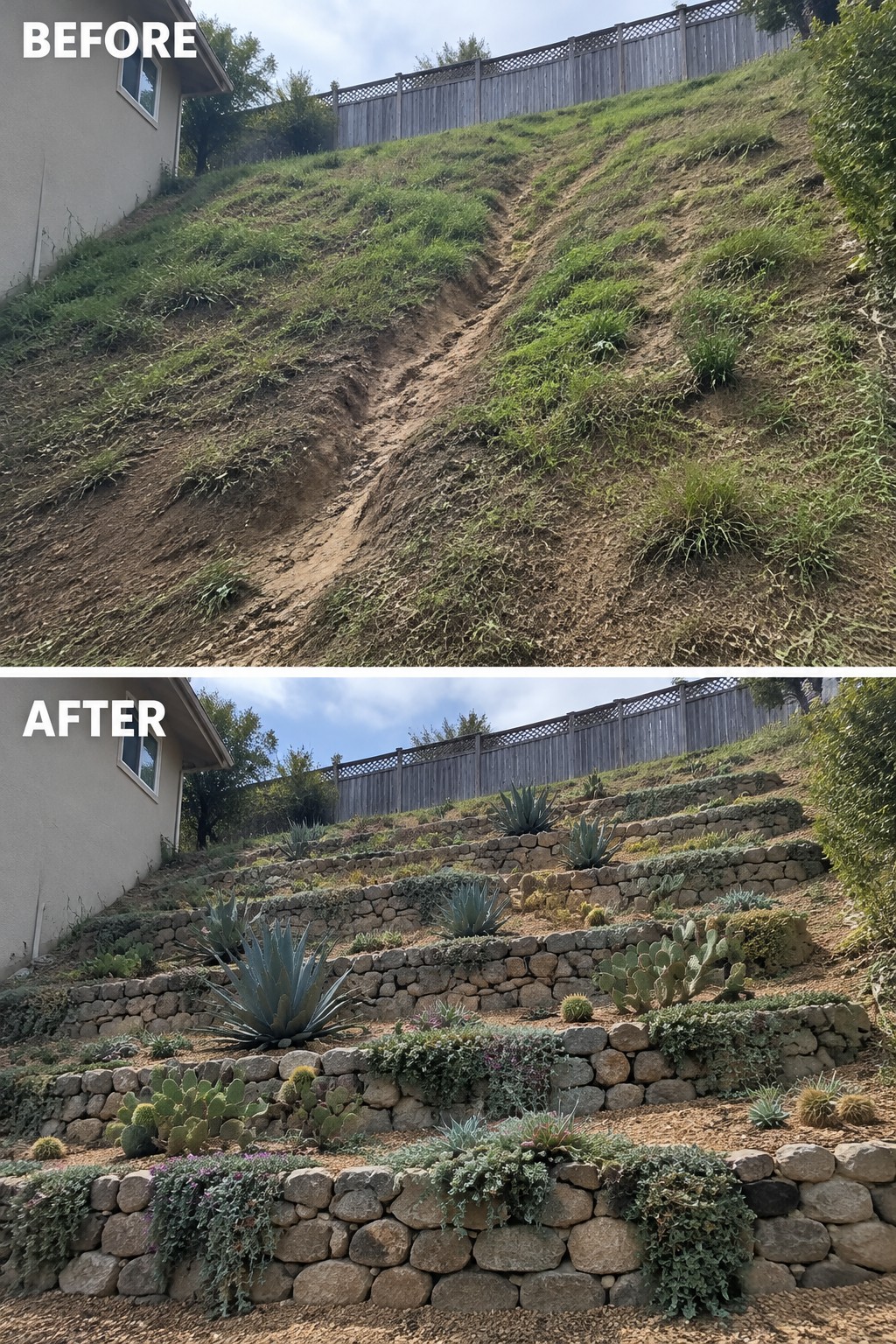
A steep, bare slope can be hard to plant and prone to washing out. Low stone retaining walls create level pockets for a rock garden, making the hillside easier to manage while giving desert plants room to grow.
Use this approach on a slope where water runs downhill or the soil keeps eroding. Keep the terraces suited to the grade, and choose drought-tolerant plants and gravelly soil for each bed. For taller or more complex walls, check local requirements and get professional advice.
Create A Cactus Border Around The Fire Pit
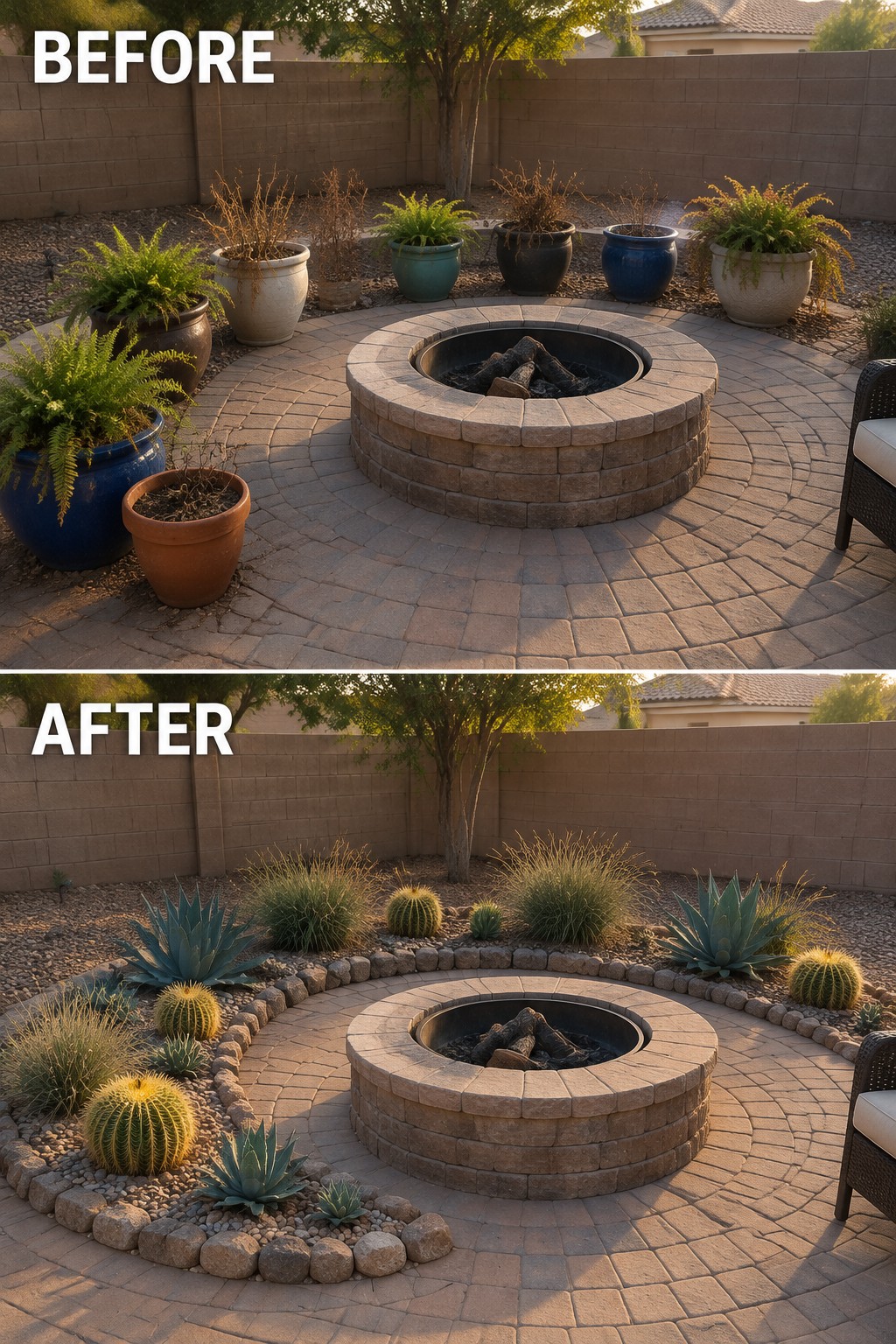
The scattered pots in this yard were replaced with a planted rock border, giving the fire pit a clearer place in the garden. A curved edge of stone helps define the area without taking away space from the paved surface.
For a similar look, group desert plants in a bed that follows the shape of your patio, then cover the soil with gravel or small rock. Leave enough room around the fire pit for people to sit and move safely, and choose cacti and succulents suited to your climate.
Add Pavers To Give A Rock Garden Shape
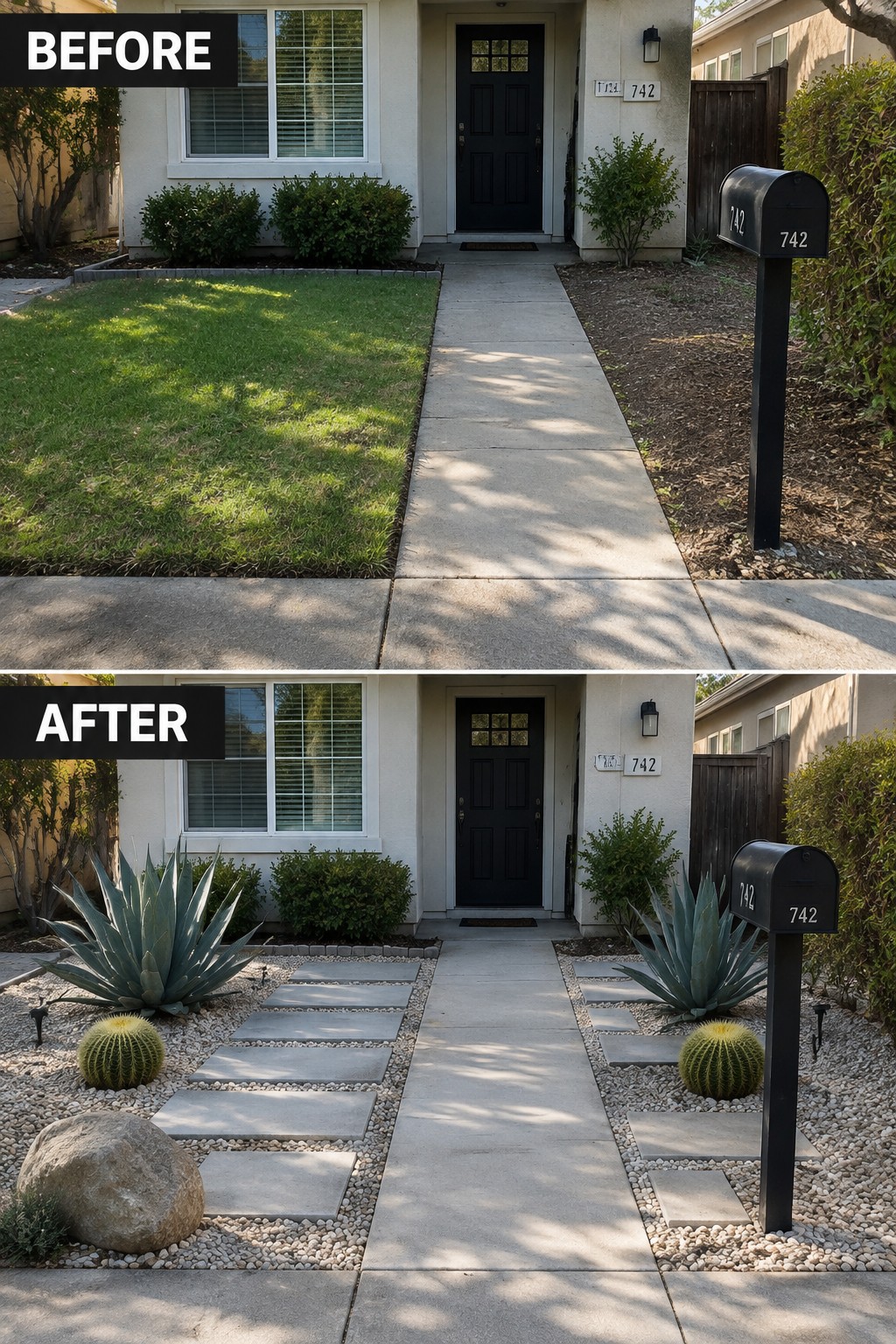
Replacing the lawn and bare soil beside the front path with gravel and spaced pavers gives this small yard a more planned look. The path stays clear, while the pale stones and simple cacti make a practical alternative to thirsty grass.
For a similar entry garden, keep the main walkway wide enough to use comfortably, then place stepping stones in the surrounding gravel where you want access for planting or upkeep. Choose desert plants suited to your climate, and leave room for them to grow.
Replace An Overgrown Fence Border With A Rock Garden
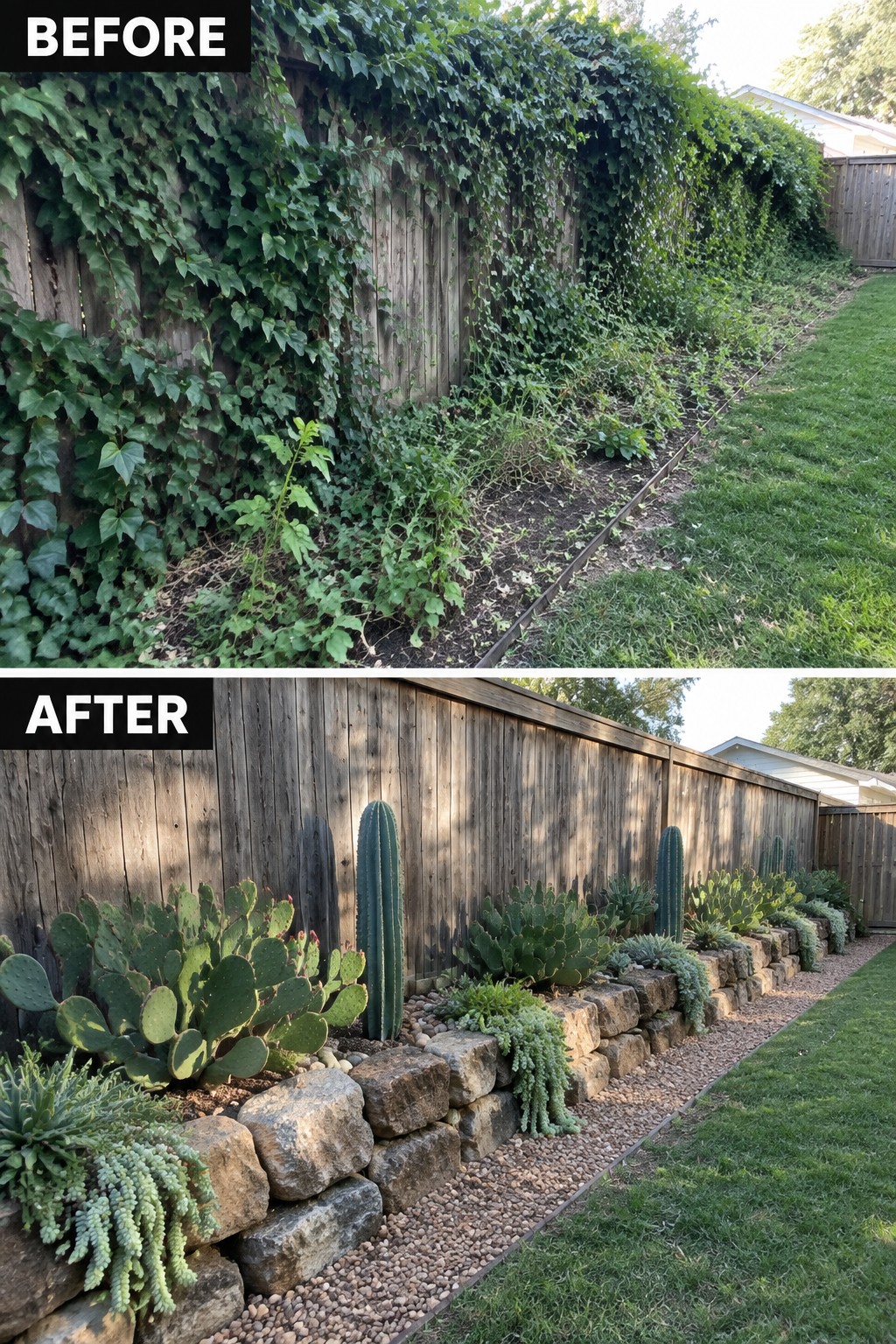
An overgrown strip along a fence can make the whole yard feel neglected. Clearing it out and building a low stone border gives the planting bed a clear shape, while gravel helps keep the area tidy and suits drought-tolerant cacti.
This idea works well along a fence where a narrow bed is easy to maintain. Start by removing weeds and unwanted growth, then choose stones that fit the space and leave enough room for plants to grow without crowding the lawn.
Turn A Bare Entry Corner Into A Desert Rock Garden

A gravel bed can make a small, unused entry corner feel planned without taking up room for seating. Here, replacing cracked concrete with gravel and a simple stepping path gives the area a clear purpose, while a few cacti and succulents bring in desert planting.
This idea suits narrow side entries and sheltered spaces where a lawn would be difficult to maintain. Use gravel that drains well, leave enough room to walk comfortably, and group plants with similar water needs. Keep the selection simple so the small area does not feel crowded.
Create A Clear Path Through A Cactus Garden

A simple stone path can give a narrow side yard a purpose and make a rock garden easier to walk through. Here, irregular pavers replace a bare dirt route, while gravel and desert plants fill the space around them.
For a similar yard, lay out the walking route first, then add gravel and drought-tolerant plants along the edges. Leave enough room to pass comfortably, and keep larger cacti away from the path so they do not crowd the walkway.
Replace Pot Clutter With A Desert Garden Bed
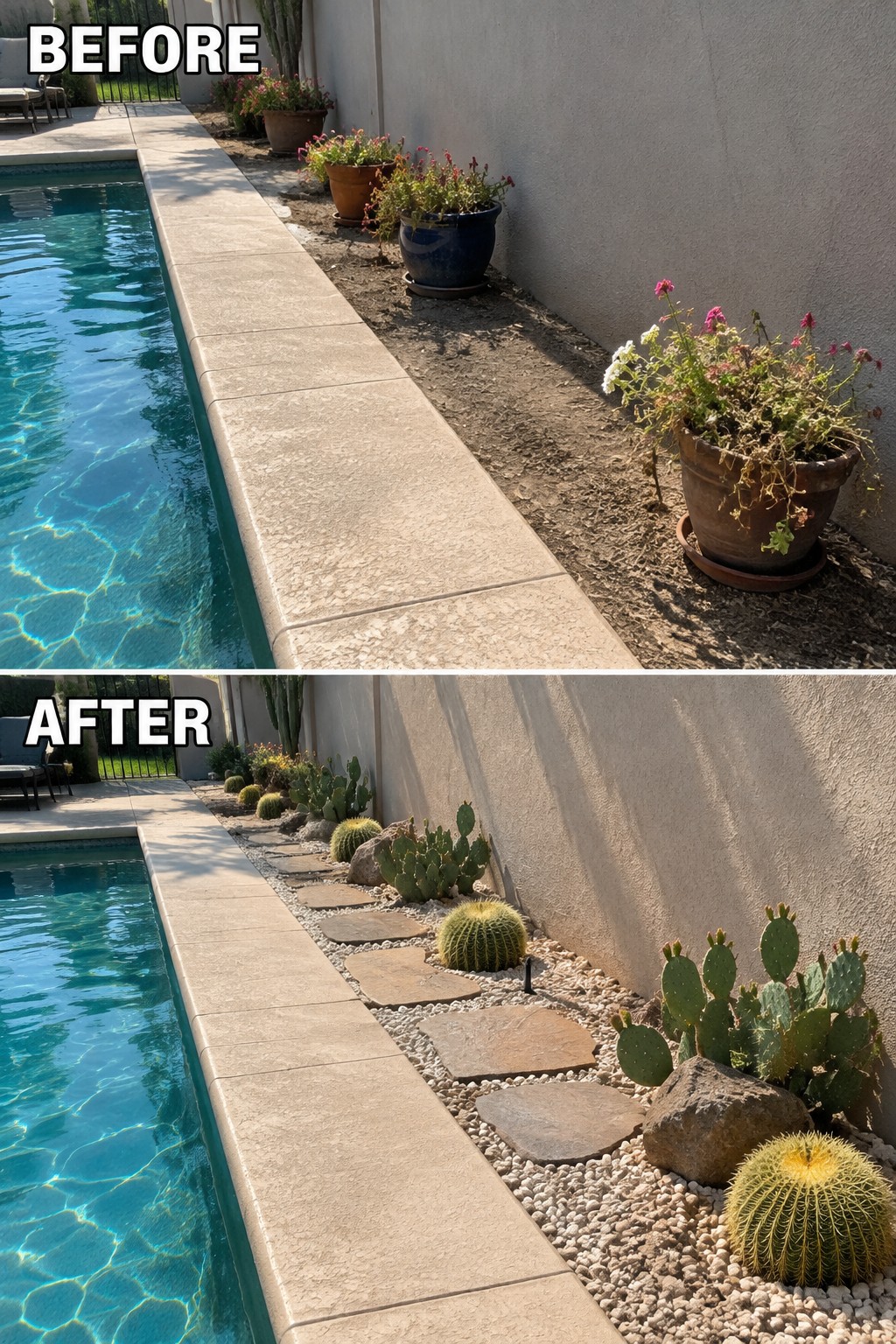
The narrow strip beside the pool looks more planned when the scattered pots and bare soil give way to gravel, stepping stones, and desert plants. This kind of simple layout suits a dry, sunny border where you want greenery without a lot of thirsty flowers.
Clear the area first, then use gravel to cover the soil and place a few broad pavers where you need a path. Choose cacti and other plants suited to your climate, and leave room for them to grow rather than packing the bed too tightly.
Replace An Overgrown Front Yard With A Desert Garden

A simple gravel-and-stone layout can turn a neglected front yard into a more planned desert garden. Here, the patchy lawn and overgrown shrubs give way to a clear paver path and beds of gravel, rocks, and cacti.
This idea works well in a sunny yard where grass is difficult to maintain. Clear the old growth first, then group drought-tolerant plants in defined areas and leave enough space around the path for easy access and growth.
Replace An Overgrown Fence Border With A Rock Garden
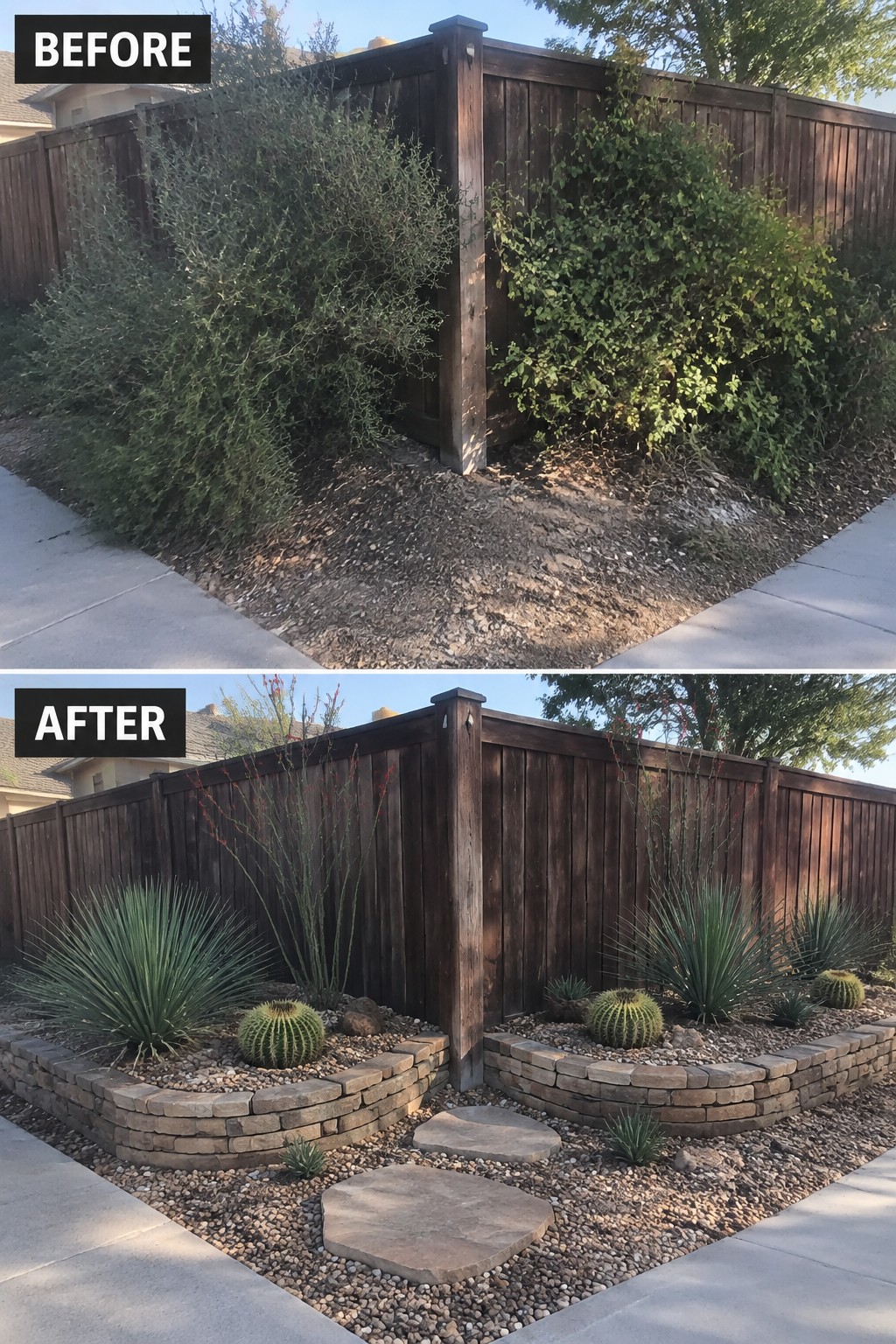
An overgrown fence line can make a yard feel neglected, even when the rest of the space is tidy. Clearing the shrubs and adding raised stone beds filled with gravel and desert plants gives the corner a clear shape and keeps the fence visible.
This approach works well along a side yard or property line where water-wise plants suit the climate. Keep enough room between plants for them to grow, and leave a simple path through the gravel so the beds are easy to reach and maintain.
Replace An Empty Bed With A Desert Rock Garden
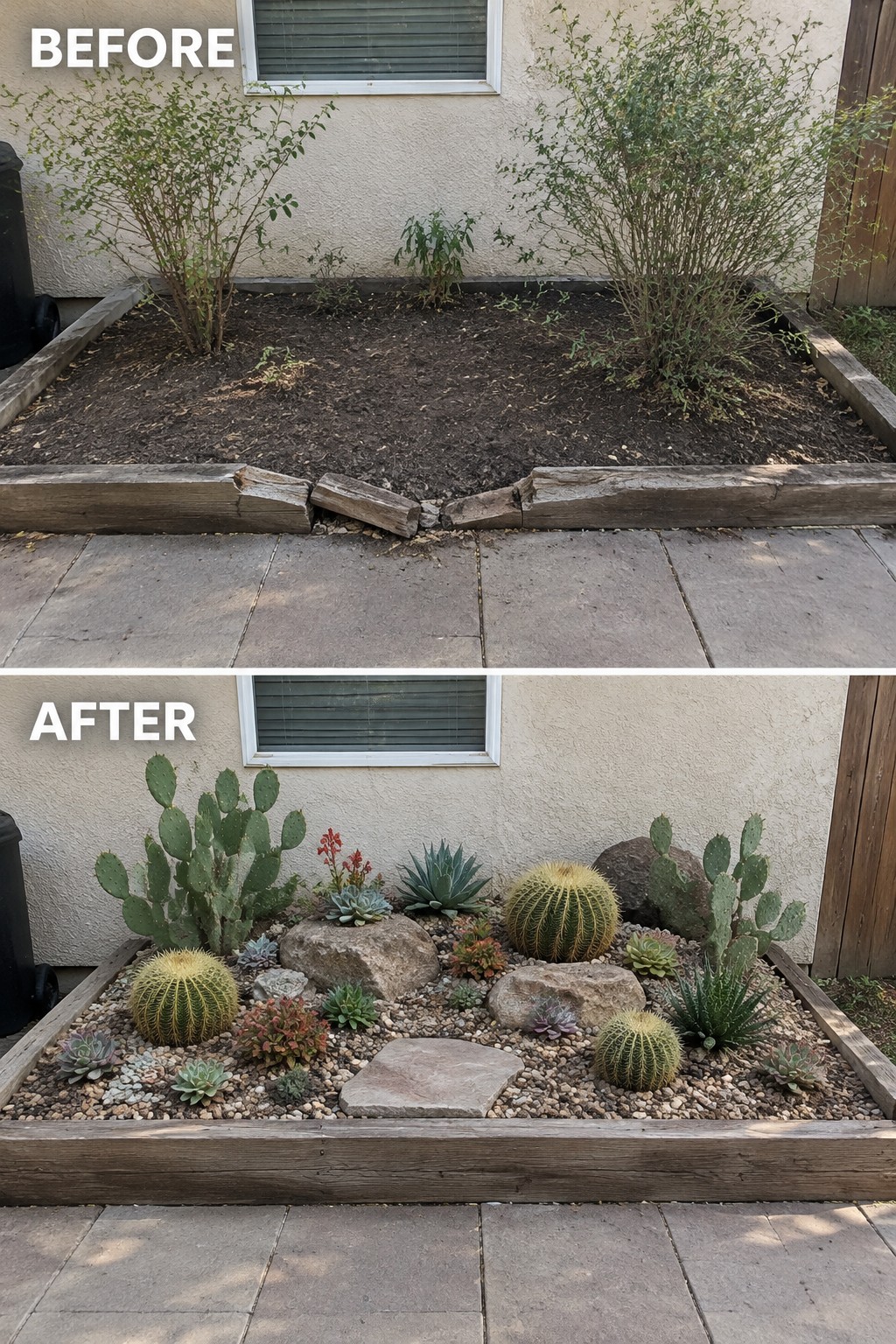
A bare, untidy bed can look more planned when you give it a simple rock-garden layout. Here, gravel and a few larger stones fill the space around cacti and succulents, replacing the sparse soil and scraggly shrubs.
This idea suits a small bed beside the house, especially where a dry, sunny planting makes sense. Clear out unwanted growth first, then arrange plants with enough room to mature and use gravel to cover the open soil. Keep the plant selection modest so the bed stays easy to care for.
Frequently Asked Questions
Q: How do I keep desert cacti from getting too much water in a rock garden?
A: Plant them in a gritty, fast-draining mix and avoid low spots where rain can collect. If your soil holds water, build a raised mound before adding the rocks and cacti.
Q: Can I grow desert cacti in a cold climate?
A: Yes, but choose varieties that tolerate your winters and give them excellent drainage. In especially wet or freezing areas, grow tender types in pots you can move under cover.
Q: What can I plant with cacti without making the garden look crowded?
A: Leave space around each cactus so its shape stands out, then fill a few gaps with low-water plants like sedum or small ornamental grasses. Too many different plants can make a rock garden feel busy.
Q: Do I need to water a cactus rock garden?
A: New plantings need occasional watering while their roots settle in. After that, water during long dry spells and let the soil dry fully between drinks.
