


Rock gardens can start to feel messy when stones, plants, and paths have no clear arrangement.
I find terraced beds especially useful on a slope because they create planting levels, help define the layout, and make it easier to tend each section.
With a little cleanup and thoughtful edging, even a bare or overgrown corner can feel more settled without changing the whole yard.
The difference is often in how the rocks guide the eye and give each plant room to stand out.
I’d save the approaches that suit your slope and sunlight, then adapt them to the space you have.
Add Terraced Beds To A Sloped Yard
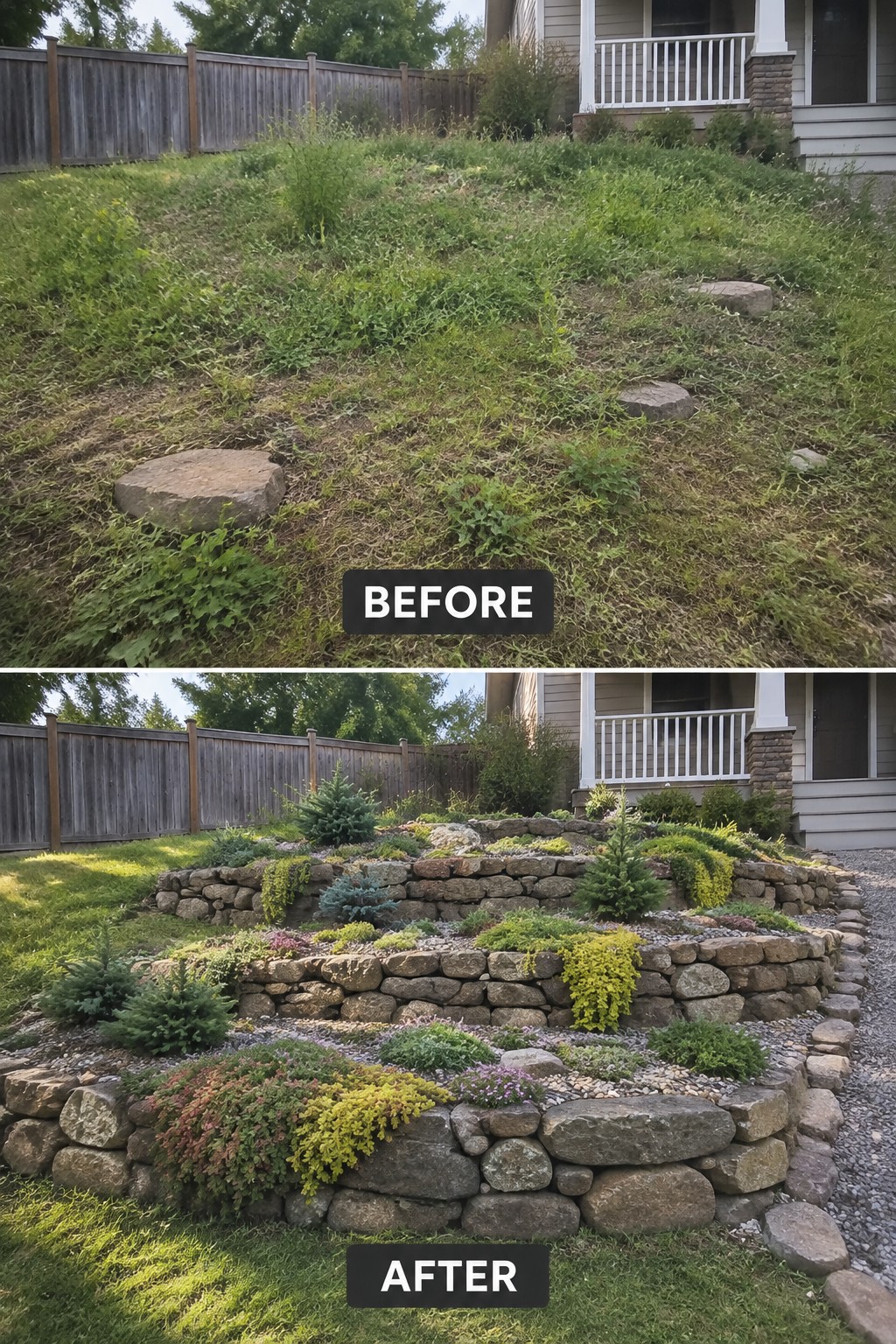
A bare, weedy slope can be hard to mow and difficult to plant. Low stone terraces turn it into a series of defined beds, giving plants room to grow while helping the yard feel more organized.
This approach works well on a hillside where a single flat bed would be impractical. Start by clearing the slope and planning sturdy retaining walls, then leave enough space between levels to plant and move around comfortably.
Create Defined Garden Beds In A Narrow Yard
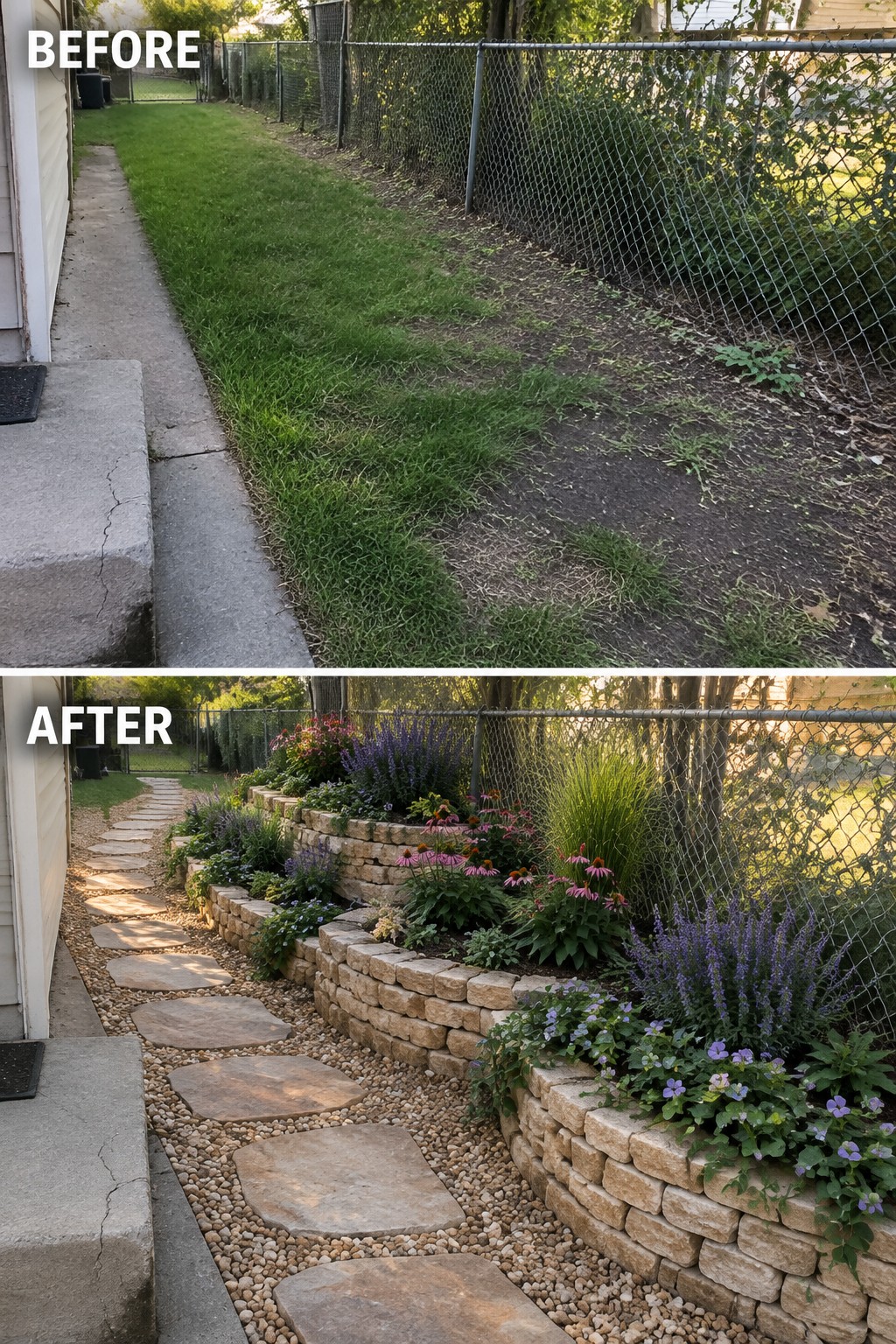
The bare strip beside the fence works better once it has clear planting beds and a simple path. Low stone retaining walls give the garden a tidy shape, while the stepping stones make it easier to walk through the space.
This idea suits narrow side yards where grass is patchy or hard to maintain. Keep the beds a manageable width and leave enough room along the path to pass comfortably.
Build Terraced Beds To Control A Sloped Yard

Terraced planting beds turn a bare, eroding slope into a garden with clear levels. Here, rows of large rocks hold back the soil, replacing the worn channel with planted areas that look more orderly and help slow runoff.
For a similar yard, start by checking how water moves down the slope, then plan sturdy retaining edges before adding plants. Choose varieties suited to the sun and soil, and leave enough room to maintain each bed.
Add Terraced Beds To Organize A Sloped Garden
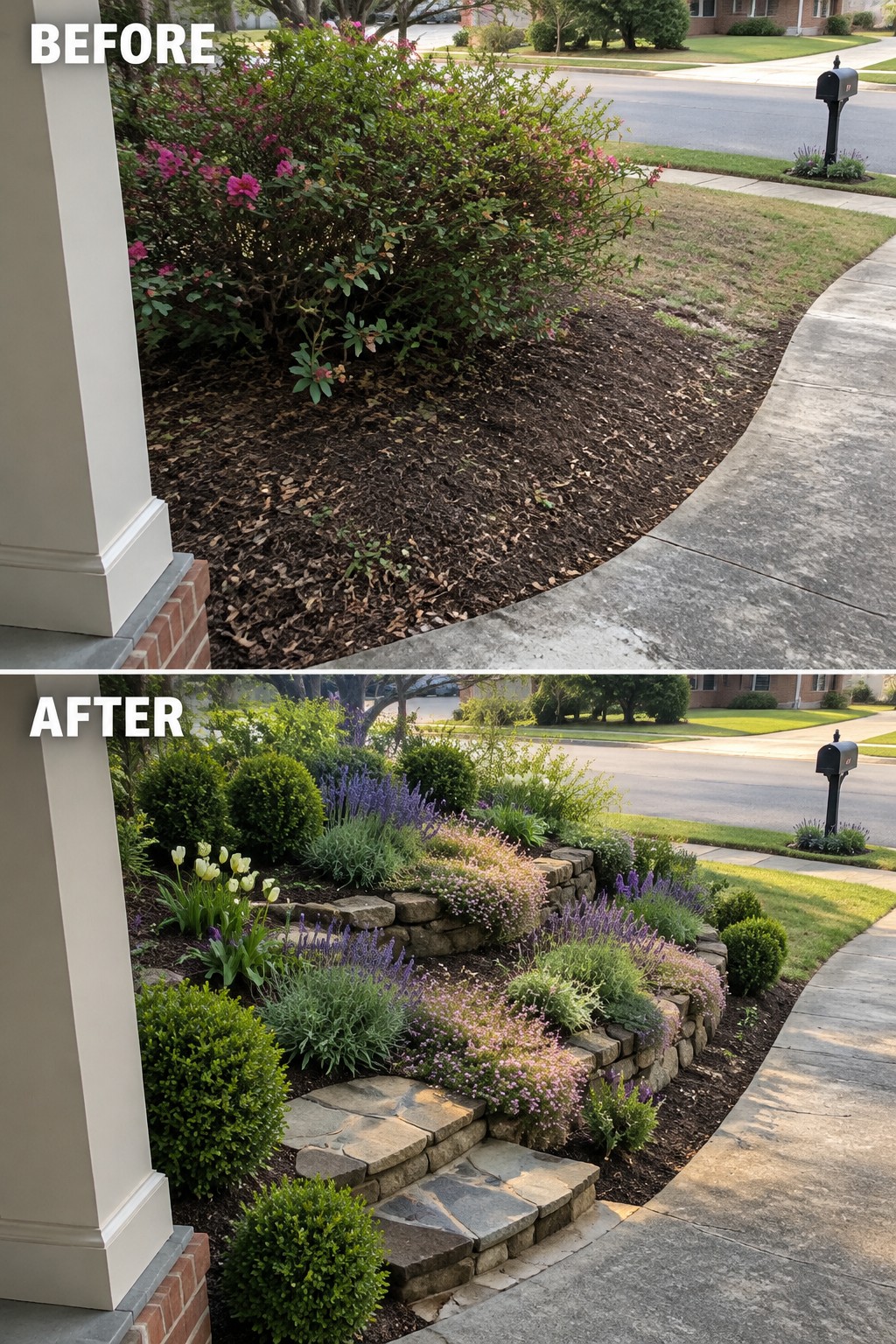
Terraced planting beds turn a broad, untidy garden area into smaller sections that are easier to plant and maintain. Here, low stone retaining walls replace a bare stretch of mulch and give the garden a clearer shape.
This idea works well on a slope or beside a walkway, where plants can otherwise spread into the path. Keep the walls low and leave enough room to reach each bed for weeding and watering.
Turn A Bare Slope Into A Planted Garden

A steep, mostly bare yard can be hard to maintain and may feel unfinished. Terraced retaining walls divide the slope into level planting beds, giving the garden a clear structure and making the plants easier to arrange.
This approach works well in narrow side yards or anywhere a slope limits planting options. Keep each bed deep enough for the plants you choose, and leave room to reach in for watering and upkeep.
Build Low Stone Walls To Organize A Shady Garden
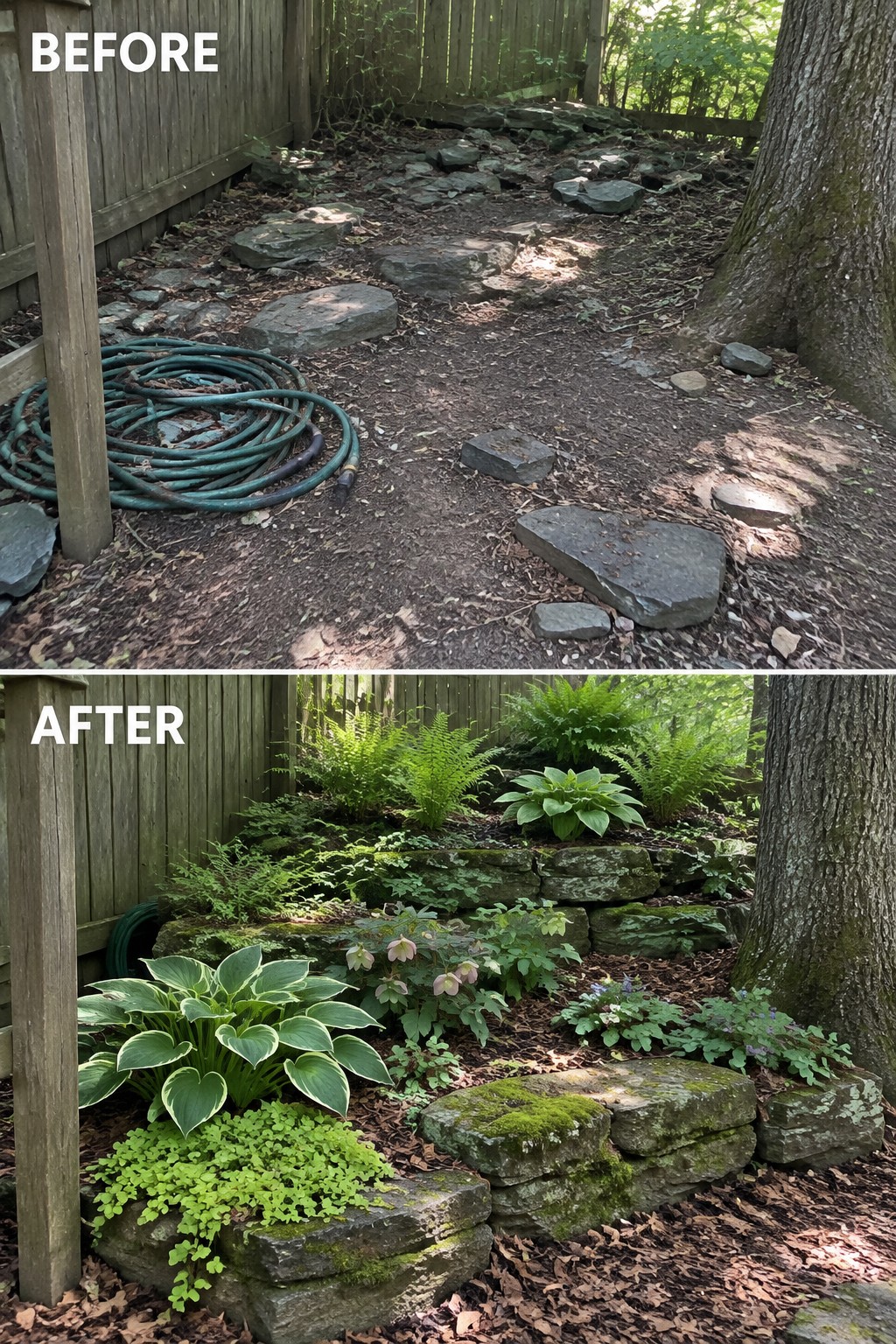
The loose stones and scattered path in this shady corner made the planting area feel unfinished. Low stone walls give the garden clear levels, so plants can fill the beds instead of competing with loose rocks for space.
This approach works well in a small yard with a tree or fence already limiting the layout. Stack stones into shallow beds, then choose shade-loving plants that will spread without hiding the walls. Keep enough open ground for a simple path through the area.
Build A Terraced Rock Garden In A Small Patio
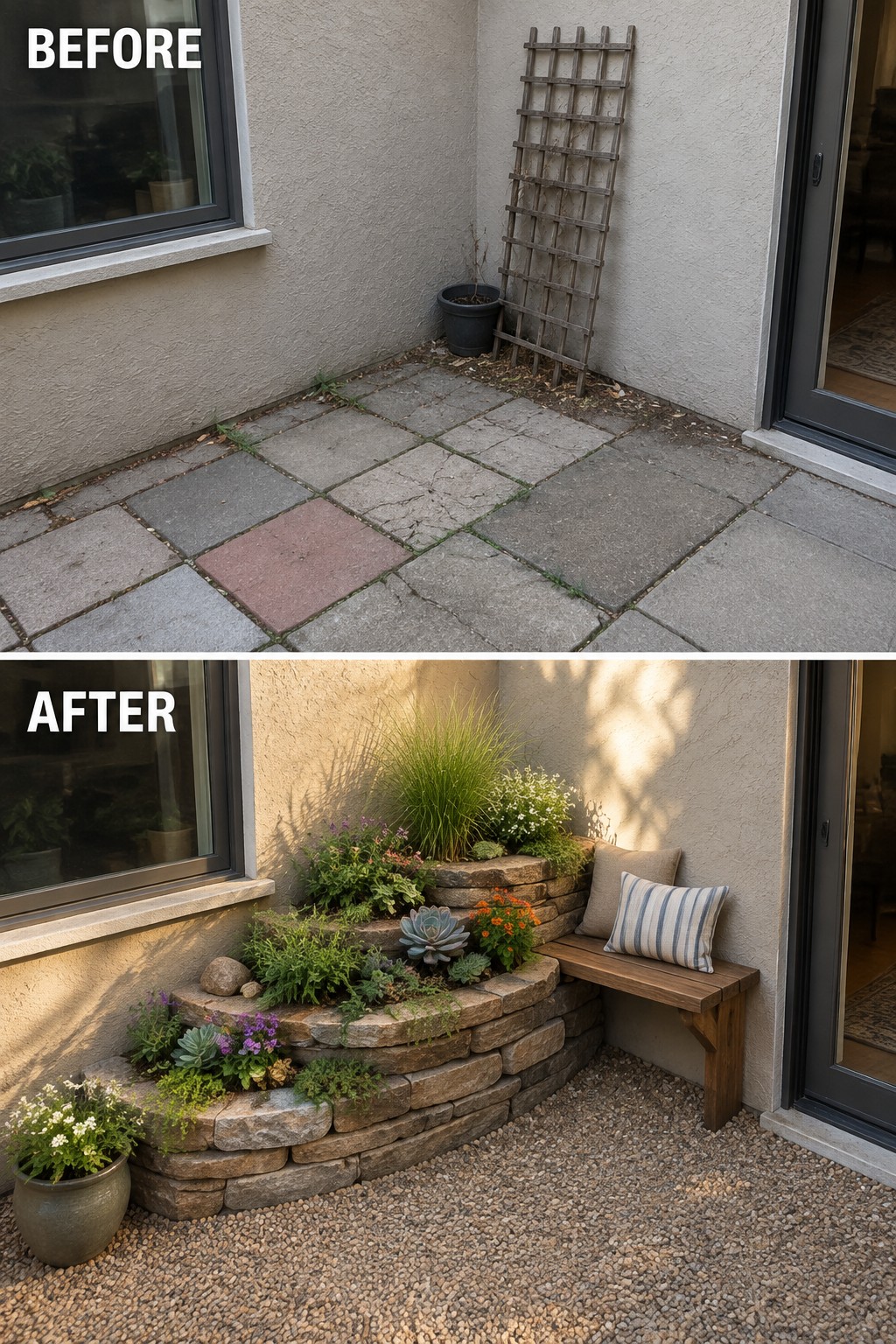
The empty paved corner works better as a garden once the planting has its own levels. A low stone retaining wall creates room for plants without spreading them across the patio, and the finished gravel surface is easier to keep tidy than the old joints between the pavers.
This approach suits a small courtyard or narrow side yard where there isn’t much space for a conventional bed. Keep the wall low enough to reach the plants, and leave a clear path past any nearby seating.
Add Stone Retaining Walls To A Sloped Garden
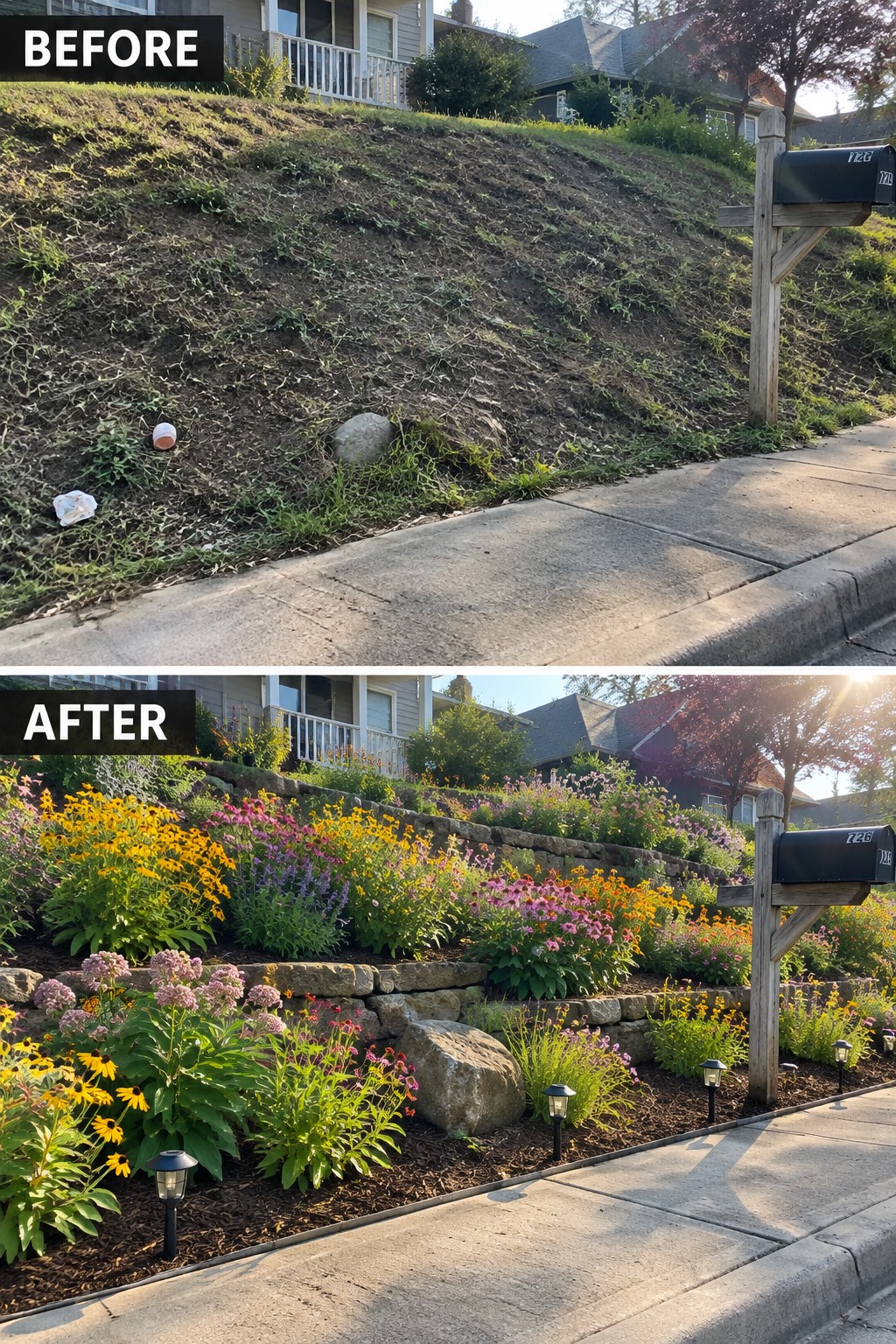
The bare hillside becomes easier to manage once stone retaining walls divide it into planting levels. The terraced beds give flowers a defined place to grow and help keep soil from washing down toward the sidewalk.
This approach works well on a steep front yard where a single planting bed would be difficult to maintain. Keep each level accessible for weeding, and choose plants suited to the amount of sun and water the slope receives.
Build A Stone Garden Into A Sloped Yard
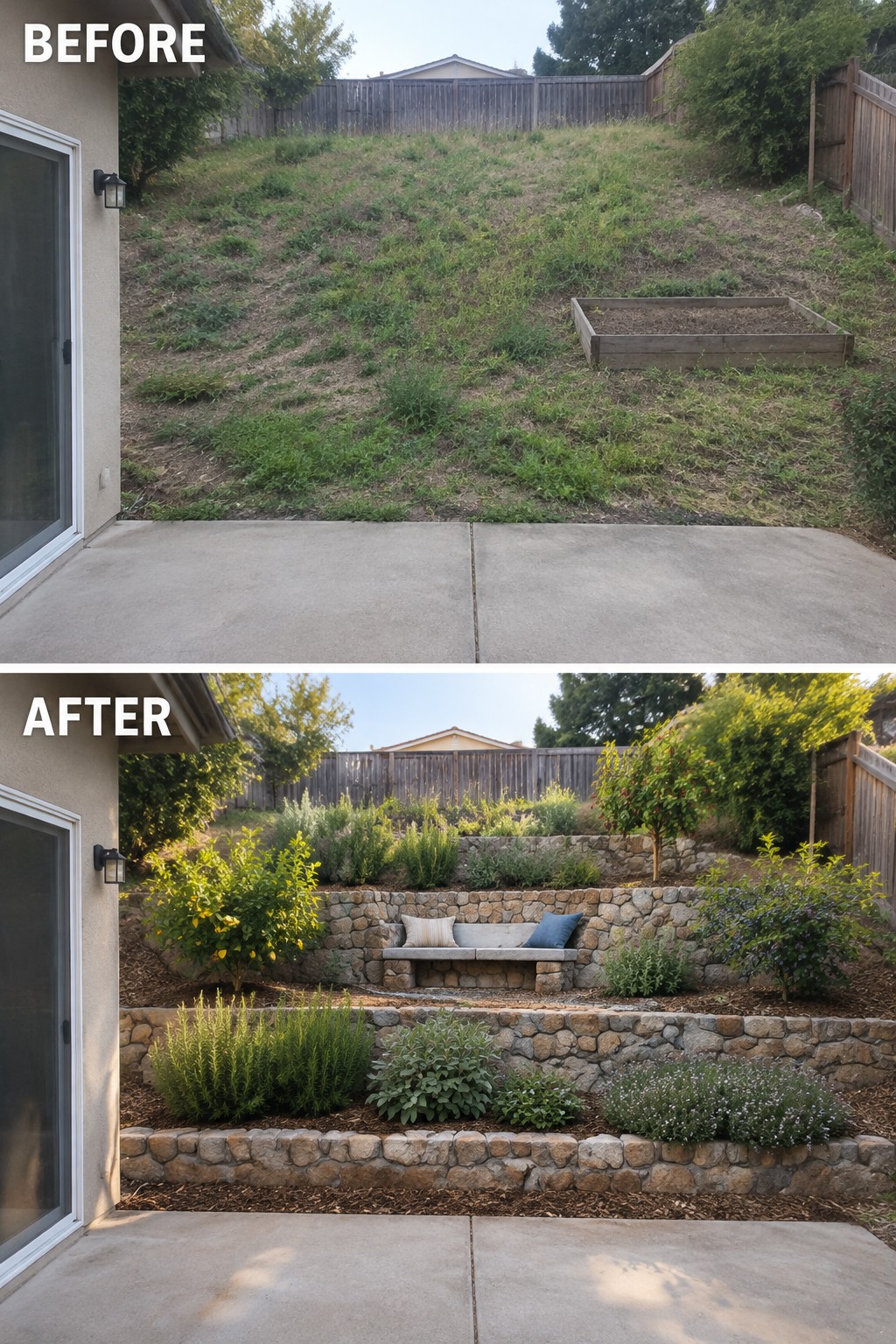
A steep, weedy slope can be hard to maintain and difficult to use. Low stone retaining walls divide it into level planting areas, turning the bare hillside into a garden with a clear structure and a small spot to sit.
This approach works well when a yard has enough slope to benefit from separate planting levels. Start by planning the wall heights and drainage, then choose sturdy, drought-tolerant plants that suit each bed. Keep paths or access points in mind so the terraces are practical to tend.
Plant A Sloped Yard In Layers

The bare slope is hard to maintain and leaves little room for plants to take hold. Low stone retaining walls create level beds, so the hillside feels organized and has space for a rock garden.
This approach works well on a steep yard where a flat lawn would be difficult to keep. Use sturdy stones to hold each bed in place, and leave clear paths or gaps for water to drain. Then choose plants suited to the local climate and the amount of sun the slope gets.
Add Planting Pockets To A Rocky Slope
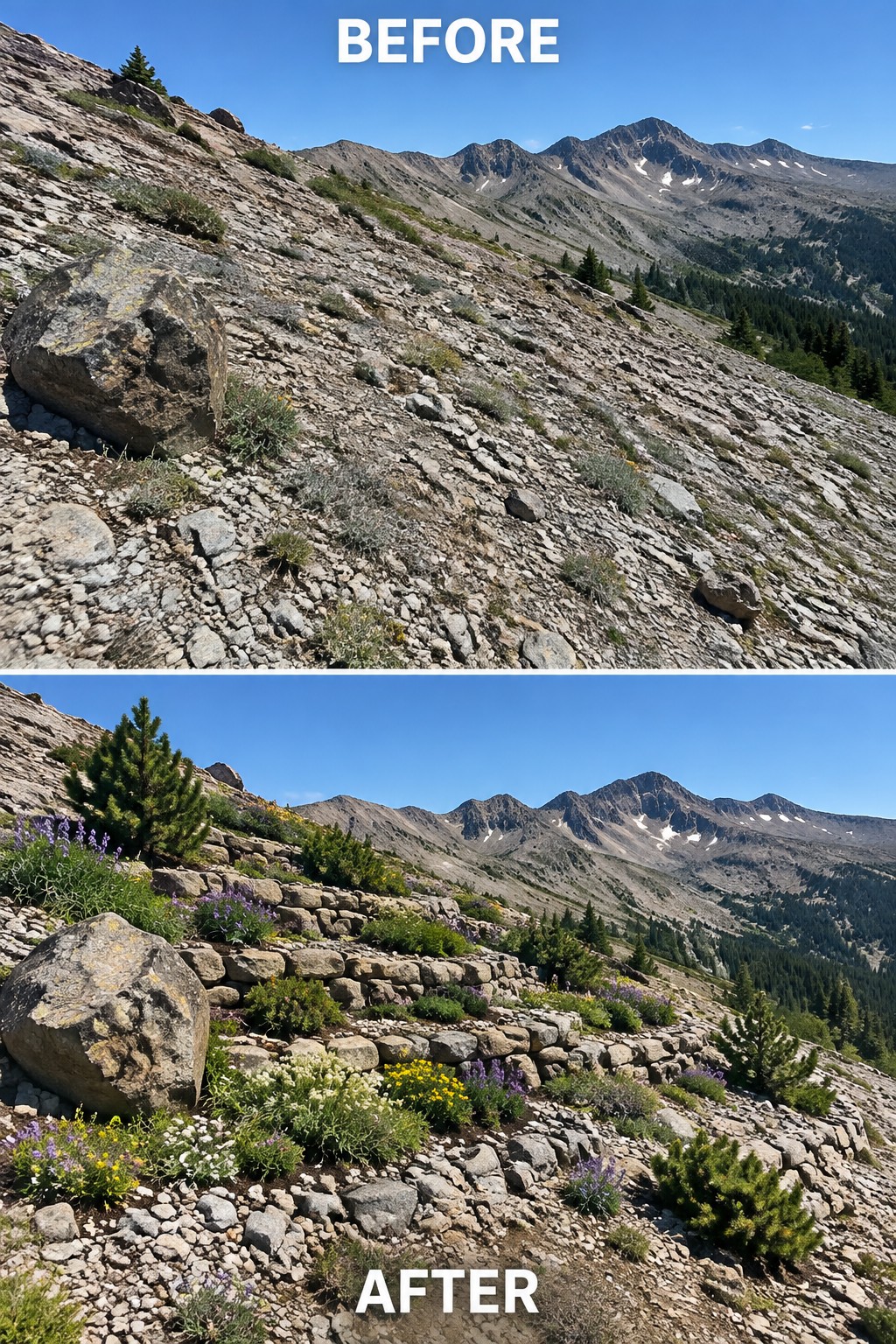
A rocky hillside can look bare when plants are scattered without a clear layout. Here, low stone terraces create small planting pockets, turning the loose slope into a more organized rock garden.
This approach suits a sunny yard where a steep grade makes planting difficult. Work with the slope by building short, stable sections, then choose hardy plants suited to the soil and exposure. Leave enough space between beds to keep the ground from feeling crowded.
Turn A Runoff Channel Into A Rock Garden
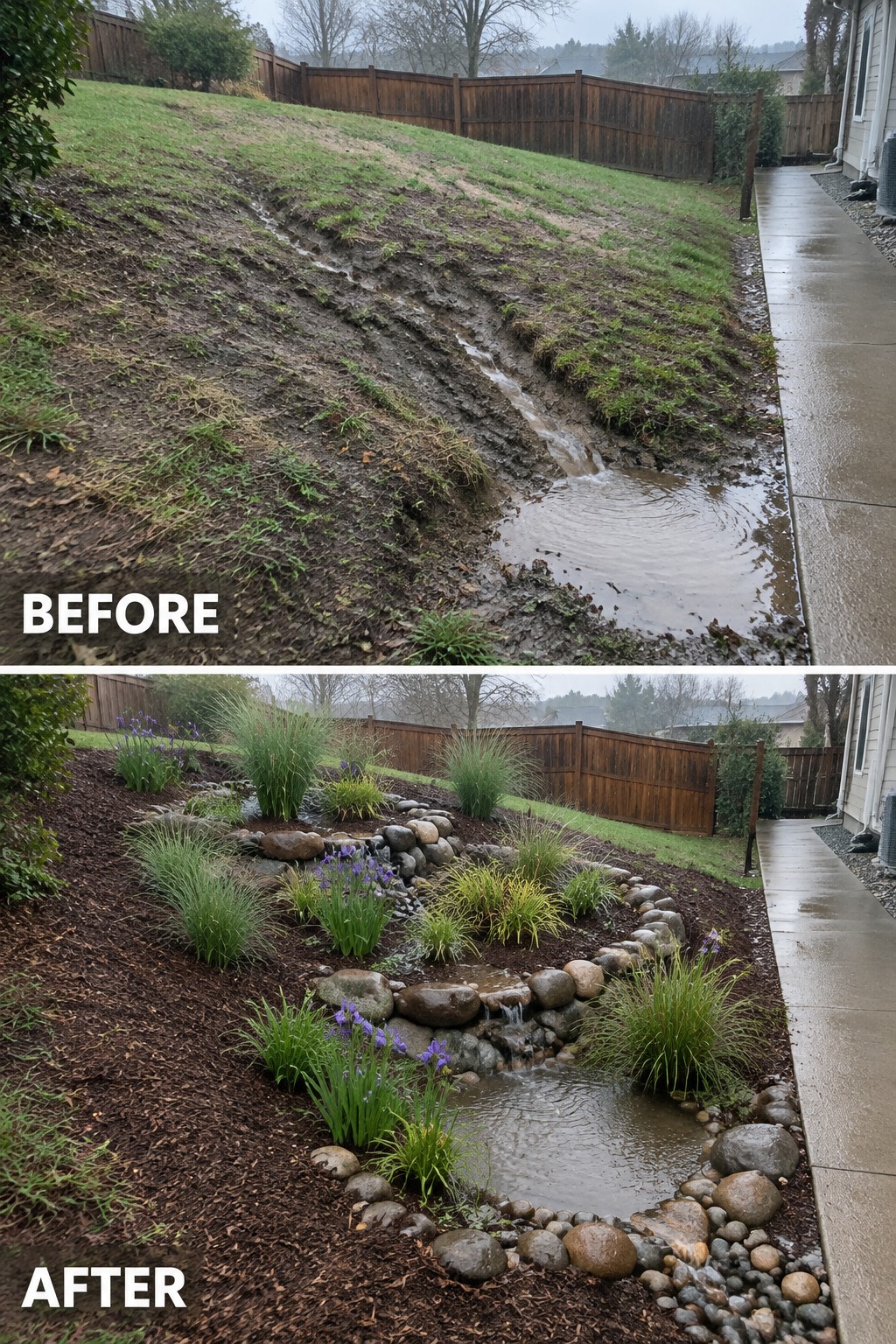
A shallow channel can carry water down a slope without leaving a muddy rut behind. Here, rounded stones shape the path, and small planted areas help the hillside look intentional instead of washed out.
Use this approach where rainwater naturally runs downhill, but make sure the channel can handle heavy flow and direct water away from the house. Choose sturdy stones and plants suited to wet and dry spells; a decorative stream should not block the yard’s drainage.
Replace Raised Beds With Terraced Stone Planting
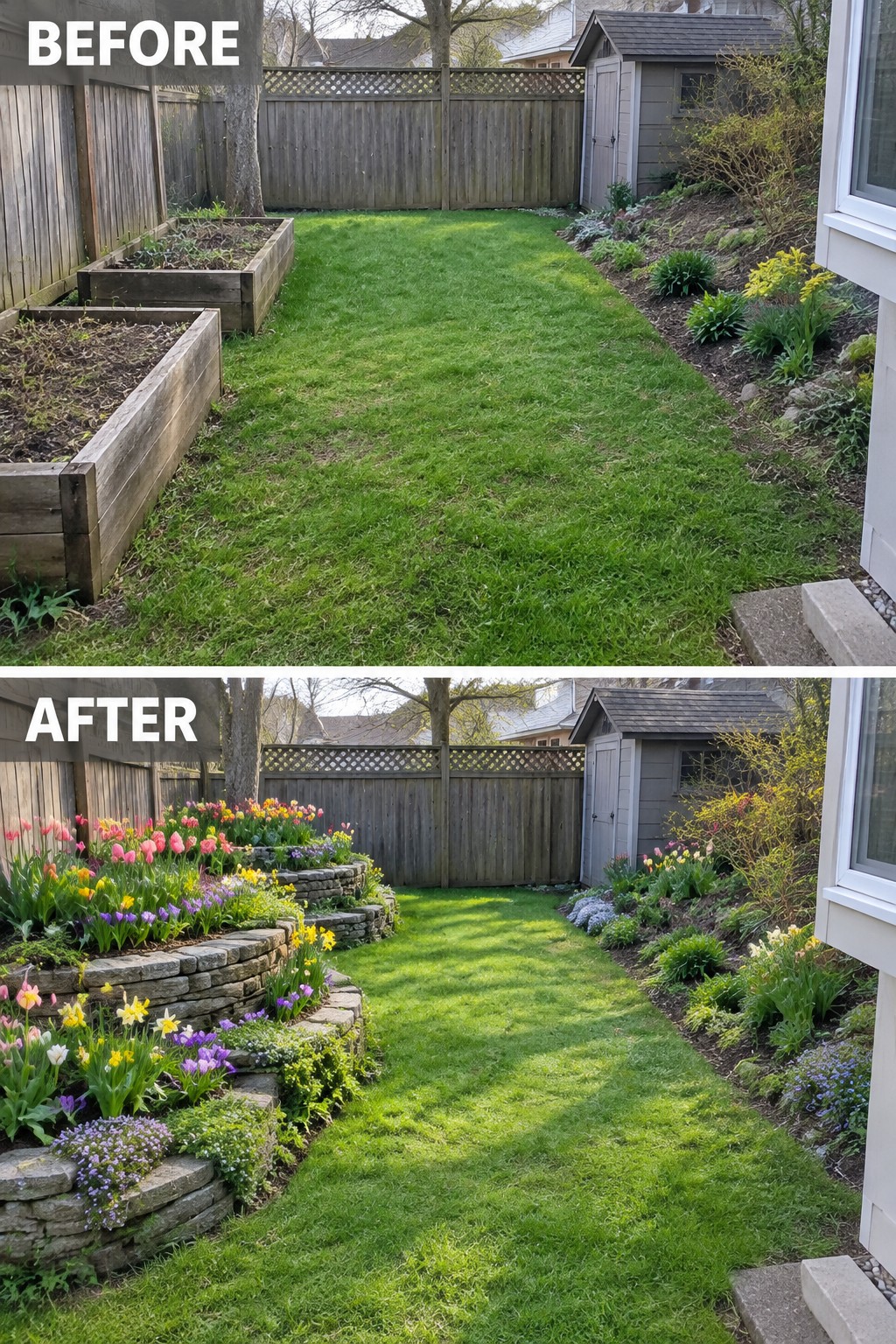
The wooden raised beds take up much of this narrow yard, while the after uses low stone terraces to make the planting feel more connected to the slope. Flowers fill the tiers, but the lawn remains open down the middle.
This approach works well in a small side yard where a straight bed would feel bulky. Build low retaining walls that follow the slope, and keep each planting tier narrow enough to leave a clear path or lawn area.
Add Low Stone Borders To A Narrow Garden Bed
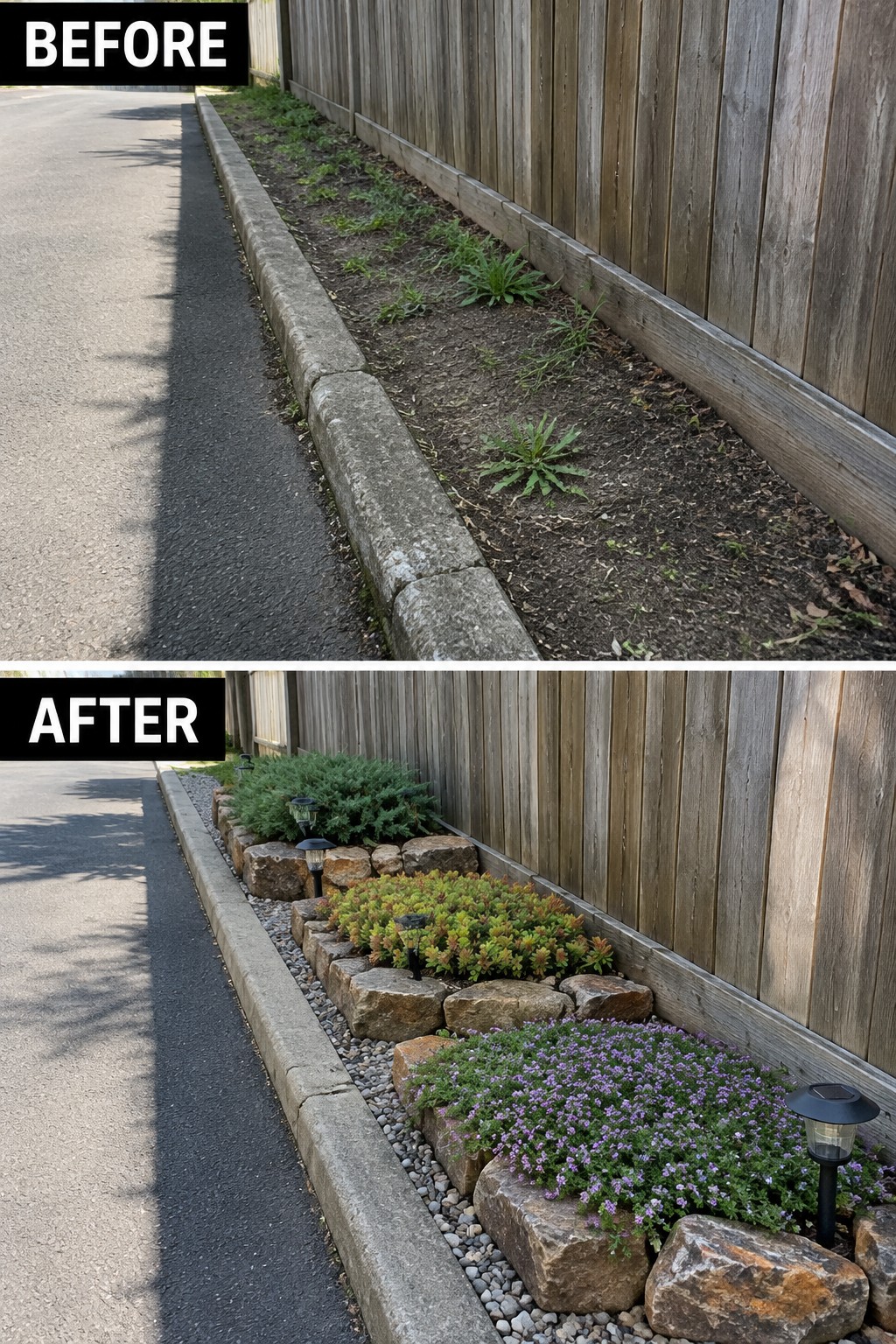
The narrow strip beside a fence looks more planned when the planting is divided into small sections with low stone borders. Here, the bare soil becomes a rock garden with distinct groups of plants instead of one long, uneven bed.
This idea works well in side yards where space is limited. Set the stones low enough to keep the bed from feeling cramped, and leave a clear path along the edge so the garden is easy to maintain.
Turn A Bare Poolside Slope Into A Planted Garden
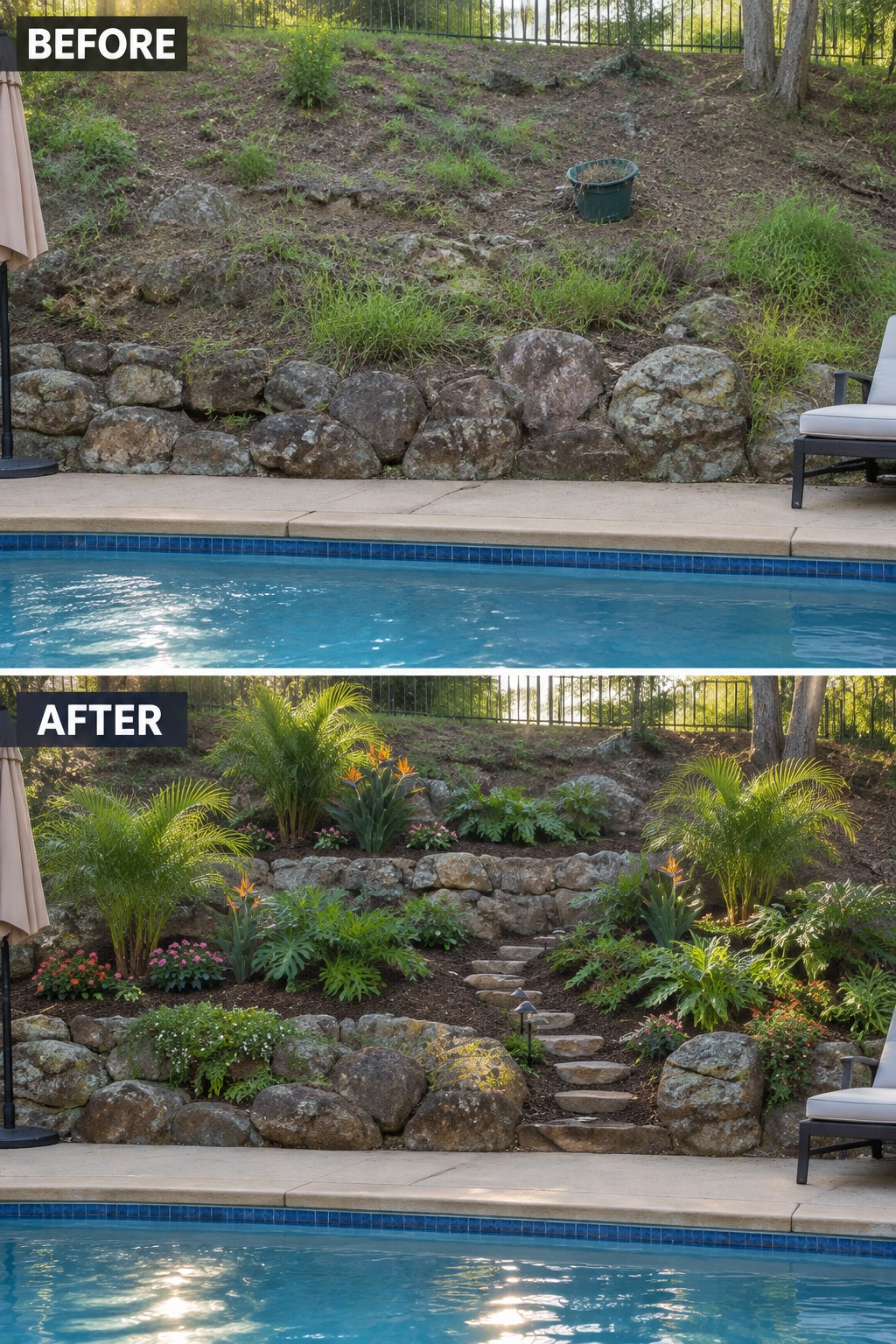
A bare, uneven slope beside a pool can look unfinished and be hard to maintain. Low stone terraces give the ground a clearer shape, while a simple set of steps makes the hillside easier to reach. Planting the beds then helps the rockwork feel like part of the garden.
This idea works well where a sloped yard meets a patio or pool deck. Keep the retaining walls low and make sure the steps are wide and stable enough for regular use. Start with plants suited to the site, then leave enough room for them to grow.
Turn A Rocky Slope Into A Planted Garden
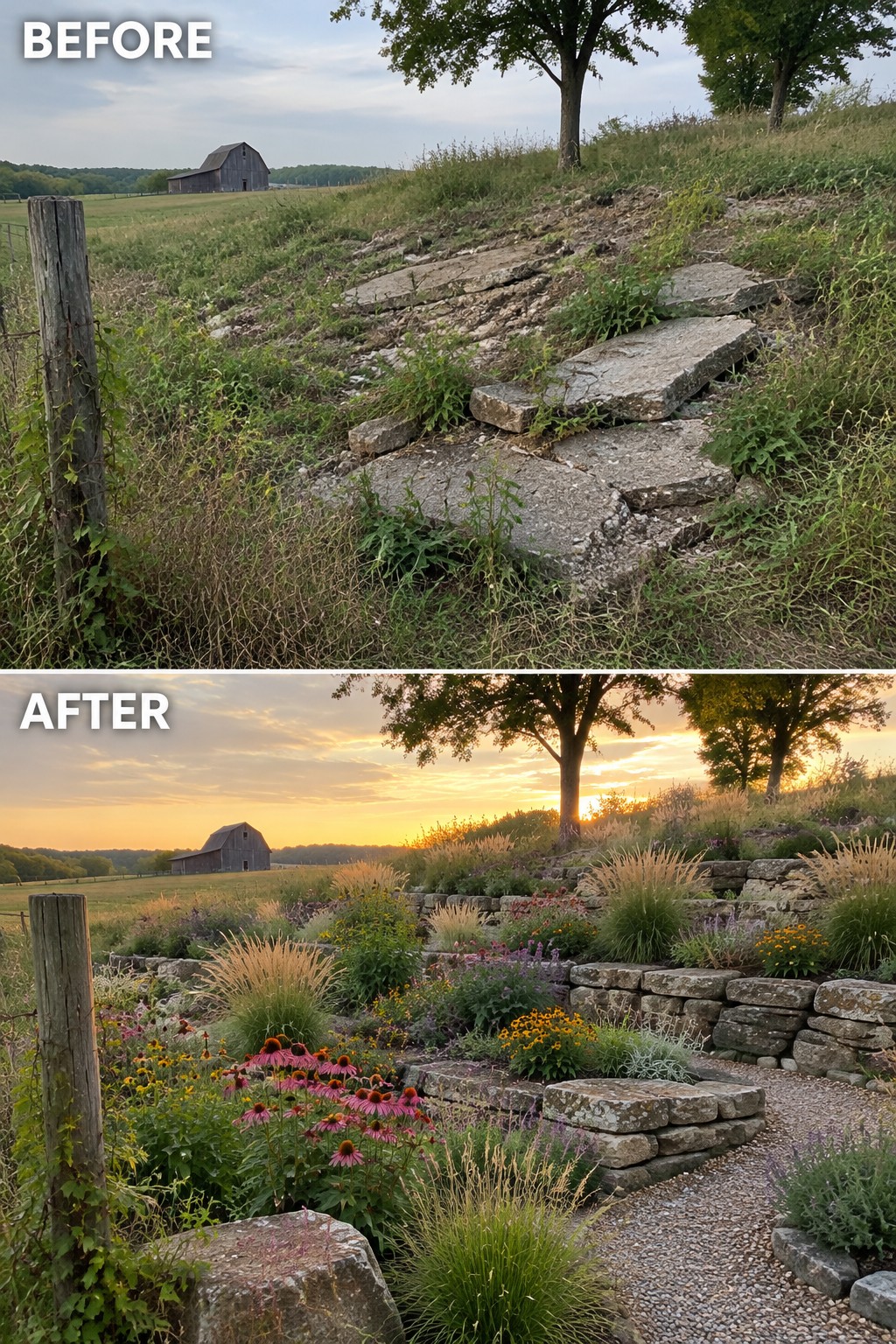
Loose stones and weeds can make a slope look neglected and difficult to use. Adding low stone retaining walls gives the garden clear levels, while flowers and grasses fill the planting areas and help the rocky ground feel more intentional.
This approach works well on sloped yards where a flat lawn would be hard to maintain. Start by clearing unwanted growth, then plan stable terraces and a path that leaves room to move between them. Choose plants suited to the slope’s sun and soil, and avoid piling stone walls higher than they can safely support.
Replace A Bare Wall With Terraced Planting Beds

The blank concrete wall left little room for a garden, so adding low stone terraces gives the yard a clear planting structure. The finished beds turn that unused strip into a layered rock garden, with plants set at different heights instead of crowded along the ground.
This idea works well when a fence or retaining wall makes a backyard feel plain. Keep the terraces low enough to tend comfortably, and leave enough space between them for plants to grow without blocking access.
Create Stone-Lined Planting Beds Along A Pond
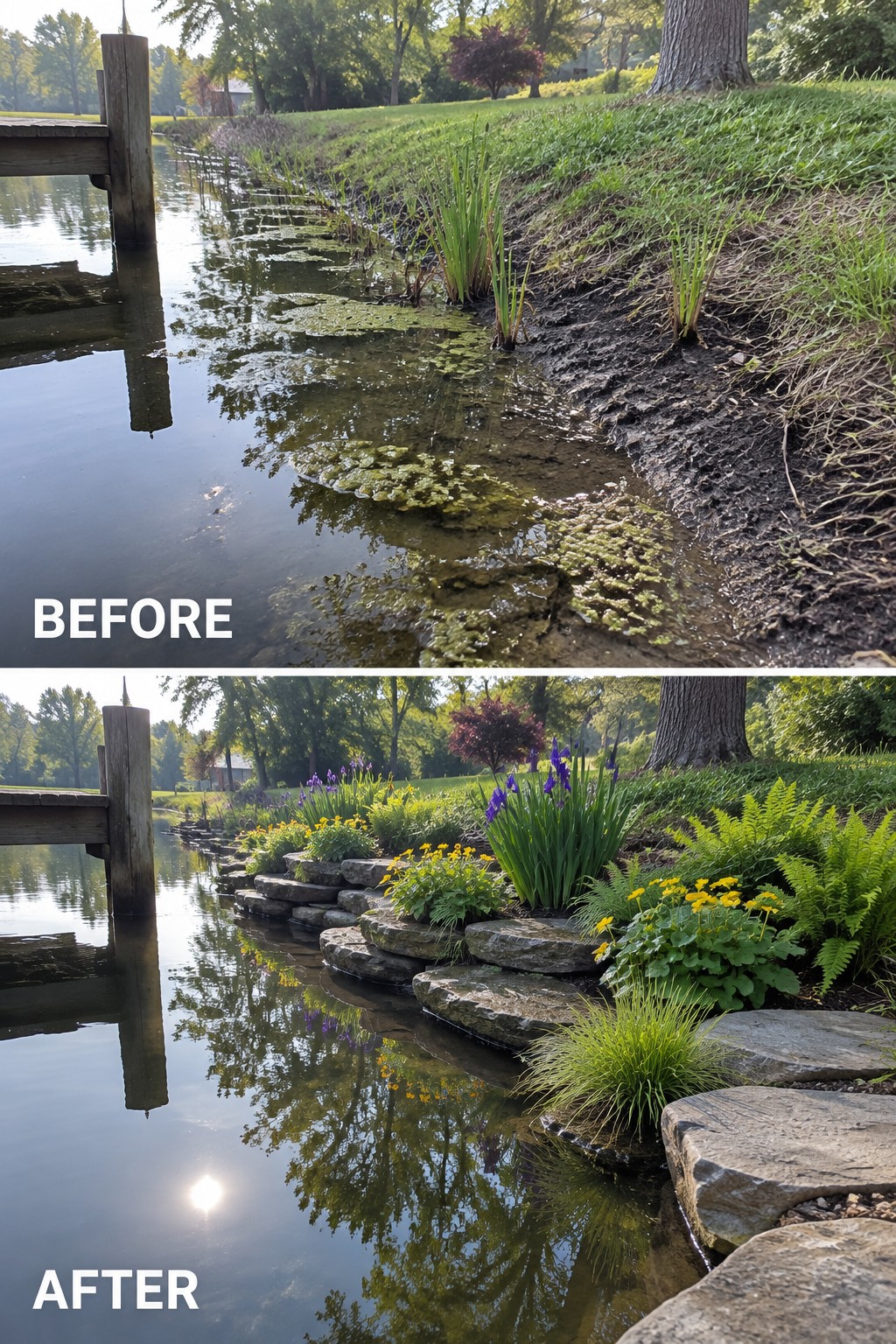
The bare pond edge becomes a planted border with low stone tiers. This gives the sloped bank a clear shape and makes room for plants without letting the edge look overgrown.
For a similar spot, use stones to hold the soil in short sections rather than building one tall wall. Choose plants suited to damp conditions near the water, and leave enough room to reach the pond edge for maintenance.
Frequently Asked Questions
Q: What’s the best way to keep soil from washing out of terraced rock garden beds?
A: Set larger stones firmly at the front of each bed and tuck soil behind them. A layer of gravel beneath the soil can help water drain without carrying the planting mix downhill.
Q: Which plants work well in a sunny rock garden with shallow soil?
A: Look for low-growing plants that handle dry conditions, such as creeping thyme, sedum, or small ornamental grasses. Plant them in pockets with enough soil for their roots rather than filling every gap with gravel.
Q: Can I build terraced planting beds on a slope without hiring a landscaper?
A: Small terraces are manageable as a DIY project if the slope is gentle and the stones are easy to move. For a steep hillside or a tall retaining wall, get advice before digging so the beds stay stable.
Q: How do I keep a rock garden from looking bare in winter?
A: Mix evergreen ground covers with plants that add texture after flowering, such as ornamental grasses. A few well-placed boulders also give the garden structure when most plants have died back.
