

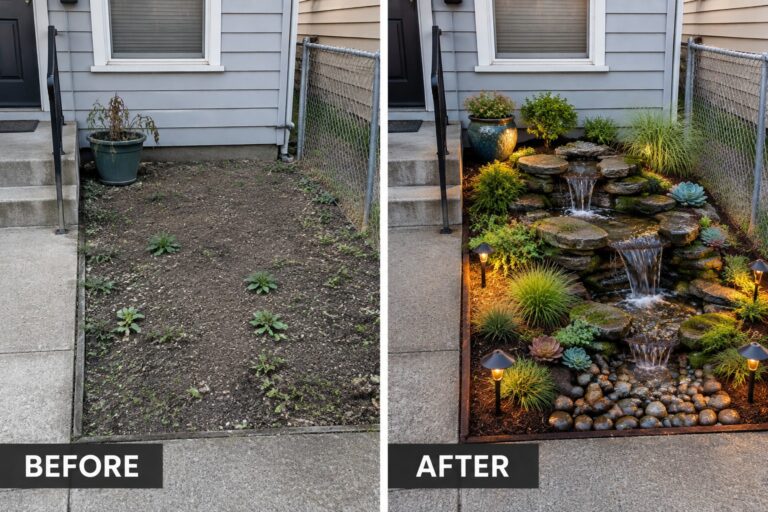
A rock garden can feel unfinished when the stones, plants, and paths lack a clear arrangement, even if each element is attractive on its own.
I like how a small water feature can give the space a natural focal point while adding gentle movement among the rock and greenery.
Good layout matters too, since thoughtful edging, planting, and pathways help the garden feel cared for without making it look overly planned.
The changes can be subtle, but seeing a quiet corner take shape into a more balanced part of the yard is satisfying.
I’d save a few of these ideas to adapt to the slope, light, and space available at home.
Turn A Bare Yard Into A Stone Water Feature

A simple rock waterfall gives a small, unused garden bed a clear focal point. Here, the bare soil becomes a layered stone feature with flowing water, making the narrow space feel planned rather than forgotten.
This idea can suit a side yard where there is room for a compact pondless or recirculating pump setup. Keep the rocks scaled to the area and leave enough space around the feature for plants and maintenance.
Turn An Overgrown Slope Into A Rock Garden

Replacing a scruffy slope with a stone water feature gives the yard a clear focal point and makes the uneven ground feel planned. Here, the rocks shape a small stream, while the water adds movement without needing a large pond.
For a similar garden, start by clearing the slope and planning how water will flow before choosing stones and plants. Keep the stream scaled to the space, and make sure the area is accessible for maintenance.
Create A Small Rock Garden Around A Water Feature

The empty gravel corner becomes a more useful garden focal point with a tiered fountain and a circular bed of dark stones. The water feature gives the small space a clear purpose, while the gravel keeps the layout simple.
This idea works well in a narrow courtyard or other spot where a full garden bed would be difficult to maintain. Choose a fountain that fits the space, then leave enough room around it to walk and tend the plants.
Add Structure To A Narrow Side Yard
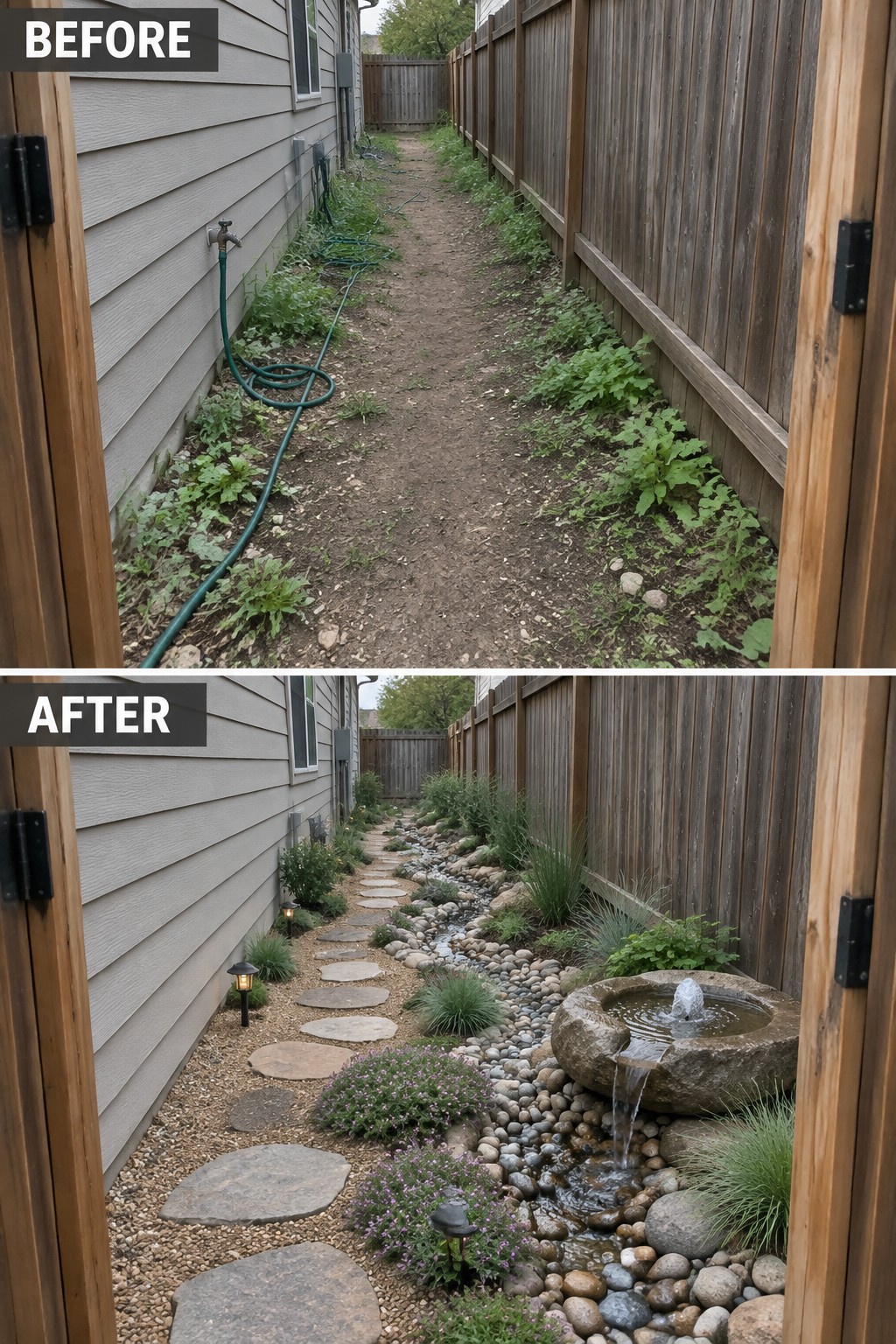
A neglected side yard can become a more useful garden path when you give it a clear route and a defined surface. Here, stepping stones and gravel replace bare dirt, while a dry stream of rounded stones gives the narrow space a planned look.
For a similar yard, keep the path wide enough to walk comfortably and use stone in one simple, consistent way. A small rock garden can work well beside a house or fence, but leave room for plants to grow and avoid crowding the walkway with too many features.
Add A Pond To Give A Bare Yard A Focal Point

A patchy lawn can feel unfinished, especially when there’s no clear feature to organize the space. Replacing the middle of this yard with a small pond and stone waterfall gives it a purpose, while the rocks create a natural edge that fits the garden.
For a similar project, choose a pond size that leaves room to move around it and keep the surrounding planting simple. A waterfall adds movement and sound, but plan for access to the pump and regular upkeep before you build.
Build A Raised Garden Bed Around A Small Waterfall
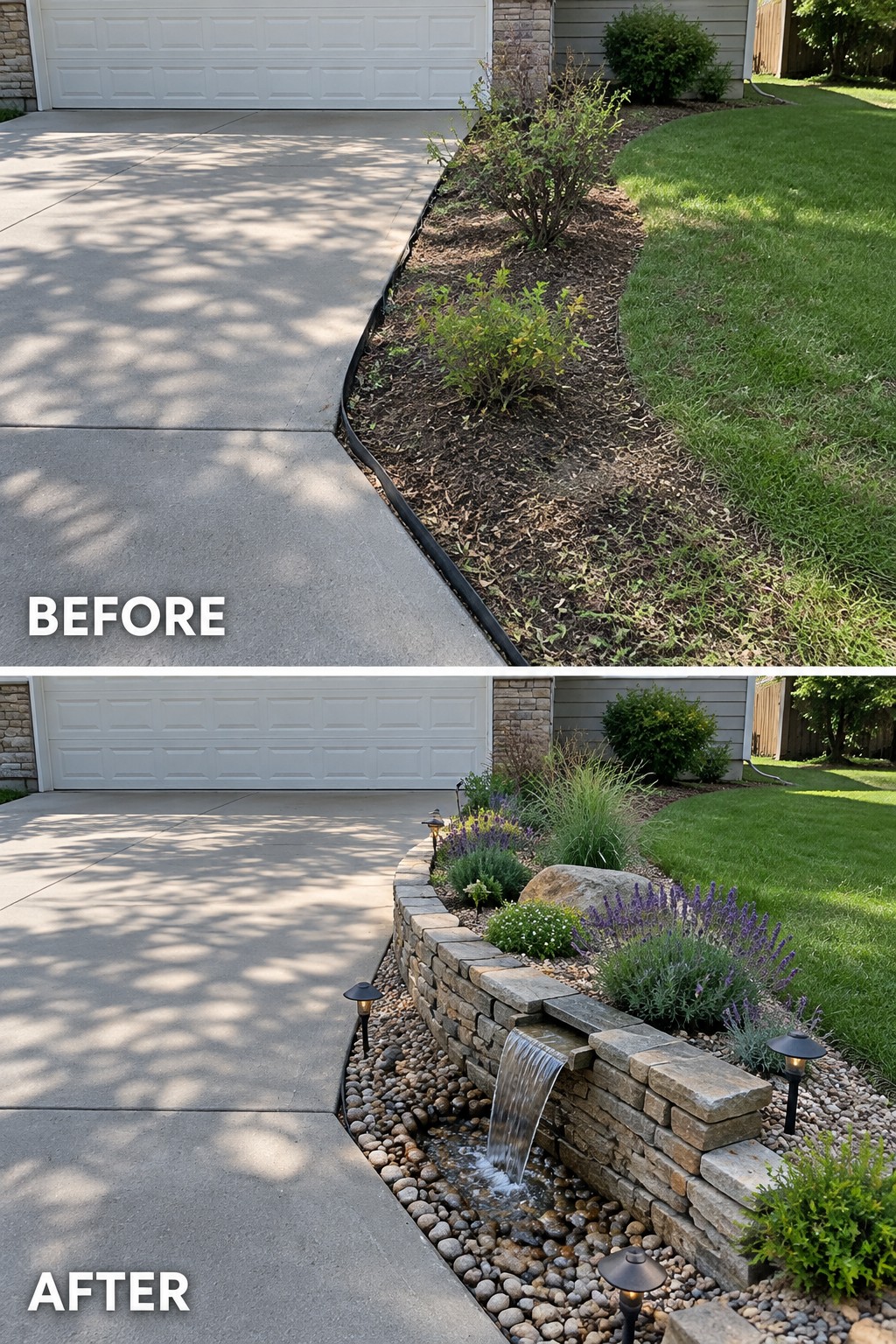
A narrow strip beside the driveway can feel messy when it has only a few scattered shrubs. A low stone retaining wall gives the planting bed a clear shape, while a small waterfall makes it the garden’s focal point.
This idea works well along a driveway or sloped lawn, where a raised bed can help contain the planting area. Keep the water feature modest and leave room for the plants to grow, so the stones and greenery do not crowd the path.
Build A Rock Garden Into A Steep Slope
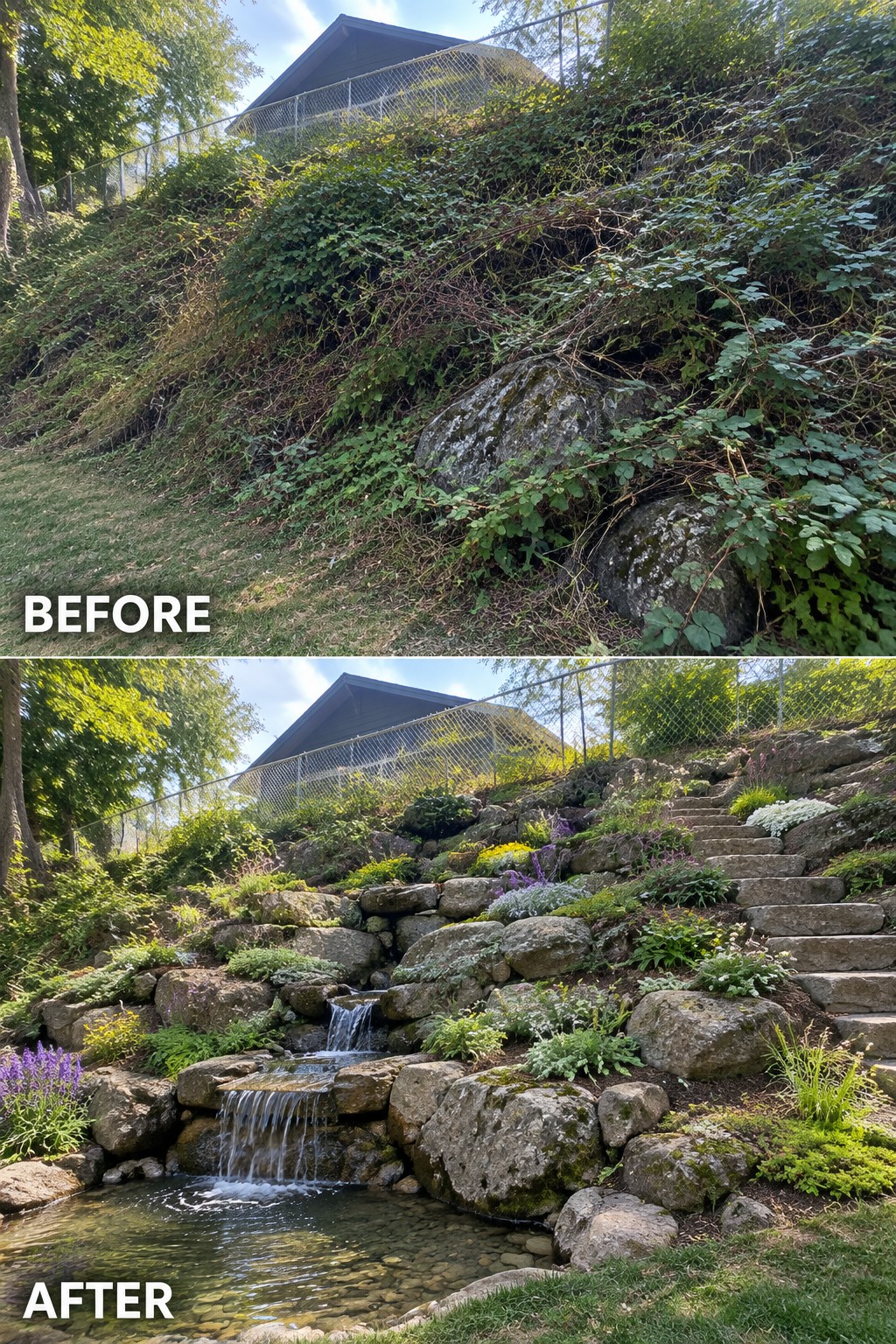
Replacing tangled overgrowth with stone steps and a small cascading water feature turns a difficult slope into a garden with a clear purpose. The rocks help define the hillside, while the water gives the space a focal point.
This idea works well on a sloped yard that is hard to mow or walk through. Plan stable steps and proper drainage before adding plants or a water feature, and leave enough room to move safely between levels.
Replace Overgrowth With A Defined Rock Garden
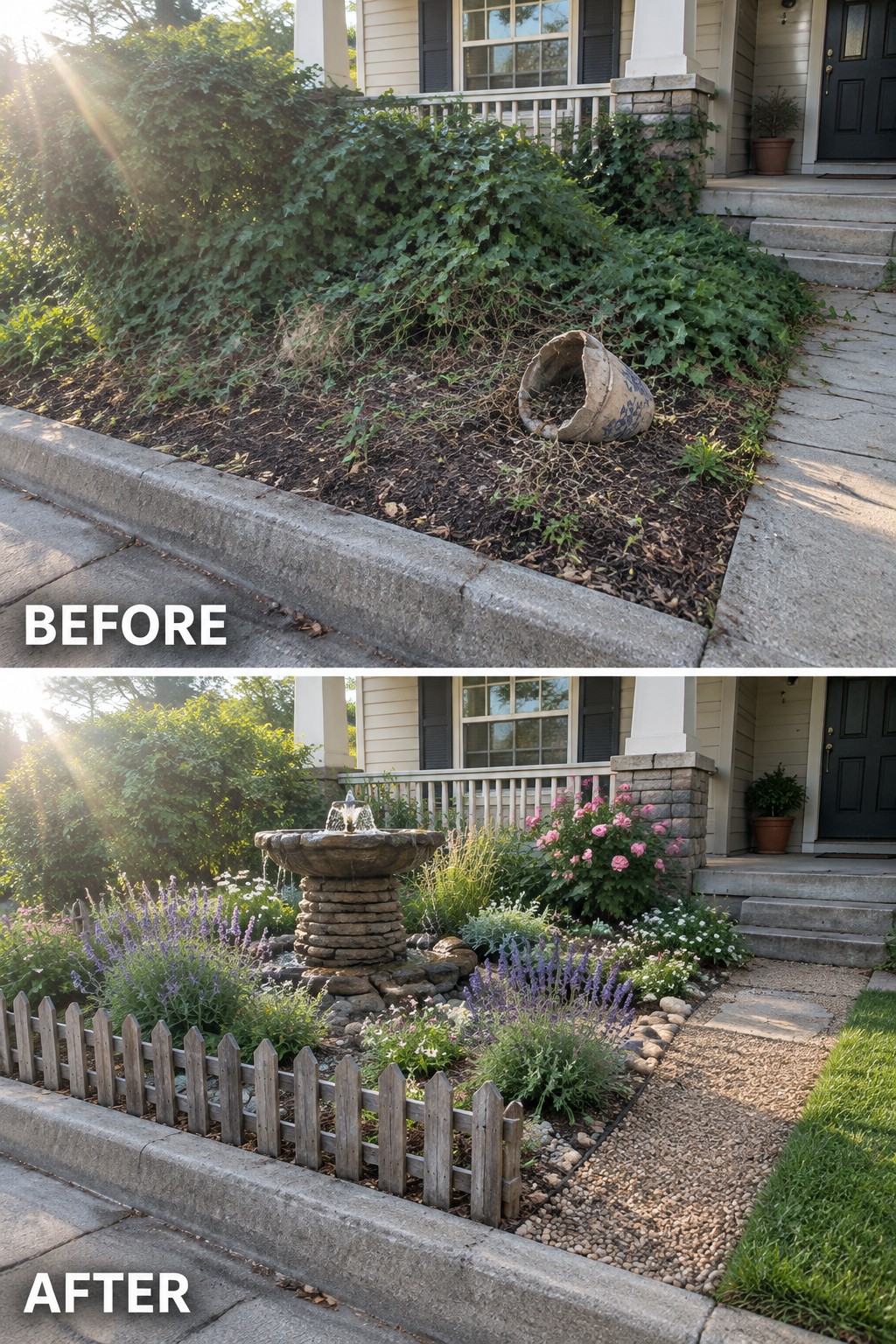
An overgrown bed can make an entrance feel neglected. Clearing it back and building a rock garden around a small stone fountain gives the area a clear focal point while making the planting feel intentional.
This idea suits a front yard with a small, awkward bed beside a walkway. Start by removing unwanted growth, then use stones to define the garden and leave a clear path to the steps. Keep the planting suited to the space so the fountain remains easy to reach and care for.
Add A Water Feature To Give A Rock Garden Purpose
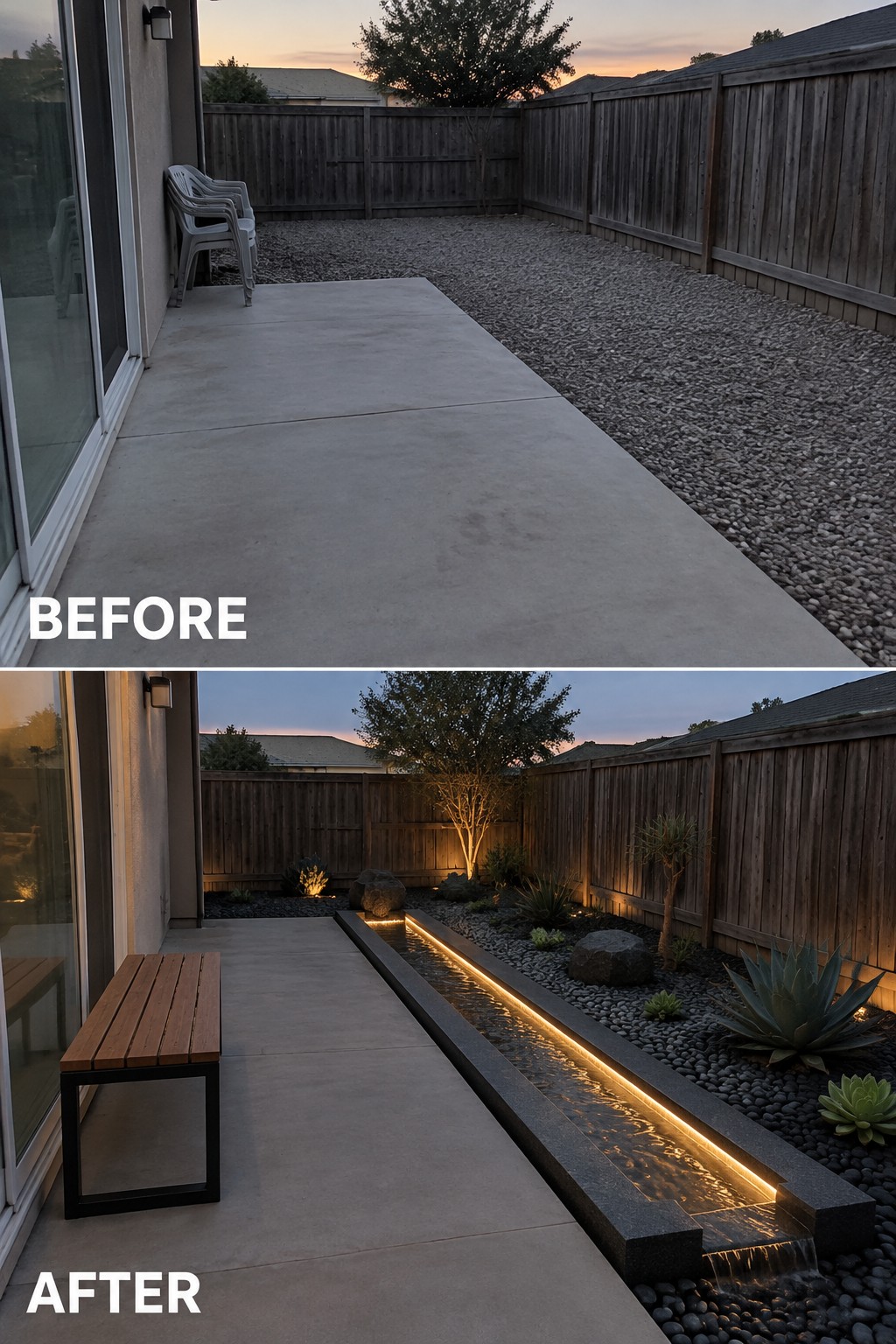
A narrow side yard can feel like leftover space when it is covered only in gravel. A long, slim water feature gives the rock garden a clear focal point and makes the area feel planned, while still leaving the concrete path open.
This idea works well in a small yard where a wide pond would take up too much room. Keep the water channel narrow, use stones and a few drought-tolerant plants around it, and make sure there is enough space to walk and maintain the feature.
Turn A Bare Balcony Into An Outdoor Seating Area
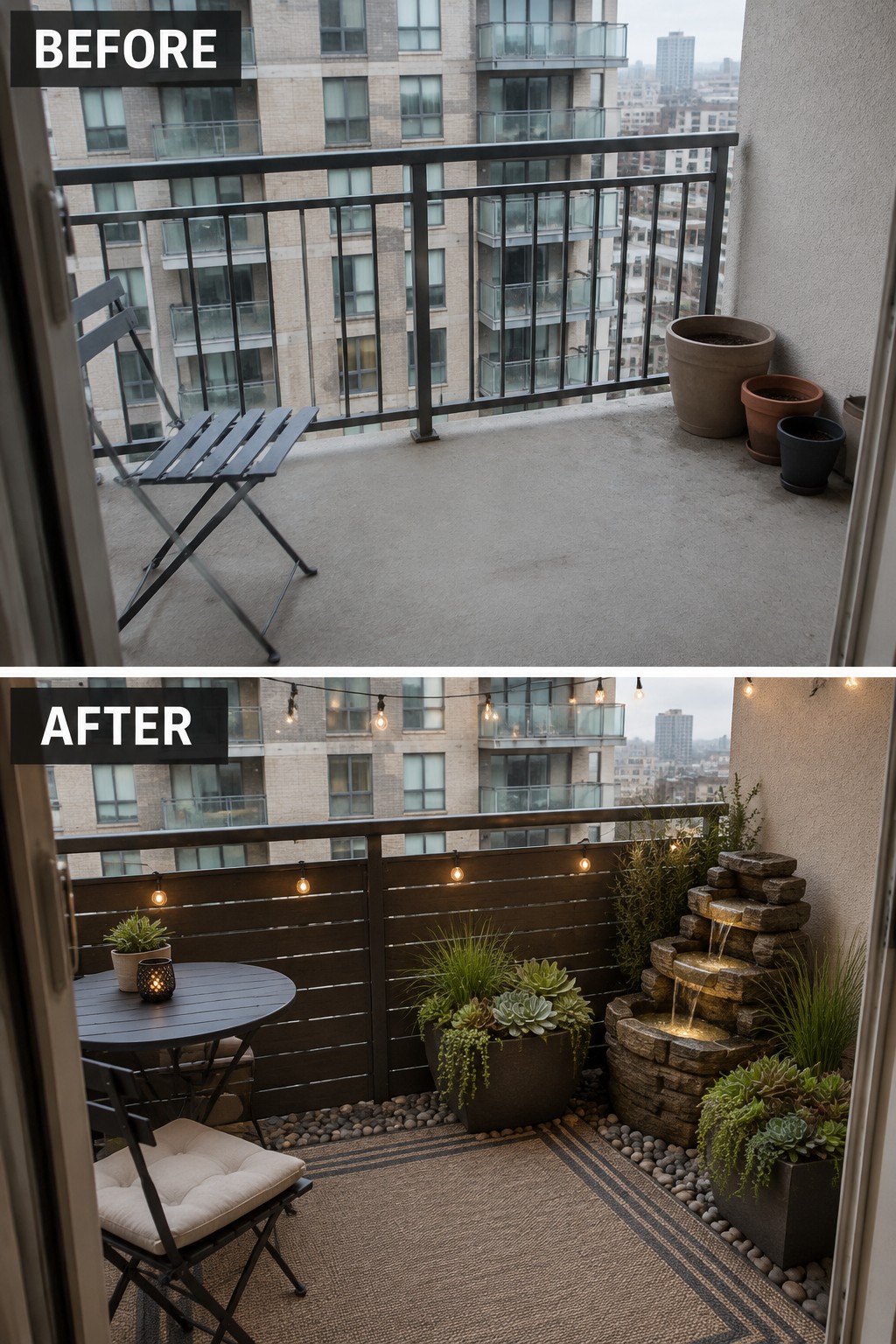
An unused balcony can become a comfortable spot to sit with a few well-chosen features. Here, a small table and chairs make room for relaxing, while a compact stone water feature gives the corner a clear focal point.
For a similar setup, start with seating that fits without blocking the way, then build around one main feature. On a small balcony, keep the plants and decor contained so there’s still room to move.
Turn A Neglected Garden Bed Into A Water Feature

A bare, leaf-covered patch can become the focal point of a yard with a small stone waterfall. Here, the rocks and flowing water give the garden bed a clear purpose, while the surrounding plants help it feel settled into the landscape.
Start by clearing the area and deciding where water will collect, then arrange stones around a compact recirculating pump. This idea works well beneath mature trees, but keep the water feature accessible for maintenance and avoid placing it where runoff can collect.
Build A Defined Gathering Area In A Bare Yard

A bare yard can feel more useful when one area has a clear purpose. Here, a low stone fire pit and surrounding gravel replace an open patch of dirt, giving the space a simple gathering spot.
This idea works well in a small or medium backyard where you want a place to sit without adding a full patio. Keep the seating area easy to reach, and use gravel or pavers to mark its edges before adding more features.
Make A Winding Garden Path The Centerpiece
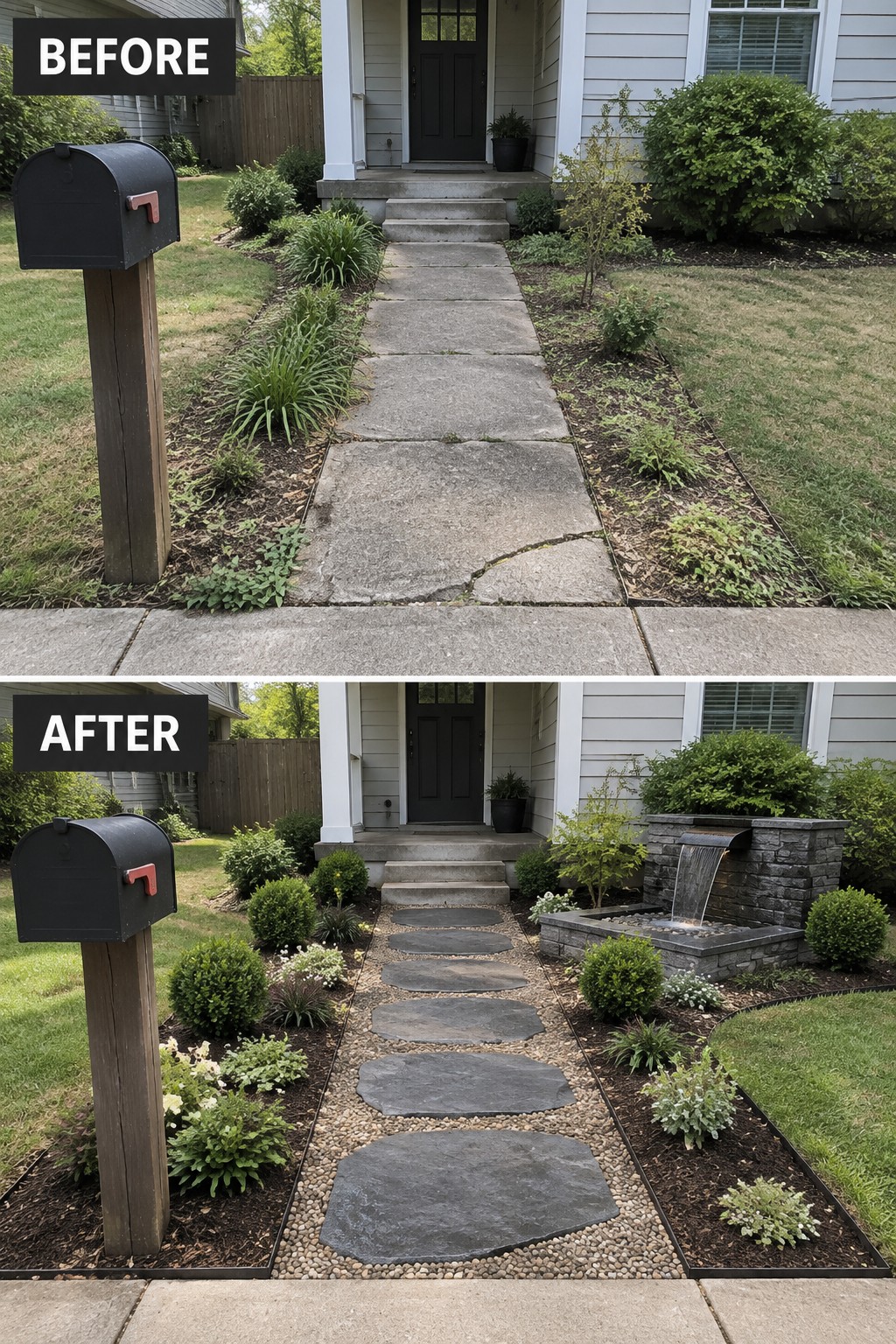
The cracked concrete path made the front yard feel neglected, while a gravel path with large stepping stones gives the garden a clearer shape. A small stone waterfall beside it adds a focal point without taking over the walkway.
For a similar look, keep the path wide enough to use comfortably and leave room for plants along the edges. Gravel is a practical choice between stepping stones, but a firm border helps keep it from spreading onto the lawn.
Add A Tiered Stone Water Feature Along The Pool
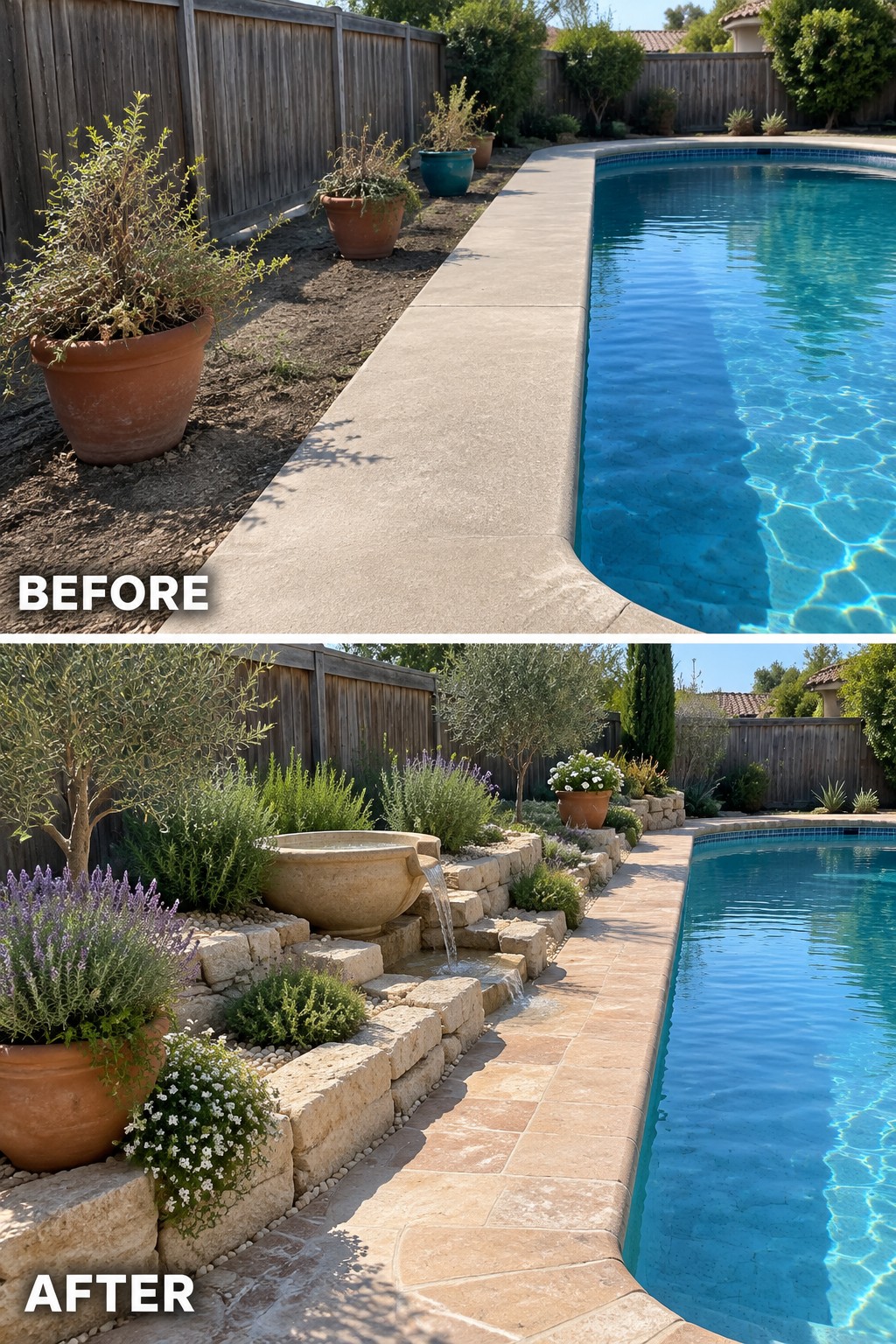
The bare strip beside the pool becomes a planted rock garden with a small cascading water feature. Building the stonework in low tiers makes a narrow side yard feel more intentional and gives the garden a clear focal point.
Use this idea where a fence line or pool edge leaves a long, underused planting area. Keep the rocks low enough to preserve an open path, and choose plants that suit the sun and won’t spread into the pool.
Replace Overgrowth With A Neat Fountain Garden

An overgrown island bed can look untidy even when it has a stone border. Clearing the weeds and making a small fountain the focal point gives the garden a clear shape and a reason to pause.
For a similar spot, keep the planting simple and leave room around the water feature for stone or gravel. Choose plants that suit the light and won’t quickly cover the fountain, and make sure the edge stays easy to maintain.
Turn A Narrow Side Yard Into A Gravel Garden

Replacing cracked paving with raked gravel and a stone water basin gives a narrow side yard a clear purpose. The gravel makes the ground look more orderly, while the water feature gives the garden one simple focal point.
This idea works well in a small passage where there is little room for planting or seating. Clear the old surface first, then leave enough space to walk comfortably around the feature. A few well-placed rocks and plants are usually enough.
Give A Bare Foundation Bed A Clear Garden Plan
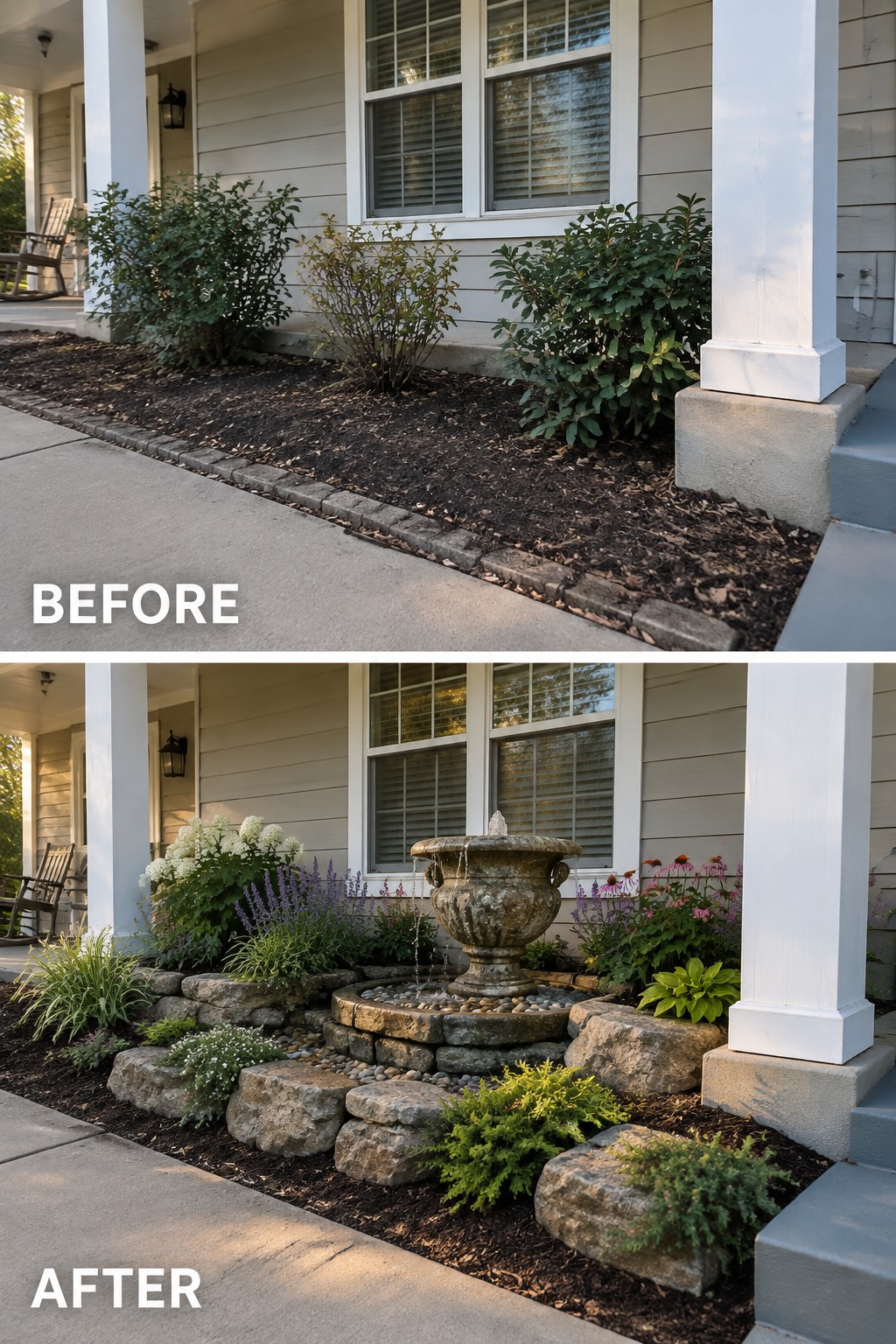
The empty stretch along a house can look unfinished, even when it already has a few shrubs. A low stone fountain surrounded by rocks and layered planting turns that narrow bed into a small garden feature, giving the area a clear focal point.
This idea suits a front porch or other foundation bed where there’s room for a modest fountain but not a large pond. Keep the stones low and leave space around the feature for plants to grow and for the bed to stay easy to maintain.
Add A Stone Fountain To Give A Bare Yard A Focal Point

A small yard can feel much more planned when one feature gives the rest of the landscape a clear center. Here, a tiered stone fountain replaces an open, cluttered patch, while gravel and river rocks define the garden area around it.
For a similar look, choose a fountain that fits the space and leave room around it for a few plants or a simple path. A compact yard does not need many features; too much stone and decor can make it feel crowded.
Build A Tiered Waterfall Into A Rock Garden
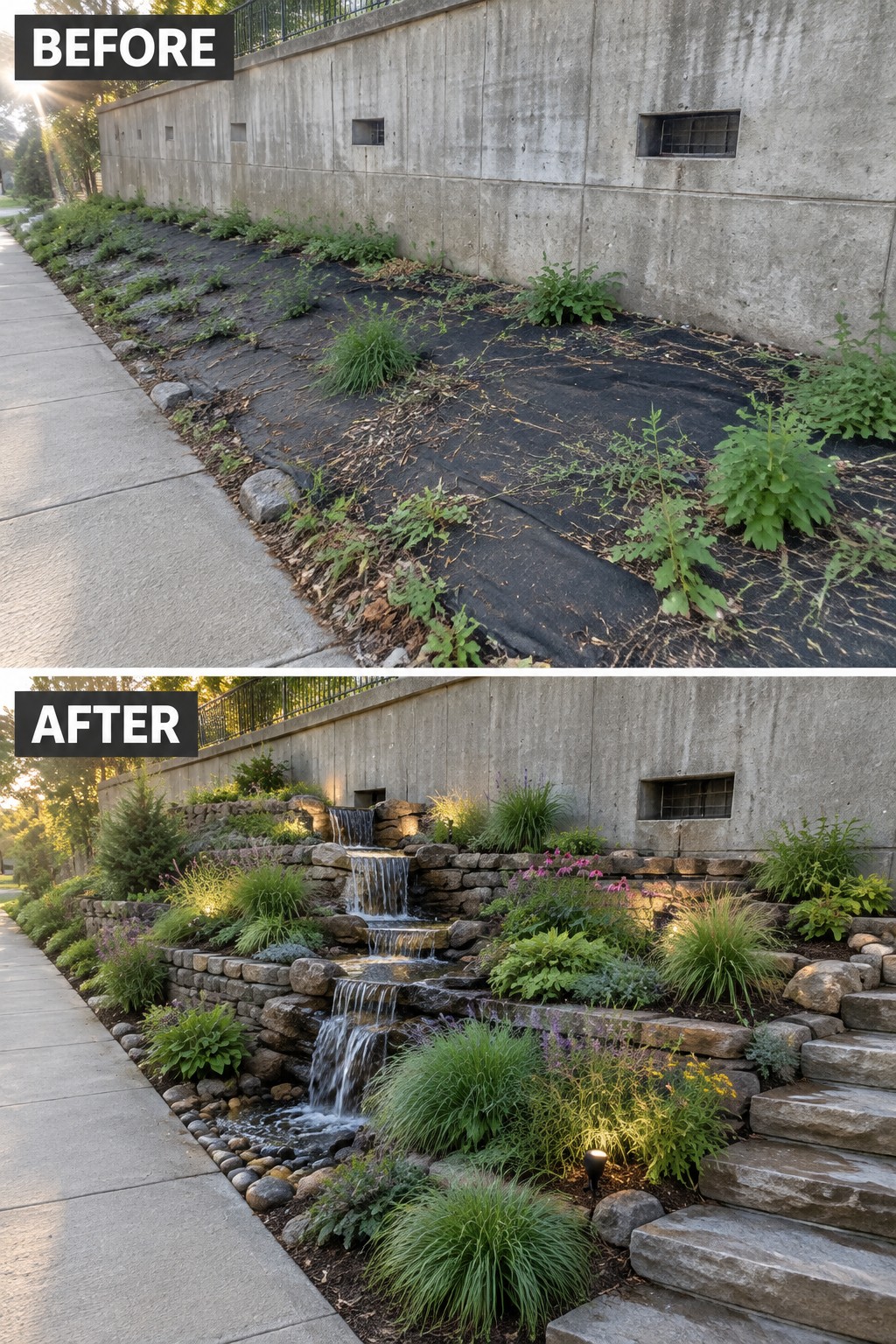
A bare strip beside a retaining wall can become a planned rock garden when a tiered waterfall gives it a clear focal point. Here, stacked stone and a small stream replace the exposed ground cover, while planting helps the feature sit naturally in the bed.
This idea works well on a sloped or narrow side yard where there is room for a water basin and safe access for maintenance. Keep the waterfall in proportion to the space, and leave a clear path alongside it.
Replace Raised Beds With A Gravel Water Garden
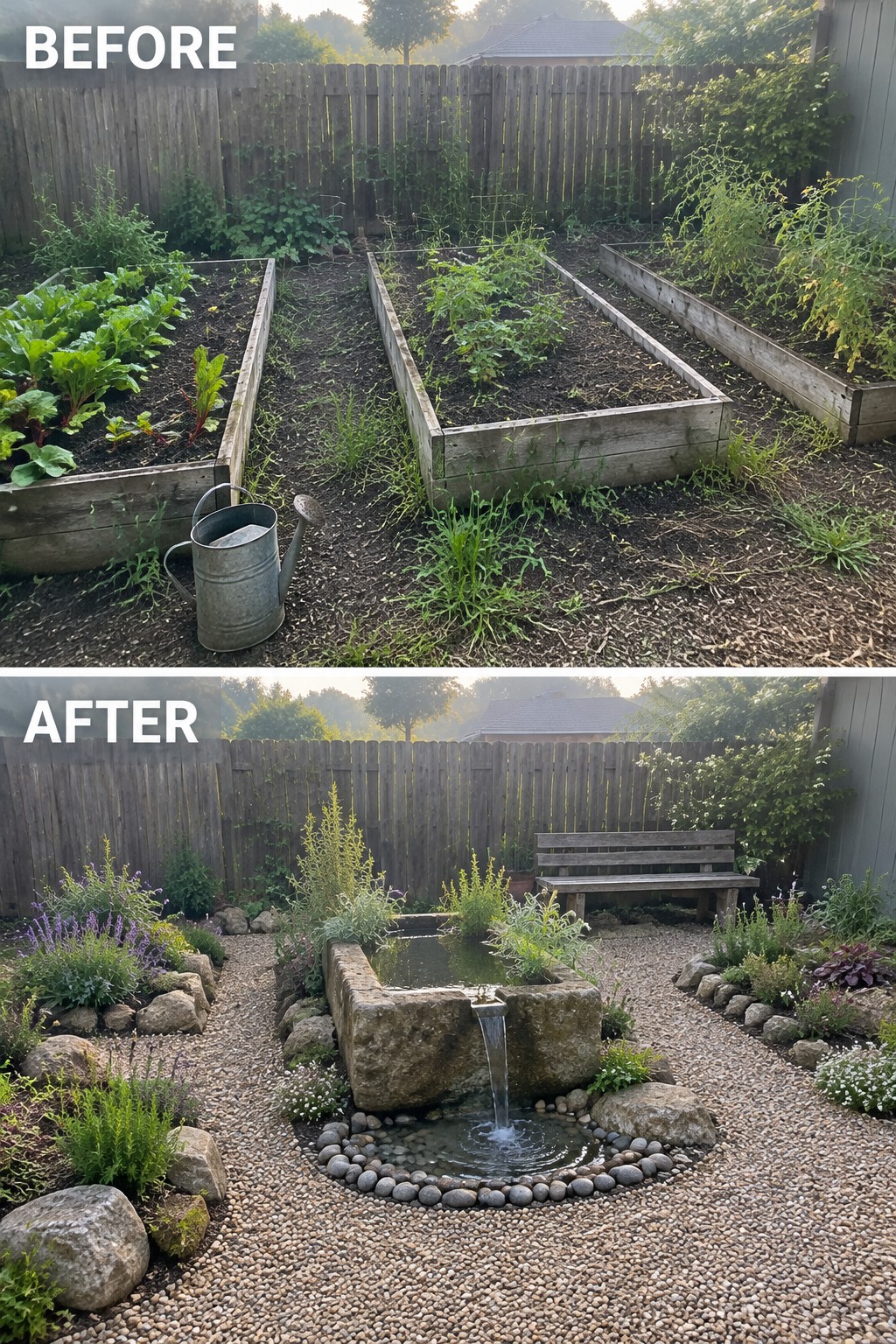
The main change here is replacing a cluttered vegetable garden with a simple gravel garden centered on a stone water feature. The gravel gives the small yard a clearer layout, while the flowing water provides one focal point instead of competing raised beds.
This idea can work in a compact backyard where lawn or planting beds are hard to maintain. Clear the area first, then plan the water feature and a path around it, leaving enough room to walk and tend the plants. Choose a pump and basin suited to the space so the feature is practical to care for.
Turn A Bare Terrace Into A Rock Garden

An unused terrace can become a more inviting outdoor living area by giving it a clear purpose. Here, a small stone fountain and gravel garden replace much of the plain turf, creating a focal point without filling the whole space with furniture.
This idea works well on a balcony or rooftop where planting space is limited. Keep the water feature sized for the terrace, and leave a clear area for walking or sitting. Check the surface’s weight limits before adding stone, gravel, or large planters.
Frequently Asked Questions
Q: How do I keep a stone water feature from looking out of place in my rock garden?
A: Match its stone color and texture to the rocks already in the garden, then tuck it into the slope or planting rather than setting it in the middle. A few plants around the edges help it feel settled in.
Q: Do I need a large space for a bubbling rock feature?
A: Not at all. A small bubbling rock can fit into a corner or beside a path, as long as there’s room for the hidden basin and pump.
Q: How do I stop the water from splashing onto nearby plants?
A: Keep the flow gentle and adjust the outlet so water lands on the stone or in the basin, not on the garden bed. Check the splash pattern after you turn it on, since small changes in the pump setting can make a difference.
Q: What should I do before winter?
A: Turn off the pump, drain the basin and tubing, and store the pump somewhere protected from freezing. That quick bit of care can help prevent cracks and make spring setup easier.
