


A rock garden can feel unfinished when loose stones, scattered plants, and awkward slopes lack a clear layout.
I like how natural stone steps can give a hillside a practical route while making the planting beds feel more intentional.
Small choices in step placement, stone size, and edging help tie the path into the garden rather than make it look like an add-on.
The change can be satisfying without calling for a complete yard overhaul.
I’d save a few of these ideas to adapt to the slope, light, and plants in my own space.
Replace Worn Steps With Natural Stone
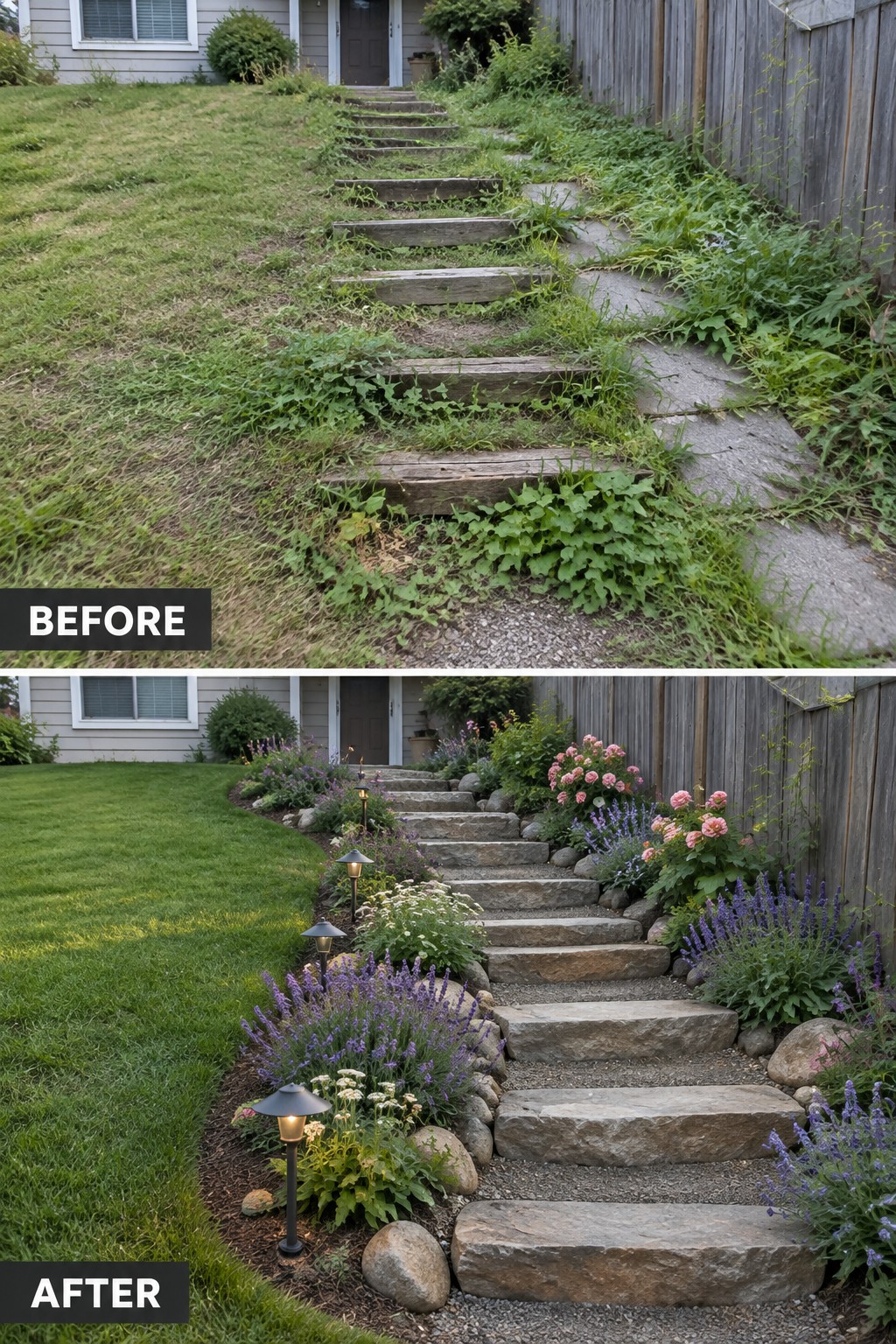
The old timber steps were uneven and overgrown, while broad stone treads give the slope a clearer, sturdier route through the garden. Stone also suits a sloped yard because it can define each step without making the path feel too narrow.
For a similar project, clear the growth first and plan the step spacing for comfortable footing. Choose stone that fits the scale of the slope, and keep plants low beside the path so they do not crowd the walking area.
Build A Clear Path Up A Steep Yard

A steep, bare slope can be hard to use and prone to washing out. A broad stone stairway turns it into a clear route through the garden, while low stone retaining walls help create stable planting areas beside the steps.
This approach works well in yards where a direct path would be difficult to walk. Set the steps securely into the slope, and keep them wide enough for comfortable footing. The finished grade and drainage matter, so get professional help if the hillside is steep or soil tends to move.
Add Structure With Natural Stone Steps

A plain front lawn can feel more purposeful when a stone path becomes part of a planted garden bed. Here, broad stone steps replace the narrow concrete walk as the main route to the entry, while rocks and low shrubs fill the space around them.
This idea works well in a small front yard where a straight path feels bare. Keep the steps wide enough to walk comfortably, and leave room between plantings so the stone stays visible and easy to maintain.
Create A Clear Garden Path With Natural Stone

Replacing scattered stepping stones and bare dirt with a defined stone path makes a narrow side yard easier to use and care for. Gravel fills the gaps and helps keep the route looking neat without needing a wide paved walkway.
This idea works well in tight spaces between a house and fence. Lay the stones with comfortable, even spacing, and leave enough room to walk without stepping into the planting. Keep the plants low along the path so they do not crowd it.
Turn A Steep Yard Into A Stone Step Garden
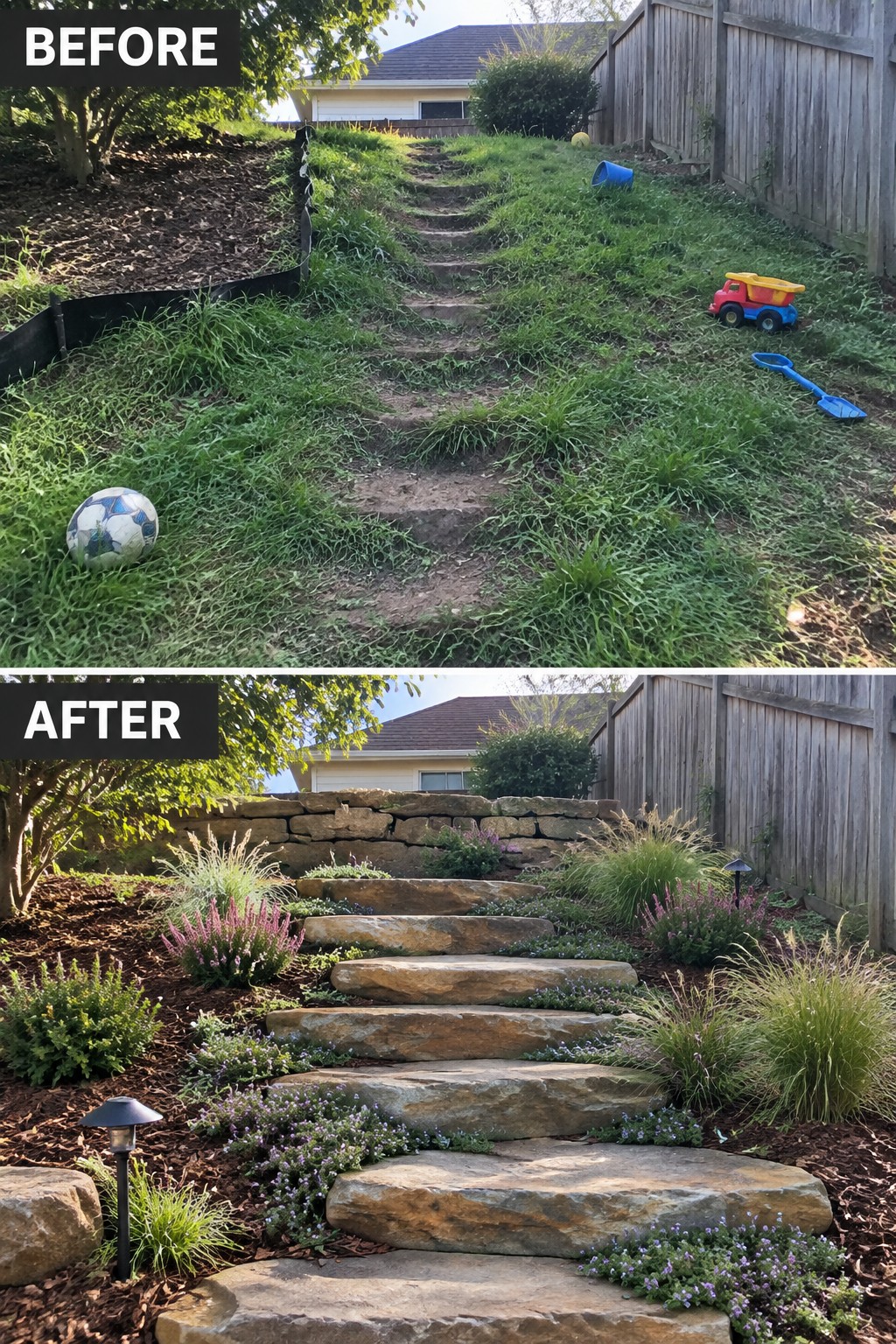
The worn track up this slope made the yard hard to use. Broad natural-stone steps give people a steadier route, while planting along the edges helps the path feel like part of the garden.
This idea works well on sloped yards where grass is difficult to maintain or a dirt path keeps washing out. Set the steps at comfortable intervals and leave enough width for safe footing, especially if children or older adults use the yard.
Add Natural Stone Steps To A Sloped Garden

A worn, weedy garden can feel difficult to use when there’s no clear way through it. Broad stone steps give the slope a simple route and make the planting feel more organized, without needing a formal path across the whole yard.
This idea works well in a small fenced garden where a change in level needs to feel easy to walk. Set the stones firmly and leave enough space between them for a comfortable stride; choose plants that won’t quickly spill over the steps.
Add Gravel And Planting Around Front Steps

The concrete steps already lead to the front door, but the bare mulch around them leaves the entry looking unfinished. Adding gravel, low shrubs, and large stones gives the steps a clearer place in the yard and makes the approach feel planned.
This idea works well when you want to improve a front path without rebuilding the steps. Keep the planting low near the walkway and leave enough room to move comfortably. A few well-spaced plants and stones are usually easier to maintain than a crowded border.
Make A Small Entry Garden Feel Planned
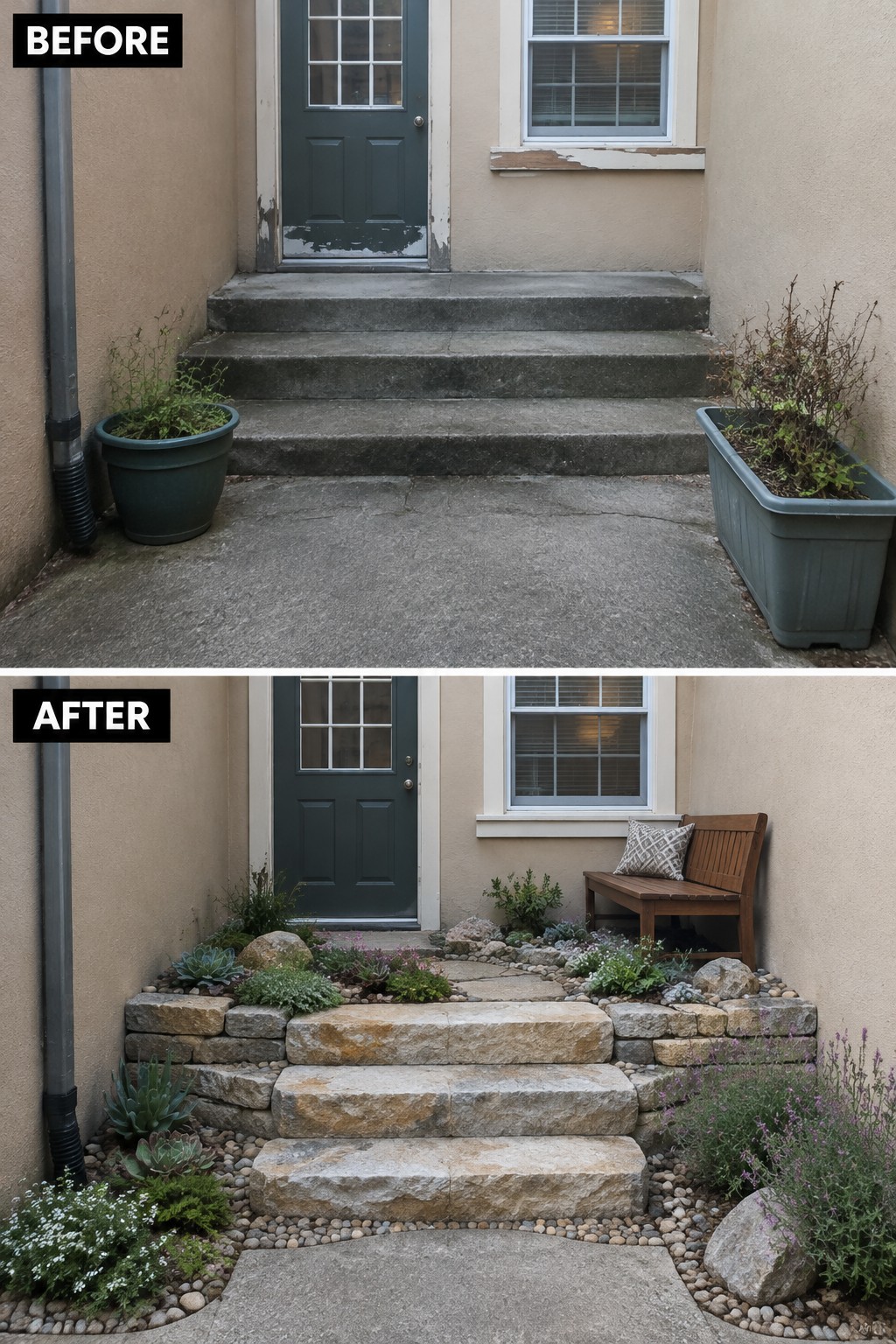
The worn concrete steps made this entry feel neglected. Replacing them with broad natural-stone steps and adding low planting turns the climb to the door into a simple, defined garden path.
This idea works well in a narrow side entry where there is little room for a lawn or large beds. Keep the steps wide enough to use comfortably, and leave clear footing rather than letting plants spread onto the path.
Replace Unsteady Timber Steps With Stone

The old timber risers made this sloped garden path look worn and uneven. Replacing them with broad natural stone steps gives the climb a more solid surface and a clearer shape, while the surrounding planting helps the steps sit naturally in the yard.
This approach works well on a hillside where a simple path would be difficult to walk on. Set the stones firmly and keep each step at a comfortable height; ferns and other low plants can fill the edges without narrowing the route.
Replace Concrete Steps With Natural Stone
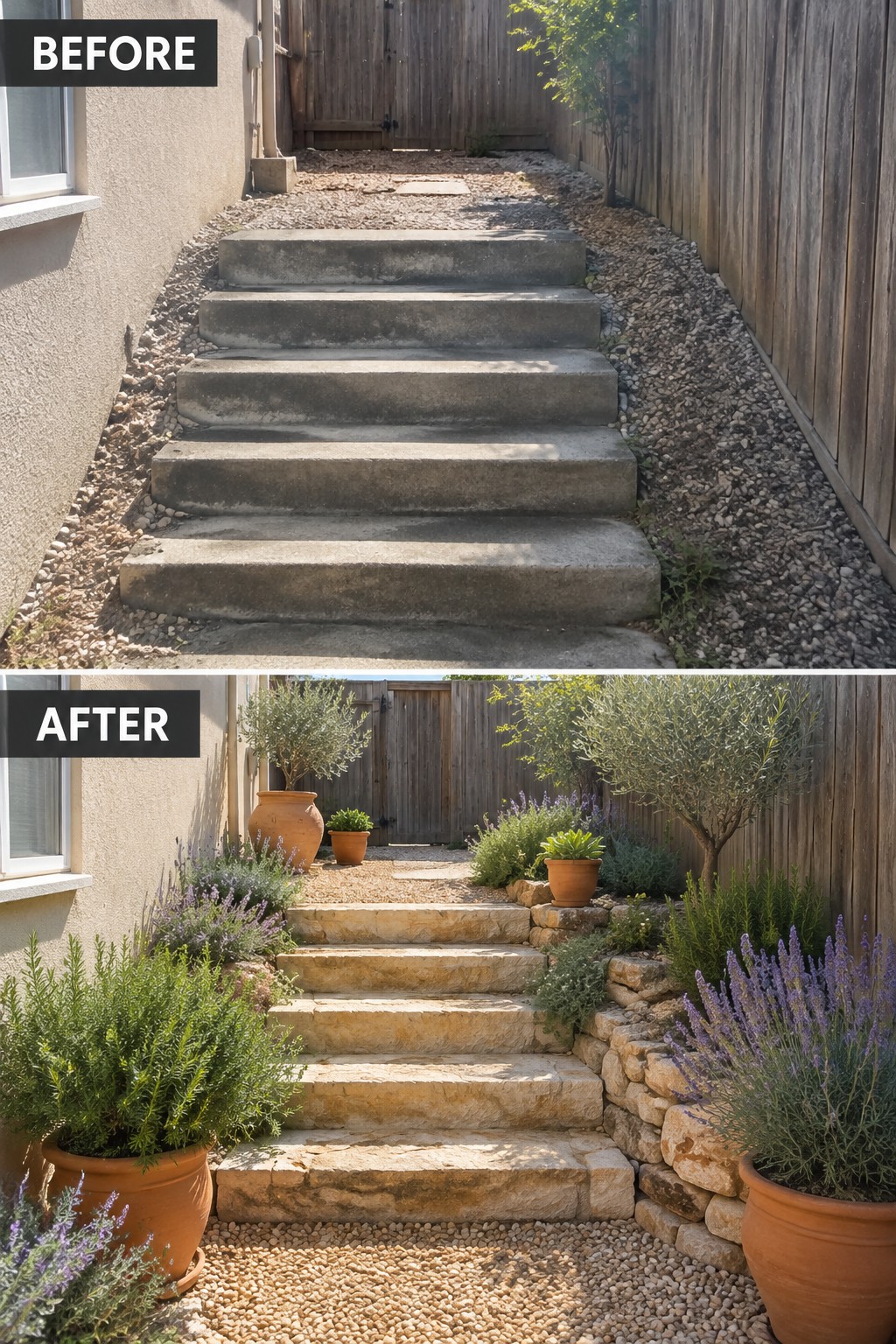
The old concrete steps felt separate from the gravel around them. Replacing them with natural stone makes the route feel like part of the garden, while low stone borders help keep the planting areas defined.
This idea works well in a narrow side yard where a path also needs to handle a change in height. Choose stones with fairly even risers, and leave enough clear width to walk comfortably. A few well-placed plants can finish the edges without crowding the steps.
Turn A Dry Slope Into A Stone Step Garden

A bare, patchy slope can be hard to walk across and difficult to keep tidy. Here, natural stone steps break up the incline and gravel gives the planting areas a cleaner, more settled look.
This idea suits a front yard where the path needs to climb a hill. Keep the steps wide enough to use comfortably, and leave room around them for low-water plants that will not crowd the route.
Make Concrete Steps Part Of The Garden

The plain concrete steps felt separate from the yard. Replacing them with natural stone and planting around the stairway makes the slope feel like a planned garden rather than an awkward route to the patio.
This idea works well on a sloped backyard where steps need to connect the lawn to a deck or patio. Keep the stone path wide enough to walk comfortably, and leave room beside it for plants to grow without crowding the steps.
Make A Steep Garden Easier To Navigate
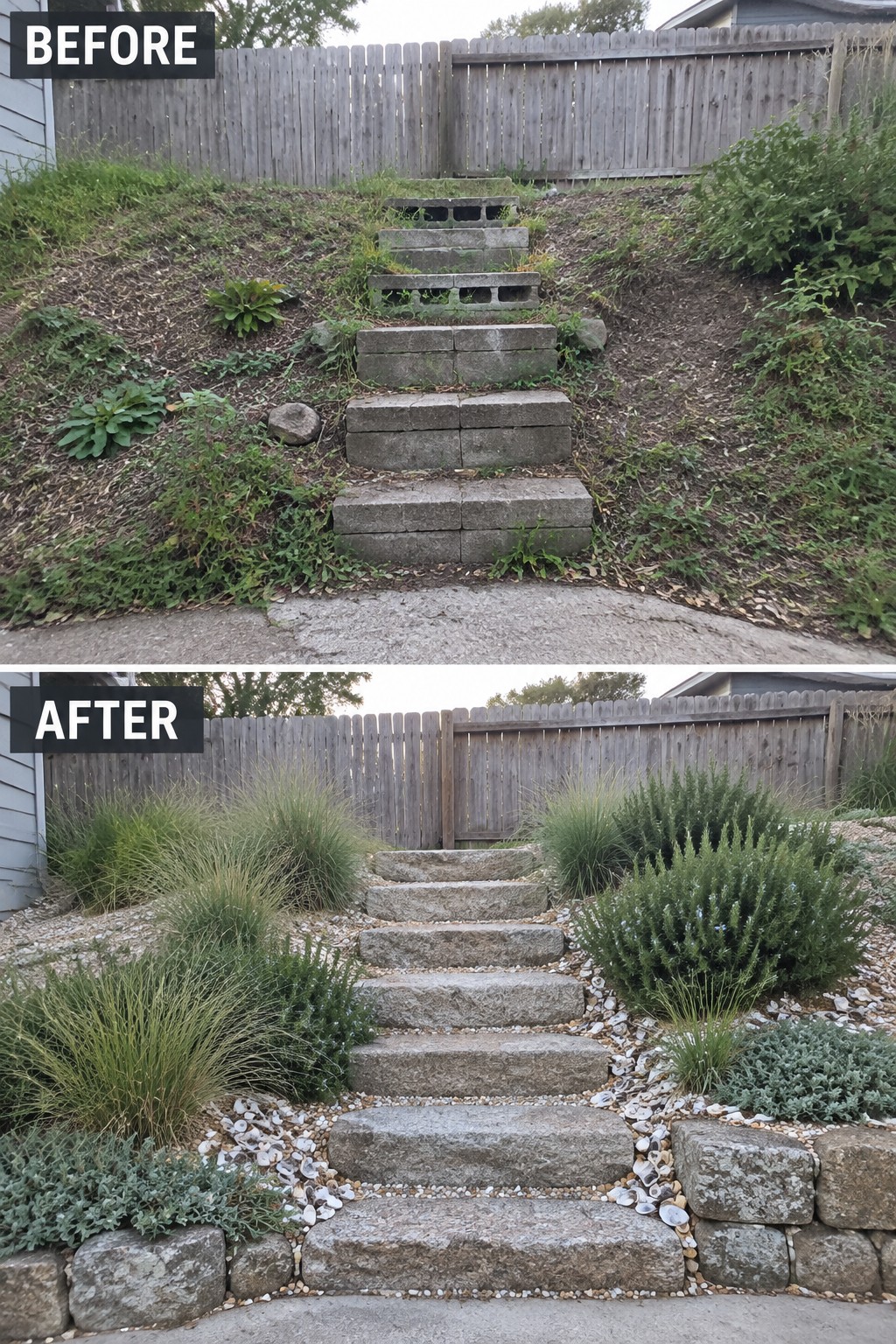
A clear run of natural stone steps gives a sloped garden a useful route instead of leaving the hillside to weeds and uneven ground. Here, rough stone treads replace the old block steps, while low plantings and gravel help define the path.
This idea works well on a small slope where a straight path makes the most of limited space. Choose stones with steady, even footing, and leave enough width to walk comfortably; plantings should stay low beside the steps so they do not crowd the route.
Turn A Bare Yard Into A Stone Step Garden
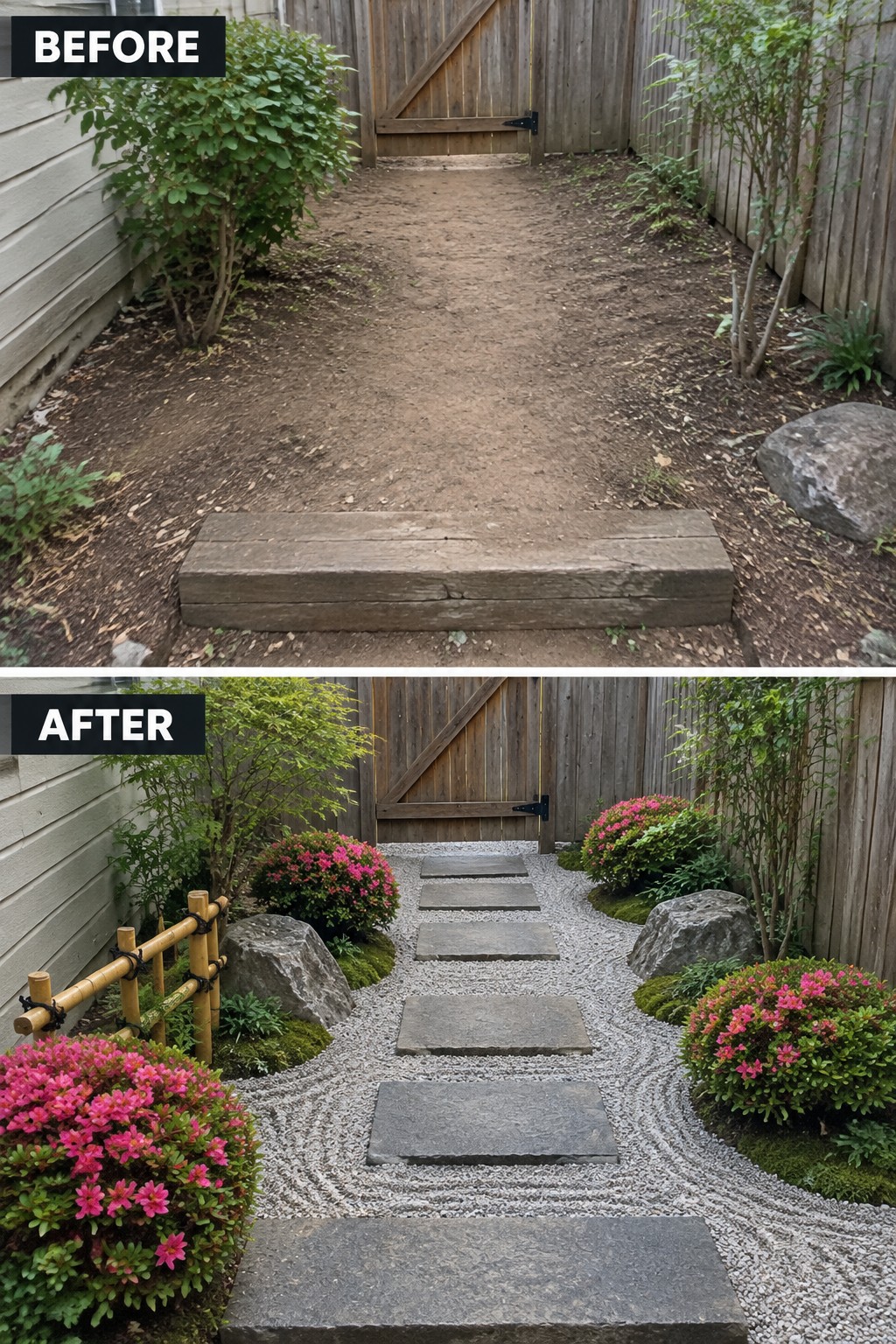
A dirt passage can feel much more planned when a clear path leads through it. Here, broad stone pavers and pale gravel replace the bare ground, giving the narrow yard a defined route without taking up much space.
For a similar garden, set the stones far enough apart for a comfortable stride, then use gravel to keep the path tidy and easy to maintain. Low planting along the edges helps the stones feel settled into the garden, but leave enough room to walk through.
Plant A Garden Along Stone Steps
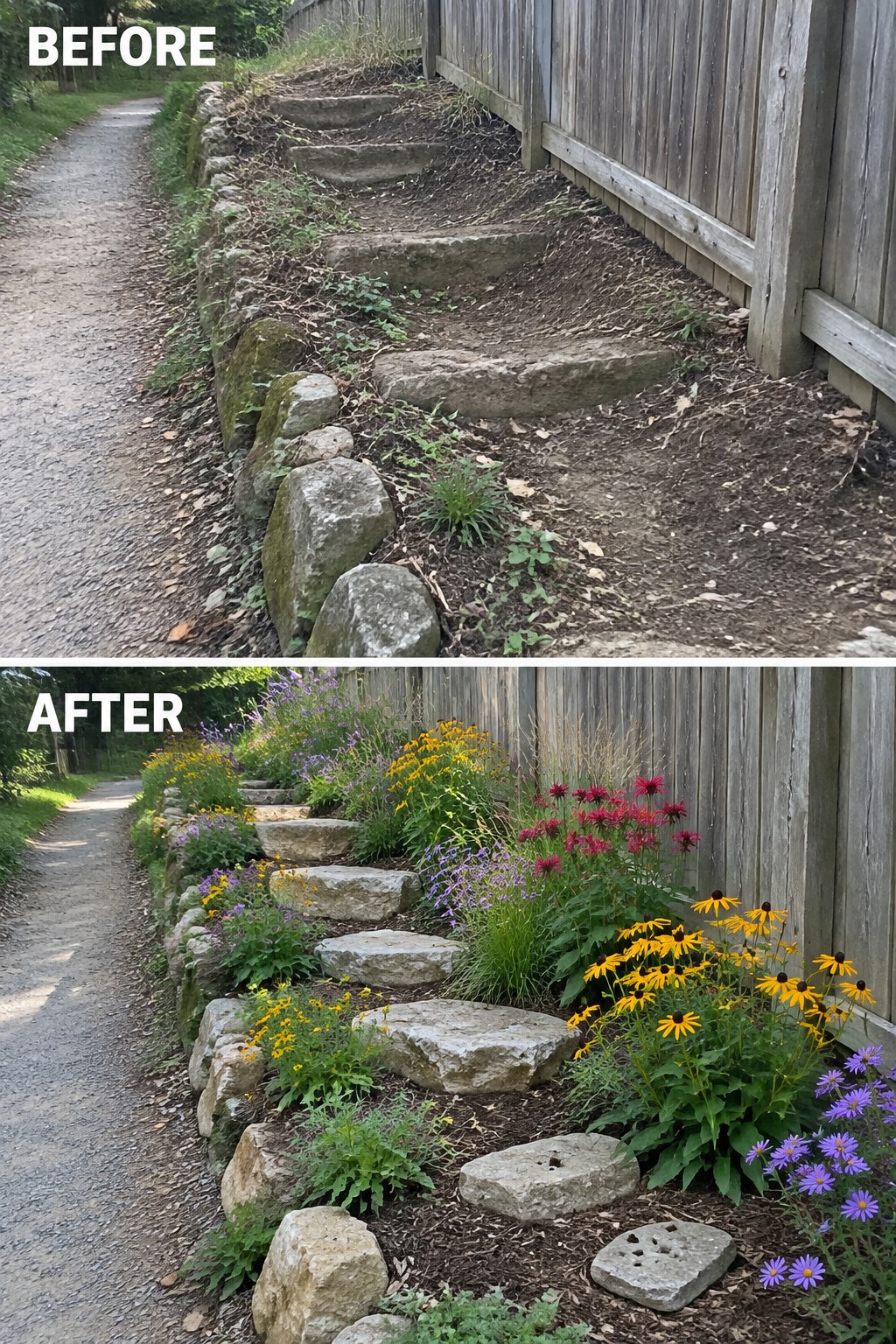
Replacing a bare, eroding slope with broad stone steps and flowering plants makes the route easier to follow and gives the hillside a clear shape. The plants help the steps feel like part of the garden rather than a separate strip of hard ground.
This idea works well beside a path where a slope needs both access and planting space. Set the stones securely, then leave enough room between them for low-growing plants that won’t spill over the walking surface.
Make The Entry Steps Part Of A Defined Garden

The broken concrete steps looked disconnected from the yard. Replacing them with natural stone and adding a low stone border gives the entry a clearer shape, while the simple planting keeps the steps from feeling like a bare strip through the lawn.
This approach works well when the front steps sit between planting areas or on a slight slope. Keep the path wide enough to walk comfortably, and use ground cover or gravel around the stones so the edges stay tidy without crowding the steps.
Create A Gravel Fire Pit Garden
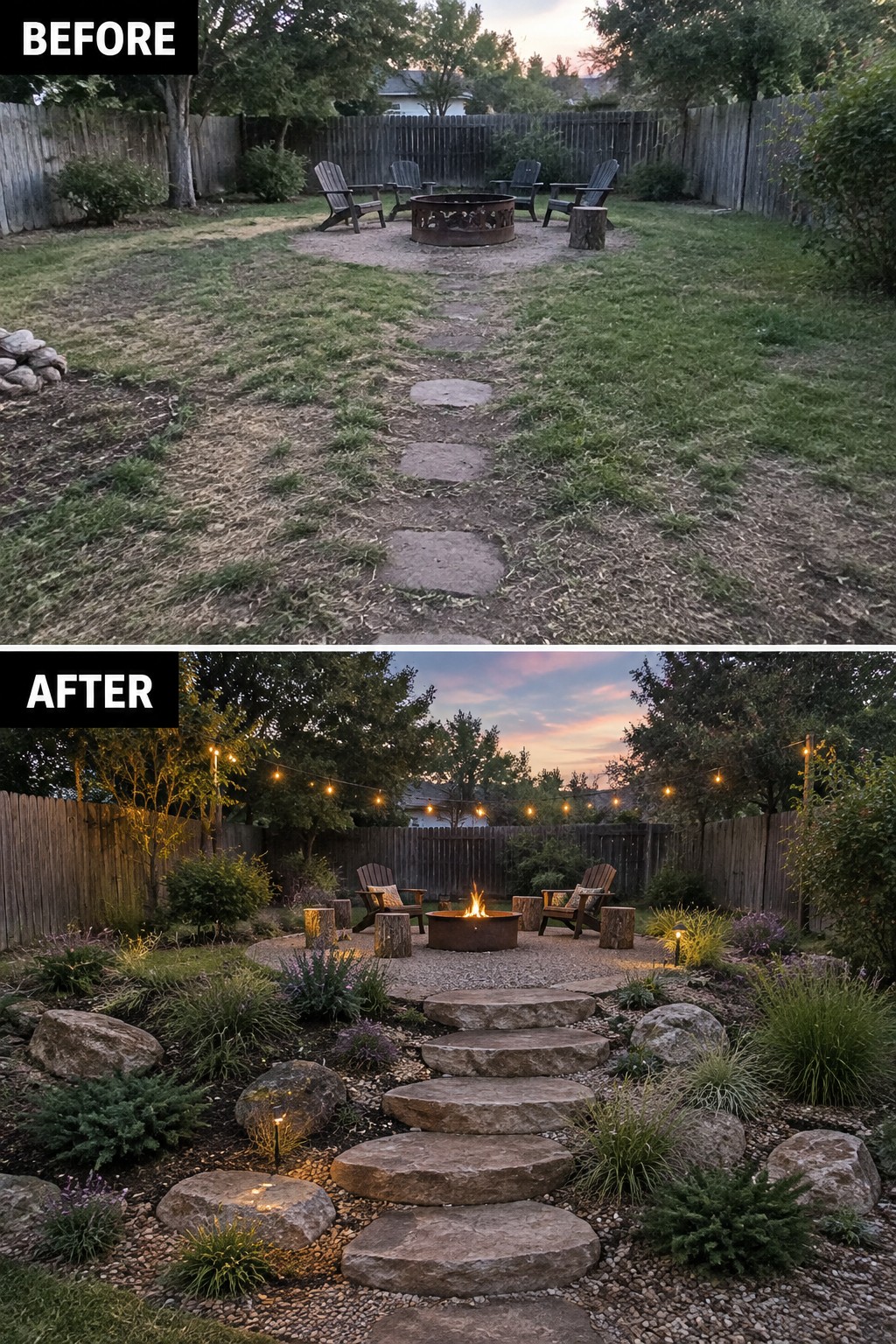
A gravel seating area gives an uneven, worn yard a clear purpose without requiring a large patio. Here, natural stone steps lead through the planting to a simple fire pit area, making the space easier to reach and more comfortable to use.
For a similar yard, mark out the seating area first, then use gravel to define it and help with drainage. Set broad, stable stones into the path, and leave enough room around the fire pit for chairs and safe movement.
Replace Deteriorating Steps With A Stone Garden Stairway

The old wooden steps made the front approach look worn and left the yard feeling unfinished. Rebuilding the stairway in natural stone gives the entrance a sturdier route and makes the steps feel like part of the garden.
This idea works well where a path rises toward a porch. Use stones with fairly even treads, and keep the planting low beside the stairs so it does not crowd the walking space. A few well-placed plants are enough to finish the edges.
Build A Garden Around Front Steps
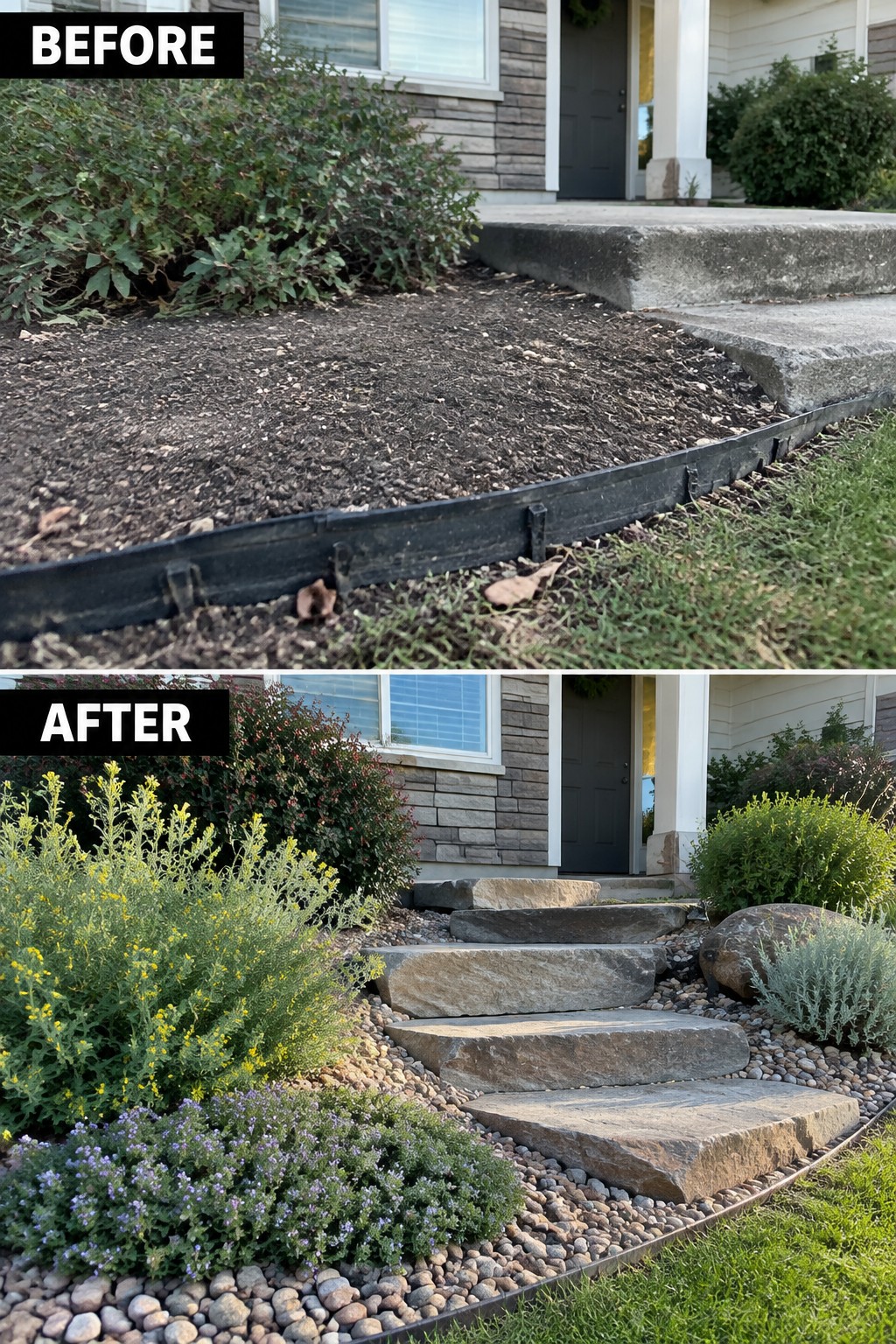
A bare, uneven entry bed can feel unfinished and awkward to cross. Replacing the broad concrete landing with natural stone steps and filling the slope with gravel and plants gives the approach a clearer route to the door.
This idea works well where the front yard rises toward the house. Keep the stones wide and steady underfoot, and leave enough space between plantings so the steps stay easy to use.
Direct Downspouts Into A Stone Step Garden
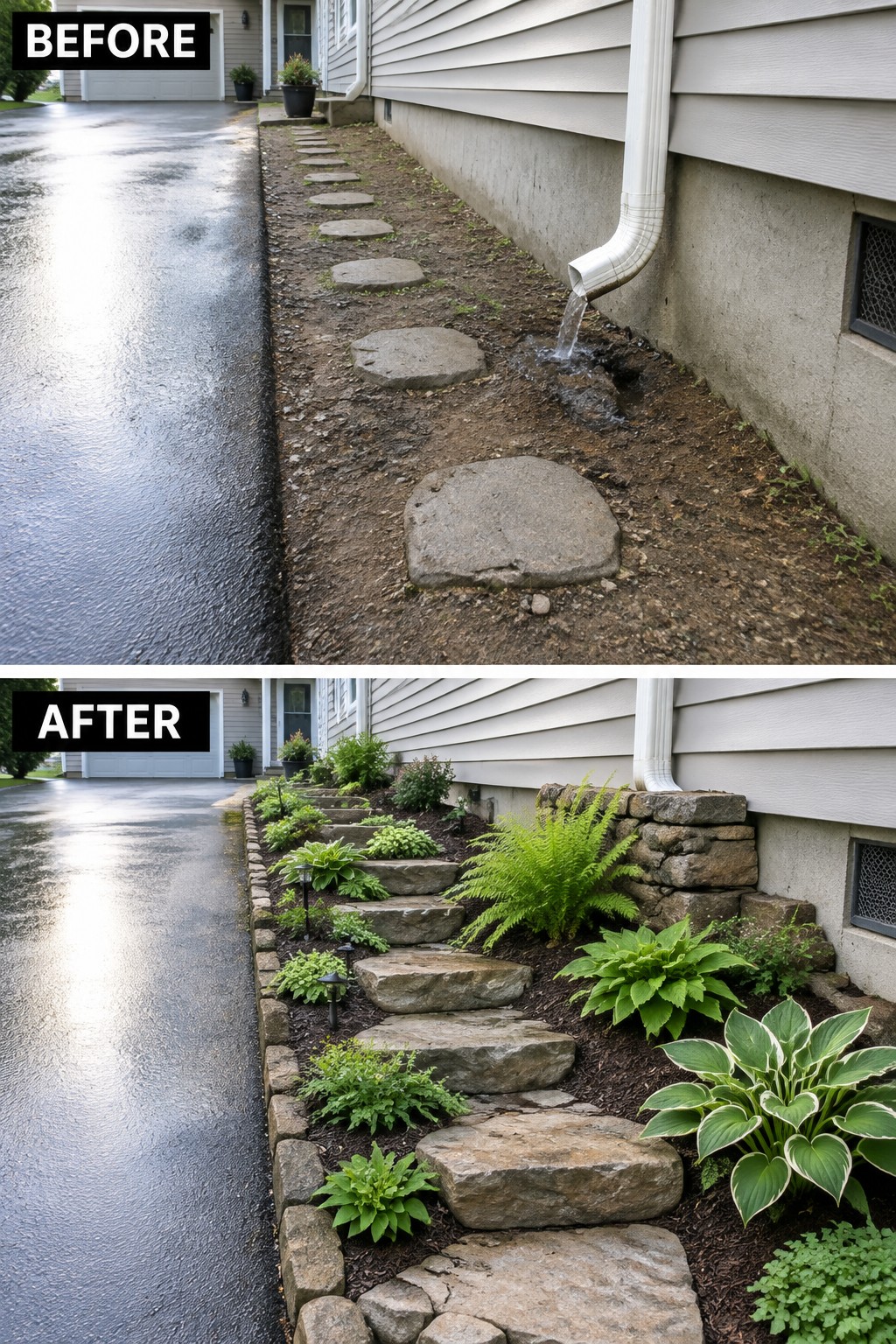
The muddy strip beside the driveway was hard to use, especially with the downspout pouring water onto bare soil. Stone steps give the narrow side yard a clear route, while the planted beds help make it feel like part of the garden instead of a leftover space.
For a similar spot, plan the steps around the natural slope and make sure runoff drains away from the foundation. Use stones that sit firmly underfoot, then leave enough room for plants to grow without narrowing the path.
Make A Steep Garden Easier To Navigate
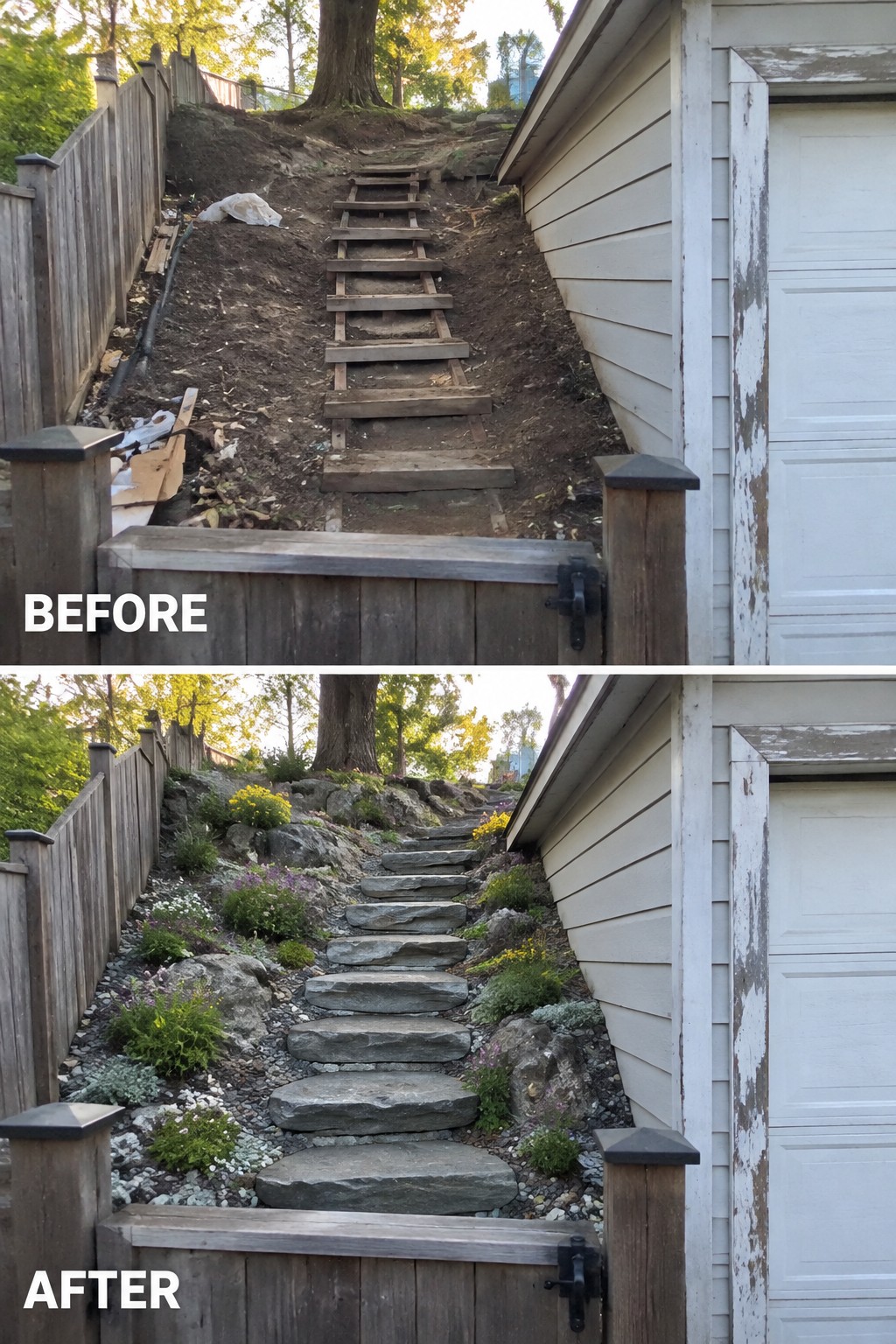
A steep, bare slope can be difficult to walk up and prone to washing out. Broad natural-stone treads replace the makeshift timber steps here, giving the path a steadier footing while helping it fit into the garden.
For a similar slope, set the steps securely and keep their width comfortable for walking. Plant low-growing flowers and ground cover along the sides, but leave enough room around each tread so the path stays clear.
Control Erosion With A Stone Step Garden

A steep yard can quickly turn into a muddy channel when rain washes soil downhill. Broad stone steps give the slope a clear route for walking, while a rock-lined drainage channel helps carry runoff away instead of letting it cut through the path.
For a similar yard, plan the drainage before adding plants, and make sure water has a safe place to go. Set the steps firmly into the slope, then use hardy plants to help hold the soil in place.
Replace An Overgrown Entry Bed With A Stone Step Garden
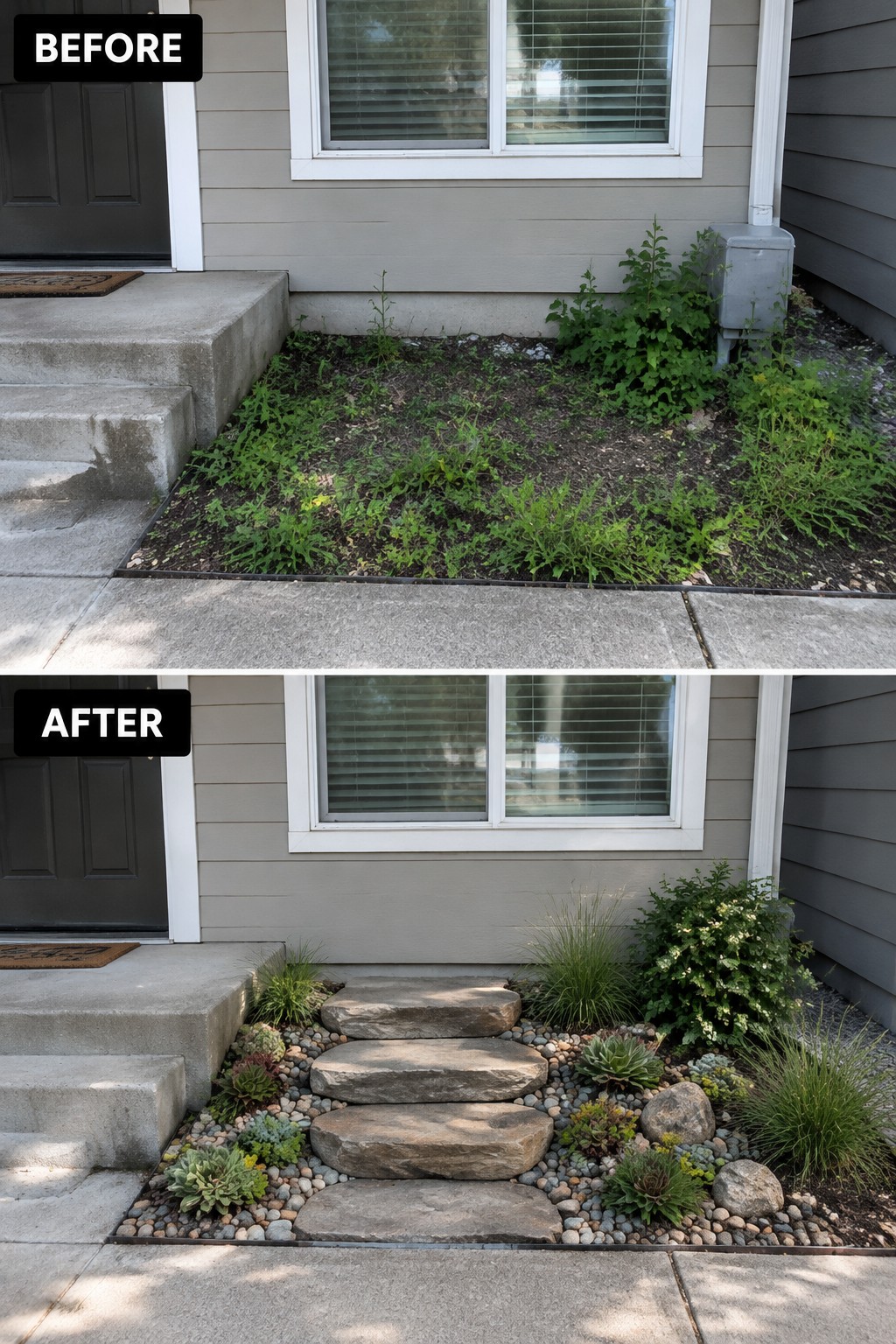
A weedy front bed can make an entry feel neglected, even when the concrete steps are in good shape. Clearing the growth and adding broad natural stone steps through a gravel bed gives the area a clear layout and makes the path easier to use.
This idea suits a small space beside a front walk or porch. Keep the stones level and spaced for comfortable footing, then leave room for low plants around them so the path stays easy to maintain.
Frequently Asked Questions
Q: What kind of stone works best for steps in a rock garden?
A: Choose stone with a rough, grippy surface, such as natural flagstone or fieldstone. A little variation in shape looks right at home in a garden, as long as each step sits flat and feels steady underfoot.
Q: How do I keep stone steps from shifting on a slope?
A: Set each stone on a firm, well-packed base of crushed gravel rather than loose soil. Give the steps a slight backward tilt into the slope, and check that water can drain away instead of collecting behind them.
Q: Can I add stone steps to an existing rock garden?
A: Yes. Follow a path that feels natural through the garden, then fit the steps into the slope without disturbing more planting than you need to. Leave enough room for a comfortable stride, especially if you carry tools or a watering can along the path.
Q: What can I plant between the steps?
A: Low-growing, spreading plants can soften the edges without taking over the walking surface. Keep them trimmed back so they do not hide the step edges or make the stones slippery.
