


Shaded corners can feel forgotten when bare soil, scattered stones, and struggling plants leave them looking flat and untidy.
I find that a little structure often makes the biggest difference, especially when rocks, paths, and shade-tolerant plants work together instead of competing for space.
A well-planned rock garden can add texture and definition while keeping upkeep manageable in spots that do not get much sun.
The change can be subtle, but it is satisfying to see an awkward patch become a considered part of the yard.
Some of these approaches are easy to adapt to the space and plants you already have.
Create A Rock Garden In A Shaded Corner

A bare, leaf-covered corner can become a small rock garden with a few boulders and shade-loving plants. Here, the rocks give the planting a clear shape, while the hostas and ferns fill the space without needing a sunny spot.
Start by clearing leaves and weeds, then arrange a few rocks before adding plants around them. Leave room for each plant to spread, and keep the stone grouping modest in a small yard so the corner still feels open.
Create A Simple Rock Garden In A Shaded Corner
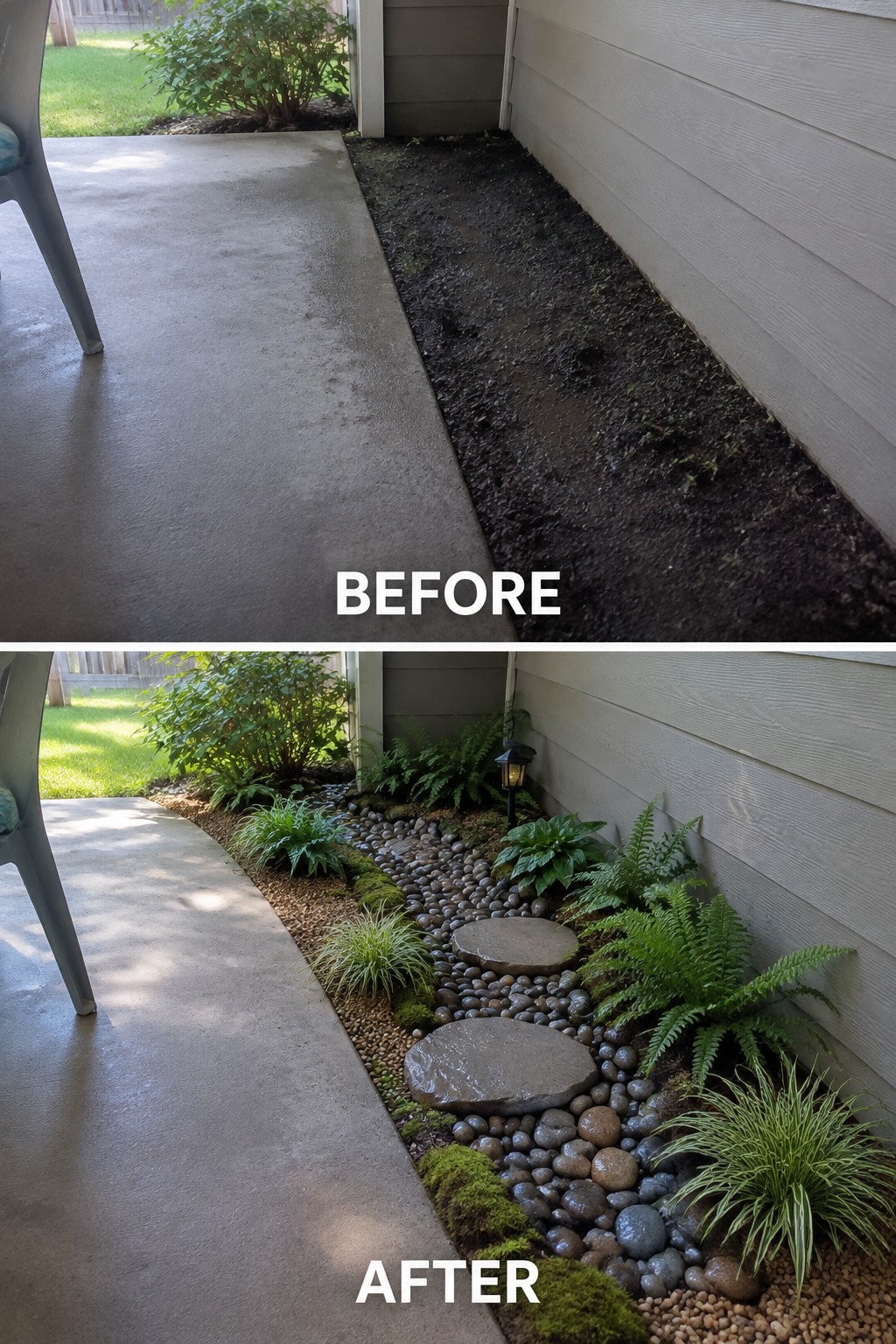
An empty strip beside the house can become a tidy rock garden instead of a patch of bare soil. Here, rounded stones and a couple of stepping stones give the narrow bed a clear shape, while the planting keeps it from looking stark.
This idea suits a shaded side yard where grass may struggle and space is limited. Clear the bed first, then use shade-tolerant plants and stones that fit the scale of the area. Leave enough room for plants to grow and for water to drain away from the house.
Add Structure To A Shaded Garden Corner
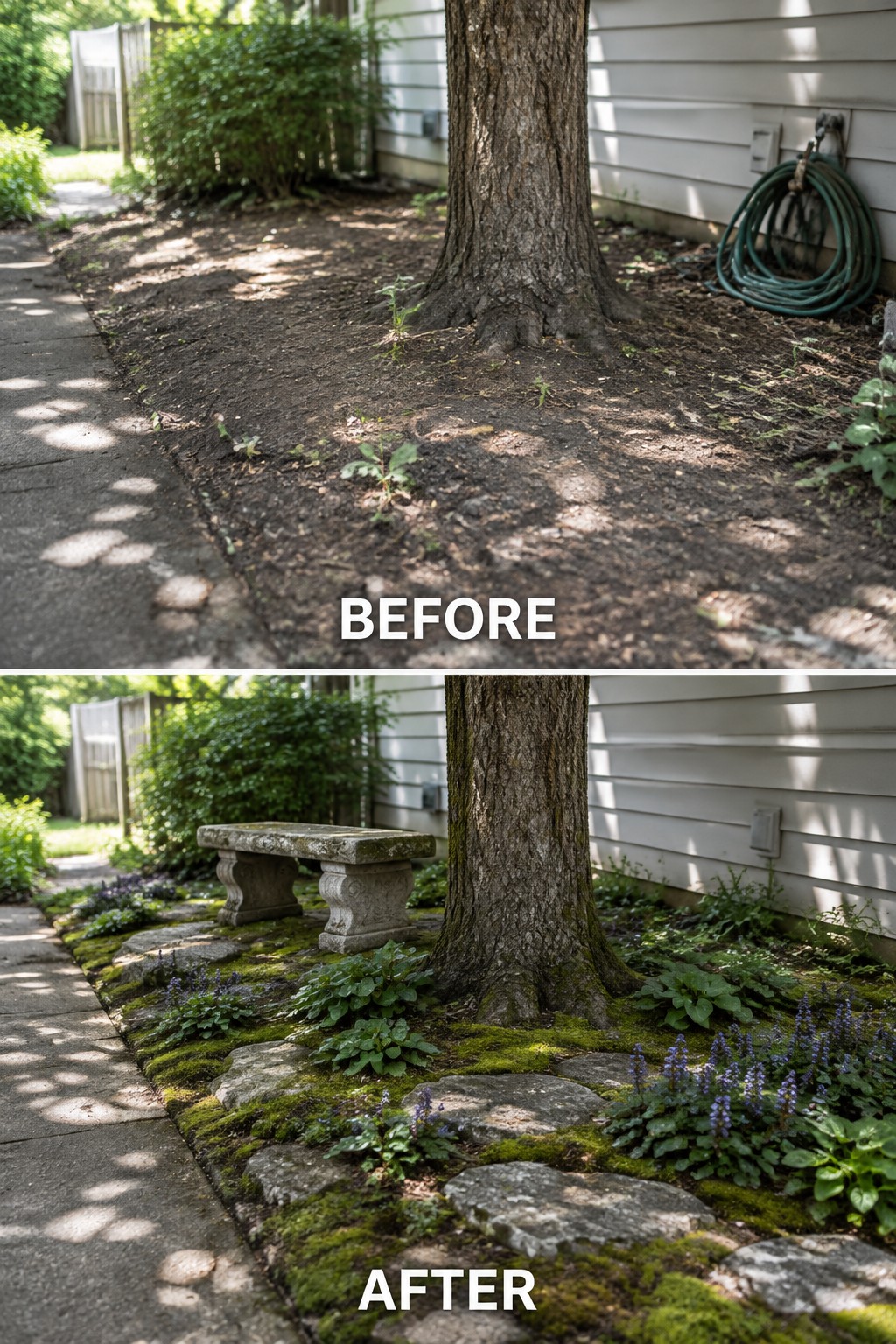
A bare patch beneath a tree can feel difficult to landscape, but a few well-placed stones give it a clear shape. Here, large stepping stones and low plantings turn the empty ground into a simple garden path.
Use this idea in a shady side yard where grass struggles to grow. Set stones securely and leave enough space to walk comfortably, then fill around them with shade-tolerant ground cover. Keep planting low near the tree so the path remains easy to see and use.
Build A Raised Bed For A Shady Corner

A raised stone bed gives an untidy strip beside the house a clear shape and makes the planting easier to see. Here, the loose, weedy area becomes a tiered garden with hostas and flowering astilbe, plants that suit a shaded spot.
For a similar corner, keep the bed low enough to avoid crowding windows and leave room to reach the house for upkeep. Choose shade-tolerant plants that fit the bed’s depth, and make sure the edging does not block drainage.
Turn A Neglected Shady Strip Into A Rock Garden
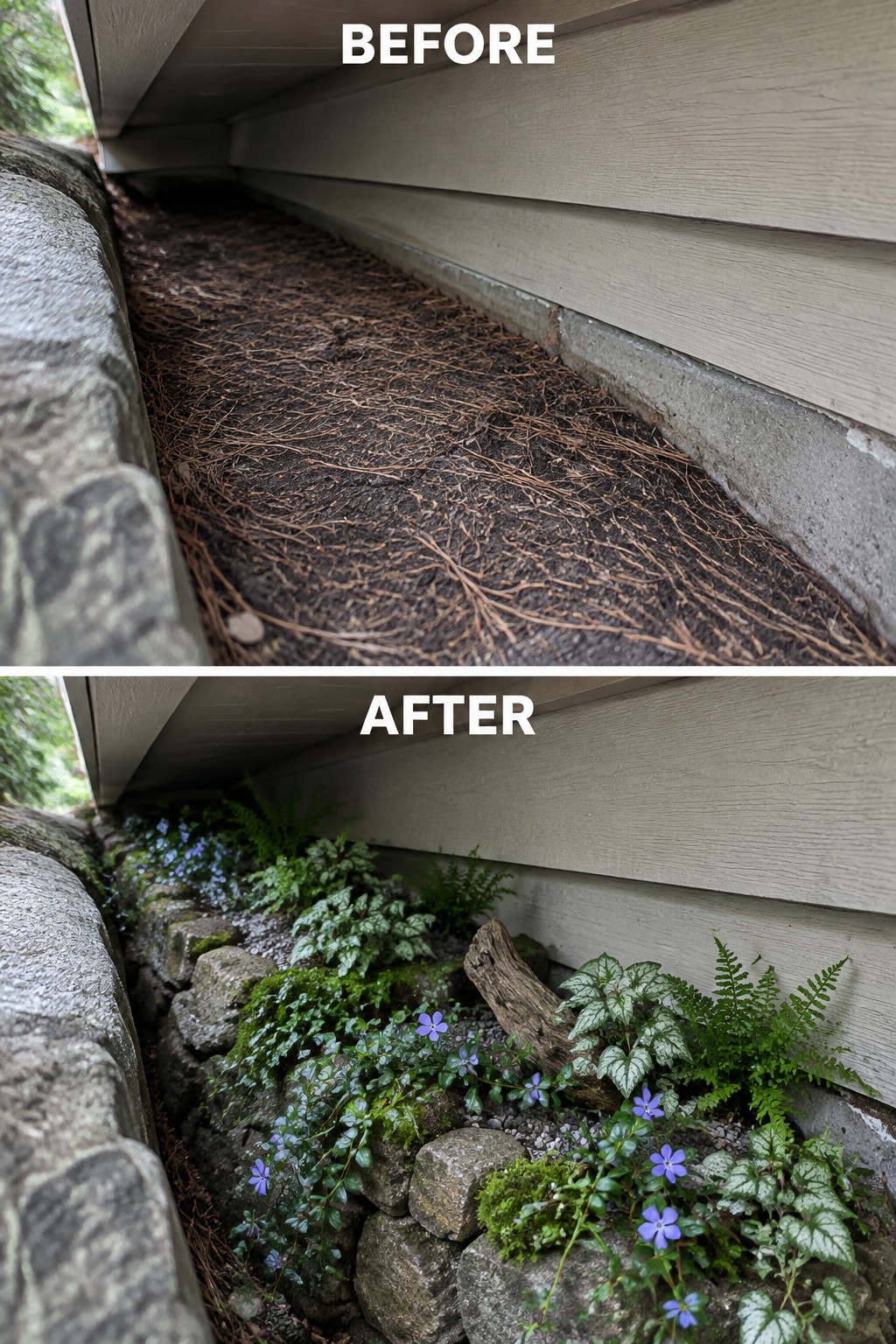
A narrow, bare strip along the house can be hard to keep tidy, especially where little sun reaches the soil. Replacing the pine needles and exposed ground with rocks and shade-loving plants gives the area a clearer shape without needing a lawn or a large planting bed.
Use a few sturdy rocks to define the planting area, then add plants suited to low light and keep enough space between them to grow. This approach works well in the side yard or other tucked-away corners, but leave access to the foundation and avoid piling soil or stone against the siding.
Make A Clear Path Through A Shaded Garden
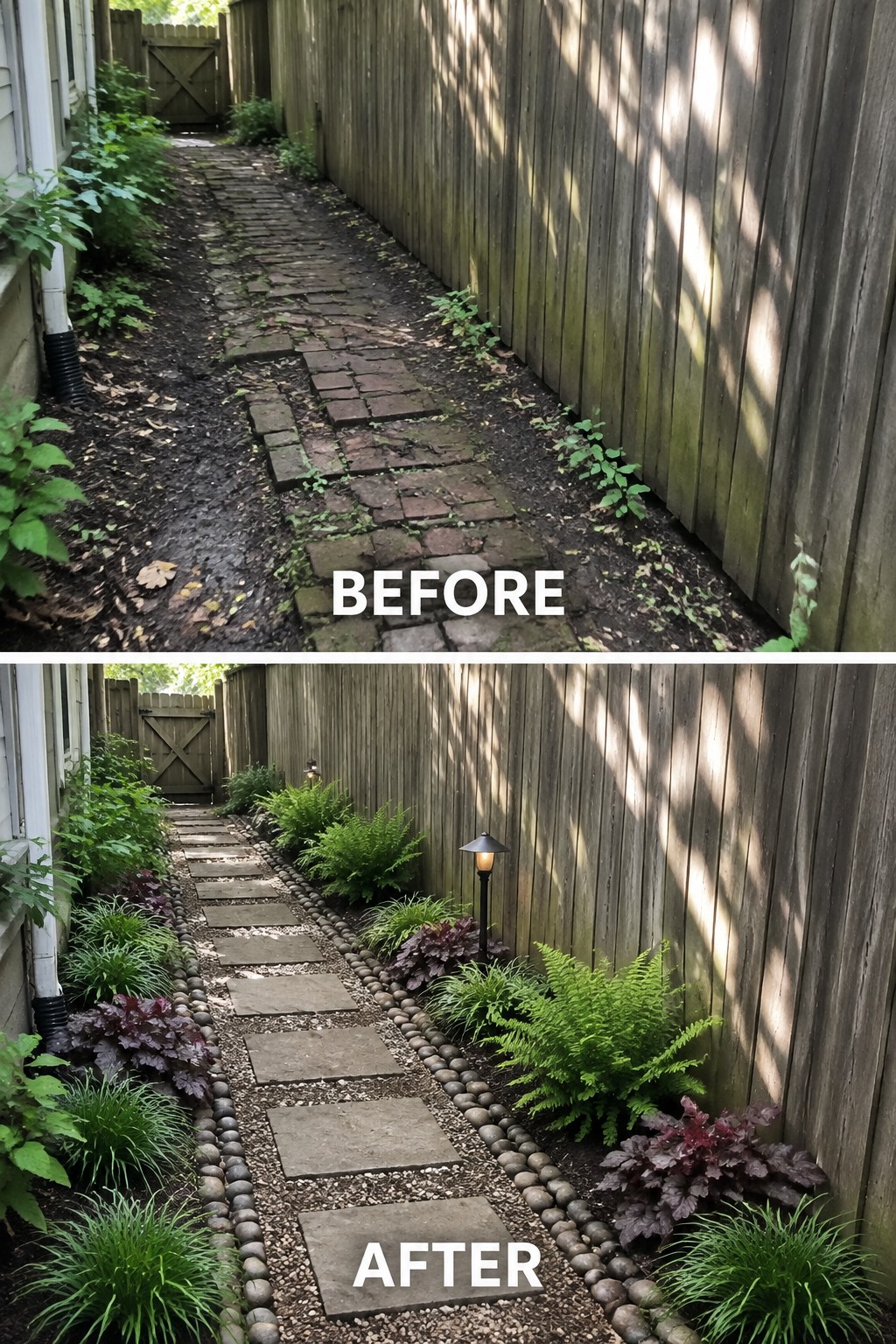
Replacing a muddy, uneven walkway with regularly spaced pavers gives this narrow side yard a clear route to the gate. The gravel between the stones and rounded edging keep the path defined, so the planting has room without spilling into the walking space.
This idea works well in a shady side yard where grass may struggle and the ground stays bare. Set the pavers on a firm, level base, and leave enough width to walk comfortably. A few shade-tolerant plants along the edges are plenty.
Build A Terraced Rock Garden On A Slope
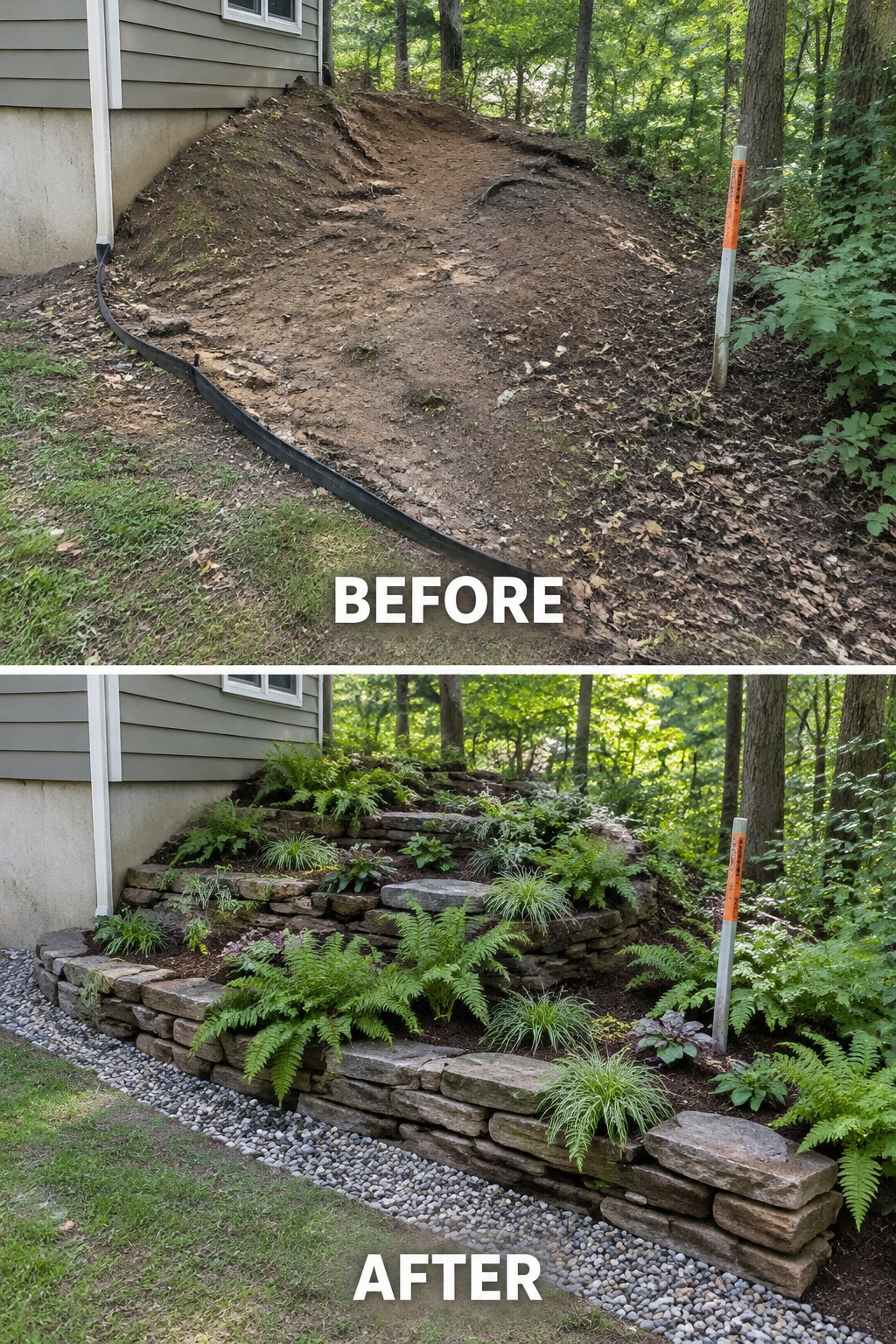
A steep, bare patch can be hard to plant and prone to washing out. Low stone retaining walls turn the slope into manageable tiers, giving plants a place to grow while adding clear structure to a shaded corner.
Use this idea beside a house or along a wooded bank where the ground drops away. Set the stones securely and make sure water can drain through the wall; then fill the tiers with shade-tolerant plants suited to your soil.
Define A Shaded Corner With A Gravel Garden Bed
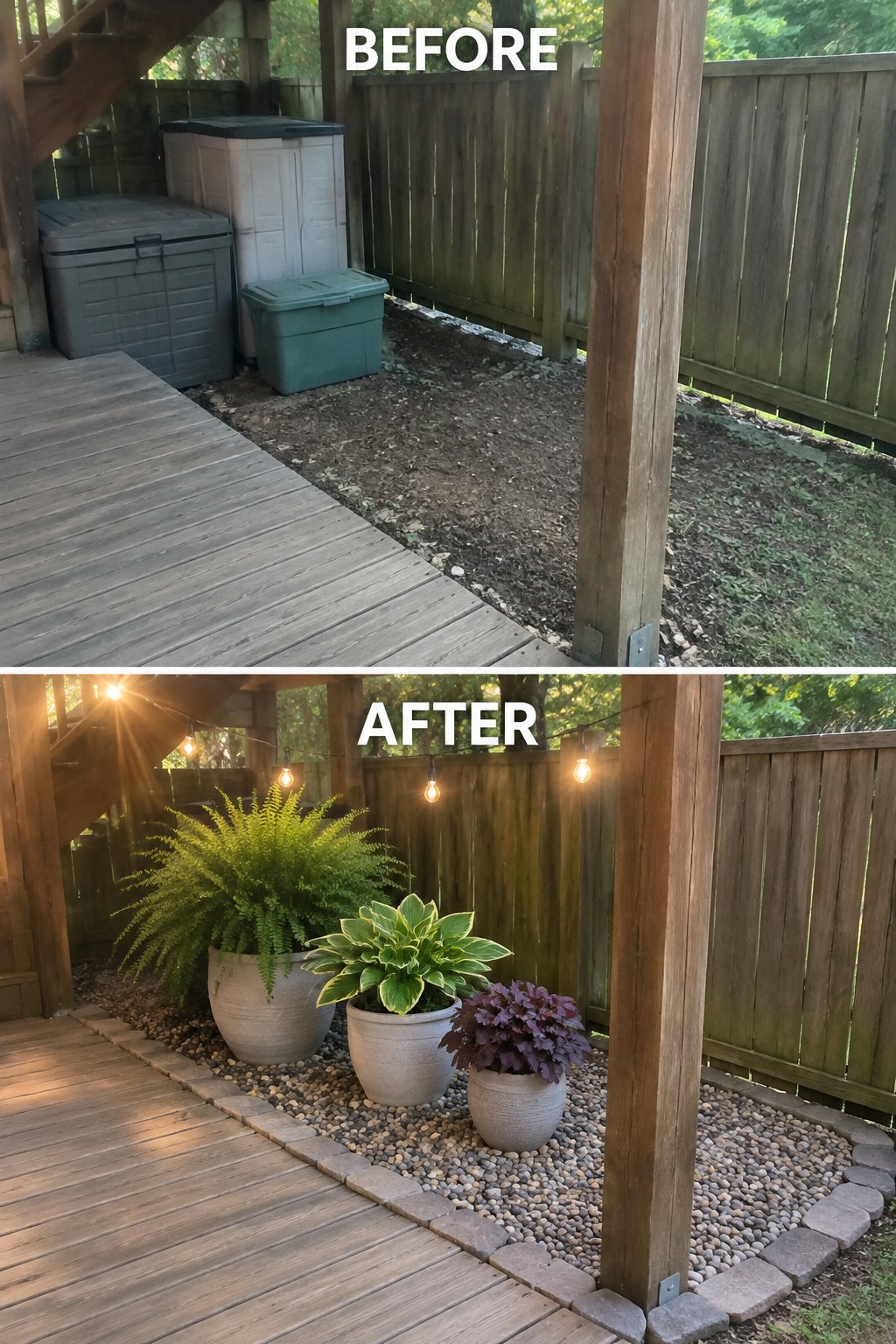
Replacing the bare soil with gravel and a simple stone border gives this shaded corner a clear shape. A few large planters then provide the planting without crowding the ground, which is useful where little grass grows or the space is difficult to maintain.
For a similar spot beneath a deck or beside a fence, clear away weeds first and lay landscape fabric if needed to limit regrowth. Keep the border low and leave enough room to reach the plants for watering. Choose shade-tolerant plants that suit your local conditions.
Turn A Bare Shaded Corner Into A Planted Rock Garden
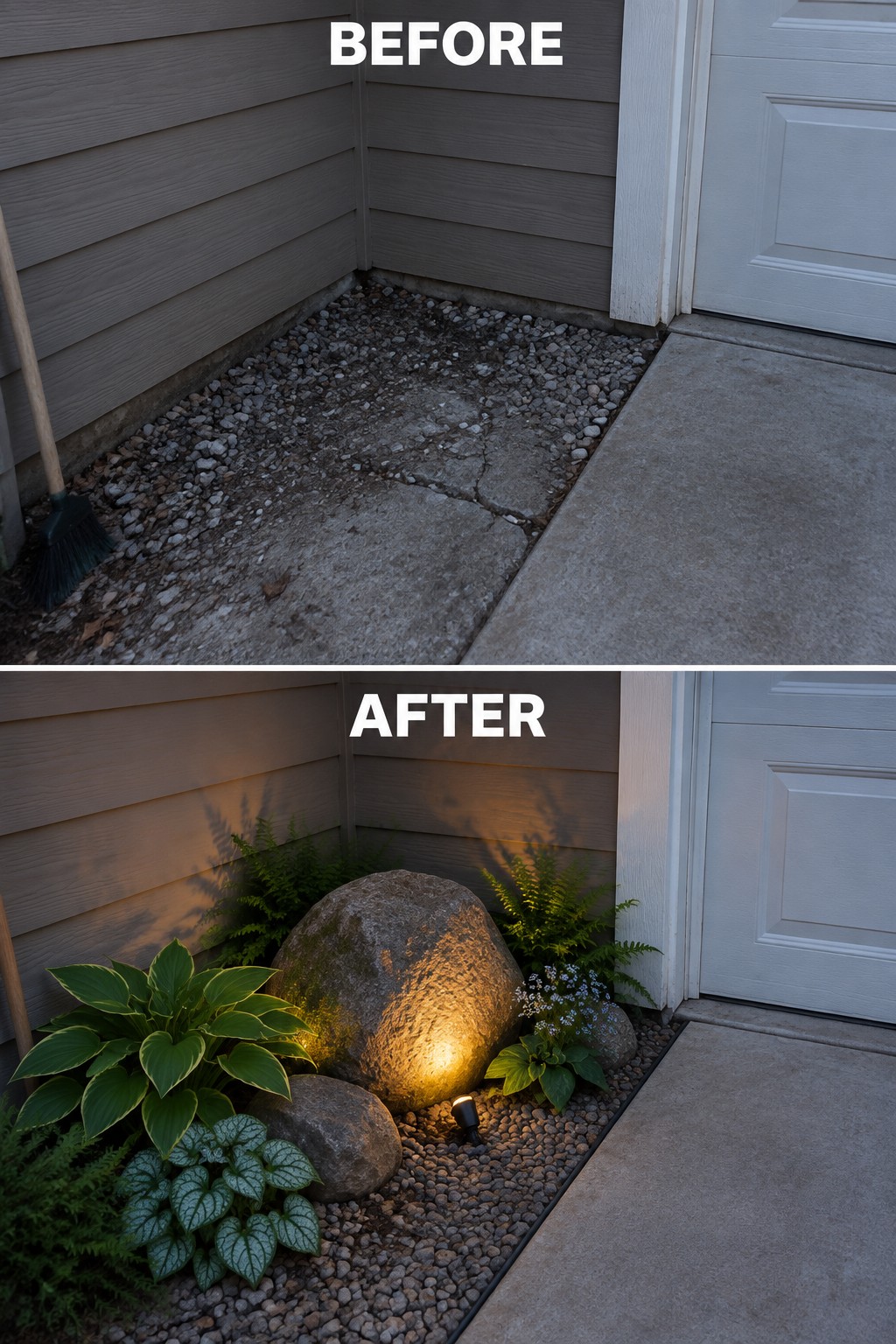
A patch of loose gravel and cracked concrete can be hard to ignore, but a few well-placed rocks and shade-loving plants give the corner a clear shape. The large stone makes a simple focal point, while the plants fill in around it without taking over the space.
This idea works well beside a house where little lawn would grow and there isn’t room for a larger bed. Clear away debris first, then arrange a few rocks before planting so you can leave enough space to reach the door and keep the path clear.
Create A Shaded Garden Path With Stepping Stones
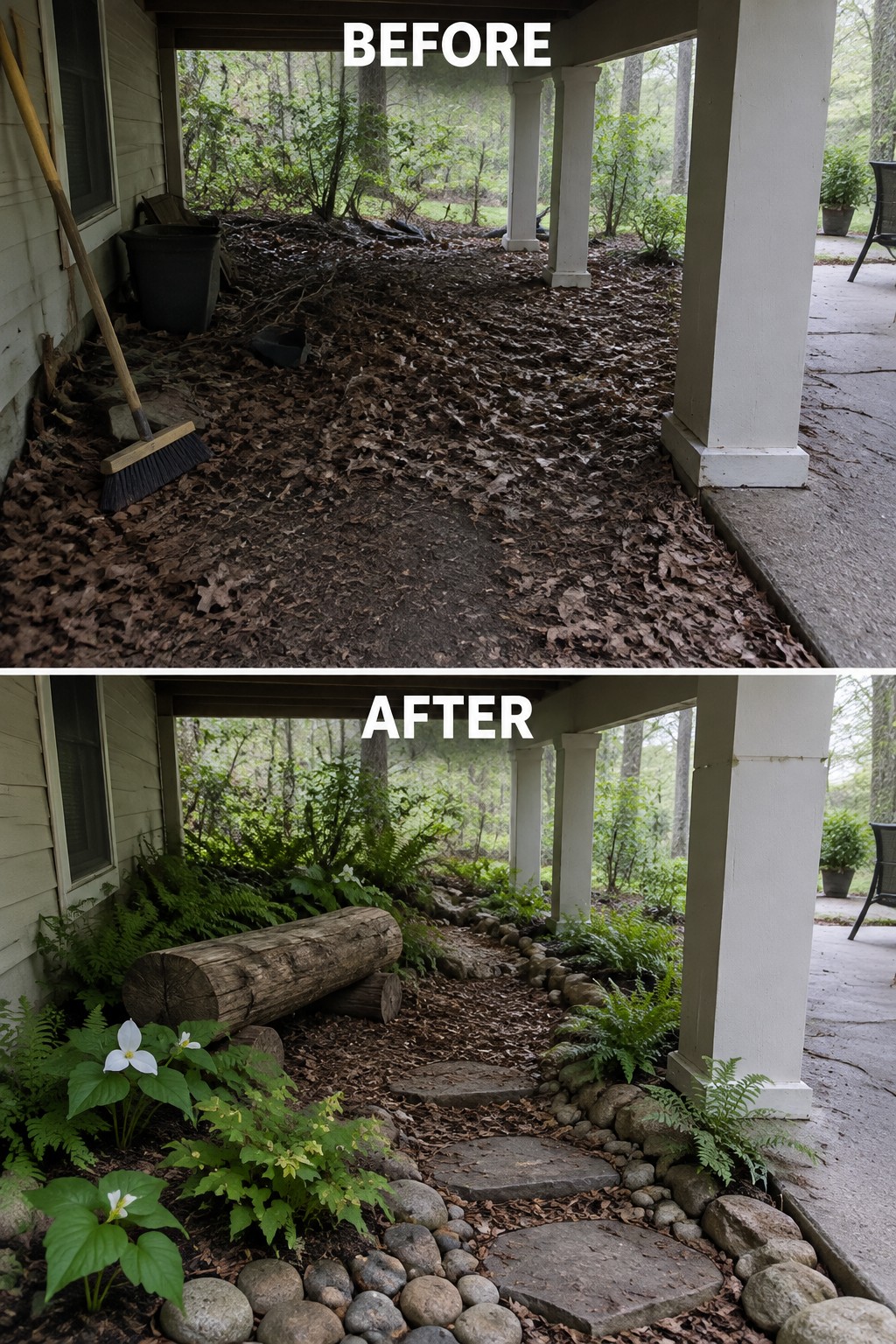
An untidy shaded strip can be hard to use, especially when leaves collect on bare soil. Adding a simple line of stepping stones gives the area a clear route, while river rocks help keep the edges defined.
Start by clearing debris and choosing stones that sit firmly underfoot. This idea works well beneath a porch or along a shady side yard, but leave enough space around the path for plants to grow without blocking the way.
Define A Shaded Corner With A Planted Bed
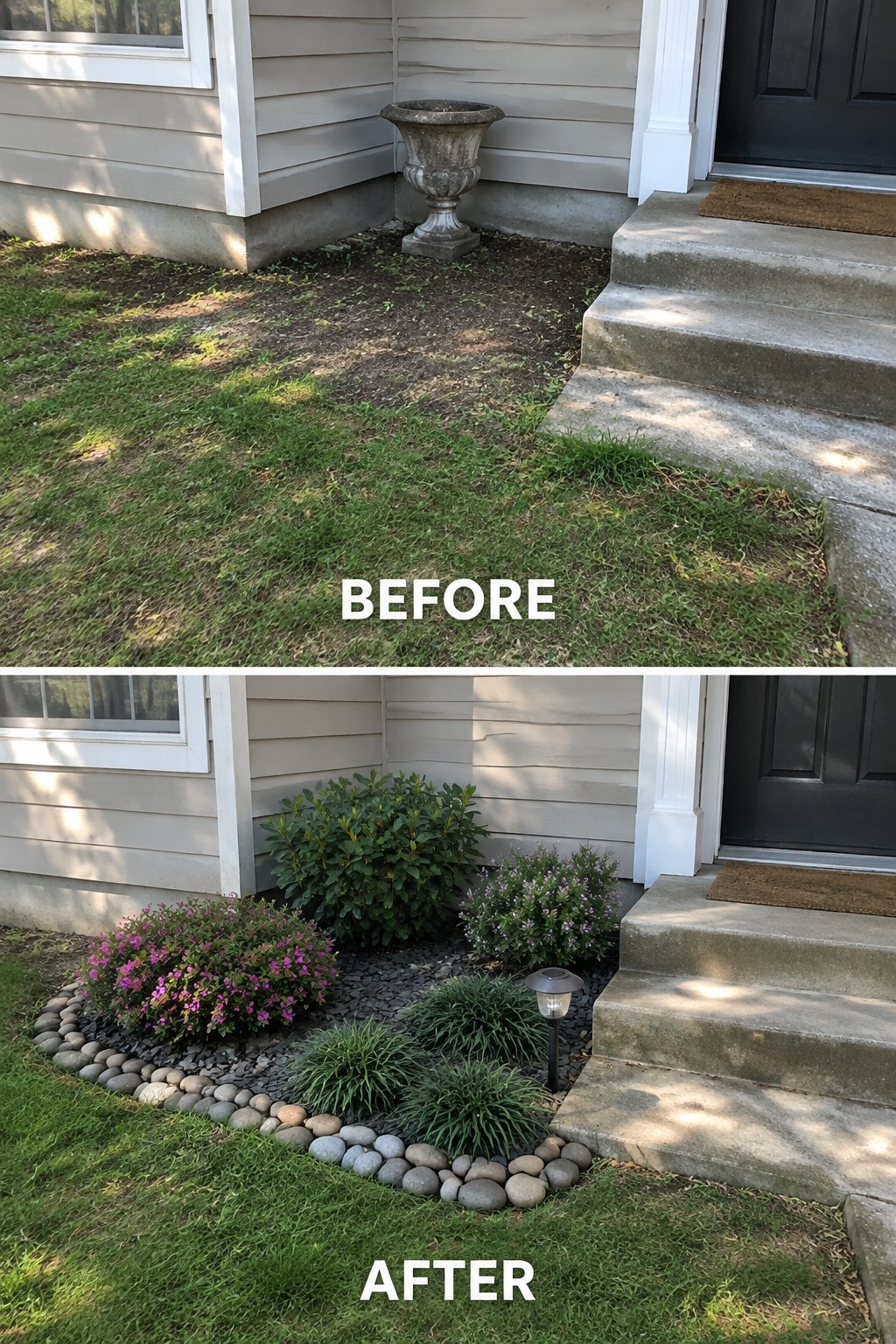
A bare patch beside the front steps can look untidy, even when the rest of the yard is cared for. Here, a curved border of smooth stones and a dark gravel bed give the corner a clear shape, while a few compact plants fill it in without taking over.
This idea works well where a lawn meets a house or walkway and grass struggles to grow. Clear the area first, then keep the bed small enough that it won’t crowd the steps. Choose plants suited to the amount of shade and leave room for them to spread.
Replace A Cracked Walkway With A Gravel Path

An overgrown strip beside a walkway can feel neglected, especially in a shady side yard. Replacing the cracked concrete with gravel and broad stepping stones gives the route a clearer shape and leaves room for a simple rock garden along the fence.
Start by clearing weeds and deciding how wide the path needs to be for comfortable walking. Gravel works well in narrow, shaded spaces, but use a firm base and keep the stones level so the path stays easy to use.
Turn A Bare Pond Edge Into A Planted Rock Garden
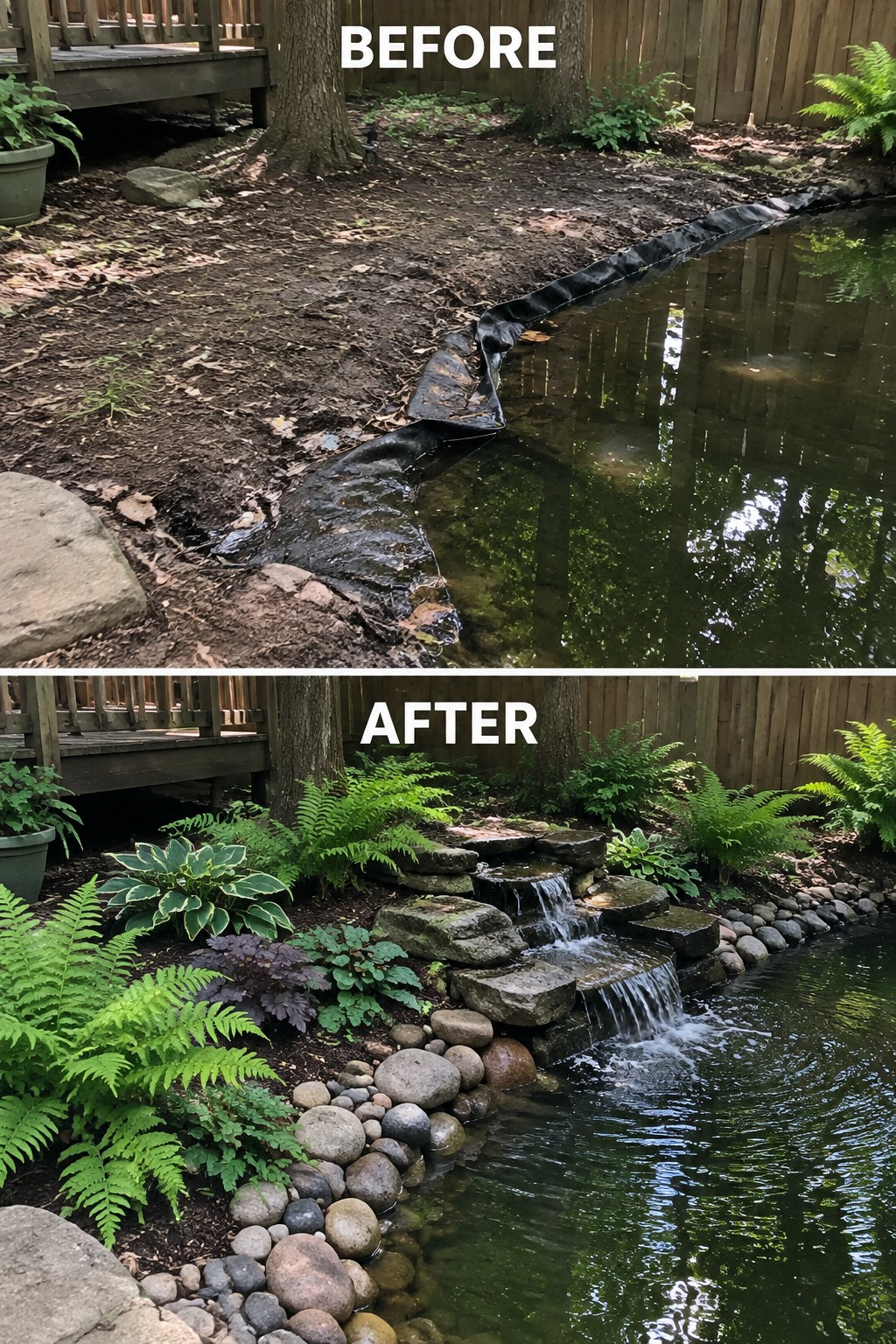
A muddy, uneven pond edge can look unfinished, especially in a shady yard. Adding a small rock waterfall and planting around it gives the area structure and makes the water feel like part of the garden rather than a separate feature.
For a similar corner, start by arranging larger stones to define the edge, then fill gaps with shade-friendly plants and smaller river rocks. Keep the planting low near the water so the pond stays visible, and leave enough room to reach the edge for maintenance.
Replace Bare Ground With A Defined Rock Garden
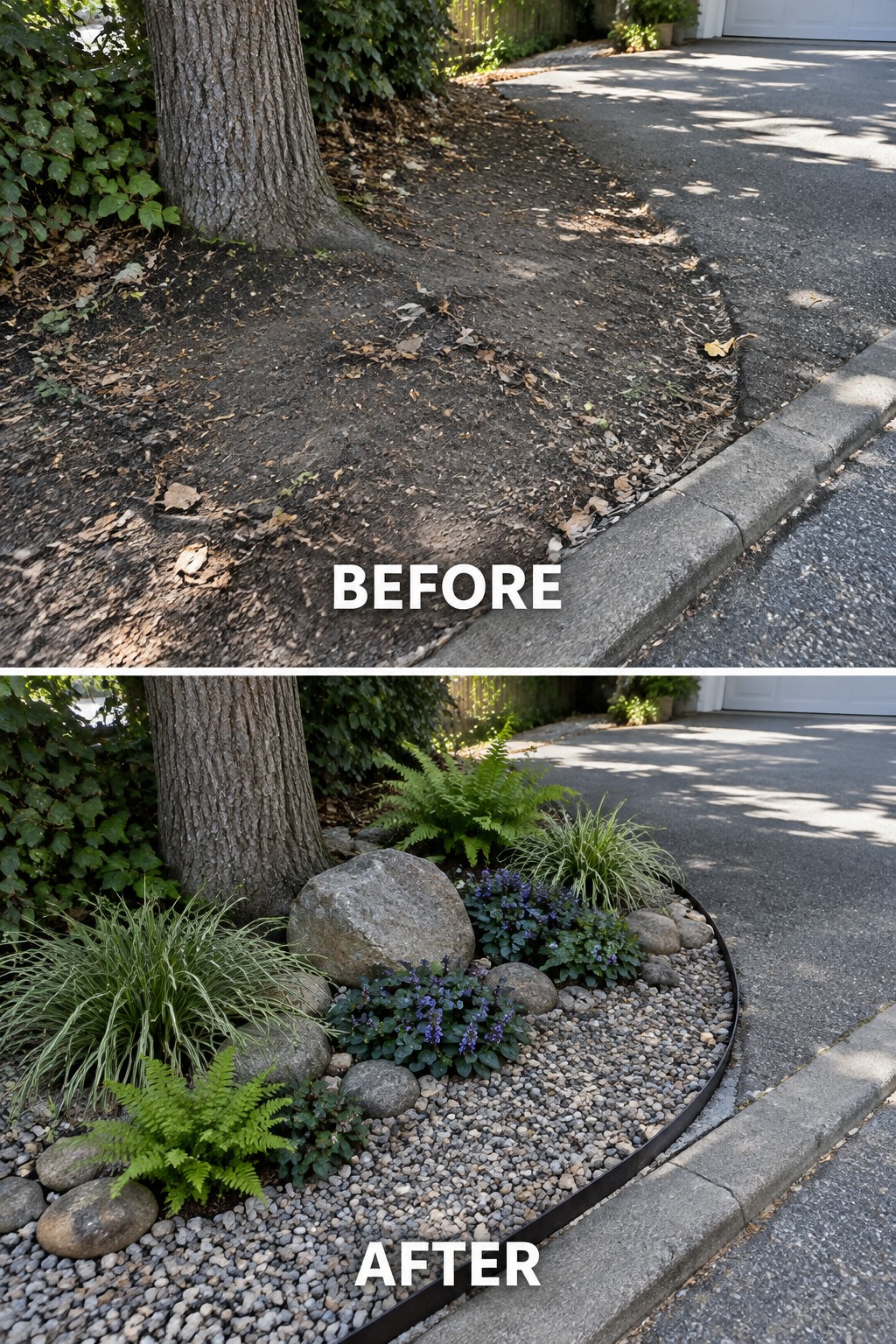
A bare, leaf-strewn patch beneath a tree can look untidy and be difficult to mow around. Clearing it and outlining a gravel bed gives the corner a clear shape, while a few shade-tolerant plants and rocks keep it from feeling like an empty patch of stone.
This works well beside a driveway or in a small corner where grass struggles. Keep the edging low and the planting simple, and leave enough room around the tree trunk so the bed does not cover its base.
Replace Bare Soil With A Shaded Rock Garden
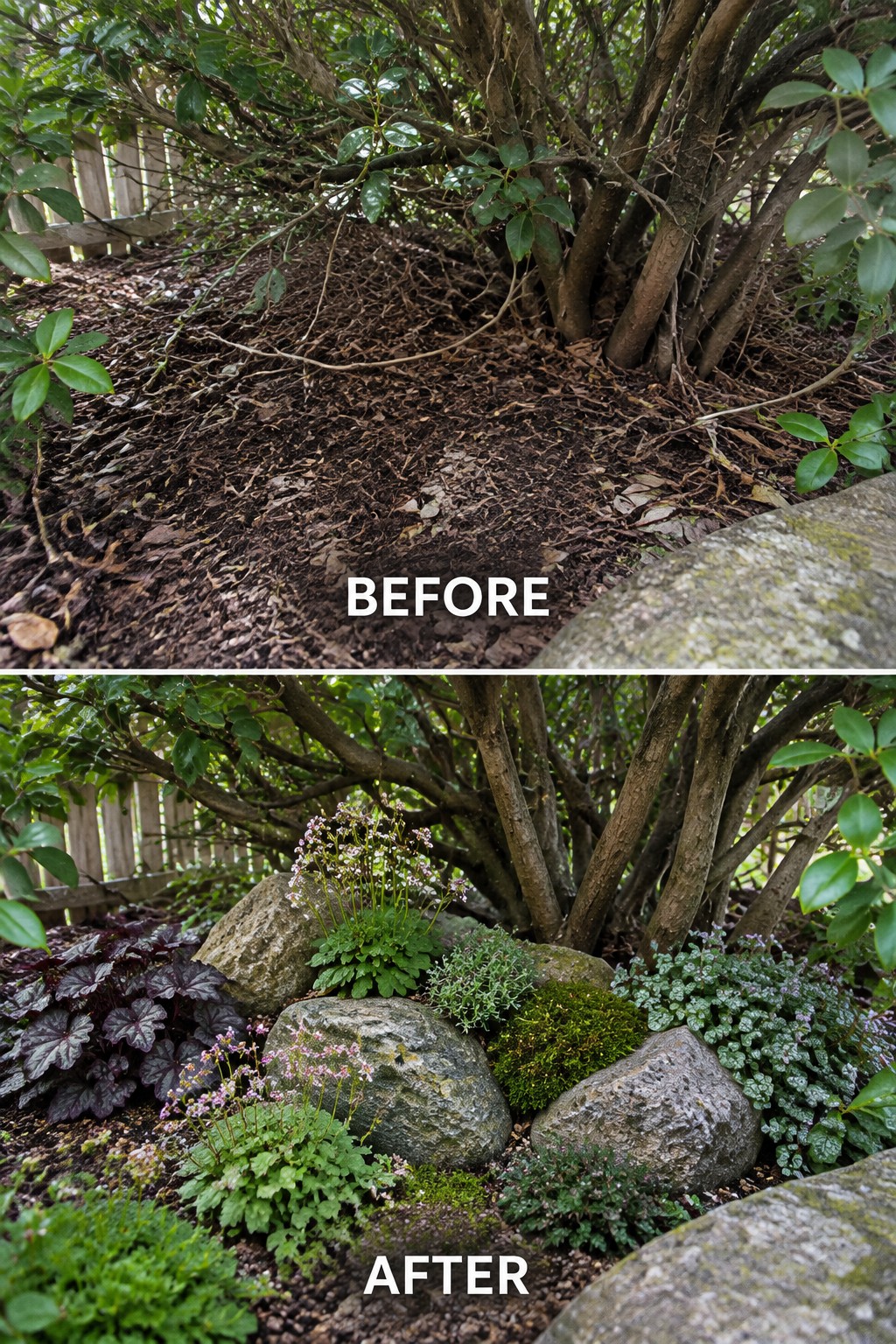
The bare ground beneath a shrub can be hard to keep tidy, but a small rock garden gives it a clear shape and makes the corner feel planted rather than forgotten. Here, large stones and low-growing plants replace much of the exposed soil.
Use a few substantial rocks as the main structure, then fill around them with shade-tolerant groundcovers and small flowering plants. Leave enough open space for the plants to spread, and avoid piling stones against the shrub trunks.
Add A Raised Rock Border To A Shady Strip
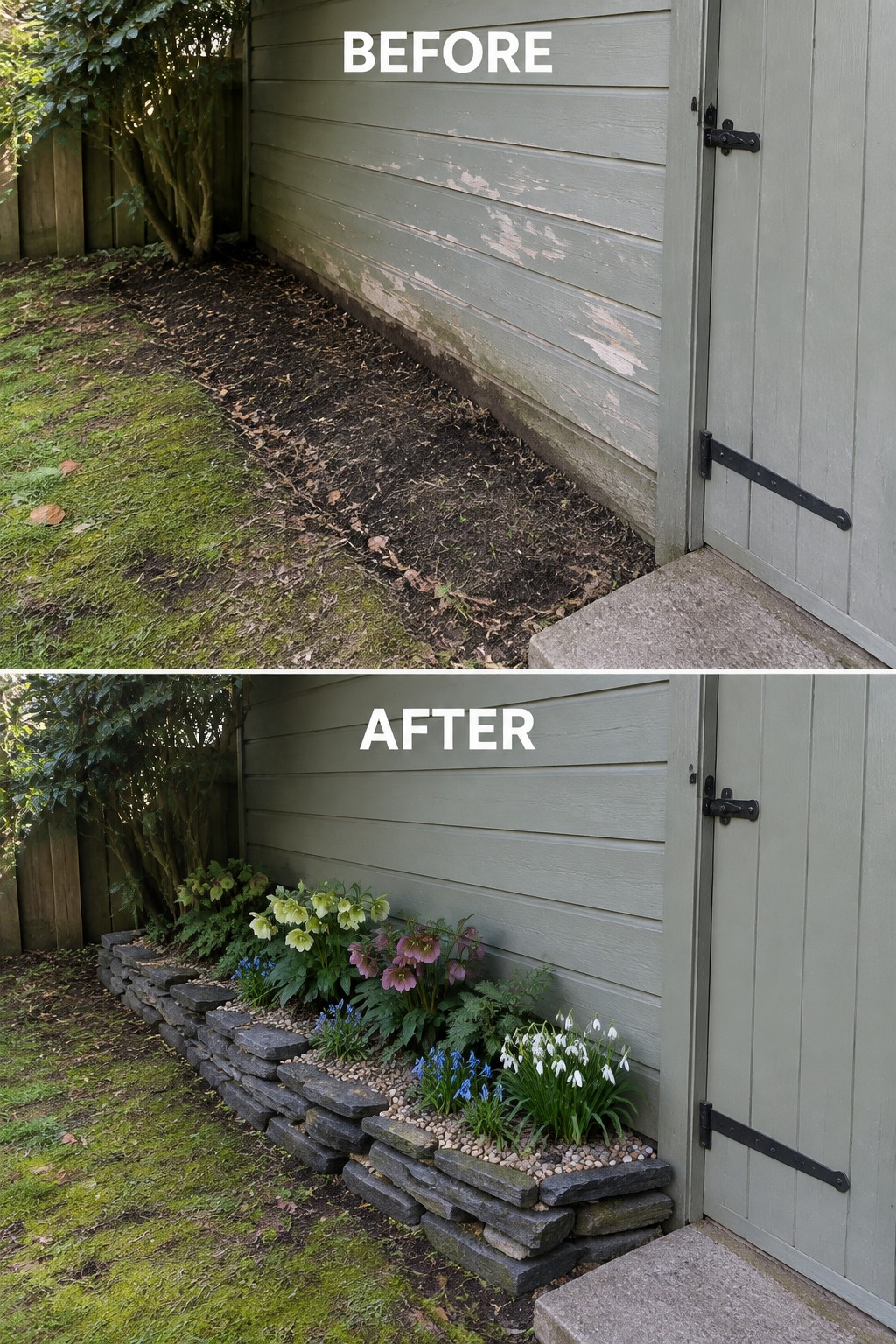
A narrow, bare strip beside a shed can look messy and hard to maintain. A low stone border gives it a clear shape, and shade-tolerant plants turn the space into a small garden instead of leaving it as exposed soil.
Use this idea along a fence or wall where grass struggles, but keep the bed narrow enough that paths and doors stay clear. Choose plants suited to the light and add a layer of gravel or small stones around them to help keep the bed tidy.
Turn A Bare Corner Into A Shaded Rock Garden

A bare patch beneath a tree can be hard to keep green, so give it a defined garden bed instead. In this yard, a stone path and a few large rocks create structure, while shade-tolerant plants fill the space around them.
For a similar corner, start by clearing the ground and laying out a simple path through the bed. Choose plants suited to the amount of shade, and leave room for them to grow so the rocks and greenery do not crowd one another.
Cover A Concrete Wall With A Planted Rock Garden
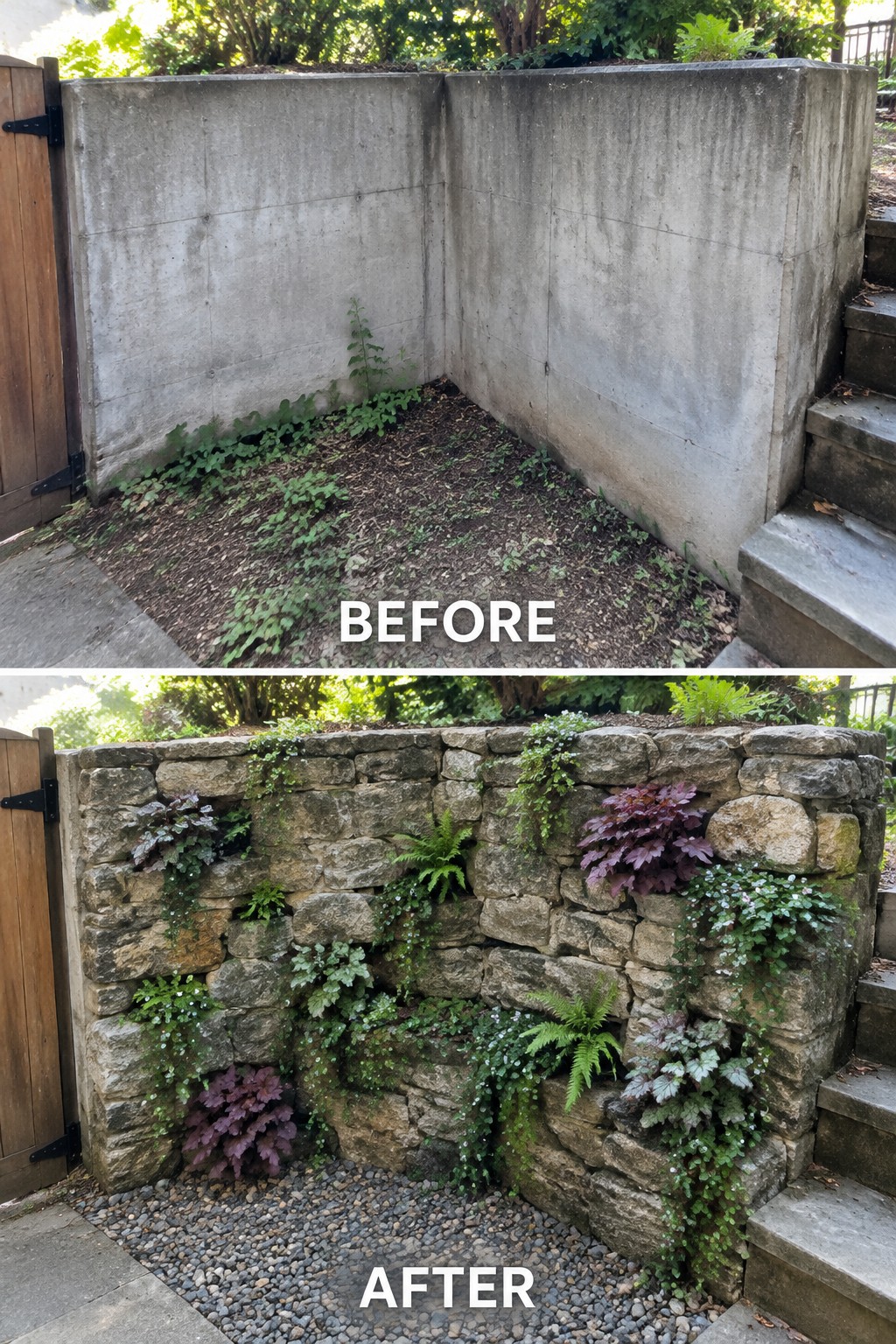
A plain concrete corner can feel stark in a shaded garden. Replacing its bare look with a stone wall and plants tucked into the gaps gives the corner a more natural, garden-like finish without needing a large planting area.
This idea works well beside a gate or steps where a wall is already part of the layout. Use stones suited to the site, add shade-tolerant plants in pockets, and keep the ground in front clear with gravel so the corner stays neat and easy to maintain.
Add Moss And Gravel To A Shady Garden Corner
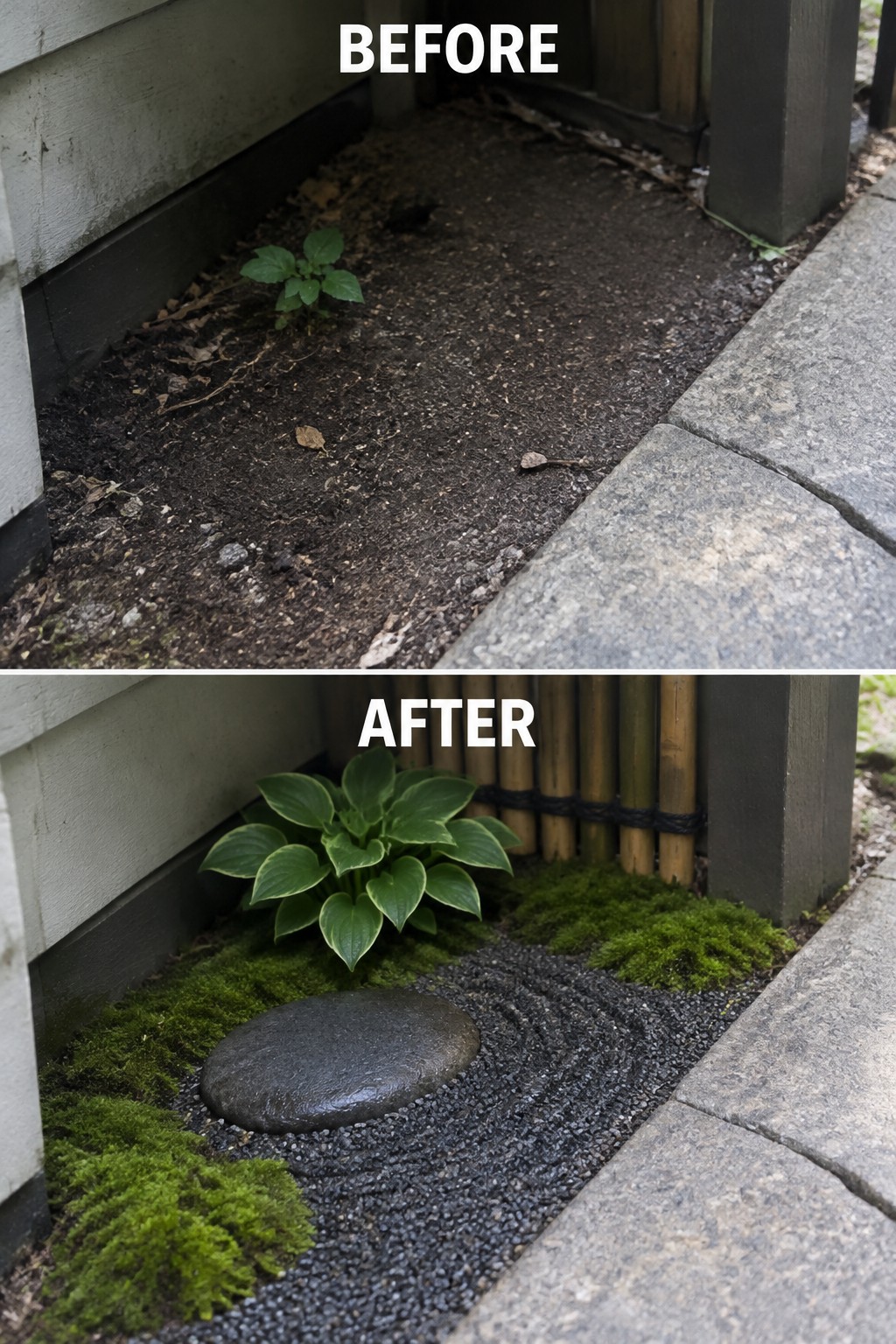
A bare, neglected corner can feel more intentional with a simple rock garden suited to low light. Here, a broad-leaved hosta and patches of moss replace much of the exposed soil, while dark gravel gives the small space a tidy surface.
Use shade-tolerant plants and gravel that drains well, keeping a clear route through the bed so it is easy to maintain. A single larger stone can serve as a focal point without crowding a narrow strip beside a walkway.
Frequently Asked Questions
Q: Can I build a rock garden in a spot that gets almost no sun?
A: Yes, as long as you choose plants that suit deep shade, such as ferns, moss, or some varieties of hosta. Check the spot after rain, too, since dense shade can keep the soil damp for longer.
Q: How do I stop the rocks from sinking into soft soil?
A: Set the largest stones on a firm base of compacted soil or gravel. Burying roughly a third of each stone helps it look settled and keeps it from wobbling.
Q: Do I need to water a shaded rock garden often?
A: Usually less often than a sunny bed, but rocks can still leave the soil dry underneath. Feel the soil near the roots before watering, especially during a long dry spell.
Q: What can I plant between the rocks without making the garden look crowded?
A: Choose a few low-growing plants and leave some open space for the stones to stand out. Creeping ground covers can fill narrow gaps, while a small fern or two adds height without taking over.
