

A sloped backyard can be hard to use when the ground feels uneven, the planting looks scattered, or rain leaves bare patches behind.
I’ve found that clearing the layout and adding a few defined paths or stone borders can make a hillside feel more cared for without trying to flatten it.
Rock gardens work especially well on slopes because they add structure while making room for plants that suit the site.
The change can be satisfying to see, particularly when a once awkward patch starts to feel like a natural part of the yard.
I’d save ideas that fit your slope, drainage, and maintenance needs, then adapt them one section at a time.
Build Terraced Rock Garden Beds On A Slope

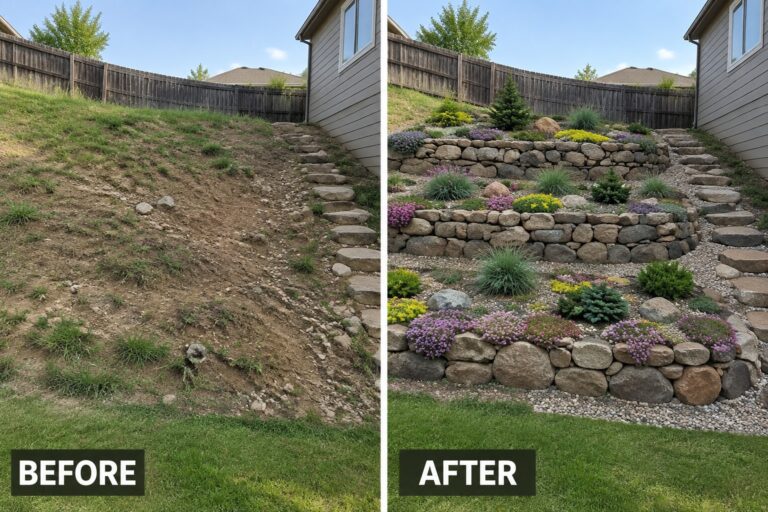
A bare, uneven slope can be hard to plant and prone to washing out. Low stone retaining walls turn it into level garden beds, making the yard feel more organized and giving plants a place to grow.
This idea works well on a sloped backyard where a single steep planting area is difficult to maintain. Keep the walls low and follow the natural shape of the hill, and leave a clear path between levels so it stays easy to walk through.
Build Stone Steps Into A Sloped Garden

Loose soil and scattered rocks made the hillside difficult to walk, while broad stone steps now create a clear route up the slope. This works well because the steps make the grade easier to use and give the planting a more orderly shape.
For a similar yard, set sturdy stones securely into the slope and make each step wide enough for a comfortable footing. Add low ground cover around the stones, but keep plants from crowding the path.
Add Terraced Beds To A Sloped Yard

The bare slope is hard to plant and prone to washing out. Low retaining walls divide it into level beds, giving the rocks and drought-tolerant plants a more orderly place to grow.
This approach works well on a steep backyard where a single planting bed would be difficult to maintain. Plan the terrace heights and drainage carefully, and leave enough room to tend the plants without stepping on the slope.
Turn A Sloped Yard Into A Stone Garden Channel

A bare, eroding slope can be hard to manage, but a defined channel of stones gives runoff a clear path and makes the yard look more planned. Here, a streambed of rounded pebbles and larger rocks replaces the exposed muddy ground.
For a similar yard, shape the channel to follow the natural slope and use stones in different sizes to help hold its form. Add plants along the edges, but keep the route open so water can move through without washing soil downhill.
Add Stone Steps To Make A Sloped Garden Easier To Navigate

The bare slope becomes a more usable garden with timber steps set into the hill and stone borders that hold the planting areas in place. This gives the yard a clear route uphill instead of leaving the ground as one uneven, difficult-to-use stretch.
For a similar slope, plan the stair route first, then build low planting pockets along the sides. Choose sturdy steps and stones suited to the grade, and leave enough space for plants to grow without blocking the path.
Use Retaining Walls To Create Planting Levels

A steep, mostly bare slope can be hard to plant and easy to let look neglected. Low retaining walls break it into manageable levels, turning the hillside into a more organized rock garden. In this yard, the new walls hold narrow gravel beds with plants instead of leaving the slope exposed.
This approach works well when a hillside needs structure but there is not much room for wide garden beds. Choose wall materials suited to the slope and make sure the design can handle drainage; water should not collect behind the walls.
Replace A Patchy Slope With Planted Stone Terraces
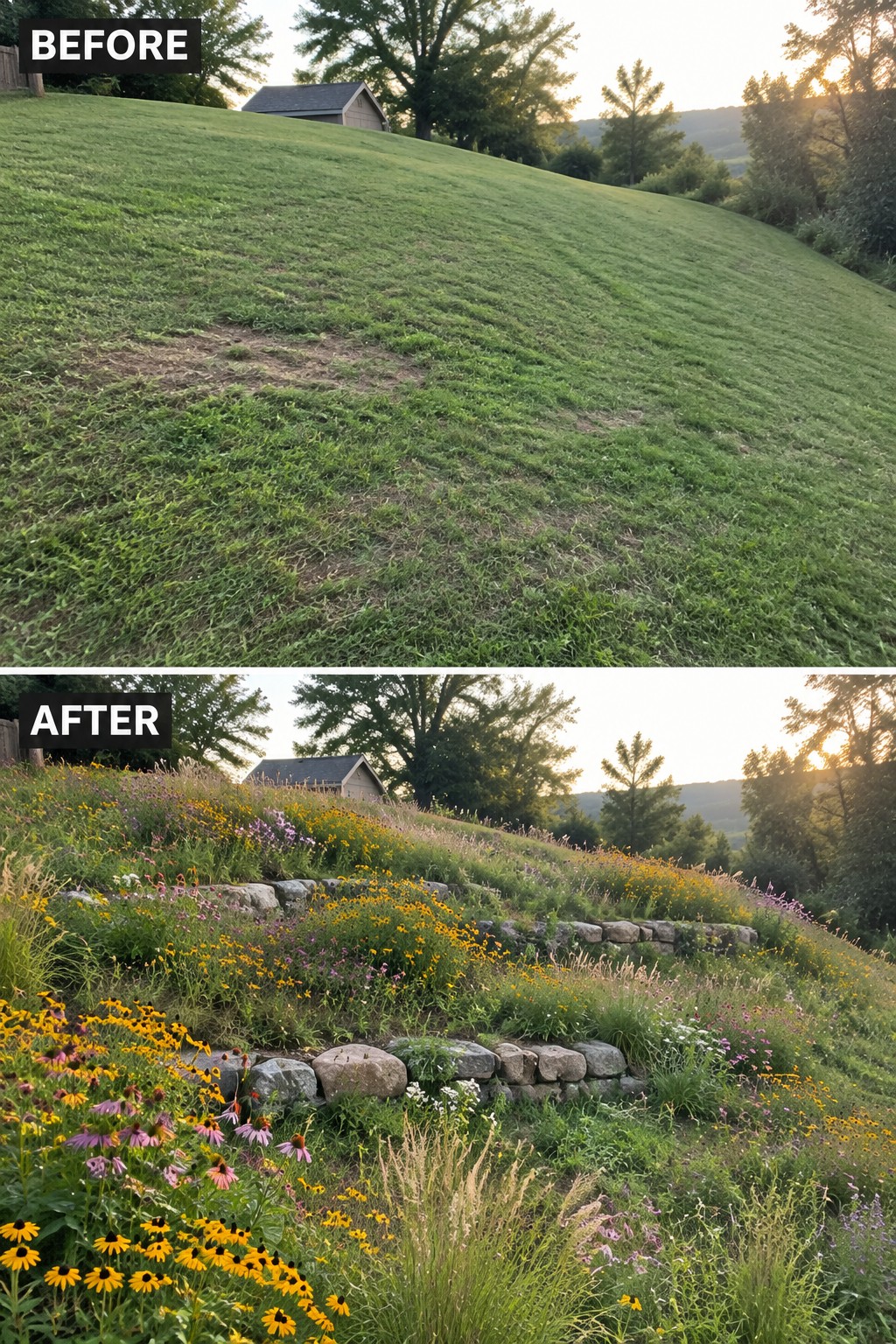
The bare, uneven lawn becomes a series of planted areas held in place by low stone walls. This gives a steep slope more structure and makes it easier to grow flowers and grasses without relying on one large stretch of lawn.
For a similar yard, use low terraces that follow the slope and leave enough space between walls for plants to fill in. Choose stones that suit the house and keep the planting manageable, especially where mowing or walking is still needed.
Create A Defined Rock Garden Border
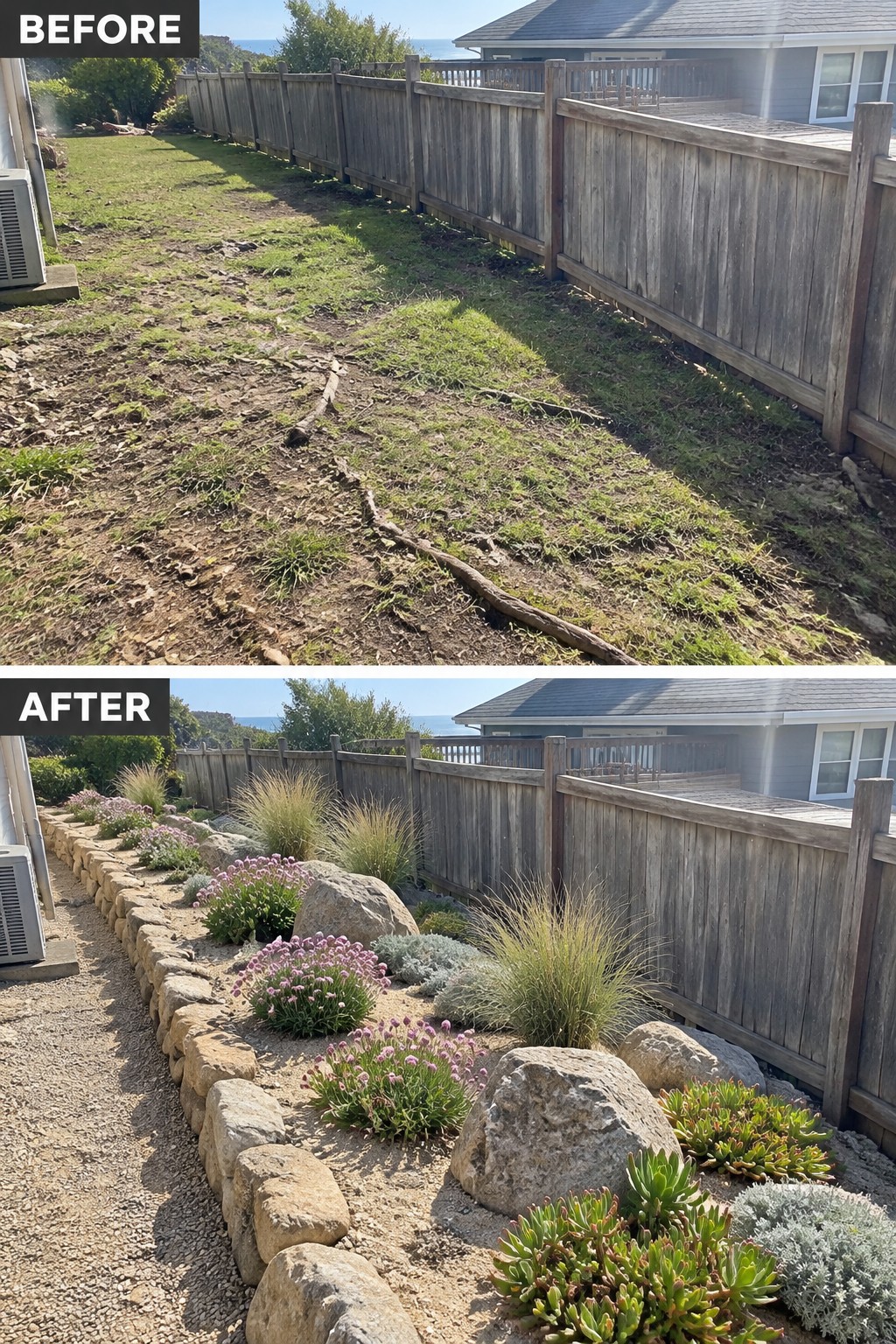
A simple rock border gives a scruffy sloped yard a clear planting area. Here, the uneven grass and bare soil give way to a gravel bed edged with large stones, making the slope look more intentional without needing a lawn or formal retaining wall.
This idea suits narrow side yards and other spots where mowing is awkward. Clear the ground first, then set stones securely along the bed edge and choose plants that fit the site’s sun and water conditions. Leave enough space between plants for them to grow.
Create A Stepping-Stone Path Through A Sloped Rock Garden

A bare, uneven slope can be hard to use and difficult to keep tidy. Adding broad stepping stones gives the garden a clear route through the planting, while ground cover helps fill the spaces around them.
This idea works well in a small sloped yard where a full staircase would take up too much room. Set the stones securely into the slope and space them for comfortable steps, then use low-growing plants around the path without blocking the way.
Add A Garden Bench To A Terraced Slope

The old slope had little structure, so the soil and scattered plants made the yard feel unfinished. Stone retaining walls create clear planting levels, while a built-in bench turns the middle terrace into a place to sit.
This approach works well on a sloped backyard where a freestanding patio would take up too much room. Keep the seating area modest and make sure the walls are properly built to hold the soil.
Turn A Muddy Low Spot Into A Rock Garden

A shallow rain garden can give a soggy part of the yard a clear shape and a place for water to collect. Here, a muddy dip becomes a stone-edged basin with gravel along one side, so the area looks planned instead of worn out.
This idea works well where water tends to pool, but check how runoff moves before digging or adding stone. Use plants suited to both wet and dry spells, and keep a clear route around the garden for mowing and maintenance.
Create A Fire Pit Seating Area On A Slope
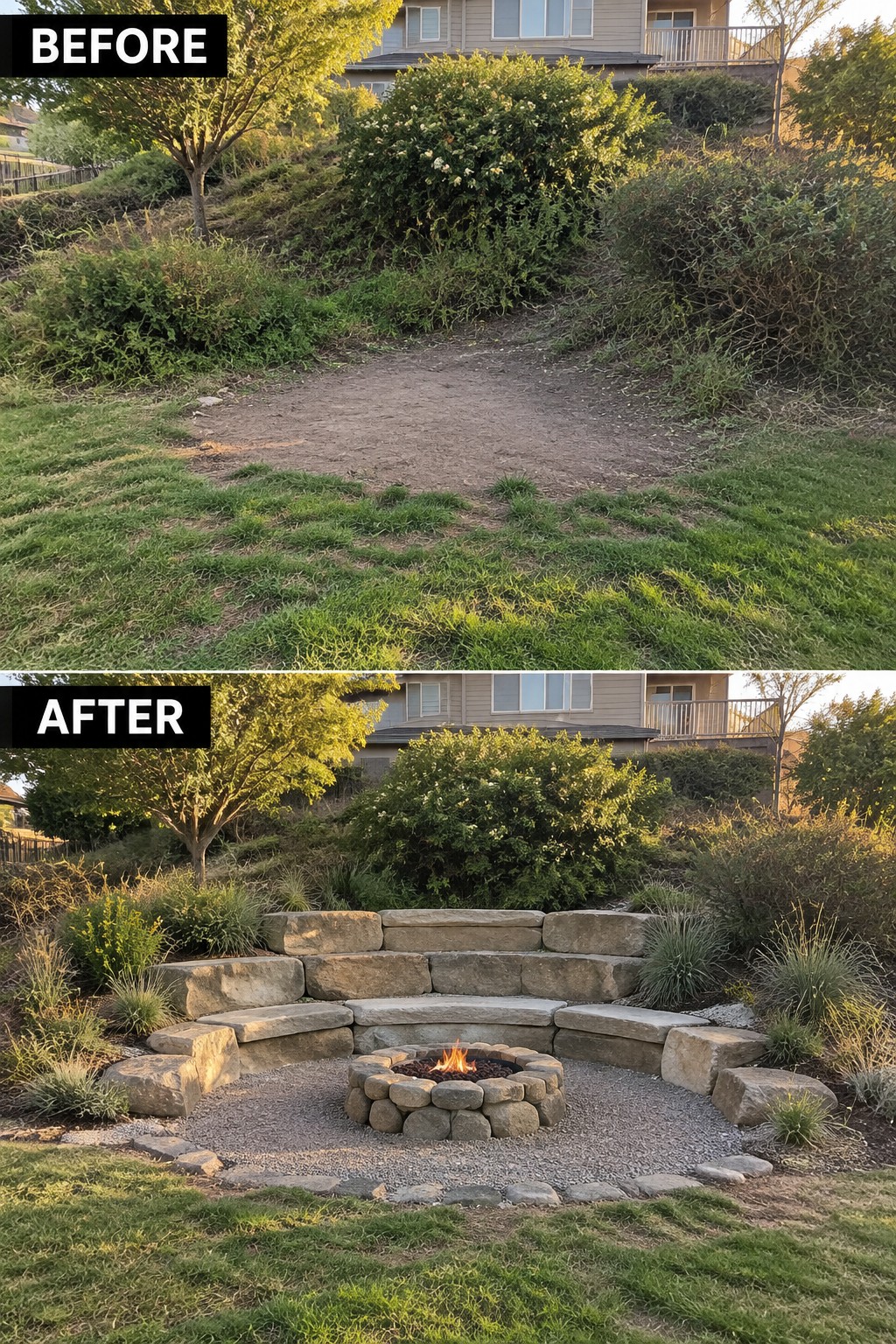
The bare patch becomes a usable gathering spot with a gravel surface, curved stone seating, and a central fire pit. Building the seating into the slope makes the space feel more settled and gives the uneven yard a clear purpose.
For a similar yard, keep the seating low and use sturdy stone to shape the area. Check drainage and choose a level, fire-safe surface around the pit before adding seating.
Add A Stone Path To Make A Sloped Yard Easier To Use

A worn dirt track can turn a sloped backyard into a muddy, awkward route. Broad stepping stones set in gravel create a clearer path, while rocks along the edges help keep it defined.
This works well on a slope where people need a steady way to reach a gate or upper part of the yard. Keep the stones level and spaced for comfortable steps, and make sure water can drain around them.
Add Flowering Plants To A Bare Rocky Slope

The slope already has large rock outcrops, but the bare ground between them makes the yard look unfinished. Clusters of flowering plants fill those open spaces and turn the rocks into part of a planned garden rather than obstacles to work around.
Use a few hardy perennials that suit your sun and soil, then repeat them in small groups so the planting feels connected. Leave room around the rocks and keep access paths clear; a steep slope is easier to maintain when plants are grouped instead of scattered.
Replace A Bare Slope With Planted Retaining Tiers
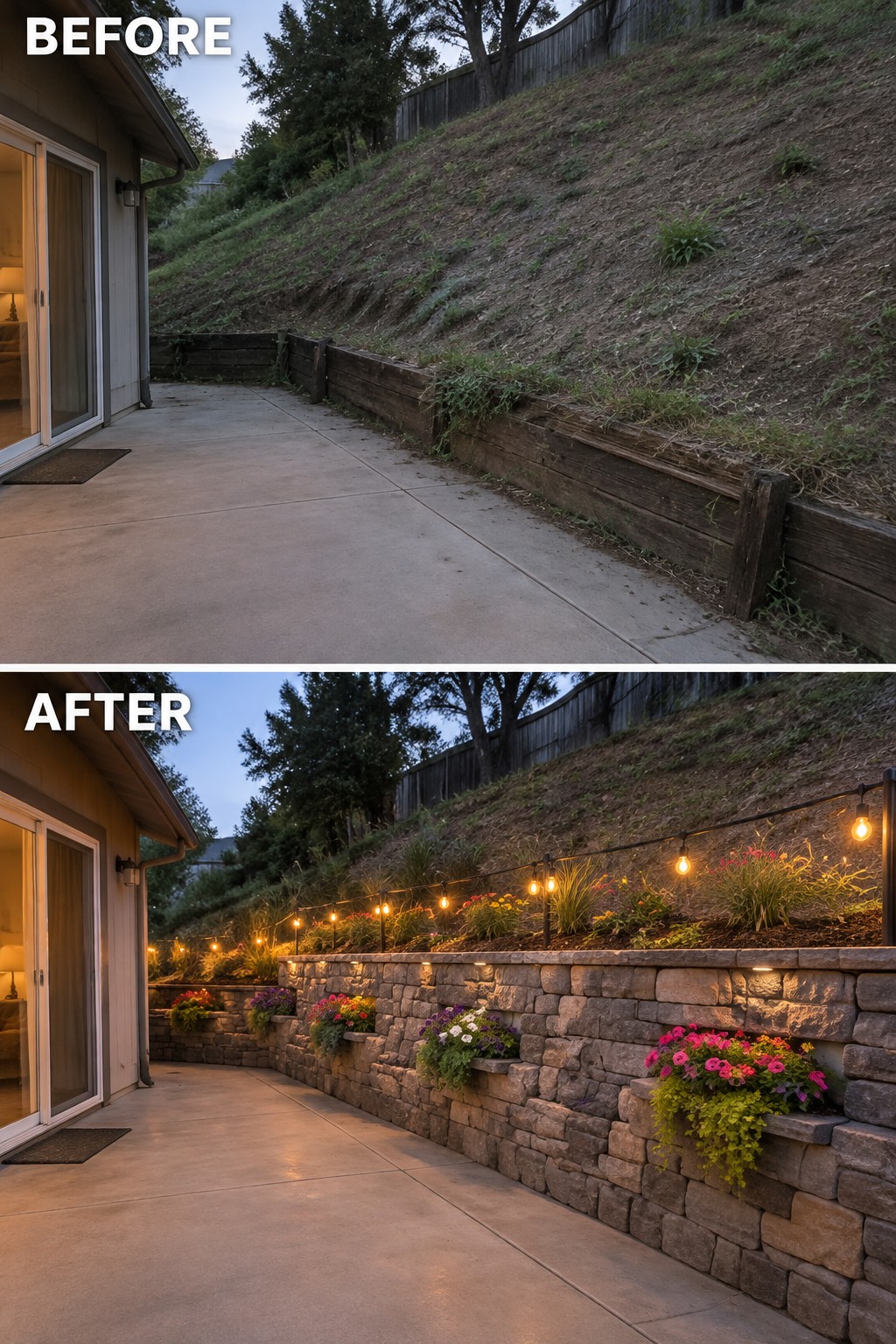
The steep, patchy slope becomes easier to manage when a retaining wall creates a level planting area. Here, stone replaces the old timber border, giving the garden a clearer shape and keeping the patio edge more orderly.
For a similar yard, build sturdy retaining tiers suited to the slope, then add low-maintenance plants and mulch. Check drainage and wall requirements before starting, especially on a steep grade.
Stabilize A Bare Slope With Gravel And Planting

The slope looks rough and exposed at first, but a layer of gravel and a few well-spaced plants give it a more planned look. The rock garden approach also suits a hillside where a lawn would be difficult to maintain.
Start by clearing loose weeds and shaping the area so water can drain safely. Then use gravel as a simple ground cover and add hardy plants in small groups, leaving room for them to grow. Check that stones stay secure on the incline, especially after heavy rain.
Add Retaining Walls To Organize An Overgrown Slope
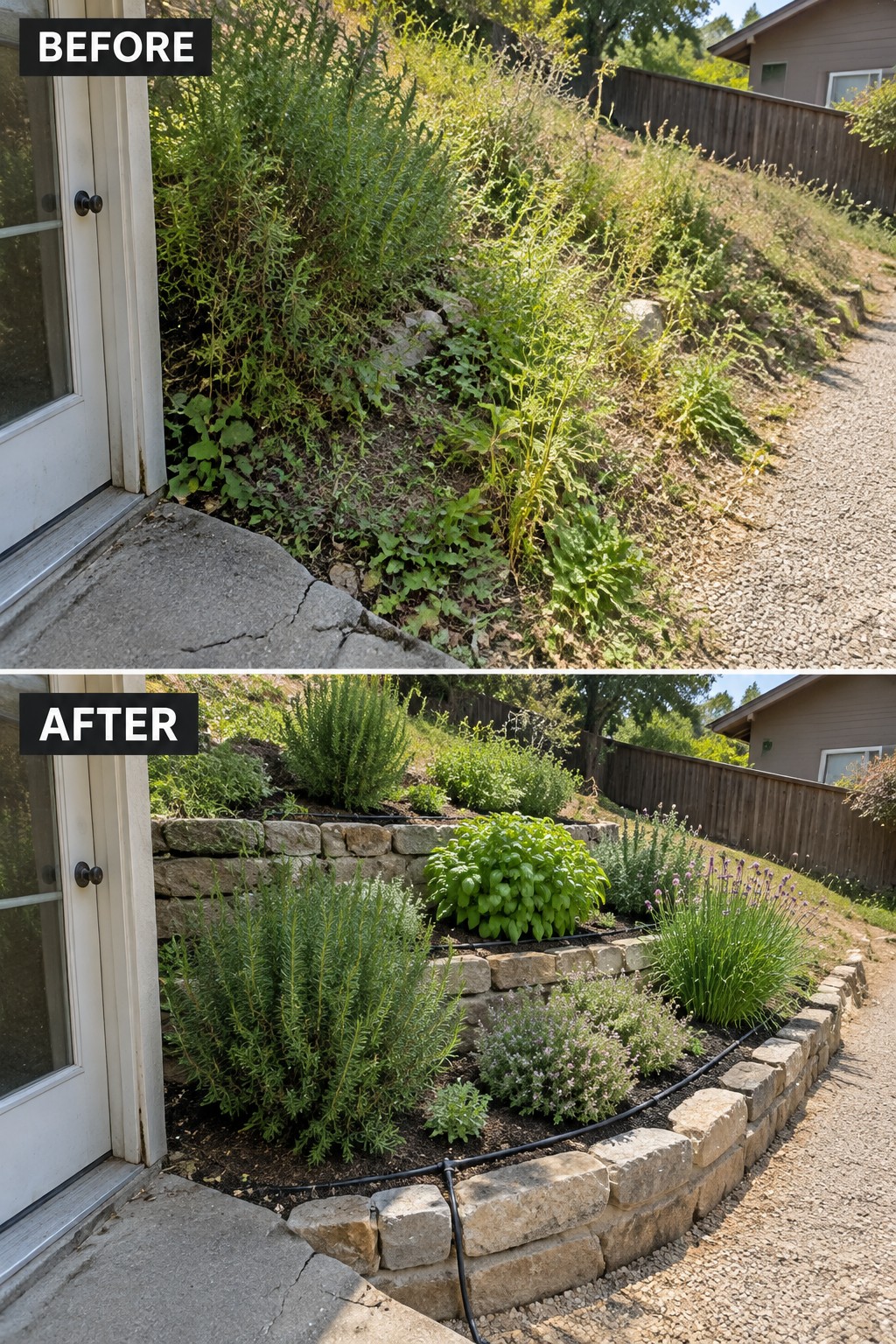
The main change here is giving an unruly slope clear planting levels. Stone retaining walls replace the loose, overgrown bank with defined beds, making the yard look more cared for and helping keep soil in place.
For a similar yard, start by clearing weeds and deciding where each tier should sit before adding plants. Keep the walls low enough to suit the slope, and leave a clear route along the beds so maintenance stays manageable.
Build A Stone Border Around A Tree
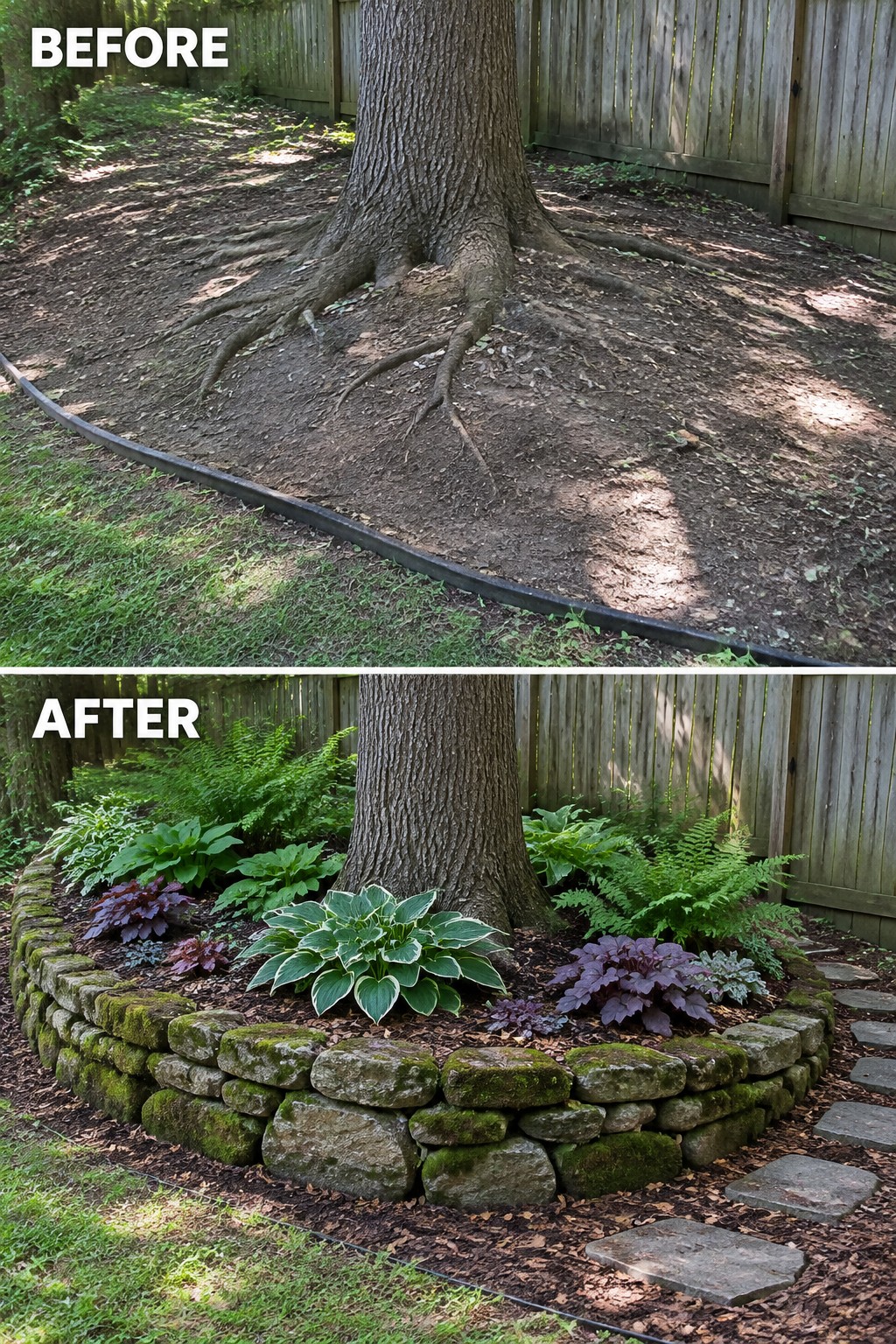
A bare patch beneath a mature tree can look messy and be difficult to mow around. A low stone border gives the area a clear shape, while shade-loving plants replace the exposed soil with a more finished garden bed.
For a similar spot, keep the border wide enough to work around the tree roots and avoid piling soil against the trunk. Choose plants suited to the shade and leave room for them to grow without crowding the tree.
Replace An Eroding Slope With Planted Timber Tiers
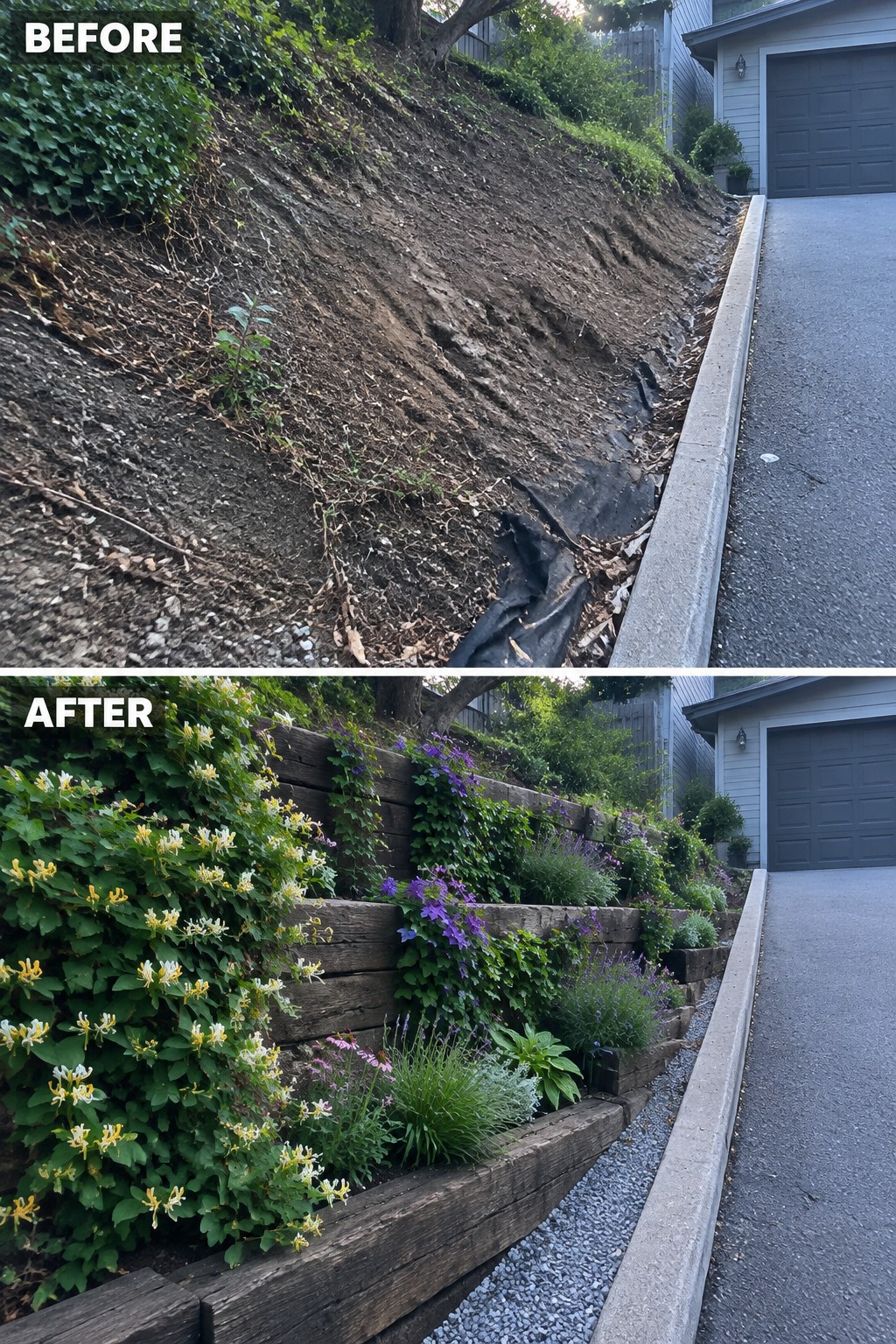
A bare slope can be hard to keep tidy, especially when rain washes soil toward a driveway. Timber retaining tiers break the grade into smaller planting areas, and flowering ground cover helps fill the space between the walls. Here, the exposed bank became a series of planted levels.
This approach can work beside a driveway or on a steep backyard bank where a single planting bed would be difficult to maintain. Plan for sturdy retaining walls and proper drainage before adding soil and plants, and leave enough room for water to move safely downhill.
Replace Patchy Grass With Planted Stone Tiers
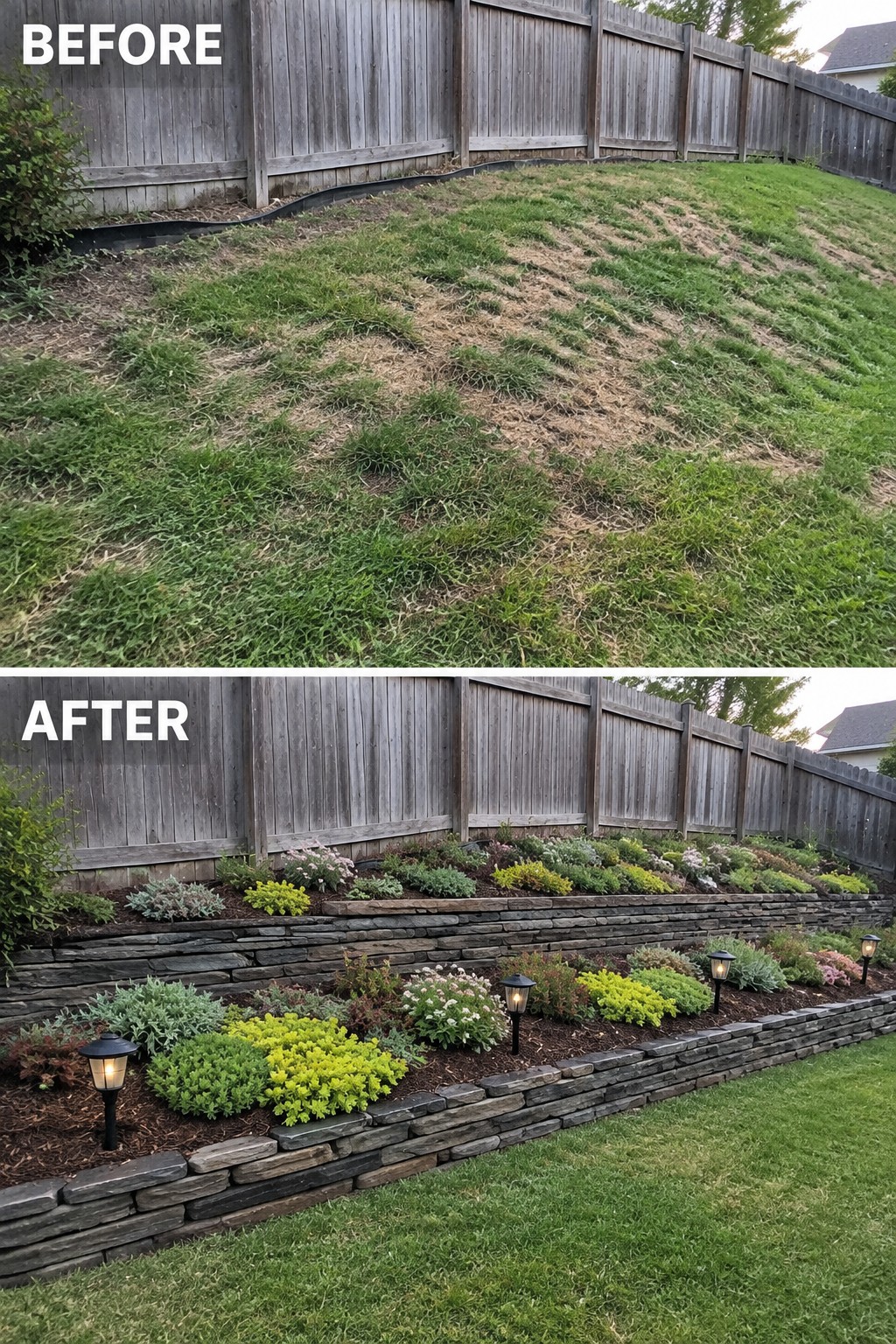
A patchy slope can be hard to mow and often looks unfinished. Building low stone retaining walls turns that uneven area into clear planting levels, giving the yard a more orderly shape and making better use of the slope.
Choose sturdy wall materials and keep each tier low enough to suit the grade. Mulch the beds and use plants that fit your climate and sun exposure; leave the lawn below open so the new garden does not crowd the yard.
Turn A Bare Slope Into A Planted Rock Garden

The narrow, muddy slope becomes easier to manage when stones and low-growing plants give it structure. Here, the rocks form a planted edge along a gravel path, replacing loose dirt with a clearer route through the space.
For a similar side yard, use sturdy stones to help hold the soil and choose plants suited to the slope’s sun and drainage. Keep the path wide enough to walk comfortably, and make sure runoff can drain safely rather than collecting beside the house.
Frequently Asked Questions
Q: How do I keep a rock garden on a slope from washing out in heavy rain?
A: Start by shaping the slope into small, stable terraces or shallow planting pockets rather than laying stones over loose soil. Tuck in groundcovers between the rocks, and make sure water can drain safely instead of rushing down one channel.
Q: Do I need to remove the grass before adding rocks?
A: Yes. Remove the grass and its roots so it won’t push through later, then cover the soil with a permeable landscape fabric or a layer of cardboard. Leave plenty of open soil around plants so rain can reach their roots.
Q: What plants work well between rocks on a sunny slope?
A: Low-growing, drought-tolerant plants such as creeping thyme, sedum, and small ornamental grasses can settle into rocky pockets without needing constant watering. Check that each plant suits your climate and the amount of sun the slope gets.
Q: How can I make a sloped rock garden easier to maintain?
A: Keep the design simple, with wider planting pockets and a clear path for occasional weeding or pruning. Smaller stones are easier to shift, but large, stable rocks usually stay put and need less attention.
