

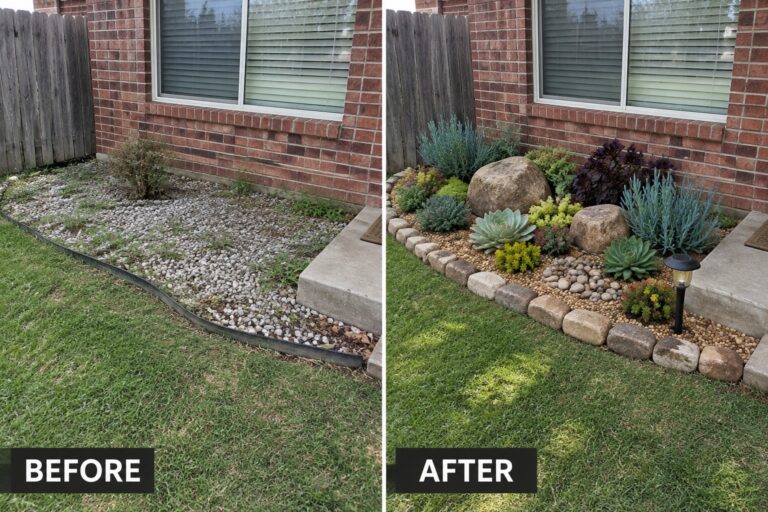
A rock garden can look sparse or unfinished when the stones feel scattered and the planting has no clear shape.
I like how succulents bring varied color and texture while natural stone gives the space structure without making it feel overly formal.
A little cleanup, thoughtful spacing, and a simple path can make the whole area easier to enjoy and maintain.
The change often comes from arranging what is already there rather than adding more plants or decoration.
Some of these ideas are worth saving and adapting to suit the light, soil, and layout of a real yard.
Create A Defined Rock Garden Bed
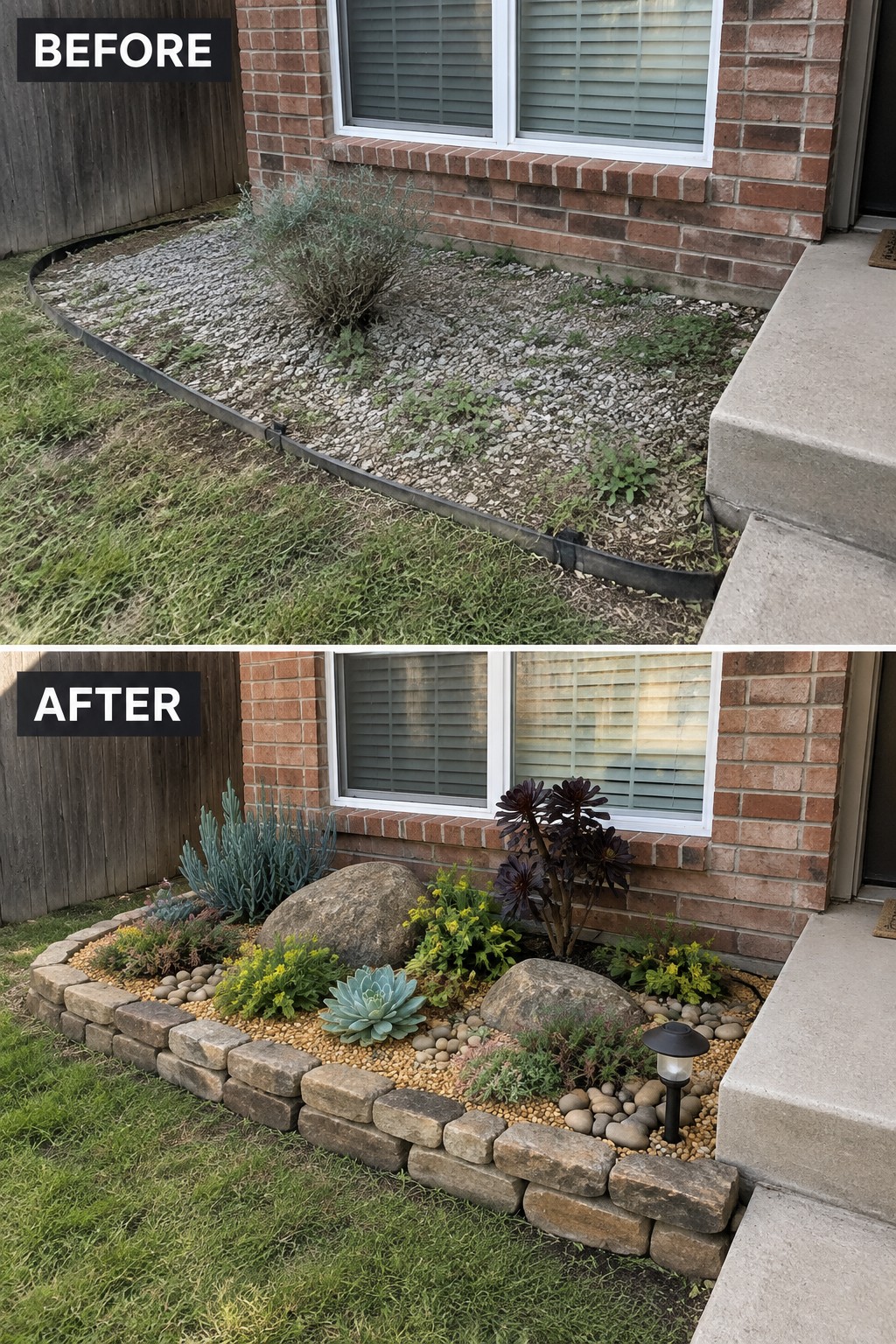
Replacing a weedy, gravelly patch with a stone-edged bed gives this small area a clear shape and makes the planting feel intentional. A simple border is especially useful beside a house, where it separates the garden from the lawn and keeps loose gravel in place.
Start by clearing weeds and choosing a bed shape that leaves room to walk and mow. Then use a few larger stones as focal points and group drought-tolerant plants around them, leaving enough space for each plant to grow.
Build Terraced Beds Into A Sloped Yard

A steep, bare slope can be hard to plant and prone to washing out. Low stone retaining walls create level planting areas, turning the hillside into a more orderly rock garden. Here, the walls also give succulents and other low-growing plants room to spill over the edges.
For a similar yard, plan the terraces to follow the slope and leave enough space for water to drain behind the stones. Start with a few sturdy tiers rather than trying to cover the hillside all at once, and keep paths clear so the beds are easy to reach.
Create A Defined Succulent Garden Bed
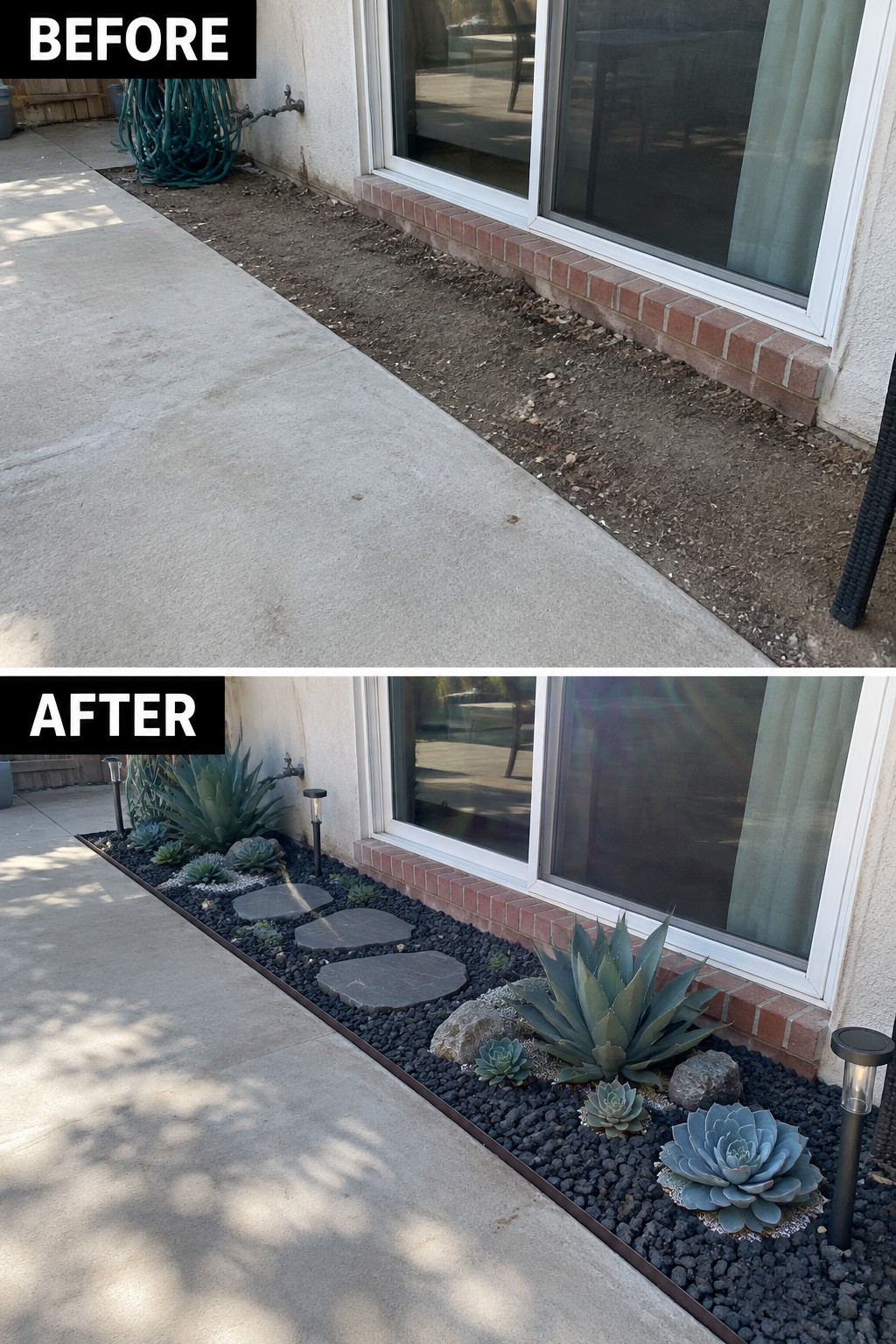
A narrow strip beside a patio can be hard to use when it is left as bare soil. A simple rock garden gives the area a clear shape and makes it look cared for, while succulents add color without needing a dense planting.
For a similar space, edge the bed neatly and use stepping stones where you need a path or access. Choose stones and plants that suit your climate, and leave enough room for mature succulents to spread.
Give An Overgrown Garden A Clear Shape

Clearing out tangled growth and rebuilding the bed as a defined rock garden makes this neglected slope look planned and easier to care for. The low stone border gives the planting a clear edge, while a few larger rocks help break up the space.
For a similar yard, start by removing weeds and loose debris, then set the bed’s outline before adding stone and plants. Succulents and other drought-tolerant ground covers suit sunny spots, but leave enough room for them to spread without hiding the rocks.
Replace A Bare Patio With A Small Rock Garden
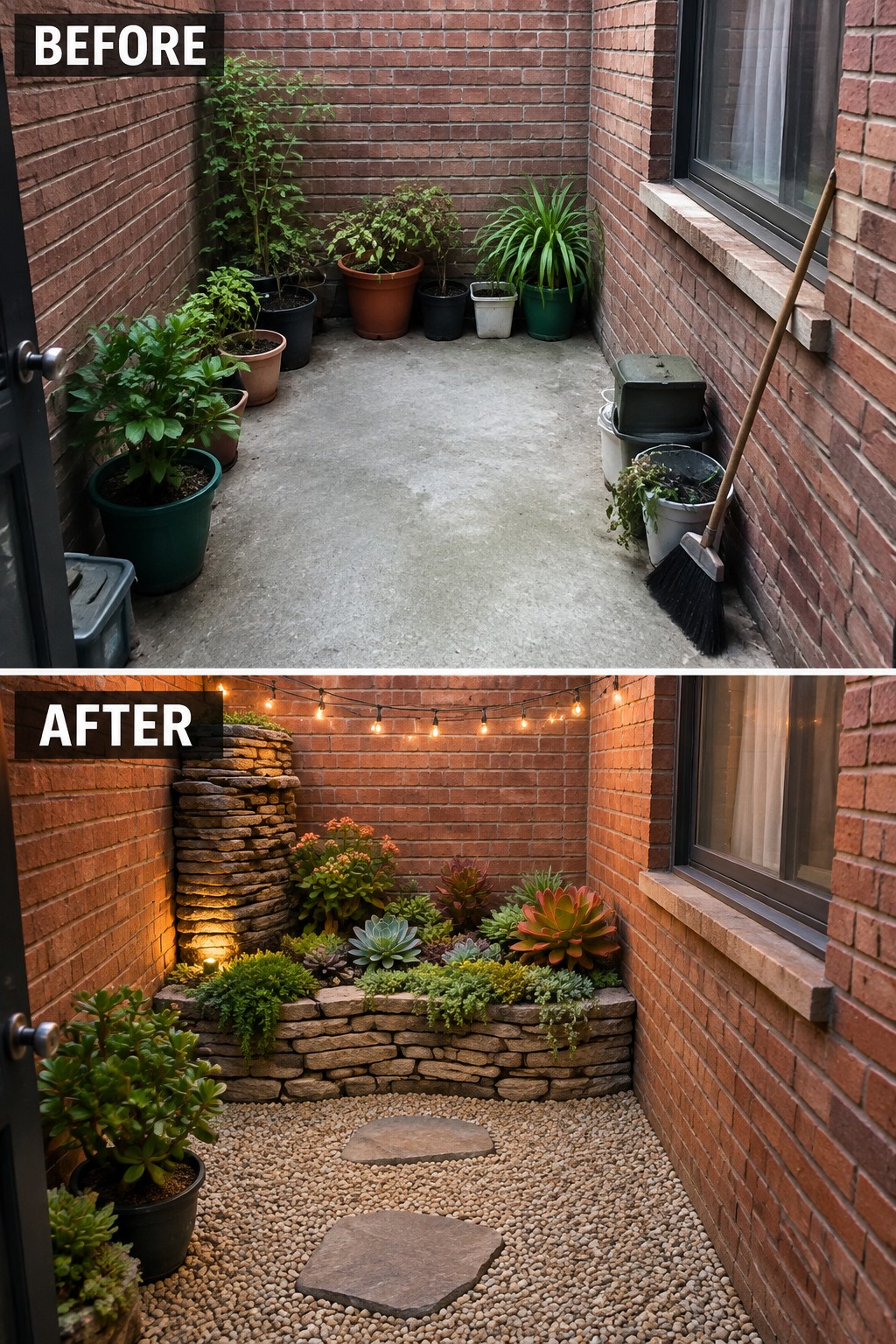
The pots and open concrete made this narrow courtyard feel more like a storage area than a garden. Replacing them with a low stone planter and gravel gives the plants a clear place to grow while leaving the middle open for walking.
This approach works well in small brick courtyards where there isn’t room for a lawn or large beds. Use a contained area for succulents and natural stone, and keep the gravel path simple so the space stays easy to move through and maintain.
Replace An Overgrown Bed With A Gravel Rock Garden
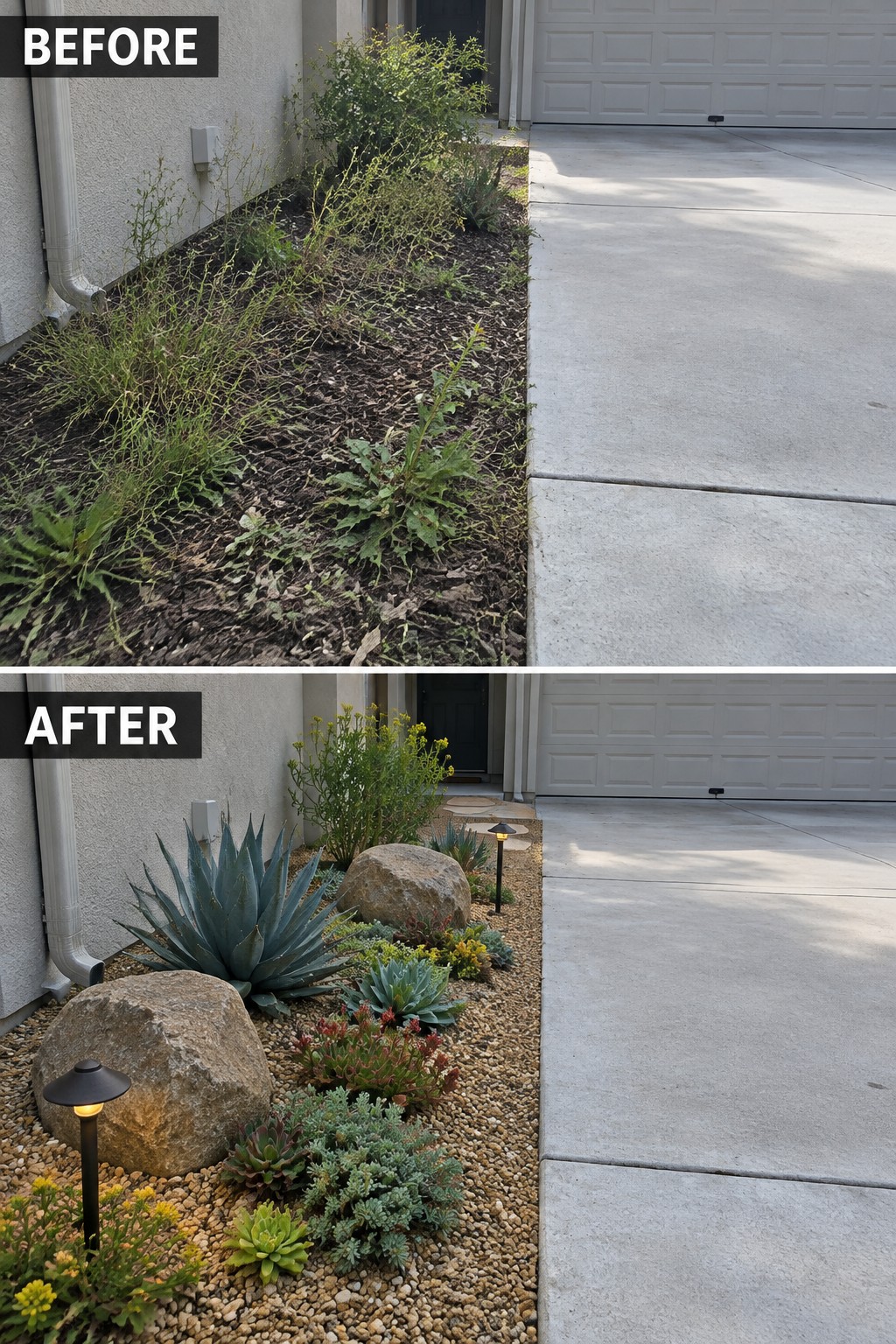
The tangled planting bed is easier to manage after the overgrowth is cleared and replaced with gravel, succulents, and a few natural stones. Grouping drought-tolerant plants in a defined strip gives the area a more deliberate look without needing a lot of upkeep.
This idea works well in a narrow side yard or along a driveway, especially where the soil is dry and sunny. Start by removing weeds, then leave enough space between plants for them to grow and keep the walkway clear.
Add A Low Stone Wall To Define A Garden Bed

The bare soil beside the steps had no clear edge, so the planting felt unfinished. A low retaining wall gives the bed a tidy shape and creates a little height for succulents to stand out.
This idea works well beside steps or along a narrow walkway, where a defined edge helps keep the garden separate from the path. Use sturdy stone and leave enough room for plants to spread without blocking the steps.
Replace Overgrown Shrubs With A Rock Garden

The unruly hedge is replaced by a defined garden bed, making the fence line look more planned and leaving the lawn edge easier to maintain. Succulents and natural stone also suit a sunny spot where thirsty shrubs may need more attention.
Start by removing unwanted growth, then lay out a clear bed and a simple stepping-stone path. Choose succulents that suit your climate, and leave enough room for them to spread without spilling onto the path.
Build Terraced Rock Gardens Into A Sloped Yard
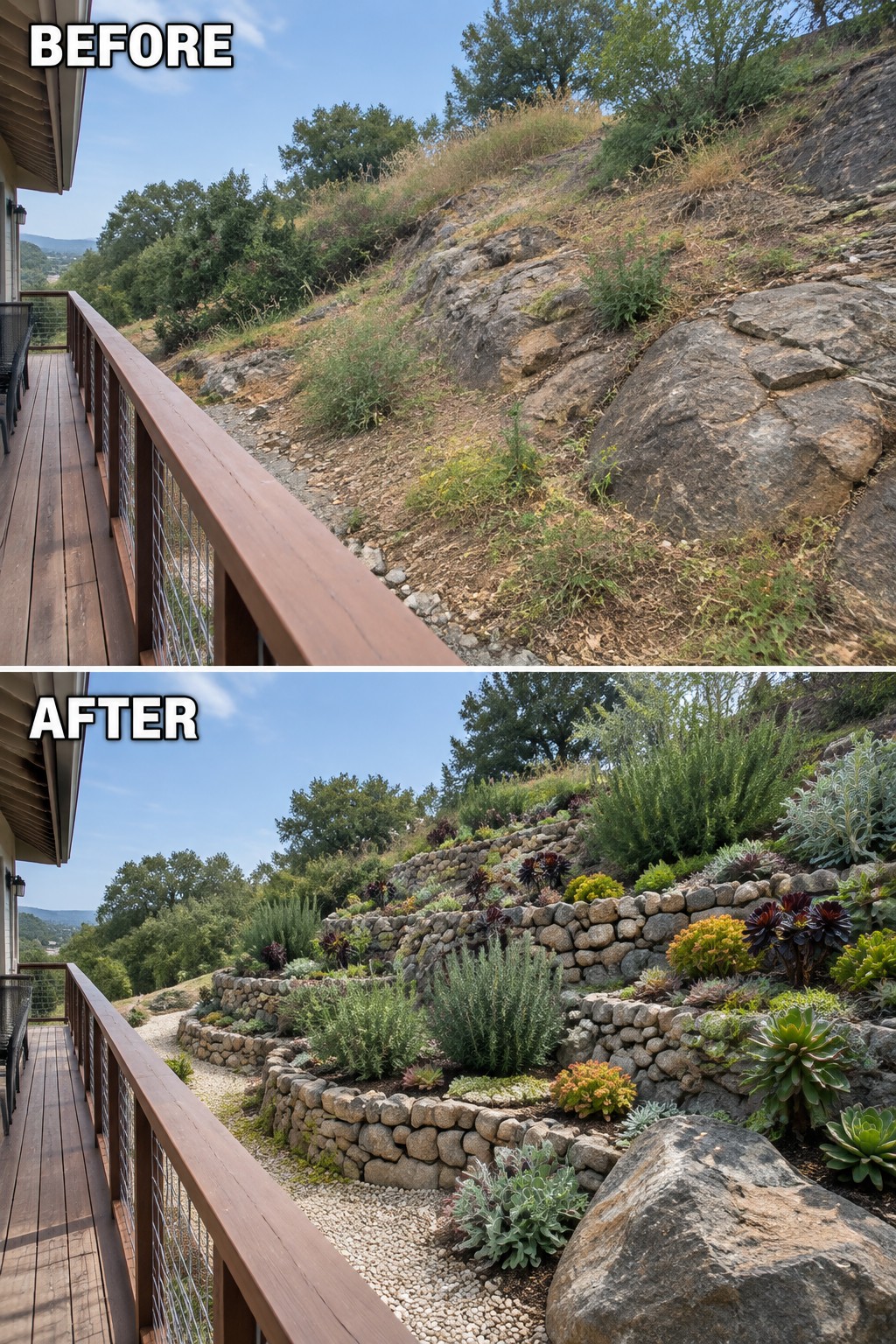
A steep, rocky slope can be difficult to plant and maintain. Low stone terraces turn it into a series of smaller garden beds, making the hillside feel more organized while giving succulents and other drought-tolerant plants room to grow.
This approach works well on sloped yards where a flat lawn or large retaining wall would not suit the space. Use stones that fit the setting, and keep each terrace low enough to preserve access and drainage.
Turn A Narrow Balcony Into A Small Rock Garden
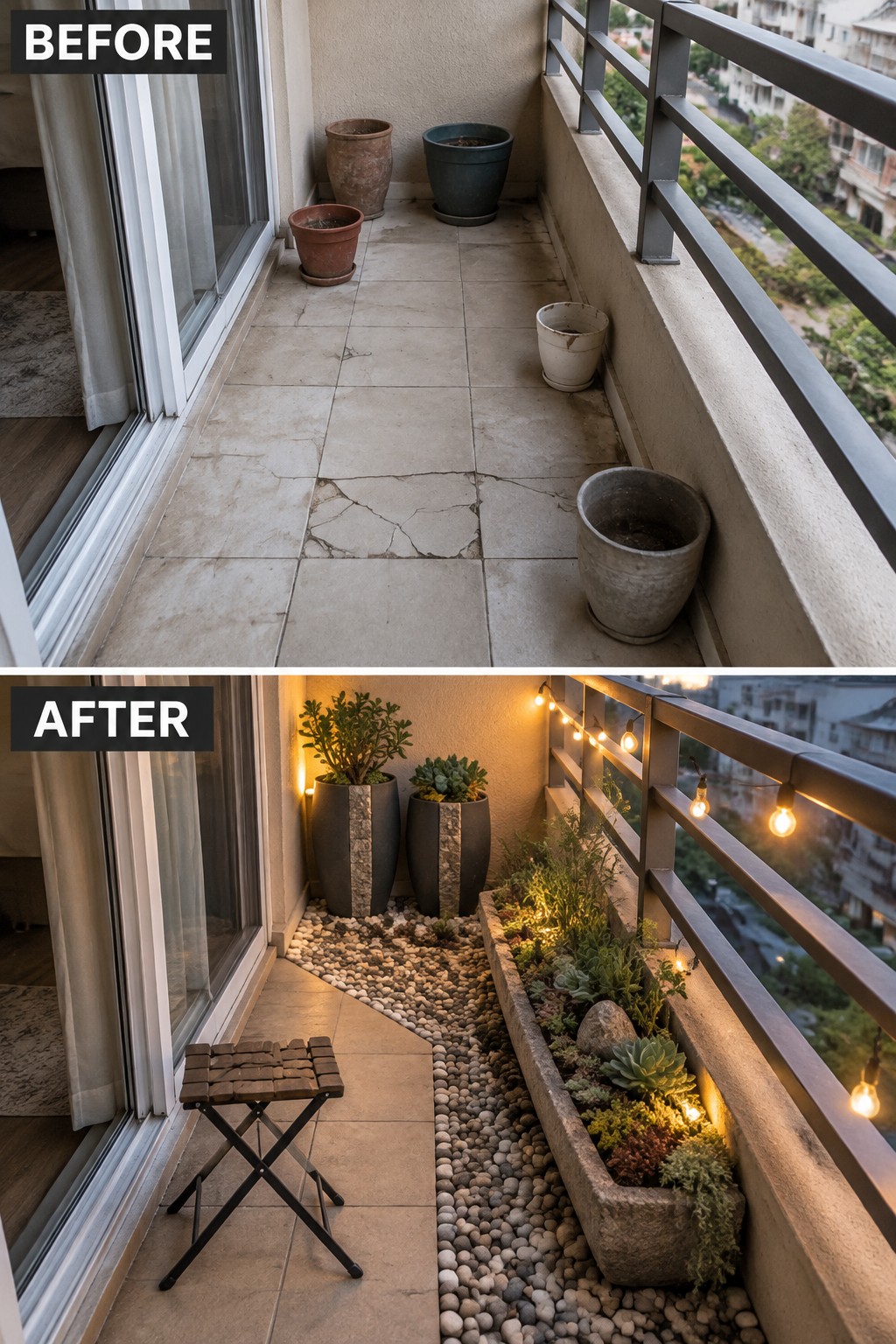
This narrow balcony had little use beyond holding empty pots. Replacing them with a pebble garden and a raised planter gives the long space a clear planting area while leaving a path beside it.
This idea works well on small balconies where a full row of pots can feel crowded. Use a contained bed or sturdy planter, choose succulents suited to your climate, and leave enough clear floor to walk through comfortably.
Replace Patchy Grass With A Rock Garden Path

The patchy lawn beside this walkway becomes a defined garden, with gravel and natural stone edging the existing pavers. That structure makes a narrow side yard look planned and gives succulents a tidy place to grow without taking over the path.
For a similar space, clear the grass and weeds first, then set sturdy stones along the bed edges and fill around drought-tolerant plants with gravel. Keep the planting low near the path so there’s still room to walk and the small yard stays easy to maintain.
Replace Overgrown Foundation Shrubs With A Rock Garden
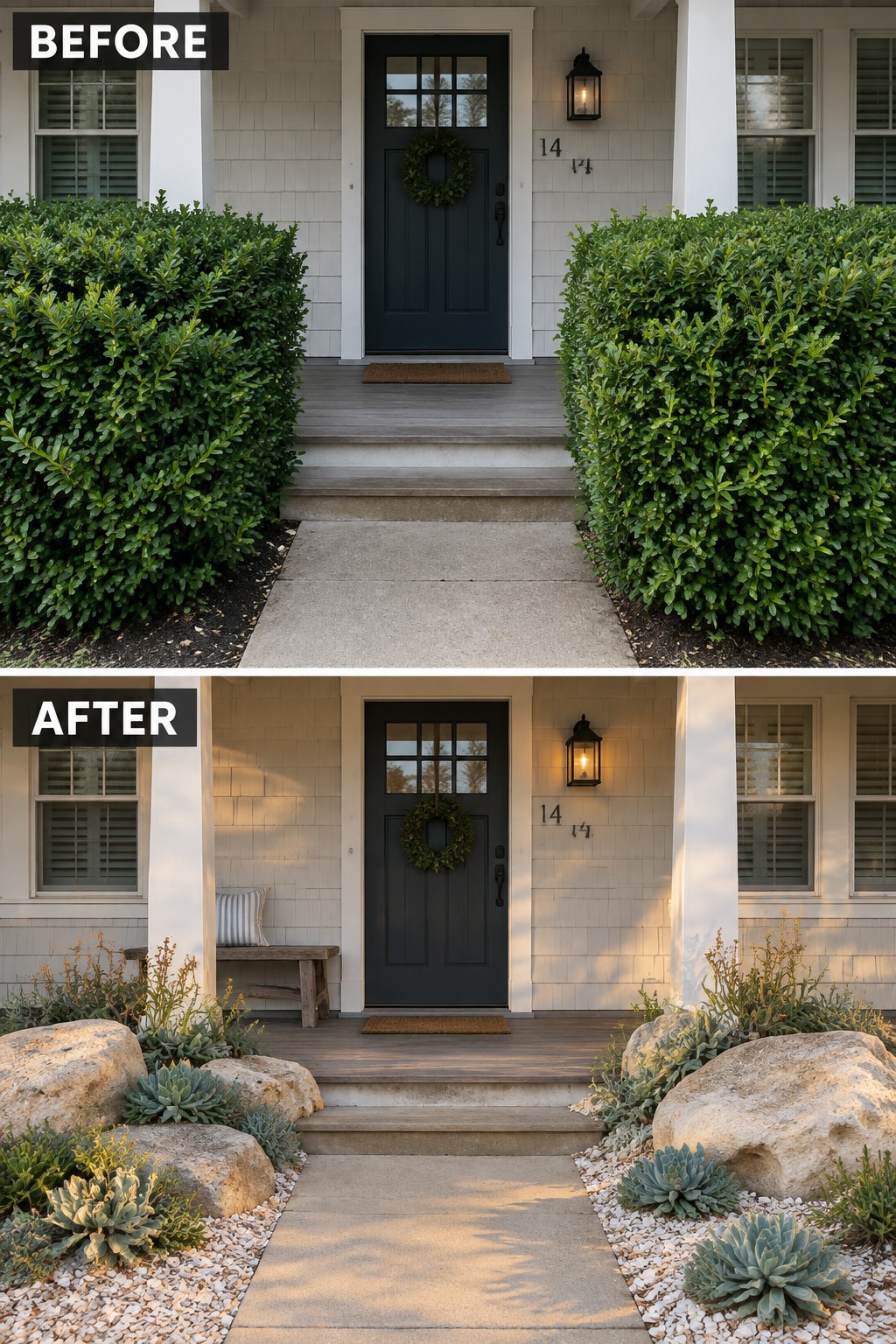
Dense shrubs crowd the front entry and hide much of the planting area. Replacing them with a low rock garden makes the walkway easier to see and gives the house a more open look. In the after photo, pale gravel and natural stones create a clear border around the succulents.
This idea works well along a sunny foundation where large shrubs have outgrown their space. Remove the old plants, shape the bed, and leave enough room around each succulent for it to grow. Keep the path clear and choose stones that suit the scale of the entry.
Replace A Narrow Poolside Strip With A Rock Garden
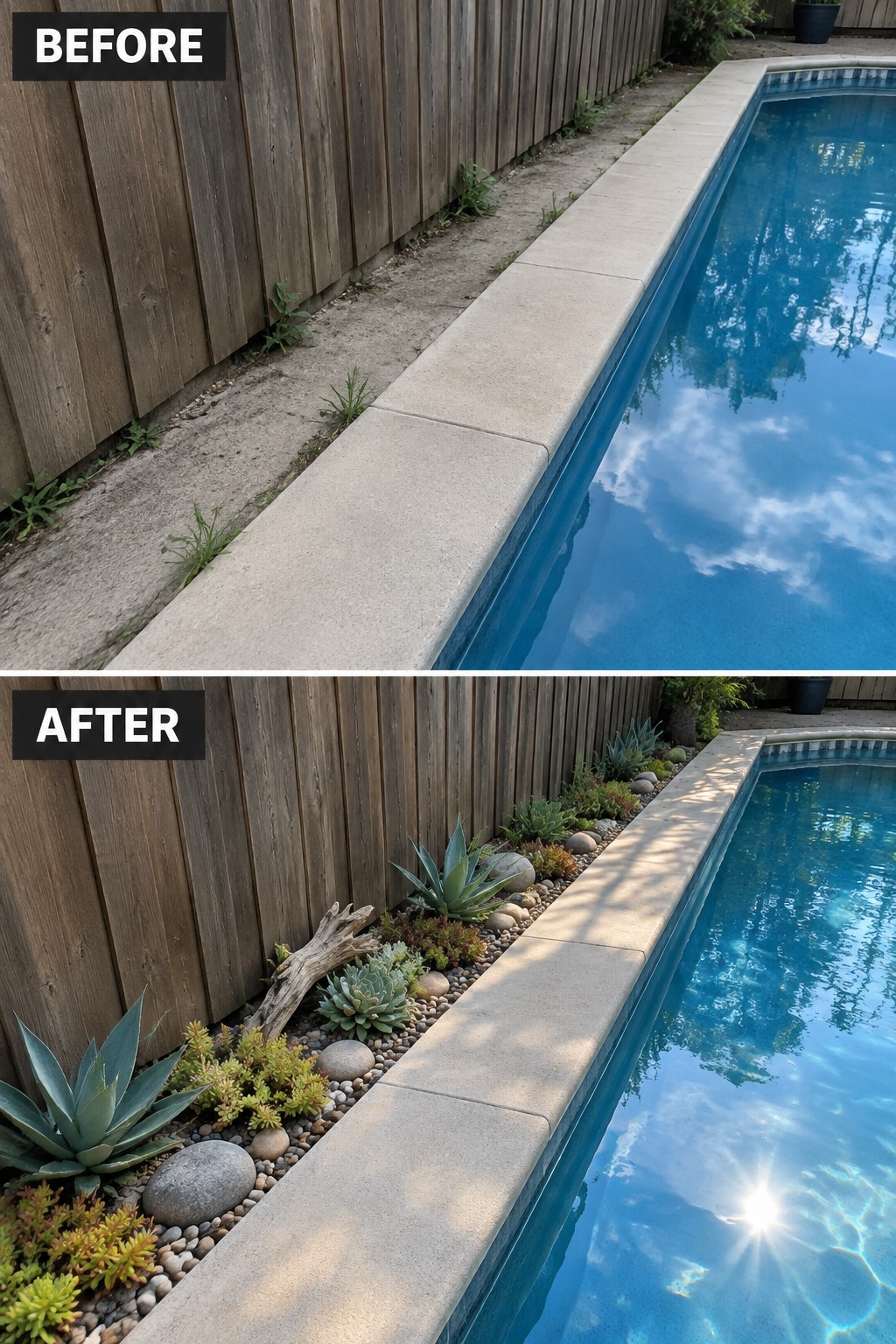
The bare strip beside the pool was hard to keep tidy, while a simple rock garden gives it a clear purpose. Succulents and natural stone fill the space neatly without needing a wide planting bed.
This idea works well in narrow side yards or along fences where grass is difficult to maintain. Clear weeds first, then use gravel and a few well-spaced succulents so the bed stays orderly and leaves room to walk around the pool.
Add Raised Stone Beds To An Empty Garden Strip
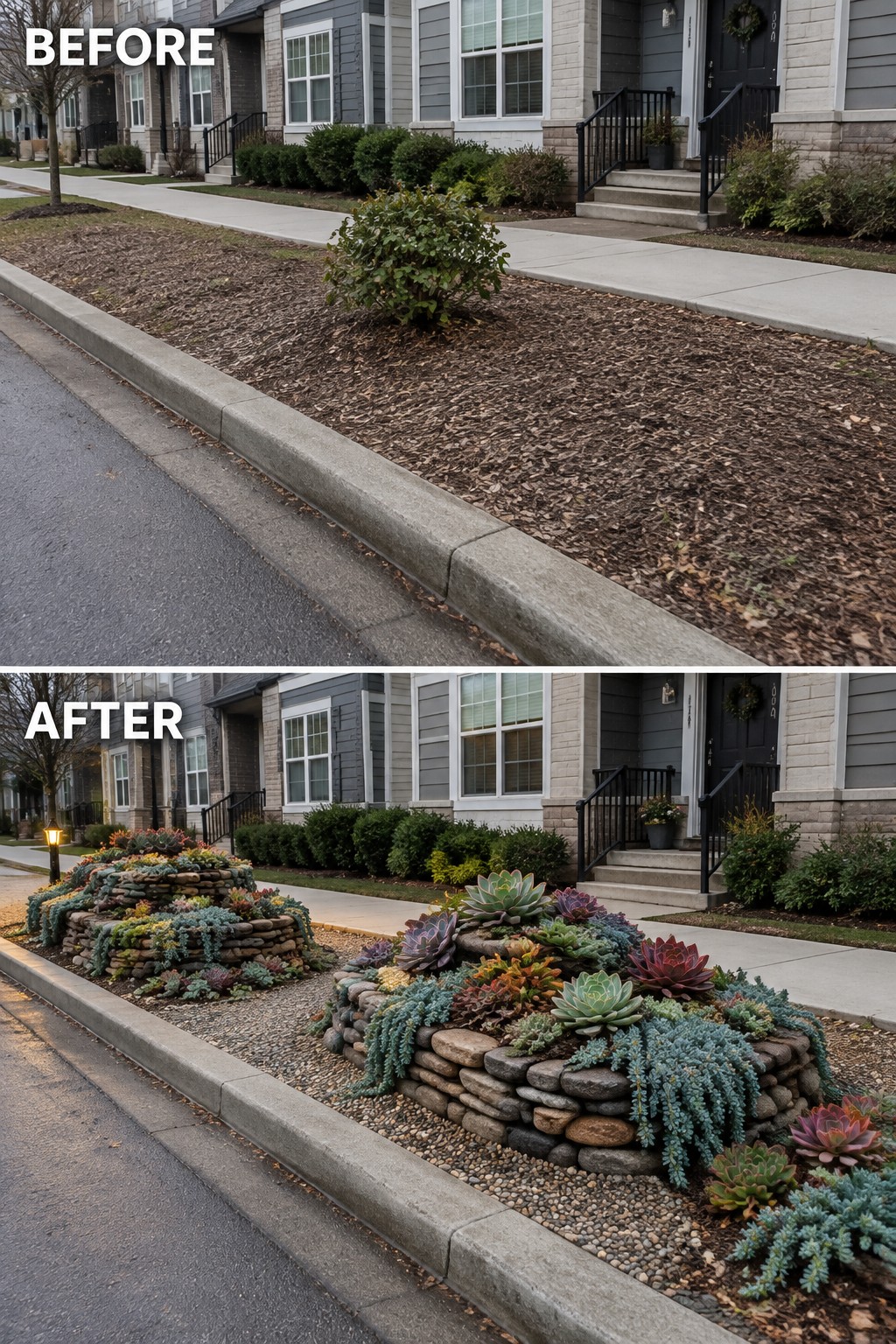
A wide mulch bed can look unfinished when it has no clear shape or planting structure. Low stacked-stone beds give this narrow roadside garden a defined layout, while succulents add color and texture without needing a dense planting scheme.
This idea works well in a sunny strip beside a sidewalk or townhouse entry. Keep the stone borders low enough to preserve sightlines, and leave open space around the plants so the garden stays easy to maintain.
Turn A Muddy Yard Corner Into A Rock Garden

A shallow, muddy patch can be hard to keep tidy, especially where water collects. Replacing it with a dry creek bed and a few planted pockets gives the corner a clear shape and lets the stone become part of the garden design.
Use rounded river rocks through the center, then place drought-tolerant succulents and larger stones along the sides. Check how water moves through your yard before laying anything down, so the rock bed helps guide runoff instead of sending it toward the fence or house.
Replace A Plain Foundation Bed With A Succulent Rock Garden
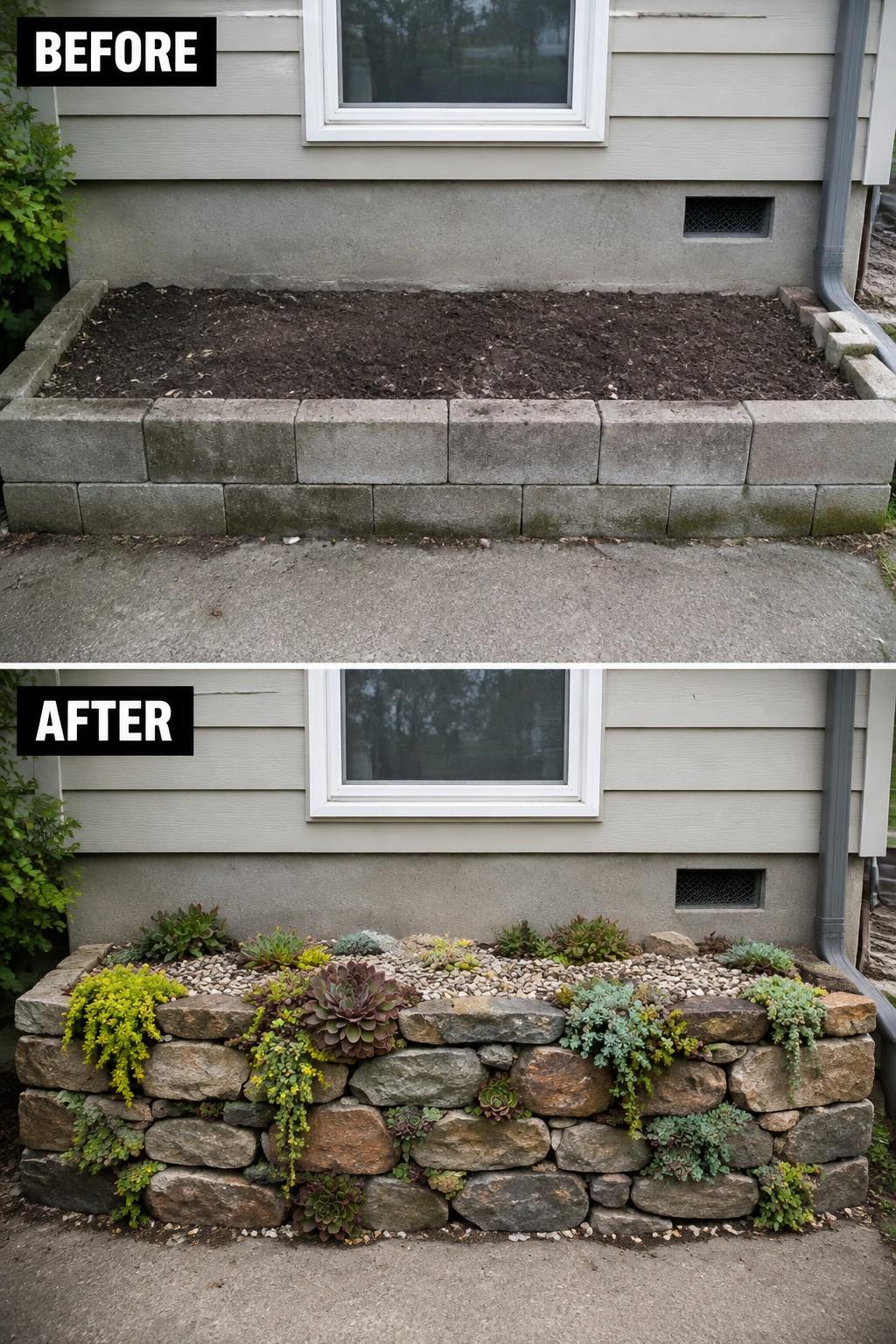
The empty soil along the foundation becomes a tidy rock garden, with a low natural-stone wall and succulents adding shape and color. This approach makes a narrow, bare planting area feel planned without relying on a lawn or a large collection of plants.
For a similar bed, choose stones that suit the house and leave enough room for the plants to spread. Succulents work well in sunny, well-drained spots, but check the plants’ needs and keep vents and access points clear.
Replace Patchy Lawn With A Rock Garden Entry
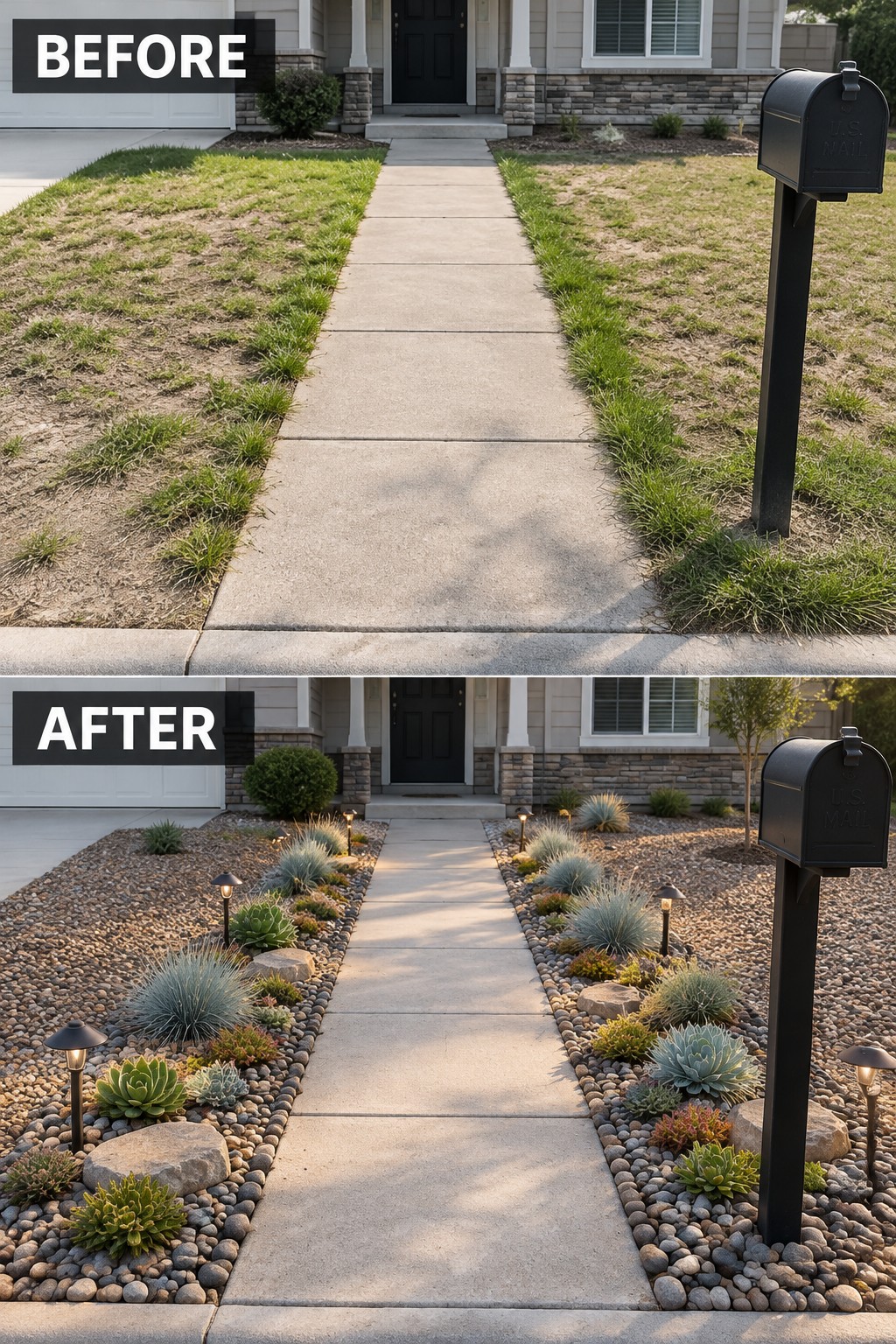
The patchy grass beside this front walk made the yard look unfinished. Replacing it with gravel, natural stone, and succulents gives the entry a clear, tidy shape without adding a lot of lawn to maintain.
This idea works well in dry or sunny front yards, especially along a walkway. Use edging to keep the gravel in place, then leave enough room around each plant for it to grow. A few low lights can help mark the path, but the planting is best kept simple.
Make A Tree Bed Easier To Maintain
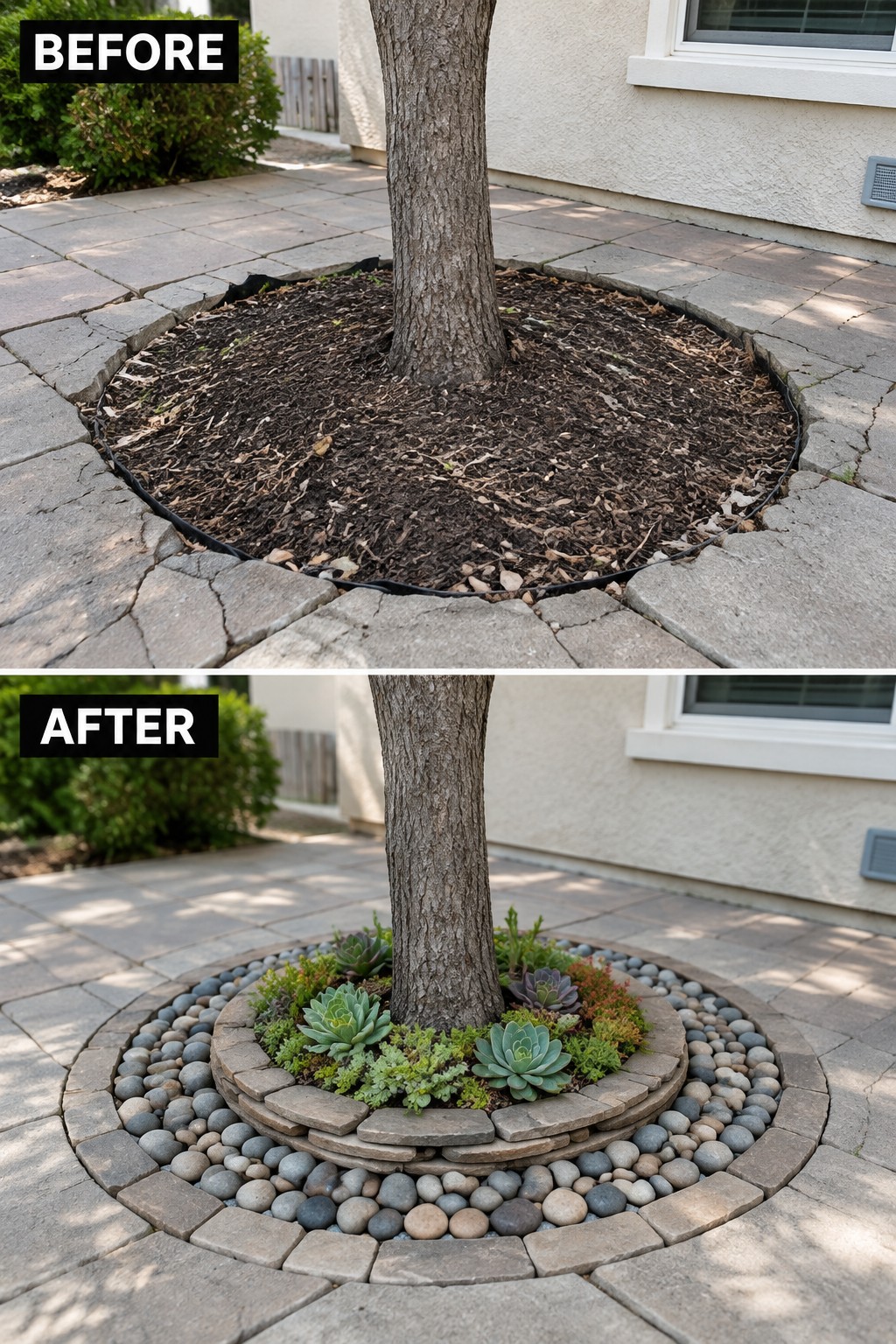
The bare mulch around this tree looked untidy beside the patio. A low stone border, rounded gravel, and a small group of succulents give the bed a clear shape and a neater finish.
This idea works well where tree roots make a traditional planting bed difficult to manage. Keep the planting simple, and use a root-friendly layer rather than piling soil or stone against the trunk.
Use Stone Terraces To Organize A Sloped Garden
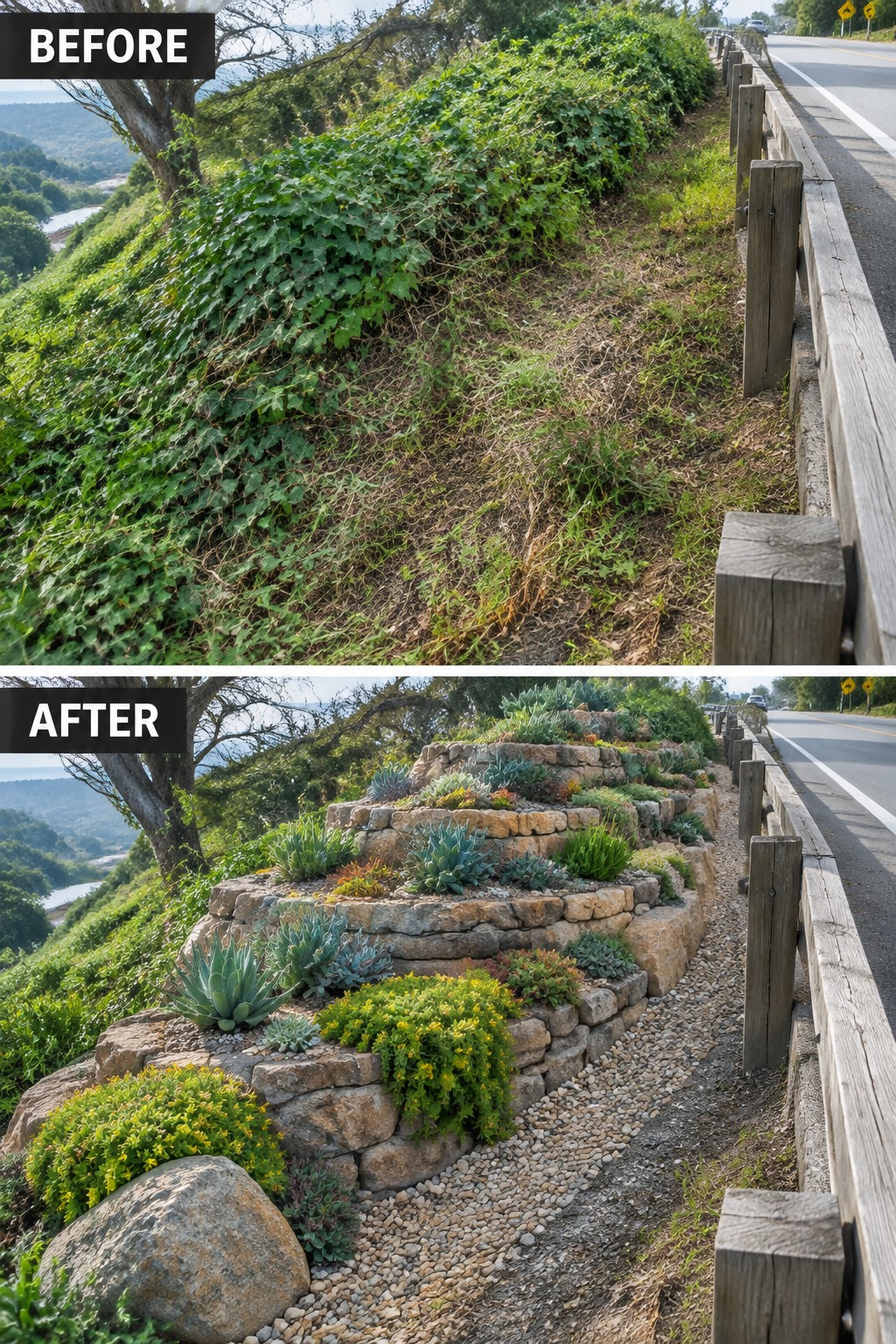
An overgrown slope can be hard to maintain and leave plants without a clear place to grow. Low stone terraces break the incline into defined beds, turning a tangle of vegetation into a rock garden with room for succulents and other drought-tolerant plants.
This approach works well on hillsides where a flat bed would be difficult to manage. Choose stones suited to the site and keep the planting open enough for plants to spread without blocking the path or nearby roadside access.
Turn A Bare Fire Pit Area Into A Rock Garden
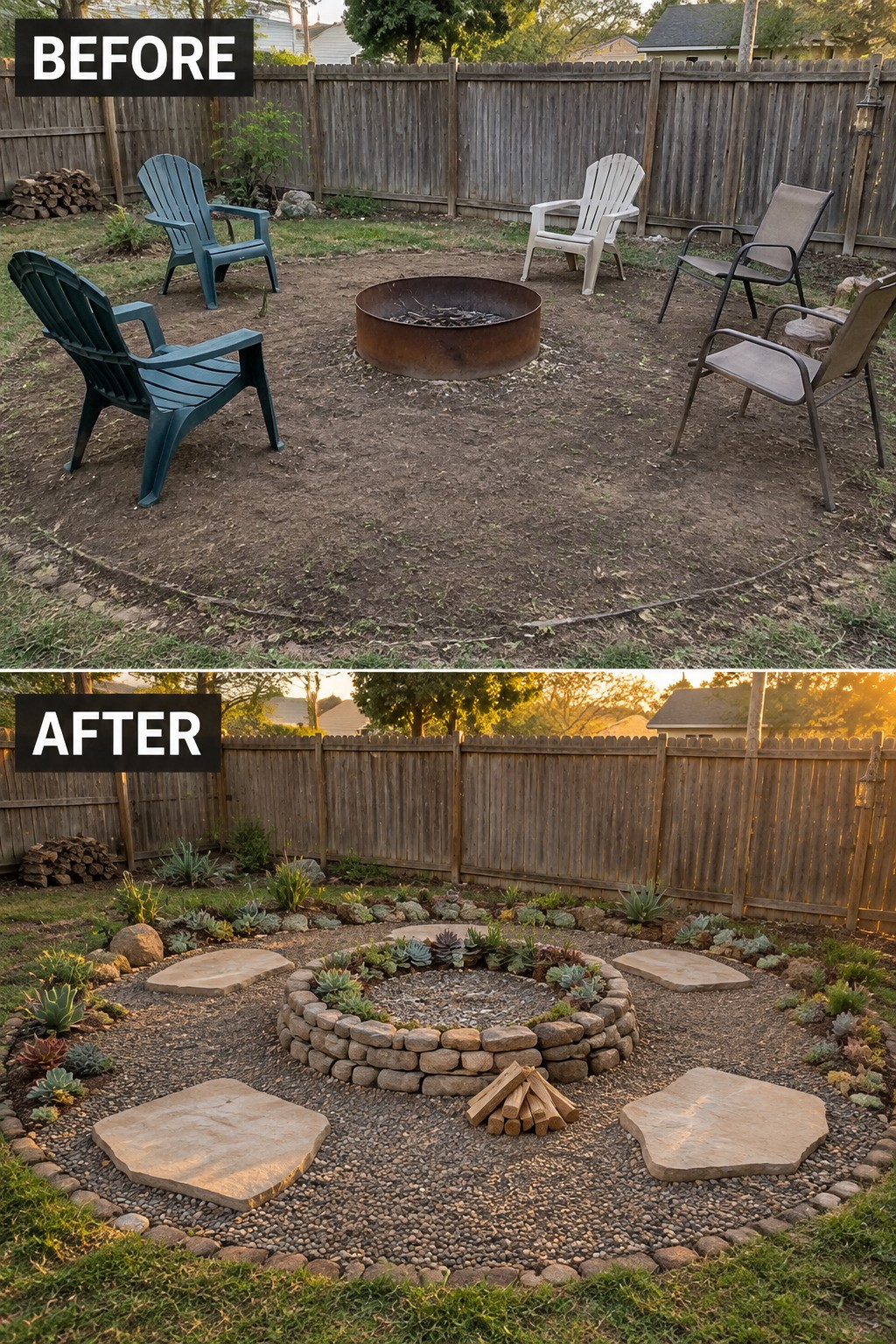
A bare fire pit area can feel more like a patch of dirt than a place to gather. A circular stone border and gravel give this yard a clear center and a tidier surface, while leaving the fire pit as the main feature.
For a similar setup, define the area with stone edging, then use gravel and succulents to fill it in. Keep the planting low near the fire pit and leave enough open space for chairs and safe movement.
Turn A Cluttered Planting Strip Into A Succulent Rock Garden

A narrow bed by the house can feel messy when it holds scattered pots and a mix of plants. Replacing them with a simple stone planter and grouped succulents gives the strip a clear shape and makes it easier to keep tidy.
This idea works well along a wall or window where space is limited. Choose succulents suited to your climate, leave room for them to spread, and use gravel around the plants to help keep the surface neat.
Tidy An Overgrown Mailbox Garden

An overgrown bed around a mailbox can make the whole front entry look untended. Clearing the weeds and giving the area a defined stone edge turns it into a small, planned rock garden instead.
For a similar spot, keep the planting simple and choose compact succulents and grasses that suit your climate. A layer of gravel helps keep the bed neat, but leave enough space around the mailbox for easy access.
Turn A Narrow Side Yard Into A Succulent Path
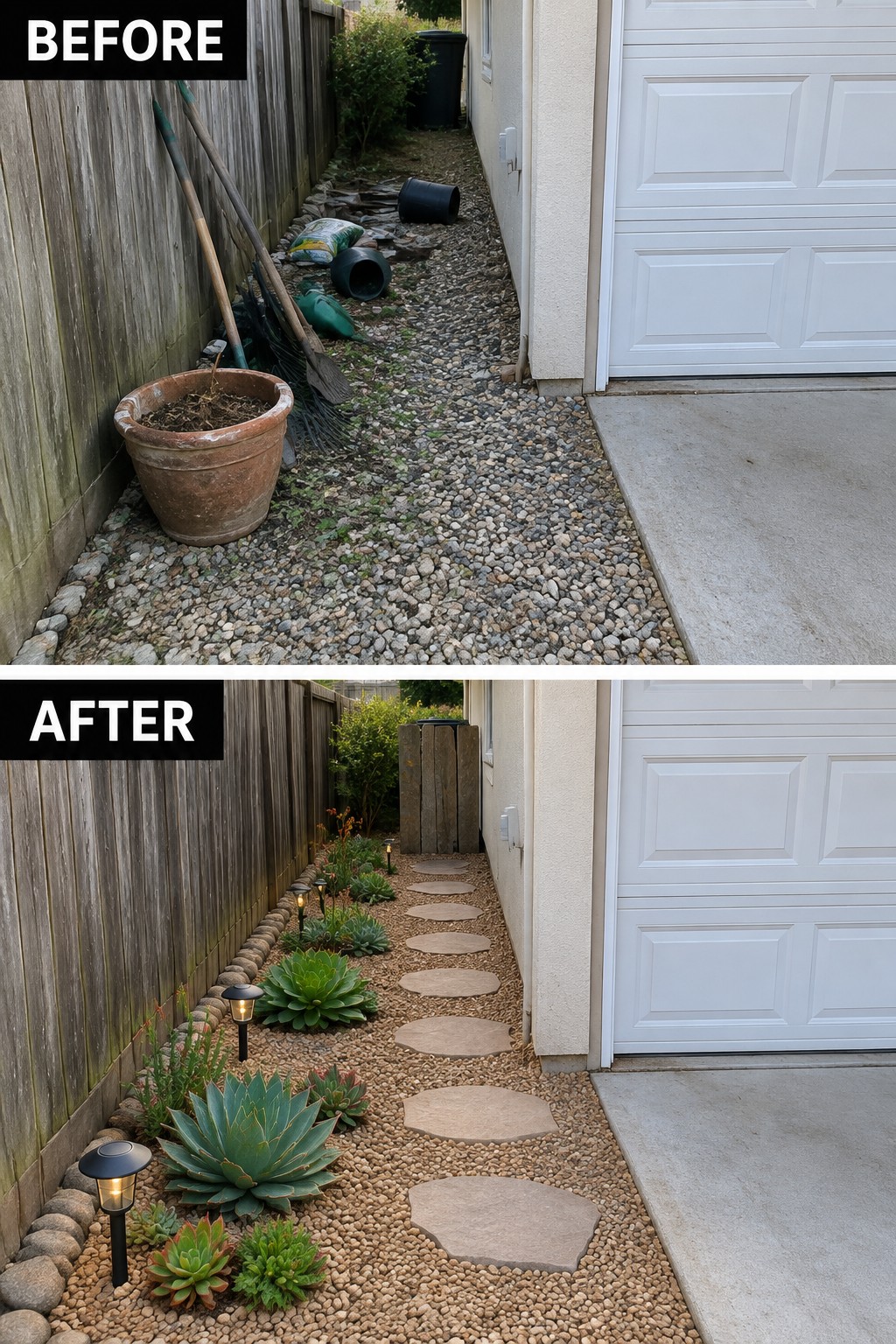
A narrow side yard can be more useful when the ground has a clear layout. Here, loose gravel and scattered items gave way to a tidy rock garden with stepping stones and succulents, making the route beside the house easier to follow.
For a similar space, clear out debris first, then use gravel to cover the ground and place stepping stones where you naturally walk. Succulents suit sunny, well-drained areas and need room to spread, so keep the planting simple rather than filling every gap.
Frequently Asked Questions
Q: What kind of succulents work best in a rock garden?
A: Choose varieties that suit your climate and the amount of sun the garden gets. Hens-and-chicks and many sedums are hardy picks, while tender succulents may need to come indoors before frost.
Q: How do I keep water from pooling between the stones?
A: Start with soil that drains freely, and avoid placing the garden in a low spot where rain collects. Set stones so water can move around them rather than forming little basins.
Q: Can I build a succulent rock garden in a shady area?
A: You can, but most succulents grow best with plenty of light. In shade, try a brighter spot or use shade-tolerant plants alongside succulents that can handle less sun.
Q: How much space should I leave between succulents?
A: Leave a little room for each plant to spread and for air to move between leaves. The gaps may look open at first, but ground-covering varieties will fill them in as they grow.
