

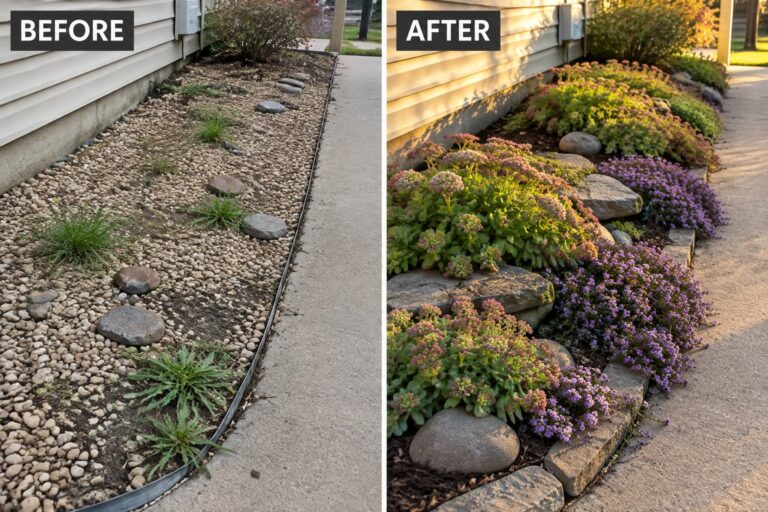
Rock gardens can look sparse or messy when stones, plants, and pathways have no clear relationship to one another.
I find that a little structure, along with ground cover that spills naturally over rocks, can make the whole area feel more settled without adding much upkeep.
Cascading plants soften hard edges, fill bare patches, and help connect a rock garden to the rest of the yard.
The change can be gradual, but it’s satisfying to see an overlooked corner become a more finished part of the landscape.
I’d save the ideas that suit your site’s sun and slope, then test a few plants before filling in the whole space.
Add Structure To A Rocky Garden Bed

A rock-filled bed can look scattered when stones and small plants sit without a clear arrangement. Grouping the larger rocks into a low feature and planting cascading ground cover around them gives the area a more intentional shape.
This approach works well in narrow side yards and along walkways, where a defined bed can make the space feel tidier without taking up much room. Leave enough space for plants to spread, and keep the path edge clear so the garden does not crowd the walkway.
Build A Retaining Wall Into A Planted Slope
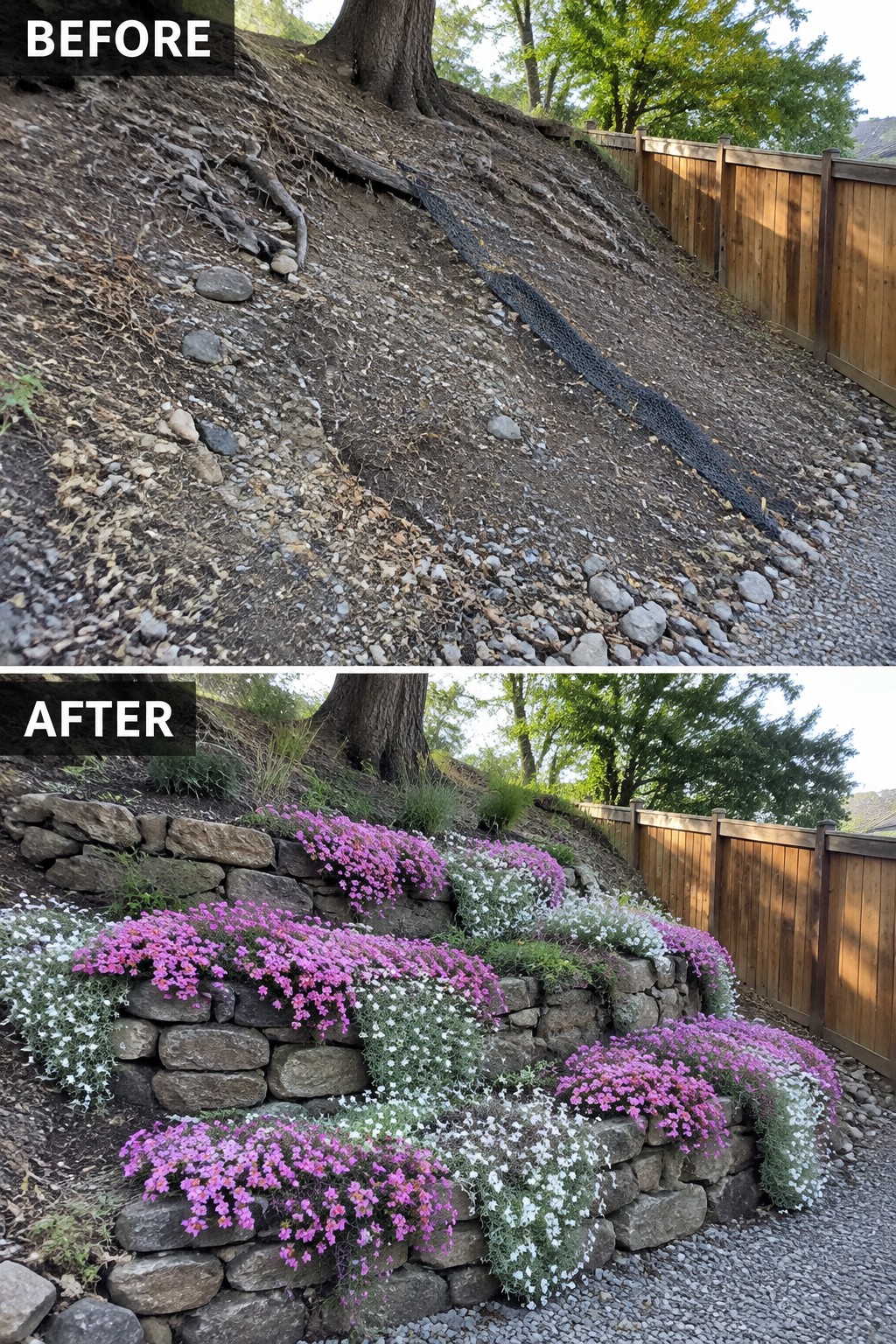
A rocky slope can be hard to manage when loose soil and scattered stones leave it looking unfinished. Short retaining walls give the hillside clear levels, and cascading ground cover fills the gaps with color. In this makeover, the tiered stone wall turns a bare incline into a planted garden.
This idea works well on sloped yards where plants might otherwise struggle to stay in place. Keep the walls low and suited to the grade, then choose trailing plants that fit the sun and soil conditions. Leave enough room to reach the plants for watering and trimming.
Turn A Bare Rock Bed Into A Cascading Garden

An empty stone bed can feel unfinished, even when its edging is already in place. Filling it with a few larger rocks, low flowering plants, and cascading ground cover gives the bed a clear planting structure and makes the stone wall part of the garden.
Use this idea in a small courtyard or other spot where a raised bed needs more interest. Leave room for plants to spread over the edge, and choose varieties suited to the amount of sun and water the area gets.
Create A Defined Garden Bed Along The Fence

A clear bed edge turns a scruffy strip beside the lawn into a more intentional garden. Here, the loose, overgrown planting gives way to a tidy border filled with low ground cover and a few upright flowers, while the stone edging helps keep the bed separate from the path.
This works well in narrow side yards where a fence leaves little room for a larger garden. Clear weeds first, then choose ground cover suited to the light and keep it low enough that the path stays easy to use.
Plant Cascading Ground Cover Along A Stone Wall

Replacing a rough, uneven rock bed with gravel and trailing plants gives the old stone wall a more finished look. The plants spill over the edge, helping the wall feel like part of the garden rather than a separate stack of stones.
This idea works well on a small slope where you want greenery without hiding the stonework. Clear weeds first, then choose ground covers suited to the amount of sun and water the spot gets. Leave room for plants to spread so they do not crowd each other.
Create A Planted Border Along The Driveway

Replacing a weedy rock bed with a defined planting border makes this narrow strip beside the driveway feel cared for. The brick edging gives the bed a clear shape, while low-growing flowers and foliage spill between the larger stones.
For a similar area, clear out weeds first, then use edging to keep gravel and plants from spreading onto the pavement. Choose cascading ground covers suited to your sun and soil, and leave enough room for them to fill in without blocking the path.
Plant Cascading Flowers Along Stone Steps
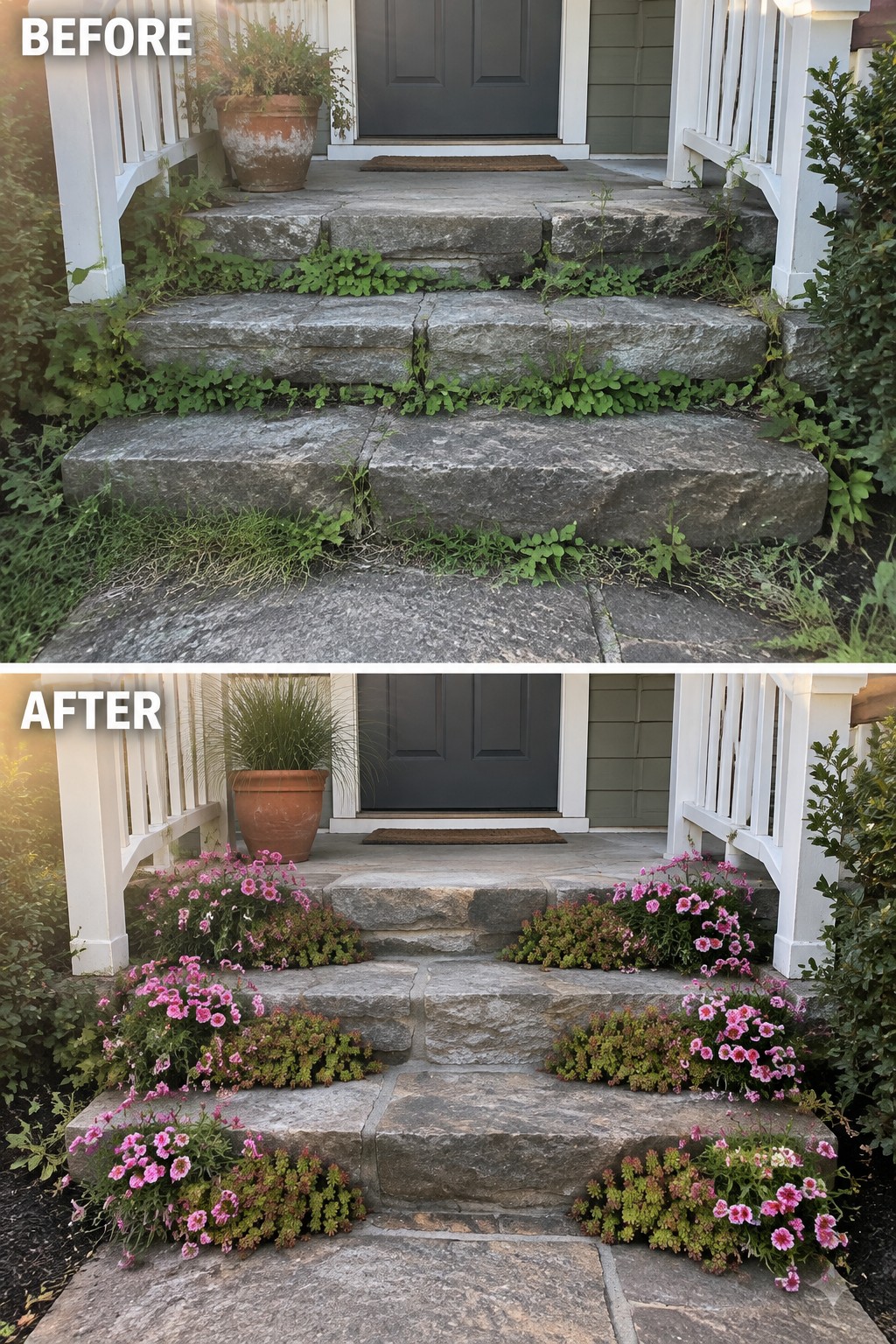
Replacing weeds between the stones with low-growing flowers gives these steps a cleaner, more cared-for look. The plants spill over the edges, so the stonework feels like part of the garden rather than a path that has been left to grow over.
This idea works well on a sloped entry where the steps already provide structure. Clear weeds first, then plant in pockets beside the stones and leave enough room for safe footing. Choose ground cover suited to your sun and climate so it can spread without taking over the path.
Surround A Large Boulder With Cascading Plants
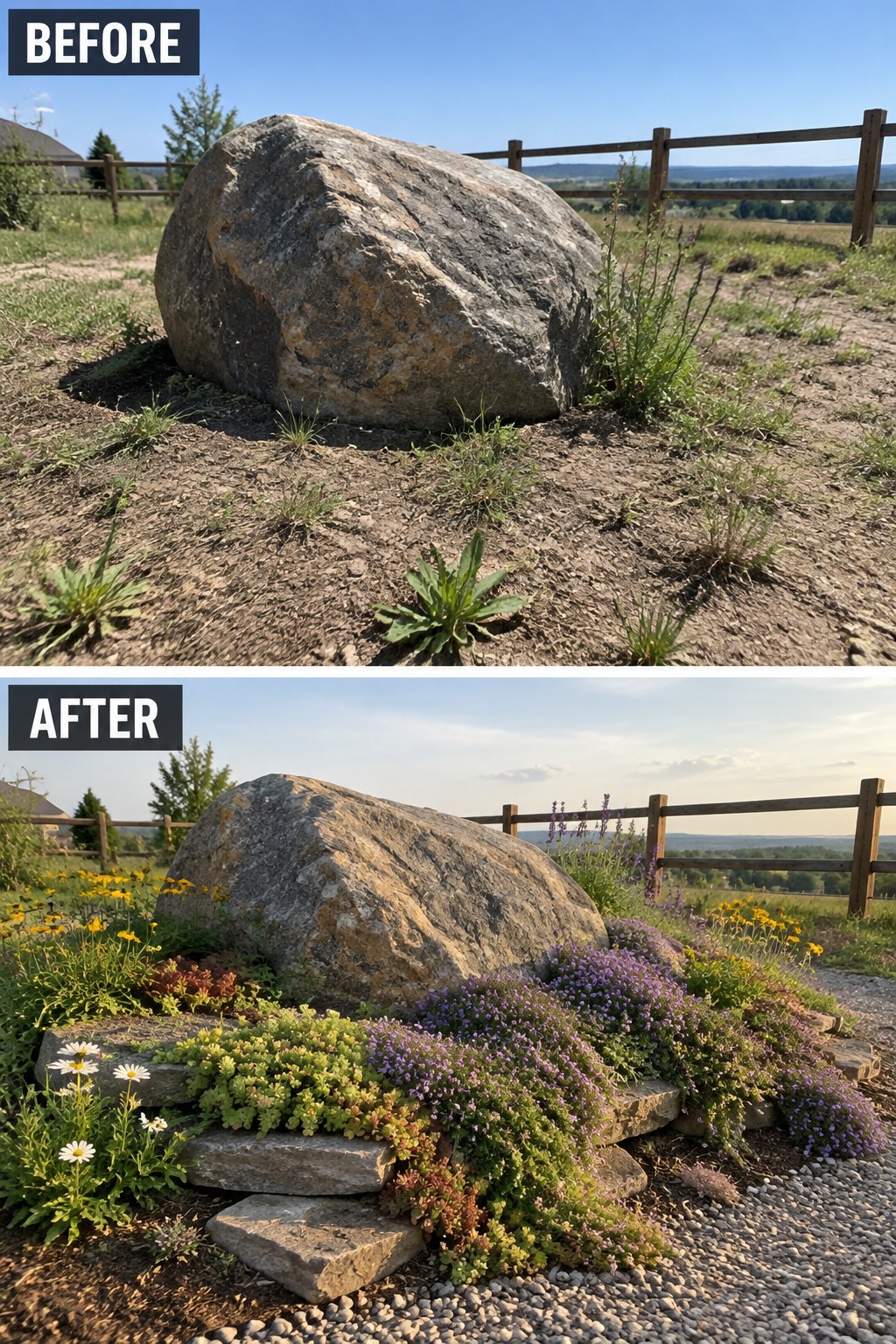
A lone boulder can make a garden bed feel bare and unfinished. Here, low-growing flowers and ground cover fill the space around the rock, turning it into the focal point of a planted garden.
Use plants that spill naturally over the edges of the bed, and leave enough room for them to spread without covering the stone completely. This approach works well around a large rock that is difficult to move and helps the planting feel planned rather than crowded.
Fill A Rocky Slope With Cascading Ground Cover
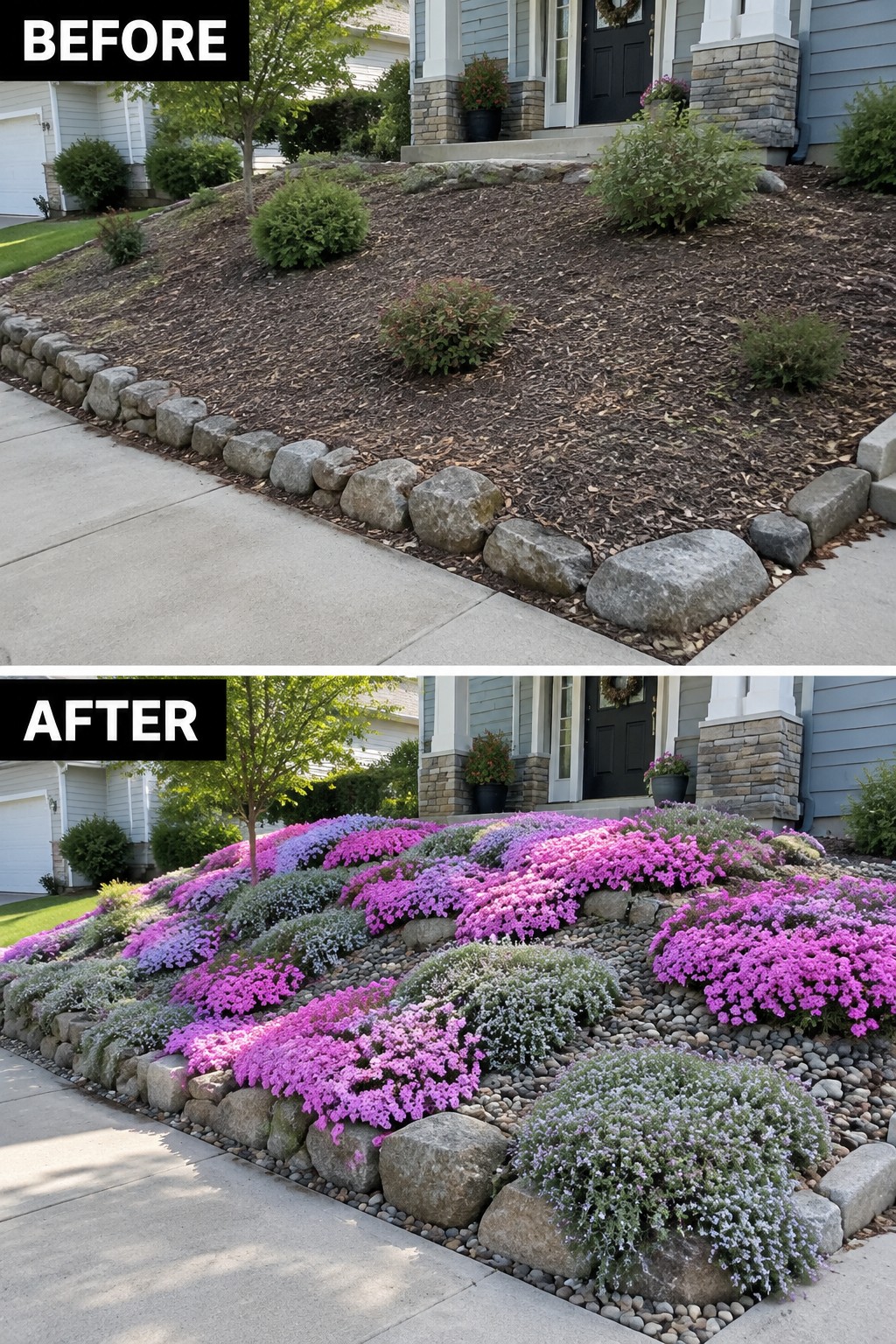
The bare mulch left this sloped bed looking sparse, while the low stone border gave it a clear shape to build on. Masses of flowering ground cover now spill across the rocks, covering much of the soil and making the whole bed feel more settled.
For a similar slope, use a few broad drifts of ground cover rather than scattering small plants around. Choose varieties suited to your sun and soil, and leave enough room for them to spread without covering paths or hiding the stone edging.
Turn A Bare Courtyard Into A Planted Garden
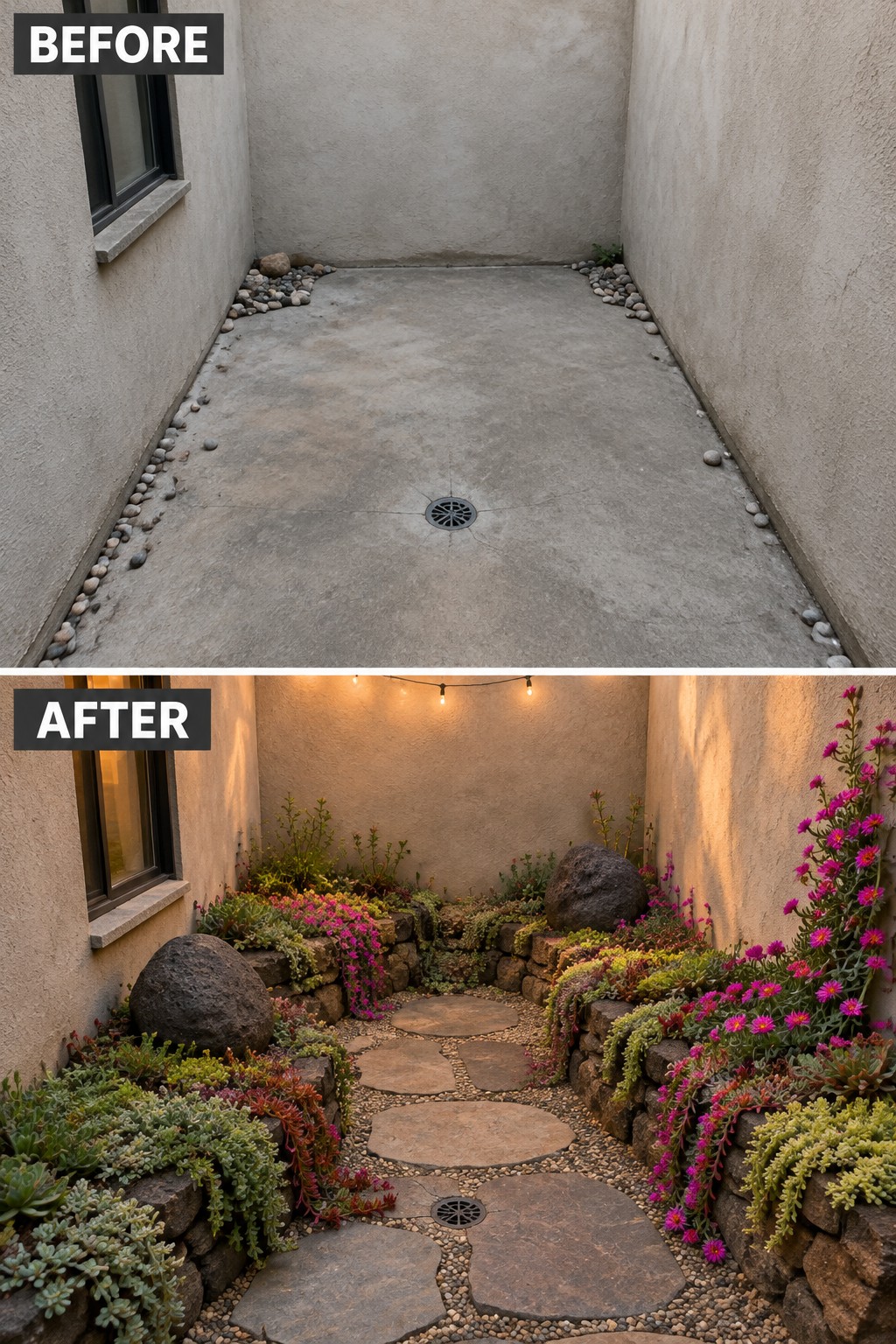
The bare concrete courtyard becomes a small rock garden by replacing most of the hard surface with stepping stones, gravel, and raised planting areas. Cascading ground cover helps connect the stone edges and makes the narrow space feel like a planned garden.
This idea works well in a compact side yard where there is little room for a lawn. Keep a clear path to the drain, and choose low-growing plants that can spill over the rock borders without blocking the walkway.
Turn A Dry Creek Bed Into A Planted Garden
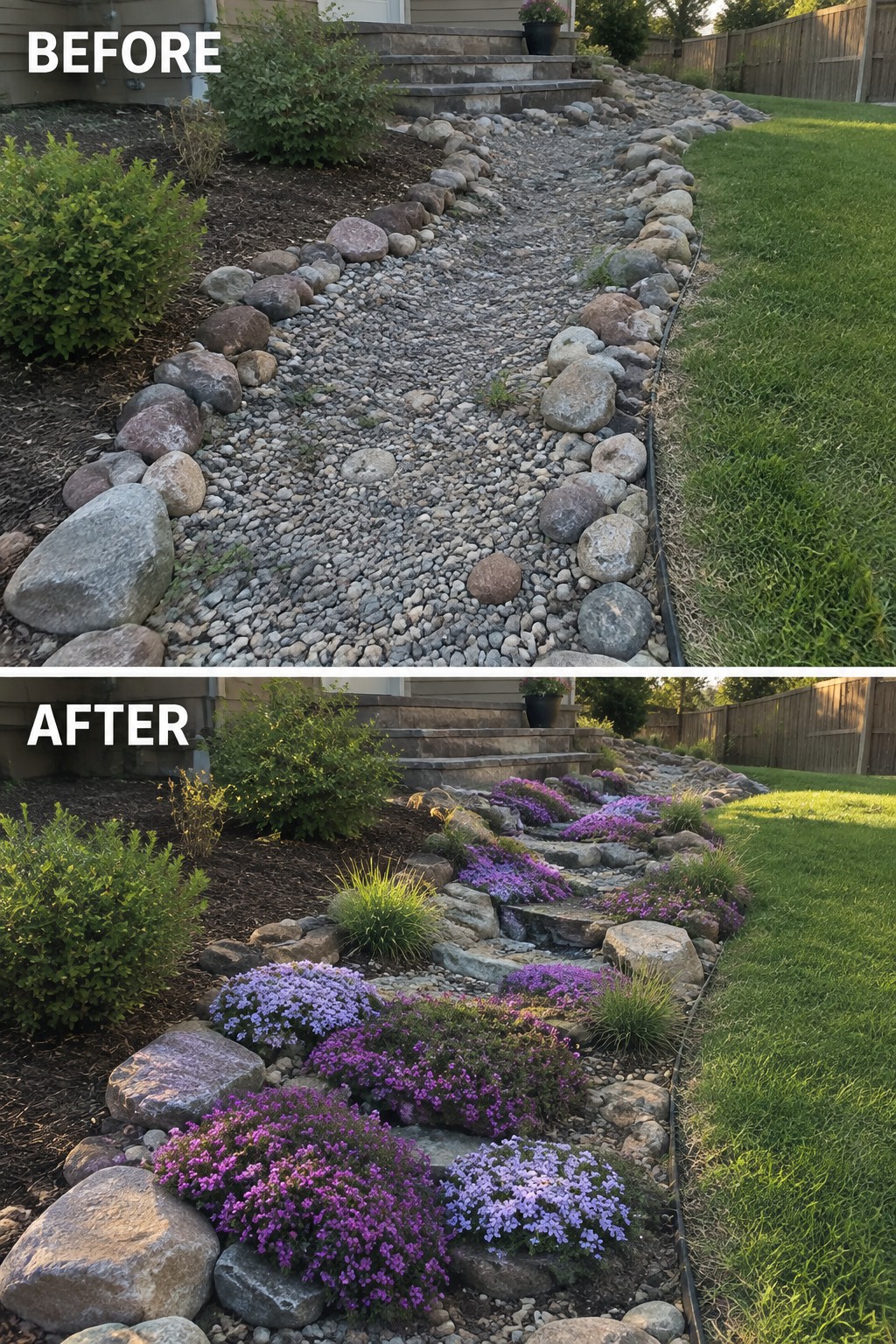
The rocky channel looks bare in the first photo, but adding low, spreading flowers turns it into a garden feature. The stones still show through, while patches of purple ground cover bring color and make the bed feel more intentional.
For a similar yard, plant in clusters along the channel and leave enough open space for water to flow and stones to remain visible. Choose ground cover suited to your climate, and avoid filling the whole bed too densely.
Turn A Bare Fireplace Area Into An Outdoor Room

The empty gravel around this stone fireplace made the seating area feel unfinished. Replacing it with a flagstone patio gives people a level, defined place to gather, while the planted edges help the hard surface feel connected to the garden.
This idea works well around a backyard fireplace or fire pit where loose gravel is awkward underfoot. Choose pavers with enough room for chairs and clear paths, then keep planting near the edges so it does not crowd the seating area.
Replace An Overgrown Border With Low Ground Cover

The bare, untidy strip along the house becomes a defined garden bed when the overgrown shrubs are replaced with low, spreading plants. A border of rounded stones gives the planting a clear edge and keeps it separate from the lawn.
This approach works well along a foundation where you want a neater look without tall shrubs blocking windows. Clear the bed first, then choose ground cover suited to the amount of sun and space available, leaving room for it to spread.
Refresh A Pond Edge With Layered Planting
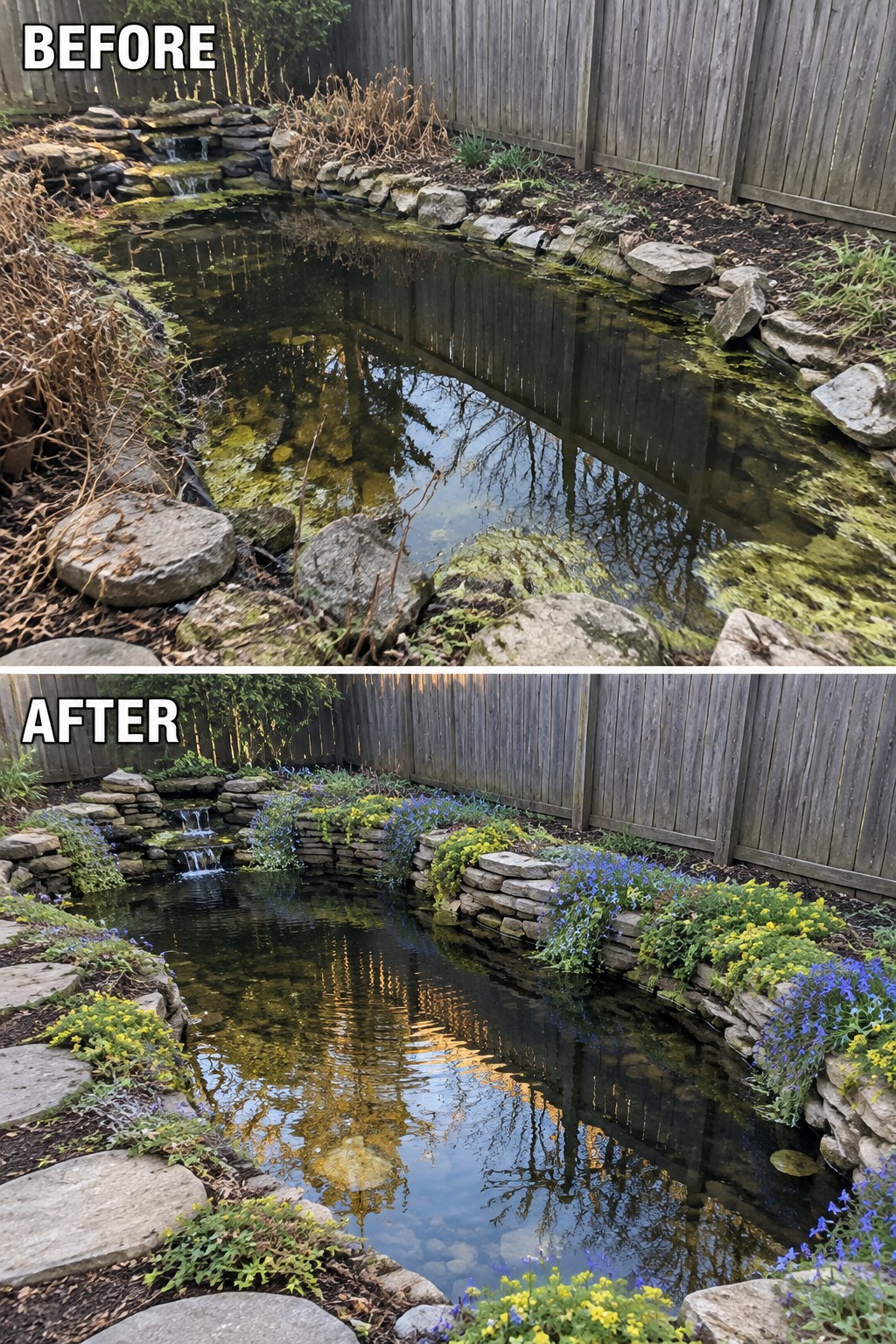
The pond edge works better when the stones and plants form a clear border instead of looking scattered. In the refreshed garden, stacked stone walls shape the water’s edge, while low, spreading flowers fill the spaces above them.
For a similar result, tidy the existing rocks first and use them to make a steady edge around the pond. Plant ground covers where they can spill over the stones, but leave enough room to reach the water and maintain the pond.
Fill A Stone Planter With Cascading Ground Cover

The stone planter already gives this deck a clear garden bed, but it looks sparse with bare soil and only a couple of plants. Filling it with low-growing ground cover makes the stonework feel more connected to the garden and gives the bed a fuller shape.
Use a few spreading plants suited to the planter’s sun and moisture, then leave enough space for them to grow over the edge. This approach works well in raised stone beds where trailing greenery can spill down without blocking a path or seating area.
Give A Rocky Garden Bed A Clear Edge

The rock border was nearly hidden by weeds, so the bed looked unplanned. Clearing the growth and adding cascading ground cover makes the stones part of a neat, planted edge instead of letting them disappear.
For a similar bed beside a sidewalk, start by removing weeds and defining the boundary before adding plants. Choose low-growing varieties that can spill around the rocks, but leave enough room for the path and keep the plants suited to the amount of sun and water the spot gets.
Turn A Steep Slope Into Layered Garden Beds
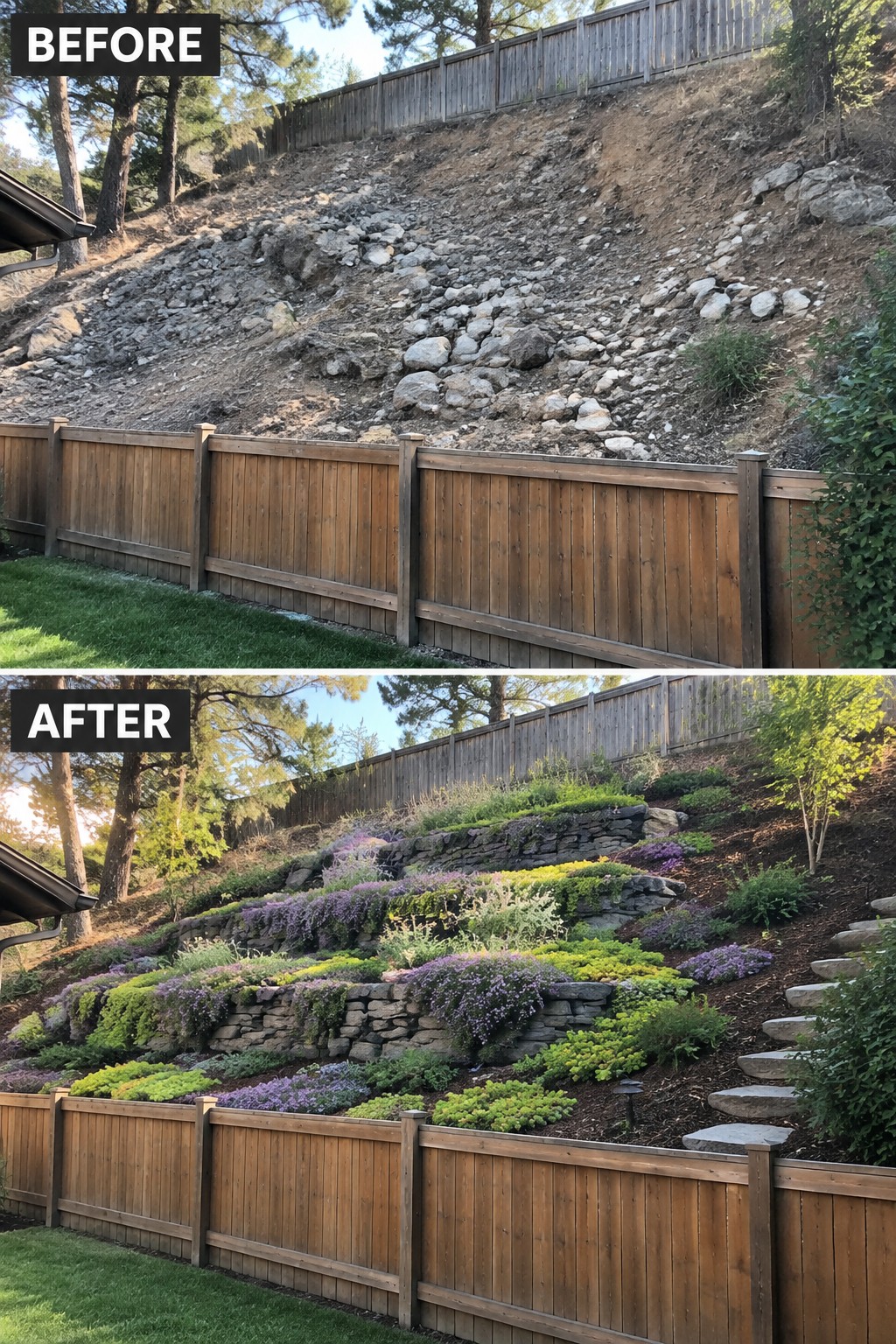
A rocky slope can be hard to plant and prone to washing out. Adding low stone retaining walls creates level pockets for cascading ground cover, turning the bare hillside into a more organized garden.
This approach works well on a steep bank where a single planting area would be difficult to maintain. Keep the wall sections low and make sure water can drain through them; choose plants suited to the slope’s sun and soil so they can spread without needing constant attention.
Replace A Scruffy Fence Border With Cascading Flowers

A tired fence border can look much neater when the loose, patchy planting is replaced with low ground cover that spills between the rocks. In this yard, purple and blue flowers fill the gaps and make the edge feel planned without changing the fence.
This idea works along a fence or other narrow garden bed where taller plants might crowd the lawn. Clear weeds first, keep a simple rock edge, and leave enough room for the ground cover to spread without taking over the grass.
Add Stone Steps To A Rocky Garden Slope
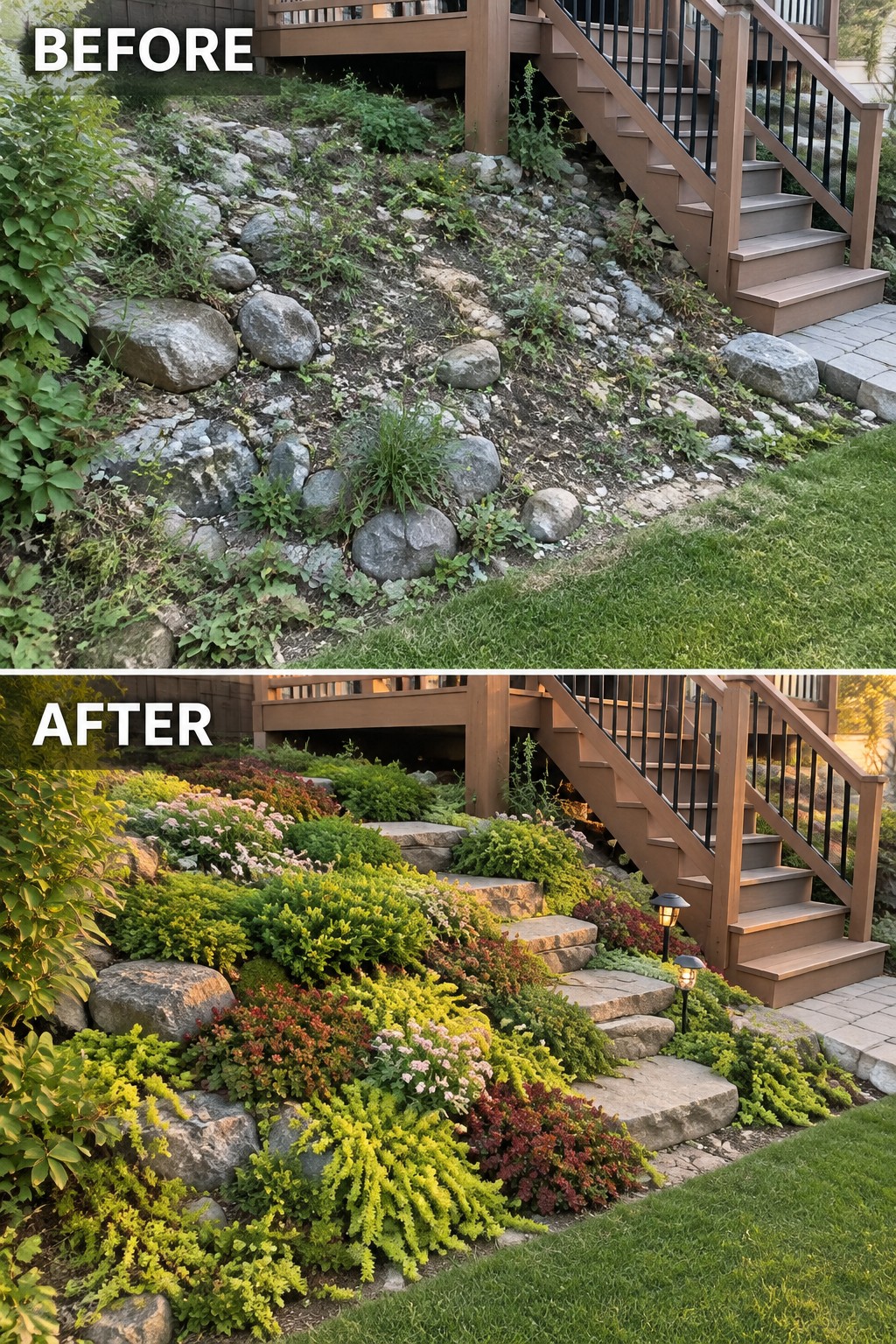
A rocky slope can be hard to maintain and awkward to cross. Adding broad stone steps gives the garden a clear route, while low ground cover fills the gaps and helps the bed look more settled.
This idea works well beside a deck or anywhere a sloped garden needs a practical way through. Keep the steps wide enough to use comfortably, and choose ground-cover plants suited to the slope’s sun and soil.
Fill A Sparse Rock Garden With Cascading Ground Cover

The bed looks more finished once the bare soil and scattered stones give way to dense, flowering ground cover. Low plants that spill around the rocks bring color to the garden while letting the larger stones remain part of the design.
For a similar bed, keep the plants low near the lawn and walkway so they do not crowd the edges. Choose ground cover suited to your sun and soil, and leave enough room for it to spread.
Fill A Raised Stone Bed With Cascading Plants

The bare soil and struggling shrub left this raised stone bed looking unfinished. Low, spreading plants now cover the top and spill over the edge, making the existing wall feel like part of the garden rather than an empty barrier.
Use a mix of ground cover suited to your sun and climate, and leave room for it to spread without hiding the stonework completely. This approach works well in a raised bed beside a walkway or house, where trailing plants can fill a large area without adding more hardscape.
Plant Cascading Ground Cover Around Existing Rocks

The rocky slope looks much more settled once low ground cover fills the bare soil between the stones. In the finished bed, blue flowers and leafy plants spread across the slope, making the rocks feel like part of the garden rather than obstacles in it.
This approach works well beneath mature trees, where a lawn can be difficult to maintain. Clear leaves and weeds first, then choose ground cover suited to the shade and let it fill in around the rocks. Leave enough space around the tree trunk and avoid covering its roots with deep soil.
Add Cascading Ground Cover To A Rocky Entry Bed
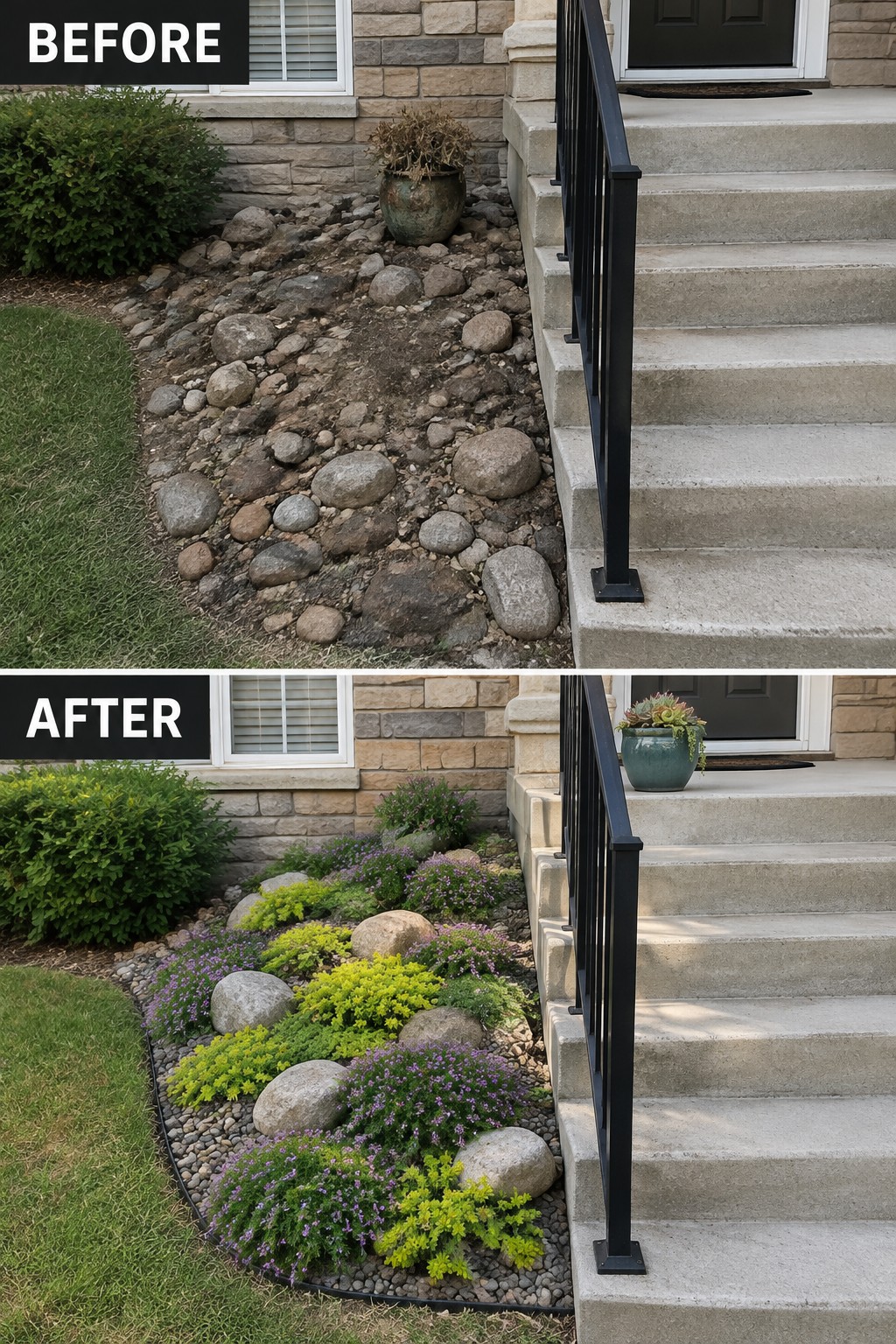
A rocky bed beside the front steps can look unfinished when stones and bare soil are scattered without much planting. Low ground cover changes the feel of the area, filling gaps with green foliage and flowers while letting a few larger rocks remain visible.
Use compact plants that spread without blocking the steps, and leave enough space for the rocks to show through. This approach suits a small entry bed where a full lawn or larger shrubs would be awkward; a defined edge can also keep the planting tidy.
Frequently Asked Questions
Q: What cascading ground cover works best between rocks?
A: Creeping thyme is a good choice for sunny, well-drained spots, while sedum handles dry conditions with little fuss. For shadier areas, try a low-growing plant that suits your climate rather than forcing a sun lover into the wrong place.
Q: How do I keep ground cover from taking over the whole rock garden?
A: Choose a plant with a spread that fits the space, and trim runners back when they creep beyond the rocks. Leave a little room around slower-growing plants so they don’t get crowded.
Q: Can I plant cascading ground cover on a steep slope?
A: Yes, but start with small plants and tuck them into pockets of soil between rocks. Water them regularly while they establish, since rain can run off a slope before the roots get a chance to drink.
Q: What should I do if the soil between my rocks dries out quickly?
A: Mix compost into the planting pockets before you plant, then water deeply until the roots settle in. A thin layer of gravel can help hold the soil in place without smothering the plants.
