


A rock garden can look sparse or unfinished when it lacks clear edges and a sense of structure.
I like how ornamental grasses add height and movement, while river pebbles give the planting areas a neat, settled look.
Together, they can make a yard feel more cared for without relying on a dense mix of plants or constant upkeep.
Small choices in spacing, stone color, and pathway placement can change how the whole garden feels.
I’d save the ideas that fit your yard’s light and layout, then adapt them one step at a time.
Replace A Weedy Strip With A Pebble Garden

A neglected strip beside the house can look much tidier when you clear the weeds and give it a simple layout. Here, river pebbles cover the bare ground, while ornamental grasses add height and keep the narrow bed from feeling plain.
This idea works well along a foundation or sidewalk where grass is hard to maintain. Set a clear edge, leave room for the plants to grow, and choose grasses suited to the amount of sun the area gets.
Create A Defined Rock Garden

Replacing a bare mulch bed with a low stone border gives this front yard a clear shape and a more finished look. River pebbles, ornamental grasses, and a few larger rocks make a simple focal point without needing a lot of different plants.
This idea works well in a sunny bed near an entry, especially where you want a tidy planting area that is easier to maintain than a lawn patch. Keep the grasses spaced so they have room to grow, and leave enough open pebble surface to show the stone pattern.
Add Structure To An Overgrown Yard
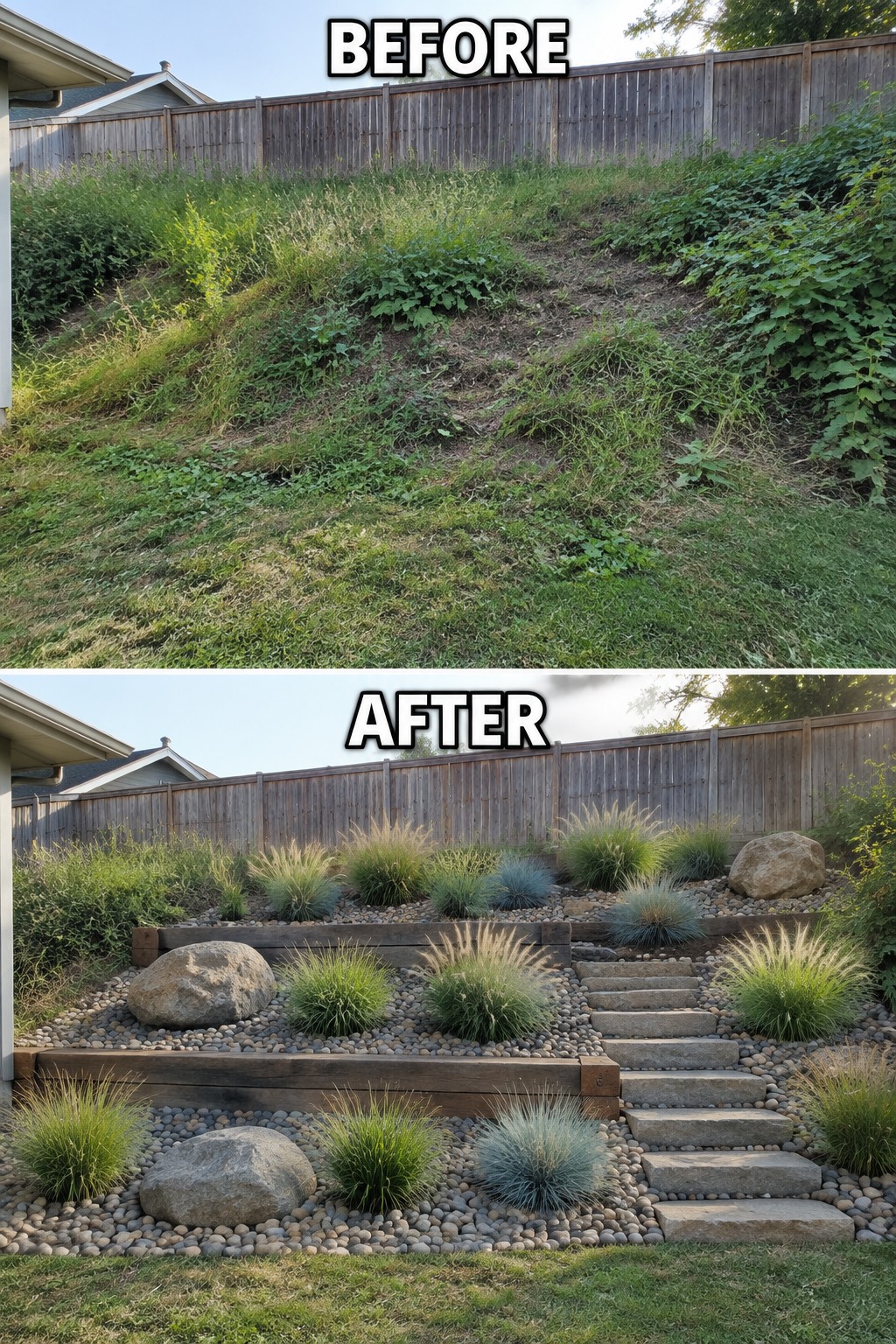
A rocky slope can be hard to mow and easy to neglect. Here, clearing the weeds and adding gravel, low retaining borders, and a simple stair path turns the hillside into a more orderly garden.
This idea works well for sloped yards where water runoff or access is a concern. Start by checking drainage and stabilizing the soil, then use river pebbles and ornamental grasses to fill the tiers without crowding the steps.
Replace A Worn Path With A Pebble Garden Walkway

A narrow side yard can feel neglected when weeds crowd a cracked concrete path. Replacing it with stepping stones set in river pebbles gives the walkway a clearer shape and makes the space look more cared for.
For a similar yard, use stones with a comfortable, even stride and keep the gravel edges tidy. Ornamental grasses can add greenery along the route, but leave enough room to walk and avoid packing too many plants into a narrow passage.
Create A Pebble Garden Border
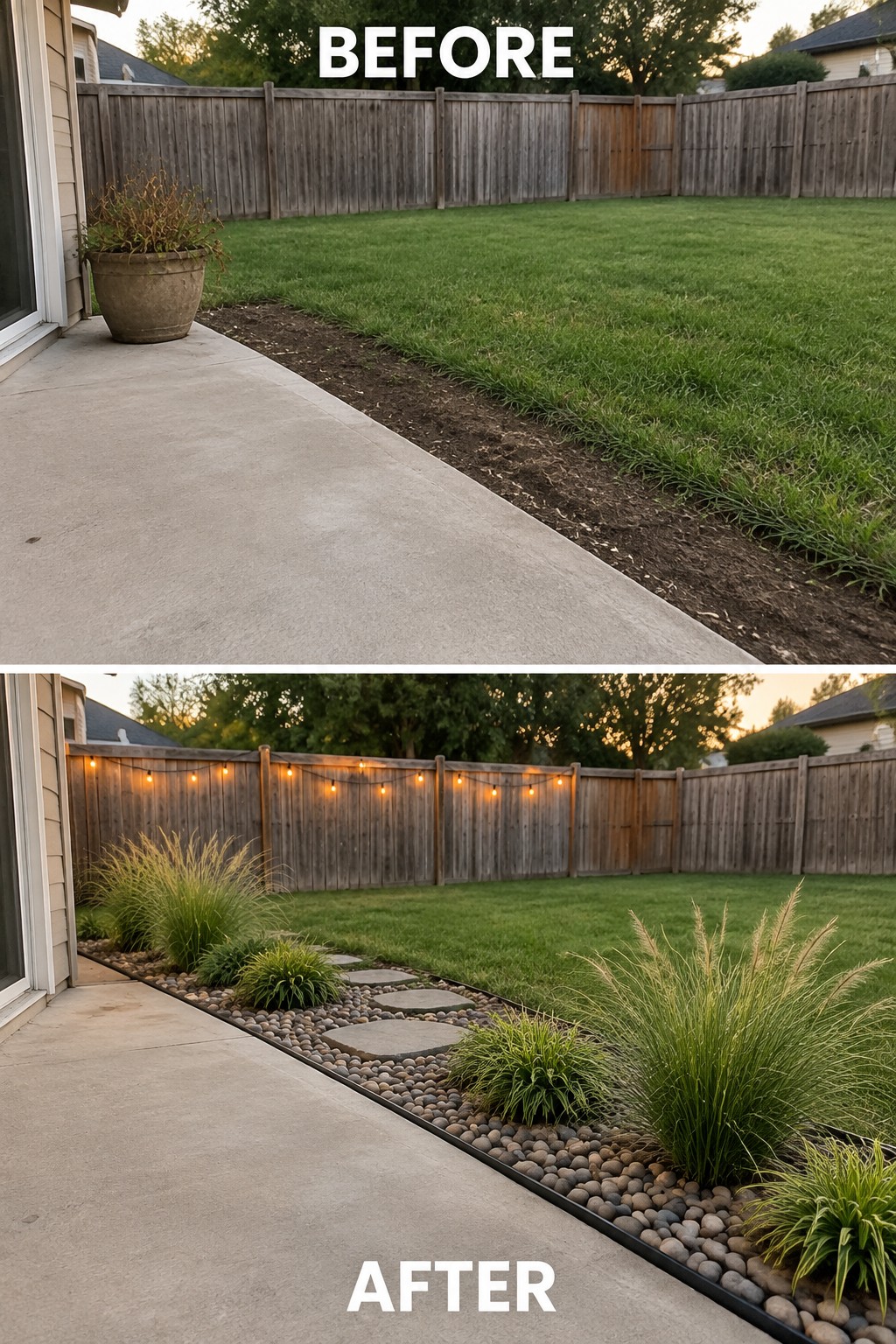
Replacing a scruffy strip of bare soil with river pebbles and ornamental grasses gives the edge of a lawn a cleaner shape. The stones make a tidy ground cover, while the grasses add height and make the border feel planted rather than bare.
This idea works well beside a patio where grass is hard to mow neatly. Use edging to keep the pebbles in place, and leave enough room for the grasses to grow without spilling onto the walkway.
Give A Front Garden A Cleaner Shape

Replacing an uneven, overgrown planting strip with river pebbles gives the front garden a clear, tidy outline. Ornamental grasses and a few larger rocks add structure without needing a crowded mix of plants.
This idea works well beside a porch or along a walkway where the planting bed is easy to see. Clear out unwanted growth first, then leave enough room between plants for them to grow without covering the stones.
Add Structure To A Bare Garden Bed

A simple planting bed can look much more finished when it has a clear edge and a planned mix of grasses and stones. Here, the scattered shrubs give way to ornamental grasses, river pebbles, and a few larger rocks, making the strip beside the house feel intentional.
Use this idea along a blank wall or narrow side yard where a lawn edge tends to look untidy. Start by clearing the bed, then arrange plants and rocks with enough space for them to grow; a neat pebble border helps keep the lawn separate from the planting.
Give A Small Patio A Clear Garden Layout
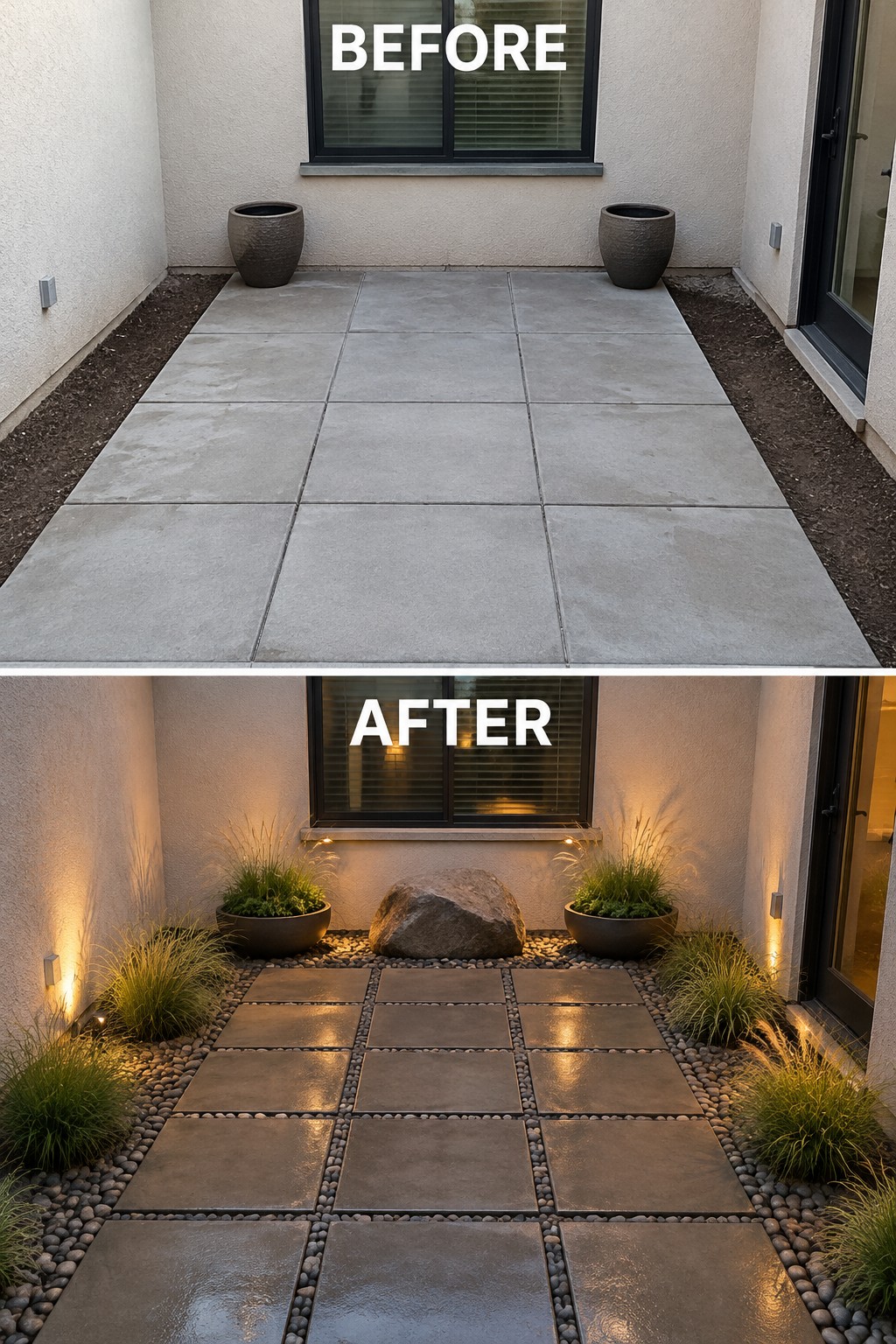
The large concrete slabs made this patio feel bare and unfinished. Replacing some of that hard surface with smaller pavers, river pebbles, and ornamental grasses gives the space a clear garden layout while leaving a simple path through the center.
This idea works well in a small enclosed patio where planting space is limited. Use a few larger stones as a focal point, then keep the grasses grouped along the edges so the walkway stays easy to use.
Create A Pebble Garden Along The Driveway
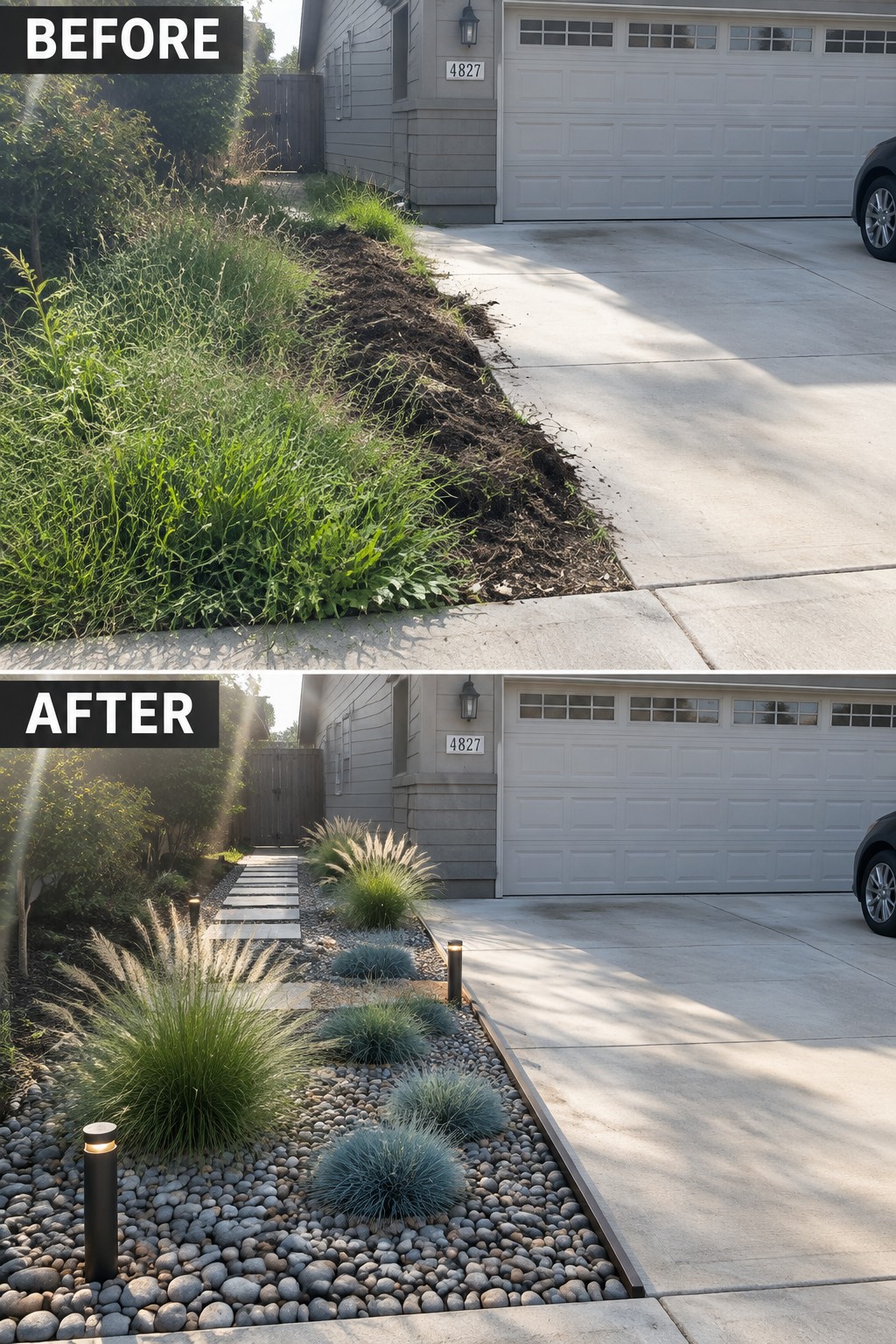
Replacing an overgrown strip beside the driveway with river pebbles gives the yard a cleaner, more planned look. Ornamental grasses add height and movement, while the stone makes the planting area feel defined.
For a similar spot, clear the weeds first and set a firm edge along the concrete to keep the pebbles in place. Leave enough room for plants to grow without spilling into the path.
Add Ornamental Grasses To A Pebble Garden
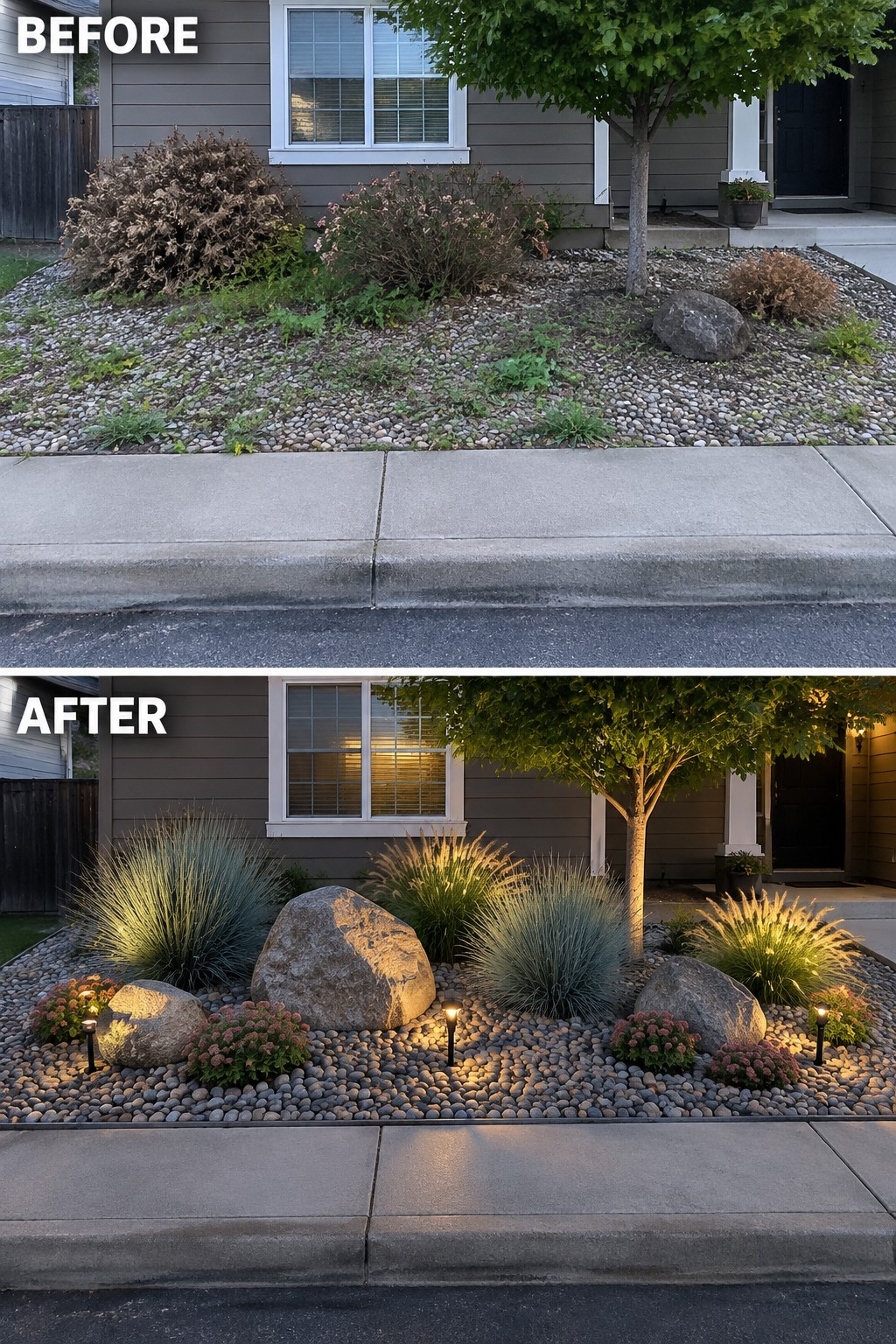
A simple pebble bed can look untidy when plants grow in uneven clumps. Replacing the overgrown shrubs with ornamental grasses gives the front garden a clearer shape, while river pebbles keep the open areas neat and low-maintenance.
For a similar bed, use a few grass varieties as the main structure and leave enough space for each clump to grow. A couple of larger rocks can help break up the planting, but avoid filling every gap with plants or ornaments.
Turn An Overgrown Fence Line Into A Pebble Garden
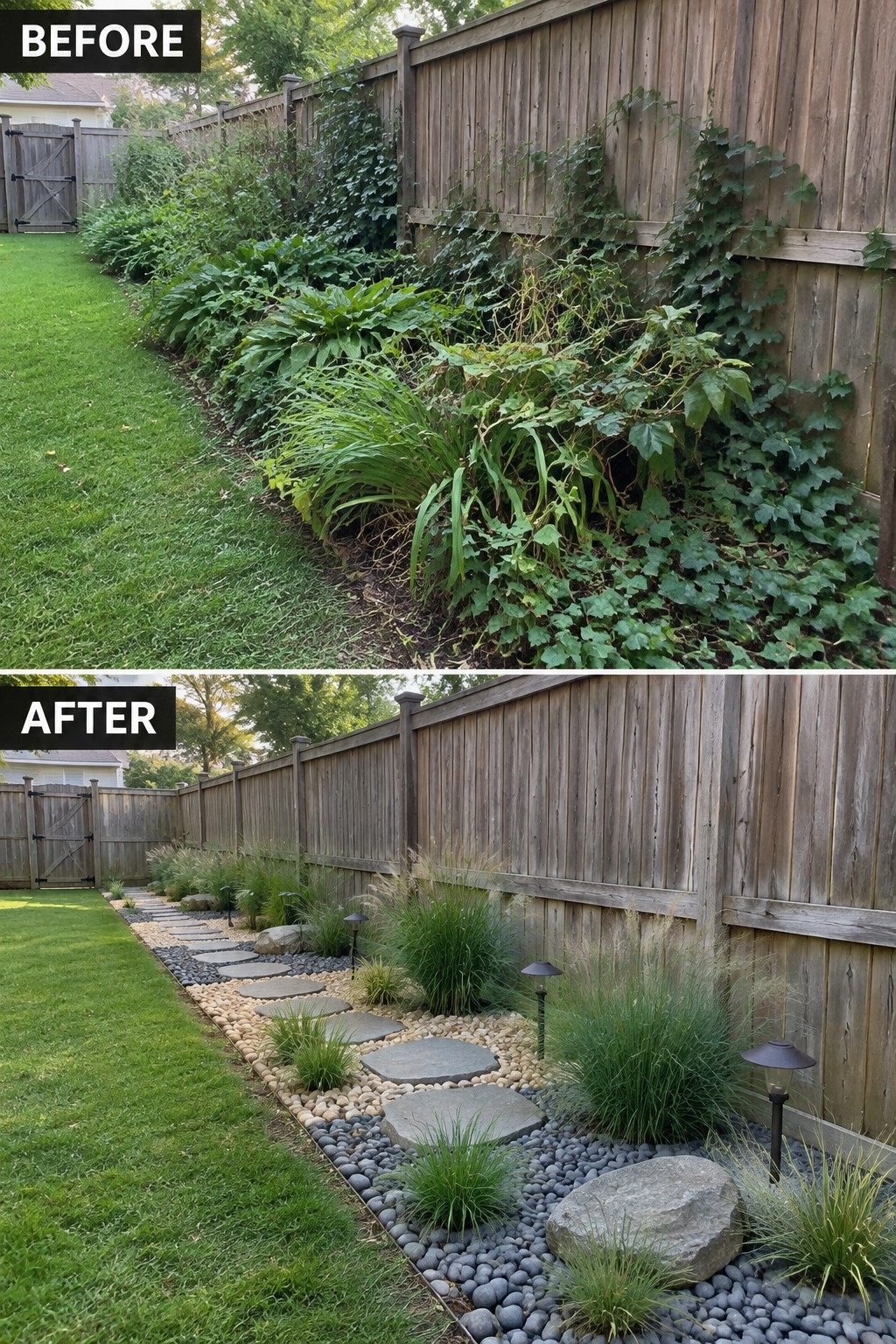
An overgrown strip along a fence can make the whole yard feel untidy. Clearing it and laying river pebbles around a simple stepping-stone path gives the area a clear shape, while ornamental grasses bring back planting without letting the bed look crowded.
This idea works well in a narrow side yard where you want a neat route through the garden but still need room for plants. Keep the stones level and leave enough space between them for an easy stride. Choose grasses suited to your sun and soil, and trim them back as needed to keep the path clear.
Define A Fire Pit Area With Pebbles
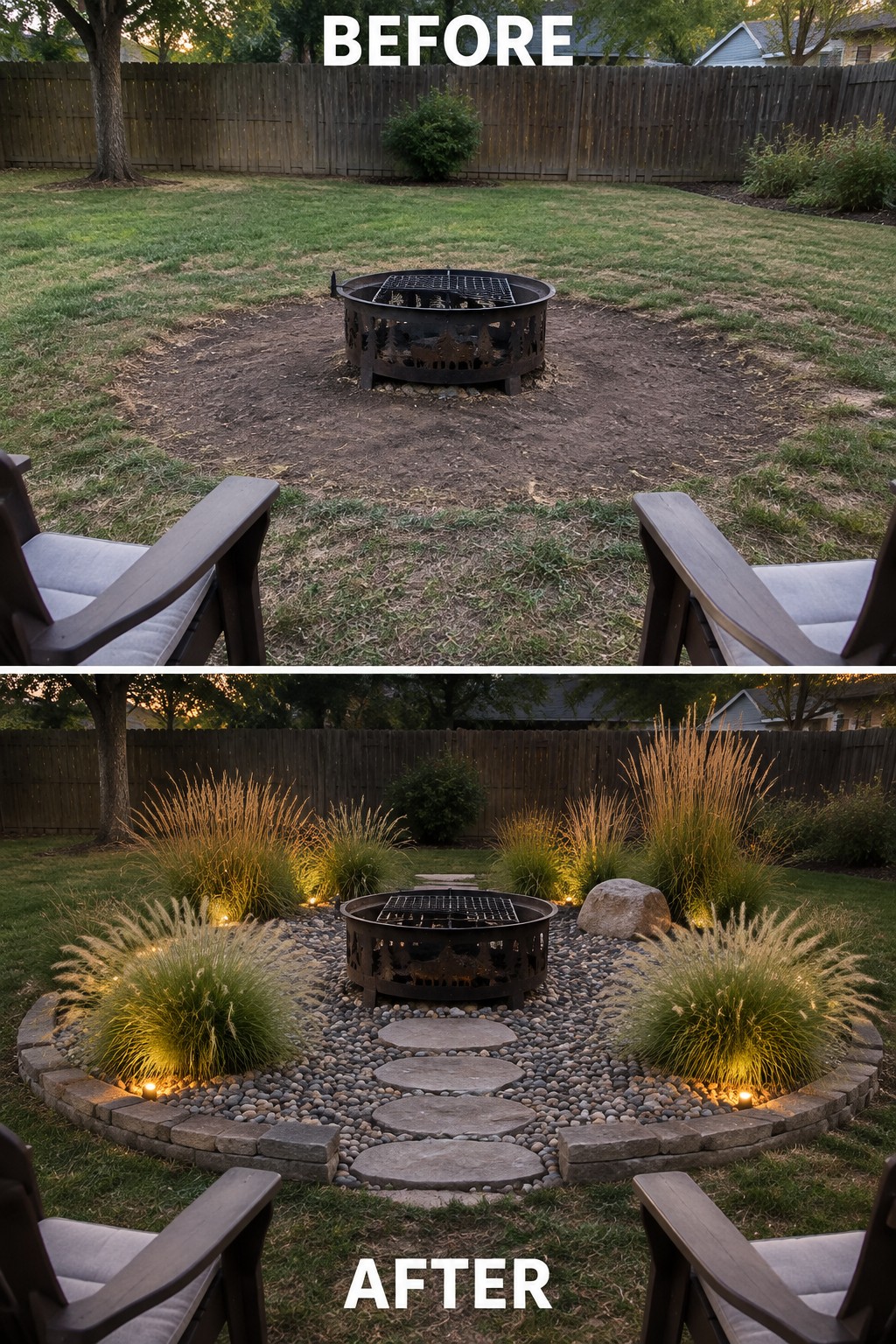
The bare ground around this fire pit made the yard feel unfinished. A curved stone edge and river pebbles give the area a clear shape, while leaving the fire pit as the main feature.
This idea works well in a backyard with a fire pit set in the lawn. Keep the pebble area wide enough for safe movement, and use sturdy stepping stones if people need a clear route across it. Ornamental grasses along the edge add planting without crowding the seating area.
Replace A Plain Foundation Bed With A Pebble Garden
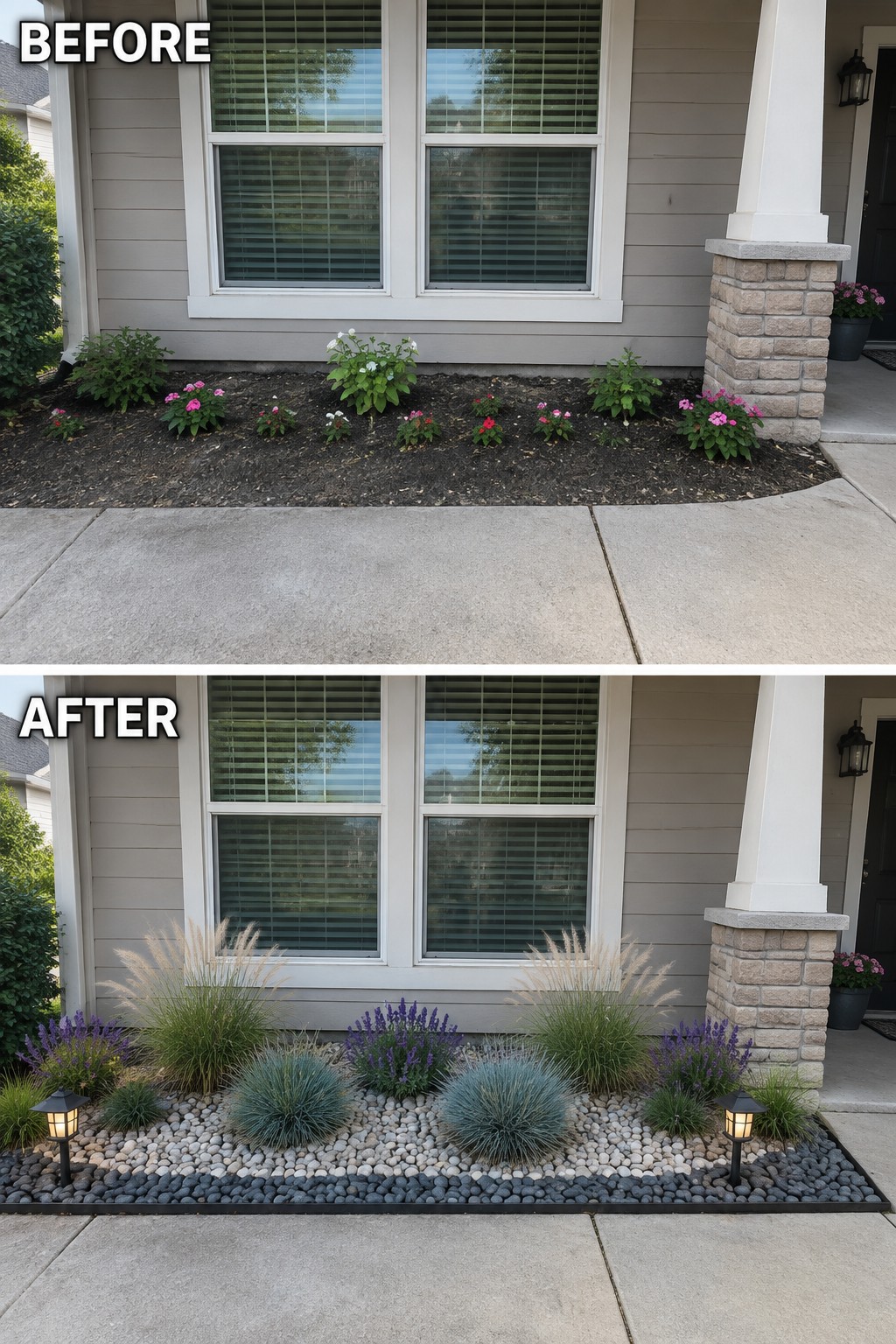
The narrow bed along the house looks more planned when dark soil and scattered flowers give way to river pebbles and groups of ornamental grasses. Repeating a few grasses and low plants makes the foundation planting feel orderly without needing a complicated layout.
This idea works well beneath windows or along a front walk, especially where you want a tidy bed with less exposed soil. Set plants in loose groups, leave enough room for them to mature, and use a clear edge to keep the pebbles in place.
Replace A Neglected Curbside Strip With A Pebble Garden

A weedy strip beside the sidewalk can look messy and be hard to maintain. Clearing it and covering the soil with river pebbles gives the space a cleaner, more deliberate shape, while ornamental grasses add height and texture without filling the narrow bed.
This idea works well along a curb or walkway where lawn is awkward to mow. Remove weeds first, then use a defined edge and a suitable landscape fabric beneath the stones to help limit regrowth. Leave enough room for plants to spread without spilling onto the path.
Replace A Weedy Slope With A Pebble Garden

A sparse, weedy slope can be hard to maintain, especially when rain washes soil downhill. Replacing the patchy growth with river pebbles and groups of ornamental grasses gives the hillside a more deliberate layout while keeping the planting simple.
Use a few grass varieties suited to your sun and climate, and leave enough room between clumps for the stones to show. On a slope, plan for proper drainage and a stable base so the pebbles stay in place.
Add Ornamental Grasses To A Pebble Garden
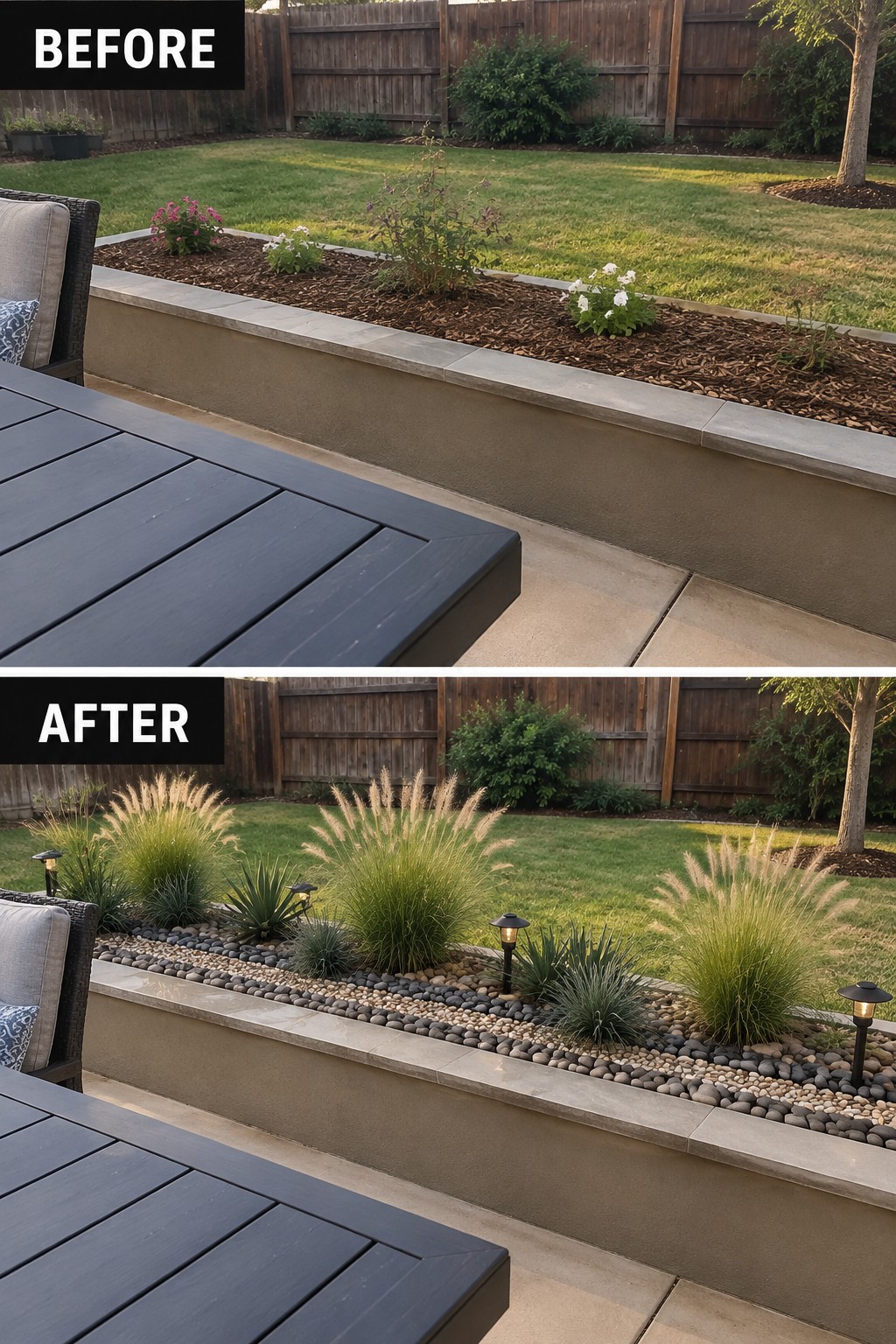
An empty, sparsely planted border can look unfinished. Here, ornamental grasses and river pebbles give the long bed a more planned shape, with the grasses adding height and the stones covering the soil between plants.
This idea works well in a narrow bed beside a patio or lawn. Choose grasses suited to your climate and leave enough room for them to spread; a few well-spaced plants usually look better than crowding the border.
Turn A Bare Fence Corner Into A Pebble Garden

A patchy lawn can be hard to keep looking tidy, especially in a fence corner. Replacing that worn area with a curved bed of river pebbles and ornamental grasses gives the yard a clear shape and a focal point without taking up much space.
Use one larger stone as a centerpiece, then group grasses and smaller plants around it so the bed feels planned rather than crowded. A simple edge will help keep pebbles from spreading into the lawn, and low garden lights can make the corner easier to enjoy after dark.
Add A Pebble Garden Path To A Plain Lawn

A broad stretch of lawn can feel a little unfinished when there’s no clear route to the front door. Here, a curved stepping-stone path and river pebbles turn part of the grass into a defined garden, while ornamental grasses give the path some height and shape.
This idea works well in a front yard where you want a more organized look without replacing all the grass. Keep the planting bed narrow enough to leave room for the lawn, and space the stones comfortably so the route is easy to walk.
Frequently Asked Questions
Q: What kind of ornamental grass works well in a small rock garden?
A: Look for compact grasses that won’t crowd the stones, such as blue fescue or dwarf mondo grass. Check the mature size before planting, since even a small pot can grow into a wide clump.
Q: Should I put landscape fabric under the river pebbles?
A: You can, but fabric may make it harder to move plants or refresh the layout later. A layer of cardboard beneath the pebbles is a simple alternative that helps suppress weeds as it breaks down.
Q: How do I keep the pebbles from mixing into the soil?
A: Add a firm edging around the garden, and spread the pebbles over a stable base. Keep them a little back from grass clumps so you can trim or divide the plants without disturbing the stones.
Q: Will ornamental grasses survive in a dry rock garden?
A: Many do once they’re established, but they’ll still need regular watering during their first growing season. Choose grasses suited to your climate and sunlight, and avoid planting them where water pools after rain.
