

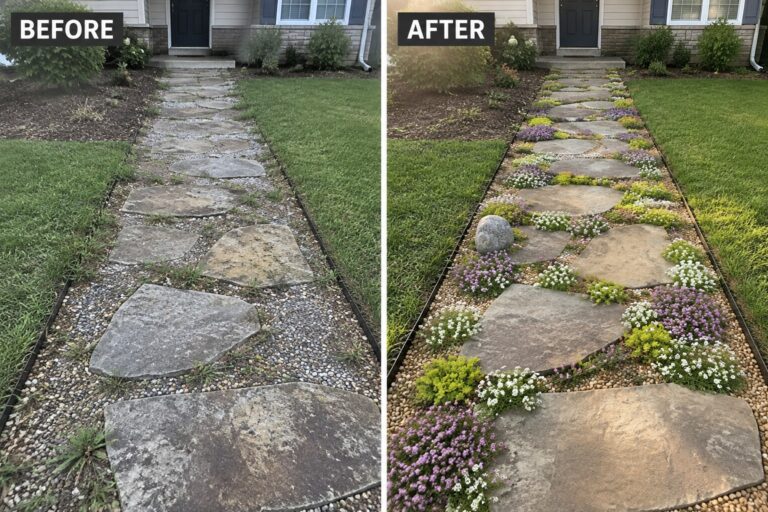
A rocky patch can feel unfinished when the stones sit bare and the planting has no clear rhythm.
I like how flowering perennials soften those hard edges while still letting the stone shape the garden.
With a little cleanup, thoughtful spacing, and plants suited to the site, a rock garden can feel more settled without losing its natural character.
The change can be simple but satisfying.
I’d save ideas that use color and texture in a way that could work with the stones, light, and growing conditions in my own yard.
Create A Clear Path Through The Garden
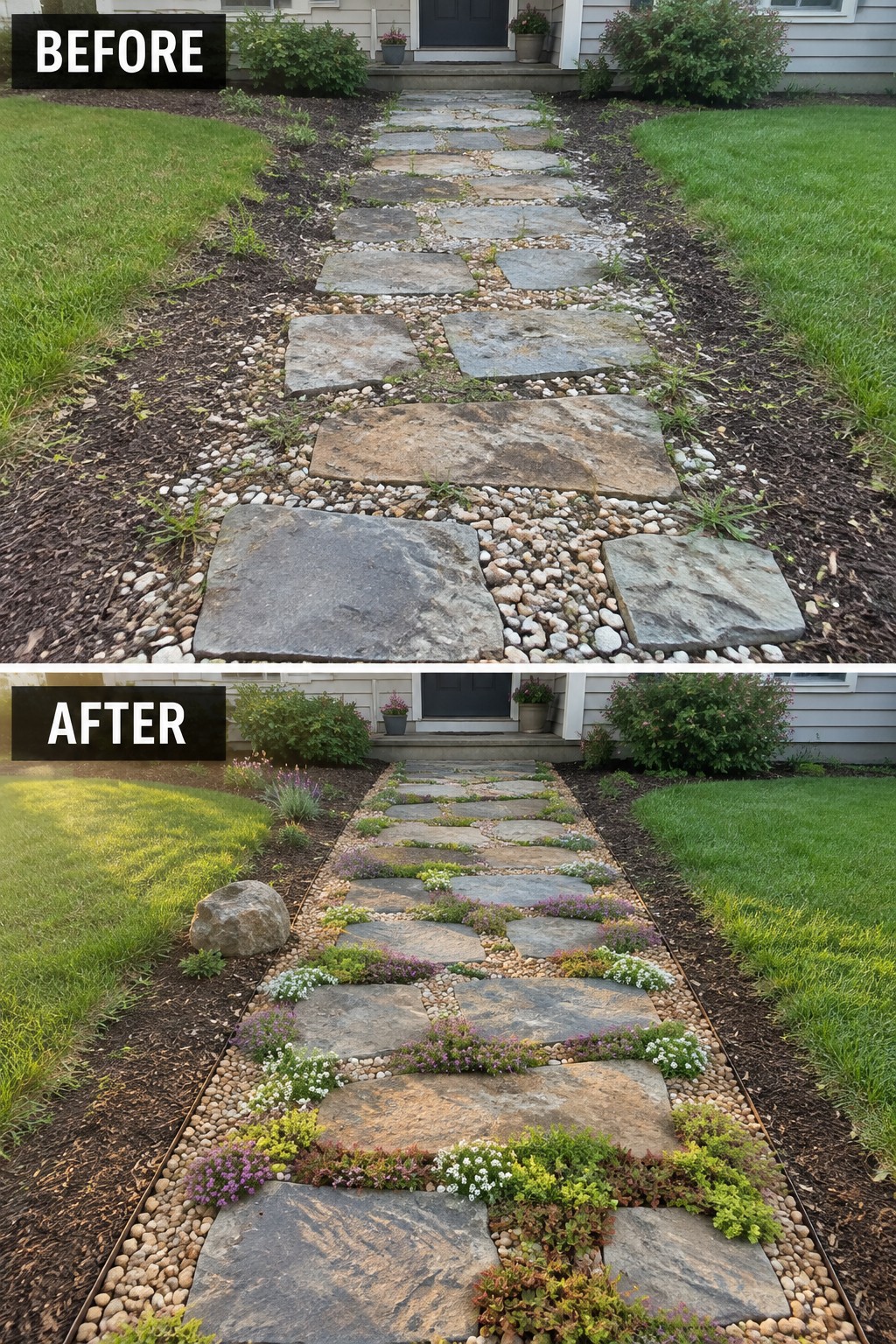
A simple stone path can give a front yard a more finished layout. Here, the loose, uneven stones are set into a defined walkway, with flowering perennials filling some of the gaps instead of leaving bare soil between them.
For a similar look, keep the path wide enough to walk comfortably and place low-growing plants where they won’t spill across the stepping stones. This works well in a small entry garden, where a clear route to the door matters as much as the planting.
Add Flowering Perennials To A Stone Garden
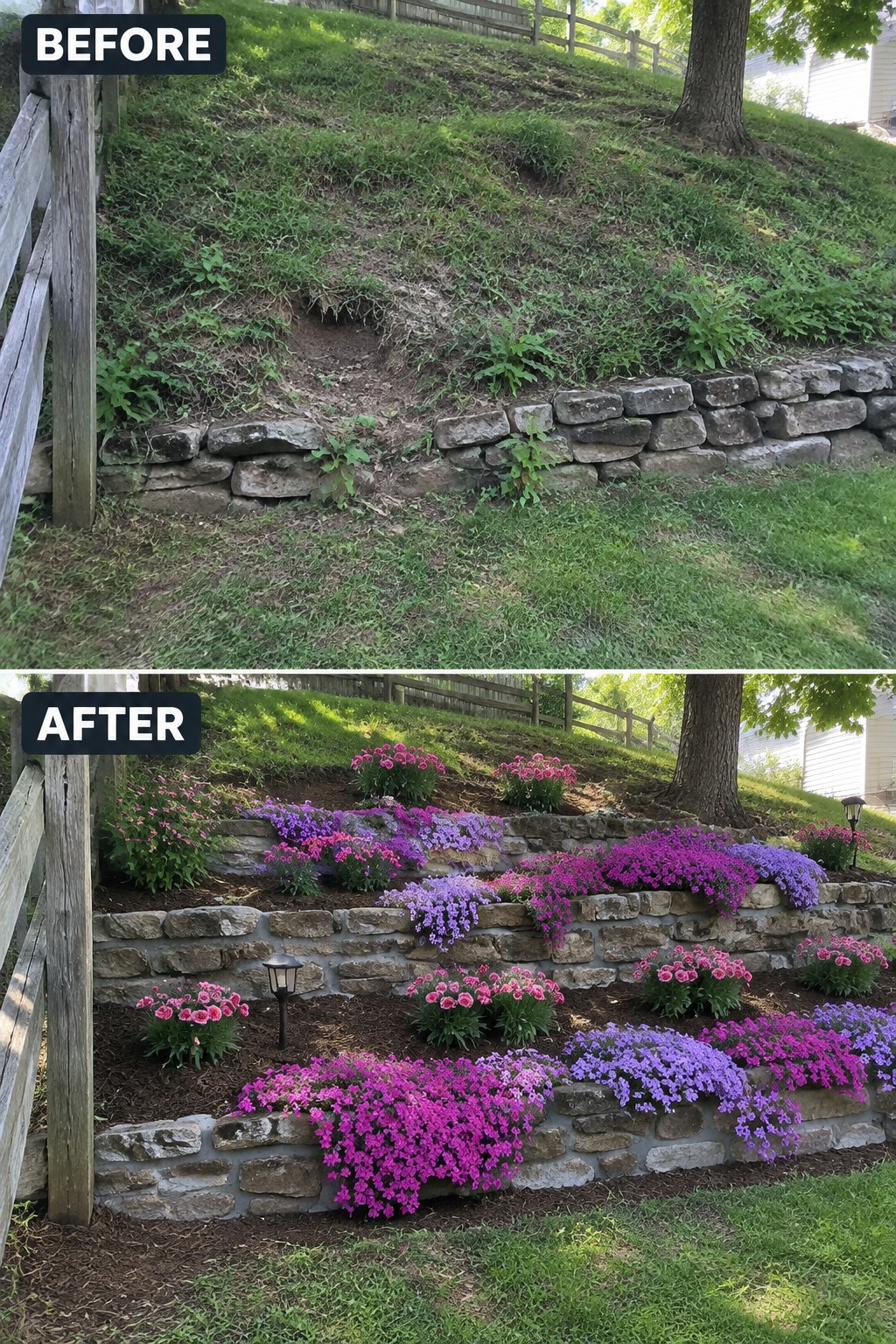
A stone garden can look neglected when weeds and bare soil take over. Clearing the slope and planting flowering perennials between the tiers gives it a more settled, cared-for look, while the stone walls remain the main structure.
Use plants that suit your sunlight and spread at a manageable rate, especially near the wall edges. Leave enough room to reach the beds for weeding and trimming, and avoid packing every gap with plants.
Give A Dry Creek Bed A Cleaner Shape
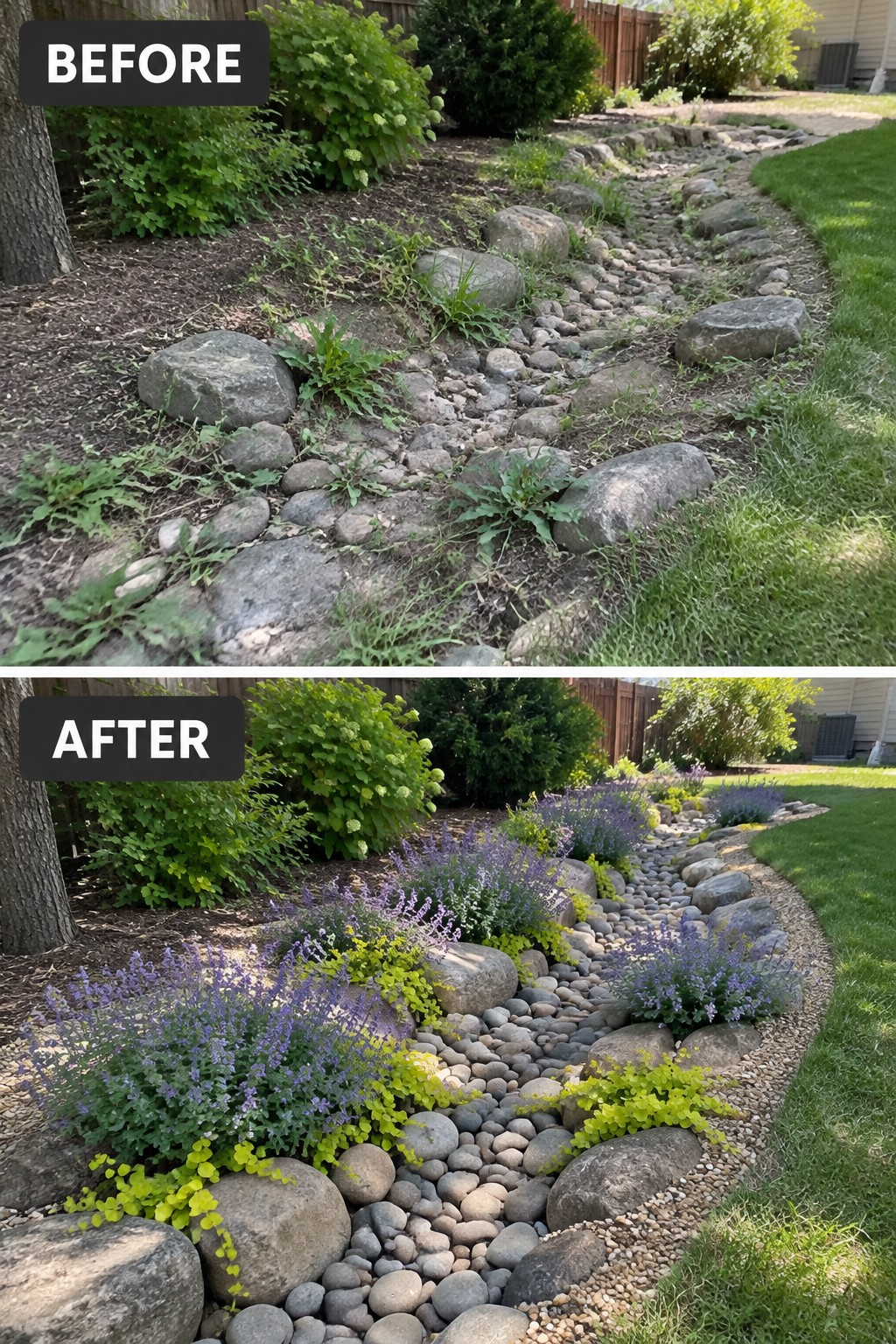
A rocky drainage bed can look messy when weeds spread between the stones. Clearing it out and defining the channel with rounded river rocks makes the area look planned while keeping a clear route for runoff.
For a similar yard, start by removing weeds, then arrange larger stones along the edges and smaller ones through the center. Add a few low-growing perennials beside the rocks, but leave enough open space for water to move freely.
Add Planting To Give A Rock Garden Structure
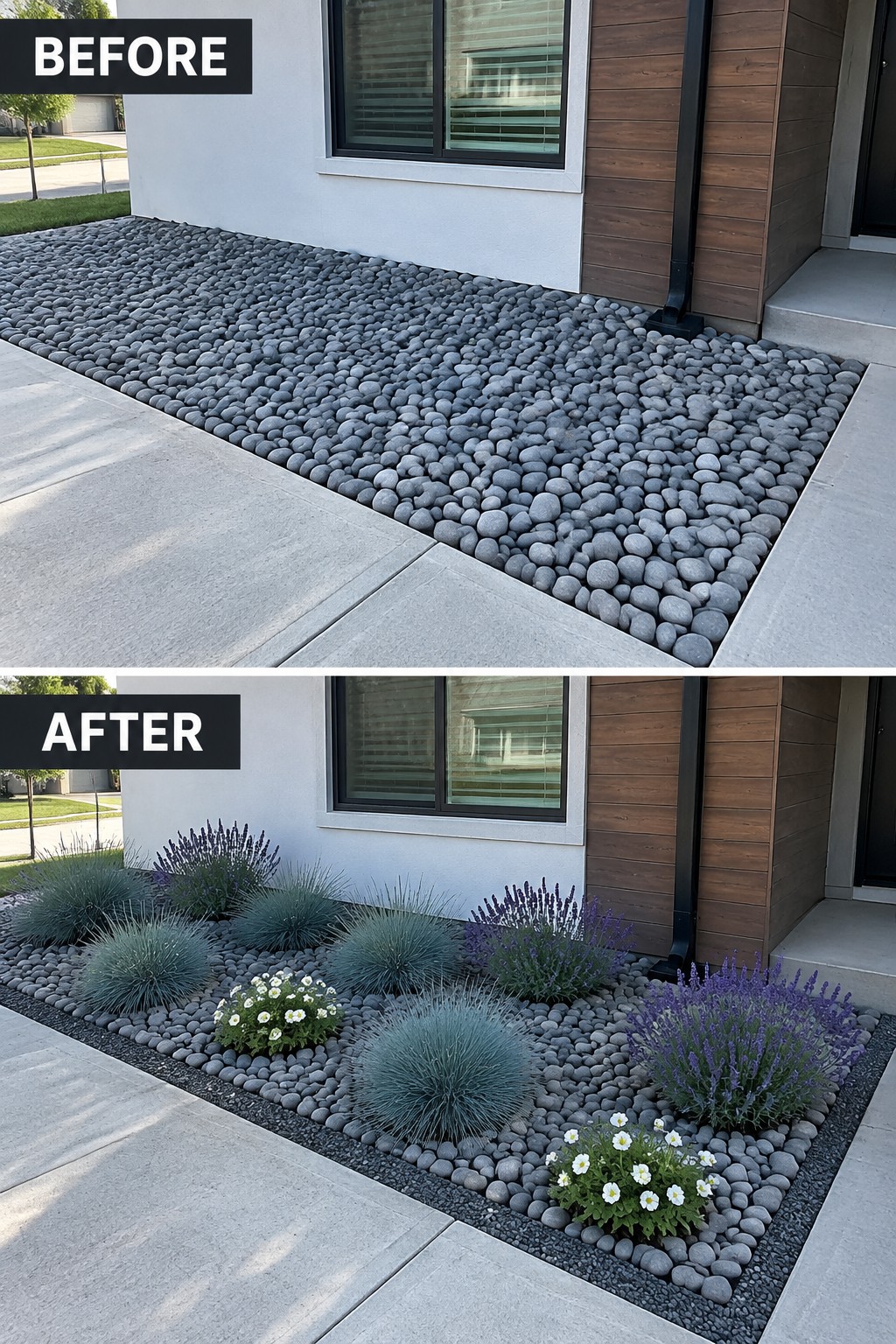
A bed filled only with stones can look bare, even when the stone itself is tidy. Adding flowering perennials and ornamental grasses breaks up the open surface and gives the rock garden a more finished shape.
Use a few plant varieties in repeated groups rather than scattering one of everything across the bed. Choose plants suited to the site’s sun and drainage, and leave enough room between them so they can grow without covering the stones.
Define A Garden Path With Flowering Ground Cover
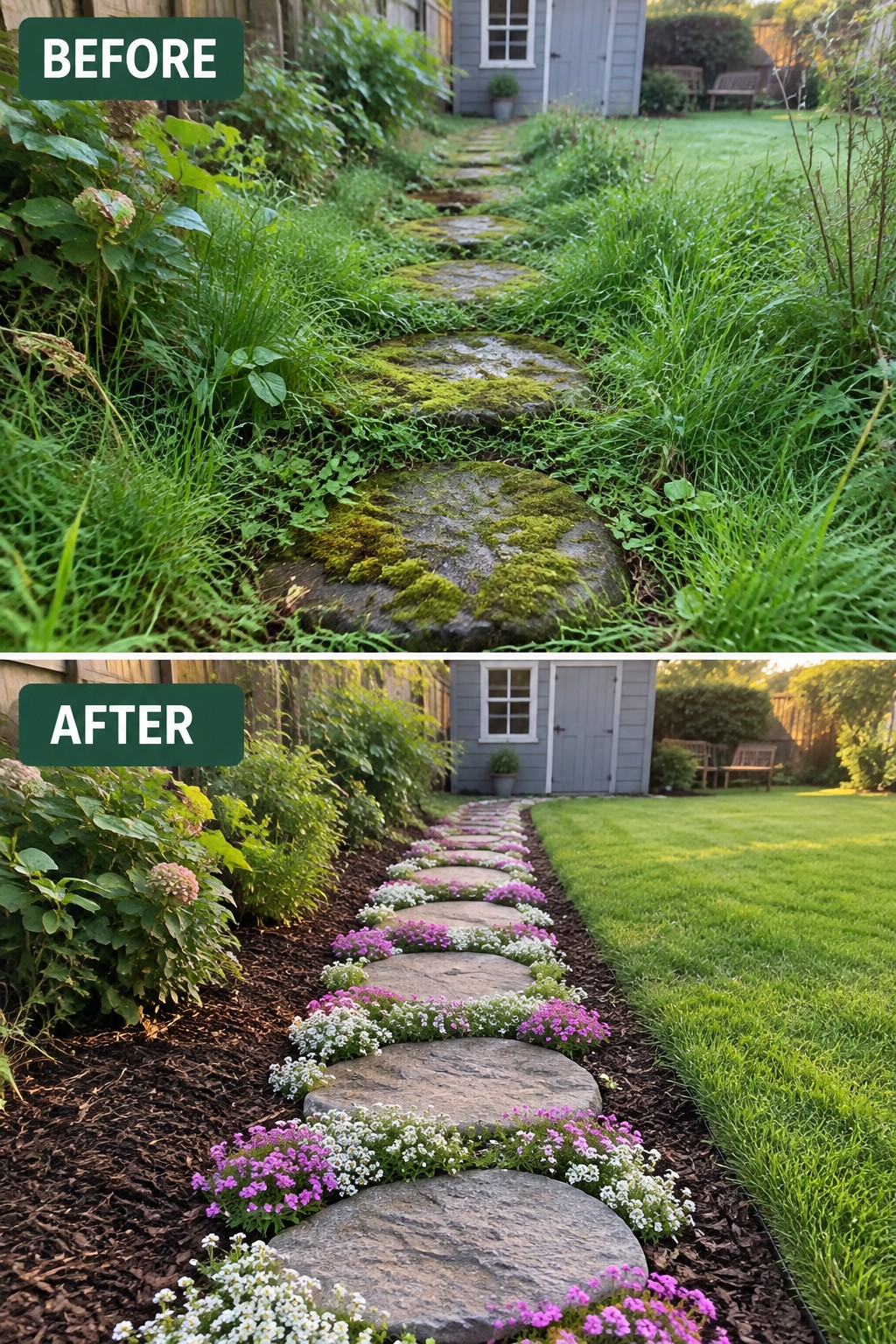
The overgrown path becomes easier to follow when the stones have a clear edge and low flowers fill the gaps. The stepping stones still lead the way, but the planted border makes the garden feel cared for rather than tangled.
For a similar result, clear the grass around the stones and use compact perennials that can spread without covering the walking surface. Leave enough room to step comfortably, and choose plants suited to your sun and soil.
Turn A Bare Rock Garden Into A Flowering Bed
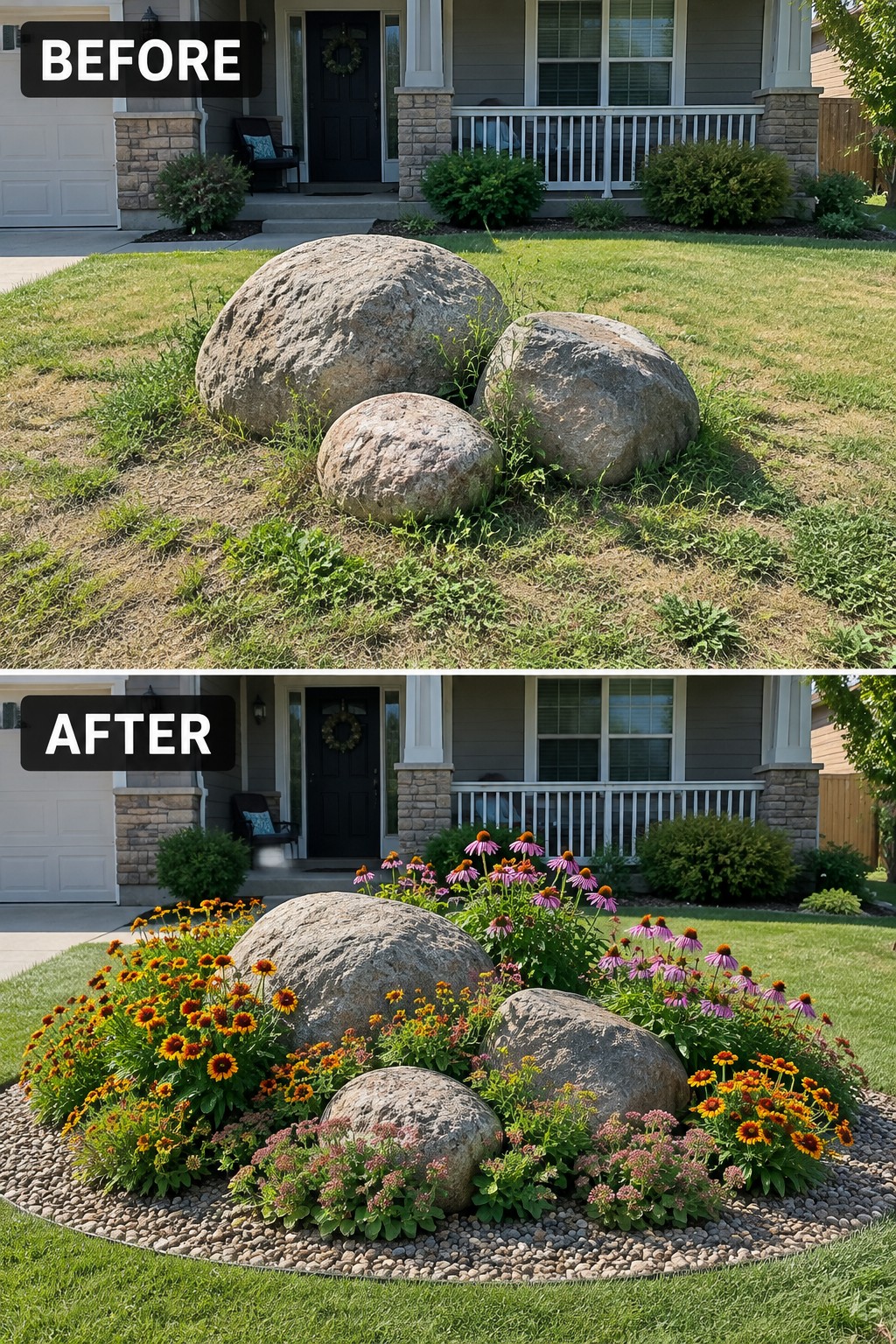
The rocks already give this spot a natural focal point, but the bare, patchy lawn around them makes the area look unfinished. Planting flowering perennials between and around the stones turns it into a defined garden bed and gives the rocks a purpose in the landscape.
Use a few groups of hardy perennials in different heights, leaving enough room for the plants to spread and for the stones to remain visible. A gravel edge can help separate the bed from the lawn and make mowing easier.
Turn A Bare Stone Bed Into A Planted Garden
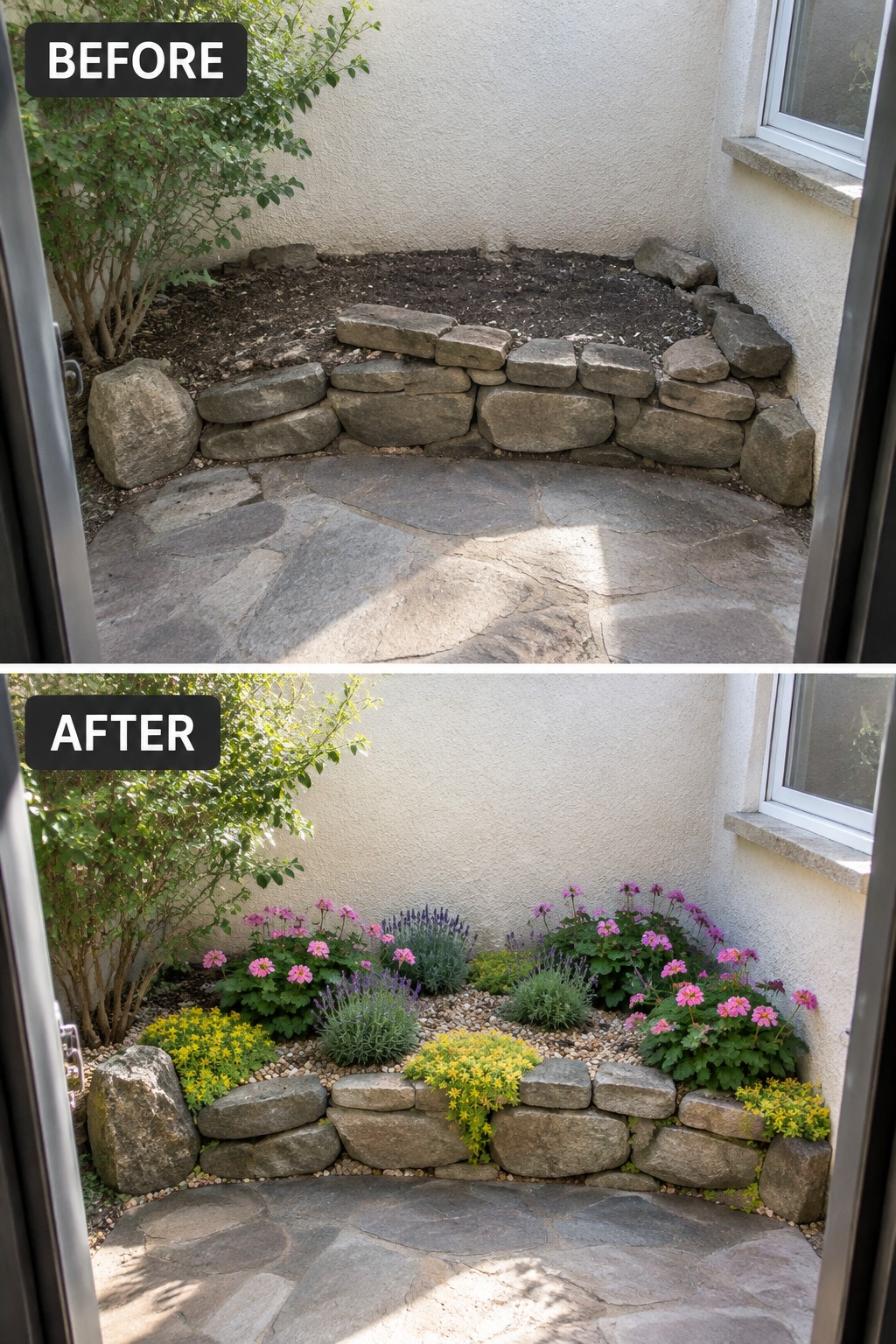
A low stone wall can make a small garden bed feel organized, but bare soil leaves it looking unfinished. Here, flowering perennials and gravel fill the space behind the stones, giving the rock garden more color and a clear planting pattern.
Use a few groups of perennials that suit the bed’s sun and drainage, then leave enough space for them to grow. Gravel can help cover exposed soil, but avoid packing plants too tightly or the small garden may soon feel crowded.
Plant Flowering Perennials Between Stone Steps

The stone steps already provide a sturdy route to the front door, but the bare pebble risers make the approach feel unfinished. Planting low flowering perennials between the stones turns those gaps into part of the garden and brings color right up to the entry.
Choose compact plants that suit the light and can handle the soil depth in each gap. Keep them trimmed back from the treads so the steps stay clear and safe to use.
Replace Weeds With A Defined Stone Border

The weedy strip beside the driveway looks more cared for once the loose rocks are replaced with a neat gravel bed and flowering perennials. The planting gives the narrow border a clear shape without taking space from the lawn.
For a similar spot, clear the weeds first, then set an edge and choose a few repeat-blooming plants suited to the sun and soil. Leave room between them so they can grow without spilling over the driveway.
Make A Garden Pond Feel More Finished
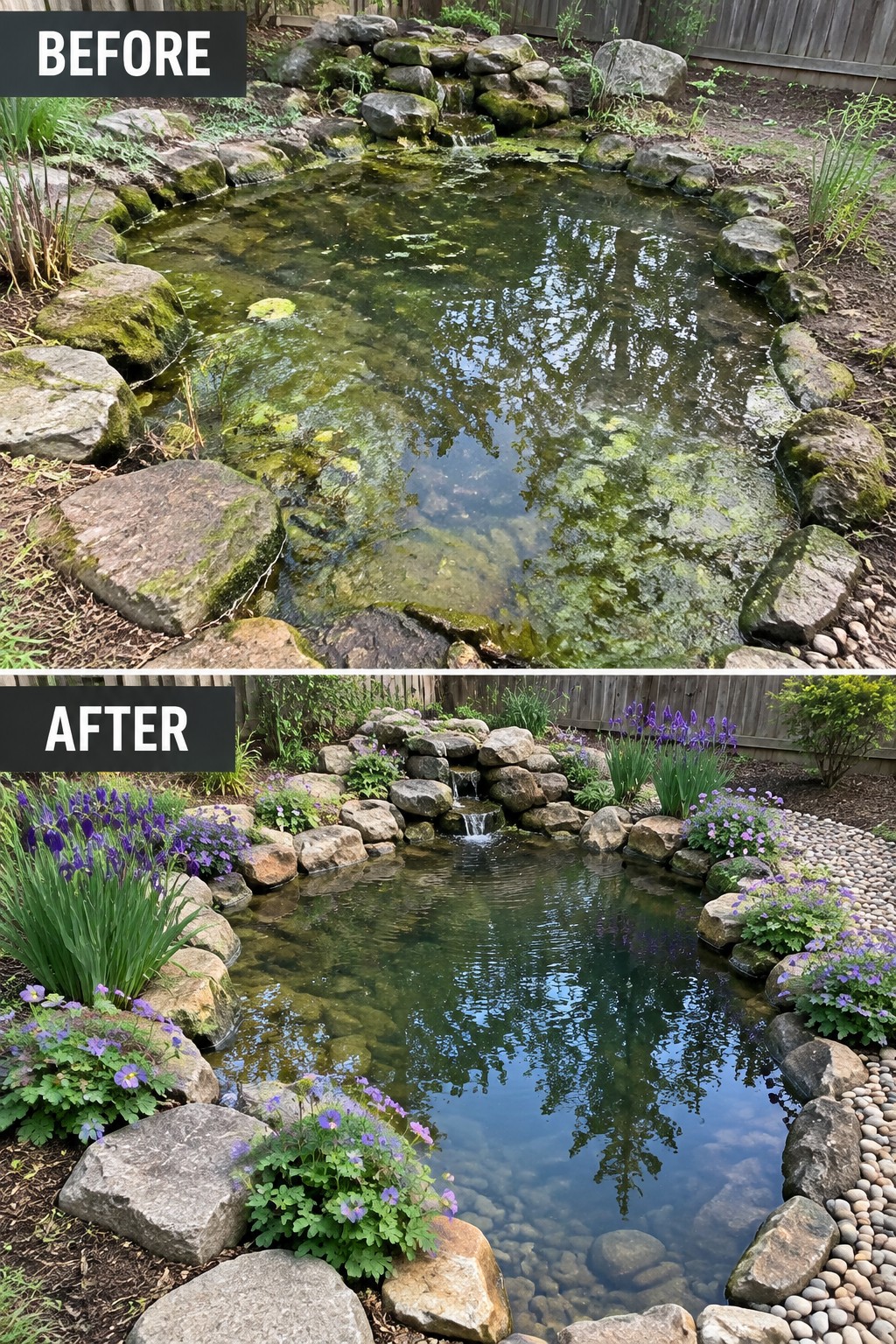
The pond looks neglected when algae and loose growth take over the edges. Clearing the water and adding flowering perennials around the stones gives it a neater outline without hiding the natural rockwork.
For a similar garden feature, tidy the pond edge first, then tuck a few low-growing flowers between larger stones. Leave enough open space around the water so the planting frames the pond rather than crowding it.
Fill Bare Spaces Between Rocks With Perennials
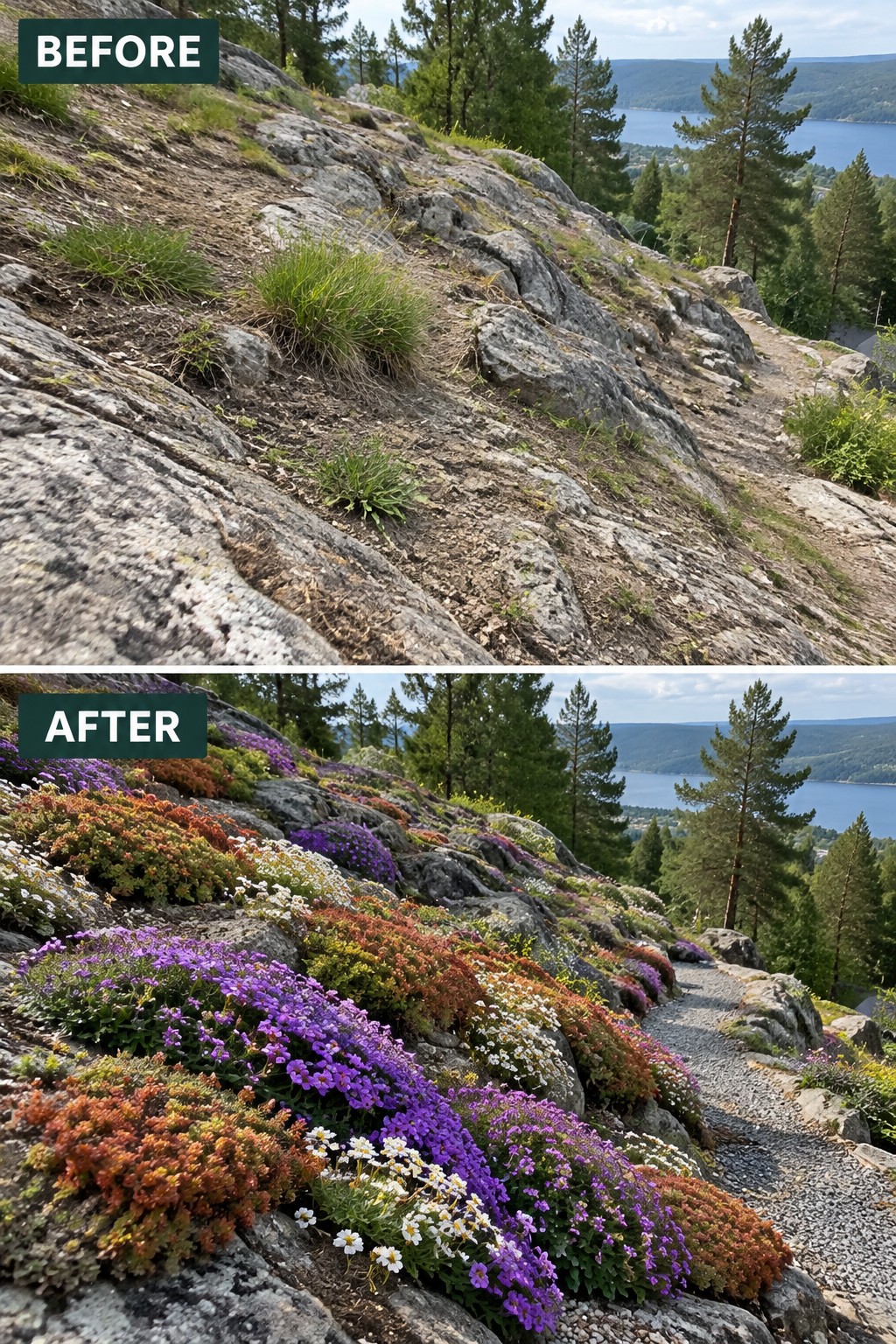
The rocky slope looks sparse at first, but planting flowering perennials in the open spaces gives it a fuller, more settled look. Low-growing flowers and foliage follow the shape of the stones, so the rock garden feels planted rather than bare.
This idea works well on a sunny slope where larger plants may struggle. Choose hardy, low-growing perennials suited to your climate, and leave enough room for them to spread without covering the rocks or narrowing the path.
Let Flowering Perennials Spill Over A Stone Wall
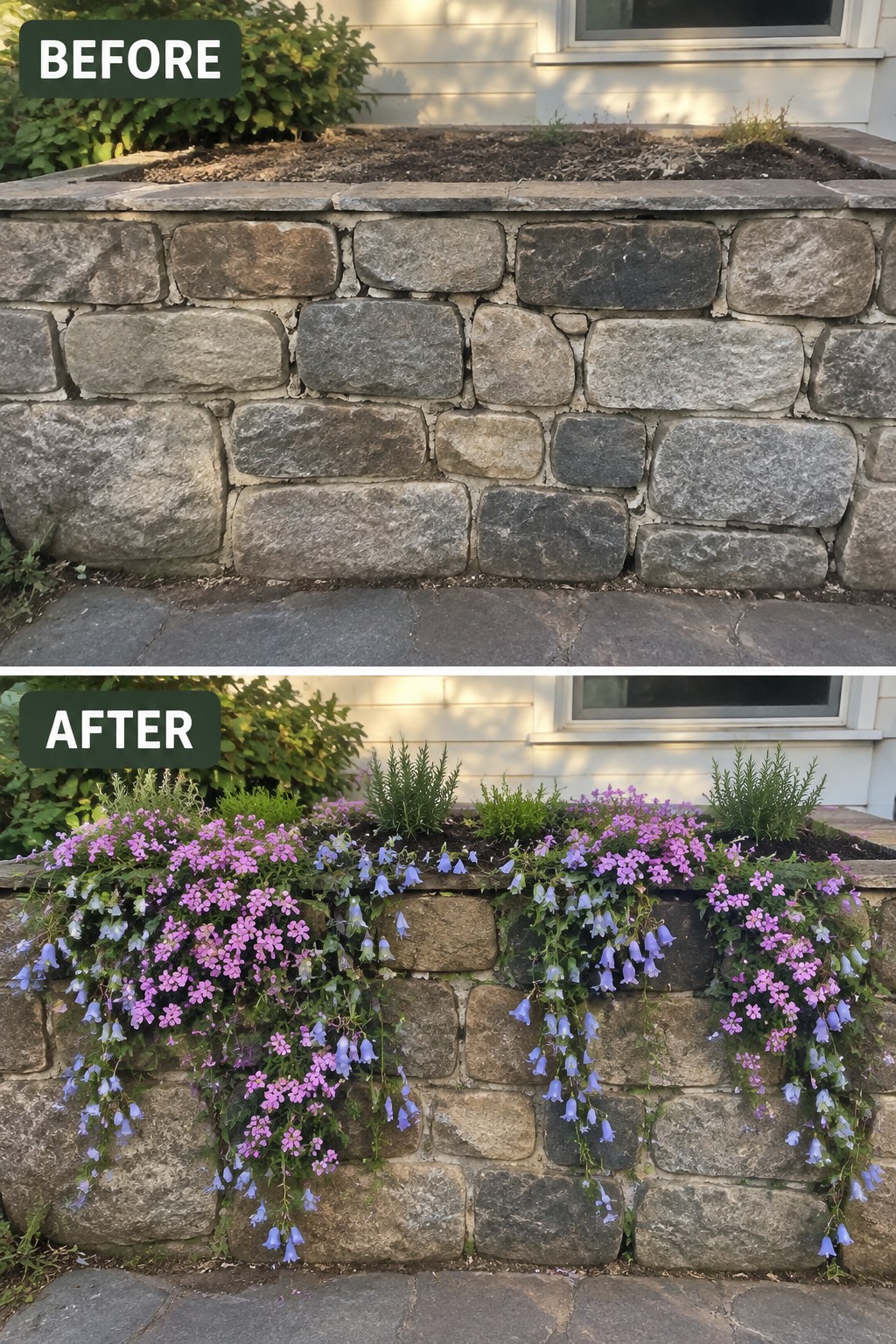
A bare stone wall can feel stark when the planting bed above it is mostly empty. Low flowering perennials change that by filling the bed and spilling over the edge, bringing color to the stones without hiding their shape.
Choose plants suited to the wall’s sun and soil, and leave enough space for them to spread. A few upright plants behind the trailing flowers can add structure, but keep the planting loose enough that the stonework still shows.
Turn An Unused Rooftop Into A Garden
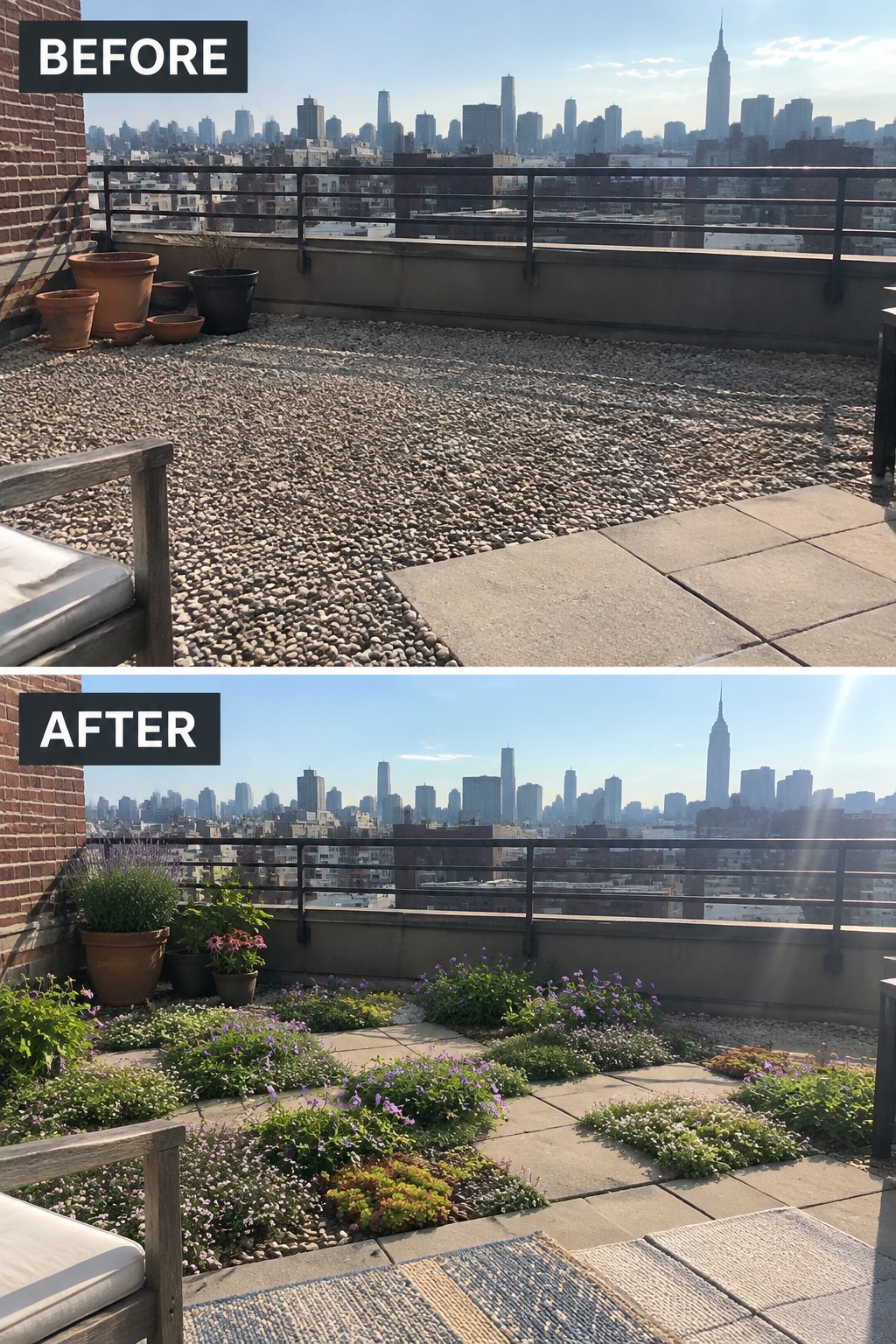
A gravel-covered rooftop can feel like a space you only pass through. Adding planted areas between the paving stones gives it a garden layout while keeping a clear route across the roof. Flowering perennials bring color without covering every bit of the surface.
On a small terrace or rooftop, start with a few defined planting pockets and leave enough room to walk comfortably. Choose plants suited to the site’s sun, wind, and drainage, and check that containers or planting beds are appropriate for the roof.
Replace Weeds With A Flowering Rock Garden

The narrow strip beside a walkway can look messy when weeds take over the stones. Clearing the growth and adding flowering perennials gives the rock bed a simple plan, while keeping the path itself open and easy to use.
For a similar side yard, start by removing weeds and shaping a clear edge along the concrete. Then arrange a few hardy perennials among the stones, leaving room for them to grow rather than crowding the bed.
Plant Flowering Perennials Between Patio Stones
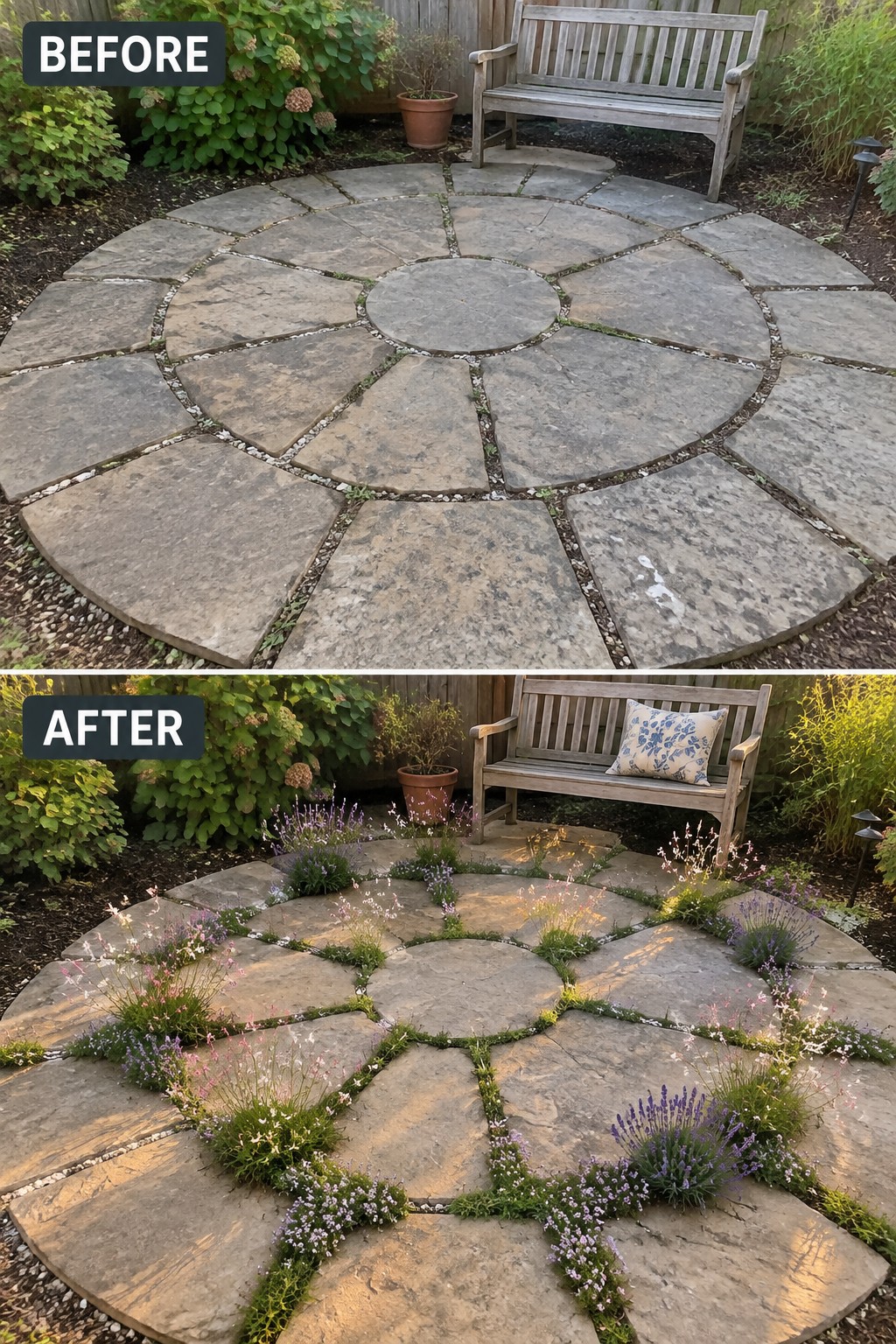
The stone patio already has a clear circular layout, but the bare joints make it feel a little stark. Low flowering perennials tucked between the stones bring color into those gaps and help the patio feel connected to the surrounding garden.
Choose compact plants that suit your sun and soil, and leave enough room for them to grow without covering the walking surface. This idea works well where the joints are wide enough for planting; keep the main paths clear so the stones remain easy to use.
Plant Perennials Around Tree Roots

A bare patch beneath a mature tree can become a planted garden without disturbing its roots. Here, flowering perennials and small-leaved plants fill the open ground, while a layer of stones gives the bed a tidier finish.
For a similar spot, choose shade-tolerant plants and keep them in small groups so they have room to spread. Add gravel or small stones around them, but avoid piling soil or mulch against the tree trunk.
Add Flowering Perennials To Structure A Coastal Rock Garden
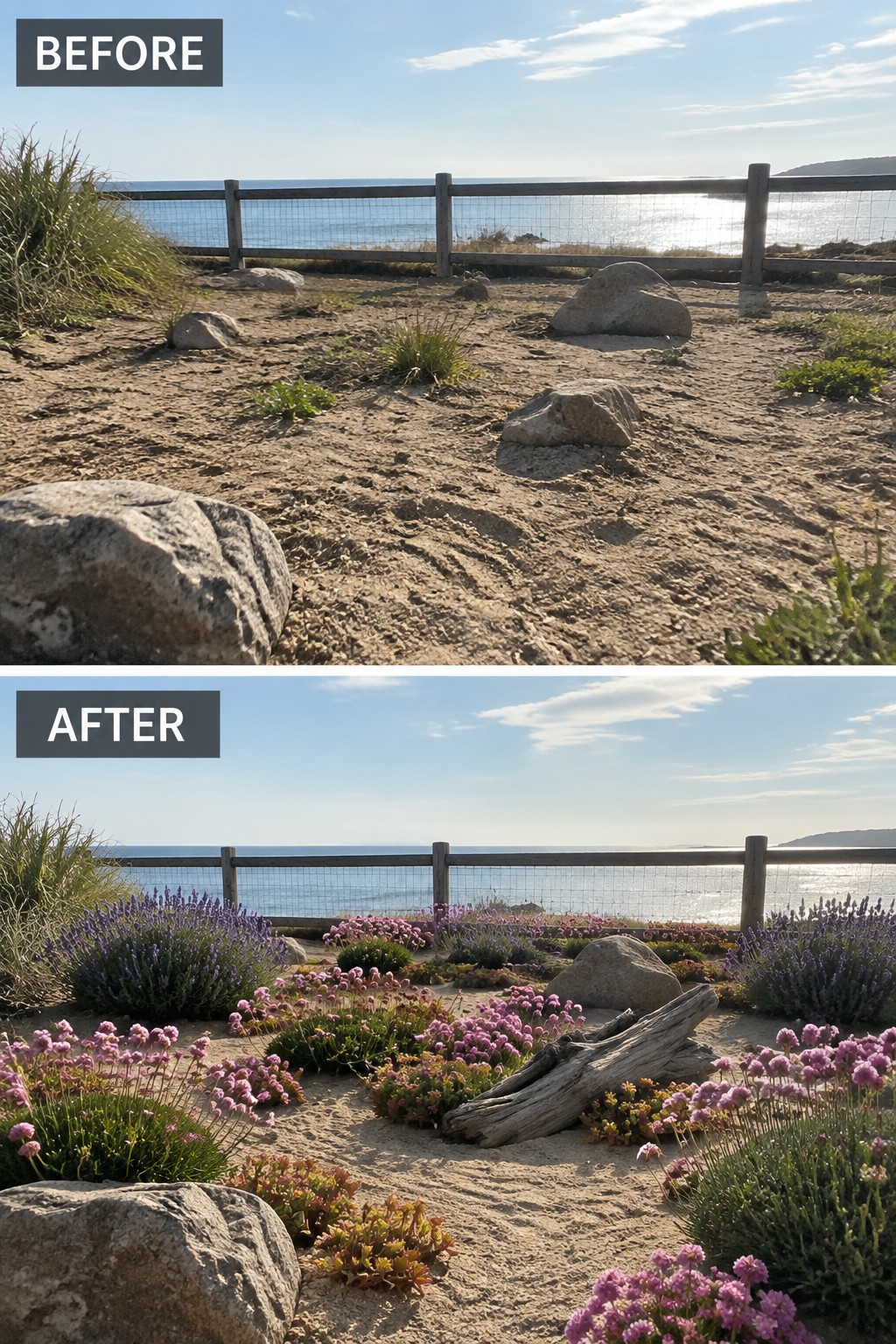
The bare soil in this rock garden feels scattered, while flowering perennials make the same stony ground look planned. Low plants tucked between the rocks bring color through the bed without hiding its natural character.
Use hardy, low-growing perennials that suit your climate and the amount of sun the garden gets. Leave enough open ground for the plants to spread, and keep a clear route through the bed so it stays easy to maintain.
Add Color To A Sparse Rock Garden
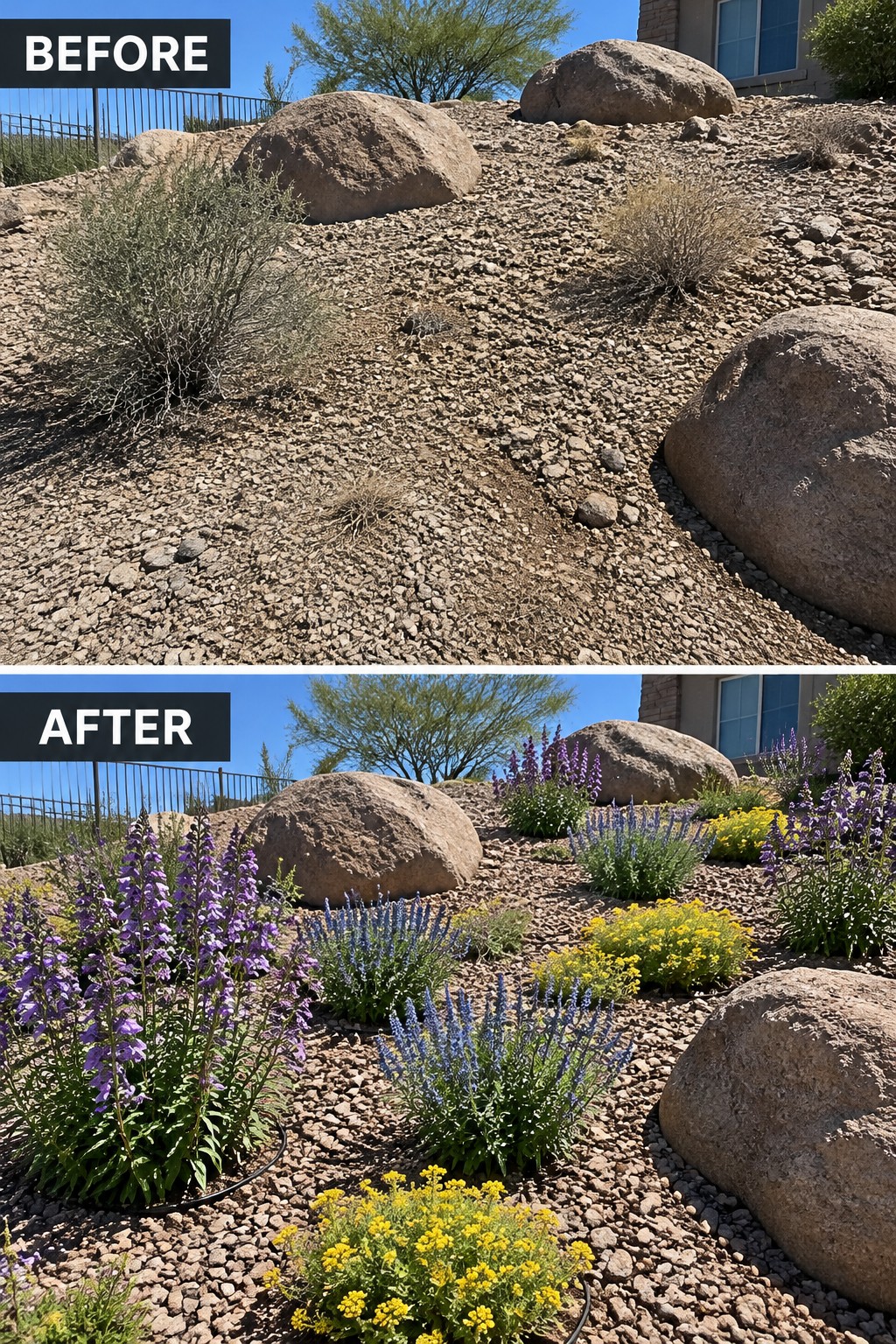
A rocky slope can look bare even when the large stones are worth keeping. Adding flowering perennials between them gives the garden more structure and color without covering up its natural stone features.
Use gravel as the main ground cover, then plant in small groups where the slope has enough soil. Choose perennials suited to your climate and keep them spaced so they can grow without blocking access around the rocks.
Add Low-Growing Flowers Along A Stone Path
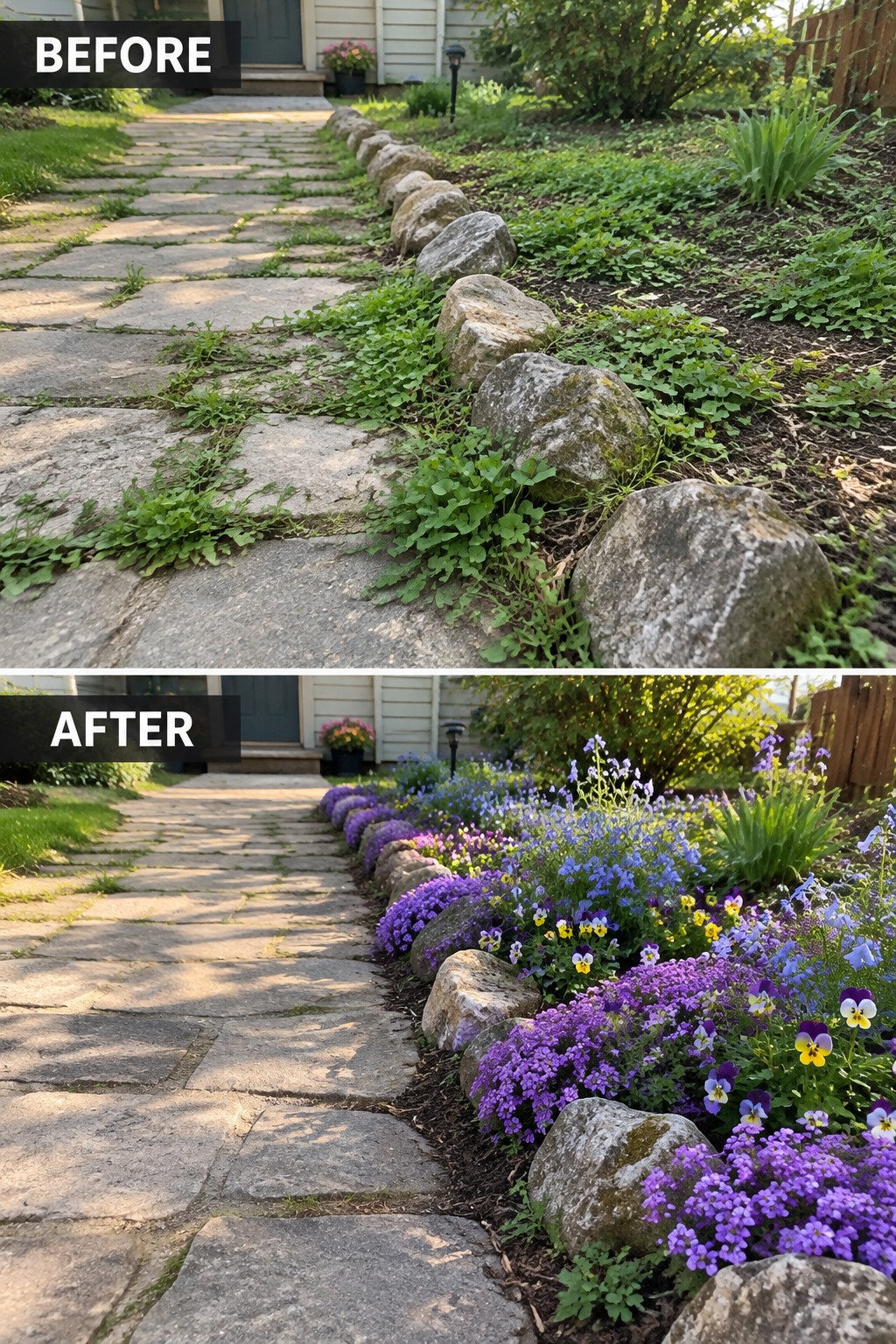
The stone path already gives the garden a clear route, but the sparse, weedy planting beside it leaves the edge looking unfinished. Filling that strip with low-growing perennials makes the stones feel like part of a planned garden, while keeping the walkway open.
Choose plants that suit the light and spread without covering the path. Repeat a few varieties along the border for a tidy look, and leave enough space around larger rocks so they remain visible.
Add Color To A Stone Patio With Flowering Perennials
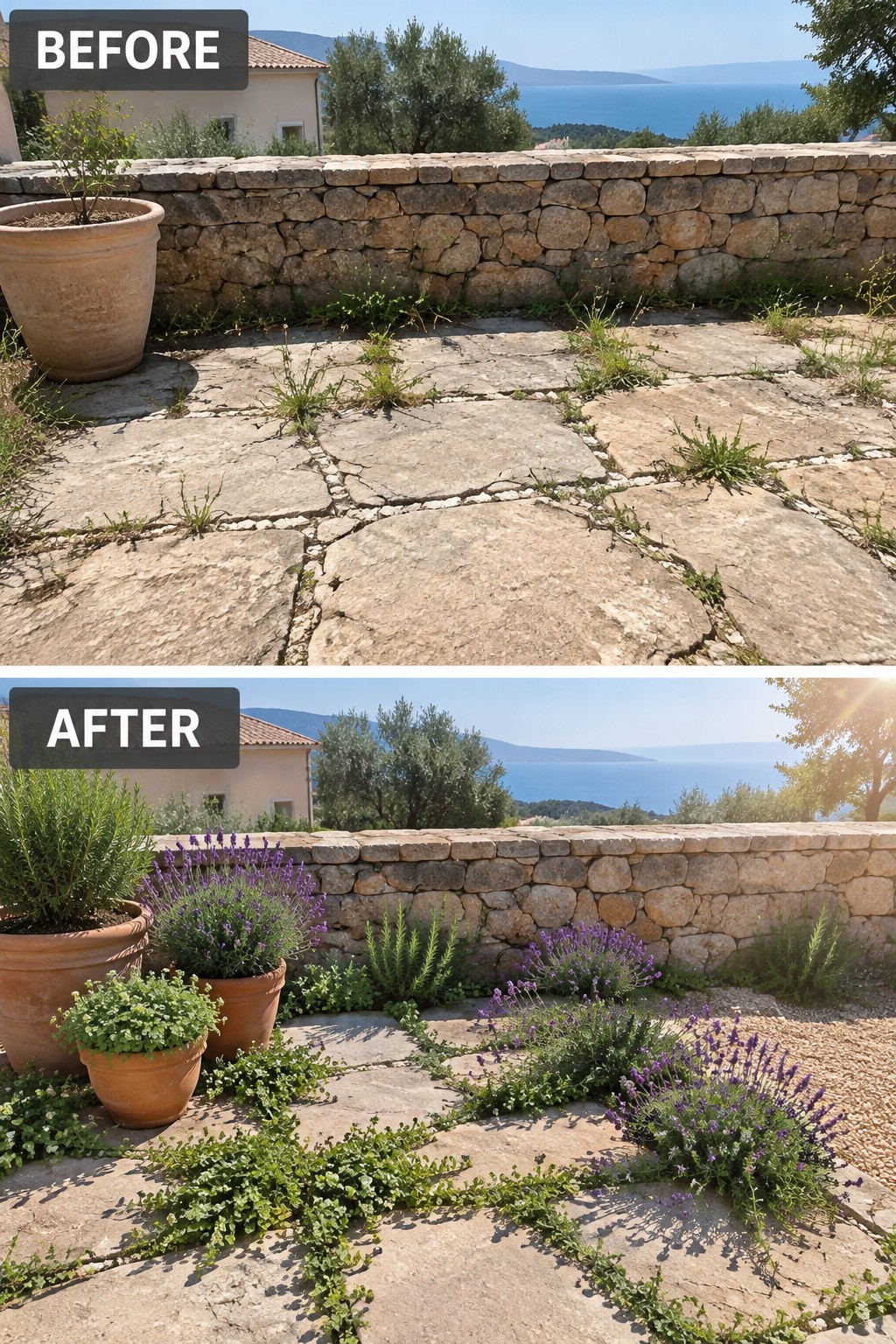
A stone patio can feel neglected when weeds are the only greenery between the slabs. Planting flowering perennials in selected gaps and along the edges gives the area a clearer garden feel without covering the stone surface.
Choose plants that suit the local climate and can handle the amount of sun the patio gets. Keep them out of the main walking route, and leave enough open stone for people to move around comfortably.
Turn An Eroded Garden Channel Into A Planted Rock Bed
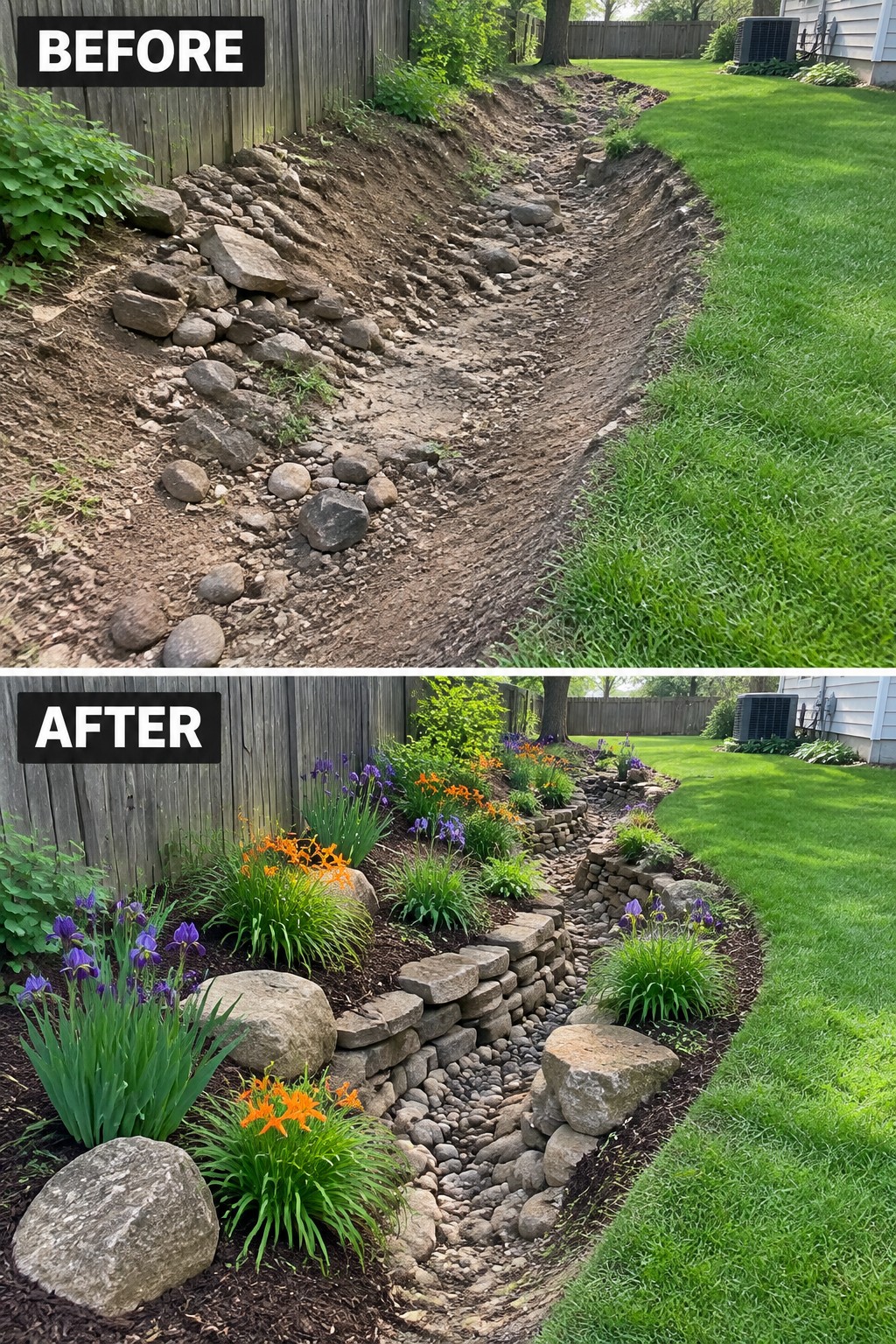
A bare, rocky channel can look untidy and leave soil exposed to runoff. Here, stonework gives the sloped sides a clearer shape, while flowering perennials bring color to the garden and make the rock bed feel intentional.
For a similar area, keep the channel open to carry water and use sturdy stones to support the edges. Plant perennials in pockets of soil along the sides, choosing varieties suited to your sun and moisture conditions. Avoid blocking the water’s route with plants or loose stone.
Fill Gaps Between Patio Stones With Flowering Perennials
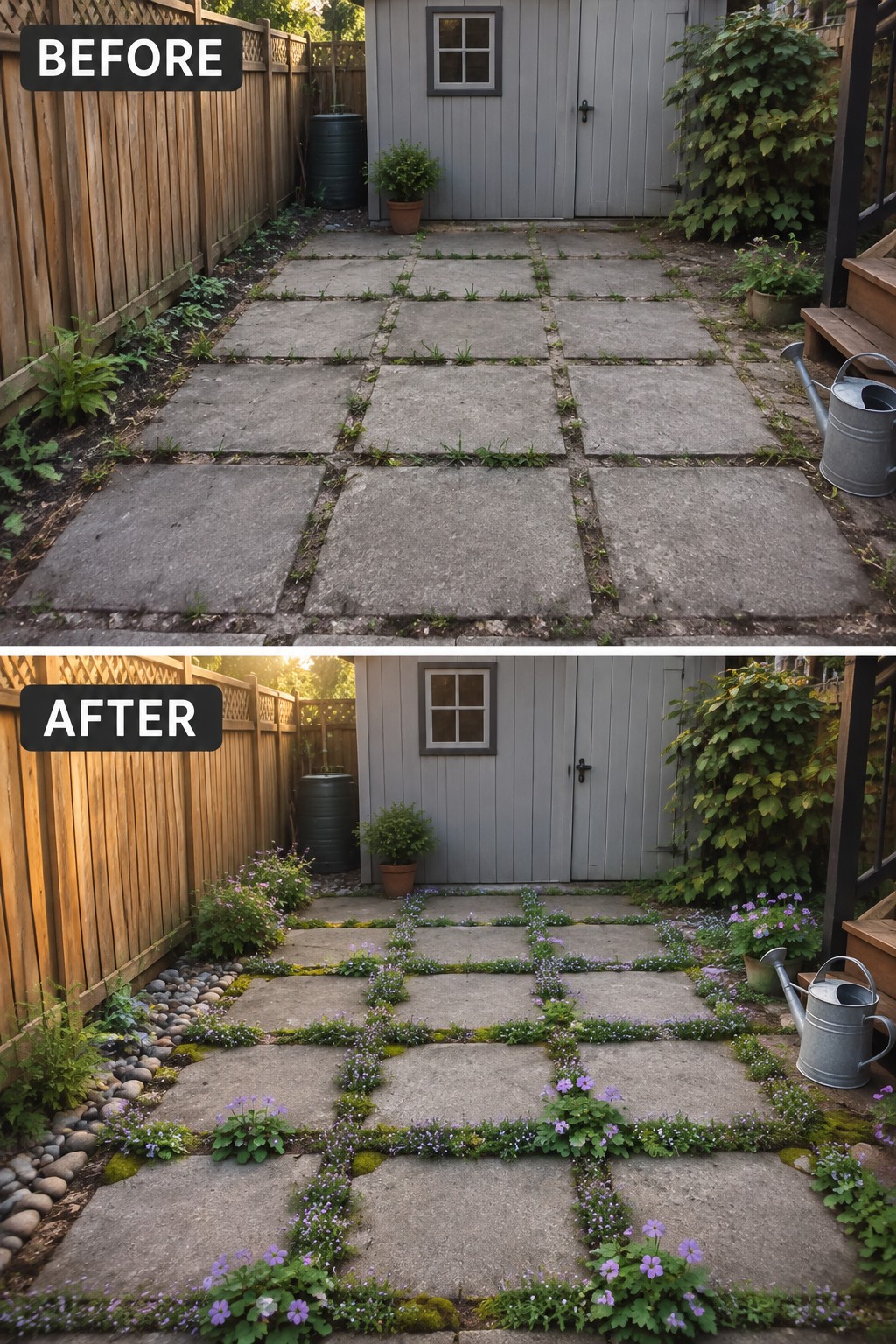
The stone patio already has a useful layout, but weeds between the slabs make it look neglected. Low-growing perennials turn those gaps into planned planting strips, giving the stones a softer, more finished look without replacing the paving.
Choose plants that stay low and can handle the amount of sun and foot traffic in your yard. Leave the main walking route clear, and use gravel or mulch at the edges where flowers might spread too far.
Frequently Asked Questions
Q: What flowers are easiest to grow between rocks?
A: Creeping thyme, sedum, and aubrieta are good picks for sunny gaps because they stay low and handle dry soil once established. For shadier spots, try woodland phlox or a small hardy geranium.
Q: How much soil do I need between the stones?
A: Leave enough room for roots to settle, ideally a few inches of soil in each planting pocket. If a gap is very narrow, choose a tiny plant rather than forcing in a larger one.
Q: How often should I water a new rock garden?
A: Water new plants when the soil starts to dry, especially during their first growing season. Once they’ve settled in, many rock-garden perennials need little extra water.
Q: Will flowering perennials spread and cover the stones?
A: Some will spread, but most low-growing varieties fill gaps gradually rather than covering everything. Trim back anything that starts to hide the stonework, and leave plants room to breathe.
