


A sloped yard can feel awkward when the path is steep, the planting looks scattered, or there is no clear route through the space.
I like how natural stone steps can solve the practical problem while giving a hillside more structure and a sense of direction.
They also sit comfortably among boulders, plants, and uneven ground, so the staircase can feel like part of the landscape rather than an added feature.
Small choices in stone shape, spacing, and planting around the steps can make a noticeable difference without requiring a complete yard overhaul.
I’d save the ideas that suit your slope and adapt them to the paths and planting you already have.
Turn An Overgrown Slope Into Stone Steps

A rough, overgrown slope can be hard to use and even harder to maintain. Cutting natural stone steps into the grade gives the yard a clear path and makes the hill feel like part of the landscape rather than a problem to work around.
This idea works well in narrow side yards where there isn’t room for a winding path. Choose stones that sit firmly and keep each step comfortable to climb; on a steep slope, proper drainage and stable installation matter as much as appearance.
Create A Stone Stairway Through A Narrow Side Yard

Replacing the cracked concrete path with broad stone steps gives this narrow side yard a clearer route to the gate. Gravel and rounded-stone edging help define the walkway, while the planting keeps the hardscape from feeling too bare.
This approach works well on sloped or uneven side yards where a simple path is difficult to walk on. Keep each step level and wide enough for comfortable footing, and leave a clear walking line rather than letting plants crowd the route.
Add A Natural Stone Path To The Front Entry

A straight concrete walk can make the front yard feel a little bare. Replacing it with broad natural stone steps gives the approach more shape and makes the entry feel connected to the garden.
This idea works well on a sloped front lawn or anywhere a path needs to lead up to a raised porch. Keep the stones wide and stable underfoot, and leave enough room beside the steps for simple planting rather than crowding the walkway.
Build A More Stable Stone Stairway

Replacing worn timber steps with broad stone treads and low retaining walls makes a steep yard easier to navigate and helps hold the soil in place. The stone also gives the staircase a clear shape instead of leaving it to blend into the slope.
This approach works well on sloped side yards where a simple path would wash out or feel awkward to climb. Use sturdy, even treads and leave enough width for comfortable footing; proper drainage matters so water does not collect behind the stone walls.
Turn A Plain Patio Into An Outdoor Seating Area

The broad paver patio was usable, but it felt empty and the raised section was hard to reach. Replacing the plain step with wide natural-stone stairs makes the change in level easier to navigate and gives the seating area a clear place to sit.
This idea works well in a fenced backyard with a raised patio. Keep the steps wide enough for comfortable use, and leave room on the lower patio to walk around them. A few sturdy planters can help mark the edges without crowding the path.
Replace An Eroded Trail With Natural Stone Steps
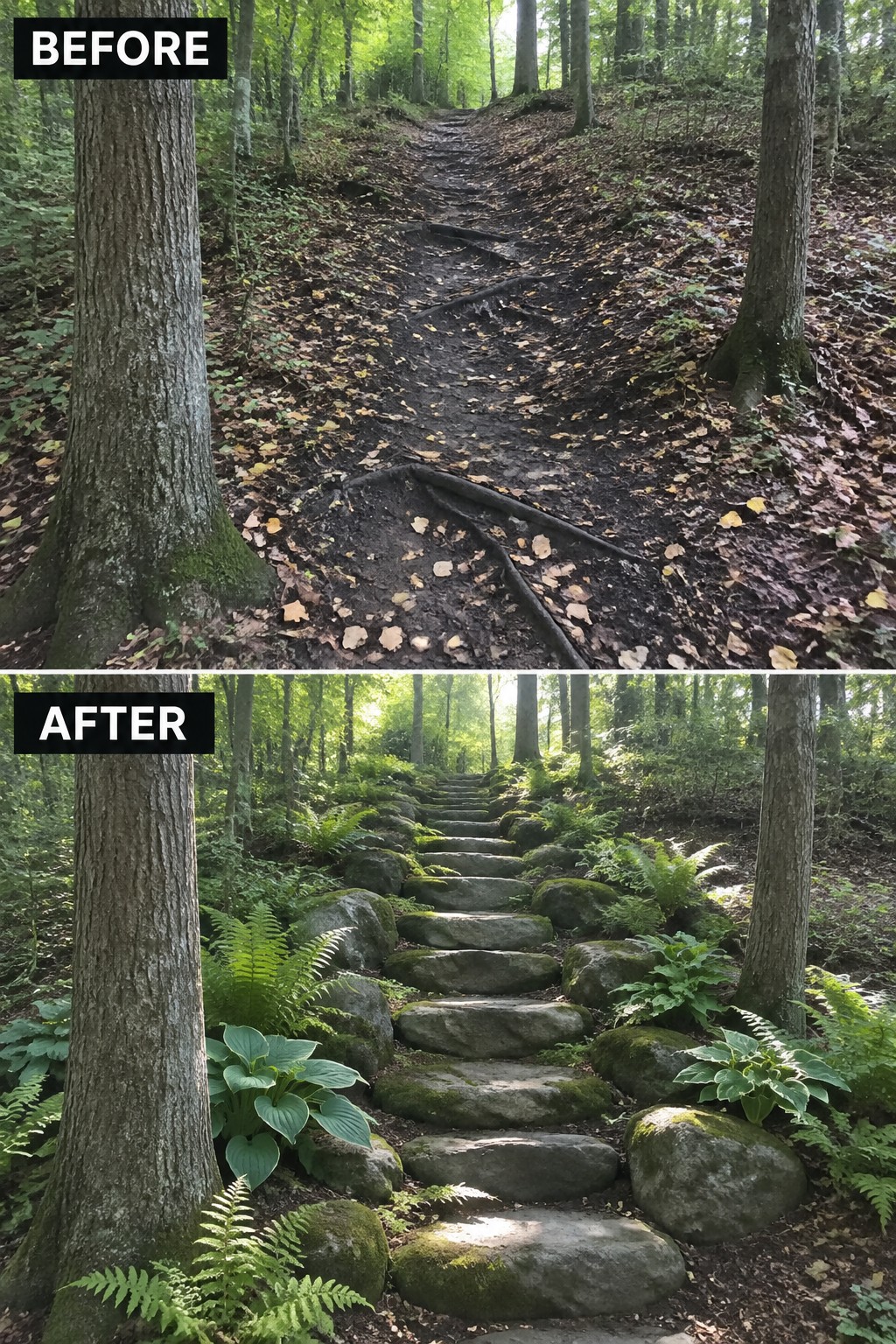
A steep dirt path can become difficult to walk as rain and foot traffic wear away the soil. Broad natural stones set into the slope create clear, sturdy steps and help keep the route from turning into a muddy rut.
This approach works well on wooded hillsides where a formal staircase would look out of place. Choose stones with stable, fairly level surfaces, and set them securely into the ground so they do not shift underfoot. Leave enough width for comfortable footing as the slope changes.
Replace Makeshift Steps With A Natural Stone Staircase

The rough timber steps on this poolside slope have been replaced with broad stone treads and large boulders. The staircase gives the steep bank a clear route down to the patio and helps the whole area feel more planned.
This approach works well when a yard needs stairs that look at home in the landscape. Choose stones with fairly even walking surfaces, and keep the steps wide enough for comfortable use. Planting around the edges can help the staircase settle into the slope without crowding the path.
Replace Concrete Steps With Natural Stone

The old concrete steps made the front approach feel worn and plain. Broad natural stone treads give the entry a more defined staircase and suit the home’s simple exterior.
This idea works well where a front path meets a raised porch. Choose stones with steady, even footing, and leave enough width for comfortable use. A gravel landing can help mark the transition from path to steps without adding more hardscape.
Turn A Bare Front Slope Into Stone Steps

A worn, patchy slope can be hard to walk across and makes a front yard feel unfinished. Broad natural stone steps give the hill a clear route to the door while helping the landscaping feel more intentional.
This works well on sloped entries where a straight walkway would feel steep. Set the stones firmly and leave enough room for comfortable footing, then keep the planting around them low enough to maintain a clear path.
Use Stone Steps To Connect Different Yard Levels

The steep backyard feels more usable once the old retaining wall and narrow wooden stairs are replaced with broad natural stone steps. The stones form a staircase through the slope, so getting between the lower yard and shed feels like part of the landscape rather than a separate chore.
For a similar yard, plan the steps around a comfortable walking route and make each tread wide enough to use safely. Large stones can also help hold the slope, but proper drainage and a stable base matter; get professional advice if the retaining work is substantial.
Replace A Bare Front Path With Natural Stone Steps

A bare dirt path can be hard to walk on and makes a front garden feel unfinished. Here, broad natural stone steps turn the route to the door into a more stable staircase, while the plantings beside it help define the path.
This idea works well on a sloped entry where a straight walkway would be awkward. Set the stones securely and keep each step comfortable to use, then leave enough room along the sides for plants without crowding the walking area.
Add Gravel Around Natural Stone Stair Treads

The rough slope is easier to use after the loose dirt and makeshift timber steps are replaced with broad stone treads and a gravel surface. Gravel helps define the route between the steps and gives the hillside a more finished, manageable look.
This approach works well on a narrow side yard where a full paved walkway would take up too much space. Set the stones securely into the slope, keep the rise comfortable, and use gravel that stays put underfoot.
Add Stone Steps To Make A Steep Yard Easier To Use

A bare, worn slope can be difficult to walk on, especially after rain. Broad natural stone steps give the hill a clear route and help make the change in elevation feel more manageable.
For a similar yard, set the steps securely into the slope and keep the rise comfortable to walk. Planting along the edges can help the staircase feel settled into the landscape, but leave enough room to use the steps safely.
Replace Plain Concrete Steps With Boulder Stairs

The concrete steps in this backyard felt separate from the lawn. Replacing them with broad natural stone treads and boulder sides makes the staircase feel like part of the landscape, while giving the sloped route a sturdier, more defined shape.
This idea works well where a staircase needs to connect a deck or raised yard to the lawn. Choose stones with stable, even walking surfaces, and keep the rise comfortable from step to step. Leave enough width for people to pass without brushing against the stone sides.
Make The Front Entry Feel More Welcoming

Replacing plain concrete stairs with natural stone gives the entrance a more settled look and helps the steps feel connected to the garden. Low stone walls also make the staircase feel like a clear part of the front approach, rather than an add-on.
This idea works well where a straight path meets a raised porch. Choose stones with a steady, comfortable tread depth, and keep the stairs wide enough for easy use. Planting beside the steps can finish the edges, but leave the walking area open.
Create A Clear Stone Stairway Up A Garden Slope

Scattered stones on an overgrown slope can be hard to use and easy to trip over. Setting larger natural stone treads into a more regular staircase gives the hill a clear route and makes the yard feel planned.
For a similar slope, place each tread securely and keep the risers comfortable to climb. A narrow gravel path beside the steps can help with drainage and provide another way up, but leave enough space for the planting to grow without crowding the stairs.
Replace Worn Brick Steps With Natural Stone

The old brick staircase made this narrow side yard feel crowded and uneven. Replacing it with broad natural stone treads and gravel gives the route a clearer shape while keeping the steps in scale with the garden.
This approach works well where a side yard climbs toward a patio or back door. Set the stones firmly and keep the tread spacing comfortable for walking; gravel can help define the path, but it should not make the steps slippery.
Turn A Bare Fire Pit Into A Usable Backyard Gathering Spot

A simple fire pit area can give an unused patch of lawn a clear purpose. Here, a gravel pad and a low stone seating wall replace the rough, scattered area around the old fire ring, making the spot easier to use and maintain.
For a similar setup, keep the fire pit centered and leave enough room around it for chairs or people to move safely. A gravel surface works well in a backyard where grass gets worn down, while a few broad stone steps can make the approach feel more deliberate.
Control Erosion With Stone Steps And A Rock Drainage Channel
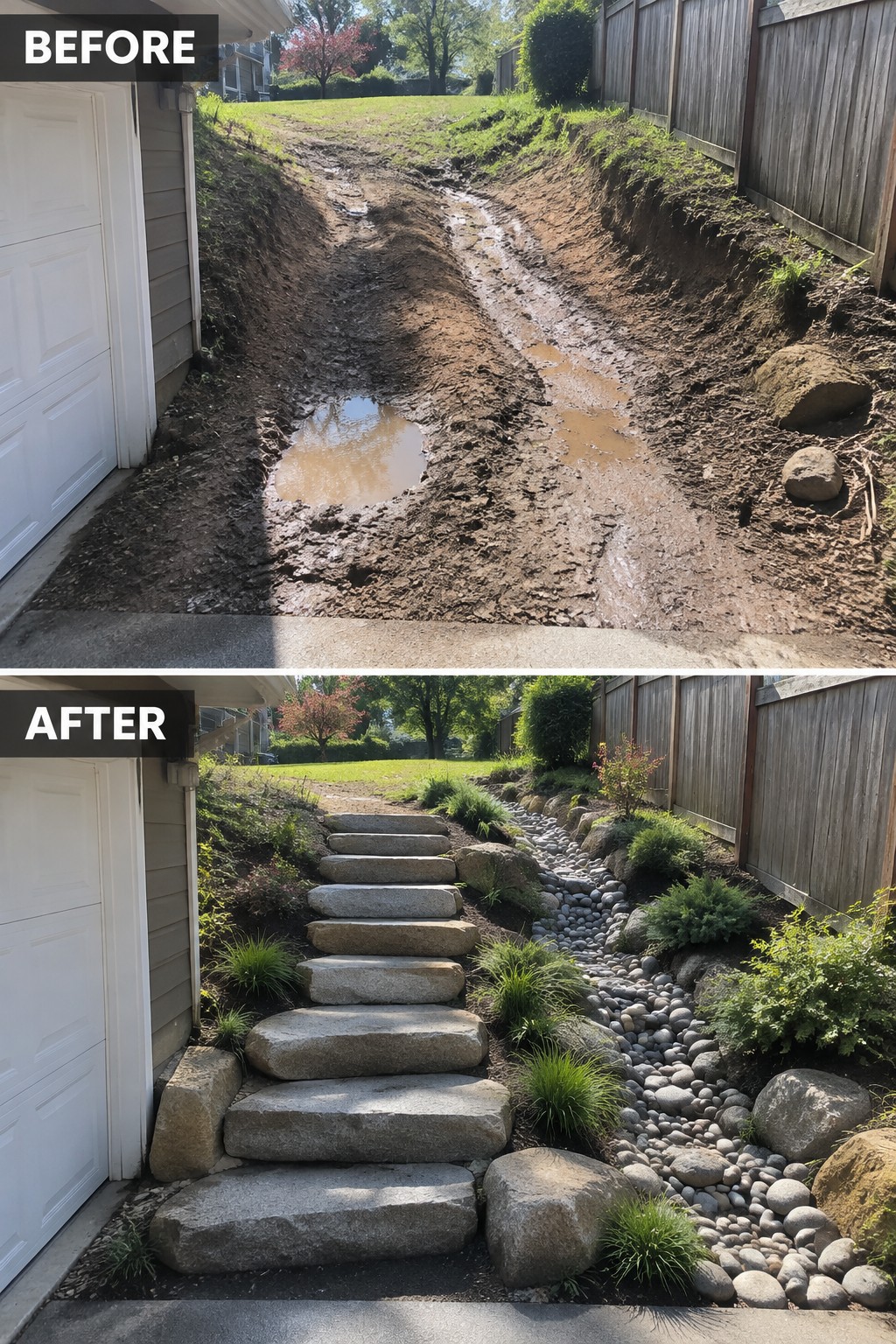
The muddy slope was difficult to walk on and showed signs of water runoff. Broad stone steps create a steadier route uphill, while a channel of rounded stones gives water a place to flow instead of cutting through the soil.
This approach works well in narrow side yards with a noticeable grade. Set the steps securely and shape the drainage channel to follow the natural path of runoff; keep plants beside it low enough that they do not block the route.
Replace A Metal Step With Natural Stone Treads

The small metal step in this rooftop garden has been replaced with broad stone treads, making the change in level easier to use and more in keeping with the planted setting. The steps also give the entrance a clear route through the garden.
This approach works well where a terrace or yard has a short rise to manage. Choose stones with stable, even surfaces, and leave enough room around the steps to walk comfortably. Planting can fill the edges without crowding the path.
Add Stone Steps To Make A Slope Easier To Use

A worn path across a steep lawn can be hard to walk on and may erode over time. Broad natural stone steps give the slope a clear route, while the stones and gravel help keep the path from turning back into bare soil.
For a similar yard, place the steps along the most direct, comfortable route and set each one securely into the slope. Low-growing plants can soften the edges, but leave enough clear space to walk safely.
Build A Stone Staircase Into A Sloped Garden

The bare, uneven slope becomes easier to use once natural stone steps provide a clear route uphill. Boulder retaining walls also help hold the soil beside the stairway, while planted beds make the path feel like part of the garden.
On a sloped yard, set the steps at a comfortable, consistent height and make sure they have a stable base. Use retaining stones where soil needs support, and leave enough room beside the stairs for planting without narrowing the path.
Turn A Rocky Slope Into Natural Stone Steps
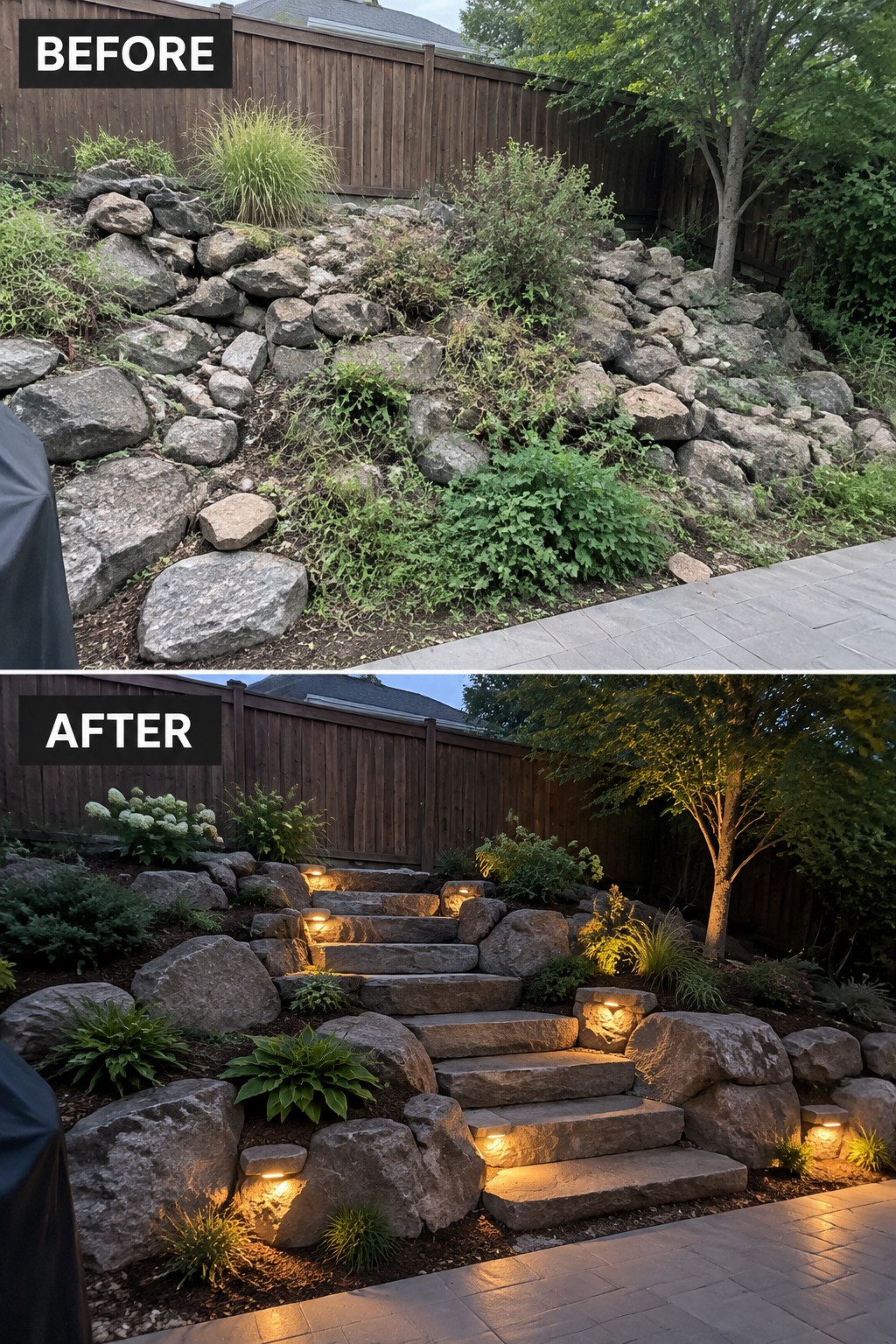
Loose boulders and overgrown plants can make a sloped garden hard to cross. Setting broad stone treads into the hillside gives the yard a clear route between levels and makes the existing rocks feel like part of the design.
This works well in a sloped backyard where a path would be awkward or prone to washing out. Keep the steps wide and stable, and leave enough room beside them for plants and drainage.
Replace A Plain Front Walk With A Stone Staircase

A straight concrete walk can feel out of place when the entry sits above the yard. Here, broad natural stone steps turn the approach into a clear route to the door and give the front garden a more settled shape.
This idea works well on a sloped entry where a level path would be awkward or hard to walk on. Set the steps securely, keep each rise comfortable, and leave enough width for people to pass without stepping into the planting beds.
Frequently Asked Questions
Q: How do I keep stone steps from feeling too steep?
A: Use wider, shallower steps where the slope allows, and add a small landing if the staircase is long. A gentle turn can also make the climb feel easier and give the path a more natural flow.
Q: Which stones work well for outdoor stairs?
A: Choose stones with a rough, textured surface so they offer better grip when wet. Local stone often blends naturally with Boulder’s landscape, and a landscape supplier can help you find pieces that suit your slope and budget.
Q: Do I need a retaining wall beside stone steps?
A: Not always, but a wall can hold back soil on a steep hillside and keep the staircase edges tidy. On a gentler slope, sturdy planting along the sides may be enough.
Q: How can I keep weeds from growing between the stones?
A: Set the stones on a stable base, then fill the joints with compacted gravel or stone dust. Check the gaps each spring and top them up if rain or foot traffic has washed material away.
