

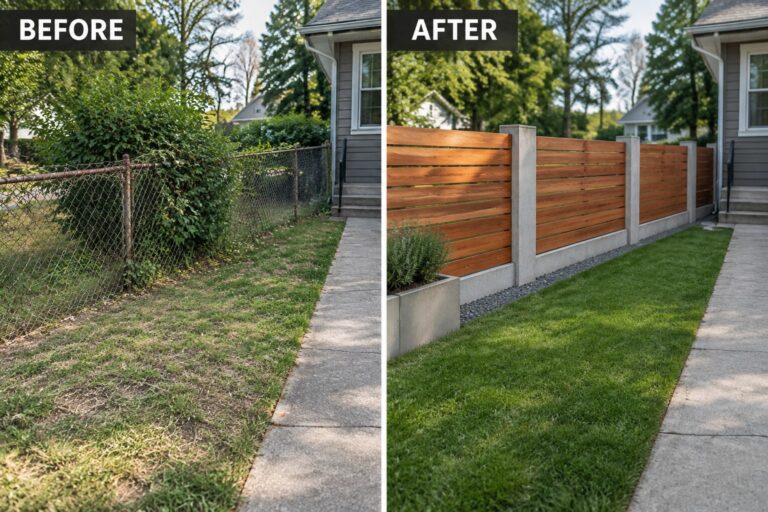
A fence can change the feel of a yard, especially when a plain or weathered boundary leaves the space looking unfinished.
I like how wood brings warmth while concrete adds a clean, sturdy line, so the two materials can make a fence feel both welcoming and well considered.
The right layout can also add privacy and define the yard without making it feel boxed in.
Small choices, such as board spacing, color, and the height of a concrete base, can make a noticeable difference.
I’d save a few designs to adapt to the shape of my own yard and the look of the house.
Add Privacy With A Modern Fence
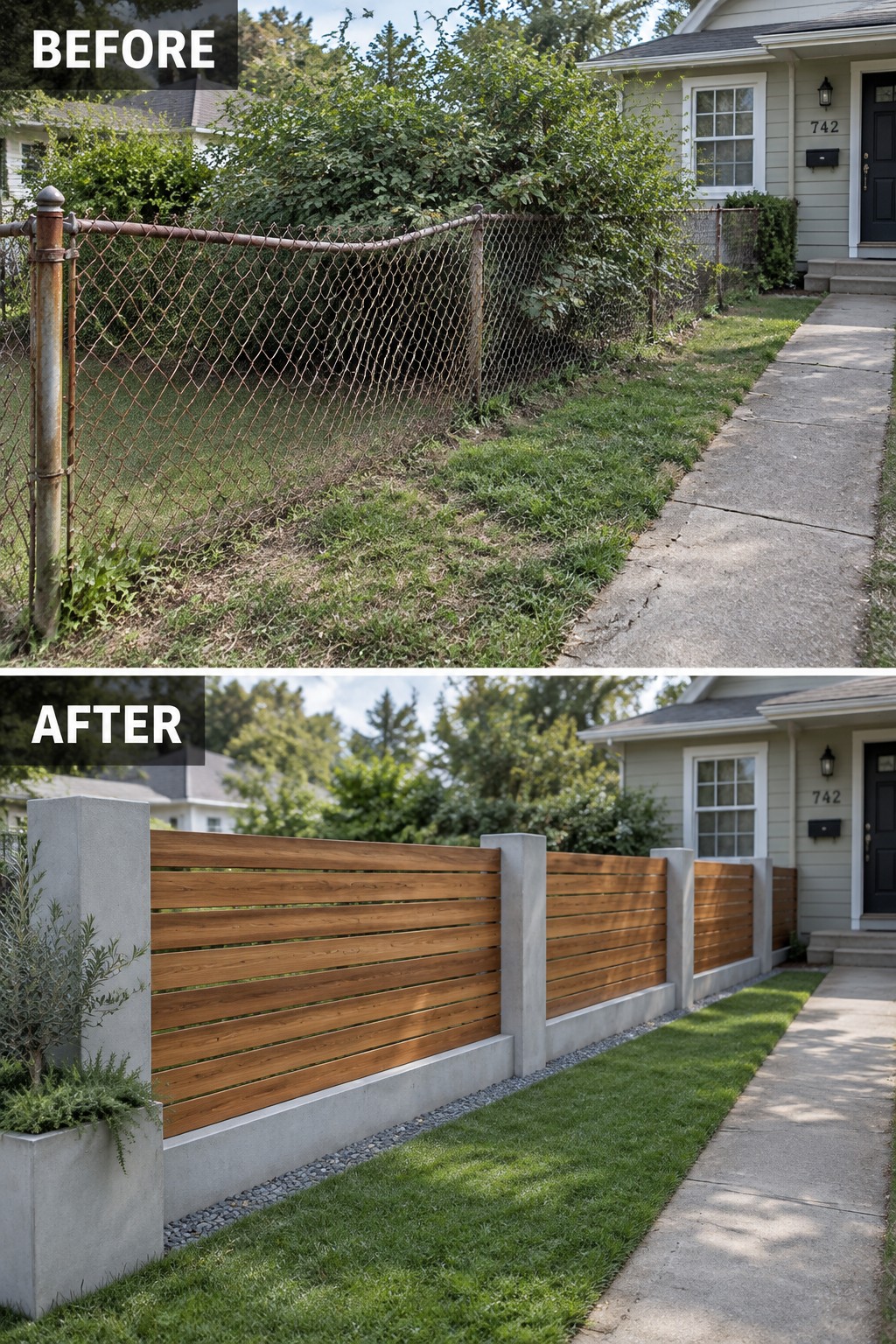
Replacing an overgrown edge and sagging chain-link fence with a clean wood-and-concrete fence gives this narrow yard a clearer boundary. The solid panels provide privacy, while the concrete posts and base make the fence feel substantial.
This idea works well beside a sidewalk or in a small front yard where a little separation from the street is useful. Keep the fence height and spacing in line with local rules, and leave enough room for the walkway and lawn to stay easy to maintain.
Replace A Damaged Wall With A Cleaner Fence Design
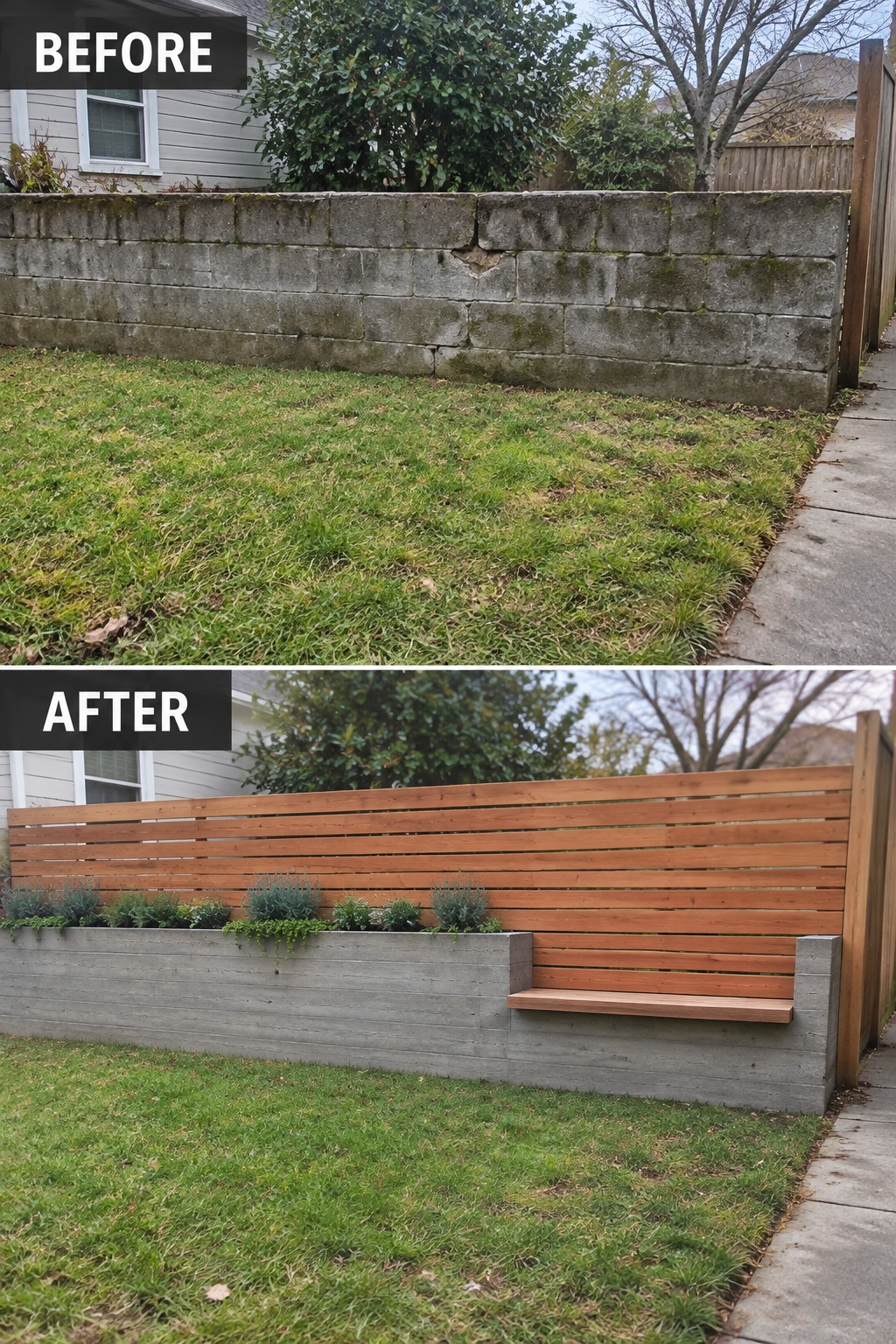
The old concrete wall made the yard feel worn and closed off. Replacing it with horizontal wood fencing above a low concrete planter wall gives the boundary a more finished look while keeping a sturdy base.
This approach works well in a narrow yard where a fence can also provide privacy. Keep the planter wall low enough to avoid blocking the view, and choose wood that suits the weather in your area.
Replace A Sagging Fence With A Stronger Design
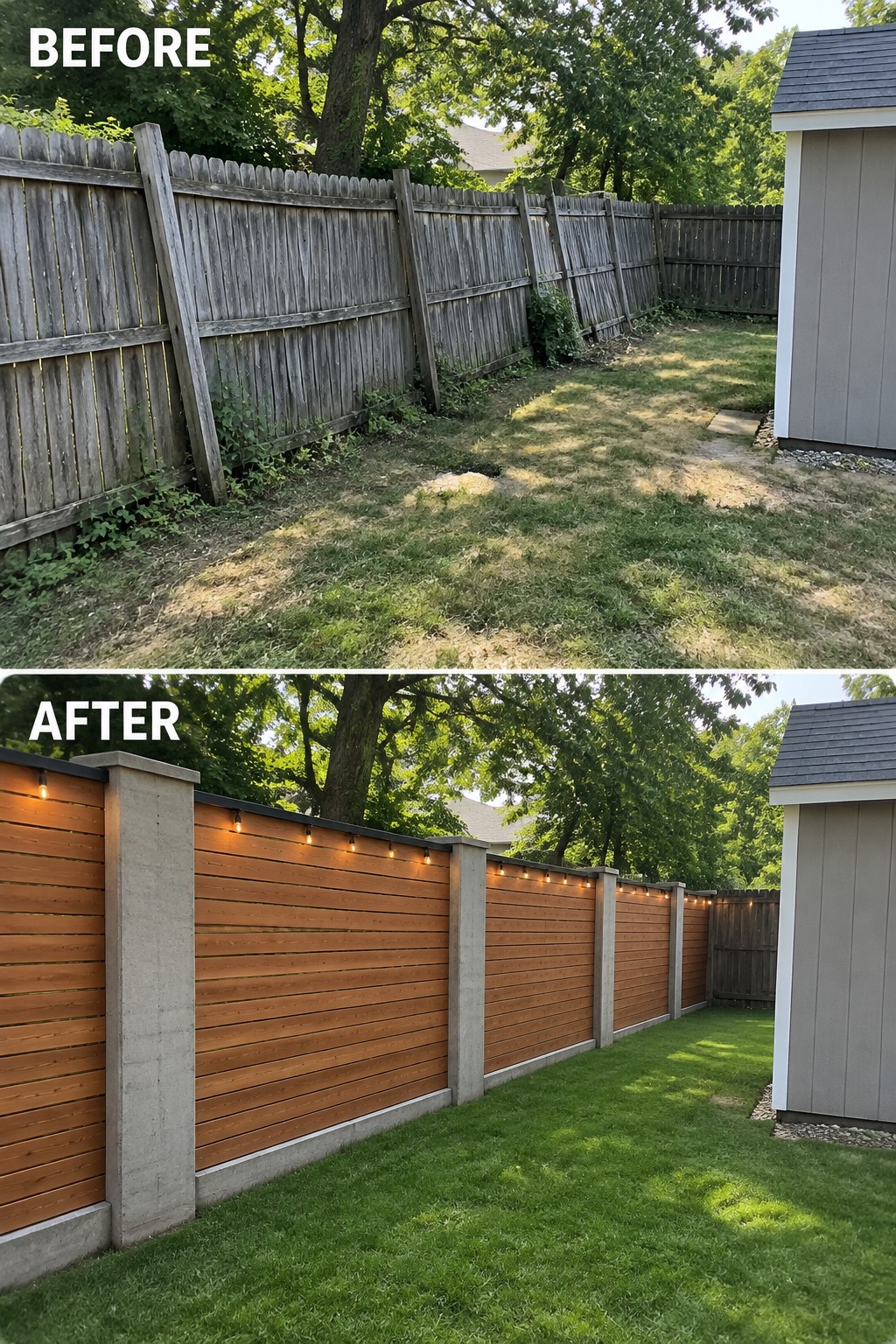
A leaning, weathered fence can make a whole yard feel neglected. Replacing it with horizontal wood boards set between concrete posts gives the fence a cleaner, sturdier look while keeping the yard private.
This approach works well along a property line where an old fence needs more than a coat of paint. Choose wood rated for outdoor use, and keep the concrete posts and base consistent along the run for a tidy finish.
Replace A Chain-Link Fence With A More Finished Front Yard
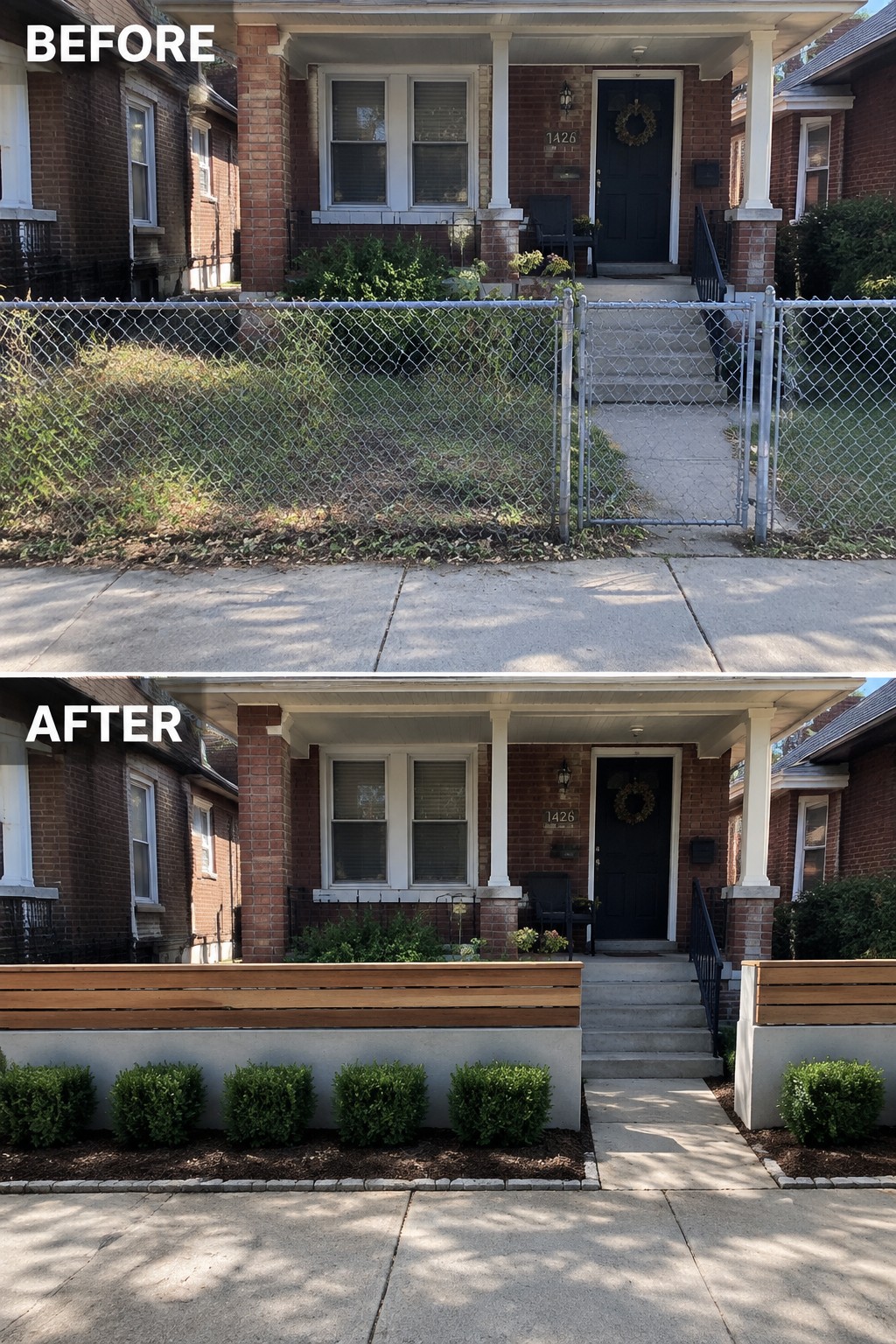
The chain-link fence leaves the front yard feeling exposed and a little neglected. Replacing it with a low concrete wall topped with horizontal wood gives the yard a clearer boundary while keeping the house visible from the street.
This kind of mixed-material fence can suit a small front yard where a tall solid barrier would feel too closed off. Keep the wall low, and leave a clear opening for the walkway so the entrance stays easy to reach.
Create Privacy On A Small Balcony
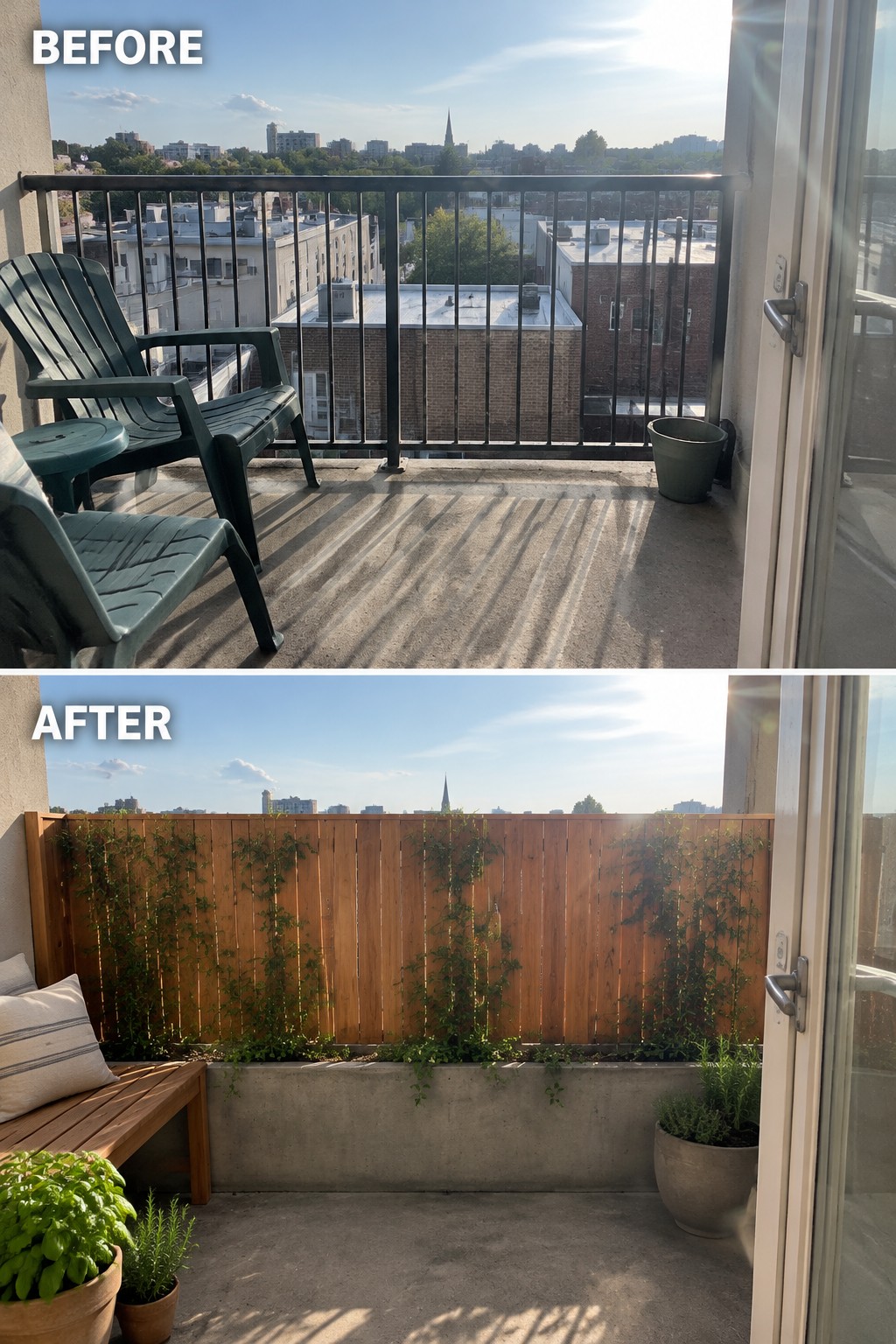
A privacy fence can make a balcony feel more like an outdoor room. Here, the open metal railing is replaced by a wood screen, giving the seating area more separation from nearby buildings.
For a small balcony, keep the screen to a height that blocks direct views without making the space feel closed in. A built-in planter below it can hold climbing plants, but leave enough clear floor space to move around comfortably.
Replace Poolside Railings With A Privacy Fence
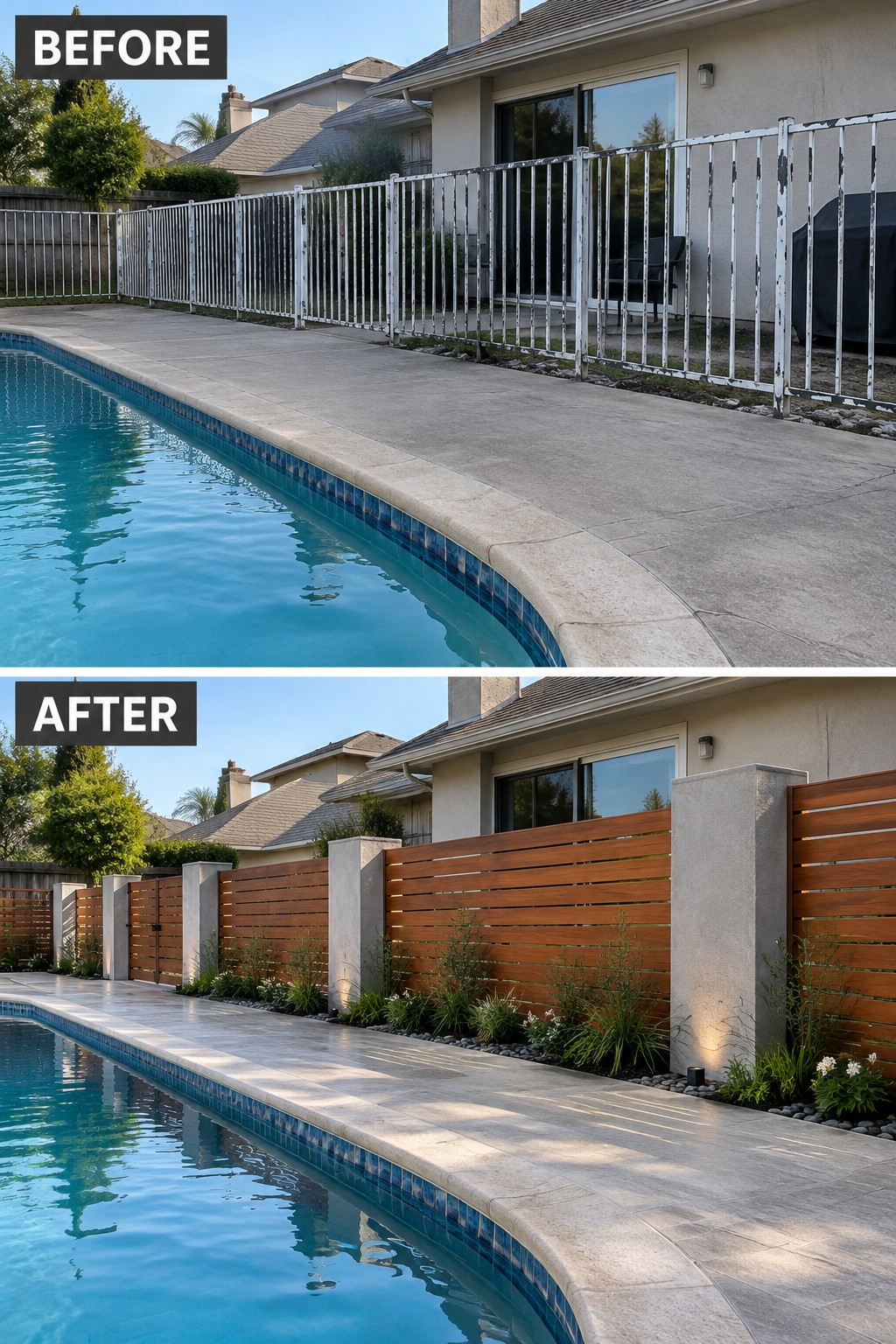
A low metal fence can keep a pool enclosed, but it does little to screen the yard. Replacing it with horizontal wood slats between concrete posts gives the pool area more privacy and a cleaner boundary.
This approach works well beside a pool or patio where neighbors can see in. Choose weather-resistant wood and leave enough space between the slats for airflow, while checking local pool-safety rules before changing the enclosure.
Replace A Rusted Gate With A Modern Privacy Fence
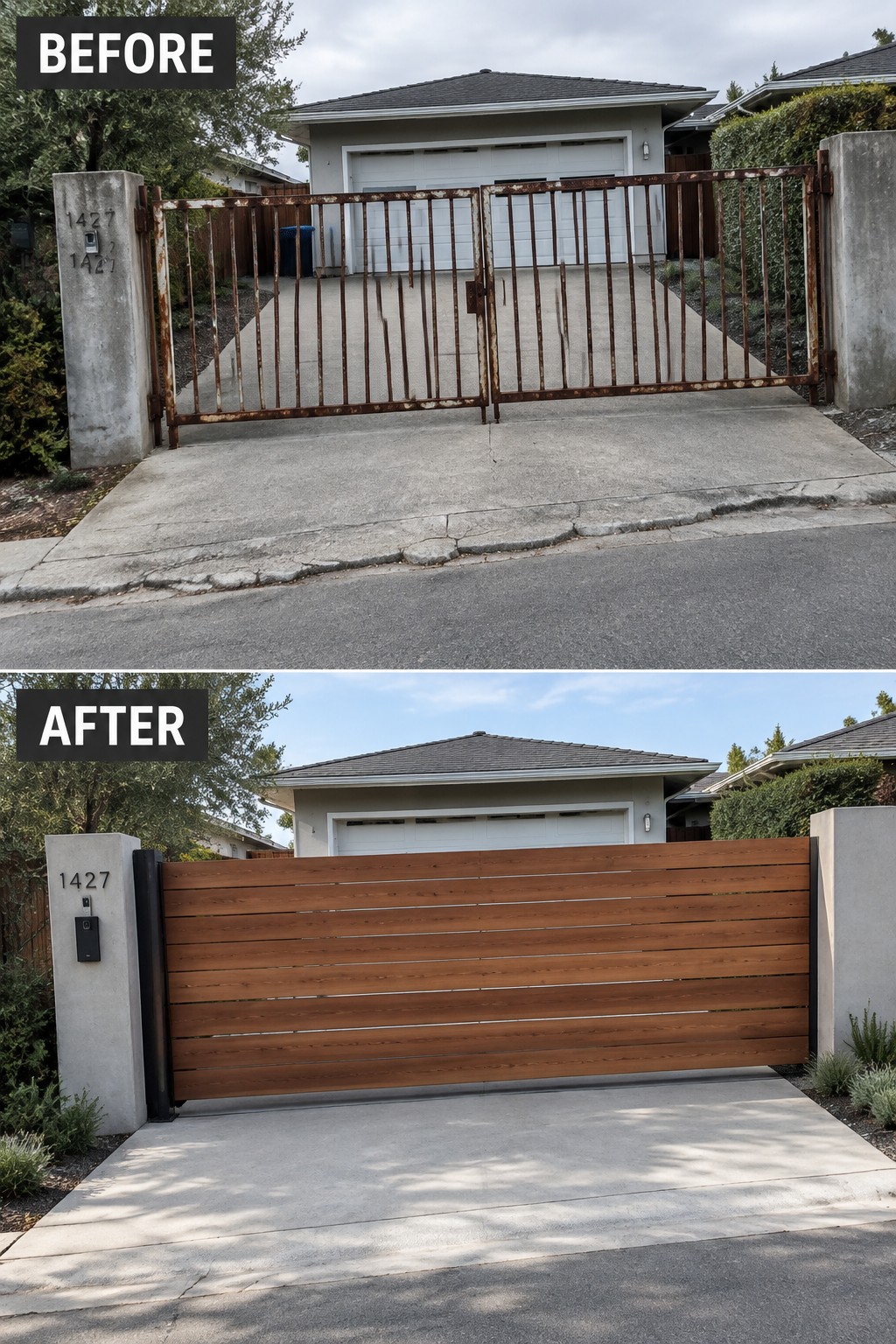
A rusted, see-through metal gate can make an otherwise tidy entrance feel neglected. Replacing it with a solid wood gate gives the driveway privacy and a cleaner look, while the concrete posts keep the design in step with a modern home.
This approach works well where a driveway opens directly onto the street. Choose durable, well-sealed wood and leave enough clearance for the gate to swing or slide without catching on the slope.
Replace An Overgrown Fence With A Clean Modern Design
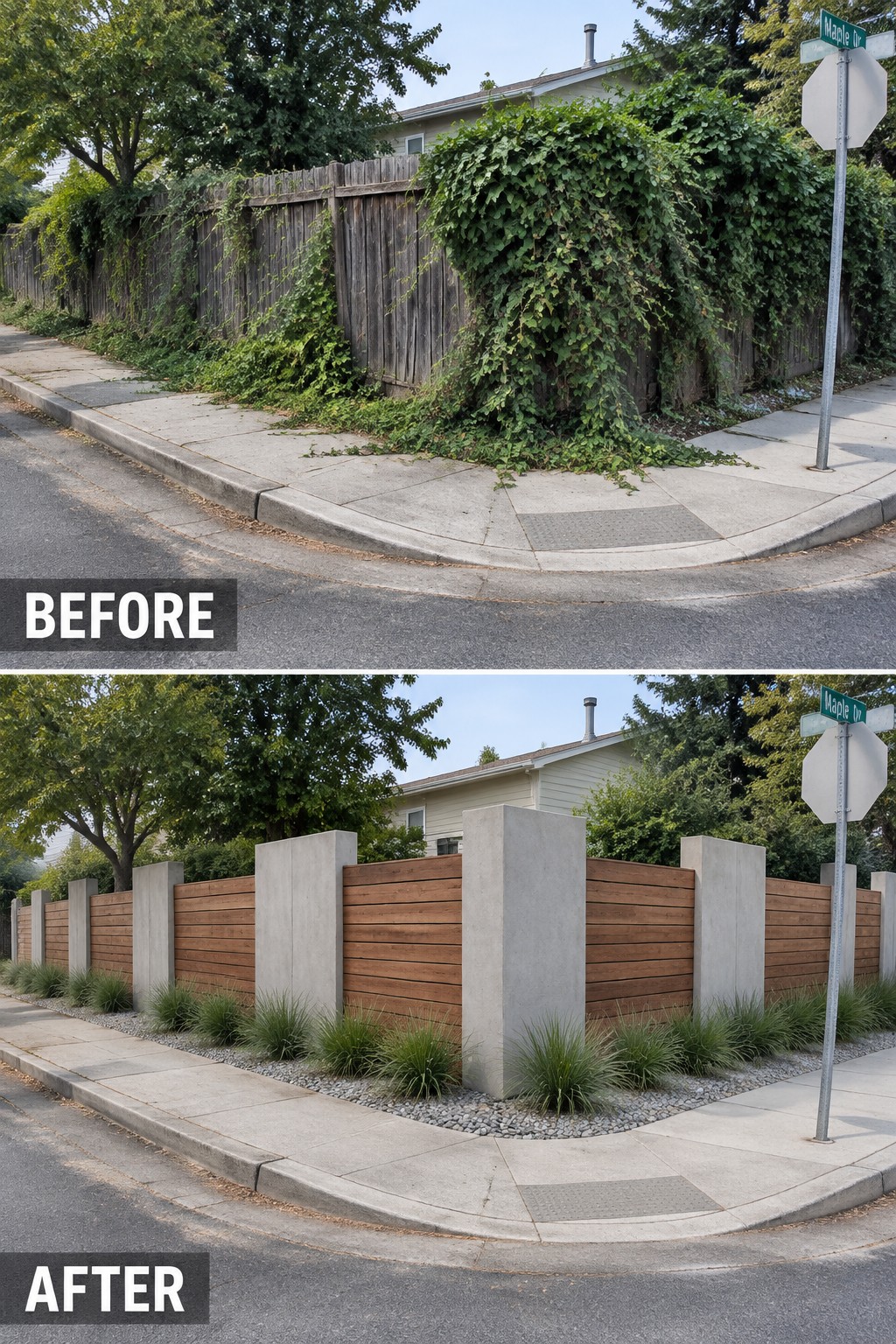
A fence can make a whole corner feel neglected when it’s hidden by vines and weeds. Replacing the old barrier with horizontal wood panels and concrete posts gives the yard a tidy, more current look while keeping the privacy.
This idea works well along a side yard or street corner where a fence is a major part of the view. Keep the design simple, and leave enough room at the base for a narrow gravel strip or low plants so the new fence stays easy to maintain.
Use A Gravel Path To Finish A Narrow Side Yard
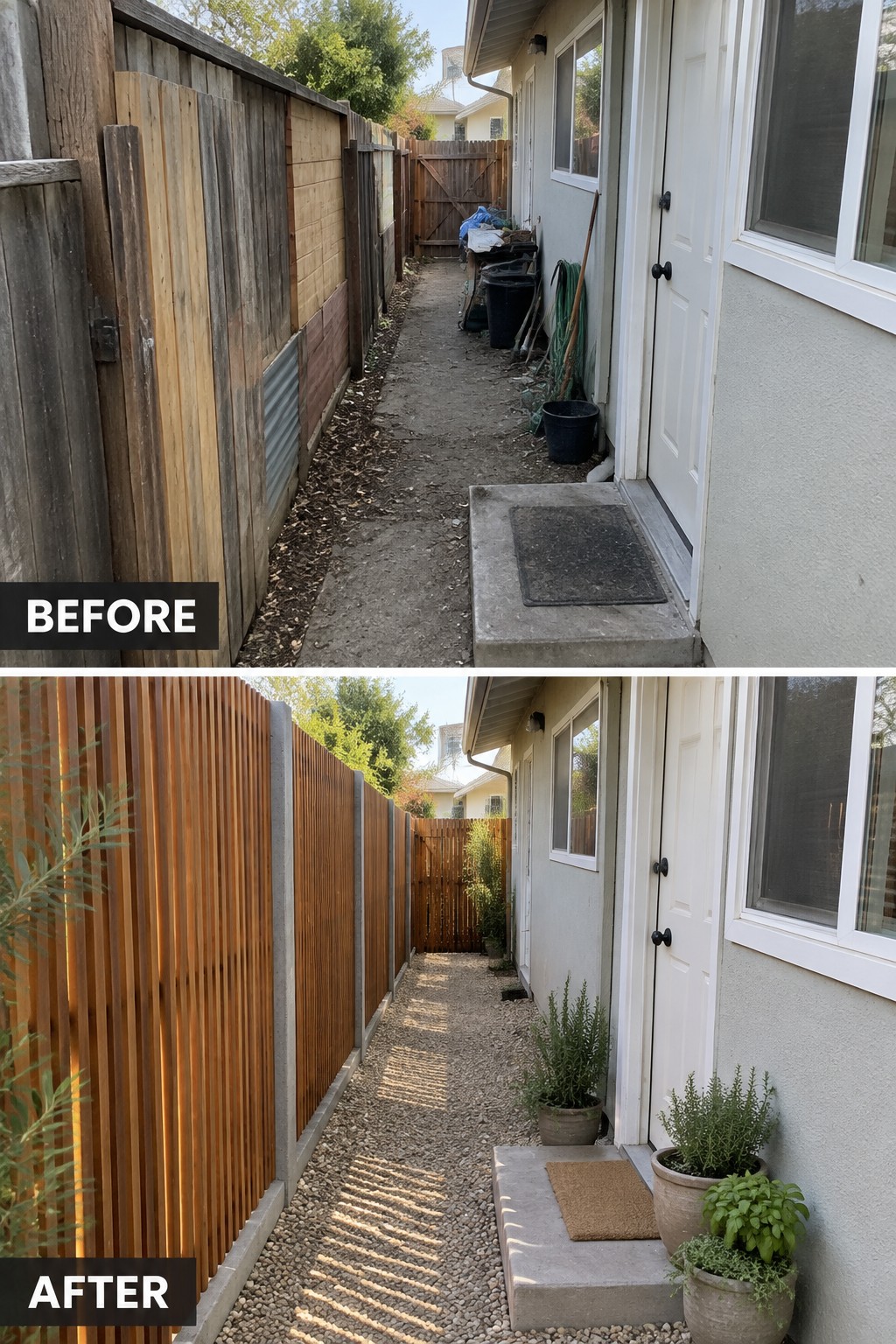
The mixed wood-and-concrete fence gives this narrow side yard a cleaner, more consistent boundary. Replacing the uneven old fence and bare dirt path with slim wood slats and gravel makes the passage feel more intentional without taking up extra room.
This approach works well beside a house where space is too tight for a larger garden or seating area. Keep the path level and wide enough to walk through comfortably, and choose gravel that stays in place rather than spilling toward the doorway.
Add A Wood Accent To A Concrete Front Fence
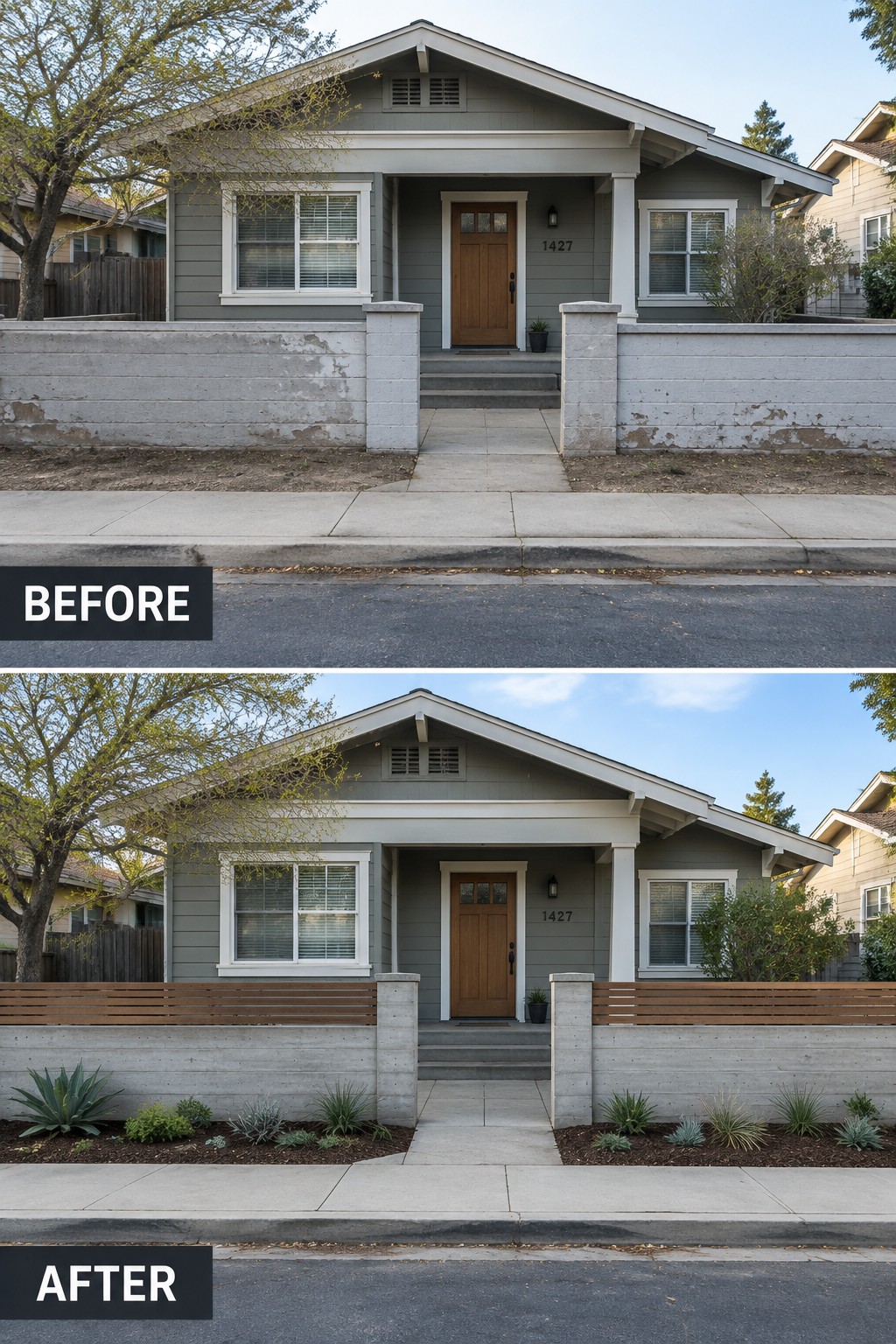
A plain concrete wall can feel stark at the front of a home. Adding horizontal wood boards above it brings in a warmer finish while keeping the solid lower section for privacy. Here, the slimmer wood portion also lets the fence feel less imposing.
This approach works well when you want a tidy boundary without replacing the whole wall. Keep the boards evenly spaced and choose a durable outdoor wood or finish; leave the entry path clear so the fence still feels easy to approach.
Turn A Plain Patio Into A More Private Seating Area
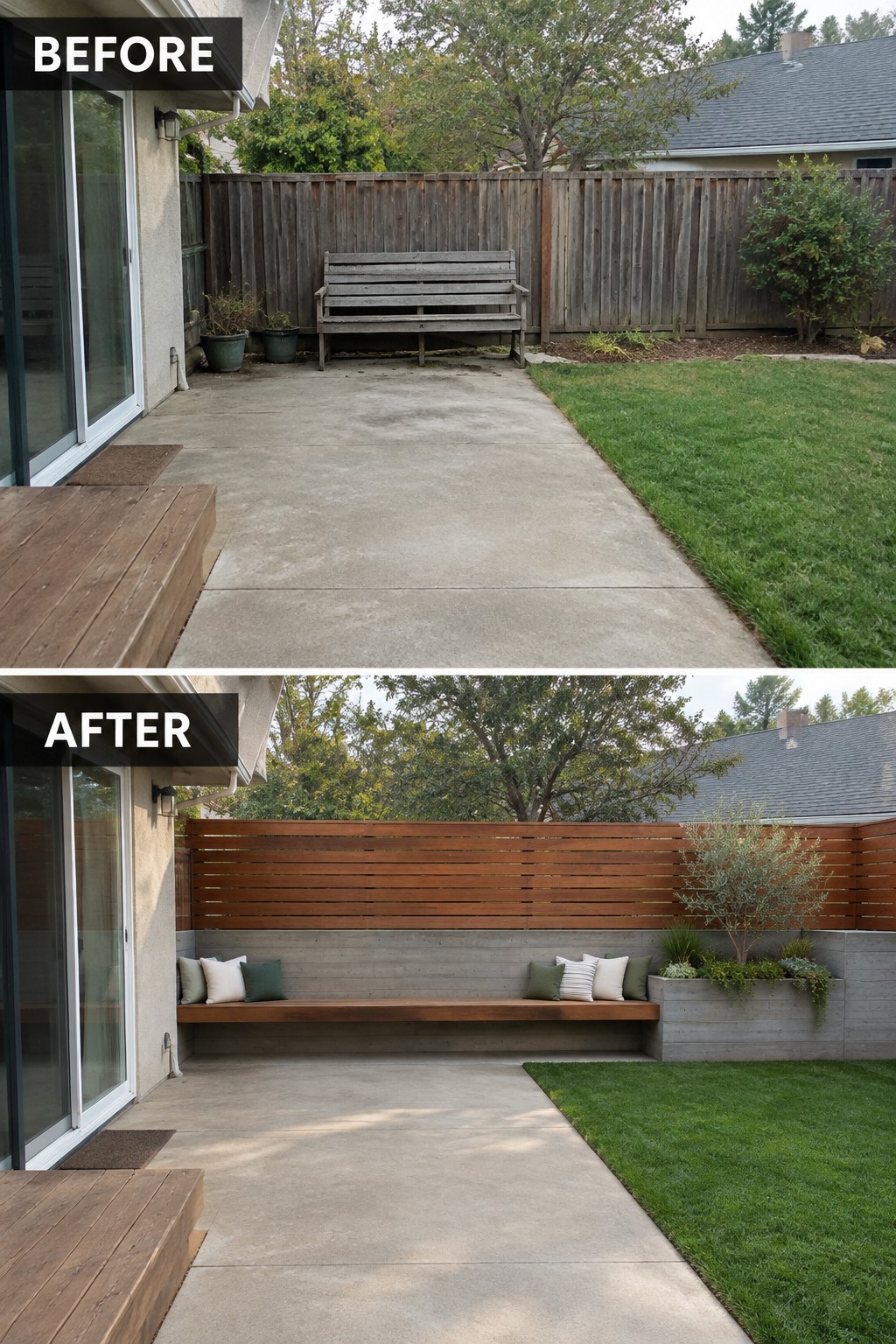
A built-in bench makes this patio feel like a place to sit, while the horizontal wood fence gives the yard a more finished, private edge. The concrete wall below the wood adds a sturdy base and breaks up the fence’s height.
This approach works well in a small backyard where a fence and seating need to share one boundary. Keep the bench deep enough to use comfortably, and choose outdoor cushions that can be stored away in wet weather.
Replace A Worn Fence With A Modern Wood And Concrete Design
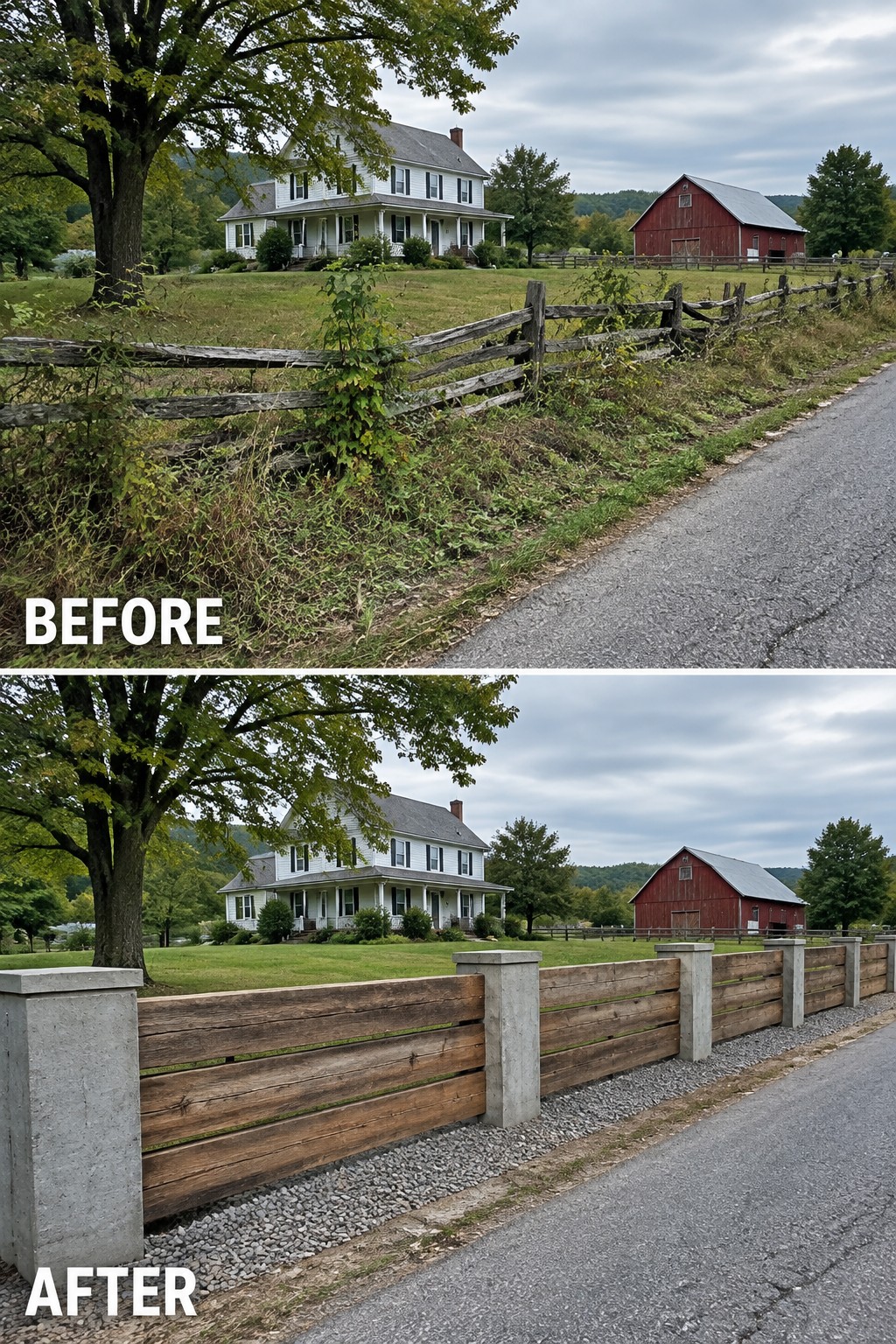
A sagging split-rail fence can make a well-kept property feel unfinished. Replacing it with horizontal wood boards set between concrete posts gives the boundary a cleaner, sturdier look while still letting the wood suit a country home.
This idea works well along a roadside or anywhere a fence needs to define the edge of a yard. Keep the posts evenly spaced and choose boards rated for outdoor use; the concrete provides a solid structure, while the wood brings a less stark finish.
Make A Rooftop Patio More Private
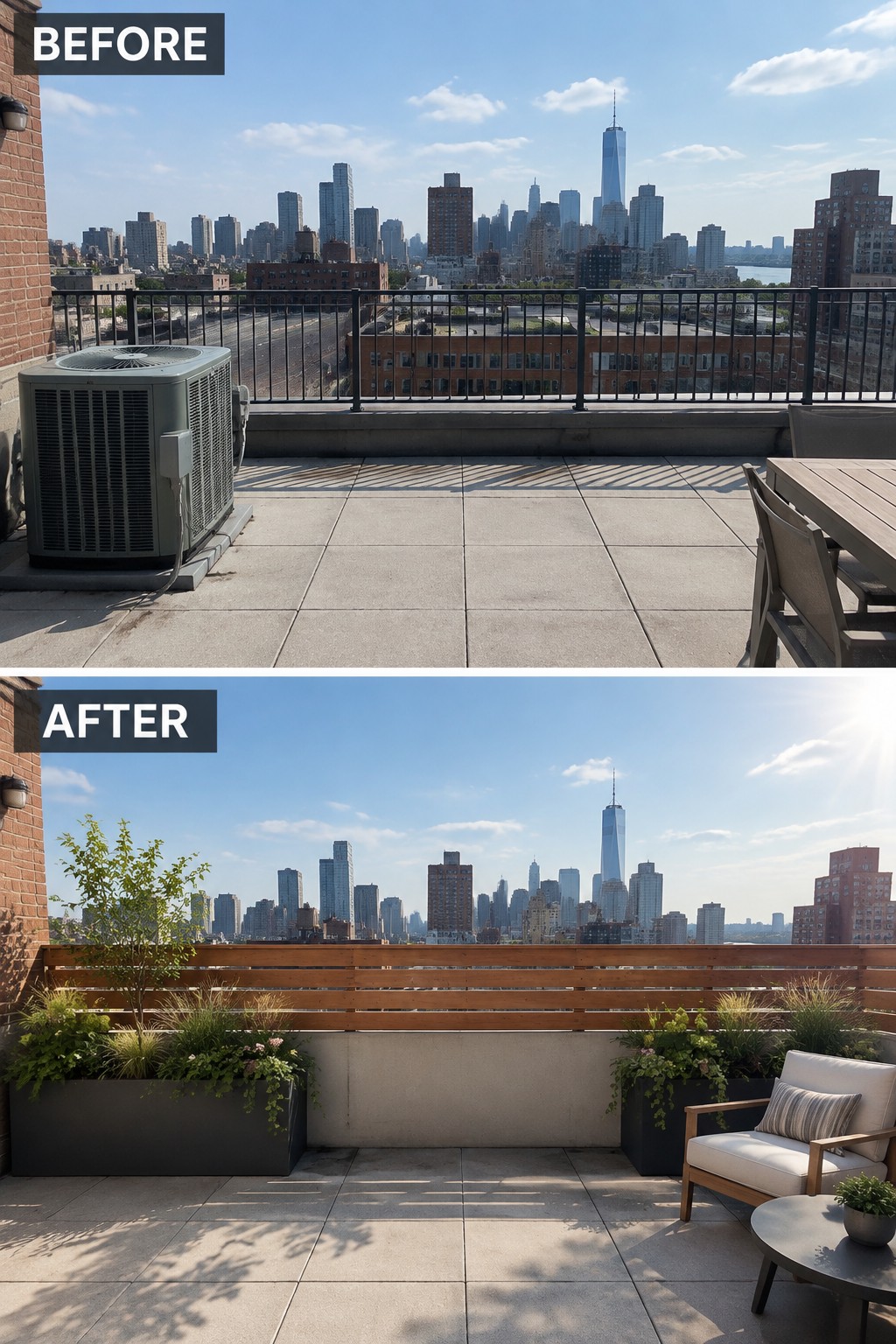
A simple privacy screen can make an open rooftop feel more like a place to sit and relax. Here, the exposed metal railing is replaced with horizontal wood boards, giving the patio a more sheltered feel without hiding the skyline.
For a similar setup, use a sturdy screen that suits the building and leaves enough room for air and light. A few large planters can help mark the seating area, but keep the layout open enough to move around comfortably.
Turn A Sloped Yard Into Defined Garden Beds
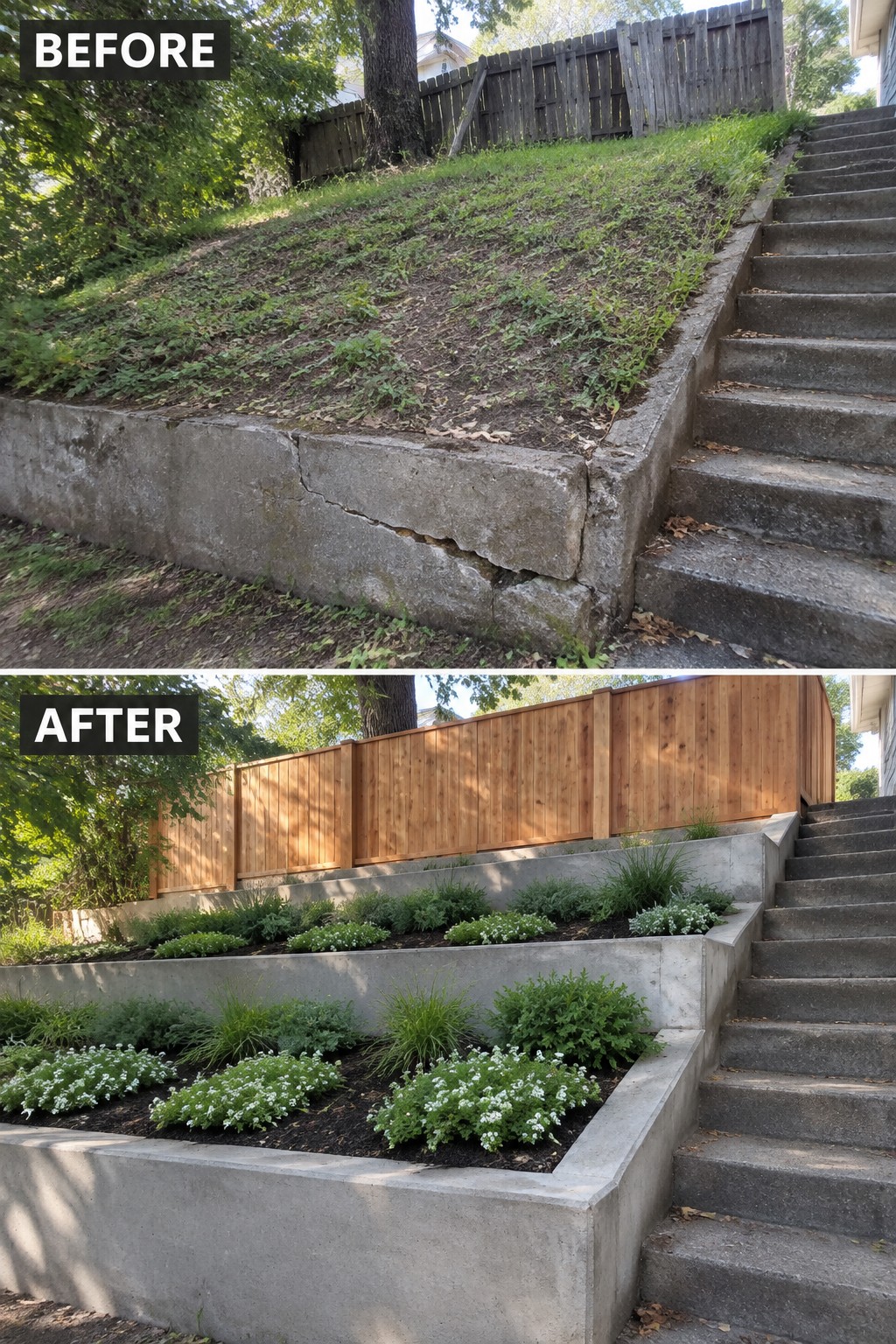
The steep, weedy slope is hard to maintain, and the cracked retaining wall makes it look neglected. Rebuilding the area as level planting beds gives the hillside a clearer shape and makes it easier to care for.
For a similar yard, start by addressing any damaged retaining walls, then plan bed levels that follow the slope without blocking the stairs or path. Simple plants and mulch are usually easier to maintain than trying to cover a steep bank with lawn.
Add Structure To An Overgrown Fence Line
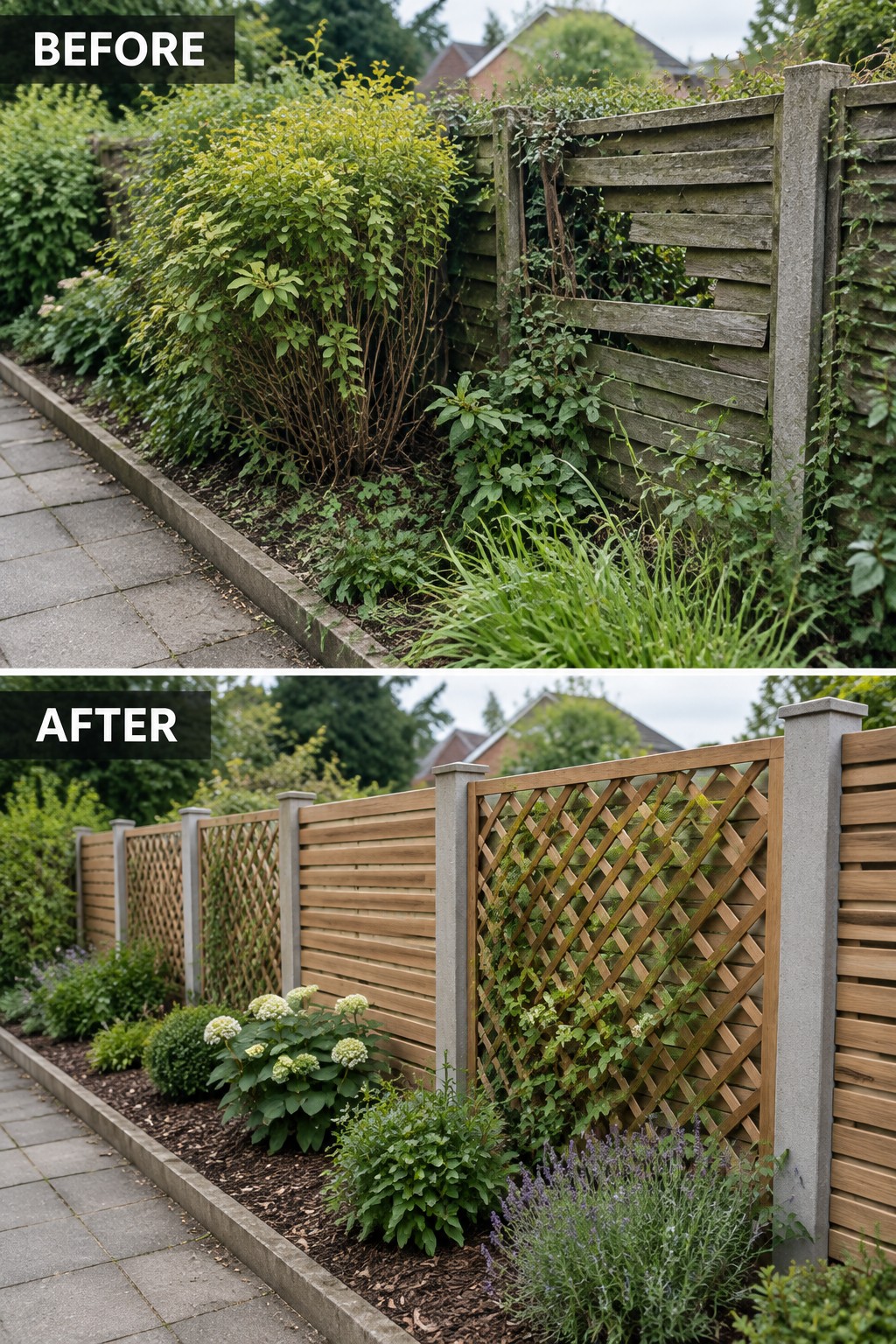
Replacing a tired fence and clearing back the overgrowth can make a narrow garden feel much more planned. Here, the new wood panels and lattice sections between concrete posts give the boundary a consistent look, while the planting bed stays defined instead of spilling onto the path.
This approach works well in side yards where privacy matters but a solid wall would feel too heavy. Use a few fence styles that share the same wood tone, and trim plants back enough to keep the path clear and the fence visible.
Create A Cleaner Play Area With A Low Modern Fence
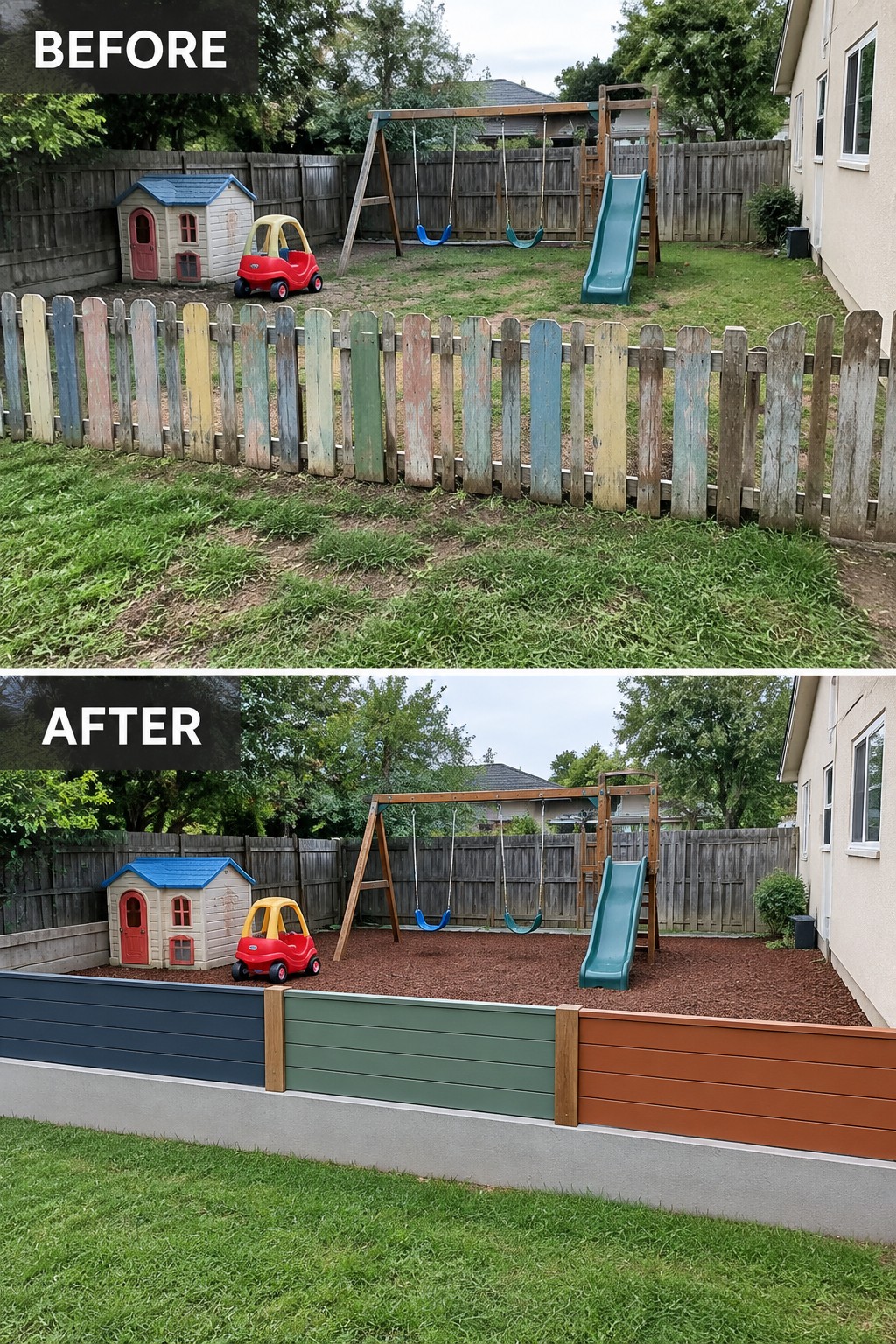
Replacing a patchy, worn-looking play yard with an even mulch surface and a low fence makes the space feel more organized. The solid fence panels also give the play area a clear boundary without blocking the view across the yard.
This idea works well in family backyards where toys and play equipment need a defined spot. Use weather-resistant materials, and keep the fence low enough to maintain visibility while making sure it is sturdy and safe for children.
Use Wood Panels To Break Up A Concrete Fence
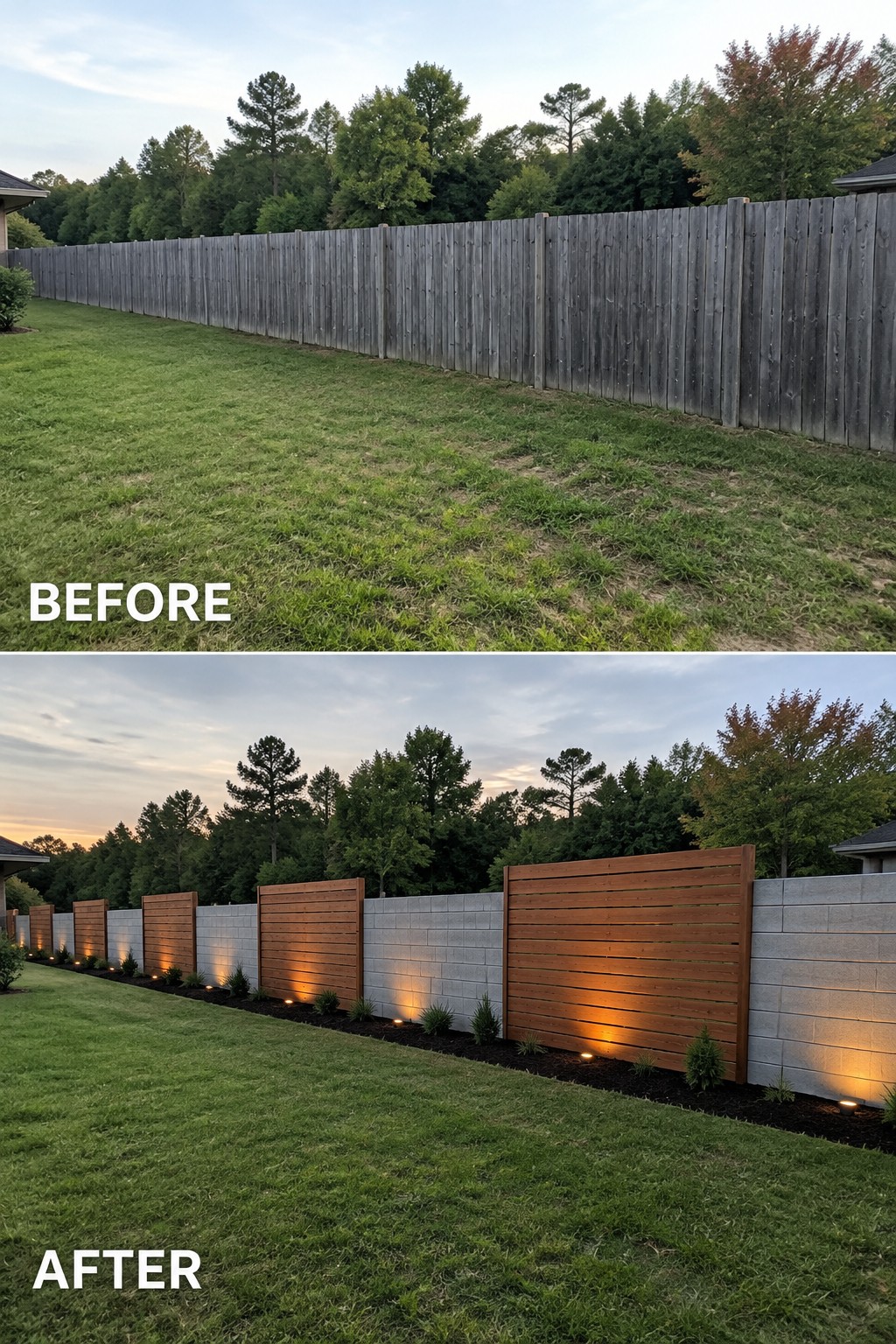
The old fence made the yard feel plain and exposed. Replacing it with a low concrete wall and spaced wood panels gives the fence line a more deliberate look while keeping privacy as the main purpose.
This approach suits a long backyard boundary where one solid material might feel monotonous. Repeat a few wood panels along the wall, and keep the planting strip simple so the design stays easy to maintain.
Replace A Weathered Fence With An Open Wood Design
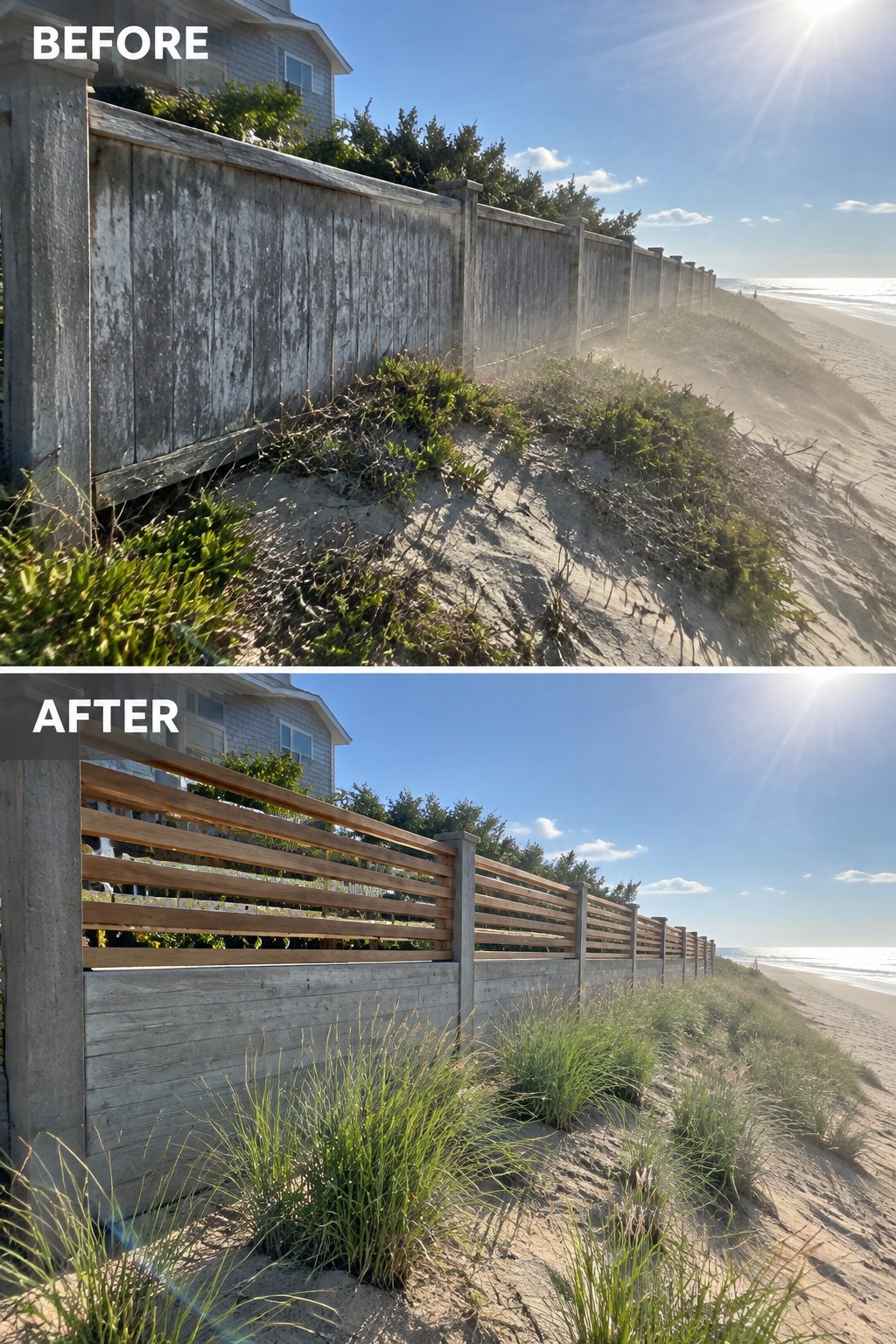
An old, solid fence can look worn and make a narrow beachside yard feel closed off. Replacing the upper panels with horizontal wood slats while keeping a concrete base gives the fence a cleaner, lighter look without removing the boundary.
This approach works well where you want some privacy but still want light and air to pass through. Keep the slat spacing consistent, and choose wood suited to outdoor exposure so the fence stays practical as well as fresh-looking.
Frequently Asked Questions
Q: Does a wood-and-concrete fence work in a small yard?
A: Yes. Use concrete for sturdy posts or a low base, then add horizontal wood boards with small gaps. The open lines can make the fence feel less heavy without giving up privacy.
Q: How do I keep the wood from rotting where it meets the concrete?
A: Leave a small gap between the wood and the ground or concrete so water can drain and the boards can dry. Choose weather-resistant wood, and seal the cut ends before installation.
Q: Can I mix different wood tones with concrete?
A: You can, but keeping the concrete a simple gray helps the wood stand out. If you use more than one wood tone, repeat each tone somewhere in the fence so the mix feels intentional.
Q: Does this kind of fence need a lot of upkeep?
A: Concrete needs little attention, but the wood may need cleaning and a fresh coat of stain or sealant every few years. Check the boards once a year for loose fasteners or signs of moisture damage.
