


A fence can make a yard feel unfinished when its boards look too uniform or do little to soften a long, flat boundary.
I like how alternating panel widths add a bit of rhythm while still giving a fence the privacy and structure a real yard needs.
The change can also help the fence relate better to the home, whether the siding is simple, the landscaping is still taking shape, or the patio sits close by.
Small choices in spacing, color, and materials make a noticeable difference without requiring a full yard renovation.
I’d save the designs that suit your home and adapt their details to the space you actually have.
Add Privacy With A Structured Fence

Replacing a worn chain-link boundary with a solid wood fence gives this narrow yard a clearer edge and more privacy. The alternating board widths keep the long fence from looking too plain, while the lawn remains open and easy to use.
This approach works well in side yards where a fence is the main feature. Choose a style that suits the house, and leave enough room along the base for planting or simple gravel so the fence line stays tidy.
Add Structure To The Front Yard
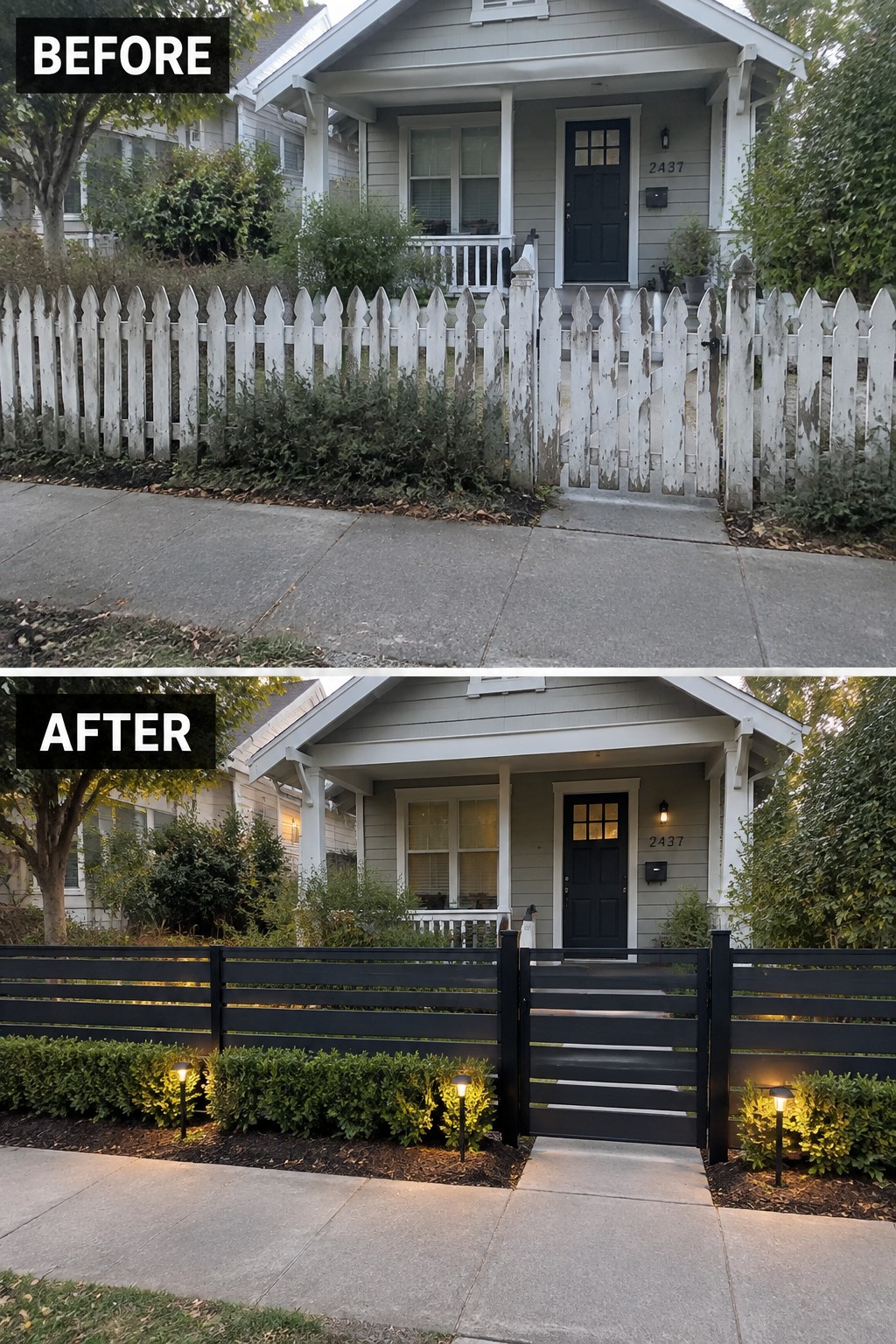
Replacing the worn picket fence with a clean, dark fence gives this small front yard a clearer edge and a more finished look. The simple horizontal boards also suit the home without making the fence the main feature.
This idea works well when an entry needs privacy but still needs an easy path to the door. Keep the gate wide enough for comfortable access, and use a low hedge along the fence to keep the yard from feeling closed off.
Use Alternating Panel Widths To Update A Fence

Replacing a weathered fence with horizontal boards in alternating widths gives a backyard a cleaner, more considered look. The warm wood panels and dark posts refresh the boundary without changing the yard’s basic layout.
This idea works well when an old fence needs replacing and you want something more distinctive than standard vertical boards. Keep the post spacing consistent, and choose a few board widths that repeat so the pattern looks intentional rather than busy.
Add Privacy With A More Structured Fence

Replacing the overgrown, weathered picket fence with a taller wood fence gives this narrow side yard a clearer boundary. The fence provides privacy without taking up space on the walkway, and its alternating panel widths keep the long run from looking too uniform.
This idea works well along side paths where you want separation but still need an easy route through. Choose weather-resistant materials and keep the panels in proportion to the yard so the fence doesn’t make a tight space feel even narrower.
Turn The Pool Patio Into A Private Seating Area
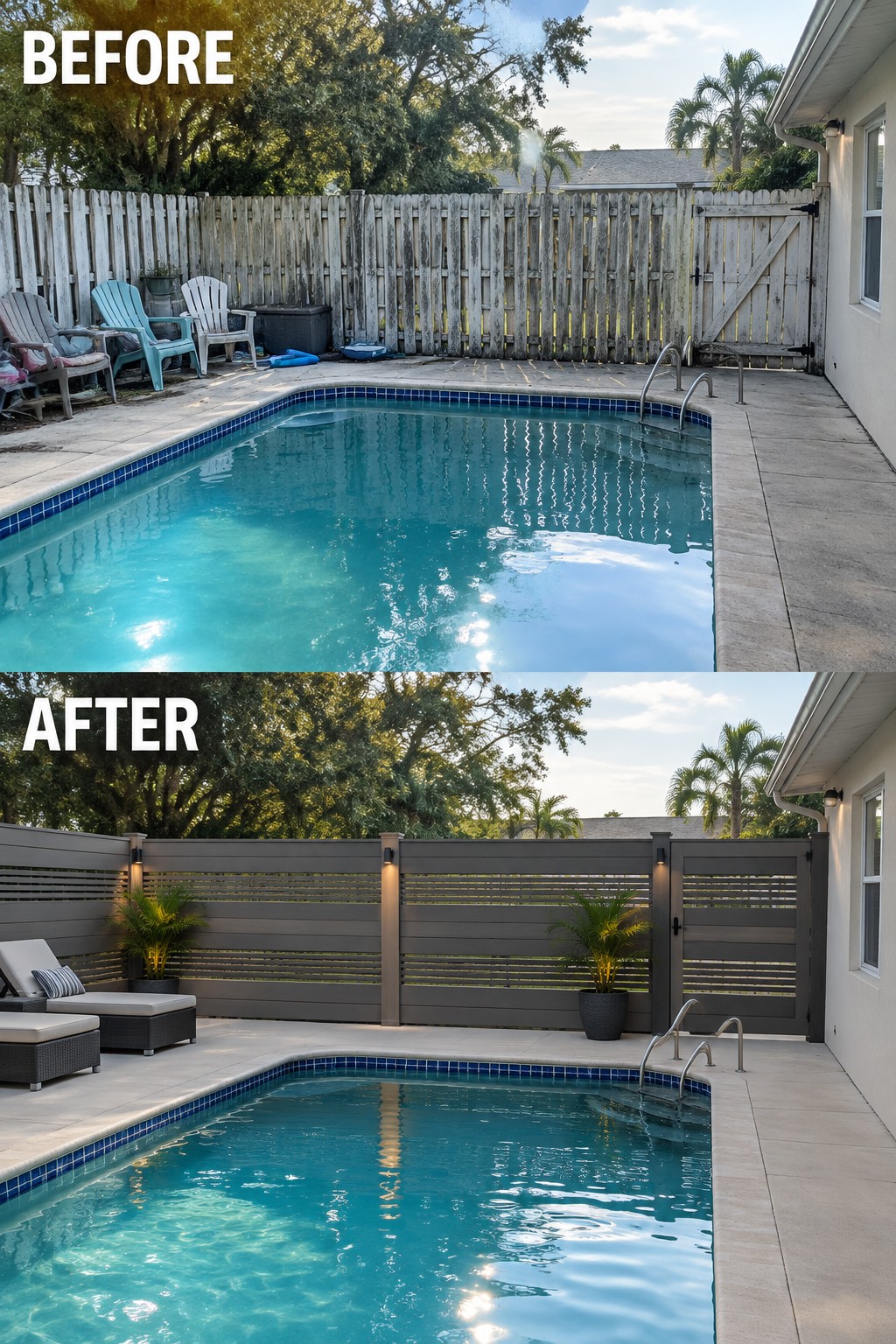
The old fence left the pool area feeling exposed and a little unfinished. Replacing it with a structured privacy fence gives the patio a clearer boundary, while the seating area beside the pool makes the space more useful for relaxing.
This idea works well in a compact backyard where the pool and patio share one open area. Choose a fence style that suits the house, and leave enough room around the pool for safe movement.
Turn A Small Patio Into A Seating Area

An unused patio can become a useful outdoor room with a simple seating spot and a more finished fence. Here, the new dark fence gives the narrow yard a clear backdrop, while a small table and chairs make the paved area feel ready for everyday use.
For a compact patio, choose furniture that leaves a clear path to the door and avoid adding more pieces than the space can handle. A few climbing plants can bring greenery to the fence without taking up much floor space.
Replace Chain Link With A Low Privacy Fence

The open chain-link fence leaves the small front yard feeling unfinished. Replacing it with a low horizontal-panel fence gives the yard a clearer edge while still letting the house remain visible from the sidewalk.
This idea works well for a modest front yard where a tall fence would feel too closed in. Choose a simple finish that suits the house, and keep the fence low enough to preserve an open view.
Make A Small Yard Feel More Planned

Replacing the weathered, see-through fence with solid panels in alternating widths gives this yard a clearer edge and more privacy. The simple lawn looks neater beside it, and the fence becomes a useful backdrop rather than a distraction.
This approach works well in a small backyard where a fence takes up much of the view. Choose panel widths that suit the fence’s overall scale, and keep the lawn or planting strip along its base easy to maintain.
Add Structure To A Small Backyard
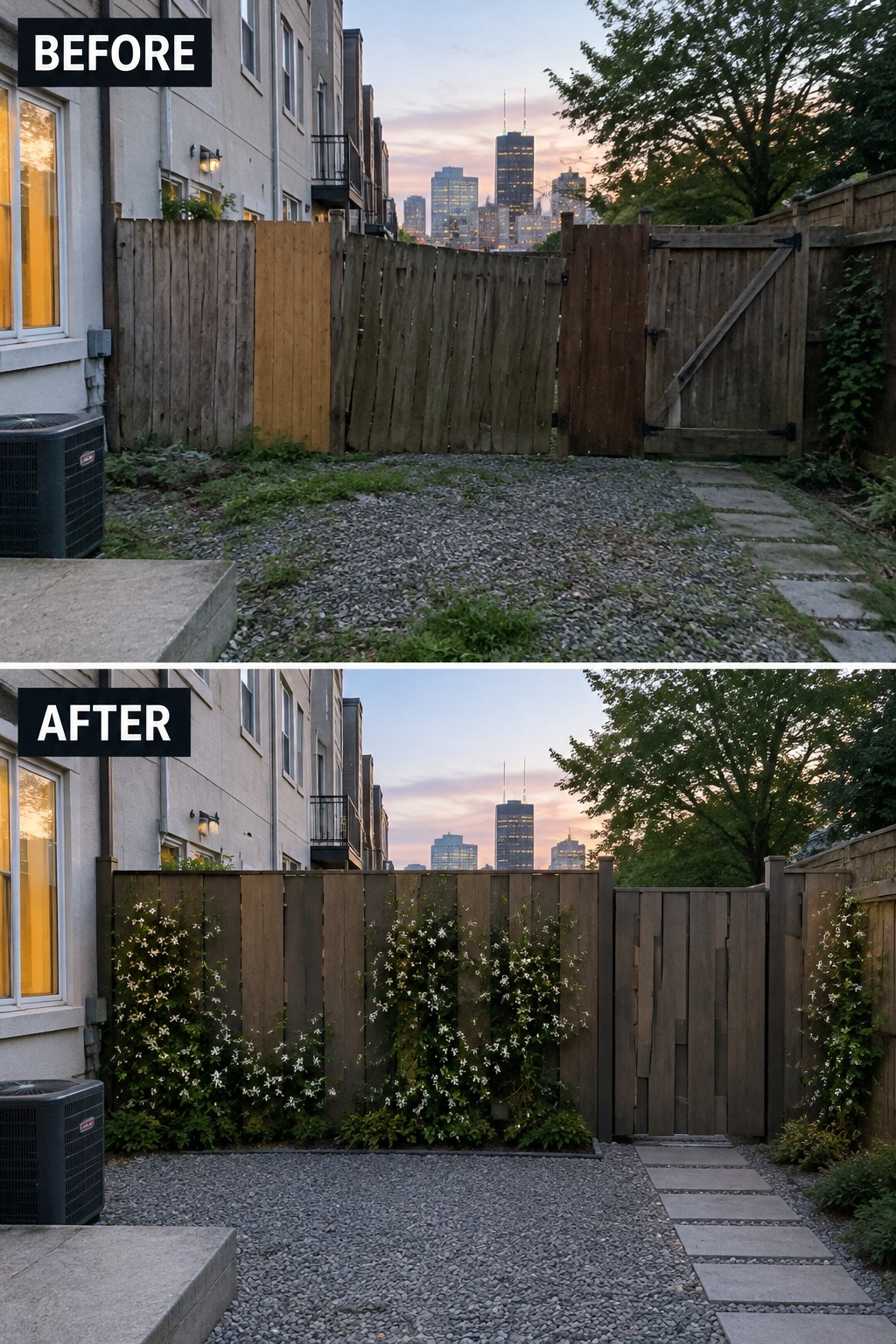
Replacing the leaning, mismatched fence with a straight wooden fence gives this narrow yard a cleaner, more planned feel. Climbing flowers along the panels bring in greenery without taking up much ground space.
This idea works well in a small yard where privacy matters but there isn’t room for large planting beds. Choose sturdy panels in a consistent finish, then leave enough space along the fence for plants to grow without blocking the path.
Replace A Worn Fence With A Cleaner Design

A damaged fence can make an otherwise tidy yard feel neglected. Replacing the uneven boards and broken lattice with horizontal wood panels gives the yard a more orderly look while still providing privacy.
This idea works well along a side yard or property line where the fence is a prominent feature. Varying the panel widths adds interest without making the design fussy; just keep the layout consistent and choose wood that suits your home’s exterior.
Create Defined Garden Beds Along The Fence

Replacing an overgrown border with raised garden beds gives the yard a clearer layout. The planted beds tidy up the fence line, while the stepping-stone path stays easy to follow.
This idea works well in a narrow backyard where a long border can organize the space without taking over the lawn. Clear the area first, then keep the beds and path wide enough to maintain and walk through comfortably.
Give An Old Fence A Cleaner Look

Replacing a weathered fence with dark boards in alternating widths gives the yard a more finished look without changing its layout. The varied panels add interest while keeping the fence solid and private.
This approach works well when an old fence is still in the right place but looks worn. Use a consistent stain color to keep the different board widths from feeling busy, and check local rules before changing fence height or style.
Replace An Overgrown Fence Line With A Clear Boundary
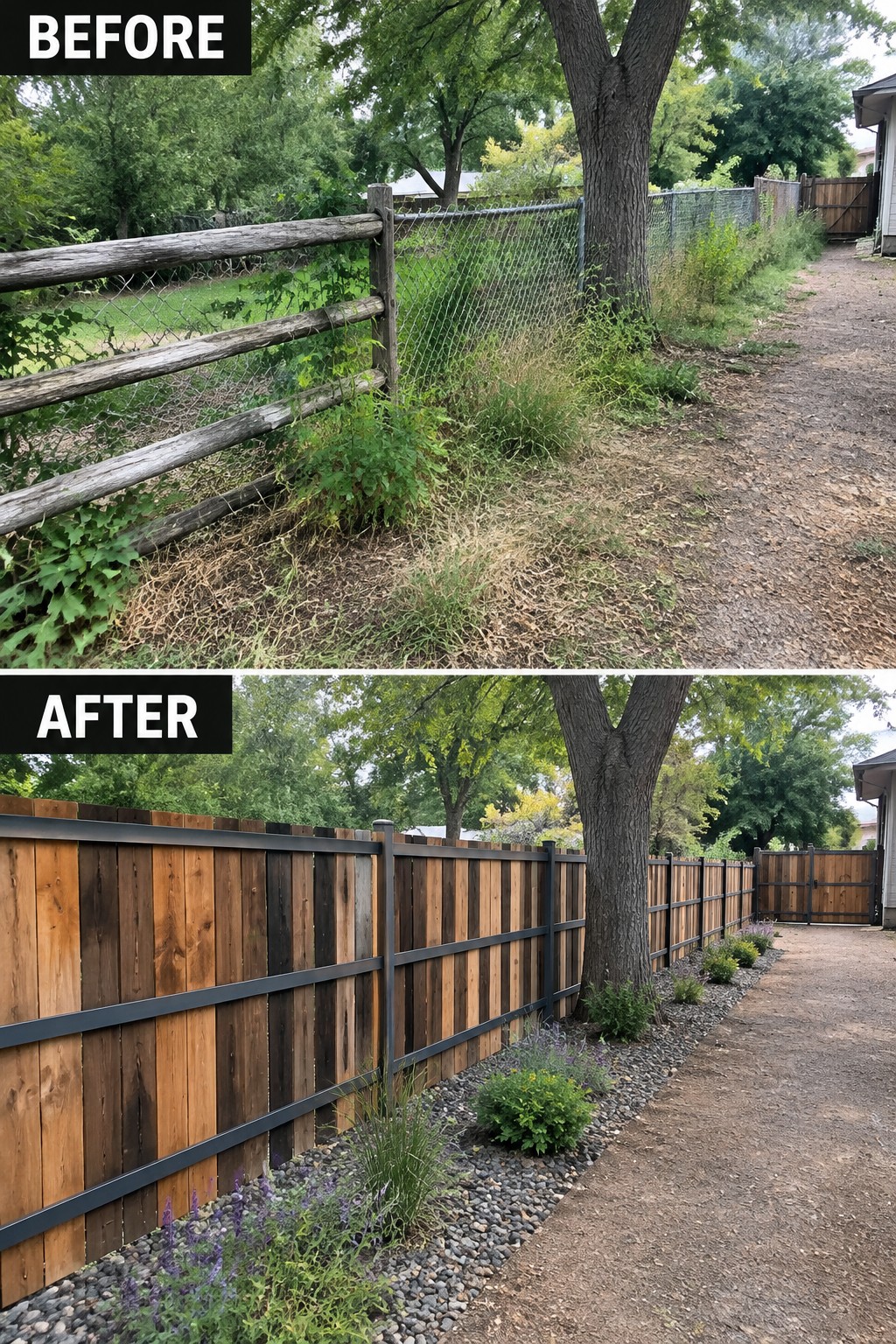
Replacing a neglected chain-link fence with a solid wood fence gives the yard a clearer edge and more privacy. The alternating board widths keep the design from looking too uniform, while the dark rails give the panels a tidy outline.
This approach works well along a side yard or property line where a fence needs to provide privacy without looking plain. Clear away weeds first, then leave enough room for a narrow gravel border so plants do not crowd the boards.
Use A Fresh Fence Design To Improve Privacy
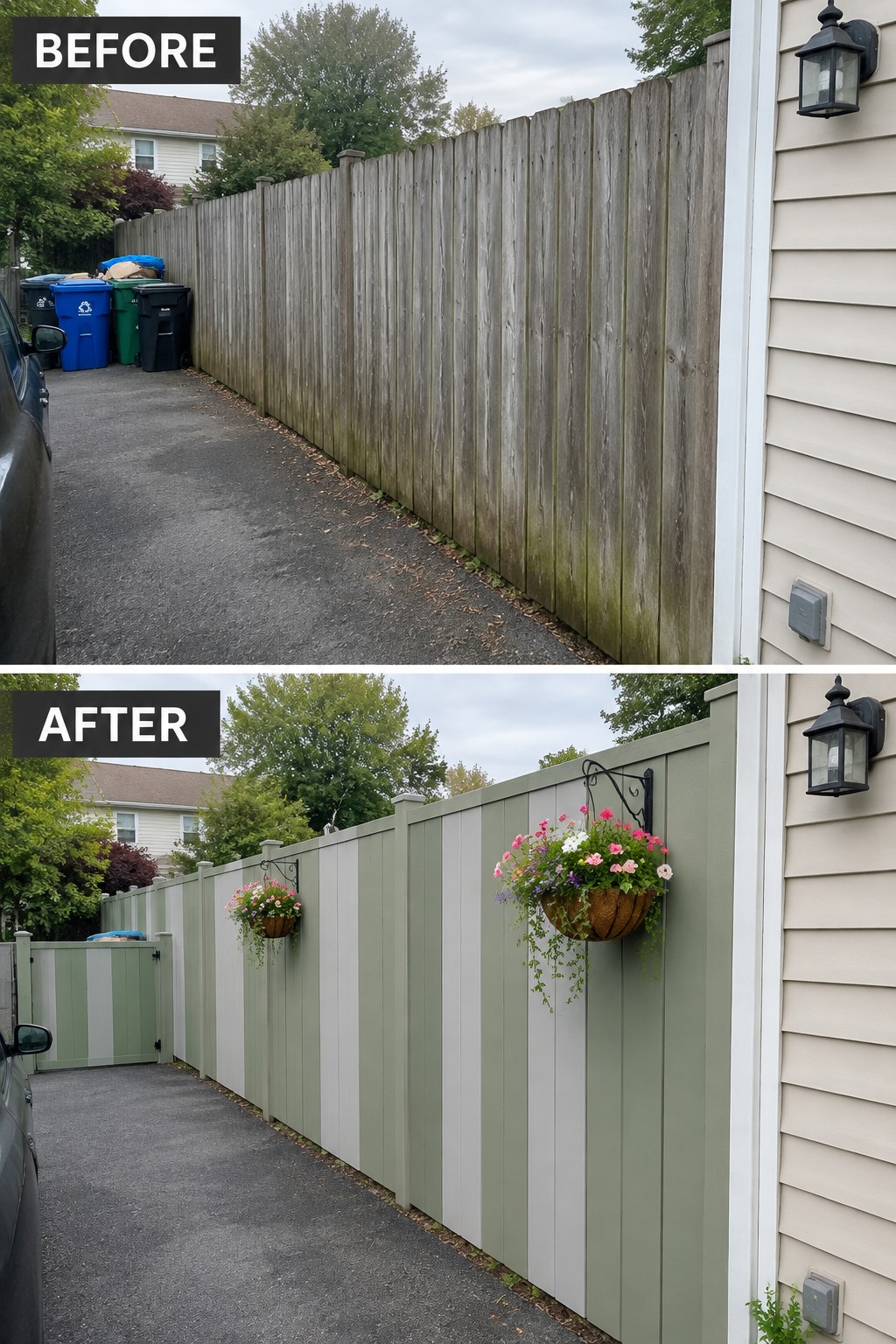
Replacing a weathered fence with clean, alternating-width panels gives a narrow side yard a more finished look while keeping it private. The muted green and light gray boards make the fence feel less like a plain barrier.
This idea works well along driveways and side yards where a fence is a major part of the view. Keep the colors simple and make sure the panel widths repeat in a steady pattern so the design feels intentional.
Turn An Unused Backyard Into A Seating Area

A bare, patchy yard can be hard to use, but a defined gravel area and built-in bench seating make it feel like an outdoor room. Here, the fire pit becomes a clear gathering spot instead of sitting in the middle of an open lawn.
This idea works well in a small fenced yard where a full deck may not fit. Choose gravel that drains well, leave enough space to move around the fire pit, and use weather-resistant seating.
Use A Privacy Fence To Clean Up A Narrow Side Yard
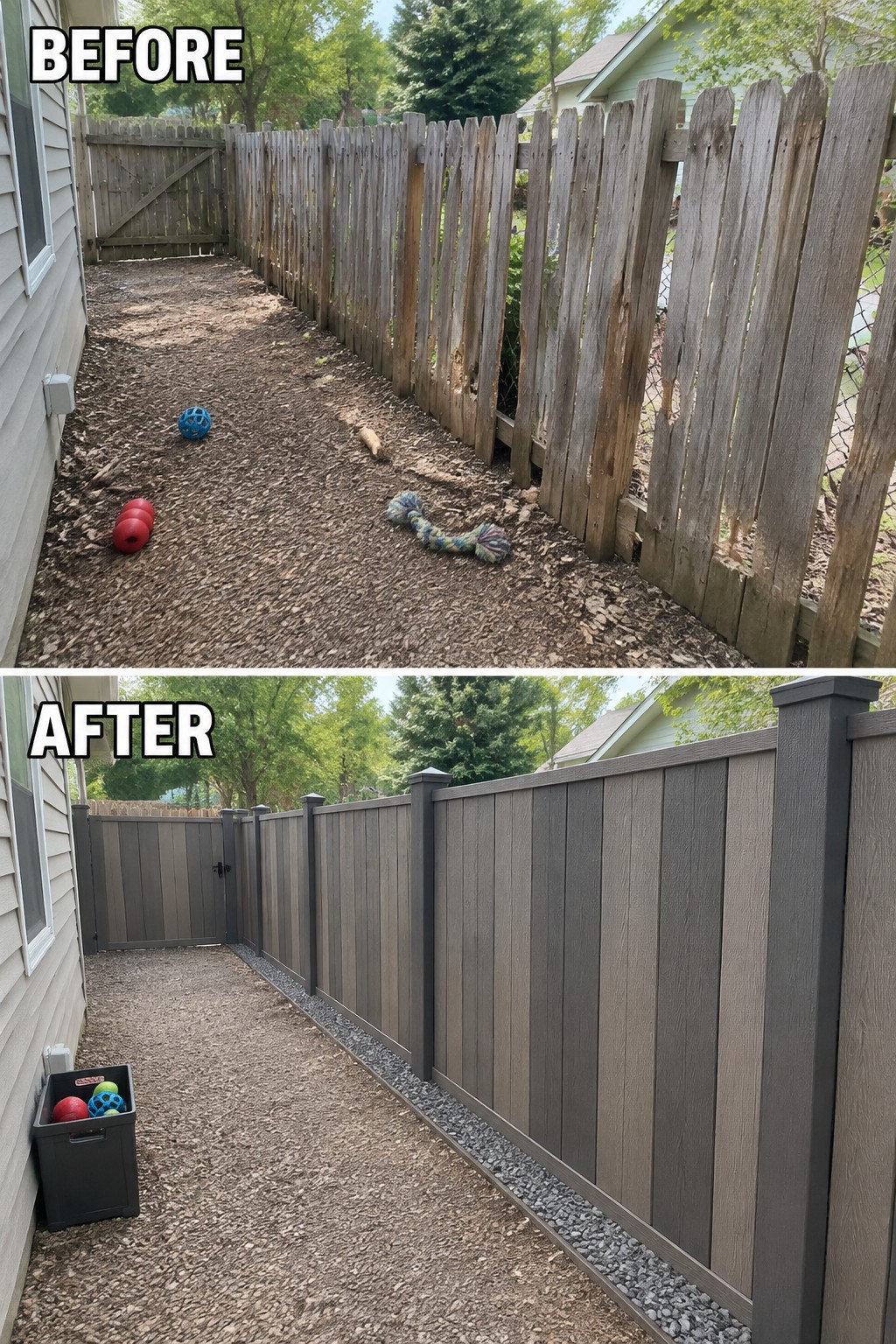
Replacing the uneven, weathered boards with a solid fence makes this narrow side yard feel more orderly and private. The matching gate helps the fence read as one continuous boundary, instead of a collection of worn sections.
This approach works well when a side yard feels exposed or cluttered by an aging fence. Choose a sturdy, weather-resistant material, and keep the path clear so there’s still room to move through the space.
Replace Chain Link With A Wood Privacy Fence

A wood privacy fence gives a narrow side yard a much cleaner boundary than chain link with loose privacy strips. Here, the solid fence makes the driveway edge feel more orderly, while the small hedge adds a neat border without taking up much room.
This idea works well where a side yard needs privacy but still has to stay easy to walk through. Choose a fence height that suits the space, and keep any planting low enough that it does not crowd the path.
Make A Fence Line Look More Finished
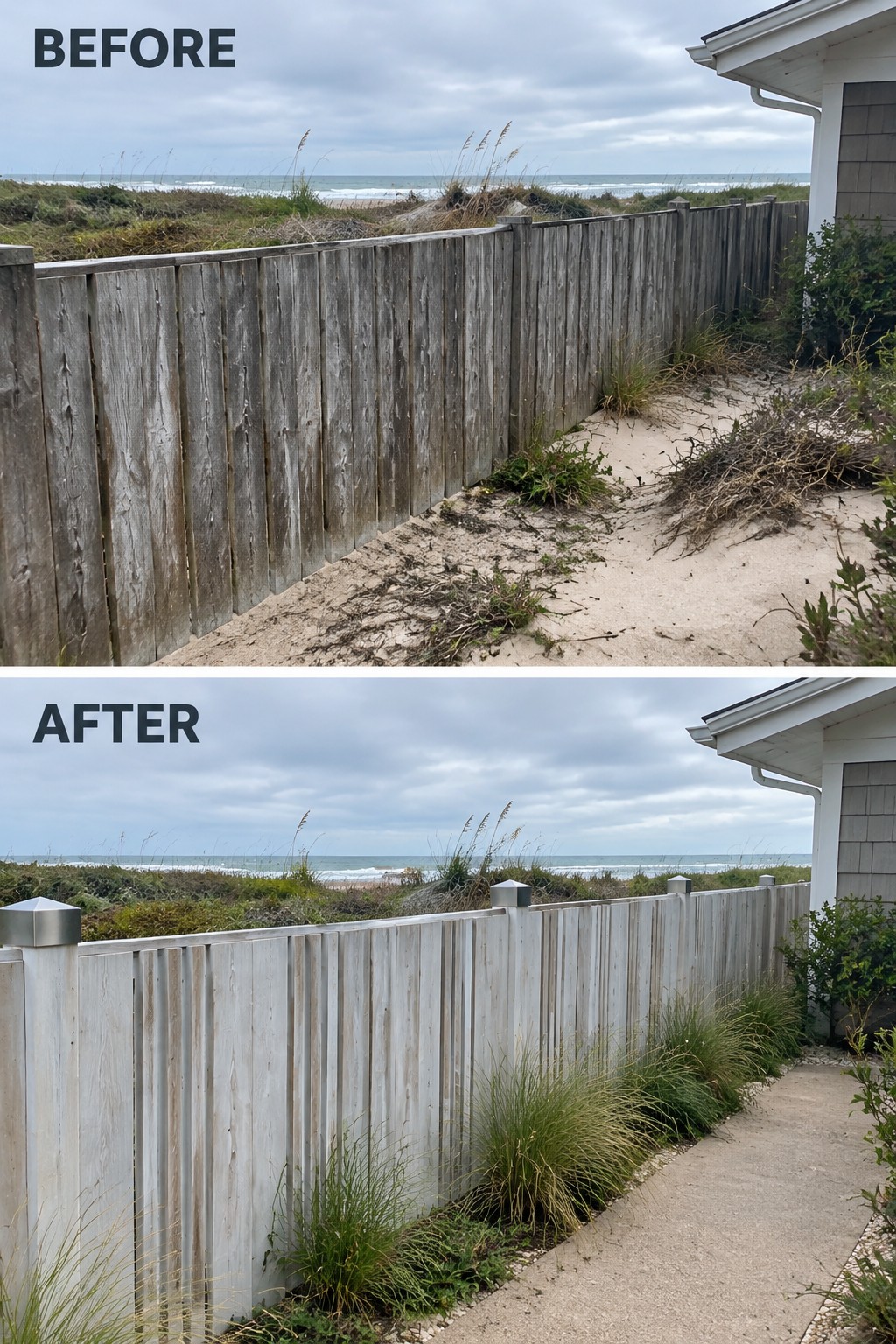
Replacing a weathered fence and clearing the overgrown strip beside it gives this narrow side yard a cleaner, more cared-for look. The light fence keeps the boundary simple, while a few grasses add a neat edge without hiding it.
This idea suits a side yard where the fence is the main feature and space is limited. Start by removing weeds and debris, then choose plants that stay a manageable size so the path remains easy to use.
Make A Narrow Side Yard More Welcoming

A plain privacy fence can do more than block a view. Here, varied-width boards give the narrow side yard a more considered look, while the gate still provides a clear route through the space.
For a similar update, keep the fence design simple and use a few planters to make the area feel cared for without crowding the walkway. It works especially well in a side yard where there is little room for furniture or larger landscaping.
Build A Clean Garden Bed Along The Fence
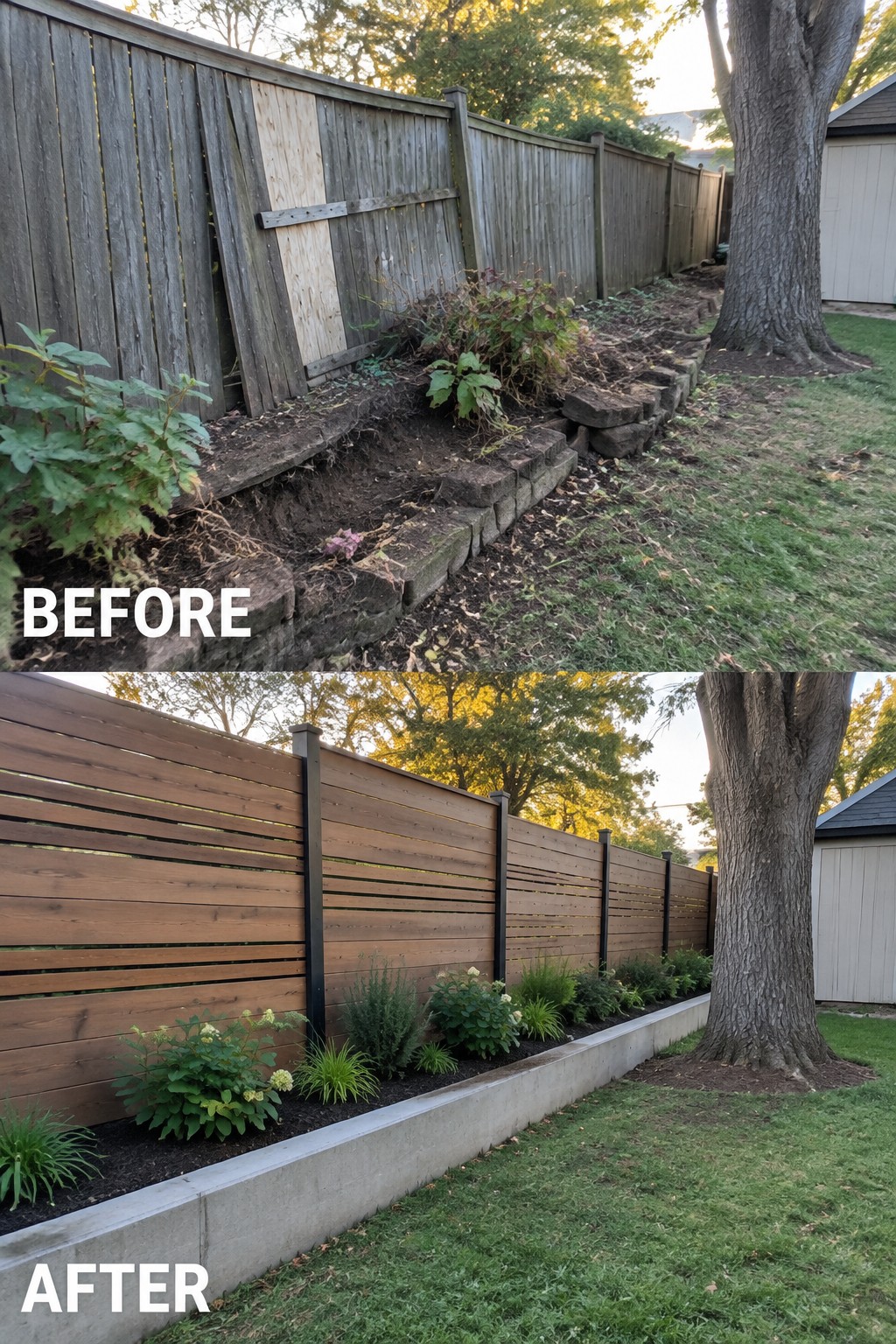
An overgrown fence line can make a yard feel neglected, even when the lawn is in decent shape. Replacing the uneven old border with a straight raised bed gives the planting a clear edge and makes the whole area look more orderly.
For a similar result, clear out weeds and dead growth first, then choose a simple edging material that suits your yard. Keep the plants spaced along the fence so they have room to grow without crowding the lawn.
Create Order With Clearly Defined Garden Beds

The garden feels easier to manage once the beds and paths have clear edges. In the updated yard, a taller wood fence also gives the planting area a more consistent backdrop, while the raised beds keep vegetables from spreading into the gravel path.
For a similar yard, start by clearing out overgrowth, then decide where beds should end and walking space should stay open. A defined layout works especially well in a narrow garden, where leaving enough room to move matters as much as fitting in plants.
Turn A Narrow Balcony Into A Private Seating Area
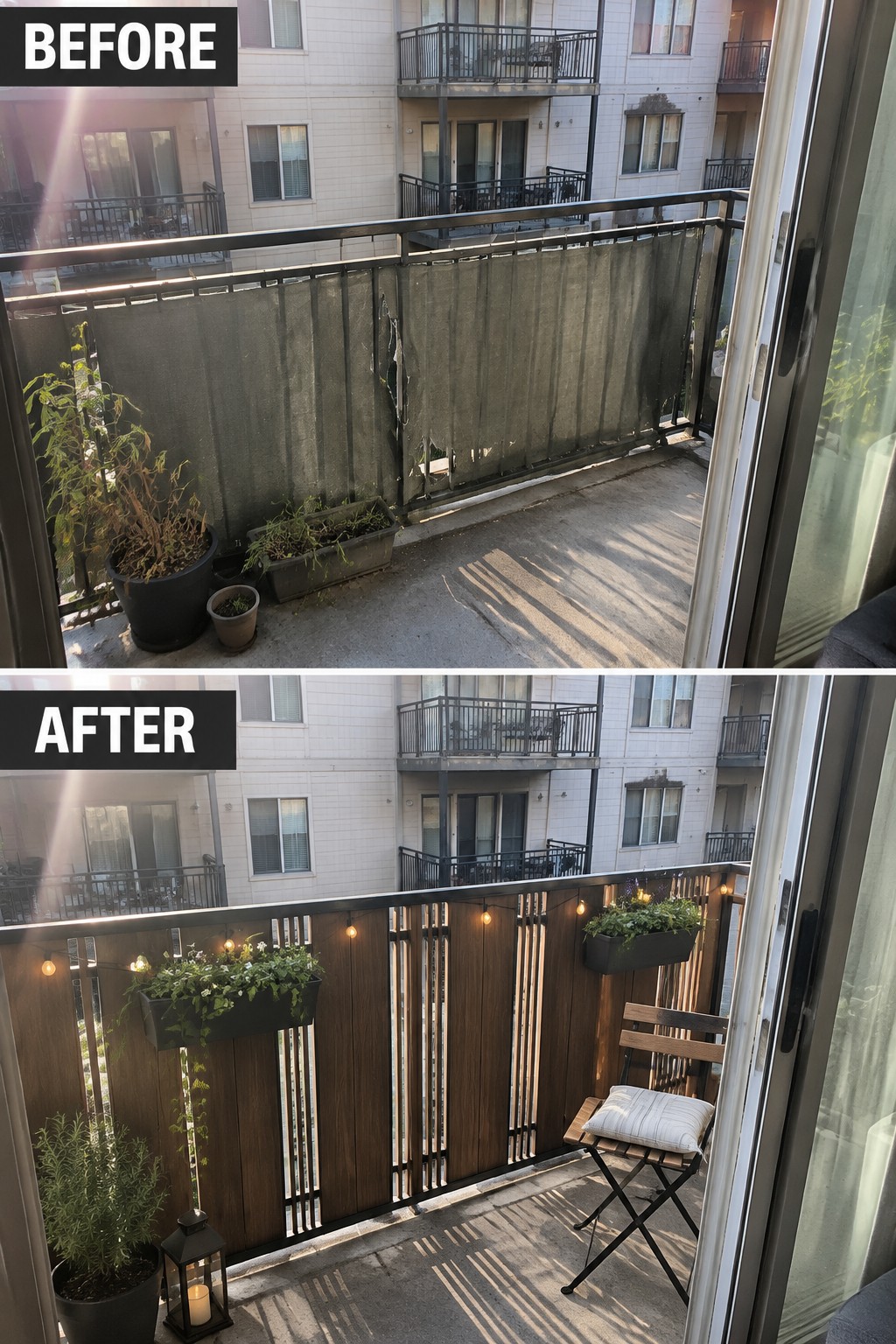
The worn balcony screen made this small space feel unfinished and exposed. Replacing it with a wood fence made from alternating panel widths gives the balcony more privacy while still letting a little light through the narrow gaps. A simple chair is enough to make the space usable.
This idea works well on apartment balconies where a full, solid barrier might feel too closed in. Keep the furniture compact and leave a clear path to the door, so the added privacy does not crowd the space.
Frequently Asked Questions
Q: Do alternating panel widths work on a small yard fence?
A: Yes. A mix of narrow and wide boards can add detail without taking up extra space. Keep the color and layout simple so the fence doesn’t make a small yard feel busy.
Q: How do I keep the spacing even when I build the fence?
A: Plan the pattern on paper first, then mark each board position on the rails before attaching anything. A spacer cut to the gap you want helps keep the openings consistent as you work.
Q: Can I use alternating widths for a horizontal fence?
A: Absolutely. Horizontal boards make the width changes especially easy to notice, so repeat the pattern across each section and line up the joints. And check the boards for bowing before you install them.
Q: What finish works well with this design?
A: A clear or lightly tinted stain lets the different board widths stand out while keeping the wood grain visible. Paint gives the fence a cleaner, more graphic feel.
