

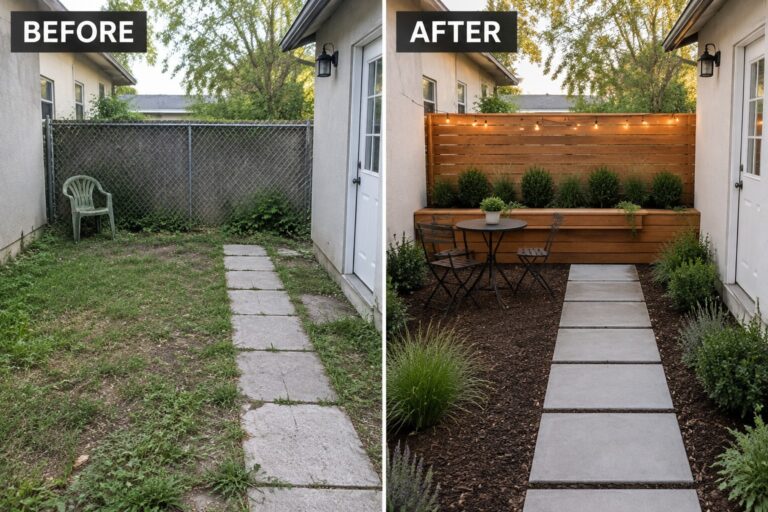
A courtyard can feel exposed or unfinished when its boundaries offer little privacy and do not connect with the home’s style.
I find that a well-chosen fence can bring the layout into focus while making the space more comfortable to use.
The right design can soften a stark edge, add useful screening, and give planting or seating a clearer place to sit.
Even a modest change in materials or spacing can make the courtyard feel more considered.
I’d look for ideas that suit the home, local conditions, and the level of privacy you actually need, then adapt the details to fit.
Some of these designs are worth saving as a starting point for a courtyard that feels more settled and usable.
Add Privacy To A Small Courtyard
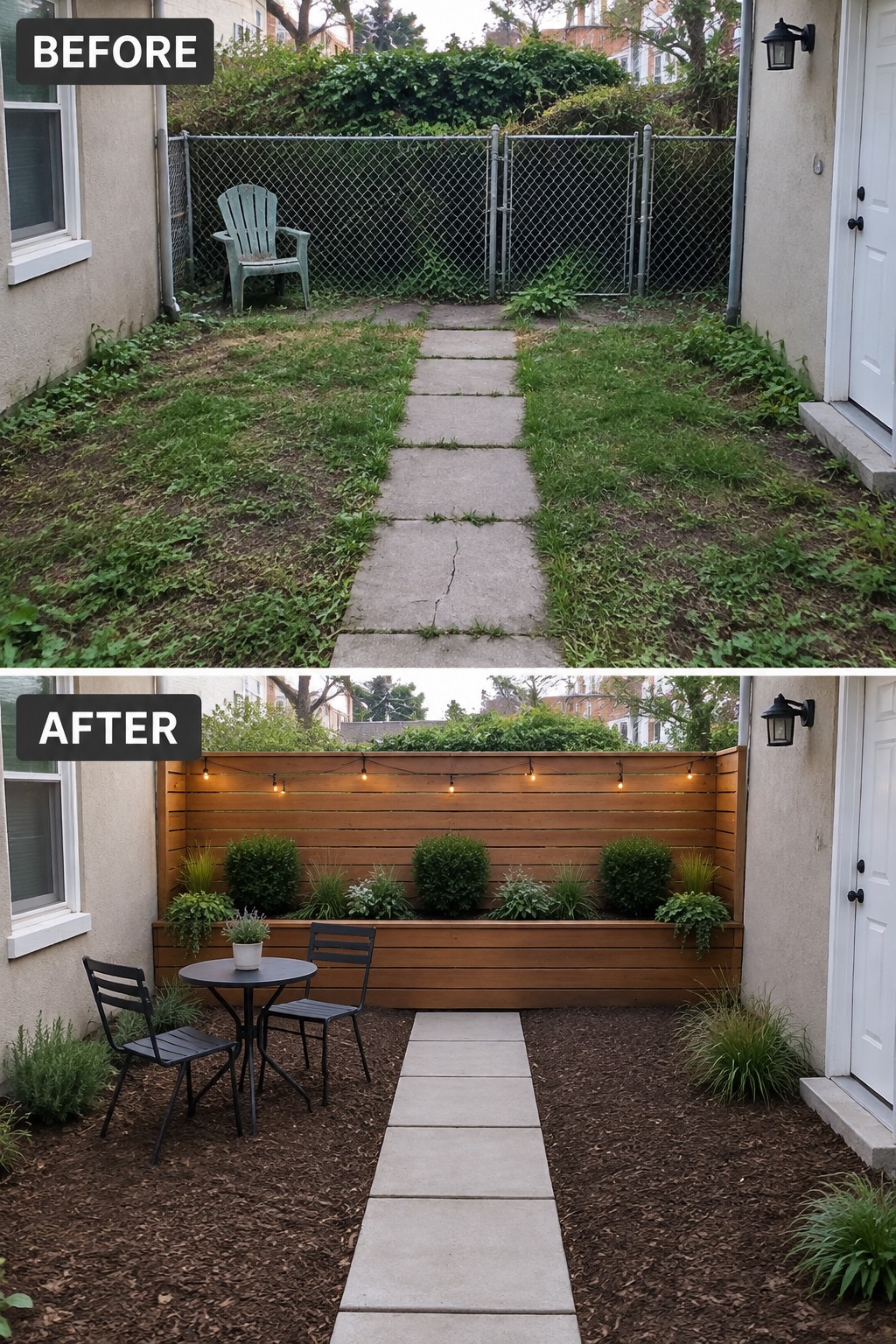
A simple privacy screen can make a narrow yard feel more settled and usable. Here, a solid horizontal fence replaces chain link, giving the courtyard a clear backdrop without taking up much floor space.
For a similar look, use a fence style that suits the scale of your yard, then keep the planting along it fairly tidy. In a small courtyard, a defined edge can make the space feel more private without blocking the path or crowding the seating area.
Use A Modern Fence To Add Privacy
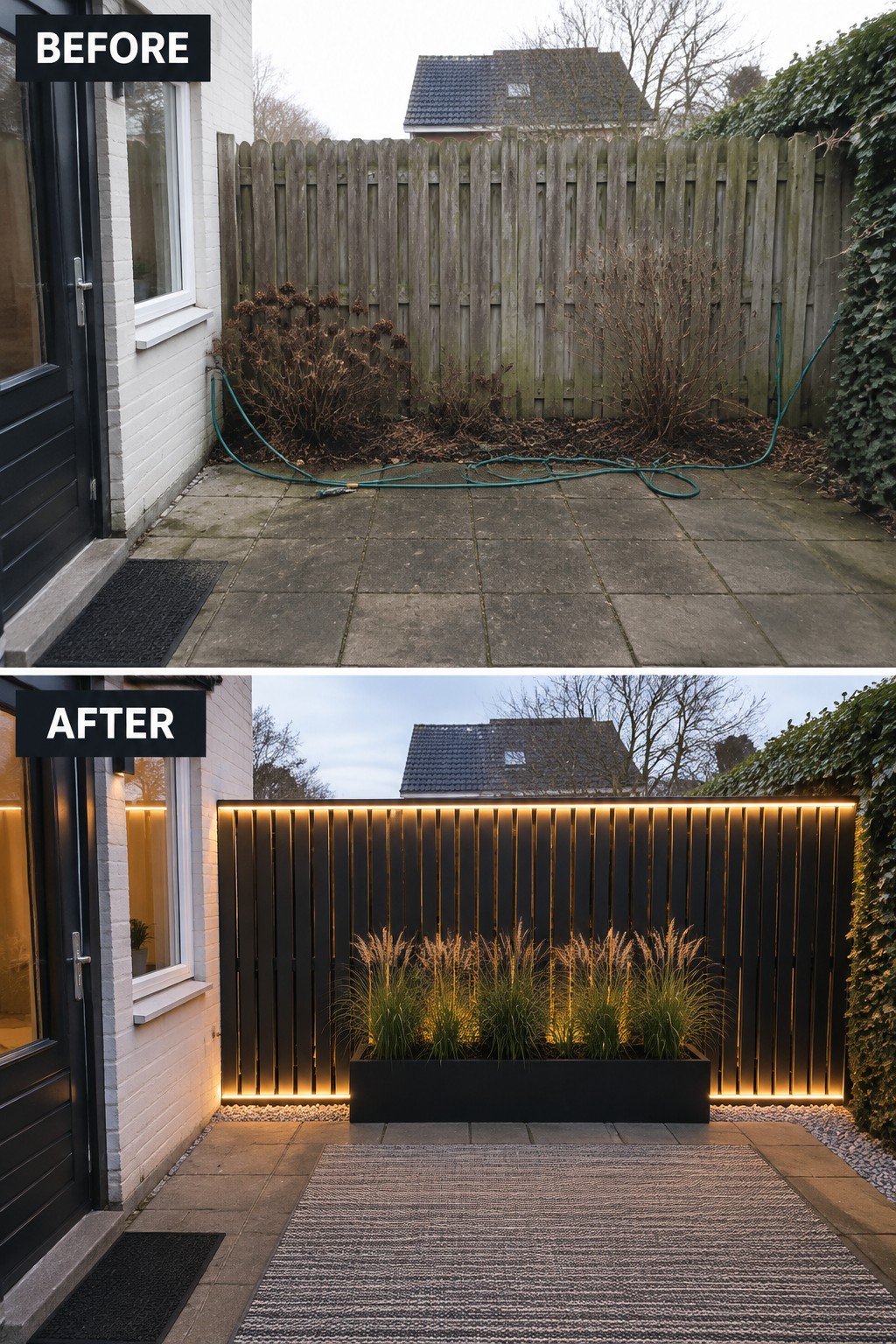
Replacing a weathered fence with a clean-lined design gives this small patio a more private, finished feel. The dark vertical boards create a simple backdrop, while warm integrated lighting makes the fence useful after dusk.
This idea works well in a compact courtyard where the fence is always in view. Choose a finish that suits the house, and keep the planting in front low enough that it does not hide the new fence or block the light.
Turn A Bare Patio Into A Seating Area
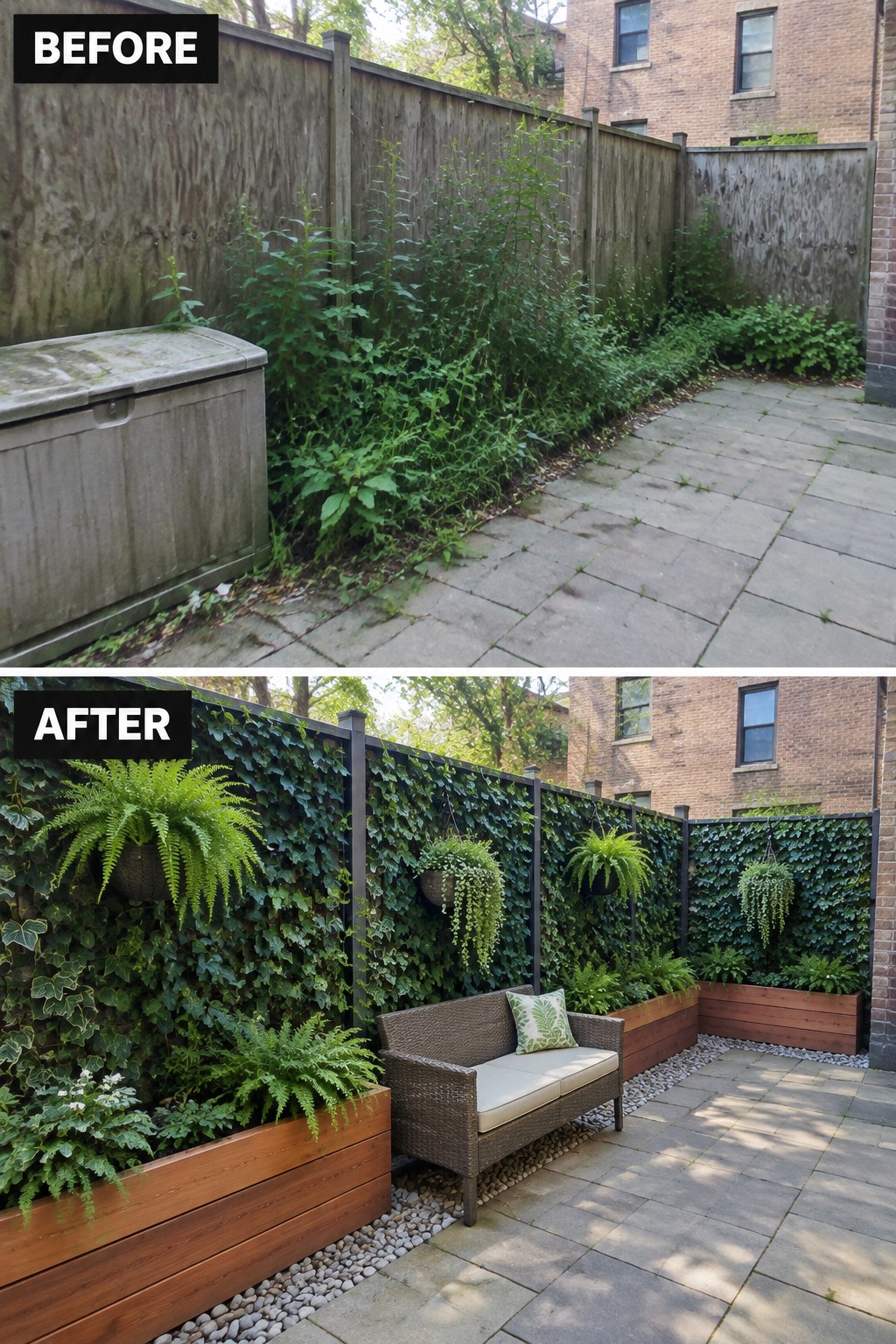
The overgrown fence line made this patio feel neglected and left little room to enjoy it. Clearing the growth and adding a compact seat turned the paved area into a simple outdoor living space.
For a small courtyard, use the fence to create privacy and keep seating to a scale that leaves a clear path. Raised planters can help contain greenery, but avoid letting them crowd the spot where people sit.
Add Privacy With A Decorative Fence

A decorative fence can make a small courtyard feel more private without leaving it closed off. Here, the plain timber fence is replaced with rust-colored panels that screen the yard while letting some light and greenery show through.
This idea works well in compact courtyards where a solid fence might feel imposing. Choose a pattern that suits the home, and keep the planting simple so the fence remains the main feature.
Add Privacy To An Outdoor Seating Area
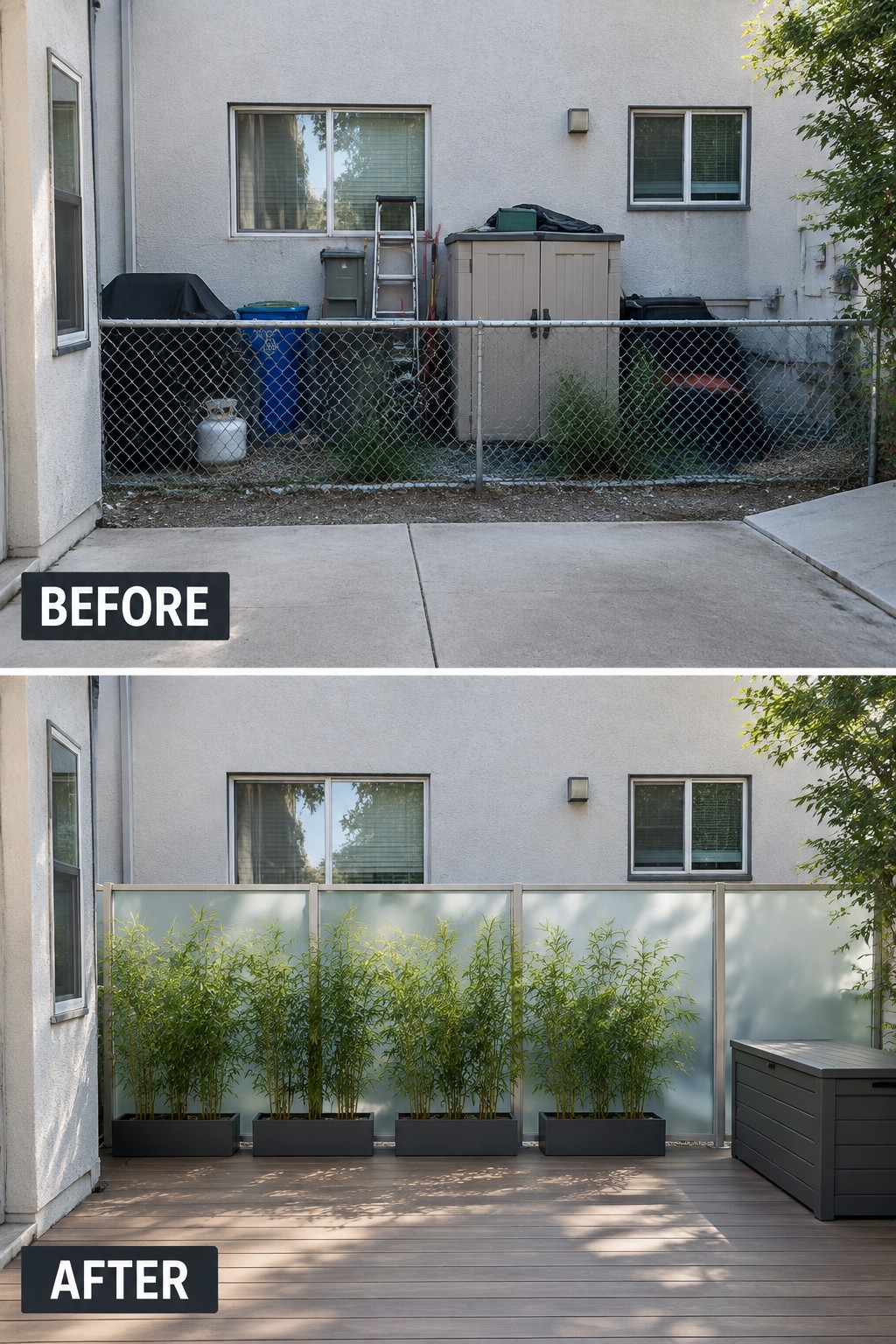
A plain chain-link fence can leave a courtyard feeling exposed and cluttered. Replacing it with a modern screen fence makes the patio feel more private and gives it a cleaner edge; frosted panels let in light without leaving the space fully open.
For a similar look, choose fence panels that suit the size of your yard, then add a few planters to bring greenery along the boundary. Keep enough room to move around the seating area, especially in a narrow courtyard.
Create A More Private Courtyard
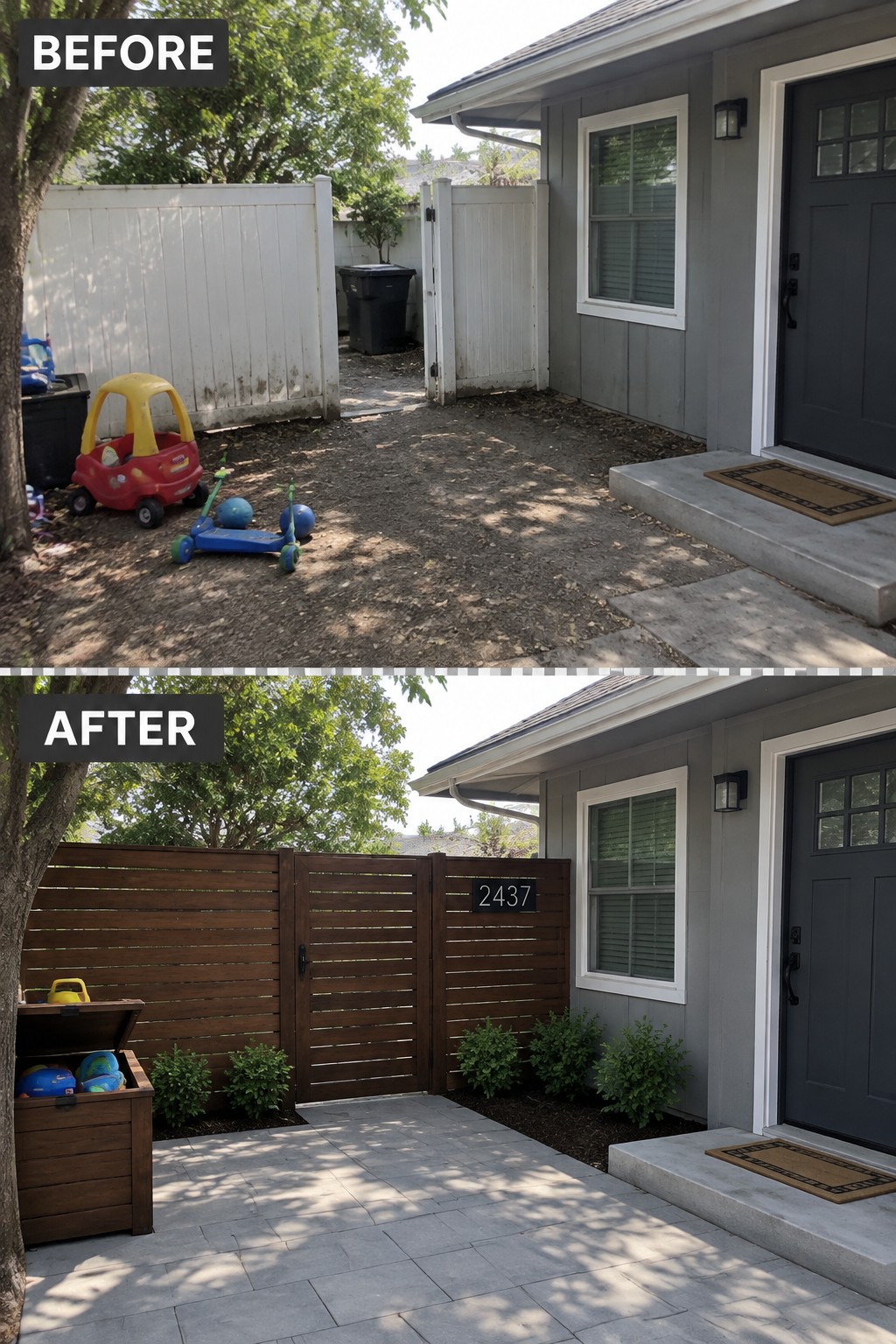
A solid horizontal-slat fence turns this bare side yard into a more sheltered courtyard. Replacing the old, open gate with a matching fence and gate gives the space a clearer boundary and makes the entry feel more finished.
This approach works well in a narrow side yard where privacy matters but there is little room for added features. Keep the gate wide enough to use comfortably, and leave a clear paved path so the courtyard stays easy to move through.
Use A Gravel Surface To Give A Courtyard Structure
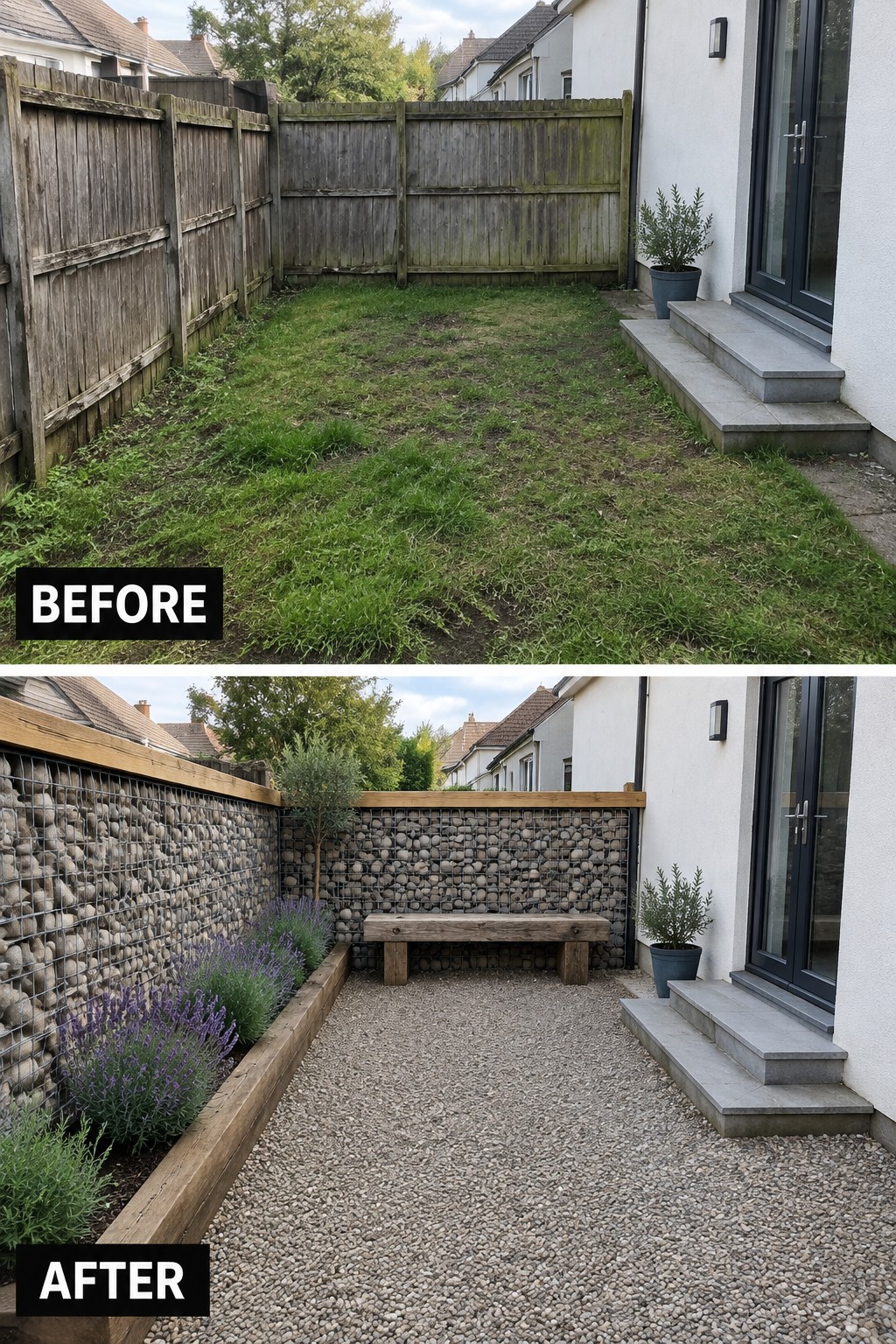
Replacing patchy grass with gravel gives this small courtyard a cleaner, more usable base. The defined surface makes the space feel planned, while the gabion fence provides privacy without relying on a solid panel fence.
For a similar yard, clear the existing ground and mark out the gravel area before adding plants or seating. Keep a planted border along one side so the hard surface does not take over, and leave an easy route to the door.
Create A Private Courtyard Seating Area
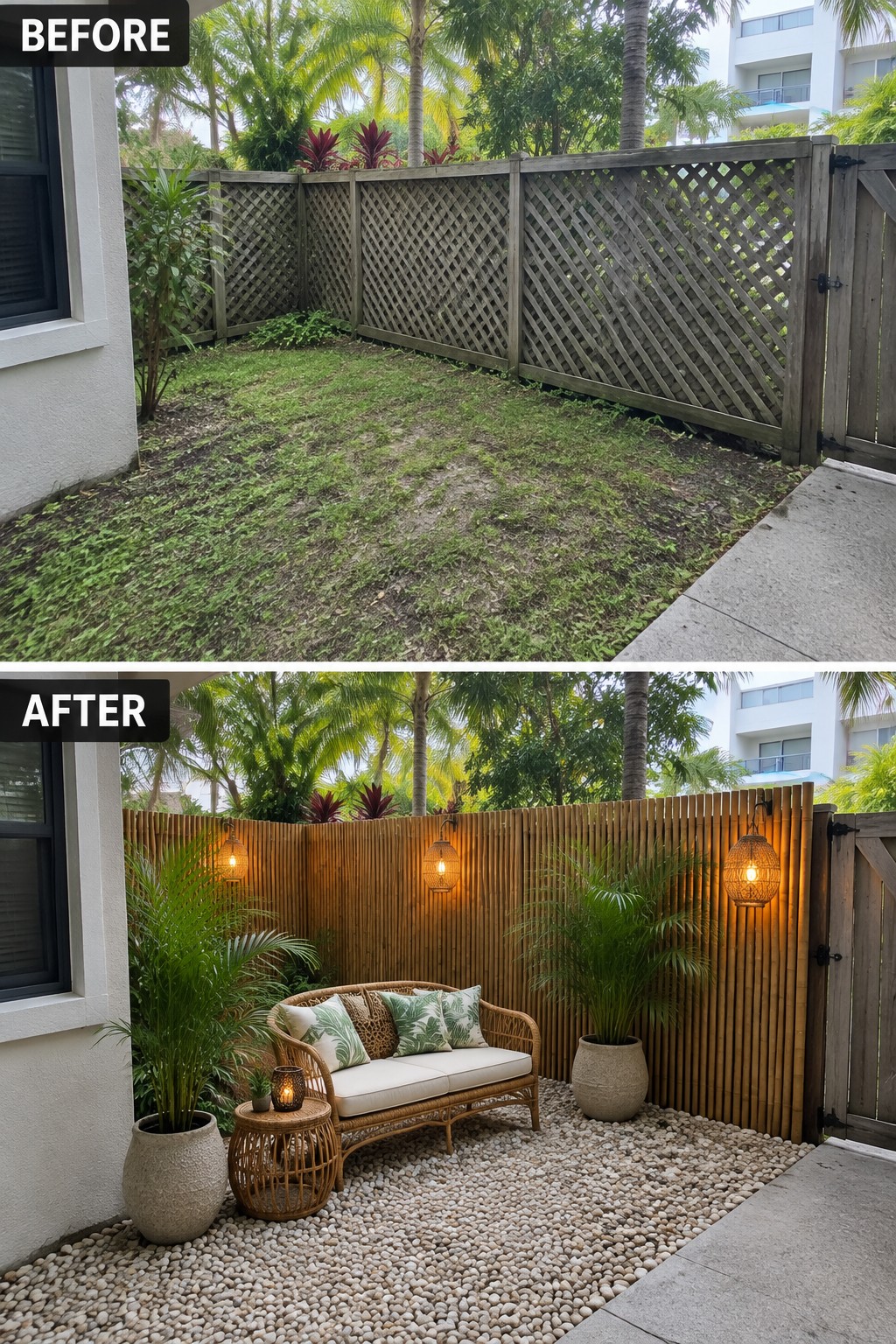
A bare courtyard is easier to use when the fence gives it a more private feel. Here, bamboo screening covers the old lattice, and the gravel ground helps the small space feel like a defined place to sit rather than an unused patch of yard.
For a similar courtyard, choose screening that suits the existing fence and leave enough room to move around the seating. A compact sofa or a pair of chairs is usually plenty; weather-resistant pieces will hold up better outdoors.
Replace A Worn Fence With A Modern Privacy Screen

An old solid fence can make a small courtyard feel closed in. Replacing it with a horizontal screen that has narrow gaps keeps the boundary private while letting in some light and greenery.
This approach works well where space is tight and a full-height fence is needed. Keep the design simple, and check that the openings still provide enough privacy from nearby homes.
Replace A Worn Fence With A More Durable Design

The old fence left the courtyard looking untidy, while the new horizontal boards and dark posts give it a cleaner, more finished edge. A solid base of stone also makes the fence feel like part of the yard rather than a quick patch.
For a similar update, choose weather-resistant boards and sturdy posts, and keep the fence height suited to the privacy you need. If you add a stone base, make sure it fits the grade and leaves the fence secure.
Turn A Bare Courtyard Into A Seating Area

An unused concrete courtyard can become a practical outdoor room with a clear place to sit. Here, a fire table and a few chairs give the patio a purpose, while the decorative fence panels provide privacy without making the space feel closed in.
For a similar setup, choose compact, weather-resistant seating and leave enough room to walk comfortably. A small courtyard does not need much furniture; a simple seating arrangement and a defined privacy screen can make it far more useful.
Replace A Plain Fence With A Garden Backdrop
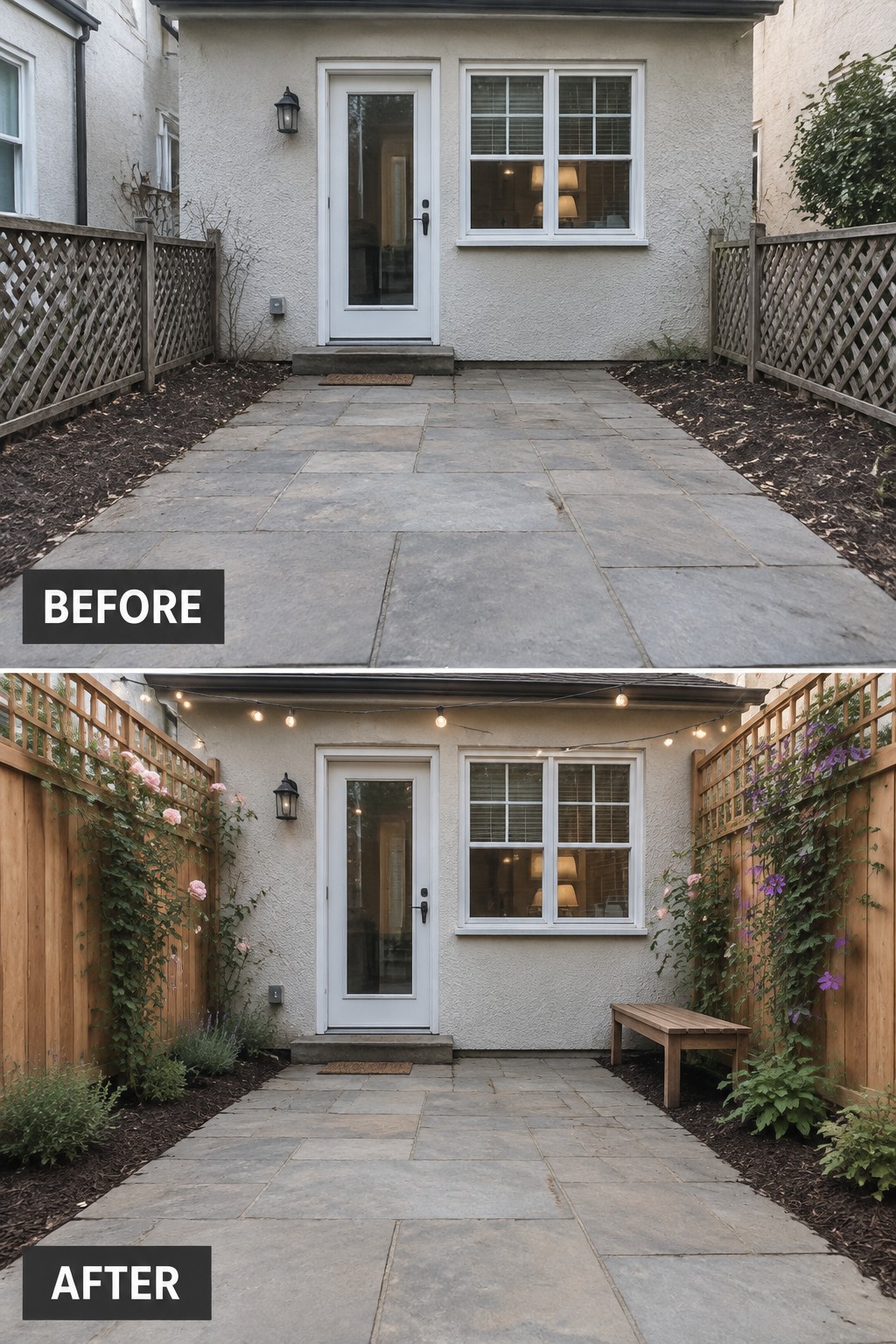
The courtyard feels more settled after the plain lattice is replaced with taller wood fencing and climbing plants. The fence gives the narrow space a clearer boundary, while the greenery keeps it from feeling bare.
This idea works well in small courtyards where nearby walls or windows make privacy important. Choose a fence style that suits the house, then add plants suited to the amount of sun and room available. Leave enough space along the path to move comfortably.
Use A Modern Fence To Define A Courtyard Seating Area
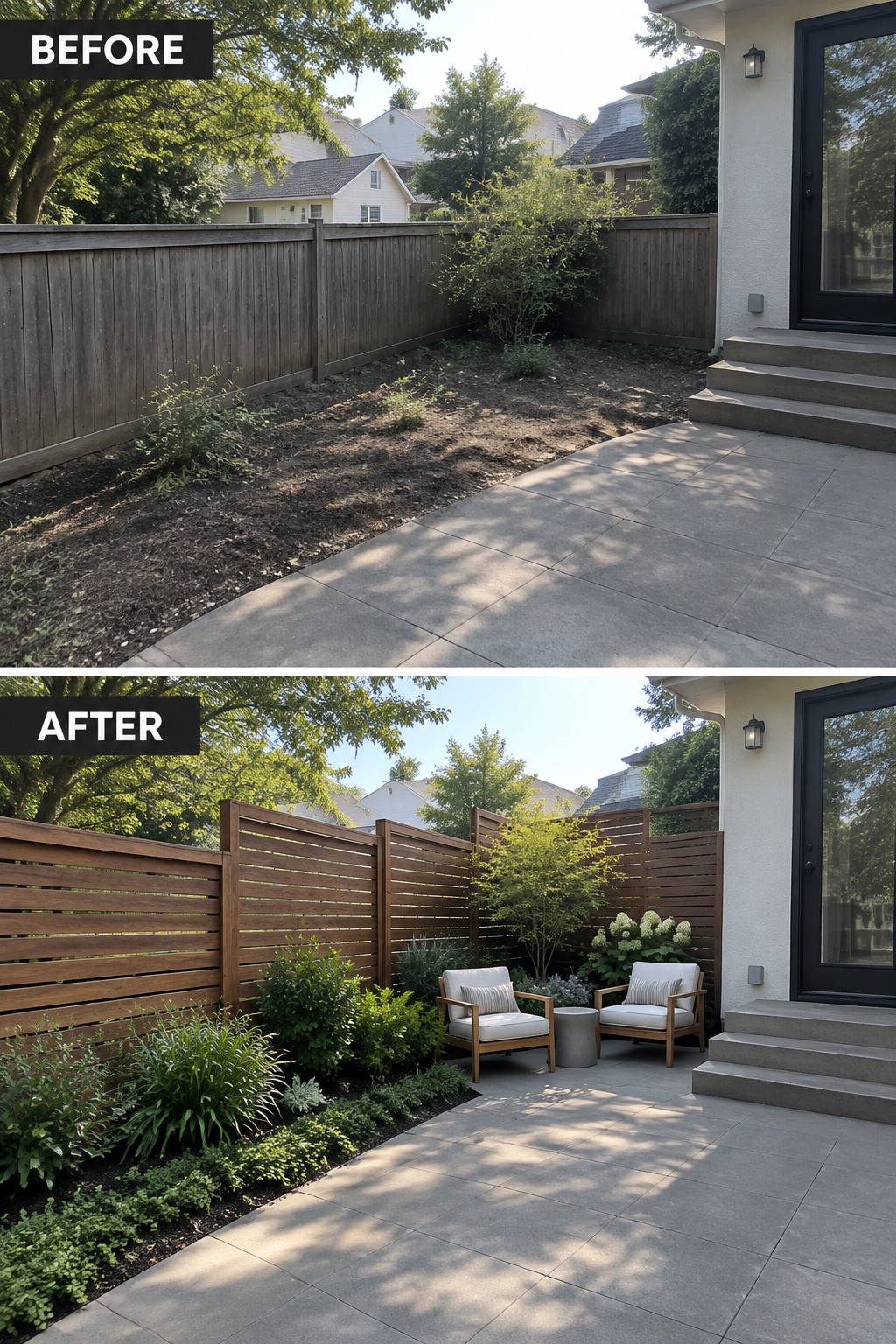
A plain, worn fence can make a courtyard feel unfinished. Replacing it with a horizontal slat fence gives the yard a cleaner look and makes the patio feel more like a usable outdoor room. Here, a pair of chairs tucked beside the new fence turns an empty corner into a simple place to sit.
This idea works well in small courtyards where privacy and seating need to fit into the same footprint. Choose a fence finish that suits the house, then keep the seating compact so there’s still room to move around.
Turn A Plain Courtyard Into A Comfortable Seating Area
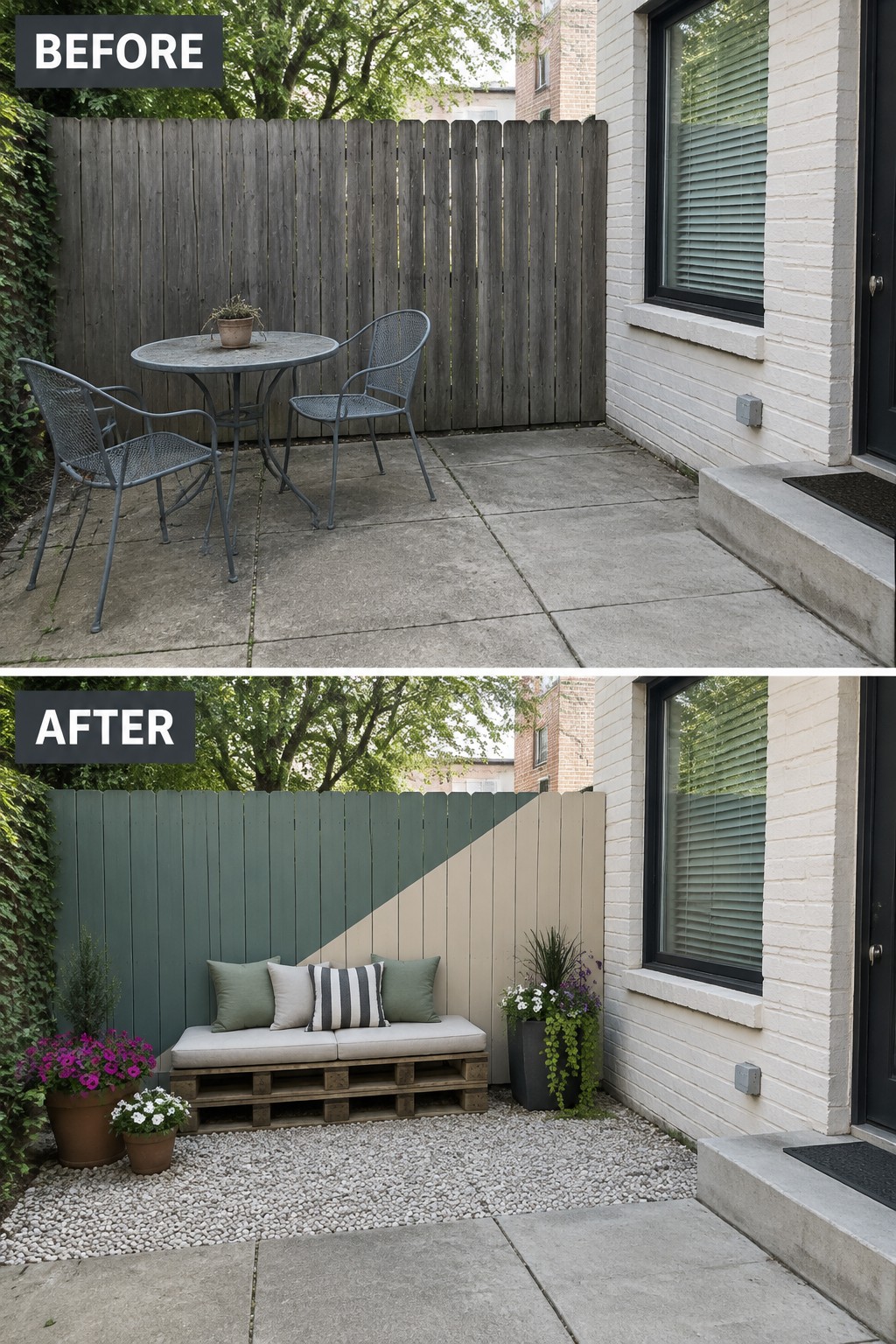
A small courtyard can feel much more useful when the fence and seating work together. Here, a fresh two-tone fence gives the space a clear backdrop, while a simple bench replaces the scattered café set and makes the patio feel like one place to sit.
For a similar setup, choose a bench that fits the fence without blocking the path, then use a few weather-safe cushions for comfort. A gravel section can also separate the seating nook from the existing paving, but keep the layout simple so the courtyard still has room to move around.
Turn A Bare Courtyard Into A Private Seating Area
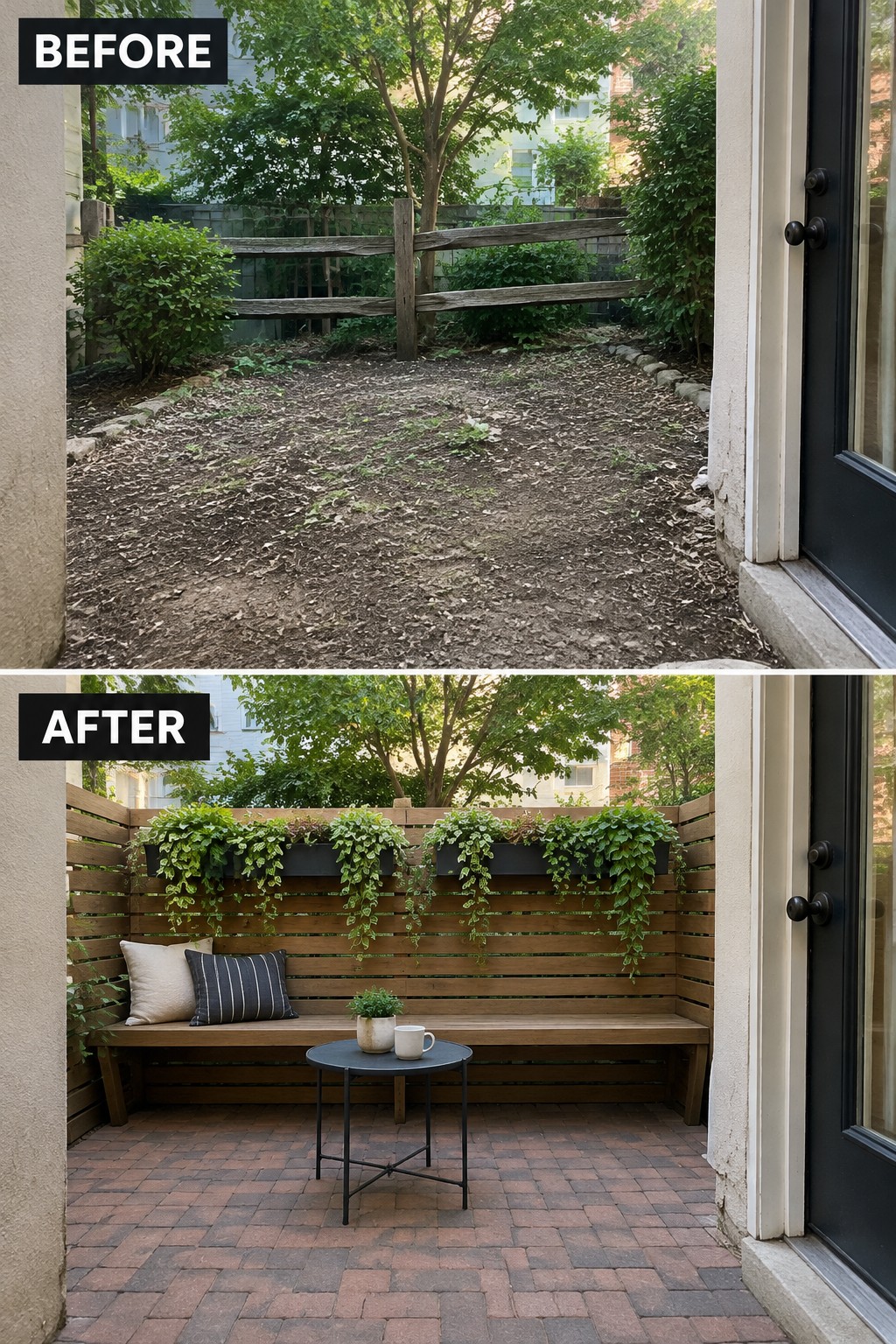
A bare courtyard can feel like leftover space, especially when an old fence offers little privacy. A slatted fence makes a clearer boundary, and a built-in bench turns the small yard into a place to sit.
This works well in narrow courtyards where separate chairs might crowd the floor. Keep the bench close to the fence and leave enough open space to move around; weatherproof cushions and a few planters can finish the area without making it feel cramped.
Replace Chain Link With A Privacy Fence
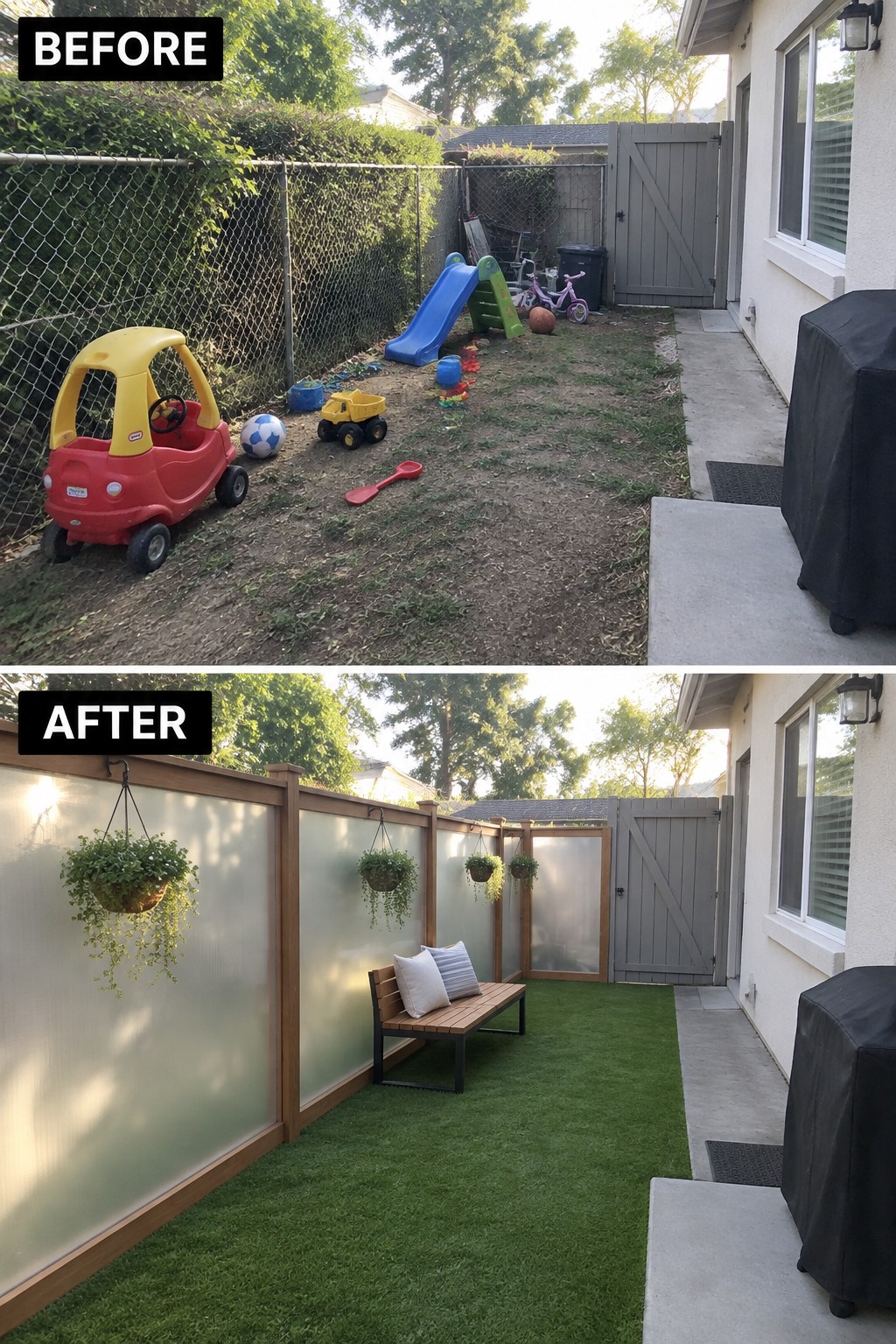
A chain-link boundary can leave a small courtyard feeling exposed and unfinished. Replacing it with a fence that has opaque panels gives the yard more privacy and makes it feel like a defined outdoor room.
For a similar update, choose a fence style that suits the house and still lets the space feel open enough. A small bench can make the newly private area useful without taking up too much room.
Give A Small Courtyard More Privacy
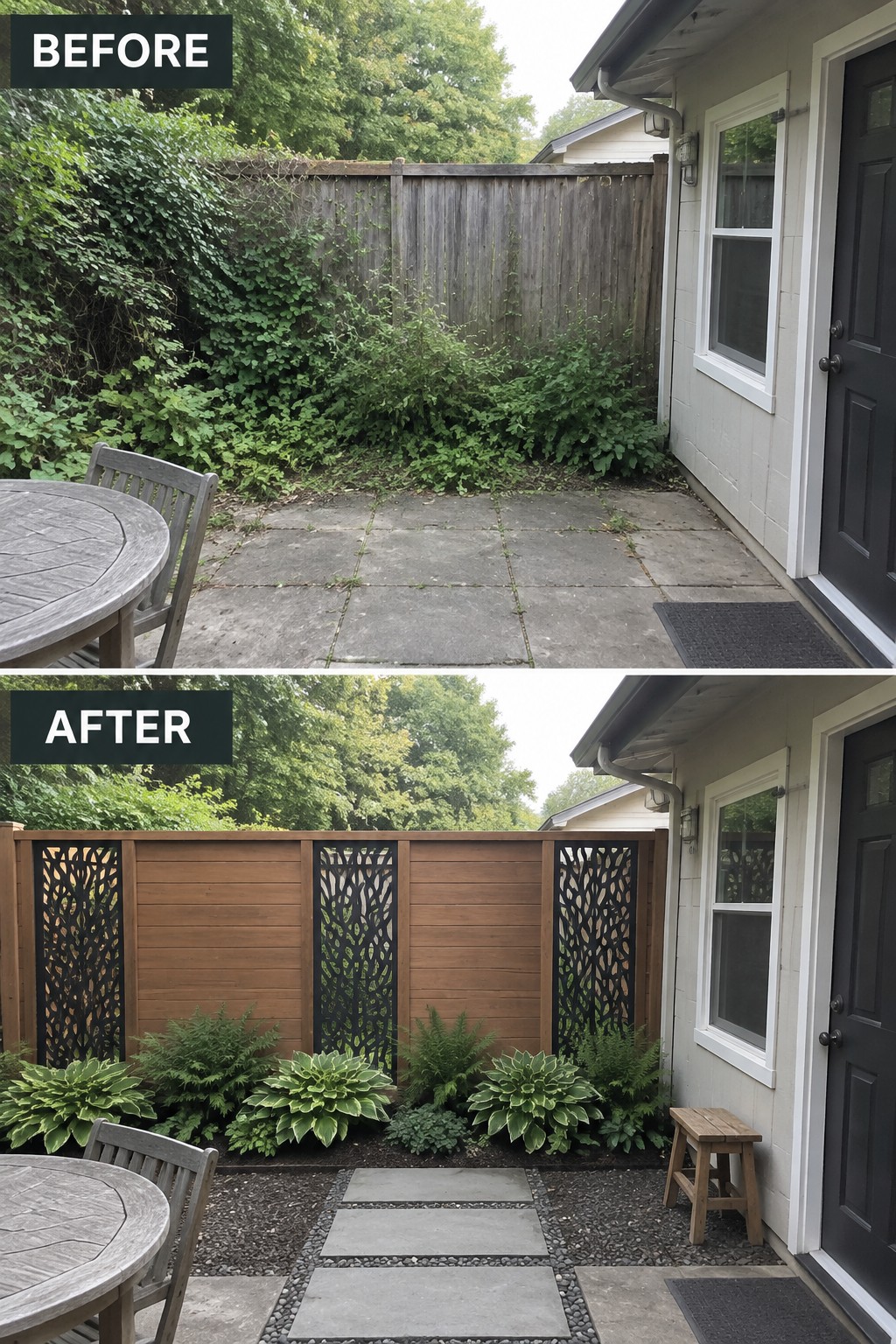
A modern privacy fence can make a small courtyard feel more usable without changing its footprint. Here, a weathered boundary fence gives way to warm horizontal boards with narrow decorative panels, creating a cleaner backdrop and screening much of the overgrown edge.
For a similar effect, choose a fence height that suits your privacy needs, then keep the planting simple so the courtyard does not feel crowded. This approach works well in compact spaces where a clear boundary can make the patio feel more settled.
Turn A Bare Patio Into An Outdoor Dining Area
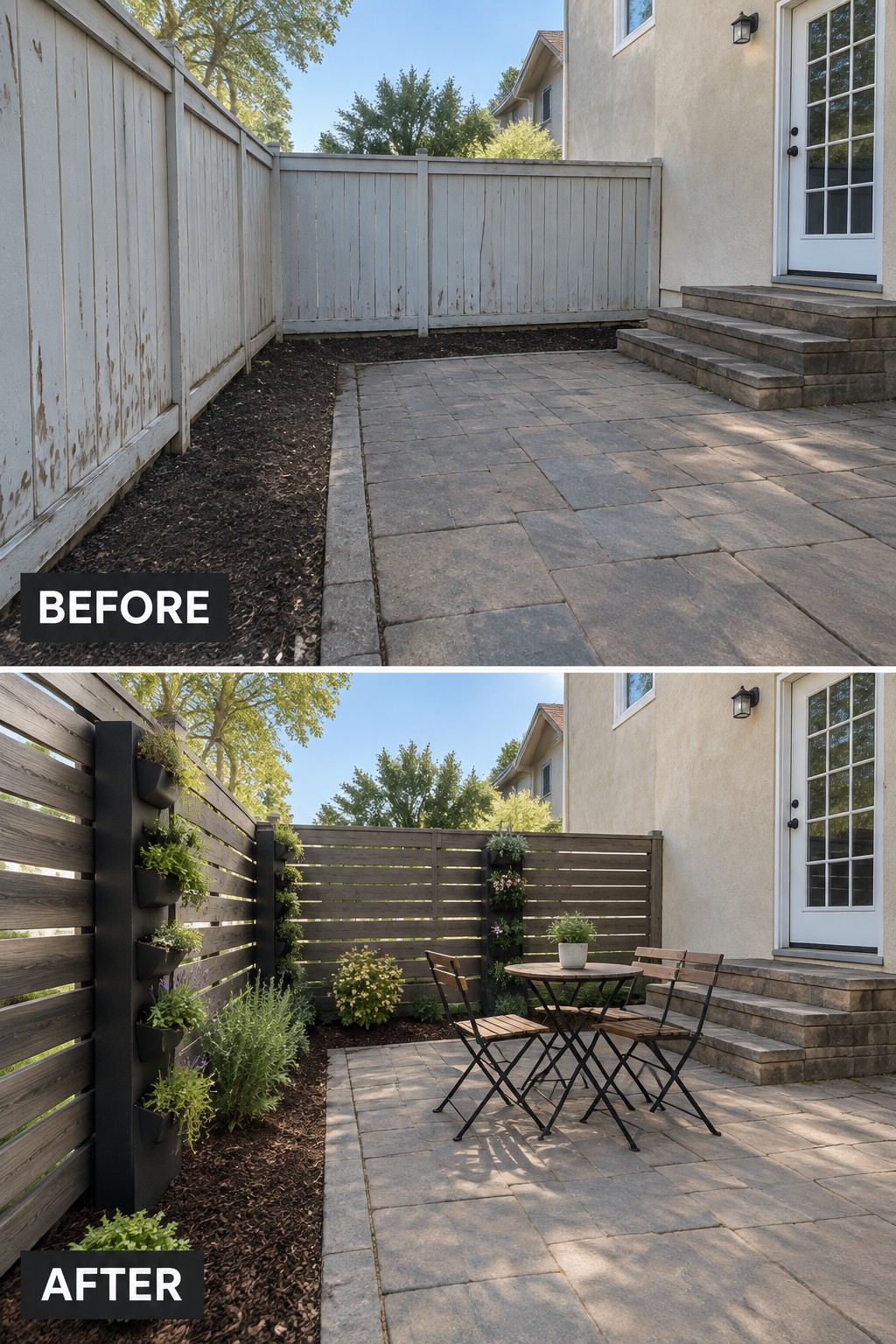
A small patio can feel much more useful once it has a clear place to sit and eat. Here, a compact table and chairs turn unused paving into an outdoor dining spot, while the slatted fence gives the courtyard a more finished backdrop.
For a similar space, choose furniture that leaves a clear route to the door and around the table. A narrow patio does not need much: a small dining set can make it practical without crowding the paving.
Use Defined Garden Beds To Give A Courtyard Structure
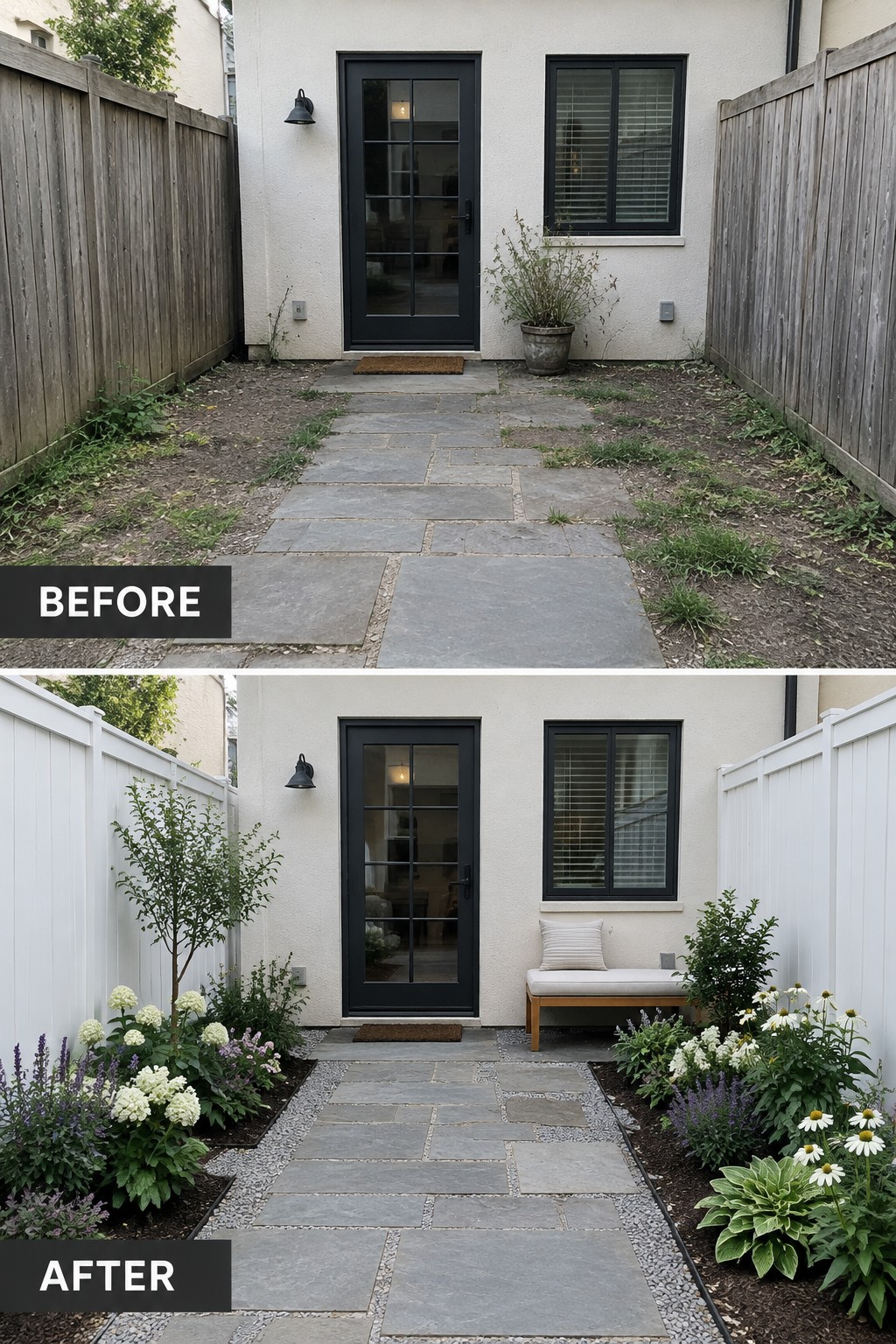
A clear path can make a small courtyard easier to use, but the planting around it matters too. Here, simple stone paving stays in place while defined beds replace the bare, patchy edges with a more considered garden.
Keep the path wide enough to walk comfortably, then use low borders and a few repeating plants to give the beds a tidy shape. This approach suits narrow side yards and enclosed courtyards where there isn’t much room for extra features.
Give A Small Courtyard A Clear Boundary

An overgrown fence can make a small courtyard feel neglected and exposed. Replacing it with a clean-lined privacy fence gives the patio a clear edge and makes the space feel more planned, without changing the paving.
This idea works well in compact courtyards where a full garden redesign is not practical. Choose a fence style that suits the house, and keep any planting along the base low enough to avoid crowding the patio.
Frequently Asked Questions
Q: How do I keep a modern fence from making a small courtyard feel closed in?
A: Choose slim slats, open metalwork, or gaps between panels so light can pass through. A lower fence or a mix of solid and open sections can give you privacy without boxing in the space.
Q: What fence material works well with a contemporary courtyard?
A: Wood brings warmth to concrete and stone, while metal gives the yard a cleaner, more structured feel. Think about how much upkeep you’re comfortable with, too. Wood usually needs more regular care than metal.
Q: Can I add privacy without replacing my existing fence?
A: Often, yes. Try adding a screen or climbing plants along the parts where you need more cover. Just leave enough room for plants to grow without blocking gates or walkways.
Q: How can I make a fence look good at night?
A: Add soft, low-level lighting near the posts or along a path beside the fence. It helps show off the fence’s shape and makes the courtyard easier to use after dark.
