

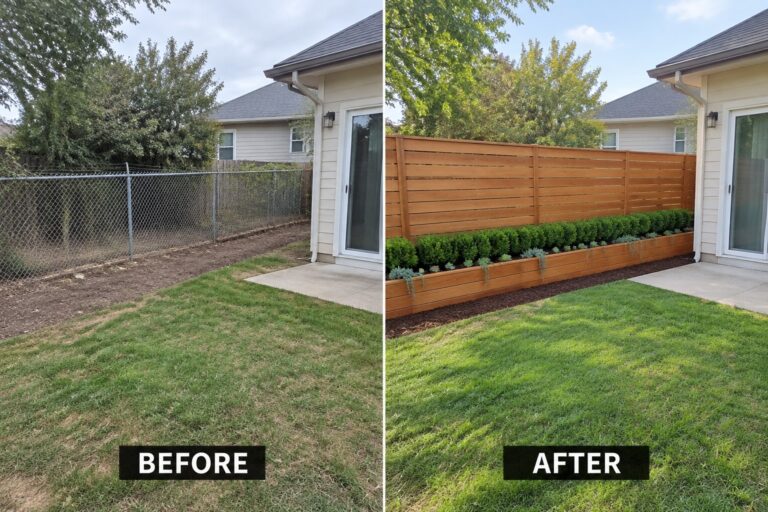
A fence can feel flat or purely functional when it lacks greenery and a clear sense of structure, especially in a yard that needs a little more privacy.
I like how built-in planter boxes give the fence a useful purpose while softening its long lines with flowers, herbs, or trailing plants.
The right design can also help define a seating area, screen an overlooked corner, or make a narrow outdoor space feel more considered.
Even a modest change in height, planting, or layout can make a noticeable difference without requiring a full yard renovation.
Some of these approaches are worth saving and adapting to the fence, light, and growing space you already have.
Add Privacy With A Built-In Planter
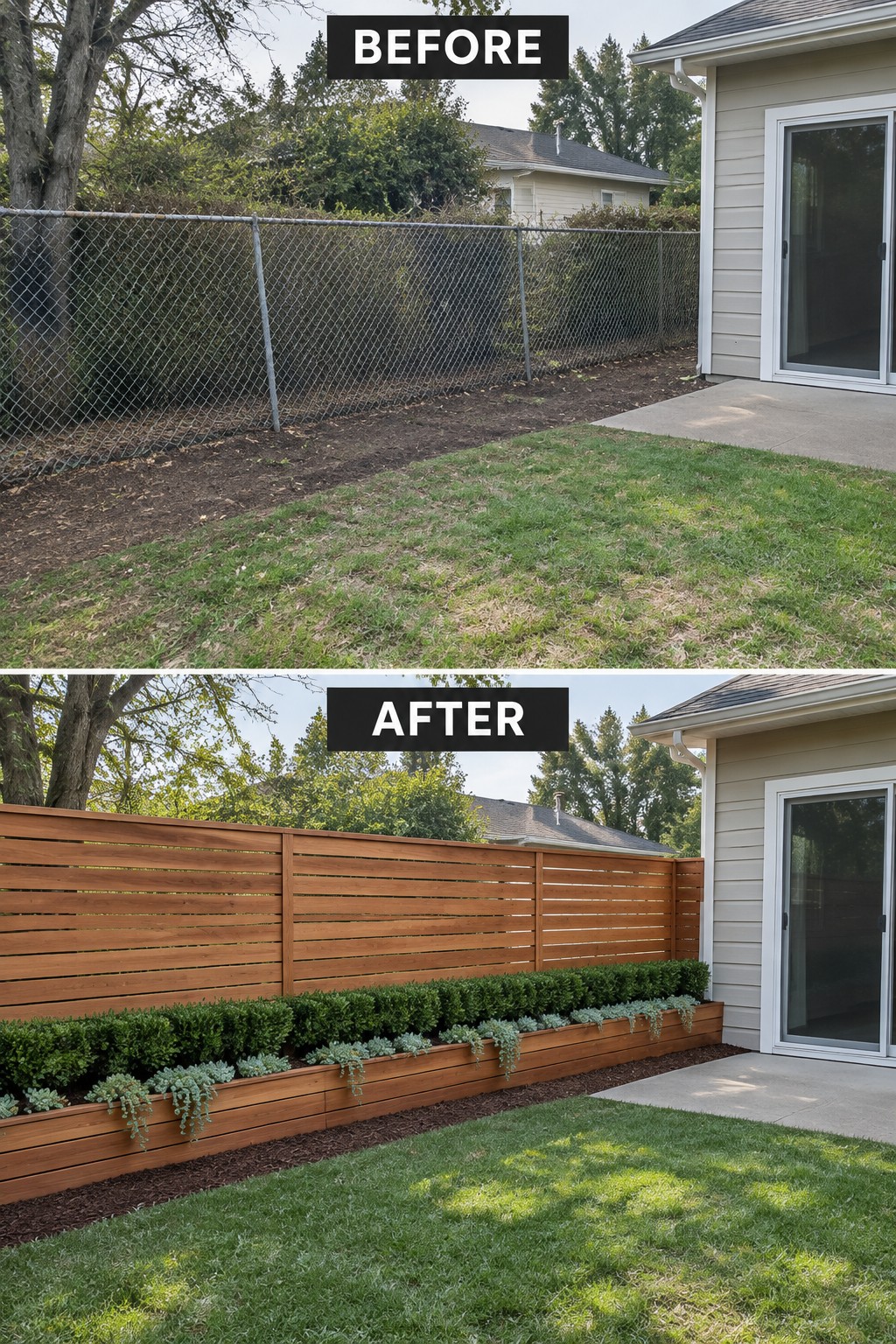
A horizontal wood fence makes this yard feel more private, while the planter box at its base gives the long boundary a finished look. It’s a practical way to make a plain fence feel like part of the garden rather than just a divider.
This idea works well along a property line or beside a patio where privacy matters. Choose plants that suit the amount of sun the area gets, and leave enough room in the planter for them to grow without blocking access along the fence.
Add Planter Boxes To A Plain Fence
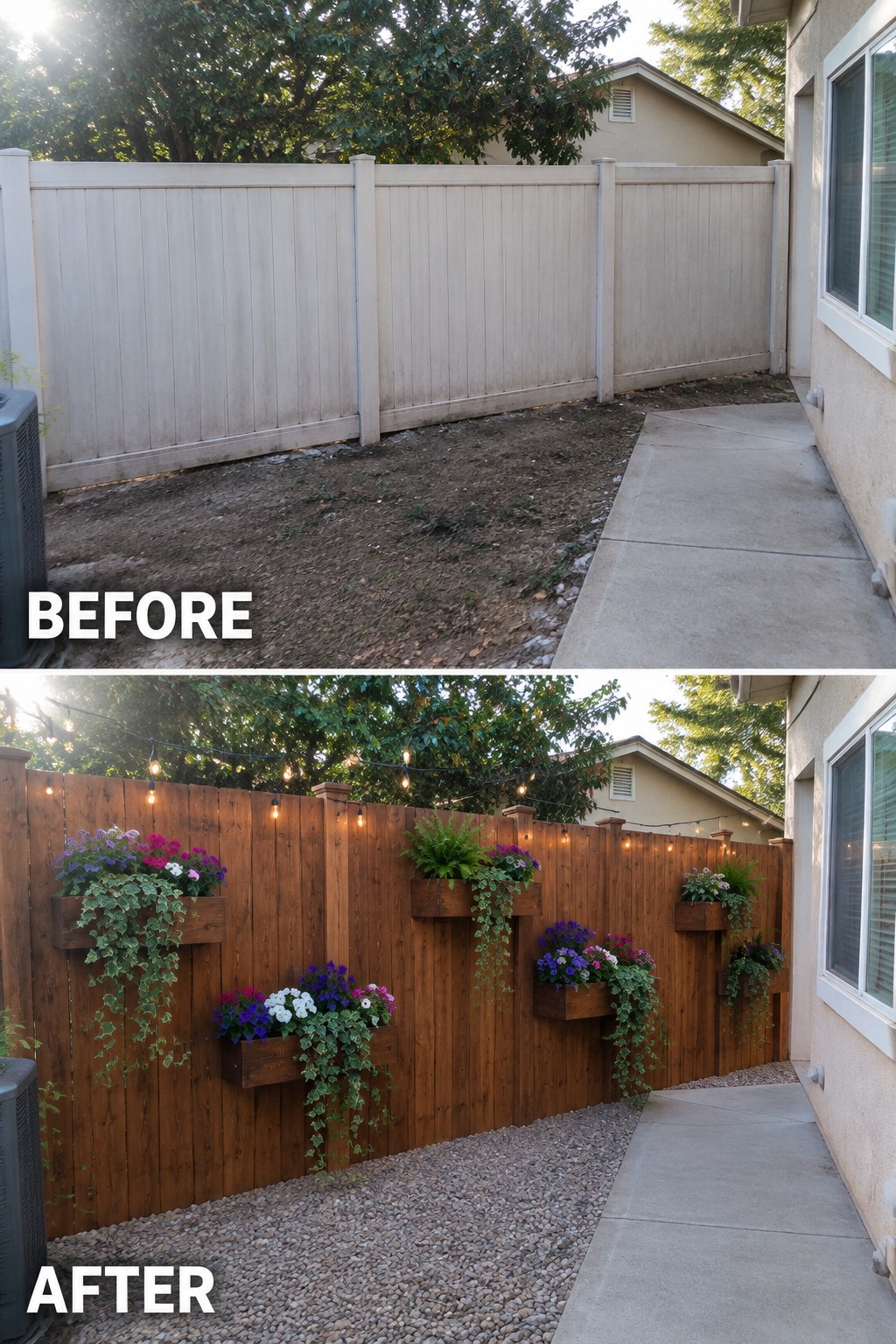
A plain fence can feel more useful when it becomes a place to grow flowers. Here, the bare fence is replaced with warm wood and a few attached planter boxes, giving the narrow yard a clear garden feature without taking up much ground space.
This idea works well in side yards and other tight areas where there isn’t room for large beds. Space the boxes out along the fence, and choose plants that suit the amount of sun they receive. Leave enough room below for a clear path.
Give The Front Entry A Cleaner Look

Replacing the worn brick planter walls with simple concrete ones makes the entry feel neater without changing the porch itself. The built-in beds also give the planting a clear place, so the greenery looks intentional rather than scattered.
This idea suits a front porch where low walls already define the space. Keep the planters in scale with the steps, and choose a few plants that won’t block the walkway or need constant trimming.
Turn A Bare Patio Into A Seating Area
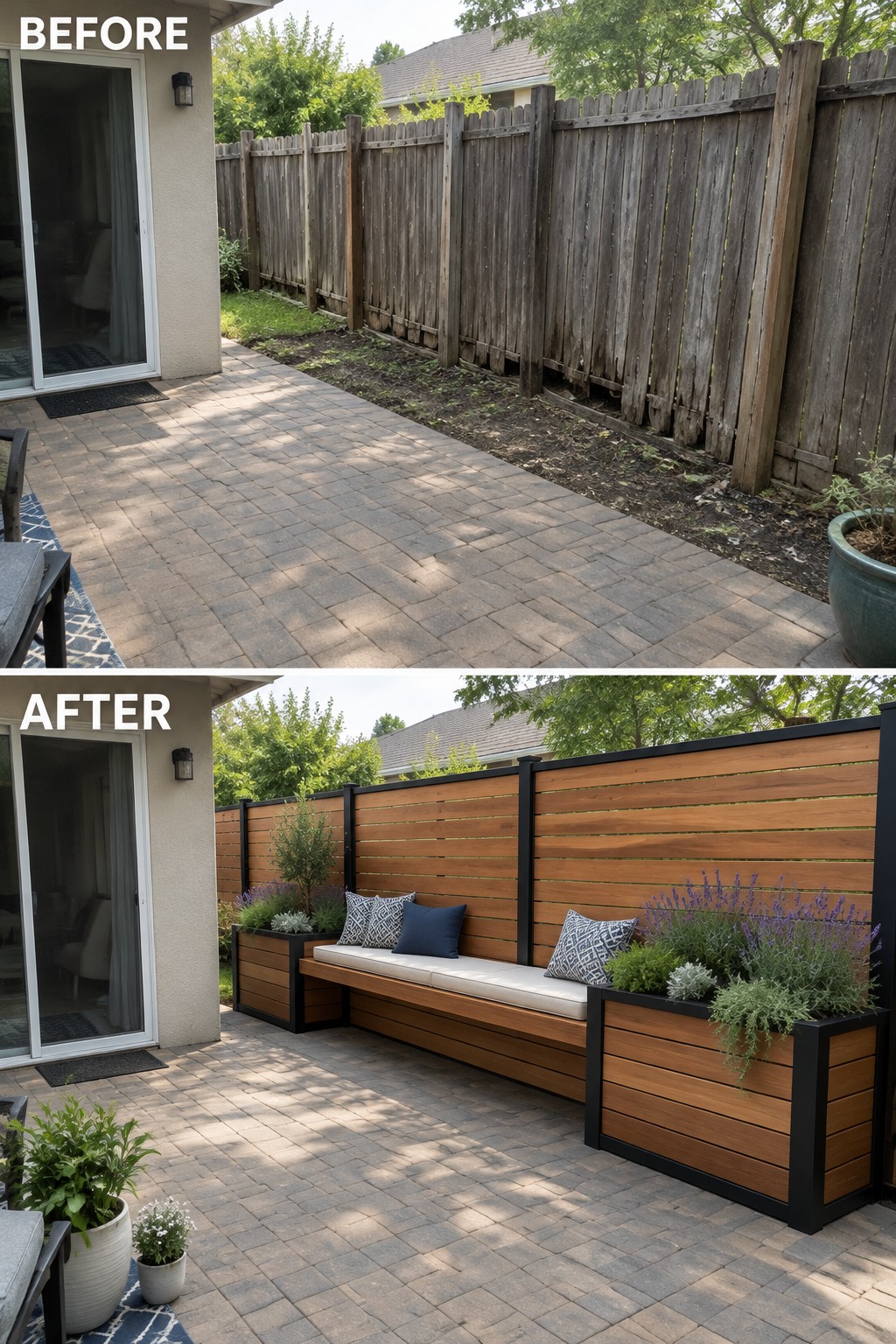
A narrow strip beside the fence can be more useful when it serves as built-in seating. Here, the old fence is replaced with a cleaner horizontal design, and planter boxes form the ends of a long bench. That gives the patio a clear place to sit without taking up much floor space.
This idea works well in a small backyard where a separate bench and planters might crowd the walkway. Measure carefully so the seating fits the fence line and still leaves room to move. Choose outdoor-ready materials, and keep the plants suited to the amount of sun the area gets.
Turn An Unused Fence Into A Vertical Garden
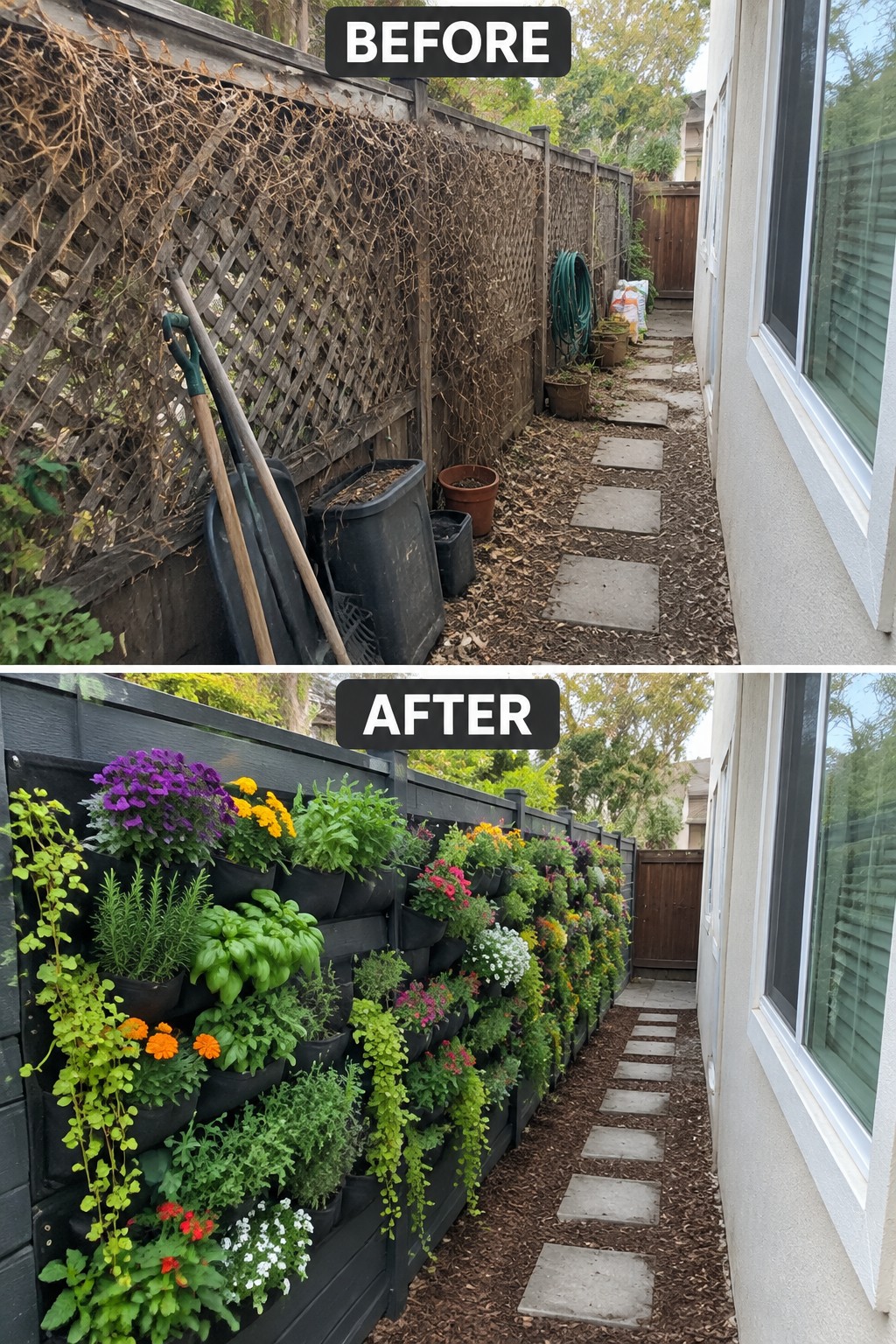
A neglected fence can become useful planting space instead of just a boundary. Here, wall-mounted planters replace the tangled growth, leaving the narrow path clearer while making the fence the main garden feature.
This idea works well in side yards where there is little room for beds. Choose planters that suit the fence and the plants, and keep them spaced so you can still reach in to water and prune.
Add Structure To A Sloped Garden

Replacing a plain retaining wall with a gabion planter gives a sloped yard a clear planting edge. In this makeover, the stone-filled wall holds the soil while grasses and shrubs make the bank look more intentional.
This idea works well on a hillside beside steps or a path, where a sturdy retaining edge is useful anyway. Choose plants suited to the slope’s sun and soil, and keep the walkway wide enough to pass comfortably.
Add Planter Boxes To A Poolside Fence
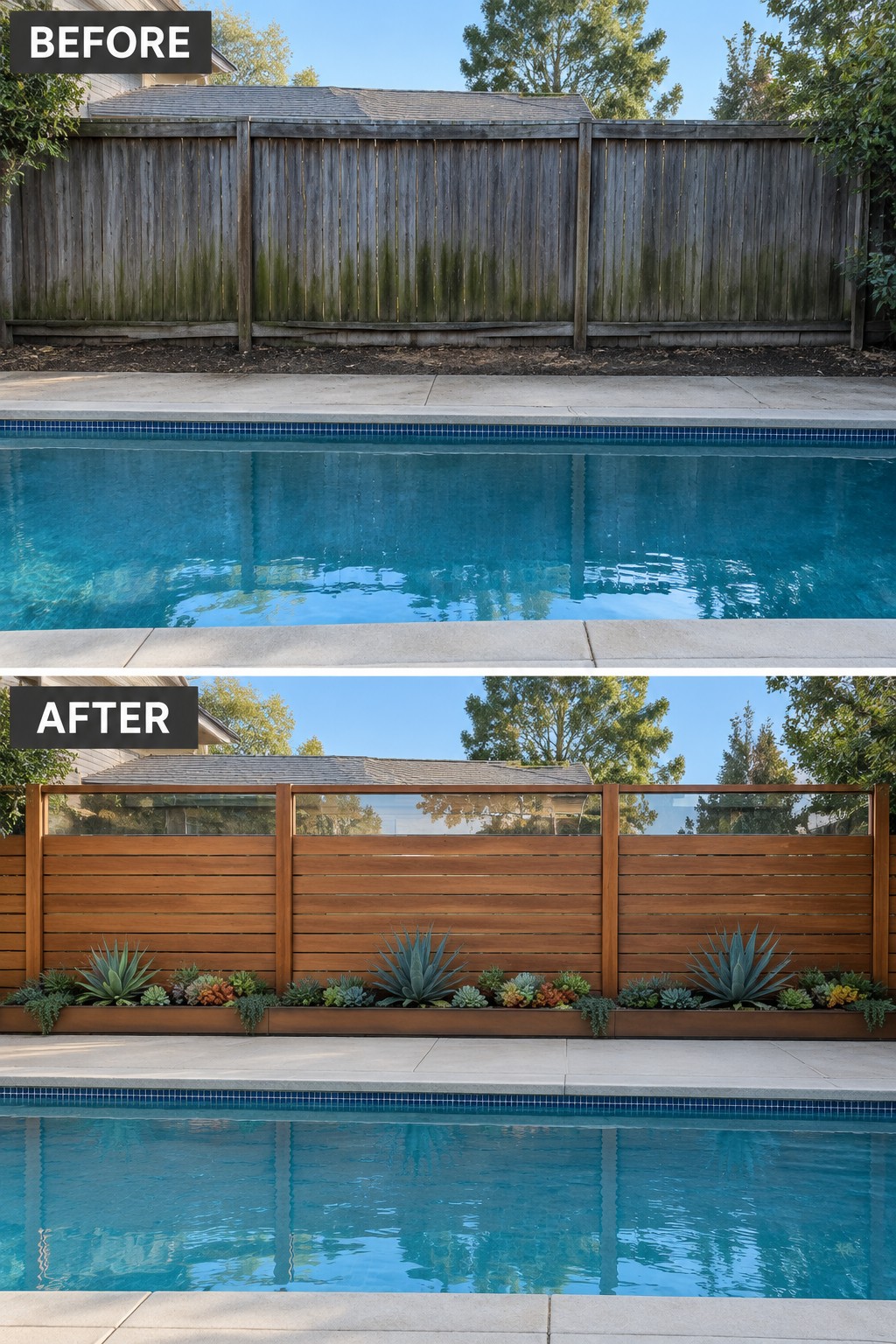
A plain, weathered fence can make a pool area feel unfinished. Replacing it with a cleaner horizontal design and adding a long planter box turns the fence into a useful part of the outdoor space, while also giving the pool a more private backdrop.
This idea works well along a patio or pool edge where there’s room for a narrow planting bed. Choose plants that suit the sun and won’t grow across the walkway, and keep the box low enough to leave the fence design visible.
Replace A Low Wall With A Planted Fence
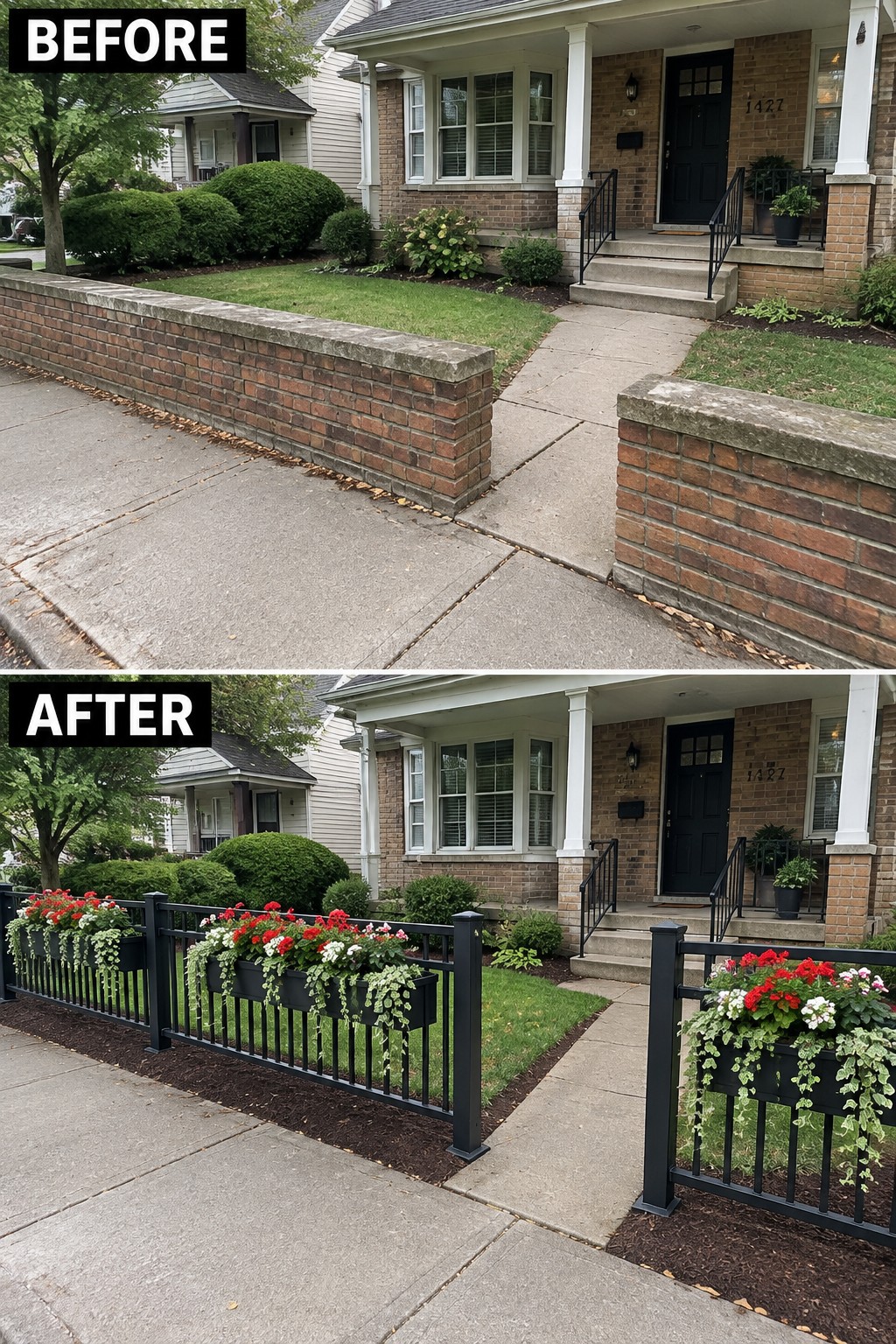
The old brick walls left the front yard feeling open and a little disconnected from the sidewalk. A black fence with built-in planter boxes gives the planting a clear edge while still leaving the walkway open.
This idea suits a small front yard where a full-height fence would feel too closed in. Keep the path wide enough to use comfortably, and choose flowers or trailing plants that won’t spill across the entry.
Make A Narrow Side Yard More Usable
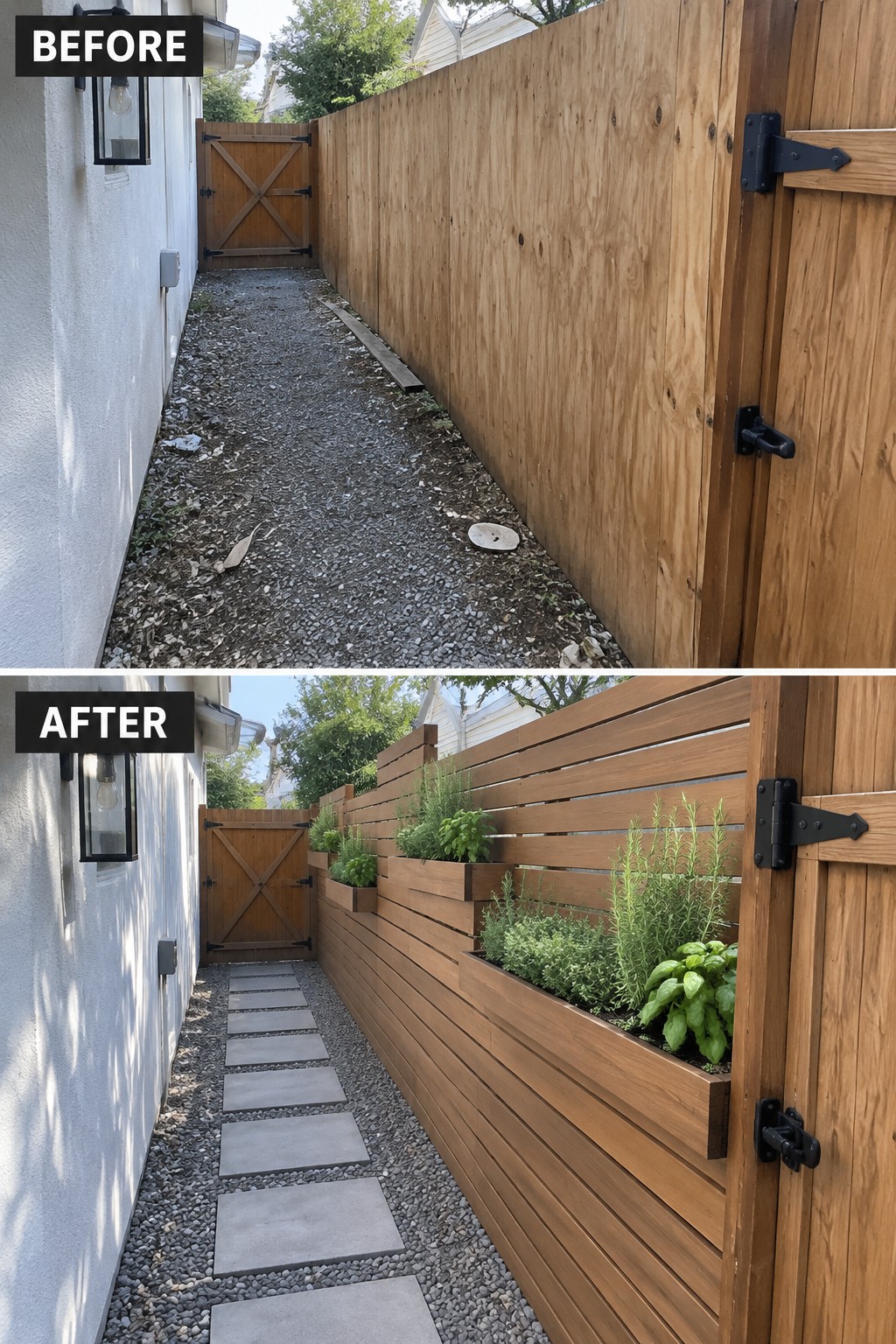
A plain fence can do more than mark a boundary. Built-in planter boxes turn a narrow side yard into a small garden, while the slatted design leaves the space feeling less closed in. Adding stepping stones also gives the walkway a clear path.
This idea works well where there isn’t room for separate garden beds. Keep the boxes shallow enough to leave comfortable walking space, and choose plants that suit the amount of sun the side yard gets.
Add Planter Boxes To An Overgrown Fence

A neglected fence can look much tidier when planter boxes give it a clear purpose. Here, the climbing weeds are cut back and wooden boxes filled with leafy plants and purple flowers turn the fence into a garden feature.
This idea works well along a side yard where there isn’t much room for a separate garden bed. Clear away the overgrowth first, then space the boxes so plants can grow without crowding the path or lawn.
Turn A Neglected Corner Into A Seating Area
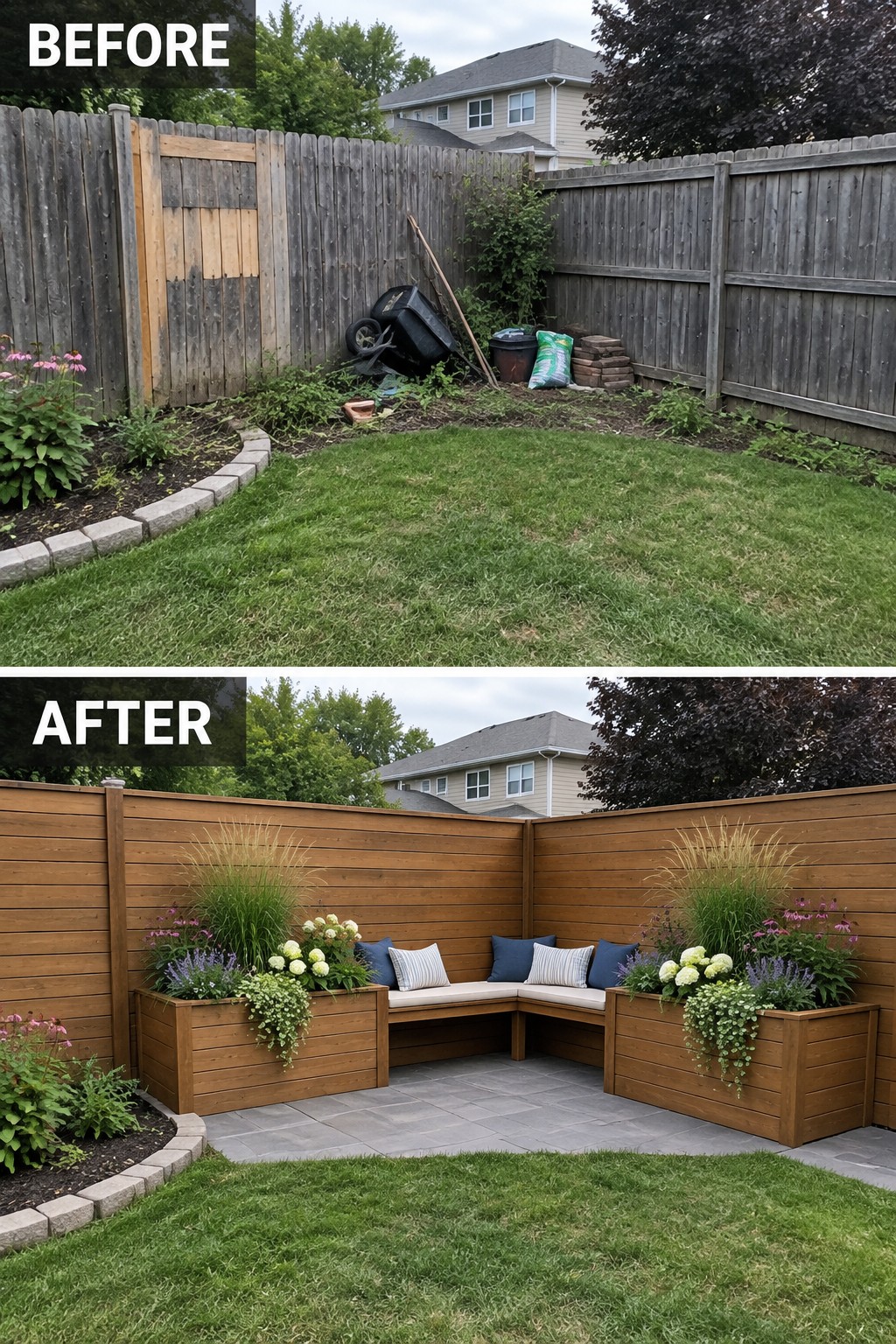
A cluttered fence corner can become a useful outdoor room when you clear it and build seating into the edges. Here, a corner bench and planter boxes replace the unused, overgrown area, while the fence helps define the space.
This idea works well in a small backyard where a separate patio might take up too much room. Keep the bench sized to the corner and leave enough open floor space to move around. Planter boxes can bring greenery to the seating without spreading plants across the whole yard.
Make A Rooftop Deck Feel Like An Outdoor Room
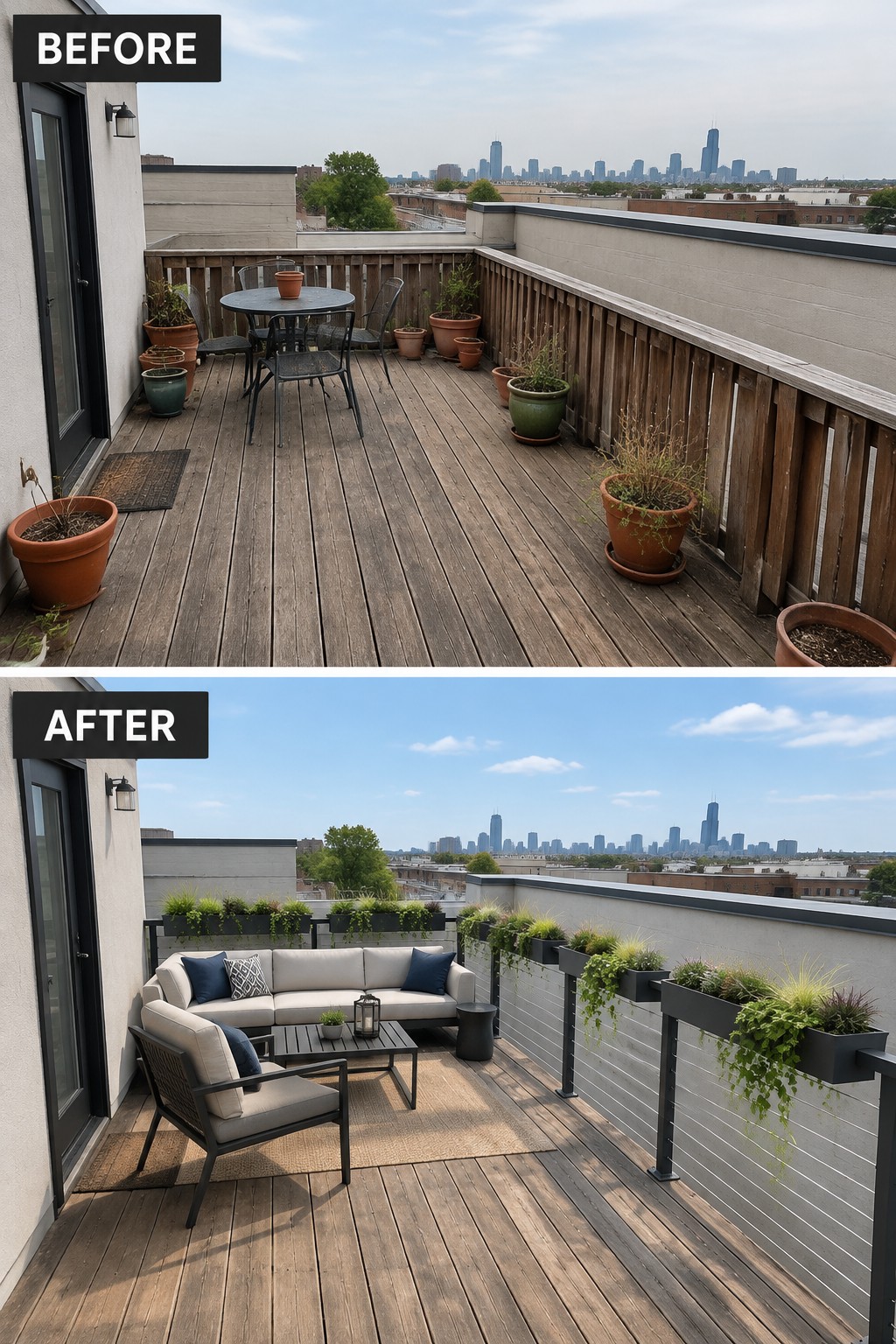
A few planters along the railing help give this rooftop deck a more finished seating area. In the updated space, the built-in boxes bring greenery to the edges, while the seating is grouped together instead of scattered across the deck.
This idea works well on a narrow deck where floor space is limited. Attach sturdy planter boxes securely to the fence or railing, and choose plants that suit the sun and wind exposure. Leave a clear path through the space so the seating stays easy to reach.
Make A Narrow Patio Feel More Usable

A narrow patio can feel like a pass-through when it is just bare concrete. Here, built-in planter boxes along the fence add greenery while helping define the paved area as a small outdoor room.
This idea works well in side yards or other tight spaces where freestanding pots could get in the way. Keep the boxes slim enough to leave a clear path, and choose plants that suit the amount of sun the area gets.
Make A Fence Part Of The Garden

Adding planter boxes to the fence moves some of the growing space off the ground. Here, the plain fence becomes a place for vegetables and herbs, while the cleared, mulched beds below keep the garden looking more orderly.
This works well in a small yard where ground space is limited, or anywhere you want planting close at hand. Use sturdy boxes and secure them well, especially when they’ll be filled with soil and watered regularly.
Replace A Weathered Fence With Planter Boxes
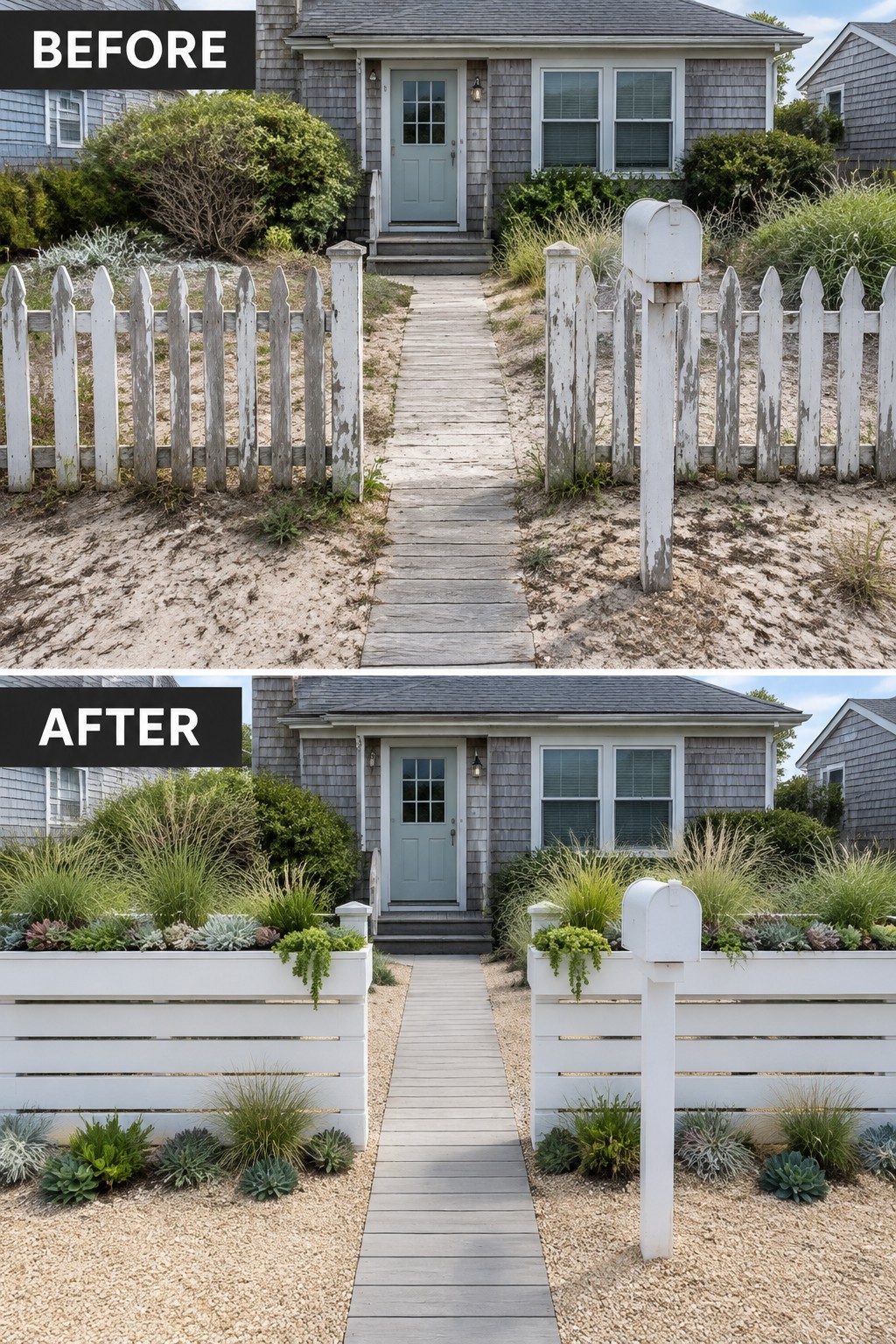
The old picket fence left the front yard looking worn and loosely defined. Replacing it with a clean, low fence that includes planter boxes gives the garden a clear edge and makes the entry feel more cared for.
This idea suits a small front yard where a tall fence might feel too closed off. Keep the boxes low enough to preserve the view, and choose sturdy plants that won’t crowd the walkway.
Create Privacy With A Planted Fence
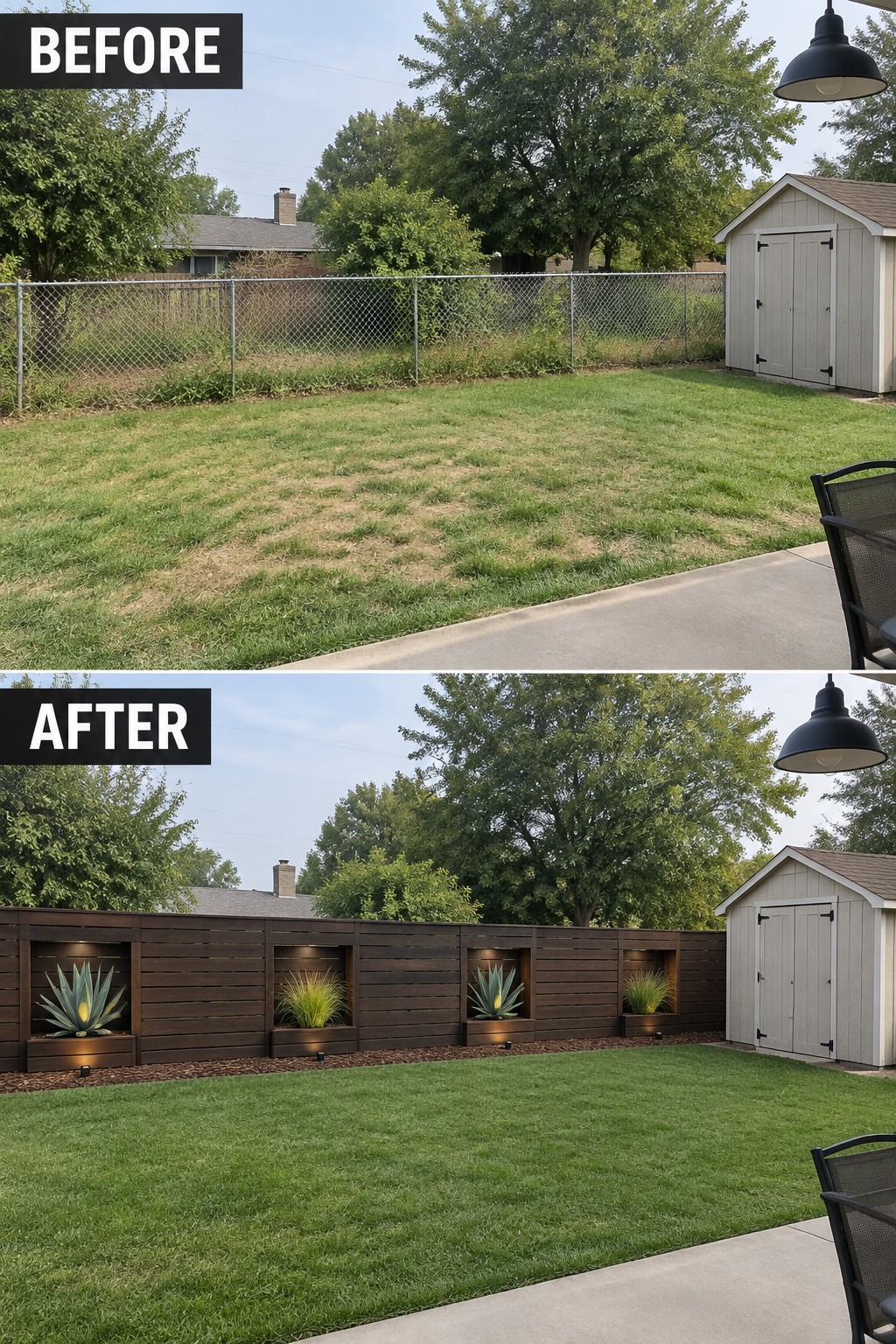
A solid wood fence can make a backyard feel more private and give the yard a clearer edge. Here, it replaces an open chain-link fence, while built-in planter boxes break up the long stretch of boards.
This idea works well when you want privacy without leaving a plain fence face. Keep the planting simple and repeat a few sturdy plants along the fence; leave enough room around each box for easy watering and upkeep.
Add A Raised Planter Along The Fence
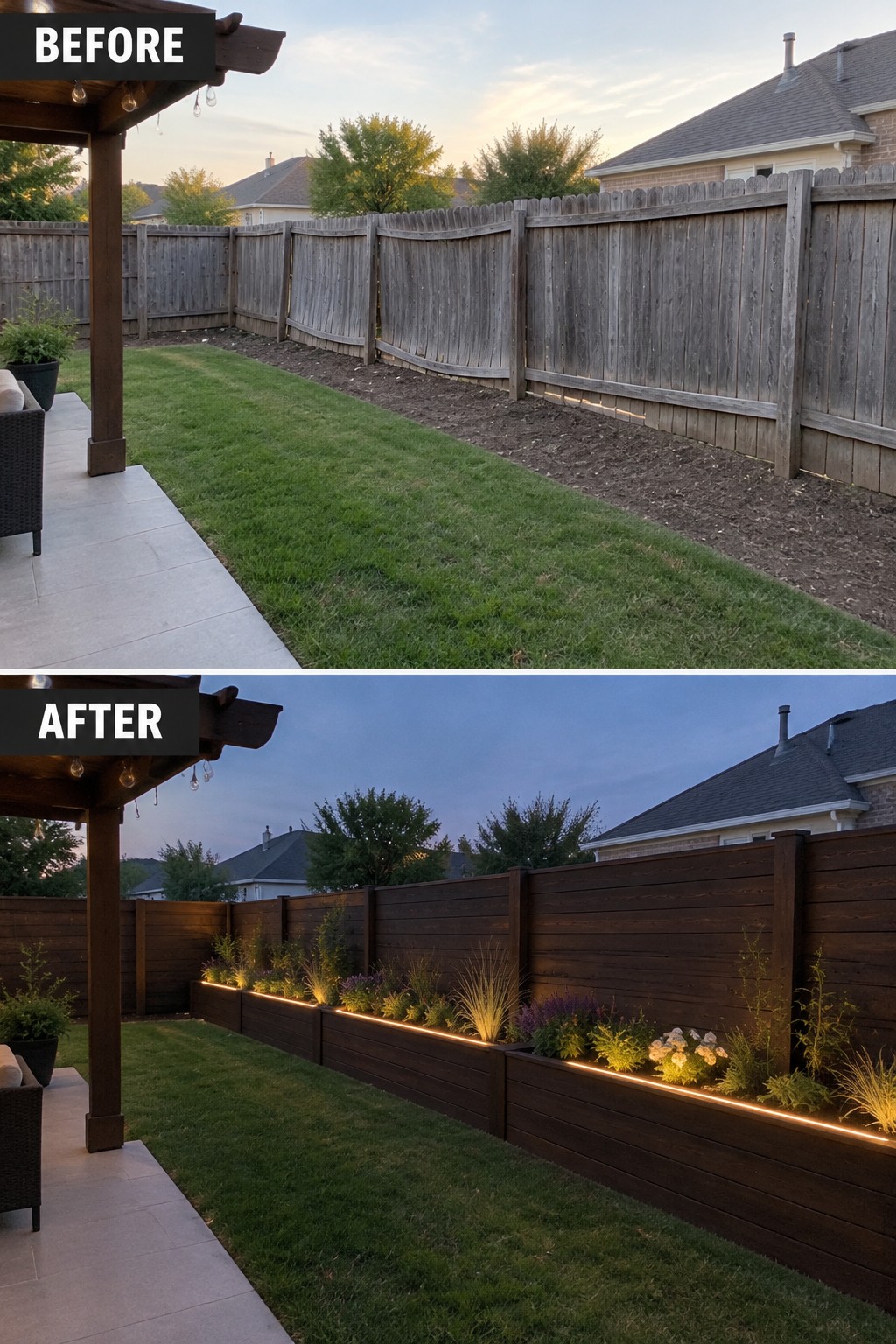
A plain fence line can feel unfinished when the ground beside it is just bare soil. A long raised planter gives that edge a clear purpose, and the dark horizontal boards make the planting area feel like part of the fence rather than an add-on.
This idea works well in a narrow backyard where there isn’t room for a separate garden bed. Keep the planter low enough to preserve the fence’s privacy, and leave enough lawn space to move around comfortably.
Add Privacy To A Small Balcony
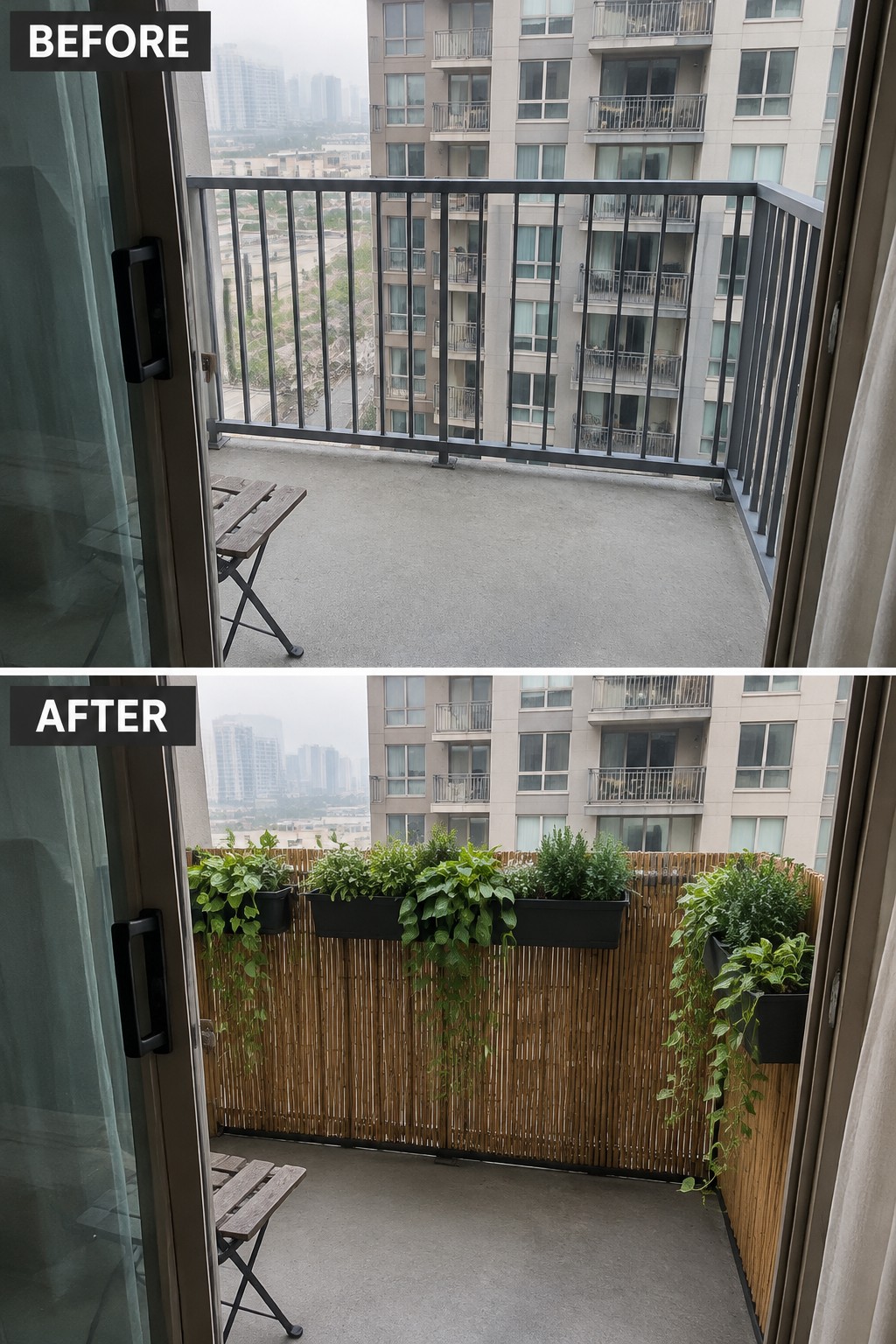
An open balcony can feel exposed and unfinished. A reed screen along the railing, topped with planter boxes, gives this one more privacy while making room for greenery.
This idea works well on apartment balconies where a permanent fence is not an option. Check building rules and secure the screen and planters properly, then leave enough clear floor space to move around.
Replace An Overgrown Fence Line With Planter Boxes
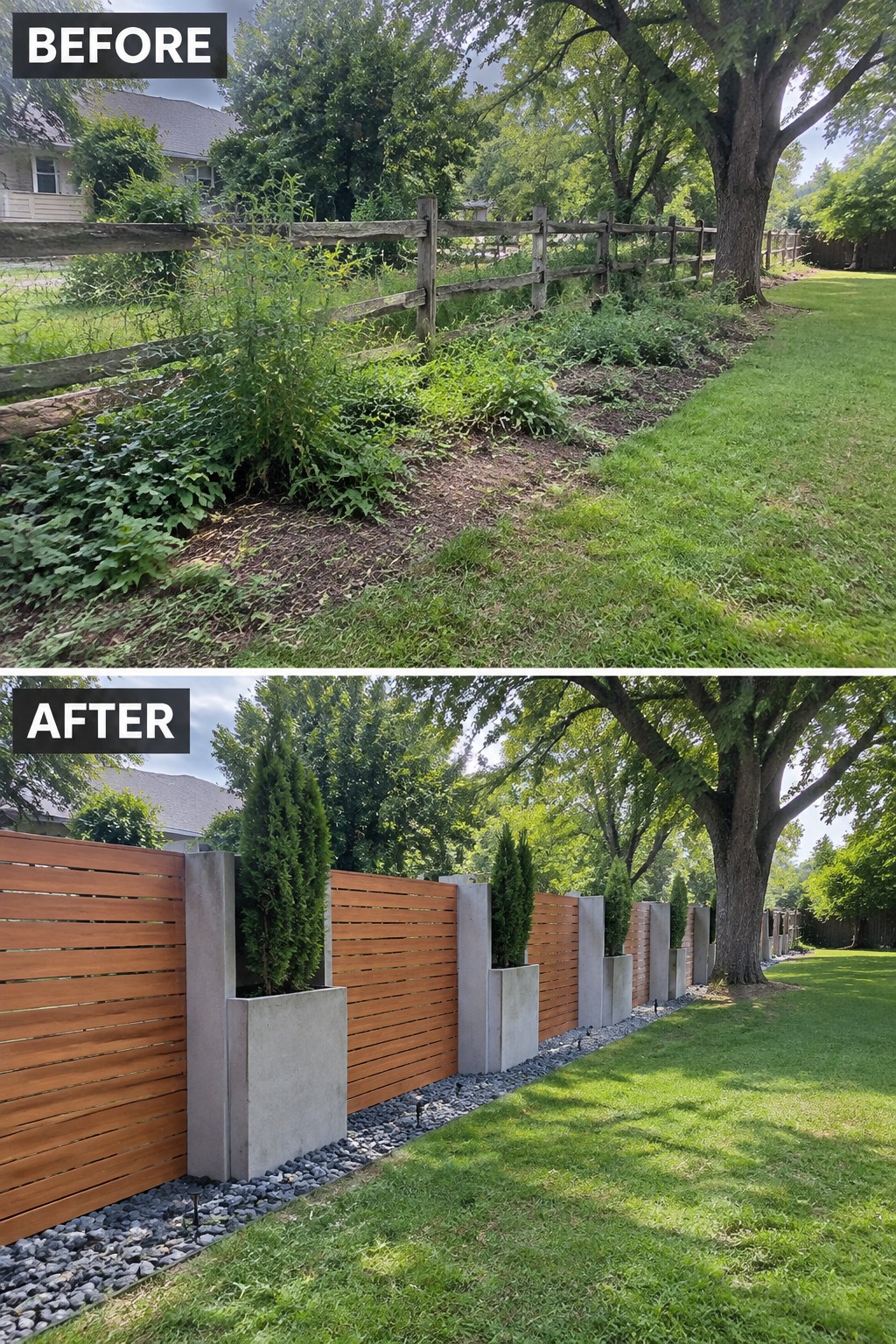
A fence can do more than mark a boundary. Here, the tangled planting and worn rails give way to clean horizontal panels with built-in boxes for tall evergreens, making the yard edge look planned while adding privacy.
This approach works well along a property line where you want a neater border without giving up greenery. Keep the plants suited to the amount of sun and room available, and leave enough space to care for them as they grow.
Add Built-In Seating Along The Fence

The plain patio becomes a more useful outdoor living area once a bench is built into the fence line. The planter boxes at each end bring greenery into the seating zone without taking up more floor space.
This idea works well in a small backyard where separate chairs can make the patio feel crowded. Keep the bench deep enough to sit comfortably, and leave open space in front so people can move around easily.
Add Tiered Planters To A Sloped Garden

A steep, mostly bare slope can be difficult to plant and keep tidy. Staggered planter boxes follow the grade and give flowers clear, level spaces to grow, turning the hillside into a more organized garden.
This idea works well beside existing steps or a fence, especially where a slope is hard to mow. Keep the boxes securely built for outdoor use, and leave enough room between them for plants to grow and for you to reach in and care for them.
Give A Front Yard Clear Structure
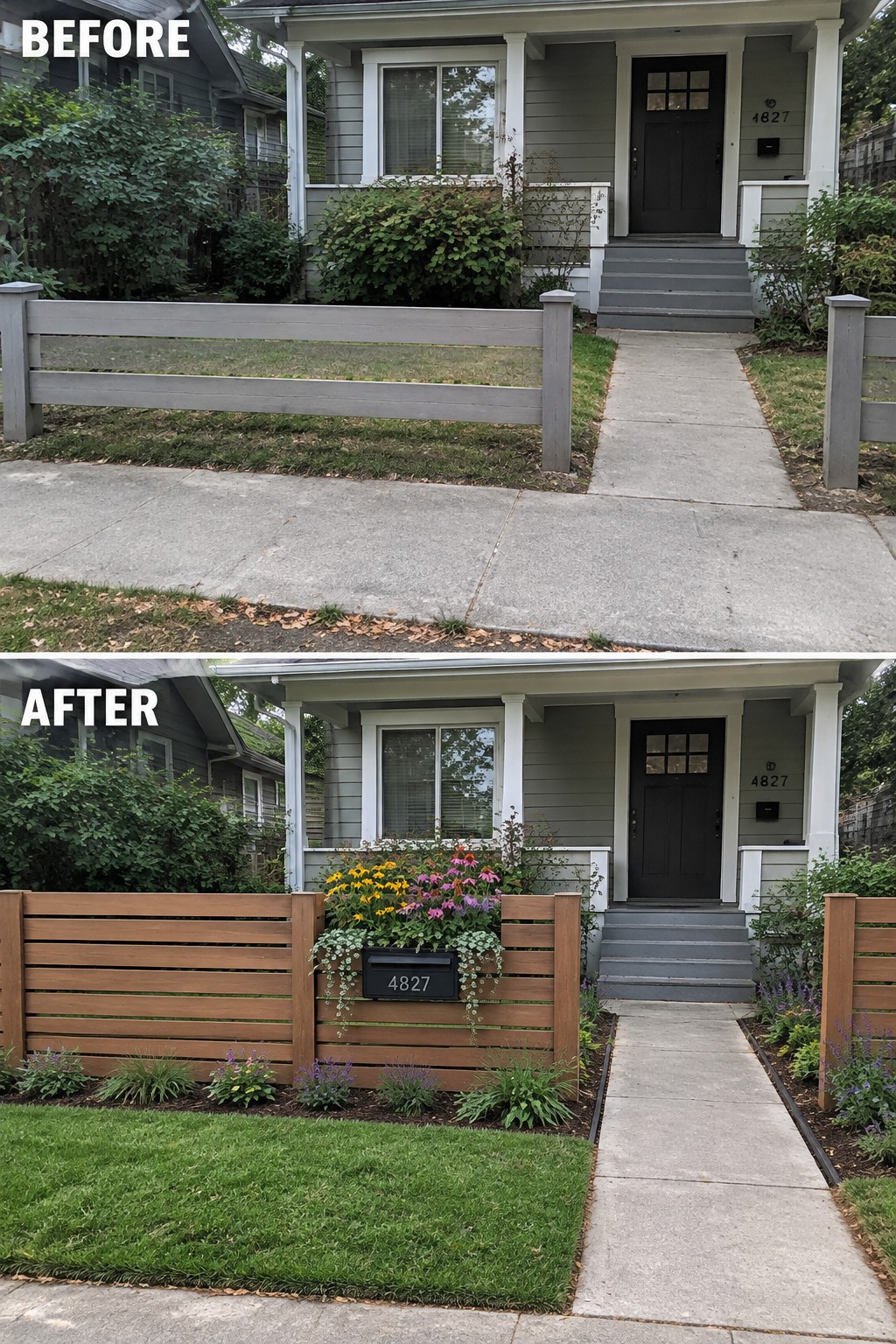
A low, weathered fence and patchy grass can make a small front yard feel unfinished. Replacing the fence with horizontal wood slats and adding flowers along its base gives the yard a clearer shape while keeping the entry path open.
This approach works well when you want a tidier front garden without blocking the house from view. Keep the planting strip narrow enough to preserve lawn and walkway space, and choose flowers and greenery suited to the amount of sun the yard gets.
Use Planter Boxes To Make A Pool Fence More Private

A plain, open fence can leave a pool area feeling exposed. Adding a row of built-in wooden planter boxes with tall plants turns the fence line into a greener privacy screen without changing the pool layout.
This idea works well beside a pool or patio where you want more cover but still need to keep paths clear. Choose plants suited to your sun and climate, and leave enough room to reach the fence for cleaning and repairs.
Frequently Asked Questions
Q: What should I line a planter box with so it doesn’t damage the fence?
A: Use a waterproof liner inside the box, but leave drainage holes open at the bottom. A small gap between the planter and fence also helps air circulate and keeps moisture from sitting against the wood.
Q: Can I add planter boxes to an existing fence?
A: Yes, as long as the fence can handle the extra weight of soil, water, and plants. Attach the boxes to posts or another sturdy support rather than relying on thin fence boards.
Q: Which plants work well in fence planters?
A: Compact flowers, herbs, and trailing plants are easy choices. Check how much sun the fence gets, and pick plants with similar watering needs so the boxes are easier to care for.
Q: How do I keep the planters from drying out too quickly?
A: Choose deeper boxes and add a layer of mulch on top of the soil. In a sunny spot, plan to water more often, especially during hot, dry weather.
