


A fence can look plain when it lacks contrast or a clear sense of structure, even if it still does its job.
I like how concrete pillars give a yard a sturdier outline, while wood panels soften the look and add warmth.
The balance can make a property feel more cared for without changing the house itself or taking on a full exterior renovation.
Small choices in panel color, spacing, and pillar finish can also shape privacy and help the fence sit naturally with the landscaping.
I’d save the ideas that suit your home and test their materials or proportions before committing to a larger project.
Add Privacy With A More Solid Front Fence
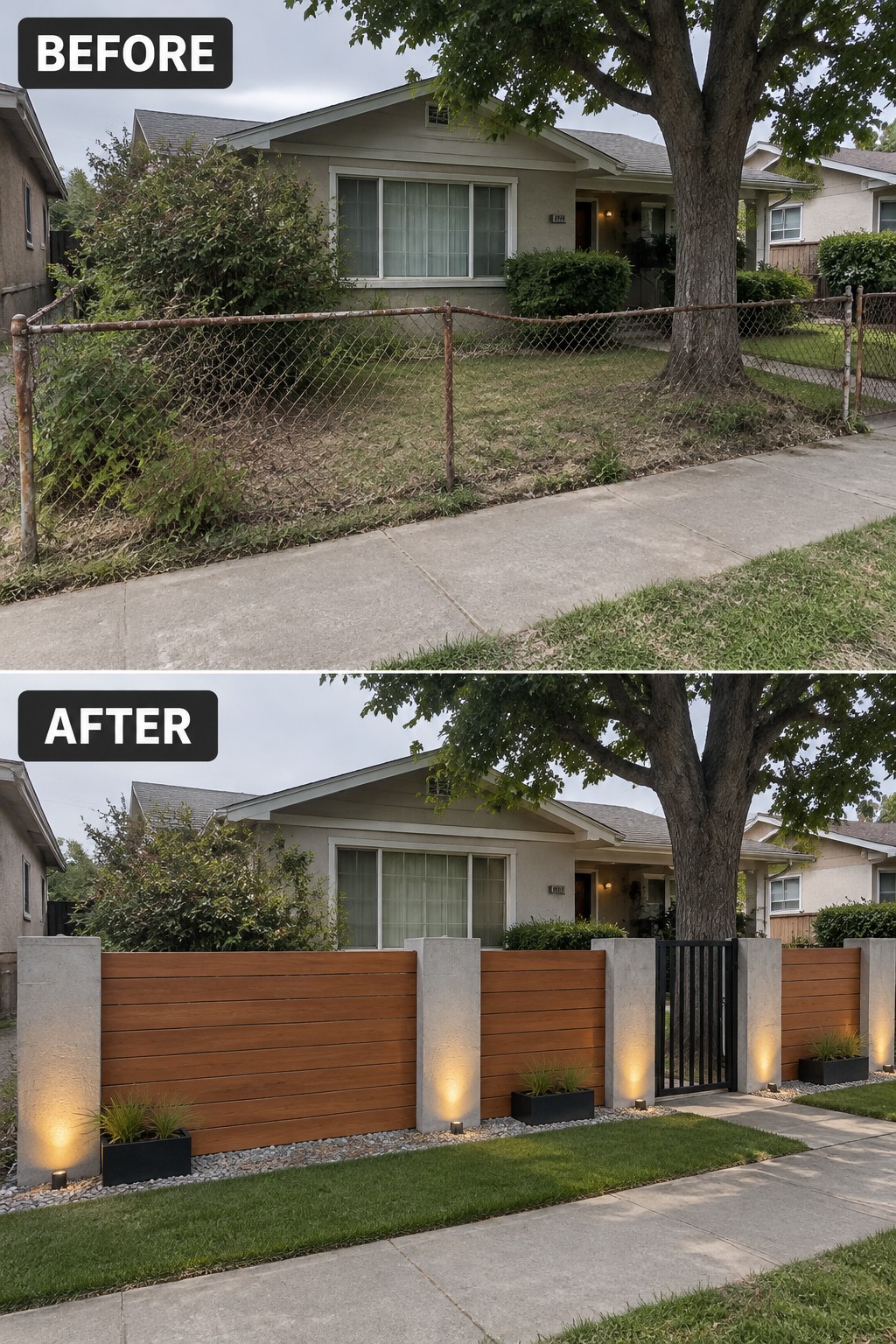
Replacing a worn chain-link fence with wood panels and concrete pillars gives the front yard a clearer boundary and more privacy. The open fence left the yard exposed, while the solid panels make the space feel more defined without changing the house itself.
This approach works well when you want to screen a street-facing yard. Keep the gate easy to reach and leave enough room for the sidewalk and path; a fence should add privacy without making entry awkward.
Add Privacy With A Sturdy Fence
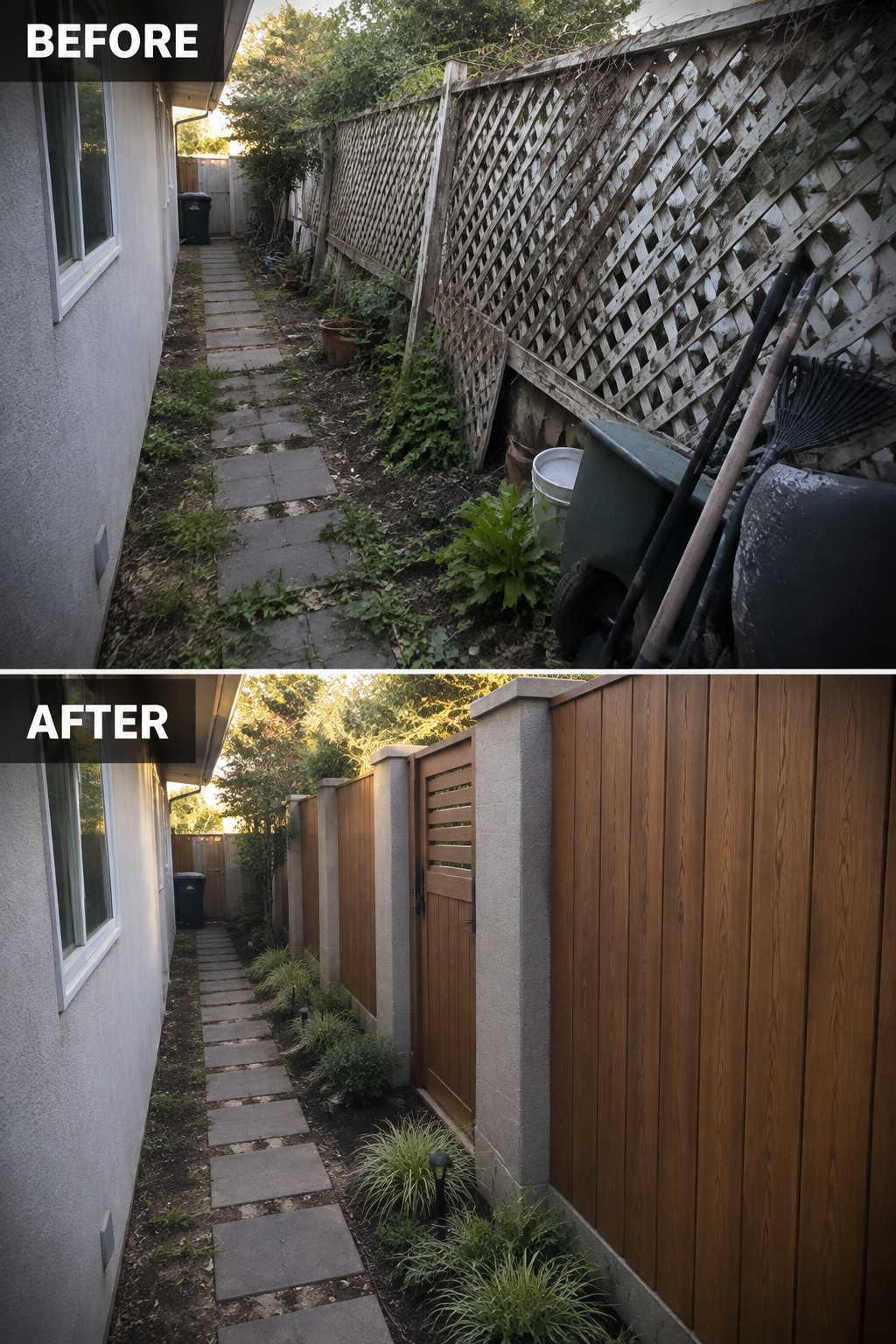
Replacing a worn, leaning lattice fence with wood panels set between concrete pillars gives this narrow side yard a more private, finished boundary. The solid panels also make the space feel tidier without changing the basic path.
This approach works well along side yards where privacy matters but space is limited. Clear away old debris first, then choose panel and pillar sizes that suit the yard so the fence feels secure without crowding the walkway.
Add Privacy And Structure To An Overgrown Yard

A sturdy fence can make a neglected backyard feel more orderly and private. Here, warm wood panels between concrete pillars replace a worn fence line, giving the yard a clear edge without making it feel closed off.
This idea works well when you want more privacy but still want the garden to feel cared for. Clear away overgrowth first, then keep the planting along the fence simple so it does not crowd the lawn or block the path.
Replace A Worn Fence With A More Private Poolside

The old pool fence made the patio feel tired and exposed. Replacing it with horizontal wood panels set between concrete pillars gives the pool area a cleaner edge and more privacy, while still letting a little air and light through.
This approach works well when a backyard fence is the main thing you see from the patio. Choose wood rated for outdoor use, and leave enough space around the pool gate for easy access. Keep the panel design simple so it feels neat without making the area feel boxed in.
Replace An Overgrown Front Fence
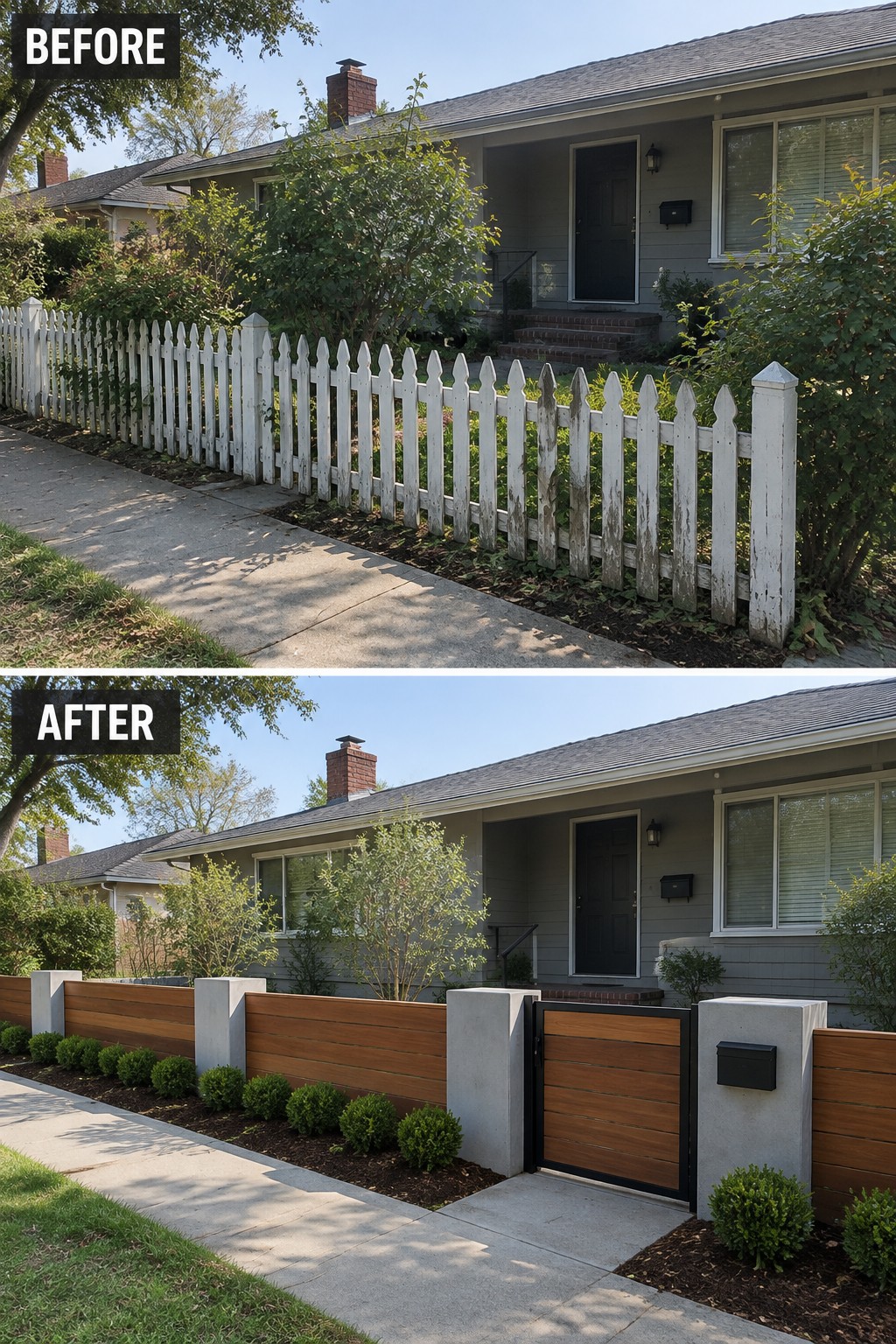
The old picket fence left the front yard looking cluttered and offered little privacy. Replacing it with horizontal wood panels between concrete pillars gives the yard a cleaner edge while still letting the house remain visible.
This approach works well along a sidewalk or in a small front yard where a full hedge could feel crowded. Keep the panels low enough to suit the house and check local fence rules before building.
Give An Overgrown Garden A Clear Entrance

A simple fence can make a neglected garden feel planned again. Here, the uneven rails give way to wood panels between concrete pillars, while the path and gate remain the focus.
This idea suits a yard where you want a more defined boundary without hiding the garden completely. Clear the overgrowth first, then choose a fence height and finish that fit the house and leave the gate easy to reach.
Replace A Temporary Barrier With A Permanent Fence
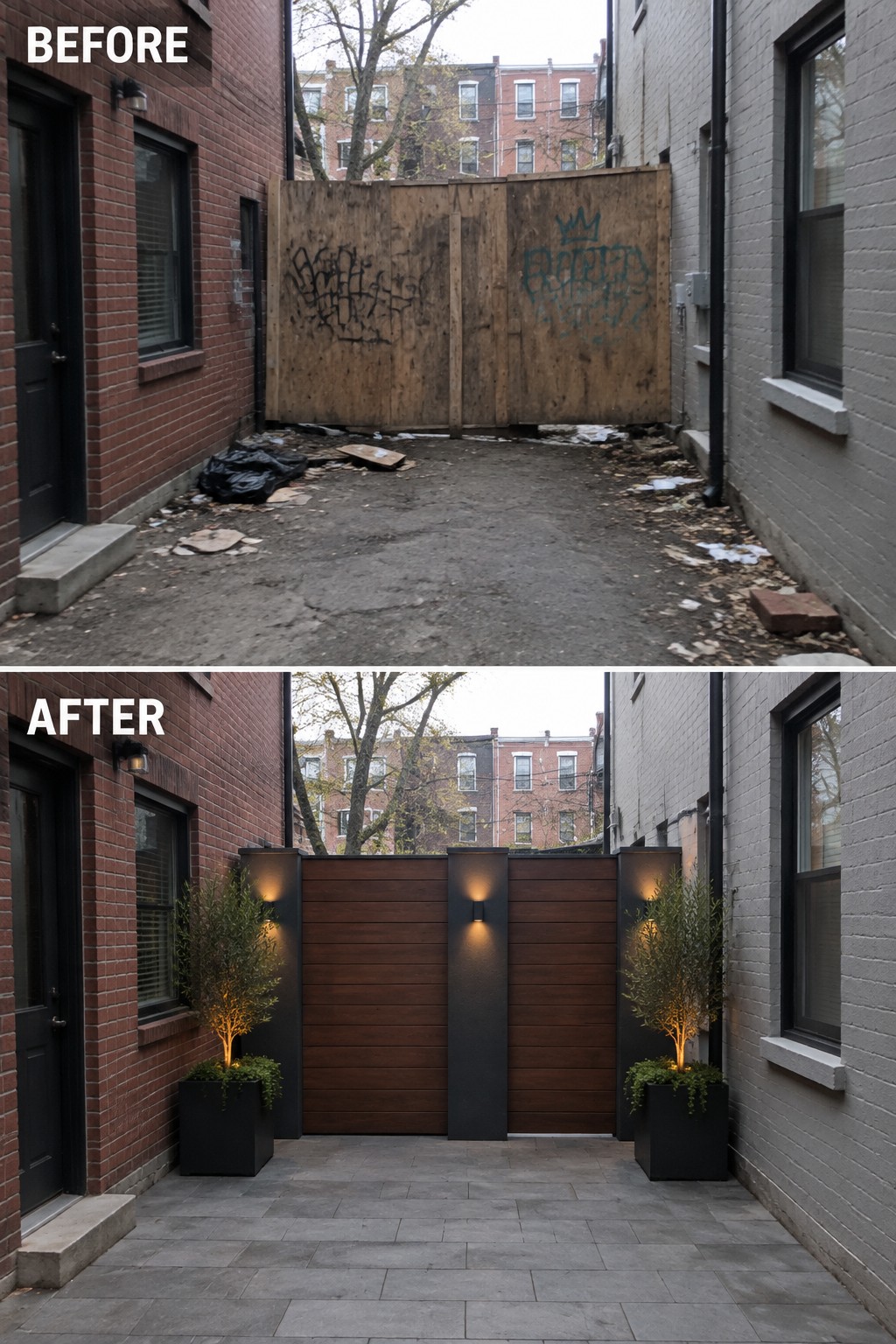
A sturdy fence can make a narrow side yard feel finished while providing real privacy. Here, the rough plywood barrier is replaced with wood panels set between concrete pillars, giving the alley a cleaner, more intentional edge.
This approach works well in tight urban spaces where there is little room for extra landscaping. Choose materials that suit the nearby brick and keep the fence height within local rules; a simple paved path is often all the ground treatment needed.
Give A Sloped Yard A More Finished Look
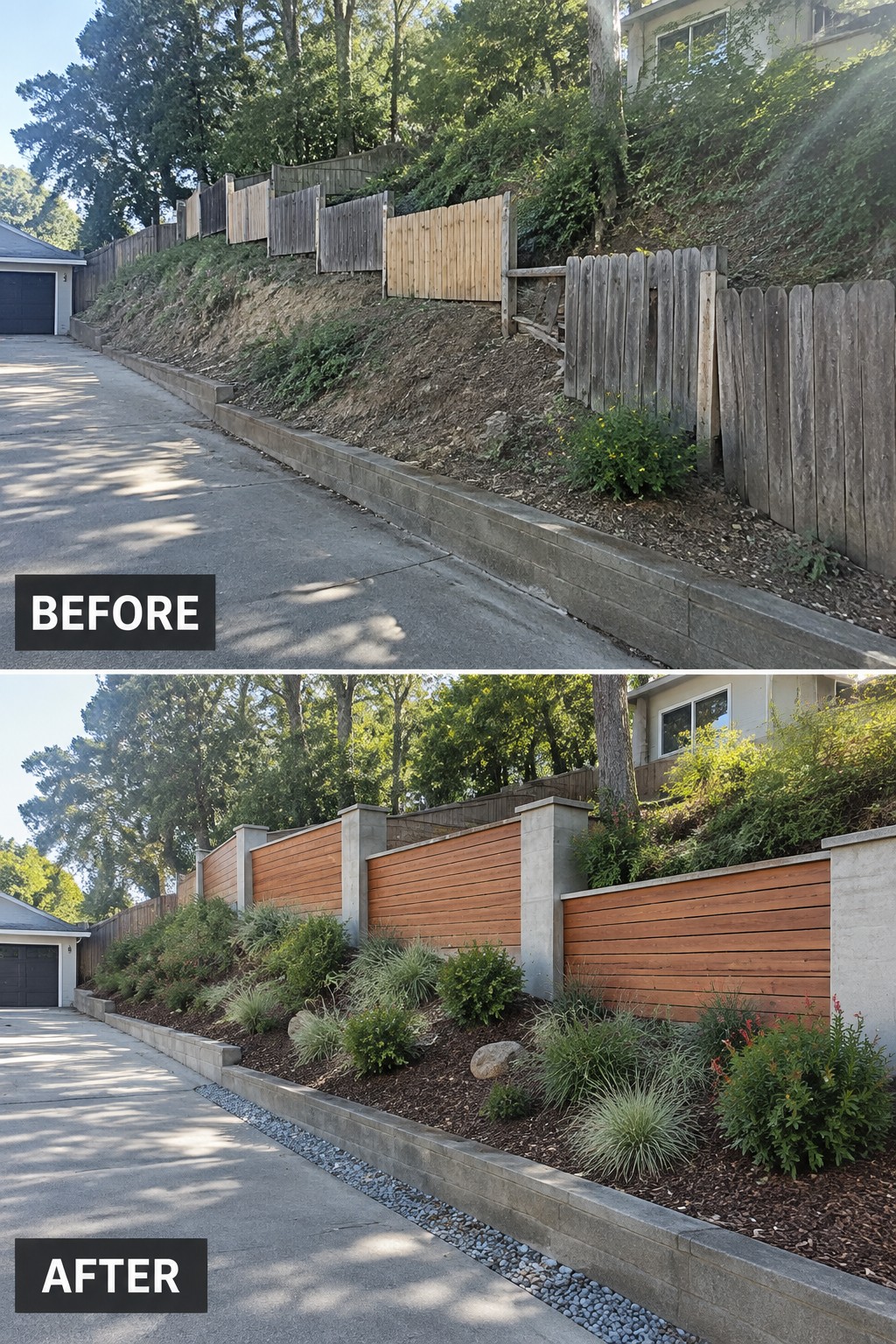
A retaining wall and scattered fence sections can leave a slope looking unfinished. In this makeover, a continuous wood fence set between concrete pillars gives the hillside a clearer edge, while the planted bed below makes the whole area feel more planned.
This approach works well beside a driveway or along a sloped property line. Keep the planting simple and leave enough room for the wall and fence to be maintained; the structure should suit the grade and be properly built for the site.
Create A Cleaner, More Private Backyard

Replacing the thin reed barrier with solid wood panels between concrete posts gives this beachside yard a clearer edge and more privacy. The fence also makes the lawn feel less exposed without changing the basic layout.
This idea works well in a coastal yard where wind and weather can wear down lighter fencing. Choose durable materials suited to the local climate, and leave enough space along the fence for simple plantings.
Create A Safer, More Private Dog Yard
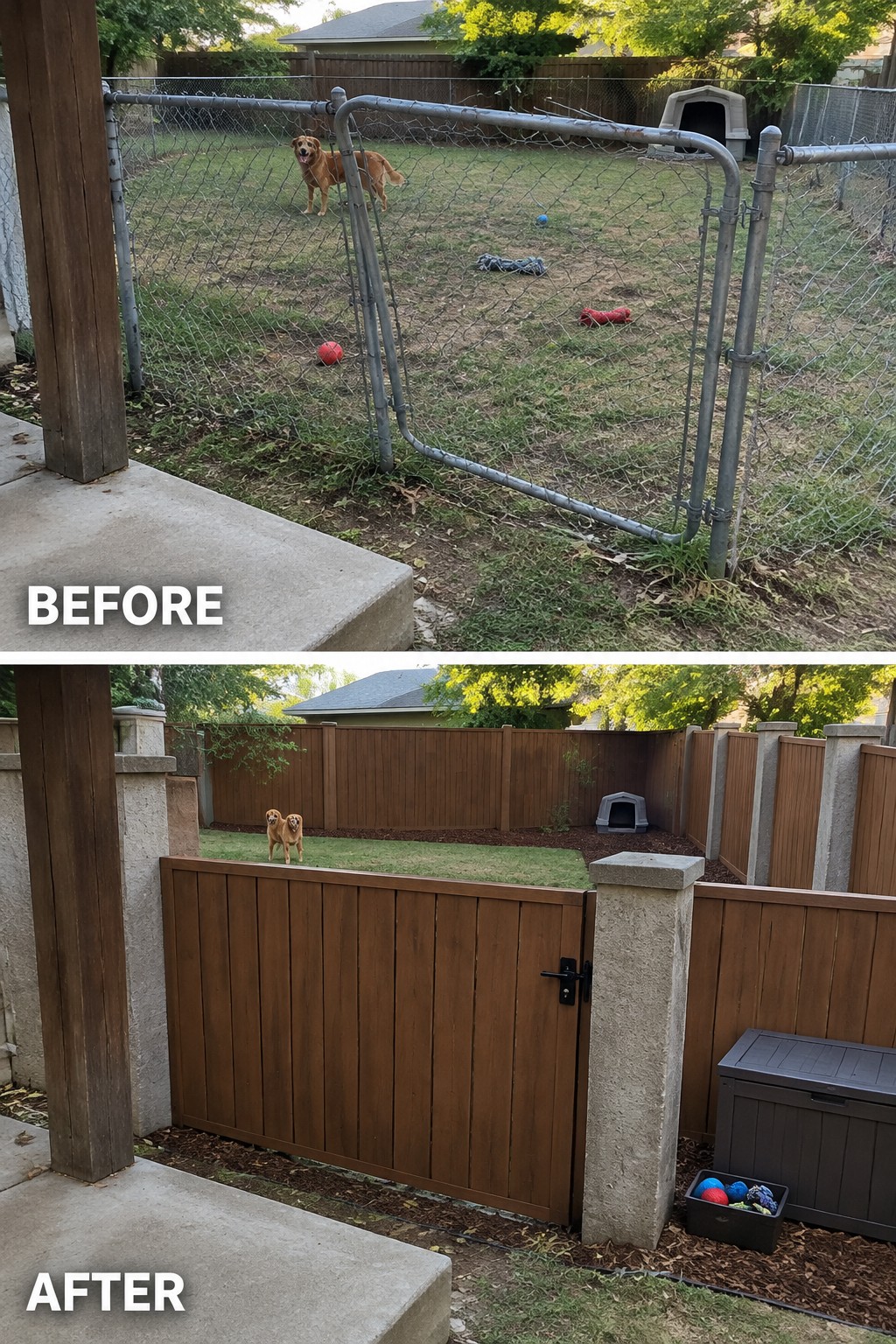
Replacing the chain-link enclosure with a solid wood fence makes this backyard feel more secure and private for the dogs. The concrete pillars also give the fence a sturdy, finished look.
This idea works well when a yard needs a clearer boundary without giving up its lawn space. Choose panels and posts suited to your climate, and make sure the gate latches securely.
Give The Front Yard A More Finished Border

Replacing a worn picket fence with wood panels between concrete pillars gives the front yard a clearer edge and a more settled look. The solid sections also offer more privacy without hiding the house behind a tall, continuous wall.
This approach works well when an old fence makes the entrance feel neglected. Keep the posts and panels in proportion to the house, and leave a clear path to the front door so the entry still feels open.
Give The Front Yard A Clear, Lasting Border
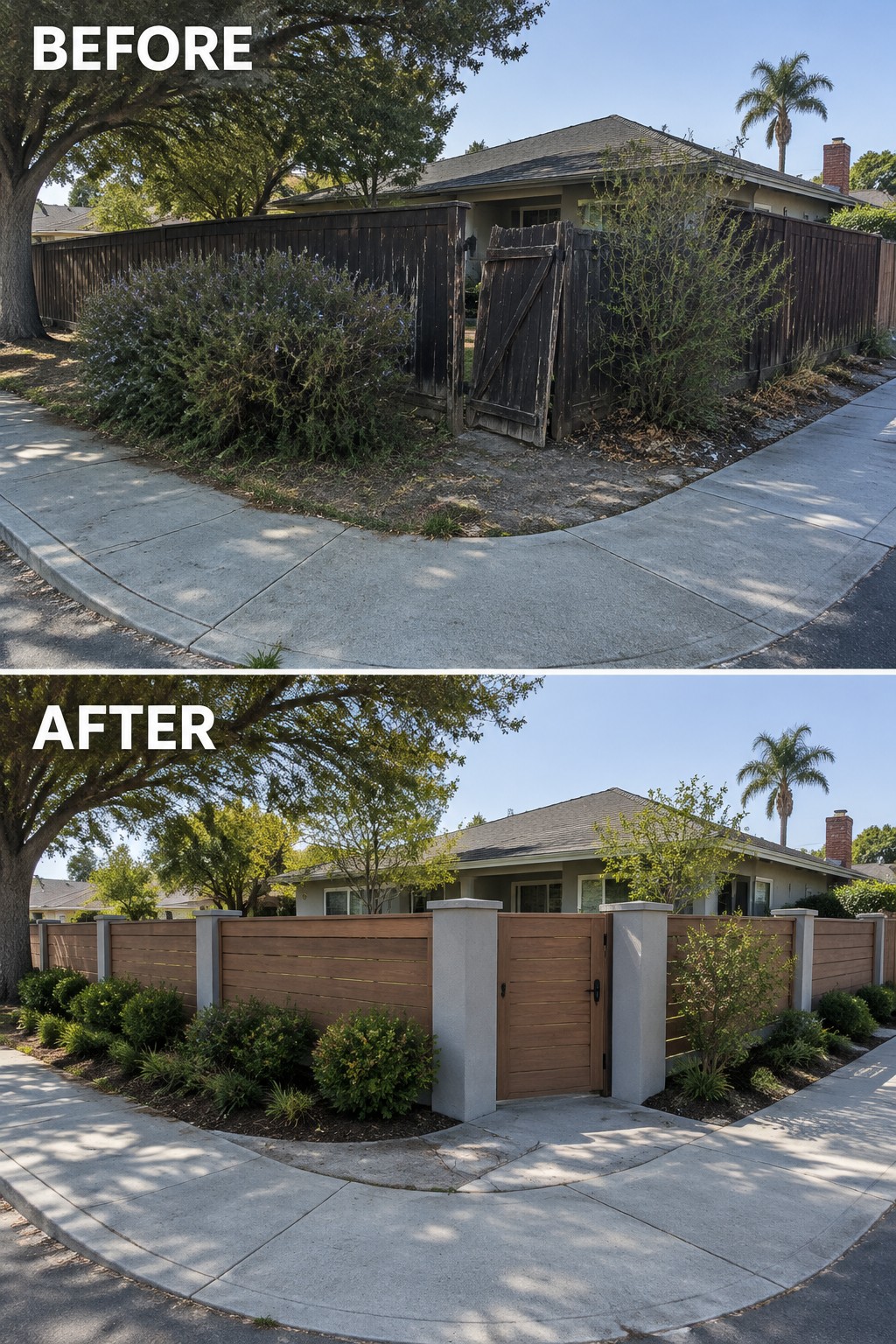
A worn fence and overgrown shrubs can make a front yard look neglected. Replacing the old fence with horizontal wood panels between concrete pillars gives the property a cleaner, more finished edge while still providing privacy.
This approach works well along a sidewalk or corner lot where the yard needs a clear boundary. Keep the planting near the fence low enough to show off the new panels, and leave the gate easy to reach and open.
Make A Deck Feel More Private

The old, weathered fence left this deck feeling exposed and unfinished. Replacing it with a solid wood fence and concrete pillars gives the seating area a clearer boundary, so it feels more like an outdoor room.
This idea works well on decks that sit close to neighboring yards. Choose a fence height that suits local rules, and leave enough room for the table and chairs to stay easy to move around.
Replace A Weathered Fence With A Cleaner Boundary

A worn fence can make the whole side yard look neglected. Replacing it with simple horizontal panels and concrete pillars gives the space a more even, finished edge and adds privacy without changing the driveway layout.
This idea suits a narrow side yard where the fence is seen every day from the house or garage. Keep the panel color in step with the home’s exterior, and clear the planting strip before adding gravel or a few low plants so the border stays tidy.
Replace A Weathered Fence With A Cleaner Border
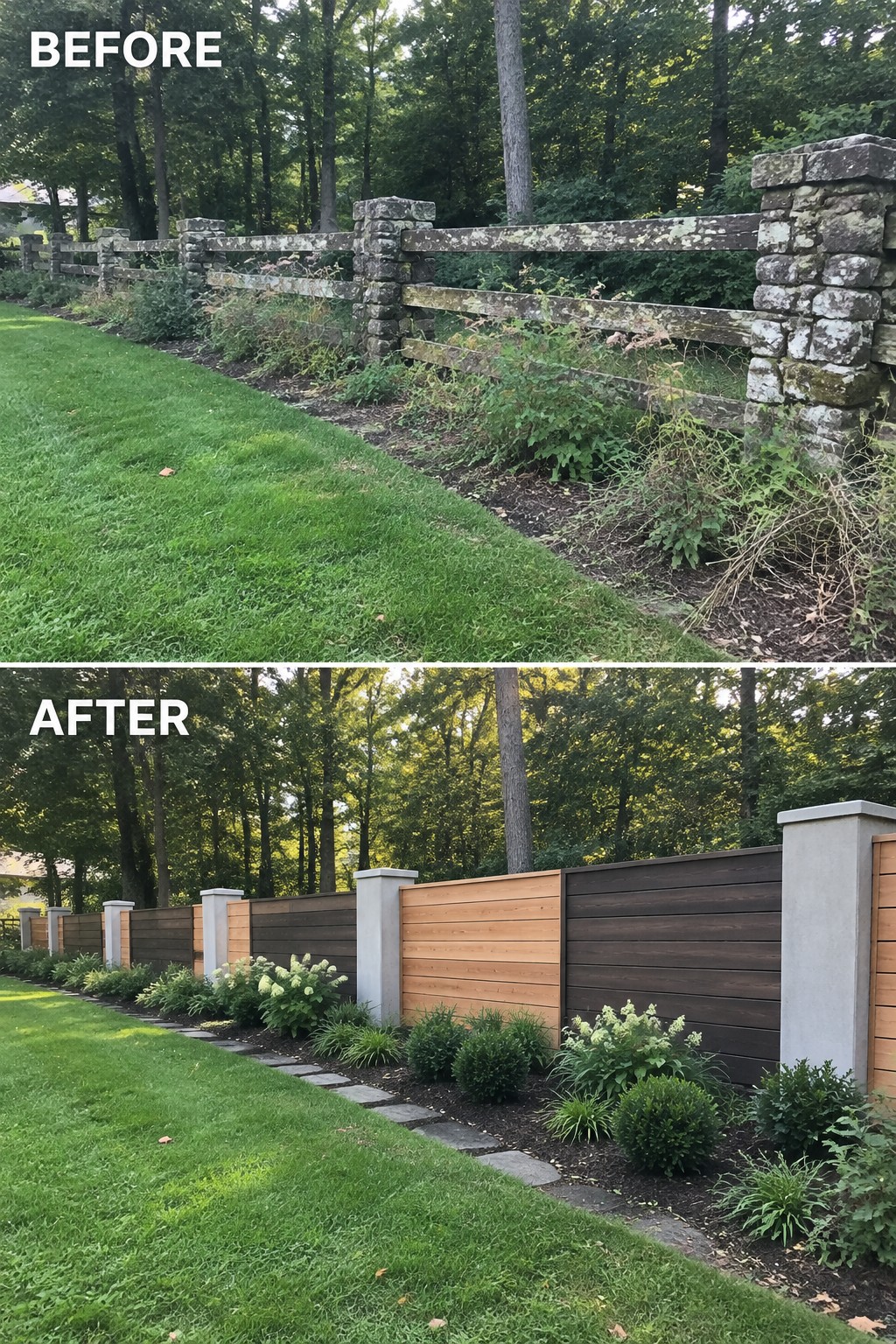
A defined fence line can make an overgrown garden bed look much more intentional. Here, the old stone-and-rail fence is replaced with wood panels between concrete pillars, giving the yard a neater, more consistent edge.
This approach suits a long boundary where you want a clear visual line and more privacy. Keep the planting simple and leave enough room beside the fence for the plants to grow without crowding the path or lawn.
Give The Front Entry A Clear, Sturdy Gate

A solid wood gate between concrete pillars gives this front entrance a more defined, finished look than the worn picket gate. It also offers more privacy without blocking the path to the house.
This idea works well where a narrow walkway meets a front garden or hedge. Keep the gate sized to leave comfortable room to pass, and choose outdoor-rated wood and hardware so it holds up to regular use.
Replace A Broken Front Fence With A Defined Border
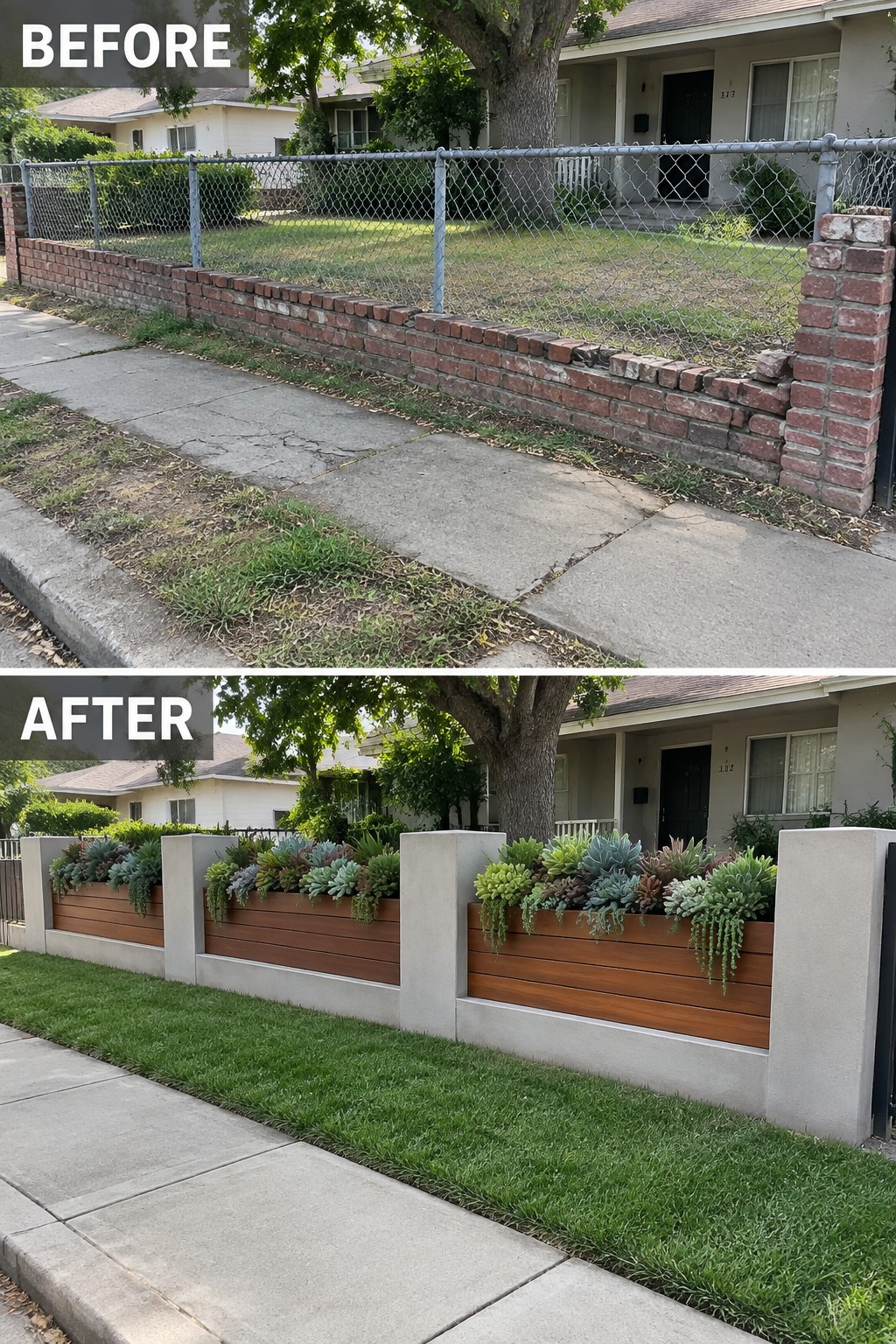
A low, damaged brick wall and chain-link fence can make a front yard look neglected. Replacing them with concrete pillars and horizontal wood panels gives the boundary a cleaner, more deliberate shape while leaving room for plants along the street.
This approach suits a front yard where you want a clear edge without a tall, closed-off fence. Keep the panels low enough to preserve the open feel, and check local rules before building.
Add Privacy To A Poolside Patio

The open metal fence left the pool area exposed to neighboring yards. Replacing it with solid wood panels between concrete pillars gives the patio more privacy and makes the pool feel like a more defined outdoor space.
This approach works well around pools and other seating areas where a little separation makes the space easier to use. Choose weather-resistant fence materials, and check local rules for pool barriers before making changes.
Give A Driveway A More Finished Boundary

Replacing an overgrown rail fence with solid wood panels between concrete pillars gives the driveway a clear, consistent edge. The fence also provides more privacy without changing the basic layout of the yard.
This approach works well along a long driveway or property line where an open fence lets the yard feel untidy. Keep the panel height and post spacing consistent, and check local rules before building a taller privacy fence.
Turn A Small Patio Into A Built-In Seating Area
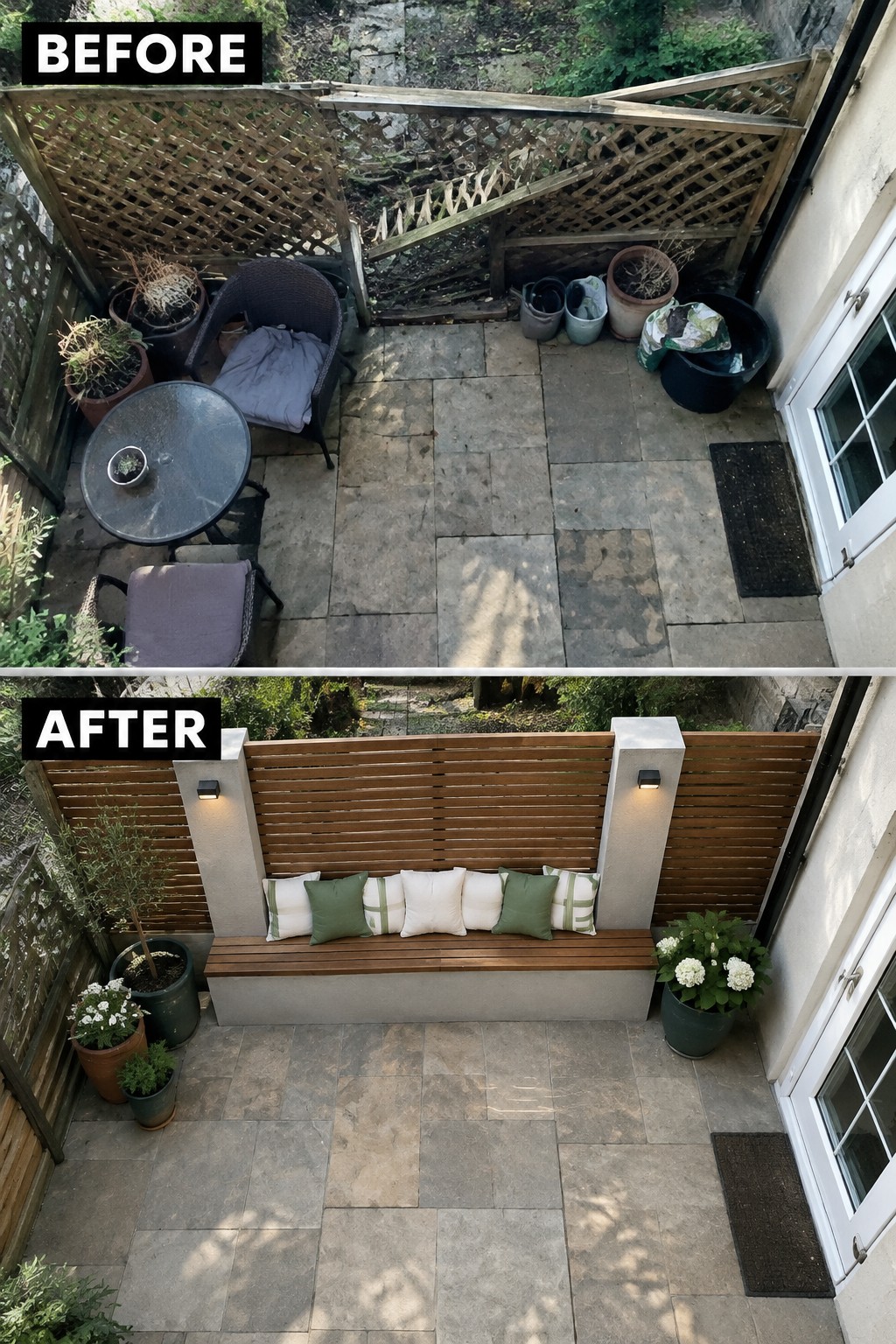
A built-in bench gives a cramped patio a clear purpose without taking up space with separate chairs. Here, replacing the worn lattice fence with wood panels and concrete pillars also creates a tidy backdrop for the seating.
This idea works well in narrow patios where there isn’t room to move furniture around. Keep the bench sized to the space and leave enough clear floor area to walk comfortably.
Frequently Asked Questions
Q: Do concrete pillars make a wood-panel fence look too heavy?
A: Not if you balance them with slimmer panels and a simple design. A warm wood tone also softens the concrete and keeps the fence from feeling too imposing.
Q: What kind of wood works well between concrete pillars?
A: Cedar and redwood are popular because they handle outdoor conditions well and have a naturally warm color. If you choose another wood, use an exterior finish and plan to maintain it as it weathers.
Q: Can I mix horizontal and vertical wood panels?
A: Yes, a change in direction can add interest without changing the materials. Try using one orientation across most of the fence and saving the other for a gate or a short feature section.
Q: How do I keep the fence from looking dated?
A: Stick to clean lines and avoid piling on decorative details. Let the contrast between the concrete and wood do most of the work.
