


Shady front yards can feel difficult to plant when the brightest spots are limited, but begonias bring color to places where many flowers struggle.
I’ve found that a bed looks more settled when begonias follow the shape of a path or soften the edge of a porch rather than appearing in scattered patches.
Their leaf shapes and flower colors can also help tie together shrubs, ground cover, and containers without making a small yard feel crowded.
The key is to leave room for the plants to grow and to choose placements that still look balanced as the seasons change.
I’d start with the ideas that suit your yard’s shade, layout, and level of upkeep.
Use A Stone Path To Shape A Shady Begonia Garden
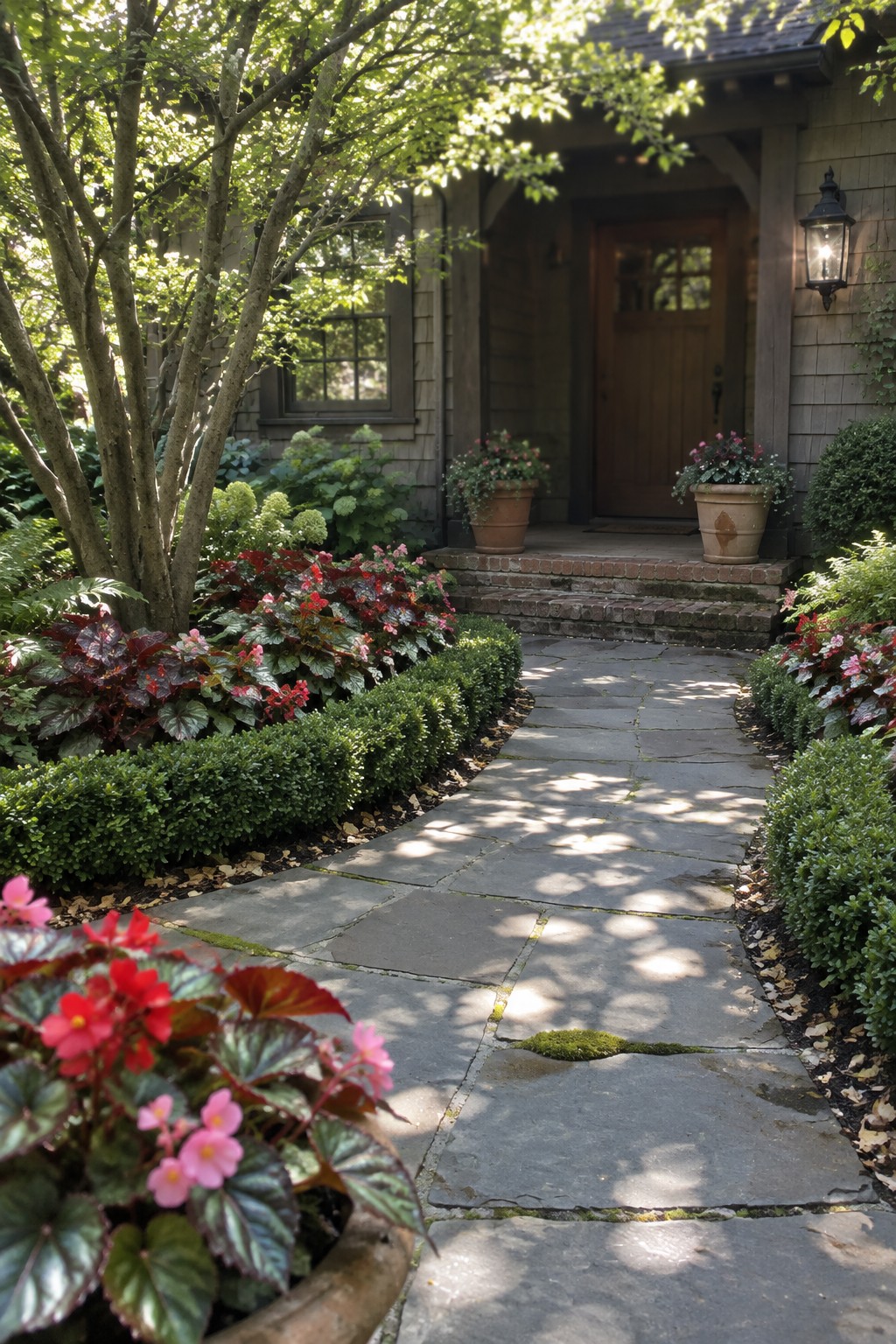
A stone path gives a shady front yard a clear route to the door while leaving room for begonia beds along its edges. The broad pavers feel at home in an established garden, and begonias bring color to spots where sun-loving flowers may struggle.
Let the path follow the natural approach to your entrance, then plant begonias in small groups along the shady sections. Leave enough space for the plants to spread without covering the paving, and choose begonia varieties suited to your climate and light levels.
Use Begonias Along a Simple Garden Path
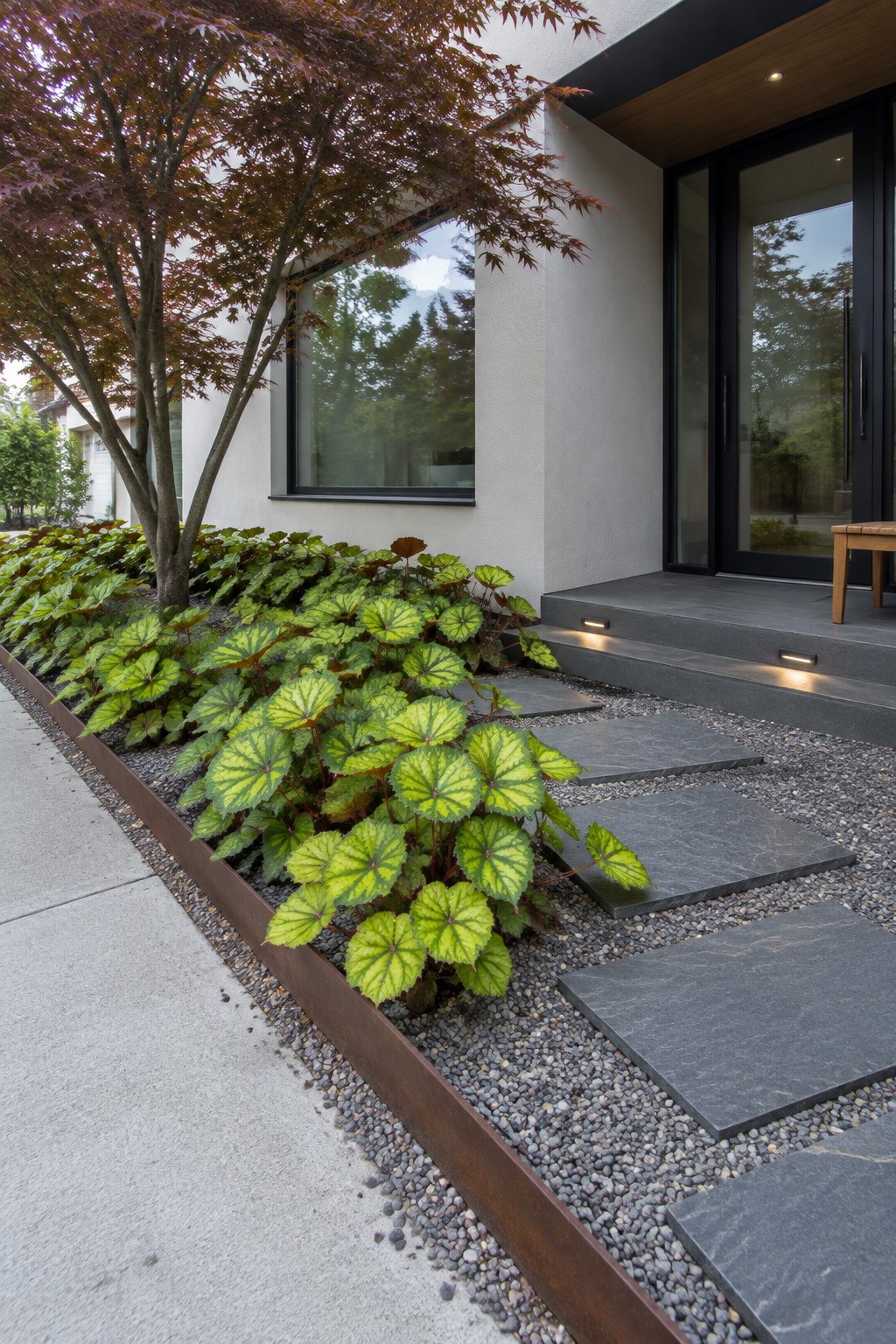
Begonias can make a shady front-yard path feel lush without needing a complicated planting plan. Planting them in a long bed beside stepping stones gives the greenery a clear shape and keeps the entrance easy to walk through.
A metal border can help keep gravel and soil in place, while broad begonia leaves fill the bed through the growing season. This works well beside a modern entry or a narrow sidewalk. Leave enough room for the plants to spread, and keep them back from the walking surface.
Add a Curving Stone Path Through Begonias
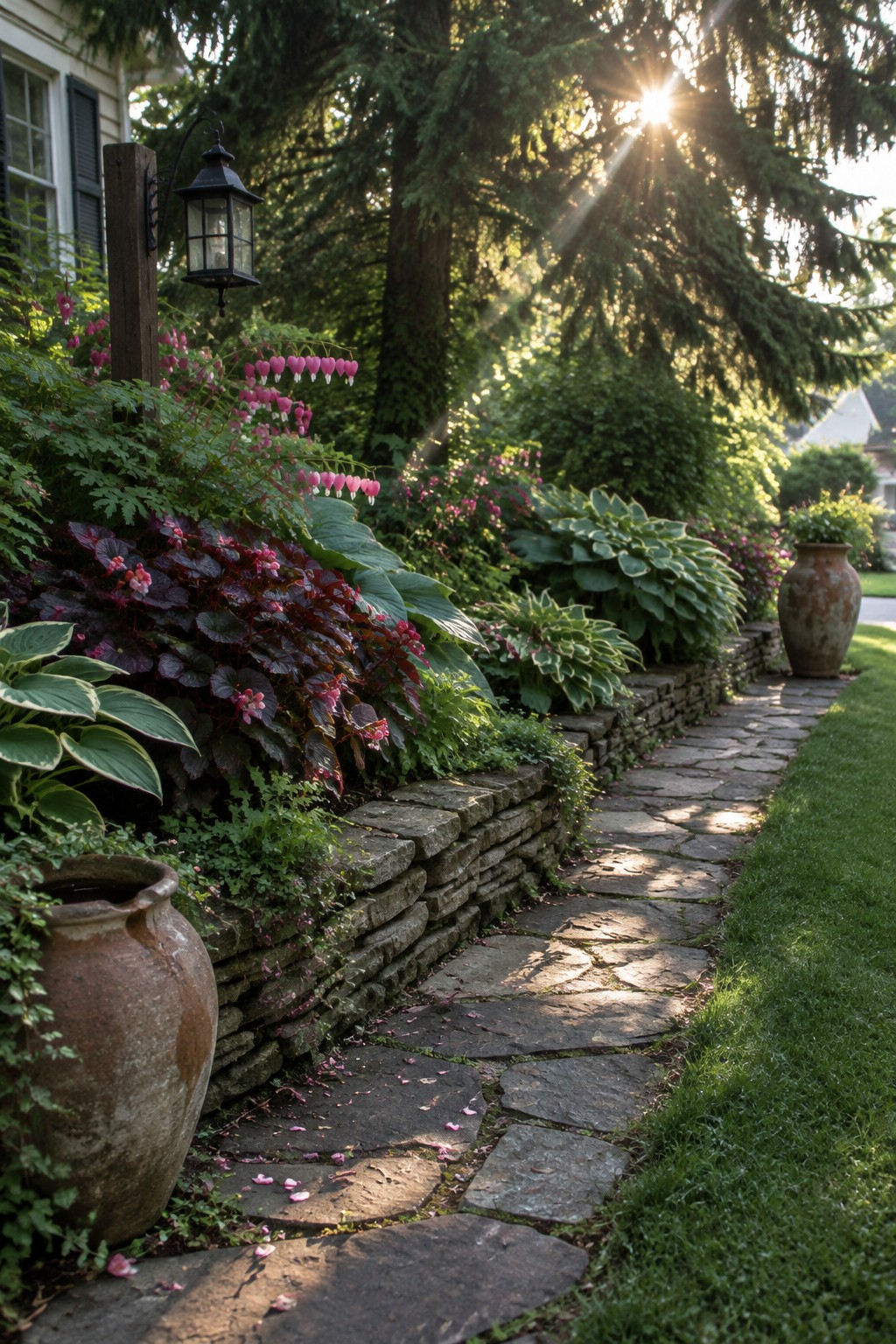
A gently curving path can make a shady front yard feel like a garden you can walk through, not just look at. Irregular stone pavers bring a relaxed, natural feel, while nearby begonias add color along the route.
Use this idea where a straight walkway would feel too formal or cut across a planting bed. Leave enough room between the stones for comfortable steps, and keep the path edge clear so begonias can fill the bed without spilling onto the walking surface.
Use Begonias in Layered Entry Plantings
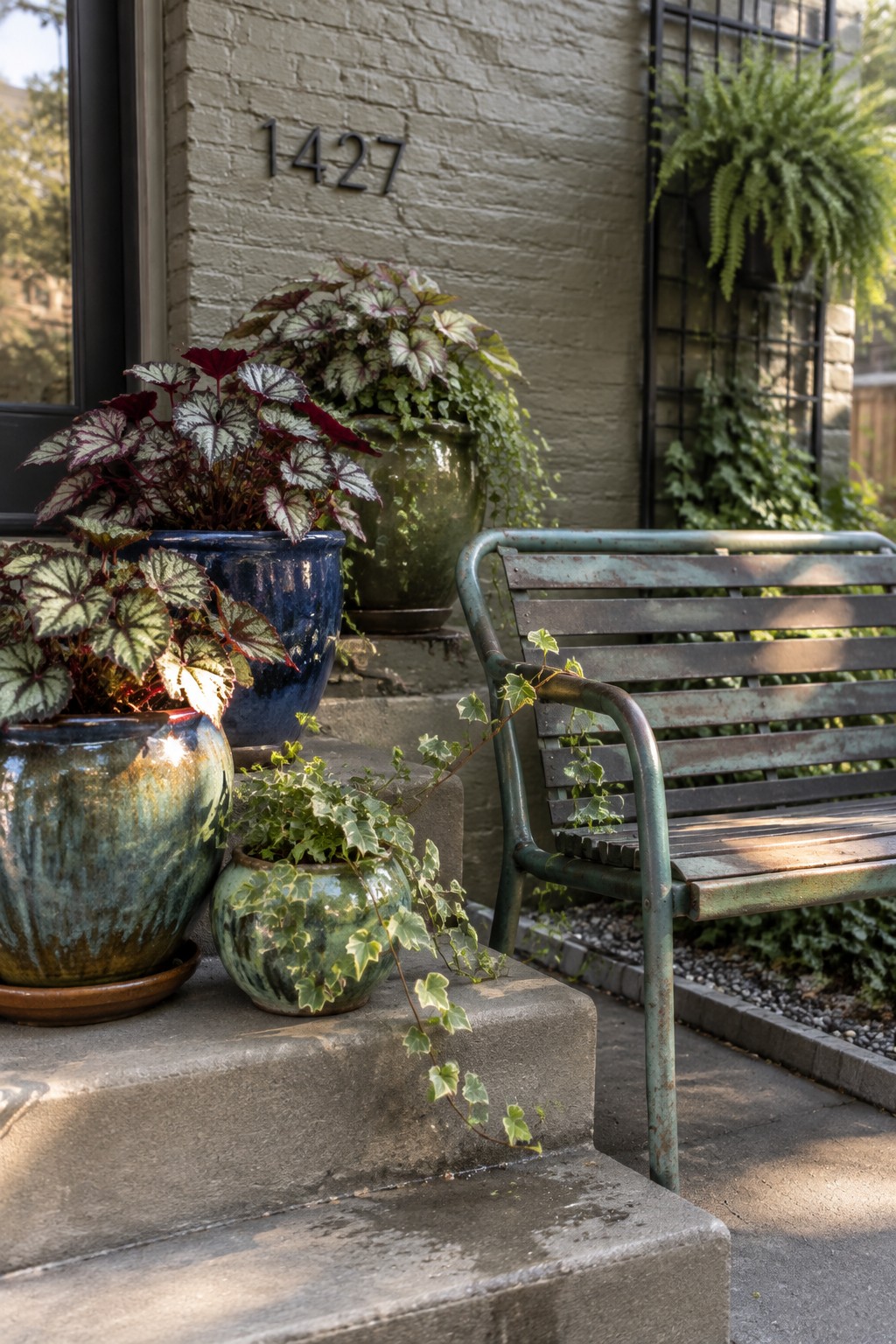
Begonias can bring color and leafy texture to a shady front entrance without needing a full garden bed. Grouping them in pots at different heights gives the plants room to spill out and makes a small entry feel cared for.
Try this on steps or beside a porch where in-ground planting space is limited. Choose pots with drainage holes, and leave enough room for people to pass comfortably. The silver-and-burgundy foliage shown here is one option, but begonias come in plenty of colors and leaf shapes.
Use Stone Edging To Define a Shady Garden Bed
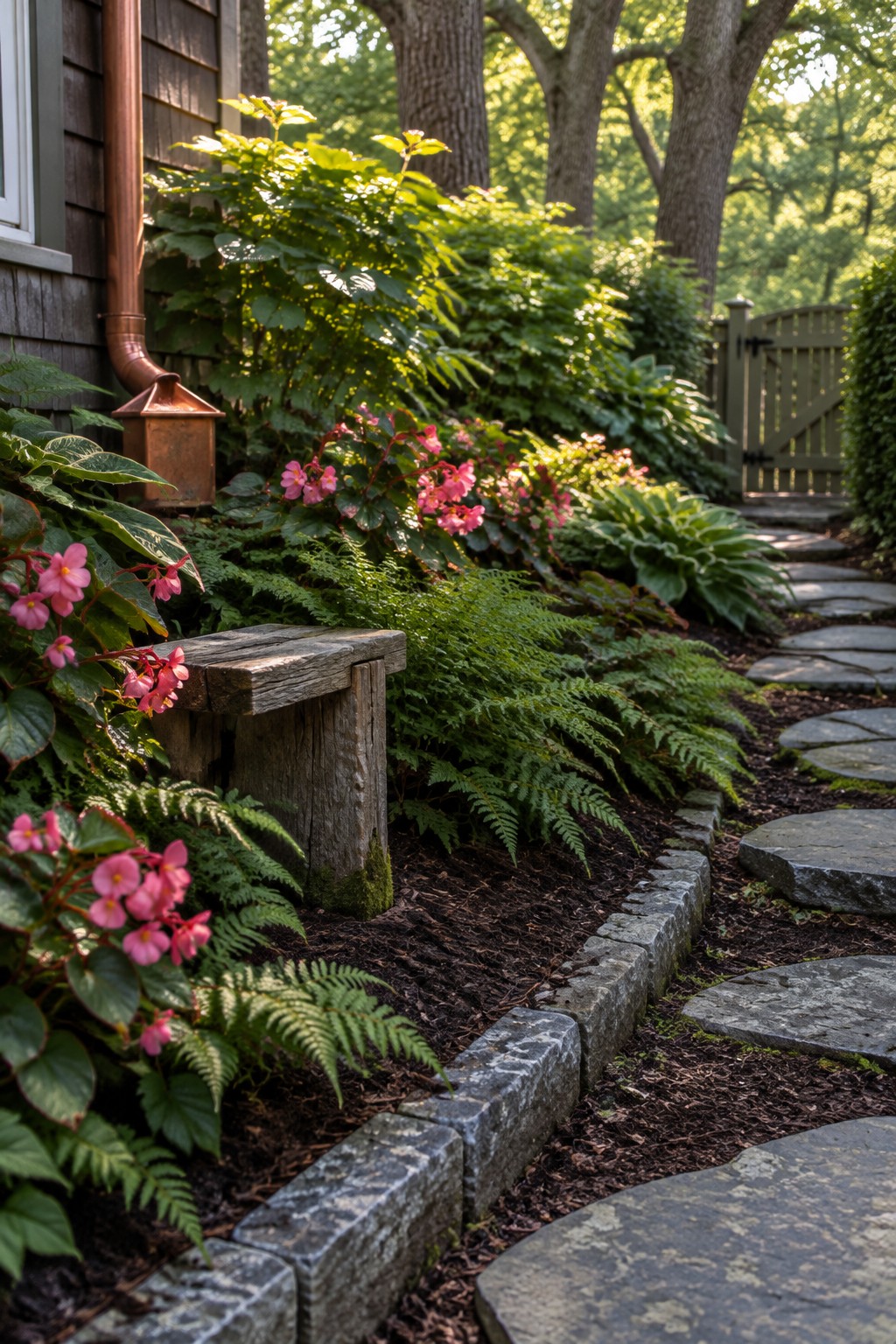
Stone edging gives a shady planting bed a clear shape and helps keep mulch and soil from spilling onto the path. It also makes a casual garden feel a little more settled without needing a formal layout.
Use low stones to outline a bed beside a walkway or house, then fill it with shade-loving plants such as begonias and ferns. Keep the border low enough that it does not crowd the plants or make the path feel narrow.
Edge a Shady Begonia Bed With Brick
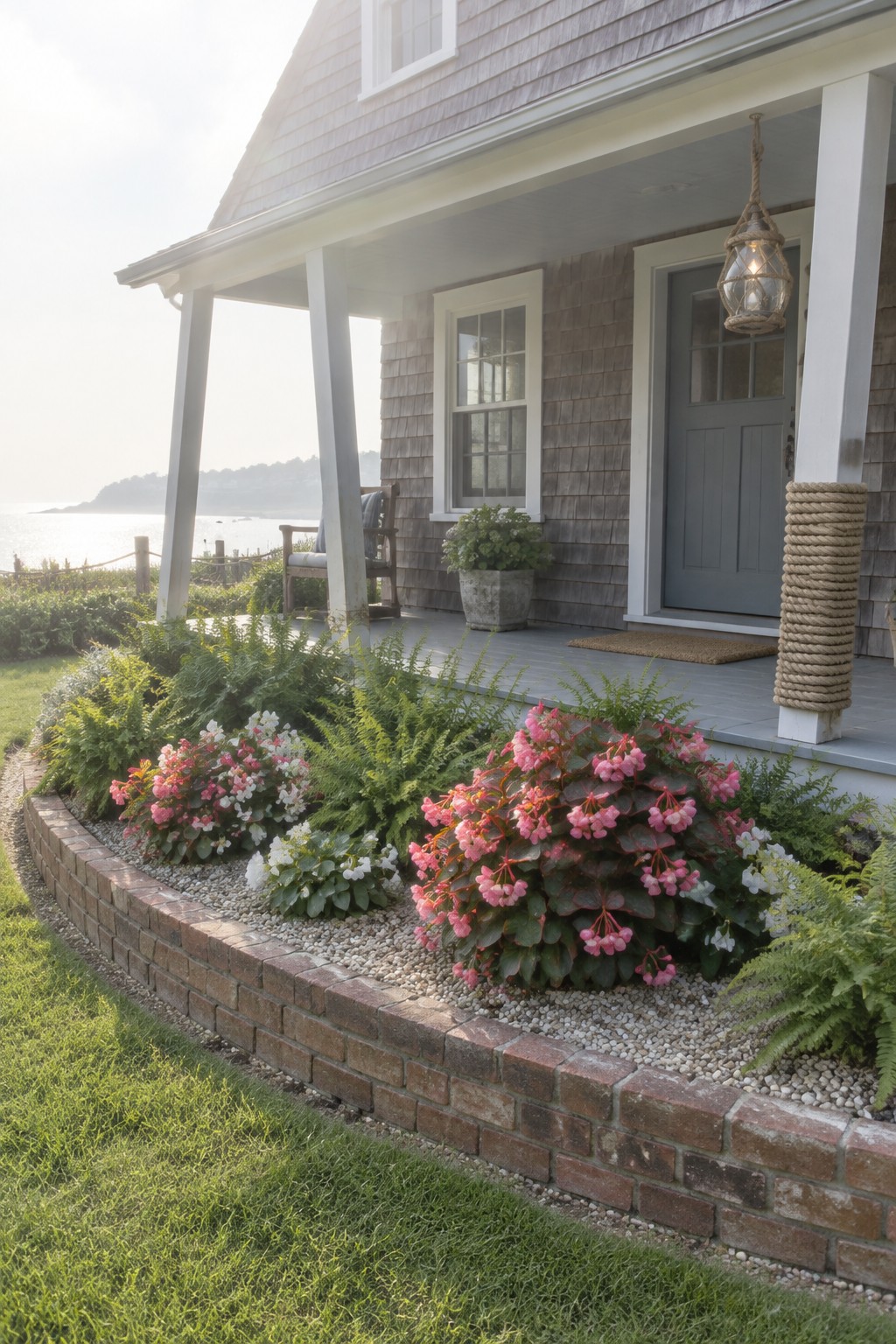
A low brick edge gives a begonia bed a clear shape and keeps the planting area neat beside the lawn. It also gives the flowers a little room to spread without letting the bed blend into the grass.
This approach works well along a front walk or porch, especially where the yard slopes slightly. Use a broad curve rather than a tight border, and leave enough space inside for begonias and foliage plants to fill in. Keep the edging low so it does not block the flowers.
Use Begonias To Edge A Straight Front Walk

A straight stone walk gives a shady front garden a clear shape, and begonias make a cheerful border along the way. Their colorful blooms stand out against clipped green edges without making the path feel crowded.
This layout works well in a narrow front yard or beside a formal entry. Plant begonias in a generous bed along the walk, leaving enough room for them to spread and keeping the path edges easy to maintain.
Use Raised Planters For Shady Begonias

Raised wooden planters make it easy to group begonias along a house wall, where their flowers can brighten a shady spot. The defined beds also keep the planting tidy beside a narrow path.
Choose sturdy containers with drainage holes, and use a good potting mix so the roots do not sit in soggy soil. Begonias suit sheltered porches and side yards, but leave enough room to walk and tend the plants.
Use Dark Planters To Organize a Shady Entry Garden
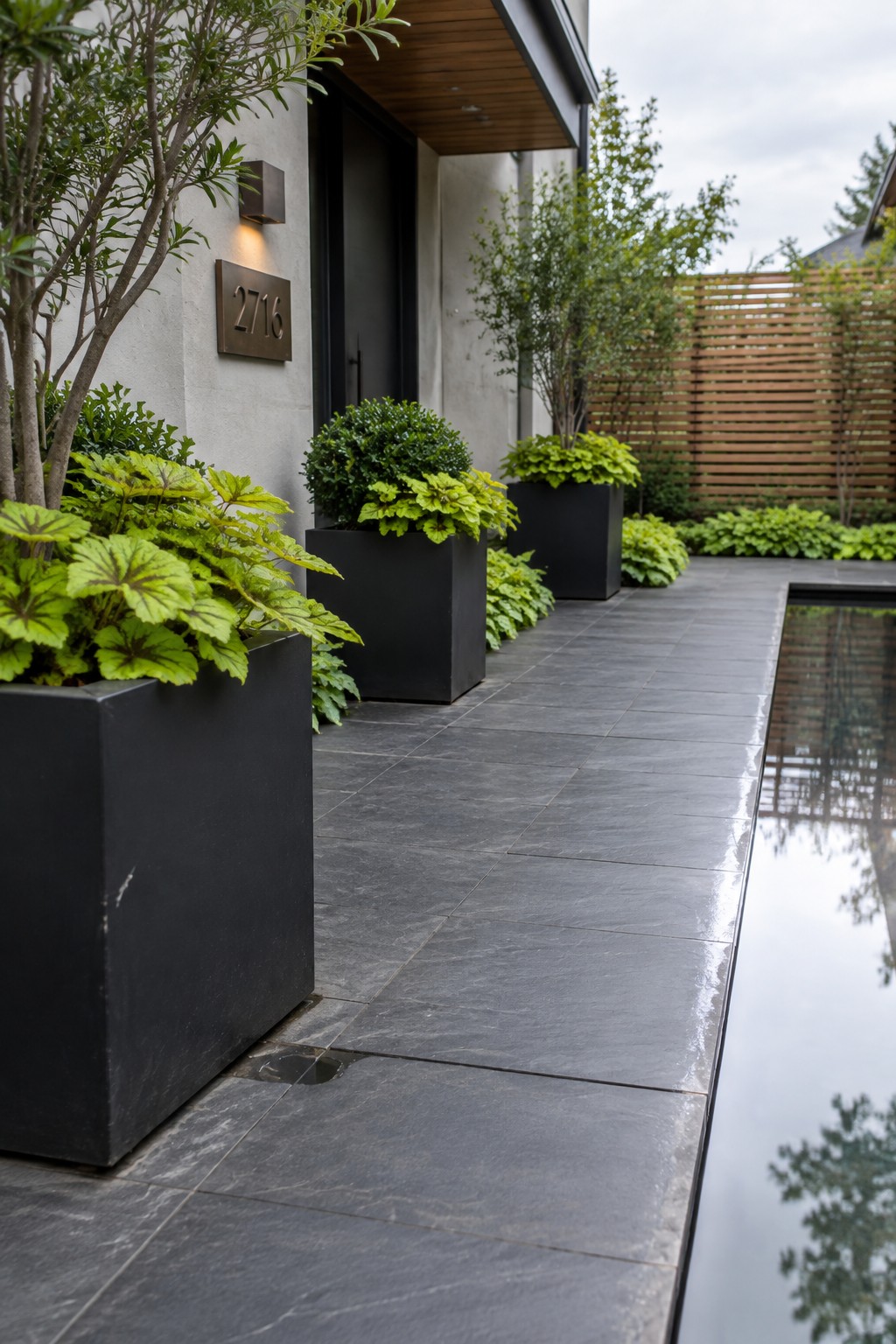
Large planters can give a shady front yard a clear planting structure without needing a formal garden bed. Their dark finish makes leafy begonias and other shade plants easy to notice, while the repeated containers help the entry feel orderly.
Use this approach along a front walk or beside the doorway, choosing planters with enough room for begonias to fill out. Keep the number manageable so the path stays open and the containers do not crowd the entrance.
Use Gravel Steps To Handle a Sloped Begonia Garden
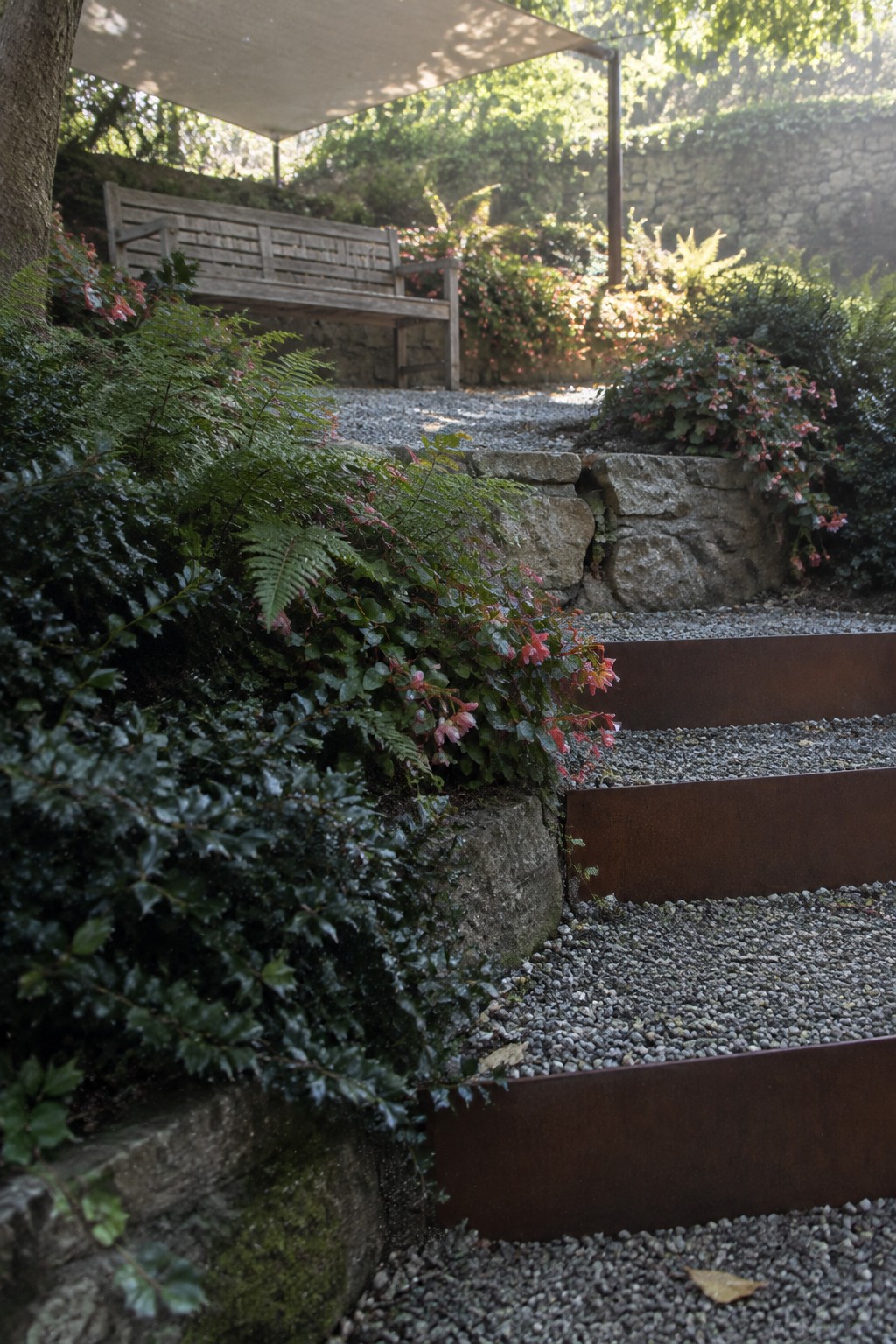
Gravel steps are a practical way to make a sloped, shady garden easier to walk through. The low stone risers hold the path in place, while gravel lets rain drain instead of leaving a muddy track.
For a similar front yard, keep the steps wide enough to use comfortably and plant begonias along the edges where they get some protection from direct sun. Check that the risers are secure, especially on a steep slope.
Use Window Boxes To Add Begonias Near The Entry
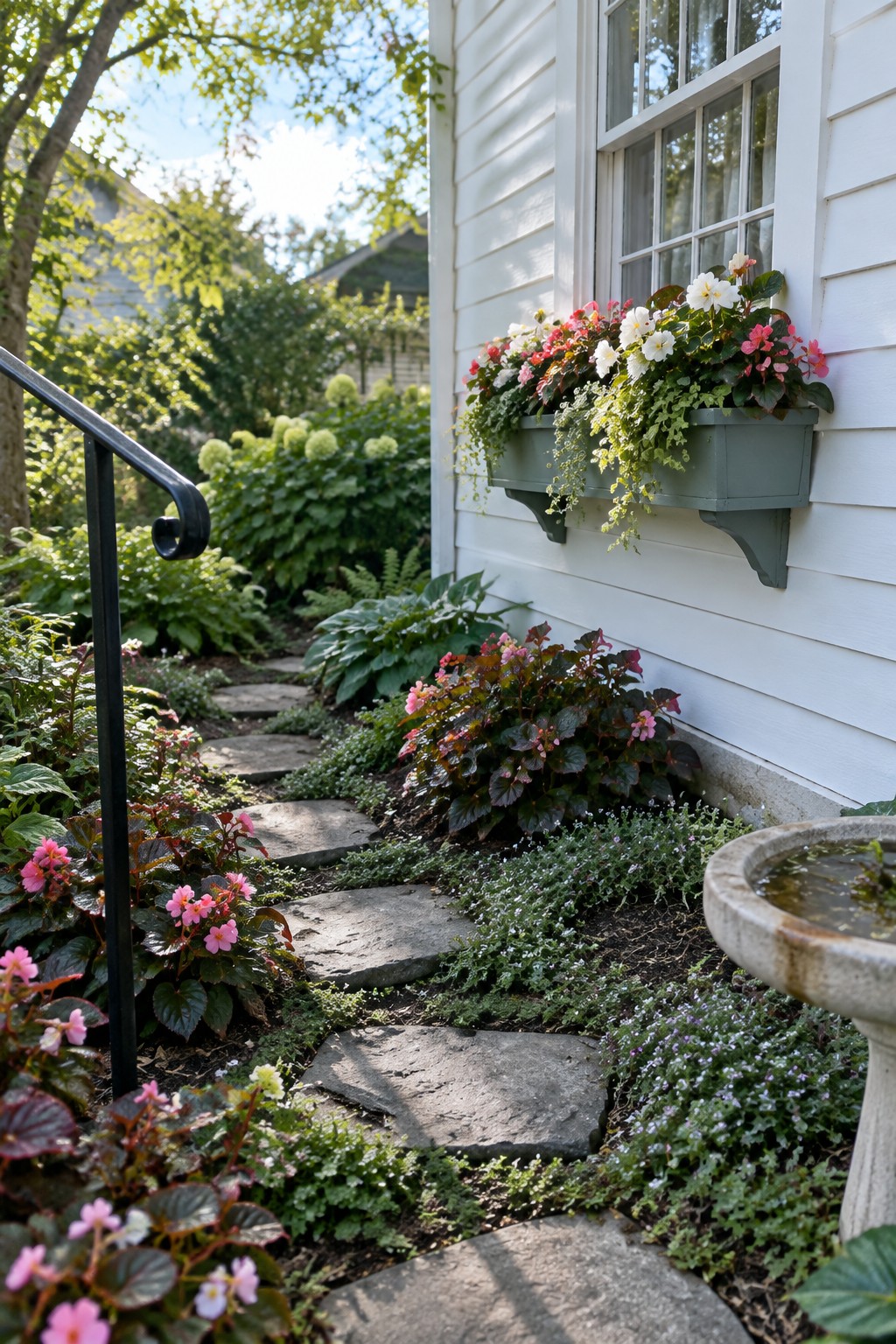
Window boxes are an easy way to bring begonias close to the front of the house without taking up garden space. Their flowers sit at eye level, so they show up even in a small or narrow yard.
Choose a spot that gets the shade begonias prefer, and mix them with a few trailing plants for a full, relaxed look. A box beneath a front window works well, but make sure it drains freely and is easy to reach for watering.
Use a Curved Stone Border Around a Shady Begonia Bed
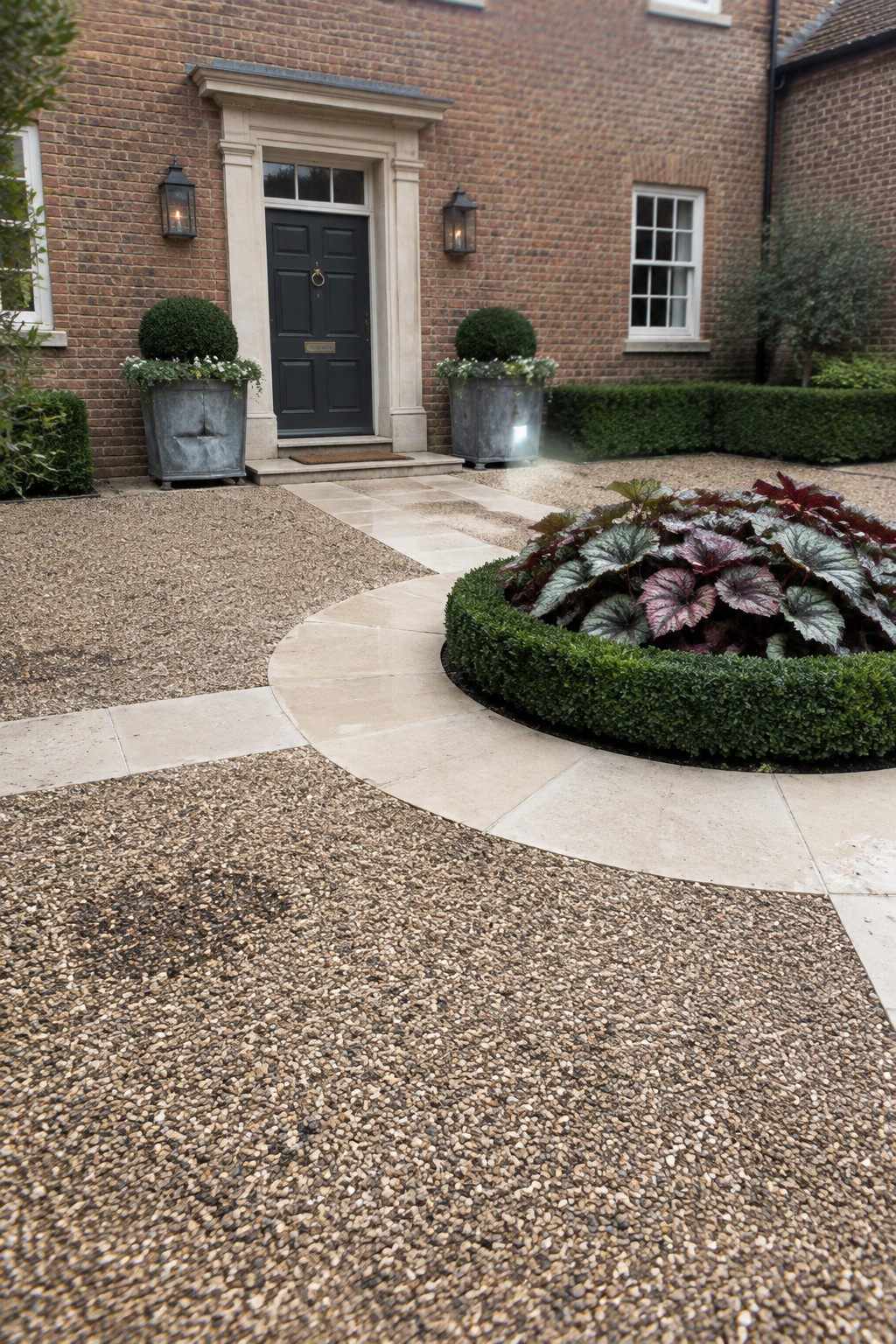
A curved stone border gives a front garden bed a clear shape without making it feel too formal. It also sets leafy begonias apart from the surrounding gravel, so their patterned leaves are easier to notice.
Use a broad curve beside an entry path or driveway, and keep the edging low enough that it does not hide the plants. Begonias suit a shady spot, but leave room between them so air can circulate and the bed does not become crowded.
Line Begonia Pots Along the Front Steps

Begonias in pots can bring color right up to a shady front entry without requiring a full garden bed. Grouping them along the steps makes the planting feel connected to the house and easy to notice from the walk.
Use pots of a similar size to keep the arrangement orderly, and place them where they won’t narrow the steps or block the handrail. This works especially well at row houses and other entries with limited planting space.
Use a Curved Raised Bed for Shady Begonias
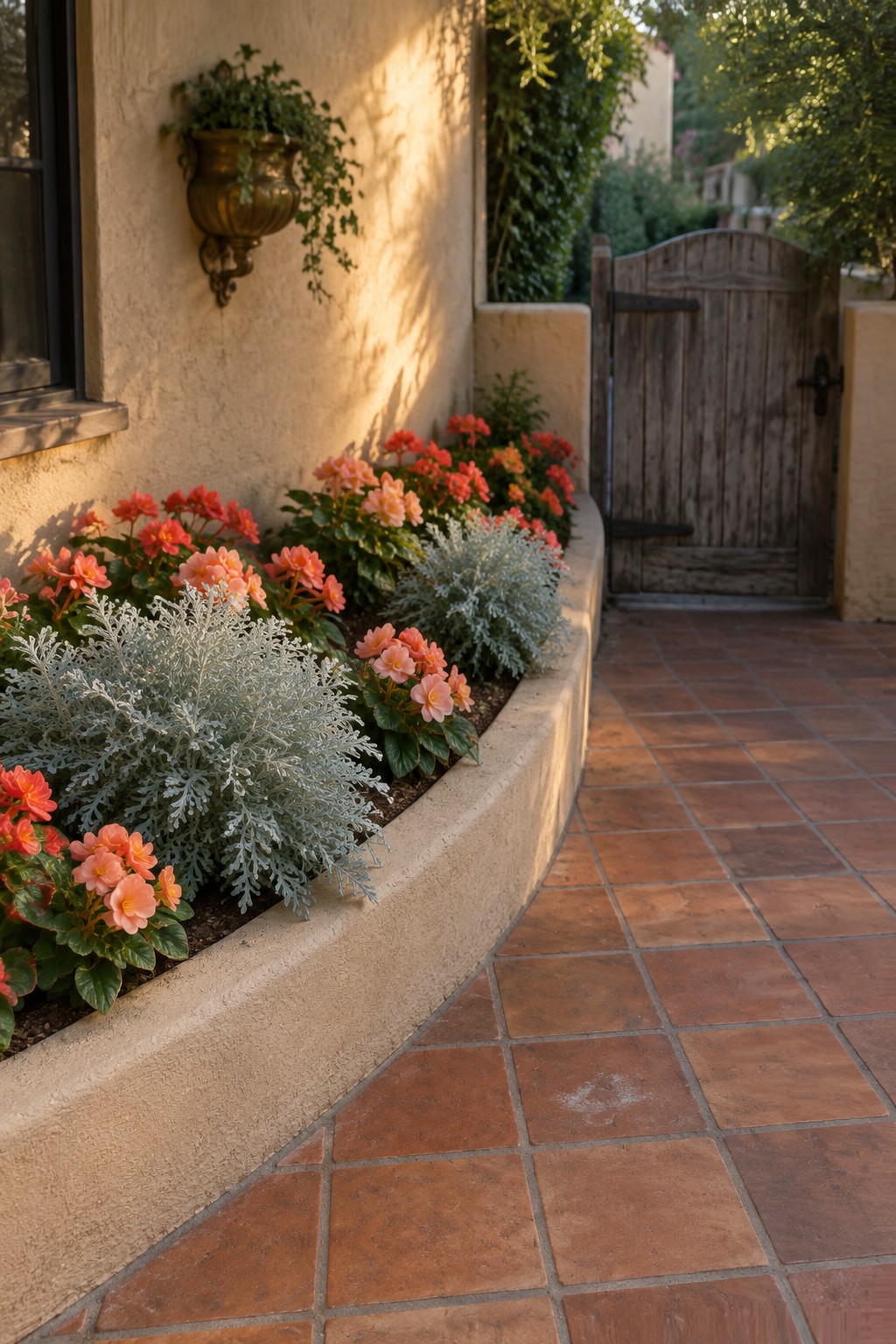
A raised planting bed that curves along the house gives begonias a clear place to grow without taking over the walkway. The low wall also makes the flower bed feel like part of the entry, rather than an extra patch of planting.
This approach works well beside a front walk where space is limited. Plant begonias in groups and leave room for them to spread, then add a few foliage plants for variety. Keep the bed low enough that it does not narrow the path.
Use Gabion Planters To Raise Begonias
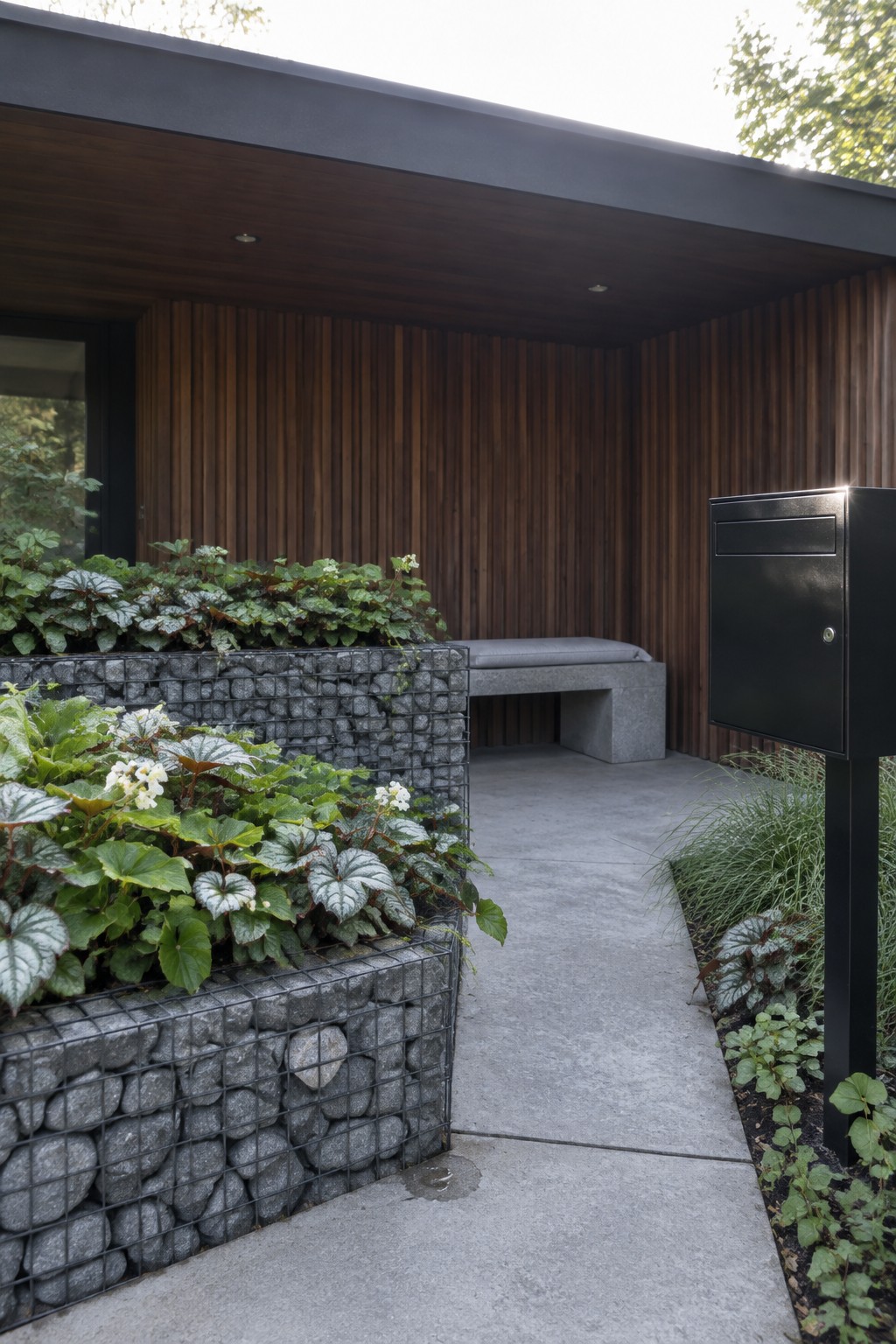
Raised gabion planters give a shady entry garden a clear structure without needing a formal hedge or solid retaining wall. Their stone-filled wire sides hold the bed neatly in place, while leafy begonias can spill over the top.
Use this approach where a path runs beside a planting bed, especially if the ground needs a little support. Keep the planter low enough that it does not crowd the walkway, and choose plants suited to the amount of shade.
Use Gravel Mulch to Organize a Shady Entry Garden
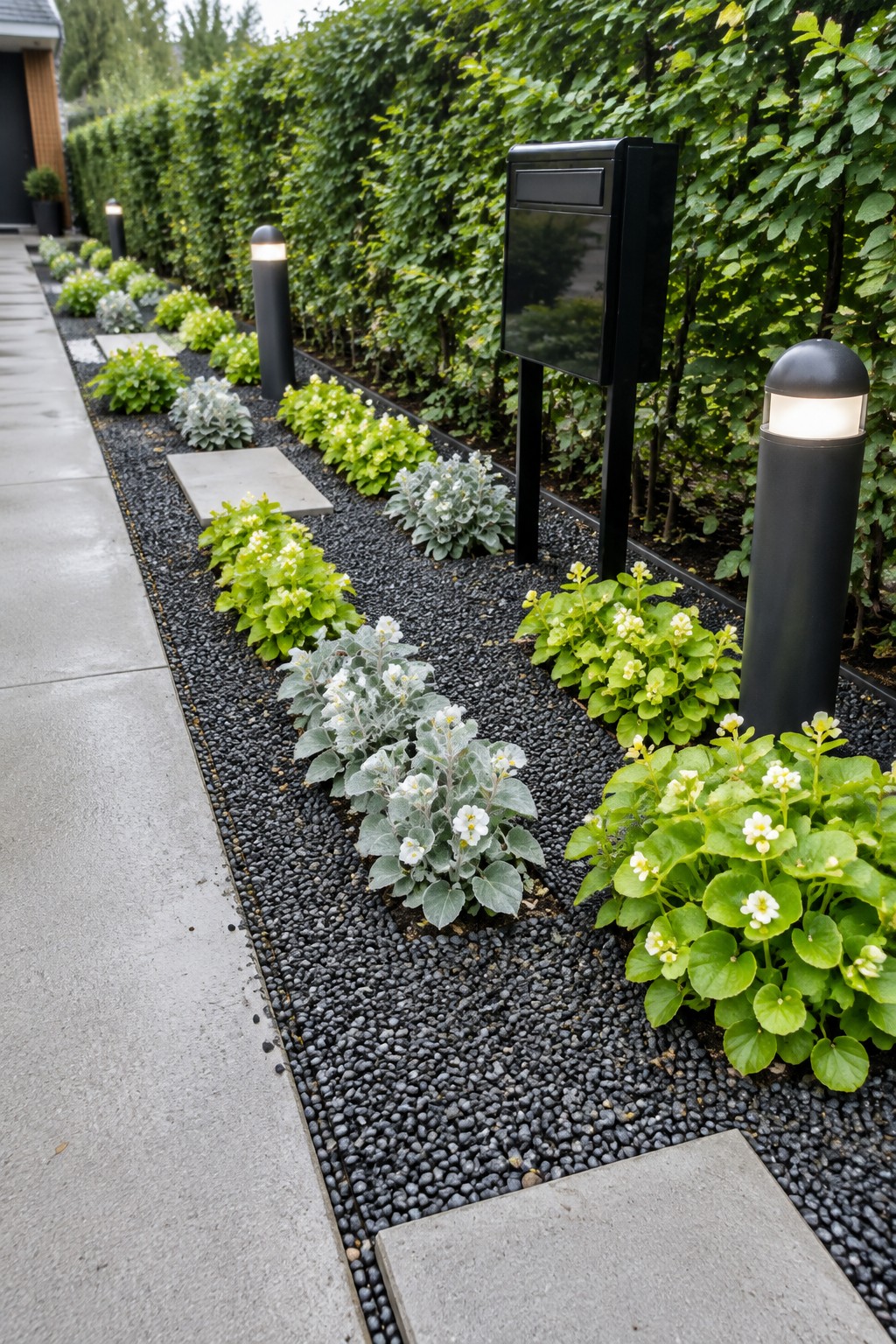
A gravel bed gives a shady front garden a tidy structure without requiring a large paved area. Low plantings stand out against the dark stones, and the open surface makes it easier to keep the bed looking neat.
Use the same approach around begonias, leaving enough room for each plant to grow and keeping gravel clear of their stems. A simple concrete path can define one edge of the bed, while a few stepping stones provide access for weeding and care.
Frequently Asked Questions
Q: Will begonias bloom in a front yard that gets no direct sun?
A: Many begonias do well in bright shade, especially wax and tuberous types. They still need some natural light, so choose a spot with dappled light or a bright, open sky rather than a deeply dark corner.
Q: How often should I water begonias planted along a shady walkway?
A: Check the soil with your finger before watering. If the top inch feels dry, water at the base of the plants, but avoid keeping the soil soggy.
Q: Can I leave begonias in the ground over winter?
A: In mild climates, some types may survive with protection, but begonias are frost-sensitive. In colder areas, lift tuberous begonias before frost or treat the plants as annuals.
Q: What can I plant with begonias in a shady front yard?
A: Pair them with ferns or hostas for leafy texture, or use a low-growing groundcover to fill gaps. Leave enough space for air to move between plants, especially in damp, sheltered spots.
