

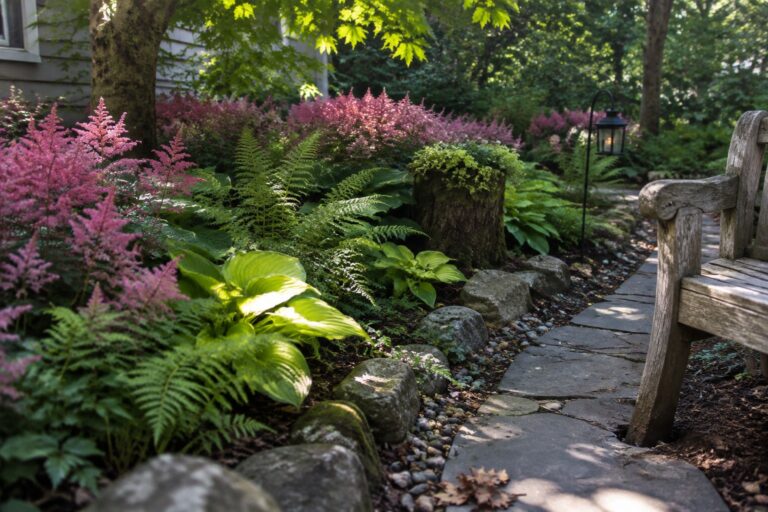
Shady beds can be tricky because bright flowers are limited, and a planting may look flat if every plant sits at the same height.
I like how astilbe brings soft color and feathery texture to those quieter corners without needing full sun.
The best layouts give each clump room to show its shape while using taller plants, edging, or a winding path to make the bed feel connected to the rest of the yard.
Small changes in spacing and color can make a shaded area feel much more considered.
These ideas offer practical ways to adapt astilbe to different garden shapes and growing conditions.
Use Stone Edging to Shape a Shady Flower Bed
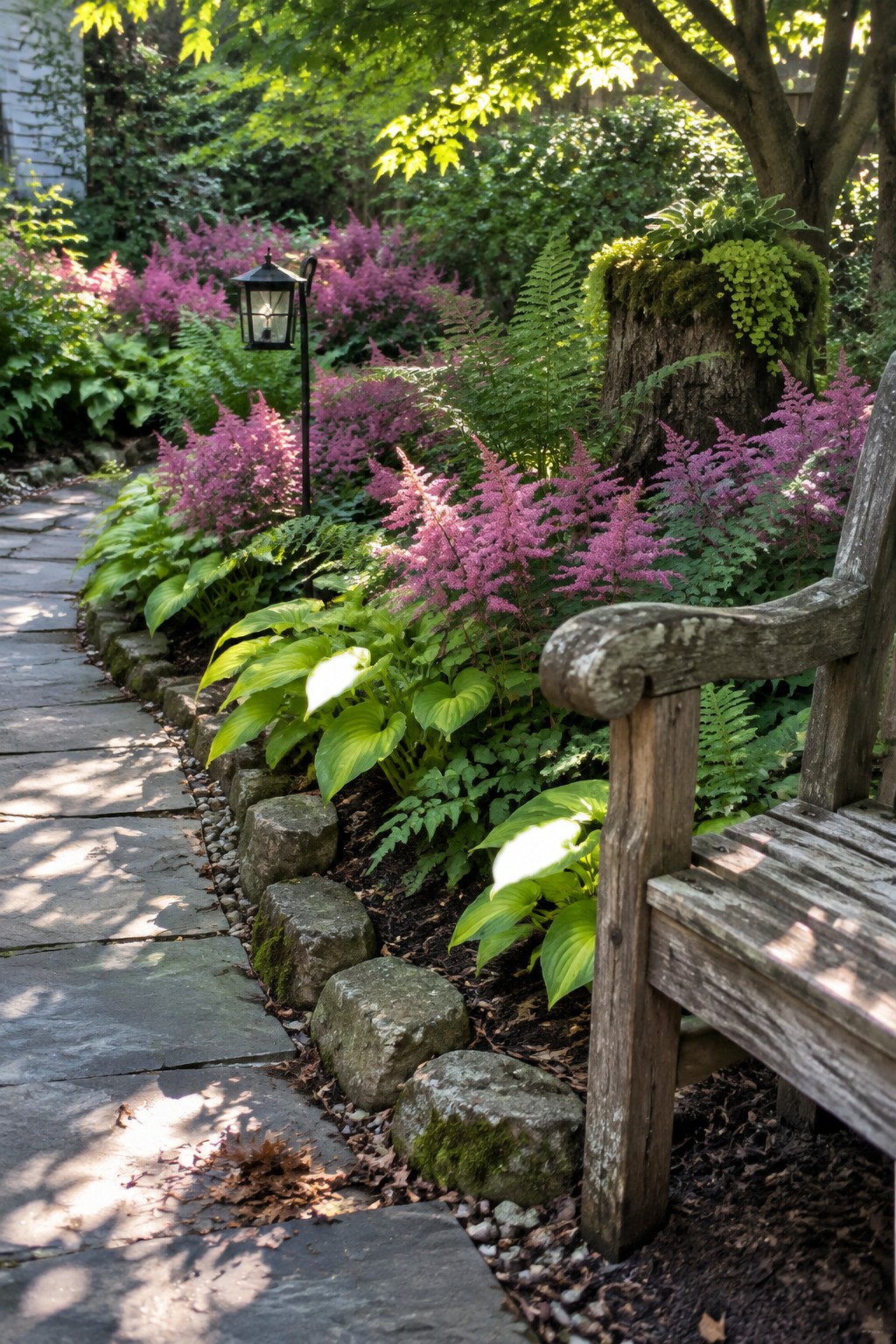
A stone border gives a shady flower bed a clear edge and helps it sit neatly beside a garden path. Here, the rough stones feel at home among the leafy plants, while the path stays easy to follow.
Use this idea along a curved walkway or wherever a bed tends to spill onto paving. Set stones low and close together, and leave enough room for plants to spread without covering the path.
Plant Astilbe In Layers
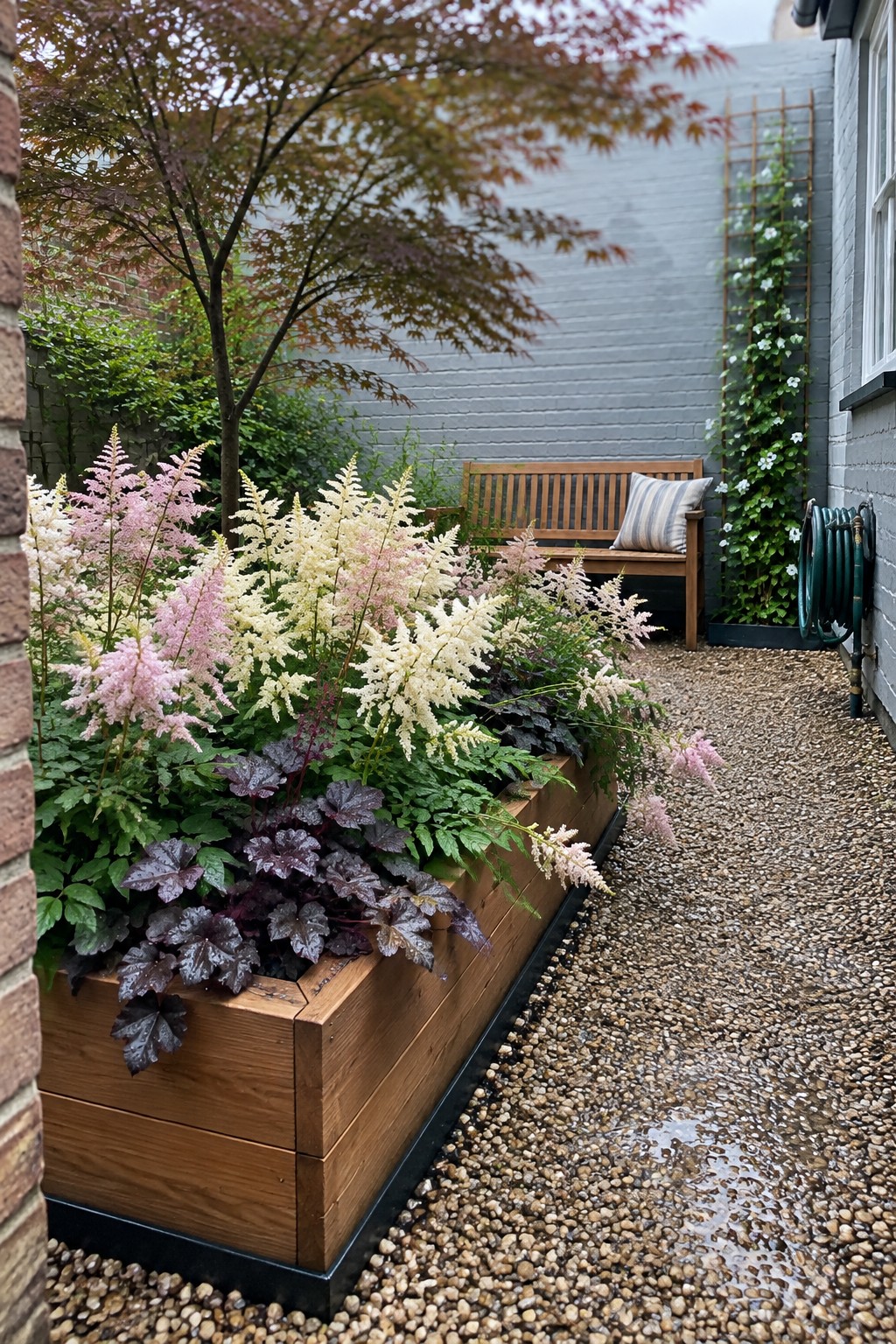
Astilbe works well in a layered flower bed because its feathery plumes rise above lower foliage, giving a shady spot a little height and variation. Mixing soft pink and cream flowers also keeps the planting gentle without relying on a single color.
Use taller astilbe toward the back of a bed and shorter plants near the edge, leaving enough room for each clump to spread. A raised bed along a garden path is one place this approach can work, especially where the soil stays moist.
Create a Shady Garden Path
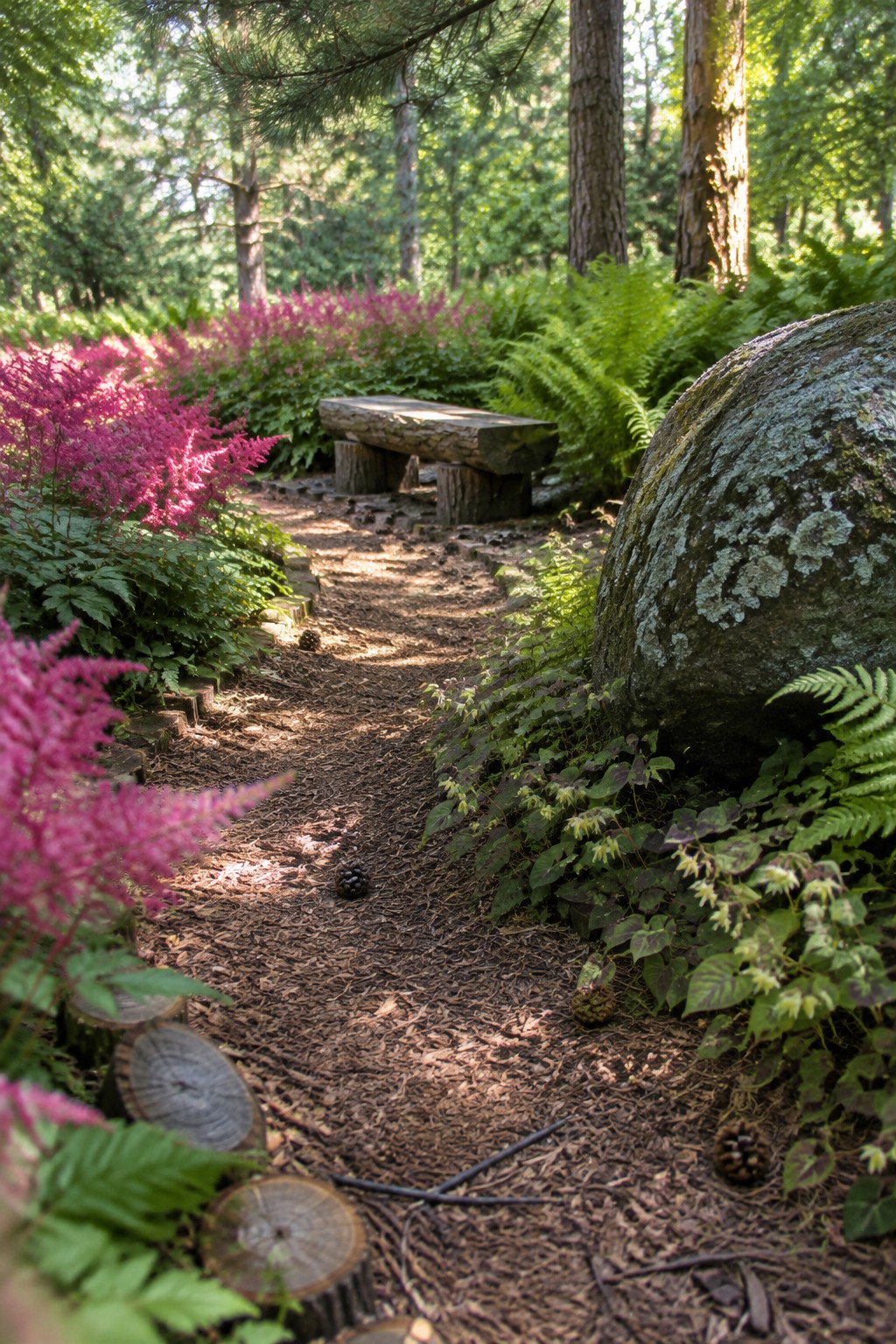
A simple path can make a shady flower bed feel more settled and easier to enjoy. Letting plants grow along its edges gives the route a natural look, while a clear walking surface keeps the garden practical.
Use mulch or stepping stones for a path that fits a woodland-style yard, and plant astilbe in loose groups along the sides. Leave enough room for the plants to spread without spilling into the walking space.
Use Astilbe Along a Garden Path
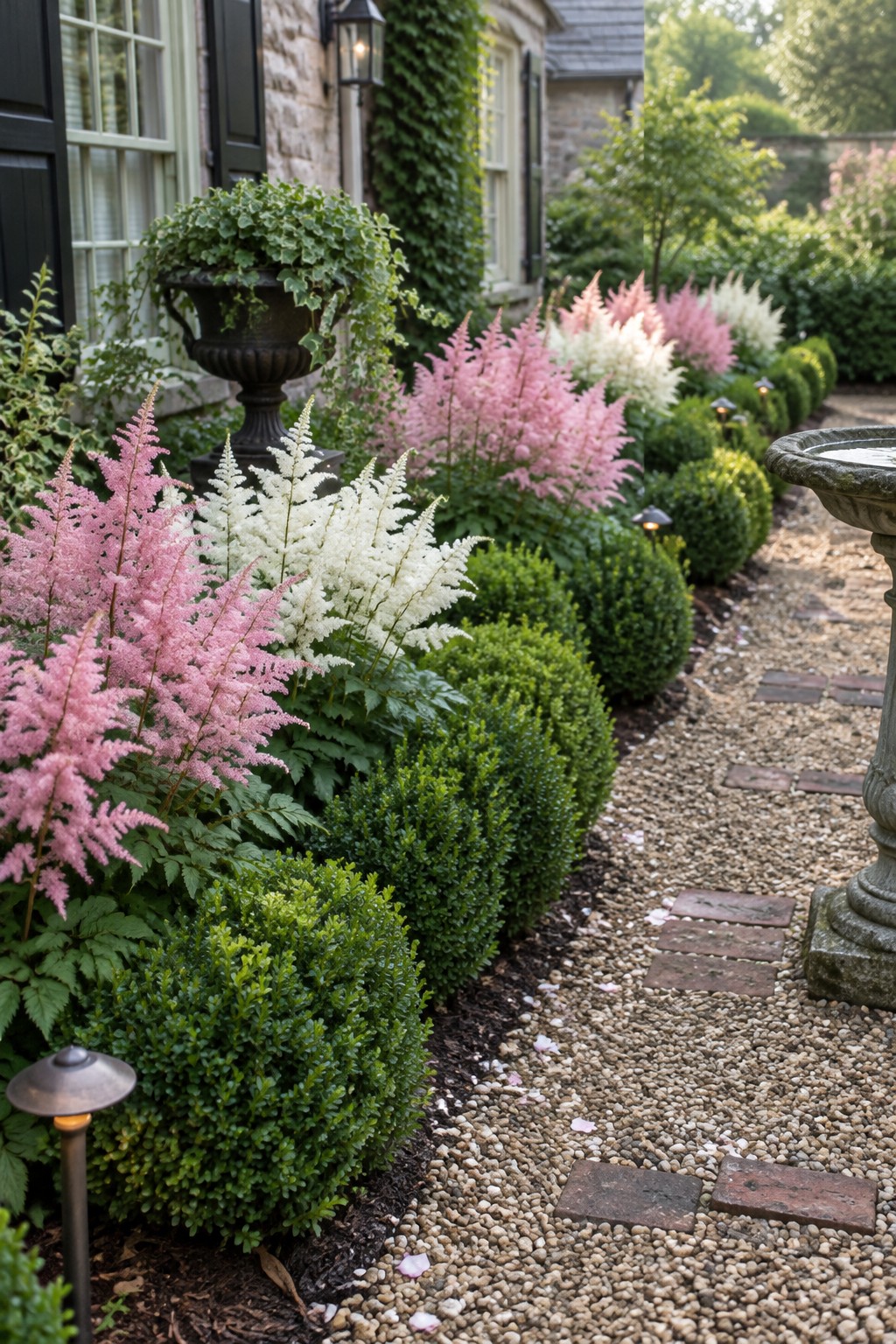
Astilbe can make a shady path feel like part of the garden, rather than just a way through it. Planting it in soft clusters beside clipped shrubs gives the path a clear edge while adding color through the flower bed.
Use pink or white varieties where the soil stays evenly moist, and leave enough room for the plants to spread. A gravel path with stepping stones suits this kind of planting, but avoid placing astilbe where it will dry out between waterings.
Add Stepping Stones Through a Shady Garden
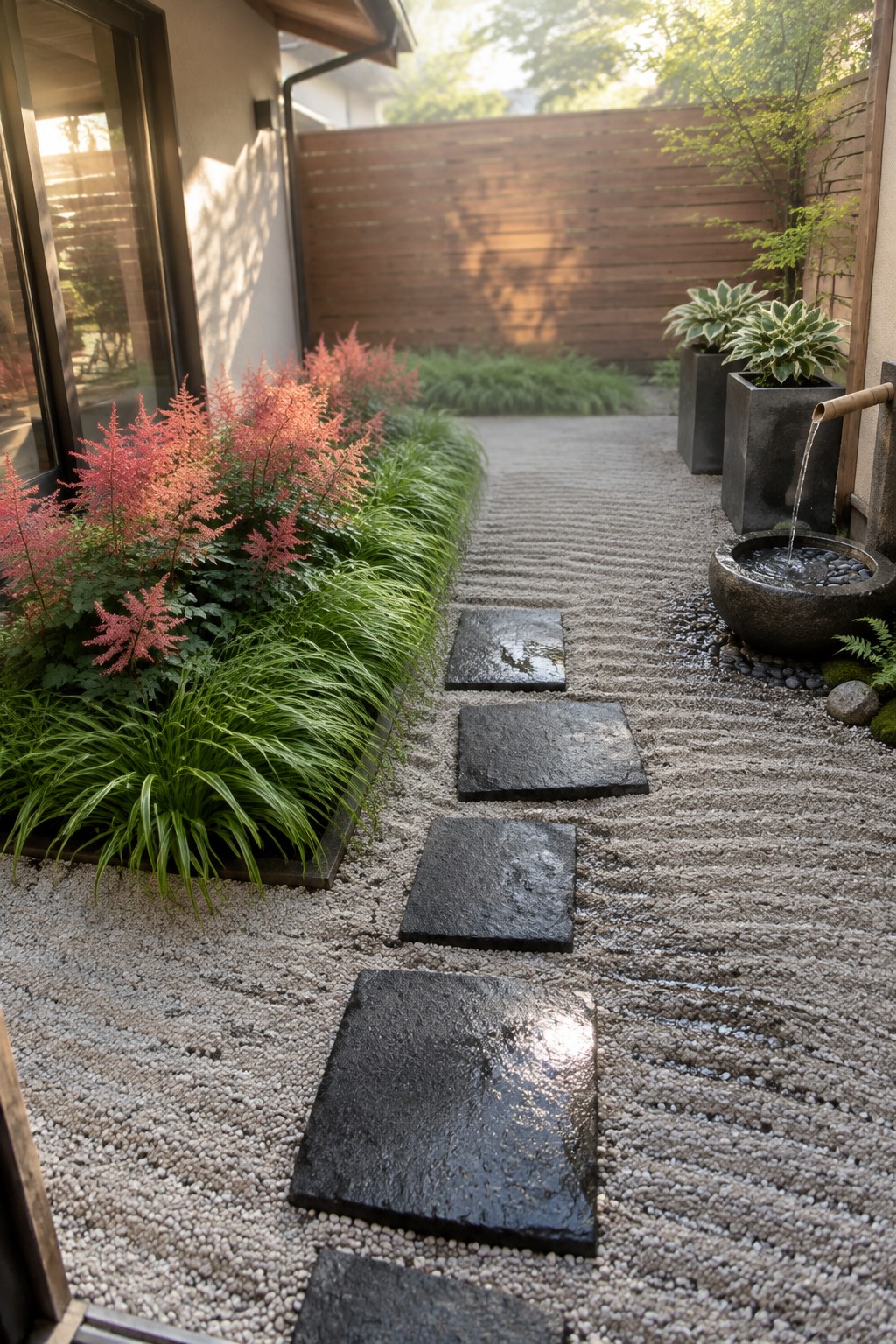
A stepping-stone path makes a narrow garden easier to walk through without covering the whole area in paving. The gaps between stones leave room for gravel and nearby planting, so the path feels like part of the garden.
Use broad, stable stones and leave comfortable steps between them. This layout suits a side yard or other compact space; keep plants trimmed back so they don’t spill onto the walking surface.
Build Terraced Beds Into a Slope
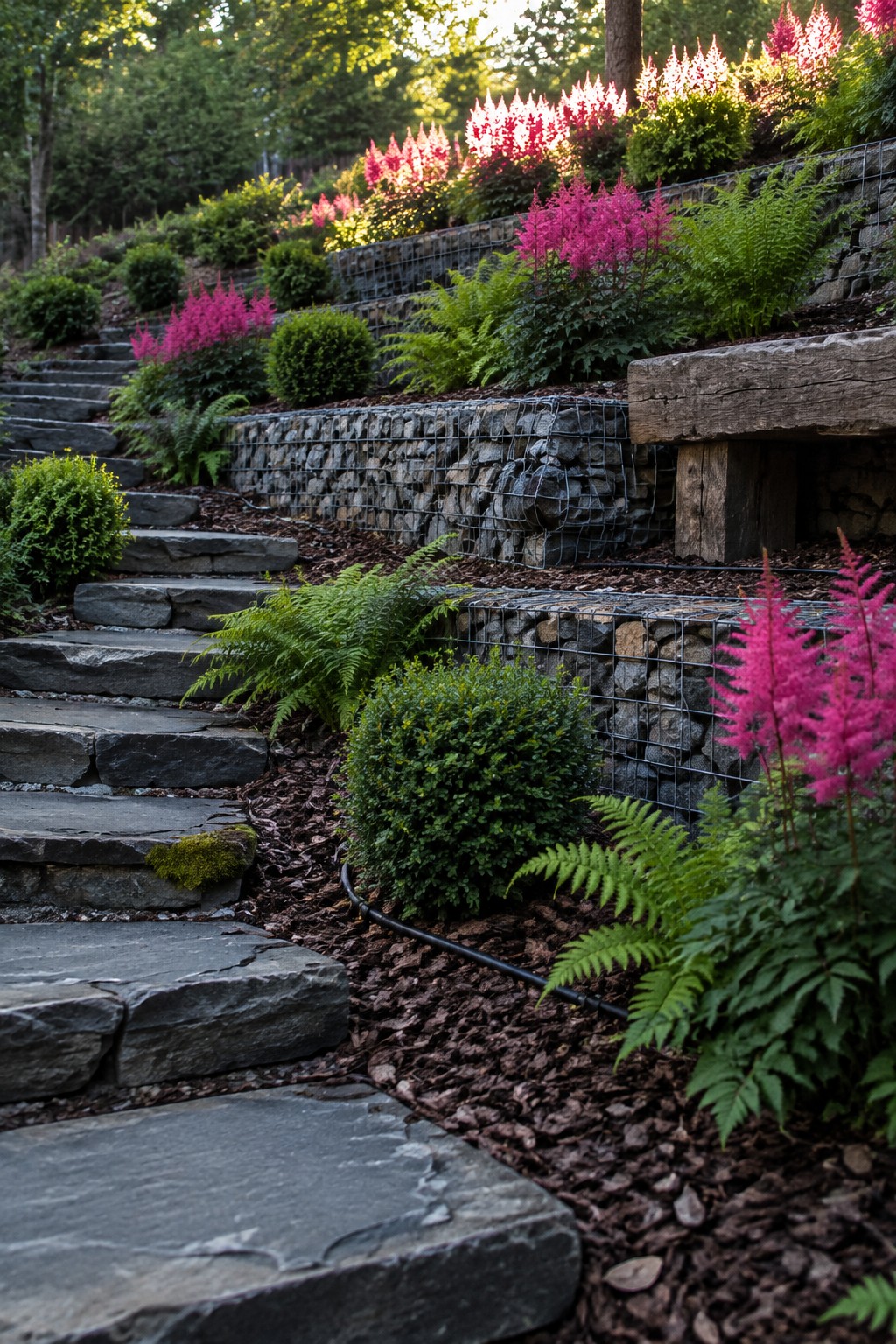
Terraced beds make a sloping garden easier to plant and give it a clear structure. Here, stone steps and gabion retaining walls create level areas for astilbe and ferns, so the flowers can be grouped instead of scattered across the hillside.
This approach works well on a steep or uneven lot where a flat flower bed would be hard to maintain. Use sturdy retaining walls and leave enough room in each terrace for plants to grow. Avoid making the beds too narrow, or they may be difficult to tend.
Use Stepping Stones to Reach the Water’s Edge
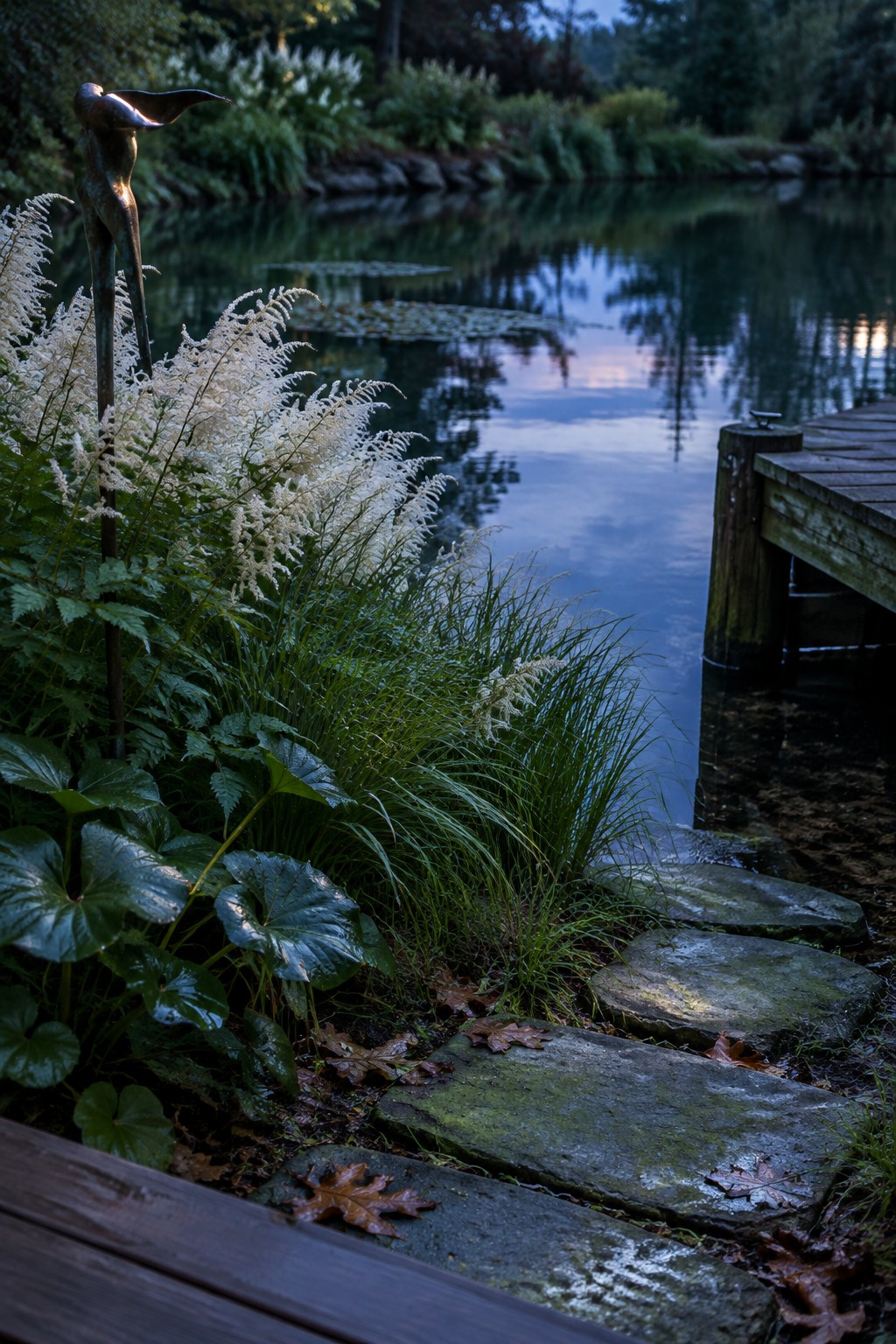
A few broad stepping stones can make a shady garden bed easier to move through without cutting a full path across it. They also give grasses and flowering plants room to spill around the edges, which suits a quiet spot beside a pond.
Set the stones firmly on level ground and leave comfortable gaps for walking. Astilbe can grow nearby in the softer parts of the bed, but keep it clear of the stepping surface so the stones stay safe when damp.
Mix Astilbe With Compact Evergreens
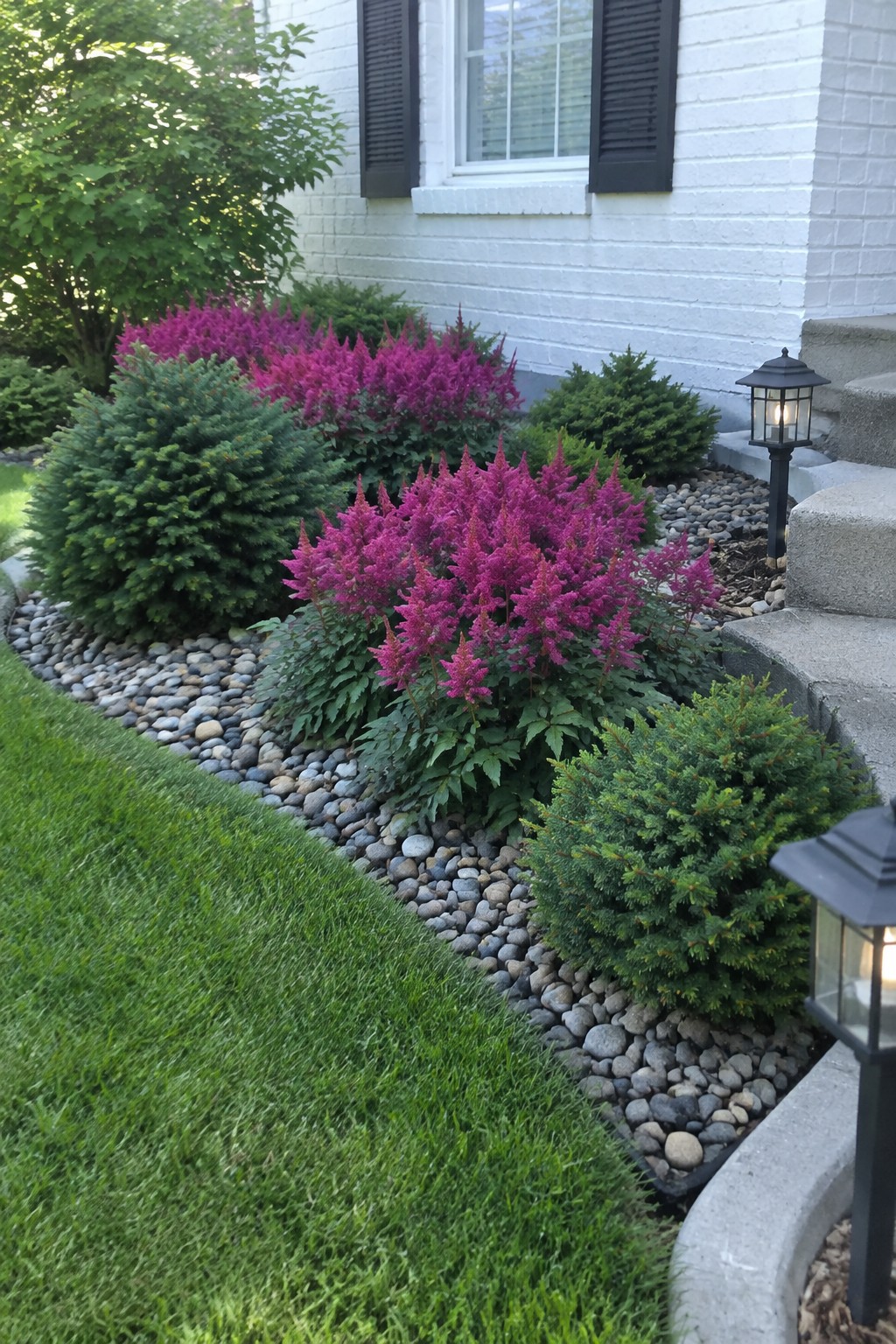
Compact evergreens give a shady flower bed structure even when astilbe is not in bloom. Here, rounded shrubs sit among vivid pink astilbe, so the planting has a clear rhythm without relying on flowers alone.
Use low-growing evergreens to break up a larger group of astilbe near a foundation or walkway. Leave enough space for both plants to reach their mature size, and check that the spot suits the light and moisture needs of your chosen varieties.
Use a Raised Stone Bed for Shady Plantings
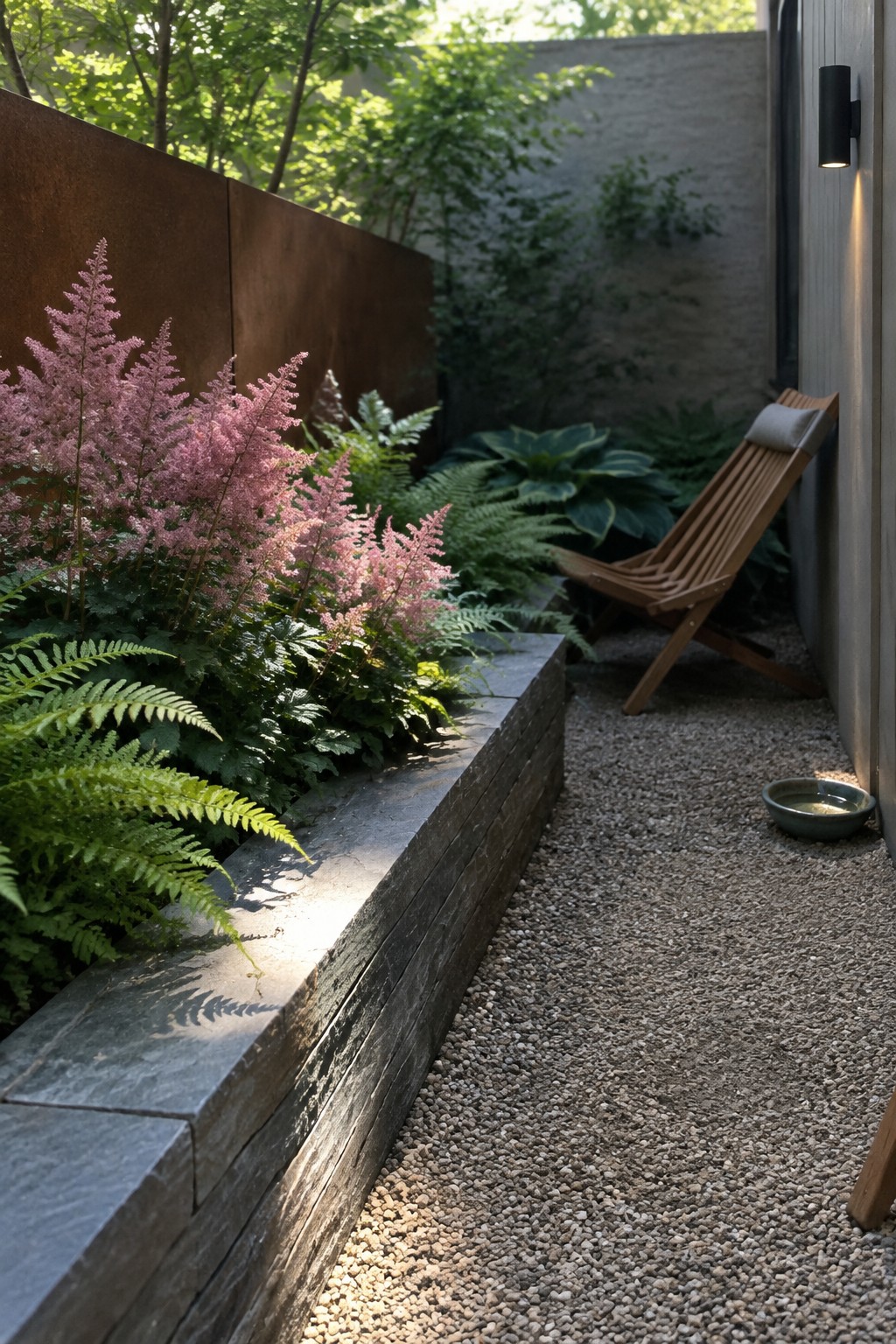
A raised stone bed gives shade-loving plants a clear place to grow, even in a narrow garden. Here, pink astilbe stands out among ferns, while the stone edge keeps the planting neat beside the gravel path.
This approach works well along a wall or fence where space is limited. Choose plants with different heights, and leave enough room for them to spread without spilling too far over the edge.
Plant Astilbe Along a Poolside Bed
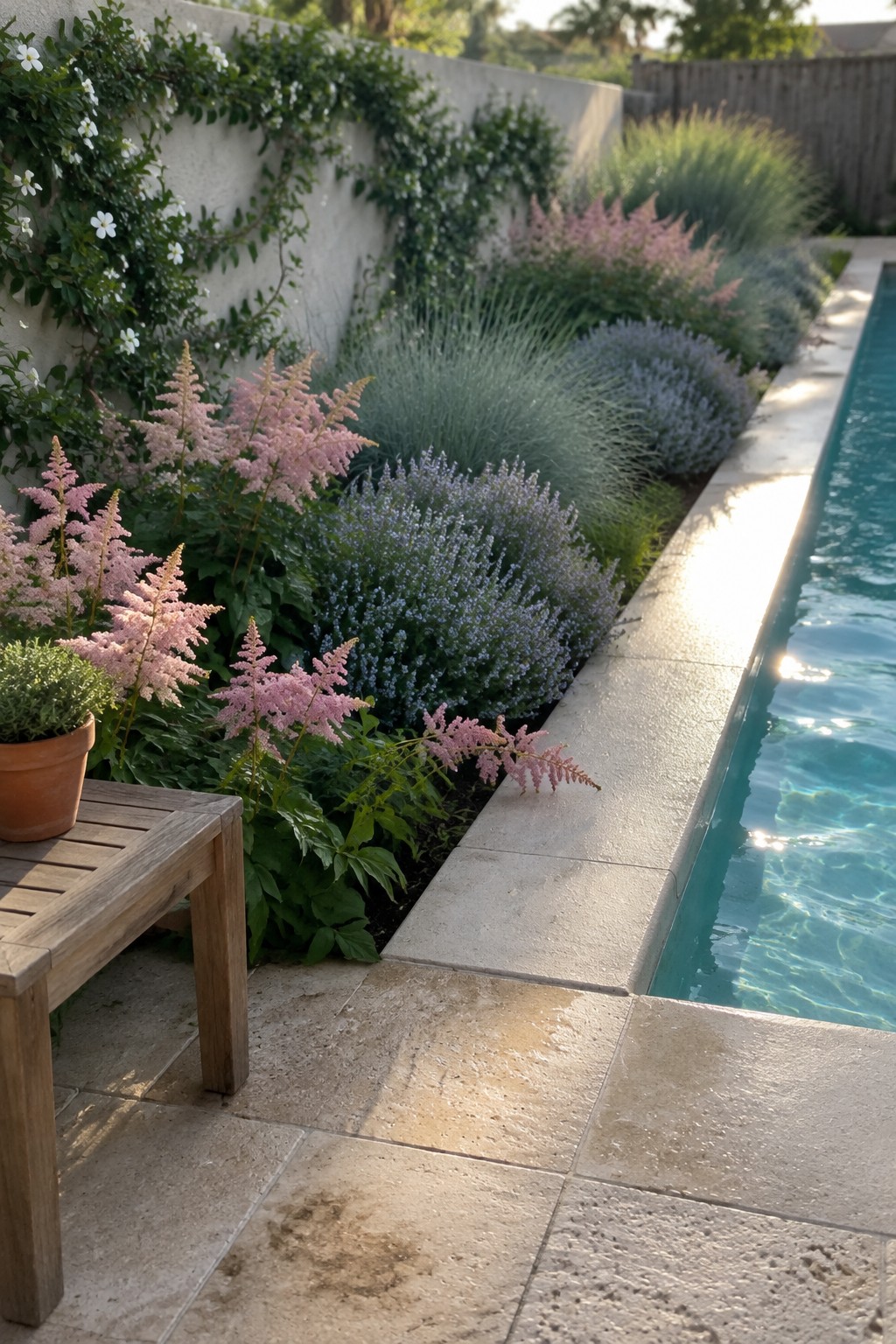
A narrow flower bed beside a pool can make the hard edge feel more connected to the garden. Astilbe brings soft plumes and leafy growth to the border, while rounded plants nearby help give the planting a full, layered look.
Leave enough room between the bed and pool coping so plants do not spill into the walking area. Astilbe suits a partly shaded spot with consistently moist soil, so check that the bed gets enough water without staying waterlogged.
Use a Brick Path to Guide a Shady Garden
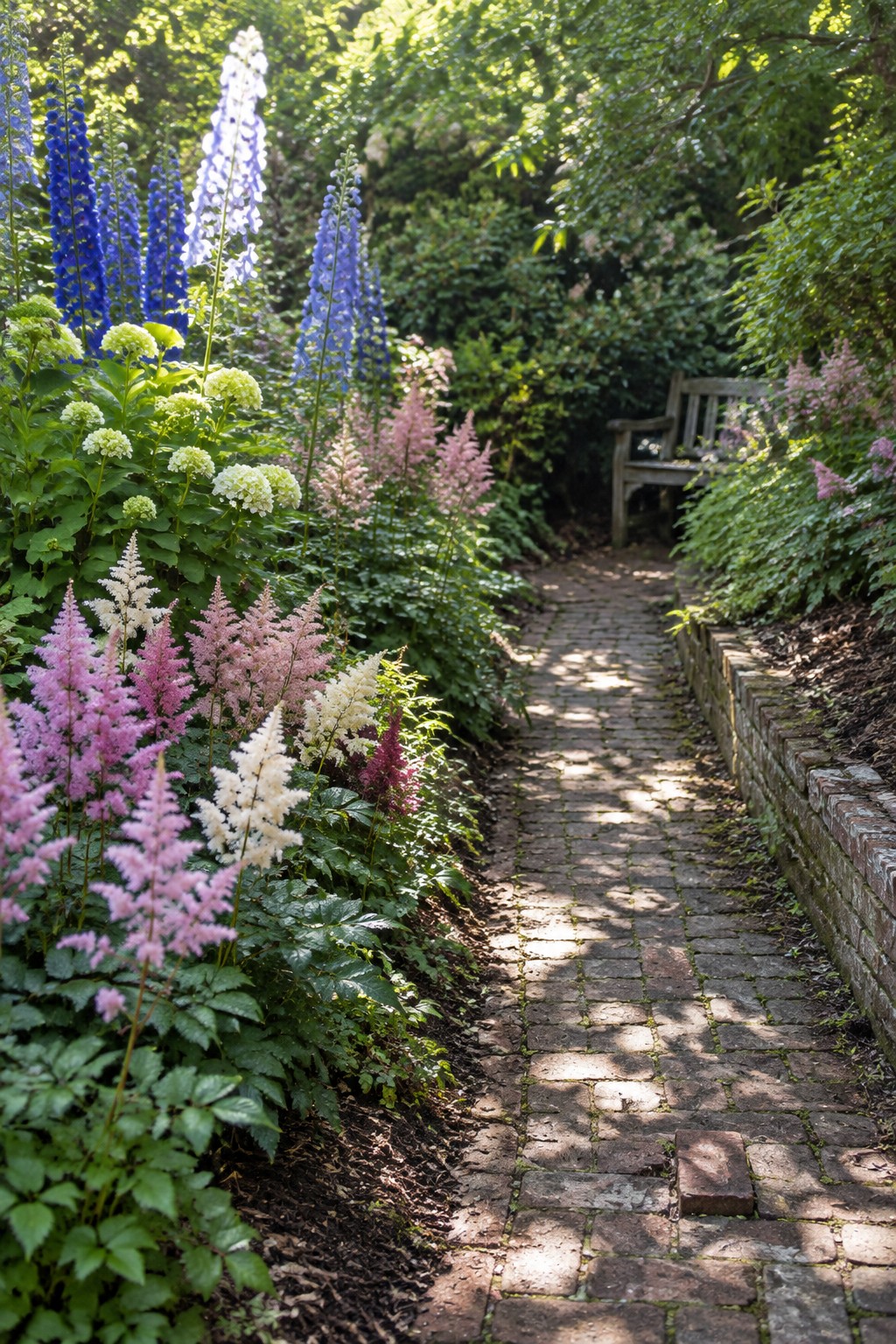
A brick path gives a shady flower bed a clear route through the planting. Astilbe can line the edges, where its feathery blooms spill toward the bricks without taking over the walking space.
This works well in a narrow side garden or anywhere you want to make a tucked-away bed easier to reach. Leave enough room for comfortable steps, and keep the path surface fairly even so it stays practical in damp, shaded spots.
Add a Natural Stone Border to a Shady Bed
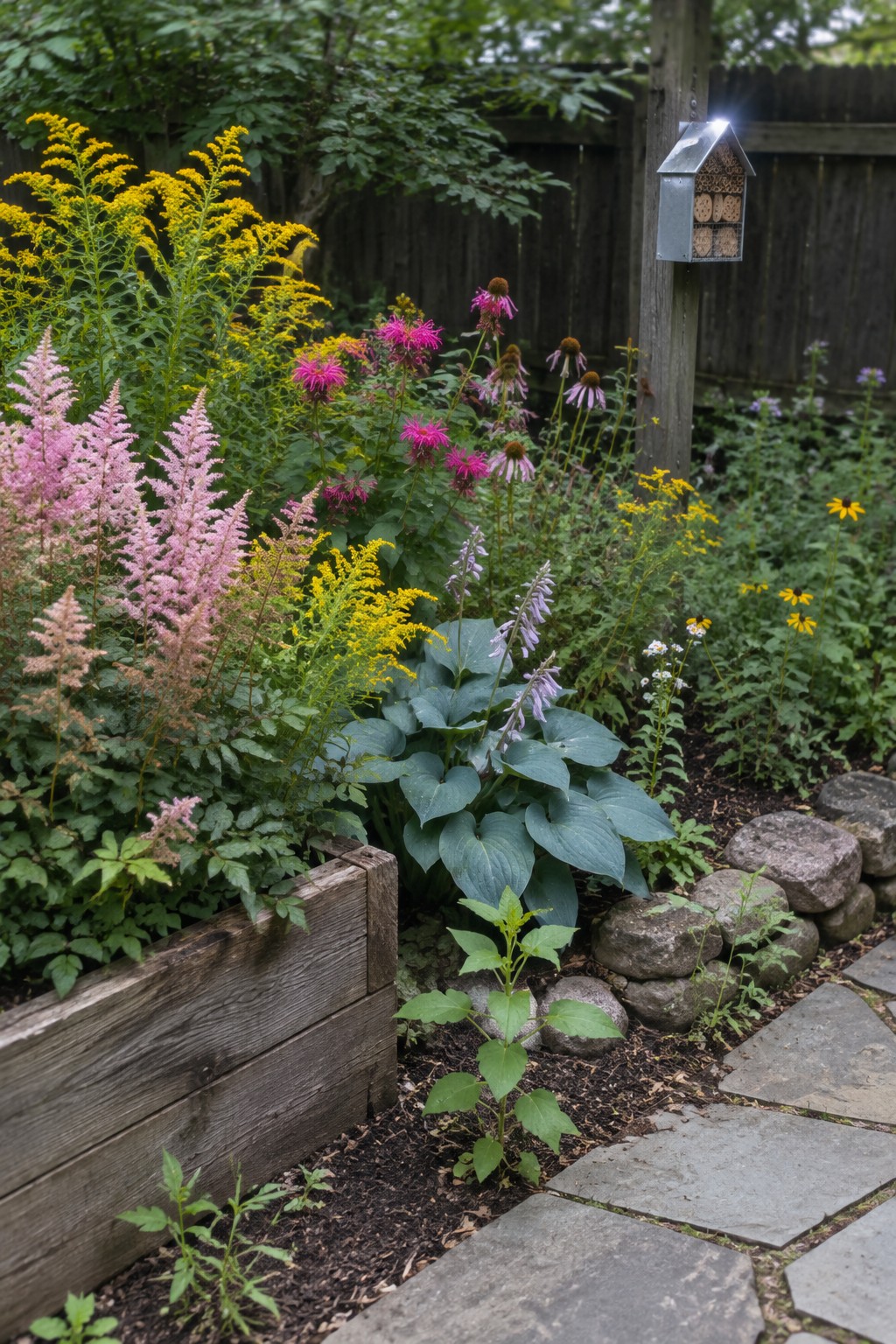
Stone edging gives a shady flower bed a clear shape without making it feel too formal. Here, a low border separates the planting from the stepping-stone walkway and helps keep the bed’s edge easy to follow.
Use stones of mixed sizes for a relaxed look, and set them firmly so they stay in place. This approach works well beside a path or raised bed, but leave enough room for plants to spread without spilling onto the walkway.
Use Astilbe to Add Color in a Shady Border
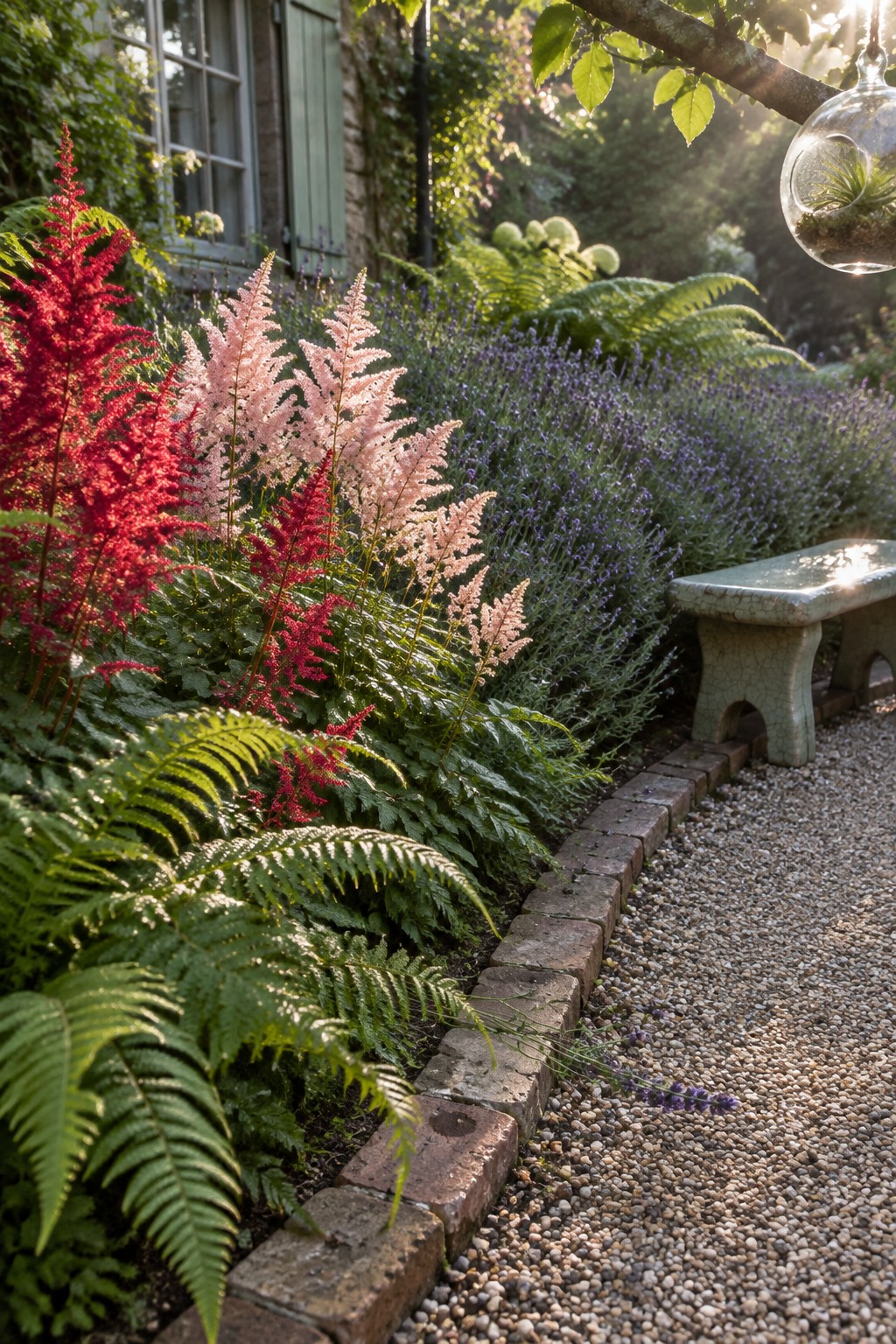
Astilbe brings bright color to a shady bed, where many flowering plants can struggle. Its upright flower plumes stand out among lower, leafy plants and give the border a clear rhythm.
Plant it in groups toward the middle or back of a bed, with ferns or other foliage near the front. Astilbe does best in moist soil, so check that the spot does not dry out between waterings.
Use Astilbe to Edge a Small Garden Stream
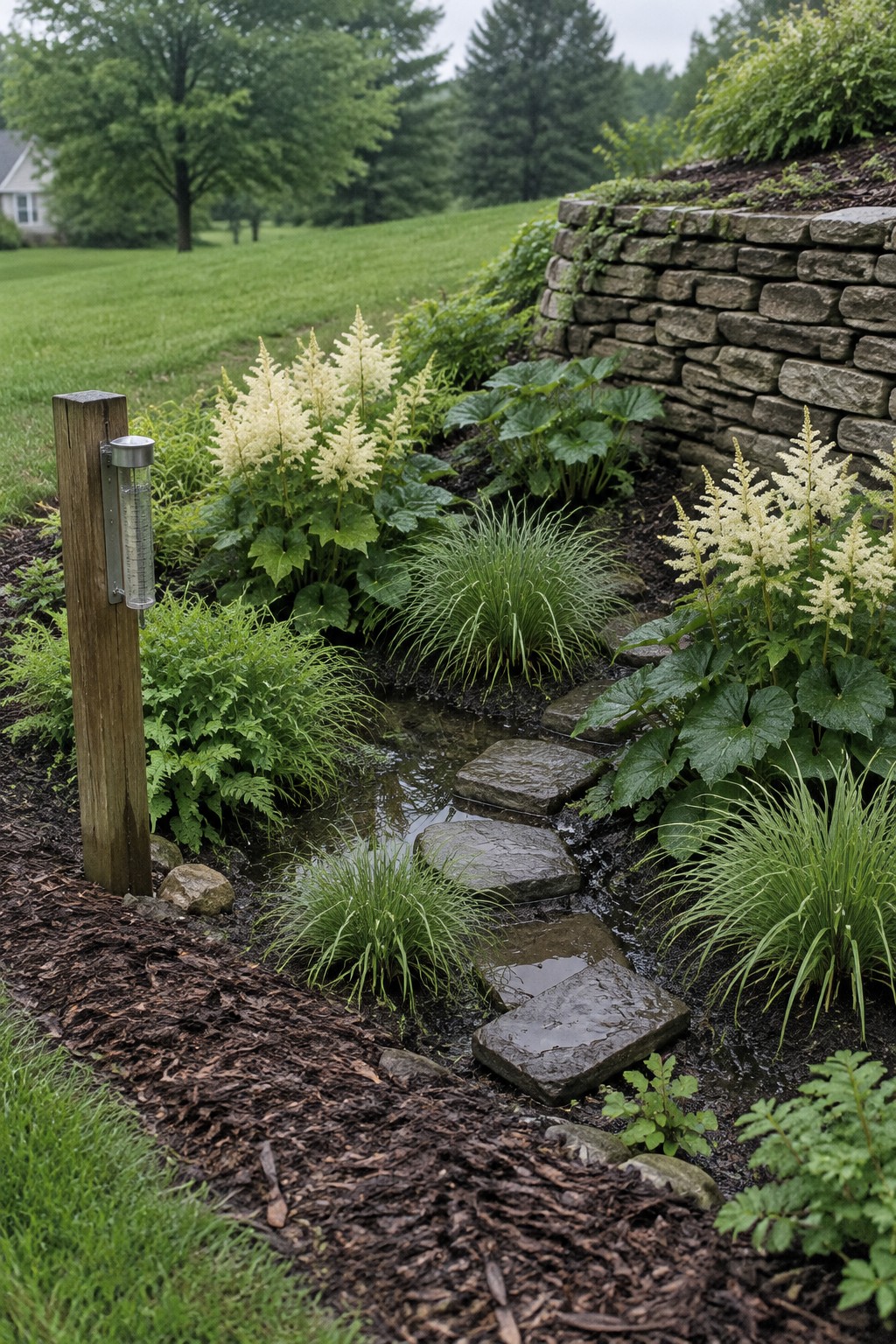
Astilbe can help a small stream feel like part of the garden rather than a separate feature. Plant it in loose groups along the water’s edge, where its light flower plumes stand out against the broad green leaves nearby.
This approach suits a shady, damp bed, especially where a narrow stream or rain garden needs a softer border. Leave a little open space around the water so the plants don’t crowd the flow or cover stepping stones.
Grow Astilbe in Narrow Balcony Planters
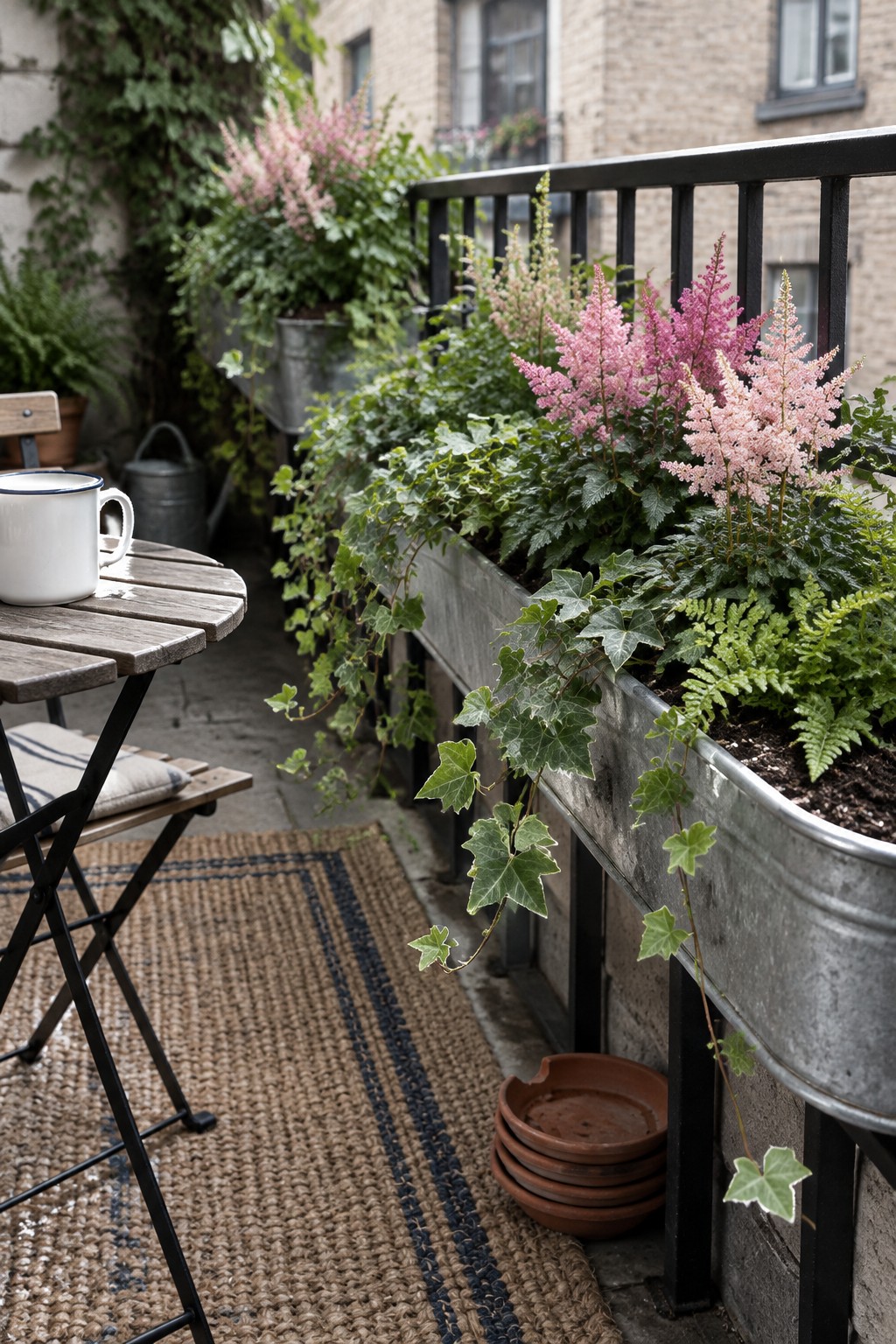
Astilbe can bring color to a small balcony when it is planted in long containers along a railing. The upright flower plumes give a narrow space plenty of garden character without taking up room for seating.
Choose planters deep enough to hold moisture, since containers dry out faster than garden beds. Astilbe prefers shade and consistently damp soil, so check the planters regularly and avoid placing them in strong afternoon sun.
Use Astilbe to Dress Up a Shady Entry
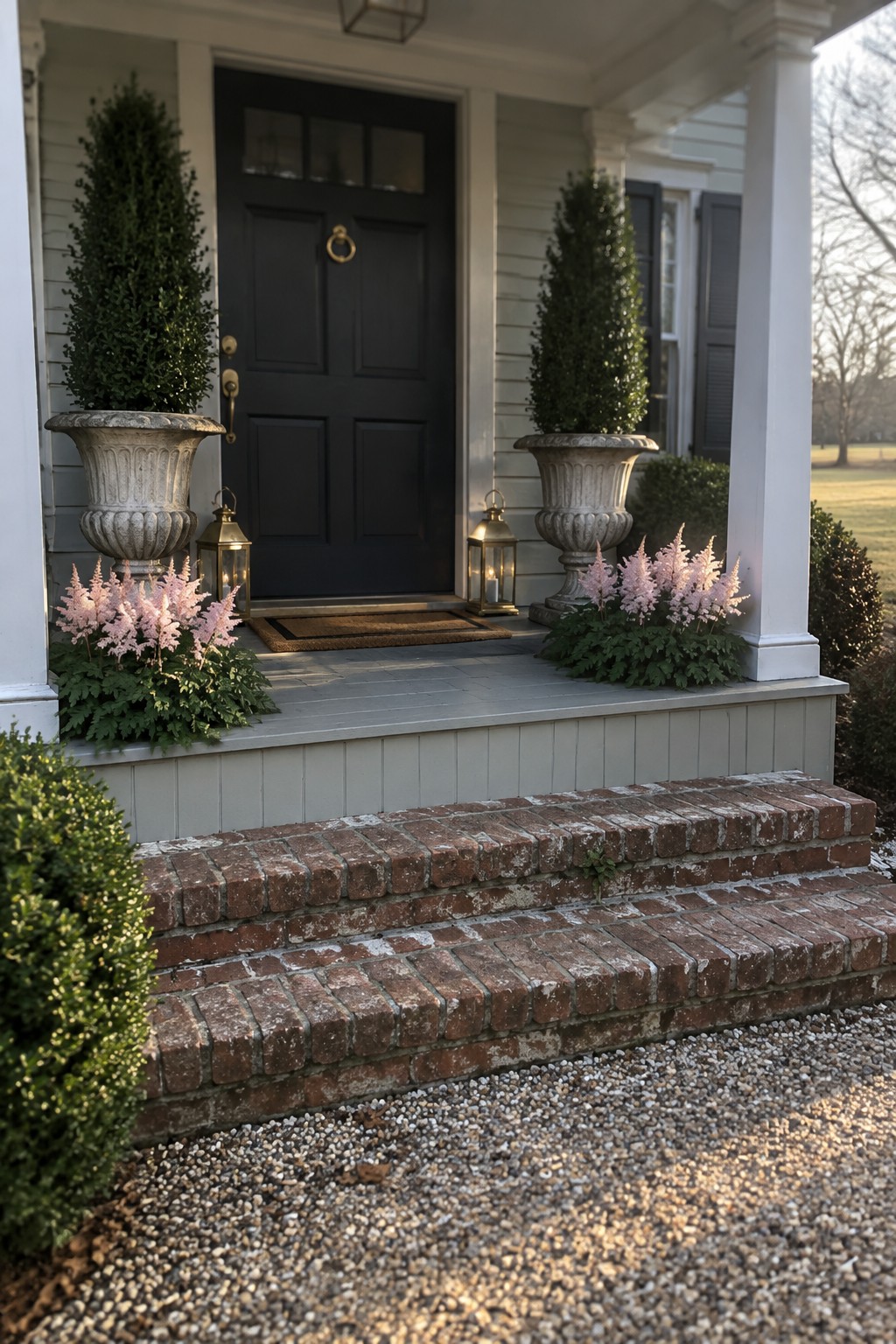
Astilbe can make a shaded front entry feel more planted and welcoming without needing a large garden bed. Clusters of pale pink blooms stand out beside darker evergreen shrubs, while the repeat planting gives the entrance a tidy look.
Try it along a porch edge or beside steps where the soil stays fairly moist and the plants get some shade. Leave room for each clump to spread, and keep taller shrubs behind the flowers so the blooms remain easy to see.
Use Astilbe to Shape a Shady Patio Garden
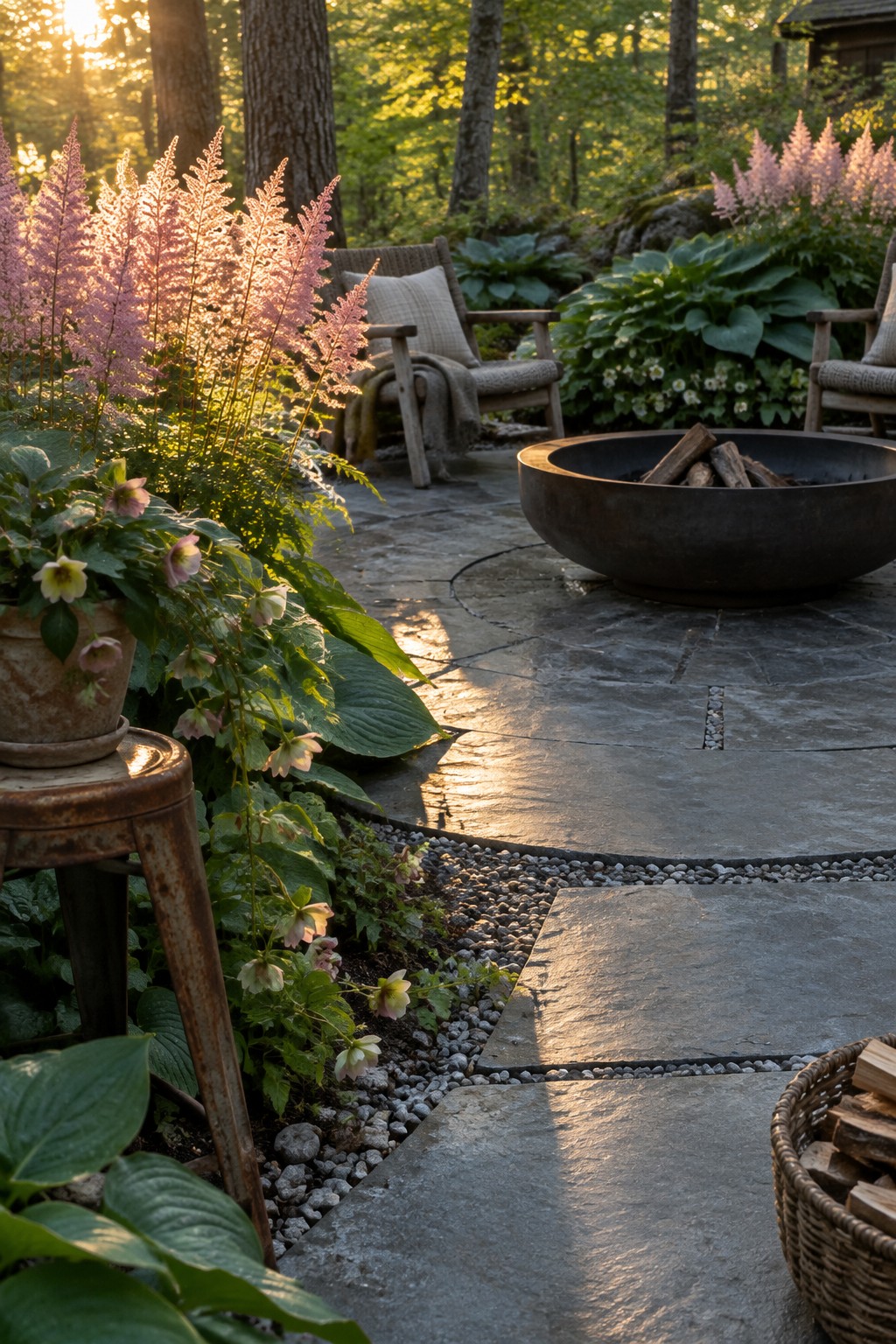
Astilbe can help give a patio garden a clear, planted edge without making it feel too formal. Here, tall pink flower plumes rise behind low foliage, adding color and height beside the stone seating area.
Plant astilbe in groups along the outer edge of a shady patio, where the soil stays evenly moist. Leave enough room for the plants to spread, and keep them back from the paving so the walkway remains clear.
Use Lighting to Highlight a Shady Flower Bed
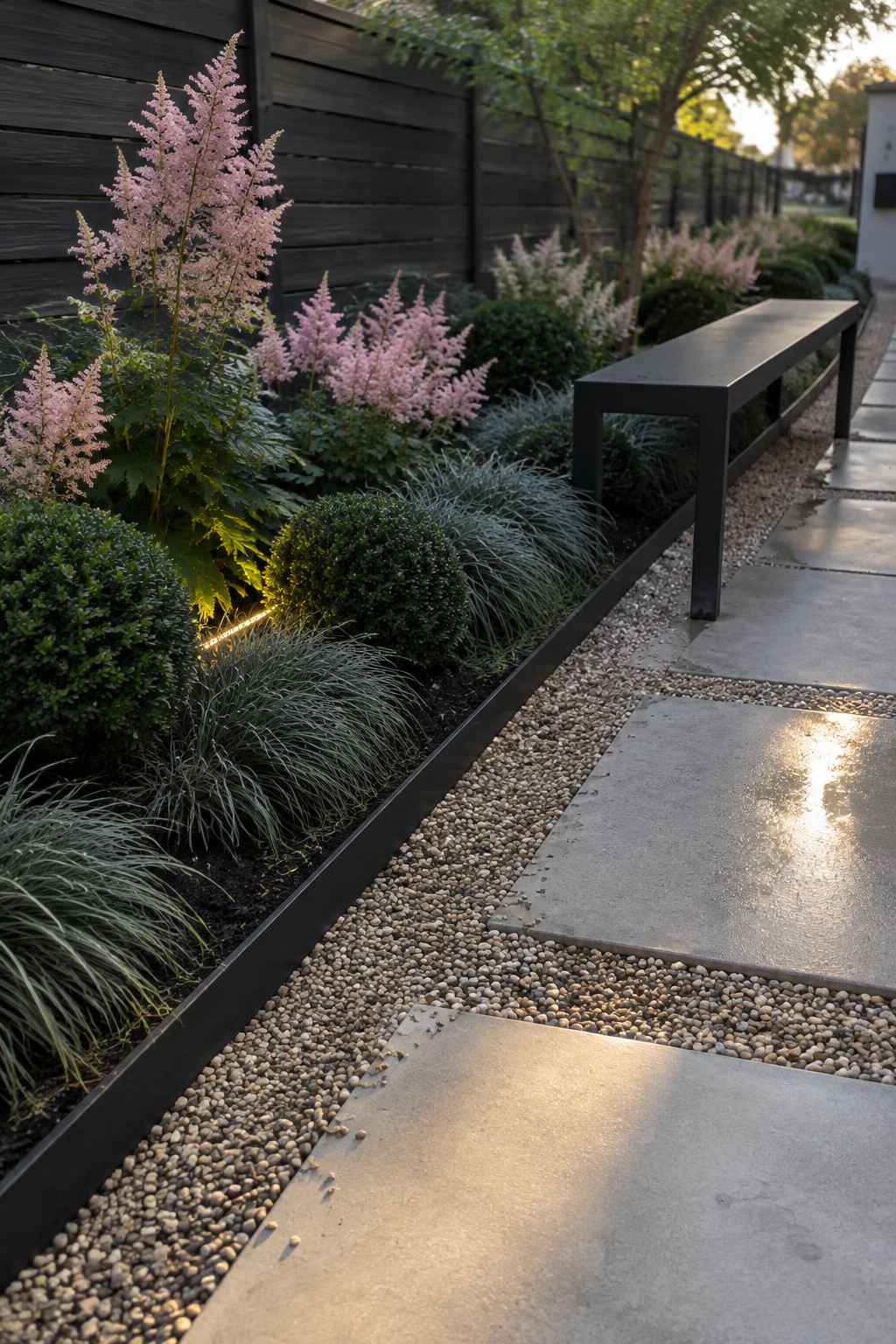
Low garden lighting can make an astilbe bed easier to enjoy after dusk. A small light tucked among the plants picks out the flower plumes and foliage without lighting the whole yard.
Place low-voltage lights near the front of the bed, aimed toward the planting rather than directly at the path. Keep fixtures discreet, and use a few spaced lights instead of a bright, continuous strip.
Frequently Asked Questions
Q: Will astilbe bloom in deep shade?
A: Astilbe can grow in deep shade, but it usually flowers more freely with a little morning sun or bright, filtered light. In a very dark spot, enjoy the foliage and expect fewer blooms.
Q: How do I keep astilbe from drying out under trees?
A: Tree roots can soak up water quickly, so check the soil often during dry spells and water deeply when it feels dry. A layer of mulch helps hold moisture, but keep it away from the stems.
Q: What can I plant with astilbe for color after it fades?
A: Pair it with hostas, ferns, or heucheras for foliage that looks good all season. For later flowers, try shade-friendly plants such as toad lilies or woodland asters.
Q: Should I cut astilbe back in fall?
A: You can leave the flower plumes and foliage standing through winter, then trim them back in early spring. The dried seed heads add a little texture when the rest of the garden is quiet.
