

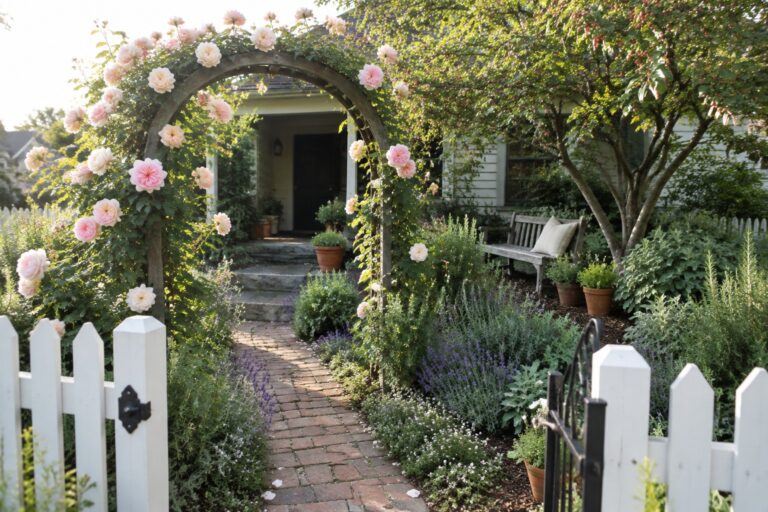
I find that a cottage garden feels most settled when roses and lavender have room to grow without crowding every path or edge.
Their soft colors and different shapes work well together, but the layout matters just as much as the flowers.
A clear walkway and a few repeated planting groups can make the garden feel considered while leaving space for plants to spread over time.
I would start by deciding where the roses should draw the eye, then use lavender to soften borders and guide the view through the yard.
The ideas ahead offer practical ways to adapt that balance to different garden sizes and growing conditions.
Let A Garden Path Lead The Way
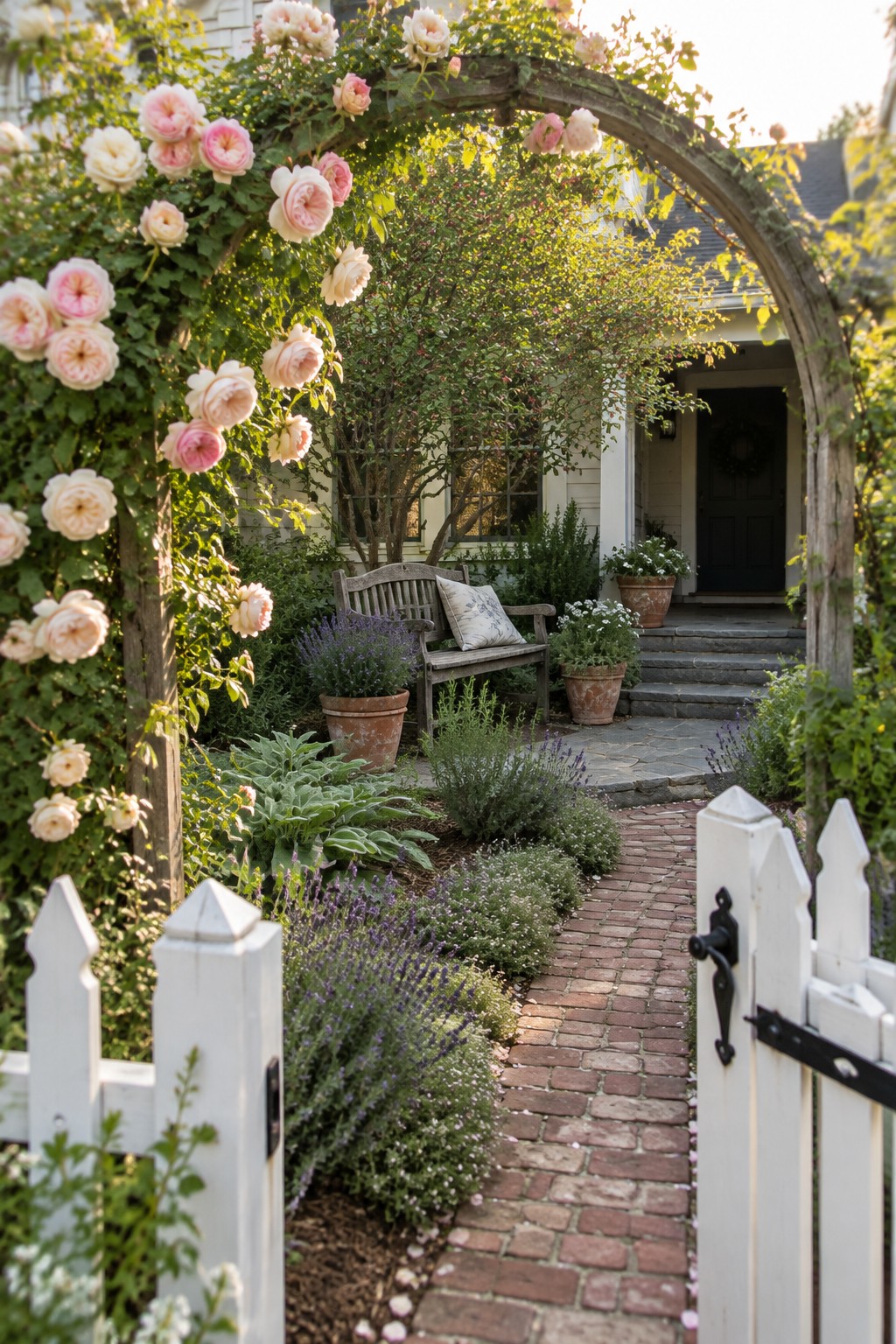
A brick path can give a cottage garden a clear shape without making it feel too formal. It guides visitors through the planting and gives flowers and herbs a place to spill gently along the edges.
Use a gently curving path to make a small entry garden feel more welcoming, or let a straight path lead to a porch or gate. Keep the paving easy to walk on, and leave enough room along the sides for lavender and roses to grow without crowding the route.
Layer Roses And Lavender Along A Garden Path
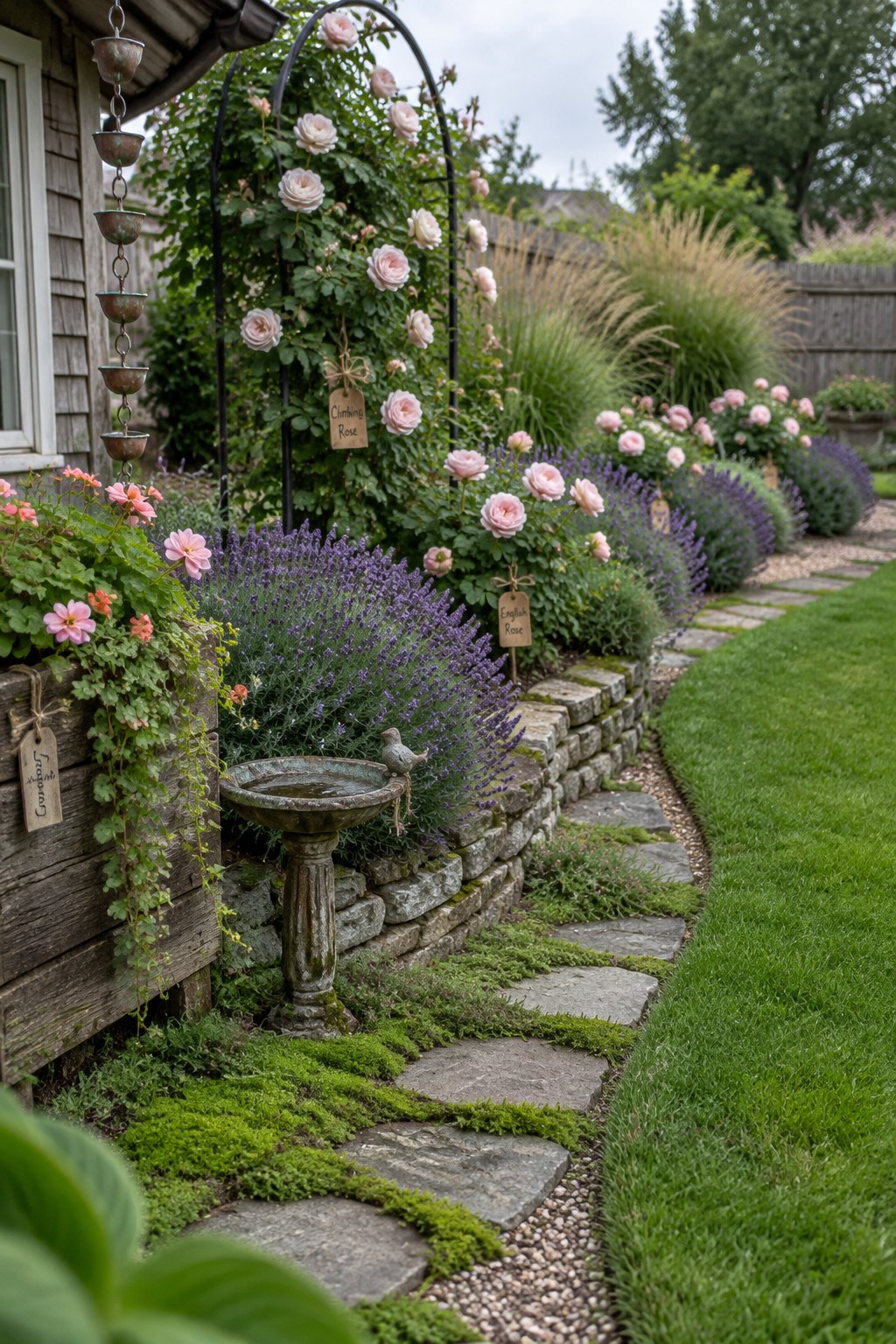
A narrow stone path can make a flower bed feel like part of the garden, rather than a border to look at from a distance. Roses bring height and color, while lower lavender helps define the edge and keeps the planting from spilling into the walkway.
This approach works well beside a cottage or along a small lawn. Leave enough room for the path to stay easy to walk on, and repeat the same plants along the route so the bed feels connected.
Use A Gravel Clearing As A Garden Seating Spot
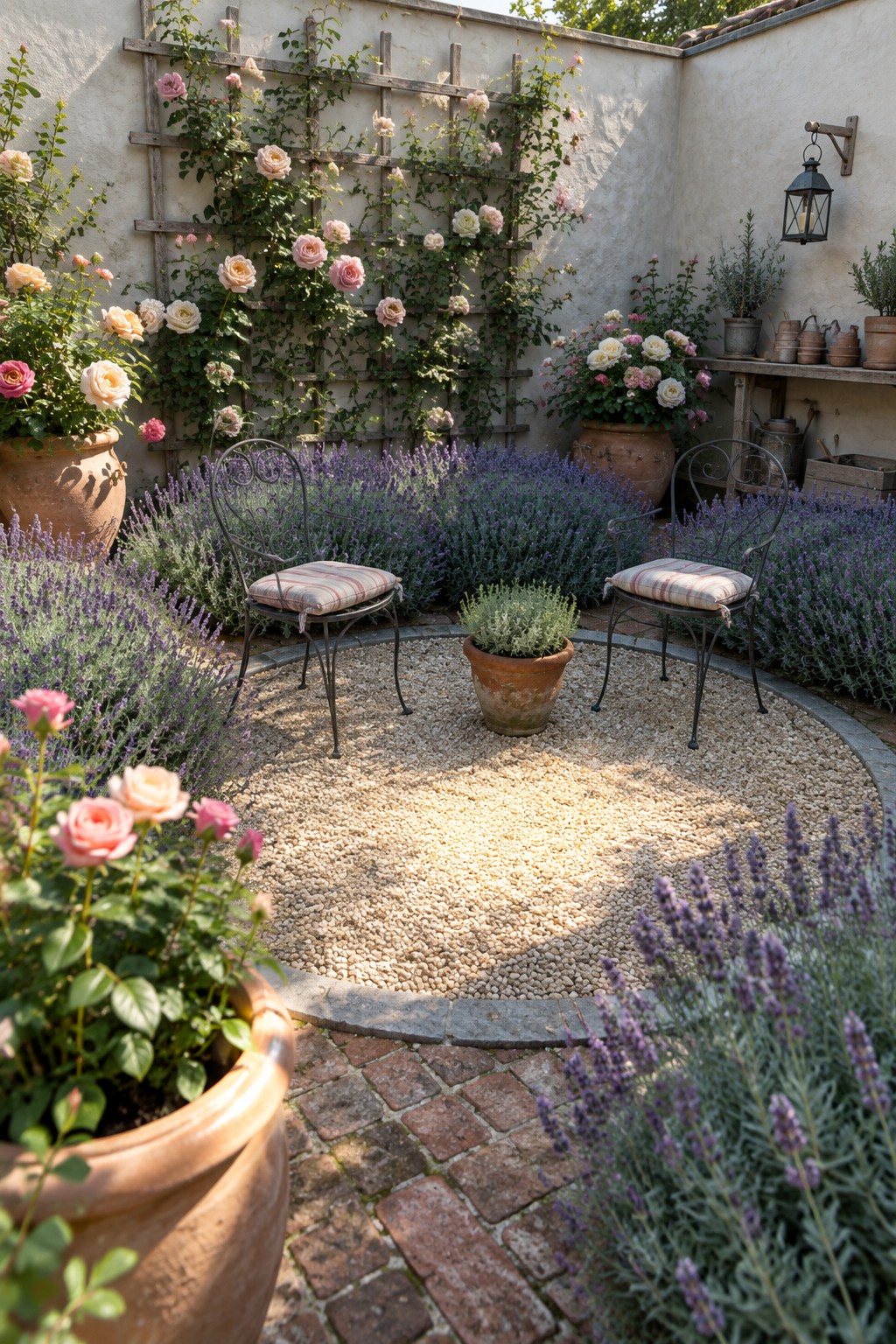
A small gravel clearing gives a flower garden a place to pause. It keeps seating separate from the planting beds, while still letting roses and lavender surround the spot.
For a cottage garden, use a simple curved edge and leave enough room to pull chairs out comfortably. Gravel suits an informal space, but it needs a firm border to keep stones from spreading into the plants.
Use a Curving Path to Shape the Garden
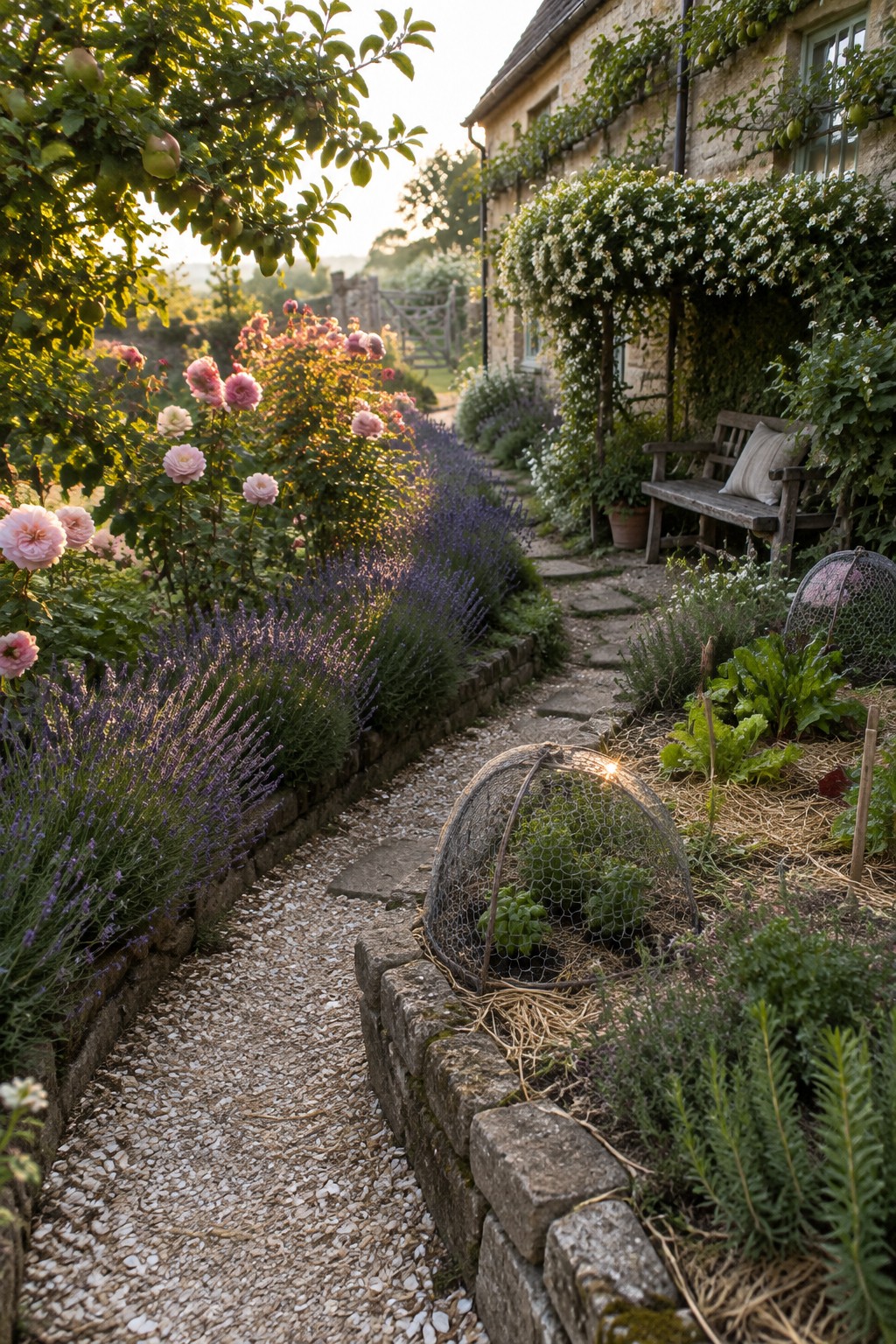
A narrow, gently curving path gives a cottage garden a clear route without making it feel too formal. Here, the stone edging keeps the lavender and rose beds in place while letting them grow close to the walkway.
This approach works well in small gardens where a straight path might feel stiff. Use a firm, nonslip surface and leave enough room to walk comfortably, even as plants spread.
Use Stepping Stones to Guide the Garden Path
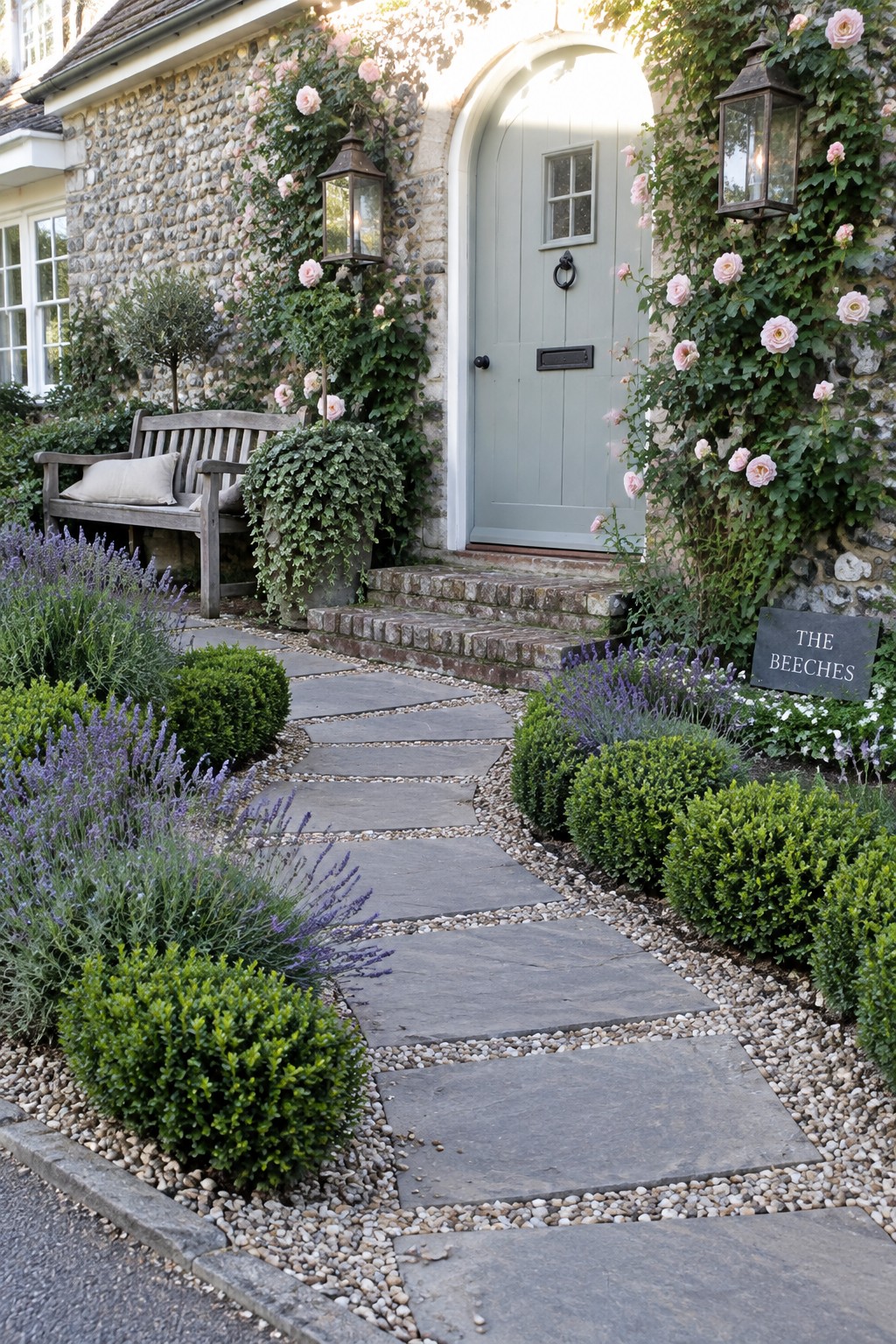
Large stone slabs set in pale gravel make a clear path to the front door while leaving room for planting along the edges. This layout feels natural in a cottage garden and gives the roses and lavender a defined place to grow.
Use stones with enough space for a comfortable stride, and keep the gravel fairly even so the path is easy to walk on. Low, rounded shrubs can help mark the edges without crowding the flowers.
Make Room For Outdoor Dining In The Garden
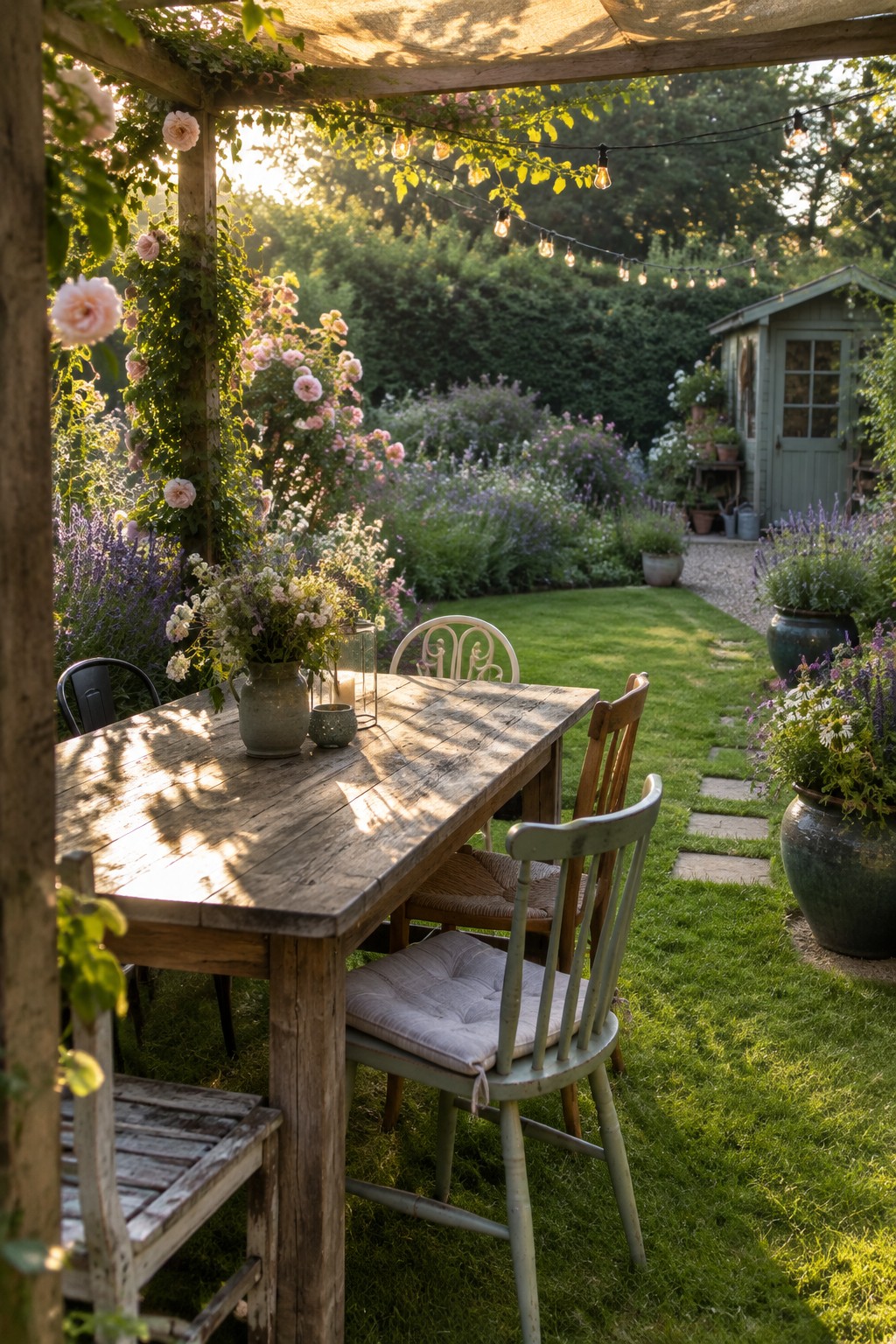
A simple dining spot can make a cottage garden feel useful, not just pretty. A wooden table beneath a pergola gives you a place to sit among the planting, while leaving the lawn open nearby.
This works well in a small garden where one shaded corner can serve as the main gathering spot. Keep the table close to the house if you use it often, and leave enough space around the chairs to move comfortably.
Edge A Garden Path With Cottage Planting
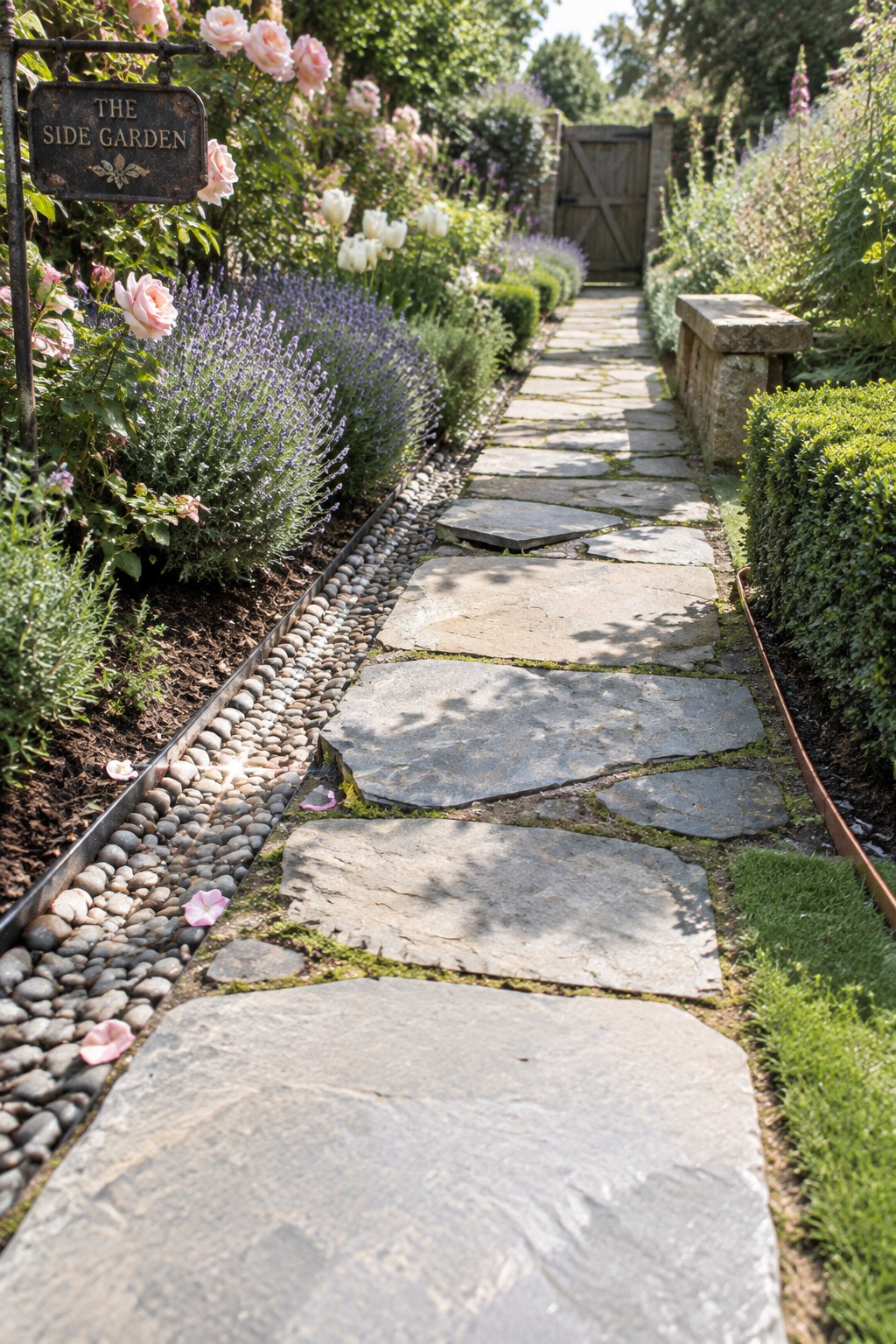
A stone path feels more settled when planting grows close along its edges. Here, lavender and roses line the walkway, while a narrow strip of river stones gives the path a neat border.
This approach works well in a side garden or any narrow stretch that needs a clear route through the planting. Use generous stepping stones for comfortable footing, and leave enough room at the edges so the flowers don’t crowd the path.
Use a Round Flower Bed As A Garden Focal Point
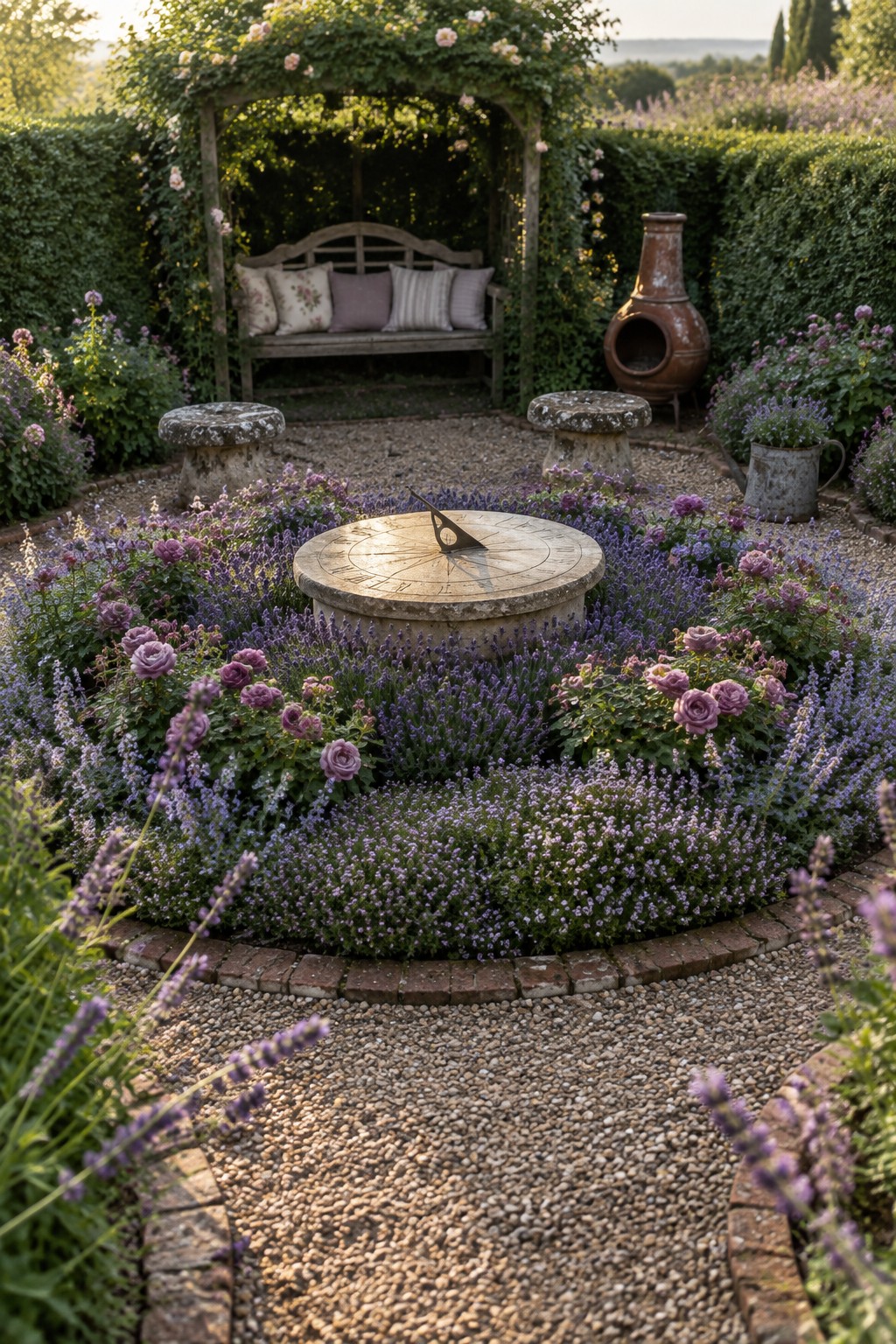
A round bed gives a cottage garden a clear center without making the planting feel too formal. Here, a stone sundial sits among roses and lavender, while the curved brick edge keeps the flowers contained.
This idea works well in an open patch of lawn or gravel where the bed can be seen from more than one side. Keep the edging low, and leave enough room around it to walk comfortably and tend the plants.
Make a Small Garden Table Part Of The Planting
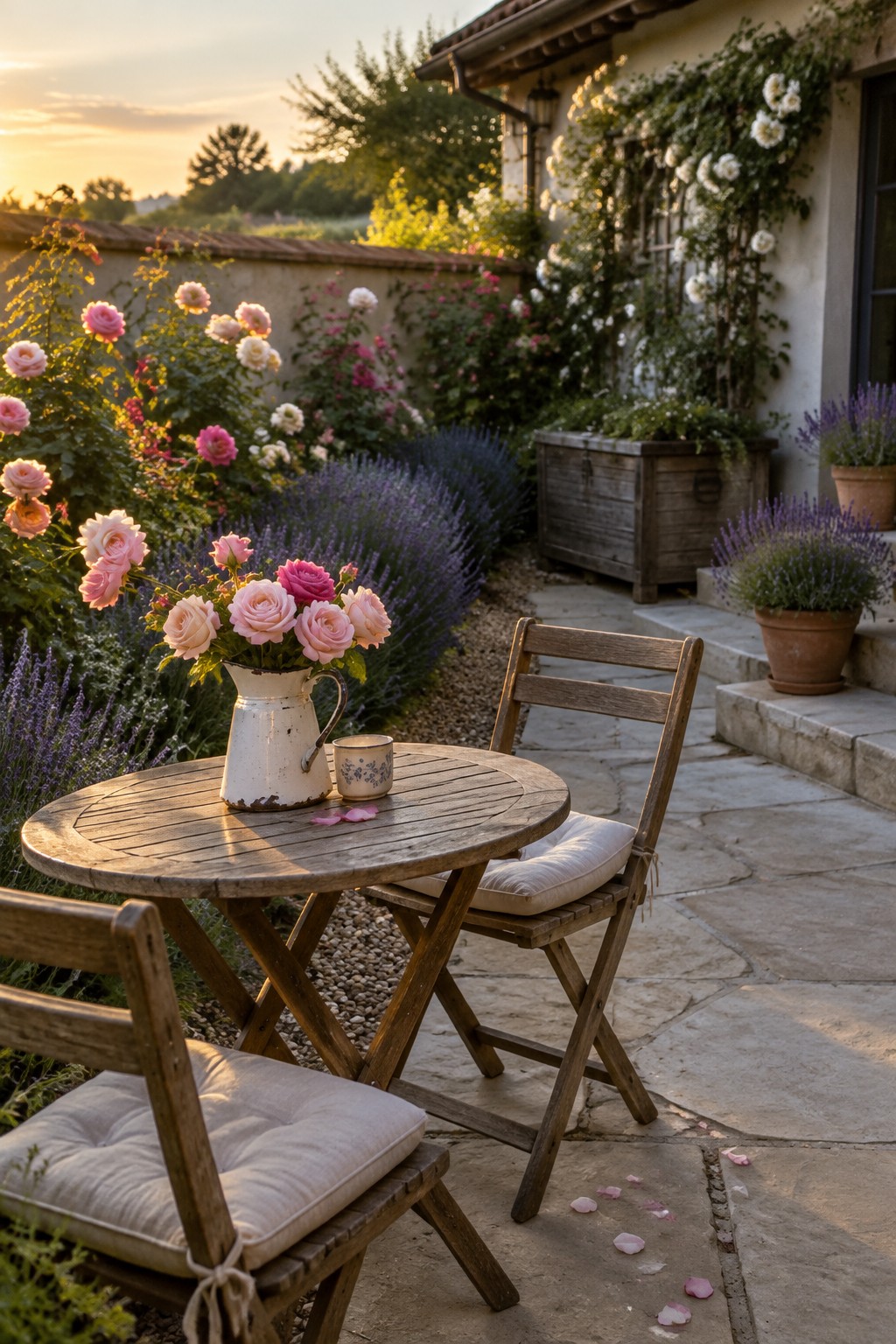
A small outdoor dining spot can feel like part of the garden rather than a separate patio. Here, a wooden table sits beside roses and lavender, so the planting stays close while still leaving room to sit.
This idea works well in a narrow courtyard or a cottage garden with a stone path. Keep the table compact and leave enough clear space around the chairs to pull them out comfortably.
Layer Roses And Lavender Along The Garden Edge
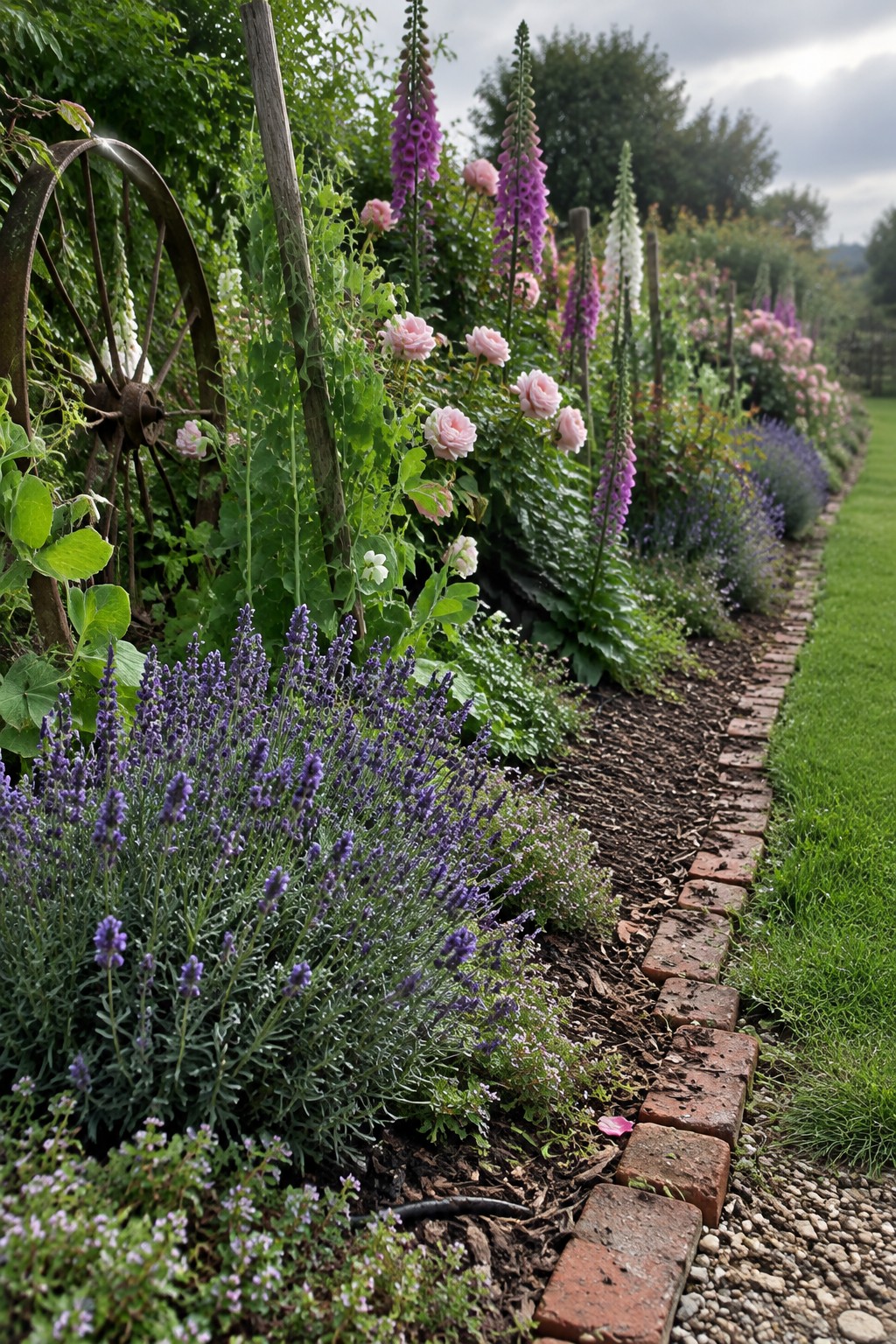
Planting roses and lavender in a long border gives a cottage garden a clear, easy-to-follow shape. The lavender fills the front of the bed, while taller roses and flower spikes bring color behind it.
This approach suits a narrow strip beside a lawn or path. Leave enough room for the roses to spread, and keep the lavender where it can get plenty of sun and good drainage.
Build Curved Stone Steps Into A Cottage Garden
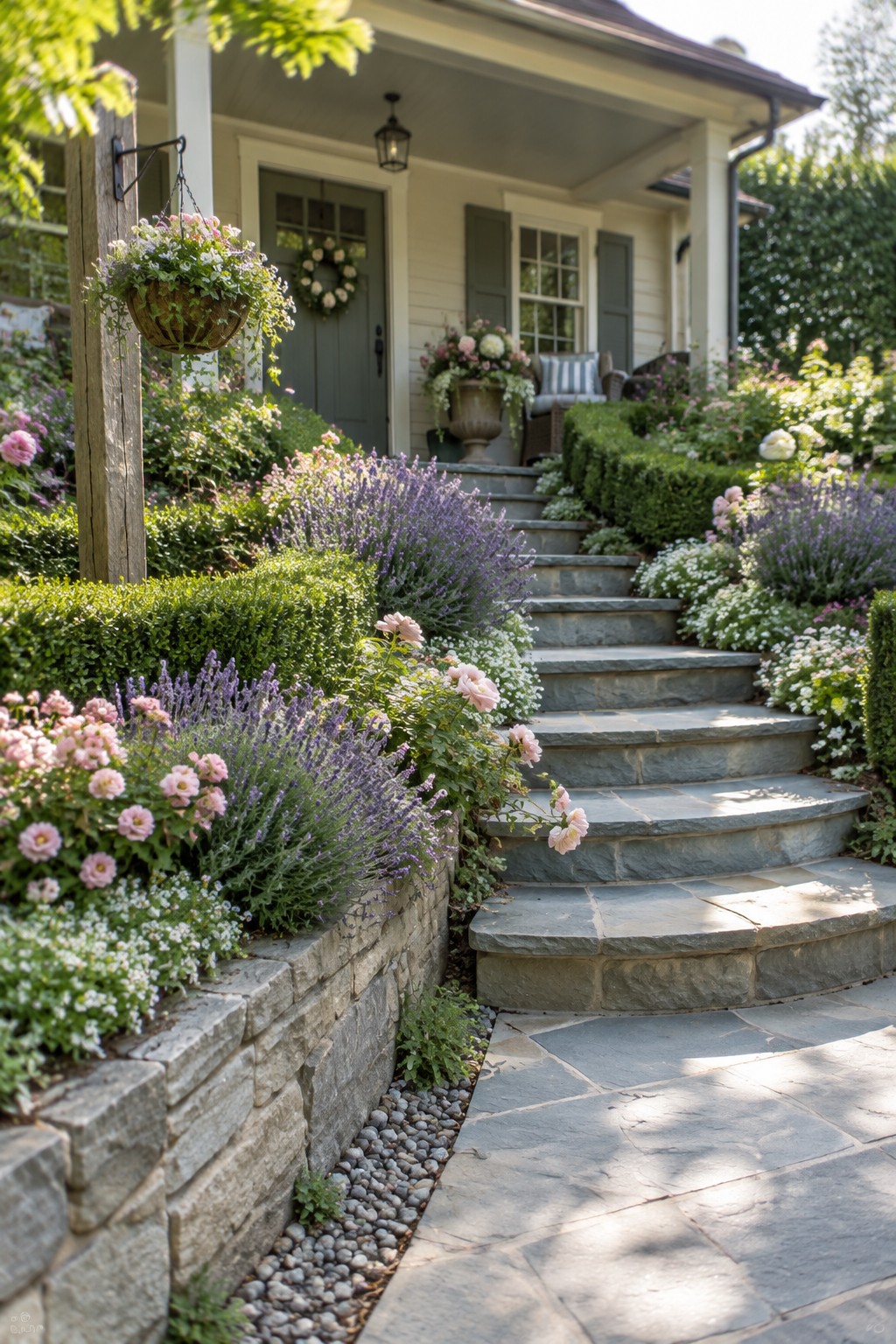
Stone steps can make a sloped front garden easier to use while giving the planting beds a clear shape. Here, the broad, curved treads feel at home among the roses and lavender rather than looking like a separate walkway.
This approach works well where a straight path would feel too steep or formal. Keep the steps wide enough for comfortable footing, and plant along the edges without letting flowers spill over the walking surface.
Use Brick Edging to Define Garden Beds
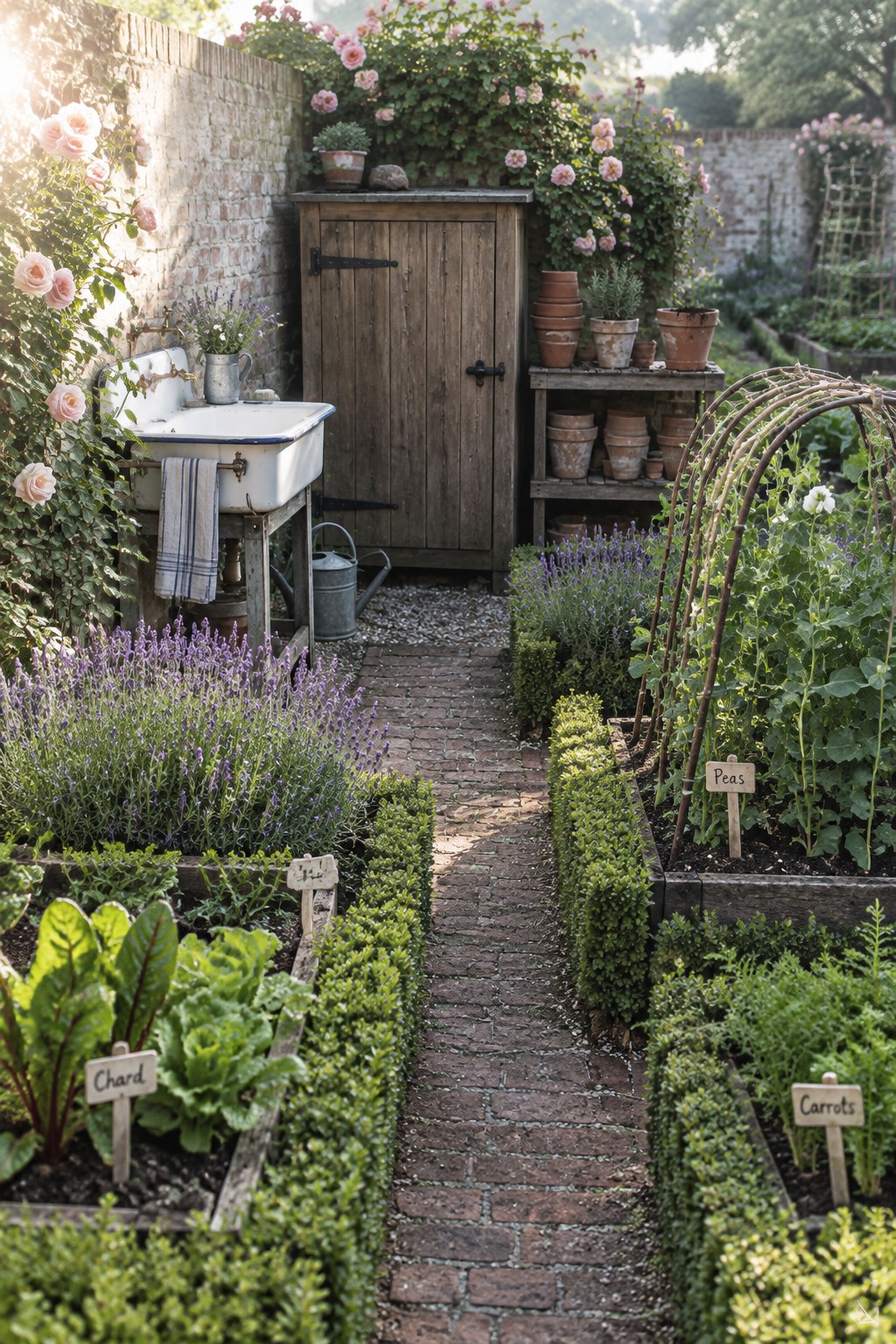
Brick edging gives a cottage garden a clear layout without making it feel formal. Here, a narrow brick path runs between raised vegetable beds, while clipped greenery marks the edges and keeps the planting areas distinct.
This approach works well in a small garden where paths and beds sit close together. Use reclaimed brick for a relaxed look, and keep the route wide enough to carry a watering can or garden basket.
Use Lavender And Roses To Shape Garden Beds
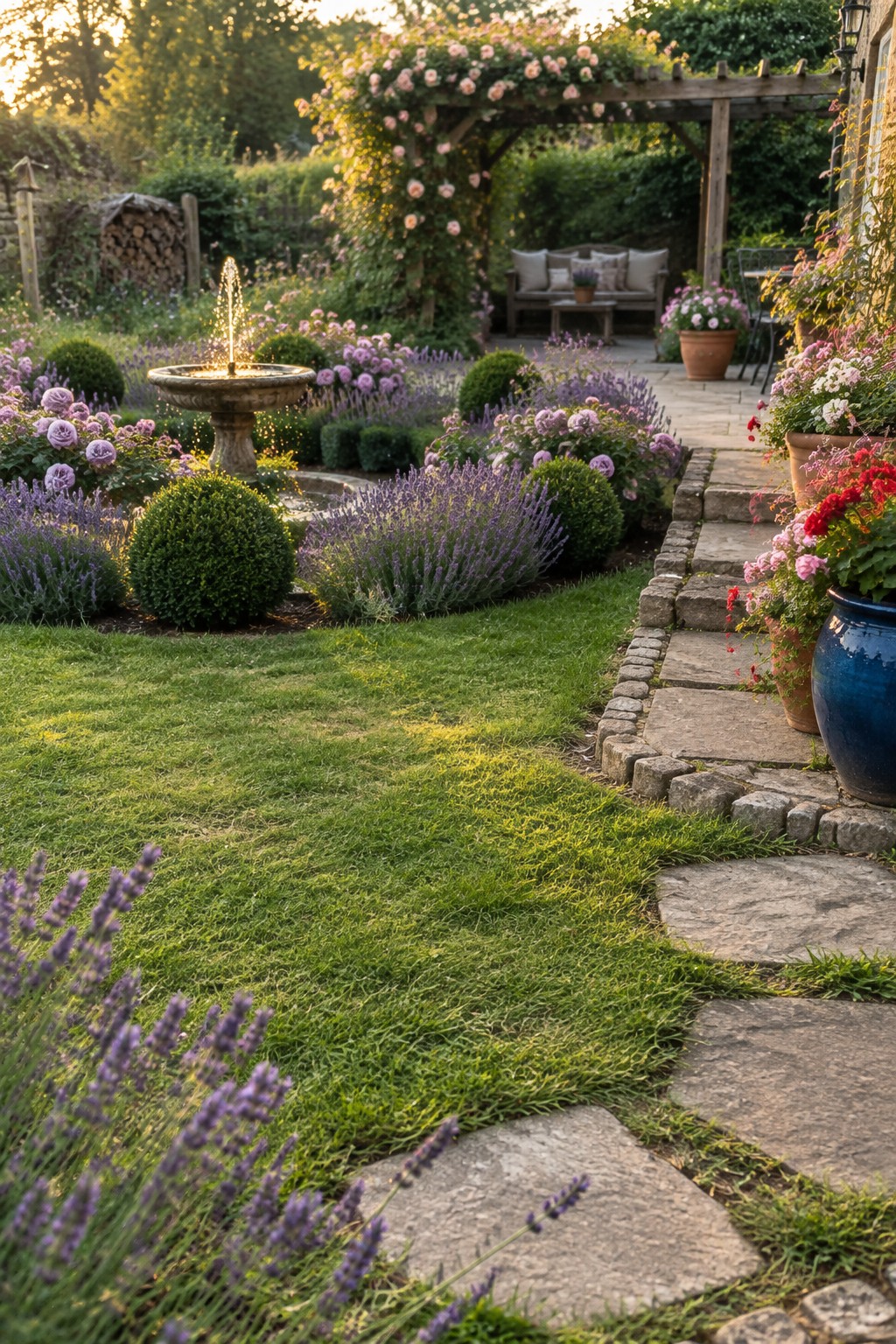
A low, rounded planting bed gives a cottage garden a clear shape without making it feel formal. Lavender and roses work well together here, with the lavender filling the lower edge and rose blooms bringing color through the bed.
Use this approach along a lawn or beside a path, and repeat the curved outline in a few places to make the garden feel connected. Leave enough room between plants for air to move, especially around roses, so the bed stays easier to maintain.
Use Raised Planters to Line a Narrow Garden Path
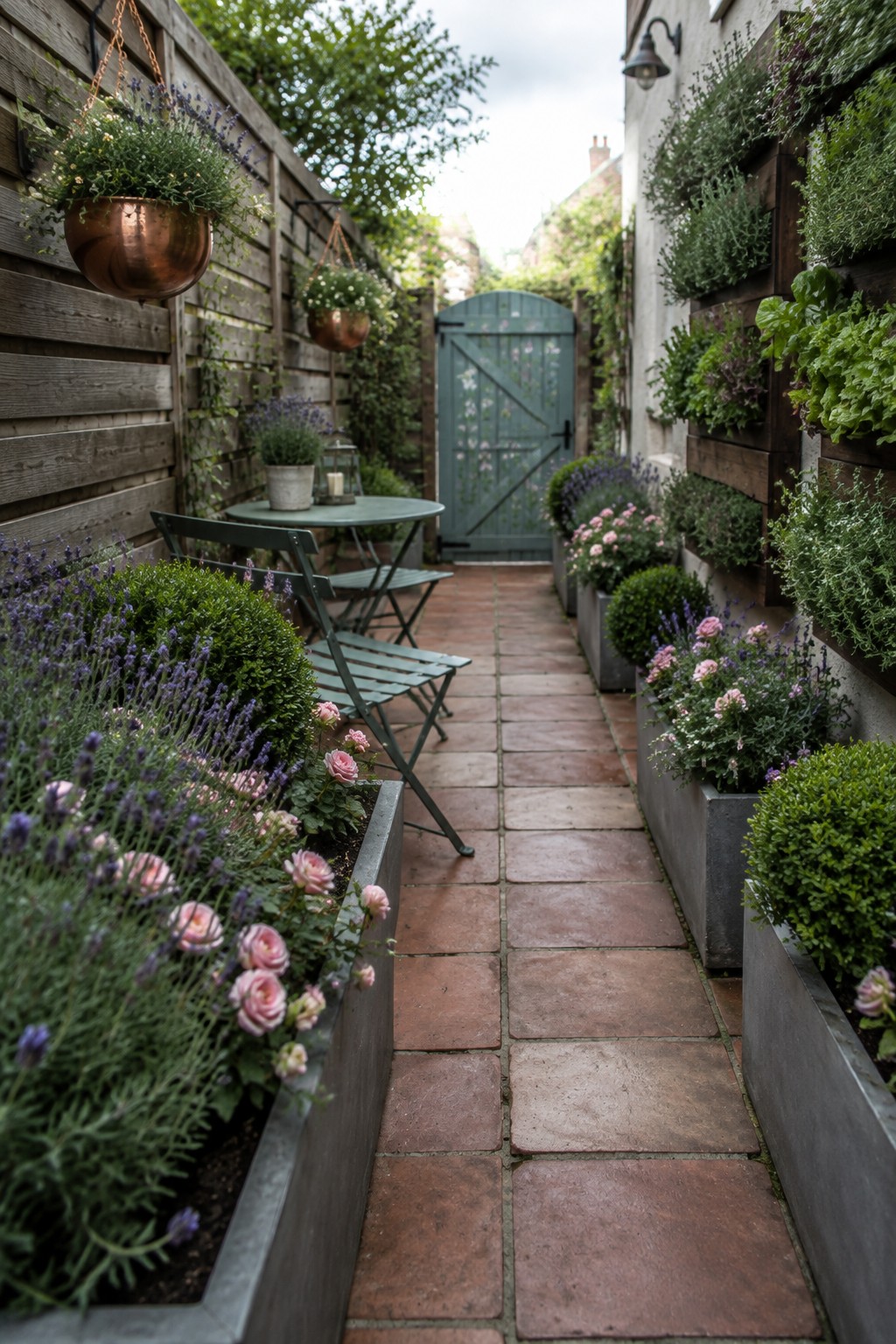
Raised planters can make a narrow garden feel orderly without taking away its cottage character. Here, long beds hold roses and lavender beside the brick walkway, keeping the planting close to the path while leaving a clear route through the space.
This approach works well in small side yards where there isn’t room for wide flower beds. Choose planters deep enough for the plants you want, and keep them low or narrow enough that the path still feels comfortable to walk along.
Use a Curved Brick Bench as a Garden Seating Spot
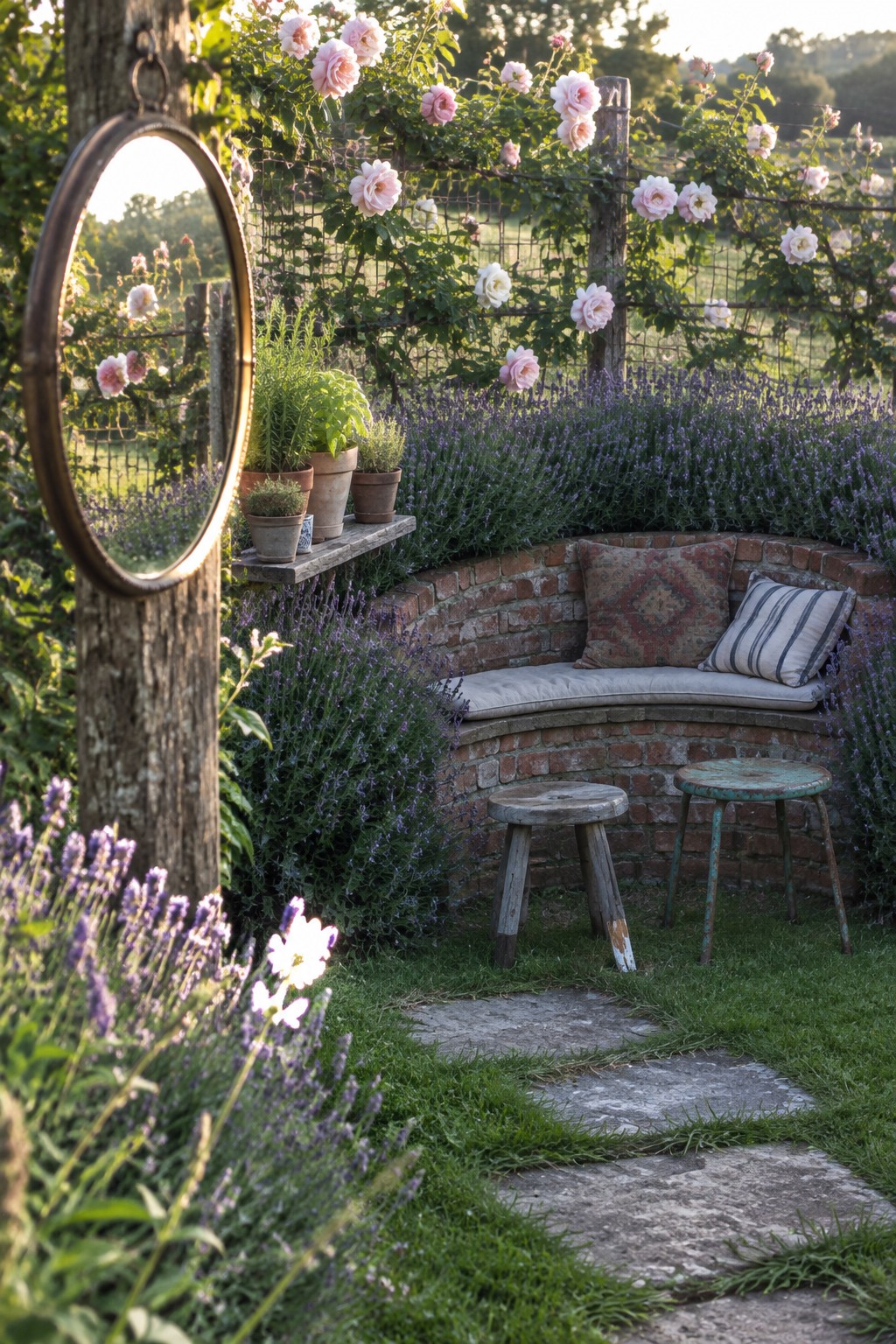
A built-in curved bench can make a small garden corner useful without taking up much extra room. Its low brick base follows the shape of the space, while roses and lavender help it feel part of the planting rather than a separate patio.
This idea suits a cottage garden or an unused corner beside a path. Add a simple seat cushion, and leave enough space in front for people to sit down comfortably. A curved bench works best when it follows the garden’s shape instead of cutting across a main walkway.
Grow Flowers Along Stone Garden Steps
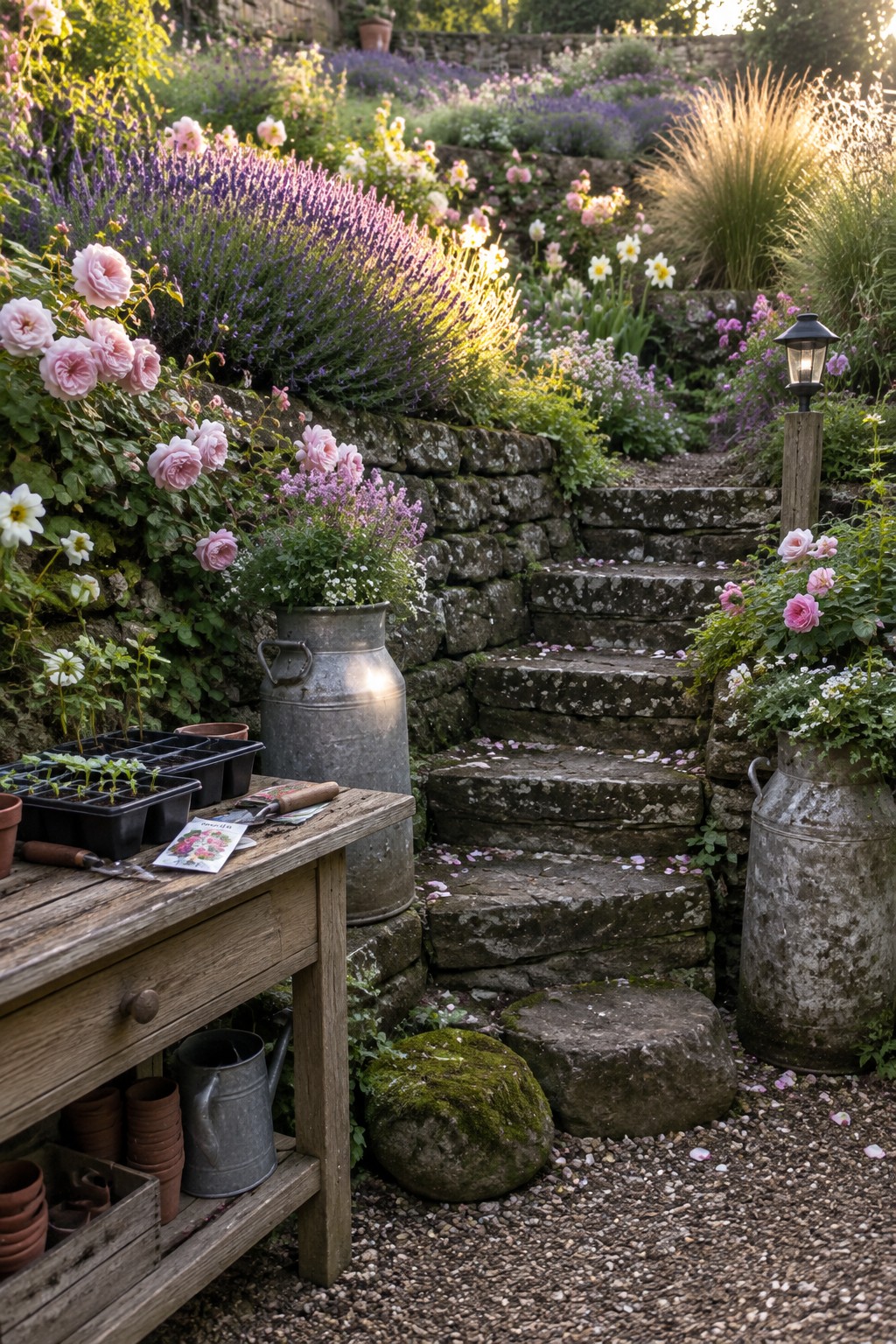
Stone steps can make a sloped garden easier to walk through while giving the planting a clear structure. Letting roses and lavender grow along the edges keeps the route feeling tucked into the garden rather than separate from it.
Use sturdy, low stone risers and leave enough room beside the steps for plants to grow without narrowing the tread. Roses suit the edges where they have space to spread, while lavender works well in sunny, well-drained spots.
Use Lavender To Trace A Curved Garden Edge
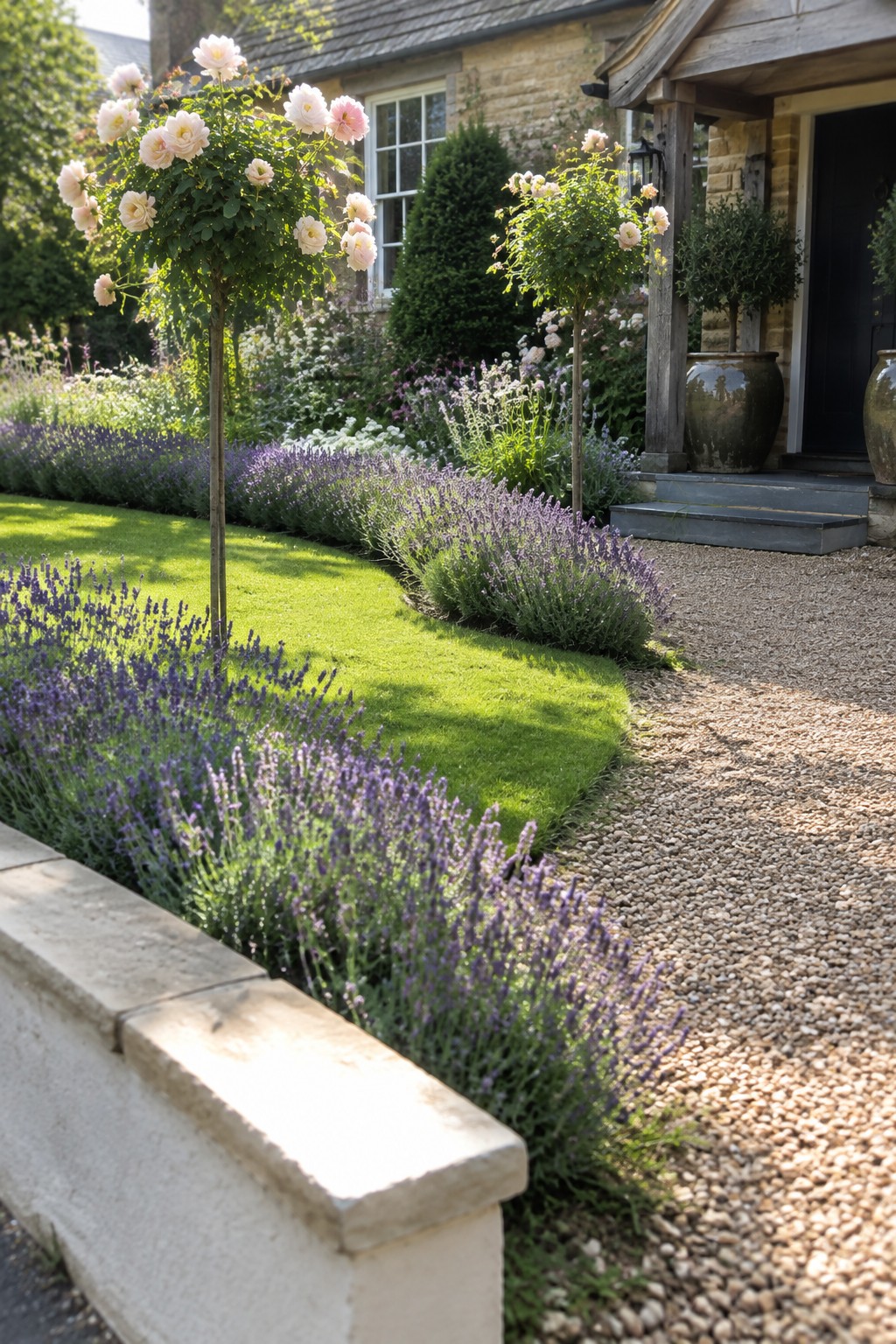
A curved border of lavender gives a cottage garden a clear shape without making it feel formal. The planting follows the lawn’s edge and makes the transition to a gravel path feel natural.
Use a similar border beside a walk or lawn, then add rose standards behind it for height. Leave enough room for the lavender to spread, and keep the curve easy to mow along.
Frequently Asked Questions
Q: How much sun do roses and lavender need to grow well together?
A: Give them a spot with at least six hours of direct sun each day. Both flower more reliably in bright light, and good sun helps keep the plants from getting crowded and damp.
Q: Can I plant lavender right next to my roses?
A: Leave a little breathing room so air can move between them and you can reach each plant for pruning. Lavender prefers drier soil than roses, so plant it near the edge of a rose bed where it won’t get extra water from a thirsty rose.
Q: What if my garden soil is heavy clay?
A: Lavender can struggle in soil that stays wet, especially through winter. Plant it in a raised bed or a well-drained, sunny spot, and avoid watering it on the same schedule as your roses.
Q: Which flowers can I add for more cottage-garden color?
A: Try catmint, salvia, or foxgloves for a relaxed mix of blooms. Choose colors that complement your roses and lavender, rather than adding every shade you love at once.
