


I always scan the driveway edges first when checking out a front yard, because they frame the whole approach and show if the landscaping holds together.
In my yard, I learned the hard way that without crisp beds, gravel spills everywhere and the space looks ragged no matter what else blooms.
Planting low structures along those edges creates pathways that guide your eye cleanly and let taller plants behind them shine over time.
A few of these setups use repeat bloomers that keep the polish without constant trimming.
They are the kind worth sketching out for your own lot next spring.
Driveway Beds Edged in Stone

One clean way to finish off a driveway is with low stone retaining walls that hold back gravel mulch and low plants. You see it here along a wide path of concrete pavers. Grasses and small shrubs fill the beds nicely, and spots of lighting make it all pop at dusk. It keeps things tidy and modern without looking fussy.
Try this on a straight run or gentle curve leading to your garage. It suits sloped spots best, since the walls handle any grade changes. Go for tough, drought-friendly plants that won’t flop over the edge. Skip anything too tall, or it’ll crowd the path.
Brick-Edged Beds Along the Driveway
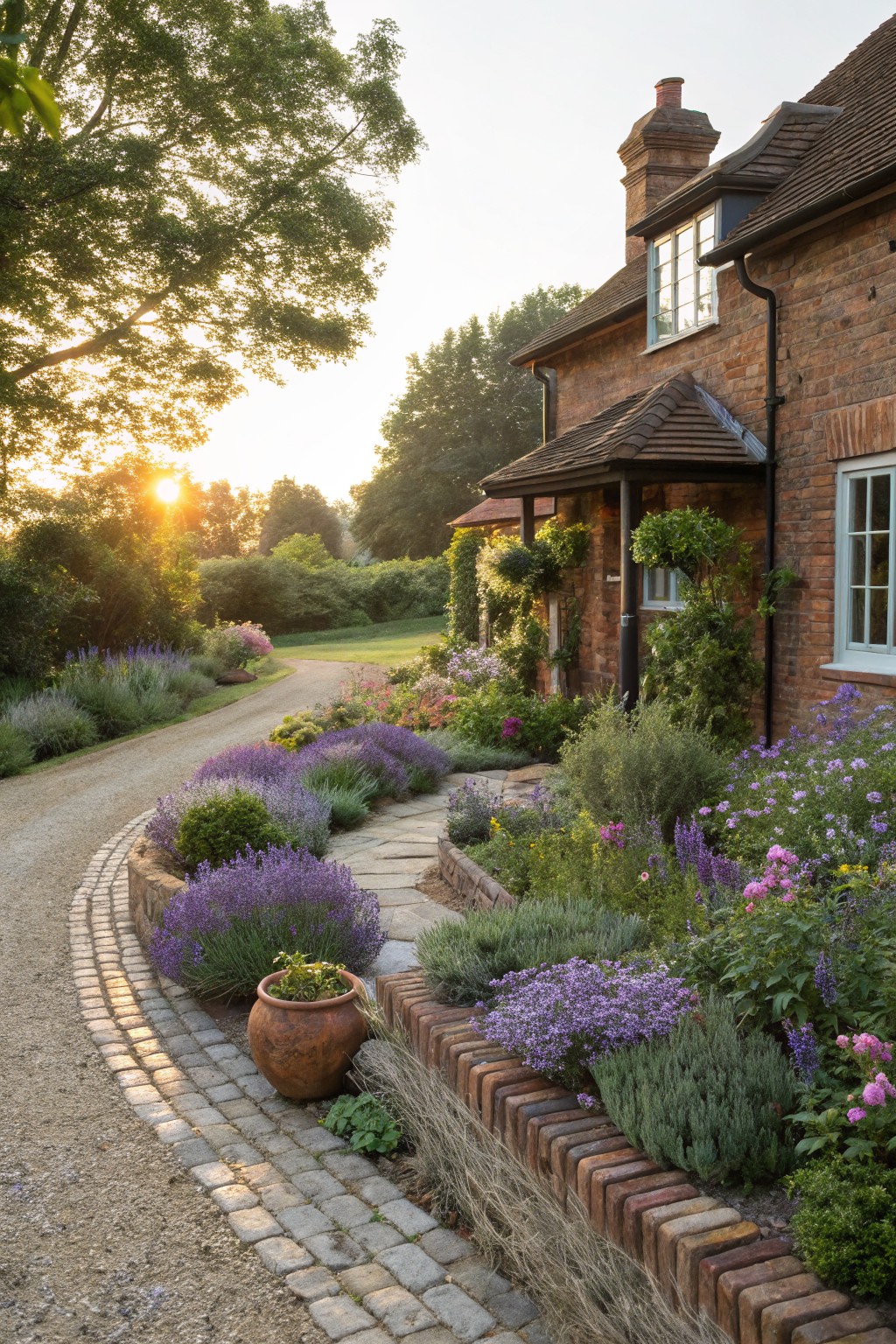
One clean way to finish off a gravel driveway is with low brick walls that hold back flower beds. The bricks give a solid edge that keeps gravel in place and lets plants tumble over just enough for a soft touch. Lavender bushes and perennials fill the beds here, making the whole approach feel tidy yet full of life.
You can pull this off on most homes with a front drive, especially older brick or stone houses. Pick tough plants that handle some car traffic and dry spells, like lavender or sedums. Just make sure the wall height matches your drive level… too high and it blocks the view.
Low Stone Walls Edge Driveway Beds
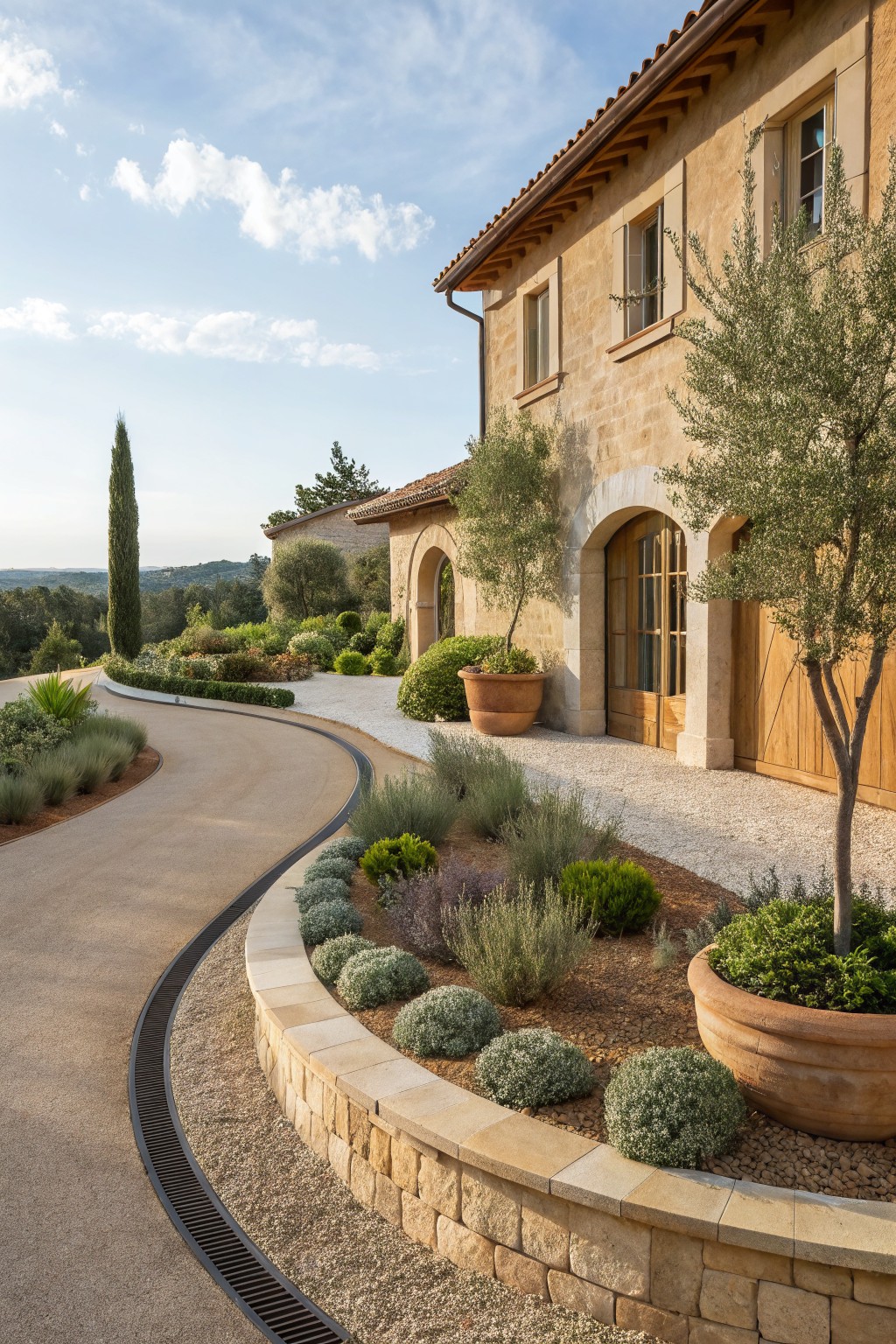
A low retaining wall runs right along this curving driveway, holding back simple flower beds full of silvery shrubs, lavender, and grasses. The stone matches the house perfectly, so the whole entrance feels tied together and finished. No mess, just clean lines that make the place look put-together without much work.
This works best on sloped yards or drier spots where you want tough plants that don’t need babying. Pick local stone to blend in, layer in some terracotta pots for height, and keep the mulch gravelly. Fits older homes with a bit of rustic style… or even newer ones aiming for that Mediterranean feel.
Boxwood Flower Beds Line the Driveway Path

One clean way to finish off a driveway is with low boxwood hedges framing flower beds right along the edge. Here tulips in white, yellow, and red fill the beds, set against the crisp green of the hedges and the neutral gravel path. It keeps things structured and welcoming, like a classic estate garden but simpler to pull off.
These beds suit homes with a traditional front yard where you want some color without wild growth. Plant spring bulbs in fall, then just trim the boxwoods a couple times a year. They work best on straight paths or gentle curves, adding polish as you pull up. Skip if your drive is super narrow.
Stone Walkway Edged by Layered Plant Beds

One clean way to finish off a driveway edge is with beds of mixed plants right along a stone path. Here the irregular pavers curve gently toward the house, hugged by taller grasses and shrubs that drop down to lower flowers and pots. It gives that polished border without much fuss, and the layers make it feel full but not crowded.
This works great for homes with sandy or informal approaches, like near a beach. Plant drought-tolerant stuff in the beds to keep upkeep low, and repeat the stone edge all the way to the gate. Skip it if your path is super straight… might look too busy then.
Simple Rock Edging for Driveway Flower Beds

One clean way to finish off a driveway edge is with rounded rocks lining flower beds along a gravel path. It keeps things neat without much upkeep. Those smooth stones hold back the plants and gravel nicely, giving the whole setup a finished look that fits right into a coastal or cottage yard.
You can pull this off on most any driveway approach, especially where you want low plants and grasses hugging the edges. Go for a mix of pink blooms and taller grasses like they have here, and space the rocks close together so nothing spills over. Works best on gently curving paths leading to a house entry, but watch the scale, bigger rocks suit wider drives.
Boxwood Borders Along Driveway Flower Beds

Neat boxwood hedges make these driveway edge beds look sharp and put-together. They run right alongside the gravel path, holding back beds full of white tulips that add a fresh spring touch. The low green borders keep everything tidy, tying the garden straight into the house entrance without overwhelming the simple stone walkway.
This works well for classic homes or any front yard path you want to feel more finished. Start with small boxwoods planted close together for that solid edge, then fill the beds with bulbs or annuals that match the season. Trim the hedges a couple times a year… keeps the look crisp. Avoid letting plants spill over the path.
Grasses and Pebbles Edge the Driveway Path

One clean way to finish off a driveway or walkway is to line it with beds of ornamental grasses set in black pebbles. This setup keeps things sharp and simple. The grasses add some height and movement without much upkeep, and the dark stones make a neat border that sets off the concrete path. Those low lights tucked in along the edge help it look good at night too.
It works best on modern homes or any place with straight lines already. Plant the grasses close together for that full look, and use larger pebbles to avoid weeds. Skip it if your yard floods a lot, since the stones drain well but grasses might not like wet feet. Easy to copy in most climates.
Long Planters Edge the Driveway
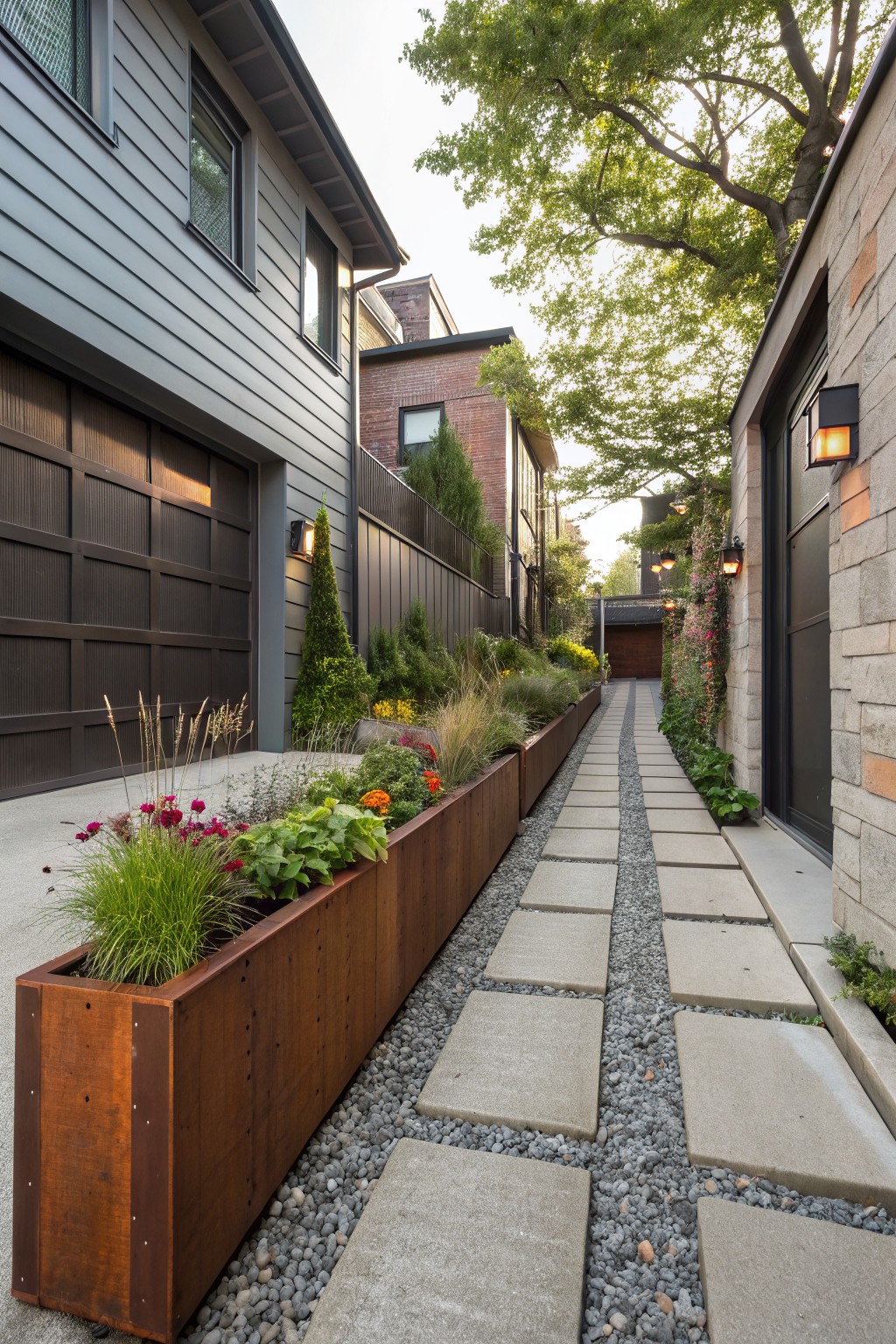
One clean way to finish off a driveway is with long wooden planters running right alongside the path. Here they hold tall grasses, some colorful blooms, and low greenery that stays put without crowding the walkway. It turns a plain strip of gravel and pavers into something that feels put together, almost like a garden lane.
These work best in tight spots between garages or houses, where you want definition but not a lot of width. Go for rust-resistant metal-edged wood to handle weather. Fill with drought-tolerant plants so it stays neat year round. Fits modern homes with clean lines… just keep the beds trimmed back from the path.
Driveway Edge Beds with Metal Troughs

One clean way to finish off a driveway is with raised metal troughs planted up along the edge. Here, a corten steel box holds bunches of feathery grasses, with river rocks spilling out in front for extra texture. It keeps things sharp and low fuss, while picking up on the house’s wood siding without stealing the show.
These beds suit modern homes or any spot needing a bit more polish around the entry drive. Go for drought-tolerant grasses that sway nicely, and add those smooth stones to fill gaps. They’re tough on edges that see foot traffic, though you might want to edge the concrete yearly to hold the line.
Driveway Edges with Boxwood and Lavender
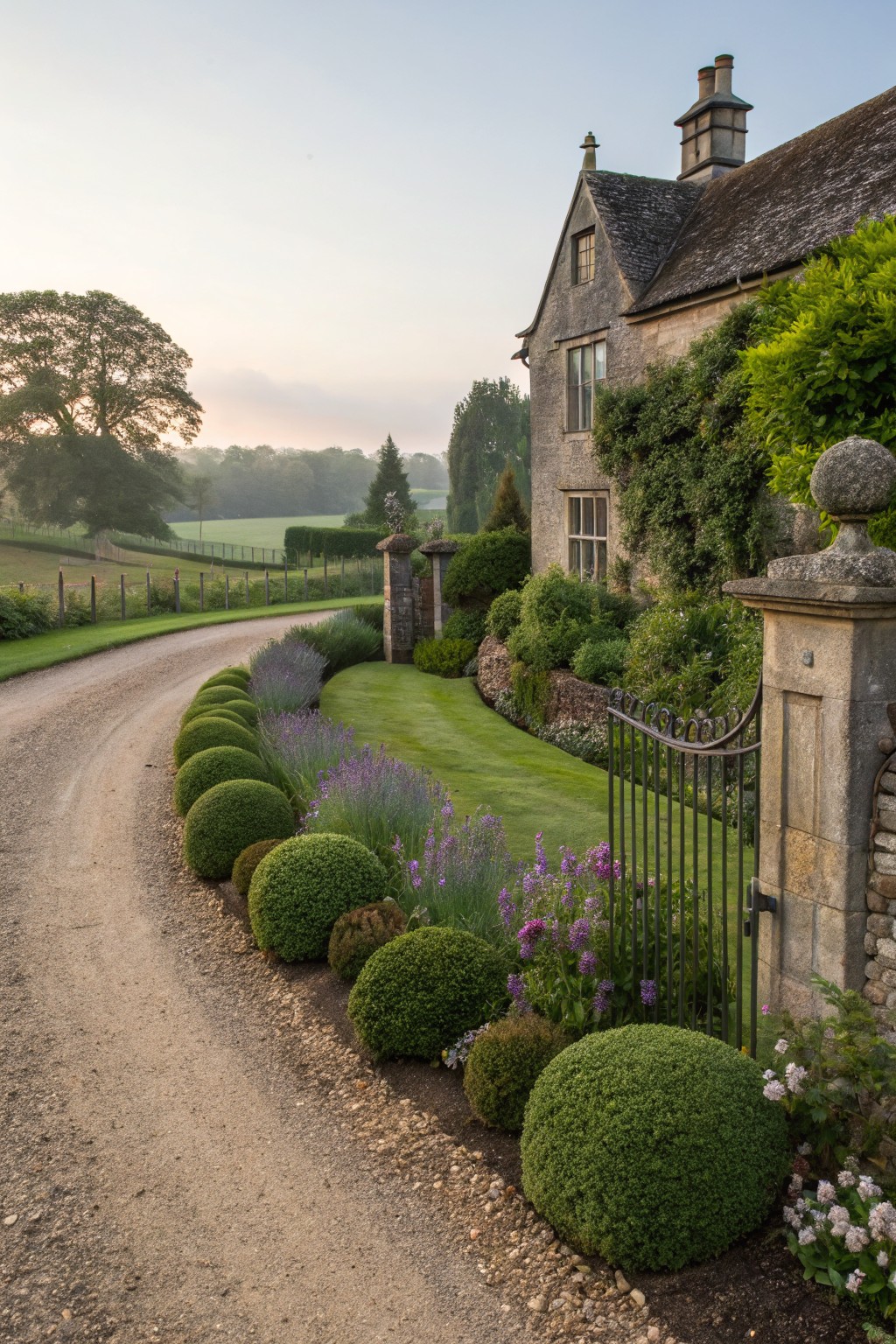
A simple row of round boxwood shrubs mixed with lavender plants makes a sharp border for any driveway. The green balls give structure, while the purple blooms add color that pops against gravel or dirt paths. It keeps things tidy and feels put together right from the road.
Plant them close along the edge, maybe every couple feet for the boxwoods, with lavender filling gaps. This setup suits older homes or farmhouses with a gentle curve to the drive. Trim the boxwoods a few times a year… and watch for deer if you’re rural. Low fuss once established.
Rounded Flower Beds Line a Stone Driveway Path

One simple way to finish off a driveway is with rounded flower beds tucked right along the path edge. Here, big puffs of white hydrangeas mix with soft pink roses, giving the stone walkway a gentle border that feels full but not crowded. It works because the curves echo the path’s bend, and the repeat blooms keep it looking tidy through the season.
These beds suit homes with natural stone paths or gravel drives, especially if you want a cottage feel without too much fuss. Plant hydrangeas in the back for height, then add lower roses or perennials up front. Just keep the edges mulched neat, and trim back climbers so they don’t flop over the walk.
Boxwood Edges for Driveway Borders

Neat boxwood hedges running right along the driveway edge make a simple border that keeps everything looking sharp and contained. Here they follow the curve of a brick path perfectly, with low stone walls backing them up for a bit more structure. That combo turns a plain drive into something more finished without much fuss.
You can pull this off on most front yards, especially older homes with some character. Set the boxwoods about a foot from the path edge, space plants 12 to 18 inches apart, and shear them a couple times a year. Throw in big urns of white hydrangeas on the walls for summer blooms… easy color that doesn’t mess with the clean lines.
Simple Grass Beds Along Driveway Edges

One clean way to finish off a driveway is with low beds of ornamental grasses tucked right along the path. Here, concrete retaining walls hold back the planting, with clumps of soft grasses spilling over just a bit onto pebble mulch. The look stays sharp and low fuss, letting the path stand out while softening the hard edges of the concrete slabs.
These beds suit modern homes or any spot with a straight walkway to the door. Pick tough, drought-friendly grasses that don’t need much water or trimming. Keep the pebbles loose for good drainage, and add low lights in the walls if you want evening glow. Skip anything too bushy, or it starts looking messy fast.
Gravel Mulch Beds with Agave Along Driveways
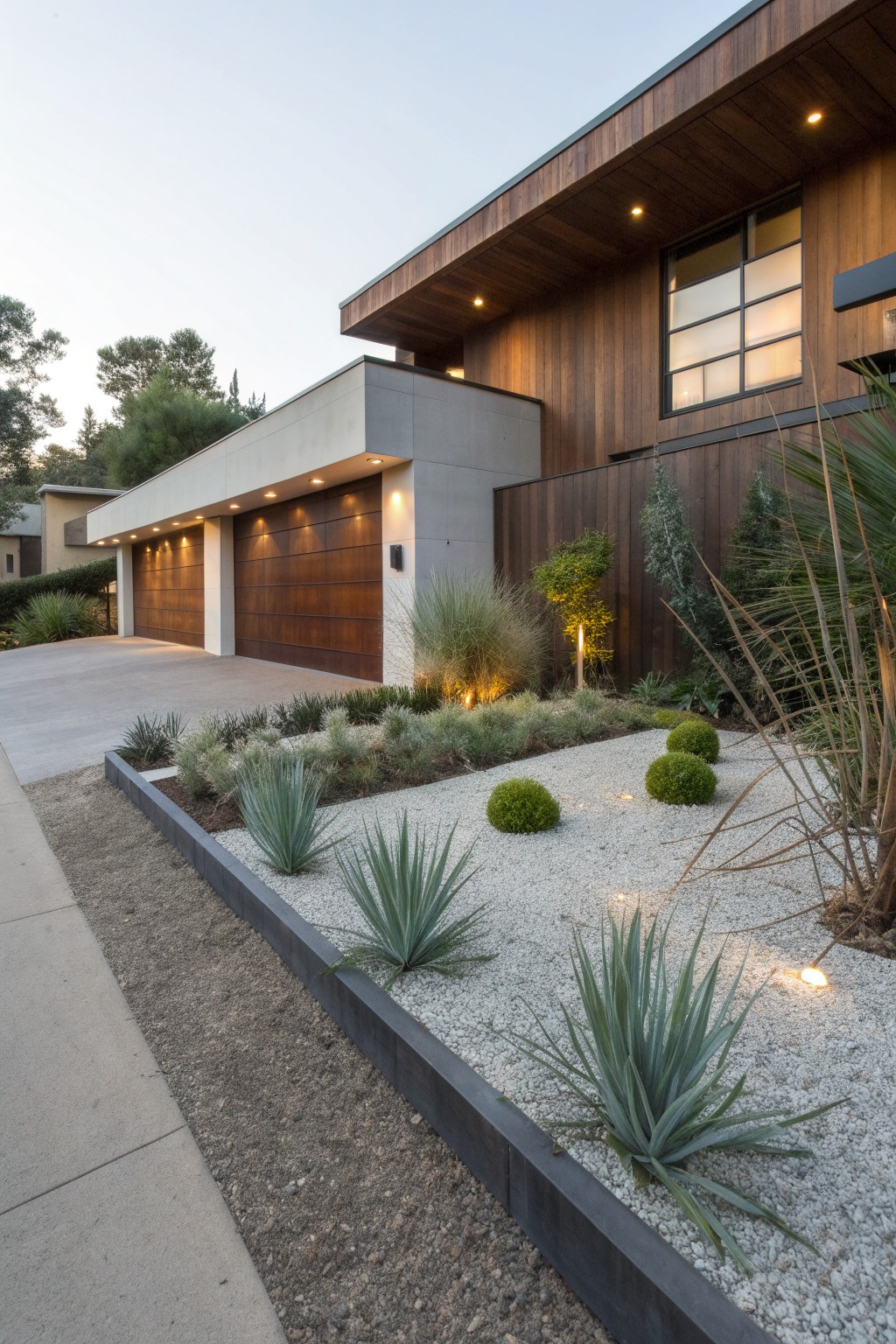
One clean way to finish off a driveway is with simple gravel beds planted up with tough agave plants and a few grasses. The white pebbles keep weeds down and let the bold shapes of the agave stand out. Paired with black edging, it pulls the yard right up to the concrete without any fuss. Folks like how it stays neat year-round, even in hot spots.
This works best on modern homes or anywhere with clean lines and not much rain. Line the beds along one or both sides of the drive, keeping plants spaced for air flow. Skip softer flowers here, they won’t hold up. Just go for gravel two inches deep over landscape fabric, and let the succulents do their thing.
Driveway Edges with Low Stone Walls
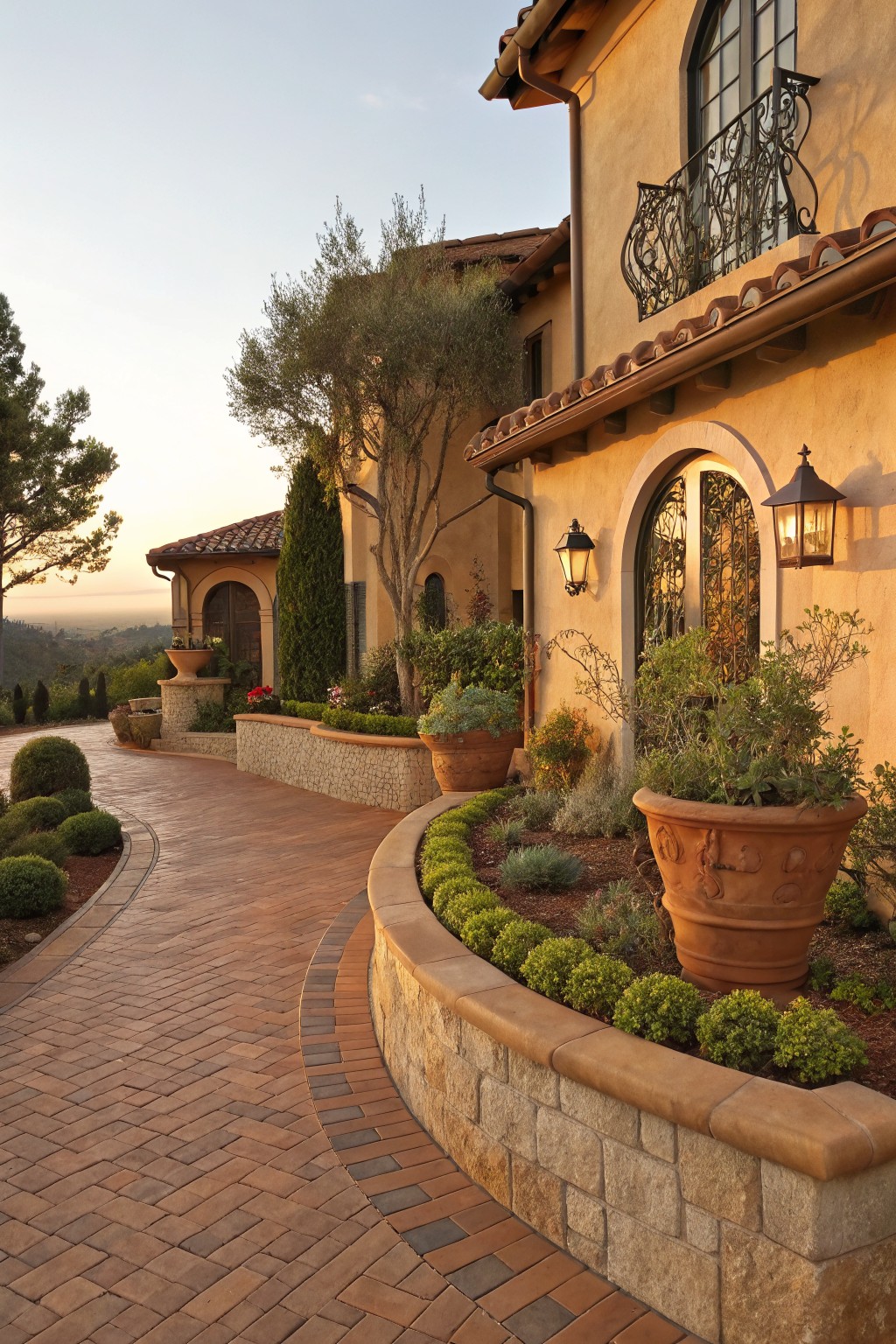
A low curved stone wall runs right along this brick paver driveway. It holds back flower beds packed with boxwood shrubs and lavender, plus a few big terracotta pots for extra height. The wall keeps everything crisp and contained, making the path feel like a proper entrance without any mess spilling over.
This works best on winding driveways where you want to guide the eye toward the house. Pick a stone that matches your home’s color, like this light beige, and keep plantings low and trimmed. It suits sloped yards too, since the wall doubles as a retaining edge. Just avoid overcrowding the pots, or it starts looking busy.
Curved Retainer Walls Line Driveway Beds

A low curved retainer wall runs right along this driveway, holding back soil for flower beds packed with low plants. Gravel fills a narrow strip between the wall and the pavers, keeping things crisp and separate. That simple edge turns a plain driveway into something finished and green without much upkeep.
You can pull this off on most any driveway, especially if there’s a slope to work with. Match the wall material to your house, like stucco or concrete, and stick to tough, short plants that stay put. It softens the hard paving nicely and makes the entry look put-together from the street.
Stone Wall Edging for Driveway Flower Beds

A simple stone wall running along the driveway makes for clean edging that holds back soil and plants without much fuss. Here, it’s loaded with white daisies and yellow flowers that tumble over the top, giving that crisp border feel while looking totally natural. The wall’s rough texture pairs well with the soft blooms, and it stands up to cars and weather just fine.
This works best on country lanes or rural driveways where you want some structure without a fussy look. Pick stones that match your local area for easy blending, then plant tough perennials like daisies, coreopsis, and grasses that come back each year. Skip anything too neat, or it loses that relaxed edge.
Frequently Asked Questions
Q: How do I keep weeds out of these driveway edge beds without chemicals?
A: Layer down cardboard under your mulch right after planting. It blocks light so weeds starve. Top it with two inches of bark mulch. Refresh the mulch each spring.
Q: What plants fit best along a driveway without flopping everywhere?
A: Go for tough, low-growers like creeping phlox or dwarf daylilies. They hug the ground and bounce back from car bumps. Space them about a foot apart so they fill in neat.
Q: Can I set this up myself in a weekend?
A: Yep, mark your line with string and spray paint. Dig a six-inch trench, drop in bricks or stones, backfill with soil. Plant right away…water deeply once.
Q: How do you fix edges that start looking messy after a season?
A: Run a flat shovel along the driveway side to recut the line sharp. Pull any stray grass, then firm up the soil. And hit it with fresh mulch.
