


I always pay attention to how a front yard’s pathways and edging pull everything together when driving by, creating that first impression of order. White rocks stand out for framing plantings cleanly, letting low-growing shrubs and grasses build structure over time without overwhelming the space. They handle sun and rain well too. In my yard, I tested bordering the walkway with them last spring, and it sharpened the whole layout without much ongoing work. A handful of these setups make me think twice about adapting them to fit sloped lots or narrow entries like so many homes have.
Simple Pebble Path with Wide Pavers
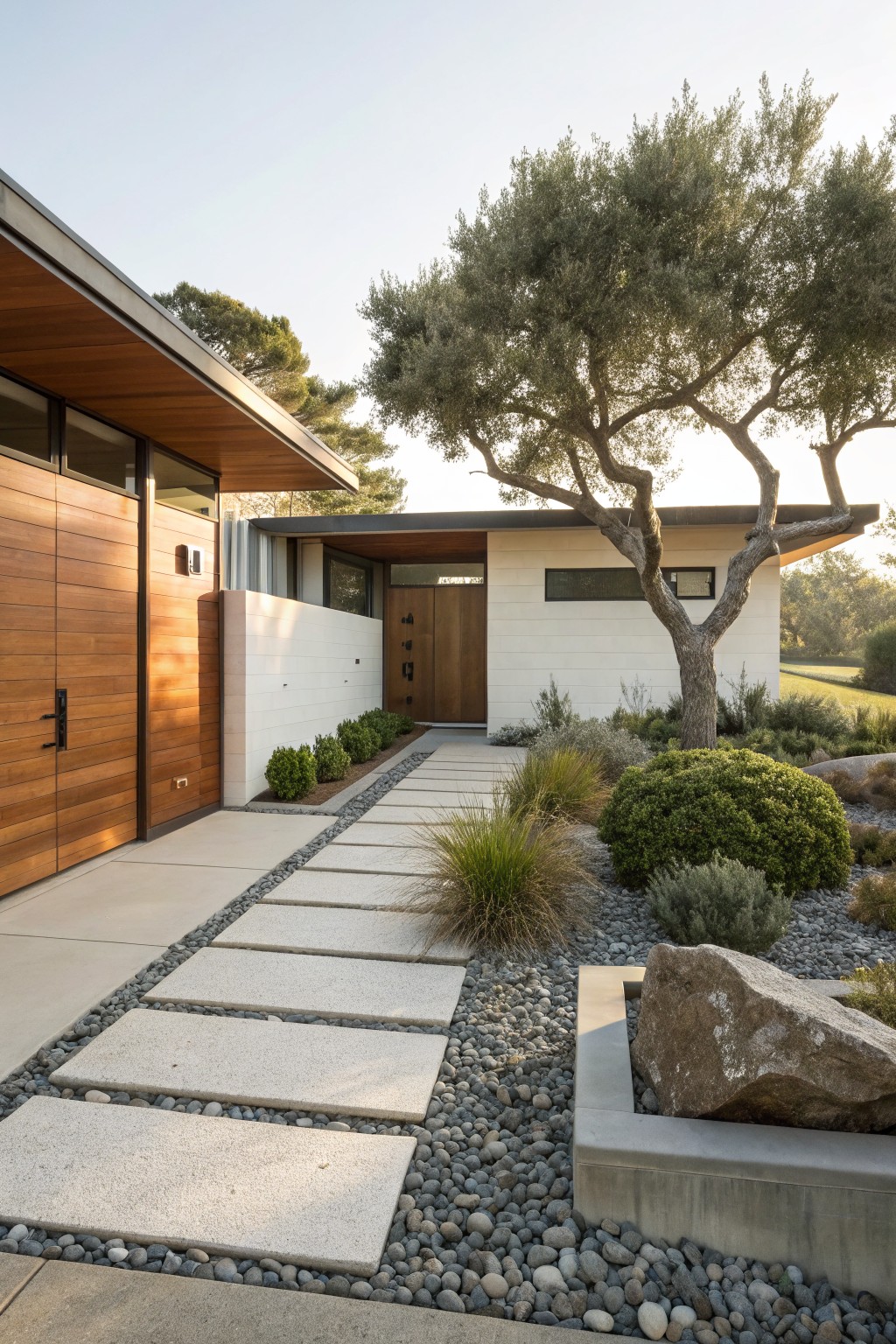
A straightforward front path made from big square pavers set right into white pebbles works well here. The pebbles fill the gaps and edges, while low grasses and a few shrubs tuck in along the sides. It pulls your eye straight to the door without any fuss, and stays clean even in dry spots.
You can pull this off in most front yards, especially if you want low upkeep. Go for larger pavers to cut down on weeding, and pick tough plants like those spiky grasses that handle sun fine. Pairs nice with a modern house, but watch the scale, bigger yards take it best.
Path Edged with White Rocks
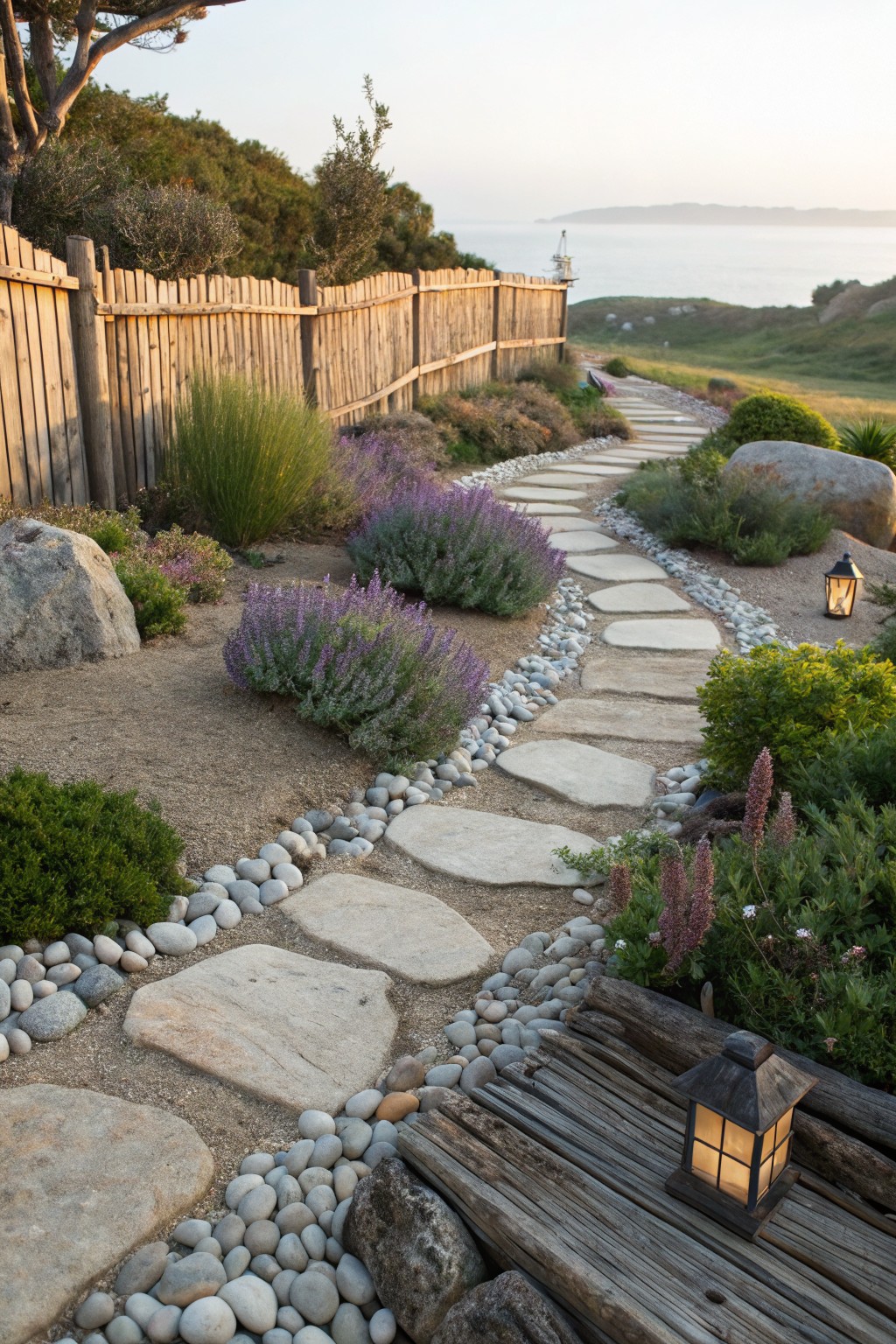
White rocks make a clean border along this stepping stone path. They fill in the gaps nicely between the big flat stones and keep dirt from spilling over. The look stays sharp even with low-water plants like lavender bushes nearby. It’s simple but pulls the garden together.
Try this in a front yard where you want easy walking without mowing right up to the path. It fits dry spots or coastal areas best. Just lay down landscape fabric first under the rocks to stop weeds, then add gravel for drainage.
Winding Stone Path with White Rock Edges
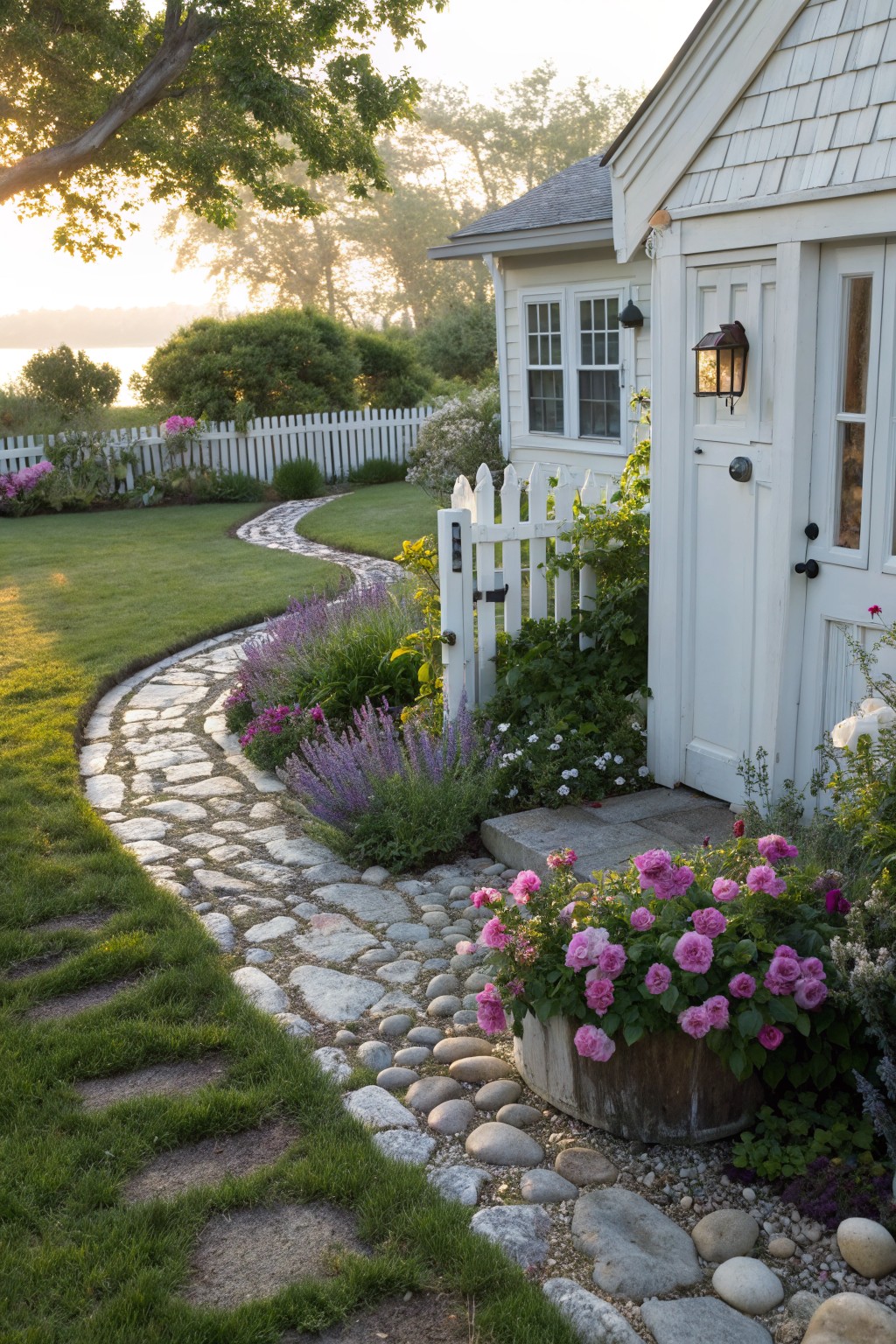
A simple winding path like this one uses irregular stone pavers set into the grass, edged neatly with smooth white rocks. The rocks keep things tidy without hard borders, and they let plants like lavender and pink roses spill over naturally. It pulls your eye right to the little white shed at the end, making the yard feel like a cozy cottage garden.
This setup works best in front yards with some curve to the land, or even straight paths if you want that gentle flow. Go for larger white pebbles around the edges to handle foot traffic, and keep plantings low so they don’t crowd the way. It’s low fuss once planted, and fits older homes or rentals where you can’t redo the whole yard.
Winding Path Edged with White Rocks
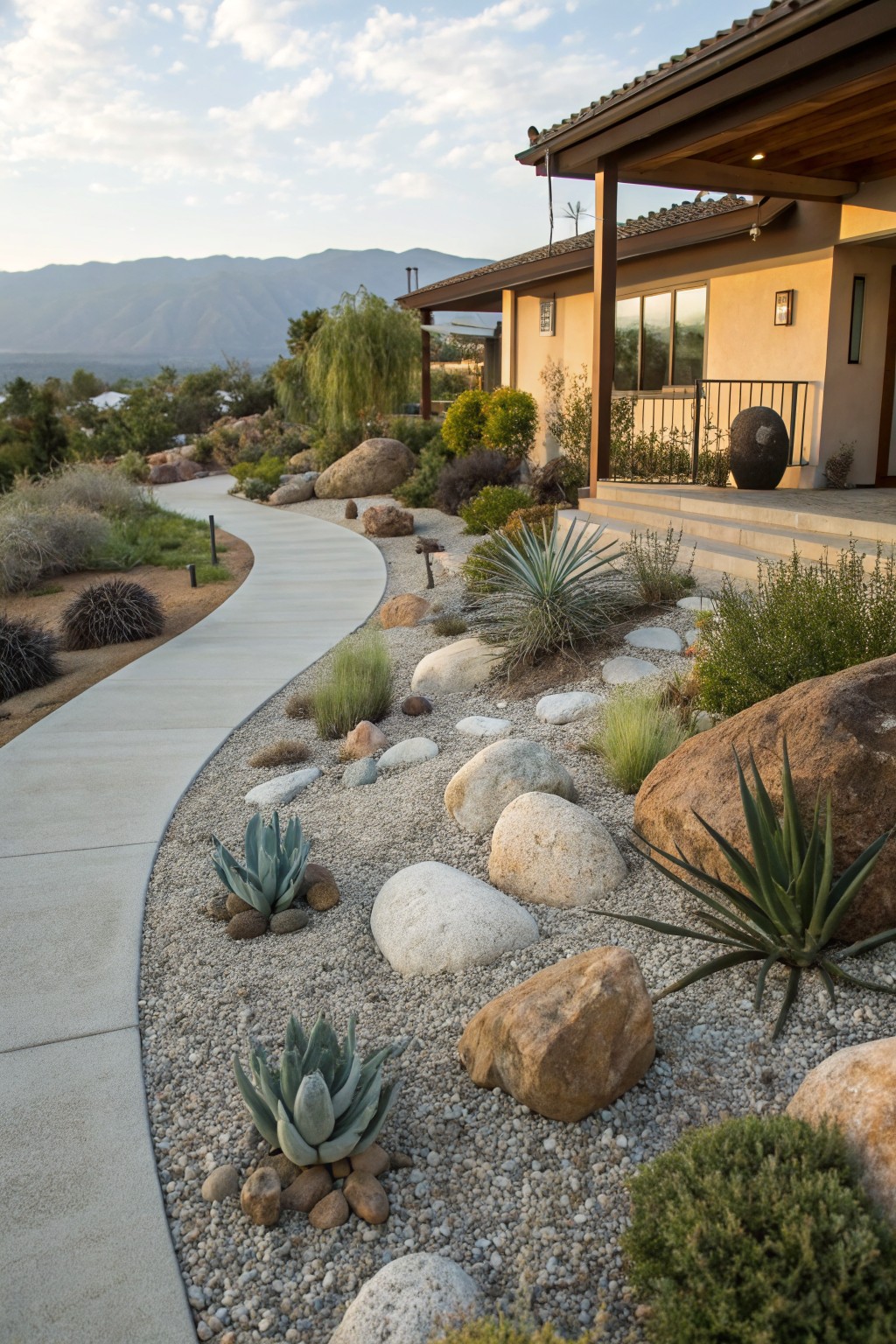
A simple curving concrete path like this one gets a clean edge from white gravel and larger rocks. Succulents such as agave sit right in the mix, tucked among boulders. It pulls the eye toward the house without much upkeep. The white tones pop against the plants and stone.
This works best in dry climates or front yards aiming for that desert modern look. Start with your path shape, then fill beds with gravel mulch to hold moisture and cut weeds. Add a few bold plants and rocks for scale. Skip it if your soil stays soggy.
Winding White Rock Paths
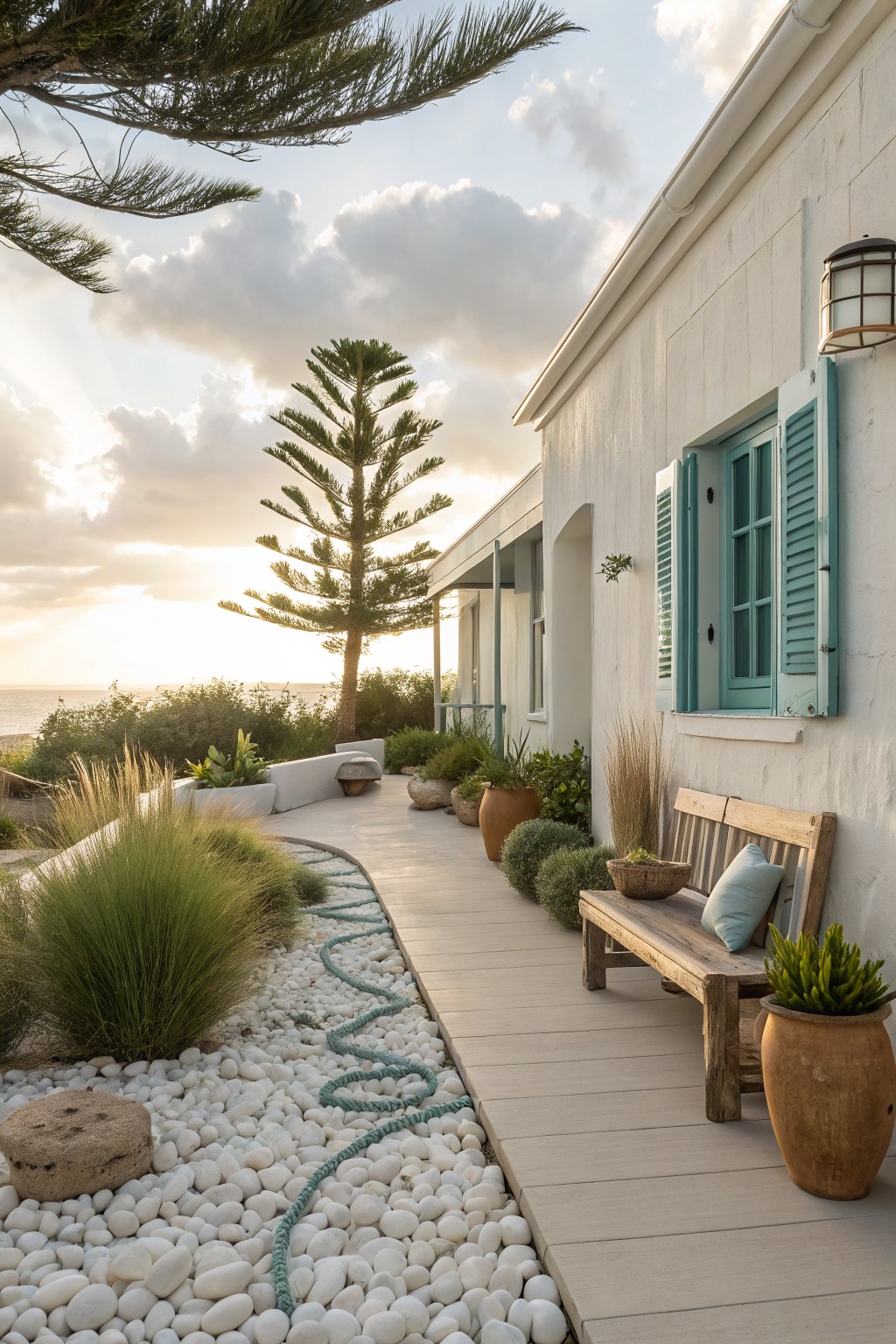
White rocks make great paths when you shape them into gentle curves like this one. They wind along the side of the house, edged with tall grasses and low plants that keep everything looking neat without much work. The light color pops against the green plants and stands out on pale stone paths or patios. It’s a clean way to guide people through the yard.
Use this in front or side yards where you want low upkeep, especially in dry spots. Line the edges with tough grasses or succulents to hold the rocks in place. It fits houses with white or light walls best. Just make sure the base is level so water drains off easy.
Winding Stepping Stone Path with White Rocks
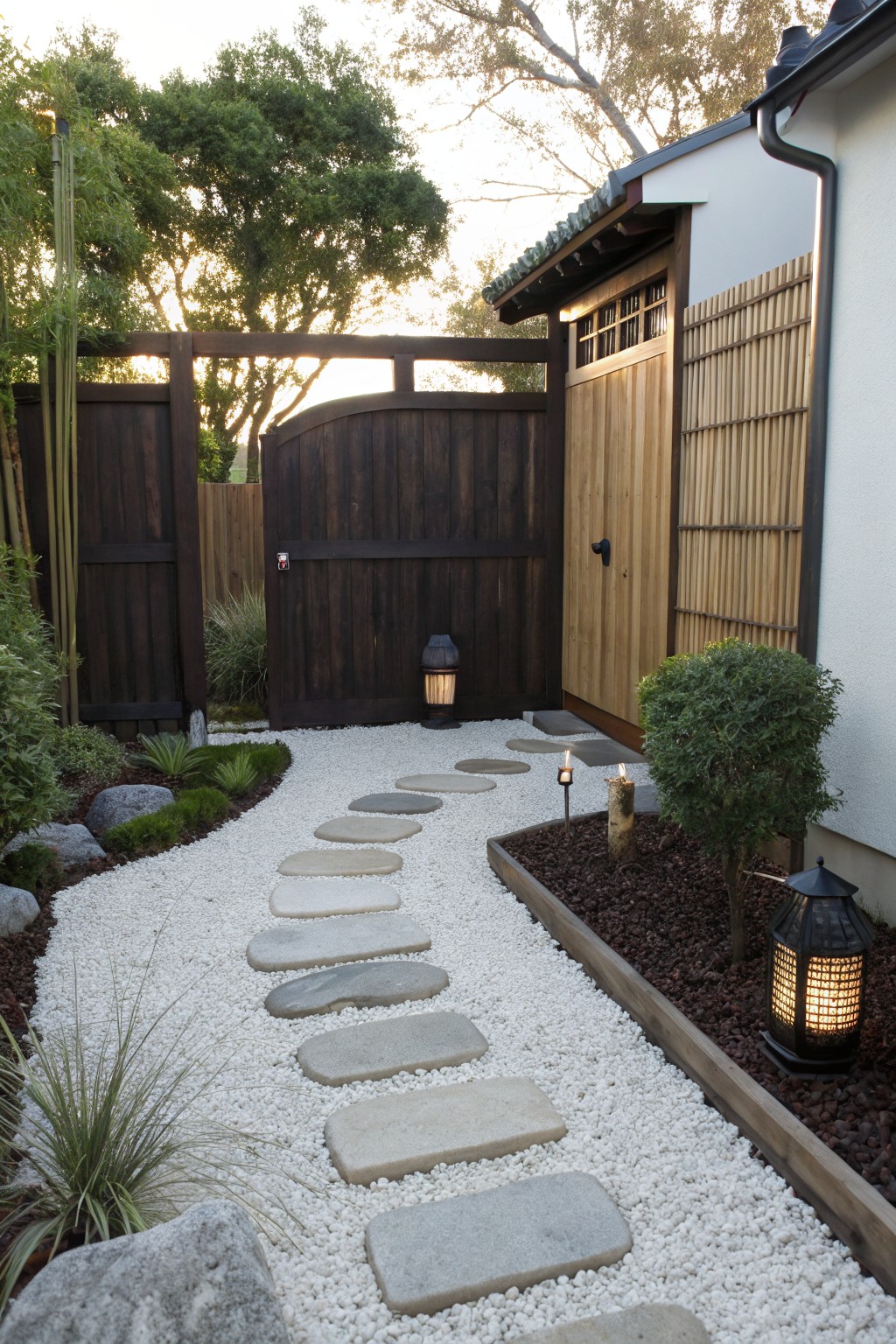
White rocks make a perfect base for a simple stepping stone path like this one. They fill in the gaps around the flat stones cleanly and keep weeds down without much work. The light color brightens up the yard and pulls the eye along the curve toward the gate. It’s a calm way to guide people to your front door.
This works best in smaller front yards or side paths where you want low upkeep. Lay down landscape fabric first then add the pebbles and stones. Mix in a few plants and lanterns along the edge for some life at night. It suits homes with clean lines or a touch of Asian style… just keep the path wide enough to walk comfortably.
Slab Path Set in White Gravel
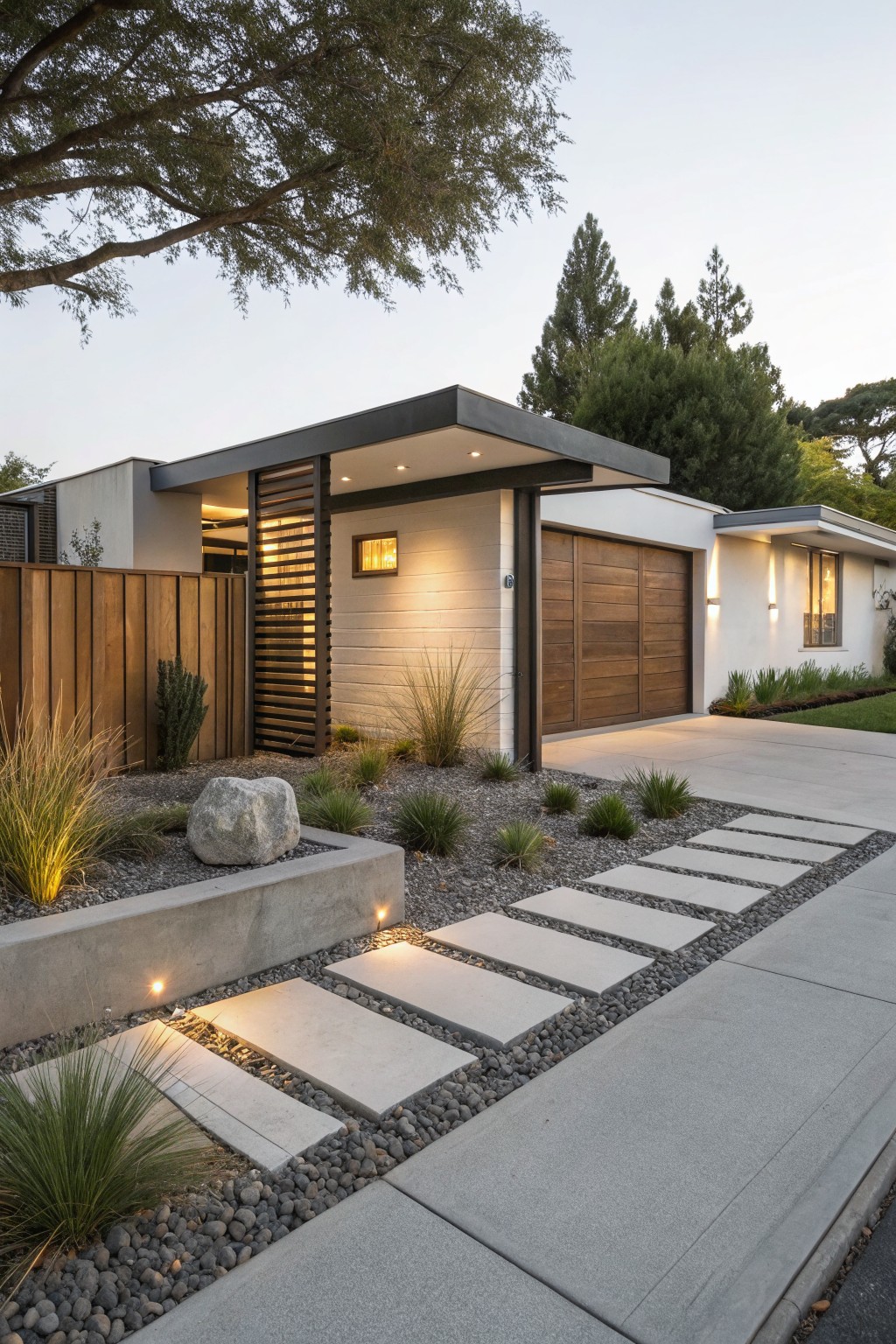
Big concrete slabs laid out in a straight line through white gravel make a clean, no-fuss walkway right up to the house. The gravel softens the hard edges of the slabs while keeping everything low-maintenance, and bits of grass poking through add just enough life. That large boulder nearby gives it a natural anchor without overdoing the planting.
This works best along a driveway or leading to your front door, especially on modern homes or in dry spots where you want to cut down on mowing. Space the slabs so people naturally step from one to the next, fill the rest with white rocks for drainage, and tuck in tough grasses along the sides. Skip it if your yard floods a lot, since gravel shifts easy.
Curved Flagstone Path in Gravel Beds
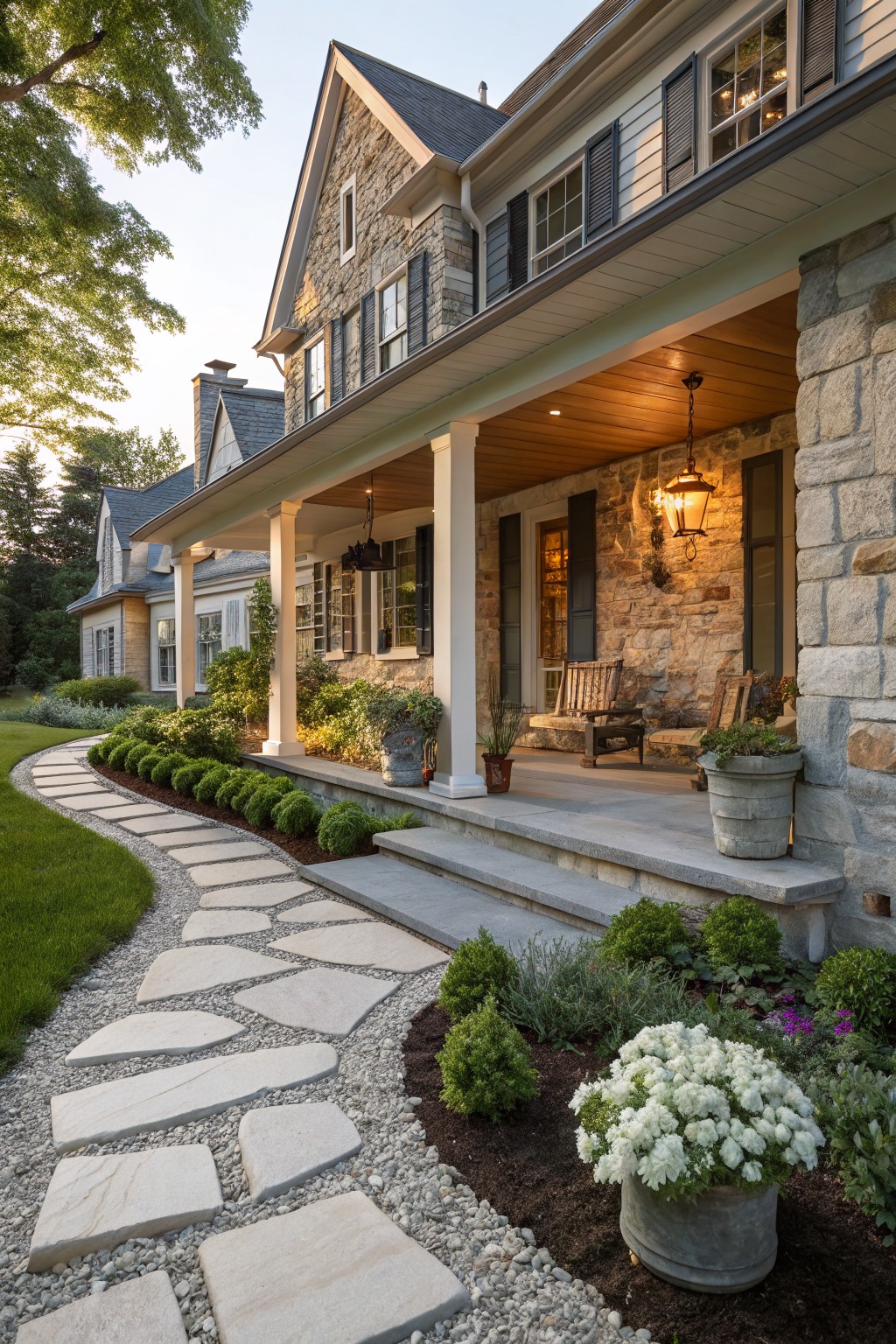
A simple curving path made from large flagstone slabs set right into light gravel works well here to lead folks up to the porch. The gravel fills the gaps and spreads out into beds edged by low boxwoods. Boxwoods keep things neat and contained. It feels natural. Not too fussy.
Try this in a front yard with some room to curve around plantings. It suits homes with stone or siding exteriors. Go for gravel that’s light colored to reflect sun and stay cooler. Watch the weeds though. A quick refresh keeps it sharp.
Paver Pathways Filled with White Rocks
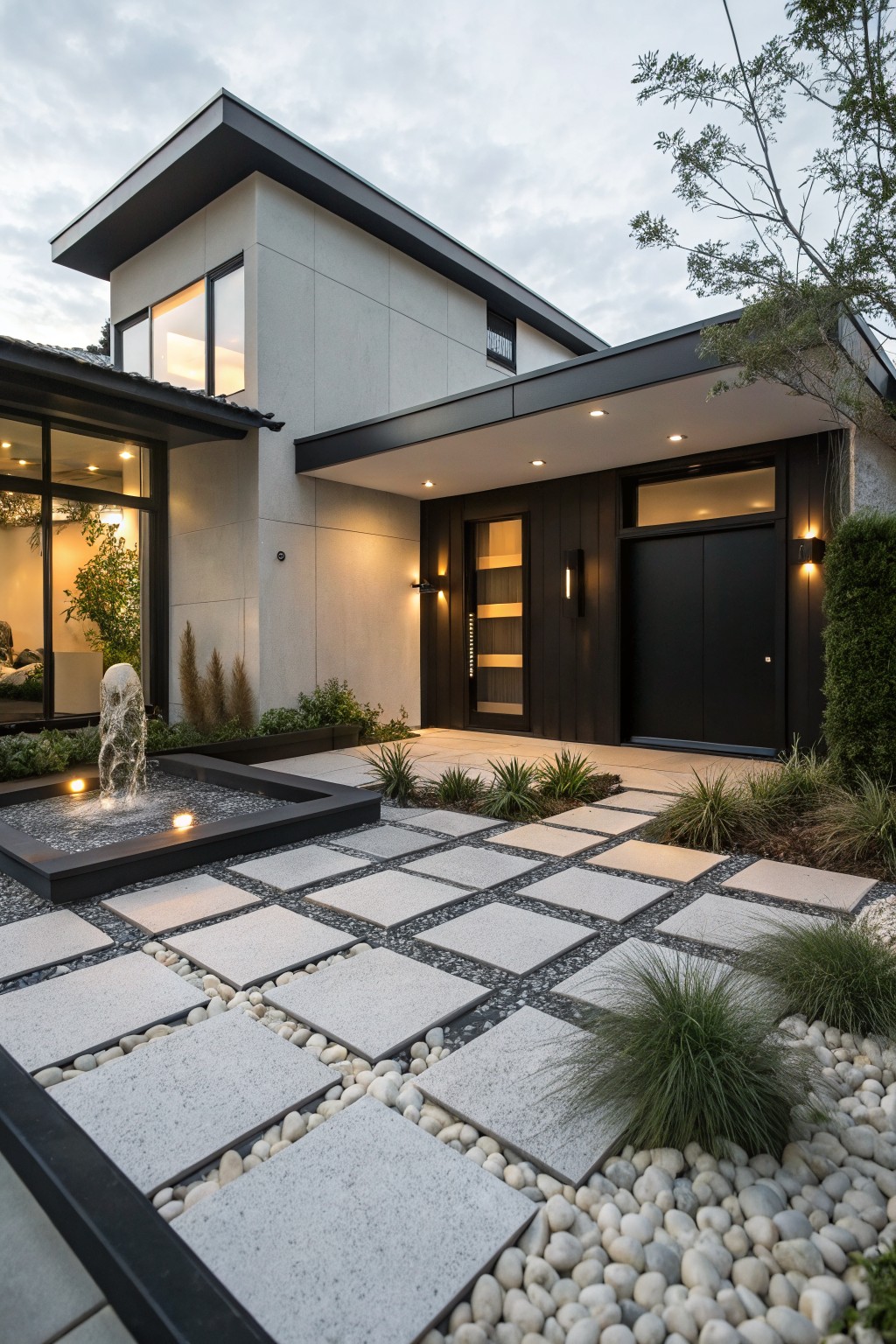
Big square pavers laid with gaps filled by smooth white rocks make a simple front walkway that looks sharp and modern. Here the path leads right up to the entry past a low fountain, keeping things open and easy to walk on. Those white rocks add subtle texture without much upkeep, and they pick up the light tones on the house itself.
This setup fits homes with clean lines or a bit of Asian influence. Space the pavers wide enough for handfuls of pebbles between, then tamp them down so they stay put. Skip it on sloped yards where rocks might wash out, but it’s perfect for flat entry areas that need to stay weed-free.
Curved Stone Path with Gravel Edges
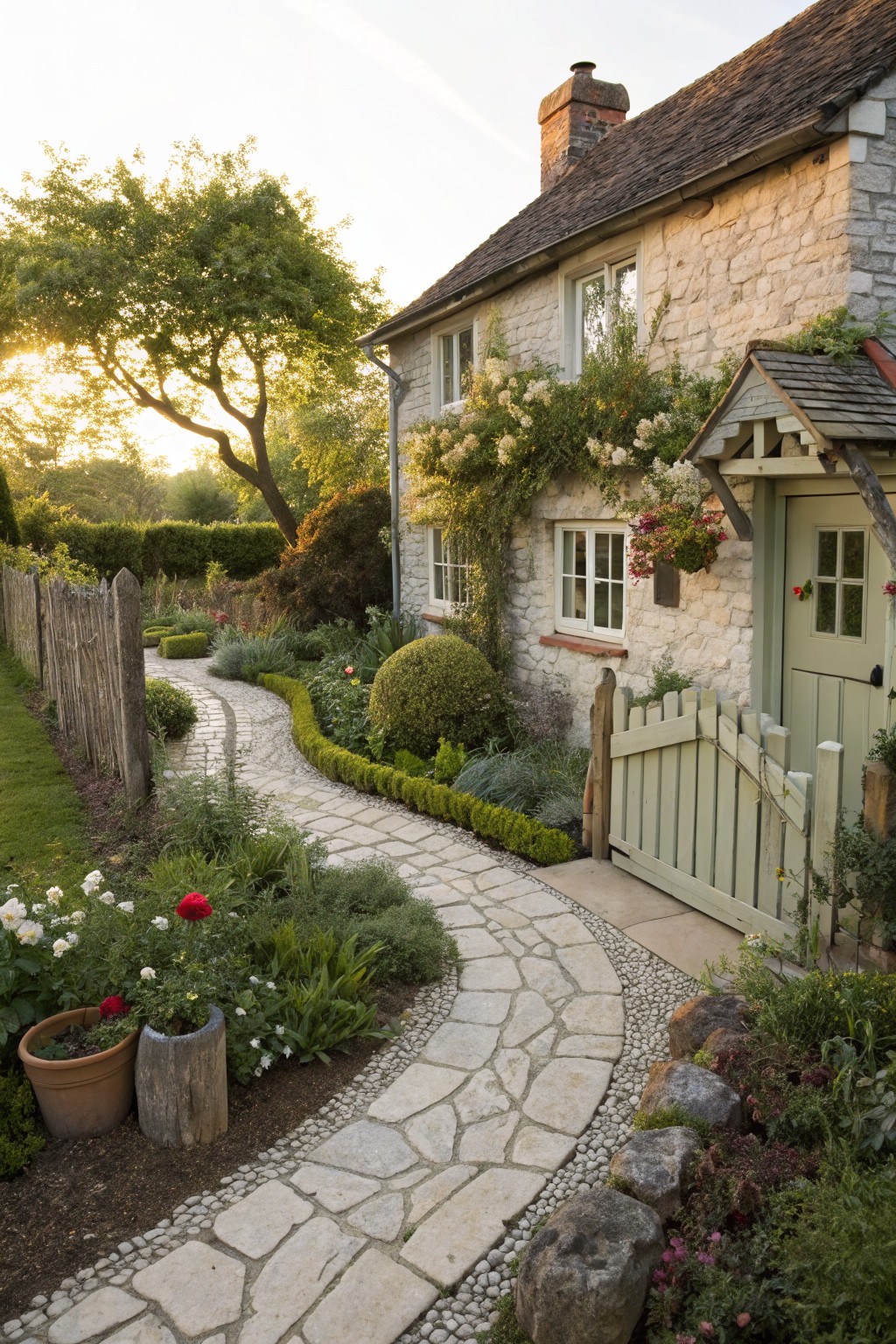
A curved stone path like this one leads right to your front door. It winds gently through flower beds and low hedges. The light gravel edging keeps everything neat and defined. White rocks along the border add a clean touch that lets plants stand out. It’s simple but pulls the garden together nicely.
This works great for cottage-style homes or any front yard with soft curves. Lay irregular stone slabs for the path. Fill edges with pea gravel or white rocks to stop weeds and make mowing easy. Keep plantings lush but not too wild. Suits small lots… just scale it down if needed.
Winding Stone Path with White Gravel
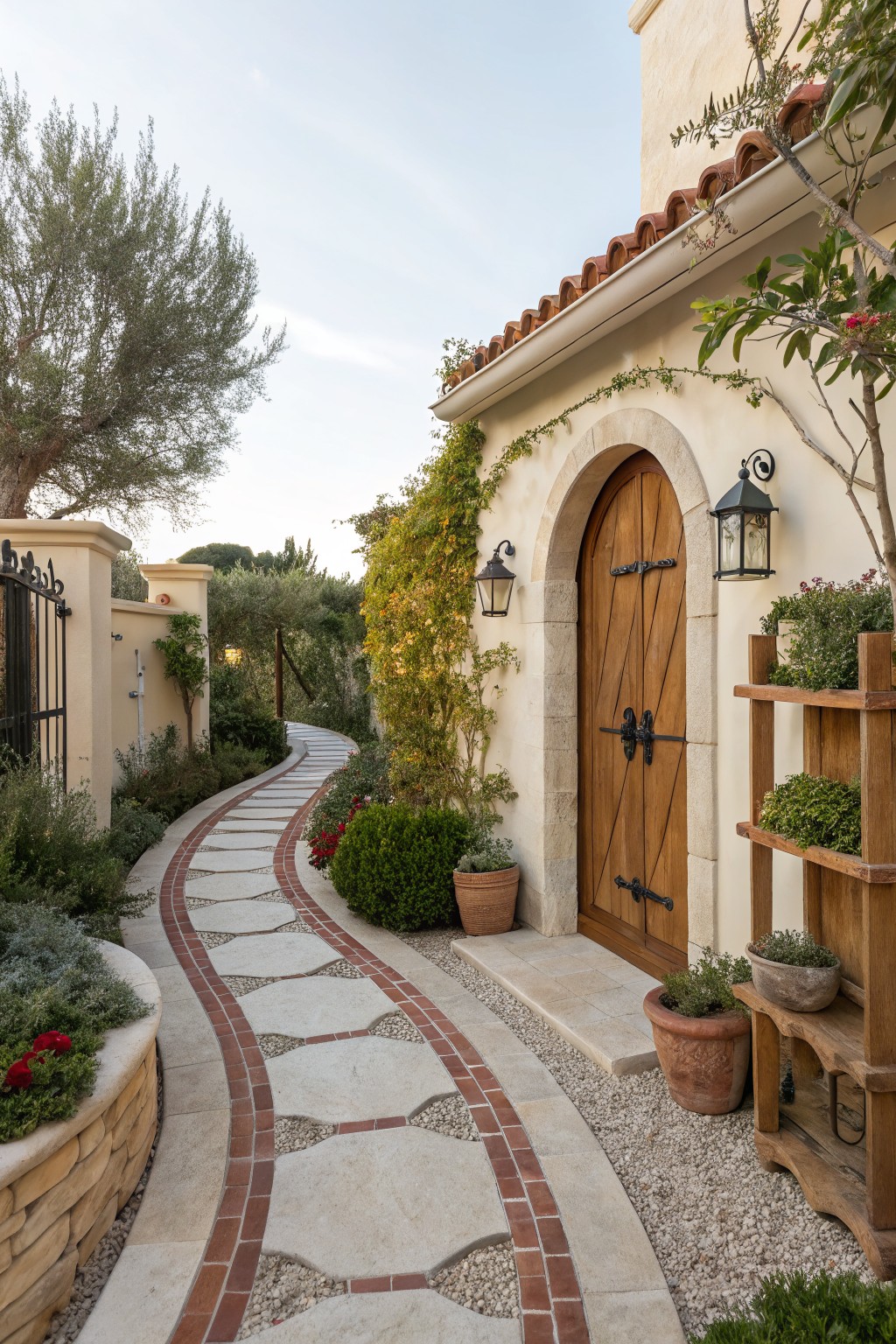
A simple winding path like this one uses large stone slabs set into white gravel, with a neat brick border along the edges. It pulls your eye straight to the front door, making the walk up feel easy and welcoming. The gravel fills in around the stones and beds, giving a clean look that doesn’t need much mowing or weeding.
This works best in sunny front yards with a bit of slope, like in warmer climates. Lay the slabs first for stability, then add gravel for drainage. Pair it with tough plants along the sides to frame the path. Just refresh the white rocks every couple years to keep it sharp.
Curved White Rock Fire Pit
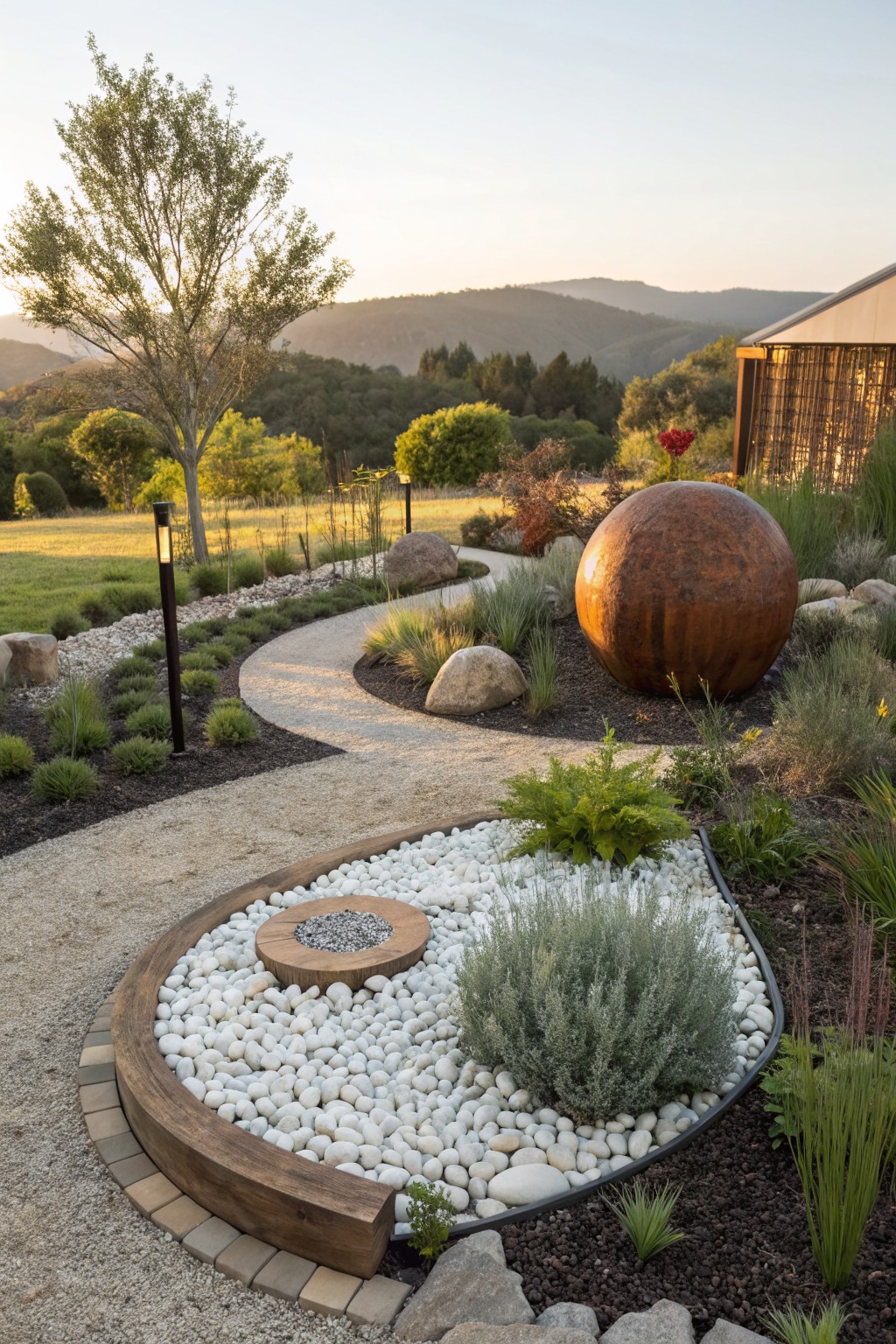
White rocks fill out this curved fire pit area nicely. The light pebbles stand out against the gravel paths and dark mulch beds. A simple wood ring holds everything in place around the central fire bowl. It pulls the eye right to that spot without needing much planting around it.
Put one like this where your path meets a seating zone. It fits front yards with room for a few steps away from the house. Keeps things low fuss since rocks don’t grow or die back. Just watch the scale so it doesn’t overwhelm a smaller lot.
White Rocks Along the Curb Edge
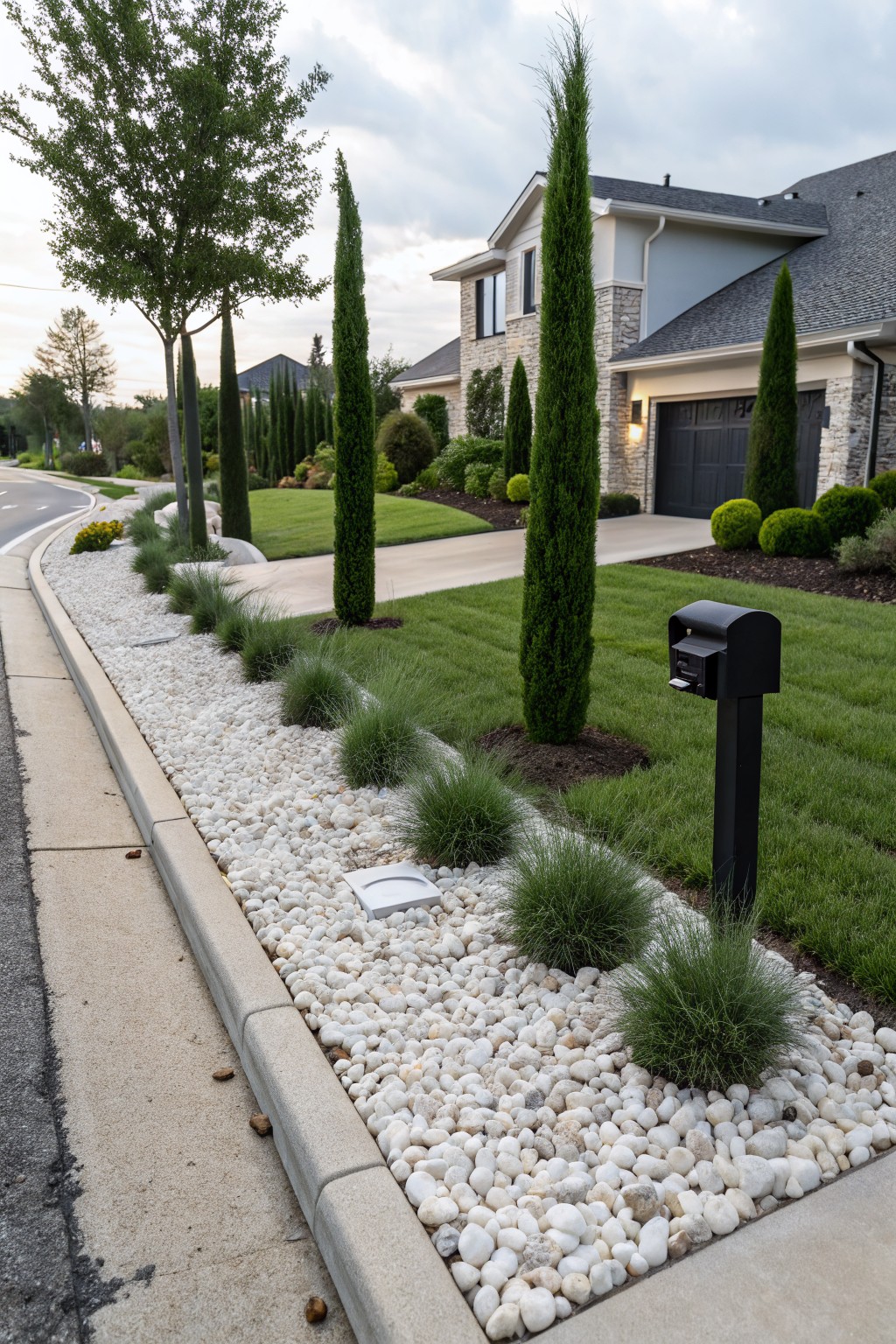
White rocks laid in a simple strip right along the street curb make for an easy way to define your front yard. Here they’re mixed with low clumps of ornamental grasses that sway a bit in the breeze. That white pebble look stays clean and bright, setting off the green lawn without needing constant mowing or trimming. It pulls the eye right to the house entrance too.
This works best on homes with straight driveways or open front yards where you want that crisp separation from the road. Go for rounded white pebbles about the size of marbles, and tuck in a few taller evergreens nearby for some height. Layer down fabric first if weeds are an issue in your area. Keeps things low fuss year round.
Curved Walkway Edged with White Rocks
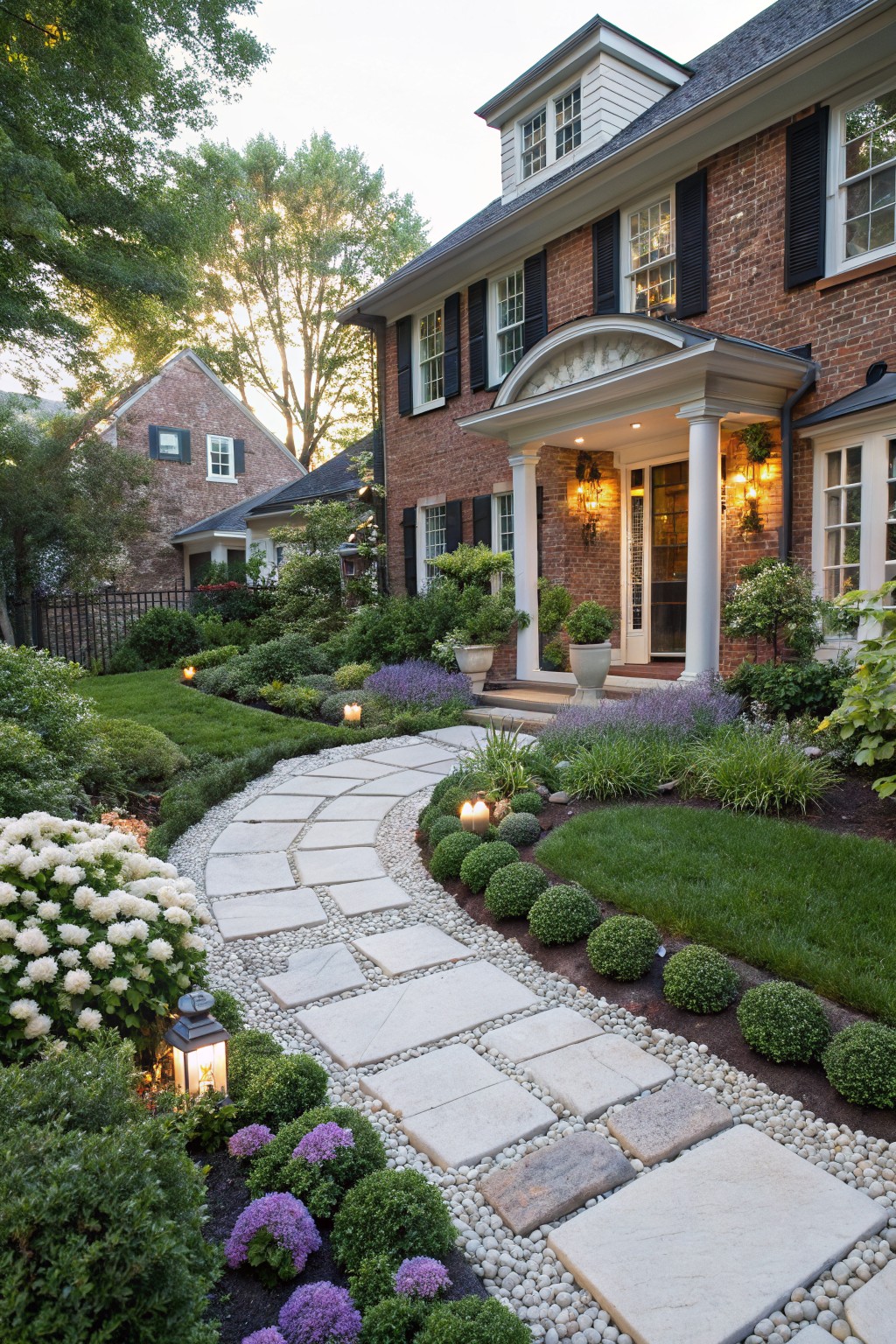
White rocks make a simple border along a curving stone path like this one. They tuck right up against the pavers and hold back the plant beds without much fuss. The look stays tidy even as plants grow in, and it fits right with a classic brick house front.
Try this setup where you want a welcoming path that doesn’t overwhelm the yard. It suits traditional homes with some slope or turns in the walk. Go for smooth white pebbles about pea-sized, and refresh them every couple years to keep things sharp.
White Pebble Driveway Edges
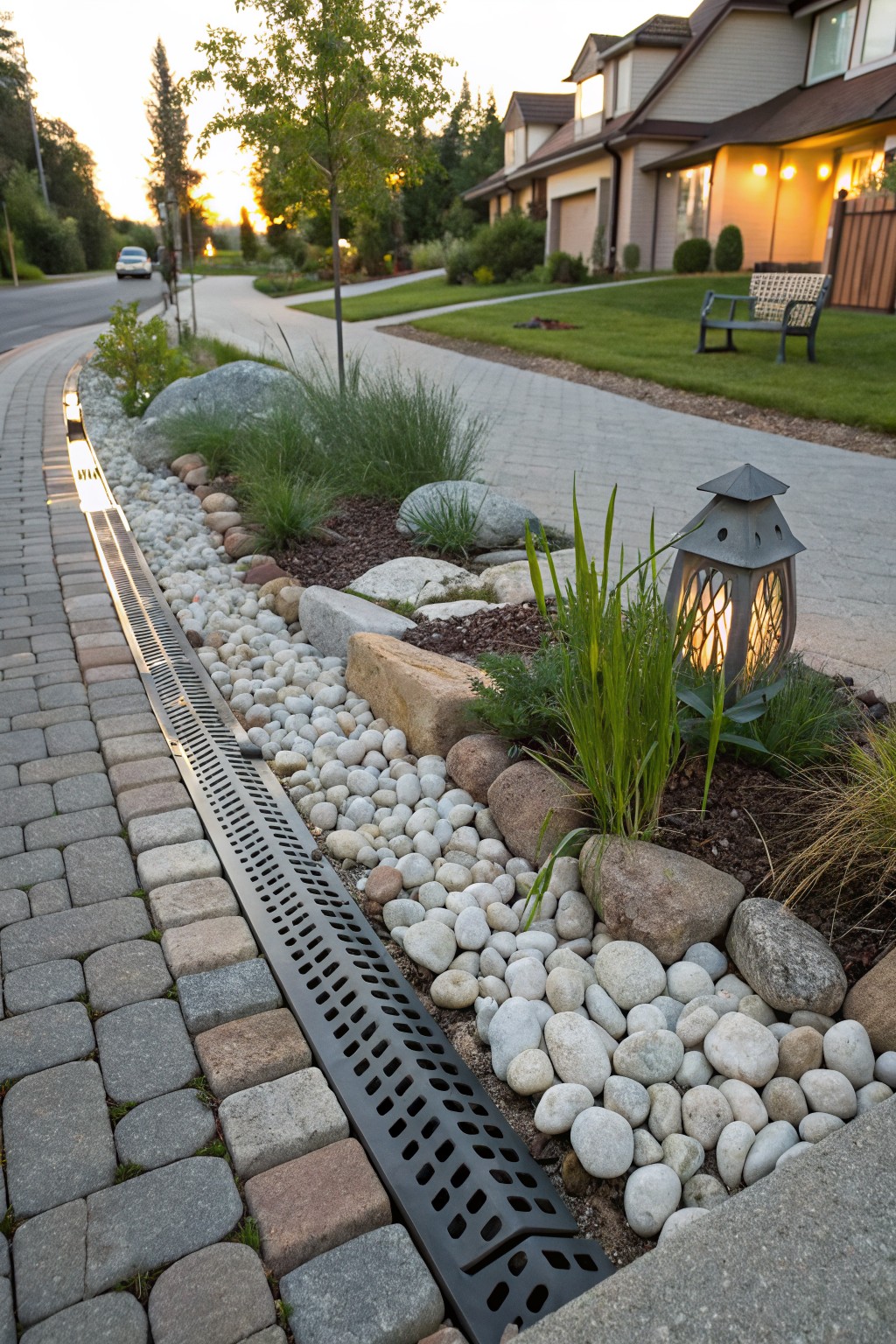
White pebbles make a simple border along driveway pavers. They fill the space next to a drainage trench, mixed with grasses and a few larger rocks. It keeps things tidy and handles water runoff without much upkeep. That lantern light adds a nice touch at dusk.
This works best on homes with straight driveways or gentle slopes. Layer small white stones over landscape fabric, tuck in low plants, and add boulders for weight. Skip it if your yard floods a lot… might need deeper engineering then.
White Rocks in Curved Front Beds
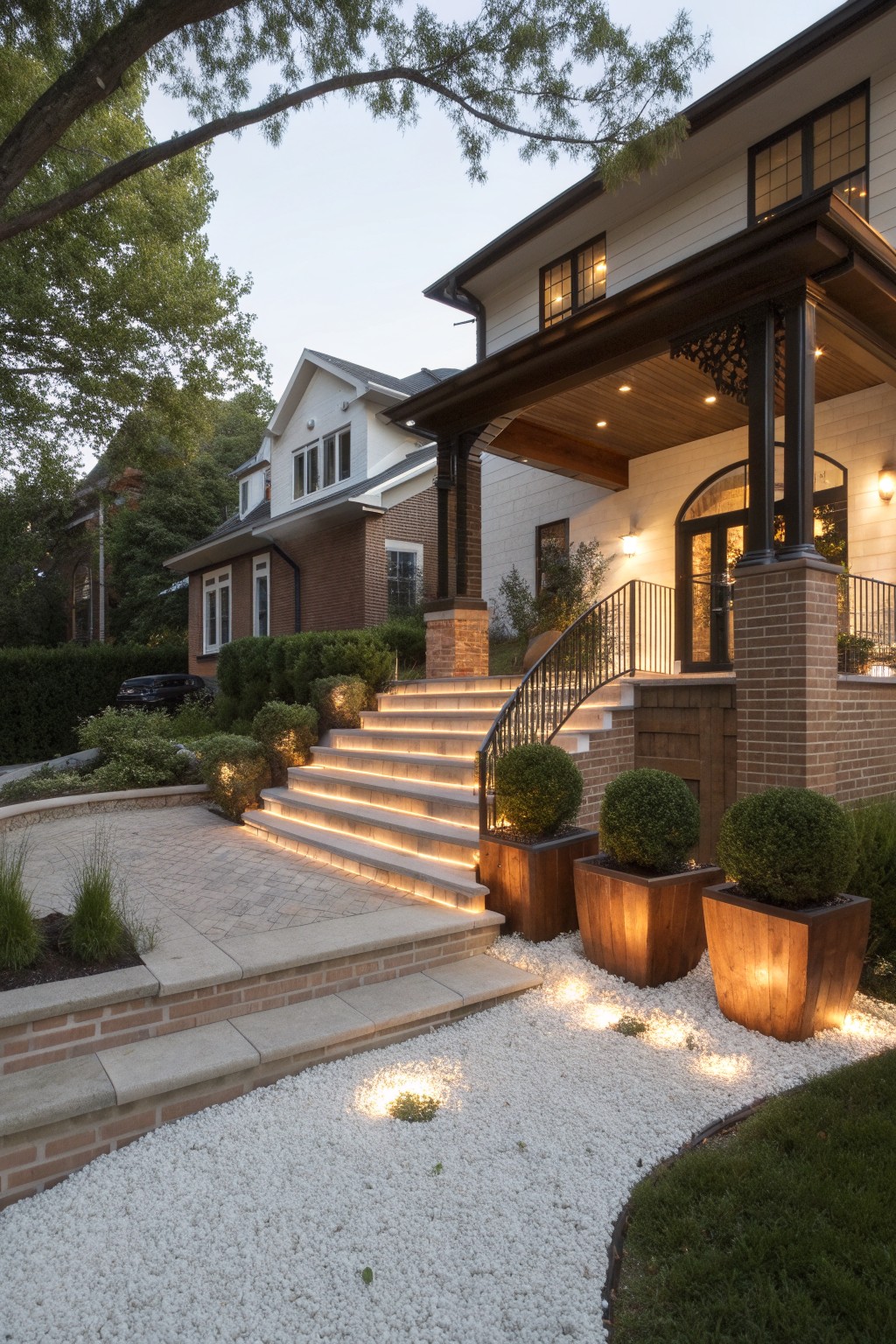
White rocks make a clean base for front yard beds, especially when curved around entry steps like these. They fill the space between stone stairs and brick walls without much upkeep, and paired with tall boxwood pots, they keep things neat and structured. At night, the rocks pick up the step lights nicely for a subtle glow.
This setup fits homes with mixed brick and stone details, or any yard needing low-water ground cover. Start with edging to hold the shape, add fabric underneath, and top with 2-3 inches of pebbles. It works on slopes too, but check drainage so water doesn’t pool. Just refresh the rocks every couple years.
Slab Pathways Filled with White Rocks
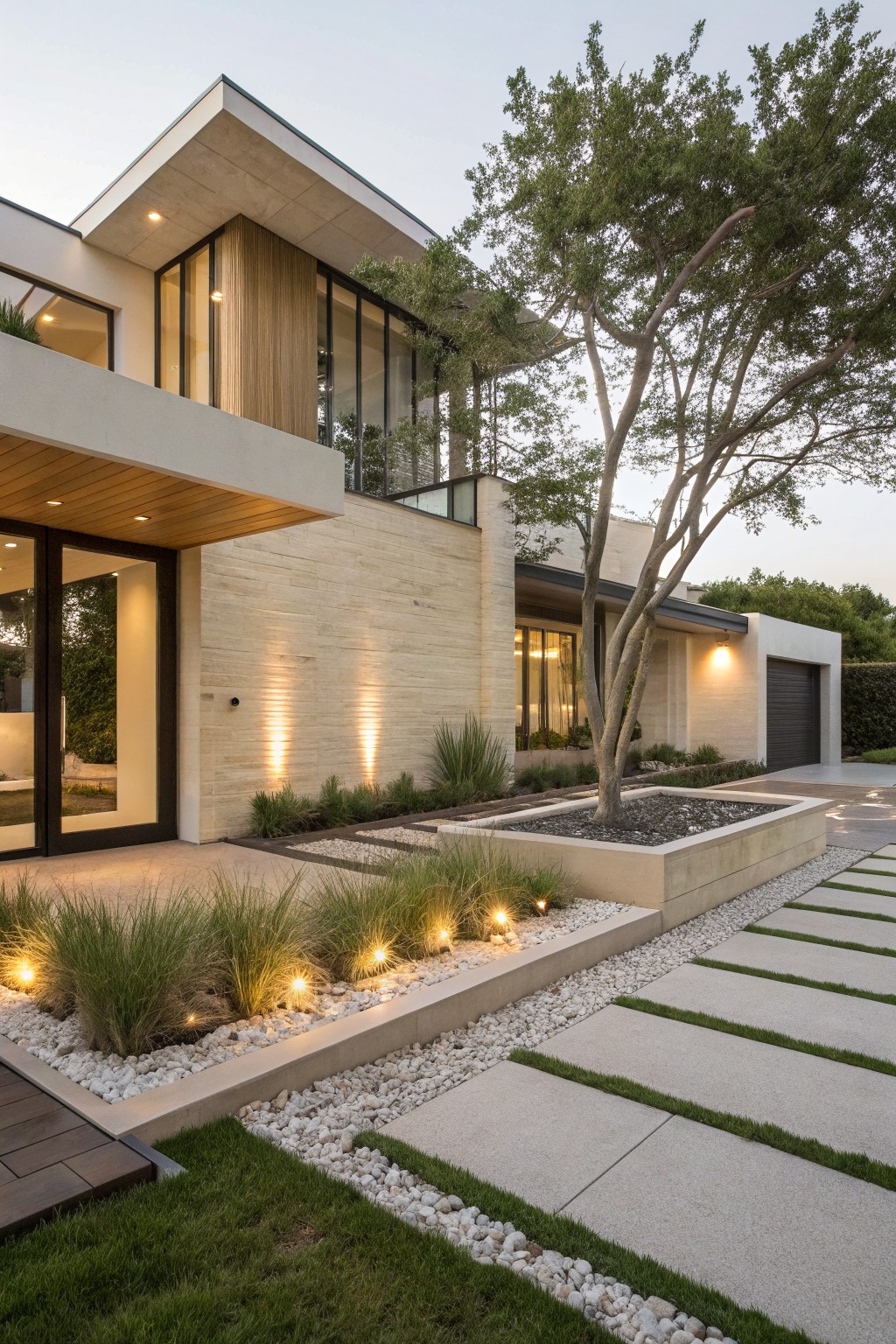
One simple way to make a front yard path pop is laying wide concrete slabs with white rocks tucked into the spaces between them. It keeps things neat and modern without much upkeep. The rocks catch the light nicely, especially at dusk like in this setup, and they let bits of grass poke through for a natural touch.
This works best on flat approaches to the door where you want low-water plants nearby, say some tall grasses along the edges. It’s perfect for homes with clean lines or stone facades. Just make sure the rocks are pea gravel size so they don’t shift, and sweep them level now and then.
White Rocks Along Side Paths
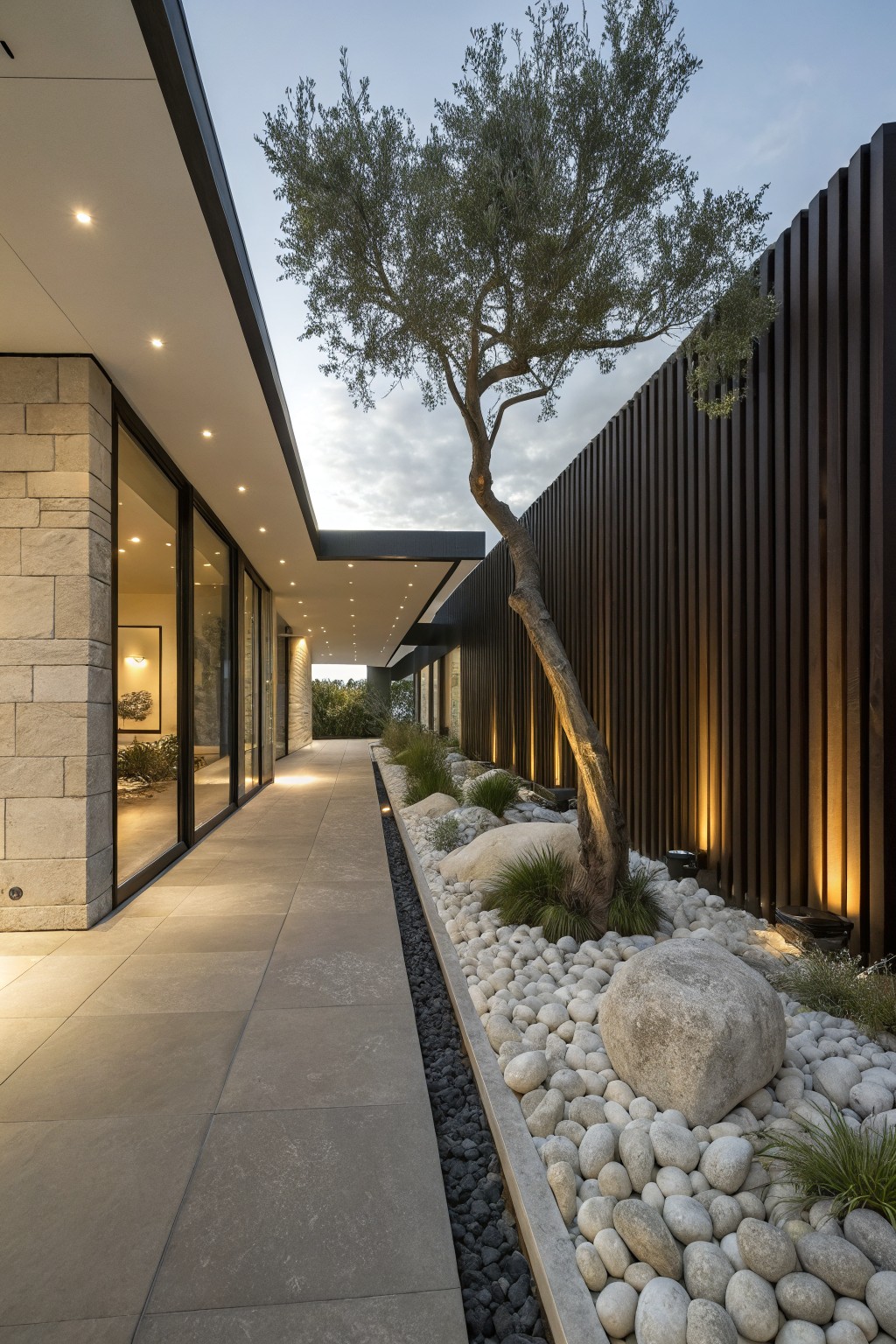
White rocks work great in narrow beds running right next to a walkway like this one. They fill the space with a clean, light look that contrasts nicely with the path pavers and nearby grasses. Tuck in a few boulders and an olive tree for some height and interest without much upkeep. The dark wood fence behind keeps it all contained and adds a warm edge.
Try this along a side path to your backyard or entry door. It suits modern homes with stone or stucco siding, especially where you want low-water planting. Just keep the bed edged sharp to avoid spillover onto the walk, and refresh the rocks every few years if weeds poke through.
Winding White Gravel Garden Path
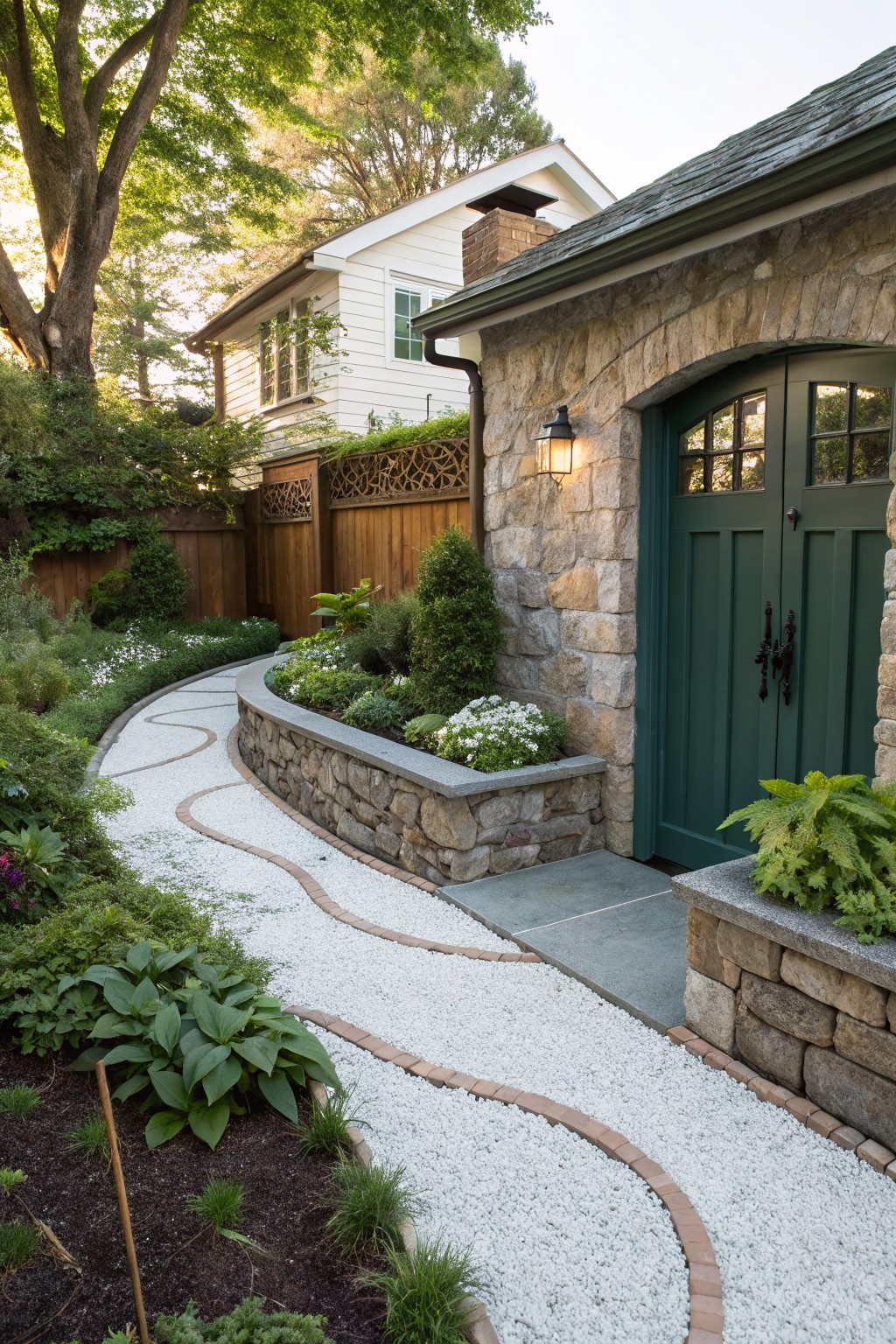
White gravel makes a great path material because it lets you create soft curves that follow the land’s natural shape. Here the path winds gently between planted beds and low stone walls, edged with simple bricks. It pulls your eye right through the garden without feeling too rigid, and the light color pops against all the green plants.
This works well in side yards or even front approaches where you want to guide people to a door or gate. Line it with hostas, ferns, and small flowers for that lush feel, but keep the bed edges neat with stone or wood. Just make sure the base is compacted for good drainage, or it might shift over time.
White Rock Pathways for Front Entries
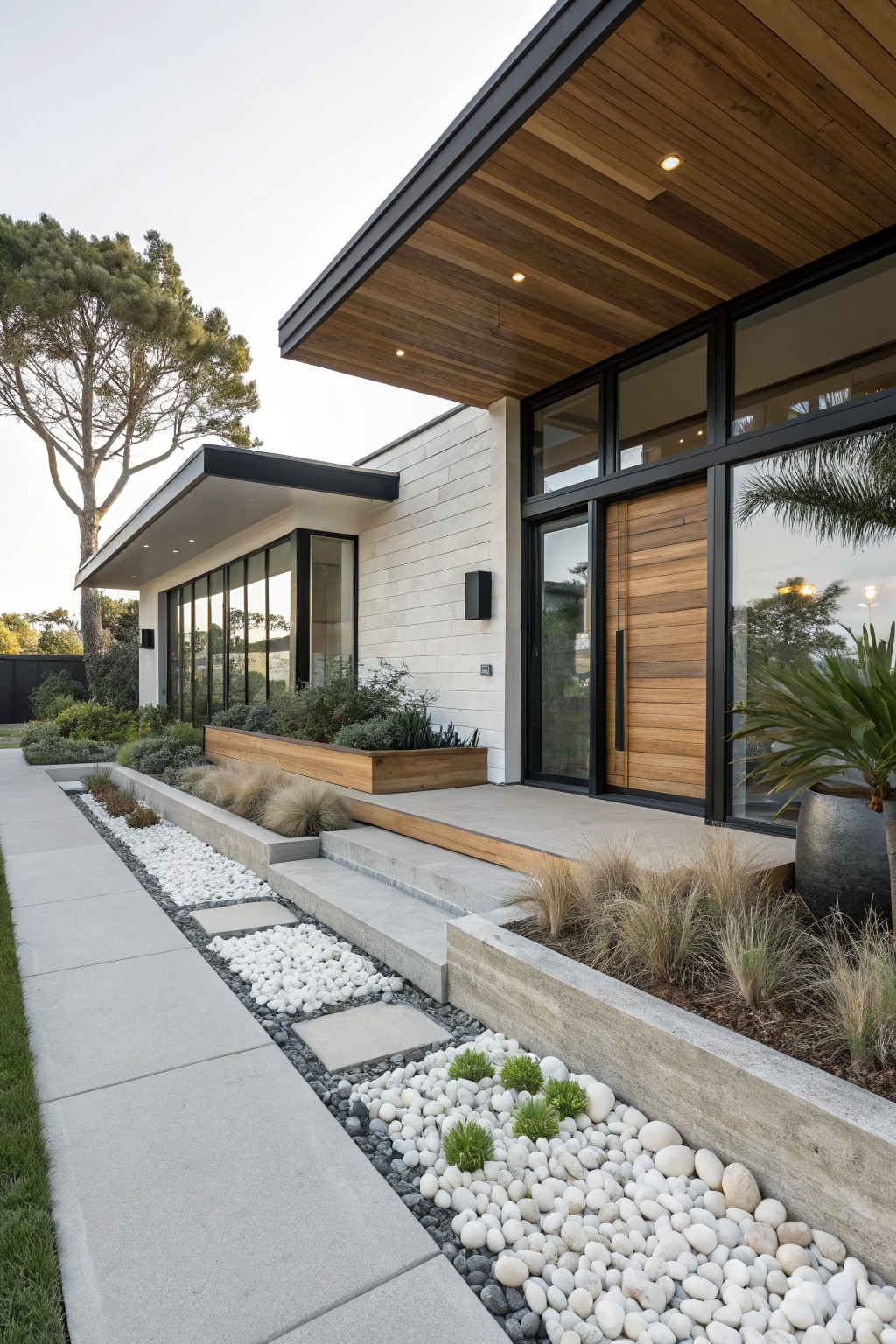
White rocks make a great choice for edging a front walkway like this one. They form a clean strip along concrete pavers, leading straight to the entry steps. With grasses and low plants tucked in beside them, the path feels structured but not fussy. It’s a simple way to tie the yard into the house without much color or clutter.
This works best on modern homes or any spot with clean lines. Use it where you want low upkeep… drought-tolerant grasses handle dry spells fine. Lay pebbles thick enough to suppress weeds, and keep plantings sparse so the rocks stay the star. Avoid overcrowding, or it loses that crisp feel.
Winding Dry Creek Bed of White Rocks
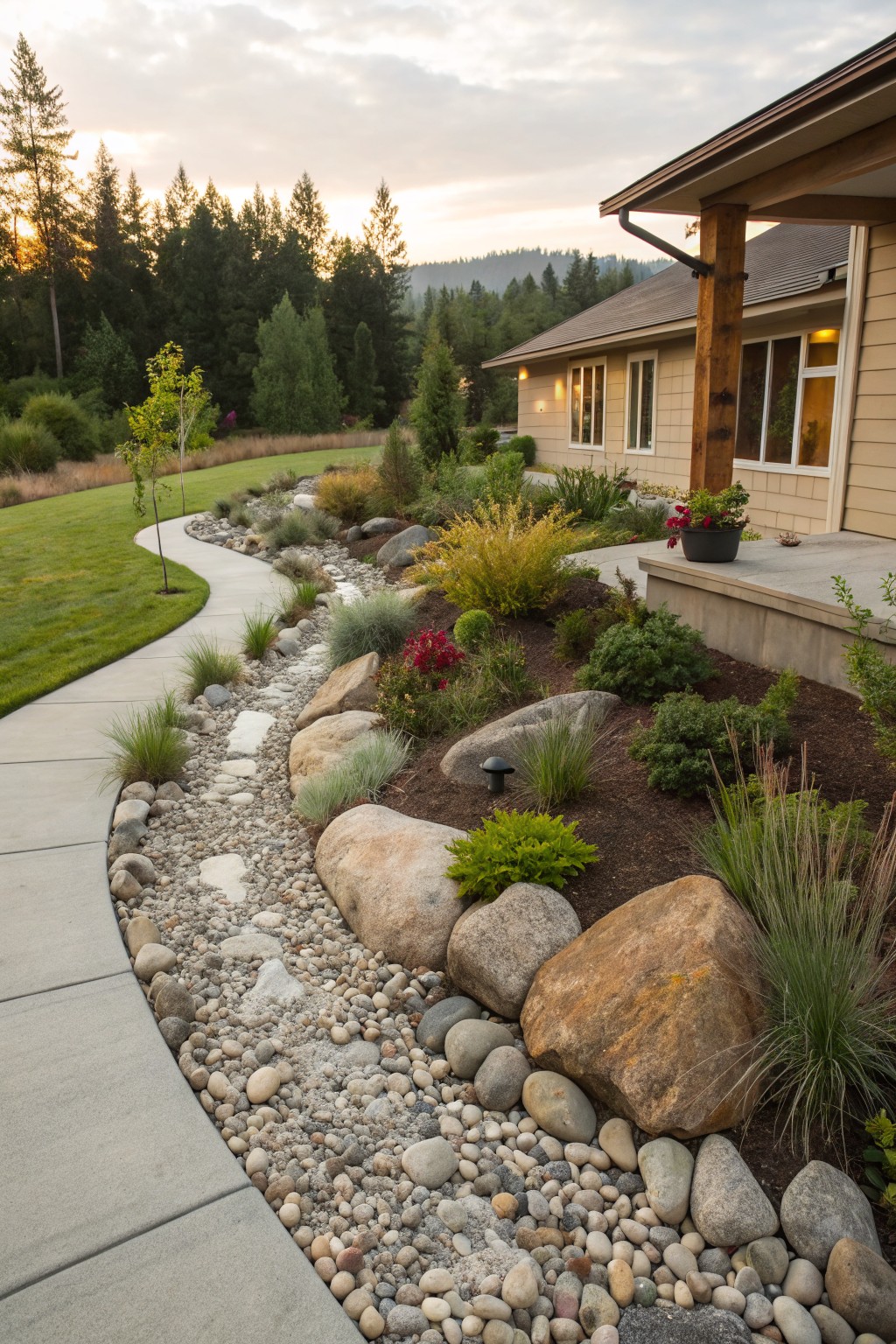
A dry creek bed made with white pebbles and larger boulders runs right alongside a simple concrete walkway. It pulls the eye through the front yard with its curving shape and adds a natural feel without any watering or weeding hassle. The grasses and shrubs tucked in around the rocks keep it from looking bare.
This works best in yards with some slope for better drainage or just to break up flat lawn areas. Layer small pebbles in the center then bigger stones along the edges and plant drought-tolerant stuff like sedges or little bushes. It suits homes with clean lines like this one keeping the look low-key and easy to maintain.
White Rocks Fire Pit Seating Area
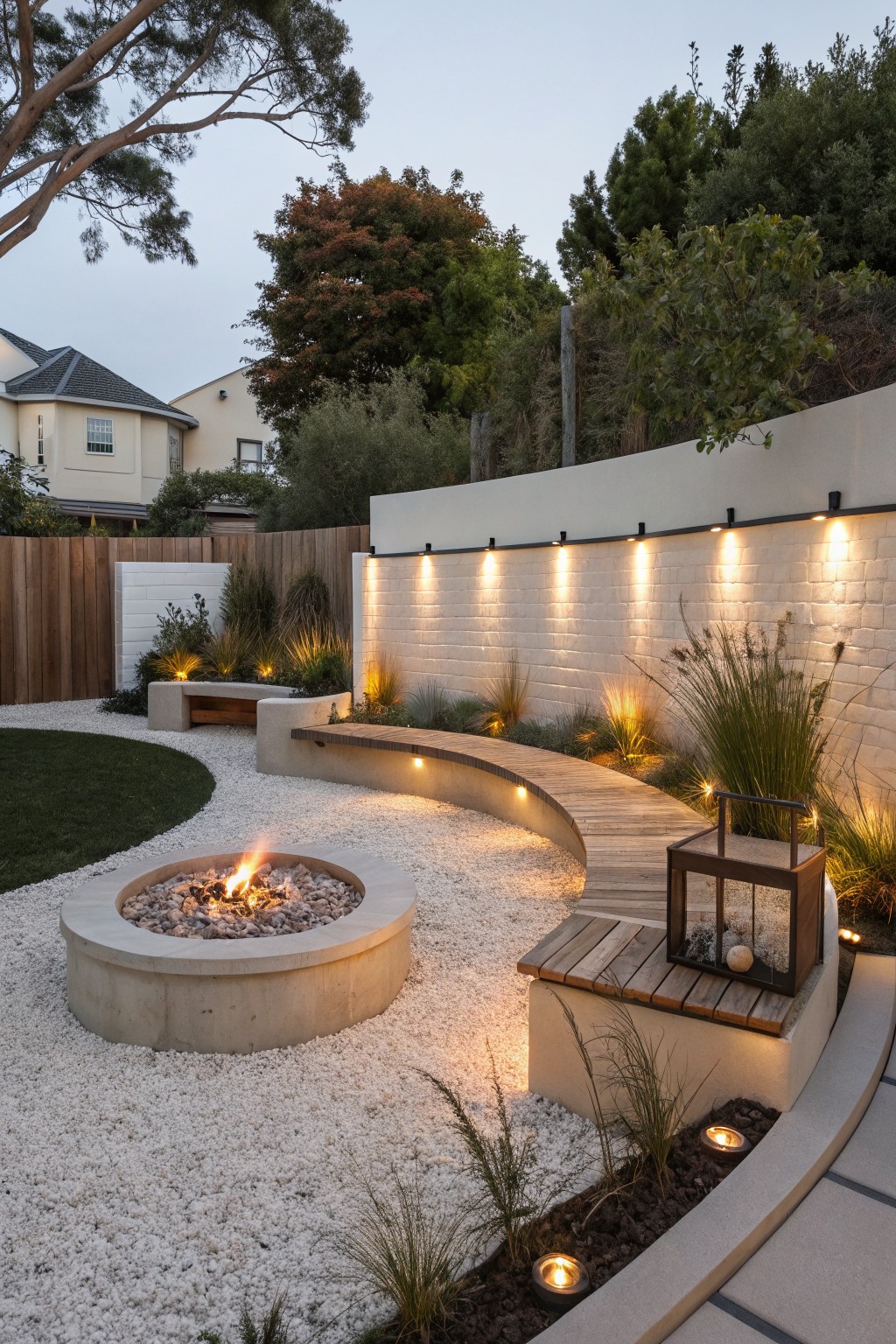
White rocks make a simple base for a fire pit setup like this one. They fill the space around the concrete fire pit and curve out under a built-in bench, keeping everything neat and modern. The light gravel picks up the glow from the fire and nearby lights, which makes the spot feel cozy without much upkeep.
You can pull this off in a backyard corner or even a front yard patio if space allows. Pair the rocks with tall grasses for some height and soft wall lighting for evenings. It suits sloped yards or modern homes best, just make sure the bench is sturdy concrete to handle the elements.
Frequently Asked Questions
Q: How do I keep weeds from popping up in my white rock yard?
A: Lay down landscape fabric before adding rocks to block most weeds from below. Pull any stragglers by hand as soon as you spot them. Spot-treat with vinegar if they keep coming back.
Q: Do white rocks get super hot in the summer sun?
A: They do absorb and reflect heat, so pets and bare feet notice it. Plant taller grasses or shrubs nearby to cast shade. Larger rocks stay cooler than tiny pebbles.
Q: How deep should I spread the white rocks?
A: Go for two to three inches deep. That covers weeds well and lets water drain through. Rake smooth after you dump them.
Q: Can I mix white rocks with plants in my front yard?
A: Tuck low-growing succulents or groundcovers right into the edges. Keep plants away from the center paths to avoid rocks shifting. They pop against the white backdrop.
