

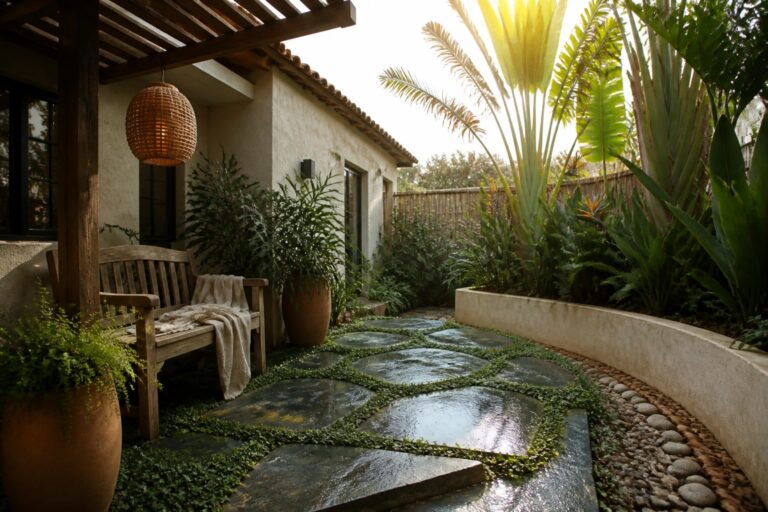
I have found that tropical gardens tend to hold together better when the planting starts with a clear sense of height and depth rather than scattering bold leaves at random.
That layered approach shapes how the space feels underfoot and changes the way light moves across a yard through the day.
Over time I have noticed that gardens with strong structure still need simple edging and defined paths or else the whole layout starts to blur after the first rainy season.
Testing a few of these combinations in one section of my own yard first would help me see which plants actually keep their shape without constant trimming.
The ideas feel worth adapting because they focus on real growth habits instead of just the look in photographs.
Stone Paths That Weave Through Tropical Beds
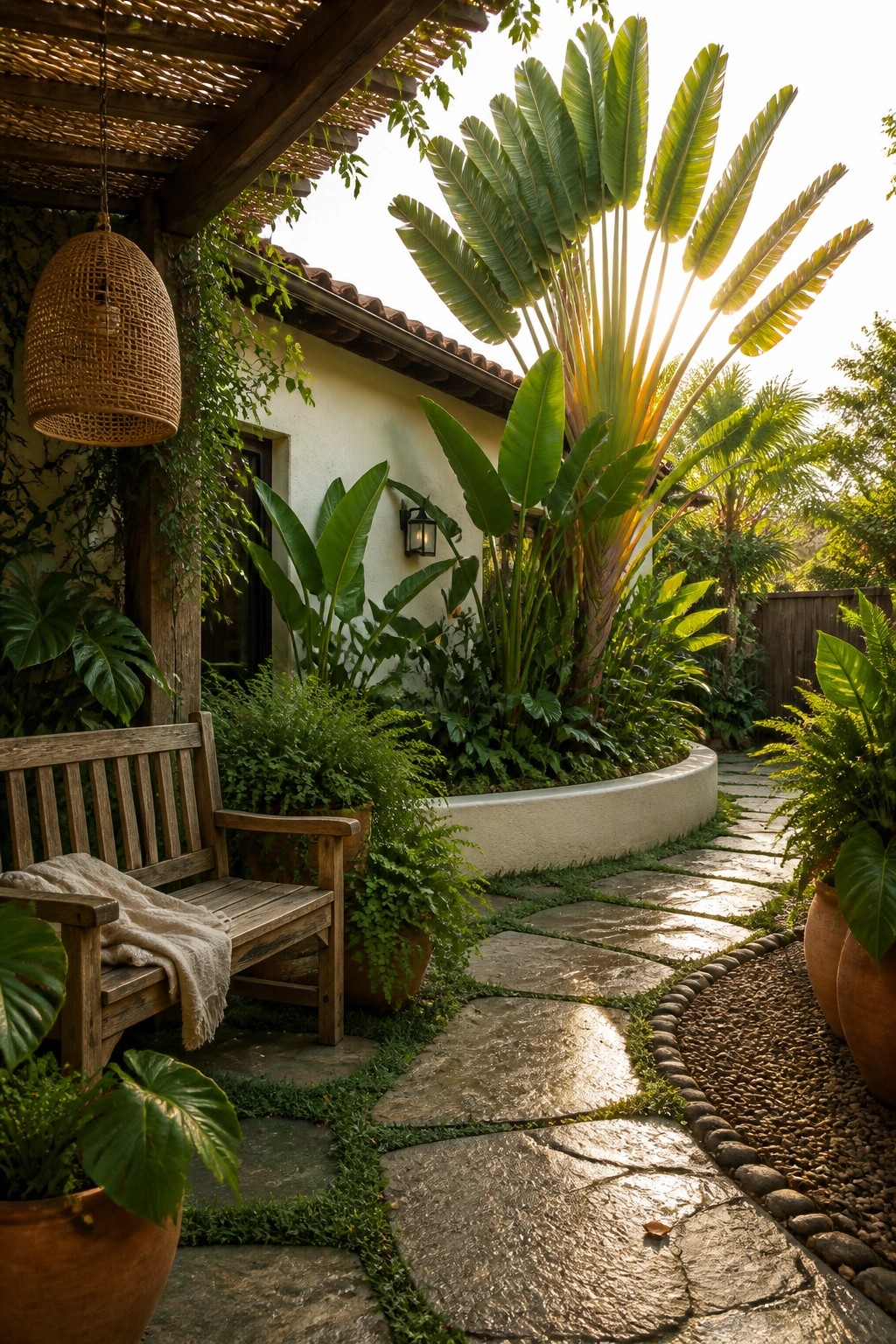
A winding stone path gives structure to a dense tropical garden without cutting off the flow of plants. The irregular slabs sit low and let greenery spill over the edges, so the walkway feels like part of the landscape rather than something laid on top of it.
This layout works best in side yards or back gardens where you want a clear route but still plenty of planting space. Keep the stones large and uneven, then add a simple pebble border to hold the soil in place and give the path a finished edge. It suits homes with room for bold foliage and needs only occasional weeding to stay looking good.
Layer Tropical Plants Along A Gravel Path
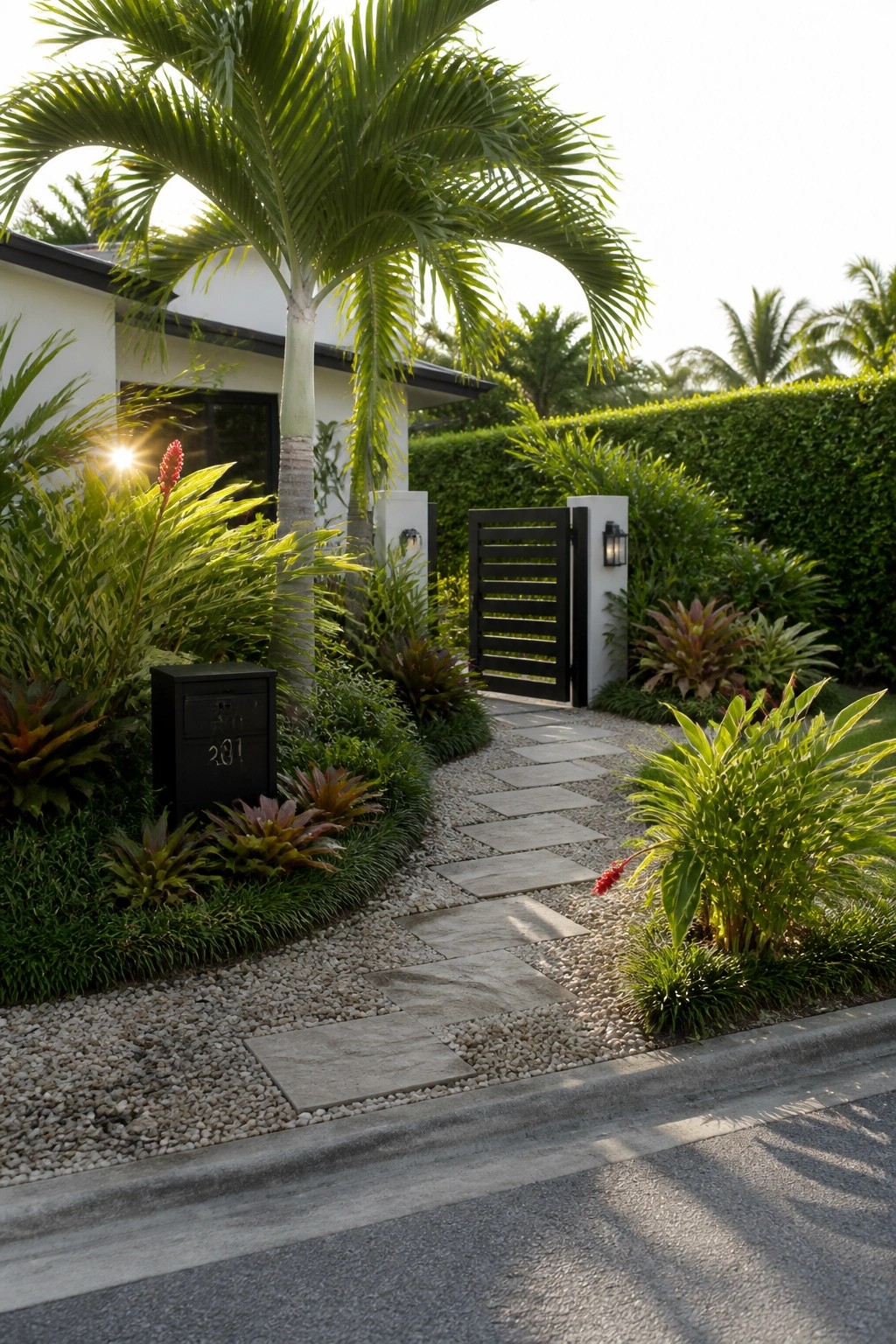
A gravel path with large stone pavers set into it gives a garden an easy, relaxed feel while still looking neat. The surrounding plants in different heights and colors fill in the space so the path feels like it belongs there instead of cutting through an empty lawn.
This approach works well in front yards or side entries on homes with simple architecture. Keep the beds wide enough for the plants to grow out a bit, and choose foliage that stays full most of the year so the path stays shaded and soft looking.
Hanging Lights Over an Outdoor Dining Table
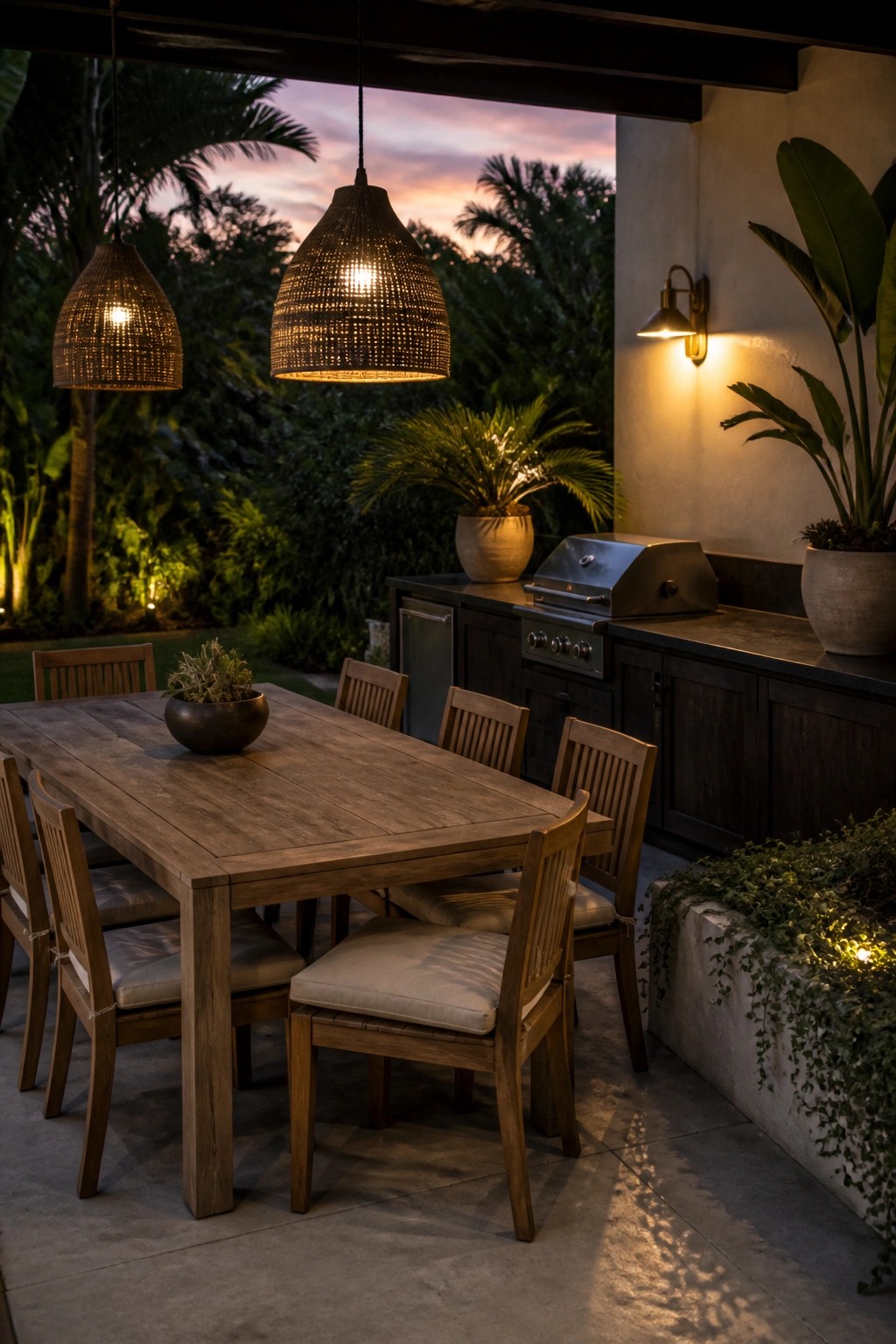
Hanging a couple of pendant lights above an outdoor table can turn a simple patio spot into a place where people actually want to sit after dark. The lights create a clear zone for the table and chairs without needing much else, and they keep the area usable once the garden goes quiet.
This setup works best on patios that sit close to an outdoor kitchen or the back of the house. Use lights made for outside, hang them high enough for easy conversation, and keep the cord length short so they do not sway in the wind.
Stepping Stone Paths With a Water Edge
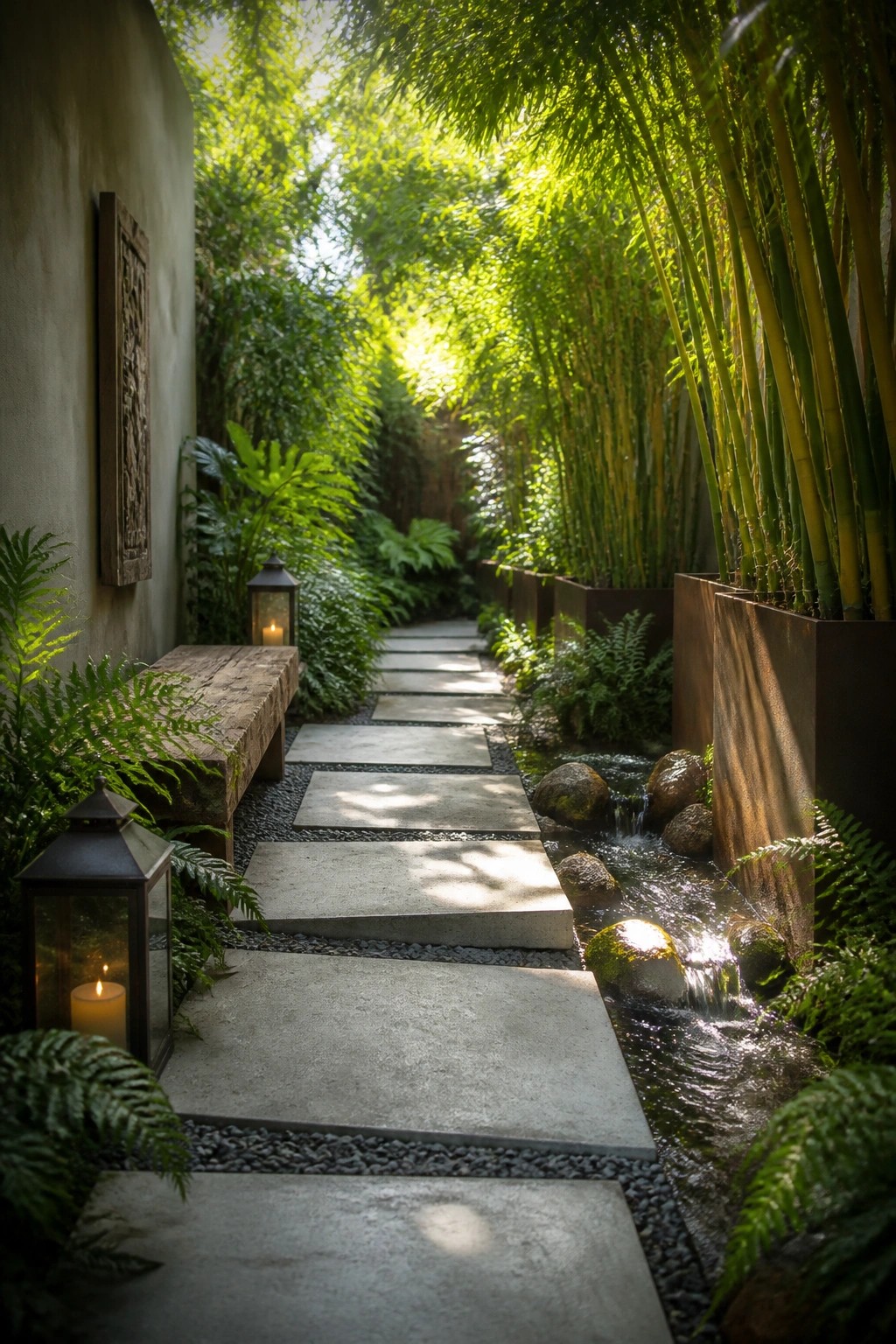
A stepping stone path keeps the focus on the planting instead of a solid walkway. The stones sit low in gravel and run right next to a narrow stream, so the water becomes part of the walk rather than something separate.
This works best in long narrow side yards or garden corridors where you want movement without taking up much width. Space the stones a little unevenly and let ferns and bamboo grow close to the edges so the path feels tucked into the garden instead of laid on top of it.
Layer Tropical Plants Around Built-In Seating
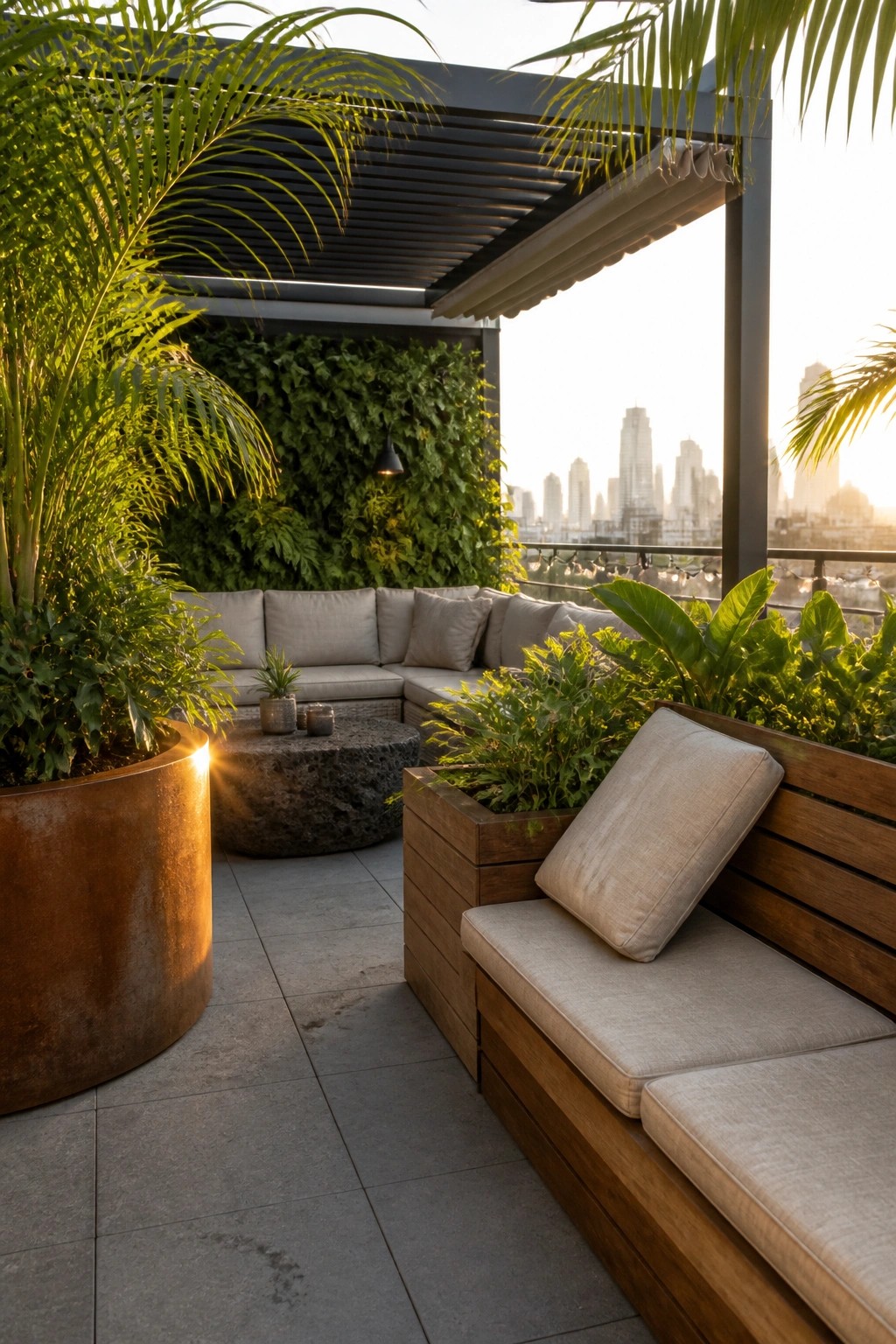
Many people find that placing bold foliage right next to outdoor seating makes the space feel more complete. The plants soften the hard edges of furniture and create a natural sense of enclosure without adding walls.
This approach works well on rooftops and balconies where space is tight. Use a few large containers mixed with a vertical green wall to build layers that feel full but still leave room to move around.
Add a Wood Deck Lounge by the Pool
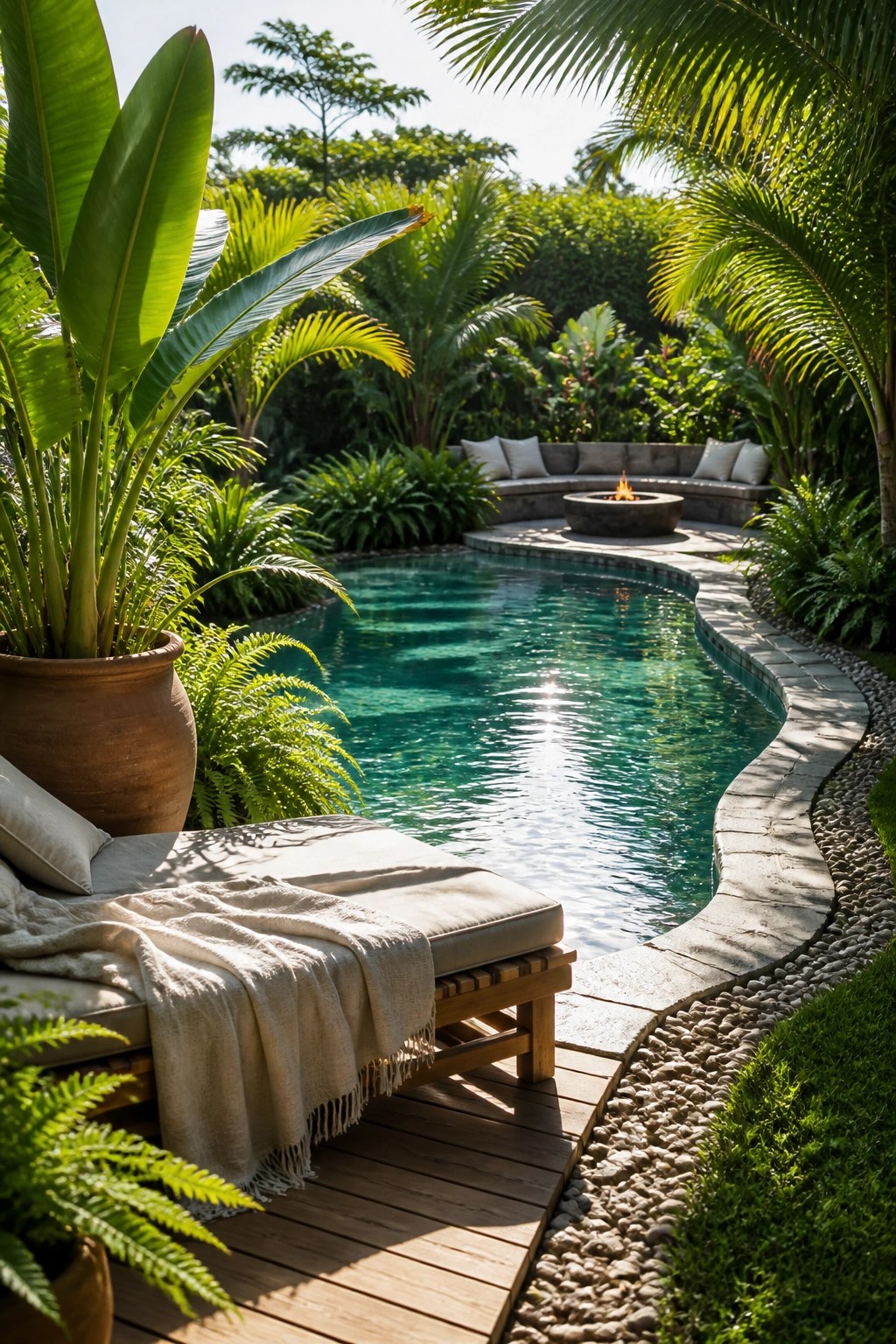
A simple wooden deck placed right at the pool edge turns the water into a place you actually use instead of just look at. The low platform gives you a dry, comfortable spot for a lounge chair while still keeping everything connected to the garden around it.
This setup works best in yards that already have some planting in place. Keep the furniture low and the materials natural so the deck feels like part of the landscape rather than something added on top. A few large pots nearby help tie the whole thing together without extra construction.
Layer Bold Leaves At The Foundation
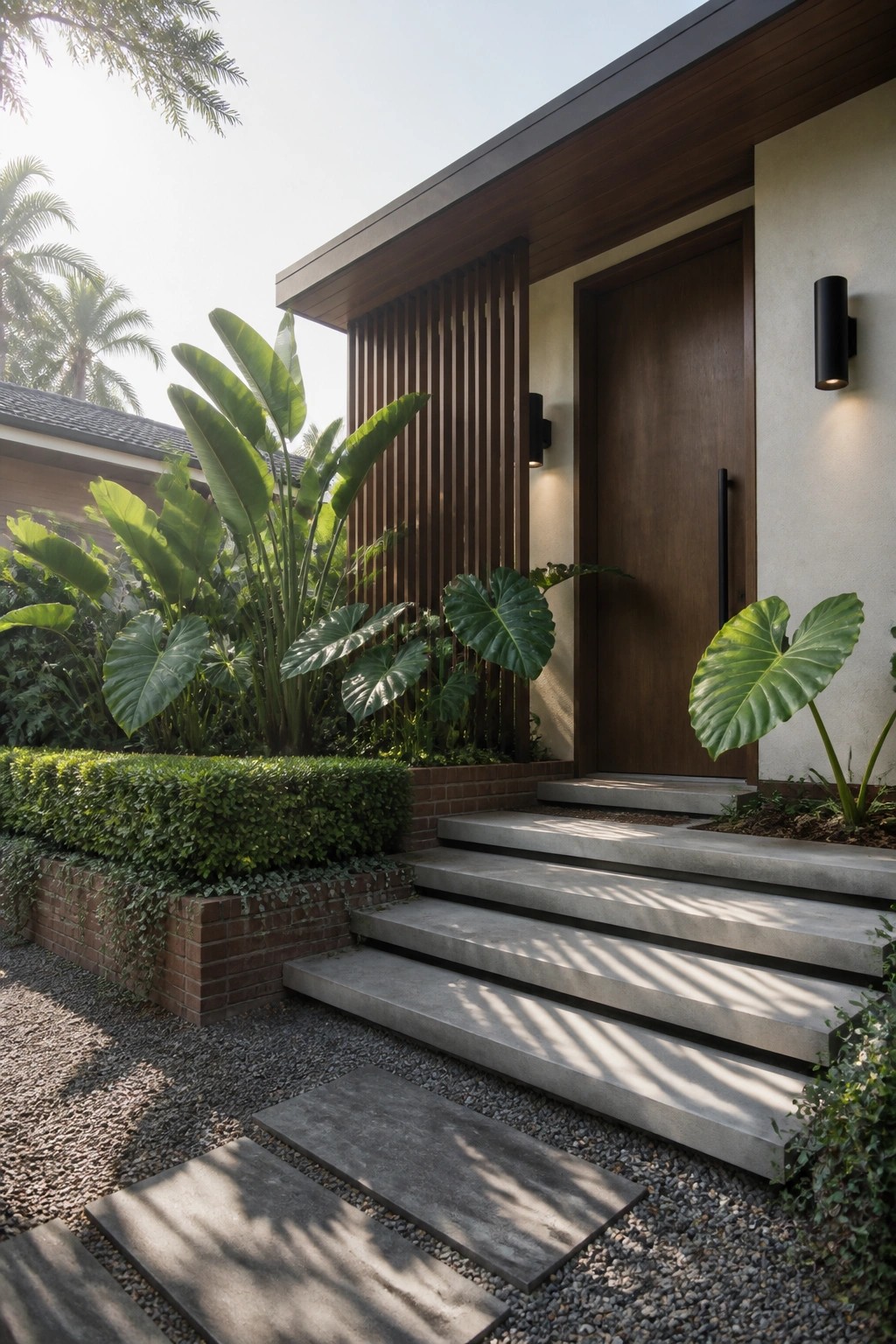
Placing large tropical plants right along the base of the house gives the entry a full, layered look without extra decoration. The tall leaves add height and movement that softens straight walls and makes the whole front feel more welcoming.
This works best on homes with simple architecture where you want quick impact. Keep the lower plantings low and dense so the big leaves stay visible, and use gravel or concrete paths to hold the look together.
Outdoor Dining That Sits Against the Planting
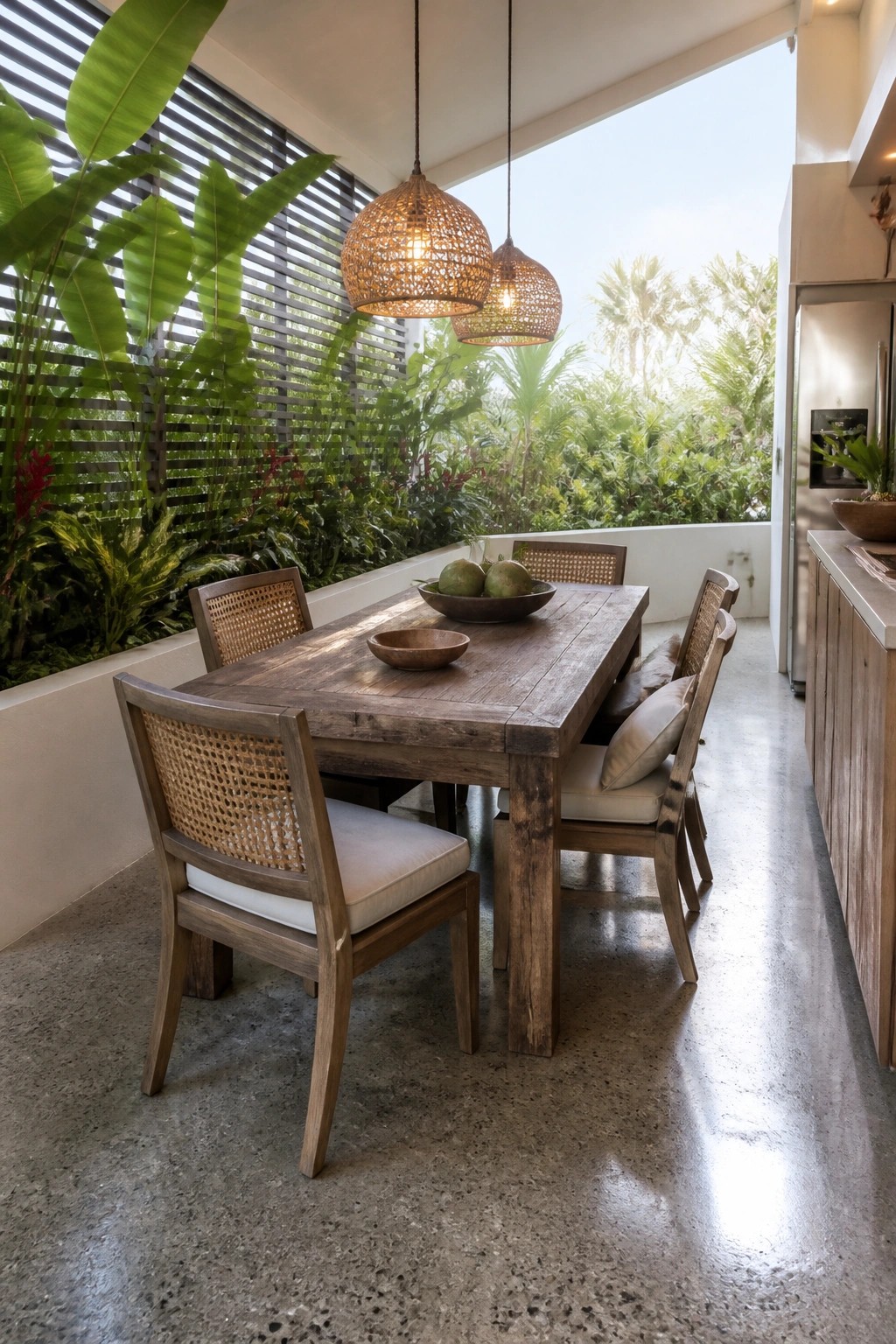
Placing a table right up against a thick garden border makes the whole meal feel wrapped in greenery. The low wall here lets the leaves spill over without crowding the chairs, and the result feels more like an extension of the garden than a separate patio.
This setup works best on a side yard or covered terrace where you already have mature planting. Keep the table simple and the seating open so the view stays on the leaves rather than on extra furniture. Just watch that the plants do not block airflow or drop too much debris on the surface.
Layer Plants Along The Balcony Railing
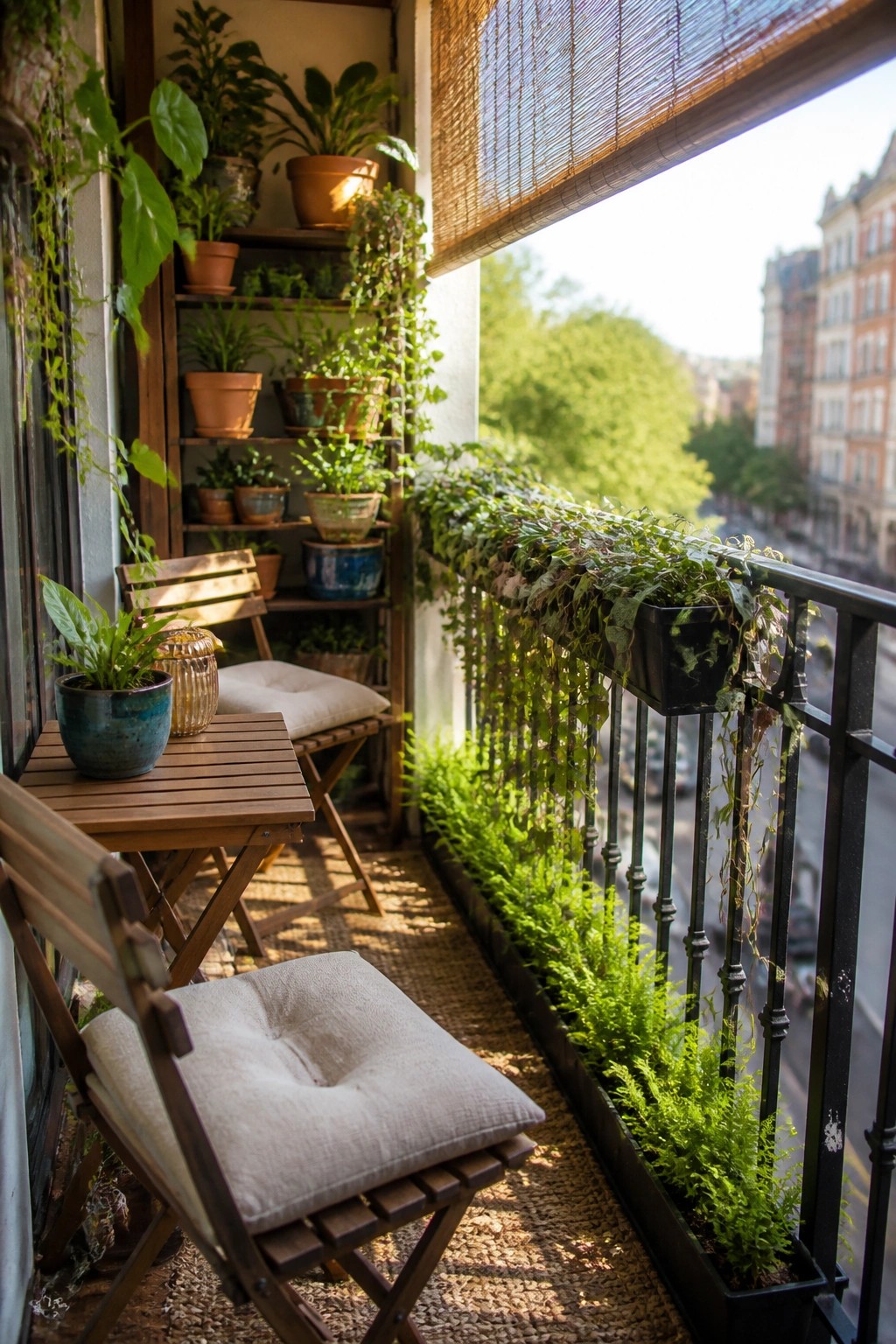
One simple way to make a balcony feel more like a garden is to layer plants right along the railing. Trailing vines spill over the edge while pots sit behind them on shelves or the floor, building depth without taking up much walking space.
This approach suits small urban balconies where floor room is tight. Mix a few tall containers with hanging or trailing types so the greenery softens the view and creates a bit of privacy from the street below.
Stepping Stone Paths Through Tropical Plantings
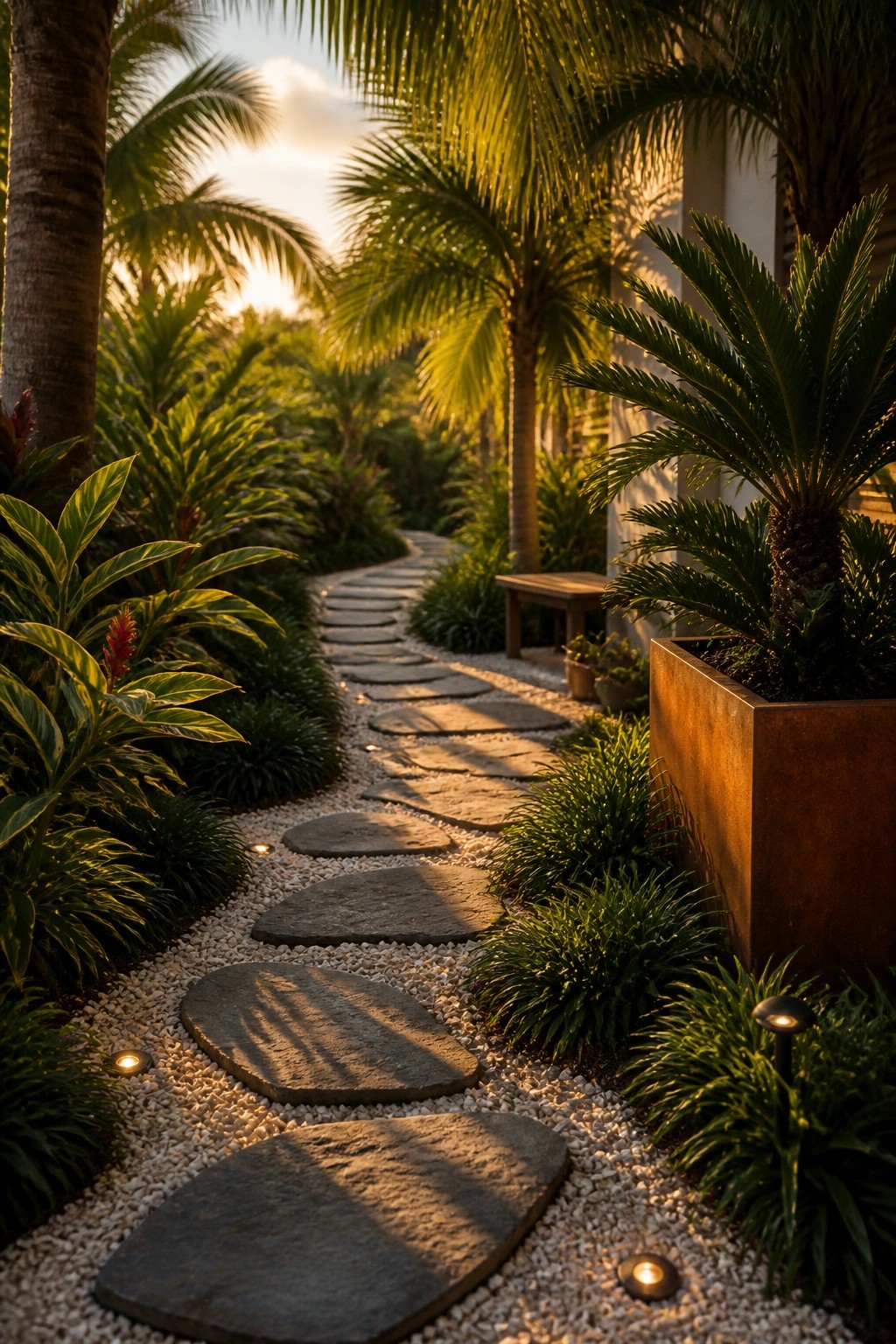
A stepping stone path set into gravel gives a garden an easy way to move through thick plantings without crowding them. The stones create a clear route while the gravel fills in around them and keeps the edges soft.
This layout works well in side gardens or narrow spaces where you want to show off layers of palms and broad leaves. Keep the stones fairly level and add a few low lights along the sides if the path will be used in the evening.
Adding a Fire Pit to Your Deck
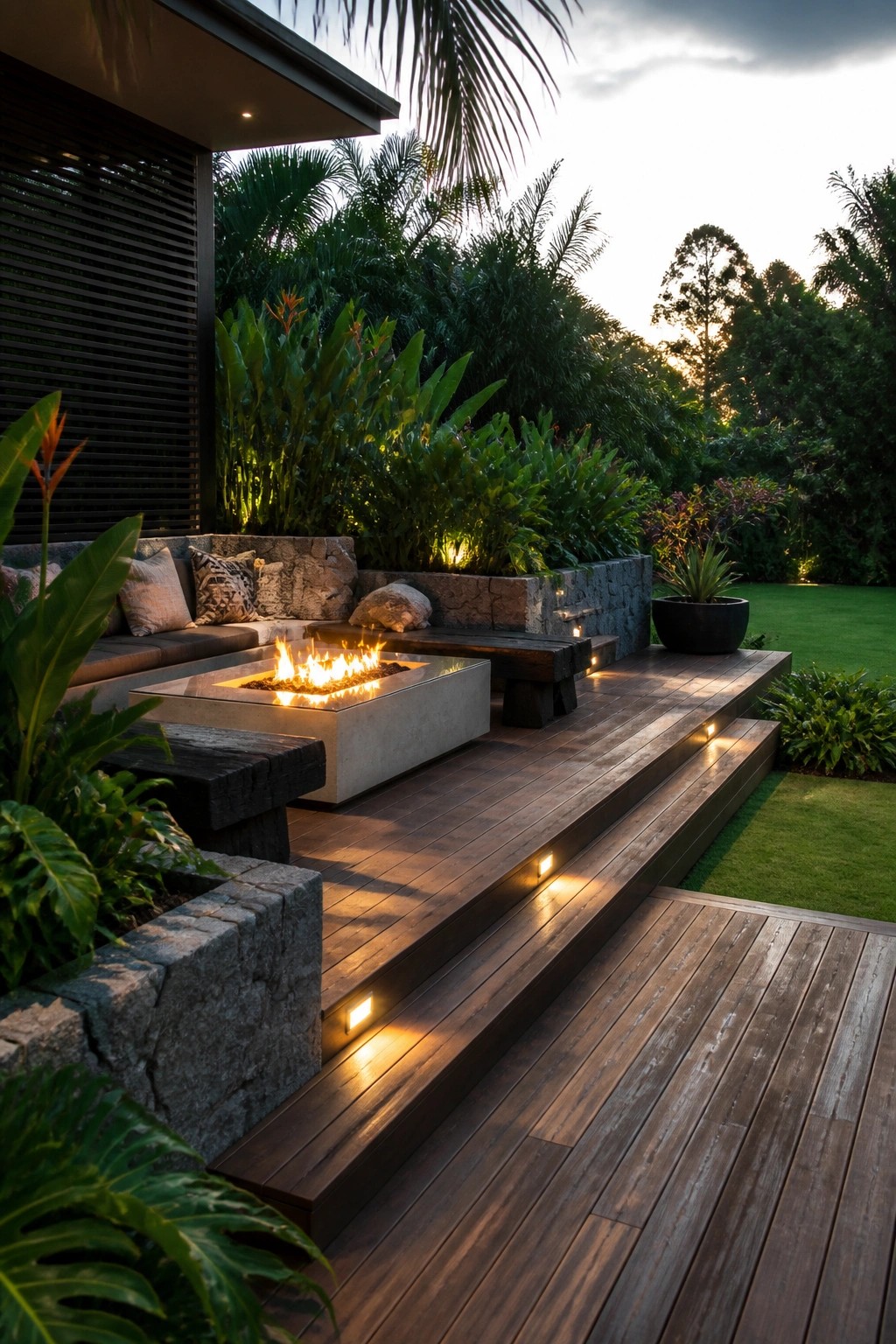
A fire pit gives a deck a clear center point without needing much extra furniture. It works especially well when the deck sits next to dense planting, since the flames stand out against the green and the warmth makes the space usable after dark.
Place the pit where people can gather on at least two sides and keep the surrounding deck surface simple so the fire stays the focus. Check local rules for clearances and fuel type before you build, and think about how the smoke will move in relation to the house and seating.
Raised Brick Planters For Tropical Layers
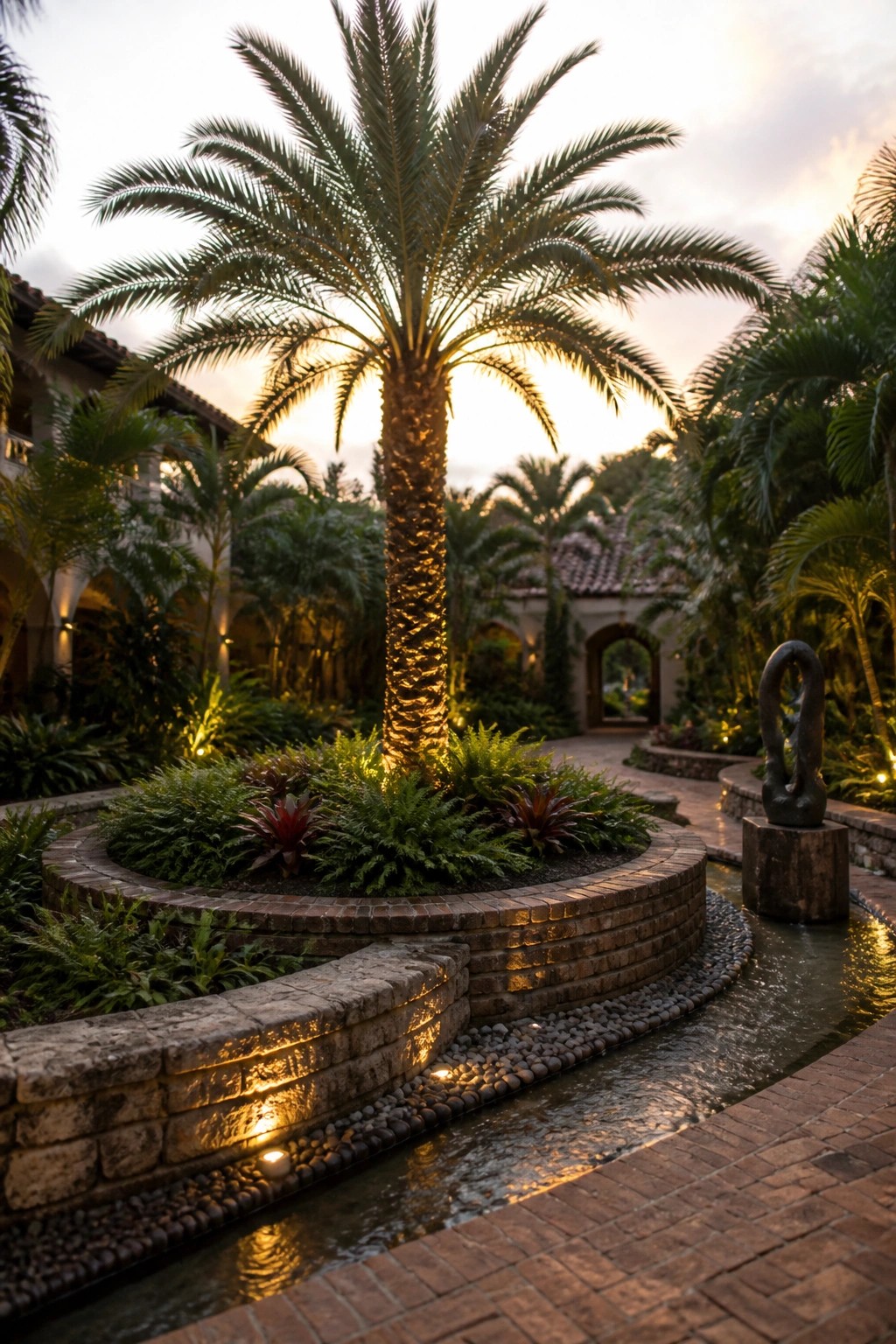
Raised brick planters give a tropical garden clear structure without making it feel too formal. They lift the planting off the ground so taller palms can stand out while ferns and lower foliage fill in around the base at a comfortable viewing height.
This approach works best in warmer climates where you want defined beds that stay neat along paths or water edges. Keep the planter walls low enough for easy maintenance and use a simple material like brick so the plants remain the main focus.
Frame Paths with Raised Wooden Beds
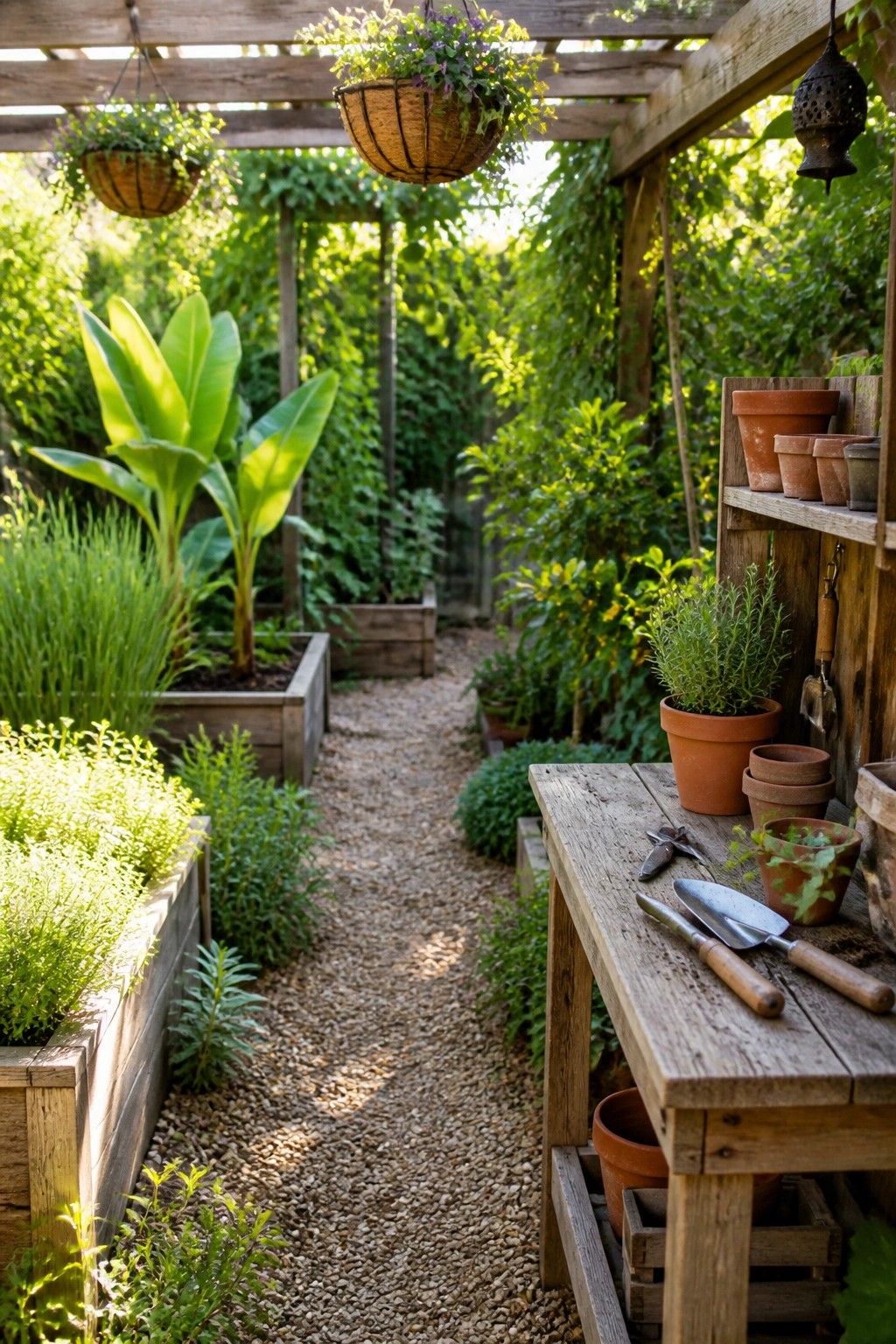
Raised beds give a garden path clear edges while letting you pack in layers of bold foliage. The wood keeps everything neat and makes it easier to mix taller plants with lower ones without crowding the walkway.
This setup suits smaller yards or narrow side gardens where you want a resort feel but still need to reach the plants. Just make sure the beds are deep enough for roots and use a simple gravel path so water drains well.
Run A Narrow Water Channel Through The Garden
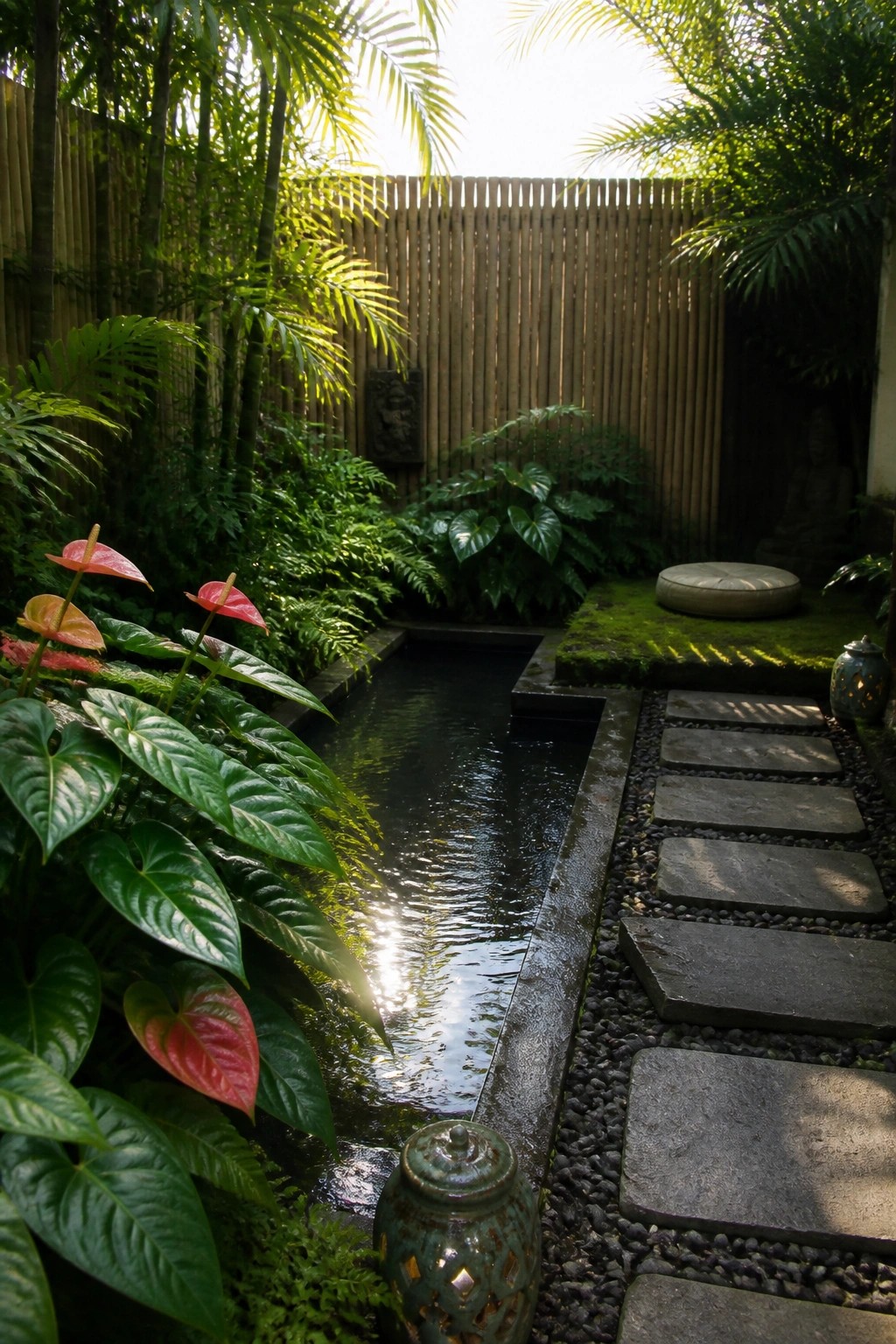
A narrow water channel gives a tropical garden a simple spine to follow. It keeps the layout from feeling scattered while the big leaves and layers build up along the edges.
This works best in smaller yards or long side spaces where you want that resort feel without a large pool. Keep the sides low and let the planting do the rest so the water stays the main line through the space.
Line Paths With Layered Tropical Planting
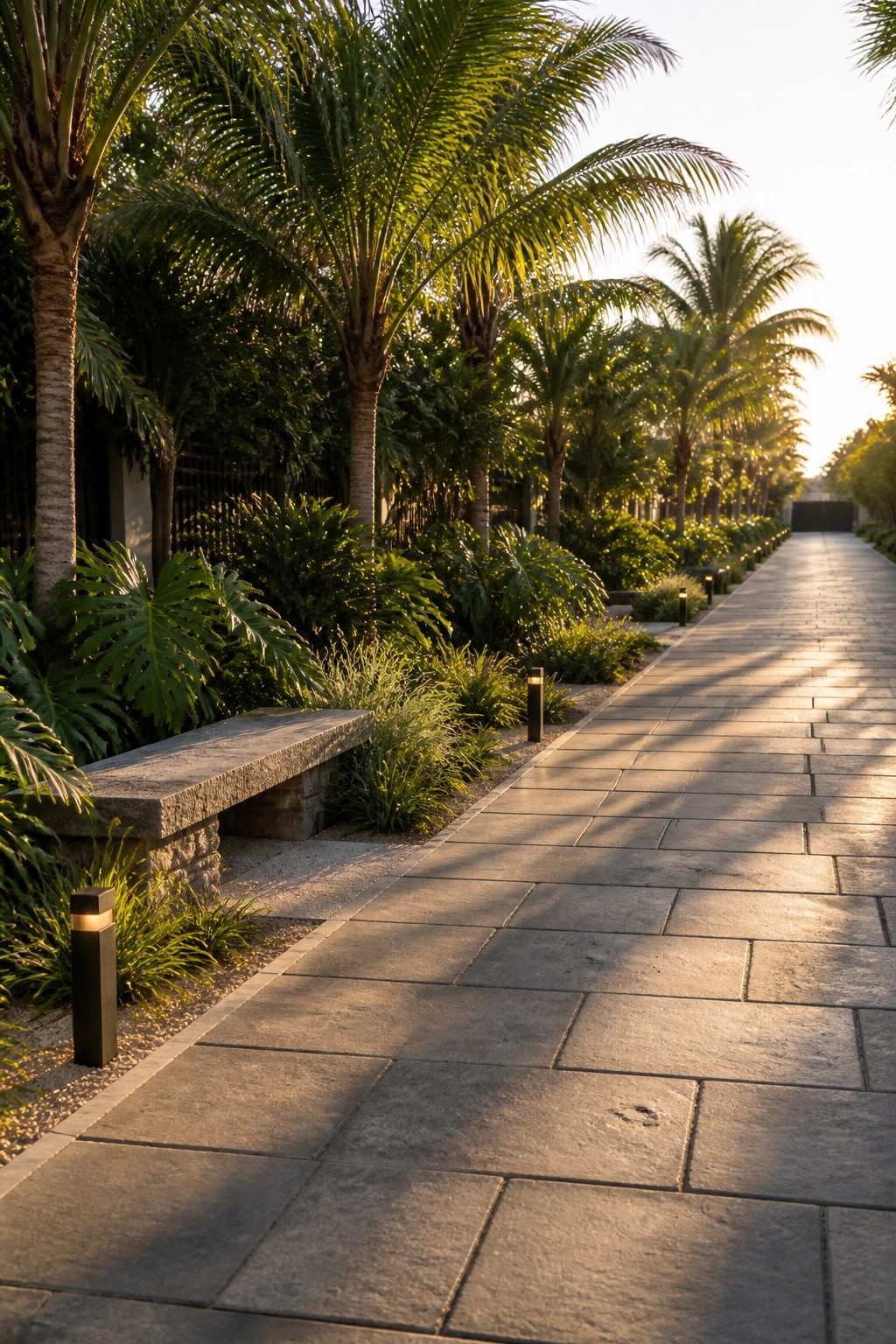
A straight path gains more interest when the planting on each side builds in layers. Low lights and a mix of palms with broadleaf shrubs keep the edges full without blocking the way forward.
This approach suits larger yards where you want to link different garden zones. Keep taller plants set back a bit so the path stays open and the layers still read from a distance.
Layering Potted Plants Along a Path
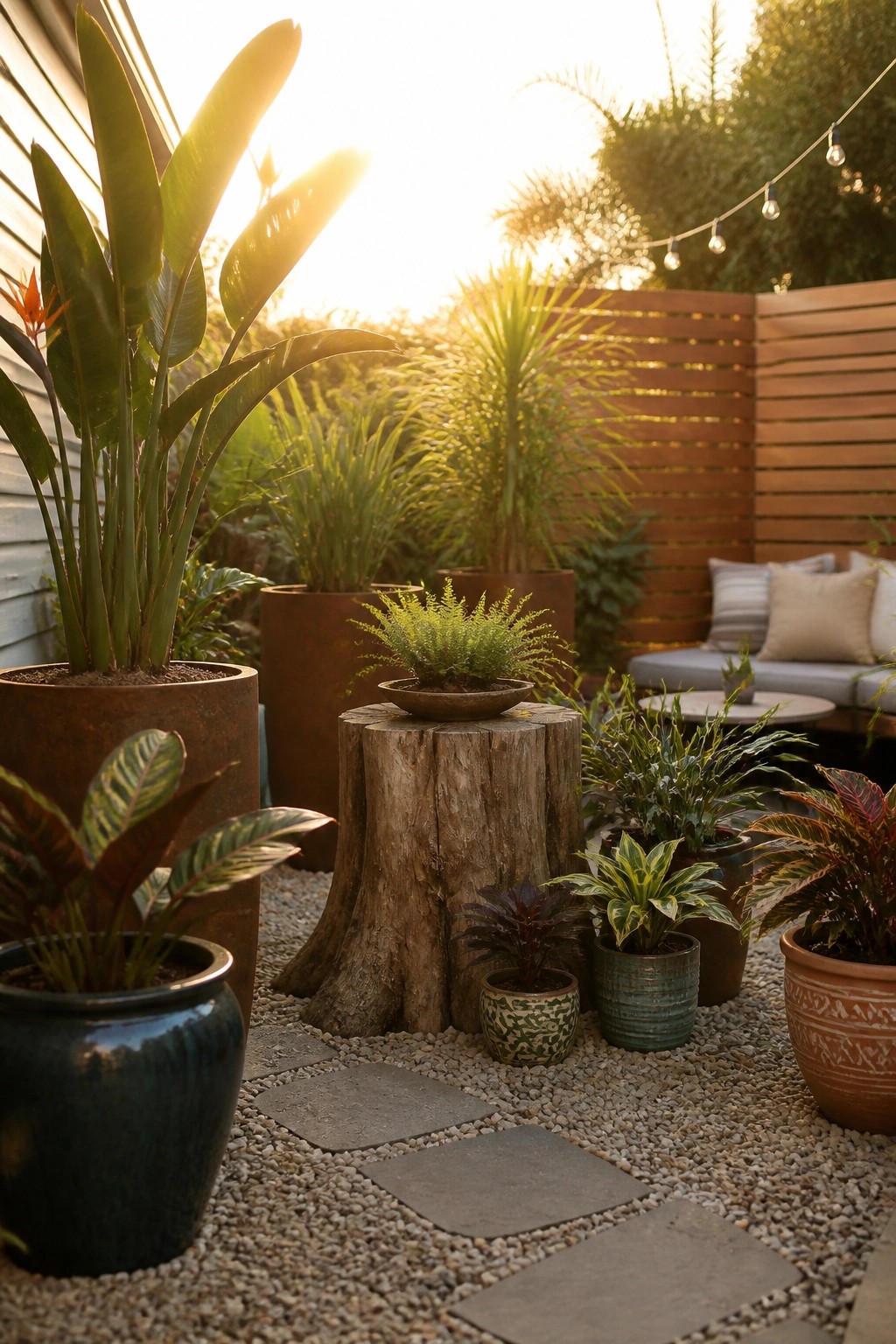
Mixing container sizes and heights works well when you want a garden to feel fuller without adding more beds. Placing smaller pots on a stump or low surface lets you stack layers in one spot, which keeps the ground clear for walking while still showing off plenty of plants.
This approach suits narrow side yards or gravel areas where digging new beds is not practical. Stick with pots in two or three materials so the look stays simple, and leave some space between groups so the path does not feel crowded.
Stone Paths With Gravel In Tropical Gardens
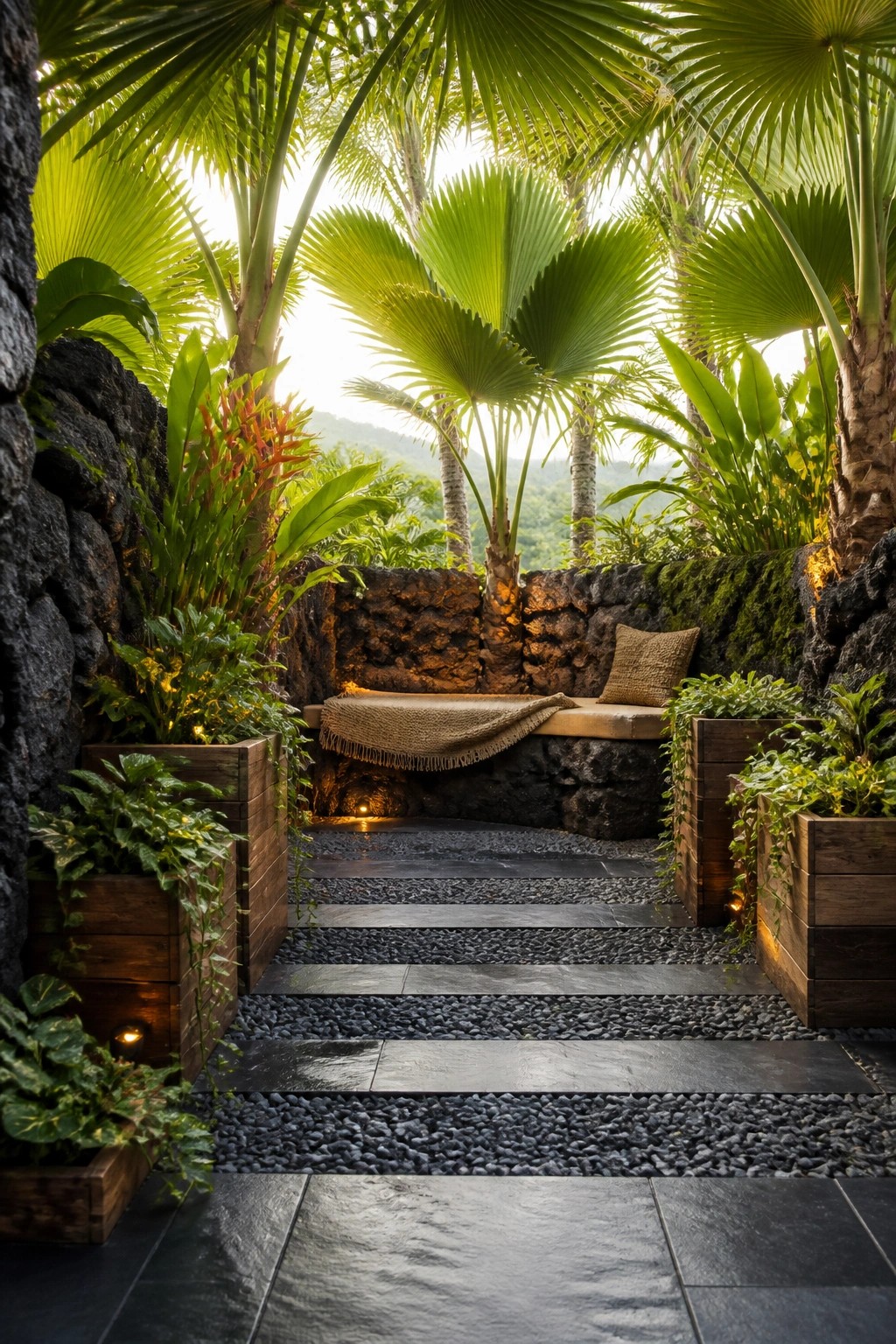
A simple path made from dark stone slabs set into gravel works especially well in tropical gardens. It gives a clear route without feeling too formal, and the gravel helps with drainage while letting plants spill over the edges naturally.
This approach suits larger side yards or back gardens where you want to connect seating areas to the rest of the landscape. Use it where the path can wind a bit rather than run straight, and keep the surrounding beds full so the hard surface does not stand out too much.
Frequently Asked Questions
Q: Can these tropical ideas work if I live somewhere with cold winters?
A: Pick plants that go dormant or use containers you can move indoors. Focus on evergreens like certain palms that handle a light frost. Mix in some native bold leaf plants to fill gaps during off seasons.
Q: What’s a simple way to create layers with bold leaves?
A: Place taller plants toward the back. Set medium ones around them and let low growers trail in front.
Q: How do I keep the garden looking full without overwatering?
A: Mulch around the bases to hold moisture longer. Group plants with similar water needs together. Check the soil with your finger before you add more.
