

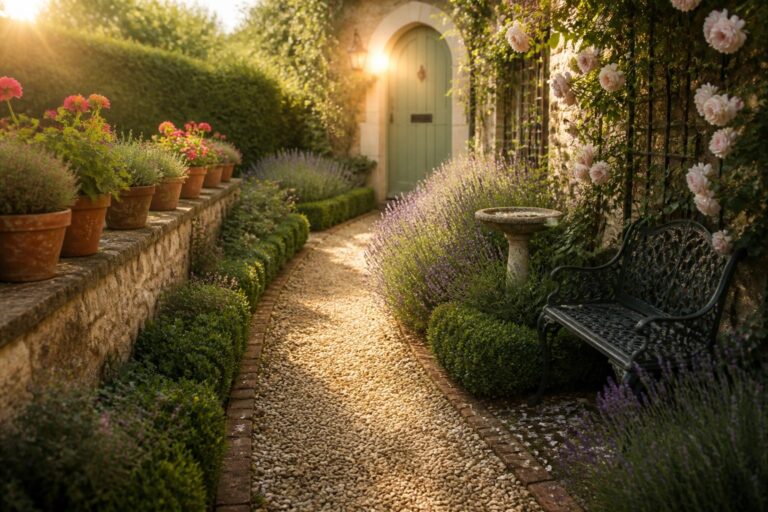
I have spent more time than I care to admit standing at the edge of my own front yard and wondering why the walkway never quite feels like it belongs to the house.
The right edging and planting structure can shift how the whole space reads from the street, especially when the path leads the eye instead of fighting it.
Over the years I have noticed that gardens with clear layers of height and texture tend to hold up better as the seasons change.
Some ideas simply need testing on site.
I usually start by walking the existing path a few times to see where the eye naturally lands before adding anything new.
Line Your Front Path With Lavender
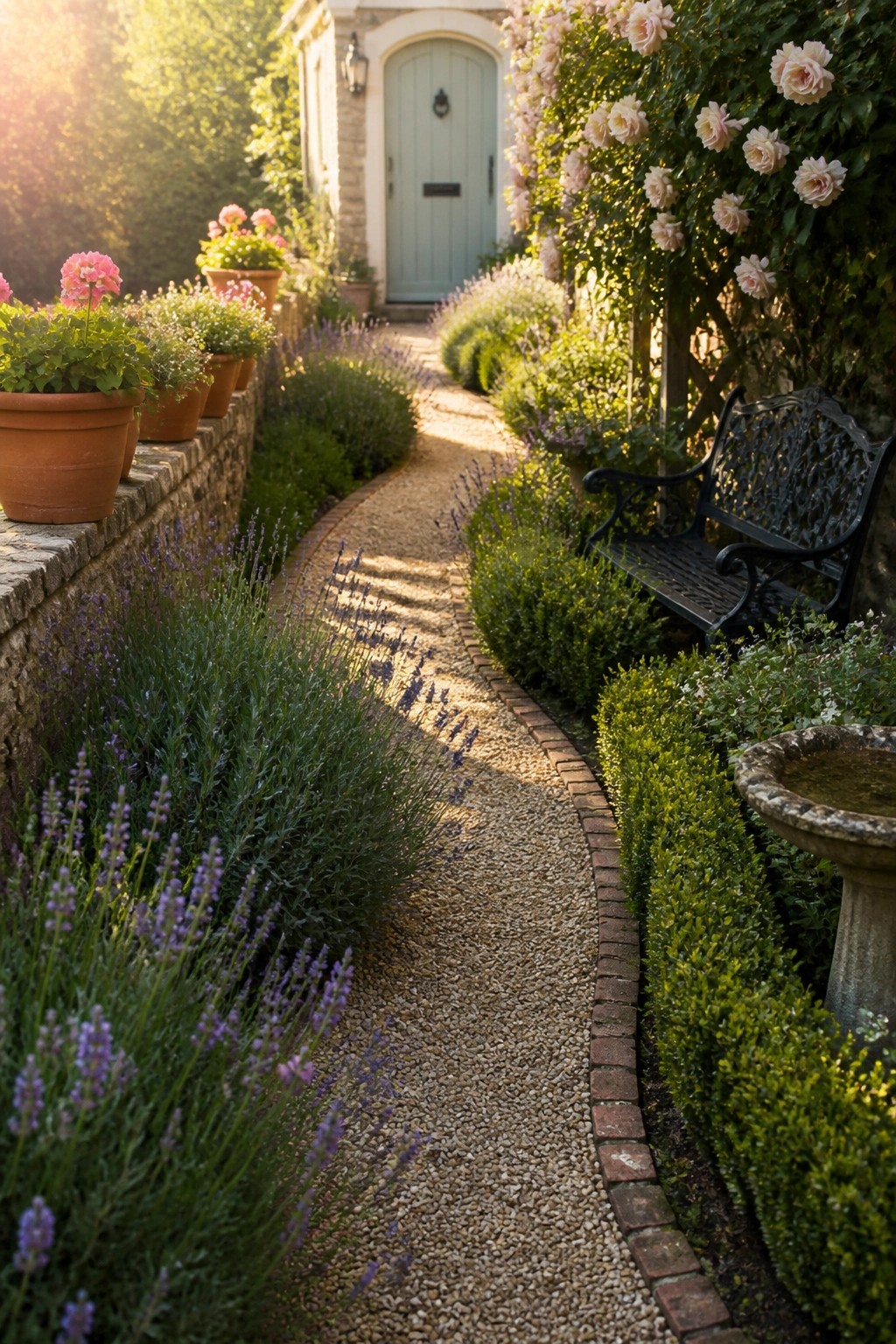
Lavender works well as a border plant because it stays compact and adds a soft edge without taking over the walkway. The gravel path here feels more inviting with that purple line running along one side and the low brick edging keeping everything neat.
This approach suits smaller front gardens where you want some structure but still room for other plants. Place it in full sun and keep the path width consistent so it does not feel cramped.
Concrete Pavers In Gravel
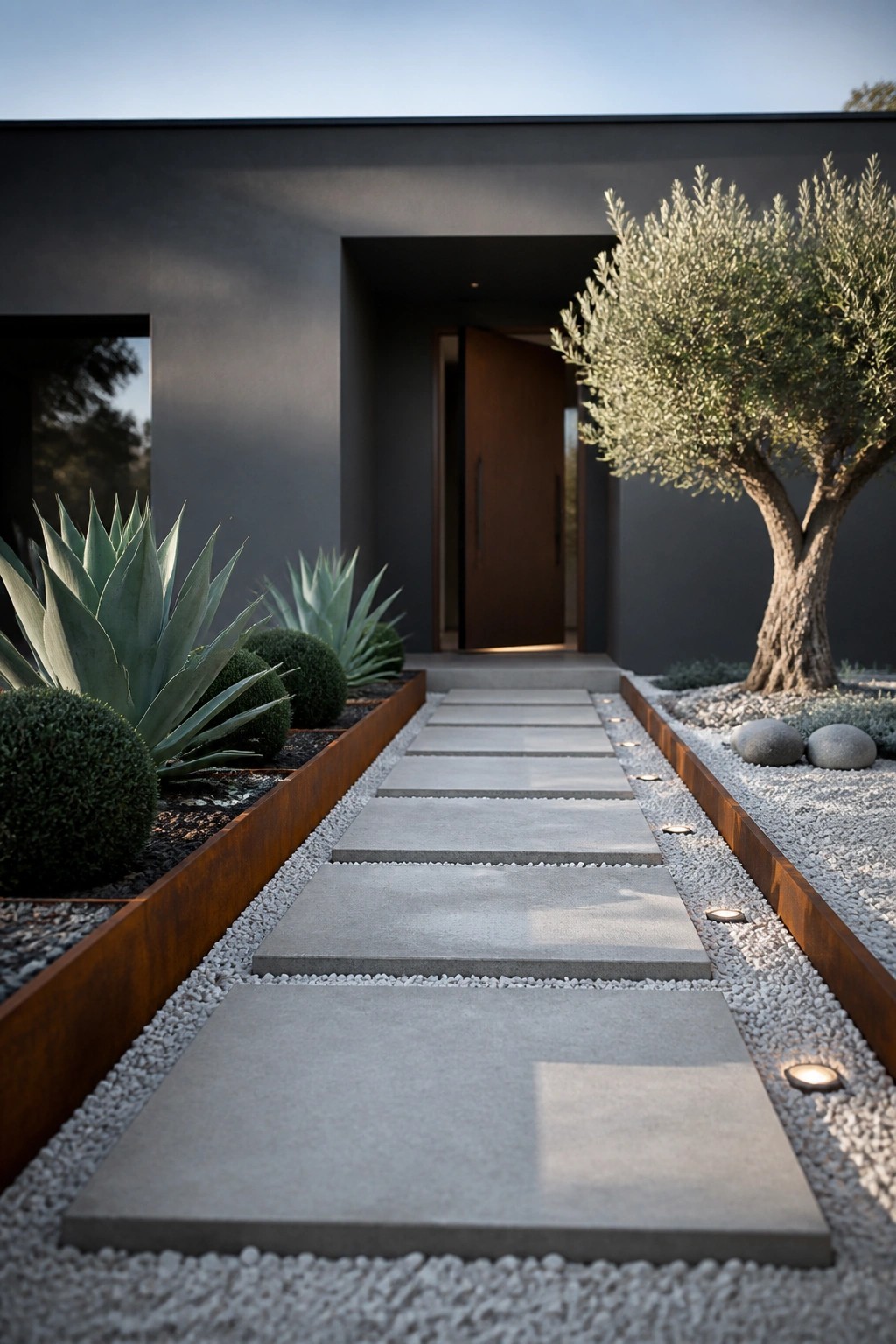
Large concrete pavers set into gravel make a simple and direct walkway to the front door. The look stays neat because the gravel fills the gaps and keeps the surface level without extra trim work.
This approach suits modern homes that need a low maintenance path. Keep the edging low and the plants along the sides simple so the pavers remain the main line through the garden.
Let a Stone Path Lead the Way
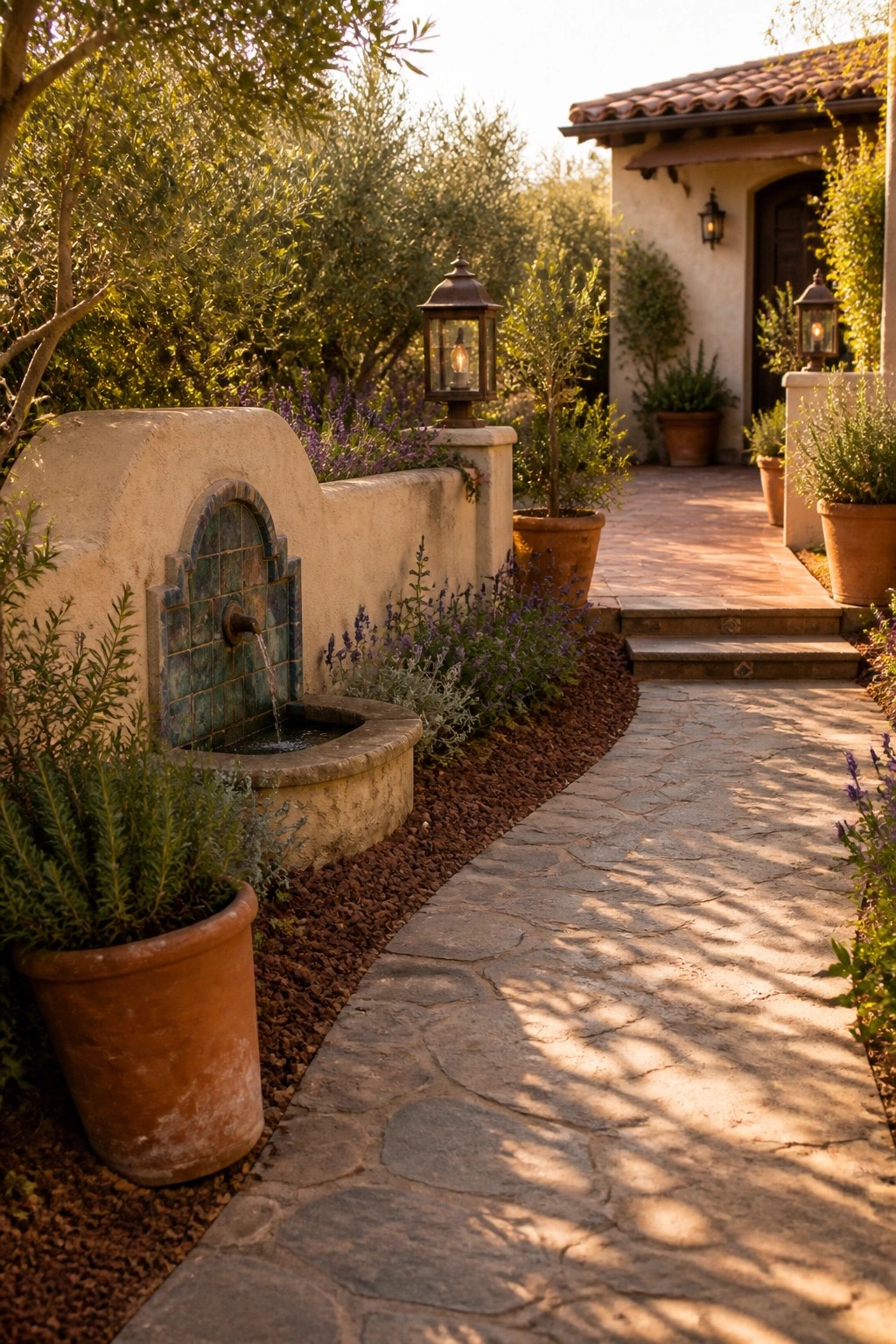
A stone path gives the front garden a clear sense of direction without feeling stiff. The curve here keeps things relaxed while still guiding visitors straight to the door, and the low plants along the edge soften the hard surface.
This idea works well on homes where the walkway has some distance from the street. Stick with natural stone or similar pavers, add mulch in the beds, and use a few large pots to mark the start and finish. It pairs nicely with warm climates and simple architecture.
Frame the Entry Path With Evergreens
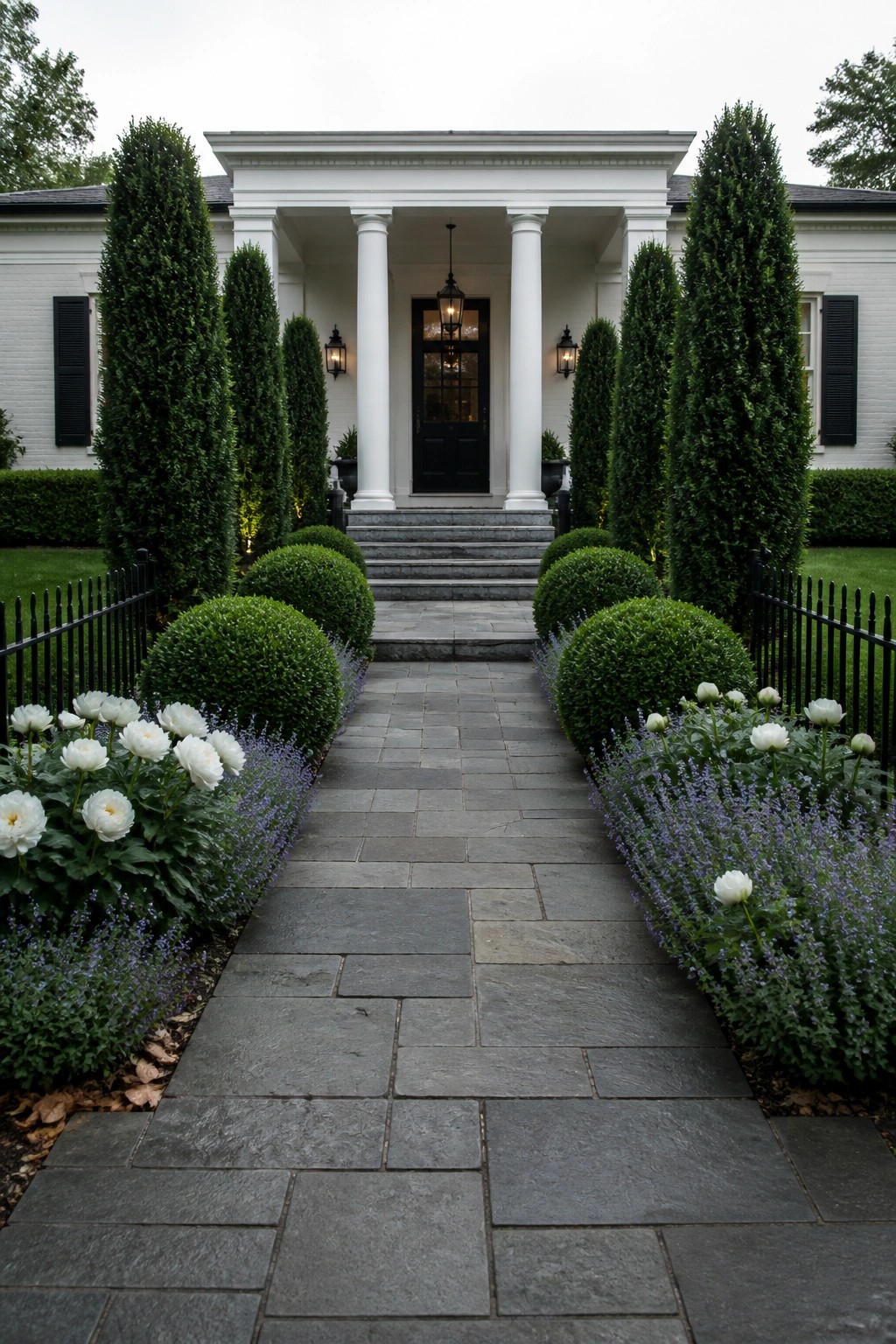
Tall evergreens placed along both sides of a walkway give the front garden a clear structure that feels orderly without looking stiff. The contrast between the upright shapes and the lower rounded shrubs keeps the path from feeling too narrow or closed in. This setup works especially well on homes with a centered door because it leads the eye straight to the entrance.
It suits traditional or colonial style houses best but can work on simpler facades if the evergreens stay in scale with the building. Space them evenly and keep the lower layer lower so the path stays visible from the street. The main thing to watch is letting the shrubs grow too wide and crowd the walk over time.
Stone Paths With Gravel Edging
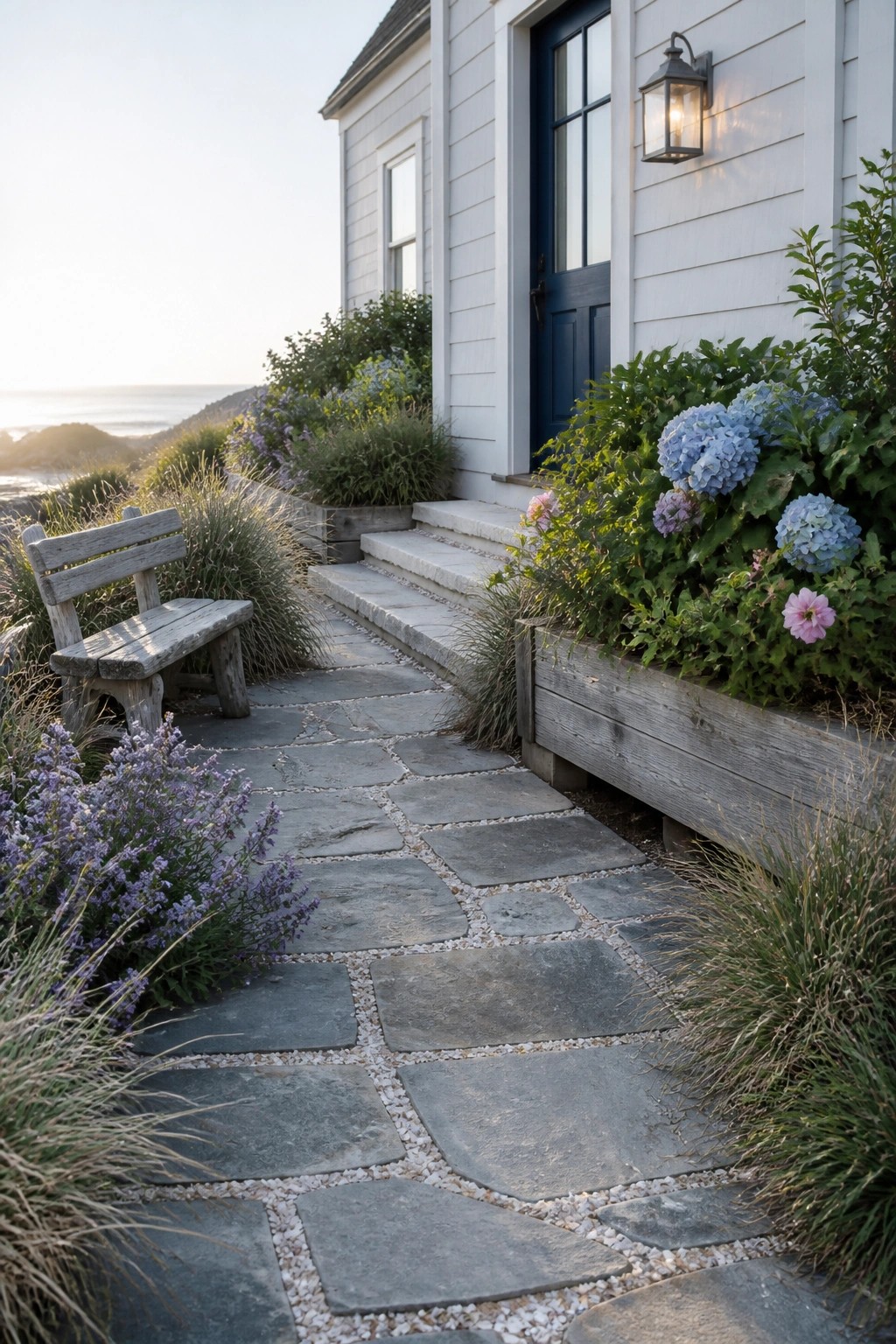
A simple path made of large irregular stones with gravel between them gives a front garden an easy, natural feel. It guides people to the door without looking too stiff or overly designed, and the gravel helps the stones settle into the landscape instead of sitting on top of it.
This kind of path works best on homes with cottage or coastal styles where the garden already has some looseness to it. Keep the stones fairly large and the gravel light in color so the walkway stays visible even when plants grow in around the edges.
Layer Planting Along Gravel Paths
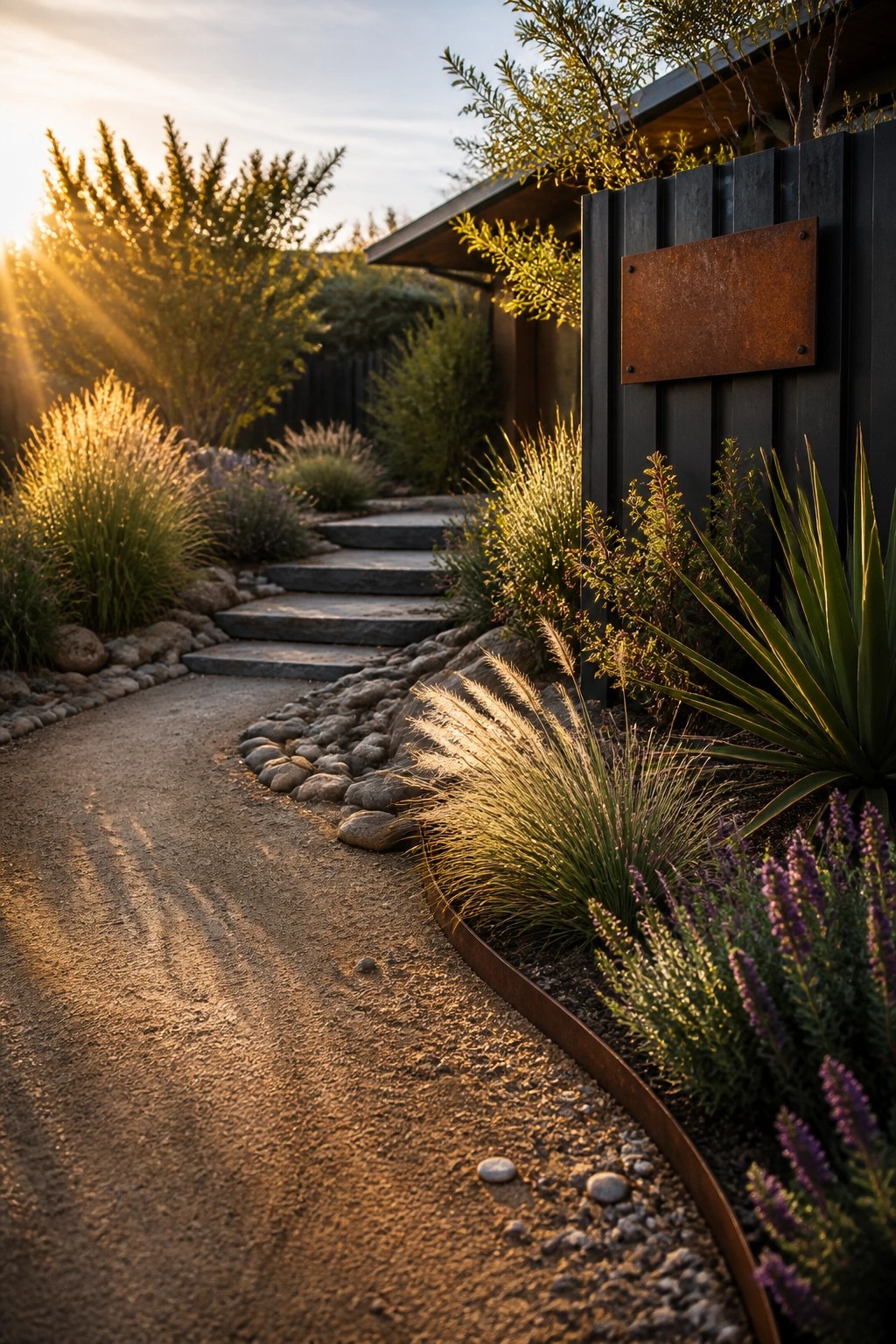
A gravel path lined with mixed heights of plants gives a front garden a relaxed but organized look. The different textures and colors keep the walkway from feeling too bare while still leaving plenty of room to walk.
This layout works best on homes where the entry sits a short distance from the street. Keep the beds fairly narrow, use a low metal edge to contain the gravel, and choose plants that stay mostly under knee height near the path itself.
Brick Paths With Layered Flower Borders
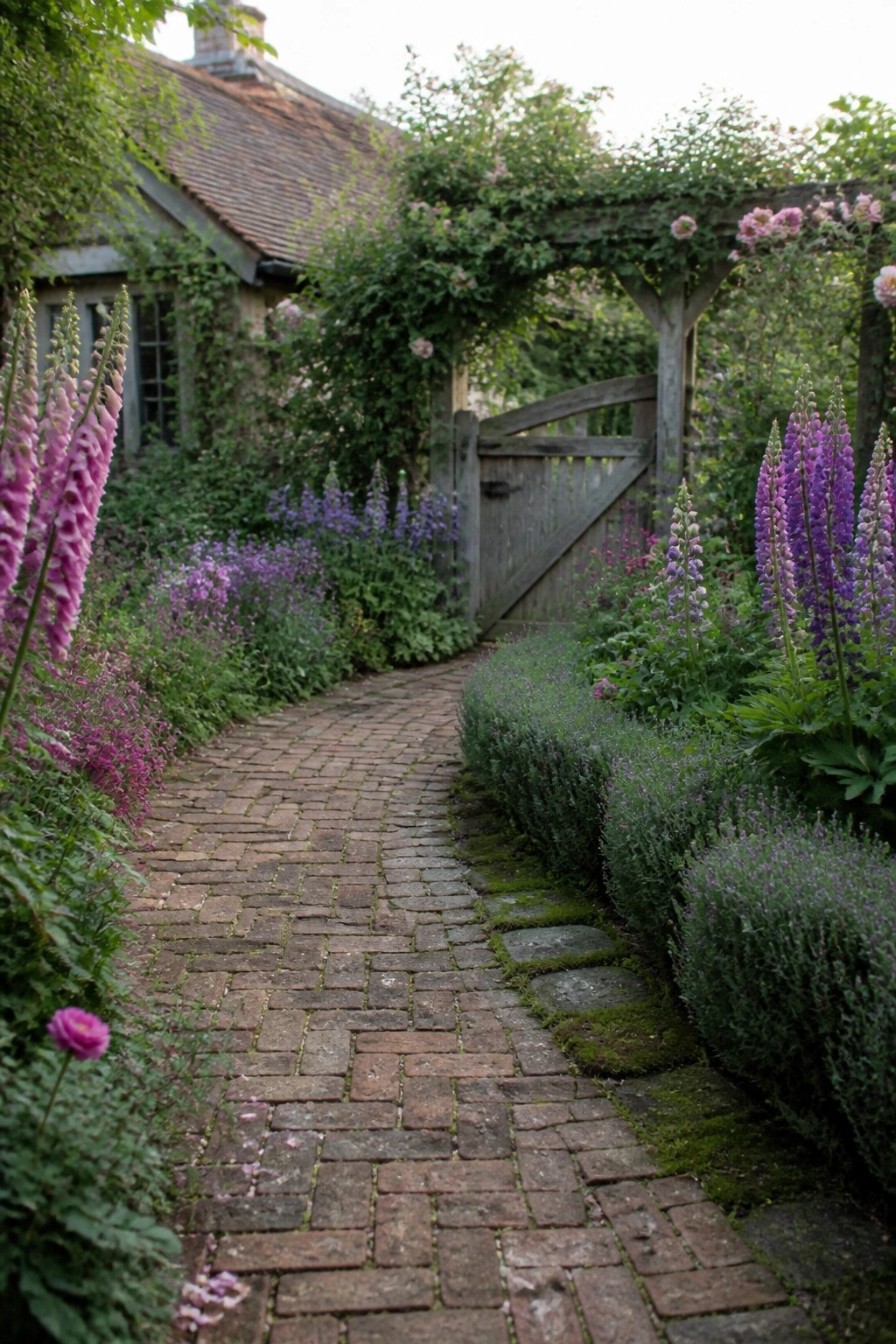
A brick path edged with tall flowers and lower shrubs gives the front garden a clear sense of direction. The layers add color and softness while keeping the walkway itself open and easy to follow.
This approach works well on smaller lots where you want to stretch the view without crowding the space. Cottage and traditional homes take to it naturally, though the key is keeping taller plants back from the edges so the path stays usable.
Edge the Path With Pebbles
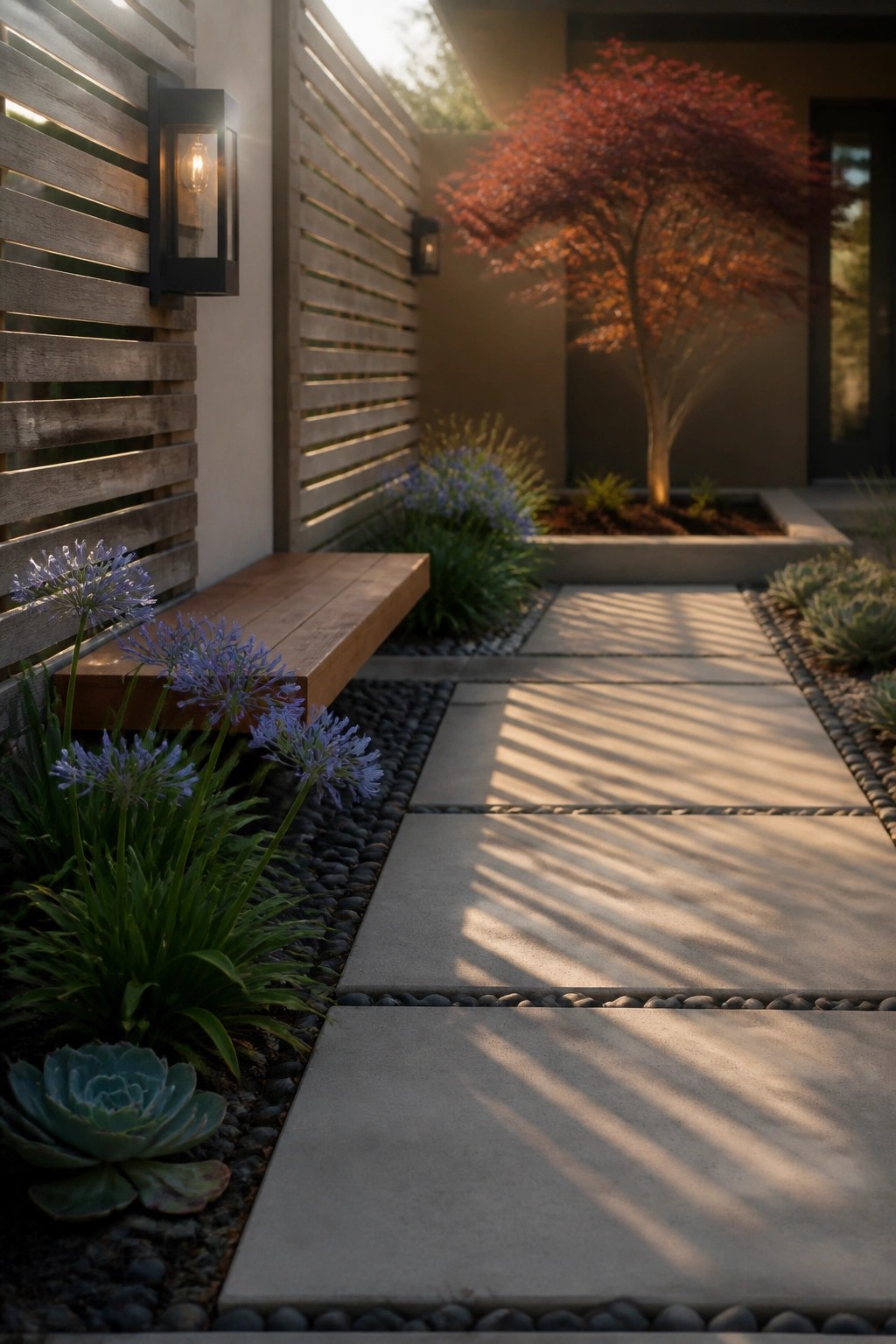
A pebble border along a concrete walkway gives the front garden a tidy frame without making it feel fussy. It keeps the path clear and distinct from the planting beds, which helps the whole area look more organized even when the plants grow a bit wild.
This approach works best on straight or gently curving paths in smaller front yards. It suits homes that already have clean lines and keeps maintenance low since the pebbles stay in place and need little upkeep beyond occasional raking.
Raised Beds and Containers Along the Path
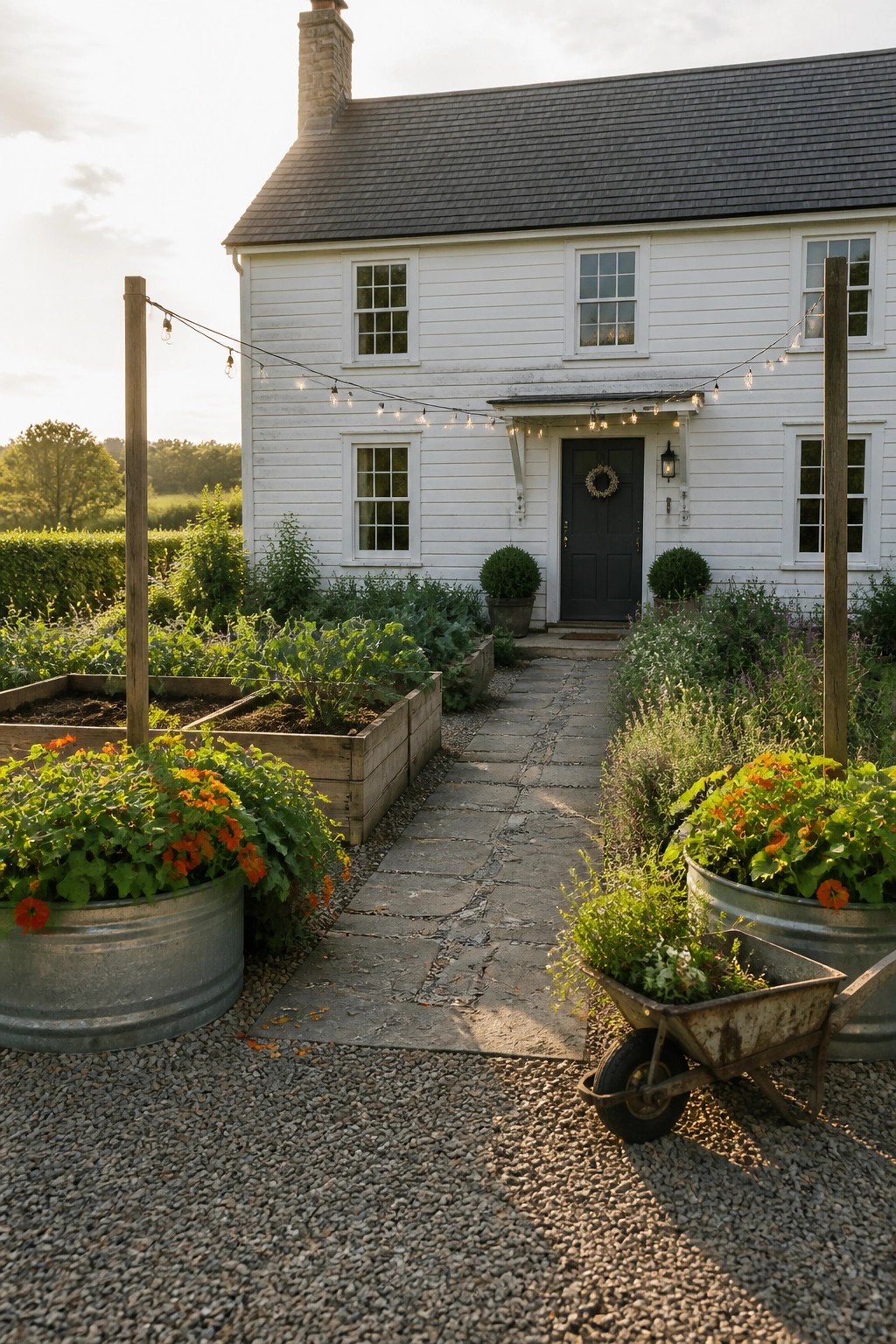
Raised beds paired with large containers give a front walkway more structure and interest. The beds keep the planting neat and defined while the pots add height and color right at eye level. This mix works especially well when space is limited or when the soil near the house needs improving.
It suits homes with a fairly straight path from the street or driveway. Keep the beds low and the containers simple so the walkway stays the main focus. Change out the pots each season if you want fresh color without replanting everything.
Stepping Stone Paths For Front Gardens
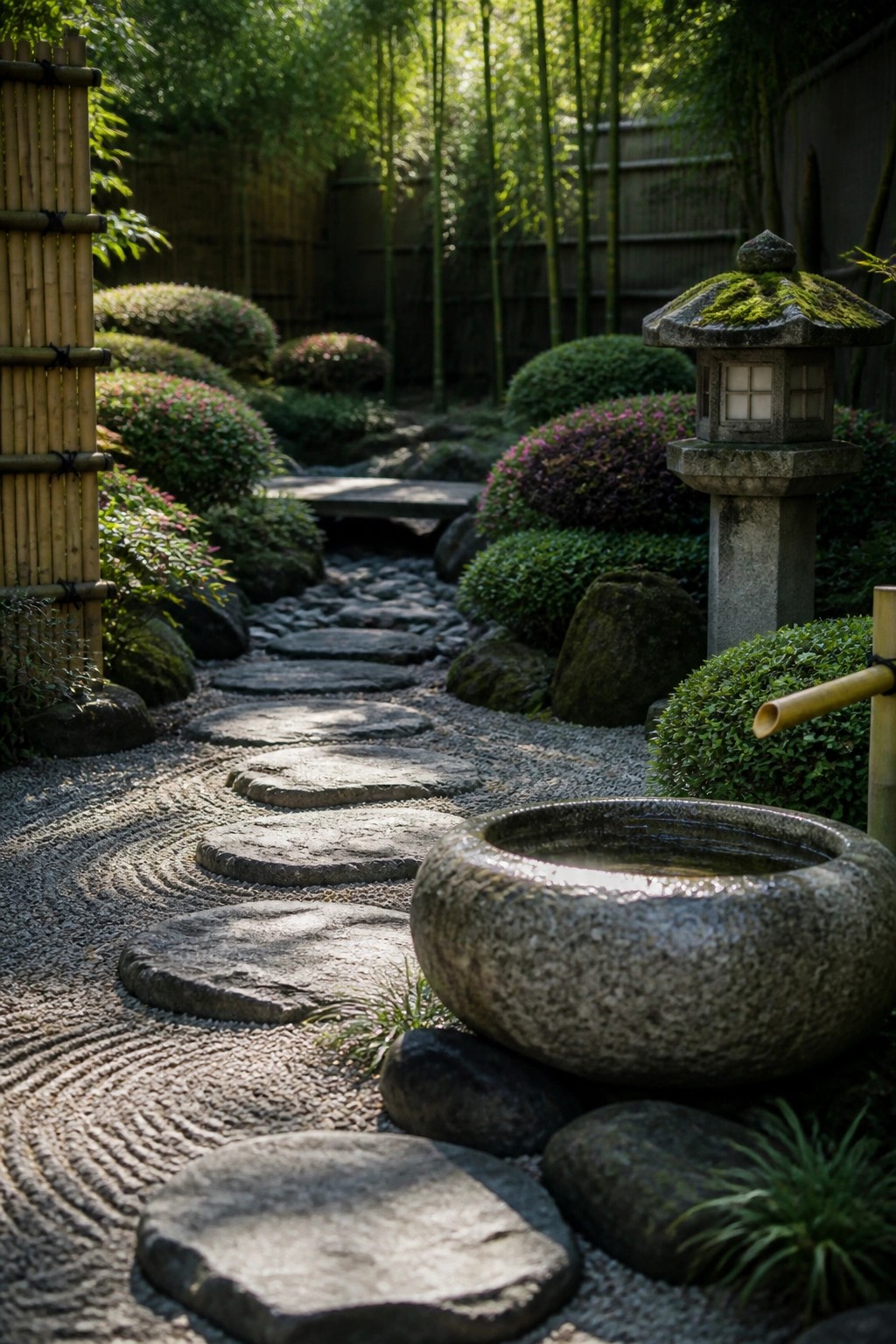
A stepping stone path set into gravel gives the front garden a relaxed flow that feels easy to follow. It avoids the stiffness of a solid walkway and lets the surrounding plants take more of the attention. The stones can be spaced so the walk feels unhurried rather than rushed.
This approach works well on smaller lots or in gardens that already lean toward simple planting. Keep the gravel clean and the stones level so the path stays practical in wet weather. It suits homes with a quiet, traditional style and does not require much upkeep once it is in place.
Wooden Paths For Natural Front Garden Entries
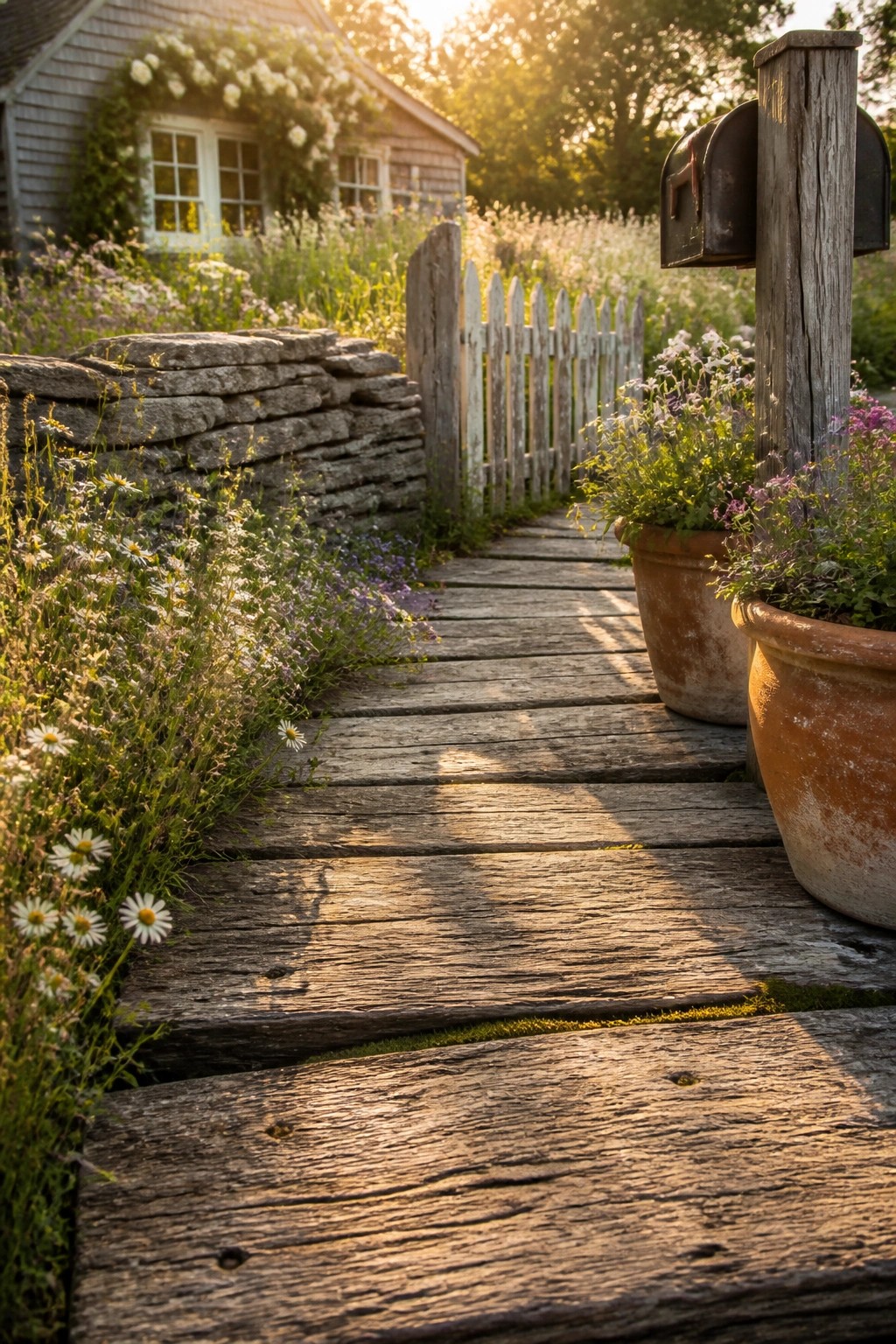
A simple wooden path can make a front garden feel more welcoming without any extra fuss. The weathered boards sit low to the ground and let the flowers spill over the edges, so the walkway feels like part of the planting rather than something laid on top of it.
This approach works best with loose, cottage-style beds where the plants are allowed to grow a little wild. Reclaimed boards hold up well in most climates and soften quickly once moss or a bit of dirt settles between the planks.
Add Height With Tall Planters
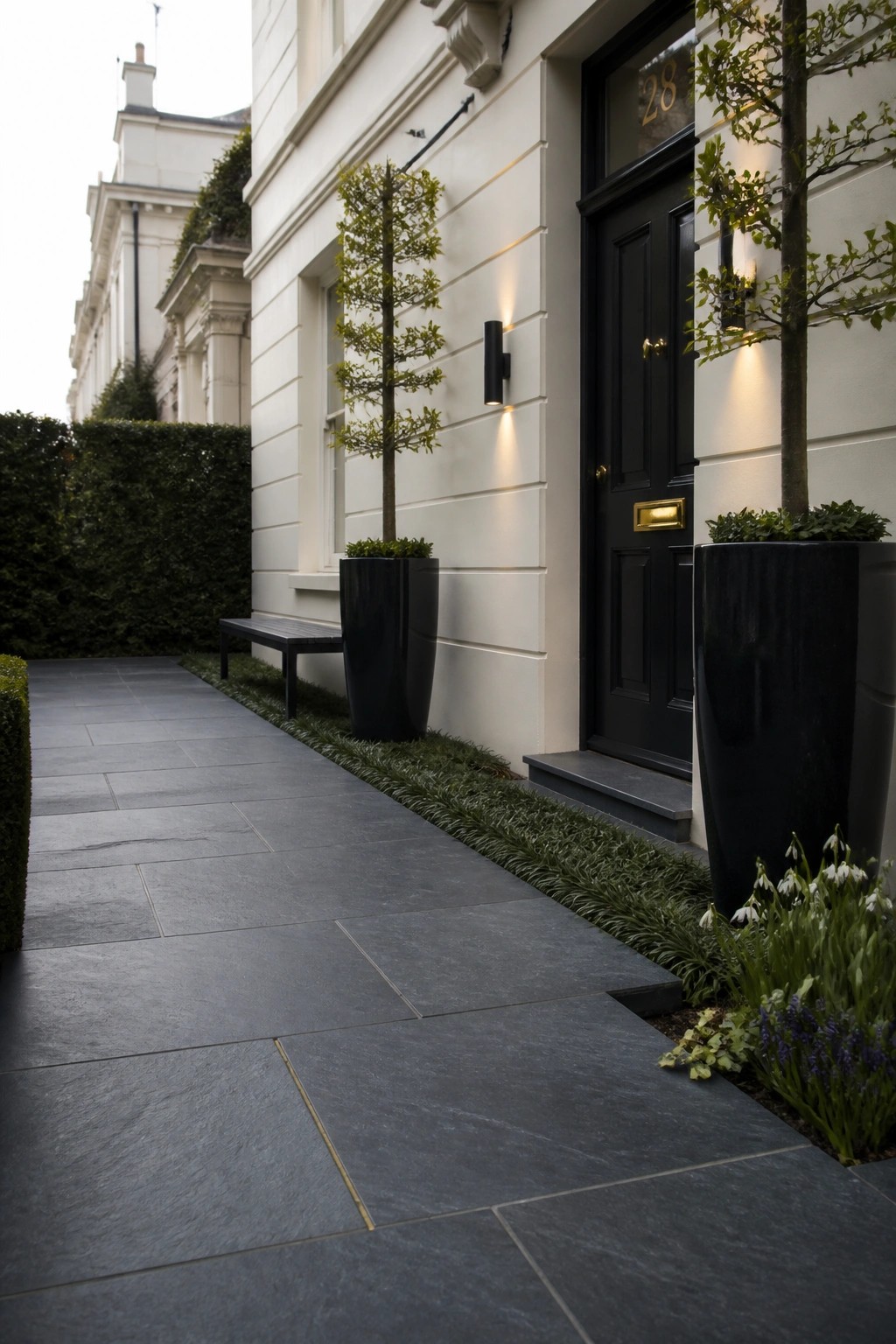
Tall planters bring useful scale to a front walkway when the planting beds are narrow. They create vertical lines that guide the eye toward the door and keep the path from feeling flat.
This works best on homes with paved entries where you want some greenery but prefer not to dig large beds. Match the planter color to the door or trim so the whole approach feels pulled together.
Large Pots Along the Walkway
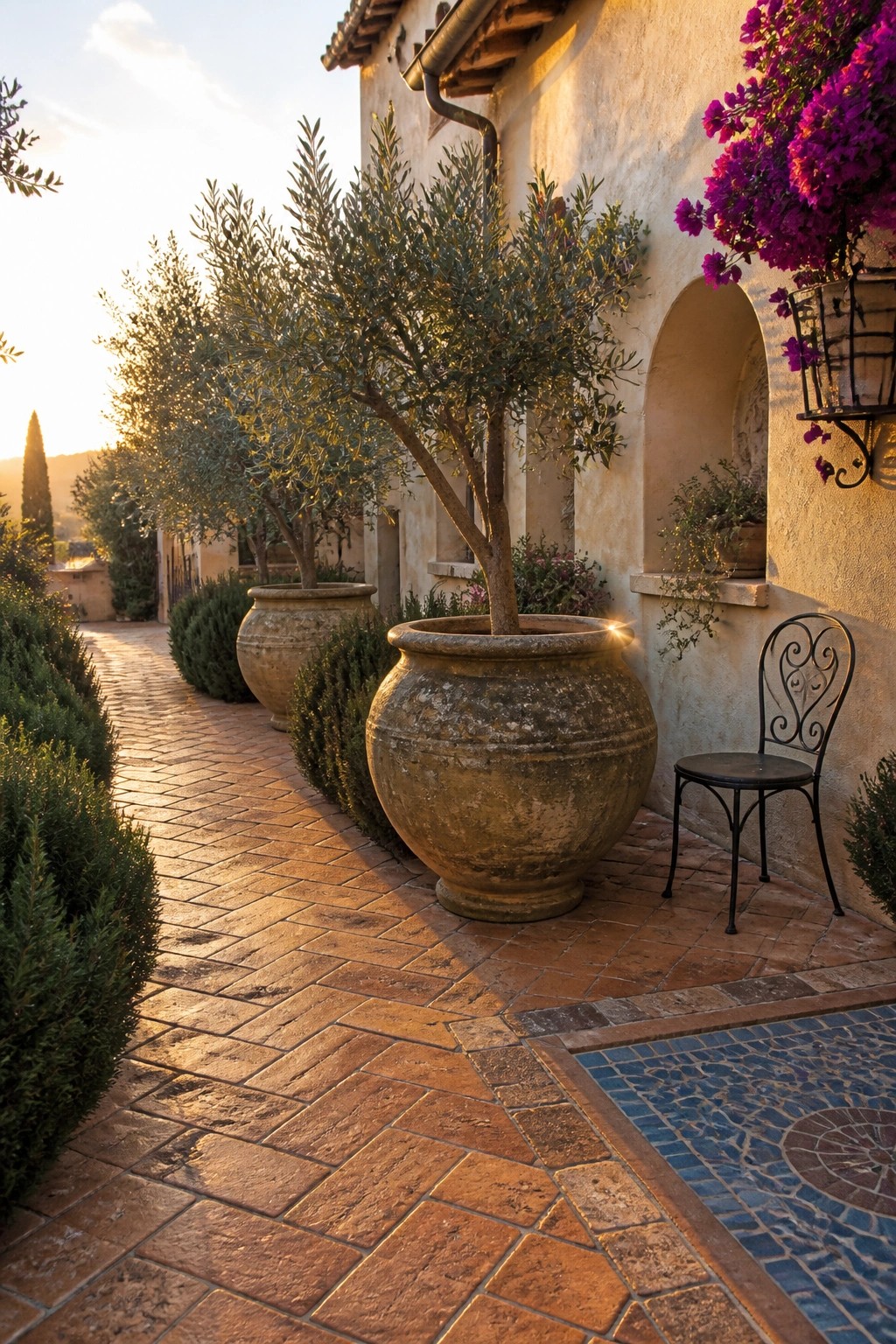
Large pots set along a front path add height and a clear line without needing wide garden beds. They keep the walkway feeling open while still giving the eye something to follow from the street.
This works best on paved entries or narrow side paths where digging beds is not practical. Match the pot material to the house and keep the planting simple so the walk stays usable and uncluttered.
Winding Stone Paths Through the Garden
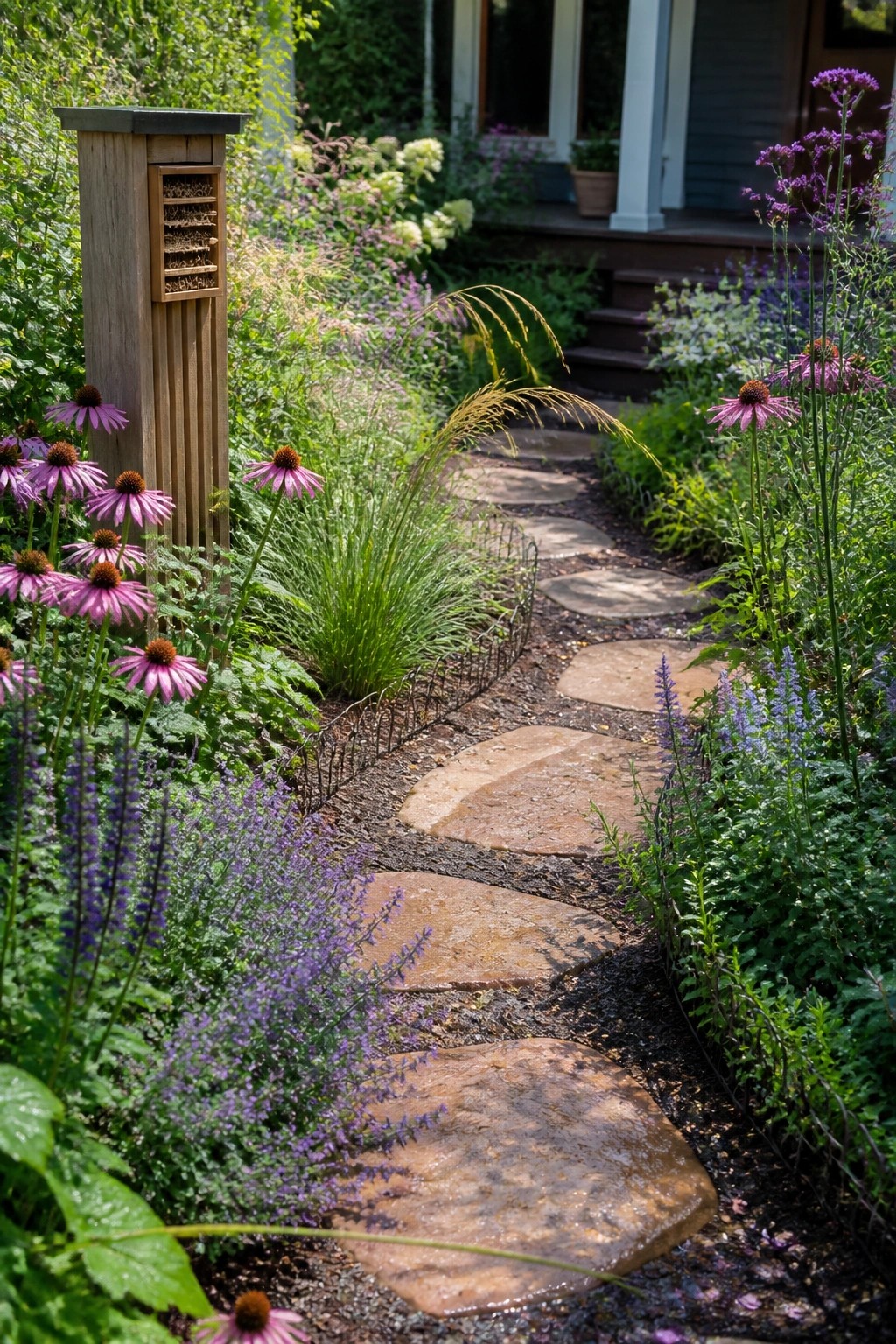
A stepping stone path keeps the front garden feeling open and natural. The irregular stones let the planting flow right up to the edge, so the walkway becomes part of the garden instead of cutting across it.
Set the stones in a gentle curve and space them far enough apart that visitors slow down. This works especially well on smaller lots where a straight paved walk would feel too formal.
Curve the Front Path
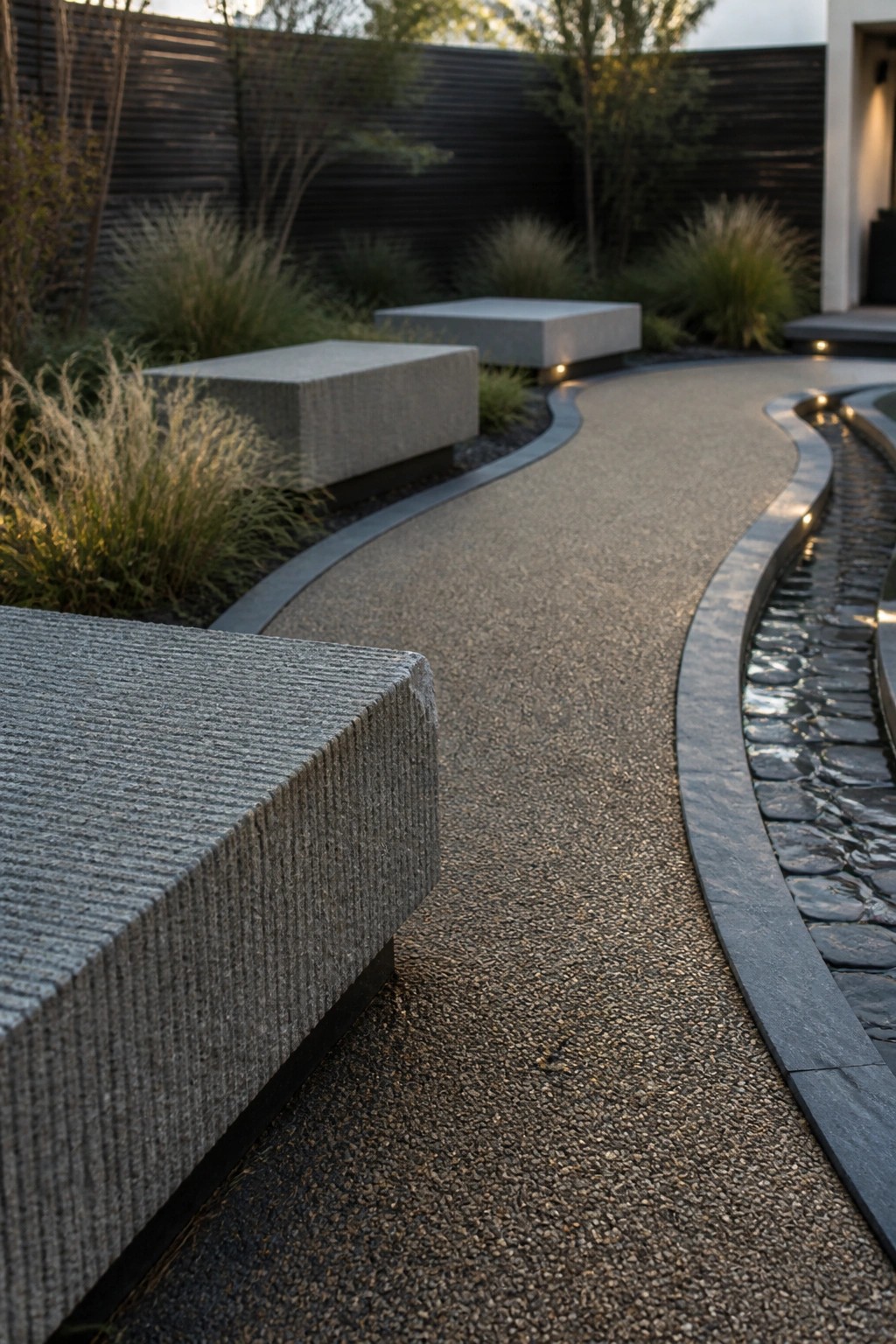
A gently curving walkway gives the front garden a more relaxed feel than a straight line from the street. It draws the eye along the planting and makes even a small space feel a bit larger.
This layout works best when the path is kept simple, like gravel or decomposed granite, with a low stone edge to hold everything in place. It suits homes with a bit of depth between the sidewalk and the door, where the curve can wind past shrubs or low benches without looking forced.
Stepping Stones With Ground Cover Between Them
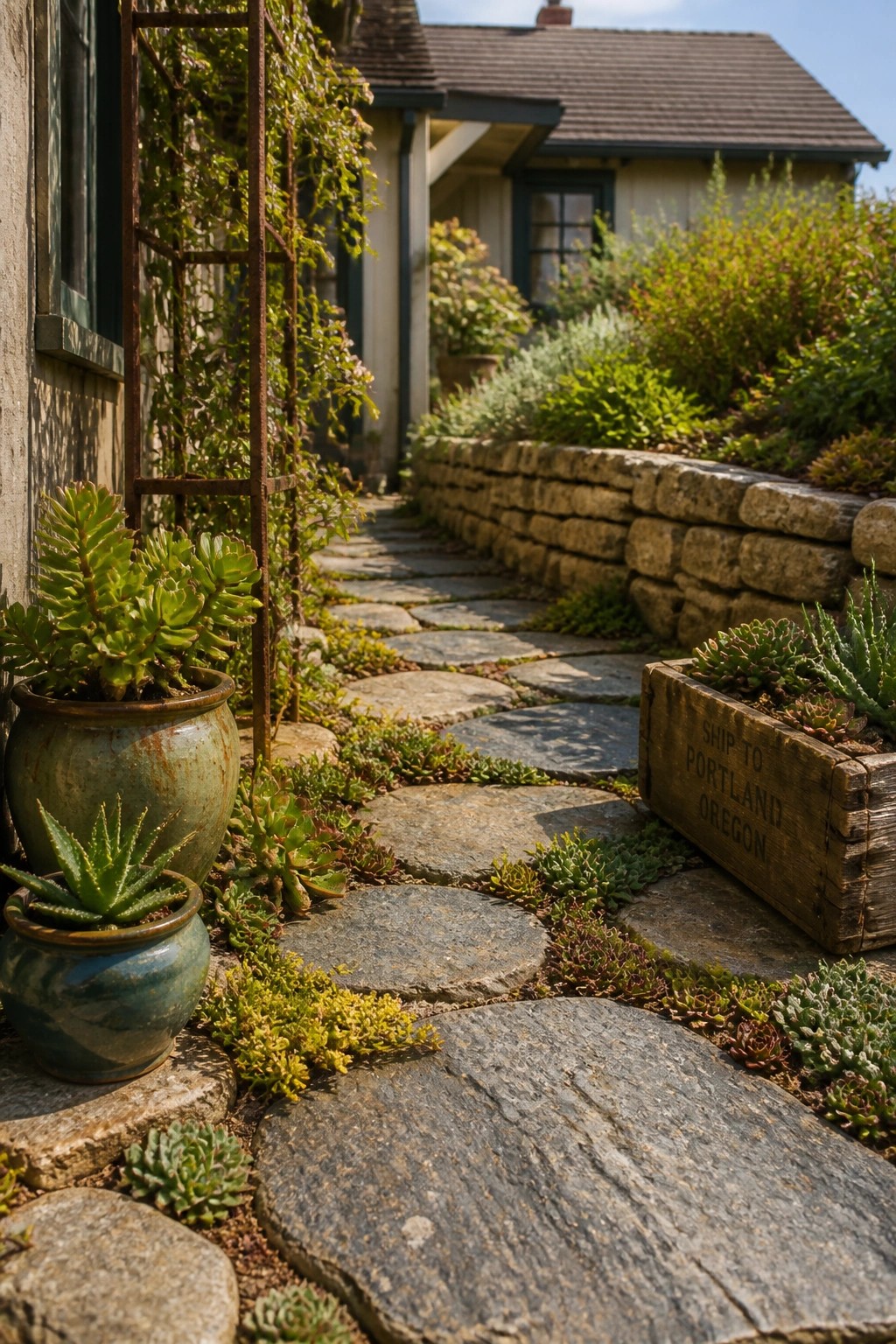
A stone path that lets low plants fill the gaps gives a front garden a relaxed feel without looking messy. The stones stay practical for walking while the plants soften the edges and cut down on weeding.
This layout suits homes where the walkway runs beside beds or a low wall. Set the stones level with the soil so small ground covers can spread, then add a few pots near the house for height. Keep the plants low enough that they do not trip anyone.
Mossy Stone Paths For A Natural Look
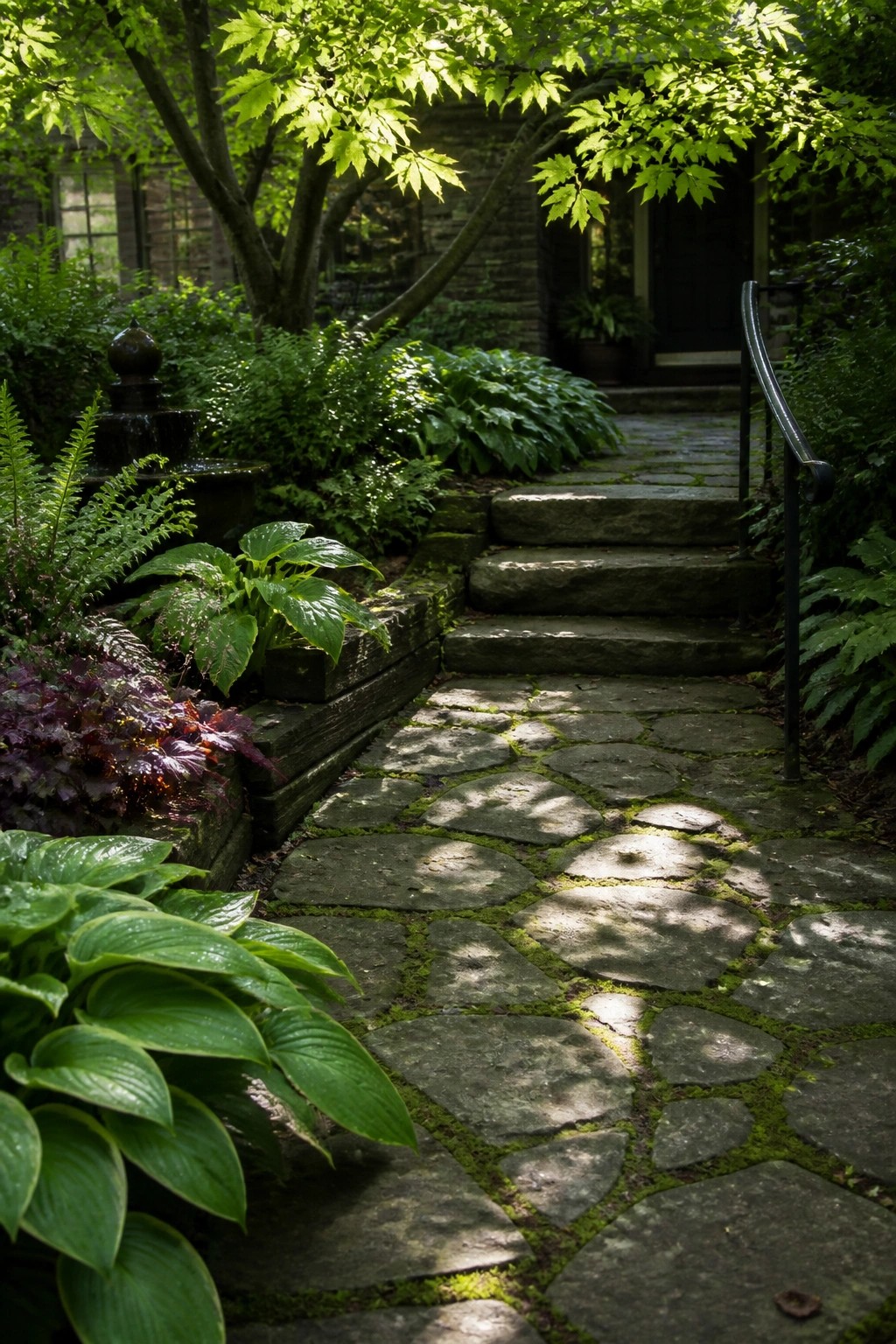
A stone path with moss filling the joints blends the walkway right into the garden instead of letting it stand apart. This works well because the green growth softens the hard surface and makes the whole front feel more established and connected.
It suits older homes or any garden where you want things to look settled rather than freshly laid. Use irregular stones so water stays in the gaps longer, and keep the path fairly narrow so foot traffic does not wear the moss away too quickly.
A Cobblestone Path With Edge Lighting
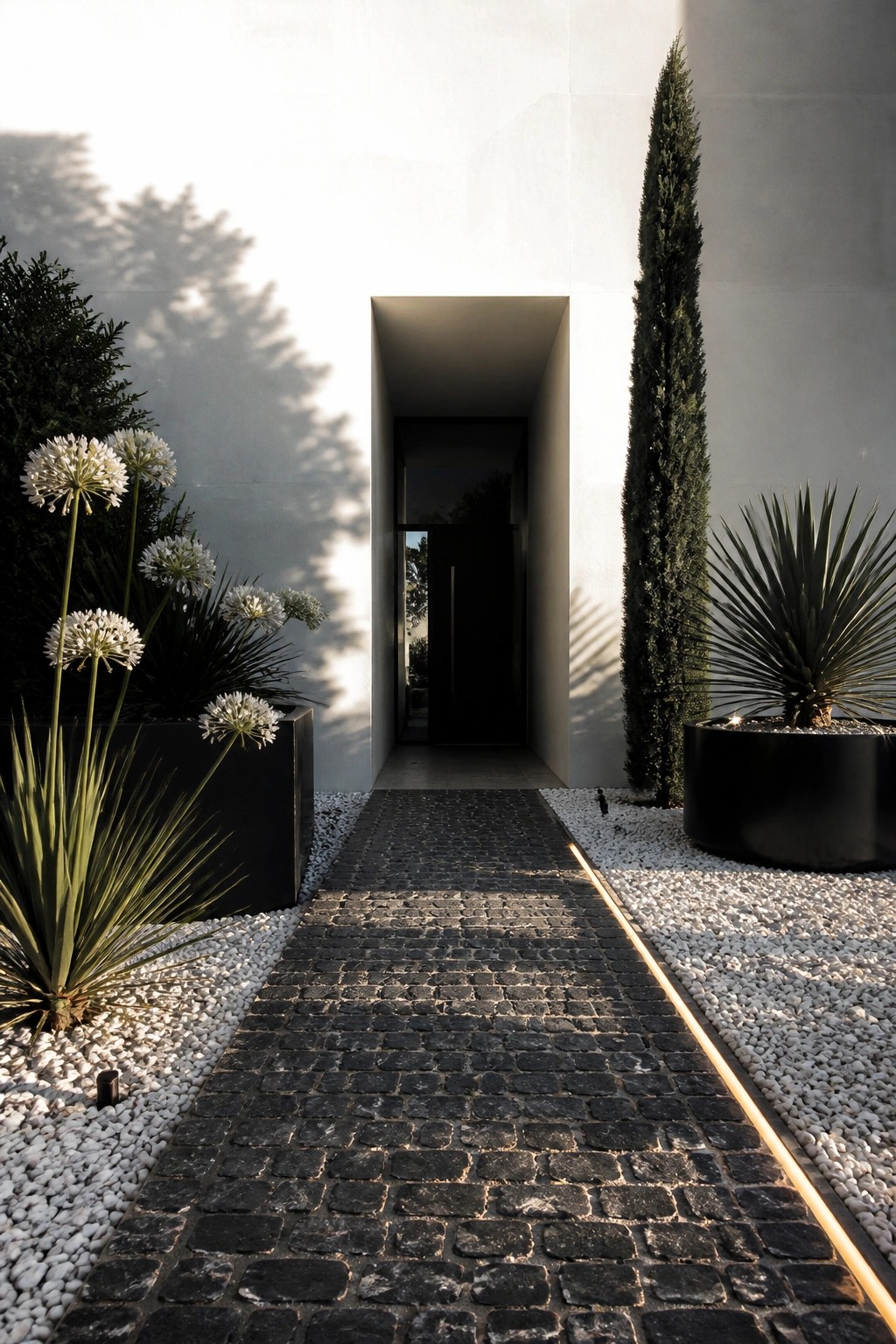
A dark cobblestone walkway gives the front garden a clear route to the door while keeping things low key during the day. The thin strip of light along one side adds just enough guidance at night without needing extra fixtures or tall lamps.
This approach suits homes with simple architecture and works best when the beds on either side stay light and uncluttered. Use it on a straight or gently curved walk where you want the path itself to feel like the main feature.
Stone Paths With Soft Plant Edges
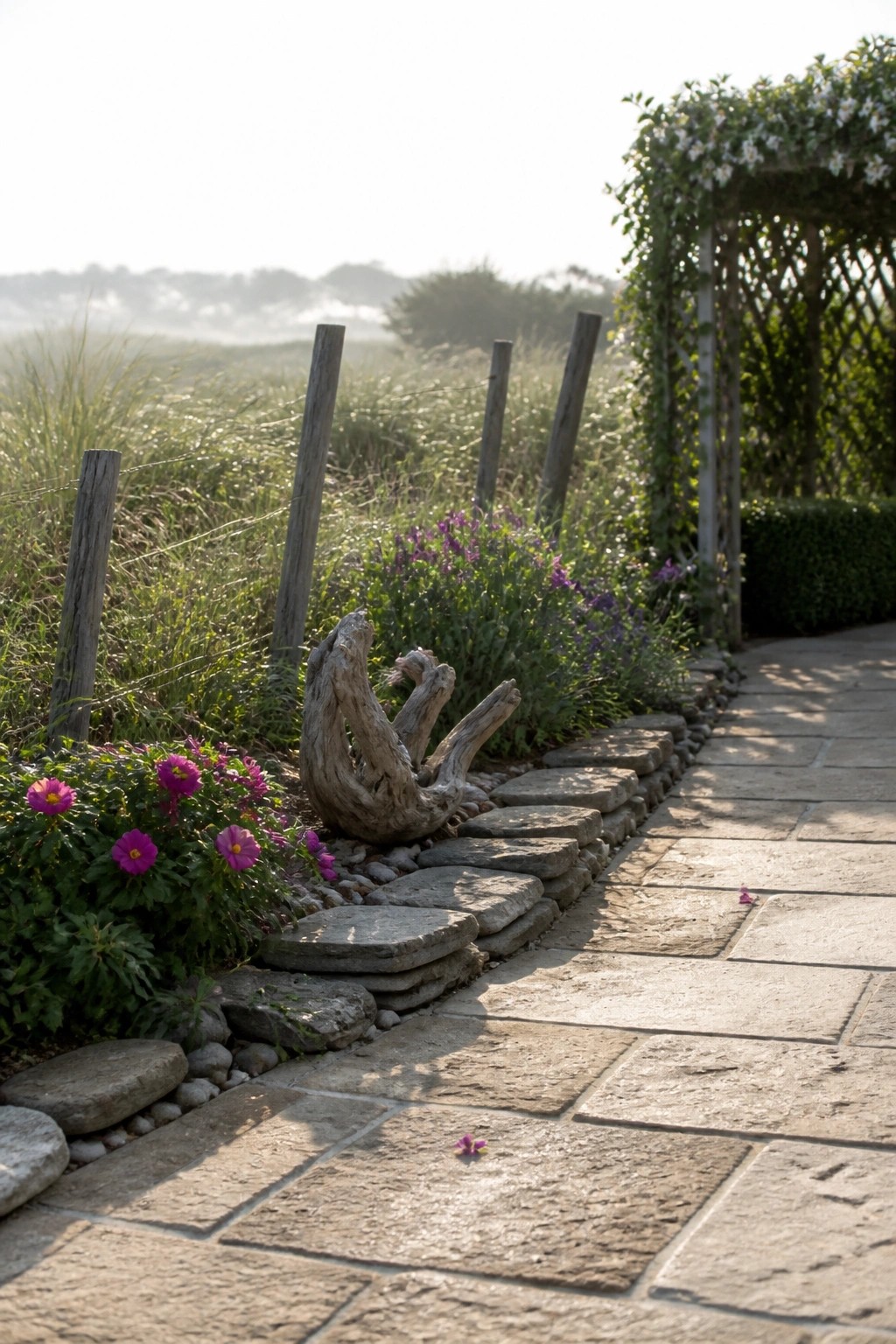
A stone path made from irregular slabs gives a front garden a relaxed feel that straight concrete rarely achieves. The slight curve and pebble border help the walkway blend into the surrounding beds instead of cutting across them.
This style works best on homes with cottage or traditional architecture where you want the garden to feel established. Keep the plants low and varied along the edges so the path stays inviting without looking cluttered.
Create Symmetry with Matching Topiaries
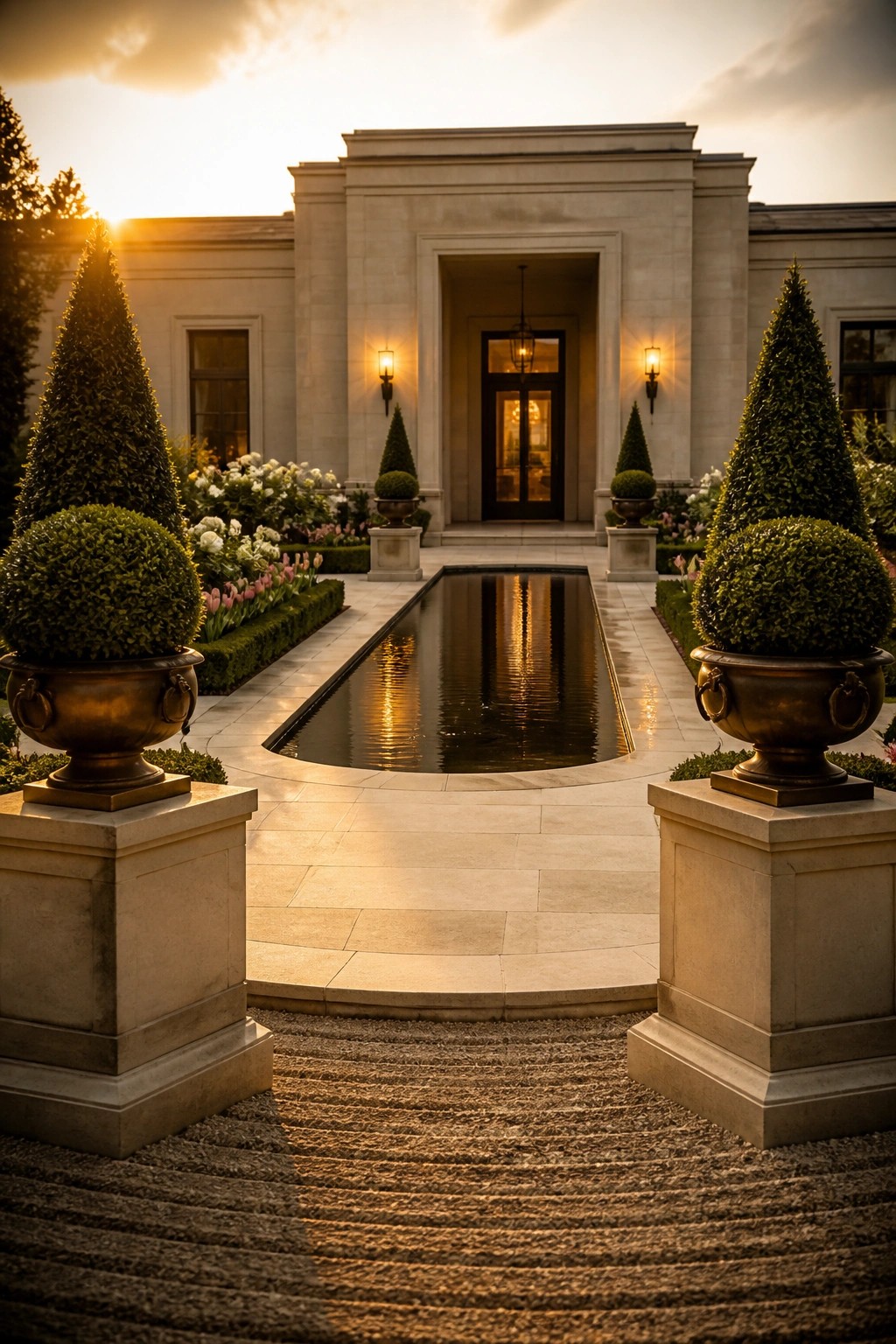
Many front gardens look more intentional when the same plants are repeated on both sides of the walkway. This kind of balance makes the entrance feel orderly and helps the eye move straight toward the house.
Place matching clipped shrubs in identical pots or beds along the path. It works best on wider properties where there is room for a few pairs, and it keeps the garden from feeling scattered.
Frequently Asked Questions
Q: My walkway slopes a bit. Will these design ideas still work? A: Focus on drainage first. Then pick low growing plants that follow the slope naturally. Add some edging stones to keep the soil in place.
Q: How often should I water new garden beds along the path? A: Water deeply twice a week at first. This helps roots settle in without drowning them. After a month cut back to once a week unless it rains.
Q: What if I rent and can’t change the walkway itself? A: Focus on the sides instead. Pots and border plants add color without permanent changes. You can take them with you later.
