

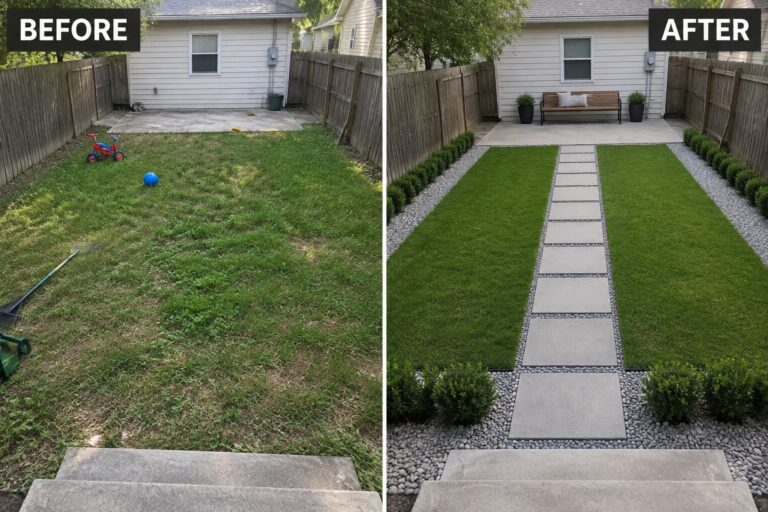
I often find that a backyard stays empty because there is no clear way to use the space day to day.
Once you mark out simple zones for seating or meals the area stops feeling like leftover ground and starts working like another room.
That small step matters more than any single piece of furniture.
A few of the setups rely on low edging or slight level changes to hold everything in place without adding extra pieces.
I would try those first in my own yard to see what actually gets used.
Add Structure To An Overgrown Backyard
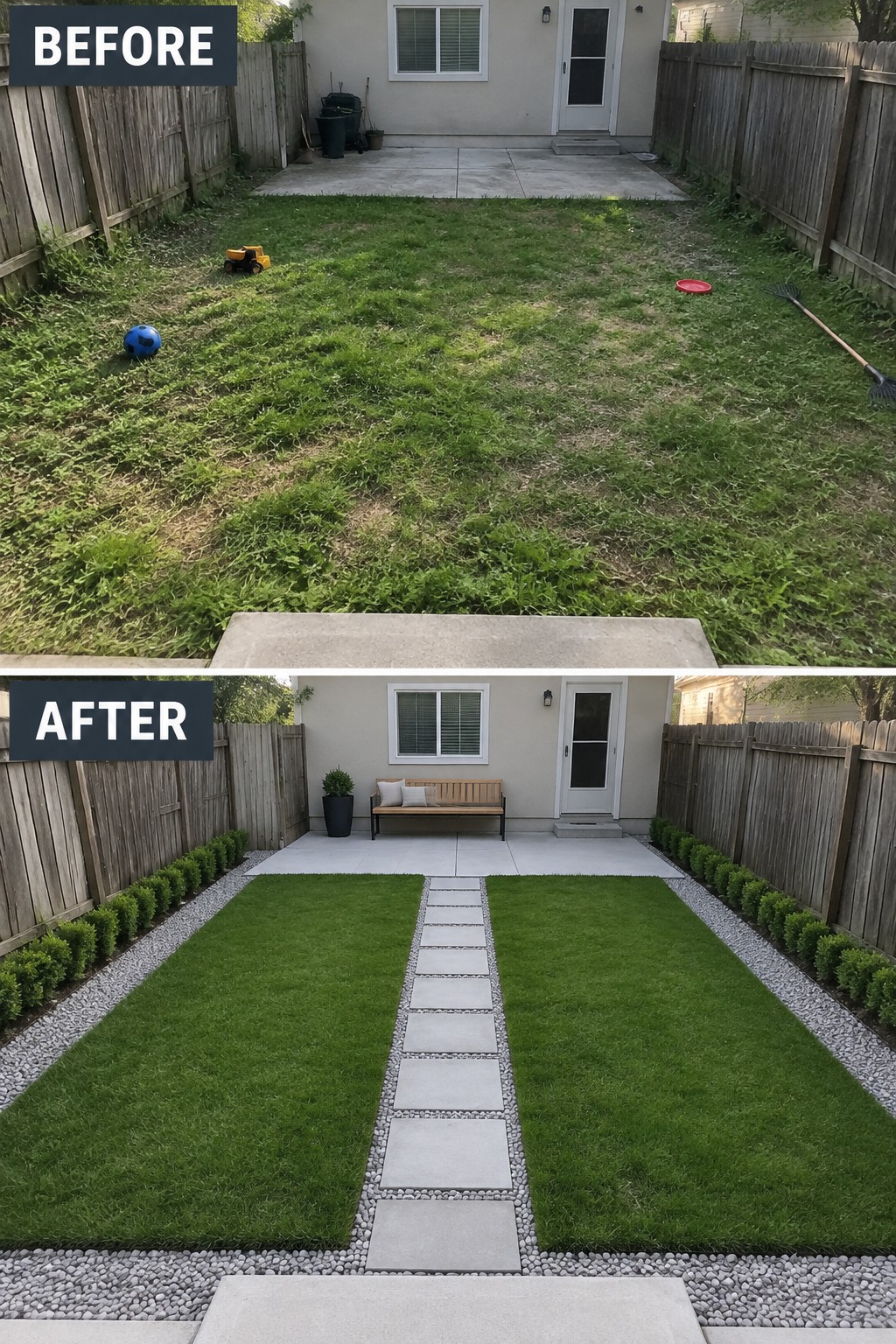
A wide open lawn often ends up looking messy because there is nothing to hold the space together. Adding gravel borders along the edges and a simple paver path down the middle breaks the yard into clear sections. The result feels much more intentional even though the lawn itself stayed the same size.
This approach works well in smaller backyards where you want the space to feel planned without crowding it with furniture. Start with the borders and path first, then add a few shrubs along the fence. Keep the center open so people can still walk through and use the yard for play or seating later.
Create A Defined Seating Area Around A Fire Pit
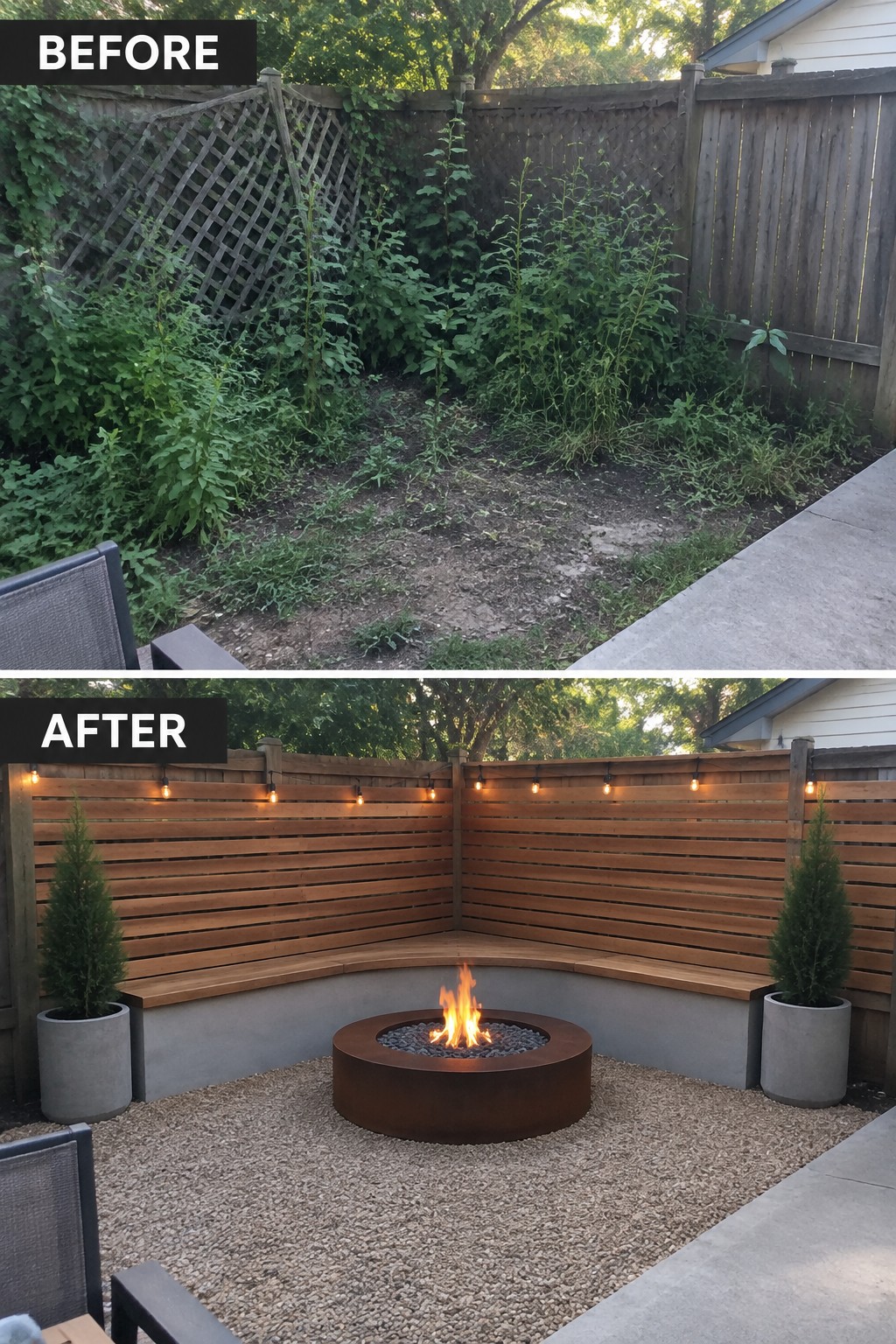
An overgrown corner with weeds and bare dirt rarely gets used. Adding a curved bench along the fence, a centered fire pit on gravel, and string lights overhead turns that same spot into a clear gathering place. The bench gives the area structure while the fire pit becomes the natural focal point.
This setup works best in backyards that have at least one solid fence or wall to build against. Keep the furniture simple and weatherproof, and limit extra planting to a few tall evergreens in pots so the space stays easy to maintain. Leave enough open gravel around the edges for people to walk through comfortably.
Turn A Bare Patio Into A Covered Outdoor Room
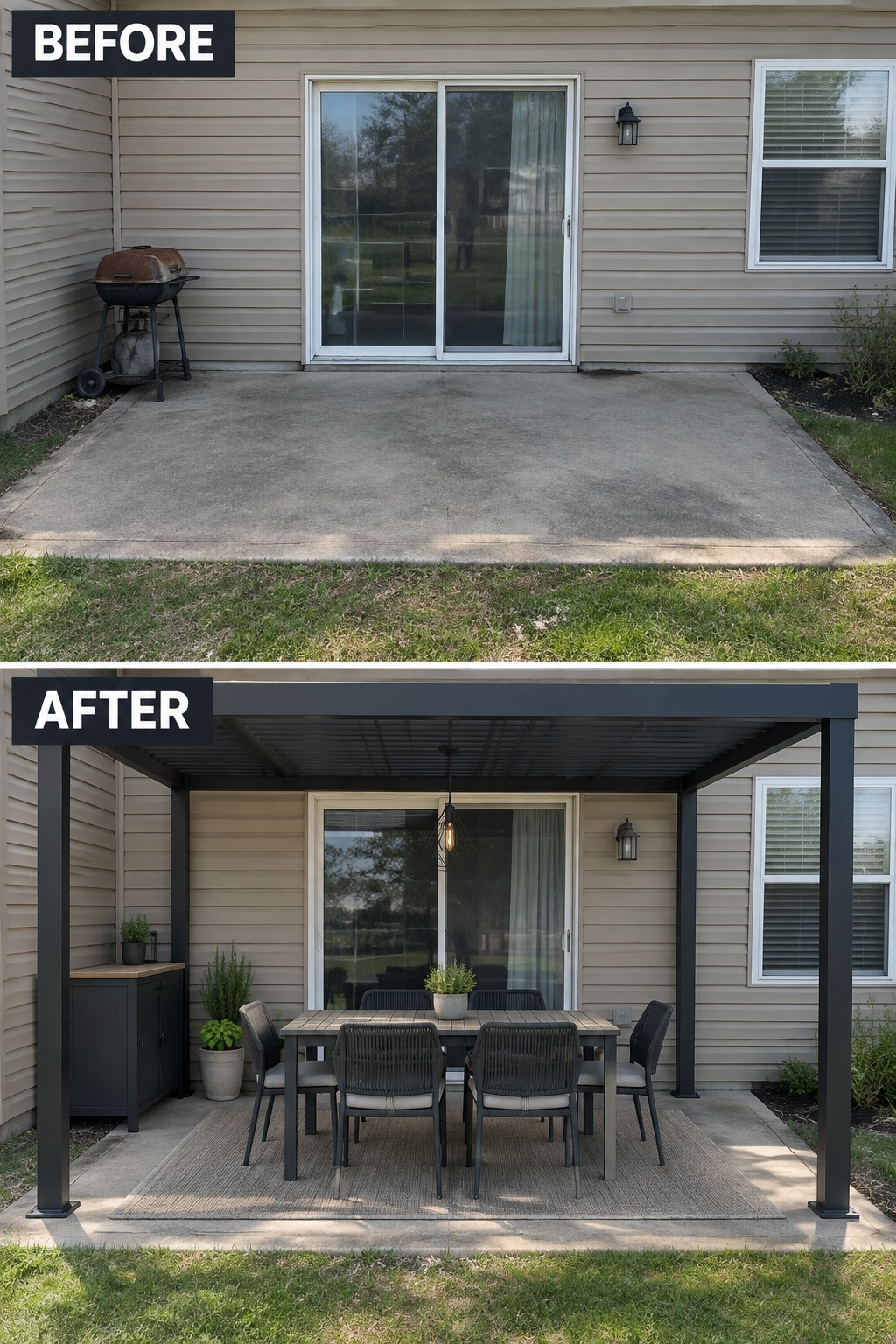
A flat concrete patio often sits unused until it gets a roof and a clear purpose. Adding a simple metal structure overhead instantly defines the space, while a dining table, chairs, and rug turn the slab into a place people actually want to sit.
This works best on homes where the back door opens straight onto concrete. Focus first on the cover for shade and rain protection, then add weatherproof furniture that fits the scale of the area. Leave open space around the edges so the zone still feels open rather than crowded.
Turn An Open Deck Into A Defined Outdoor Room

A worn deck with scattered chairs often feels like leftover space rather than a place to spend time. Adding a large rug and built-in corner seating pulls the area together, turning the open boards into a clear living zone that feels intentional and comfortable. The dining table now sits centered on the rug, and the benches create a natural boundary without closing the space in.
This approach works well on medium to large decks where furniture tends to drift. Start with the rug to mark the main area, then add seating that follows the perimeter so traffic can still move around the edges. Choose pieces that can stay outside year-round and keep the layout simple so the deck does not feel crowded.
Turn A Narrow Side Yard Into A Seating Area
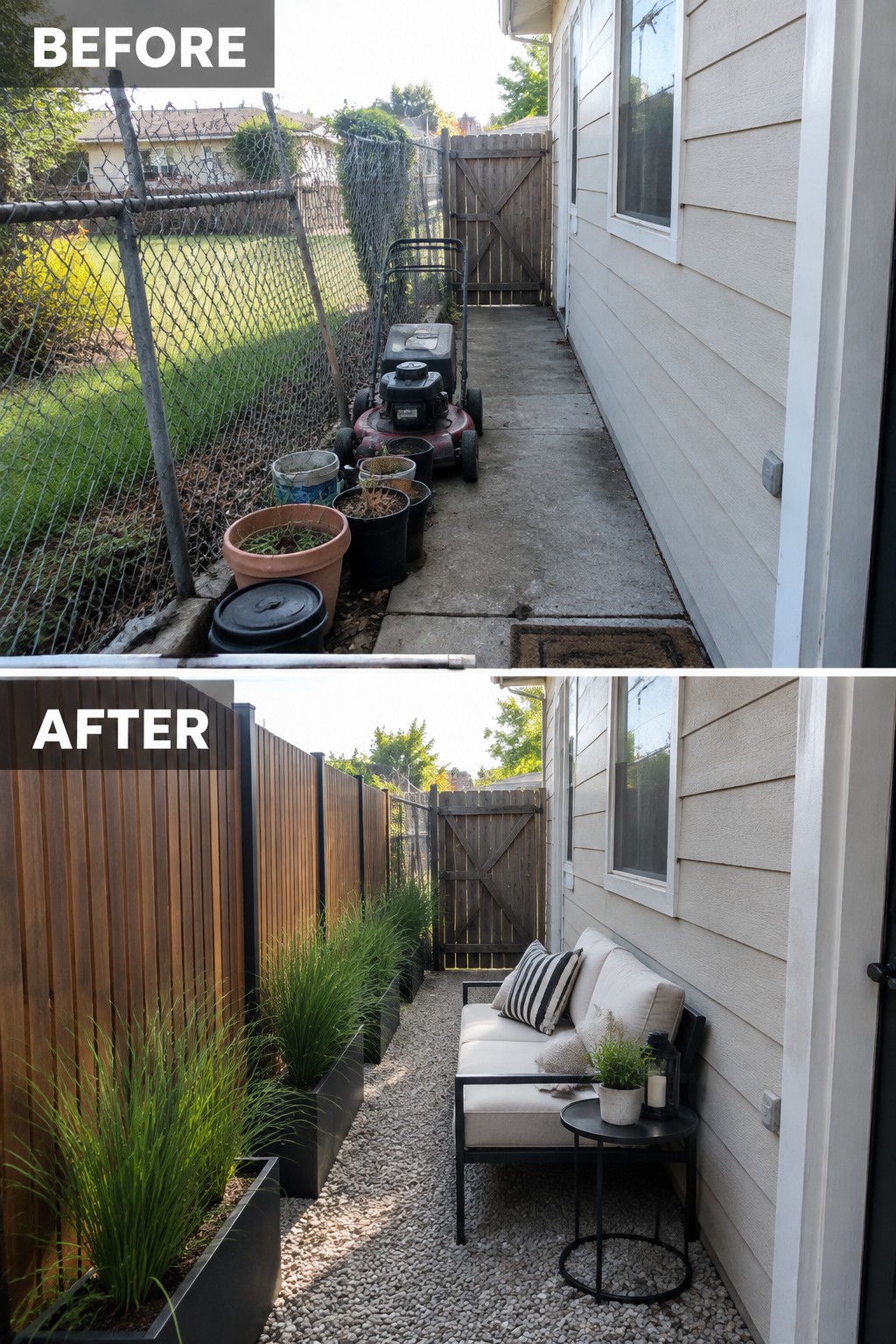
A narrow side yard often ends up as overflow storage for tools and pots because it feels too tight for anything else. In this case the shift came from clearing the clutter first, then laying down gravel to create a clean walking surface and adding a simple bench with cushions. The tall planters along the fence give the space structure without crowding the path.
This idea works best on homes where the side yard sits between the house and a fence or neighbor. Start with a solid ground cover like gravel or pavers so the area feels intentional, then keep furniture to one or two weatherproof pieces that still leave room to walk through. Tall planters help create privacy without needing a full fence replacement.
Turn A Cracked Pool Deck Into A Simple Seating Area
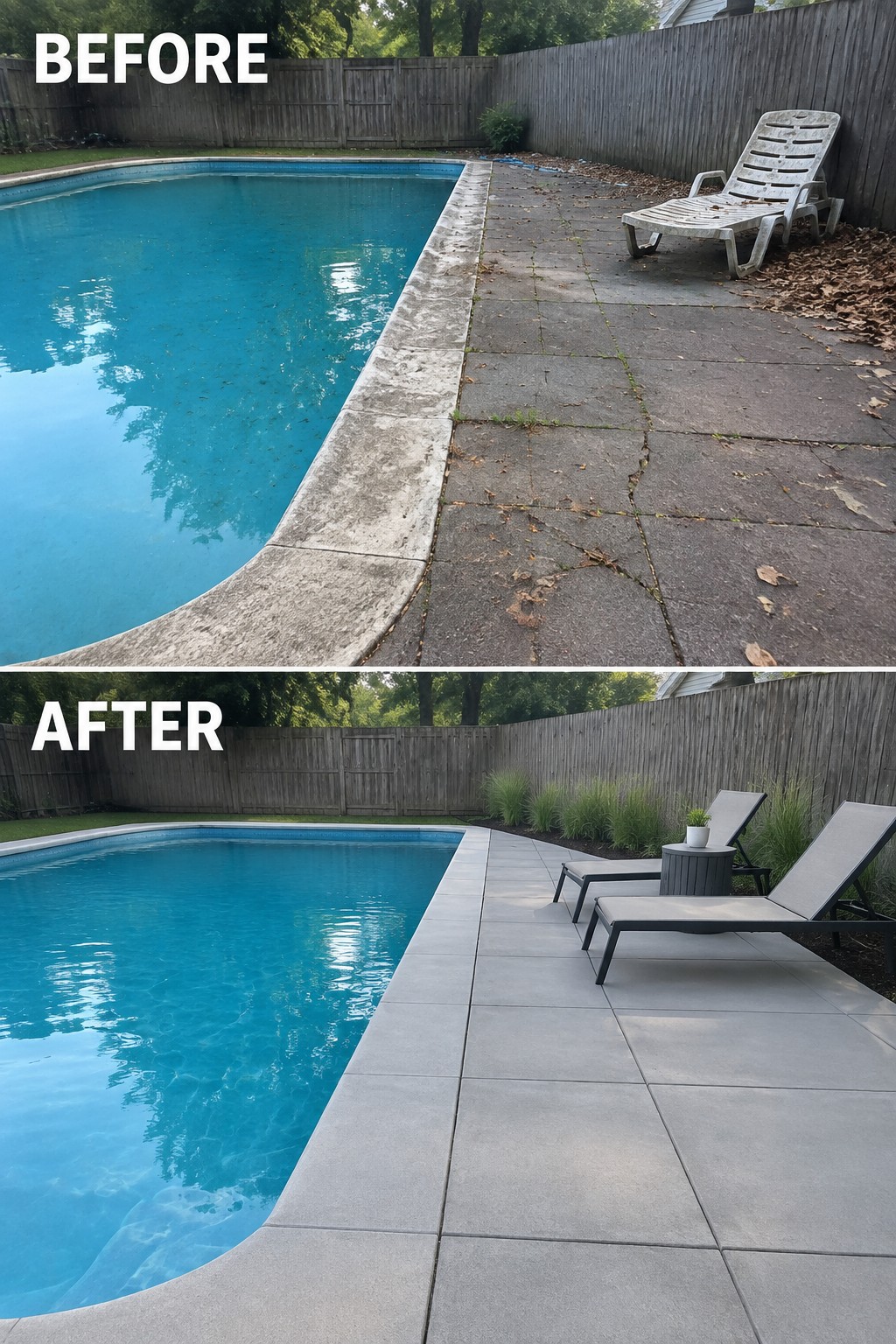
The old concrete around the pool had cracked in several places and held onto every leaf and stain. New pavers created a smooth, even surface while two modern lounge chairs and a small table gave the space a clear purpose without crowding the walkway.
This idea works best when the ground itself feels unfinished. Fix the hardscape first, then add only the furniture you will actually use. Keep the scale modest so people can still move comfortably around the pool and the new seating does not block the main path.
Add Structure To An Overgrown Backyard
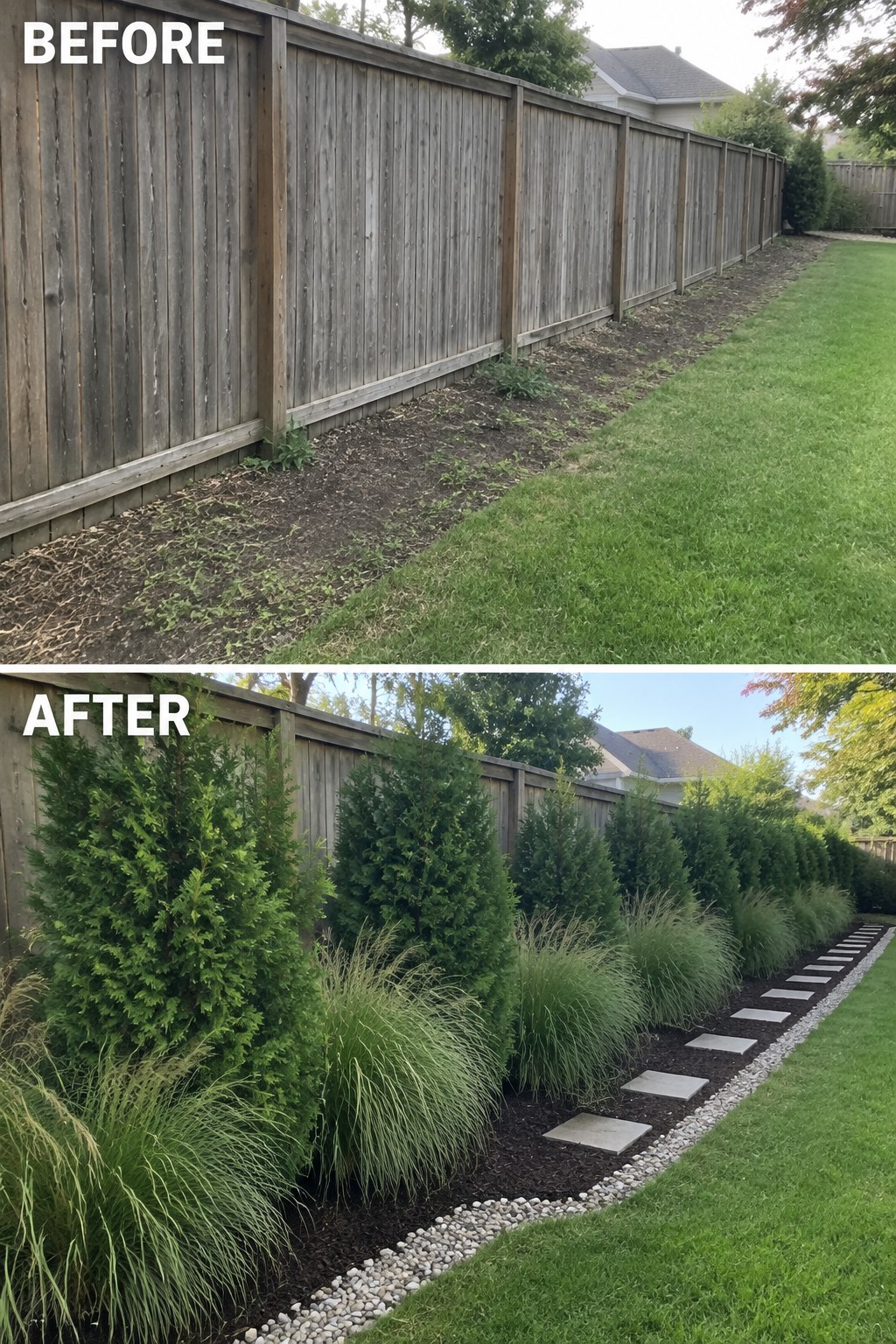
A long fence line with nothing but dirt and weeds makes the whole yard feel unfinished. Adding a clear planting bed with a row of evergreens, grasses, and a simple path turns that empty strip into something that looks planned instead of forgotten.
This idea works best along side or back fences where you need a visual break without losing lawn space. Mark the bed width first so the path still leaves room to walk, then repeat the same two or three plants rather than mixing too many varieties.
Create A Separate Seating Zone In The Backyard
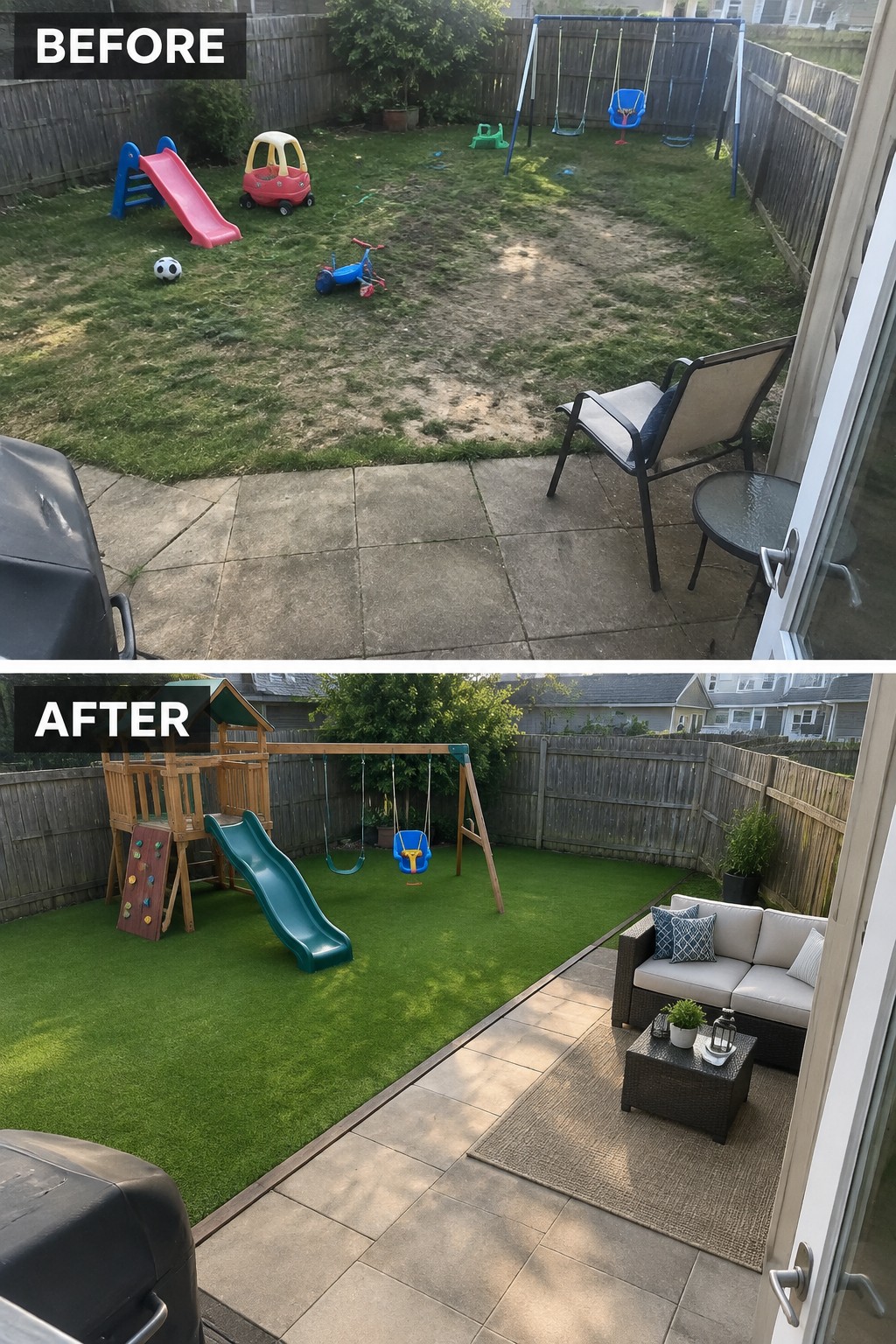
The backyard went from a patchy lawn with toys left out and one lone chair on the patio to a space with a clear play area on the grass and a proper seating spot right by the house. The sofa, coffee table, and rug turn the concrete into a place where adults can actually sit and spend time outside.
This idea works best in smaller yards where play equipment already takes up most of the lawn. Keep the seating simple and weather resistant, place it near the house for easy access, and use a rug to mark the boundary so the zone feels deliberate instead of like furniture was just set down outside.
Add Structure To An Overgrown Backyard
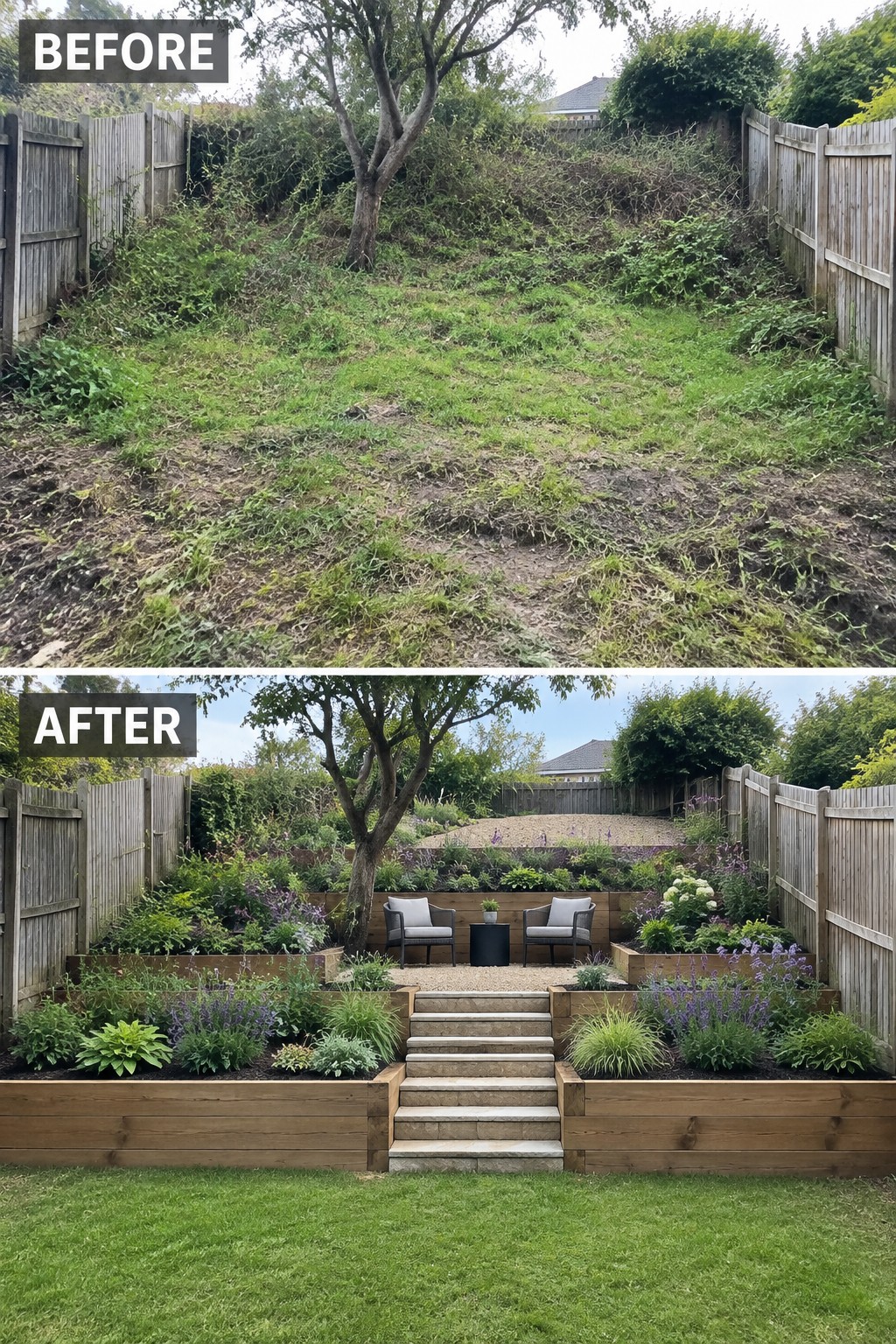
A sloped, weedy yard often feels unusable until you give it clear levels. Raised beds and simple terracing turn that mess into workable garden space, as seen when the bare dirt slope became a series of low wooden planters with a flat seating spot in the middle. The change works because the beds hold the soil in place and create flat areas for plants and people.
This approach suits any backyard with a noticeable slope or wild growth. Start by clearing the worst of the weeds, then build the lowest beds first to test the height and flow. Keep the middle open for a path or small seating zone so the space stays easy to walk through and maintain.
Turn A Bare Porch Into A Cozy Outdoor Room
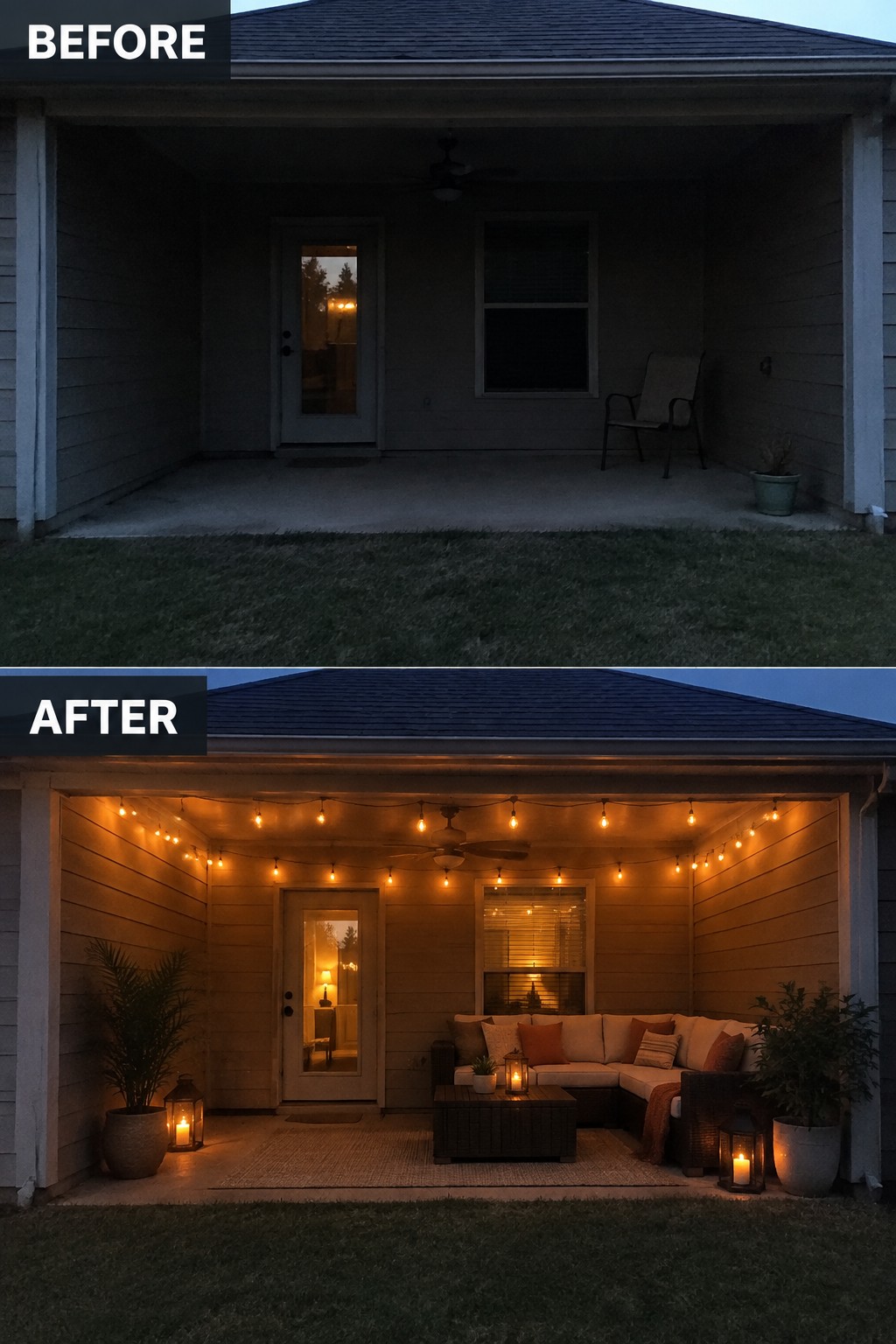
A covered porch often stays empty because it has no clear purpose after dark. String lights along the ceiling and a simple seating area with a rug underneath give the space structure and make it feel like an actual room instead of leftover concrete.
This idea works best on porches that already have a roof and decent size. Start with the lighting so the area feels inviting at night, then add a weatherproof sectional and a couple of lanterns. Leave enough open floor space so people can still walk through without tripping over furniture.
Turn A Bare Patio Into A Functional Outdoor Kitchen
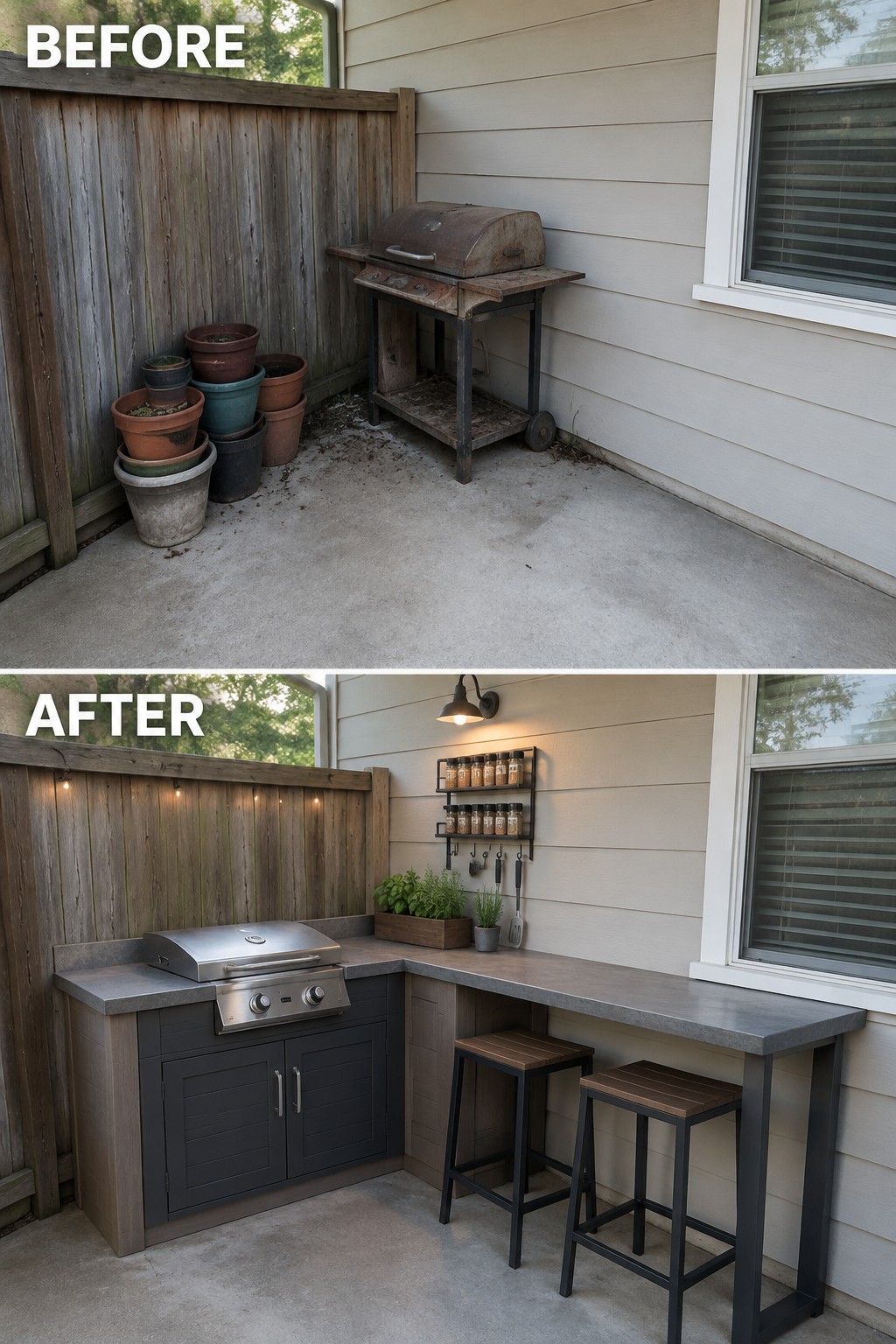
Many homes end up with a plain concrete slab that only holds a grill and a few pots. Adding a simple cabinet base with a solid countertop gives the space a clear purpose and turns it into a place where cooking and sitting happen together. The old standalone grill and scattered items disappear once the L-shaped counter and storage are in place.
This idea works best on small side yards or back patios that already have a solid surface. Keep the cabinet run modest so the area does not feel crowded, and match the counter height to the stools you choose. Weatherproof materials and a few hooks for tools keep the setup practical without extra clutter.
Add Structure To An Overgrown Backyard
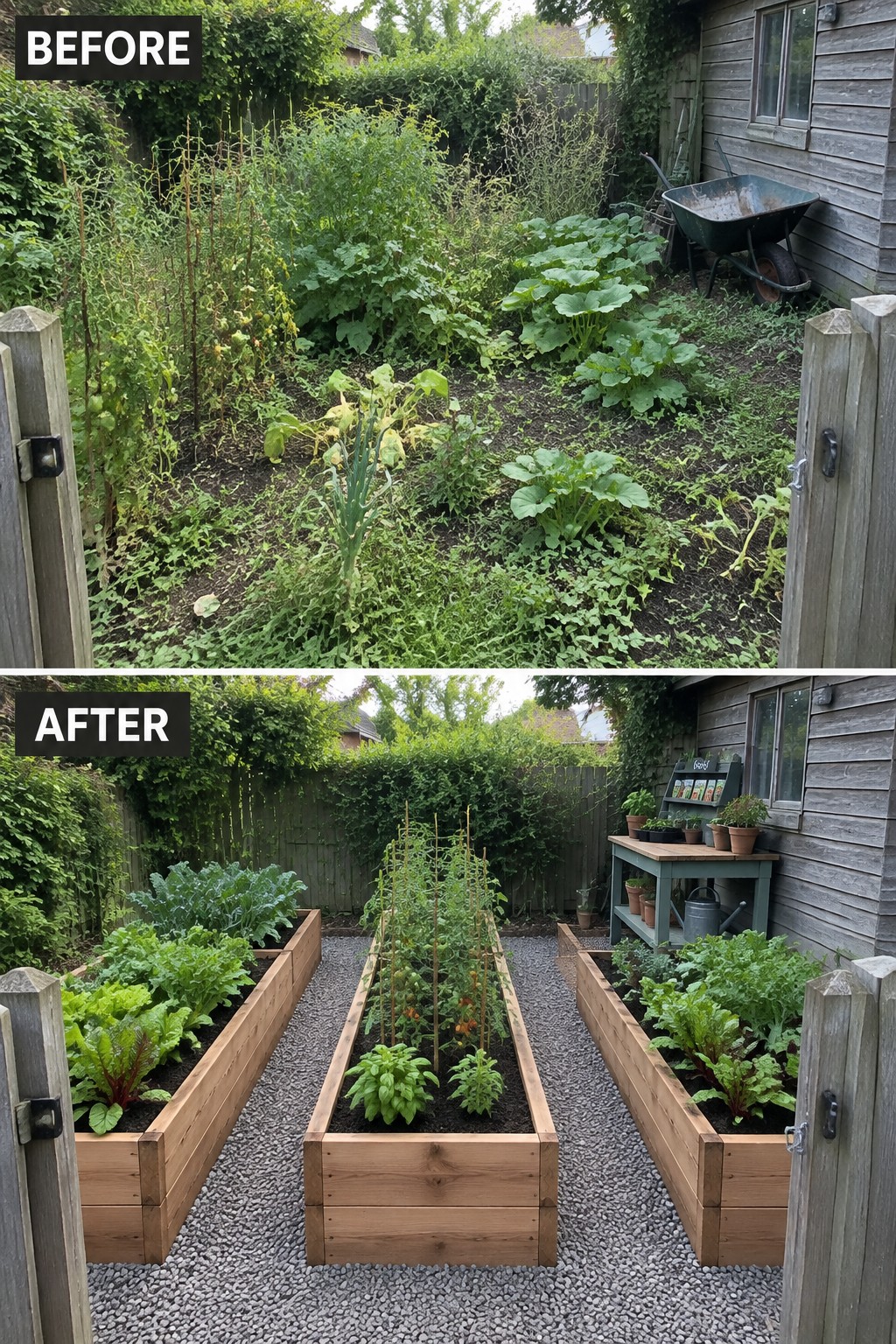
An overgrown yard quickly feels like wasted space because nothing has clear edges. In this case the before photo shows a jumble of weeds and sprawling plants with no real layout. The after photo shows how three raised beds set on gravel instantly turn the same area into something you can walk through and tend without fighting the mess.
Raised beds work well in small or narrow yards because they keep soil contained and give you straight paths that stay dry. Gravel is cheaper than pavers and still gives the space a finished look. Start by clearing the worst of the growth, then set the beds first so the rest of the yard has something to follow.
Turn A Neglected Patio Into A Simple Seating Area
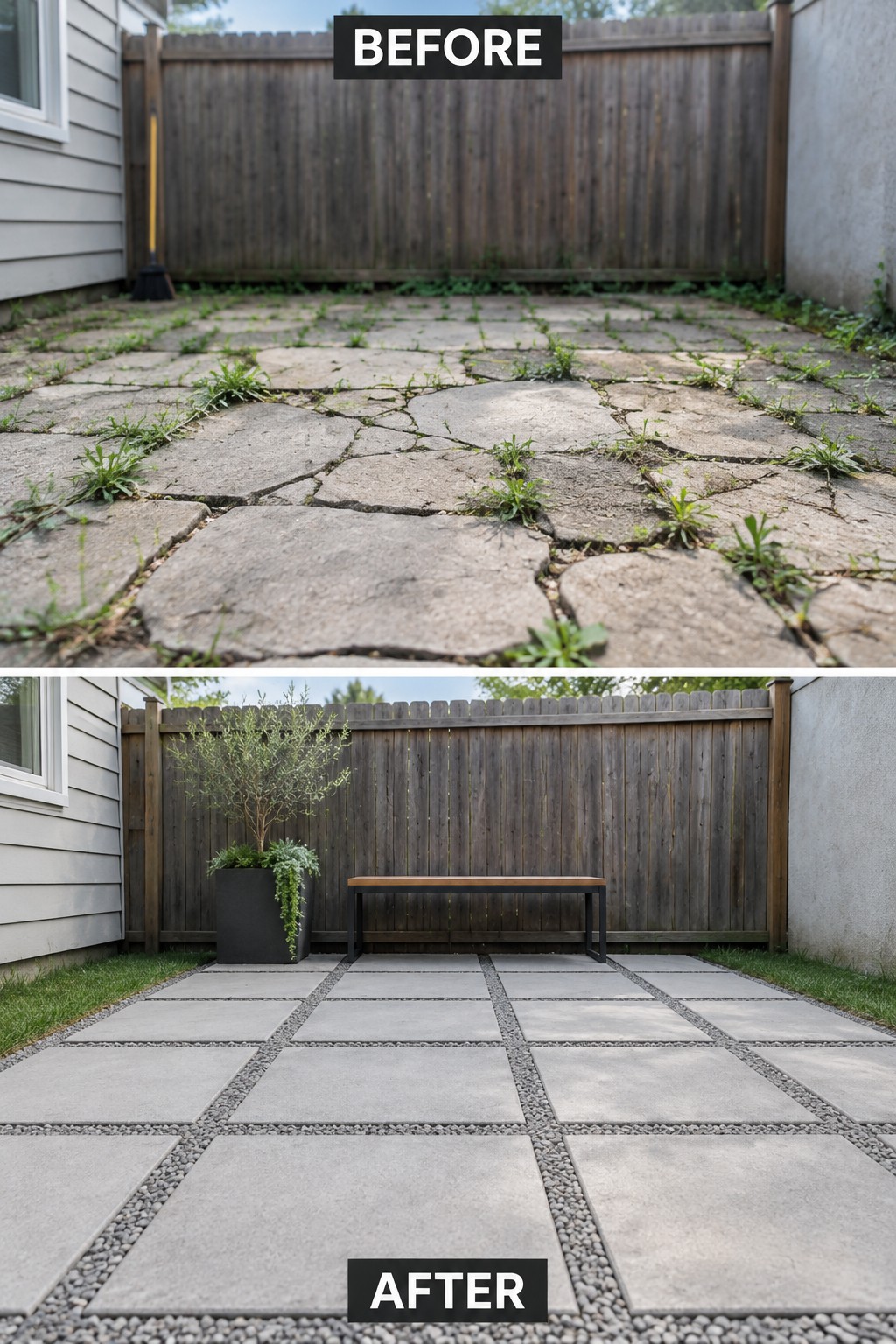
A weedy, cracked patio often sits unused because it feels unfinished. In this case, the fix started with cleaning up the pavers and adding gravel between the joints to create clear lines and a tidy surface. Once that base was set, a single bench and one large planter gave the space a clear purpose without crowding it.
This approach works well in small backyards where you want an outdoor spot to sit without building a full deck. Start by fixing the hardscape first so the area feels intentional, then add just enough furniture to match how you actually use the space. Keep the plantings and pieces simple so the patio stays easy to maintain.
Organize Outdoor Tools With A Wall System
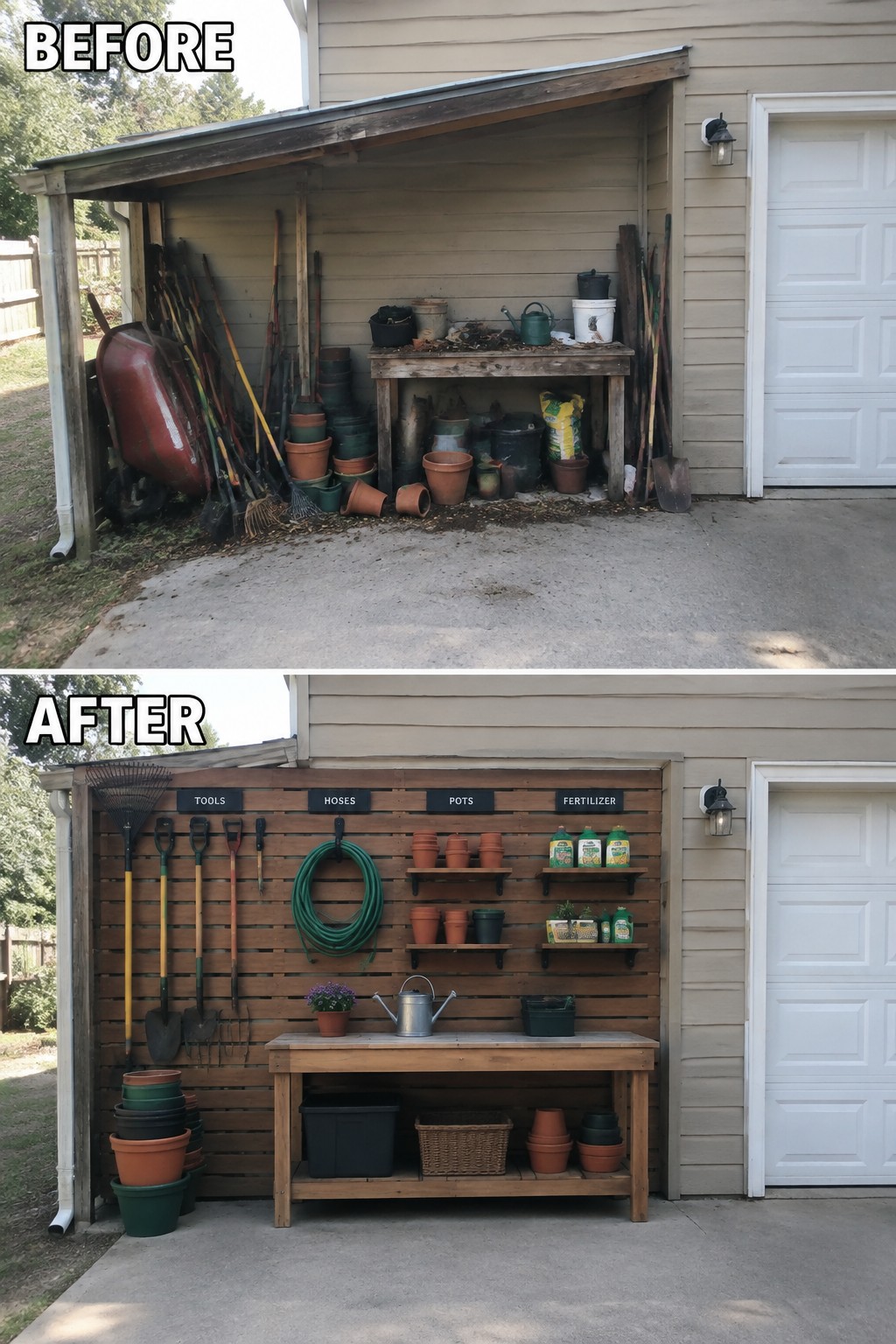
A cluttered storage area under a roof overhang can quickly become a dumping ground for tools, pots, and supplies. Adding a simple slatted wood wall with hooks, shelves, and labeled sections turns the same space into a place where everything has a spot. The workbench below gives room to work without fighting through piles on the ground.
This idea works well next to a garage or along a house wall where you already have cover. Start with the wall structure first, then hang the tools you use most often at eye level. Keep the lower shelf for bigger bins and extra pots so the floor stays clear for walking through.
Turn A Bare Balcony Into A Simple Outdoor Room
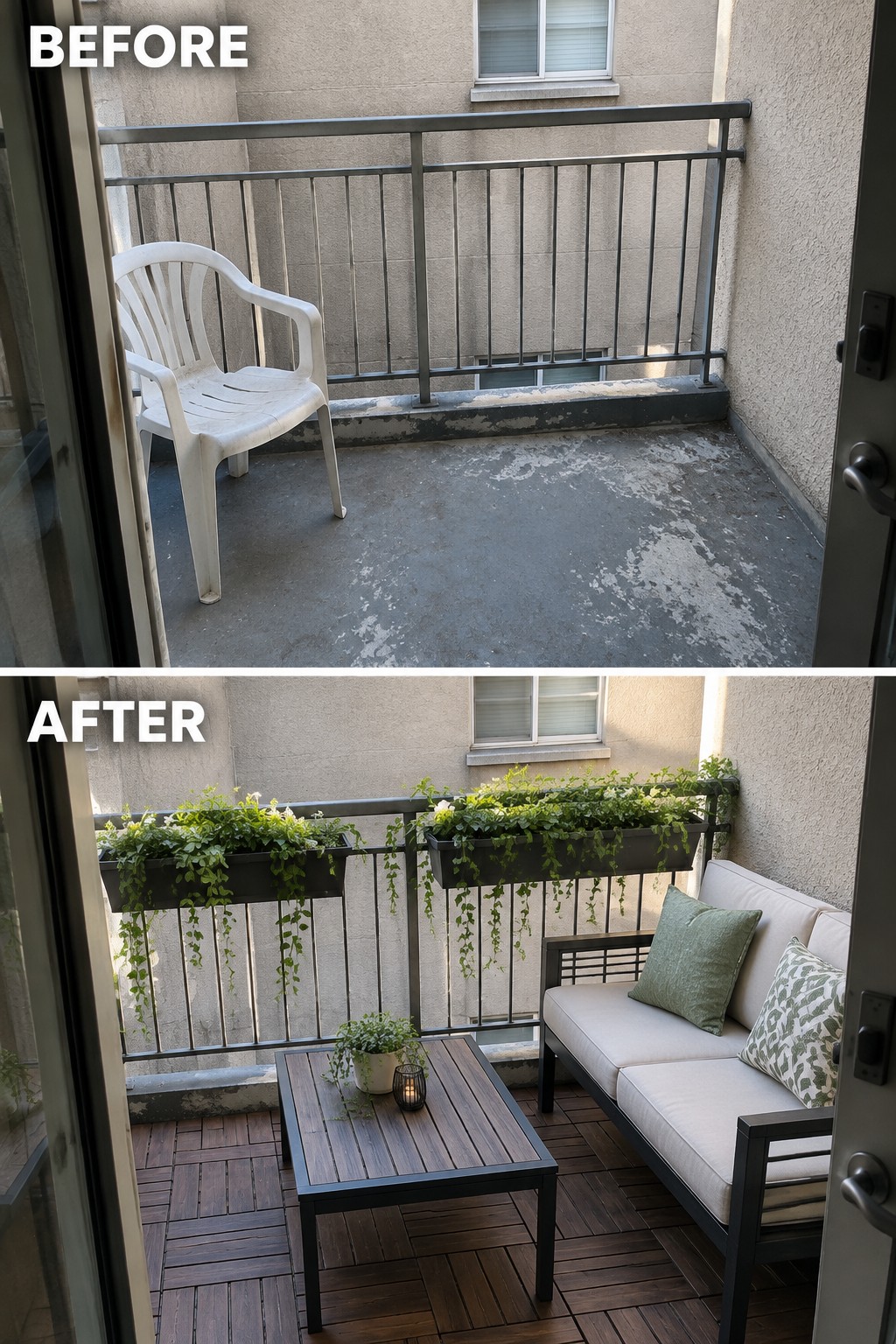
A small balcony with nothing but concrete and a railing often gets ignored because it feels unfinished. Adding a layer of deck tiles right away changes how the space works. It creates a warmer surface underfoot and makes it easier to place furniture without worrying about the original floor. A low sofa along one side plus a compact table turns the area into a place where you can actually sit and spend time.
This approach works best on balconies that already have a solid structure and railing. Keep the furniture scale modest so there is still room to walk around the seating. A couple of railing planters add softness without taking up floor space. Start with the decking and one or two seating pieces before adding more, and choose materials that can stay outside year round.
Add Structure To A Plain Backyard With Gravel And Stones
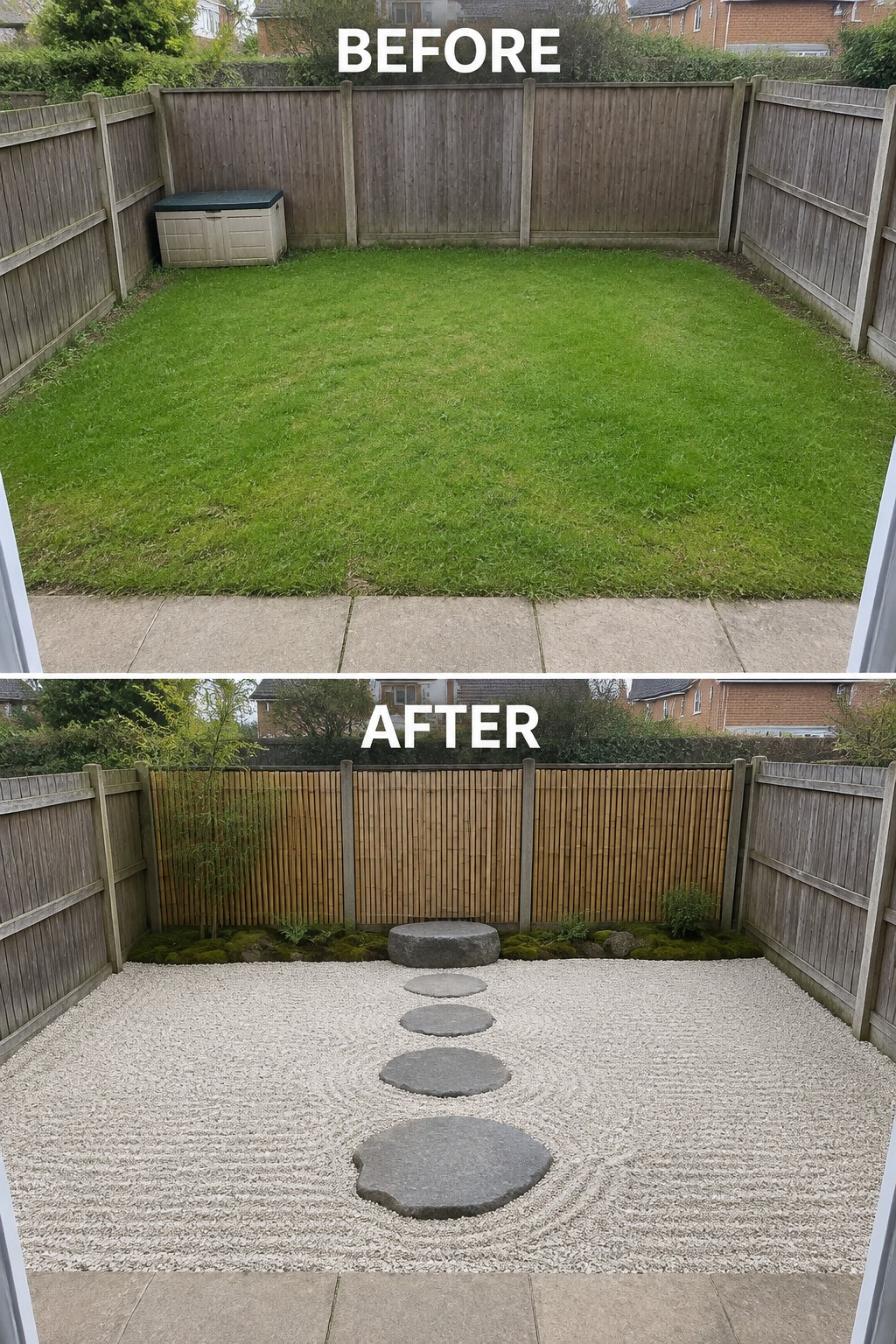
A flat lawn often leaves a backyard feeling unfinished, even when the fence and grass are in good shape. Replacing the turf with light gravel and laying down a line of stepping stones gives the space a clear purpose and makes it feel more like an outdoor room than an empty patch of yard. The raked patterns and simple path draw the eye through the space without adding clutter.
This approach works well in smaller yards where you want low maintenance and a calm look. Start with a weed barrier under the gravel, keep the planting along the edges simple, and make sure the stepping stones sit level so the area stays easy to walk across. It suits homes that already have basic fencing and just need one strong change to feel complete.
Create A Defined Path In An Overgrown Backyard
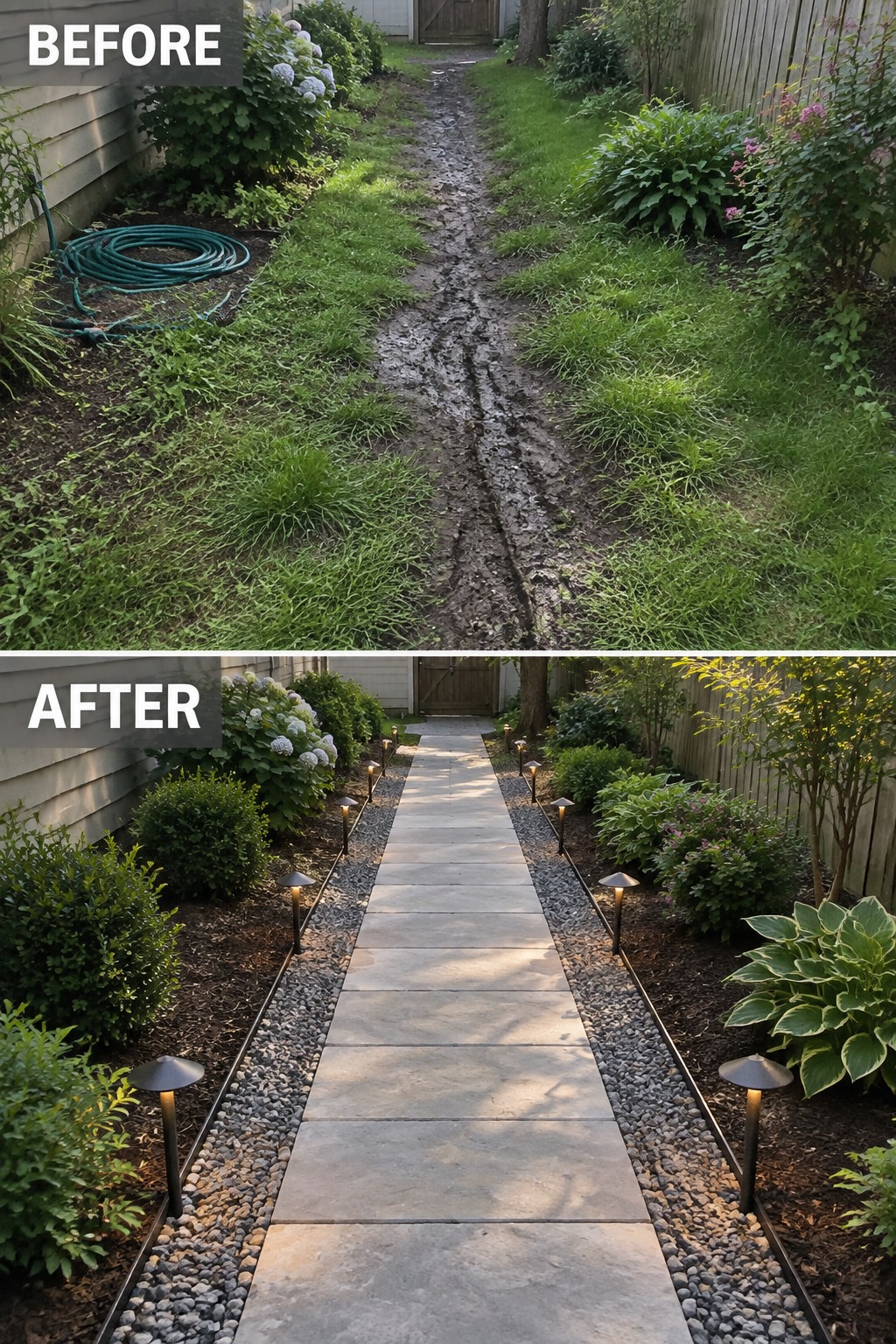
A worn dirt track through grass and mud makes a backyard feel neglected and hard to use. Replacing it with a straight paved walkway bordered by gravel gives the space a clear route and stops the ground from turning to sludge after rain. Simple path lights along the edges make the area usable after dark without adding clutter.
This approach works best in narrow side yards or back gardens that need a practical connection between doors, gates, or seating spots. Focus first on clearing the mud and setting a solid base, then choose pavers and gravel that match the scale of the yard so the path does not overwhelm the planting on either side.
Turn A Bare Patio Into A Defined Seating Area
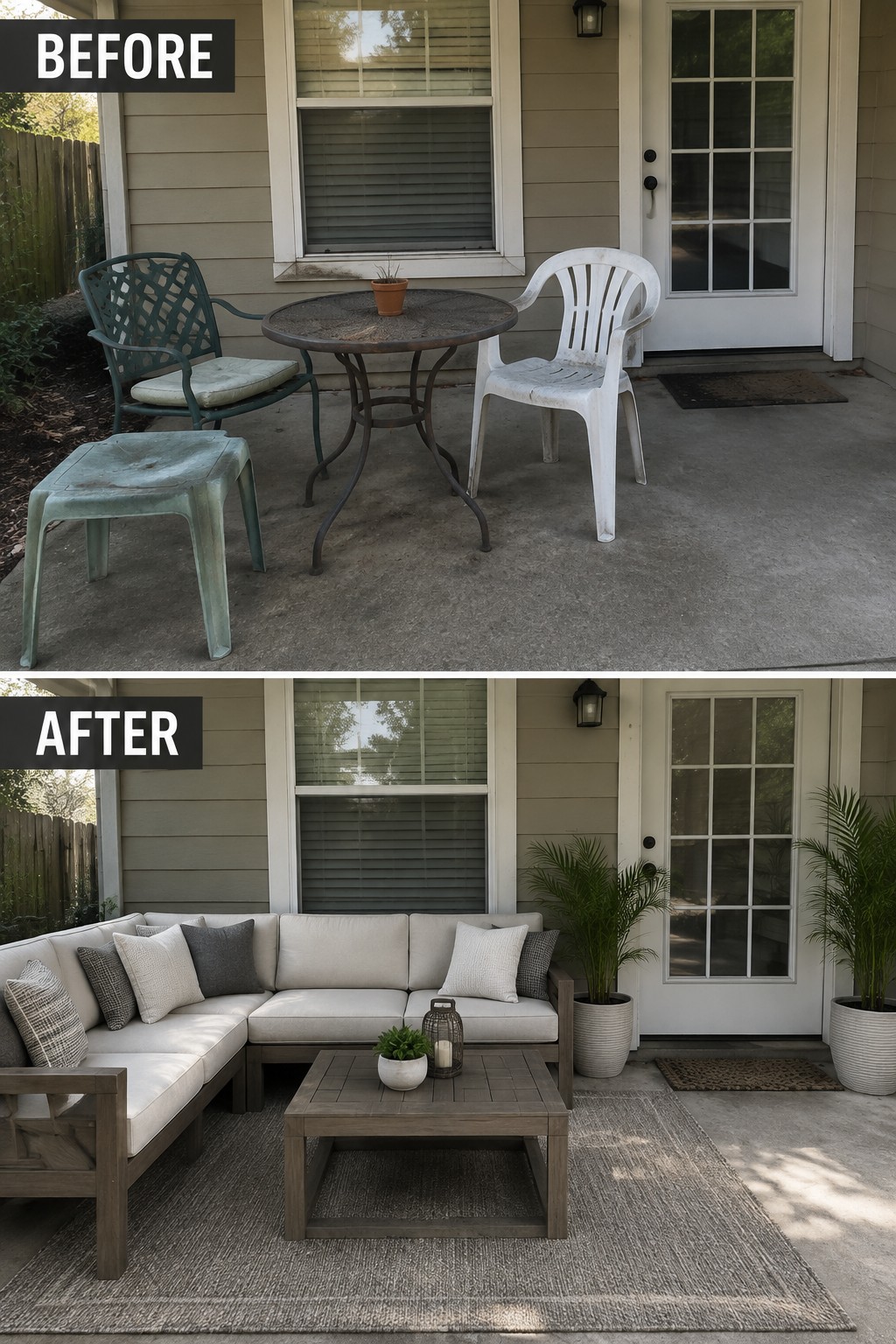
A patio often feels unfinished when it is just bare concrete with a few random chairs. The change here comes from anchoring the space with a sectional sofa, a low table, and one large rug that pulls everything into a single zone. That simple layout turns an open slab into a place where people actually sit and stay.
This idea works on any concrete or deck area that lacks structure. Lay down a rug first to mark the seating spot, then choose weatherproof pieces that fit the scale of the space. Leave enough room to walk around the furniture, and use a couple of large planters on the edges to soften the look without filling every corner.
Add A Deck To Turn Bare Ground Into A Seating Area
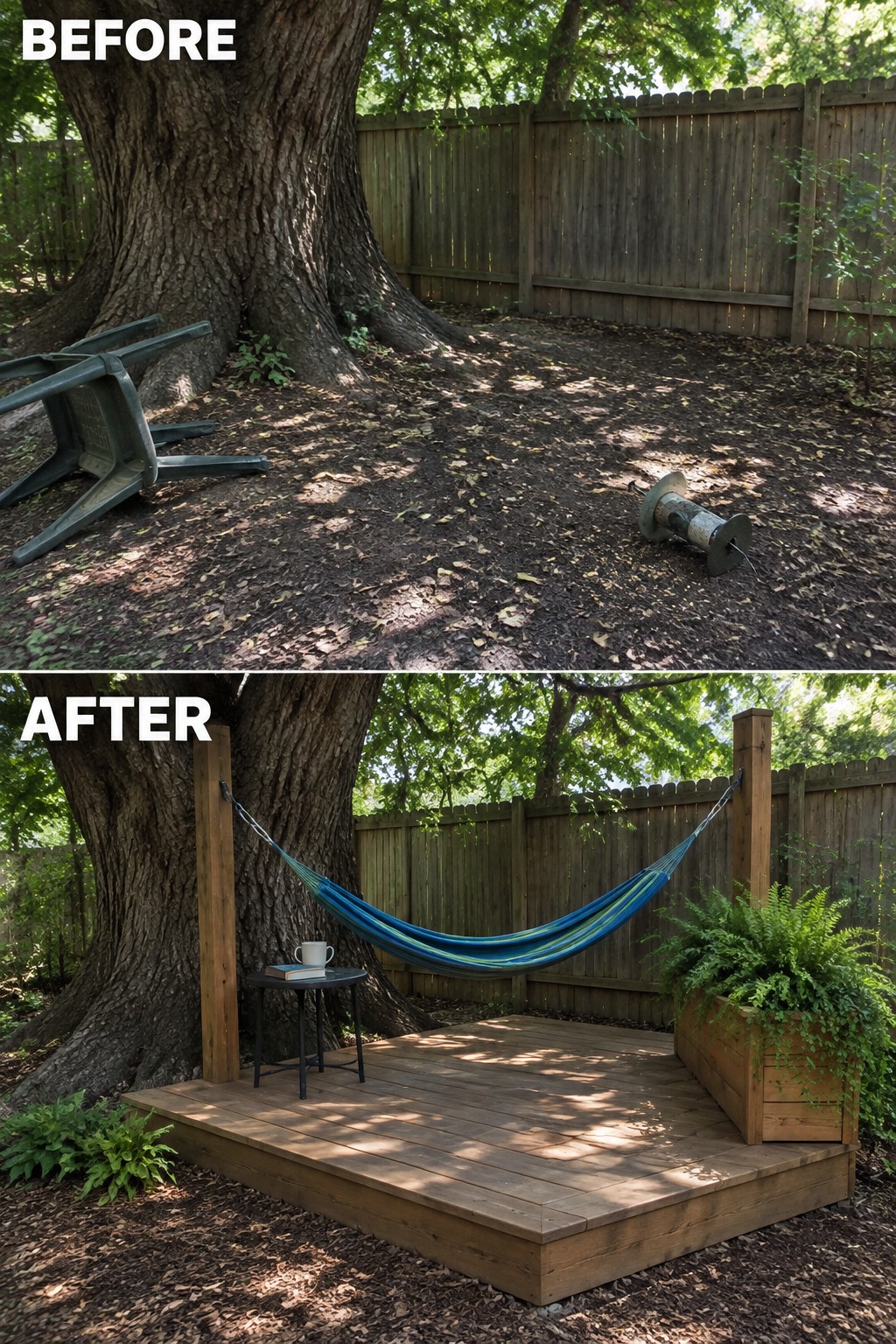
The biggest shift here is putting down a simple wooden deck over what used to be uneven dirt and scattered debris. Once the platform is in place, the space suddenly works for sitting, and a hammock can be hung without the whole setup feeling temporary or messy.
This approach suits shady backyard corners where grass struggles and the ground stays damp. Keep the deck size modest so it fits the tree and fence lines, then add just enough posts to support a hammock if that is the main seat. Focus on weatherproof materials and leave open floor space so the area stays easy to walk through and clean.
Turn A Plain Fence Into A Seating Area
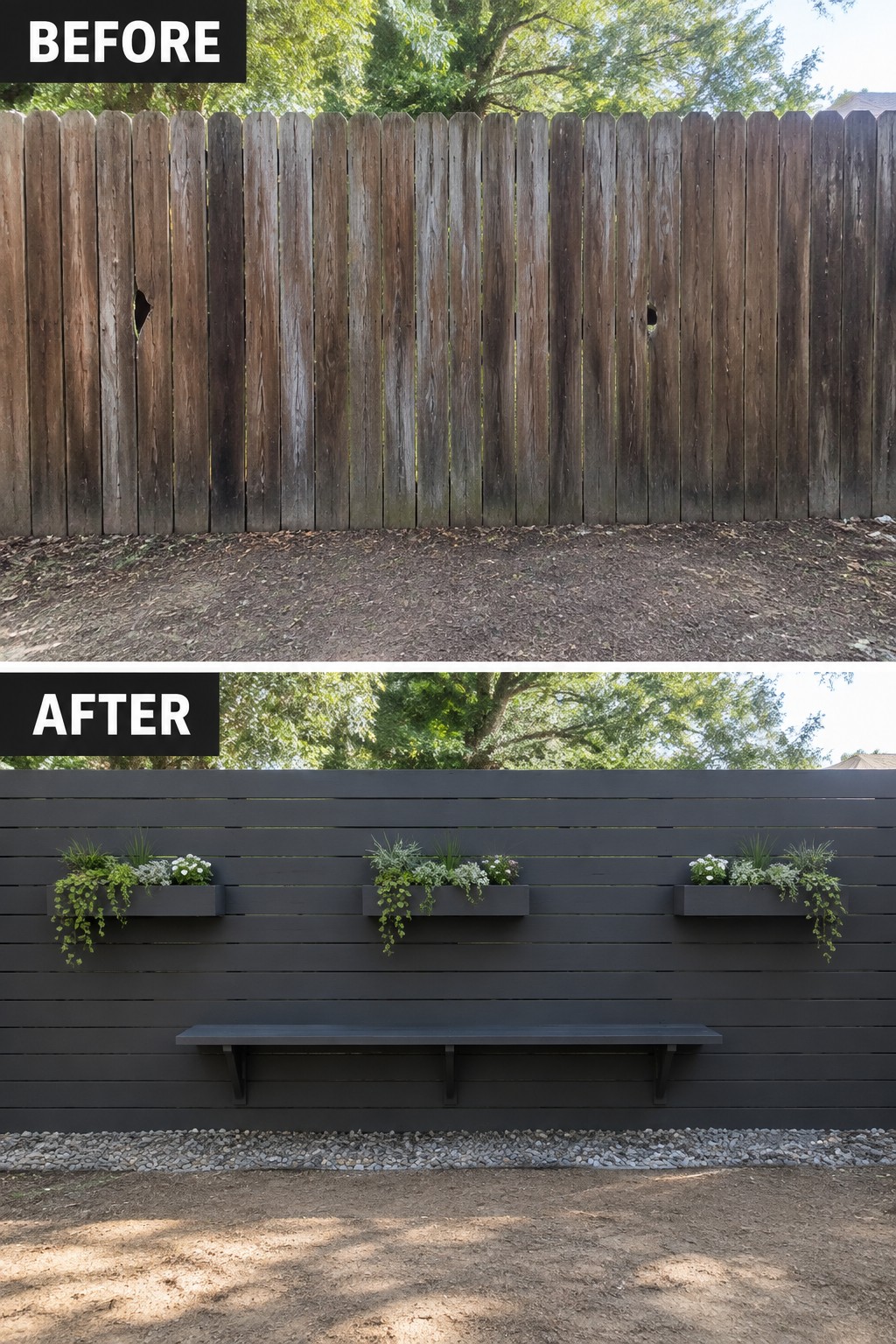
A blank fence and bare dirt do not give you much reason to spend time in the yard. Adding a bench and a row of wall planters turns that same fence into a simple, usable seating spot without needing a full patio or large furniture set.
This approach works best along a straight fence section where you can keep the layout clean. Mount the planters at a consistent height, pick a bench that fits the space without crowding the ground, and stick with low-maintenance plants so the area stays neat over time.
Add Structure To An Overgrown Backyard
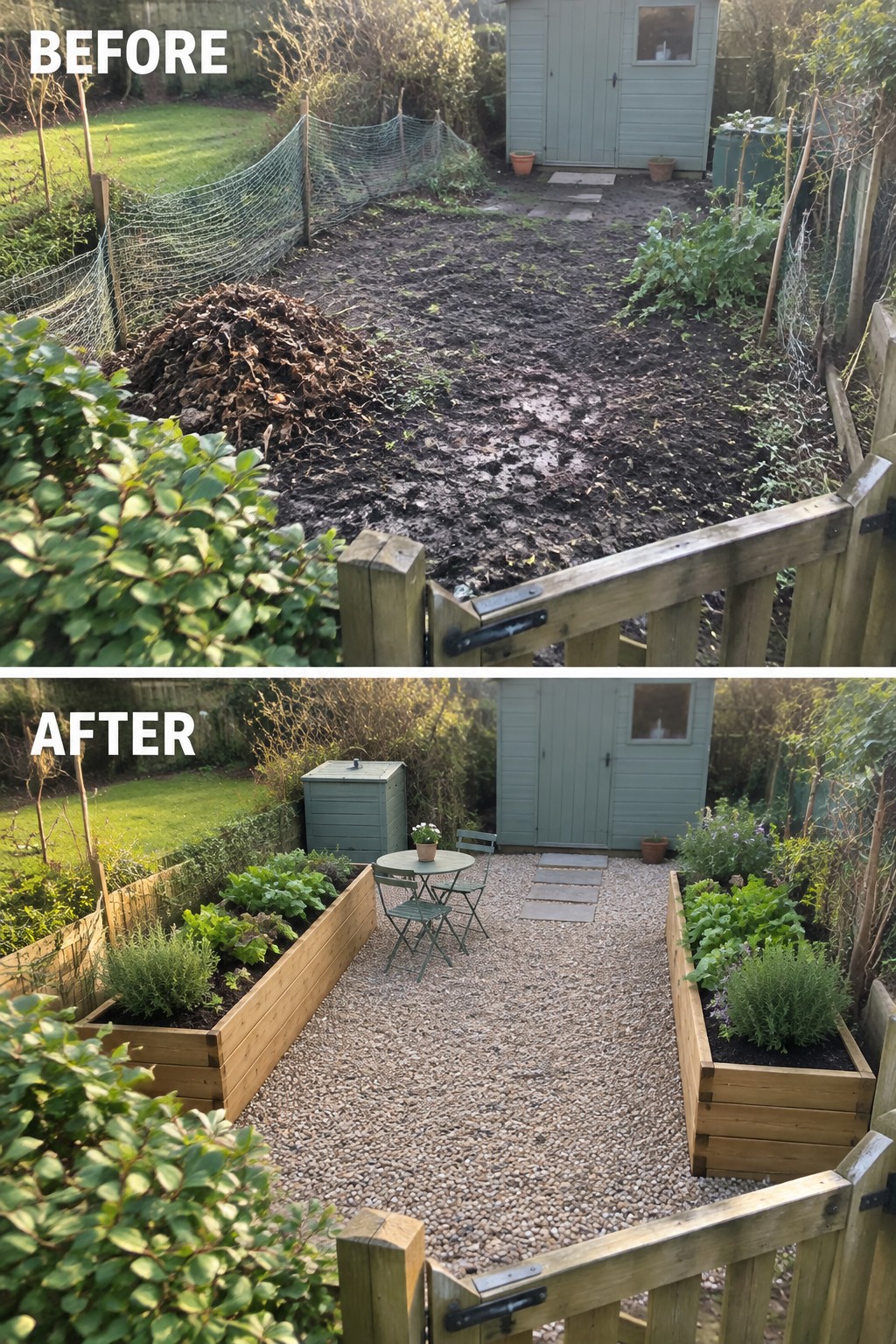
A messy, uneven backyard often stays unused because there is no clear place to sit or garden. Adding raised beds along the edges and laying down gravel in the center gives the space shape and makes it feel intentional. The beds keep plants contained and the gravel creates a dry, level surface for a small table and chairs.
This approach works well in small or medium yards where you want both growing space and room to move around. Start with the beds first so the planting has a purpose, then fill the middle with gravel or pavers. Keep the furniture simple and weatherproof so the area stays usable without constant upkeep.
Define The Lawn Edge With Mulch And Stepping Stones

A ragged lawn edge next to weeds and bare soil makes the whole yard feel unfinished. Adding a strip of mulch with stepping stones creates a simple border that separates the grass from the planting area and gives the space a clearer shape.
This approach works best along the side of a lawn where you need a walking path or want to keep garden beds from creeping into the grass. Cut a clean line first, spread mulch to hold back weeds, and set the stones so they sit level and easy to step on. The result stays practical and keeps maintenance low.
Use Outdoor Lighting To Make A Patio Feel Cozy
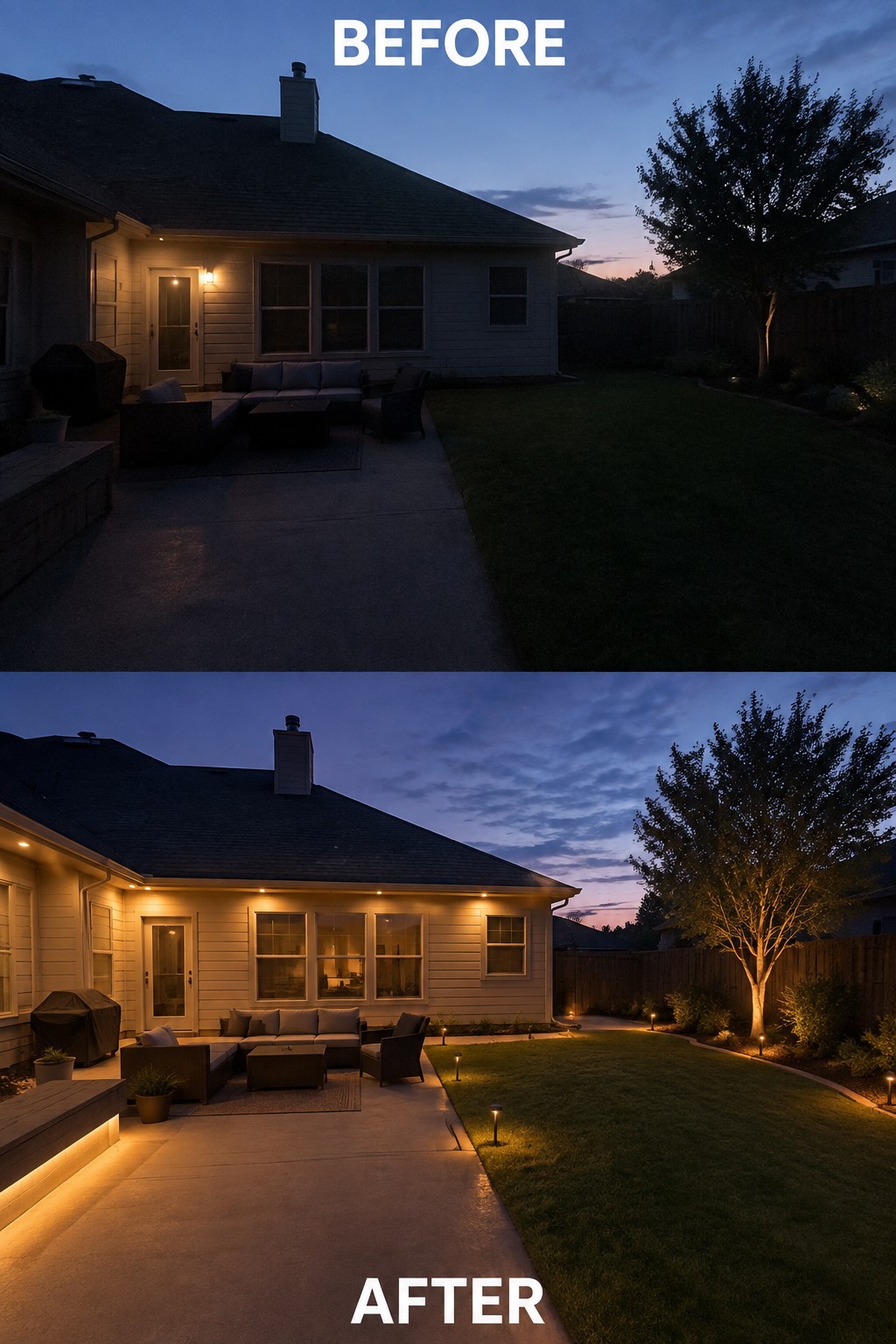
The biggest shift here comes from adding layers of lighting where there was almost none before. A few simple fixtures along the house wall, low path lights, and one accent light on the tree turn the same concrete and grass into a space that feels ready for evening use instead of just daytime.
This approach works best on a basic patio or backyard that already has seating but feels empty once the sun goes down. Start with one or two lines of lighting that mark the edges of the space, then add one focal light on a tree or feature. Keep the fixtures low and warm so they do not glare into the house or overwhelm the yard.
Create A Functional Entry At The Back Door
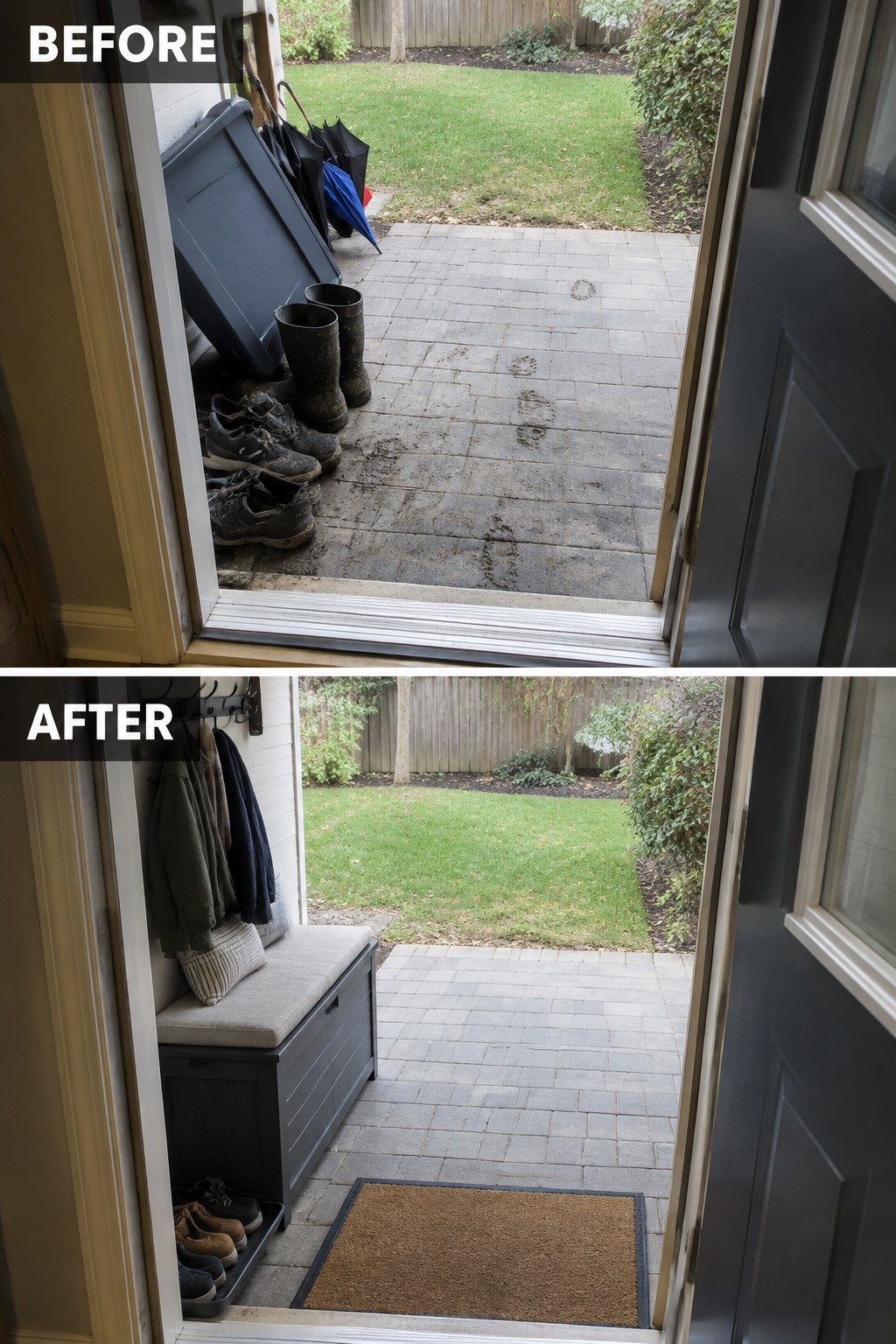
A cluttered doorway makes the whole backyard feel harder to reach. In this case, the before photo shows shoes, boots, and bins piled right at the threshold, which blocks the path and makes the outdoor space feel less inviting. Adding a low storage bench, wall hooks, and a shoe tray keeps everything off the floor while still leaving room to walk through.
This setup works best in homes where the back door gets daily use. Keep the bench shallow enough that it does not crowd the walkway, and choose pieces that can handle wet or dirty items. A simple doormat at the threshold also helps mark the change from indoor to outdoor without adding extra furniture.
Turn An Empty Patio Into A Functional Seating Area
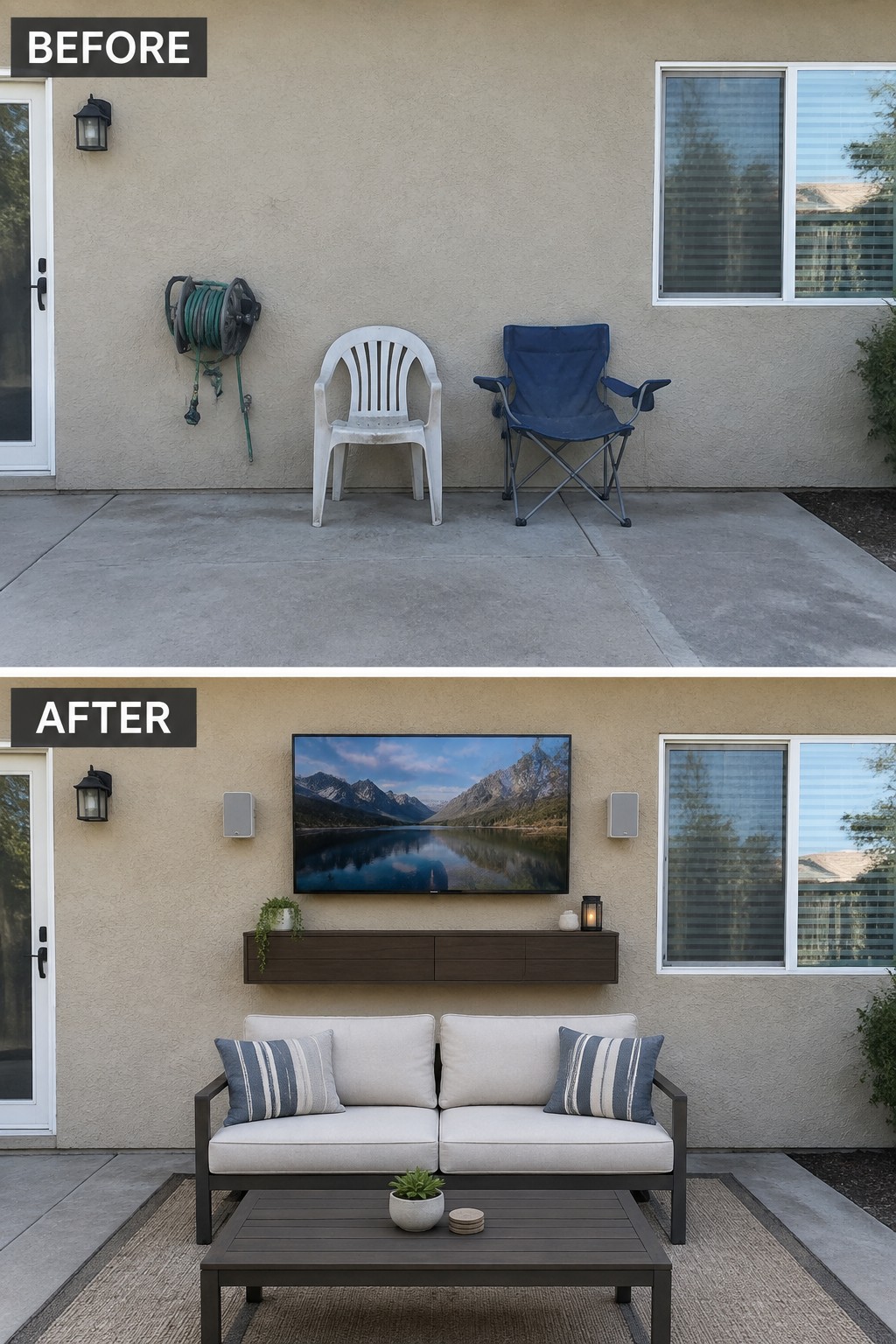
The before photo shows a wide concrete slab with only two chairs and a hose reel against the wall. In the after, that same wall now holds a mounted television above a simple console, while a sofa, coffee table, and rug create a clear seating zone. The change works because the space finally has a purpose instead of just empty floor.
This approach suits any home with a basic patio or porch that gets little use. Start with a sofa and rug to mark the area, then add one focal point like a TV or table if the scale fits. Leave enough open space around the furniture so the zone still feels comfortable to move through.
Frequently Asked Questions
Q: How do I keep grass from creeping into the gravel zones without constant edging? A: Lay down a solid fabric barrier right under the gravel when you install it. Rake the edges once a month and add a thin strip of metal or wood to hold the line. This keeps the zones looking sharp with minimal work.
Q: What if I want to add a fire pit later without ruining the clean layout? A: Pick a spot in the open zone and set the pit on a simple stone pad that matches the surrounding surface. Keep chairs and wood storage in the same area so nothing spills into other zones. The whole setup stays tidy if you stick to one clear spot.
Q: Should I match the furniture across every zone? A: Use the same color or material for chairs and tables so they feel connected even when zones serve different purposes. Mix in a couple of different pieces if you want some variety, but keep the overall feel simple. This way the backyard reads as one space instead of scattered parts.
