

I have noticed that backyards often end up as one wide stretch of grass or dirt where it is hard to tell where one area ends and another begins.
Defining garden zones through simple paths, edging, and grouped plantings gives the space a clearer structure that holds up better as the seasons change.
One idea I would try first is marking off a small seating spot before adding anything else.
Over time those boundaries make it easier to keep up with weeding and watering in each section instead of tackling the whole yard at once.
A few of the layouts described here seem worth testing on paper first to see how they might fit the shape of my own yard.
Add Structure To An Overgrown Backyard
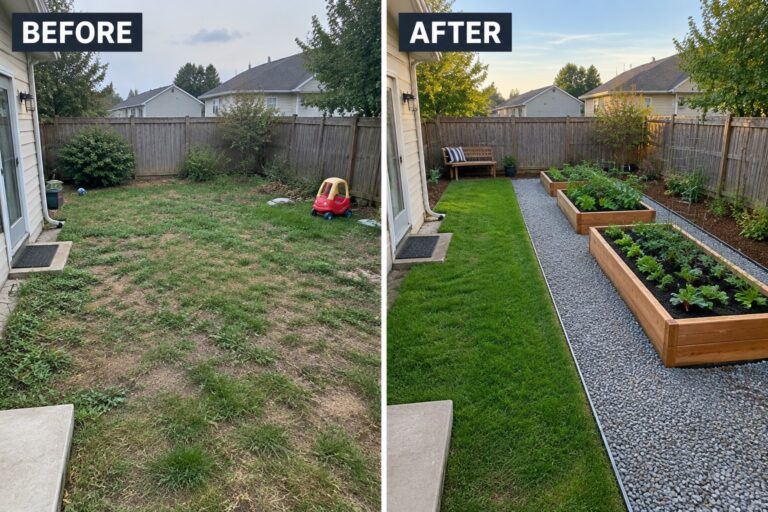
A messy backyard often feels unusable because there is no clear division between lawn and planting areas. Here the patchy grass and weeds were replaced with a clean lawn on one side and a set of raised beds on the other, with a simple gravel path keeping the two zones separate.
This idea suits smaller yards that need both open space and room to grow vegetables or flowers. Clear the overgrowth first, then place the beds so the path stays wide enough to walk through comfortably. The raised beds keep soil contained and make maintenance easier while the gravel edge stops grass from creeping into the planting area.
Turn An Empty Patio Into An Outdoor Seating Area

A plain concrete slab can sit unused for years because it lacks any sense of purpose or comfort. Adding a simple pergola overhead creates shade and a clear boundary, while a dining table, chairs, and a rug turn the space into a place where people actually want to sit and eat. String lights add just enough warmth once the sun goes down.
This approach works best on patios that already have decent access from the house but feel exposed or unfinished. Keep the furniture scale modest so the area does not feel crowded, and choose weatherproof pieces that can stay out year-round. Start with the overhead structure and seating before adding too many plants or accessories.
Create Defined Garden Zones With Raised Beds

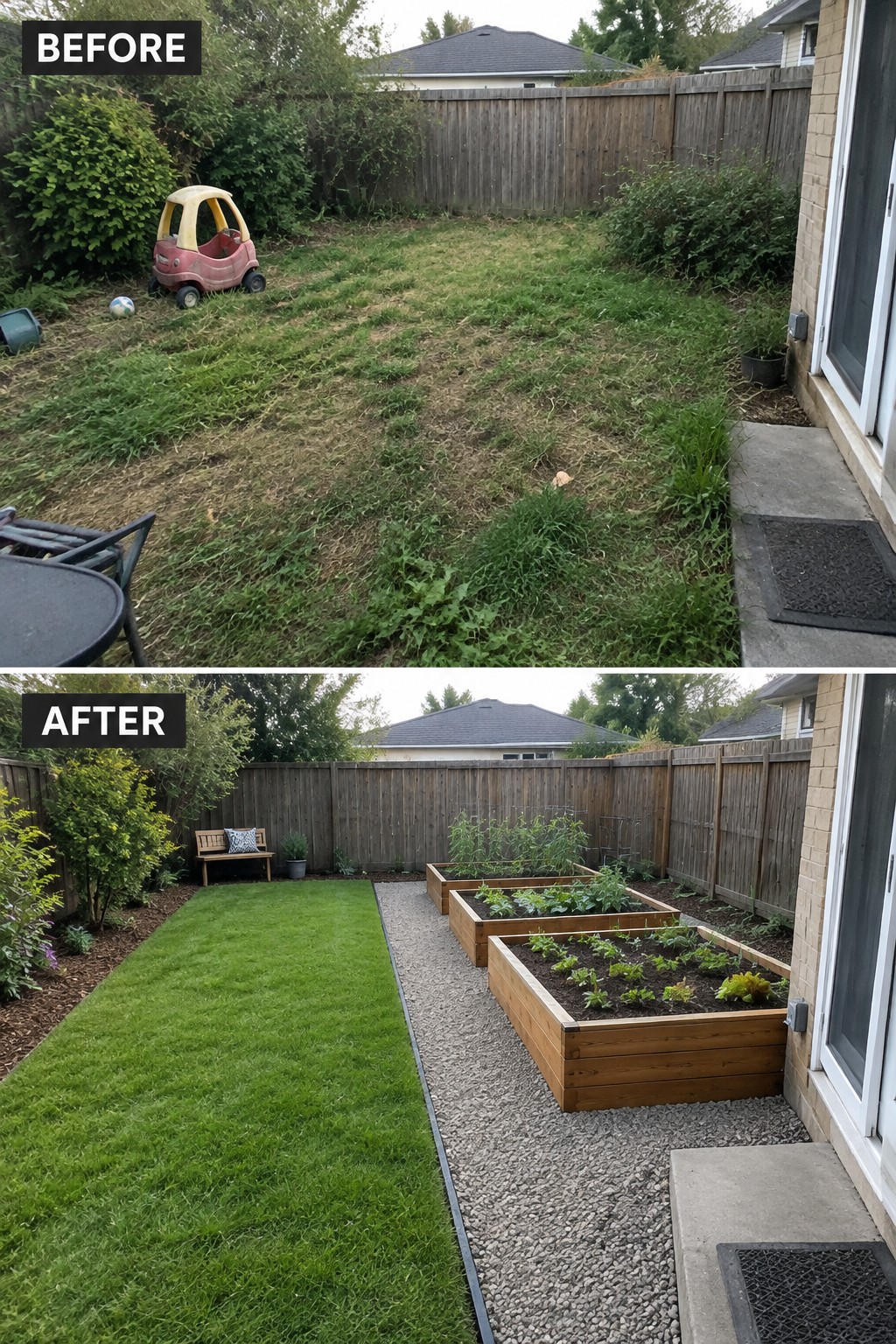
One practical way to bring order to a neglected backyard is to divide it into clear planting zones using raised beds and simple vertical supports. The before photo shows an open, weedy space with no separation between areas, while the after shows how wooden beds and trellises turn the same spot into distinct sections for vegetables, herbs, and climbing plants.
This idea suits smaller yards that need structure without feeling crowded. Clear the ground first, then place beds to leave walking space between them. Gravel paths help keep the zones looking intentional and make maintenance easier over time.
Use Edging To Define Play And Planting Zones
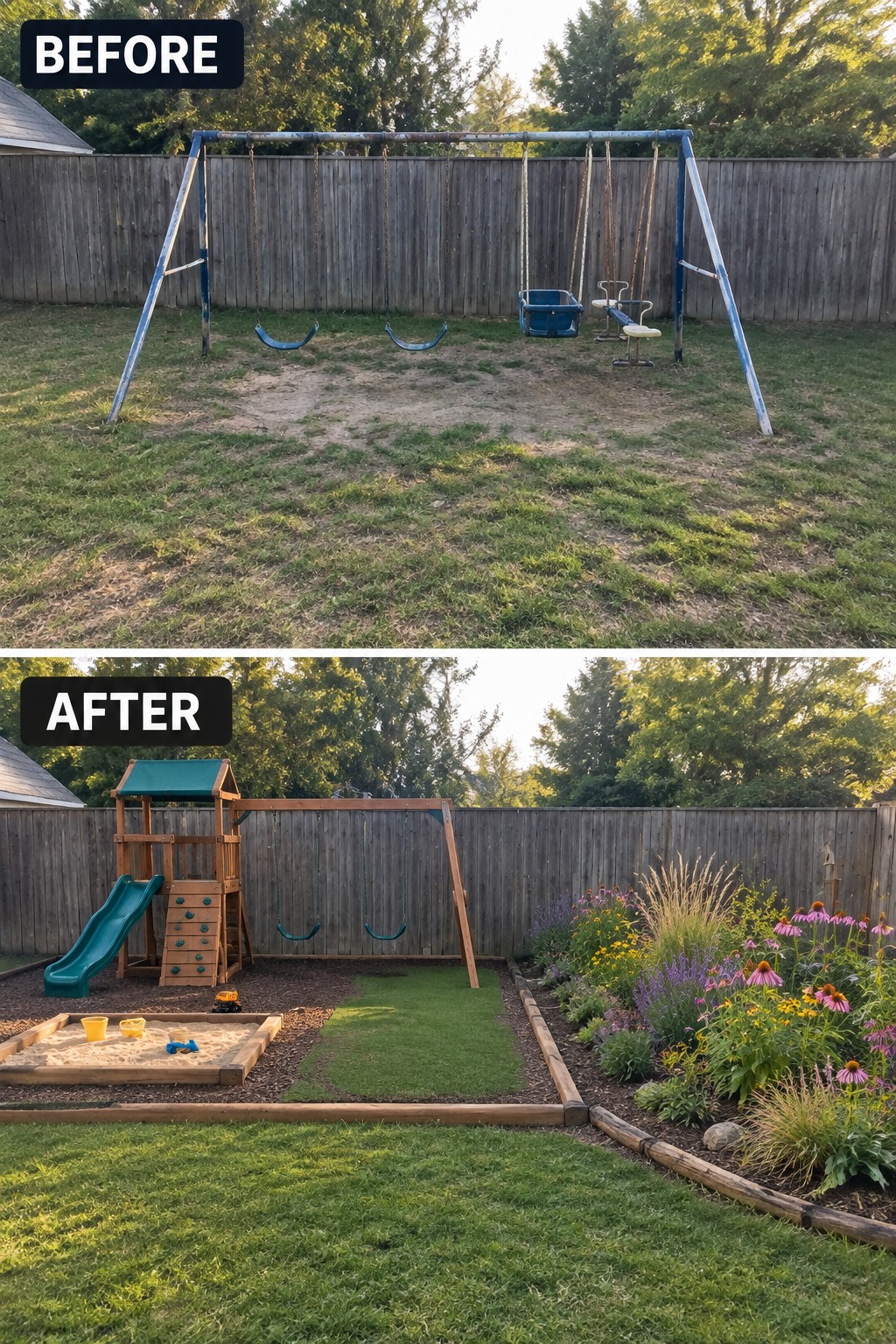
A bare backyard with just an old swing set and patchy grass can feel unfinished and hard to use. Adding wood edging around the edges creates clear boundaries that separate a small lawn and play area from a mulched garden bed. The result is a space that feels more organized without needing a full redesign.
This approach works well in yards that already have some play equipment but lack structure. Start by deciding which section gets the play items and which stays for planting, then install simple borders before adding mulch or ground cover. Keep the zones modest in size so there is still room to walk and mow around them.
Add Structure To An Overgrown Side Yard

Narrow side yards often get ignored and turn into strips of weeds and packed dirt. Clearing the growth first, then adding raised beds along the fence with a straight paver path through the middle, turns the space into something useful instead of an eyesore.
This idea works best in tight passages where you still need room to walk. Keep the beds narrow, use gravel or mulch between them, and stick to a few crops that benefit from the extra warmth and protection the fence provides.
Turn An Empty Patio Into A Fire Pit Seating Area
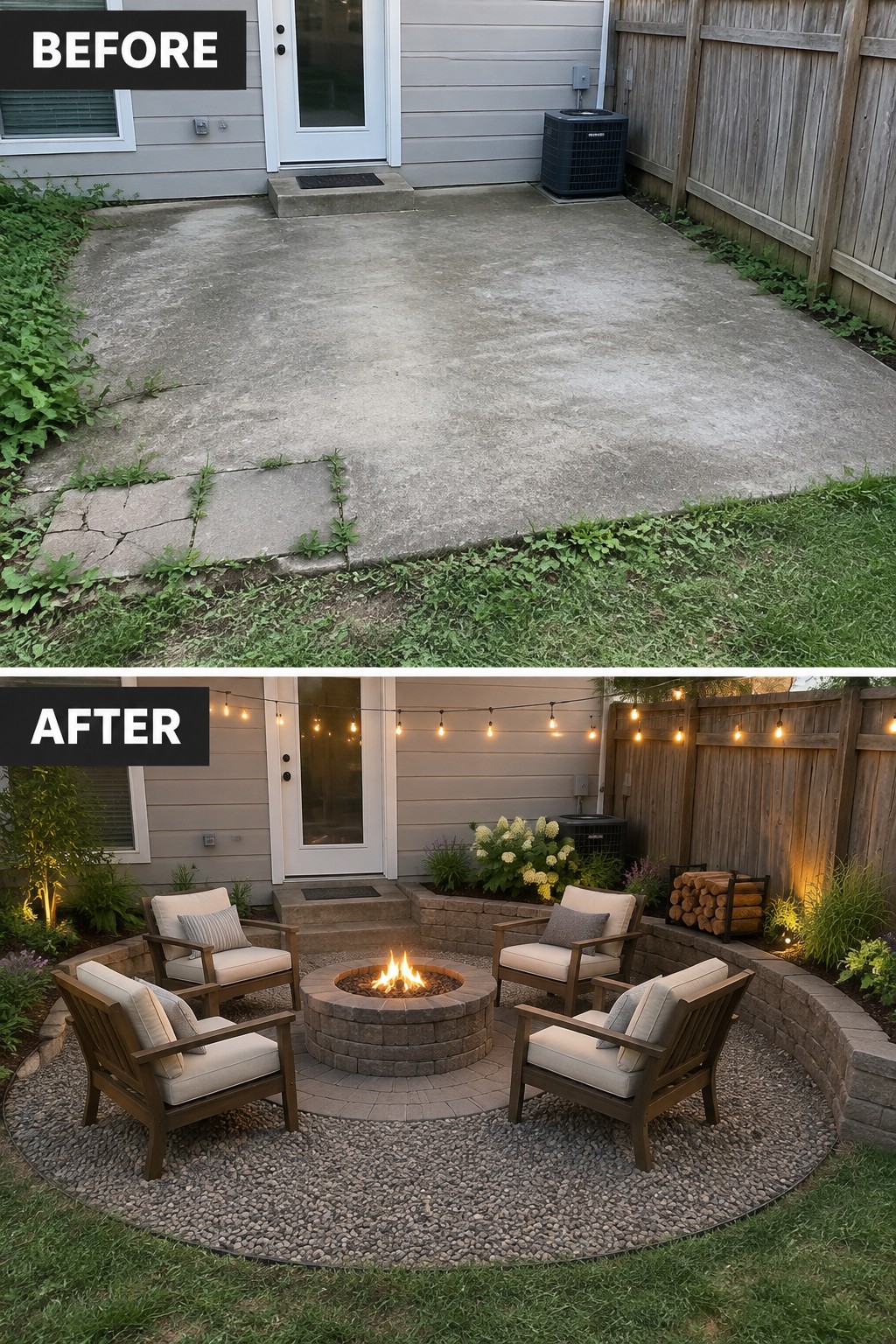
A bare concrete slab often sits unused because it has no clear purpose. Adding a circular gravel pad, a stone fire pit in the center, and four chairs around it turns the same space into a place where people actually want to sit. The string lights overhead help too, but the real shift comes from giving the area a defined shape and a focal point.
This idea works best on existing flat patios or side yards where you already have the hard surface but nothing else. Keep the seating circle simple, leave walking room around the chairs, and use gravel or pavers to separate the zone from the lawn so it feels intentional rather than scattered.
Define Garden Zones With Edging And Planting
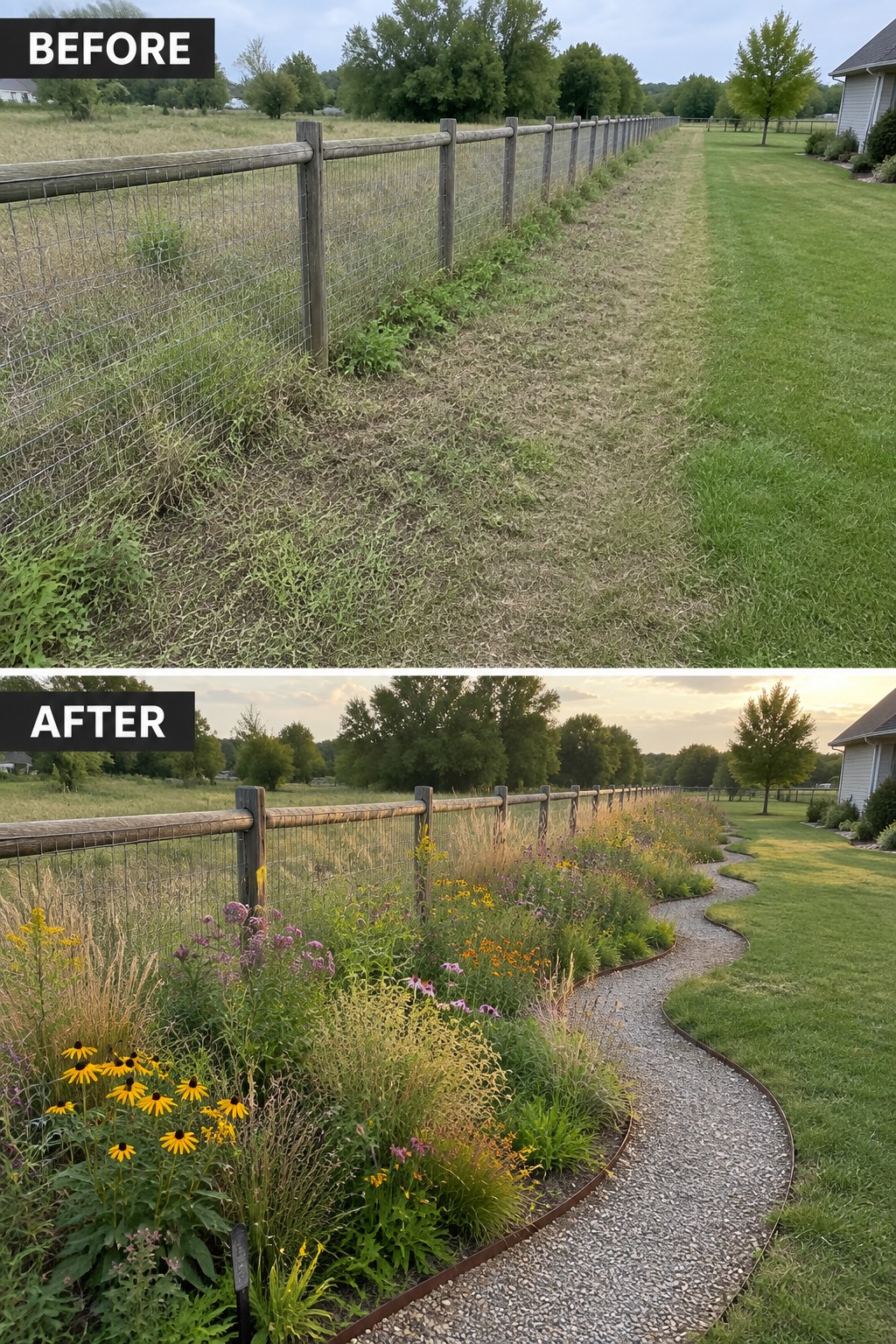
The main change here is turning a weedy, undefined strip along the fence into a clear planted border. A simple metal edge and a gravel path give the area shape and keep the lawn from creeping in.
This approach works best in long backyard stretches where the space feels messy or unfinished. Clean up the overgrowth first, then add the edging and path before planting. It keeps the garden looking intentional without needing a lot of hardscaping.
Turn A Bare Balcony Into A Seating Area
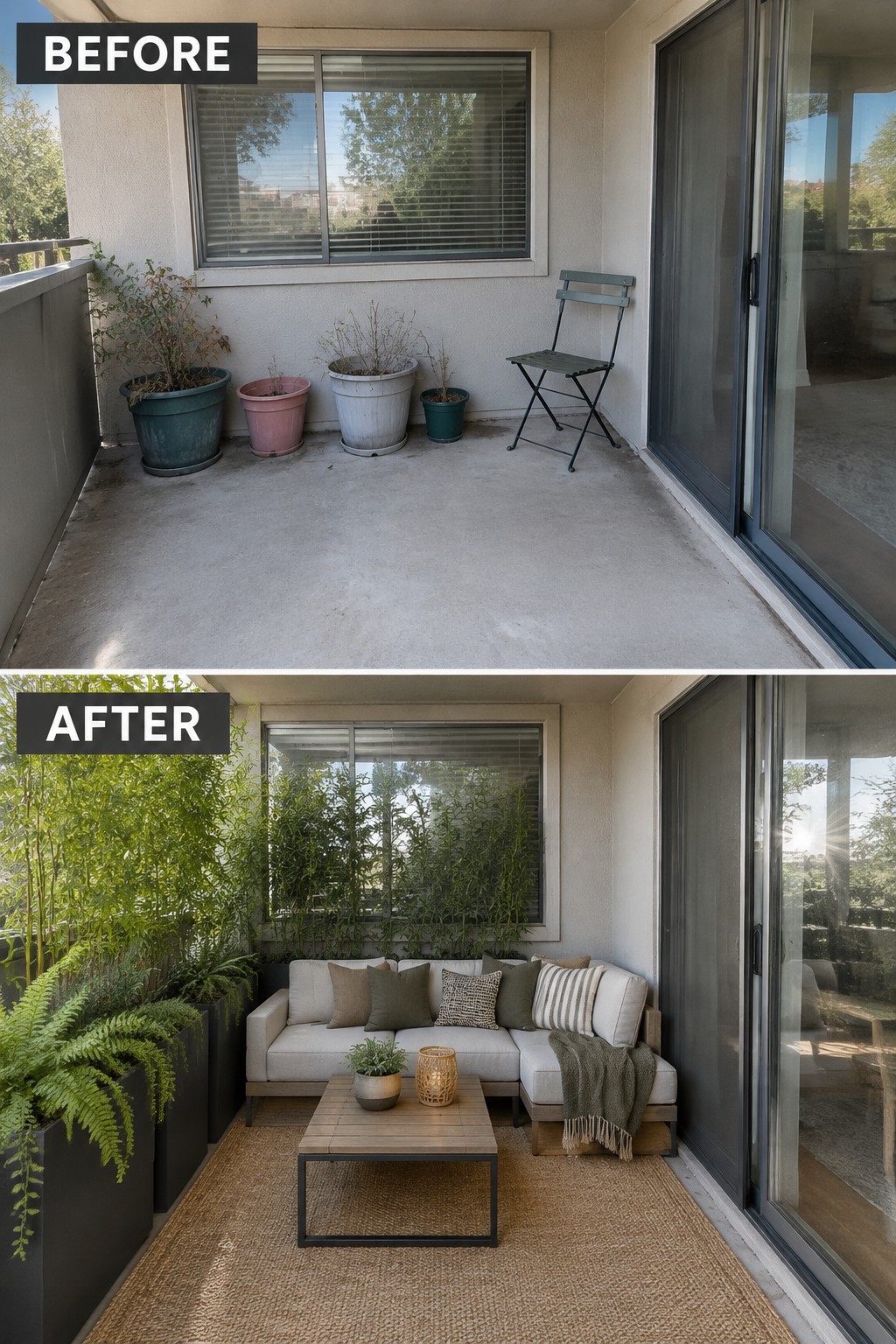
An empty concrete balcony often feels like wasted space until you give it a clear purpose. Adding a sectional, a simple coffee table, and a rug turns the same surface into a usable spot for sitting without needing major construction.
This idea works best on small patios or balconies where the floor is already in decent shape. Choose outdoor furniture that fits the scale of the space, lay down a rug to define the seating zone, and use a few large planters along the edges. The key is keeping the layout open enough to walk through while still feeling like a real room.
Add Structure To An Overgrown Backyard
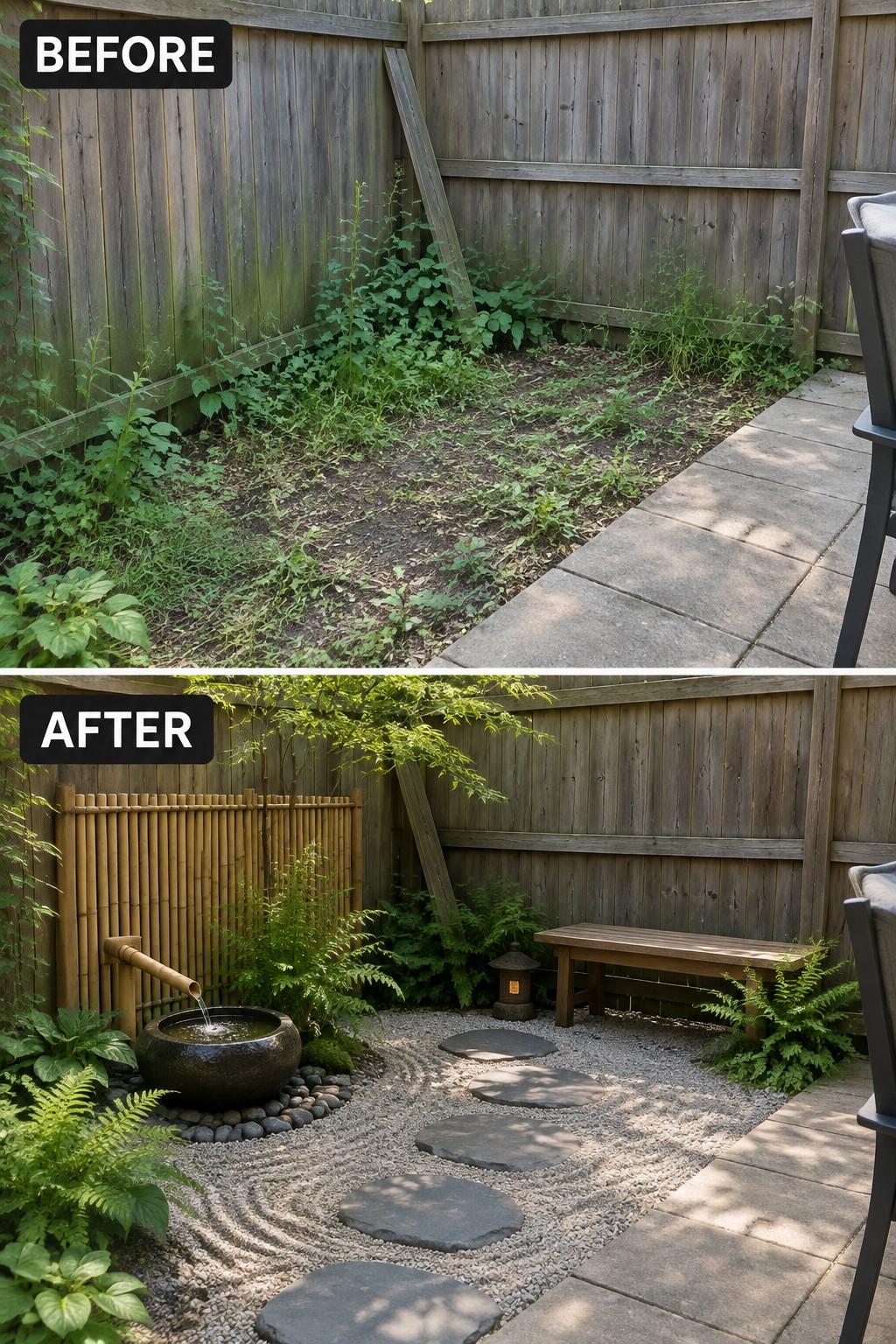
An overgrown corner with weeds and bare dirt can feel like wasted space. The fix here was simple. Clearing the mess first, then laying down gravel with a curving path of stepping stones gave the area shape and made it usable. Adding a small water feature and a bamboo screen created a focal point without crowding the space.
This approach works well in small or awkward backyard corners where you want something more than lawn but less than a full patio. Start with cleanup and basic hardscaping before adding plants or decor. Keep the gravel area compact so there is still room to move around it, and choose weatherproof pieces like the bench and stone lantern if you want seating nearby.
Add Defined Garden Beds To A Sloped Backyard

A steep grassy slope is difficult to plant or maintain because everything tends to slide or wash away. Building tiered raised beds turns the same slope into usable garden space with flat planting areas that stay in place and are easy to reach.
This idea suits any backyard with a noticeable drop where you want vegetables or shrubs without constant erosion problems. Start with the retaining structure and beds before adding plants, and make sure the tiers leave enough room to walk between them for watering and harvesting.
Create Defined Garden Zones In A Soggy Yard
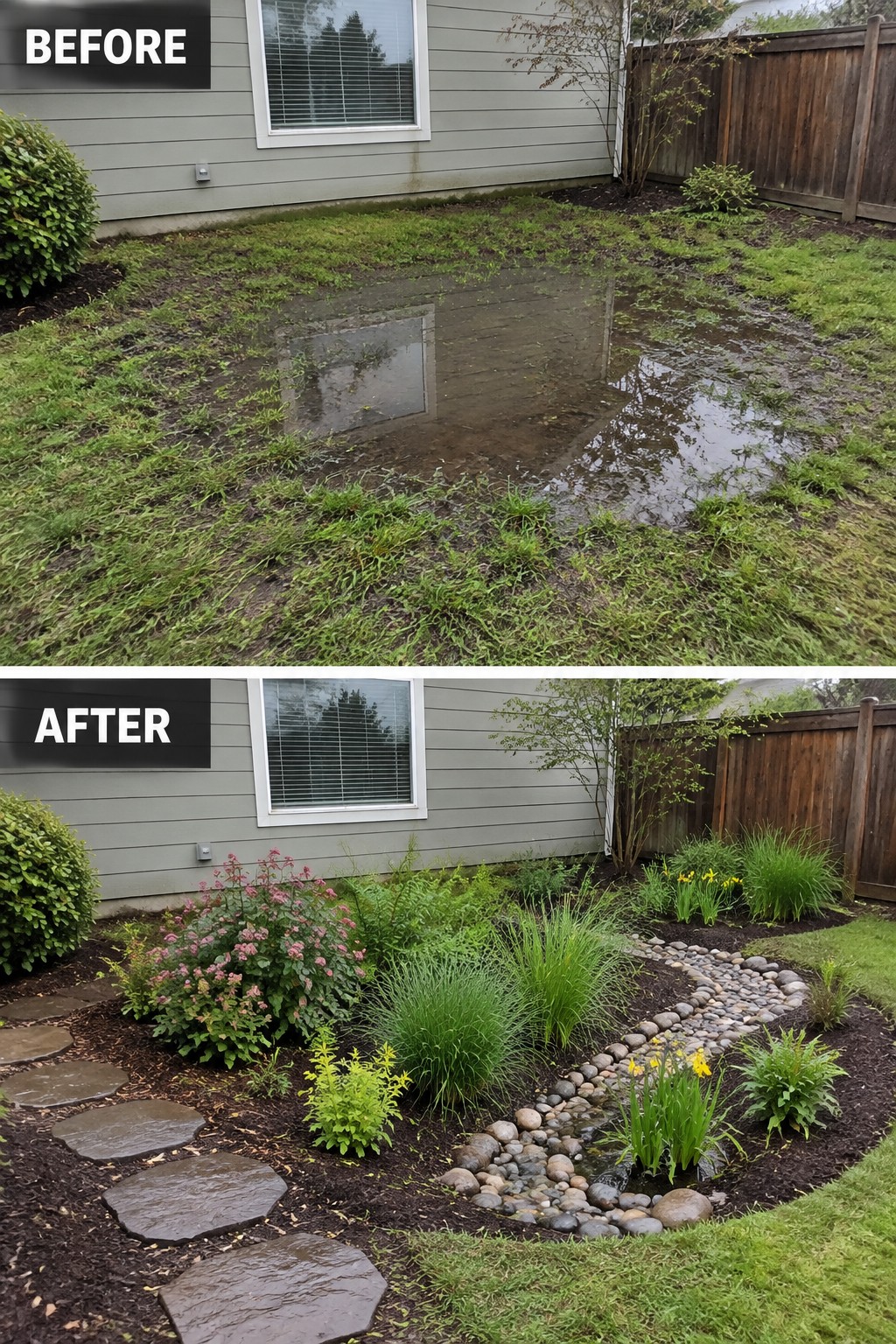
A backyard that stays wet and muddy is hard to use and harder to maintain. The before photo shows how quickly grass and soil can turn into standing water after rain. Adding mulch beds, a stone path, and grouped plantings gives the space clear structure so water has somewhere to go and the yard feels intentional instead of neglected.
This idea works best in smaller yards or low spots where the lawn never quite dries out. Focus first on cleanup and drainage, then lay out simple paths and beds that divide the space into manageable zones. It suits homes with basic drainage issues and keeps maintenance realistic since each bed can be handled separately instead of fighting the whole yard at once.
Define Backyard Zones With Pavers And Gravel

The before photo shows a simple lawn and concrete path with no real structure. In the after, the same space is split into clear zones using brick pavers for the walkway and gravel for the seating and dining areas. This keeps the layout easy to read and makes each part of the yard feel intentional instead of just open grass.
This idea works best in backyards that already have a path or open space but lack defined places to sit or eat. Map out how you actually use the yard first, then add the hardscaping before bringing in furniture or planters. Keep the zones connected so you can move between them without crowding the space.
Add Defined Garden Beds Next To Your Deck
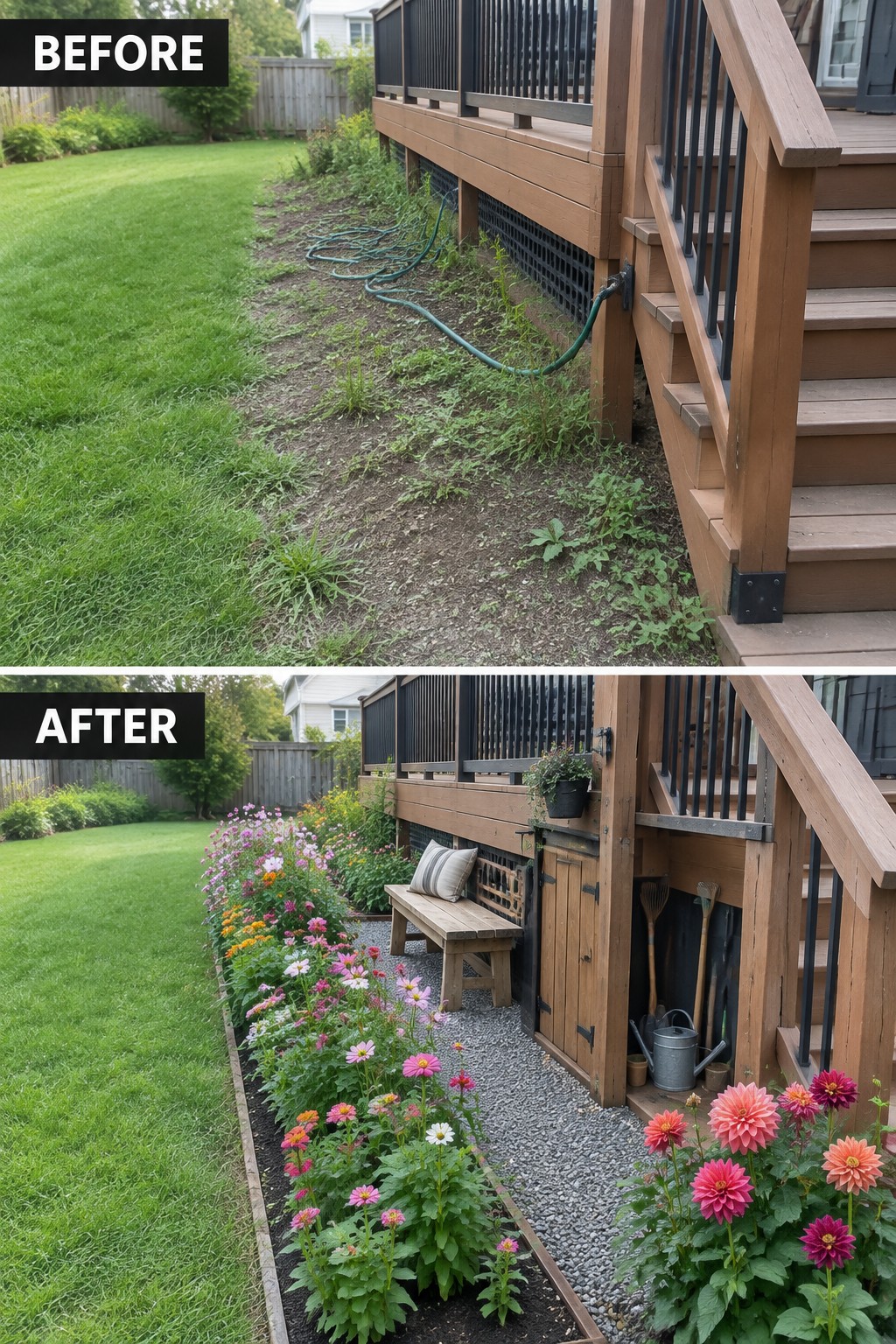
A common problem in many backyards is the messy strip of dirt that runs along the base of a deck. Instead of leaving it as bare ground with random weeds, adding a long planting bed with a gravel edge gives the whole area a clear purpose and keeps the lawn from creeping under the structure.
This approach works especially well when you have open space under the stairs or along the deck line. You can plant a simple flower border, lay gravel for a path, and add a bench or small storage cabinet without crowding the area. The key is to keep the bed narrow enough that it still leaves room to walk and mow.
Add Tiered Planters Along A Fence To Create A Seating Area
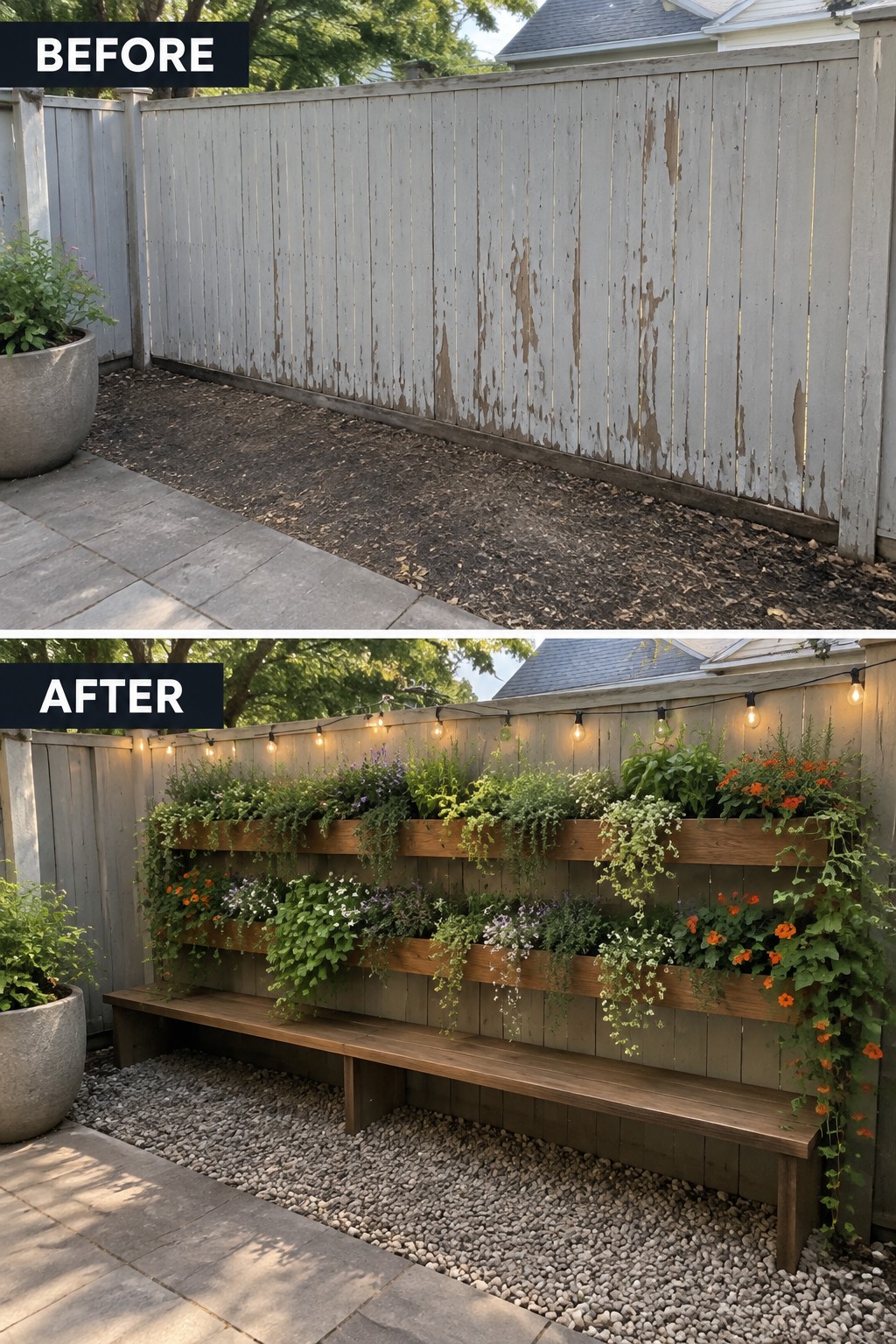
A plain fence with bare dirt below often ends up as dead space in a backyard. Adding a set of tiered wooden planters changes that strip into a planted wall that also supports a bench underneath. The gravel base keeps the area clean while the plants soften the fence line and give the space a clear purpose.
This setup works best in narrow yards or along side fences where floor space is limited. Build the planters from weather treated wood, keep the bench low and simple, and choose a mix of trailing plants and herbs so the wall stays full without needing constant trimming.
Add Storage To Organize An Outdoor Kitchen

The main change here is how the space went from a cluttered, overgrown spot around the brick barbecue to something that actually works for cooking and gathering. Adding closed cabinets gave the area real storage for firewood, baskets, and kitchen items, while the new countertops created usable surfaces that keep everything off the ground and easier to clean.
This idea works best on a patio or backyard with an existing structure like a built-in grill or barbecue. Start by clearing out the overgrowth and random items first, then focus on weatherproof cabinets that match the scale of your space. Keep the layout simple so there is still room to move around the cooking area and any seating nearby.
Create Defined Garden Zones With Layered Planting

A plain lawn often feels unfinished because it lacks any sense of division. Here the owners added height and depth along the fence line with a mix of trees, evergreens, and flowering shrubs. The new planting curves gently and turns the open grass into a series of smaller garden areas rather than one empty rectangle.
This works best in long backyards where you need to break the view without building fences or walls. Begin with a few taller trees or shrubs to set the backbone, then add mid-height plants in front so the bed feels full from the start. Keep the lawn edge clean so the planted zone stays clearly separate.
Add Structure To A Bare Hillside
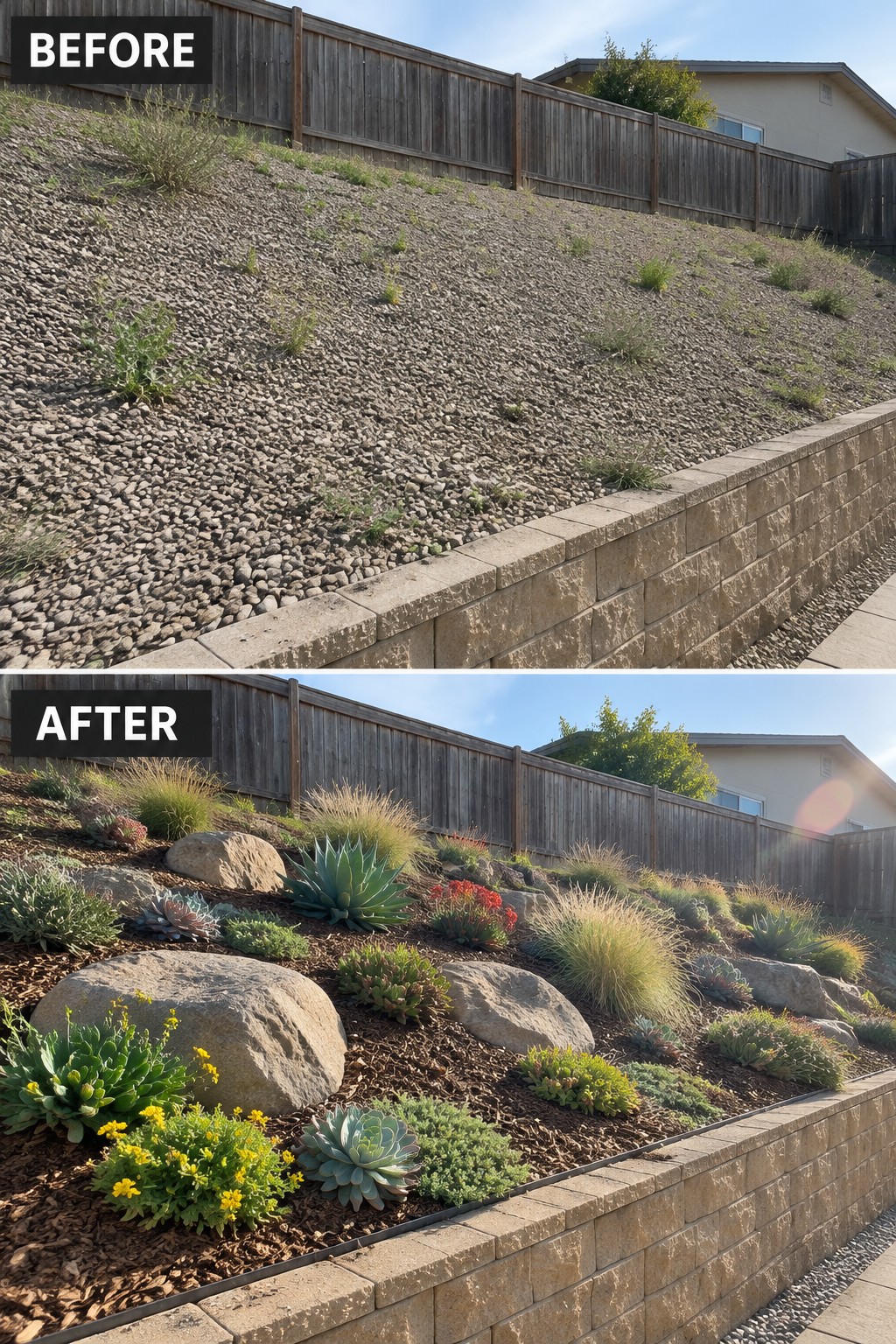
A bare, rocky slope like the one in the before photo often looks messy and unfinished because there is no clear planting plan or edging. The after version shows how adding defined beds with mulch, large boulders, and a mix of succulents and grasses gives the slope shape and makes it feel intentional instead of neglected.
This approach works well on any sloped backyard where the ground is hard to maintain. Start by clearing weeds and loose gravel, then group plants in clusters rather than scattering them. Use rocks or low edging to hold the soil in place and keep the beds looking neat over time.
Add Structure To An Overgrown Backyard
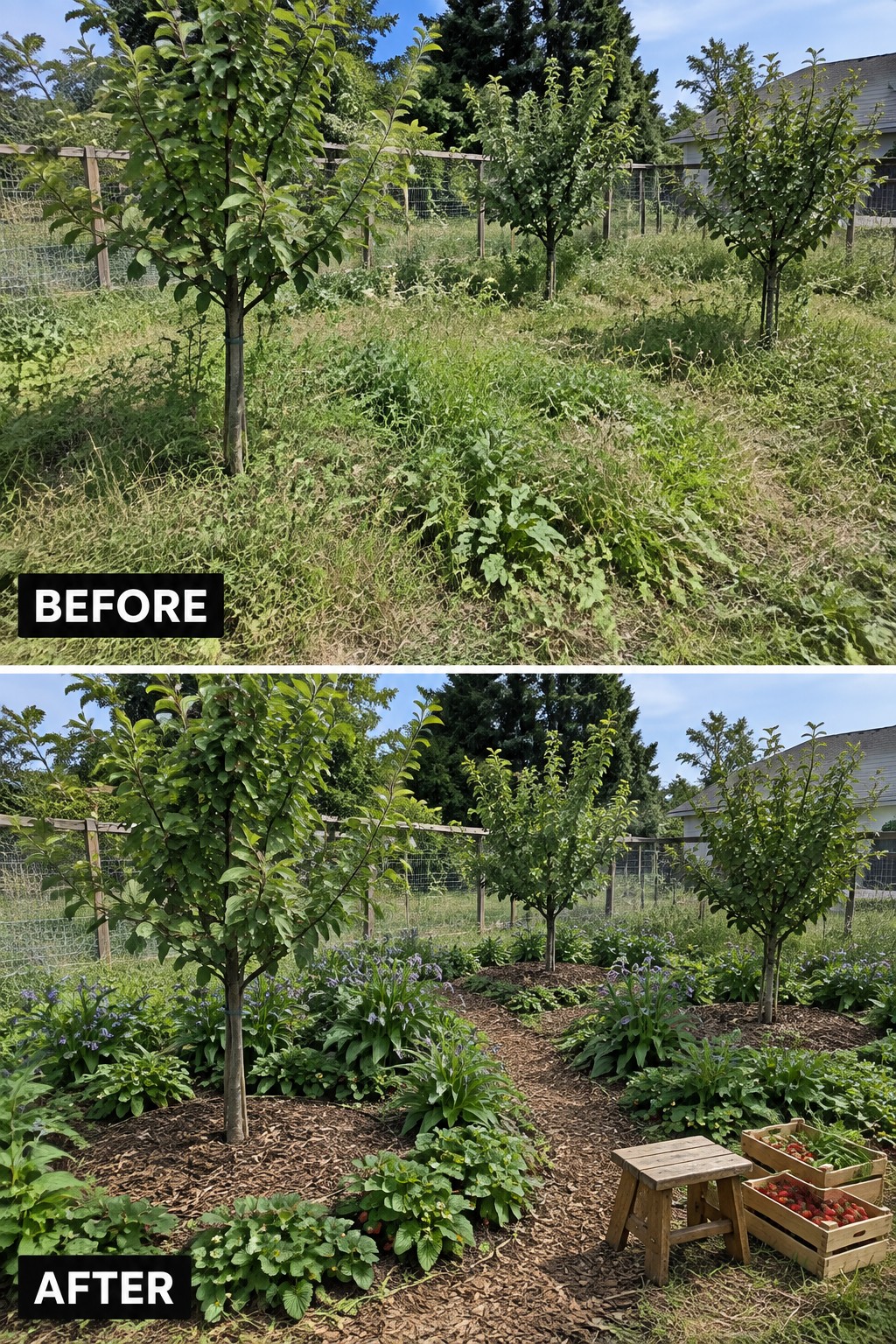
Clearing the weeds and adding defined beds is often the first real step in turning a messy yard around. Here the tall grass was cut back and woodchip mulch was used to create clear borders around new plantings, which instantly made the space feel planned instead of neglected.
This idea works best in yards that have been left alone for a season or two. Cut everything down first, then decide where the beds should sit so you still have room to walk and mow. Mulch helps keep the edges sharp, and planting in loose groups rather than single rows keeps the look relaxed but organized.
Define Garden Zones With Borders And Paths

A blank backyard lawn often feels unfinished because there is no clear way to use the space. Adding raised beds, a stone path, and a smaller central lawn creates separate areas for seating, planting, and walking without crowding the yard.
Place the main lawn where you already spend time, then use paths and bed edges to mark off the rest. Keep the beds narrow enough to reach across and choose materials that match your climate so the zones stay practical year after year.
Frequently Asked Questions
Q: How do I mark out zones in a yard that slopes or has uneven ground?
A: Walk the space first and stake simple lines where each zone starts and ends. Level small spots with soil or gravel so paths and beds sit flat. This keeps the flow natural without extra grading work.
Q: What works best for paths that connect the zones without eating up too much space?
A: Lay stepping stones or mulch strips that curve gently between areas. Keep them narrow enough for one person at a time. The curves make the yard feel larger while guiding feet exactly where you want them.
Q: How do I keep maintenance from getting out of hand once the zones are set up?
A: Pick low-care plants that match your local rainfall for each spot. Mulch heavily around everything the first season. Then just spot water and pull weeds as you notice them instead of following a rigid schedule.
