

Many backyards end up looking bare because the seating never really matches how the space gets used day to day.
I usually start by figuring out where people actually want to sit before adding anything else around it.
Layout comes first.
The better ideas here build from that point and keep comfort in mind instead of just appearance.
Seeing a seating area settle into regular use shows which changes were worth making in the first place.
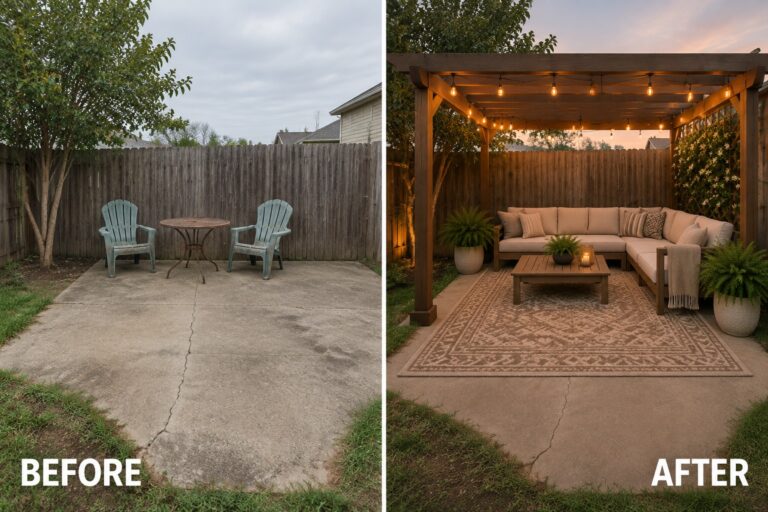
Turn A Bare Patio Into A Covered Seating Area

A plain concrete slab with just two chairs feels like wasted space, but adding a pergola gives the area a clear purpose and makes it usable. The overhead beams and string lights create a sense of enclosure without closing it in, while the sectional and rug pull everything together into one spot for sitting.
This works best on flat patios or backyard slabs that get some use but lack shade or definition. Keep the furniture scale realistic for the size of the space, choose pieces made for outdoor conditions, and add lighting only where people will actually sit at night.
Turn A Bare Backyard Into A Fire Pit Seating Area
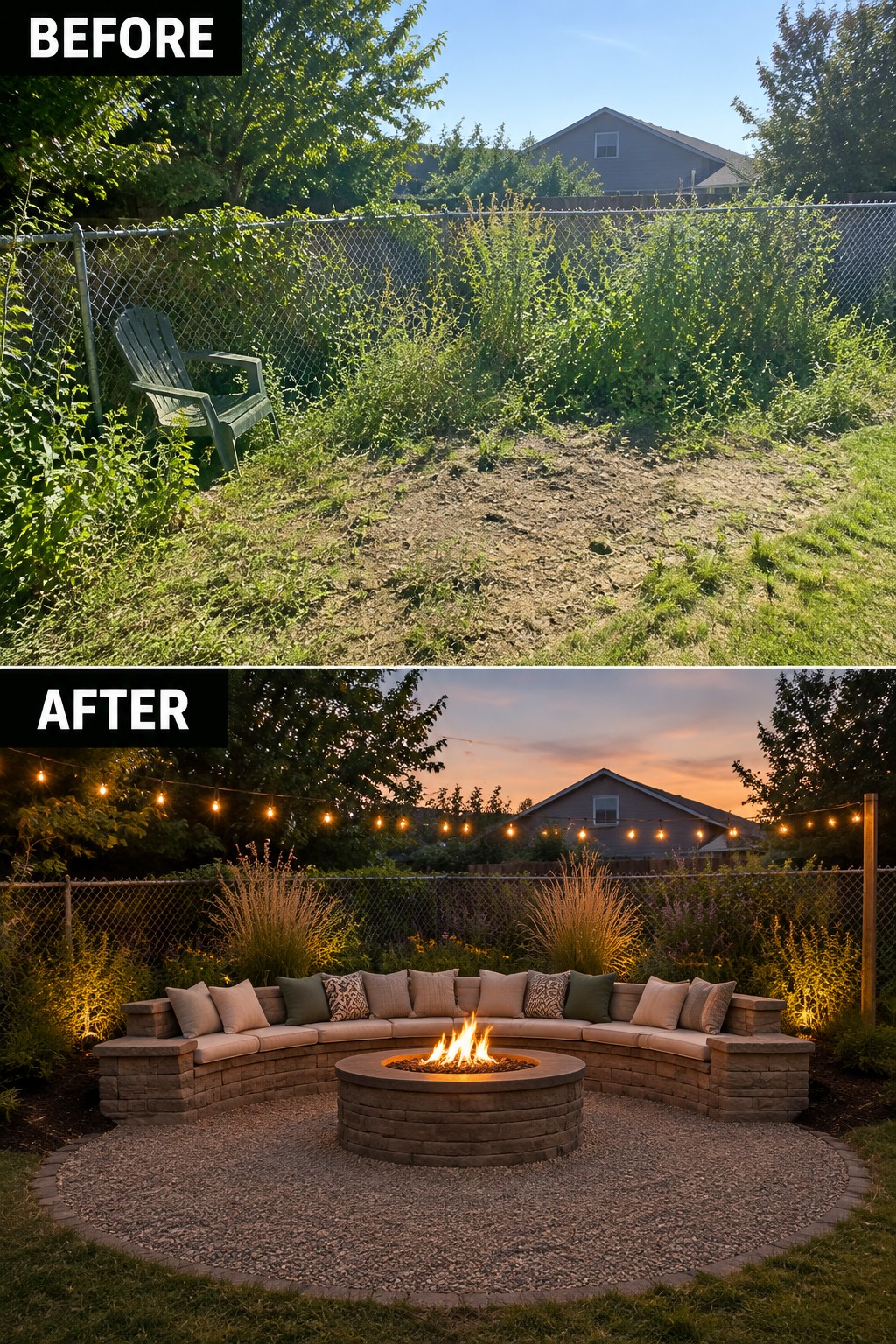
A neglected patch of dirt and weeds can become the most used part of the yard once you give it a clear purpose. The before photo shows an empty slope with nothing but a lone chair and chain link fence. The after shows how a simple circular layout with a fire pit at the center and a built-in bench around it turns the same space into a place people actually want to sit.
This idea works best in medium or larger yards where you have room to define a zone without crowding the rest of the lawn. Start with the seating and fire pit first, then add gravel or pavers to keep the area from turning to mud. String lights and a few tall grasses around the edge help make the space feel finished without needing a full landscaping overhaul.
Turn Muddy Ground Into An Outdoor Seating Area With A Deck

A basic deck platform can turn a sloppy, uneven side yard into a place where seating actually works. Here the dirt path and old chair gave way to a raised wooden deck that sits level and stays dry, giving the table and chairs a solid spot to rest.
This idea suits narrow yards or sloped ground where a full patio is too much work. Keep the deck small, use weather-ready furniture, and add just enough plants and lights to make the space feel finished without crowding it.
Turn An Empty Backyard Into A Seating Area

An open lawn with nothing but a folding table feels unfinished because there is no clear place to gather. Adding a circular seating area built around a fire pit gives the space a purpose and turns it into a spot people actually use after dark.
This idea works best in medium or large backyards where you can place the seating away from the house without crowding walkways. Start with one strong focal point like the fire pit, then build simple curved benches or sectional seating around it. Keep the surrounding planting low so the seating stays the main feature and the area still feels open.
Turn An Empty Patio Into A Seating Area

A bare concrete patio often sits unused because it lacks any clear purpose. Adding a dining table with benches in the middle and a sofa with a coffee table off to the side turns the same slab into two practical zones. The rugs underneath each grouping help the furniture feel anchored instead of floating.
This idea works on any flat outdoor surface that feels too open. Keep the furniture scale realistic for the size of the space, choose pieces that can stay outside, and leave walking room around the edges. Start with the seating layout before adding plants or lighting.
Turn A Cluttered Backyard Corner Into A Shaded Seating Area

Adding a shade sail over an unused corner can quickly turn a messy storage spot into a place worth sitting. The before photo shows bins, a ladder, and bare dirt along the fence, while the after shows a round daybed, potted palms, and a hanging light that give the area a clear purpose.
This idea works best in smaller yards where you want one defined spot to relax without a big build. Clear out what you do not use first, then add the shade and one main seating piece so the space feels finished rather than crowded. Keep the rest simple with a couple of pots so the area stays easy to maintain.
Add A Bench With Planters To Create Outdoor Seating
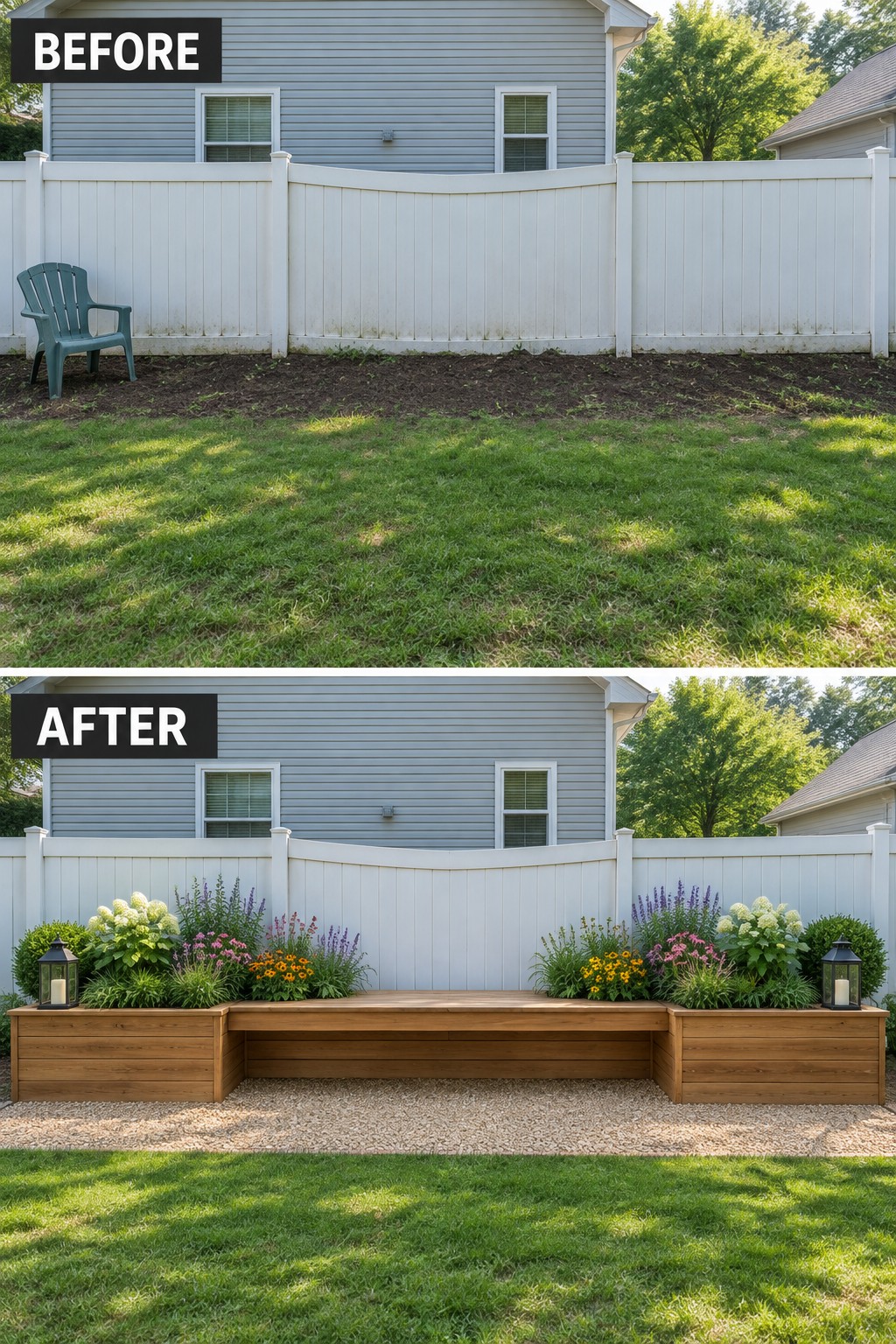
A plain backyard lawn often feels unfinished because there is no clear place to sit. Adding a simple wooden bench with built-in planters on each end gives the space a purpose. The bench creates a focal point, the planters add color and softness, and the gravel base keeps the seating area distinct from the grass.
This approach works best in average-sized yards where you want seating without crowding the lawn. Keep the bench at a comfortable depth for lounging, choose weather-resistant wood, and fill the planters with a mix of taller and trailing plants so the seating feels surrounded but not closed in.
Turn A Bare Patio Into A Seating Area

A plain concrete slab with just two folding chairs rarely gets much use. Adding a large sectional sofa and a low table instantly changes the space from empty to livable, giving the patio a clear purpose as an outdoor room rather than leftover ground.
This approach works best on flat patios or decks that already have a solid surface. Keep the furniture scale realistic so it does not crowd the area, and use a few large planters to soften the edges without blocking movement. Weather-resistant pieces and simple plantings keep the setup practical for everyday use.
Create Outdoor Seating With A Deck Around Your Pool

The main change is the addition of a raised wooden deck that gives the pool a flat, usable surface for furniture. Where the before photo showed chairs scattered on grass, the after version has a clear seating area with lounge chairs and an umbrella right next to the water.
This approach works well for above-ground pools that sit on uneven ground. Put the deck in first to create level space, then add a few weatherproof pieces of seating and one shade element. It turns the pool into the center of an outdoor room without requiring a full landscape overhaul.
Turn A Bare Backyard Into An Outdoor Seating Area

A gravel yard with just one plastic chair feels like empty space. Laying down a large outdoor rug instantly creates a defined zone for seating. Once the rug is in place, a low sofa, a couple of poufs, and a few lanterns turn the spot into a place people actually want to use.
This idea works best in small or rental yards where you cannot pour concrete or build a deck. Start with the rug to mark the seating area, then add weatherproof furniture that stays low to the ground. Keep the layout simple so there is still room to walk around the edges.
Add A Storage Bench To Create Seating In A Narrow Yard

A long bench with built-in cubbies turns a narrow strip of grass and concrete into a place where kids can actually sit and play. The before photo shows toys scattered across patchy grass with no clear spot to gather. The after adds one main piece that holds everything in one place and gives the space a purpose without crowding the walkway.
This idea works well in side yards or along fences where space is tight. Start with a bench sized to fit the length you have, then add weatherproof cushions in a few bright colors. Keep the storage open so toys stay visible and easy to reach. It keeps the area looking tidy while giving both kids and adults somewhere to sit.
Create A Defined Outdoor Seating Area With A Fire Pit

A clear seating zone makes a big difference in a backyard that feels scattered and unused. Here the main change was adding a gravel circle with a central fire pit and simple log seats. That single move turned an overgrown slope into a spot that actually invites people to sit and stay.
This idea works best in yards that already have some trees or natural cover. Keep the gravel layer thick enough to handle foot traffic and rain, and place the seating logs at a comfortable distance from the fire. Once the main circle is set, you can add flowers or path lighting later if you want more polish.
Turn A Bare Patio Into A Covered Seating Area

A plain concrete slab with nothing but an old umbrella does not get much use. Adding a simple overhead structure with lighting and a full seating set turns the same space into a place where people actually want to spend time. The cover provides shade during the day and makes the area feel defined even without walls.
This approach works best on homes that already have a solid concrete pad but lack any sense of enclosure. Start with the structure if sun or light rain keeps you from using the space, then add seating that can stay outside. Keep the layout open enough to walk around the furniture so the area still feels practical rather than crowded.
Turn An Empty Patio Into A Dining Area

A plain stone patio can sit unused for years if it has no furniture or clear purpose. Adding a round dining table with woven chairs and a built-in bench with cushions instantly gives the space a reason to be used. The before photo shows an empty courtyard with nothing but scattered pots and a hose, while the after shows a simple setup that makes the area feel like an extension of the house.
This approach works best on patios or side courtyards that already have decent paving but lack any seating. Keep the table size realistic for the space so there is still room to walk around, and add a few potted plants near the edges rather than filling every corner. String lights help make the area usable after dark without needing major electrical work.
Turn An Empty Backyard Into A Seating Area
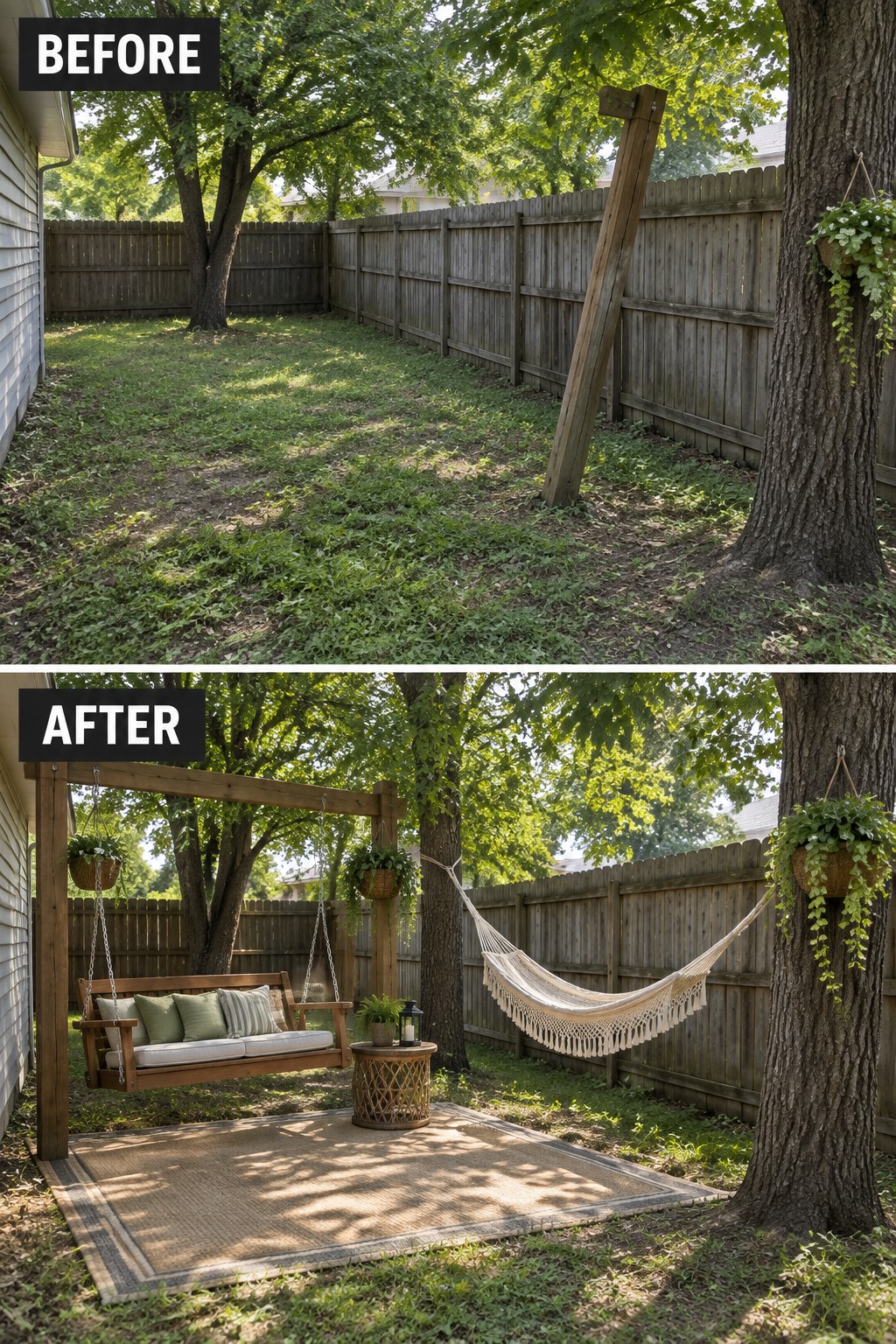
A bare yard often sits unused because it lacks any clear spot to settle in. Here the addition of a simple swing frame and a hammock between two trees gave the space an actual reason to be used. The rug underneath ties the pieces together and turns the patch of grass into something that feels like a room.
This idea works best in yards that already have some shade and a fence for background. Keep the furniture to one or two main seats, use a rug to mark the zone, and make sure there is still room to walk around the edges. Start with seating you know you will actually sit in before adding extras.
Turn A Bare Patio Into A Functional Outdoor Room
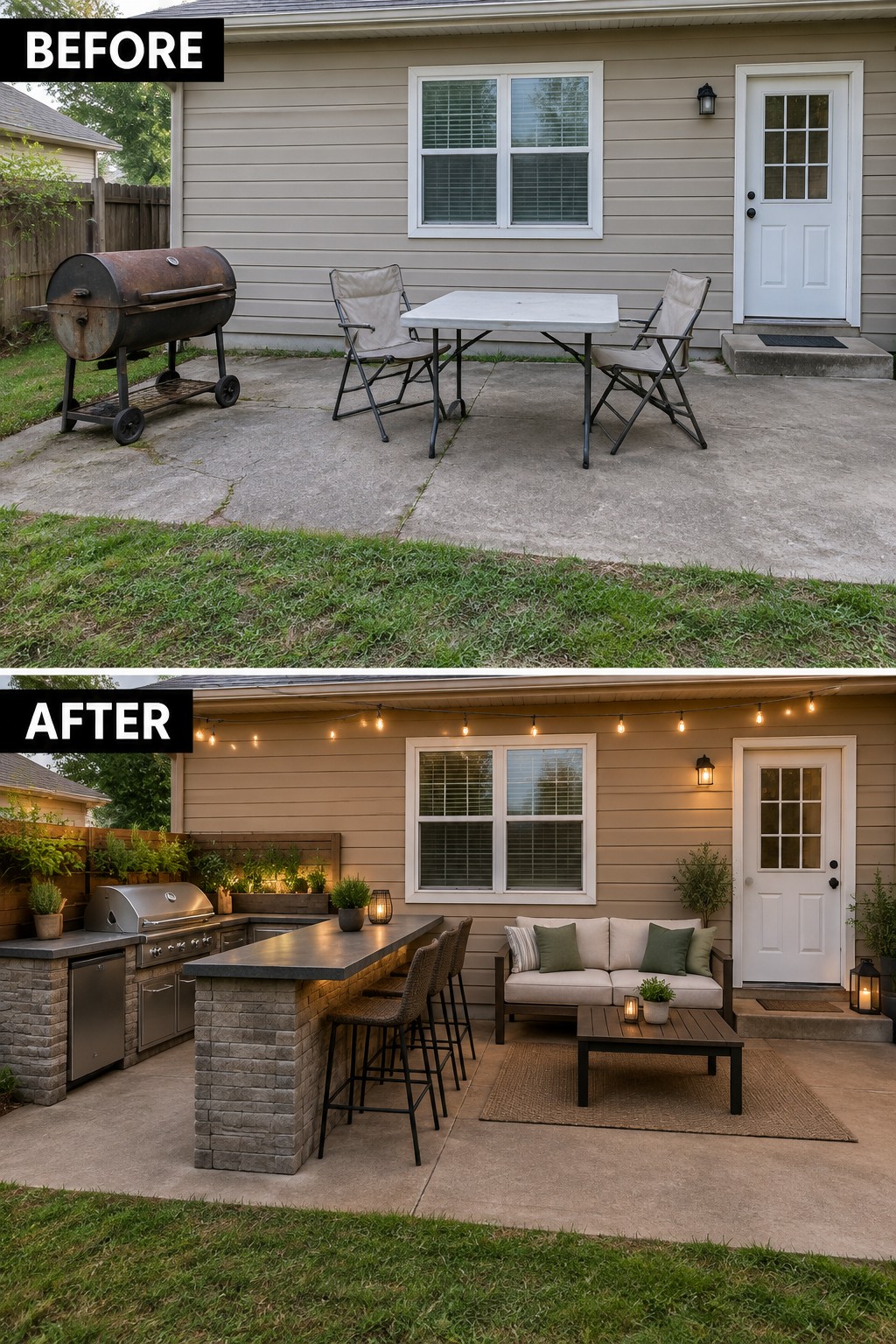
A plain concrete slab often sits unused because it lacks any sense of purpose. Here the space moved from holding only a grill and one small table to having two clear zones: an outdoor kitchen with bar seating and a separate lounge area with a sofa and coffee table. Adding string lights overhead made the area feel inviting after sunset.
This idea works on any home with a decent sized slab or patio. Pick one main activity for each section, keep the furniture simple and weather ready, and use a rug to mark where people should sit. Start with the seating layout before adding extras like plants or decor.
Anchor Outdoor Seating With A Water Feature
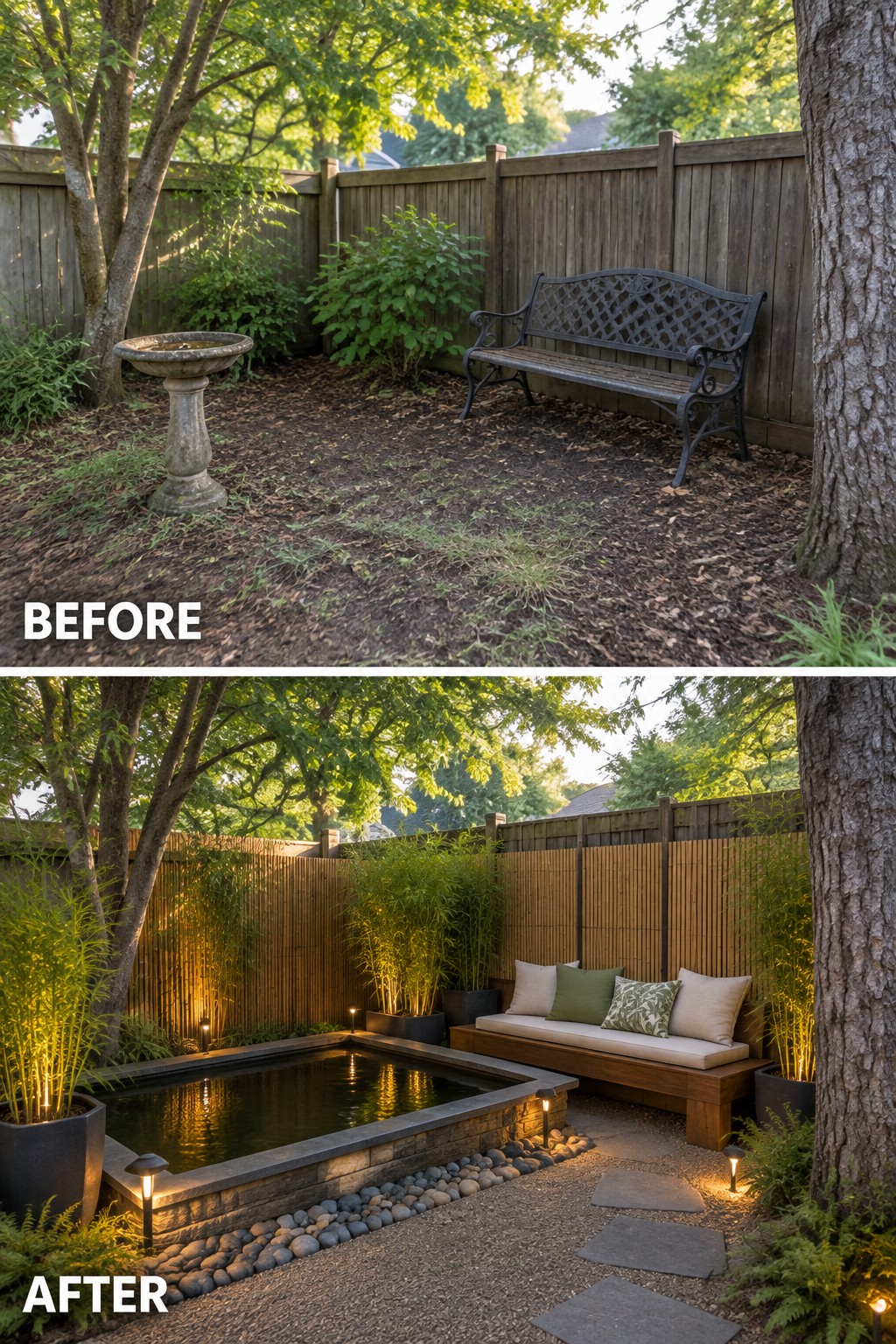
A plain backyard with just mulch and a single bench can feel unfinished and unused. Adding a small pond gives the space a clear center, while the built-in bench and path turn the area into somewhere people actually want to sit. The lighting around the water and along the edges makes the seating usable after dark without needing a full overhaul.
This approach works well in smaller yards where you want one strong focal point instead of scattering furniture. Start with the water feature if the ground is mostly bare, then place seating to face it. Keep the planting simple on the sides so the pond and bench stay the main draw.
Turn An Empty Patio Into A Seating Area
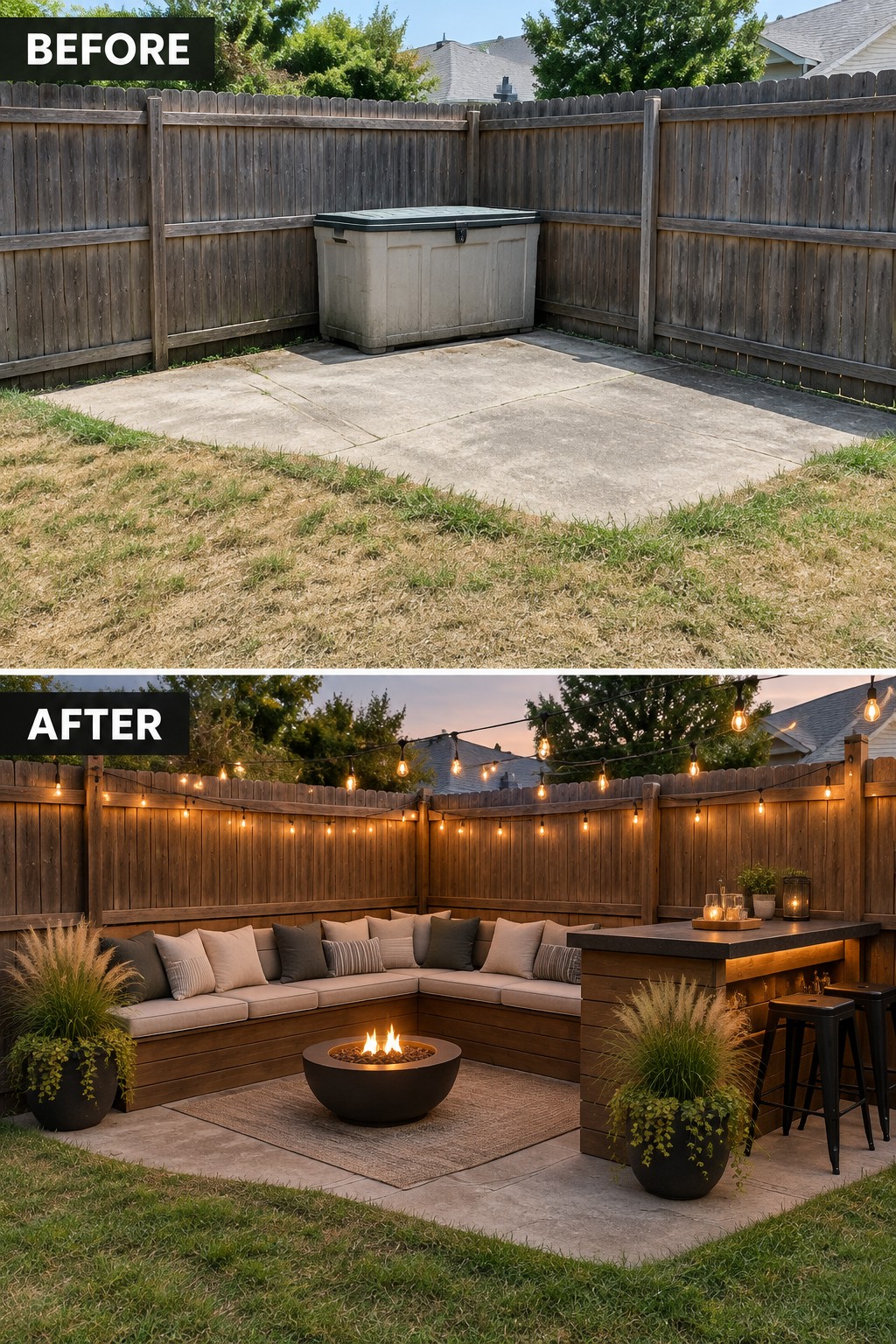
An empty concrete pad often stays unused because nothing signals what it is meant for. Adding built-in seating along the edges and centering a fire pit gives the space a clear purpose as a place to gather.
This idea works well on existing patios in smaller yards. Start with the seating layout so the area feels anchored, then add overhead string lights to make it comfortable after dark. Leave enough open floor space for people to move around the furniture without crowding.
Turn A Narrow Side Yard Into A Seating Area
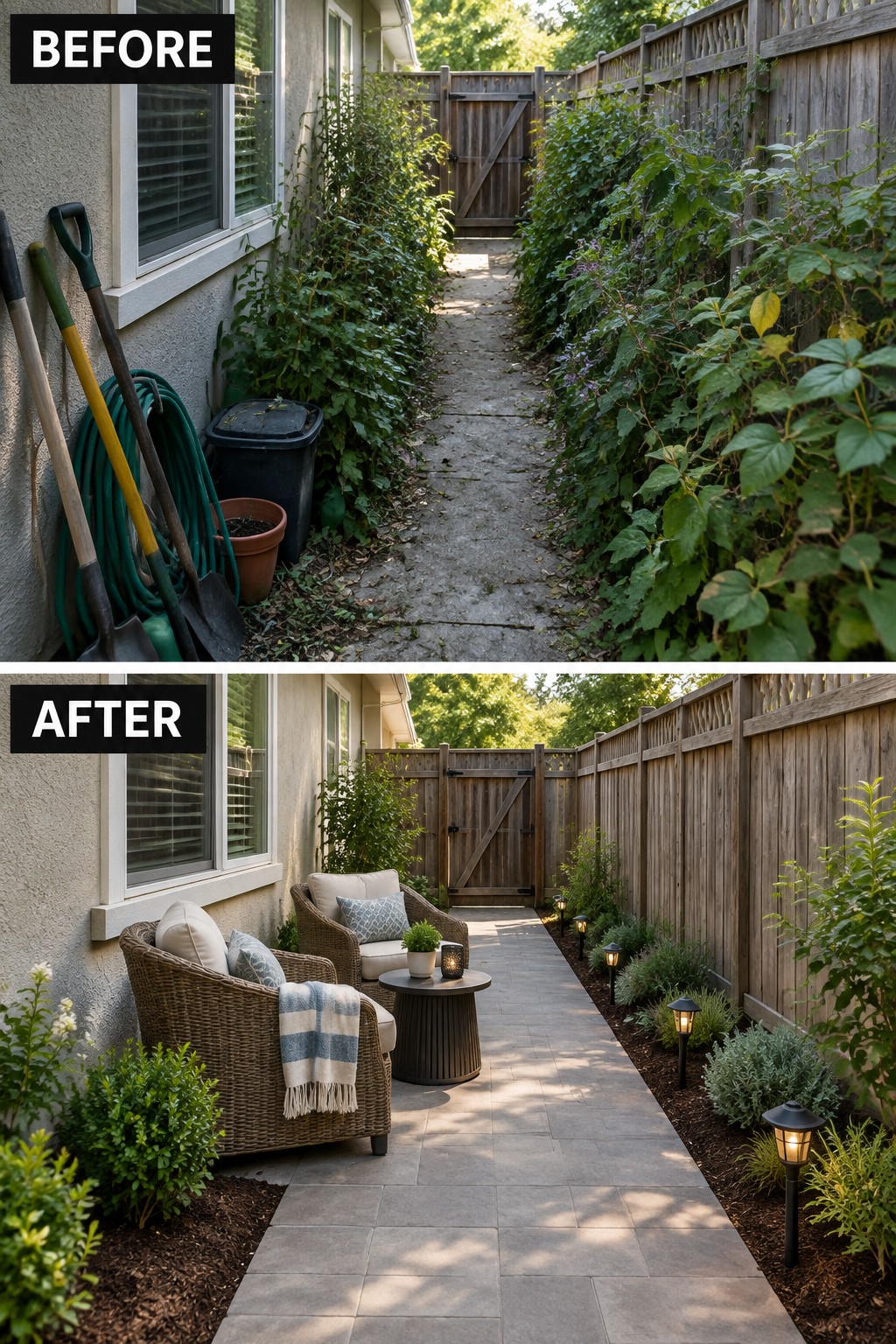
The main change here is that a cluttered, overgrown walkway became a simple paved path with room for seating. Once the tools, hose, and weeds were cleared and pavers were laid, the space stopped feeling like a leftover strip and started working as a place to sit.
This approach suits homes with tight side yards between the house and fence. Start by clearing the area and adding a solid surface, then keep furniture low and compact so the path stays open. A couple of lights along the edge help if you want to use the spot after dark.
Create A Defined Outdoor Seating Area In Your Backyard

A bare lawn with just one bench rarely gets used. The after version shows how placing a rug and a full seating set in the same spot turns the space into an actual room you can sit in. The rug pulls everything together and keeps the furniture from feeling like it was dropped in the middle of the grass.
This idea works best in backyards that have at least a small patch of level ground near the house or fence. Keep the furniture scale modest so the area still feels open, and add simple lighting along the fence if you want to use the space in the evening. Start with the rug and seating before you add too many extra pieces.
Turn A Plain Patio Into A Defined Seating Area

A bare concrete patio often feels like wasted space until you give it clear boundaries. Switching to pavers and anchoring a sectional sofa with a rug turns the same area into a usable outdoor room where people actually want to sit.
This approach works on most backyards that have a flat slab but lack structure. Keep the furniture scale modest, leave walking room around the edges, and add simple lighting so the space feels inviting after dark.
Build A Deck To Create Usable Outdoor Seating

A messy backyard with no clear purpose is hard to enjoy. Adding a raised deck gives the space a solid floor and a defined area for seating, which turns an empty lawn into a place where people actually want to spend time. The string lights overhead and the fire pit in the middle make the area feel finished without needing a lot of extra pieces.
This approach works best in yards that already have some open grass but lack structure. Start with the deck size and shape so the furniture fits without crowding the edges, then add lighting that reaches the seating zone. Keep the surrounding planting simple so the deck remains the main feature rather than competing with too many garden beds.
Turn Bare Ground Into A Bench Seating Area

A small backyard with nothing but dirt and one plastic chair feels like wasted space. Adding a curved wooden bench that follows the wall gives the area a clear purpose and turns it into a place where people can actually sit and spend time.
This idea works best in tight corners or narrow yards where regular furniture would feel cramped. Keep the bench simple, choose wood that can handle weather, and add just enough planting around the edges to soften the look without blocking movement.
Turn An Empty Patio Into A Covered Seating Area

A flat concrete slab with nothing but an umbrella feels like wasted space, and that is exactly what the before photo shows. Adding a roof structure, a sectional, a rug, and a few lights turns the same area into a place where people actually want to sit.
This works best on homes that already have a large patio slab but no real reason to use it. Put the cover in first if rain or sun is an issue, then keep the furniture layout simple so there is still room to walk around. One rug under the seating helps the whole setup feel like a single room instead of scattered pieces.
Frequently Asked Questions
Q: How do I keep outdoor cushions from getting soaked after a quick rain shower? A: Pick cushions with quick-dry foam inside and store them under a bench or in a bin when bad weather rolls in. A simple waterproof cover tossed over the whole setup works even better for short storms. This keeps everything ready to use without extra drying time.
Q: What seating works best if my yard gets heavy use from kids and pets? A: Go for sturdy frames like powder-coated metal or thick plastic that can take bumps and scratches. Skip delicate fabrics and choose woven options that wipe clean fast. They hold up longer and still look inviting.
Q: Can I mix a few different chair styles without the area feeling scattered? A: Stick to one main color across everything and add pillows in matching tones to pull it together. Start with two matching chairs and add one or two accents that share a similar shape. The space stays balanced and still feels personal.
