


Many patios feel bare and forgotten once evening arrives because the lighting is either too bright or barely there at all.
I have found that focusing on outdoor lights early on helps create a space that actually gets used after dark instead of staying empty.
Simple changes like string lights or low path fixtures can make seating areas feel more defined without needing a full rebuild.
In my yard the biggest improvement came from choosing lights that worked with the existing furniture rather than trying to add more pieces first.
That approach keeps the patio practical while still giving it a settled look that holds up over time.
Use String Lights To Create A Cozy Evening Patio
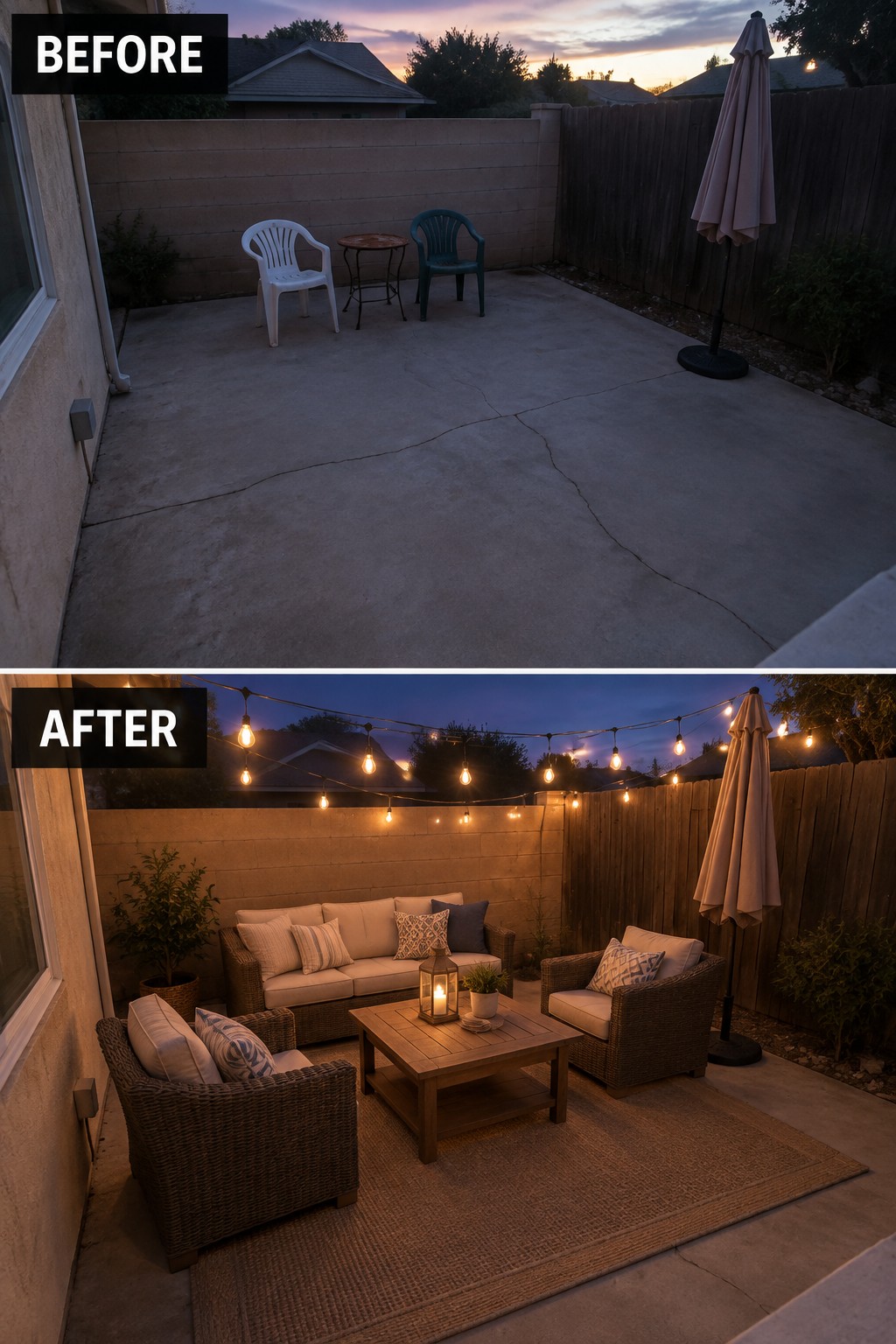
A bare concrete patio often sits unused once the sun drops. Running a simple strand of lights across the space gives it purpose and makes the area feel warmer without any major construction.
Hang the lights first so you can see how the evening light lands, then add seating and a rug to mark the main area. This works on most patios as long as you keep the furniture from crowding the walkway and choose pieces that can stay outside.
Add Lanterns To Light A Patio Path
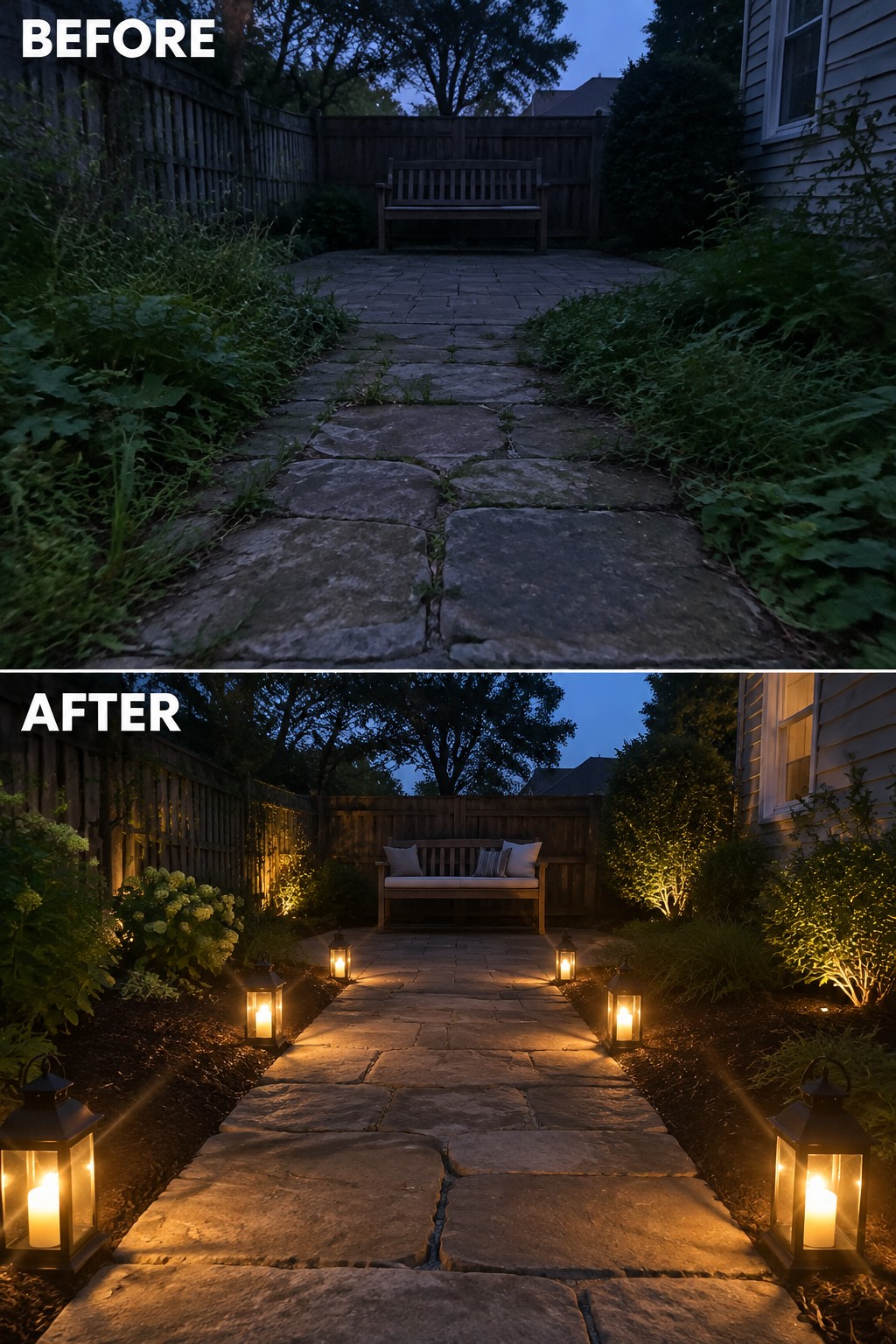
A dark patio path often gets ignored once the sun drops, even if the space itself is perfectly fine. Setting a row of lanterns along the edges gives the stone walkway a clear line at night and turns the whole area into a spot people actually want to use after dinner.
This idea works on any simple patio or garden path that leads to a bench or seating area. Keep the lanterns low and evenly spaced so they guide feet without overpowering the space, and add one or two brighter lights near the main seat so the area feels finished rather than just lit.
Use Outdoor Lighting To Make A Patio Feel Cozy
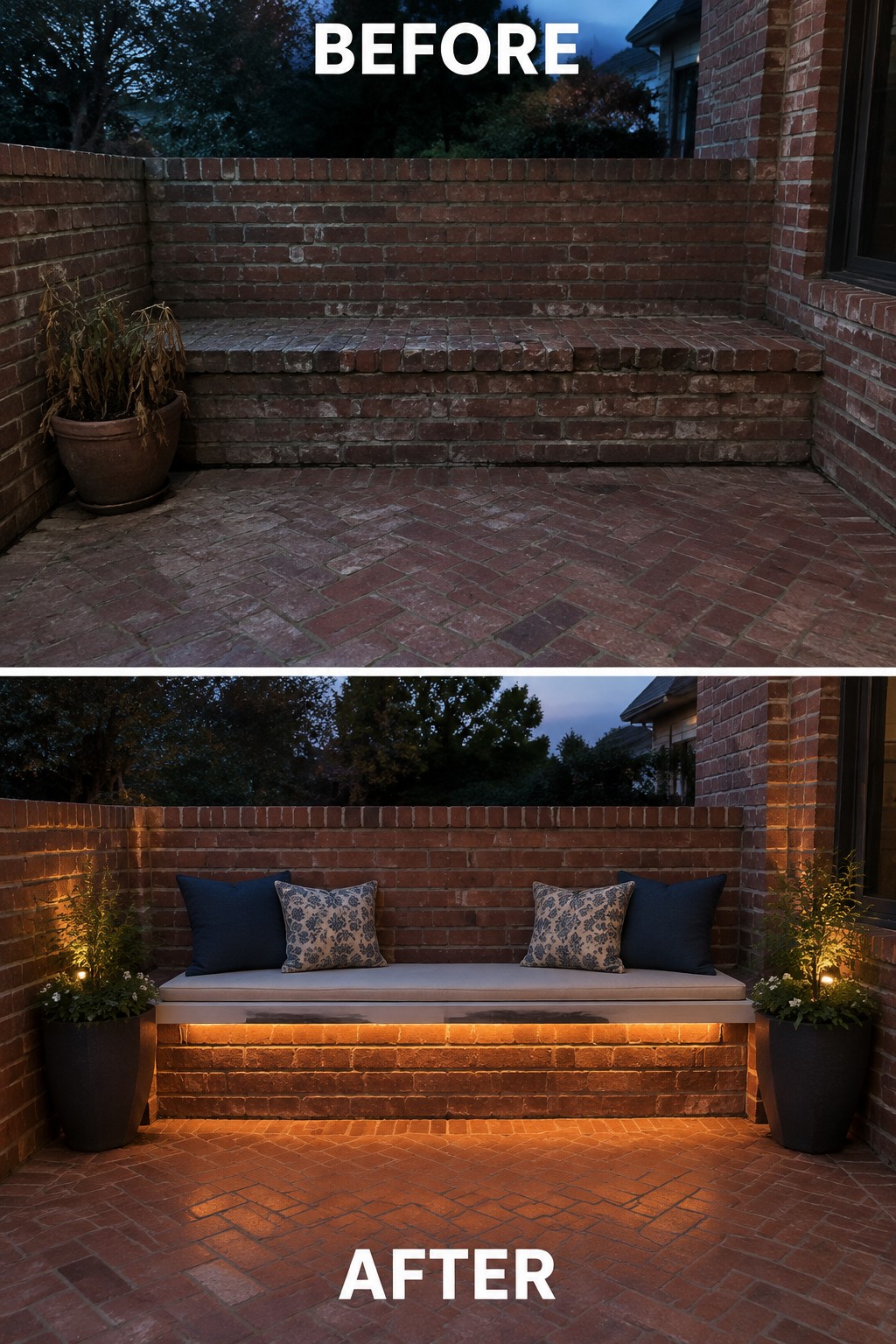
An empty brick patio can feel cold and unused once the sun goes down. Adding a few well-placed lights turns the same space into a place where people actually want to sit after dark. In this case, simple uplights on the plants and a strip of warm light under the bench make the area feel finished without much extra work.
This idea works best on small patios or corners that already have a solid surface and walls. Start with one or two lights aimed at plants or seating, then add more only if the space still feels dark. Keep the fixtures low and warm so the light stays soft and does not glare into the house or neighboring yards.
Use Outdoor Lighting To Turn A Plain Patio Into An Evening Spot
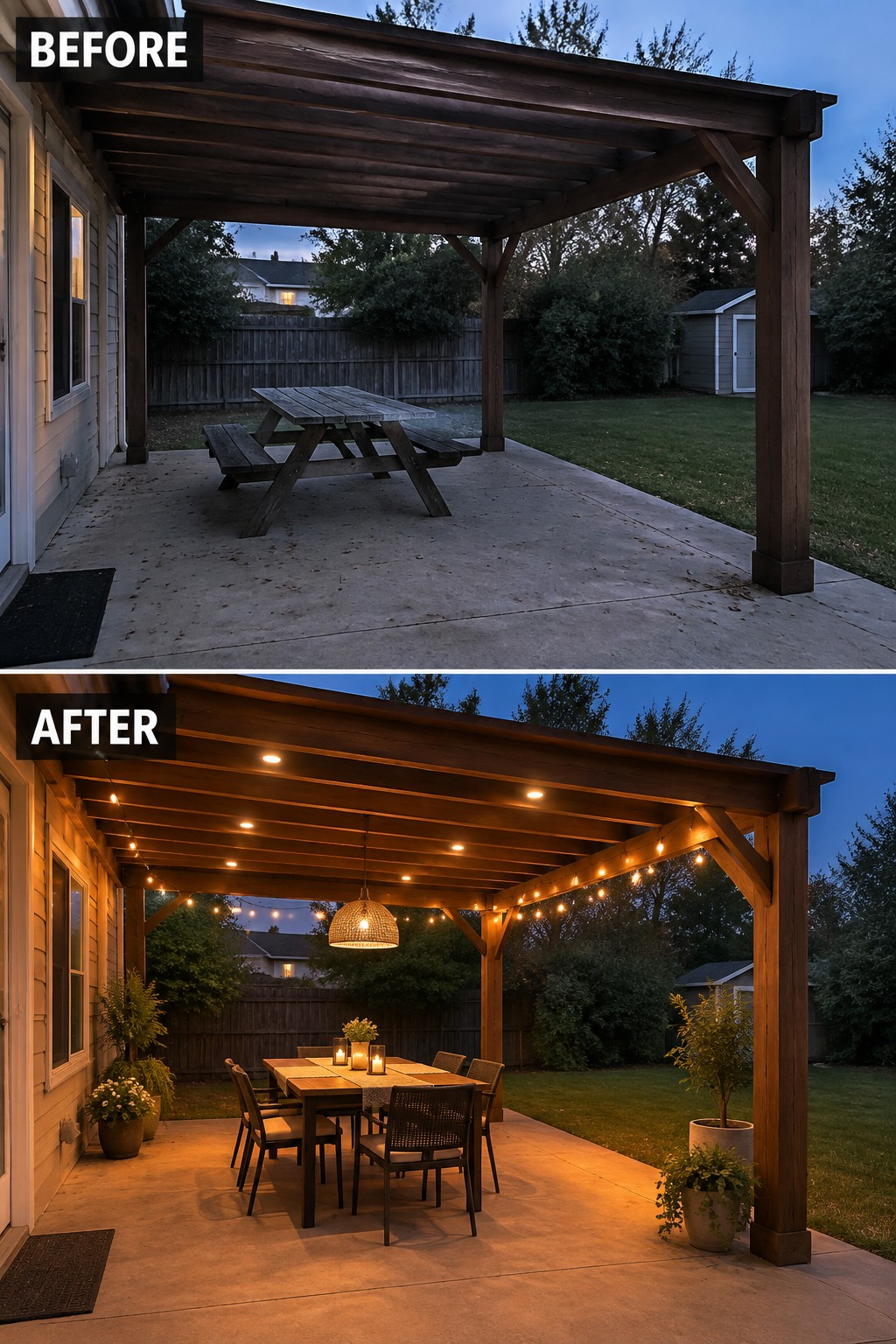
A bare patio often feels unfinished once the sun drops, even with a solid structure overhead. Adding string lights along the beams and a single pendant over the table made this space feel usable instead of empty, turning a basic concrete area into a place where people actually want to sit after dark.
This works best on covered patios or pergolas where you can run lights without much wiring hassle. Keep the furniture simple and weatherproof, and focus the lighting over the main seating zone so the area feels defined without needing extra walls or screens.
Use Outdoor Lighting To Make A Patio Feel Cozy
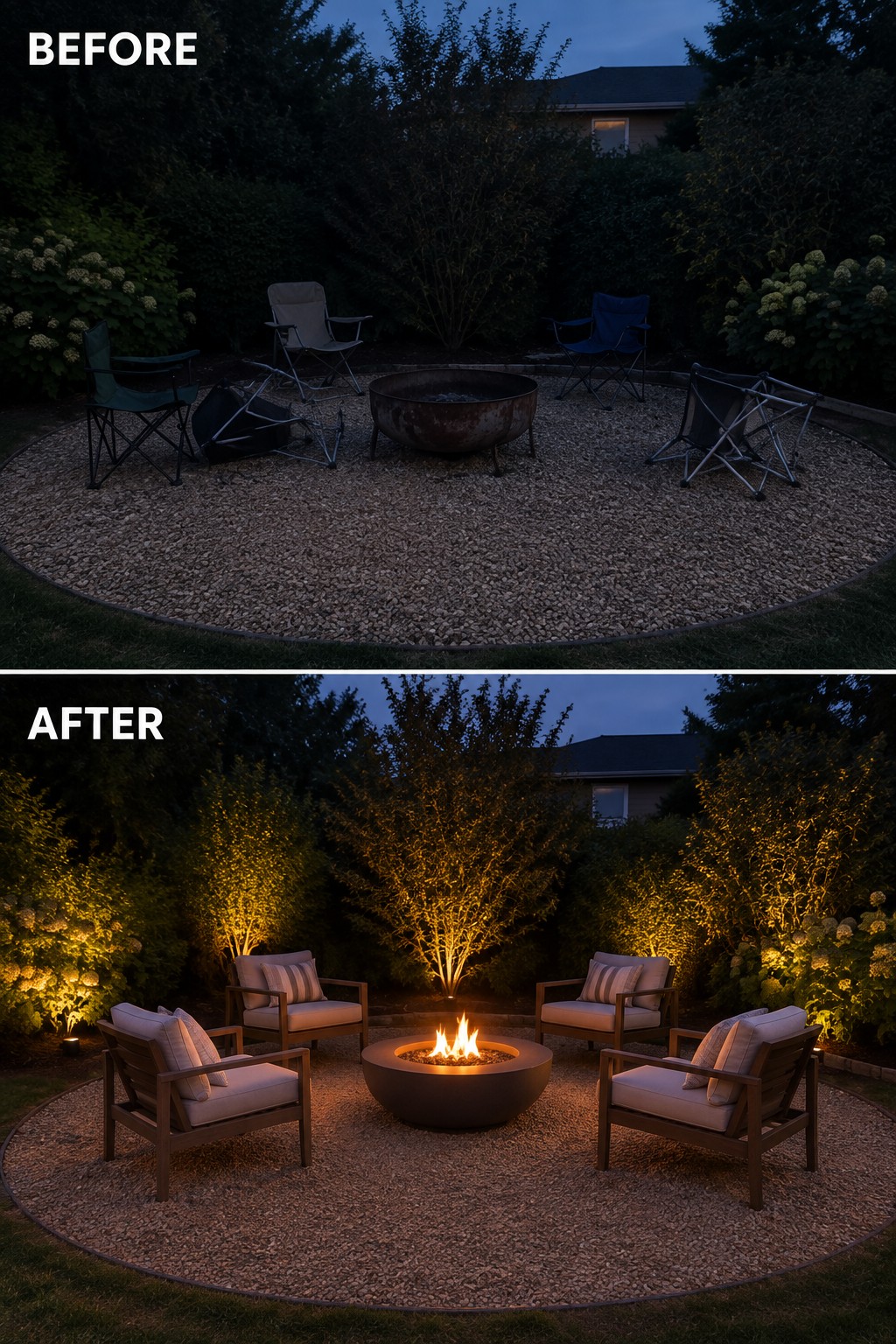
The main shift in this patio came from adding lights around the planting beds. Before, the space looked flat and a little messy once it got dark. After the lights were placed, the shrubs and trees picked up a warm glow that made the seating area feel finished and much more inviting.
This idea works on almost any gravel or concrete patio that has some greenery nearby. Place a few low fixtures in the beds so the light hits the leaves instead of shining straight into people’s eyes. Start small with two or three lights, then add more only if the space still feels dim.
Add Path Lights To Make A Patio Usable At Night
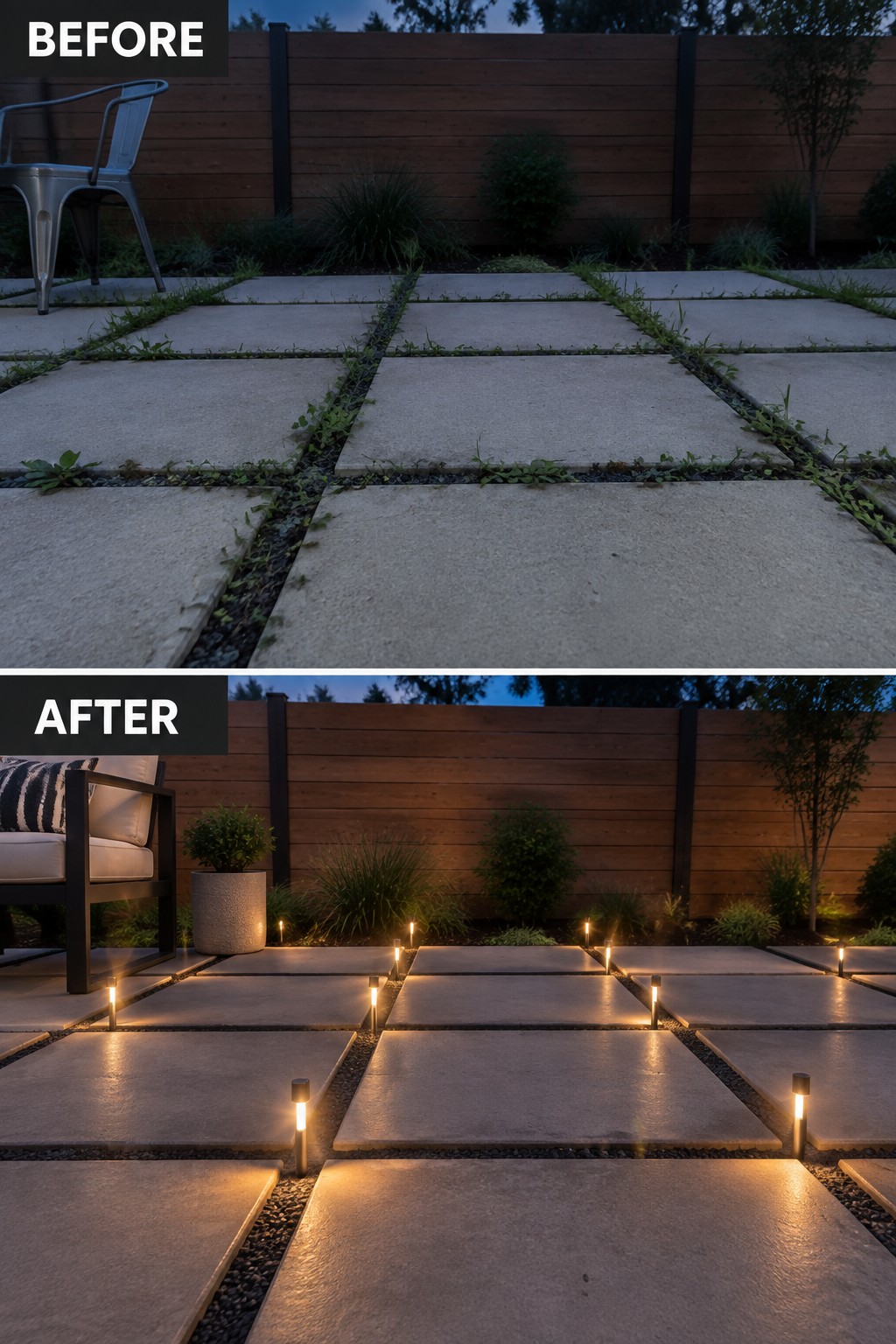
A patio with pavers can look finished during the day and still feel forgotten once it gets dark. The change here comes from placing small path lights directly into the joints between the stones. They mark the walking lines, add a soft glow, and make the space feel intentional without adding overhead fixtures or major construction.
This idea works best on existing patios where the hardscape is already in place. Space the lights evenly along the main paths, keep the height low so they do not block movement, and choose warm bulbs that match the rest of your outdoor lighting. It gives the area a clear purpose after sunset while keeping the daytime look simple and clean.
Use String Lights To Make A Patio Feel Cozy
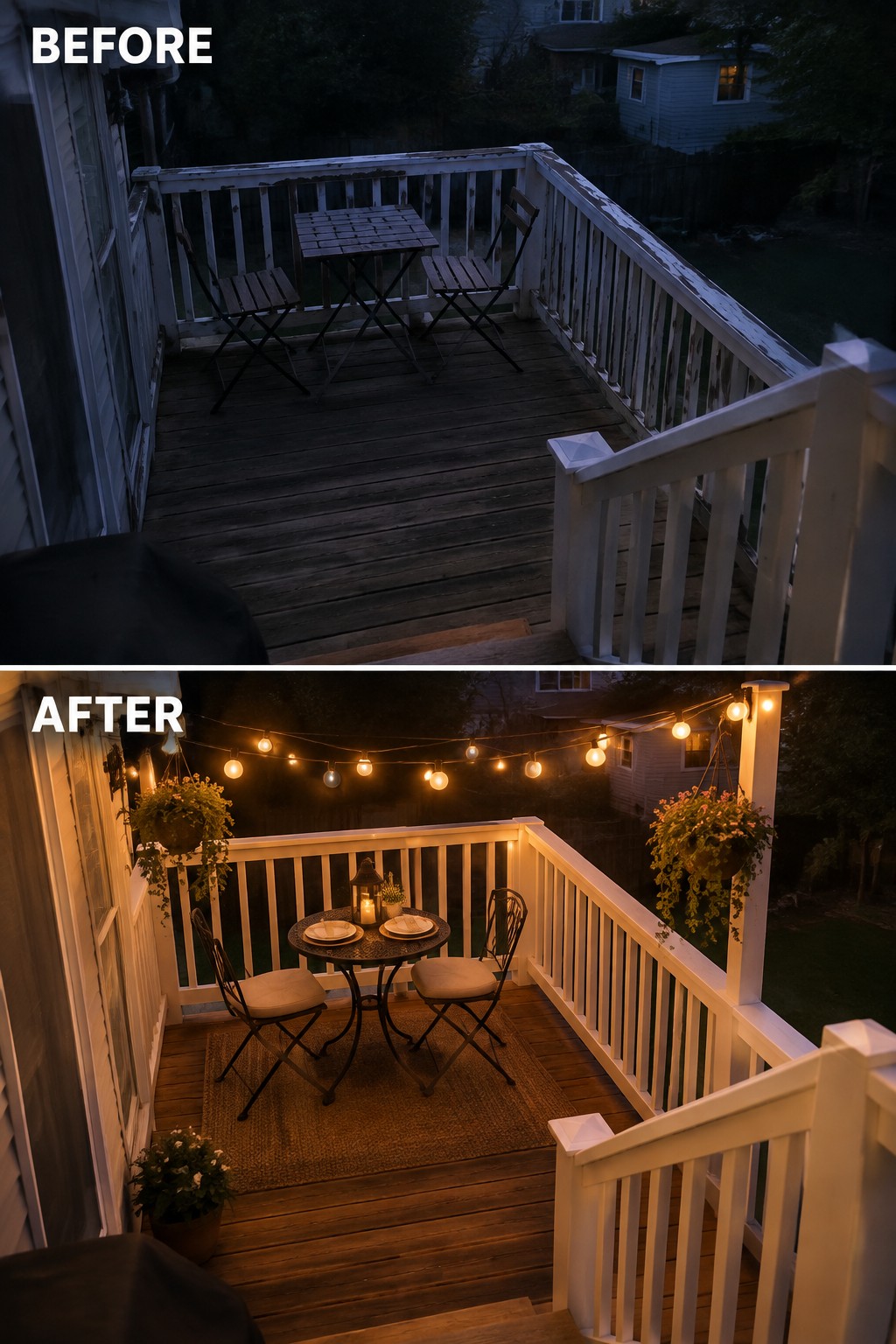
A plain deck with just a table and chairs often feels unfinished once the sun sets. Adding string lights overhead changes that right away by creating a soft overhead glow that makes the space feel warmer and more inviting without any major construction.
This approach works best on decks or patios that already have basic seating. Hang the lights first along the railing or posts, then add one rug underneath the table to define the area. Keep the rest simple so the lighting stays the main feature.
Use Outdoor Lighting To Make A Bare Patio Feel Usable At Night
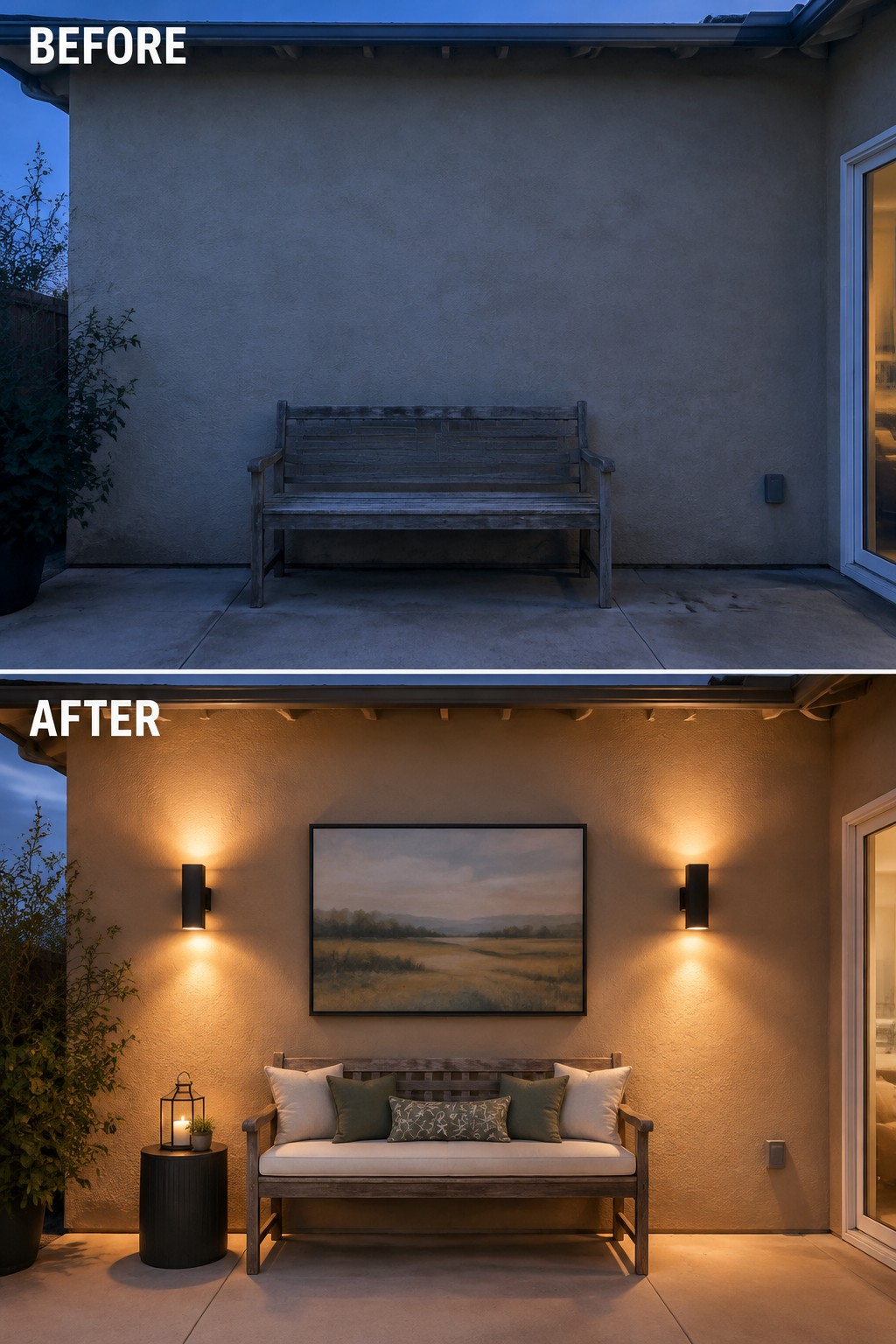
A plain concrete patio with just a bench can feel cold and unfinished once the sun goes down. Adding a pair of wall sconces on either side of the seating area creates a warm pool of light that turns the space into somewhere you actually want to sit after dark.
This idea works best on covered patios or porches where the lights can be mounted easily and the seating stays dry. Keep the fixtures simple and position them so the glow falls on the bench and surrounding floor rather than shining straight into eyes. Add cushions and one small side table to finish the setup without crowding the space.
Use Outdoor Lighting To Make A Patio Feel Cozy
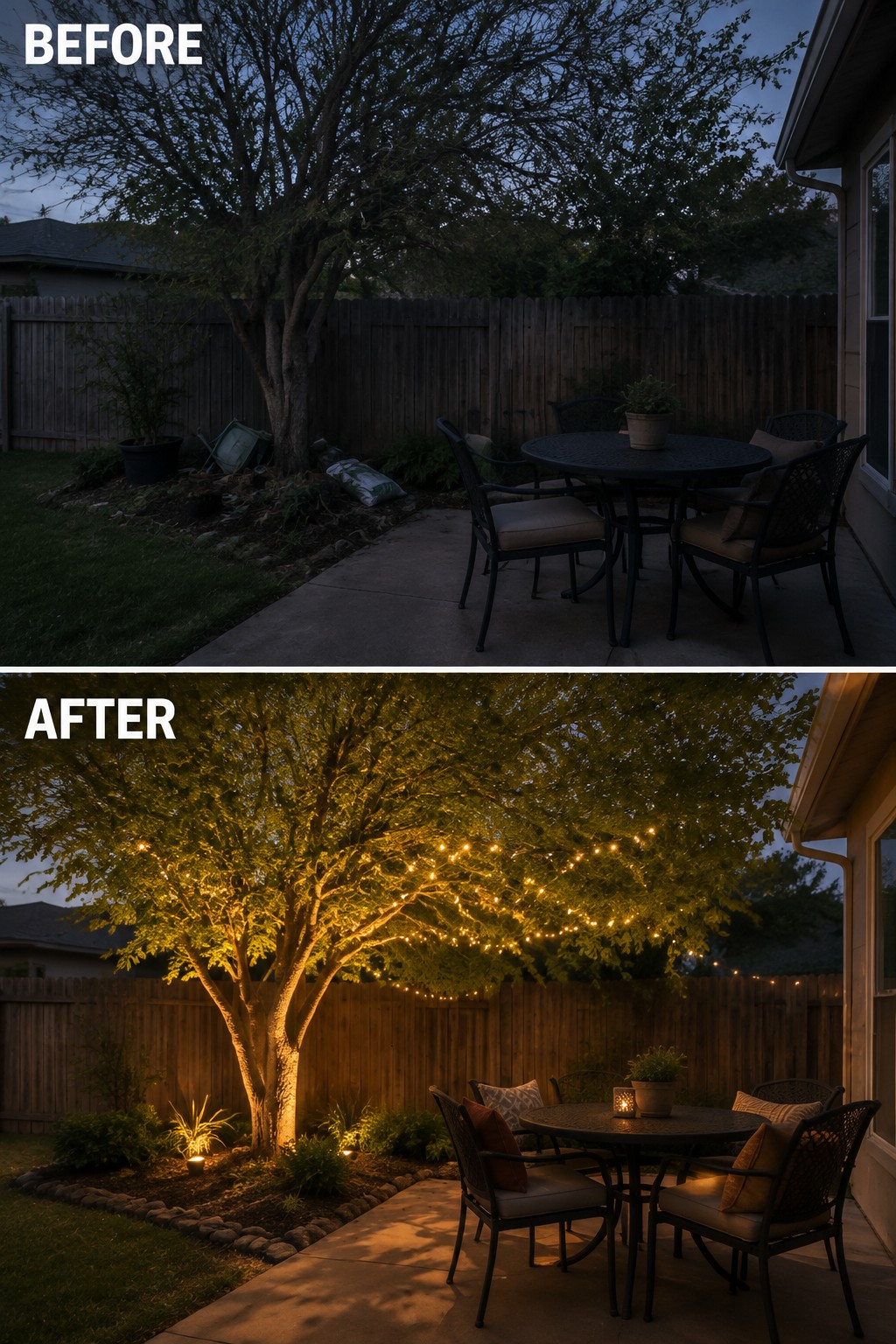
The main shift here comes from adding string lights to the tree and a few ground lights at the base. The space went from looking dark and unused in the evening to feeling like a natural spot to sit once the sun went down.
This idea works best on patios that already have a tree or large shrub nearby. Start with weatherproof string lights on one main feature and add one or two low lights near the ground so people can see where they are walking. Keep the furniture simple and let the lighting do the work of making the area feel finished.
Use Outdoor Lighting To Make A Patio Feel Usable At Night

The main change here is the addition of simple lighting. String lights overhead and a lantern with candles on the table turn a plain dining set into a spot that feels ready for evening meals.
This idea works on any patio that already has a table and chairs. Put up one string of lights first, then add a lantern or a few candles so the light stays soft and focused on the seating area. It keeps the setup practical without crowding the space.
Add Step Lights To Outdoor Stairs For Better Safety

Many homes have concrete steps that turn into a hazard once daylight fades. Installing small recessed lights on each tread makes the path visible without needing a big overhead fixture or harsh floodlight.
This approach works well on any front or side entry that sees regular use after dark. Keep the lights on a timer or motion sensor, choose warm LEDs, and make sure the fixtures sit flush so they do not catch on shoes or shovels.
Add Lighting To Planters And A Water Feature
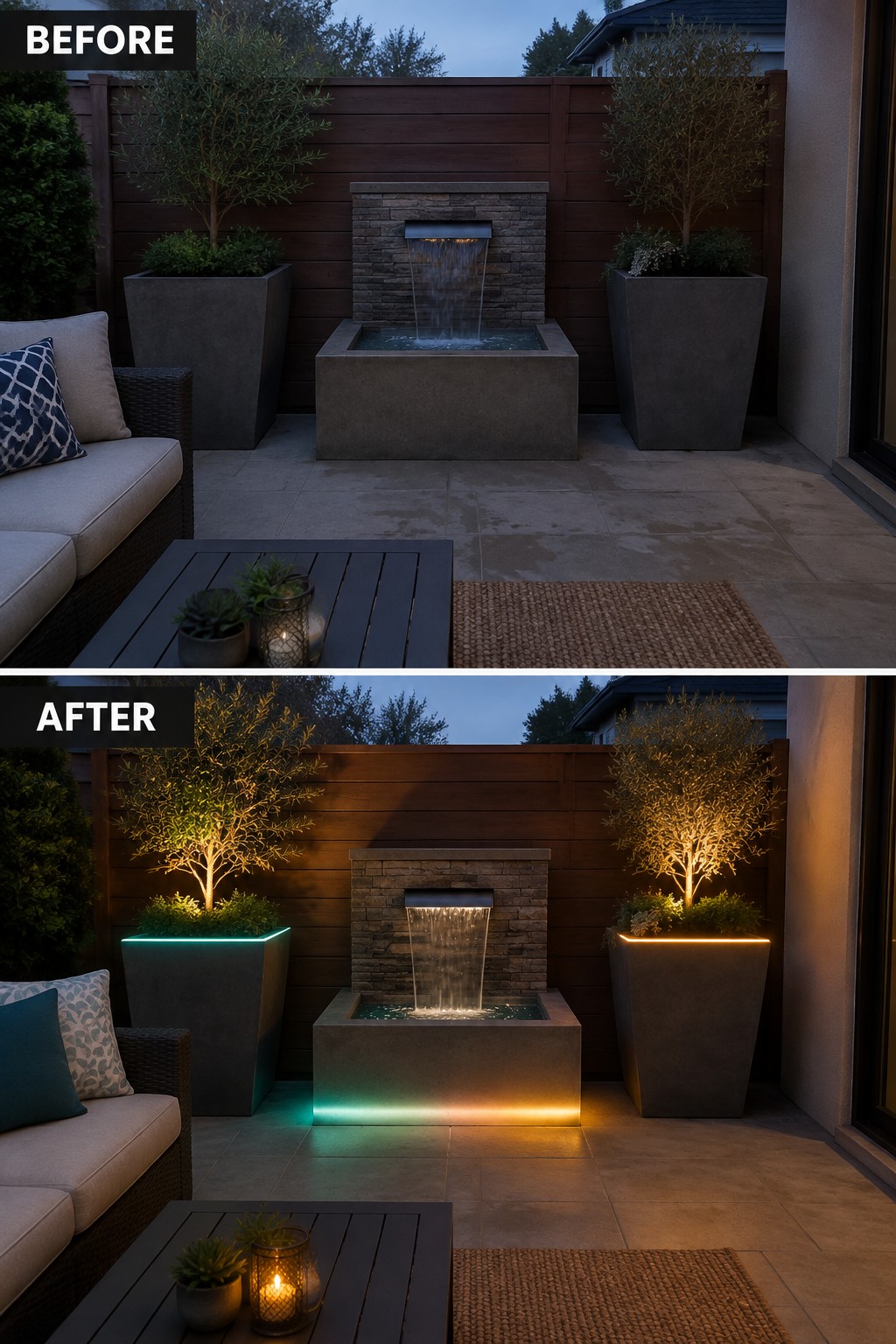
One easy way to improve an evening patio is to add lighting around the planters and water feature that are already there. The before photo shows the space going flat once the light faded. After adding low strips along the planter bases and under the fountain the area feels much more usable at night.
This idea works best on patios that already have a few solid pieces like large pots or a fountain. Use simple weatherproof LED strips in a warm tone and keep them low so they graze the surfaces. It turns what you already own into the main evening feature without adding much more furniture or decor.
Use Lighting To Make A Patio Feel Cozy

A basic deck with a fire bowl can feel empty at night when the seating is scattered and there is no real plan. Adding warm lights around the edge and pulling the chairs into a proper circle turns the space into somewhere people actually want to sit after dark. The fire becomes the center instead of the only light source.
This works best on decks or patios that already have a fire feature but lack structure. Start with simple low lights along the deck boards and a couple of brighter spots near the seating. Keep the furniture scale modest so the area still feels open, and choose pieces that can stay outside year-round.
Use String Lights To Make A Patio Feel Cozy
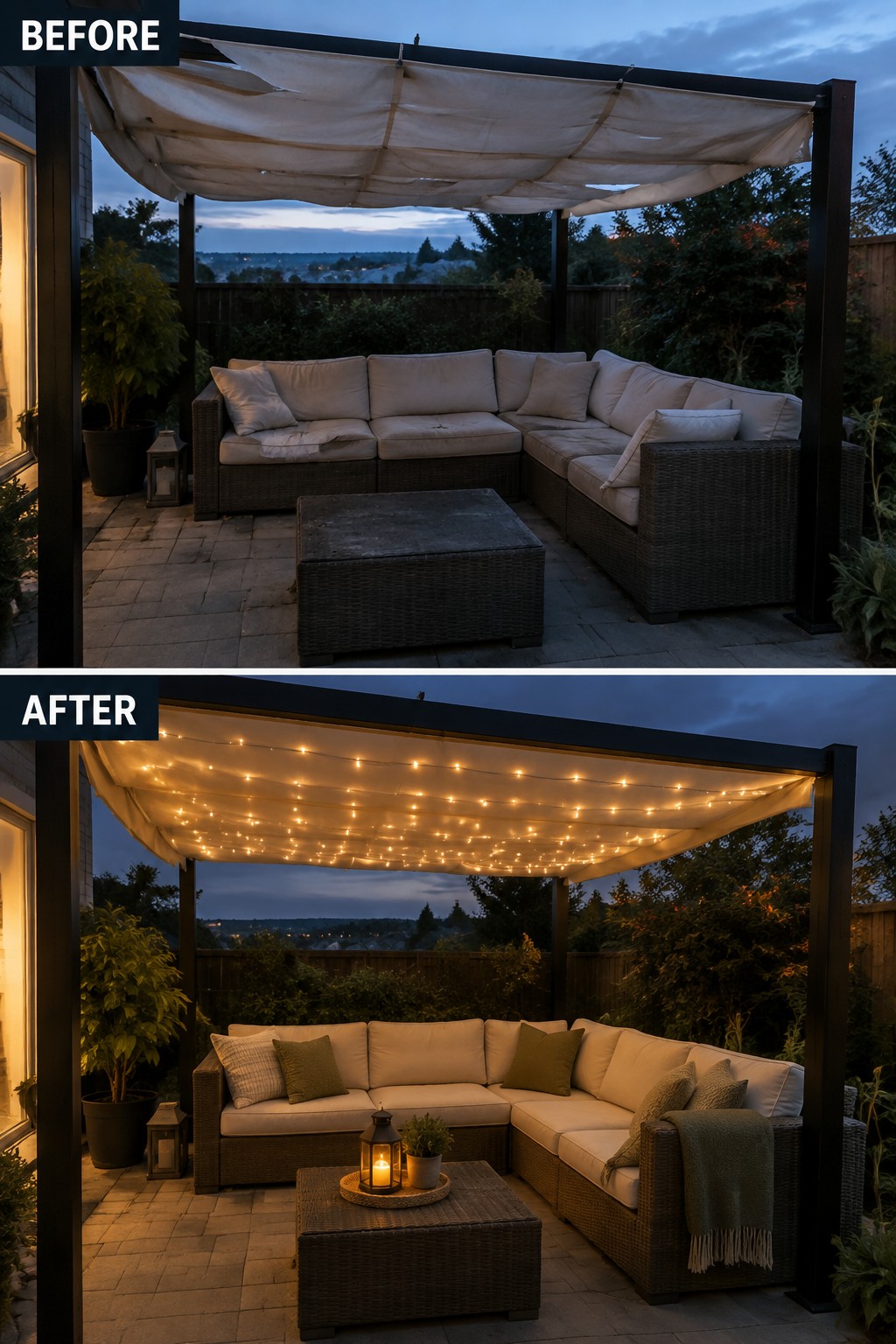
A basic patio with a canopy can still feel unfinished once it gets dark. Running string lights underneath the canopy adds a soft overhead glow that makes the seating area feel complete and ready for evening use.
This idea works best on any covered patio or pergola where you already have a frame to hang from. Use weatherproof lights and keep the rest of the space simple so the lights remain the main feature rather than competing with too many extras.
Add Pendant Lights To Make A Patio Work At Night

A plain concrete patio with nothing but a folding table feels empty once the sun goes down. Adding three simple pendant lights under the awning changed that completely. The lights create a clear dining zone, make the table the center of the space, and turn the area into somewhere people actually want to sit after dark.
This idea works best on a covered patio or deck where you can hang lights from the structure above. Keep the fixtures simple and outdoor-rated, space them evenly over the table, and pair them with seating that matches the scale of the area. Start with the lights before adding too many other pieces.
Use Layered Outdoor Lighting To Make A Patio Feel Cozy
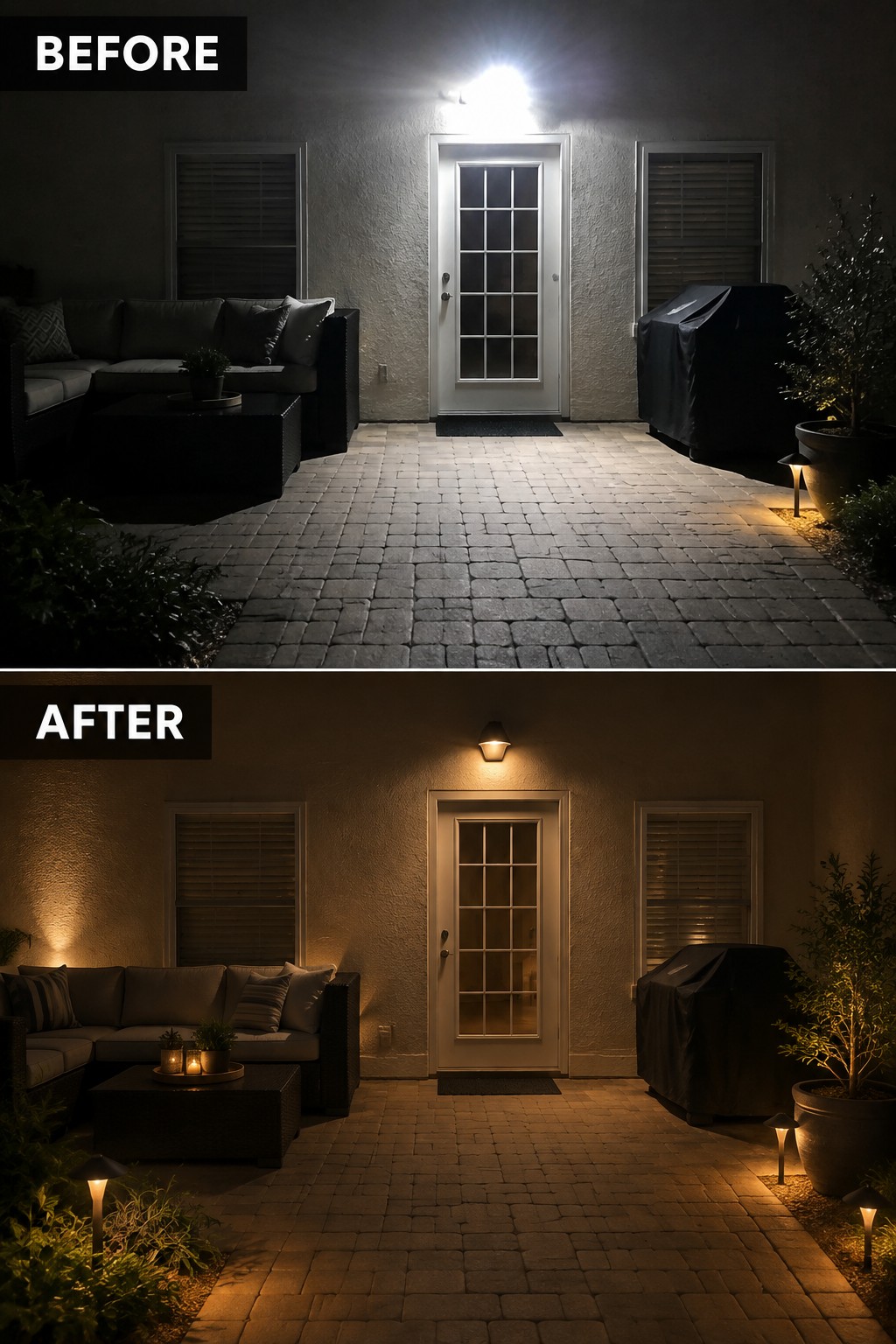
The before photo shows a typical problem with many patios. One bright overhead light creates glare and leaves the rest of the space feeling dark and flat. In the after photo, that single fixture is gone and replaced with a wall sconce above the door plus several low path lights. The light now spreads out at different heights, which makes the seating area and walkway feel much more comfortable after dark.
This approach works well on any patio that gets used in the evening. Start by turning off or removing the brightest overhead light, then add one or two fixtures at eye level and a few lower lights along the edges. Keep the bulbs warm rather than cool white, and make sure the lights point down or sideways instead of straight out. The goal is even, gentle light that lets people see where they are walking without washing everything out.
Use One Large Pendant To Light An Evening Patio

An empty concrete patio often feels cold and unused once the sun goes down. Adding a single oversized woven pendant light changed the whole feel here. It casts a warm glow across the seating area and creates soft patterns on the ceiling that make the space feel finished and welcoming.
This approach works well on covered patios where you want one clear focal point. Keep the rest of the lighting simple with a few lanterns so the pendant does the main job. Make sure the fixture is rated for outdoor use and hung at a height that lights the seating without getting in the way.
Add Railing Lighting To Make A Balcony Usable At Night
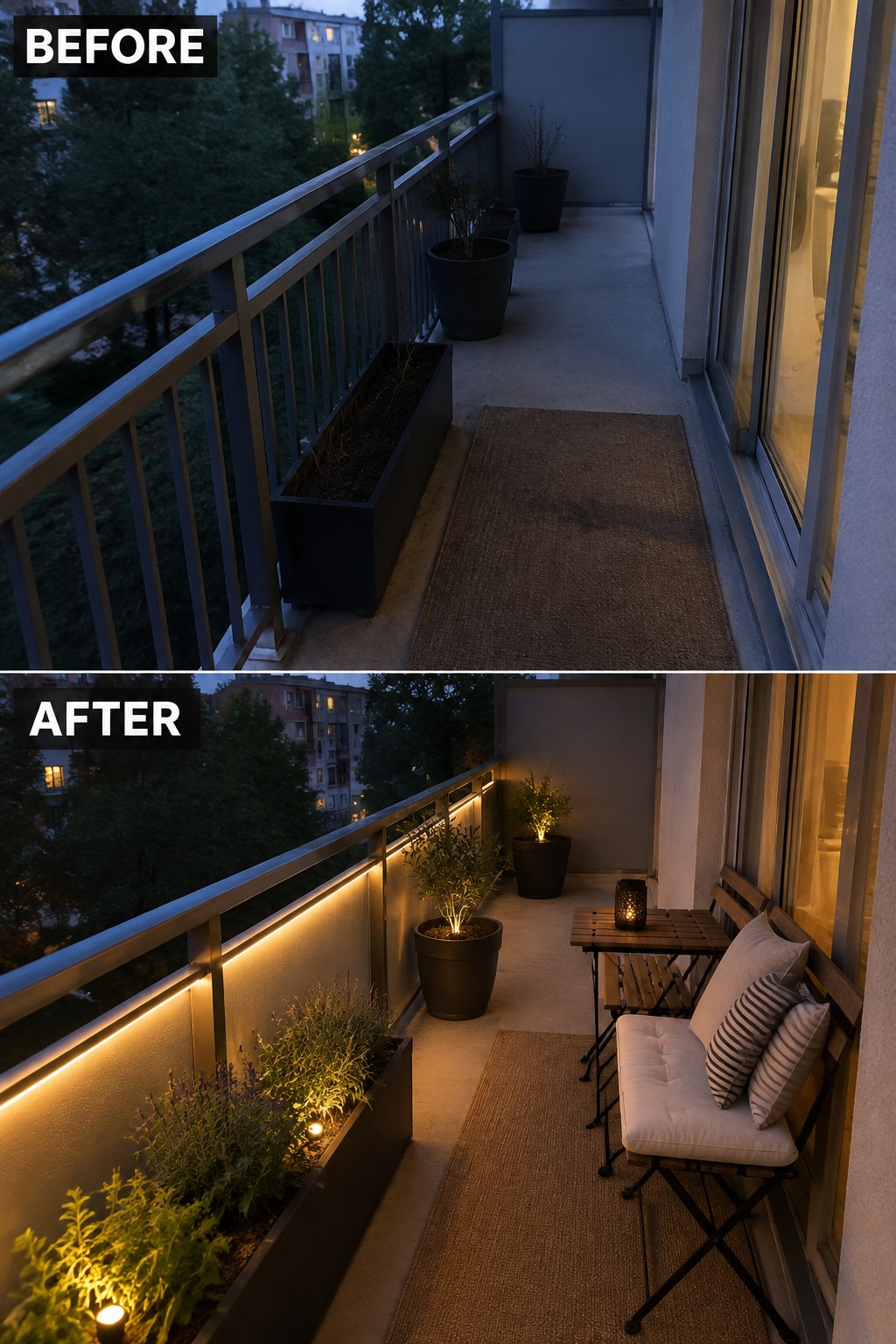
A bare balcony often feels like wasted space once it gets dark. Here the simple addition of warm LED strips along the railing turned the area into a place you can actually sit after sunset, with just a few small lights tucked into the planters to finish the effect.
This works best on narrow balconies where floor lamps would get in the way. Run the lights along the inside edge of the railing so they wash down onto the floor, keep the furniture small and movable, and limit the number of pots so the walkway stays clear. It suits apartment balconies that mainly get used in the evening.
Frequently Asked Questions
Q: How do I keep bugs from ruining evenings on the lit patio? A: Choose bulbs with a warm color temperature around 2700K. Position fixtures to shine downward onto tables and paths rather than upward into open air. Swap any always-on lights for yellow bug versions during peak insect season.
Q: What works if I want lighting but hate running new cords across the yard? A: Solar stake lights and clip-on string lights handle most of the 18 ideas without extra wiring. Set them along edges or hang from trees where they catch sun during the day. Check battery packs once a month and swap them before they fade out.
Q: How bright should the lights stay once people start sitting down? A: Begin with higher output and dim the main fixtures after the sun sets. Mix in a couple of small lanterns on tables so the overall glow feels softer. Walk the space at night and move any lights that create glare right into someone’s eyes.
