

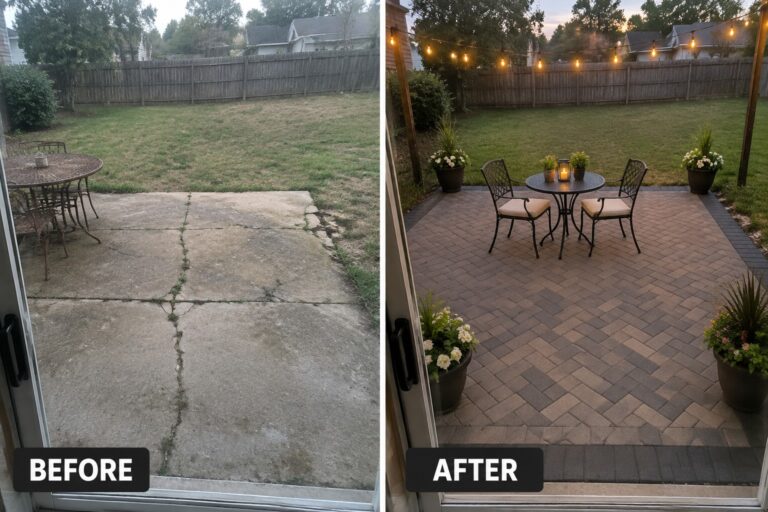
I have noticed that many backyards end up ignored when the ground surface looks tired or uneven, which keeps people from using the space regularly.
A new layer of decking or stone can pull the whole area together and make it feel ready for chairs and tables without much else added.
That shift surprised me in a few cases.
It reminded me that structure on the ground often matters more than adding plants or furniture right away.
I would start with the surface if I were fixing up my own yard because it sets the stage for everything else.
Turn An Unused Concrete Patio Into A Seating Area
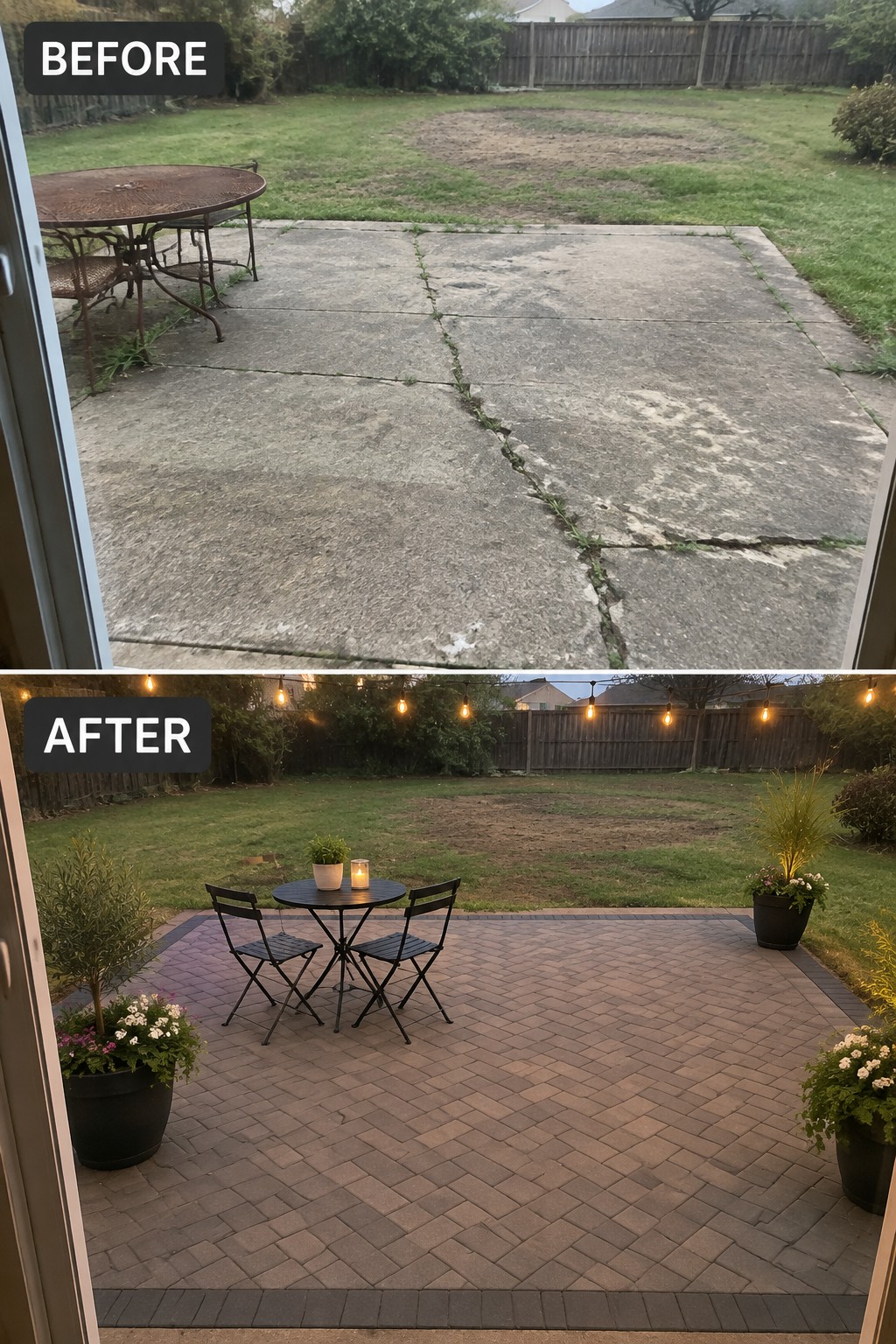
A large concrete slab often stays empty because it has no clear purpose or boundary. Switching to brick pavers and placing a small table with chairs gives the space a defined edge and a reason to sit outside.
This works best on homes with an existing slab that just needs better surfacing. Keep the furniture scale modest, add a few pots for softness, and string a simple line of lights overhead so the area feels usable after dark.
Clean Up The Yard Before Adding Furniture
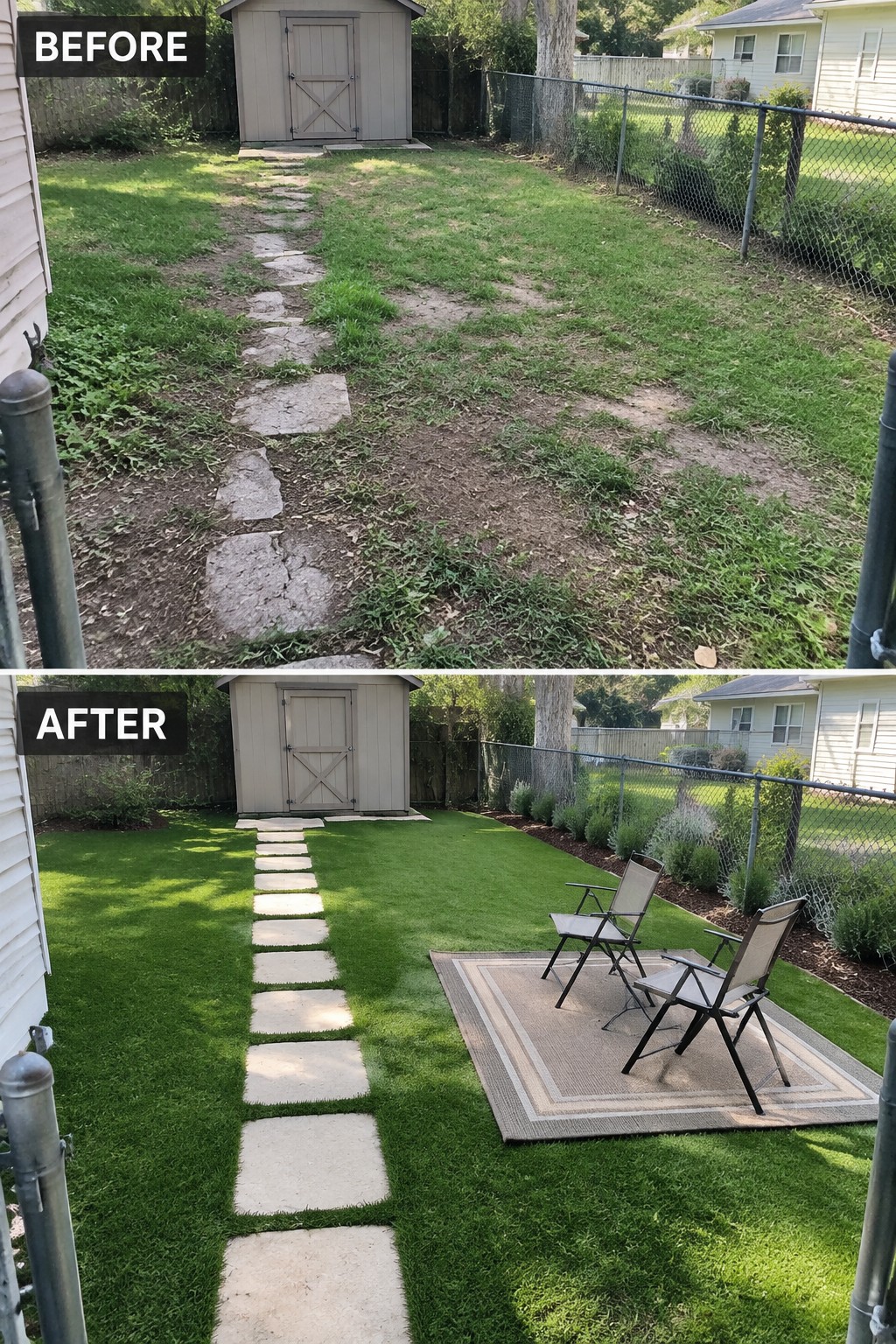
A messy lawn and broken path make a backyard feel smaller and harder to use. Once the grass is even, the stones are straightened, and the weeds are gone, the same space suddenly feels open and ready for seating. Adding one rug and a couple of chairs is enough to turn it into a spot people actually want to sit in.
This approach works best in small or average yards where the lawn is the main surface. Start with the cleanup and path repair first, then bring in furniture so nothing sits on uneven ground or weeds. It keeps the layout simple and makes sure the seating area stays usable instead of fighting the existing conditions.
Refinish A Worn Deck Before Adding Furniture
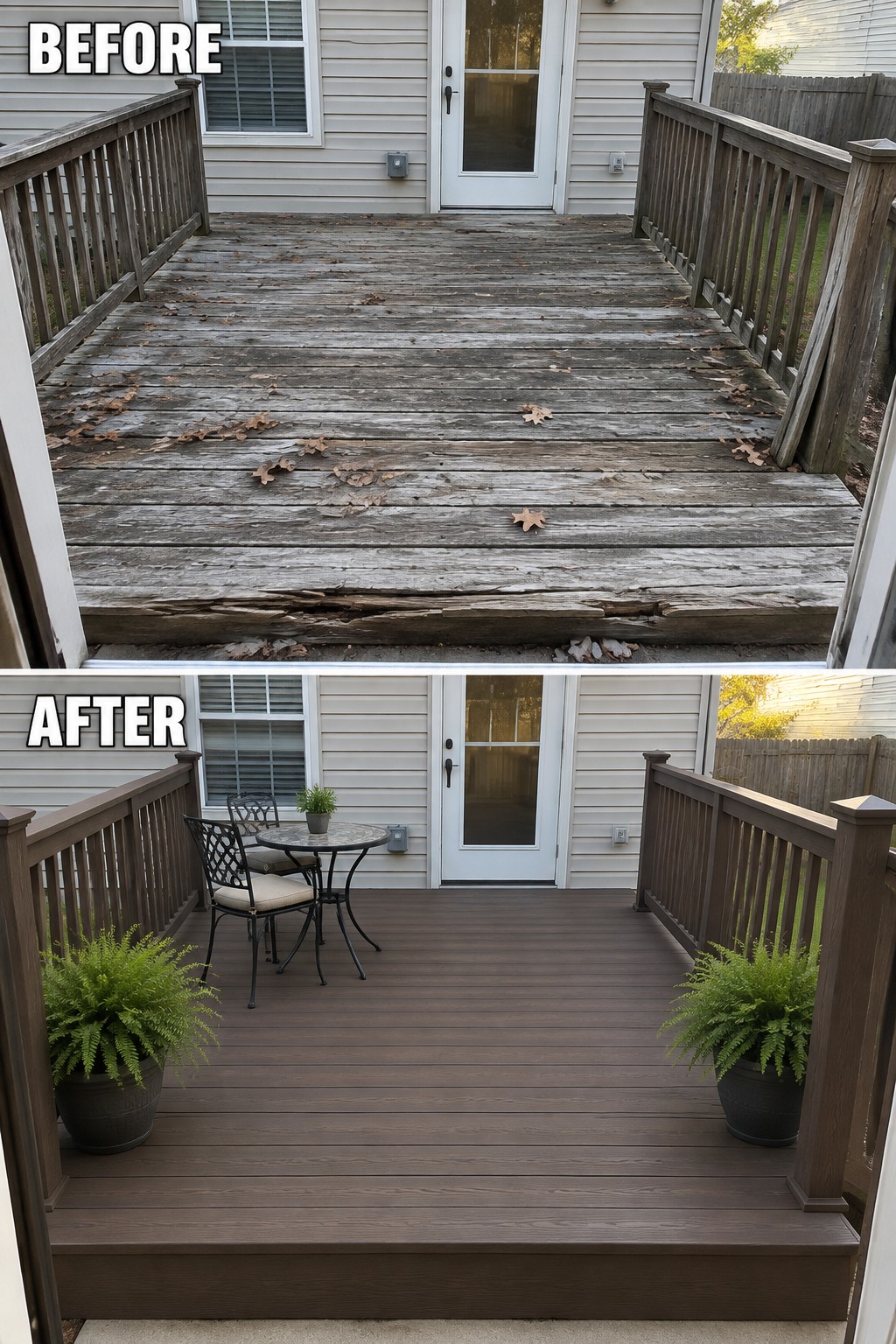
An old deck often looks unusable long before it actually is. In this case the boards had gone gray, collected leaves, and started to split, which made the whole area feel neglected. Once the surface was cleaned and given a consistent dark finish, the same deck suddenly worked as a place to sit.
Start with the wood itself. A solid cleaning and a new stain or sealant can bring life back to boards that are still structurally sound. After that, keep the furniture simple, like one small table and a couple of chairs, and add a few large planters at the edges. This approach suits decks that already have good bones but need a clear purpose before they feel inviting again.
Add Structure To An Overgrown Backyard
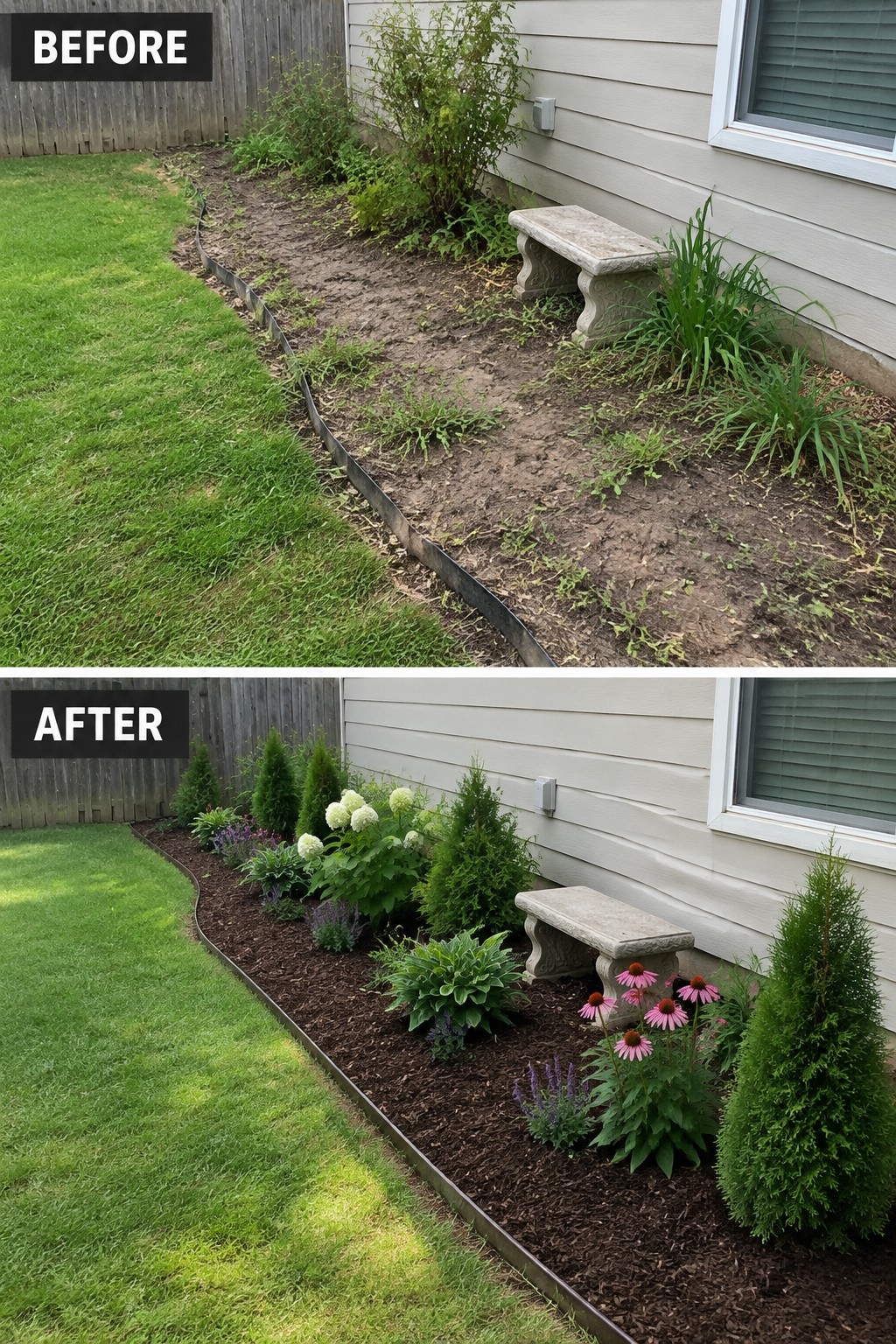
The main improvement came from adding a clean edge and covering the soil with mulch. The bare, weedy strip next to the house now reads as a planned border instead of leftover space that never got finished.
This idea works best along narrow side yards where the lawn meets the foundation. Clean out the weeds first, put in a simple border to hold the shape, then mulch the bed and add a few clusters of shrubs or perennials that suit the light. The result stays tidy with less mowing and weeding right up against the house.
Turn An Overgrown Backyard Circle Into A Fire Pit Seating Area
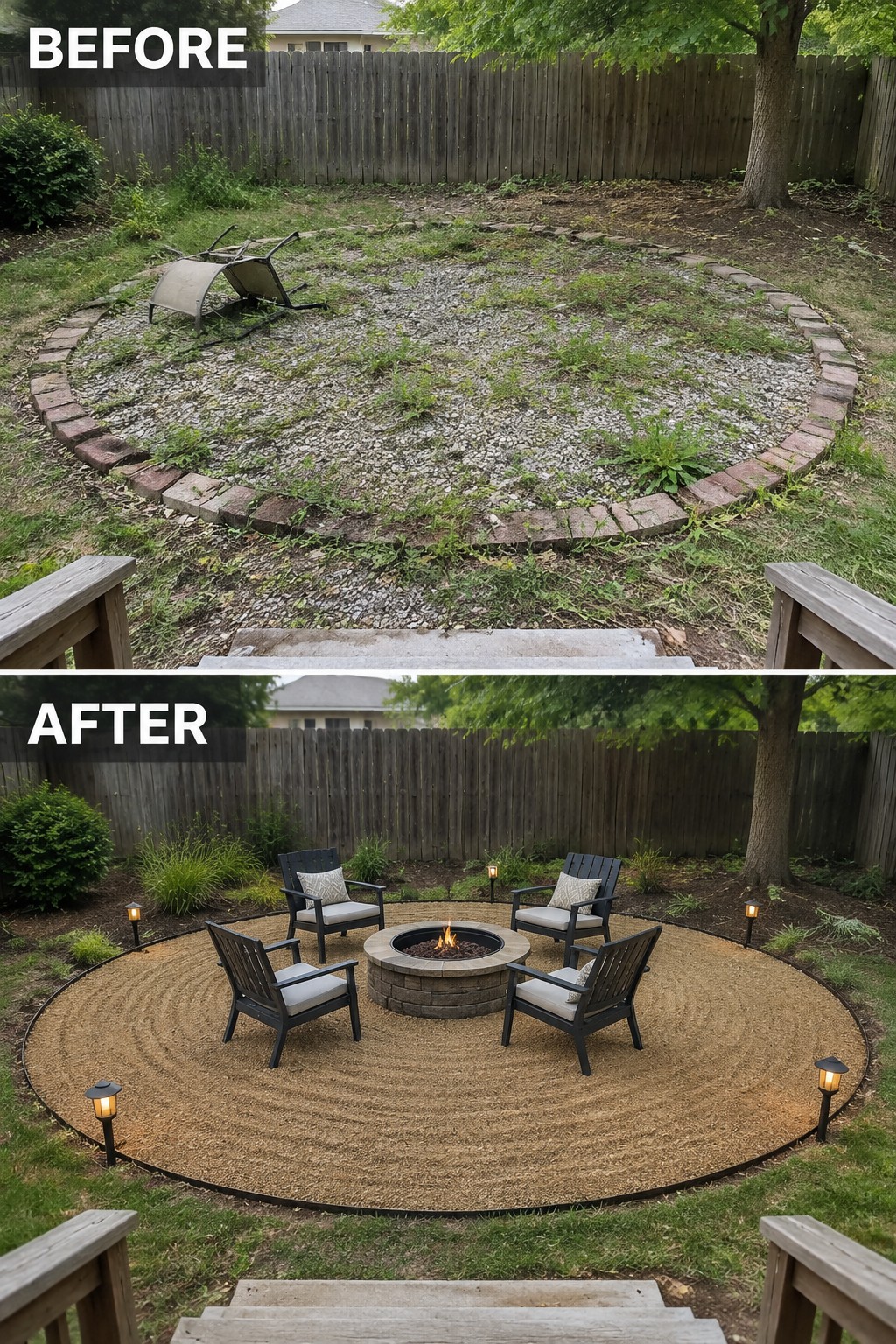
The main change here was clearing out the weeds and junk, then laying down fresh edging to hold the gravel in a clean circle. That single step turned a messy patch of ground into a spot where people could actually sit and use the fire pit without fighting the overgrowth.
This idea works well in any backyard that already has a basic fire pit but feels unfinished. Start by fixing the surface and edges before you add furniture. Keep the seating simple and weatherproof, and place a few low lights around the perimeter so the area stays usable after dark.
Give A Plain Concrete Path More Character
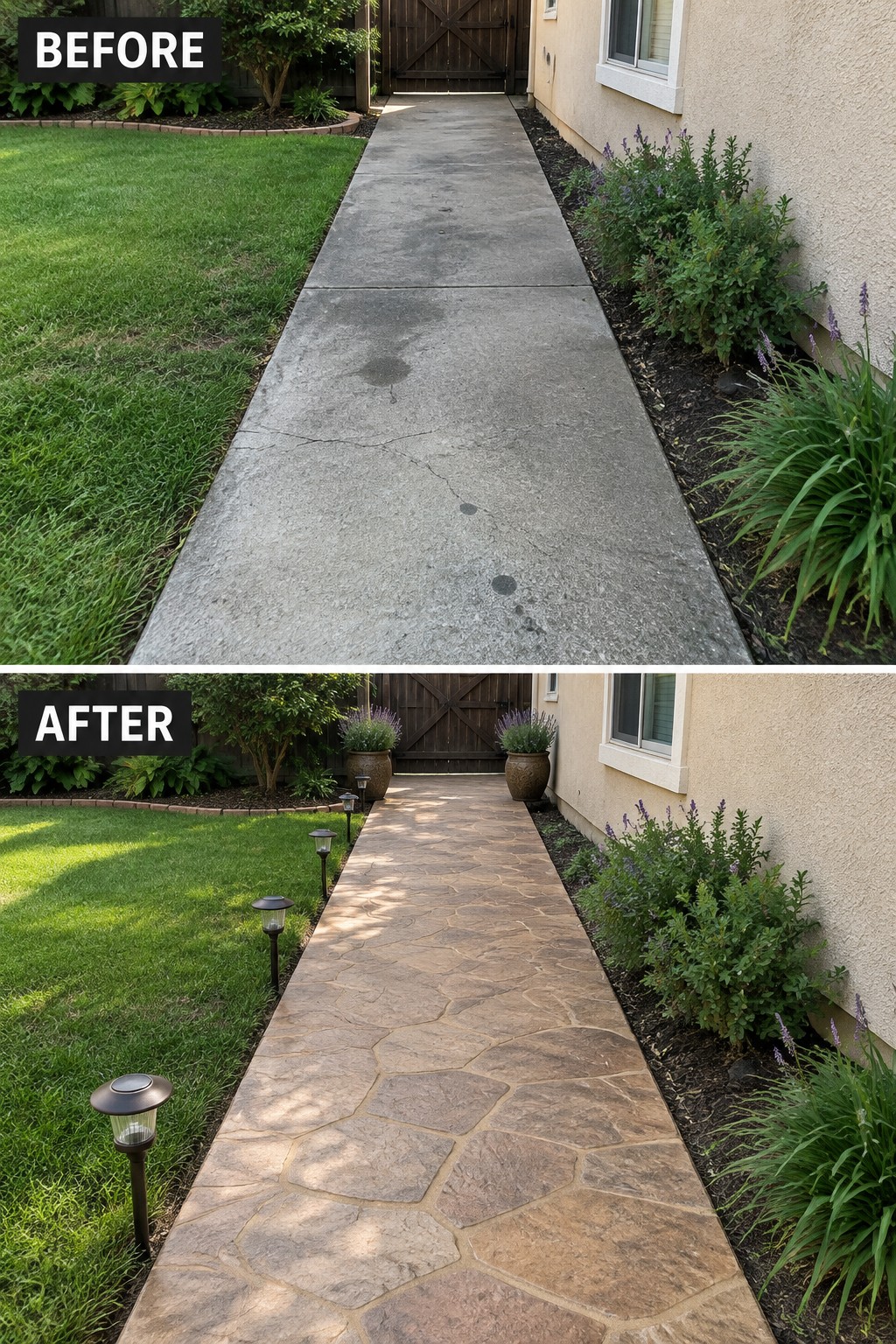
A plain concrete walkway often reads as unfinished, especially when it runs between a lawn and garden beds. Stamping a stone pattern over the existing slab gives the surface texture and makes the whole side yard feel more intentional without needing a full replacement.
This idea works best when the concrete underneath is still sound. Focus on the path itself first, then add simple solar lights along the edge to mark the route at night. The result connects the yard and house more clearly while keeping the scale modest.
Turn An Empty Patio Into A Seating Area
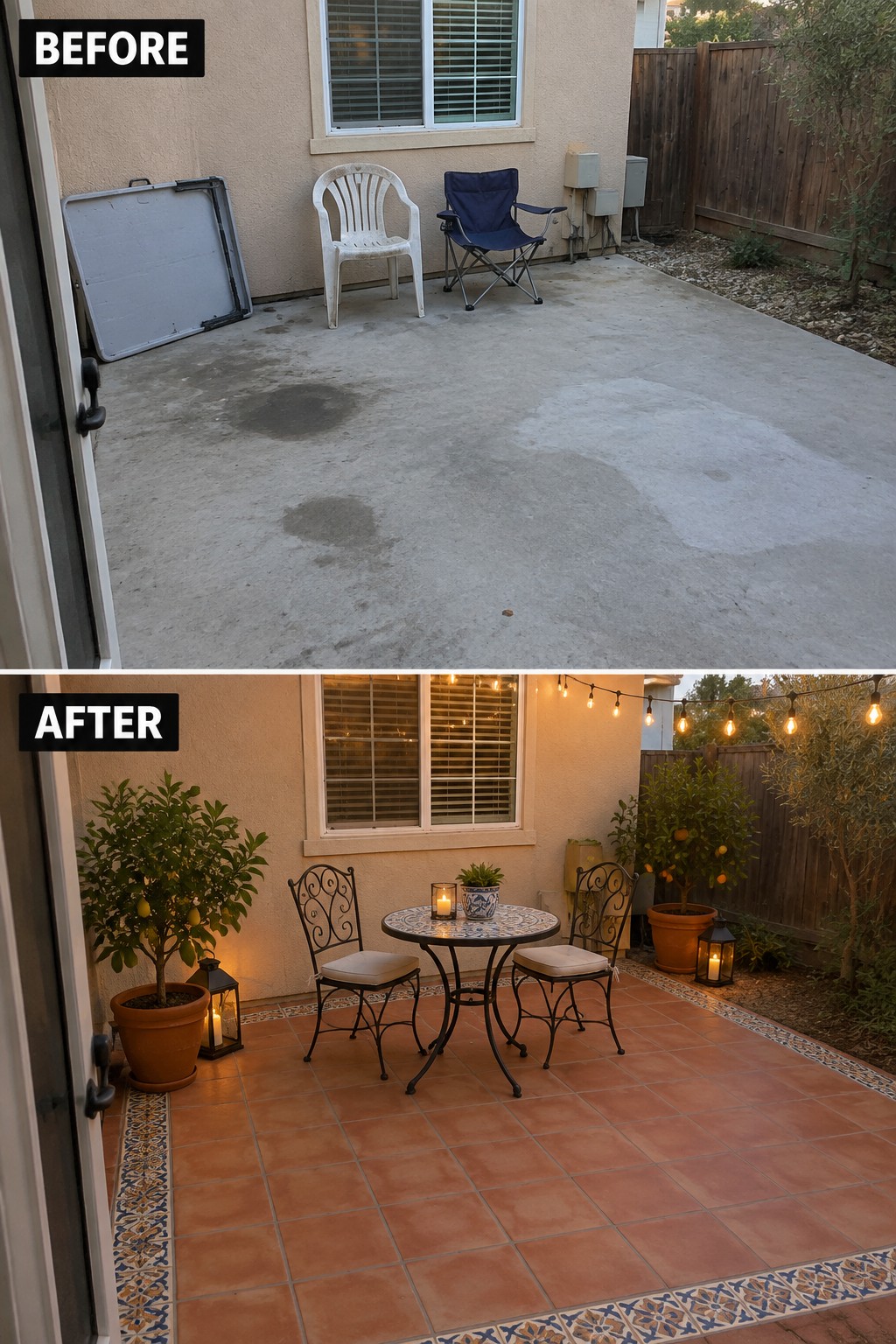
Covering the bare concrete with terracotta tiles gave the space a real floor instead of just a slab. That one change made the whole area feel like an extension of the house rather than leftover outdoor space.
Once the floor was down, a small table and two chairs created a clear spot to sit. Adding a few lanterns and string lights made the patio usable in the evening without crowding the area or spending a lot. This approach works best on small concrete pads where you want a simple outdoor spot that still leaves room to move around.
Use Pavers To Define A Garden Path
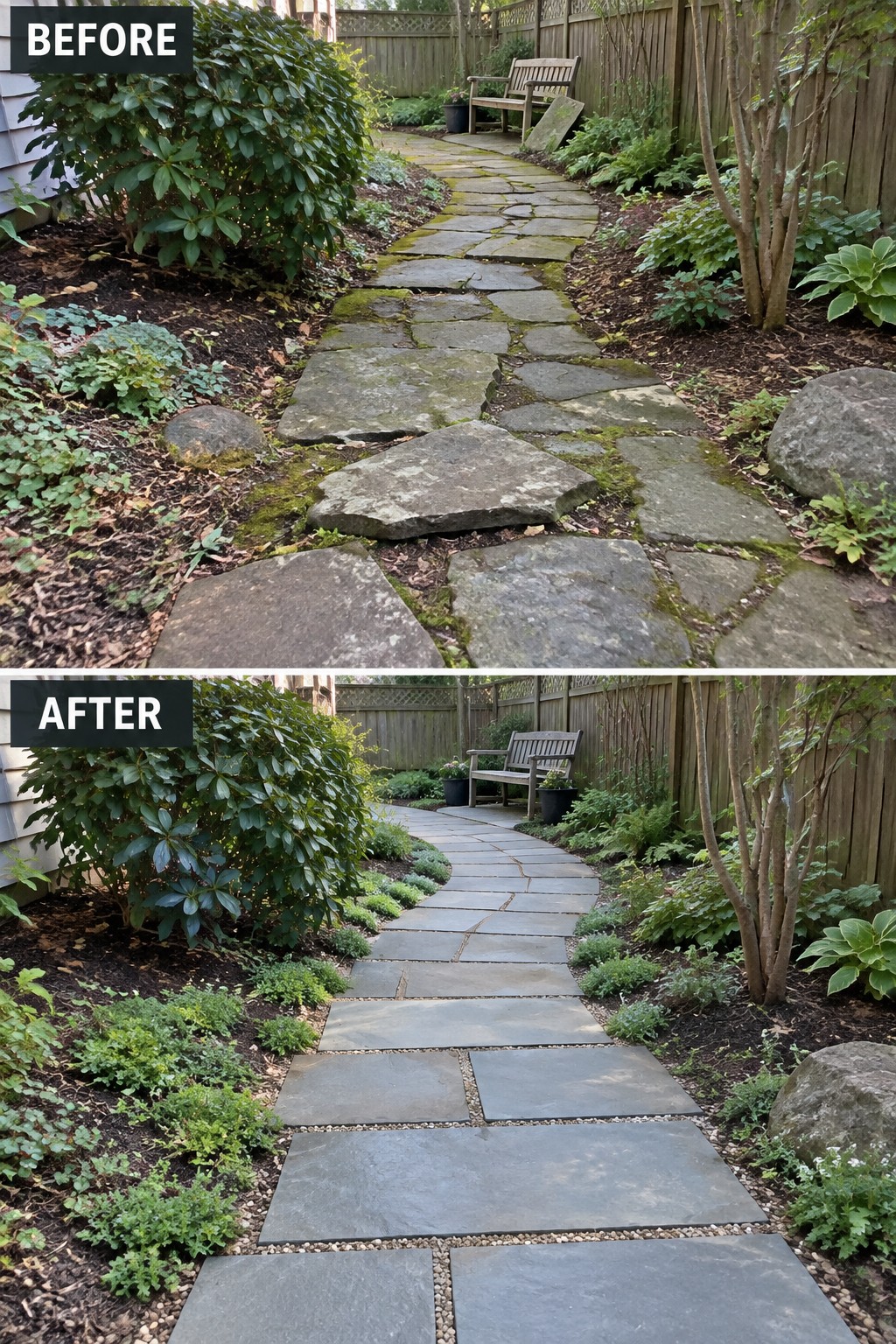
The old path had uneven stones that sat at different heights and collected moss, which made the walk feel messy and hard to follow. Switching to larger, uniform pavers laid in a straighter line gave the route a clear shape and made the surrounding beds look more contained.
This kind of update works best in side yards or back gardens where the path needs to guide people without crowding the space. Lift the old stones first, level the base, and add a narrow gravel edge so the beds stay neat and the pavers do not shift over time.
Resurface A Concrete Patio To Create An Outdoor Room

A stained and uneven concrete patio often makes the whole backyard feel neglected, even when furniture is already there. Applying a fresh surface coating turns the old slab into a clean, consistent base that actually works as an outdoor living space instead of just a utility area.
This idea suits homes that already have a patio but want to improve it without a full tear-out. Focus on the surface first, then bring in seating and a few planters. The new finish makes furniture placement feel intentional and keeps the area easy to maintain over time.
Define A Narrow Side Yard With A Paver Path
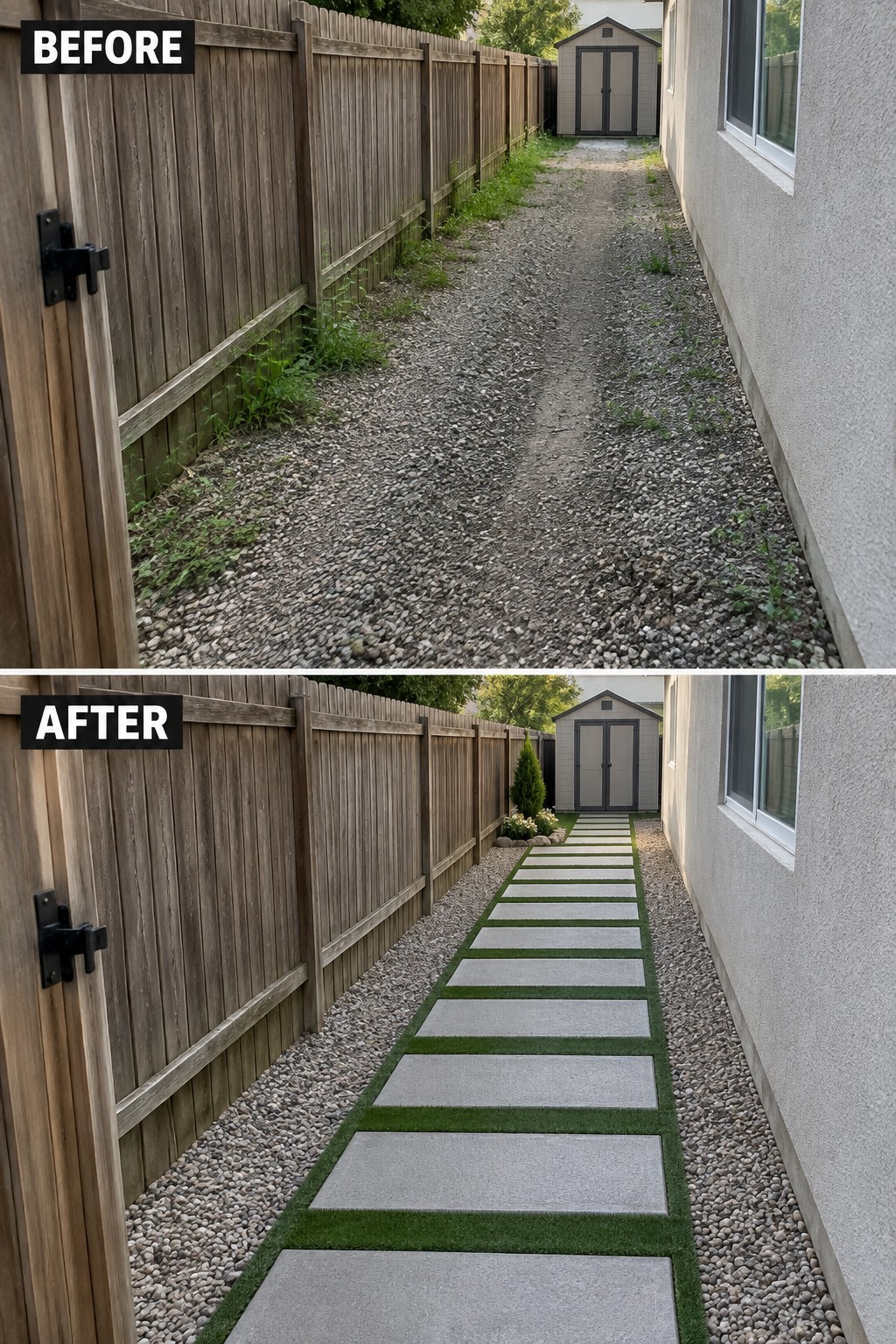
A plain gravel strip between the house and fence often ends up looking messy because weeds creep in and there is no clear walking surface. Laying rectangular pavers with strips of turf between them gives the space a steady path while still letting water drain through the gravel on either side.
This approach works well in tight side yards where a full patio would not fit. Start by leveling the ground and adding a simple base so the pavers stay even. Keep the gravel edges narrow enough to leave room to walk, and add a few low plants only at the far end if you want a bit of greenery without crowding the path.
Resurface Cracked Concrete Around A Pool
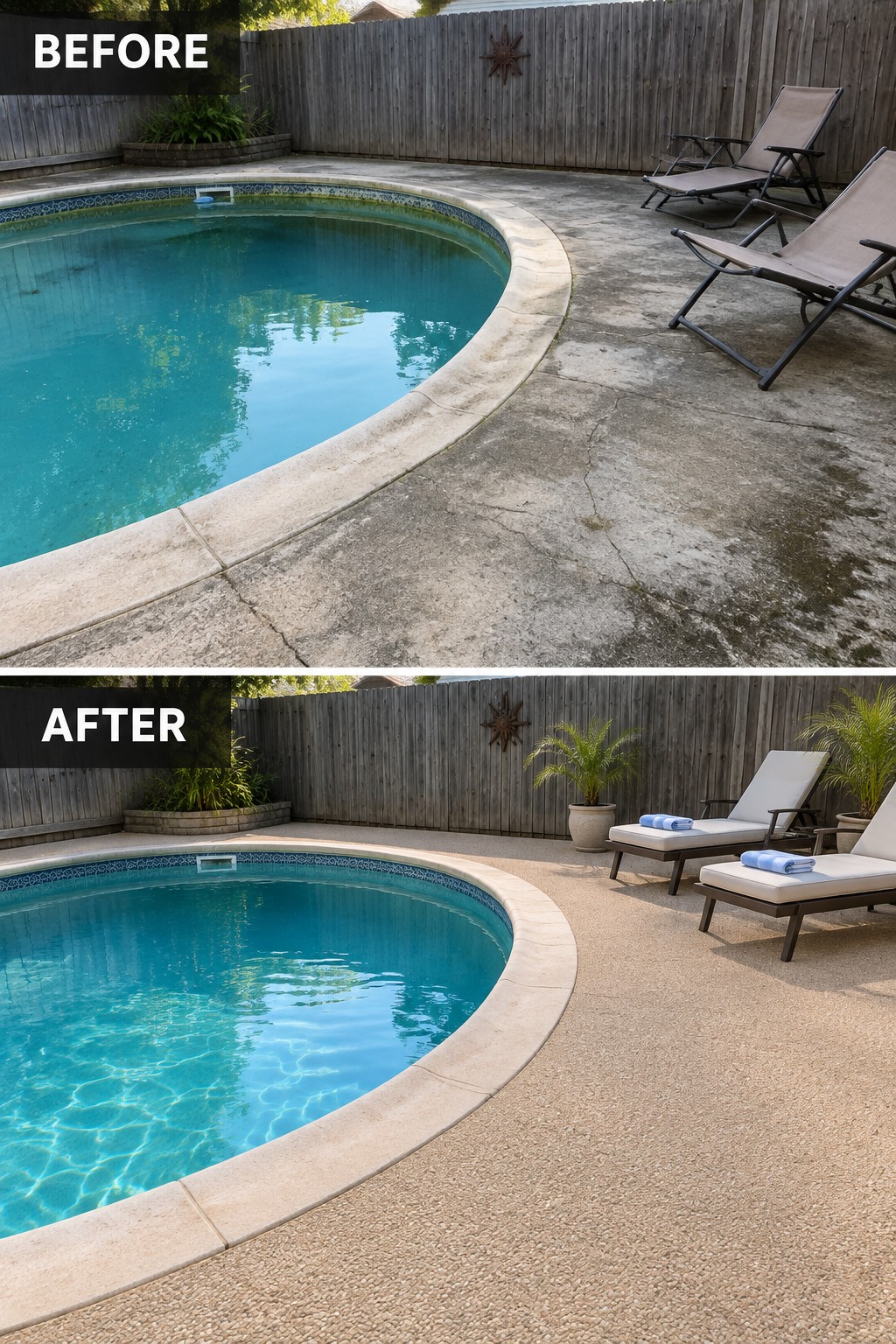
The old pool deck had cracked, stained concrete that made the whole area feel neglected. A new textured surface changed that completely, giving the space a uniform, finished look that feels much more inviting and practical for daily use.
This approach works best on pool decks or patios where the hard surface is the main problem. Choose a material made for wet areas and sun exposure, keep the furniture layout simple, and add just a few plants so the new deck remains the focus.
Lay Brick Pavers To Create A Usable Patio
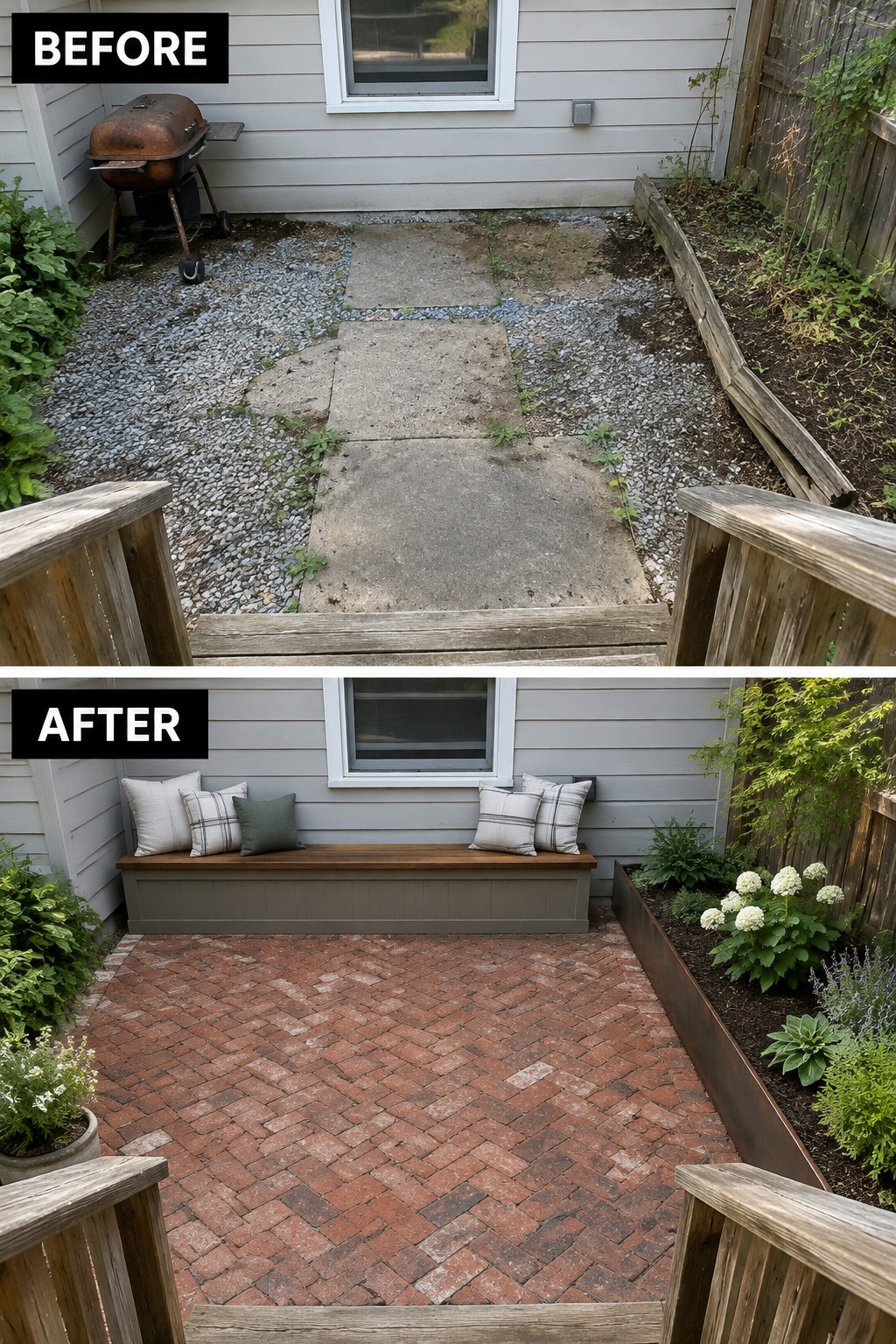
The before photo shows a backyard floor that was half broken concrete and half loose gravel, which made the space feel unfinished and hard to use. Switching to a full brick paver surface in a simple herringbone pattern gave the area a solid, level floor that actually works for furniture and foot traffic.
This approach works well in small or awkward backyards where the ground was never planned for seating. Start with a proper base so the pavers stay even, then keep the layout simple and leave room around the edges for planting beds or a bench. The result feels like an outdoor room instead of leftover space.
Add Structure To A Steep Backyard Slope
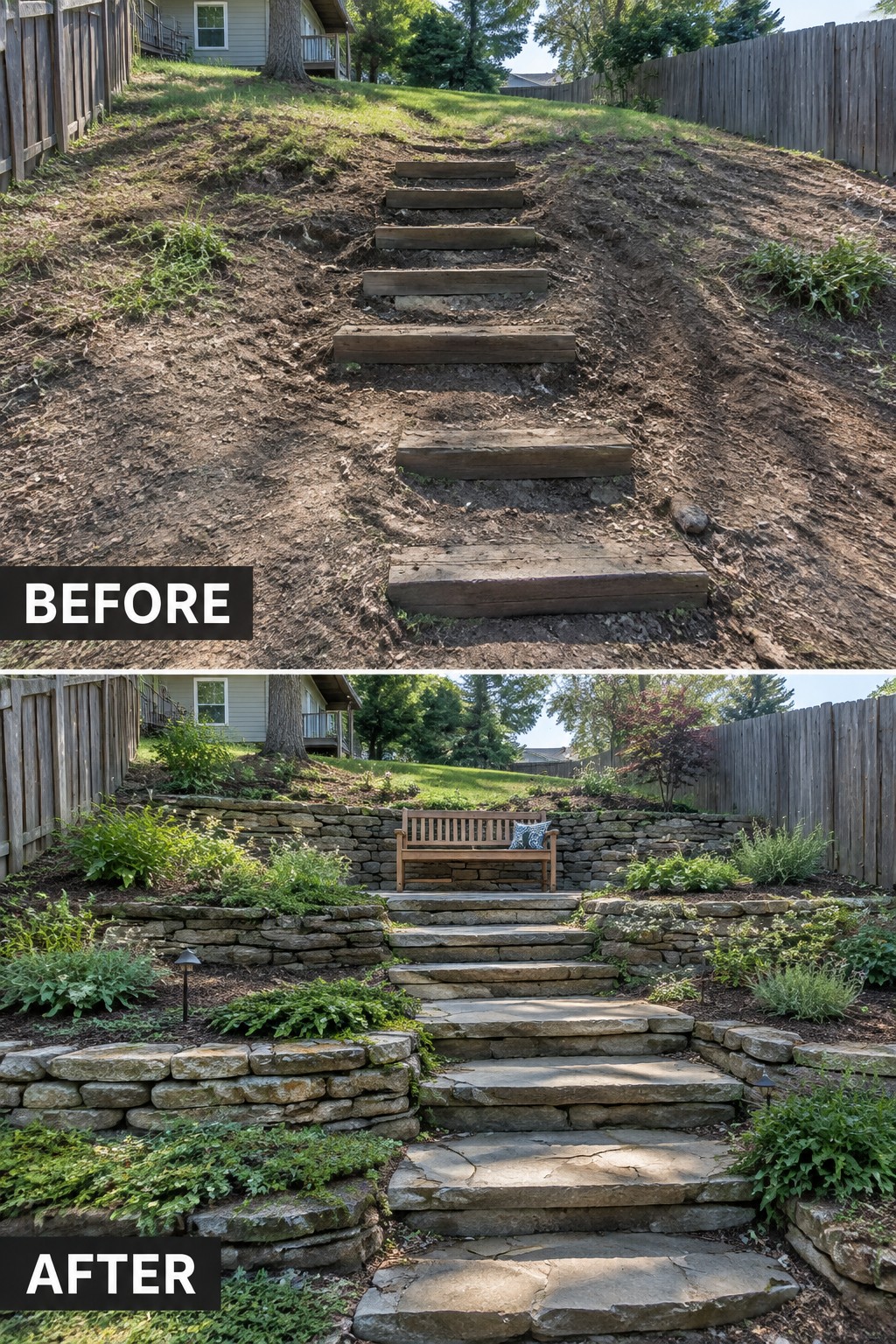
A bare dirt slope with a few loose boards for steps was difficult to walk and looked unfinished. Stone retaining walls turned the hill into a series of flat terraces that hold the soil, support proper steps, and create room for planting and a bench.
This idea suits homes with sloped yards where you want usable space without constant erosion or awkward footing. Plan the walls and steps first so the path feels natural, then add soil and plants to each level.
Replace A Worn Garden Path With Durable Decking
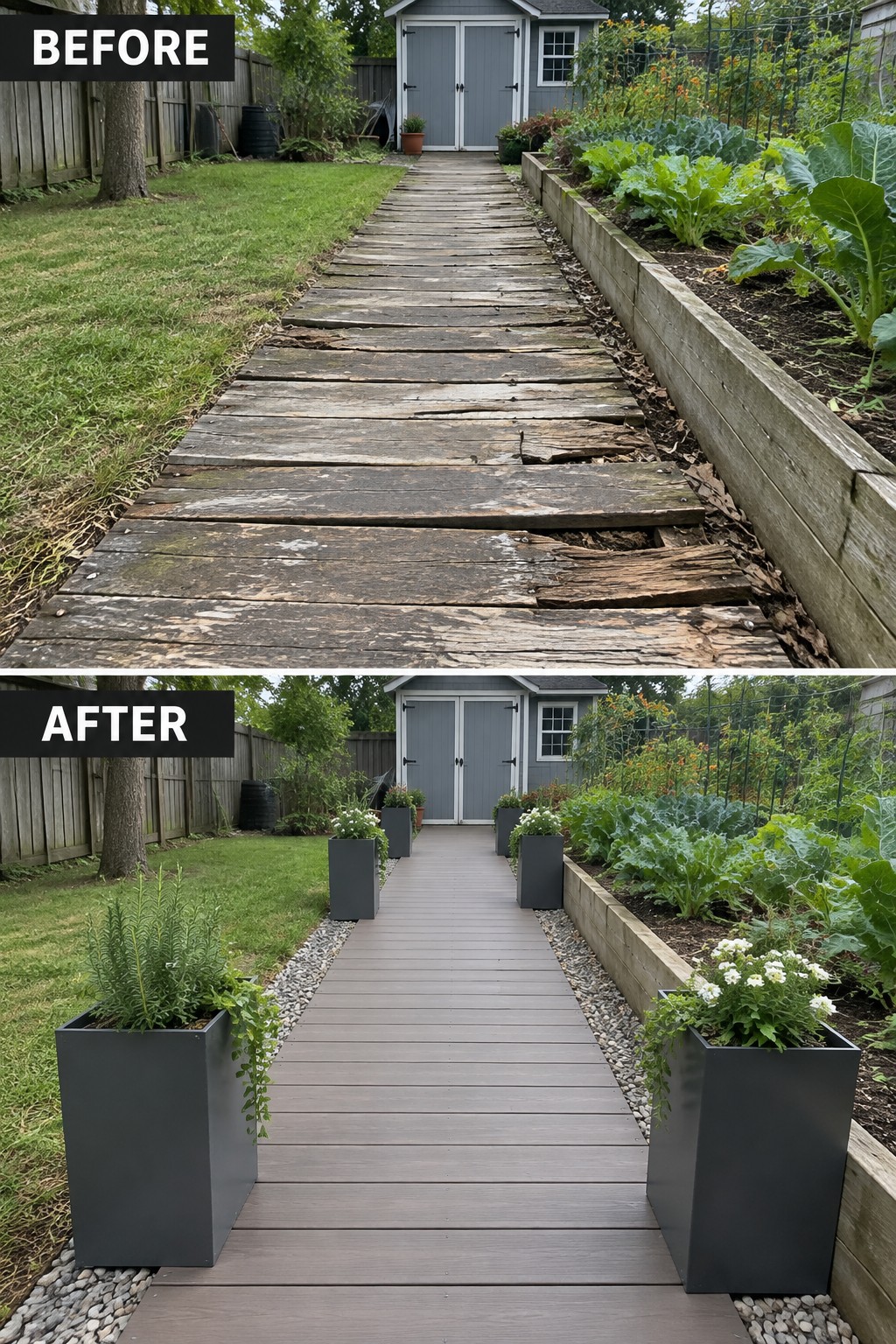
The old wooden path had become uneven and difficult to walk on, with boards splitting and sinking in places. Switching to a straight composite decking surface gave the walkway a clean, level feel that makes the whole garden easier to use and more pleasant to look at.
This approach works well in narrow backyards with raised beds along the edges. Large planters placed at the start of the path help define the entrance without crowding the walkway. Choose a material that can handle weather and keep the width steady so people can move through comfortably.
Turn A Bare Backyard Into A Safe Play Area

A bare dirt patch often limits how much kids can actually use the yard. Adding a large rubber mat over the soil gave the space a flat, stable surface that supports swings and a slide without turning into mud after rain.
This idea works best in smaller or uneven yards where a full patio feels like too much. Measure the area first, pick a mat made for outdoor use, and keep the border simple with mulch so the play zone stays defined but still easy to maintain.
Add Structure To A Bare Patio With A Raised Planter
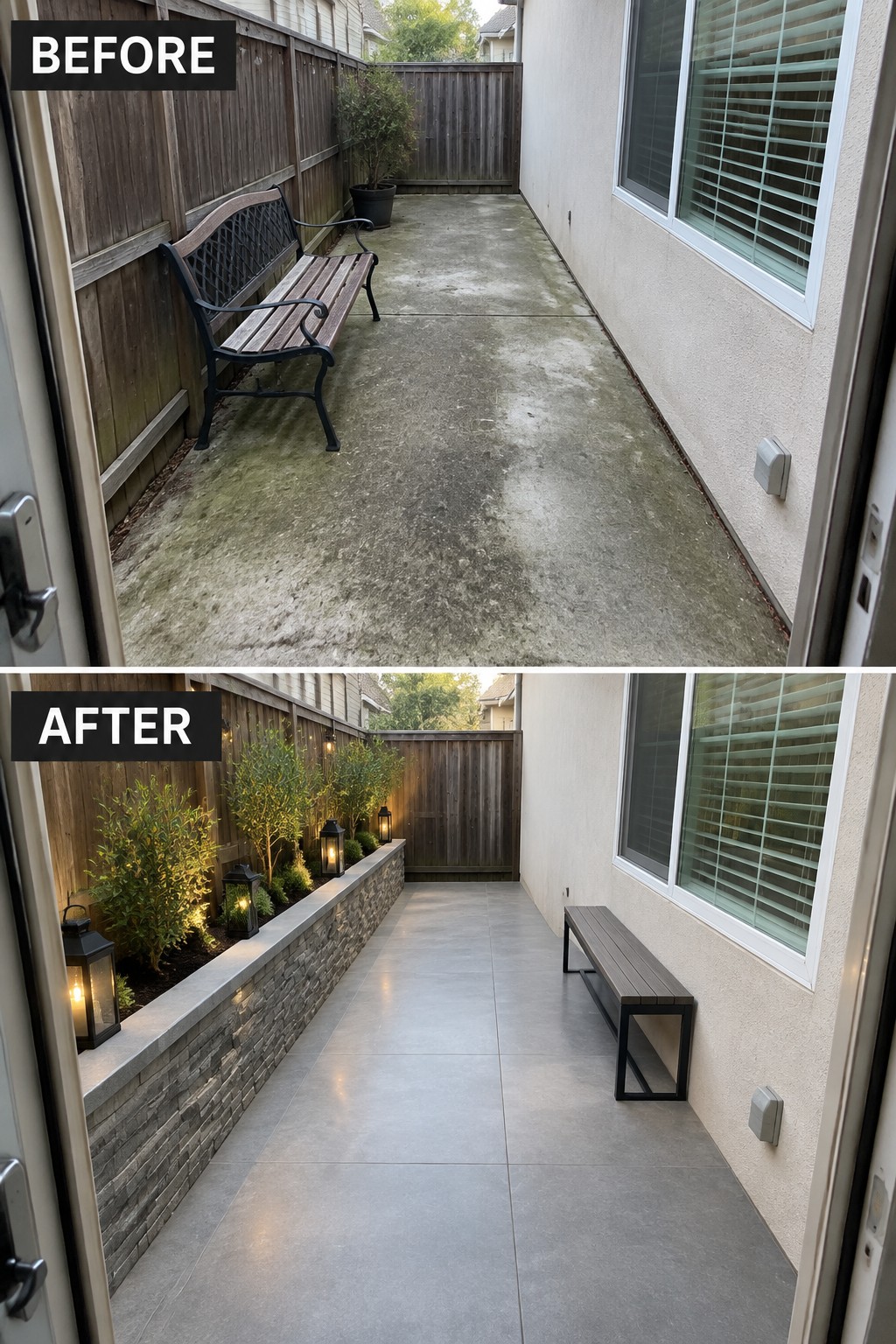
A plain concrete side yard often feels like leftover space with nowhere to sit or linger. The simple addition of a raised stone planter along one wall gave this area clear shape, turned the planting into a focal point, and made the whole length feel more intentional. New tile flooring replaced the stained concrete, so the space now reads as a finished outdoor room rather than a walkway.
This approach works best in narrow yards or side patios where furniture alone can look scattered. Build the planter first to set the scale, keep the planting simple and layered, then add low lighting so the bed stays useful after dark. The rest of the area stays open for movement and a single bench.
Replace Stepping Stones With A Solid Path

Stepping stones often disappear under grass and weeds, leaving a path that feels more like an afterthought than a real route. A poured concrete walkway with clean borders fixes that by creating a clear, level surface that stays visible and easy to walk on year round.
This approach suits narrow side yards where access matters more than decoration. Keep the beds on either side simple with low plants and mulch, and make sure the path width leaves enough room to move comfortably without crowding the house or fence.
Turn A Plain Patio Into A Defined Seating Area
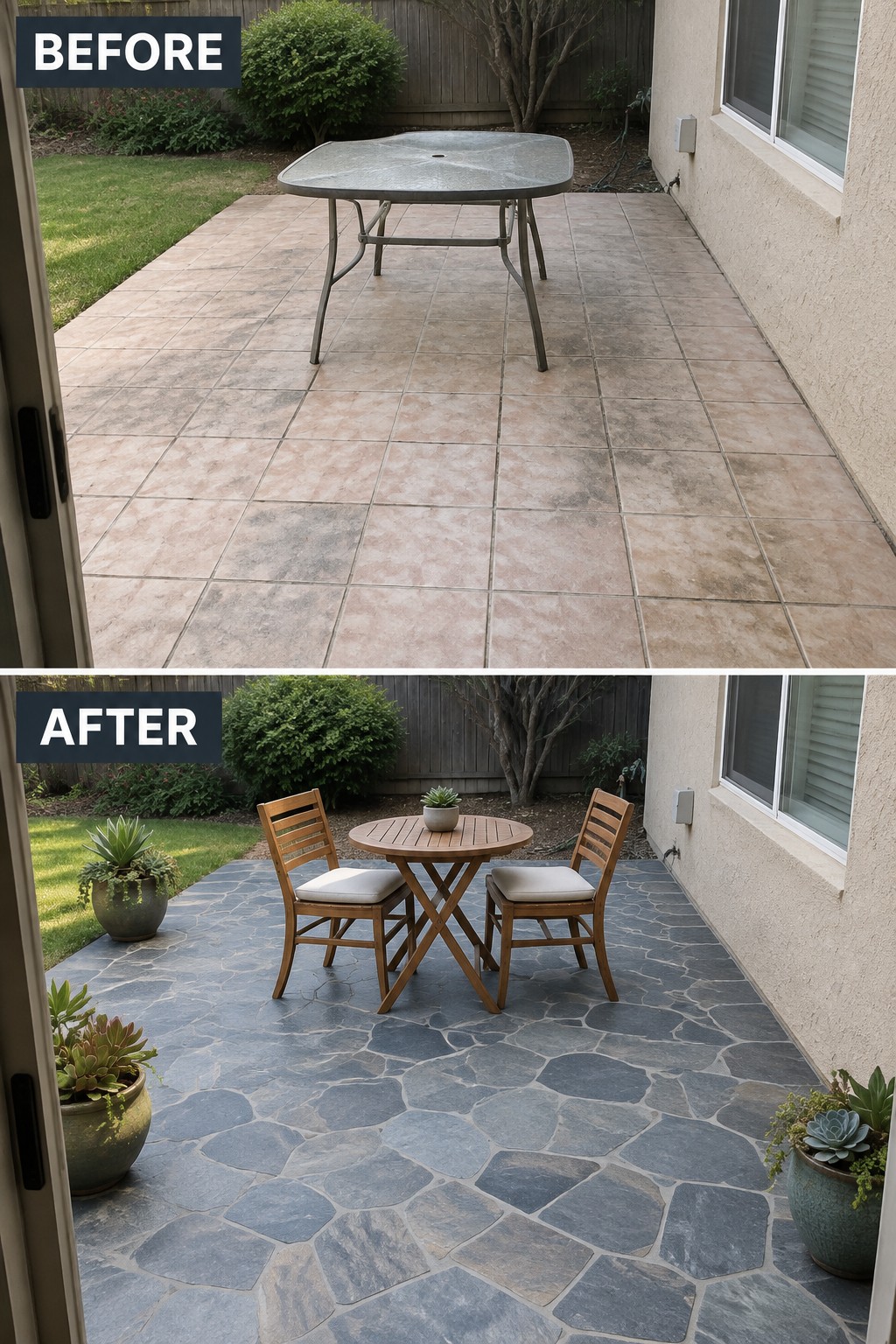
A worn concrete patio often feels like wasted space because it has no clear purpose. In this case the fix started with replacing the old square tiles with irregular stone pavers that give the surface texture and shape. Once the new floor was down, a small round table and two chairs were enough to turn the area into a place people actually want to sit.
This approach works best on patios that already have decent size but lack any sense of room. Keep the furniture scale modest so there is still room to walk around the table. Add a few large pots along the edge rather than scattering small ones everywhere. The surface change does most of the work, so the rest of the update can stay simple and practical.
Add Structure To An Overgrown Backyard

A bare dirt path that turns muddy after rain makes the whole yard feel unfinished. Adding stepping stones creates a solid walkway, while mulch and simple metal edging give the ground a clean surface and keep the planting areas from spilling into the path.
This works best in side yards or narrow back spaces where you need a clear route without building a full patio. Start with the path and edging first, then fill the beds with a few reliable plants that can handle shade. The result feels planned even if you keep the rest of the yard simple.
Turn A Bare Patio Into A Defined Seating Area

A plain concrete slab with random chairs rarely feels like a place you want to sit. Replacing the cracked surface with pavers and centering the space around a proper stone fire pit makes the area read as one complete zone instead of scattered pieces.
This approach works well on existing slabs where the main issue is lack of structure. Start with the hard surface and a clear focal point, then add seating and a few plants. It keeps the layout practical and prevents the space from feeling like a collection of leftover furniture.
Define A Gravel Path With Stone Edging

The before photo shows a gravel path that had no clear edges and blended into the weeds and dirt on both sides. Adding a simple border of flat stones gives the path a defined shape, holds the gravel in place, and makes the whole side yard look more intentional.
This idea works best in narrow backyard passages or along the side of a house where you need a clear walking route without adding much width. Lay the edging first, then refresh the gravel and keep plantings low so the path stays easy to walk and maintain.
Turn An Empty Patio Into A Seating Area
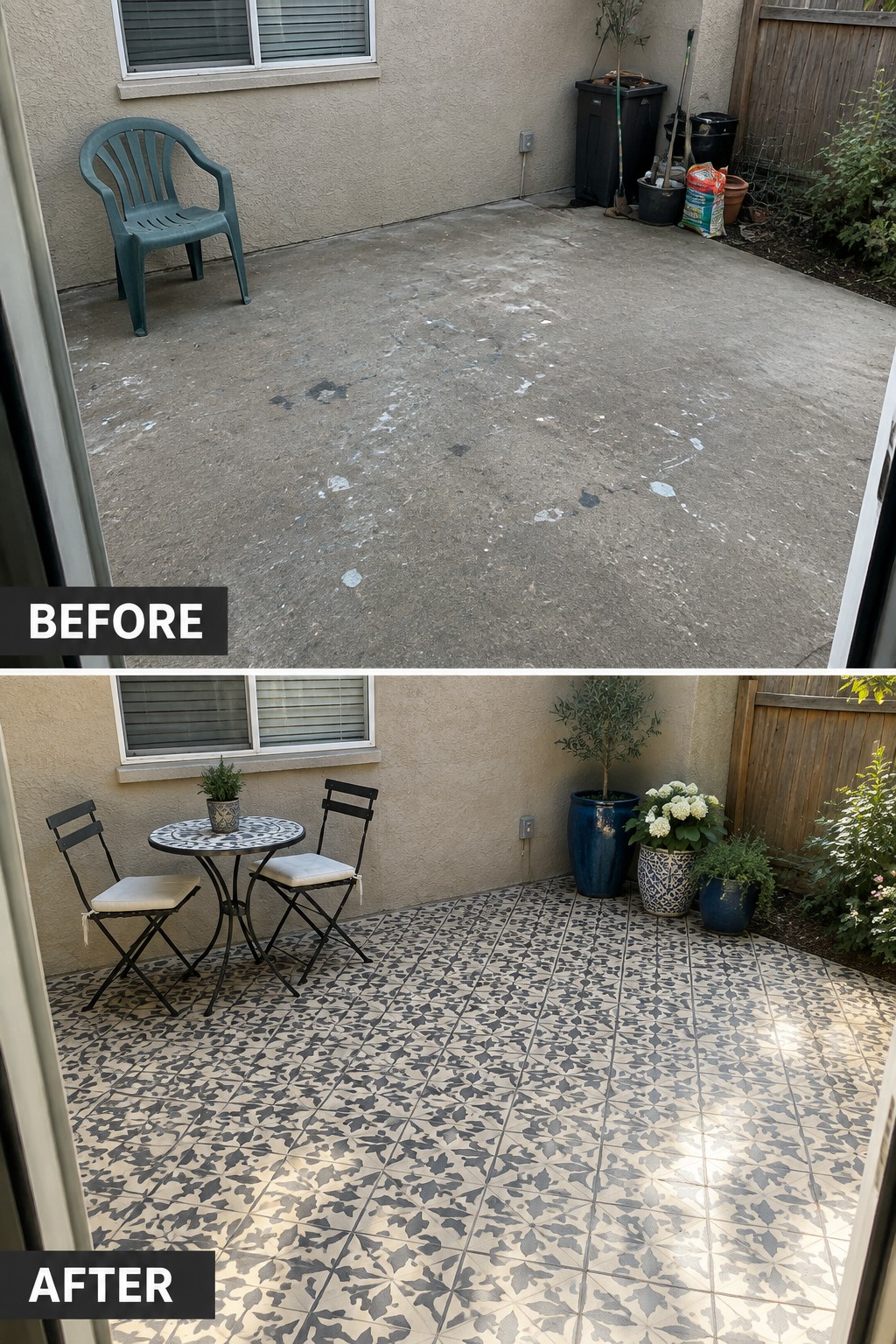
A bare concrete slab often stays empty because it feels unfinished and hard to use. Adding a patterned tile floor right away defines the space and makes it feel like an actual room instead of leftover ground. The small bistro table and chairs then fit naturally without crowding the area.
This approach works best on smaller patios or side yards where you want a simple spot to sit without building a full deck. Start with the flooring to set the boundary, then choose compact furniture that leaves room to walk around. Keep the planting light so the seating area stays the main focus.
Frequently Asked Questions
Q: Which surface update makes the biggest visual difference right away? A: Staining a concrete slab turns a gray slab into something warm and inviting. Clean the surface thoroughly first so the stain soaks in evenly. One coat often does the trick if you pick a bold color.
Q: How do I keep weeds from popping up around new pavers or stones? A: Lay down landscape fabric before you set the pavers in place. Fill the joints with polymeric sand to lock everything tight. This stops most growth without extra chemicals.
Q: What if my current backyard surface has cracks or damage? A: Patch the cracks first with outdoor filler. Then try an overlay to hide the rest.
