

An awkward patio layout can leave the whole area feeling like wasted space even when there is room to work with.
I have noticed that shifting a few pieces around and adding simple boundaries often makes the difference between a spot that gets ignored and one that actually gets used.
Small changes add up faster than I expected in these cases.
Testing different seating arrangements first usually shows me what the space can handle before I commit to anything permanent.
Over time the patio starts to feel like a natural extension of the house rather than an afterthought that never quite fits.
Turn A Narrow Side Yard Into A Seating Area

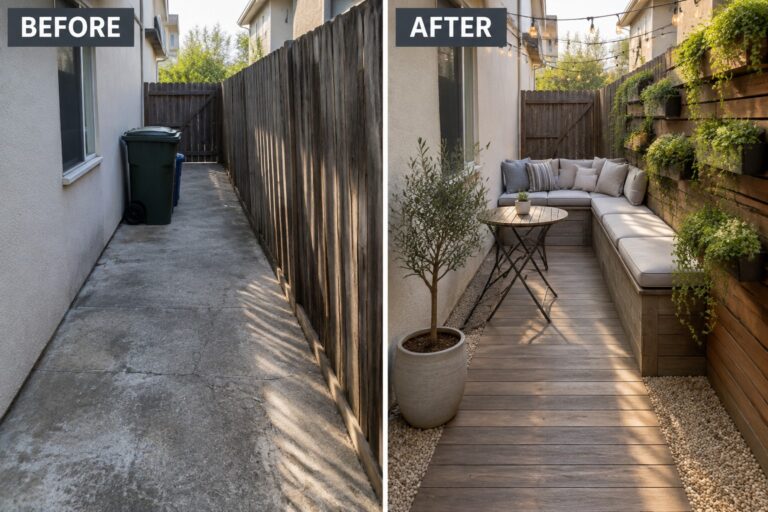
A long, cracked concrete path next to the house does not have to stay empty. Laying decking over the concrete and adding a low built-in bench along one side turns the space into a place where you can actually sit and relax. The change makes the narrow area feel purposeful instead of like leftover space.
This approach works best in tight side yards where width is limited. Keep seating low and use the fence or wall for vertical planters and simple string lights so the walkway stays open. Focus on weatherproof materials and leave enough room to walk through when the seating is not in use.
Turn An Empty Patio Into A Seating Area

A bare concrete slab often feels like wasted space because there is no clear spot to sit or gather. Placing an L-shaped sectional along the back wall and anchoring it with a large outdoor rug gives the area an obvious purpose and makes it feel like an extension of the house.
This setup works best on small or rectangular patios where one defined zone is enough. Keep the furniture scale modest, add a few large planters to soften the edges, and use simple string lights if you want the space to feel usable after dark. The goal is to create one comfortable area rather than trying to fill the entire slab.
Turn A Bare Patio Into A Seating Area

An empty concrete slab can feel like wasted space until you give it a clear purpose. Adding a large rug, a couple of folding chairs, and string lights overhead turned this narrow side yard into a spot where people actually want to sit. The lights make the fence feel like part of the room instead of just a boundary.
This idea works best on small or awkward patios where you do not have room for built-in seating. Keep the furniture scale modest, choose a rug that can handle weather, and run the lights along the longest fence line so the whole area feels enclosed without blocking movement.
Turn A Narrow Side Yard Into A Small Patio
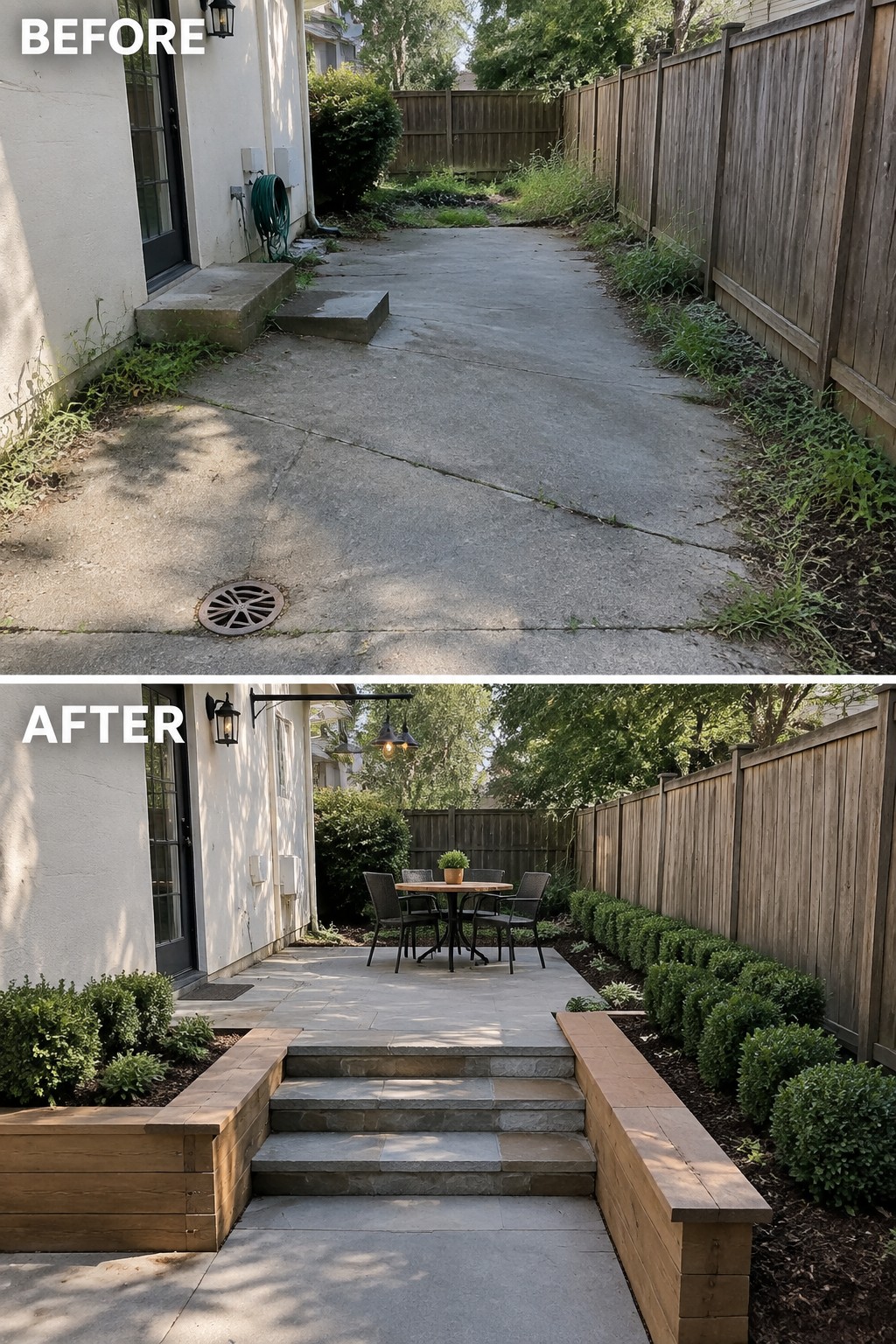
A long strip of bare concrete next to the house rarely feels like a place to spend time. In this case, raised wooden planters along both edges and a short set of steps gave the space clear boundaries and turned the leftover concrete into a small patio that fits a table and chairs.
This idea works best when the side yard is too narrow for big changes but still wide enough for seating. Start with simple raised beds or low walls to define the area, then add only a few pieces of weatherproof furniture. Keep the center open so people can still walk through without feeling crowded.
Turn An Empty Patio Corner Into A Seating Area
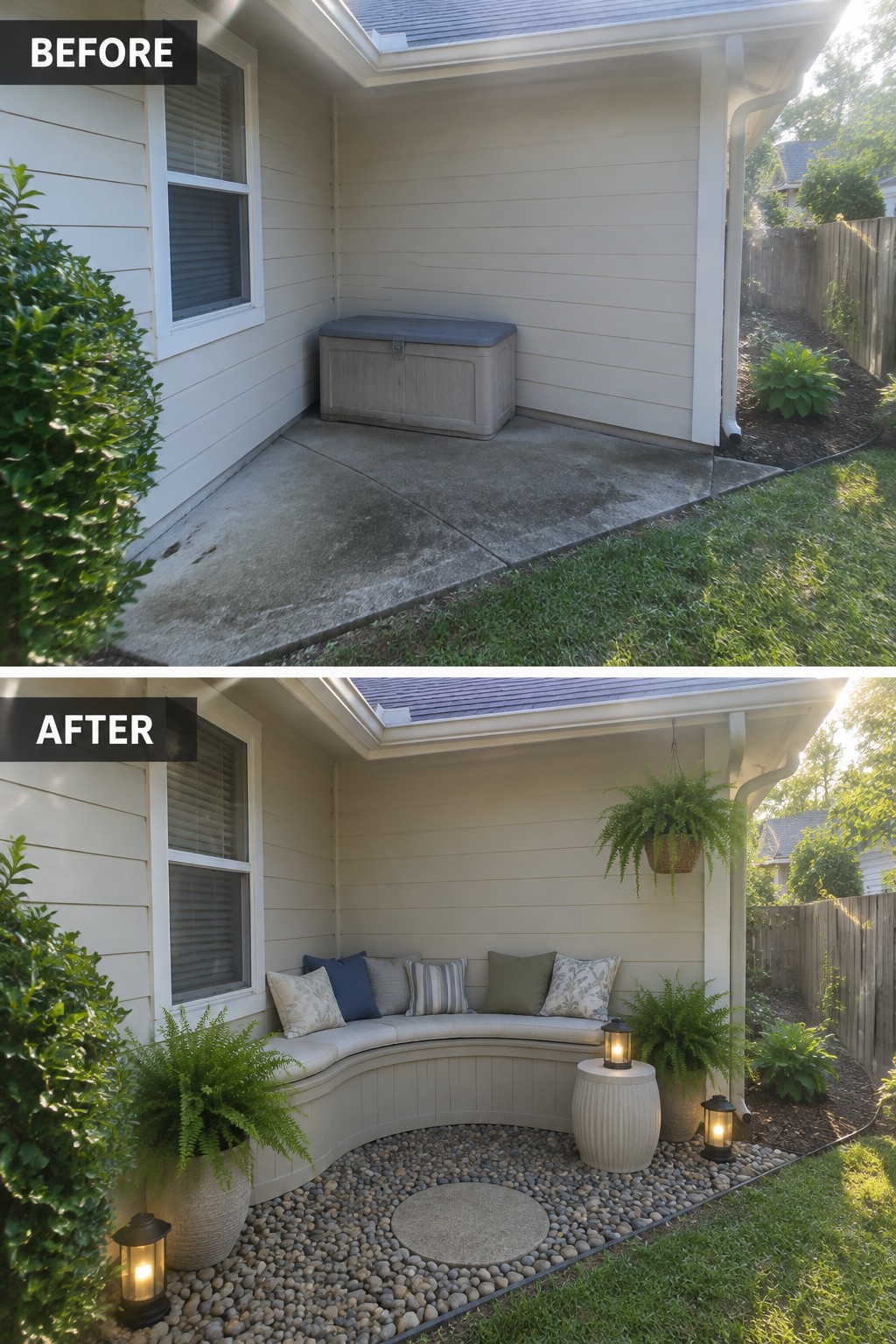
A bare concrete pad often sits unused because it feels too open and awkward to furnish. Adding a built-in curved bench gives the space a clear purpose and makes the corner feel intentional instead of leftover.
This idea works best on small or L-shaped patios where regular furniture crowds the walkway. Build the bench to follow the existing walls, then keep the rest simple with a few potted plants and lanterns so the area stays open and easy to move through.
Use Pavers To Break Up A Large Concrete Patio
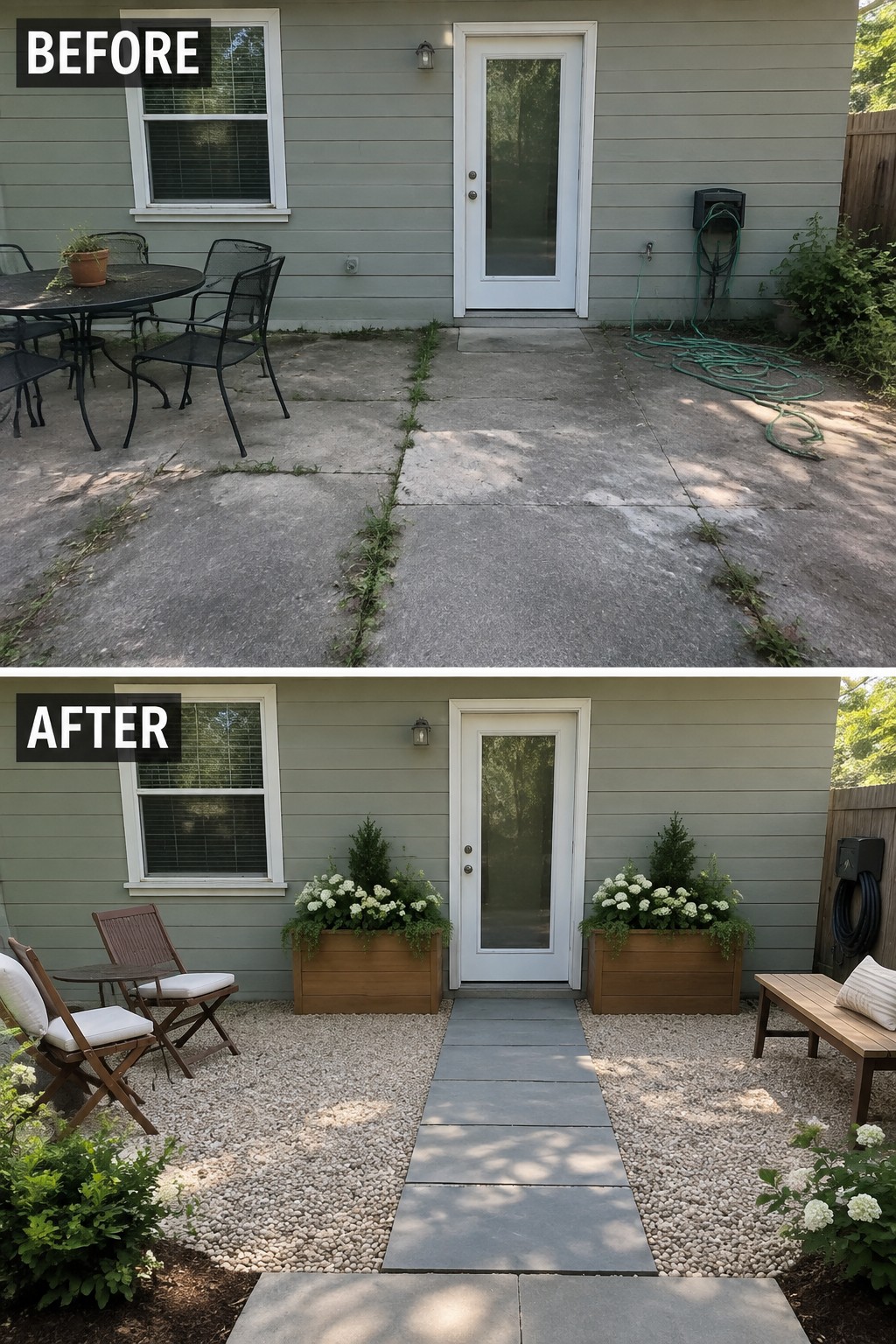
A big slab of concrete often feels like wasted space because it has no clear direction or purpose. Adding a simple paver path through the middle gives the area structure and makes it feel smaller and more usable at the same time. The gravel on either side softens the look and stops the whole surface from reading as one flat block.
This approach works well on awkward side yards or back patios that sit right against the house. Start with the path first, then place planters or seating on the gravel sections so each area has its own job. It keeps foot traffic clean and leaves room to move without crowding the space.
Clear The Clutter Before Adding Patio Seating
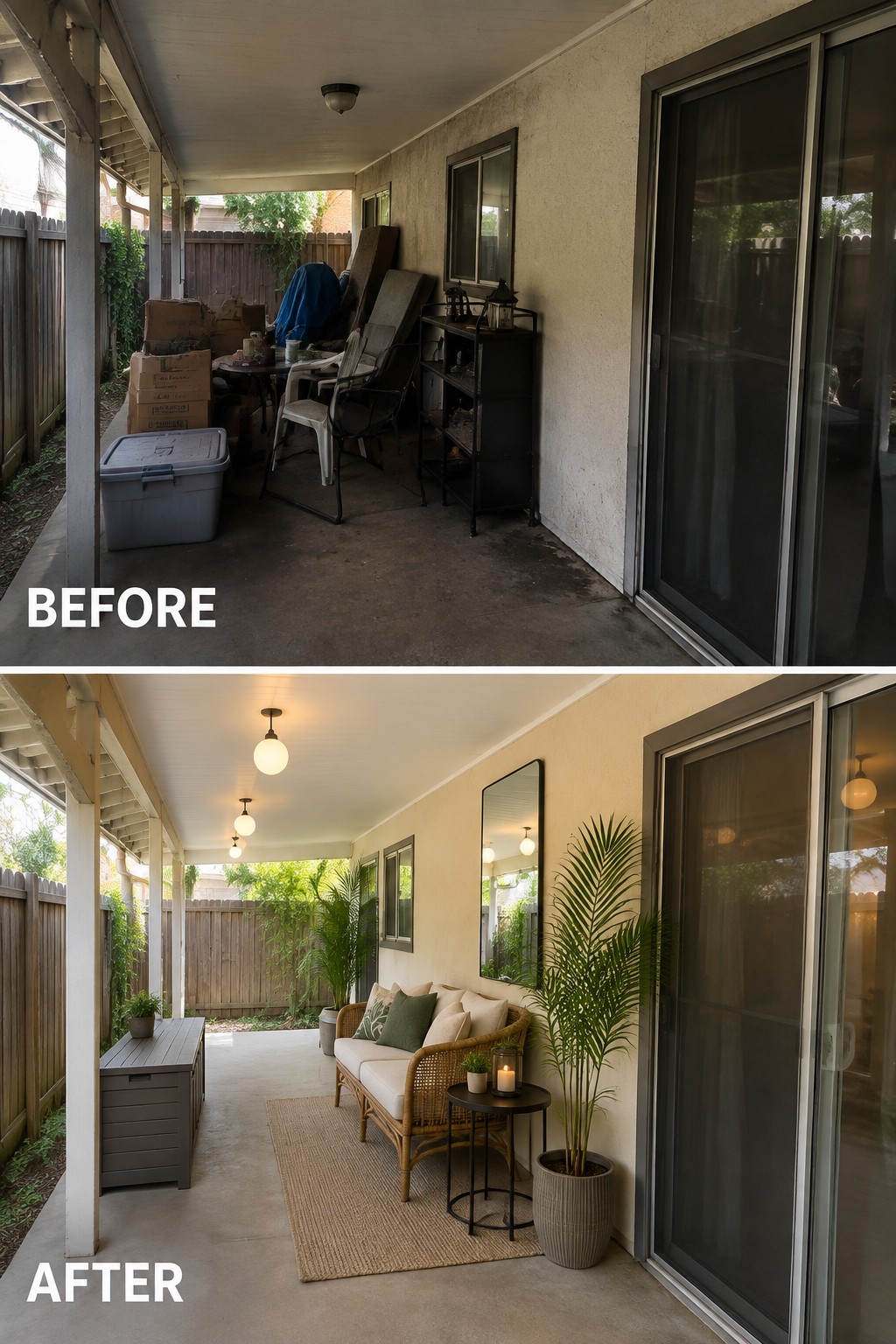
A cluttered patio rarely feels usable, no matter how much furniture you have. Removing the boxes, bins, and random chairs first made room for a simple seating area that actually fits the space and invites people to sit down.
A rug helps mark the seating zone without crowding the walkway, and the furniture stays low and light so the area still feels open. This works best on small or covered patios where storage tends to pile up. Start by clearing what you do not need, then add only the pieces you will actually use.
Hide The Utility Box With Built-In Seating
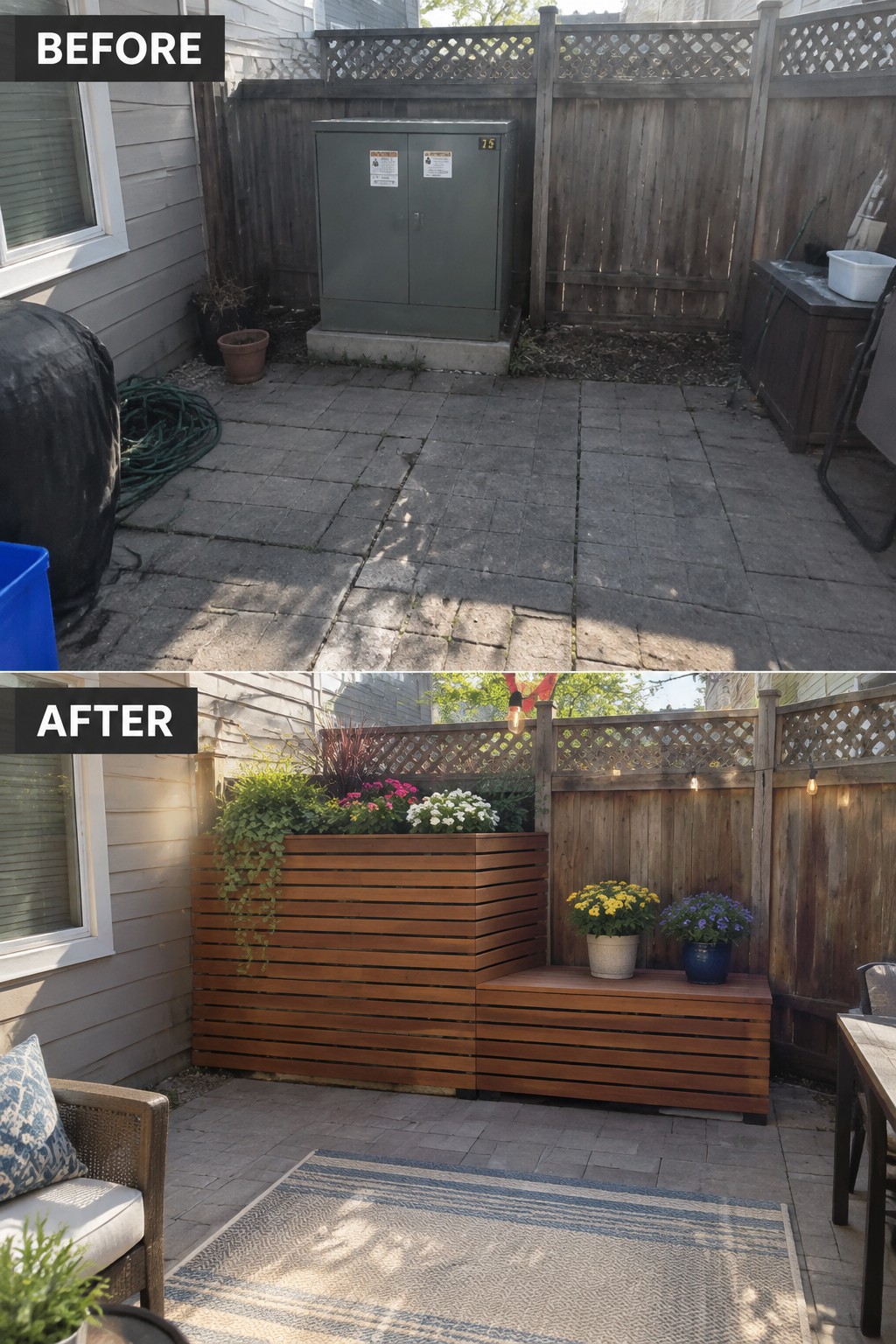
The large utility box sat right in the middle of the concrete and made the whole patio feel like leftover space. Wrapping it with a low wooden planter and bench turned that awkward spot into the main seating area without moving anything.
This idea works best on small patios where utilities cannot be relocated. Build the structure low enough to keep the box accessible for service, use cedar or a similar weather-safe wood, and keep the planting simple so the bench stays usable.
Add Path Lights And A Runner To Make A Narrow Side Yard Usable
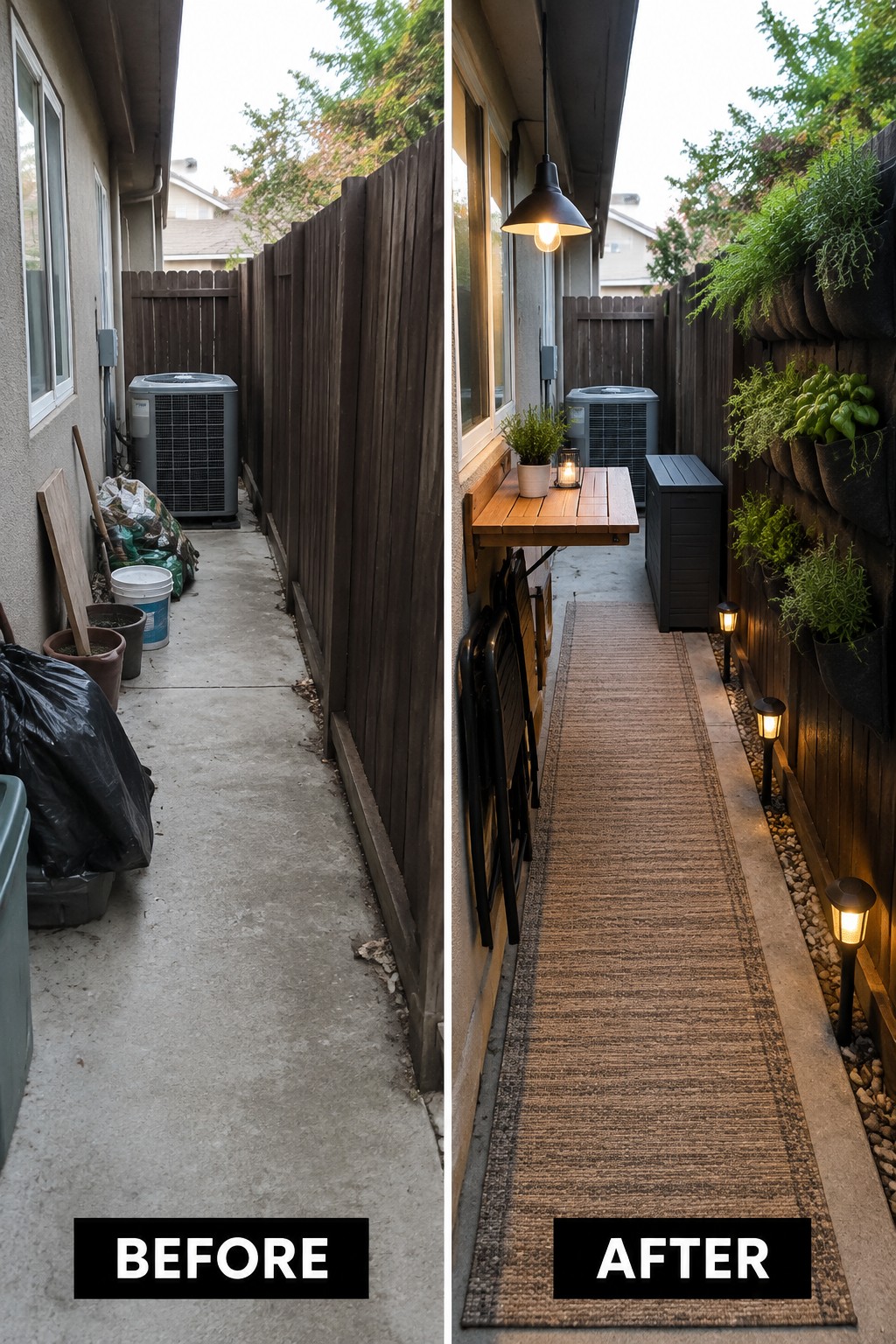
A narrow side yard between houses often becomes a catch-all for clutter because it feels too tight to serve any real purpose. A simple runner rug laid down the center and a row of low path lights along one edge can turn the same strip of concrete into a defined walkway that actually gets used.
This approach works best in long, awkward passages where you need to create order without adding bulky furniture. Keep the lights small and solar powered so installation stays easy, and pick a rug made for outdoor use that will not shift underfoot. Leave a clear walking lane on each side so the space still feels open rather than crowded.
Anchor An Awkward Patio With A Central Fire Pit
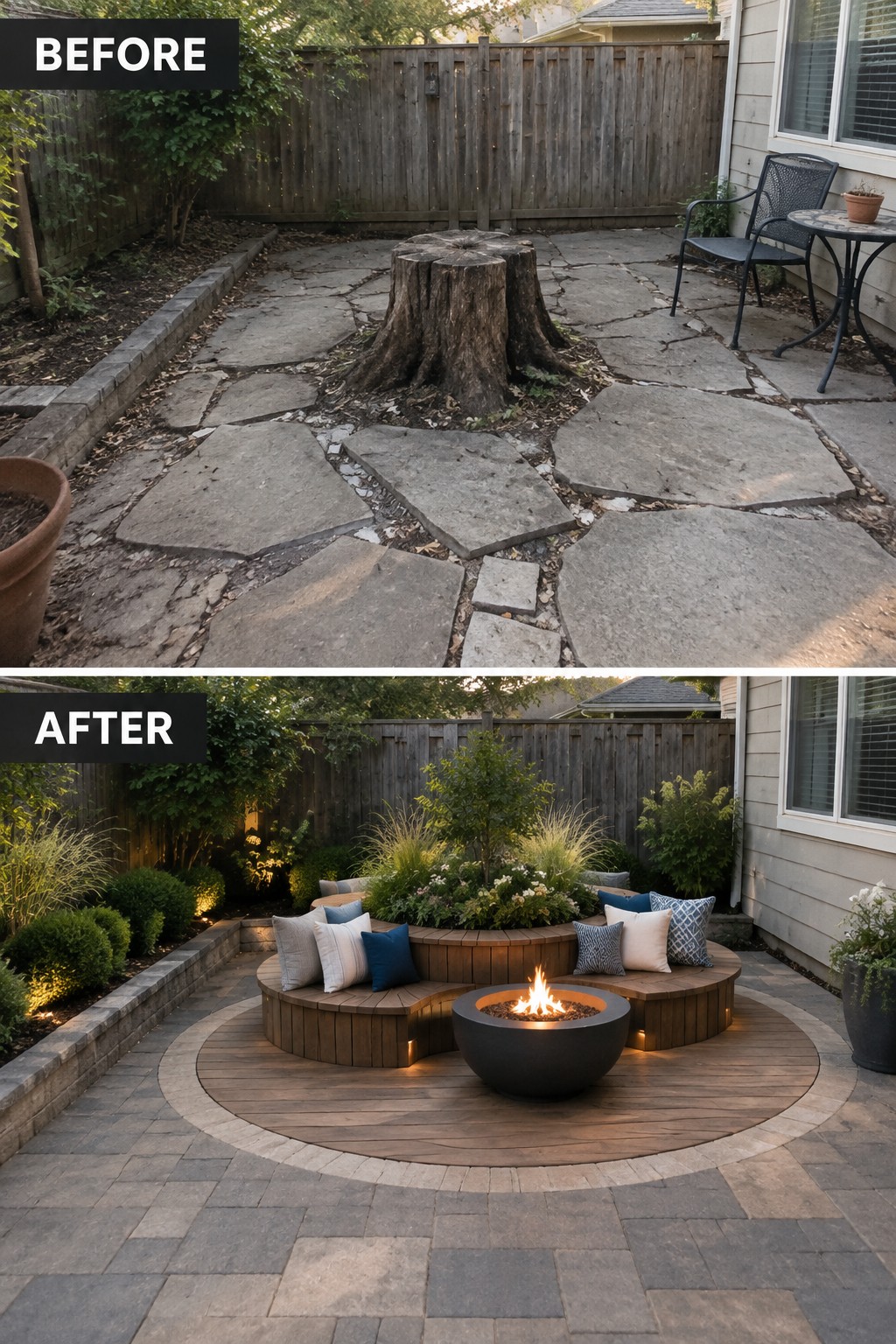
The stump in the middle of the stone patio made the space feel split and hard to use. Once it was removed, the same area became a round wooden deck with a fire pit at the center and a built-in bench wrapped around it. That one change gave the patio a clear spot to gather instead of leaving it open and scattered.
This works best in small or oddly shaped patios where furniture has nowhere to land. Clear the center first, then let the fire pit set the scale so the seating fits naturally around it. Keep the rest of the patio simple so the new zone stays the main focus.
Give A Bare Entry Patio A Clear Purpose

The concrete slab next to the door was just an open, wet surface with a downspout draining right onto it. Adding a raised planter bed along one edge and laying down a patterned rug created a defined spot for the bench, turning the awkward corner into a small seating area.
This idea works best on tight entry patios or side yards where there is not much room to work with. Keep the rug and bench scale modest so the space still feels open, and let the planter handle both planting and screening the downspout at the same time.
Turn A Cluttered Side Patio Into A Seating Area

Many side yards collect bins, tools, and random storage until the space feels unusable. Clearing the clutter and adding a small table with stools gives the area a clear purpose. A simple screen at one end creates privacy while still letting light through.
This idea works best on narrow lots where the side of the house gets ignored. Start by removing everything that does not belong, then choose compact furniture that leaves walking room. Keep the setup light so the space stays practical rather than crowded.
Turn A Bare Patio Into A Seating Area
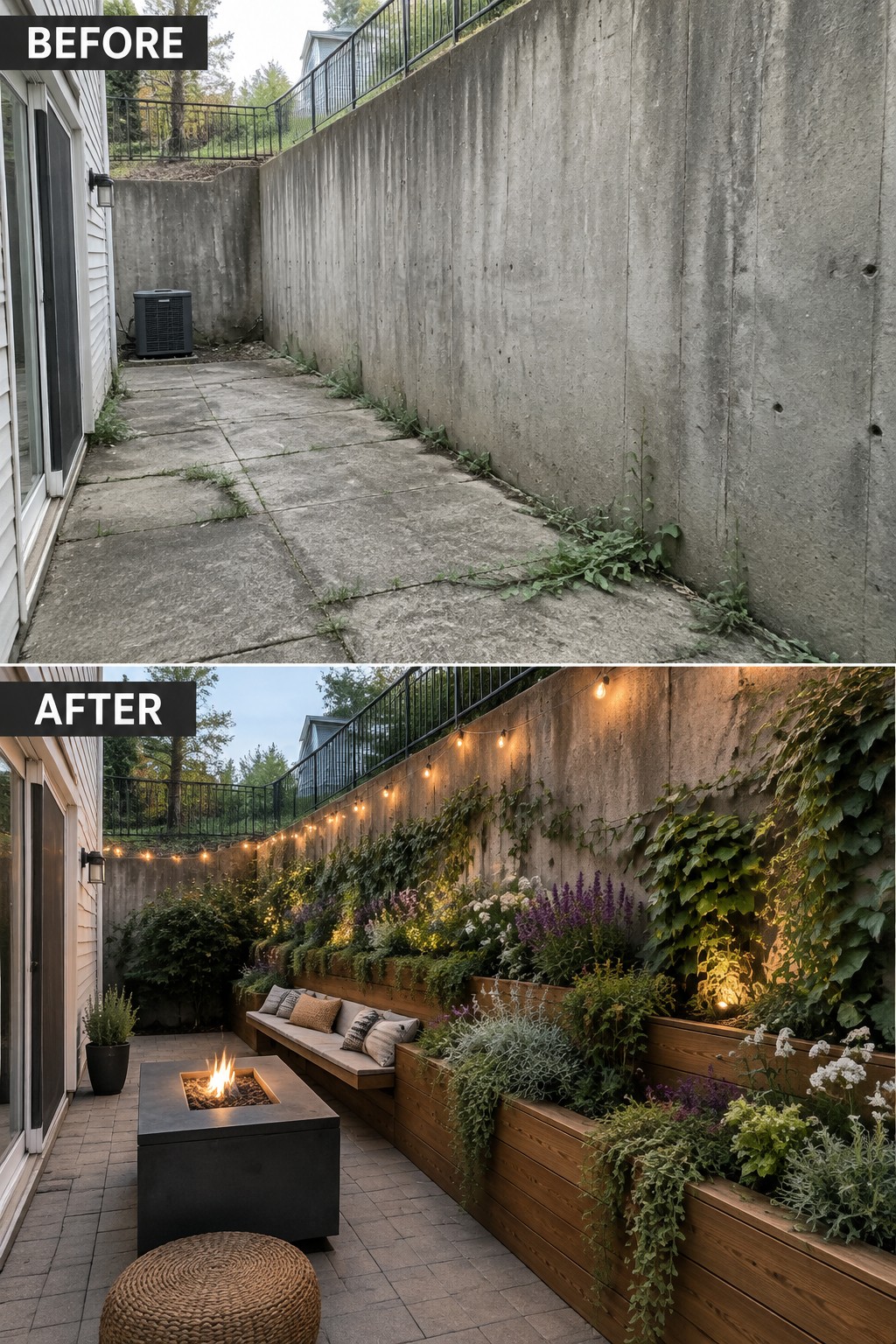
A long concrete slab next to a tall wall rarely gets used when it has no clear purpose. Raising a row of wooden planters along the wall and adding a built-in bench gave the space a defined edge and a place to sit, which instantly made the patio feel intentional instead of leftover.
This idea works best on narrow side yards or back patios that sit against a solid wall. Keep the planters at a consistent height so they act like a low fence, then add one main seating piece and a fire pit to pull everything together. Leave enough walking room in front so the space stays comfortable instead of crowded.
Turn Bare Concrete Into A Defined Seating Area
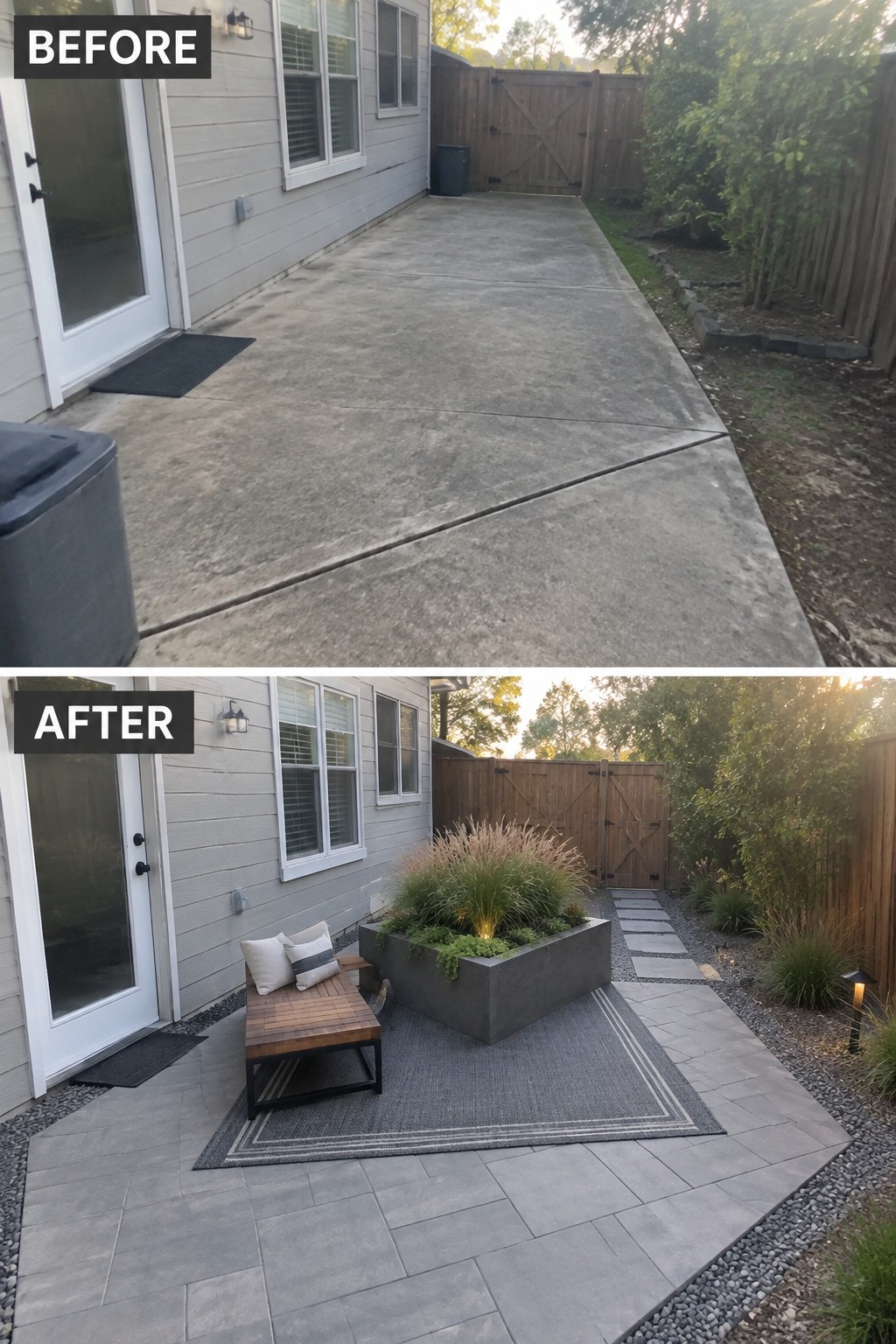
A long stretch of plain concrete rarely feels inviting on its own. Laying pavers in a new shape and placing a large rug over part of the surface gave the space clear edges and turned an empty walkway into a spot that actually reads as seating.
This works best on narrow side yards or leftover concrete pads where you need to carve out one usable zone. Keep the furniture scale modest, let one large planter act as the anchor, and leave enough open pavers around the edges so the area still feels open rather than boxed in.
Turn A Bare Patio Into A Usable Seating Area
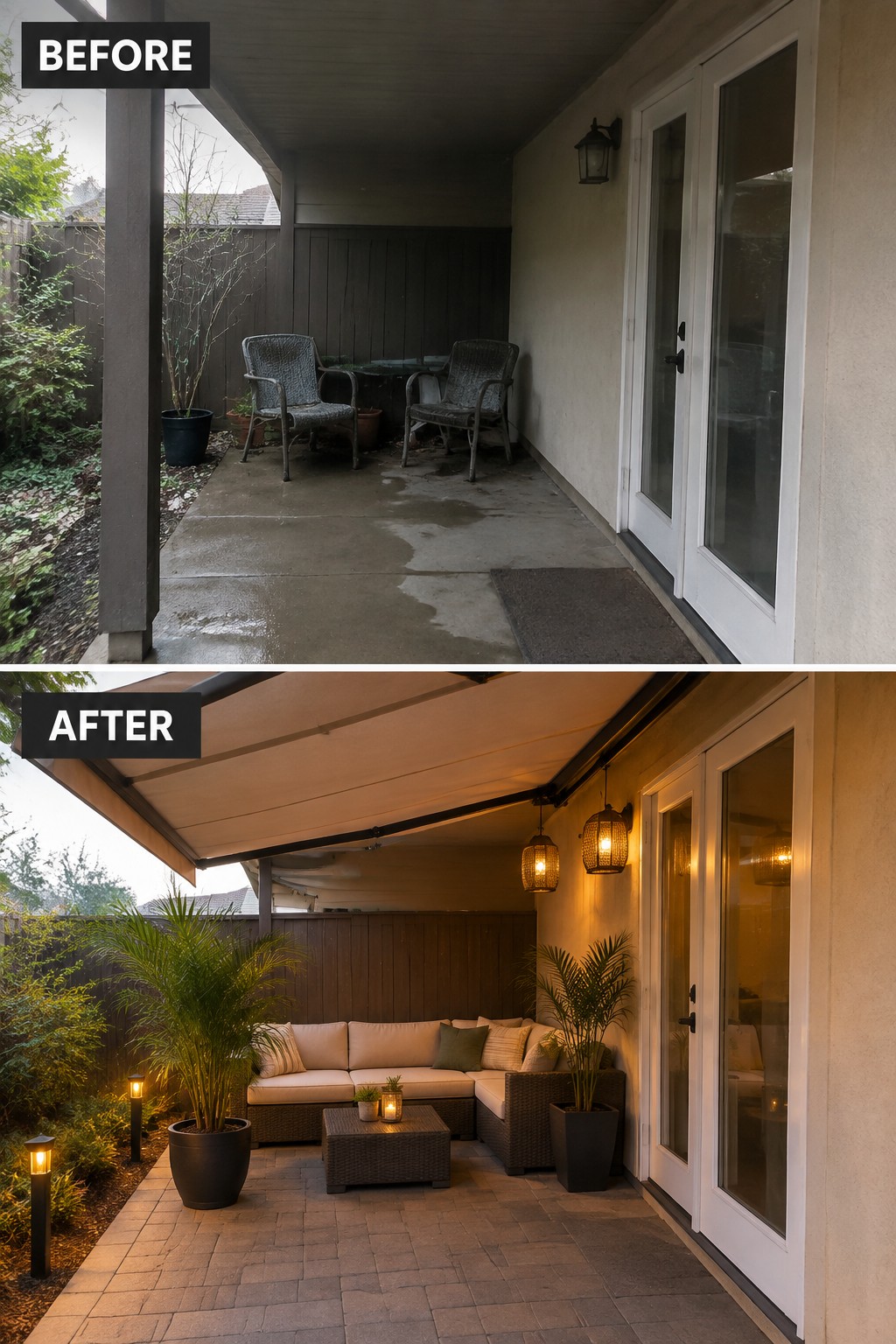
A plain concrete slab next to the house often sits unused because it feels unfinished and exposed. Adding a simple awning for cover, switching to pavers for a drier surface, and placing a sectional sofa against the back wall instantly makes the space feel like an outdoor room instead of leftover concrete. The lighting and a few large plants help too, but the real shift comes from giving the patio a clear purpose and a place to sit.
This approach works well on narrow or awkward side patios where there is not much room to spread out. Start by measuring the space and picking furniture that fits along one wall so you still have walking room. Focus on weatherproof pieces and one or two lights near the seating so the area feels comfortable after dark.
Use Decking To Turn A Narrow Side Patio Into A Real Outdoor Room
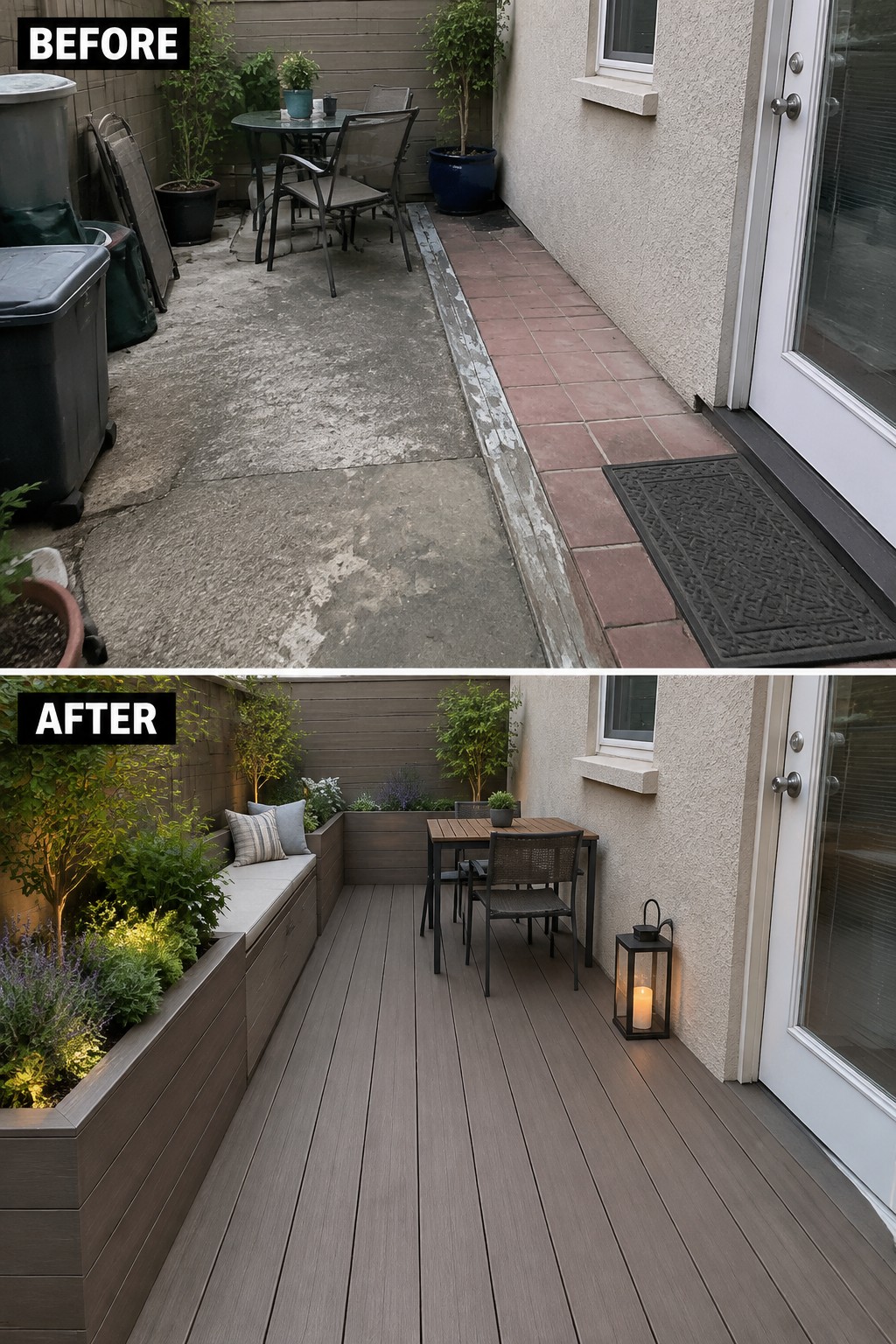
A cluttered concrete strip next to the house rarely feels like a place you want to sit. Replacing the old surface with decking gives the space a clear floor, which instantly makes it feel like an actual room instead of leftover ground. Adding a built-in bench with planters along one side further defines the area and gives you seating without taking up much width.
This approach works well on long, tight patios where furniture would normally crowd the walkway. Start with the decking to set the boundary, then keep the planting simple so the space stays open enough to move through. The same idea can help any awkward outdoor spot that currently feels more like storage than a place to spend time.
Add Vertical Planting To Bring Privacy To A Narrow Patio
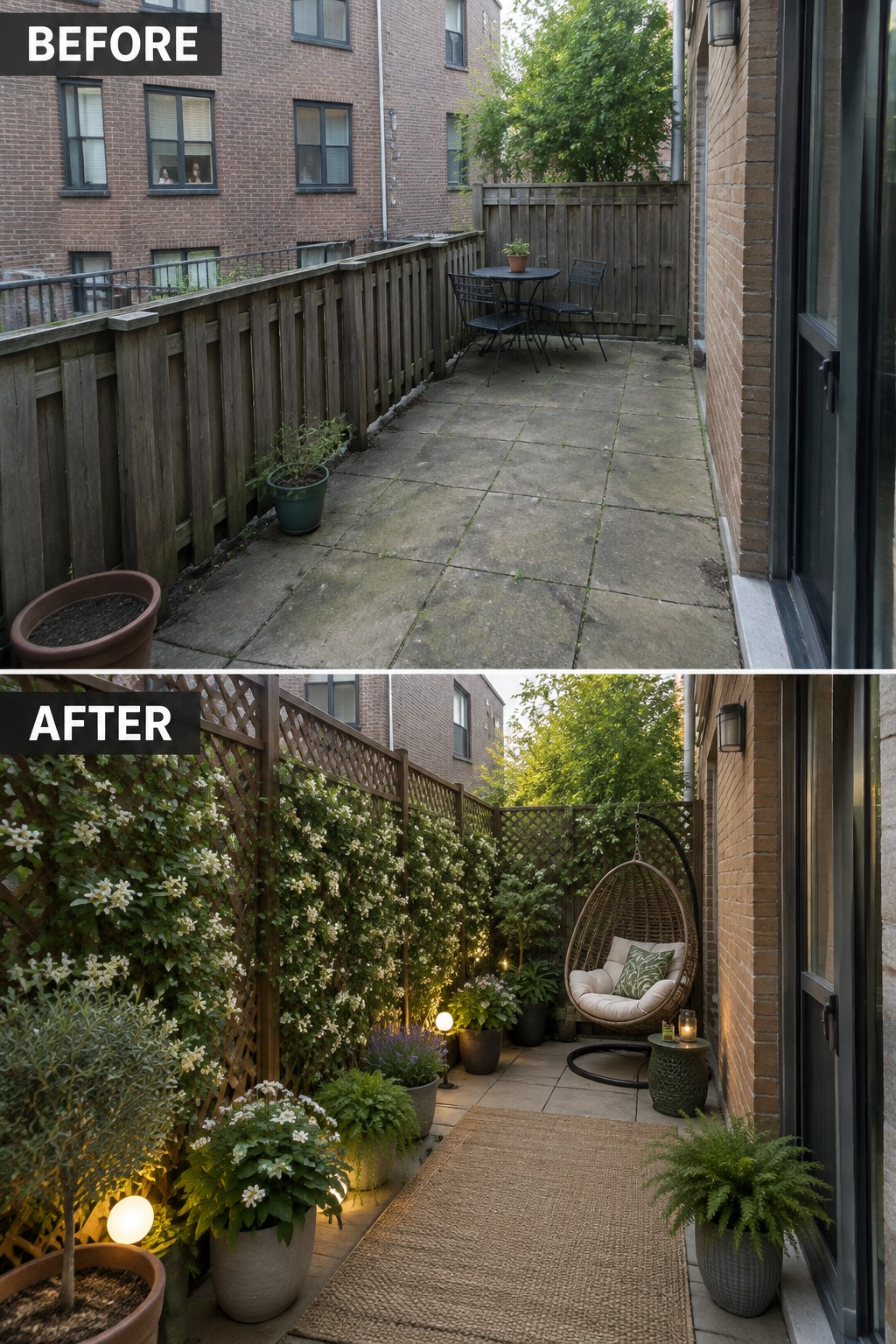
A plain wooden fence and open concrete made this small side patio feel exposed and unfinished. Adding lattice panels with climbing vines along the back wall created a living screen that softens the space and blocks the view from neighboring buildings. A few well-placed pots and low lights along the base of the planting finished the look without crowding the narrow walkway.
This approach works well on tight urban patios where you need greenery but cannot spread out. Start with a simple lattice or trellis on the fence, choose one or two vigorous climbers, and add a few larger pots at different heights. Keep the floor mostly clear except for a rug to mark the seating zone, and use low lighting so the plants become the main feature at night.
Frequently Asked Questions
Q: My patio has a weird corner that nothing fits into. What can I actually do with it? A: Slide in a tall narrow planter with a trailing vine to soften the angle. It draws the eye up and makes the spot feel intentional instead of leftover. Add a single stool beside it if you want a quiet perch for morning coffee.
Q: How do I keep the space from looking cluttered once I add a few plants and a chair? A: Stick to just two or three main pieces and leave the rest of the floor open. Move things around until you can walk a full circle without stepping over anything. That simple test usually shows what can stay and what needs to go.
Q: What if the only flat wall faces my neighbor’s window? A: Hang a lightweight screen or a few tall grasses in pots along that edge. They block the direct view without eating up floor space. Water the plants from your side so the screen stays low maintenance.
