

My backyard sat mostly empty for a long time because the upkeep always felt heavier than any reward from using it.
I started paying more attention to plants that spread on their own and surfaces that do not show every footprint.
I usually test one change at a time so I can see what actually reduces the work instead of adding to it.
Gravel and native grasses turned out to be the simplest fixes around here.
The result feels like a space I can step into without a list of chores waiting.
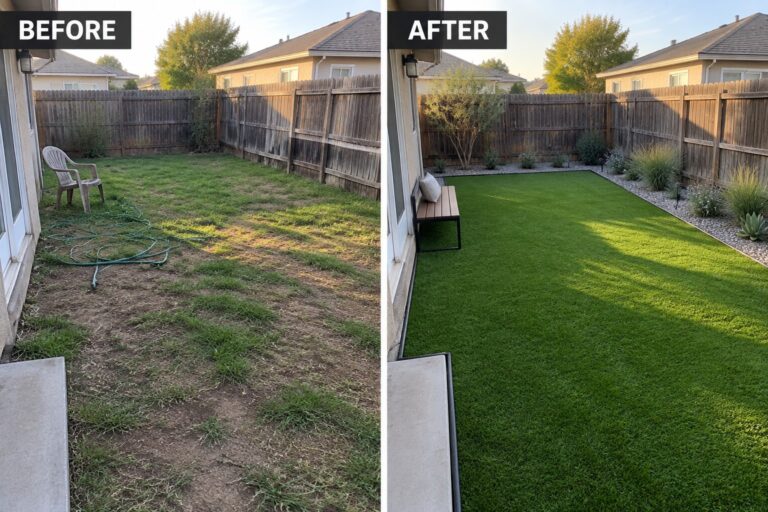
Use Artificial Turf To Make Yard Care Easier

A patchy lawn with bare spots and weeds takes constant work to look decent. Switching to artificial turf gives you a steady green surface that stays neat without regular mowing or watering. The clean edges and simple plantings around the border keep the whole area from feeling scattered.
This approach works well in smaller backyards where you want usable space without daily upkeep. Focus on good edging first so the turf looks intentional, then add a few low-water plants along the fence line. It suits homes that get heavy sun or have poor natural grass growth.
Clear Overgrown Beds For Easier Upkeep

The before photo shows a messy mix of shrubs and flowers that had grown wild and uneven. The after version replaces that with a clean gravel bed, a few large rocks, and clusters of succulents and small shrubs that stay compact without constant trimming.
This idea works best along the front of a house or in any sunny spot where you want the area to look neat without daily care. Remove the old plants first, lay down gravel or small stones to suppress weeds, then add a few larger rocks and drought-tolerant succulents. The result stays tidy through the seasons and needs far less water and pruning than a traditional flower bed.
Turn A Bare Patio Into A Seating Area

A large concrete slab often sits unused because it feels unfinished and uninviting. Placing a small table and two chairs on it, along with low ground cover between the pavers, gives the space a clear purpose without adding much to maintain.
This idea works best on patios that already have decent drainage and sun exposure. Keep the furniture scale modest so the area does not feel crowded, and choose plants that spread slowly between the stones. The result is a simple outdoor spot that stays practical year after year.
Turn A Bare Deck Into A Defined Seating Spot
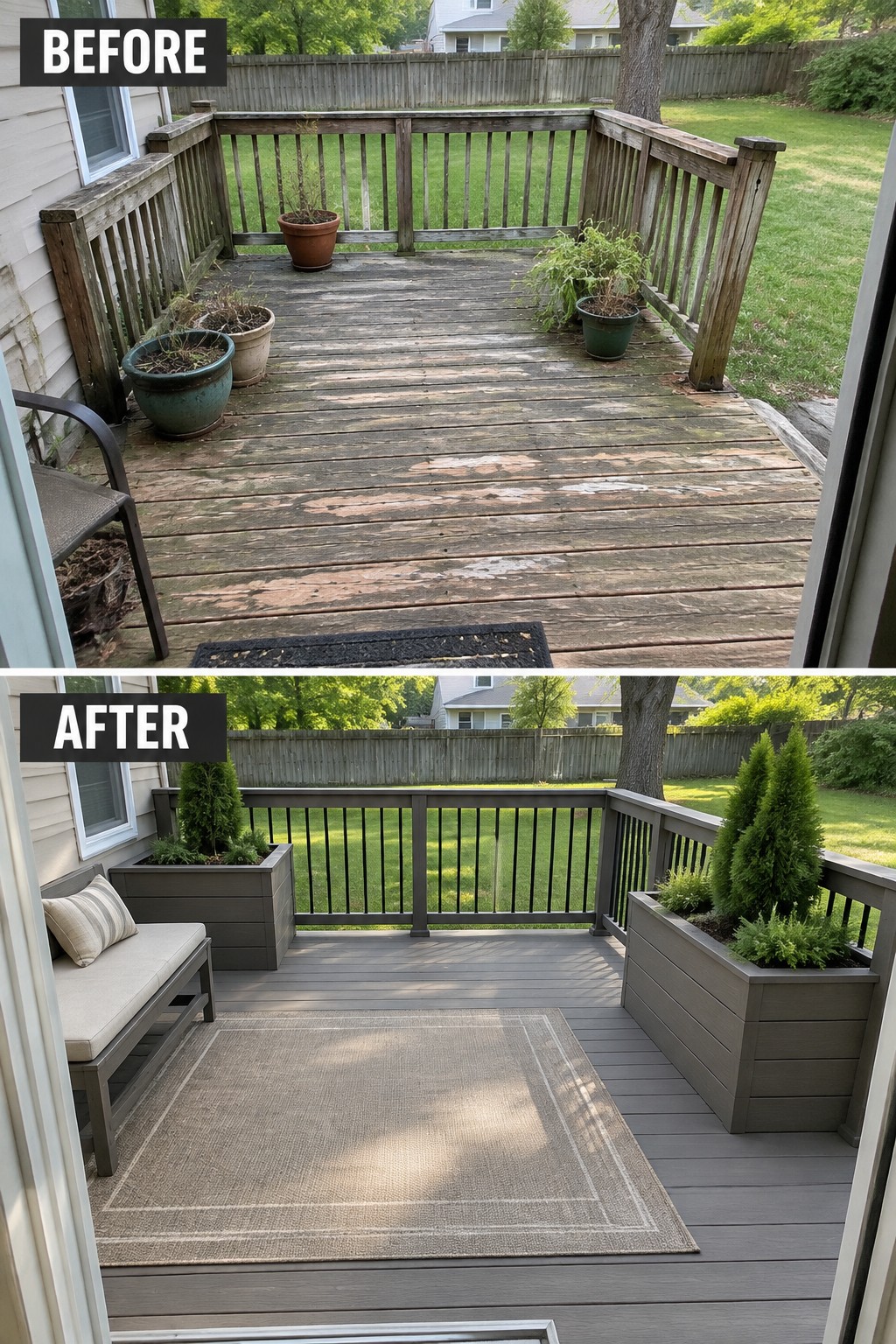
A deck that sits empty often feels like extra work rather than a place to relax. Laying down one large outdoor rug creates an instant seating zone, while built-in planters along the sides keep the layout simple and contained so nothing drifts out of place.
This idea suits decks or patios that already have a solid surface. Pick a rug that can handle weather, add seating that stays in scale with the space, and limit extra pieces to two or three planters. The result stays low maintenance because the rug defines the area without requiring constant rearranging or new structures.
Add Gravel And Pavers To Simplify An Overgrown Yard
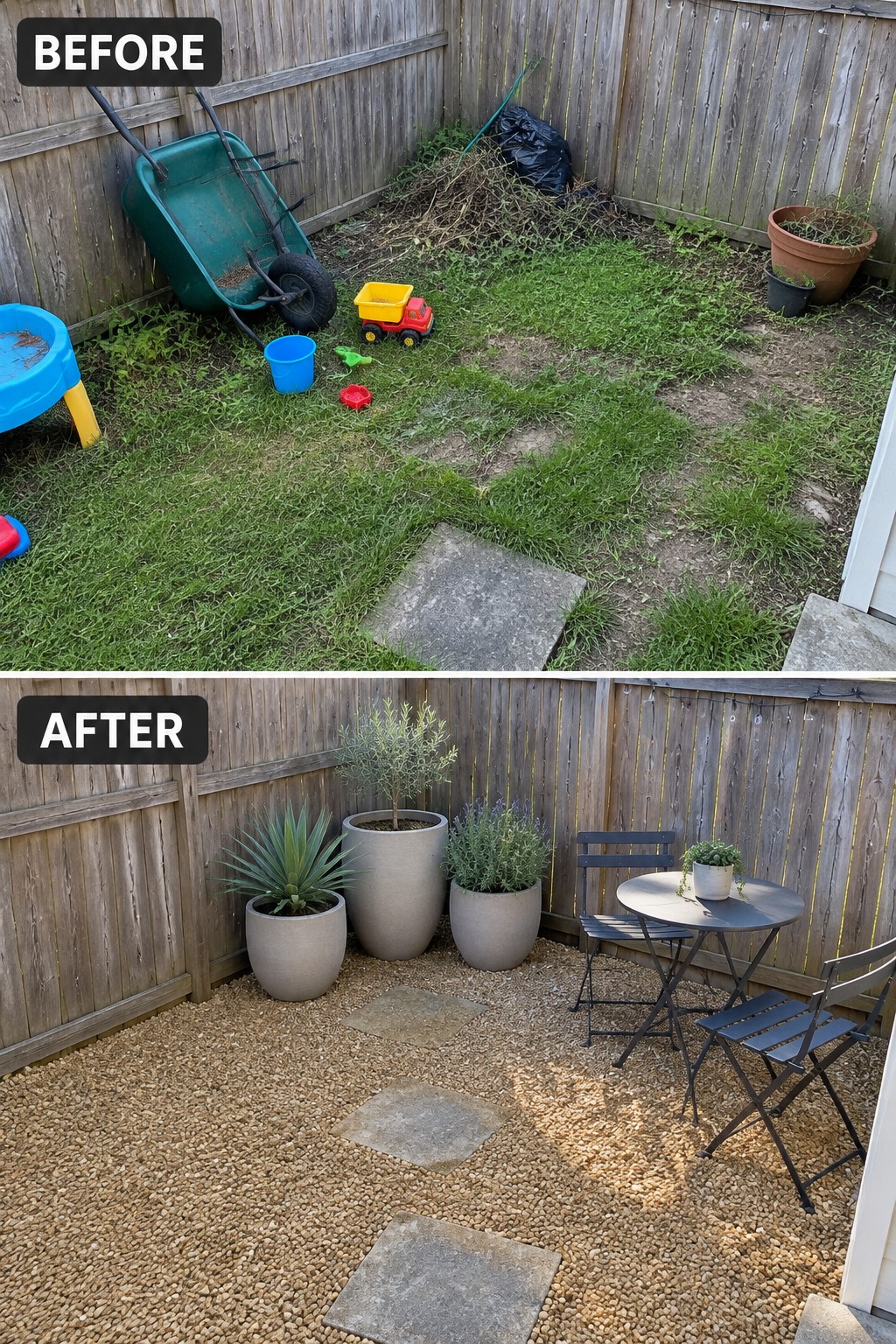
One of the easiest ways to reduce yard work is to cover patchy grass with gravel and add a few pavers for structure. The before photo shows an uneven lawn scattered with toys and debris, while the after shows a clean gravel surface that stays neat without constant mowing or watering.
This idea works best in small backyards where grass struggles or where you want a simple space for seating and pots. Start with a good cleanup, lay landscape fabric under the gravel, and keep the planting simple with large containers along the fence.
Create A Defined Fire Pit Area In Your Backyard
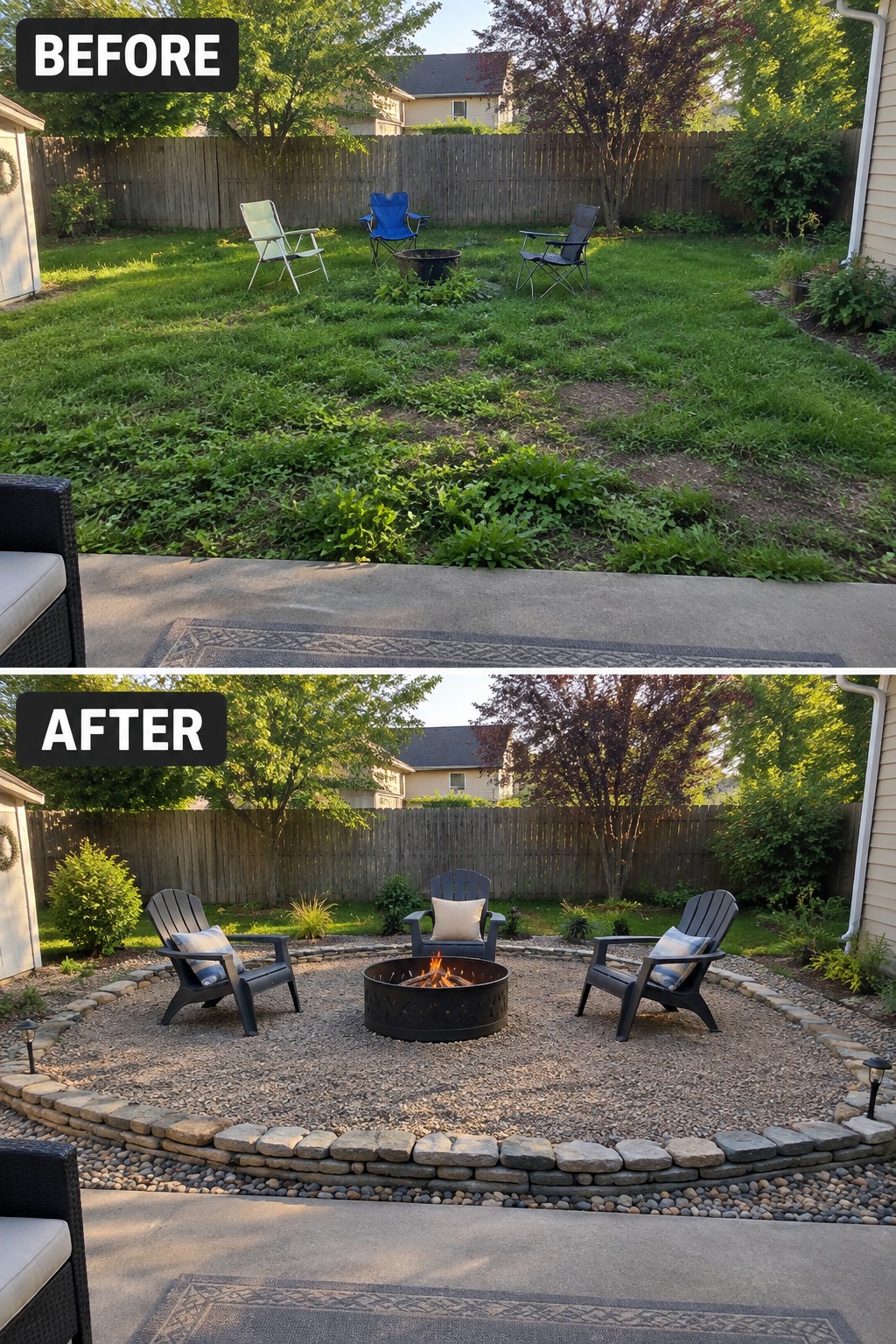
Adding a gravel circle and simple stone border turns an open patch of lawn into a clear spot for sitting around the fire. The before photo shows chairs scattered across uneven grass with no real sense of where to gather. Once the area is edged and filled, the fire pit becomes the center and the chairs actually work together as a seating group.
This approach suits backyards that already have a fire pit but lack a finished surface around it. Mark out a shape that fits your chairs with room to walk around, then use gravel over fabric so weeds stay down and the space stays usable after rain. Keep the border low so it does not block movement or feel too formal.
Replace A Plain Lawn With Flower Borders
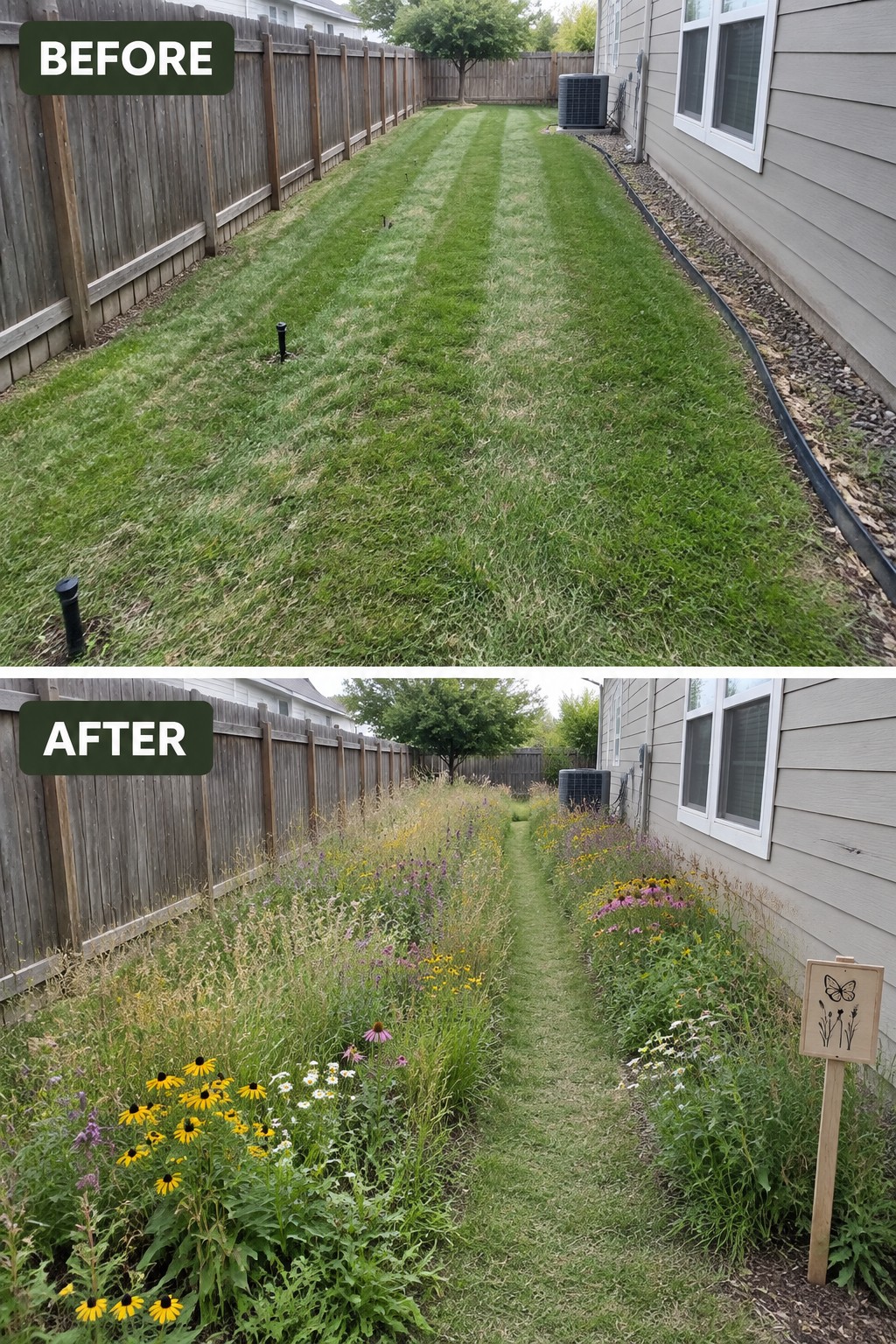
A long narrow strip of lawn between a fence and the house often ends up as the part of the yard that gets mowed but never really used. Replacing most of that grass with flower beds along both sides keeps a simple grass path down the middle for access while turning the rest into something that needs far less routine cutting.
This approach suits homes where the backyard is mostly a functional walkway rather than open play space. Start by marking out the beds, clearing the sod, and planting a mix of perennials that spread on their own. Once established the flowers fill in and reduce the area that needs weekly attention.
Add Raised Beds To Give A Backyard Clear Structure

Raised beds are one of the easiest ways to fix a scattered backyard garden. The before photo shows how plants can quickly take over when beds have no clear edges, while the after shows how simple wooden frames and mulch keep everything contained and easy to walk around.
This idea works best in smaller yards where you want low maintenance without giving up growing space. Start with the beds first, then add plants that fit the size of each frame so the whole area stays tidy instead of spreading out.
Replace Overgrown Shrubs With A Fence And Low Plants

The tall, wild hedge in the before photo made the yard feel closed in and hard to manage. Switching to a horizontal fence with a narrow strip of low shrubs underneath opens the space up while still keeping the boundary clear. The fence gives structure without the constant trimming those big bushes required.
This works best along the back or side of a yard where you want privacy but do not want high-maintenance planting. Keep the shrubs small and spaced so they stay neat with just a few trims a year. The fence itself needs little upkeep beyond an occasional wash, which makes the whole area much simpler to handle over time.
Add A Shed And Tool Wall To Organize A Cluttered Yard

A small backyard corner often turns into a dumping ground for tools, pots, and tarps when there is no clear place for them. Adding a shed and a wall-mounted storage panel gives everything a home and keeps the ground clear. The gravel base also makes the area easier to walk on and maintain.
This setup works best in narrow side yards or behind a garage where space is limited. Place the shed first so it lines up with the house, then build or buy a simple slat wall for long-handled tools. Keep a couple of potted evergreens on either side to soften the look without adding more clutter.
Turn An Overgrown Side Path Into A Clean Gravel Walkway

Narrow side yards often get neglected because the space is tight and hard to mow around old stepping stones. Clearing the weeds and laying down a solid gravel path with simple border plants creates a tidy walkway that stays manageable without constant trimming.
This idea works best in long, narrow spots between a house and fence where you need something practical underfoot. Start by removing the old stones and weeds, then add metal or plastic edging to keep the gravel contained. Choose low-growing plants that handle dry conditions and add a few lights only where they help with evening use.
Replace A Lawn With Gravel For Lower Upkeep

A full lawn often means weekly mowing, watering, and edging that add up fast. Here the patchy grass and sprinklers were removed and replaced with a simple gravel layer, a few large rocks, and clusters of succulents and tall grasses that need almost no care once they are in the ground.
This idea suits small to medium yards in drier climates or any homeowner who wants less weekend work. Clear the old turf first, add landscape fabric to block weeds, then spread gravel and keep the planting simple so the space still feels open rather than crowded.
Add Structure To An Overgrown Backyard

An old wooden fence buried in vines can drag down the whole yard. Replacing it with a solid modern fence and clearing the base turns a messy edge into a clean border that makes the lawn feel more open and cared for.
This idea works best when the fence line has become a catch-all for weeds and overgrowth. Start by removing the plants, then install a durable fence and add a simple gravel strip with a few shrubs. The result stays neat with very little mowing or trimming needed along the edge.
Replace A Patchy Lawn With Ground Cover
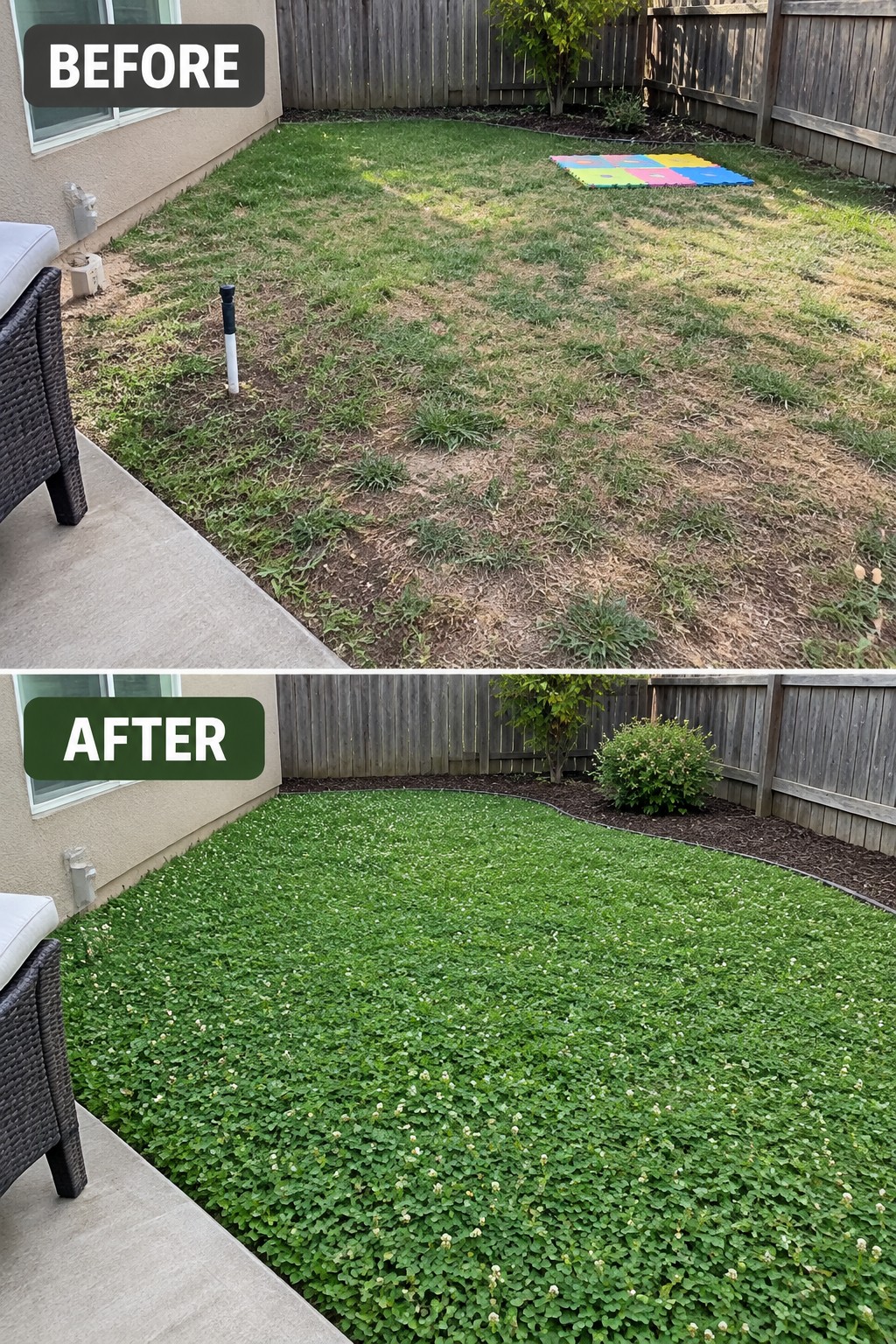
A patchy lawn often comes from poor soil and uneven watering, and reseeding rarely solves it for long. Here the owners removed the struggling grass and put in a low-growing ground cover that spread into a thick, even layer with almost no bare spots left.
This idea suits small backyards where mowing and watering feel like too much work. Choose a tough variety that handles light foot traffic, prepare the soil before planting, and give it one season to fill in. After that it needs far less attention than regular grass.
Turn A Bare Patio Into A Seating Area
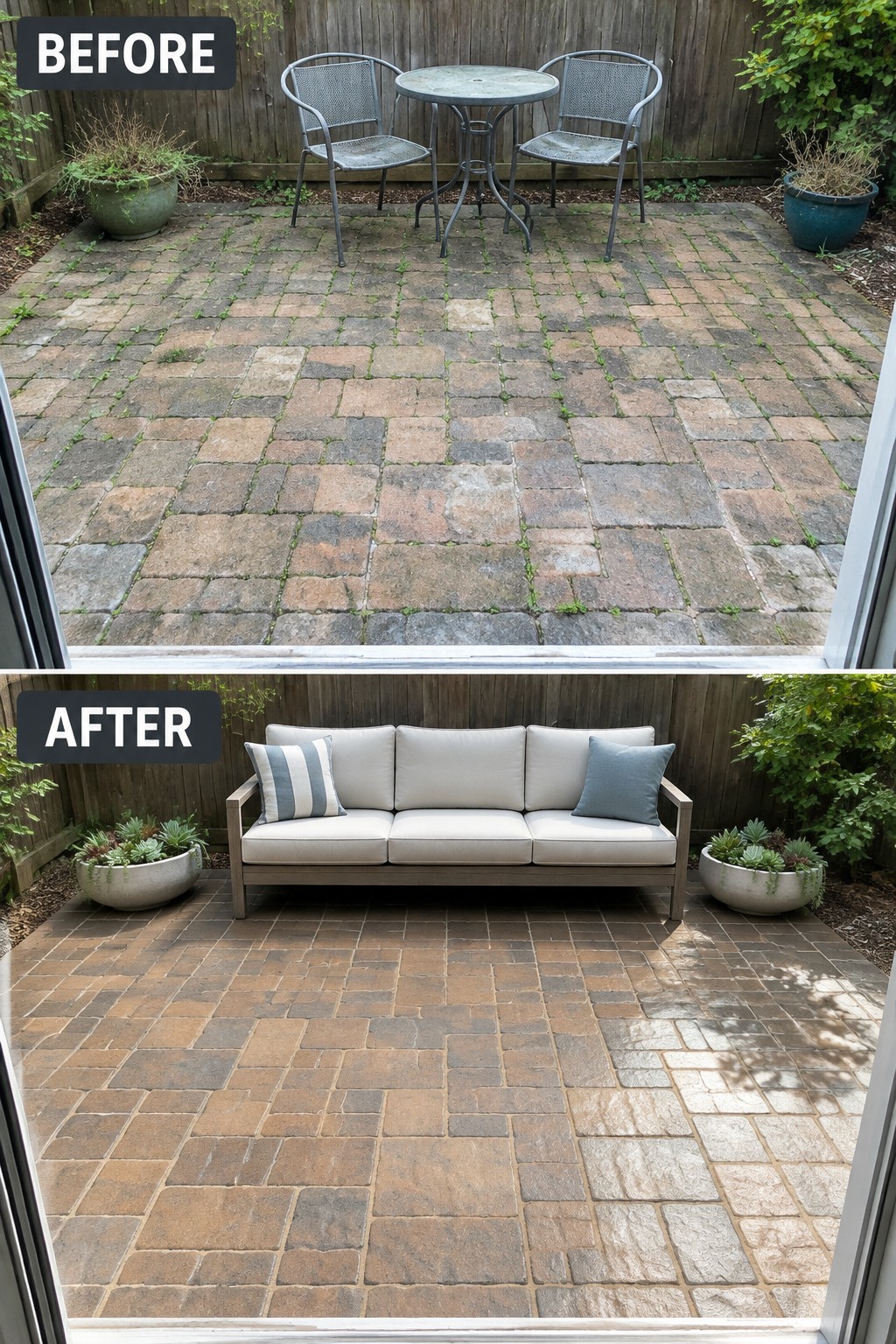
A small bistro set left most of the pavers unused and the space feeling empty. Replacing it with a full outdoor sofa gives the patio a clear purpose and makes it comfortable enough for people to stay awhile.
This idea works on any paved area that already has good structure but lacks usable furniture. Keep the scale realistic so the sofa fits without crowding the walkway, and choose pieces made for outdoor use so the setup lasts through the seasons.
Add Structure To An Overgrown Side Yard

A narrow side yard often turns into a catch-all for old pots and weeds because it feels too tight to bother with. Laying down mulch and a line of stepping stones gives the space a clear purpose and makes it look intentional instead of forgotten. The before photo shows how quickly the area filled with clutter and volunteer plants once it was left alone.
This approach works well on any slim strip between the house and a fence or property line. Start by clearing everything out, then add a simple path so you can walk through without stepping on plants. Mulch keeps the beds looking tidy and cuts down on weeding, while a few shade-loving plants like ferns soften the edges without crowding the walkway.
Replace A Messy Garden Bed With Gravel And Large Pots
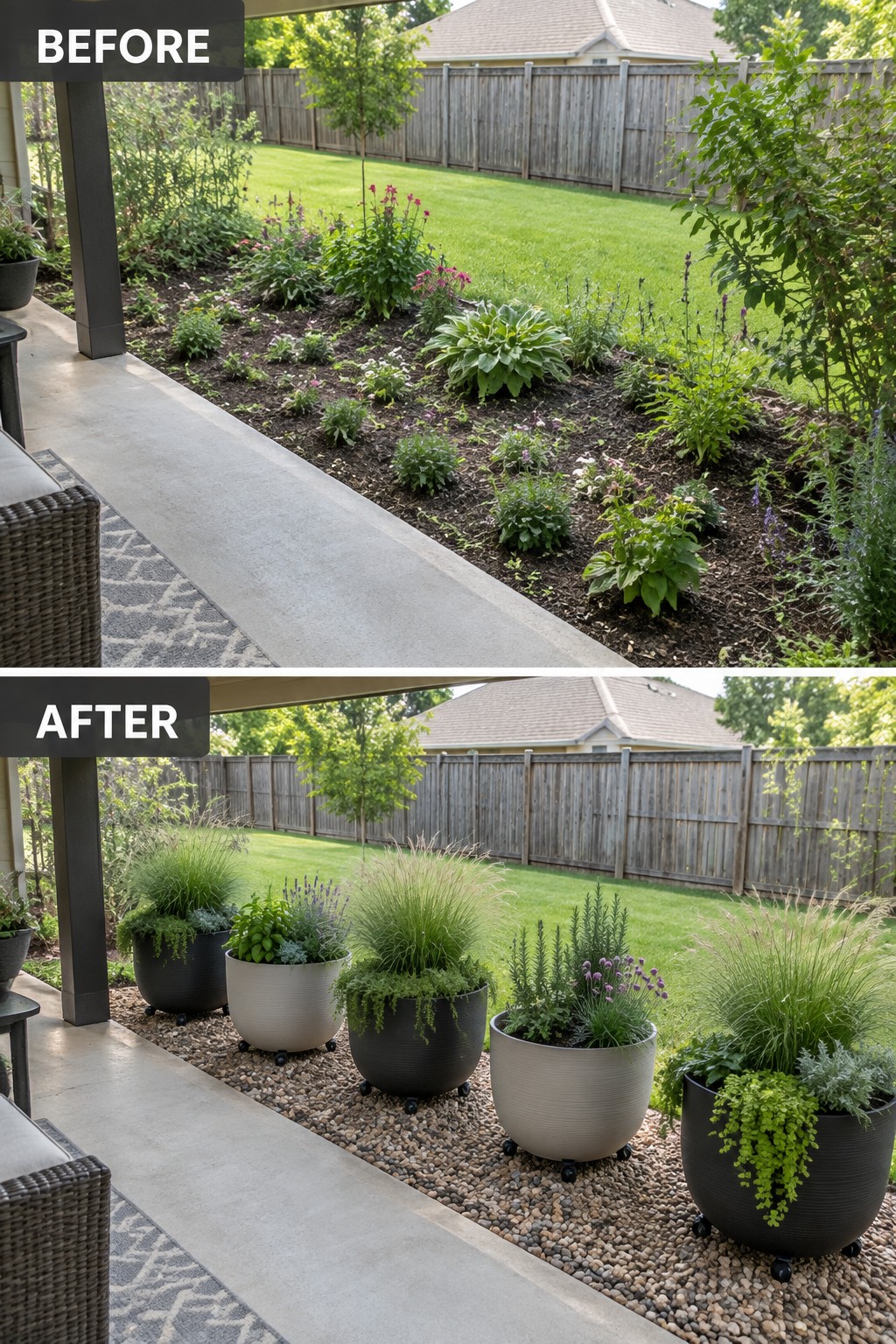
The before photo shows a wild strip of plants and weeds growing right up against the patio edge. In the after, that same area is covered in gravel with a row of big containers that keep everything neat and easy to manage. This change cuts down on weeding and gives the space a much cleaner look without losing the plants.
This idea works well along patios or decks where a traditional bed gets too hard to maintain. Use a few large pots on wheels so you can move them when needed, and keep the planting simple with grasses and herbs that do not require constant care. It suits smaller yards or homes that want less weekend work.
Define An Overgrown Path With Gravel And Edging
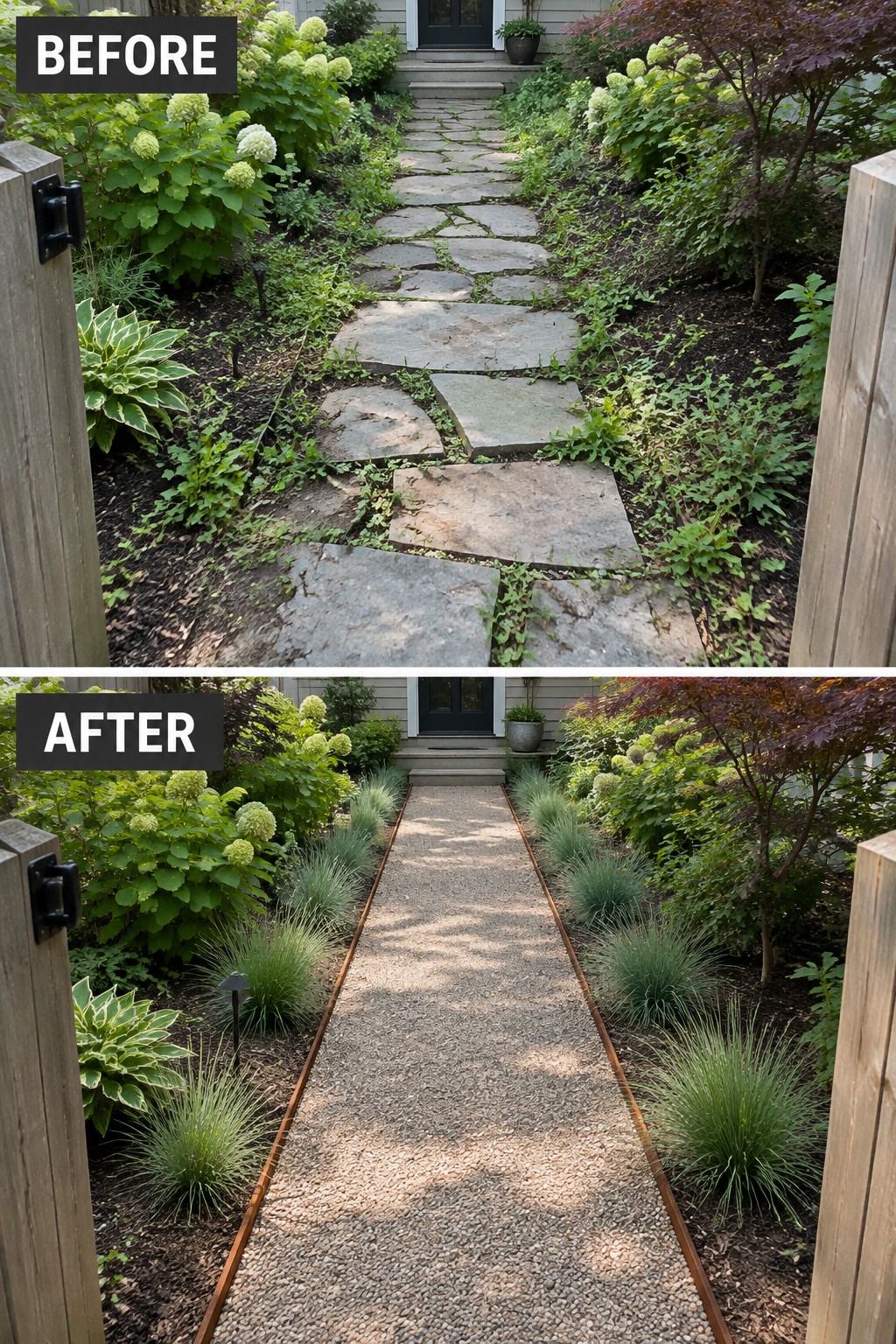
An irregular stone path that disappears under weeds and spreading plants is hard to maintain and looks messy fast. Switching to a straight gravel walkway with simple metal edging gives the garden a clear line and cuts down on constant weeding. The before photo shows stones sinking and plants creeping across the surface, while the after shows a neat, contained path that stays clean with very little work.
This approach works well in side yards or narrow garden routes where you want access without fuss. Start by removing the old stones, lay down landscape fabric, add the edging, and fill with gravel. Keep the planting simple on either side so the path stays the main feature and does not compete with too many different plants.
Add Structure To An Overgrown Flower Bed

Front beds often get away from you after a season or two. The plants grow tall and floppy, the edges blur into the lawn, and the whole area starts to look neglected rather than intentional.
Clear the bed completely first, then replant with lower, contained varieties and add a clear border of river rock or mulch. This keeps the soil covered, stops weeds from taking over, and gives the planting a finished shape that stays neat with very little work.
Install Drip Irrigation To Simplify Garden Care
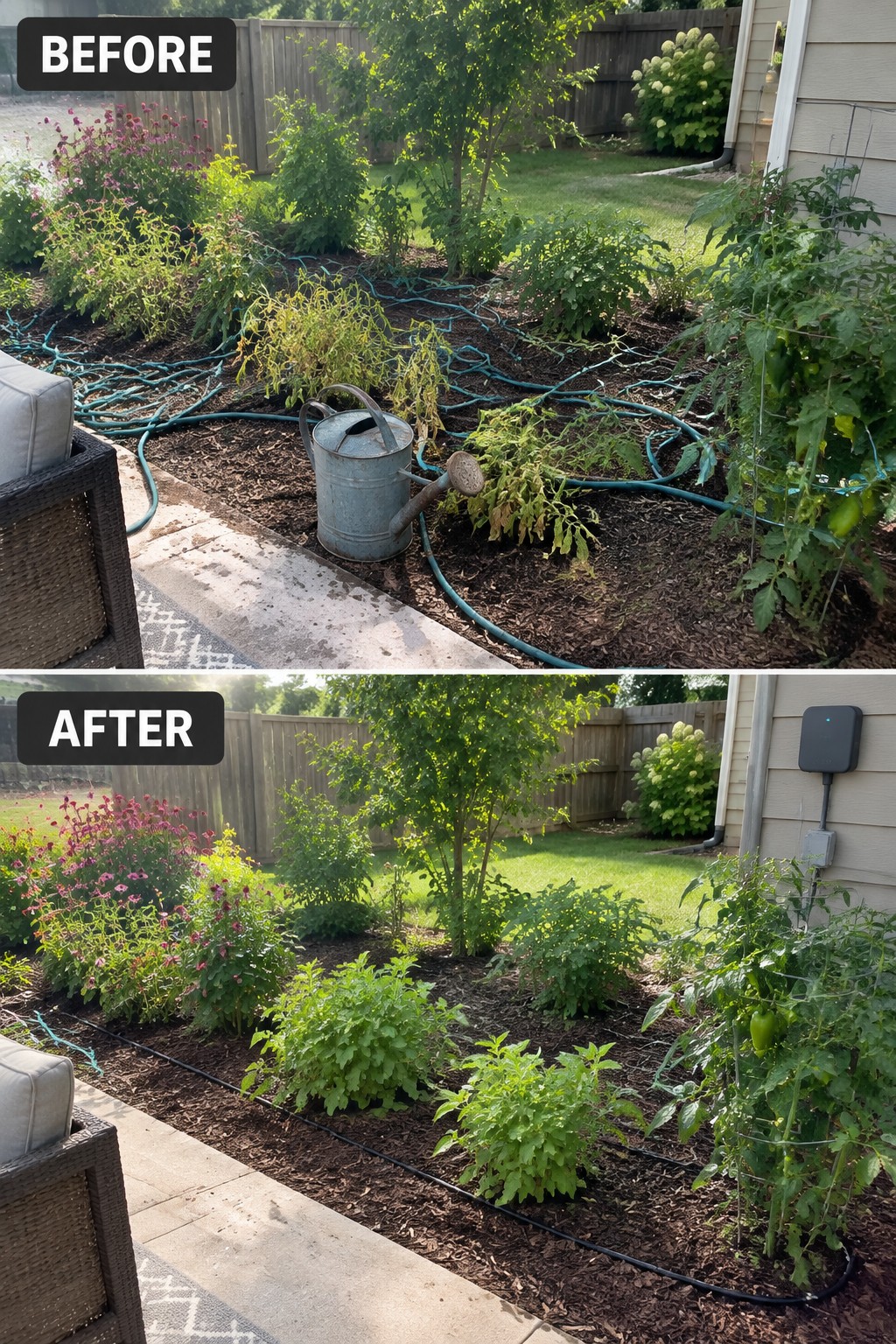
The before photo shows a backyard bed buried under a mess of green hoses and struggling plants. The after version replaces all that with a single black drip line running neatly along the edge of each bed, plus fresh mulch to hold moisture in. That one change removes the daily watering chore and keeps the soil more consistent without constant fuss.
This idea works best in any yard that already has garden beds or vegetable rows. Start by mapping where the plants sit, then lay the tubing along the base so water reaches the roots directly. It suits homeowners who want to keep things growing without dragging hoses around every evening or worrying about dry spots during a hot week.
Frequently Asked Questions
Q: Which plants work best if I want almost no watering after the first year?
A: Go for native grasses and shrubs that handle dry spells on their own. They root deep and pull what they need from the soil. Check your local extension service for suggestions that fit your zone.
Q: My kids play outside every day. Will a low maintenance yard hold up?
A: Choose tough surfaces like gravel paths and artificial turf in play areas. These stand up to foot traffic without turning to mud. Add a few indestructible benches so you have spots to sit and watch.
Q: Weeds always take over my beds by midsummer. Any tricks?
A: Lay down thick landscape fabric before adding mulch. Pull any that poke through right away so they don’t set seed. Over time the canopy from your plants crowds them out.
Q: How much time will I really spend each month once everything is in?
A: Expect an hour or two for quick checks and trims. Focus on one area at a time instead of tackling the whole yard.
