


My backyard always felt a bit scattered until the stone paths and planting beds actually lined up with how the space gets used day to day.
I usually start by sorting out the main surfaces because they set the tone for everything else that follows.
Drought tolerant planting works best once those lines are clear, since it lets the shapes hold the look through dry months without extra fuss.
The result feels more like a single space instead of separate patches added over time.
Some of these stone and plant pairings are easy to adapt on a smaller scale first.
Turn An Empty Backyard Into A Paved Patio

A simple lawn often leaves a backyard feeling unfinished and underused. Adding a stone patio with a built-in bench gives the space a clear purpose and a place to actually sit. The pavers create a solid floor that stays usable in any weather, while the curved bench anchors the whole area without taking up extra room.
This approach works best in smaller or sloping yards where grass alone does not invite people outside. Keep the paving simple and choose a bench that follows the natural shape of the house or fence line. Then add a few large pots and low-water plants around the edges so the hard surface does not feel too stark.
Turn Bare Concrete Into A Defined Stone Patio

A flat concrete slab often feels like wasted space because it has no edges or purpose. Replacing it with flagstone pavers and adding a low curved wall immediately gives the area shape and turns it into a place where furniture can actually sit without looking lost.
This idea works best in backyards that already have a concrete pad but need more structure. Keep the middle open for seating, use the wall to hold a narrow planting bed, and choose pavers and stone that match the color of your house so the new surface feels like a natural extension of the home rather than an add-on.
Add Structure To An Overgrown Backyard
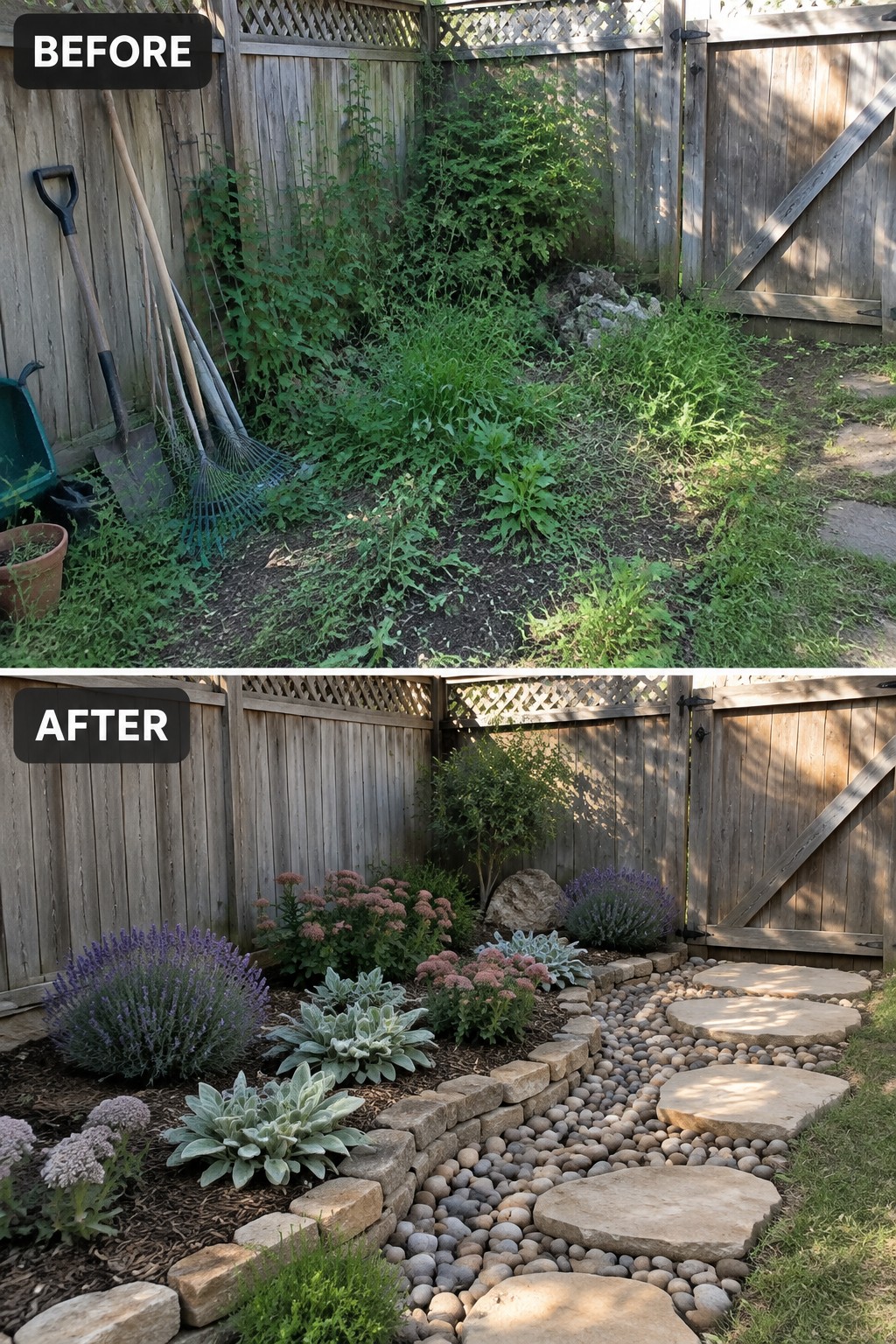
Clearing the weeds and laying out defined beds made the biggest difference here. The stone borders and pebble path turned a messy patch of ground into something that feels planned, with the plants grouped instead of scattered.
This idea suits small yards where you want a low-water garden that still looks intentional. Mark the beds first, use the same stone or gravel throughout, and stick to a few plant types so the space stays easy to care for over time.
Add Structure To An Overgrown Backyard
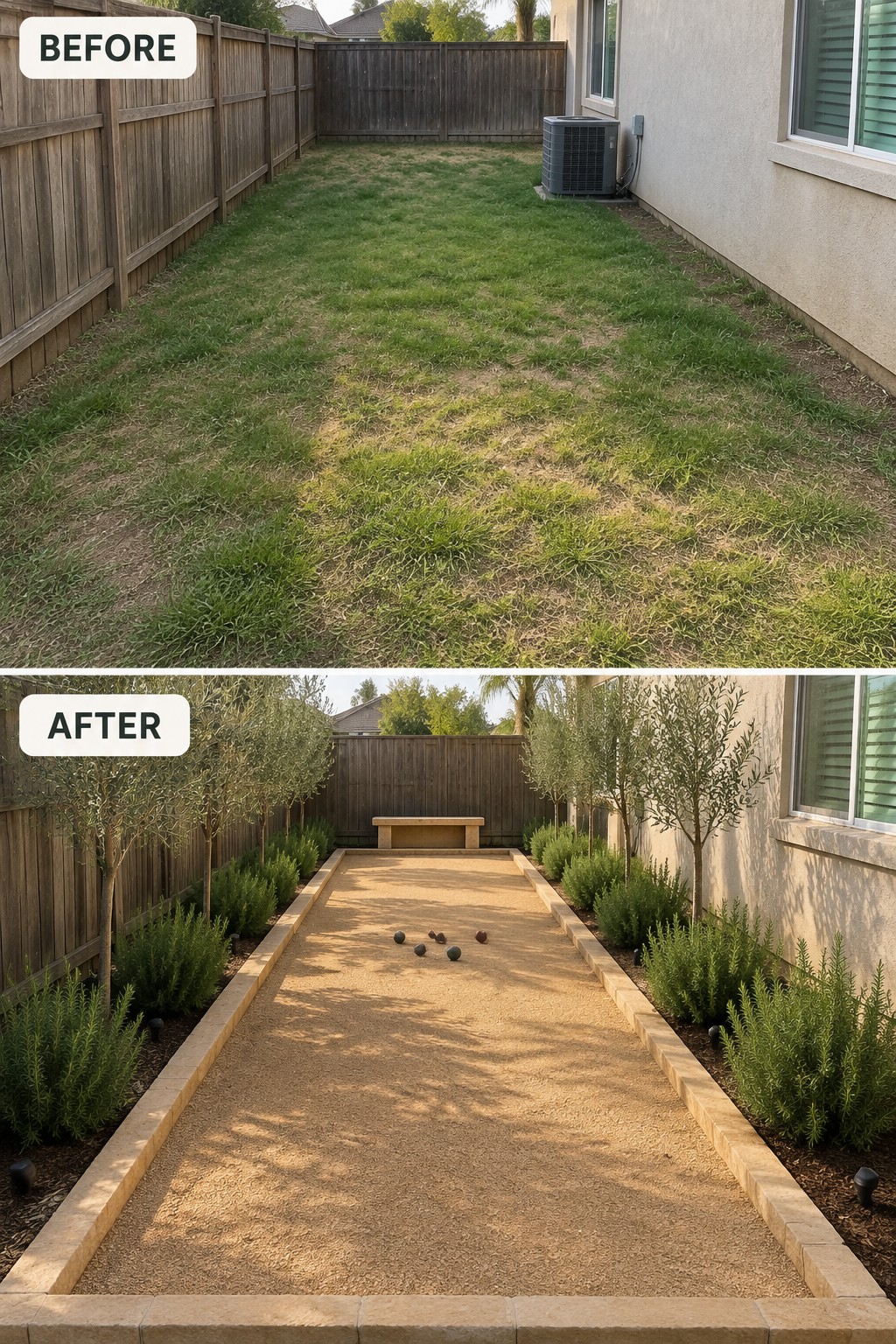
A long strip of patchy grass does not give a yard much purpose. Replacing most of that grass with a bordered gravel rectangle creates a clear, usable zone while leaving room for planting along the edges. The stone borders keep the gravel in place and give the whole space a finished look without adding much height or cost.
This approach works especially well in narrow or long backyards where lawn is hard to maintain. Mark out the area first, set the edging, then add a few trees and shrubs on the sides so the planting frames the gravel rather than competing with it. The result feels planned instead of leftover.
Turn An Old Deck Into A Fire Pit Patio
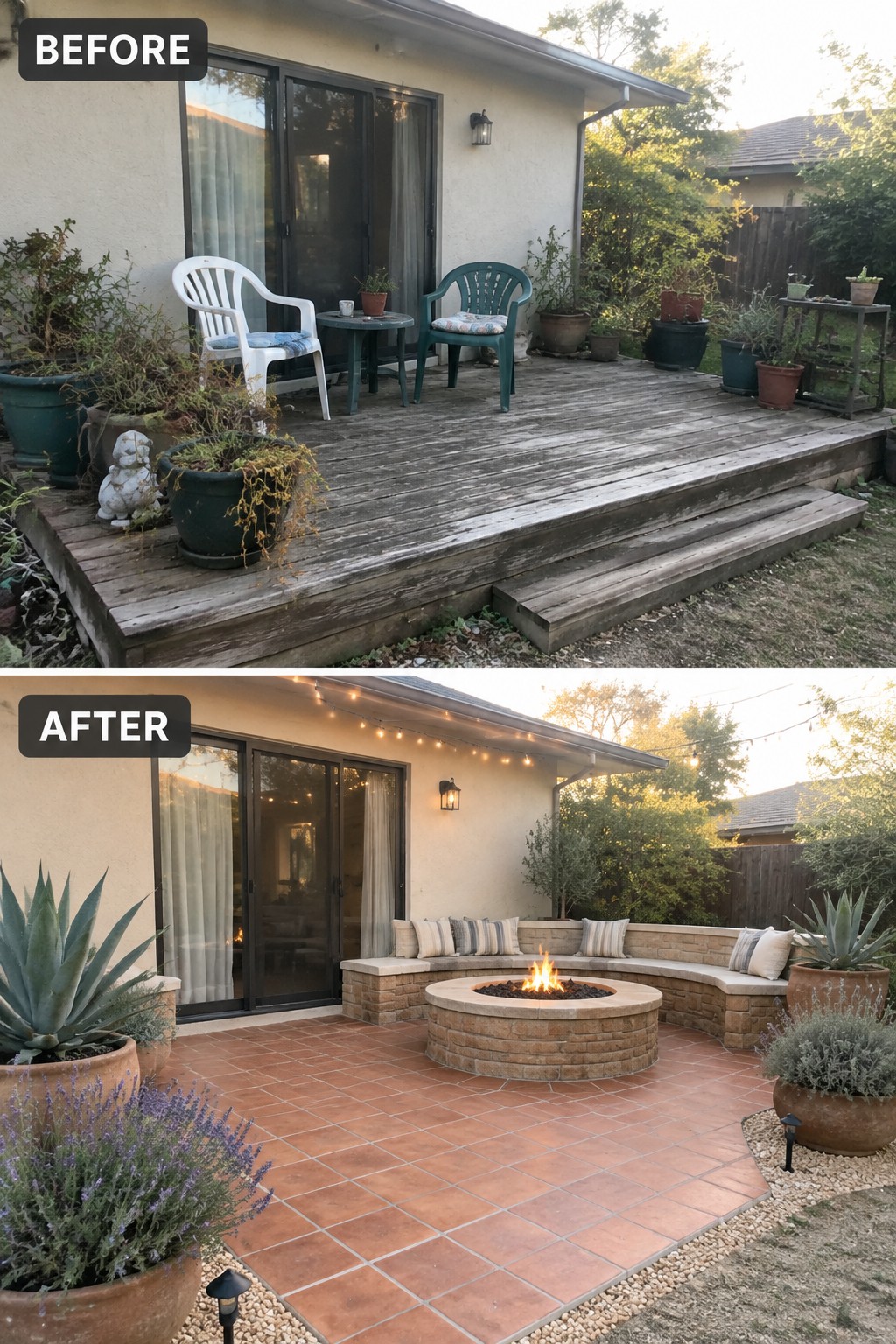
An old wooden deck often ends up looking worn and uneven after a few seasons of sun and rain. Switching to a tiled surface and adding a stone fire pit gives the area a solid base and a clear reason to spend time outside.
This approach works best when the fire pit sits at the center and the seating wraps around it. Use warm stone or tile that matches the house, keep the surrounding planting simple with a few large pots, and make sure there is still room to walk around the edges.
Replace Worn Concrete With Warm Stone Pavers
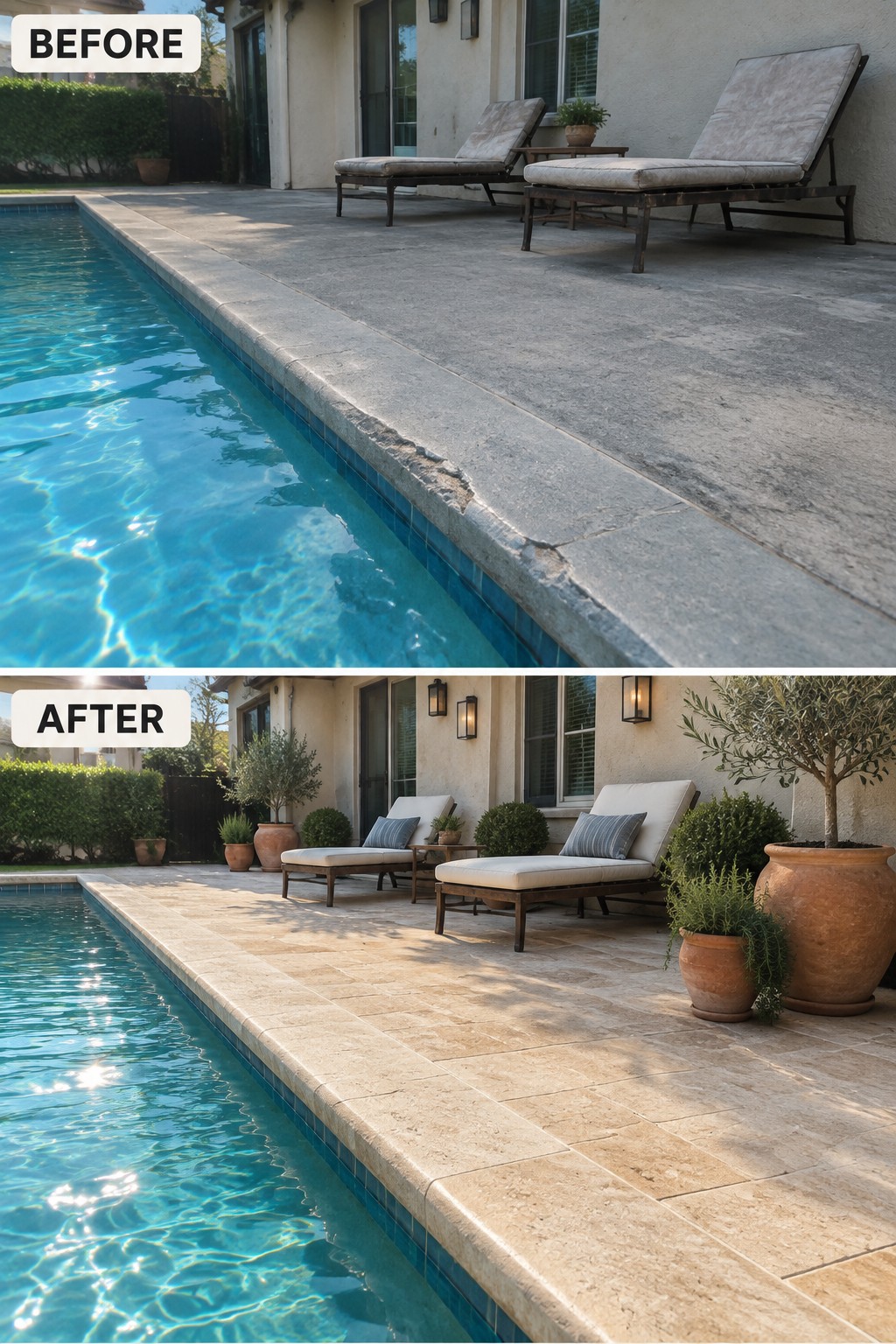
The old pool deck had cracked gray concrete that made the whole area feel unfinished and hard to use. Switching to large warm stone pavers created a solid, even surface that looks much cleaner and works better right next to the water.
This change works on any pool deck or patio that needs a better base before adding furniture or plants. Keep the pavers in a light sandy tone, leave enough open space for movement, and add just a few large pots so the new surface stays the main feature.
Define A Narrow Side Yard With Stepping Stones And Gravel
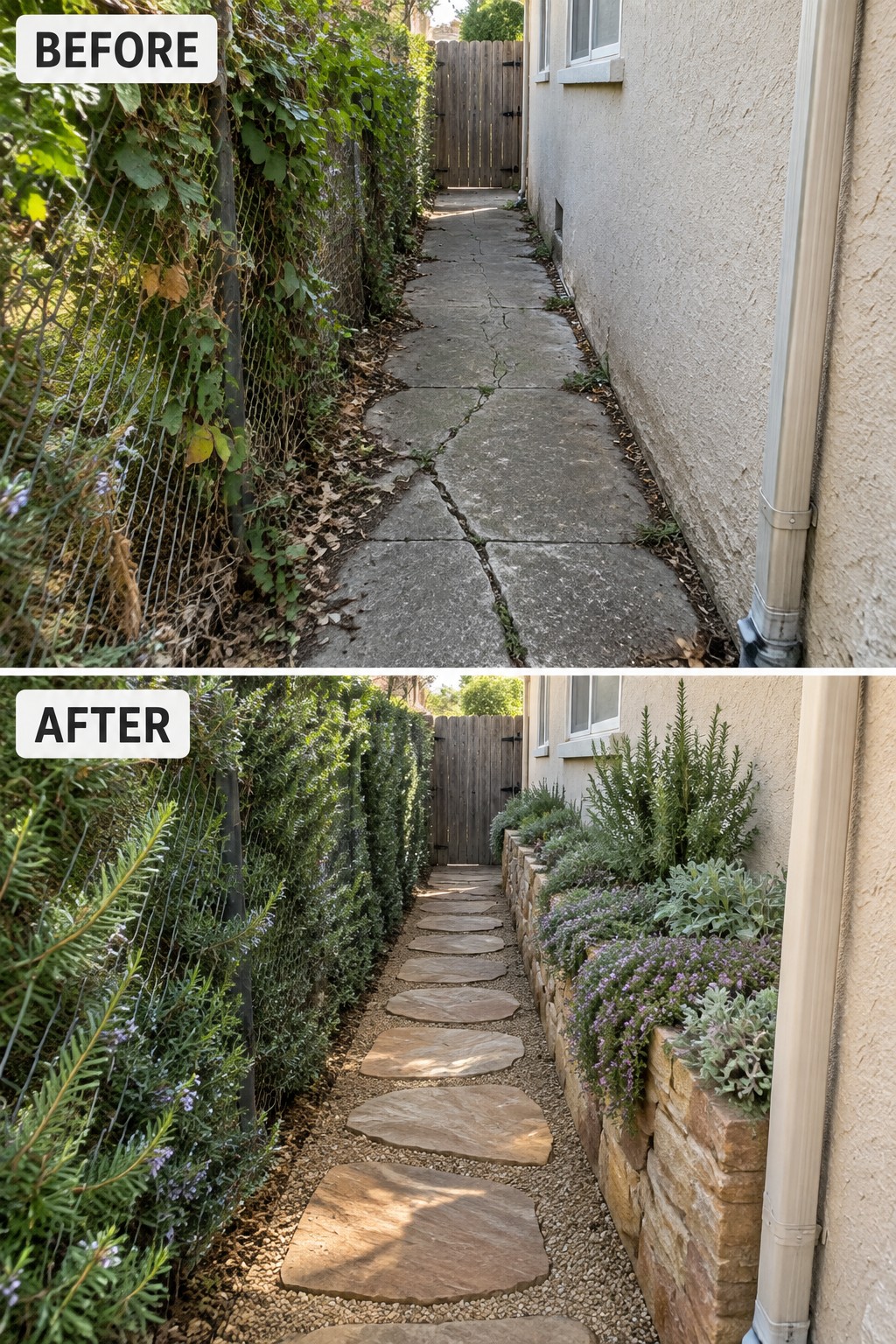
A cracked concrete path lined with weeds and vines feels like wasted space. Replacing the slabs with irregular stepping stones set in gravel immediately gives the area structure and makes it easier to walk through. The low stone wall on one side holds back a planted border, turning what was just a gap between the house and fence into something that looks planned.
This approach suits narrow passages where a full patio would not fit. Clear out the old surface and overgrowth first, then add gravel for drainage and set the stones at a comfortable stride. Keep the planting simple with a few drought-tolerant varieties repeated along the wall. The result stays low-maintenance and fits the scale of the space without crowding the walkway.
Terrace A Sloped Backyard With Stone Walls

A bare slope with patchy grass and visible erosion is hard to use and harder to maintain. Stacking stone into low retaining walls breaks the hill into flat beds that hold soil and give plants room to spread. The change turns a tricky angle into several easy-to-plant levels without needing major grading.
This approach works well on any yard that drops more than a few feet. Start with the lowest wall first so each level drains properly, then fill the beds with drought-tolerant shrubs and grasses that handle sun and dry spells. Leave a simple path between the terraces so the space stays walkable instead of turning into a steep lawn you mow around.
Turn An Empty Gravel Yard Into A Paved Patio
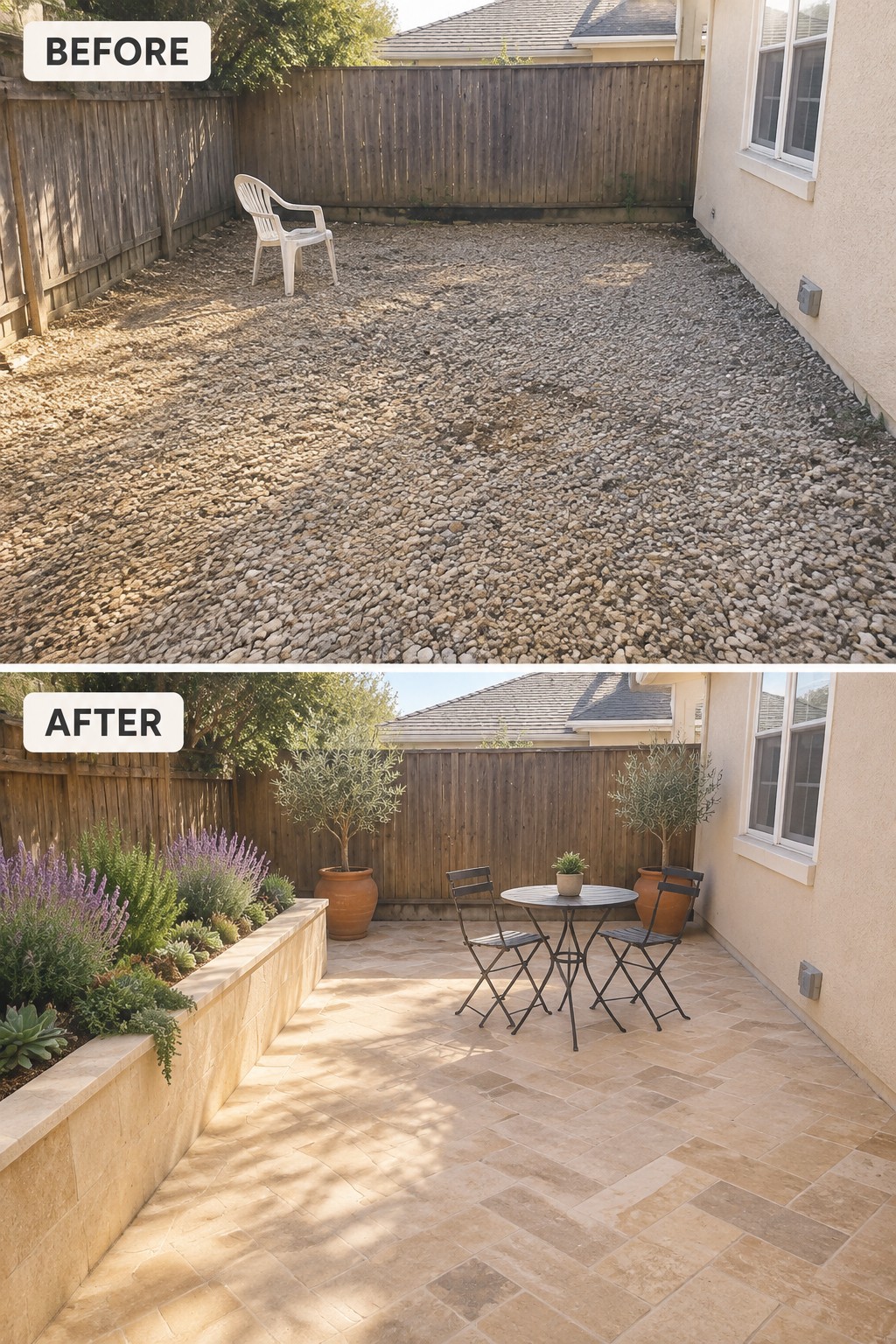
Replacing loose gravel with stone pavers gives the space a solid floor and instantly makes it feel like an outdoor room instead of just a leftover area. The before photo shows how bare and hard to use the yard was with nothing but rocks and one plastic chair. Once the pavers go down, a small table and chairs fit naturally and the space becomes somewhere you actually want to spend time.
This idea works best in dry regions where gravel is common but feels unfinished. Lay the pavers first to define the seating zone, then keep planting simple along the edges with a few large pots. Leave enough open floor so chairs can move without crowding the area.
Replace A Wooden Fence With A Stucco Wall

A plain wooden fence next to a concrete path leaves the edge of the yard looking unfinished. Switching to a stucco wall with a warm stone cap gives the space a solid border that feels more intentional and ties the house to the garden. The added planting beds filled with drought-tolerant shrubs and a few large terracotta pots soften the wall without crowding the lawn.
This approach works best along long side yards or back property lines where you want privacy and a cleaner look. Start with the wall or a similar solid structure, then add a narrow bed at the base for plants that can handle dry conditions. Keep the bed width modest so the lawn stays usable and the overall layout stays simple to maintain.
Turn A Bare Corner Into A Covered Outdoor Kitchen
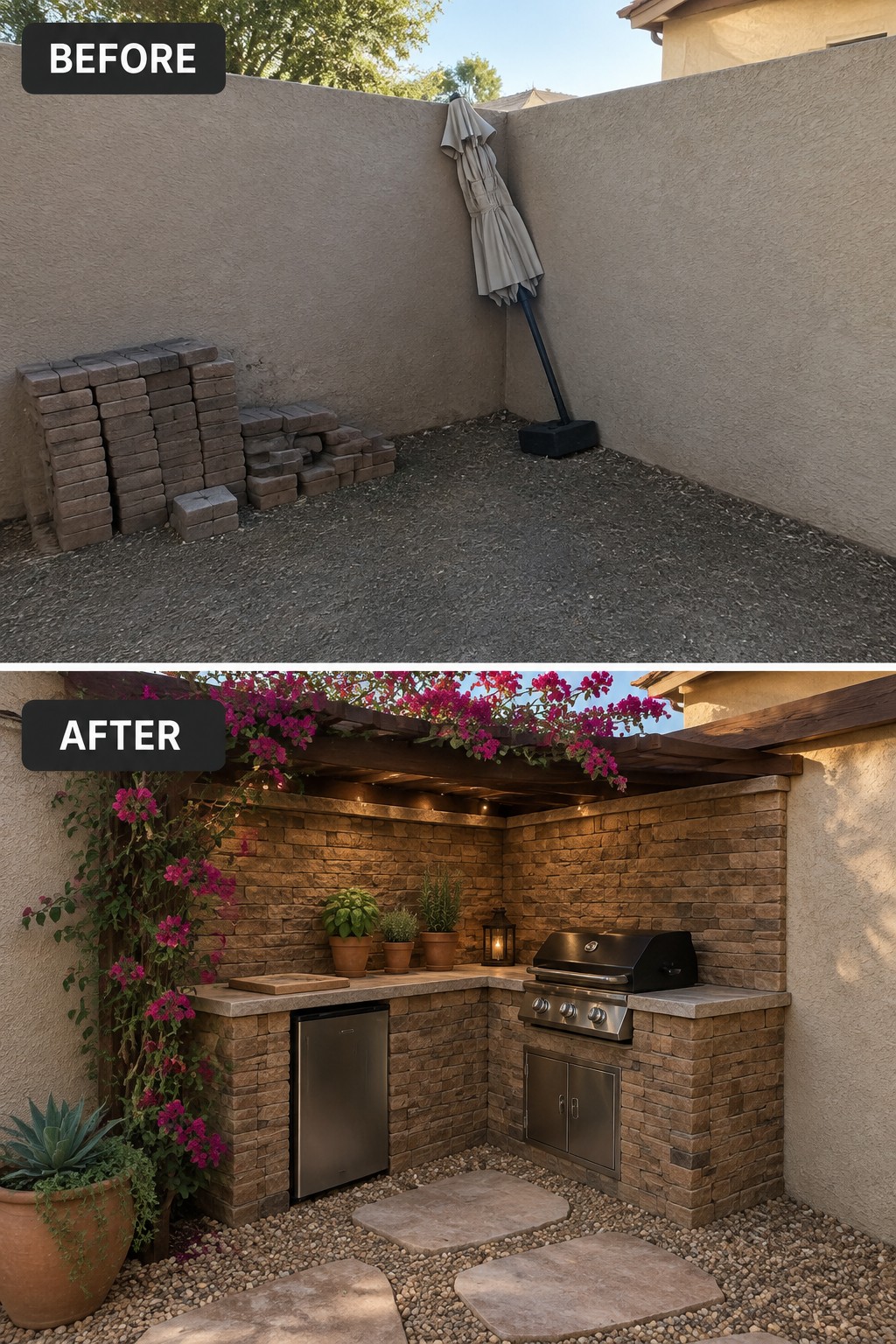
An unused gravel patch next to plain walls can become a real cooking and gathering spot once you add a simple pergola and stone construction. The cover creates shade and defines the area, while the stone gives the counters and walls a solid, finished look that feels built in rather than added on.
This idea works best in smaller backyards where you want both function and a bit of shade without taking up the whole space. Keep the layout straightforward, use materials that handle weather well, and add a few climbing plants to soften the edges over time.
Define A Narrow Side Yard Path With Stepping Stones

A plain concrete walkway can feel like wasted space when it runs along the side of a house. Switching to irregular stepping stones set in gravel gives the area a clear purpose and breaks up the long, flat surface. The plants along the edges soften the look and keep the gravel in place without much extra work.
This approach works well in tight side yards where a full patio would not fit. Start with the path layout first, then add low plants that can handle dry conditions. Leave enough room between stones so the walkway stays easy to walk on, and use a few low lights if the area gets used after dark.
Turn An Empty Patio Into A Seating Area

The before photo shows a flat stretch of concrete with a few scattered pots and no real reason to linger. In the after, a stone fountain anchors the middle of the space while a small table and chairs sit on a rug nearby. That single change turns unused pavement into a place where people actually want to sit.
This idea works best on patios that feel too open or empty. Start with one strong focal point like the fountain, then add just enough seating and a rug to define the zone. It suits homes in warm climates where drought-tolerant plants can fill in around the edges without much extra water. Keep the furniture light so the space still feels open and easy to move through.
Turn An Overgrown Patio Into A Simple Seating Area
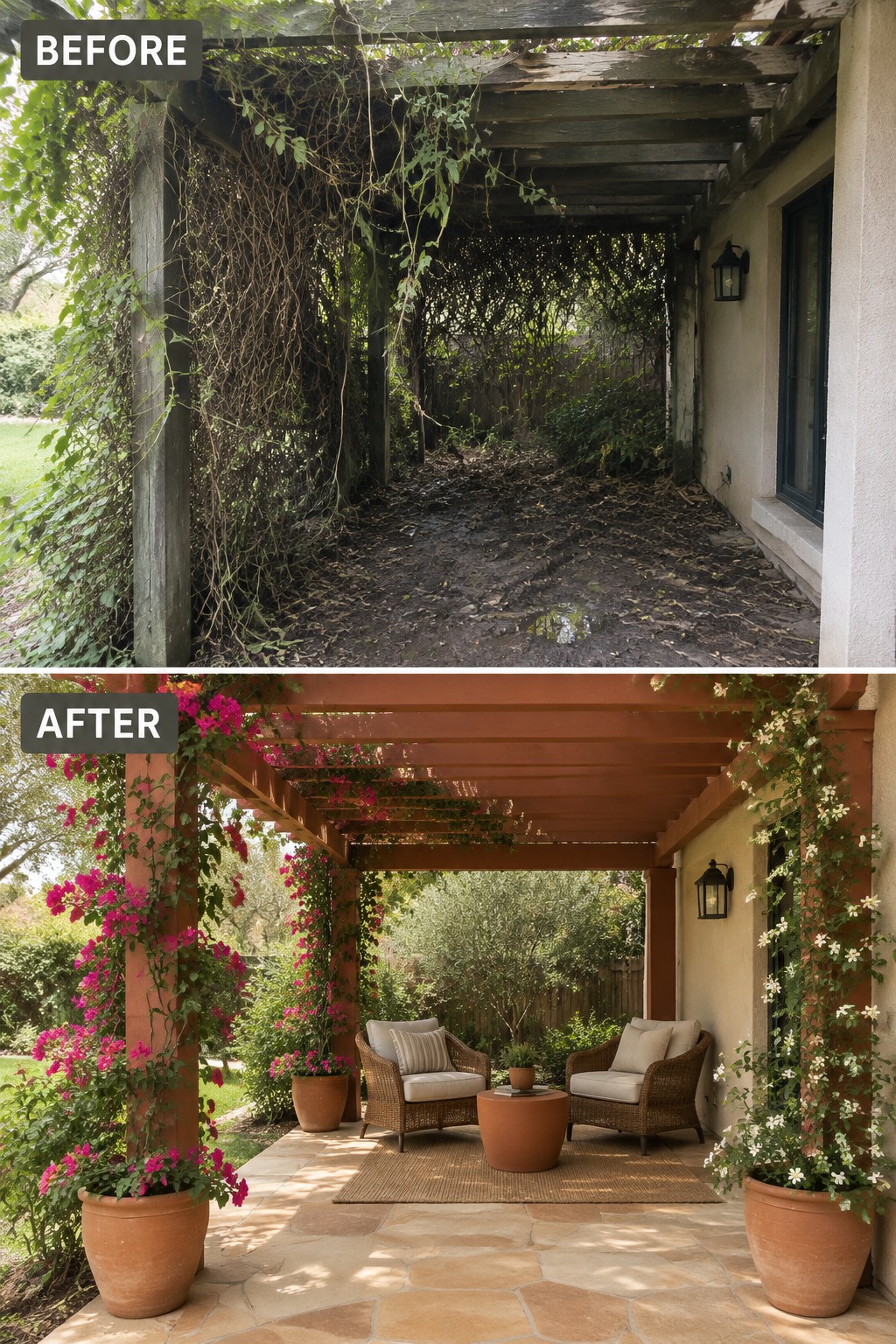
A covered patio often sits unused when vines take over and the ground turns muddy. Clearing the overgrowth first, then adding two chairs, a low table, and a rug, instantly shows the space has a purpose again. The terracotta pots with bright flowers add color without needing a full garden redesign.
This idea suits homes with an existing pergola or roofline where you want an outdoor room without major construction. Start with cleanup, keep the furniture scale modest so the area still feels open, and choose pots in one material to hold the look together through the seasons.
Add Structure To An Overgrown Backyard
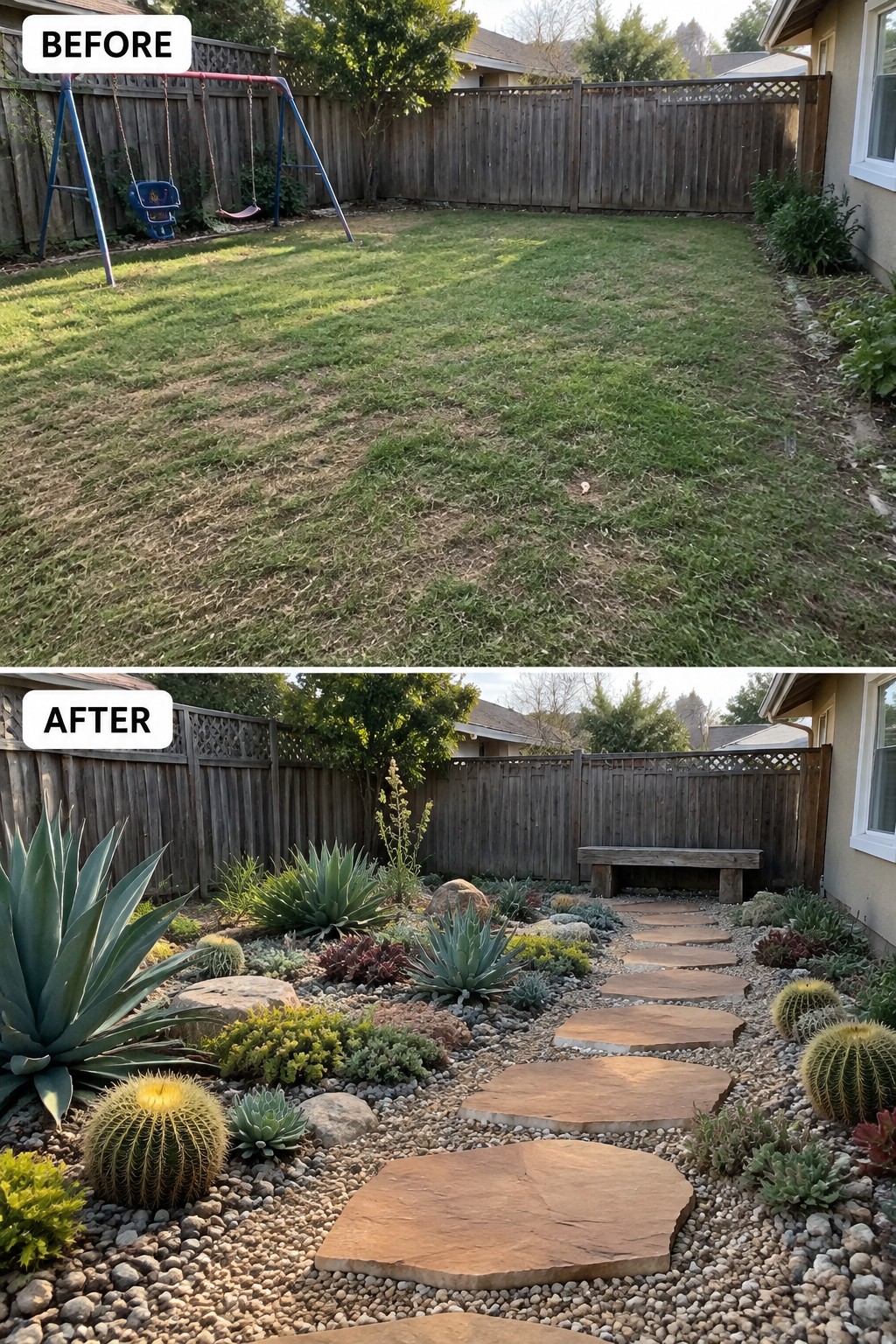
A large empty lawn often feels unfinished because there is no clear way to move through the space or know where plants belong. Adding a simple stone path with gravel on either side gives the yard a layout right away and turns the whole area into something you can actually use.
This idea works best in sunny yards where you want to reduce grass and watering. Lay the path first so it follows how people already walk, then plant drought-tolerant choices like agaves and succulents along the edges. Keep the beds narrow enough that everything stays easy to reach and maintain.
Define A Patio With Stone And Planting
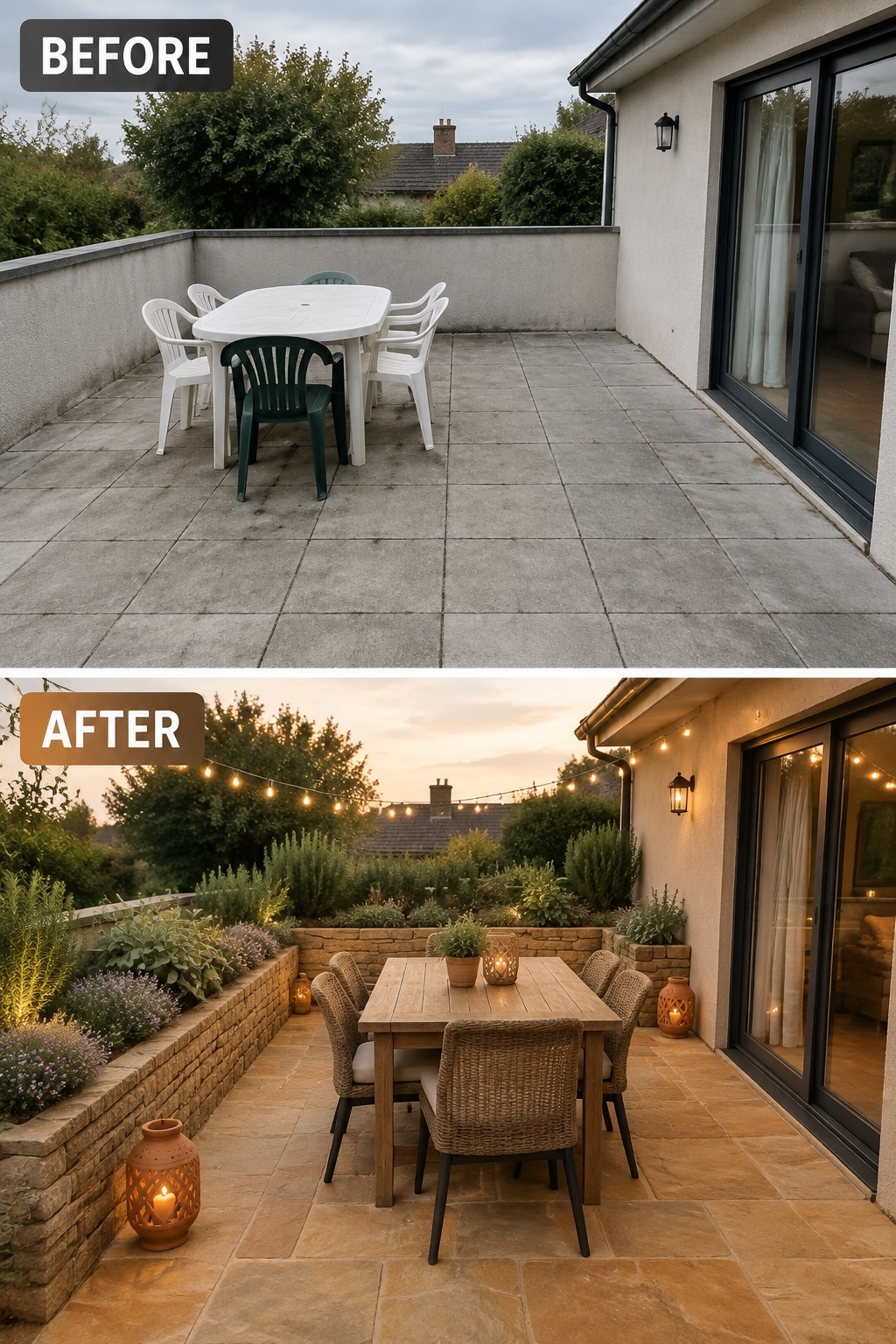
A plain concrete slab often feels like wasted space because it has no edges or purpose. Adding low stone walls creates a clear boundary, and filling the beds with drought-tolerant plants like lavender and shrubs turns the area into a usable outdoor room. The wooden table and chairs then sit comfortably inside that frame instead of floating on an open surface.
This approach works best on flat patios or terraces that back onto a house wall. Keep the planting simple and repeat a few tough varieties rather than mixing too many types. Make sure the stone matches the local climate so it ages well without extra sealing.
Turn A Cluttered Side Yard Into A Simple Gravel Garden
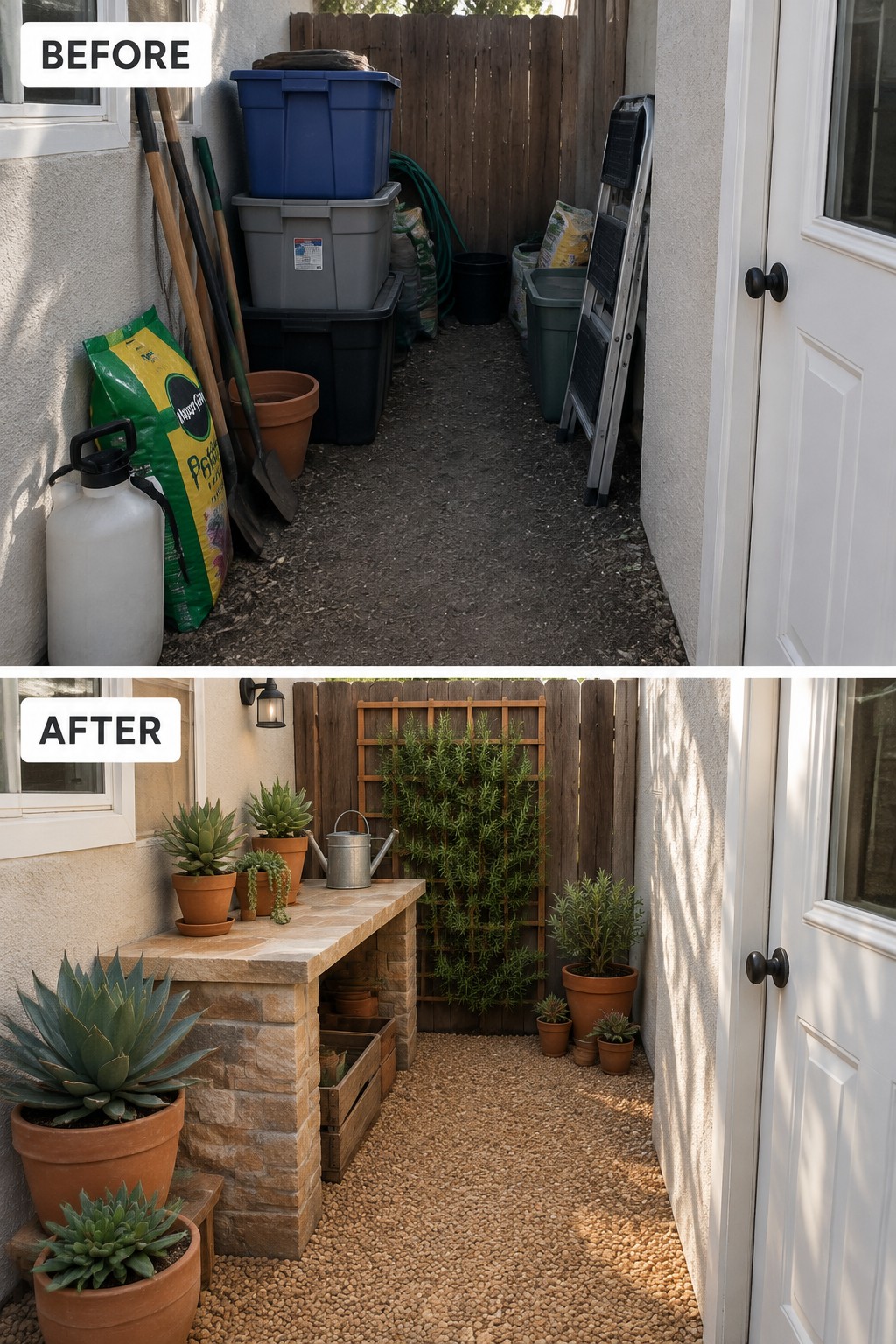
A narrow side yard often ends up as overflow storage for bins, tools, and bags. Clearing everything out and laying down gravel gives the space an instant sense of order. The gravel also makes the area feel wider and keeps it from turning into a muddy strip after rain.
This approach works well on tight lots where a full patio would feel cramped. Stick to a few large containers grouped together, add one low bench or table, and keep the planting simple with drought-tolerant varieties. The result stays low maintenance and still leaves room to walk through.
Turn A Concrete Patio Into A Stone Outdoor Living Space
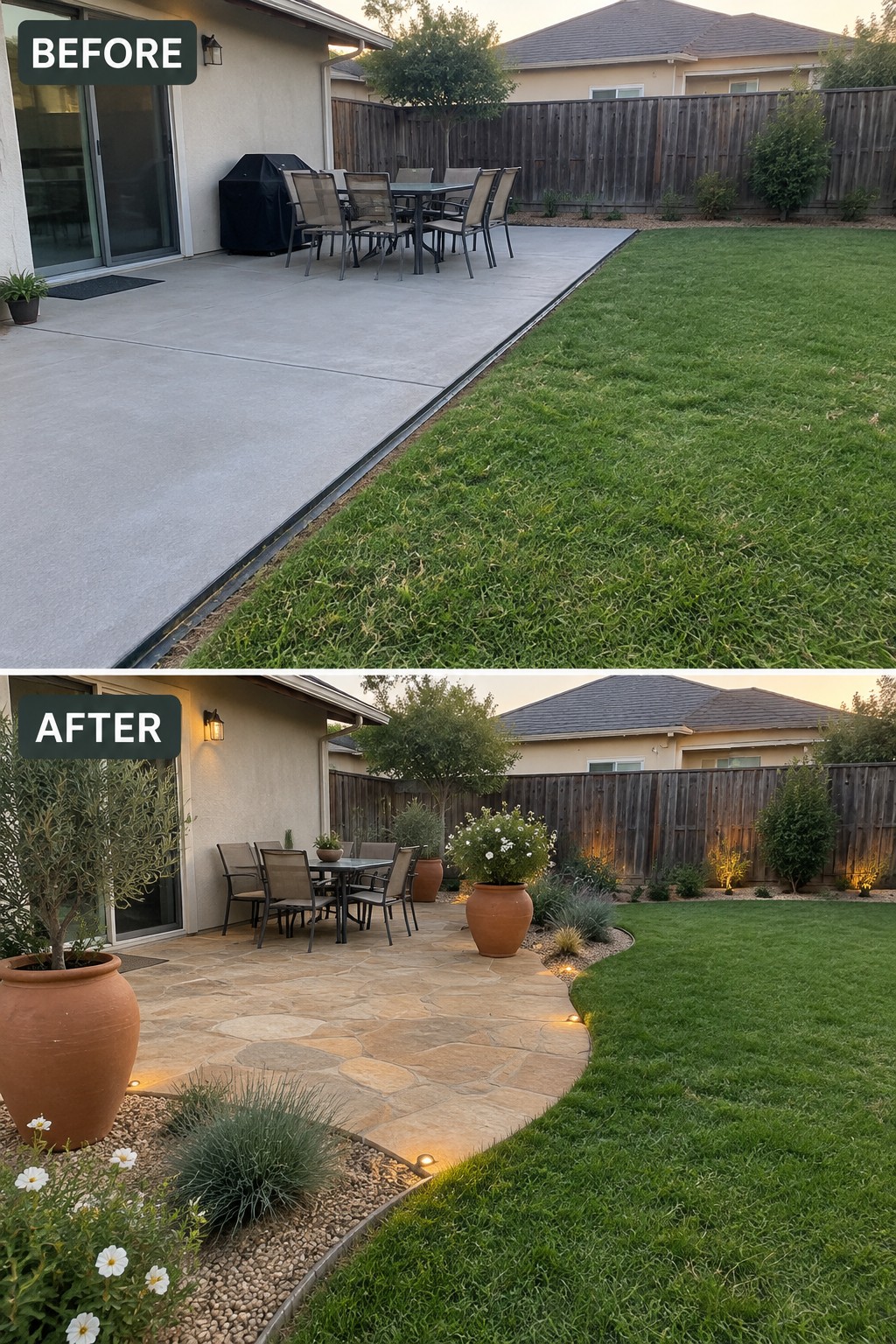
A straight concrete slab next to a lawn often feels unfinished and hard to use. Switching to warm stone pavers with a curved edge gives the space a softer shape that fits better with the house and yard. Large terracotta pots placed along the new border add height and planting without needing a full garden overhaul.
This approach works well on smaller lots where you want a clear dining or seating zone but still need room to mow and walk. Start with the hard surface change first, then add a few oversized pots with drought-tolerant plants and simple ground lights so the area feels usable after dark. Keep the layout open enough for chairs to move freely.
Turn An Empty Patio Into A Seating Area

The before photo shows a plain concrete slab with nothing but a grill and two planters. In the after, the same space gains a clear purpose through stone pavers and a built-in oven that anchors the layout, with a small table and chairs placed right in front.
This idea suits homes that already have a basic patio but no real reason to linger outside. Lay the new surface first so the area feels intentional, then add one main feature like an oven or fire pit before bringing in seating. Keep the furniture scale modest so people can still move around easily.
Give A Bare Backyard Structure With Paths And Beds

A flat dirt yard is hard to use until you give it some clear lines. Adding a simple gravel base with stepping stones creates a path that actually leads somewhere, while raised beds keep the planting neat and contained instead of scattered. The change turns an empty corner into a space you can walk through without tracking mud everywhere.
This approach works best in dry climates where you want low water use and minimal upkeep. Start with the hardscaping first so the layout feels intentional, then fill the beds with tough plants that can handle heat. Leave enough open gravel so the area still feels open rather than crowded.
Add Planting Pockets To A Retaining Wall
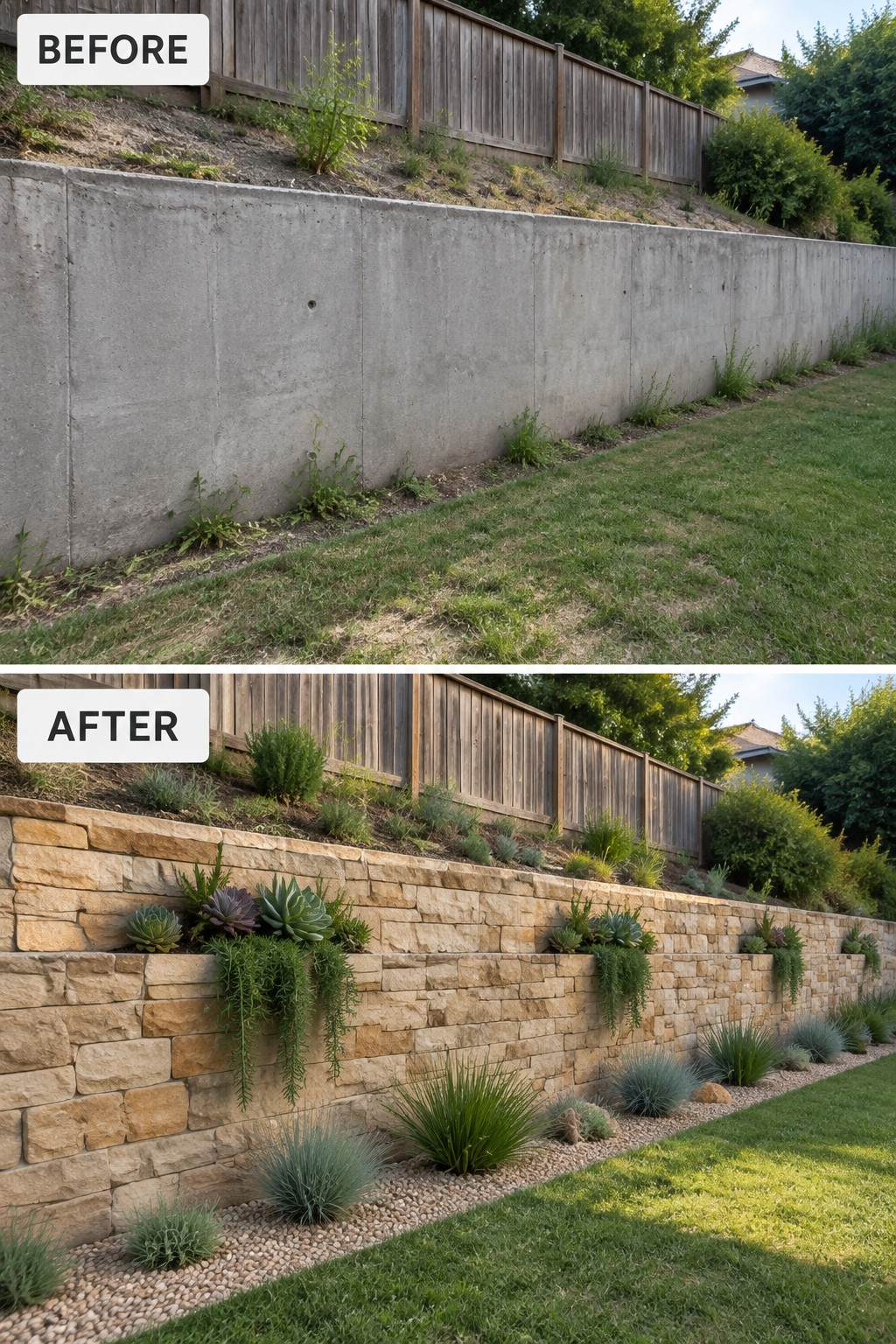
A plain concrete retaining wall often leaves a slope looking unfinished and hard to maintain. Switching to a stacked stone wall with built-in planting pockets gives the same structure but adds places for succulents and trailing plants to grow right out of the wall. The change turns a blank vertical surface into part of the garden instead of just a barrier.
This works best on sloped yards where you need to hold soil but still want planting space. Start with the wall itself, then fill the pockets with drought-tolerant choices like succulents and trailing rosemary. Keep the base simple with gravel and low grasses so the wall stays the main feature without crowding the area.
Define An Overgrown Backyard With A Stone Path And Garden Beds
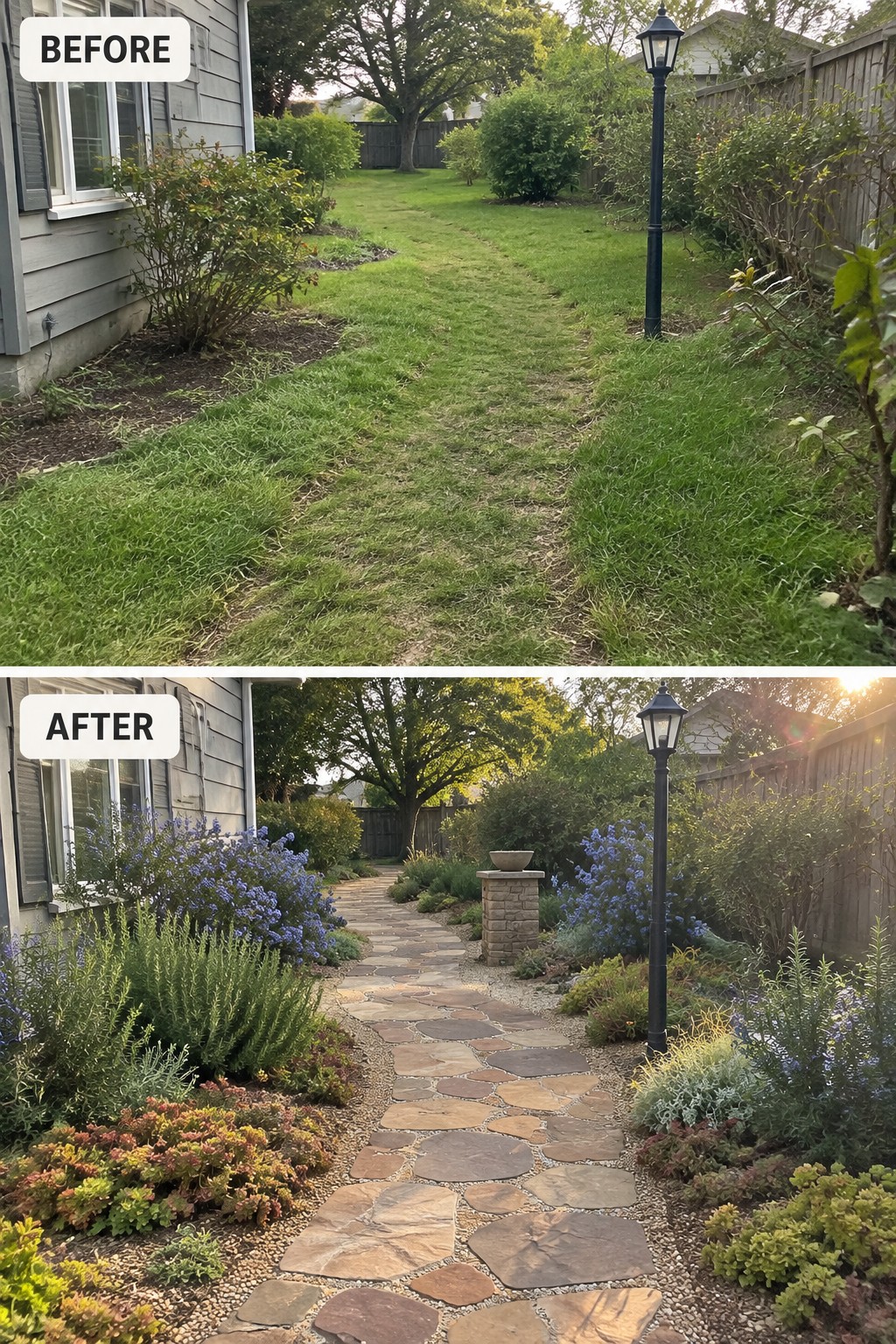
A simple lawn path that gets worn down over time can leave the whole yard feeling shapeless. Replacing it with a laid stone walkway and adding planted borders on both sides gives the space a clear route and a finished look without needing a full redesign.
This works well in sunny yards where you want lower maintenance. Map the main walking line first, lay the stone on a gravel base, then fill the edges with drought-tolerant shrubs and perennials that stay compact. Keep the beds narrow enough to reach from the path so nothing gets overgrown again.
Use Potted Plants And A Fountain To Define A Patio
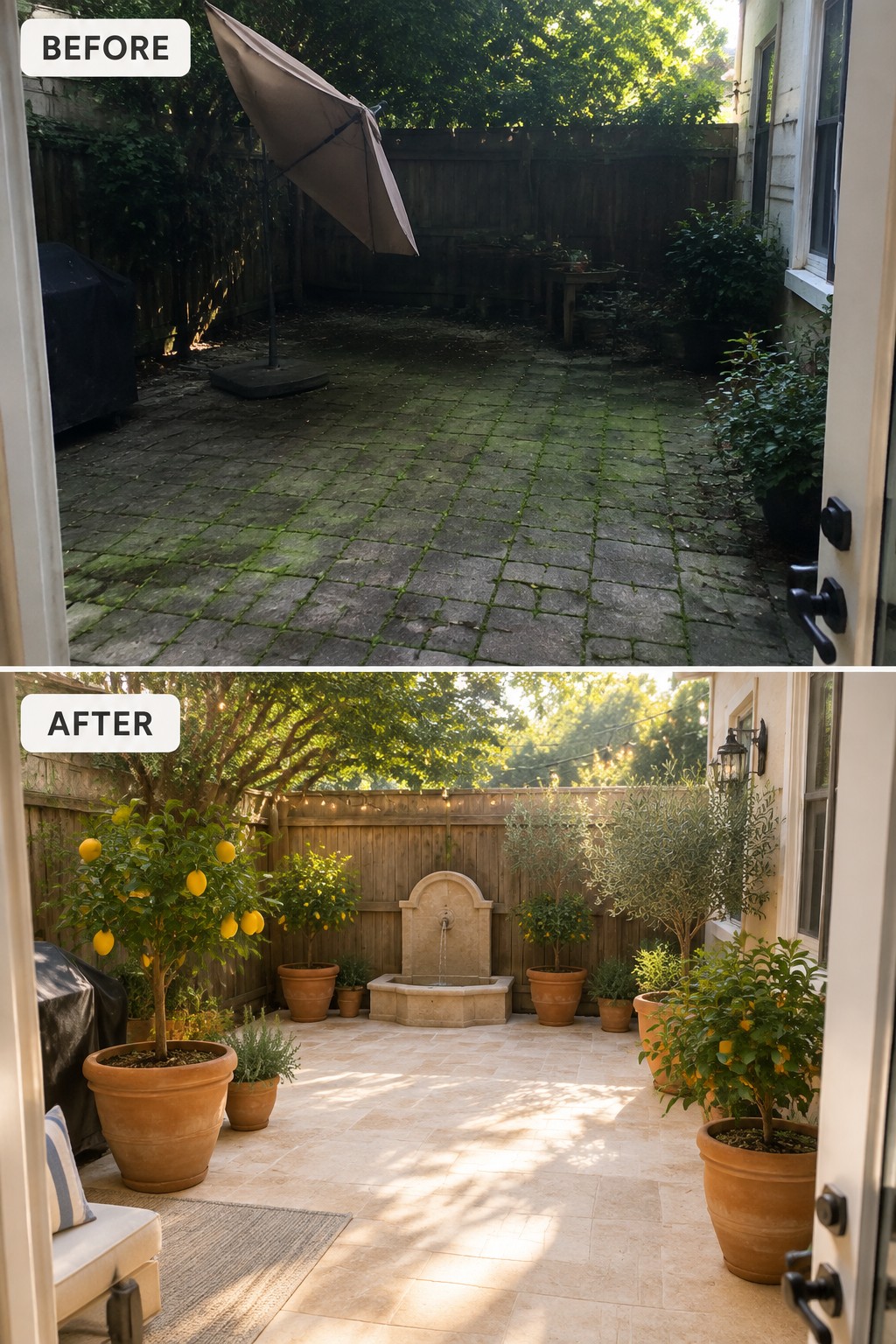
A bare paved yard often feels like wasted space until you add a few large pots and one strong focal point. In this case the shift came from placing terracotta containers with citrus trees around the edges and setting a simple stone fountain in the middle, which instantly gave the area purpose and a sense of enclosure.
This approach suits small to medium backyards that need structure without new construction. Keep the pots in similar tones and sizes so they read as a group, choose plants that can handle dry summers, and make sure the fountain stays visible from the main seating spot. The result feels finished without crowding the space.
Frequently Asked Questions
Q: How often do those drought tolerant plants need water after the first summer? A: Water them deeply once every two weeks during dry spells. The roots settle in fast and pull what they need from deeper soil. Cut back further once you see steady growth.
Q: What stone color works if my yard faces full afternoon sun? A: Go with light beige or honey tones that stay cooler underfoot. They also bounce light around to brighten the whole space. Darker stones heat up too much and feel harsh by midday.
Q: Can I tuck in a small fountain without raising my water bill? A: Recycle the same water in a closed loop. Set it near a seating spot so the trickle adds calm without extra fuss.
